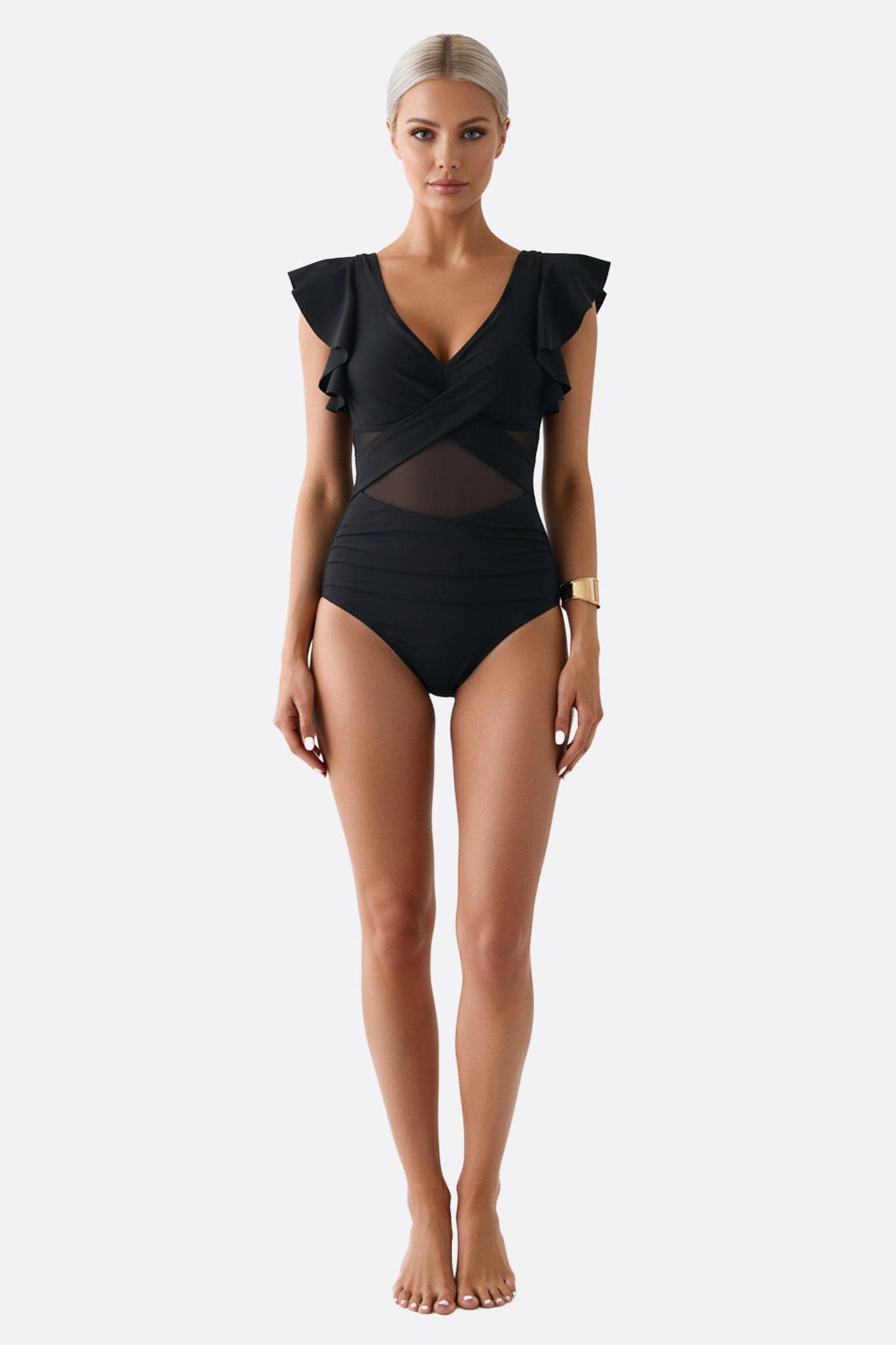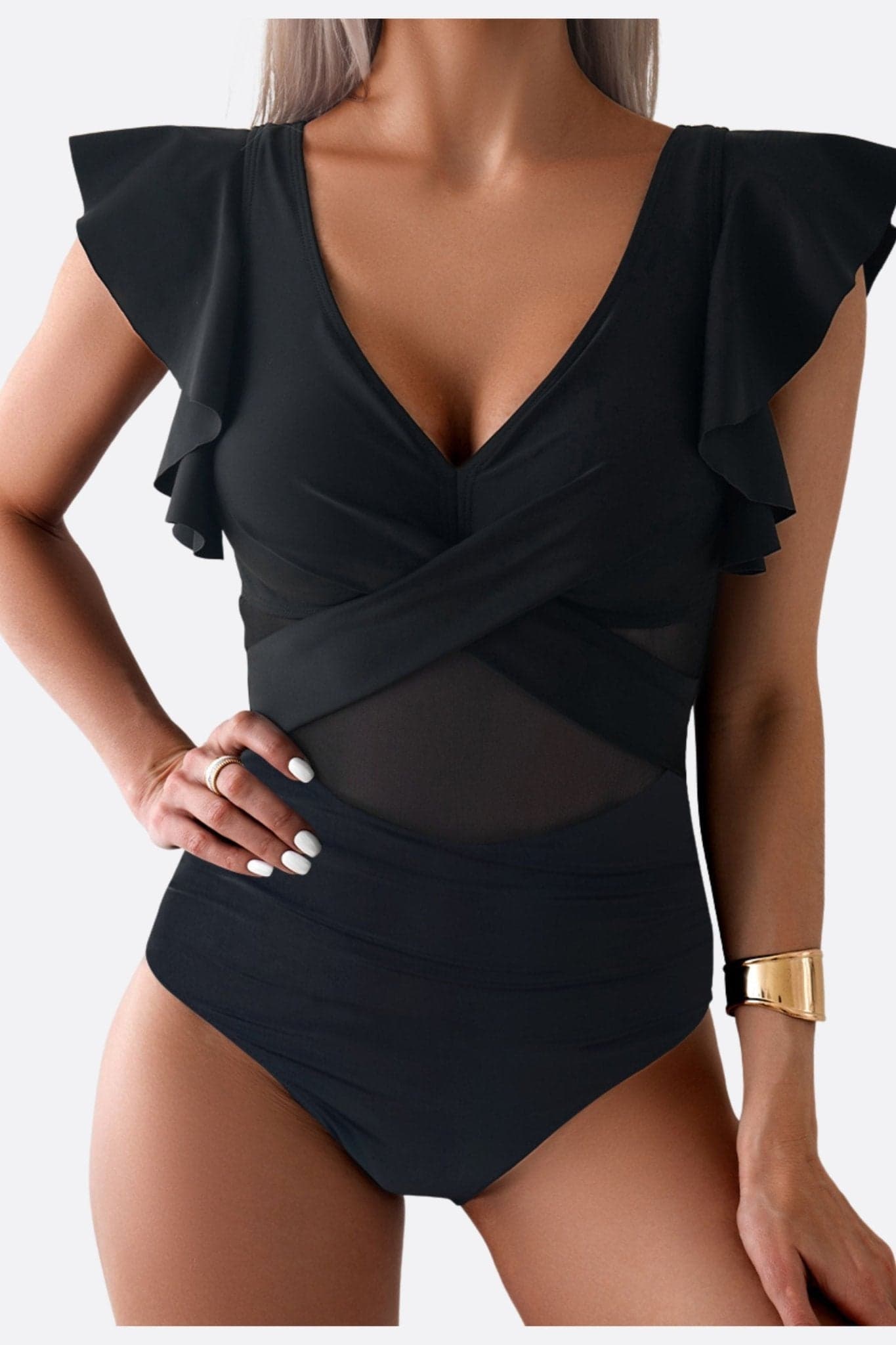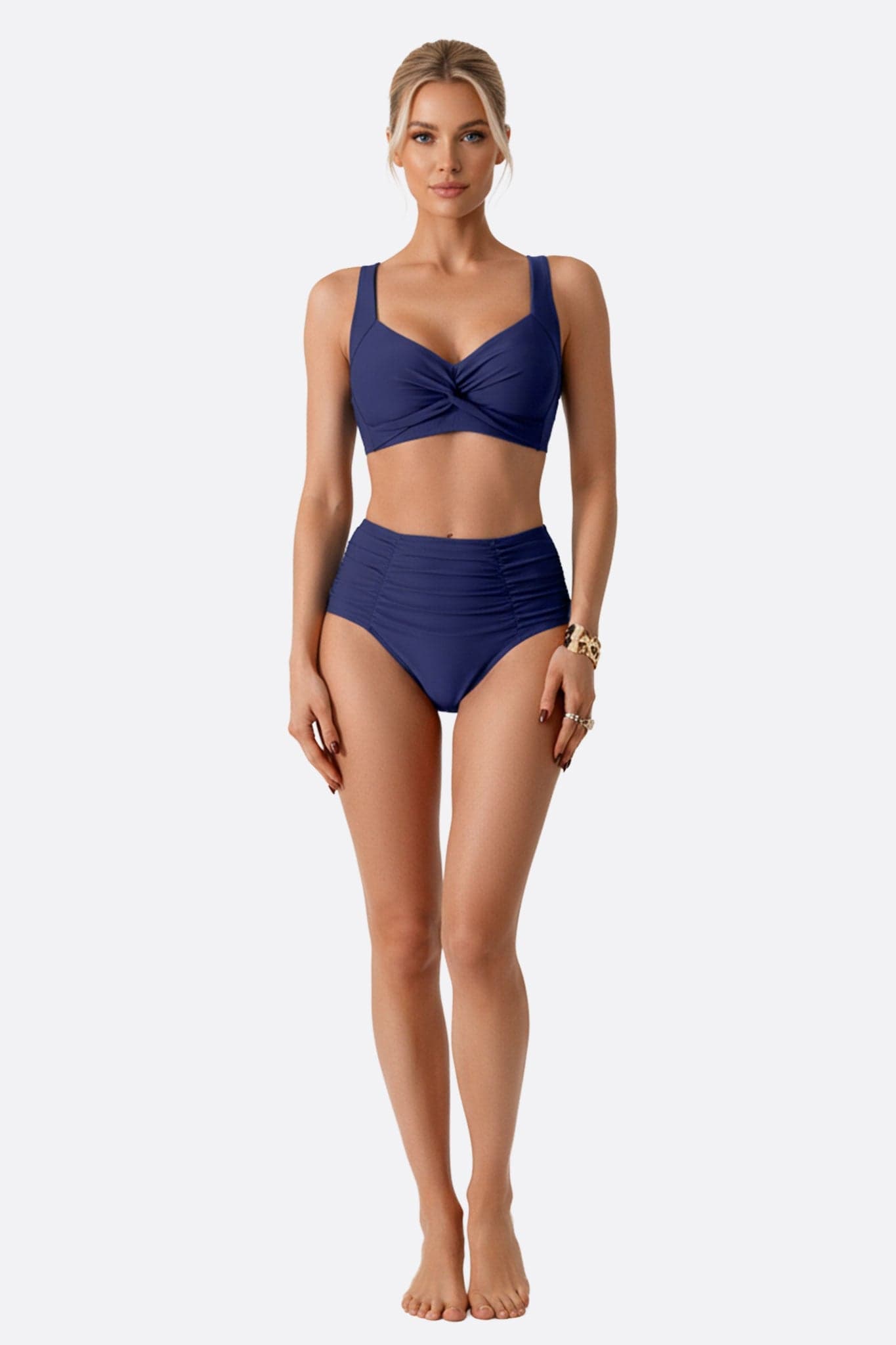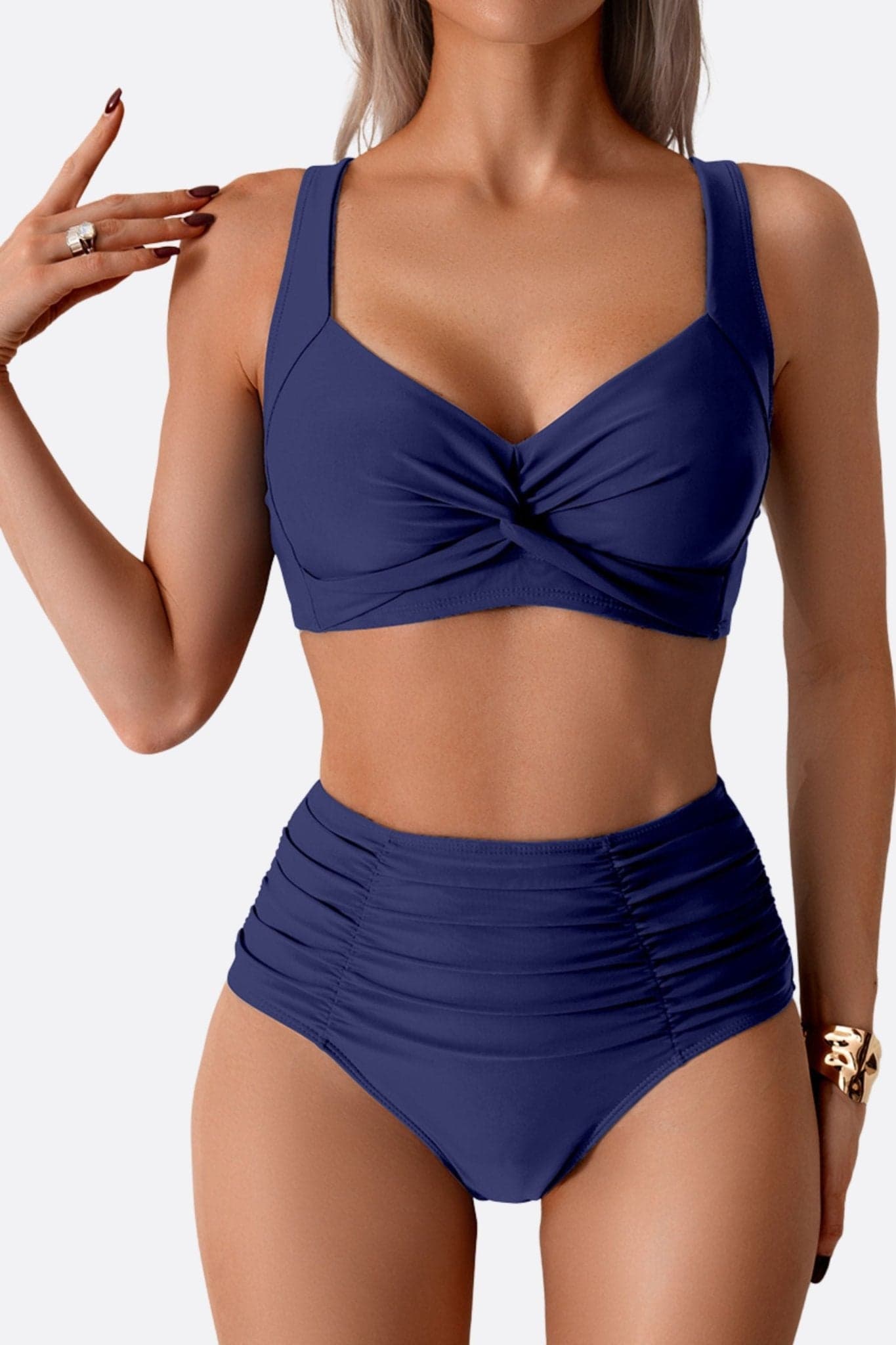
High-waisted swimsuit: why it flatters all body types

You put on a swimsuit, look at yourself, and something is off: the waist lacks definition, the stomach seems "cut," the hips appear wider than they are, or the legs look shorter.
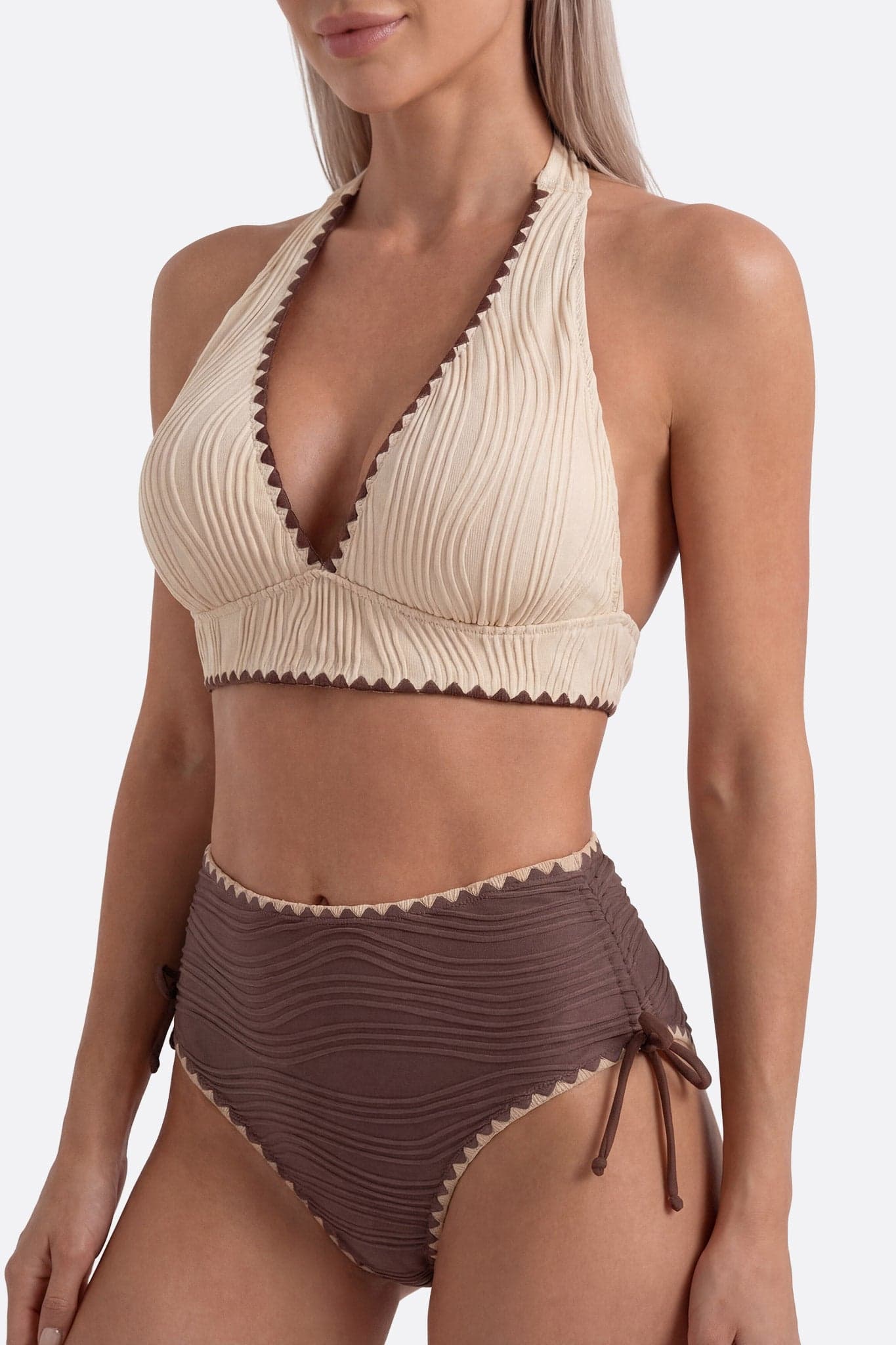
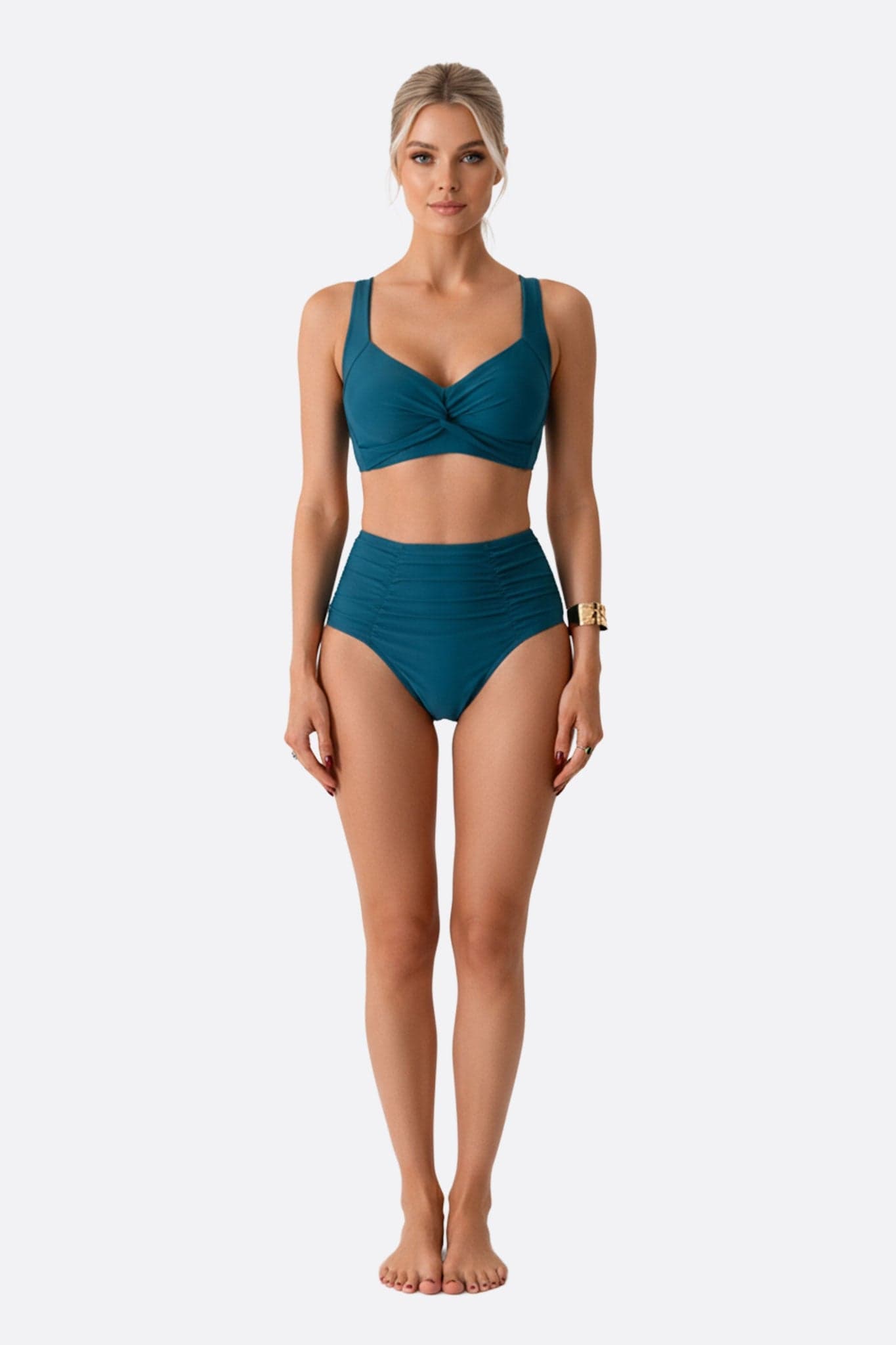
The High-waisted swimsuit (also known as high-waisted bottoms or high-waisted bikini in some contexts) addresses precisely these concerns, as it works on the silhouette where it matters: the waistline, the continuity of the torso, and the hip angle. Here, there are no vague promises: the goal is concrete, to shape, to hold, to elongate, with very technical levers (belt height, knit tension, lining, cut, finishes).
When these parameters are well chosen, the effect is immediate, almost tactile: the material hugs without compressing, the waist naturally falls into place, and the silhouette regains a more vertical reading.
The magic of the waistline: the visual effect that rebalances the torso and hips
What makes the high-waisted swimsuit universally flattering is its ability to redraw the proportion between the upper and lower body without artifice. The high waist creates an anchor point: it imposes a clear line where, with a low cut, the eye often gets lost between the navel, hips, and lower abdomen.
In practice, this means that the silhouette appears more structured, even when moving, sitting, or walking on the sand. However, it is important to note that the flattering effect will also depend on individual morphology and the fabric's firmness used.
Everything hinges on the exact height: a successful high waist reaches above the navel (or partially covers it) and stabilizes on the calmest area of the stomach, where the body's tissues fold less.
This is a crucial detail: if the belt falls at the wrong place, it can mark or roll. Conversely, placed at the right level (about 5 cm above the navel, for example), it smooths and supports, with a holding effect that does not rely on excessive tightening but on a consistent tension of the fabric.
Then, there is the hip angle. A well-cut high waist follows the curve of the hips instead of cutting it off. Result: the hips seem more defined, but not widened.
This is particularly visible in the mirror when you turn sideways: the continuity between the waist and the buttock is more harmonious, the pelvis appears better "placed." For silhouettes with little defined waist, the effect is precious: the belt creates a visual waist. For those who already have a slim waist, it highlights it without hardening it.
Finally, the high waist provides a discreet but real benefit: it stabilizes posture. When the bottom of the swimsuit fits well, you stand straighter, adjust less, breathe better. This contributes to the overall appearance, and it's often what you feel before even analyzing it: a sense of hold, of clarity, like a well-constructed garment (the effect may vary depending on morphology and fabric firmness).
To discover all our high-waisted cuts, check out our collection of high-waisted bikinis with covering and flattering bottoms.
Cut, cutout, belt: the right adjustments according to your morphology
The high-waisted swimsuit doesn't flatter "by magic": it flatters because you can adjust three parameters, the belt height, the cut, and the coverage, to achieve the desired effect. The idea is not to categorize bodies, but to choose according to what you want to highlight: legs, waist, hips, belly, buttocks.
1) Belt height
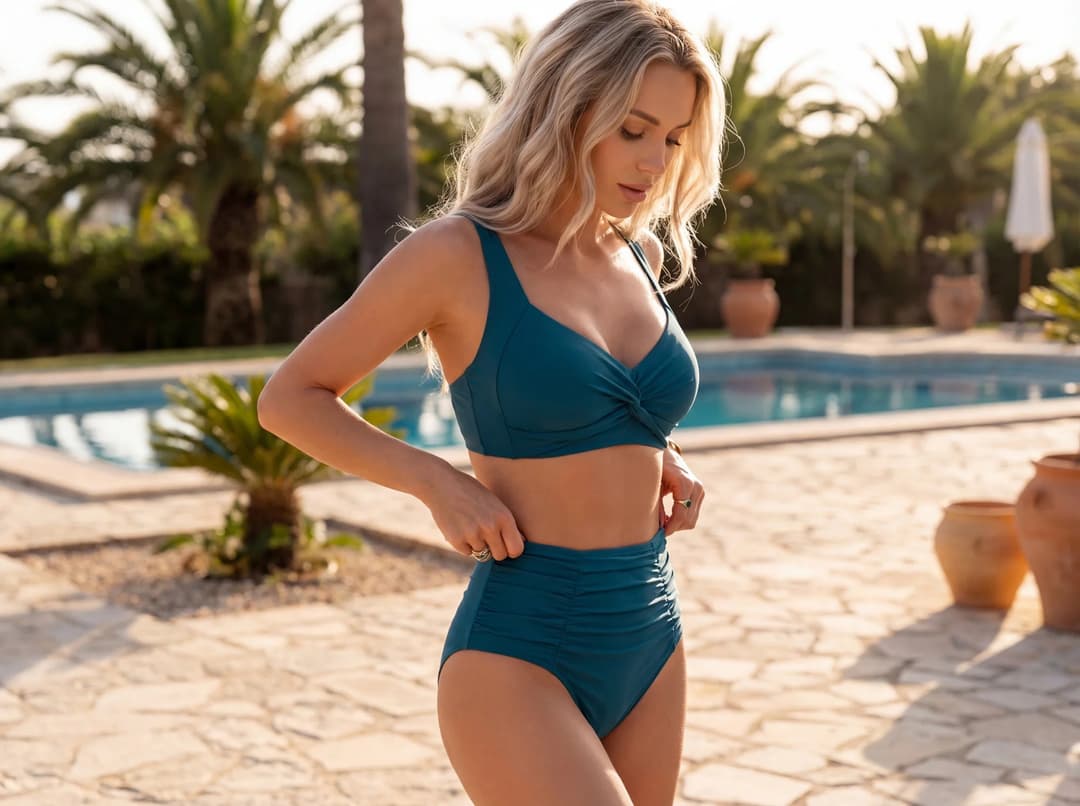
If you're looking for a smoother belly effect: choose a belt that goes above the navel and stays flat (for example, positioned about 5 cm above the navel for optimal support). An intermediate height (just below the navel) can, on the contrary, create a cutting line right on the most mobile area.
If you mainly want to elongate the torso (or balance a generous bust): a high waist yes, but with a belt not too wide, so as not to "eat" the length of the torso. A thinner, well-structured band is enough.
2) Leg cut
The cut is the most powerful tool for elongation. A slightly high cut opens the hip, stretches the leg, and visually slims the lower body. Conversely, a very low cut can compress the silhouette if you're looking for verticality. The right compromise: a curve that rises without being extreme, with a soft elastic that doesn't cut in.
3) Buttocks coverage
Coverage is not a matter of modesty, but of line. A more enveloping cut gives a smoother and more stable look (ideal if you move a lot). A more open cut emphasizes the curve. The key point: the seam should be placed where the volume is the roundest, otherwise it cuts and flattens.
4) Details that change everything
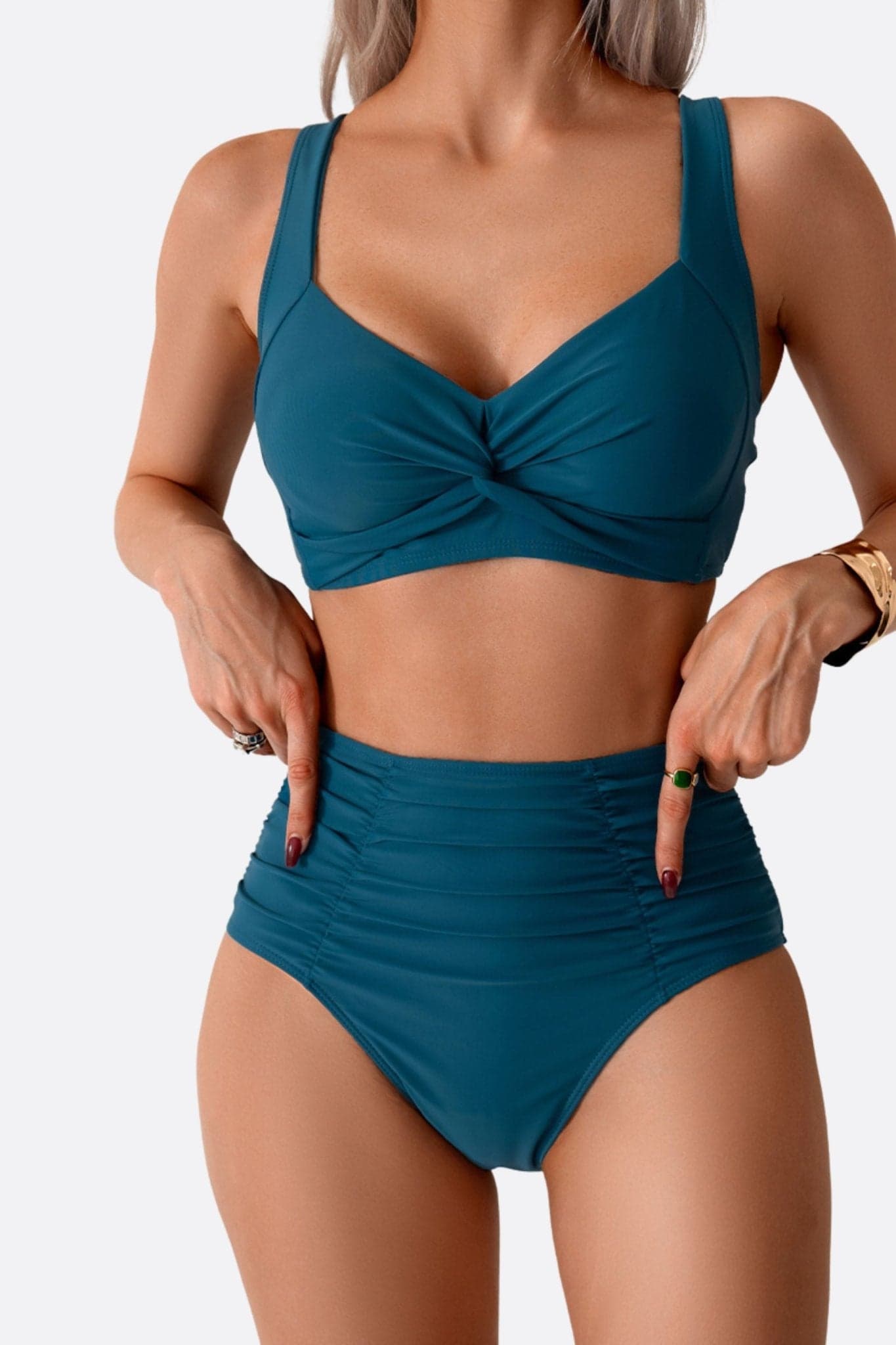
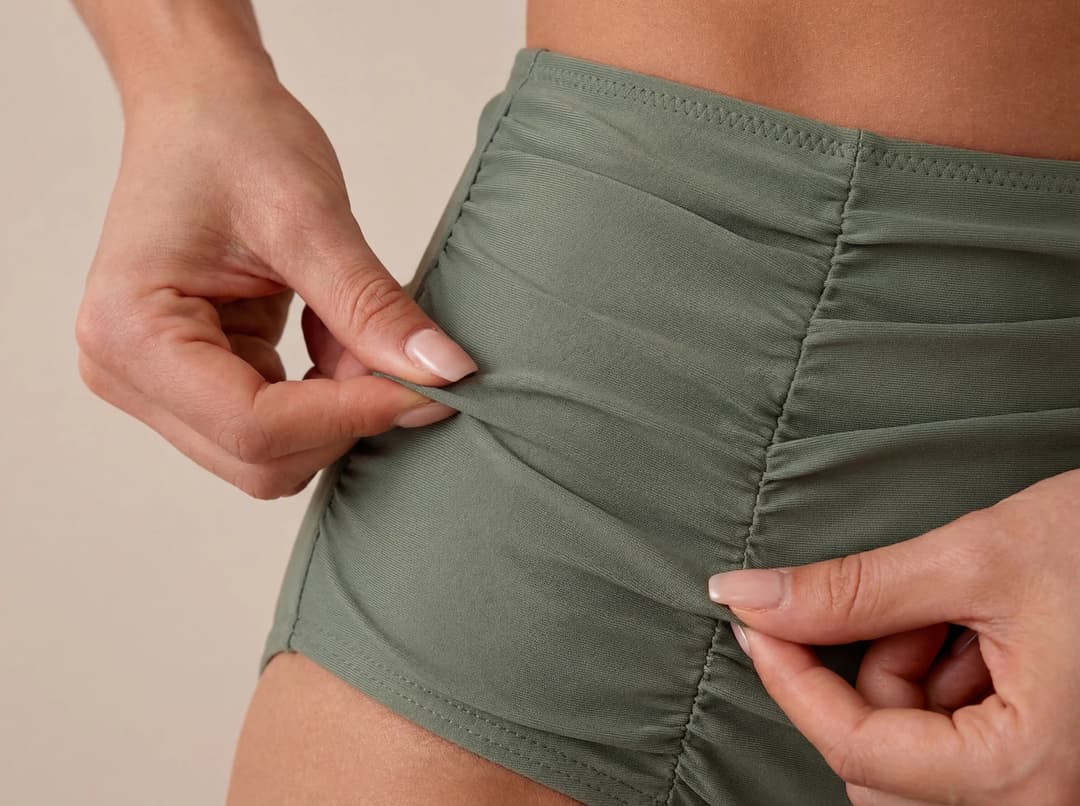
Side gathers: they create a soft shadow, very flattering on the belly and waist, without a "rigid shaping" effect.
V-belt: it draws the eye to the center and visually slims the waist.
Contrasting panels: to be handled with precision; a dark side contrast can slim, but a poorly placed contrast can widen.
Fitting tips: During fitting, check while standing, sitting, walking, and simulating exiting the water: if the belt rolls, if the seams mark, or if the fabric pulls, it indicates that an adjustment is needed. These observations will help you refine the choice for optimal support.
The high-waisted + black combination is particularly effective for slimming the silhouette. Explore our high-waisted black swimsuits.
Materials, linings, and shaping: the textile expertise that makes a difference in wear
Two visually similar swimsuits can give an opposite result once worn. The reason is almost always textile: knit quality, spandex rate, lining type, finishes. The High-waisted swimsuit requires a material capable of holding a larger surface (the waistband) without stretching, wrinkling, or creating excess thickness.
The main knit: density and elastic return
Look for a material that has "nerve": to the touch, it should be smooth, slightly cool, and immediately return to place when stretched. A knit that is too soft results in a waistband that slips, rolls, or stretches when out of the water. Conversely, a knit that is too stiff can leave marks. The ideal: sufficient density (you can feel it by the weight in your hand) and a clear elastic return.
The lining: invisible, but decisive
For a flattering high waist, the lining should smooth without "layering". A full lining on the front provides immediate comfort: the fabric lays better, small variations in the belly are smoothed out, and the color remains more stable even when wet. Beware of linings that are too thick: they can create a feeling of warmth and stiffen the line. A good lining is noticeable... because you forget it.
Shaping: effectiveness without armor
Successful shaping should not compress. It should guide the material: keep the waistband flat, support the lower abdomen, stabilize the sides. Technically, this involves tighter knit areas, or a shaping lining placed only where it's useful. When worn, you should be able to breathe, sit, walk: if the waistband rolls, it's often due to excess tension in the wrong place, or an elastic that is too narrow.
Finishes: elastics, seams, edges
, A wide and flexible elastic at the waist distributes pressure and avoids the "cut" effect.
, Flat seams (or well-placed) prevent marks and improve comfort on wet skin.
, A clean, neat edge without excess thickness gives a more elegant and durable line.
Finally, consider the resistance to chlorine, salt, and UV. A high waist puts more stress on the material: if it stretches, the flattering effect disappears. A good textile maintains its shape and color, and retains that "smooth skin" feel to the touch, even after several swims.
Sources and references: OEKO-TEX, Lycra/Invista recommendations, and various recognized guides on the design and testing of swimsuits provide measurable criteria for evaluating textile quality (for example, color fastness tests and stretch standards).
Style and visual details: prints, colors, and finishes that sculpt effortlessly
The High-waisted swimsuit is an ideal playground for playing with lines, as it offers a large reading surface. And in terms of silhouette, the eye is sensitive to three things: verticality, continuity, and stopping points. Choices of color, print, and finishes can therefore enhance the "drawn waist, elongated leg" effect, or neutralize it.
Colors: depth, contrast, placement
Deep tones (black, navy, cocoa brown, bottle green) have an advantage: they create a uniform shadow that smooths. But elegance mainly comes from the quality of dyeing: a dense black, an ink navy, a warm brown. A visually "poor" color can harden the line.
Light colors work very well in high-waisted if the material is well lined: they remain neat and do not "reveal" too much when coming out of the water.
The top/bottom contrast: a darker high-waisted bottom and a lighter top draw the eye to the face and slim the bottom. The reverse can visually weigh down the hips if not desired.
Prints: scale and rhythm
A print does not slim or widen "in itself": it is its scale and its rhythm that matter. Regular micro-patterns smooth the reading. Large, highly contrasting patterns draw attention to the area where they are located. On a high waist, a placed print can be superb: for example, a pattern that densifies towards the sides and lightens in the center creates a slimming illusion. Conversely, a large pattern centered right on the belly becomes a stopping point.
Ruching, draping, rings: controlled volumes
Vertical or diagonal ruching is the most flattering: it creates a line of movement that stretches.
A light drape at the waist provides a softer, almost "second skin" feel, provided it stays well-fitted once wet.
Rings and ornaments: opt for flat, well-secured pieces that do not heat up in the sun and do not pull on the material. Elegance lies in the discretion of the detail and its hold.
The winning duo: high waist + structured top
To enhance balance, pair the high waist with a top that provides a clear line: well-placed straps, a stable under-bust band, or a balconette if you like a more defined architecture. The idea is not to overdo it, but to create a readable silhouette: a drawn waist, a held bust, an elongated leg.
In the end, what flatters "all silhouettes" is not a single standard: it is the high-waisted swimsuit's ability to offer adjustment points (height, cutout, details) and a style surface that can be oriented. When the cut and textile are right, the result is immediate: a clear waistline, a more vertical look, and that rare comfort that allows you to forget the swimsuit and enjoy the day.
Note: This satellite guide focuses on cutting technique, material choice, and finishes, while the complete guide to choosing a women's swimsuit also addresses aspects related to sizes, care, and occasions of use.
For a complete guide on choosing your swimsuit, check out Women's swimsuit: complete guide to make the right choice.
Discover our swimsuit collection (starting at €40).
To go further, check out our accessories.
For a complete guide on choosing your swimsuit, check out Women's swimsuit: complete guide to make the right choice.
Discover our swimsuit collection (starting at €40).
To go further, check out our accessories.

Article by Camille Laurent
Published on 03/24/2026 at 13:52
About the author
What interests me above all is the intimate relationship we have with clothing: why we choose it, how we wear it, and especially how long it accompanies us.
→ Learn more about Camille LaurentFREQUENTLY ASKED QUESTIONS
Why is the high-waisted swimsuit so effective in flattering silhouettes?
The high-waisted swimsuit acts on key points of the silhouette by highlighting the waistline, elongating the legs, and providing continuity at the bust. Thanks to technical elements such as the belt height and cut, it delicately sculpts without compressing, allowing for a more elegant visual reading.
What materials are used in the making of high-waisted swimsuits?
High-waisted swimsuits are often made from technical textiles, such as nylon or polyester, which offer elasticity and comfort. They may also be lined for better support and a neat finish, ensuring a pleasant fit while respecting the body's shapes.
How to choose the size of your high-waisted swimsuit?
To choose a high-waisted swimsuit, it is essential to take precise measurements of your waist and hips. Consult the manufacturer's size guide to ensure a perfect fit, allowing the swimsuit to sculpt the silhouette without creating uncomfortable compression areas.
Is the high-waisted swimsuit suitable for all body types?
Yes, the high-waisted swimsuit is designed to flatter various silhouettes. By working on the waist and visually elongating the legs, it adapts to many body types, offering comfort and elegance that highlight each person's assets.
What tips for maintaining a high-waisted swimsuit in natural silk?
To preserve the beauty of your natural silk swimsuit, opt for hand washing with a mild detergent. Avoid prolonged exposure to the sun and chlorine, and let it air dry in the shade. These delicate actions will ensure the longevity of the material while maintaining its shine.