Fast & secure deliveryFree shipping in France from €99Easy returns
Fast & secure deliveryFree shipping in France from €99Easy returns
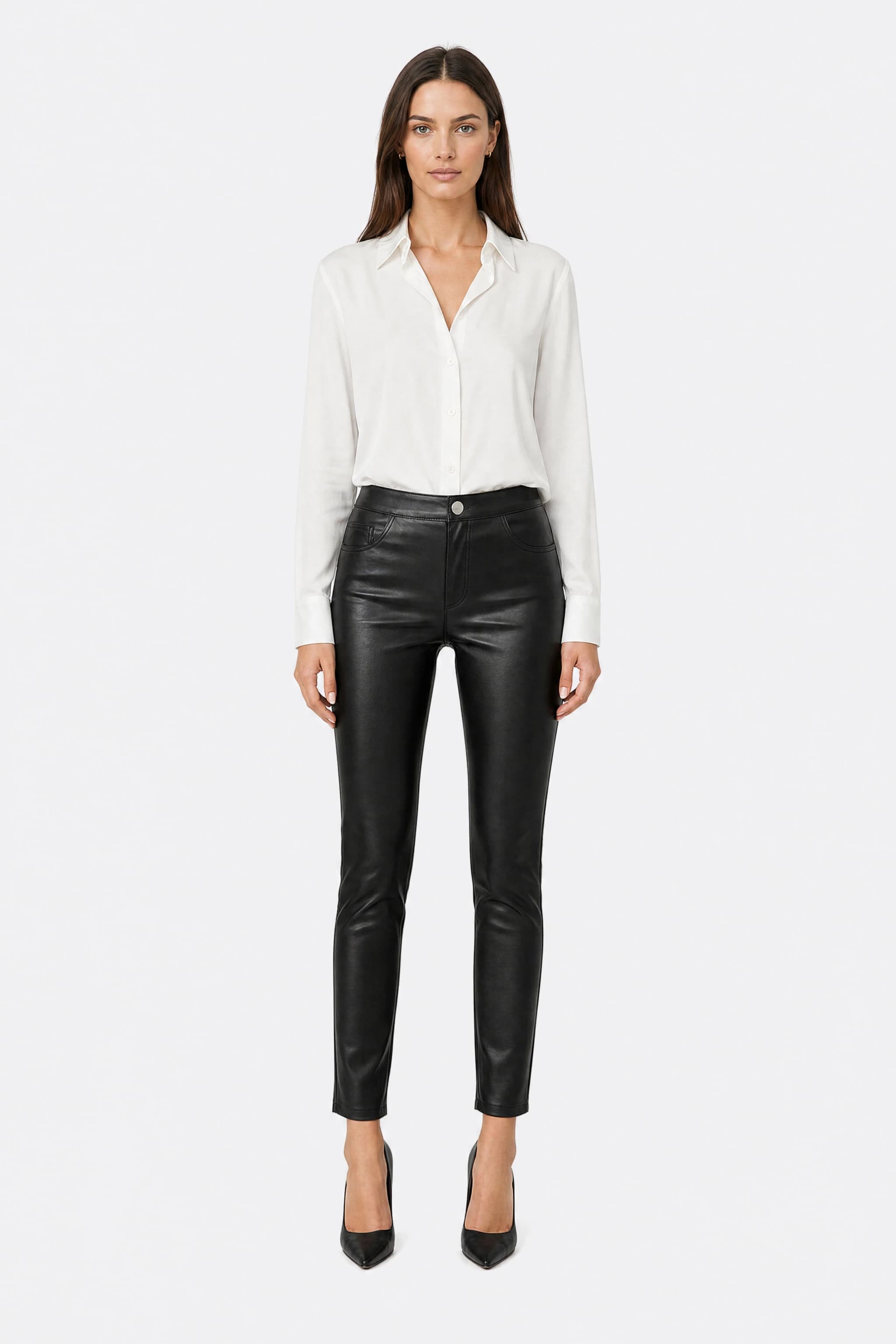
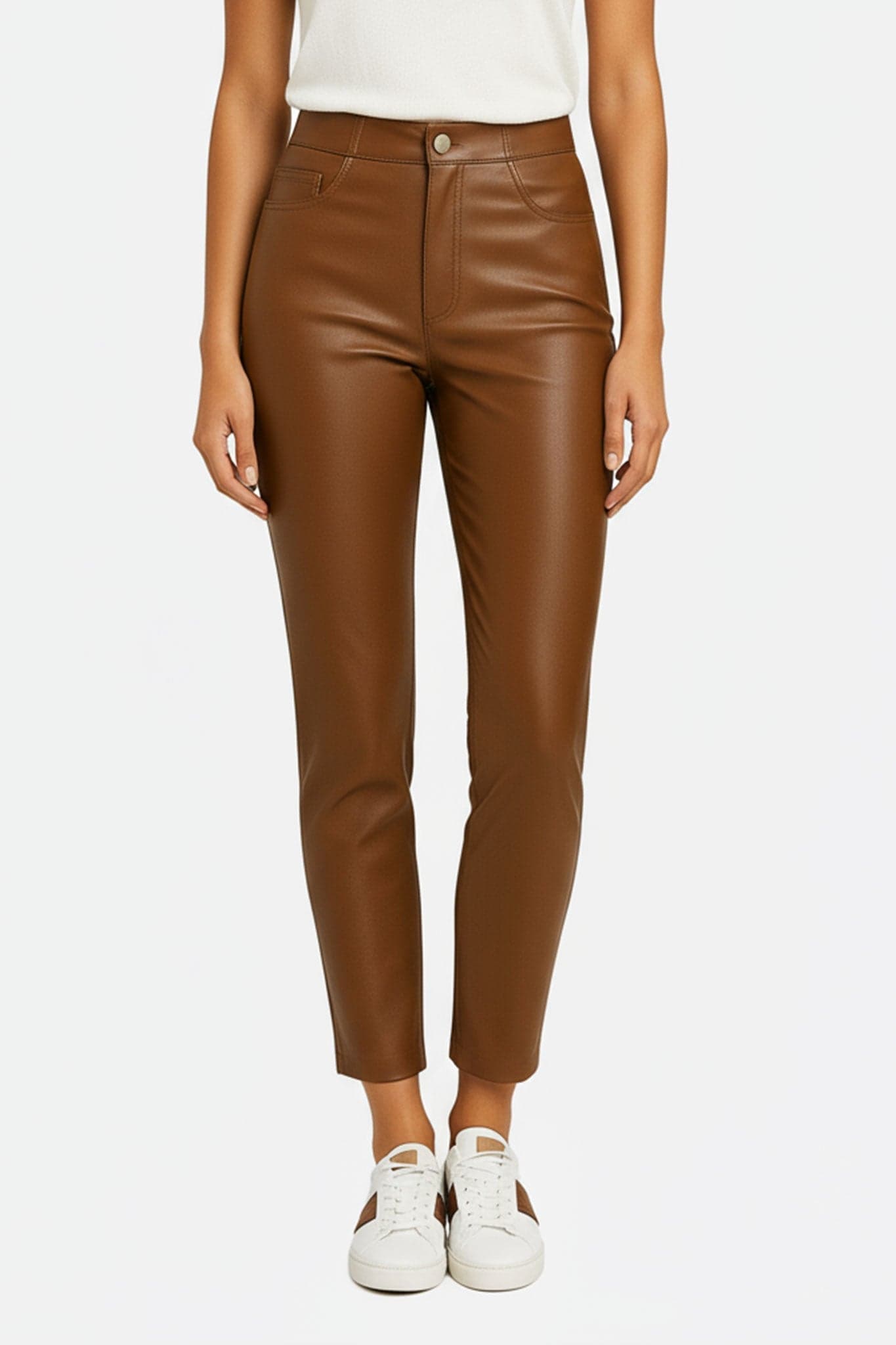
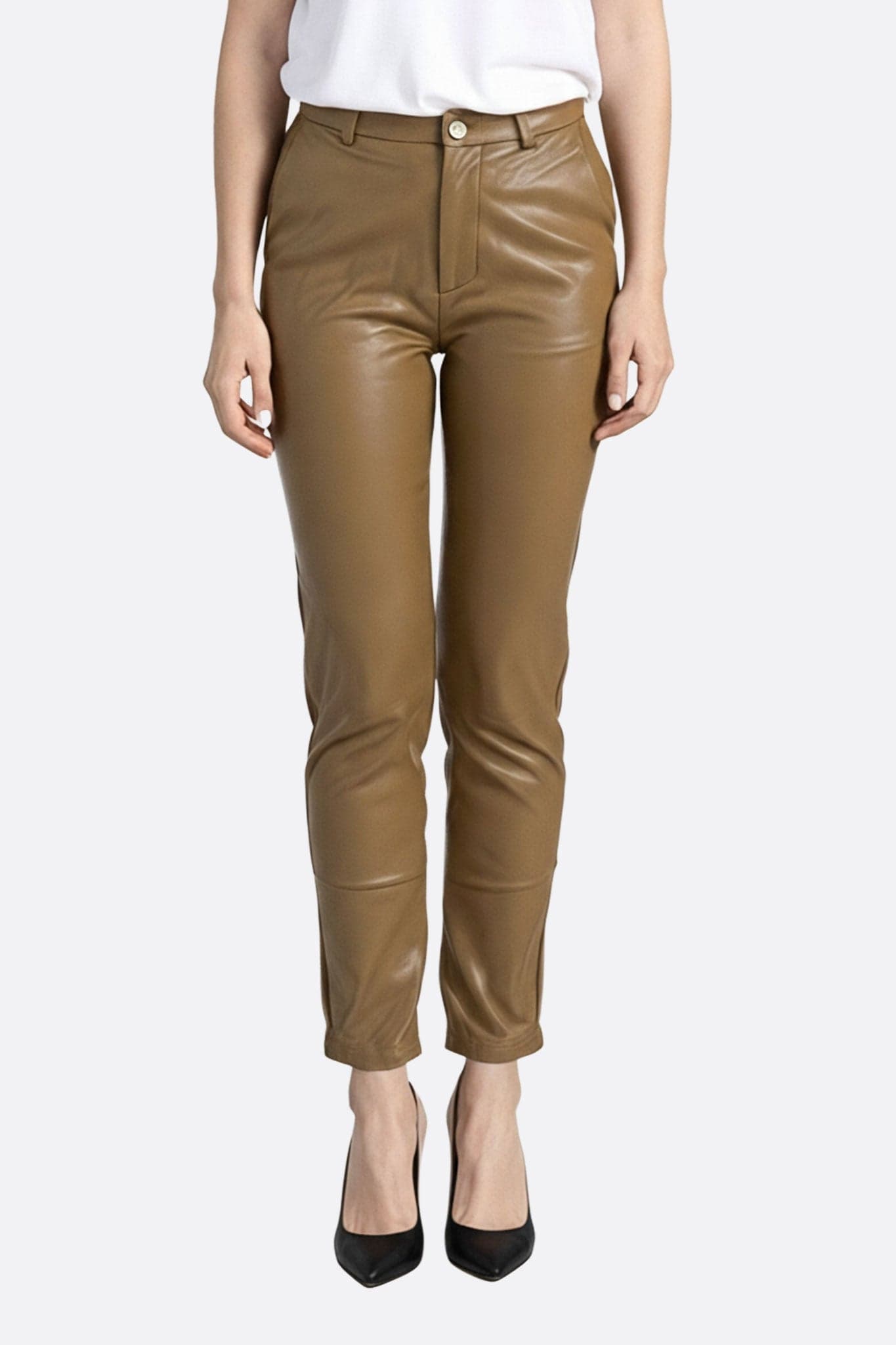
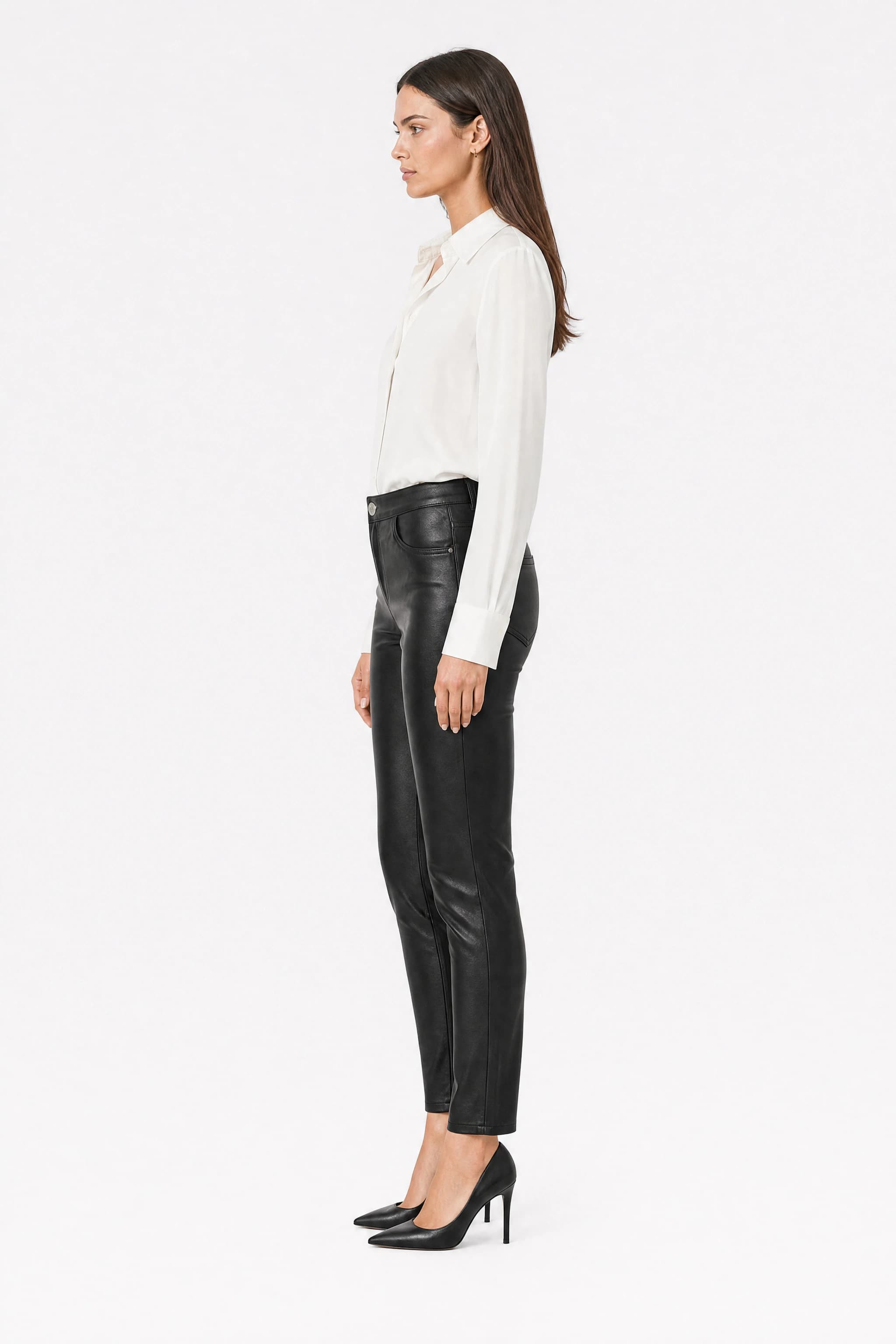
Faux leather women's pants
Women's Faux Leather Pants: PU vs PVC Material and Care
Faux leather (PU leather) is a textile fabric covered with a layer of polyurethane (PU) or PVC. Its surface imitates the grain of leather, but its physical properties are radically different. Genuine leather softens over time and takes the shape of the body. Faux leather remains rigid and identical from the first to the last wear: it does not develop a patina. In exchange, it is water-resistant, does not stain, cleans with one wipe, and is significantly cheaper. These two materials have opposite life cycles.
Faux leather (PU leather) is a textile fabric covered with a layer of polyurethane (PU) or PVC. Its surface imitates the grain of leather, but its physical properties are radically different. Genuine leather softens over time and takes the shape of the body. Faux leather remains rigid and identical from the first to the last wear: it does not develop a patina. In exchange, it is water-resistant, does not stain, cleans with one wipe, and is significantly cheaper. These two materials have opposite life cycles.
PU vs PVC: The Two Faux Leathers
PU (polyurethane): the premium version of faux leather. More flexible, slightly more breathable than PVC, surface closer to genuine leather to the touch. Lasts 2-5 years with proper care before the surface starts to crack or peel. PVC (vinyl chloride): more rigid, shinier, maximum waterproofing: appears more "plastic." Cheaper than PU, less comfortable over long hours. The distinction is not always clearly labeled: "faux leather" without specification can be either. To check: PU is more flexible and matte, PVC more rigid and shiny.
Breathability and Thermal Comfort
Faux leather (PU and PVC) has near-zero breathability: the plasticized surface blocks the passage of air and sweat. Over long periods of wear (8-hour office day, evening), the skin under faux leather may sweat more than with a breathable fabric. Practical solutions: wear a thin cotton underlayer (thin leggings under faux leather if the cut allows), choose faux leather pants with a jersey fabric back (some models), wear faux leather for short occasions (4-5 hour evening) rather than entire days. In autumn-winter (low temperatures), sweating is less and faux leather can be worn without discomfort.
Care: What Kills Faux Leather
Absolutely avoid: tumble dryer (heat permanently cracks the PU/PVC surface), direct ironing on faux leather (same effect), alcohol or acetone-based products (dissolve the PU layer). Recommended washing: hand or machine 30°C delicate program, inside out (surface inside), mesh bag. Air dry, never in direct sunlight (UV degrades PU). Folding: faux leather can crease if stored folded for a long time: hang on a hanger. To nourish faux PU: synthetic leather cream (not genuine leather cream) applied 1-2 times a year to prolong lifespan. The main cause of premature deterioration is repeated friction (crotch, knees): areas where PU wears out first.
Cuts and Effects: Slim, Skinny, Wide
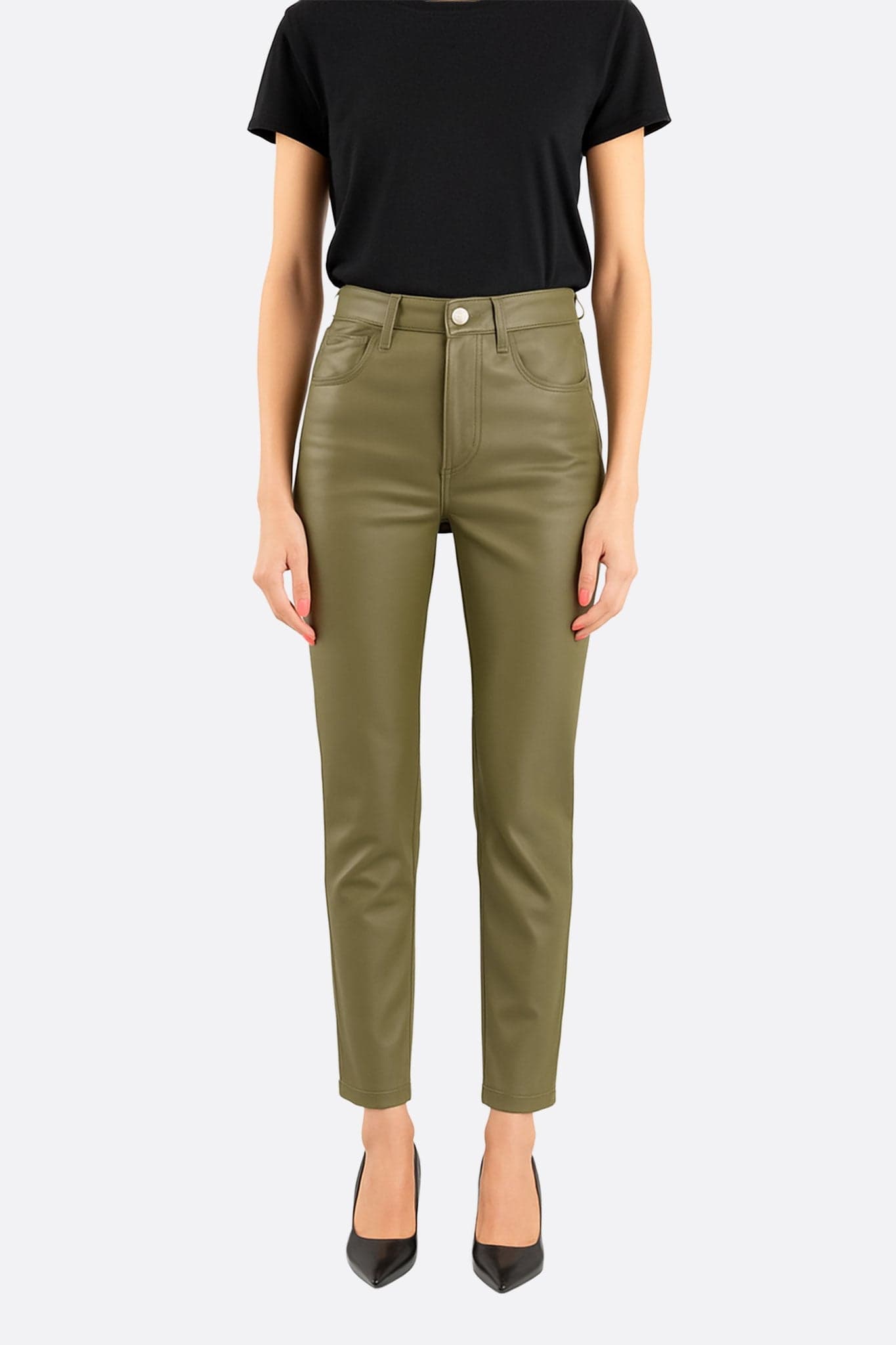
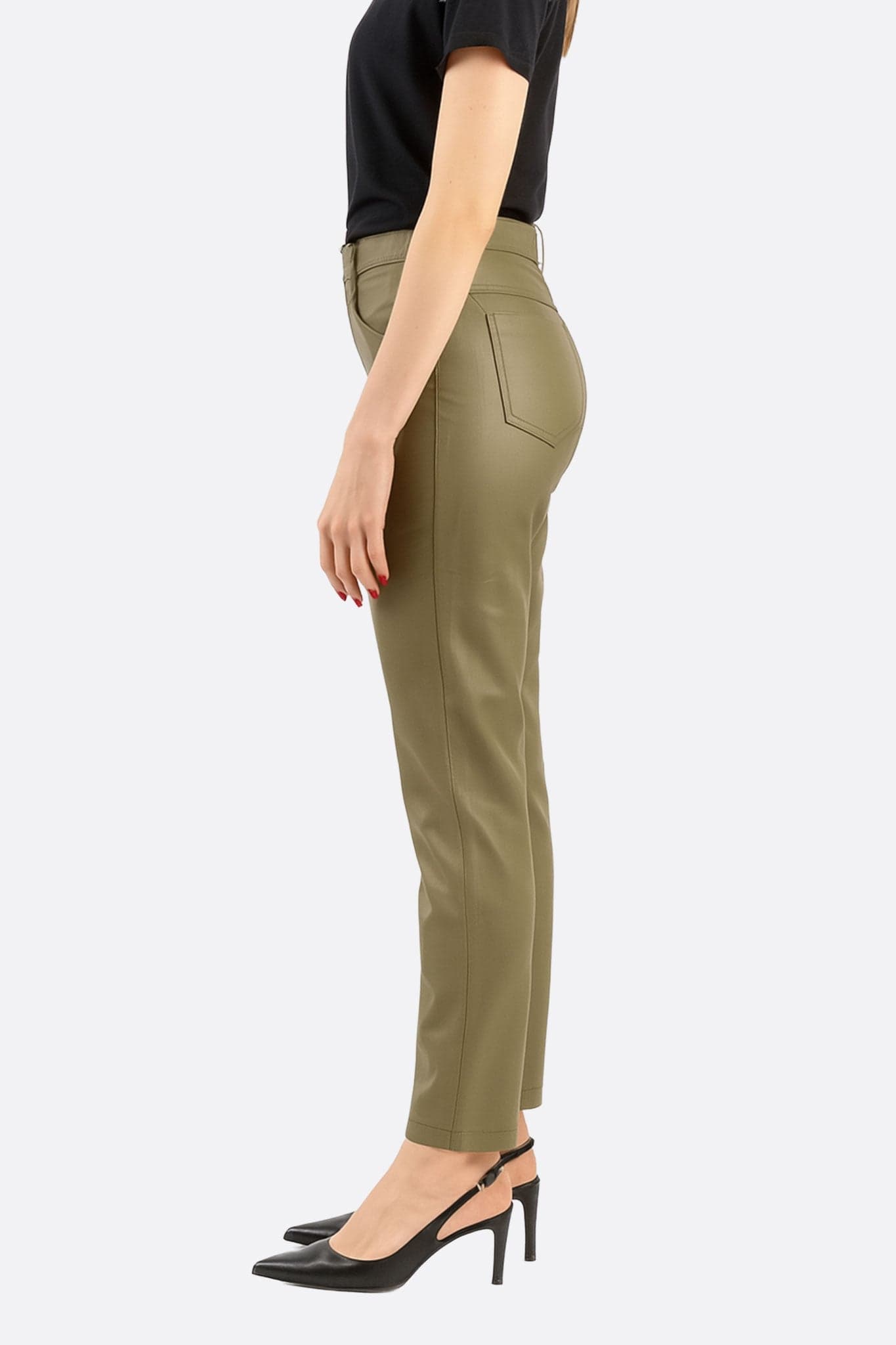
Slim faux leather (fitted): the classic cut: the rigidity of faux leather structures the leg and gives it a neat shape. This is the cut where faux leather best imitates genuine leather. Skinny faux leather: very fitted, highlights the leg but requires elastane in the composition to facilitate putting on (rigid faux leather does not stretch). Wide faux leather: less common: the rigidity of the material is less suited to large widths. The folds of a wide faux leather pant may appear artificial. Standard length: 7/8 (ankle) or classic length. The 7/8 length is practical as it avoids alterations and highlights the shoe.
Available Colors and Their Effects
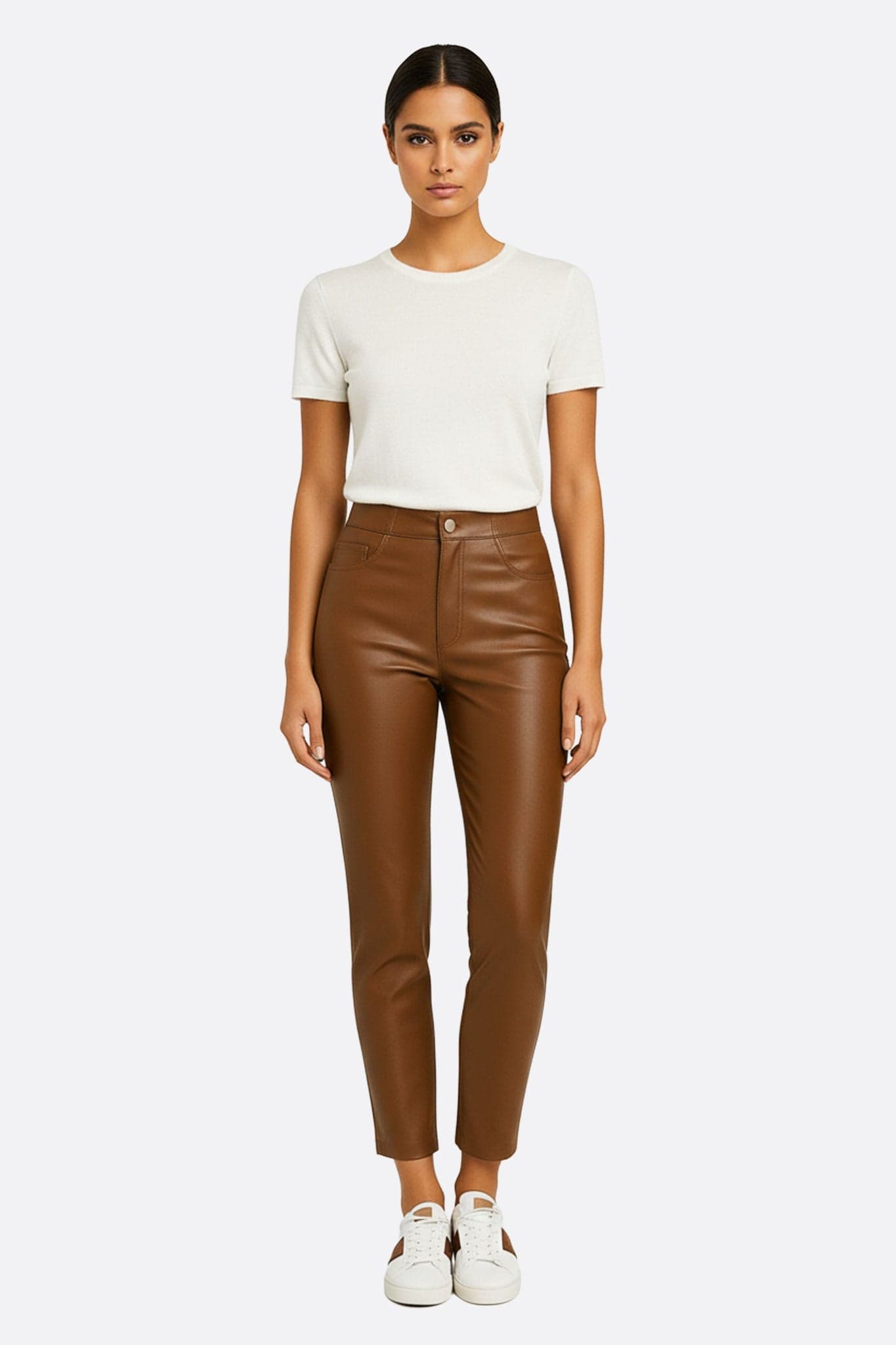
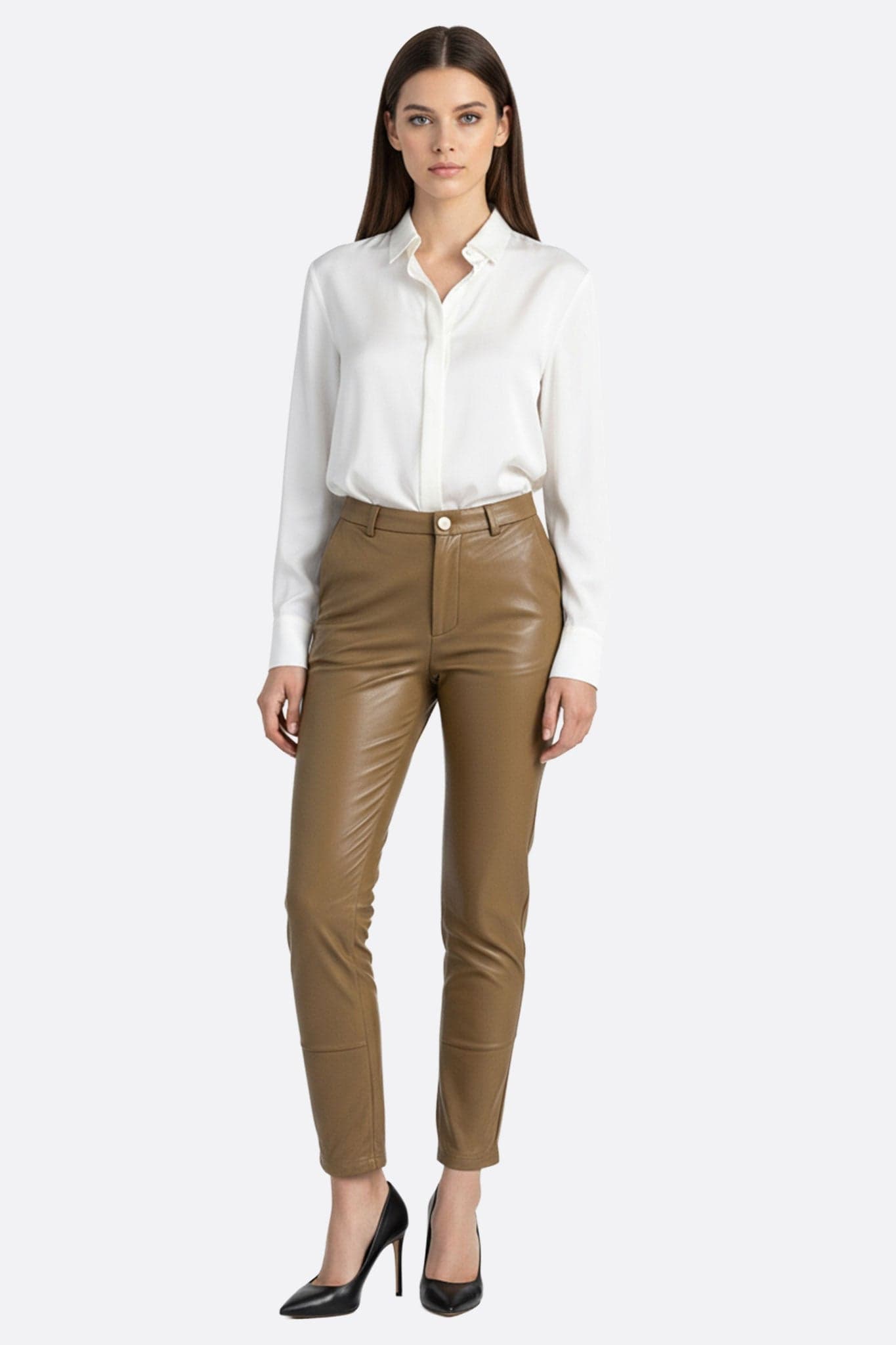
Black: the dominant color of faux leather: optical recession, rock or sophisticated look depending on the top paired. Brown or cognac: more casual than black, integrates better into a daily or autumn look. Khaki green: colored neutral, versatile, easily combines. Bordeaux: festive and feminine, alternative to black for evenings. Off-white or cream: spring-like, very contemporary look: dirt more visible. Bright colors (red, electric blue): strong piece, intentional styling. Faux leather saturates color more intensely than textile fabrics: colors in faux leather appear deeper and brighter than in cotton or viscose.
What is the difference between faux leather and genuine leather?
Genuine leather is treated animal skin that softens over time, takes the shape of the body, and develops a unique patina. It breathes slightly and lasts 10-20 years when maintained. Faux leather (PU) is a textile covered with polyurethane: rigid and identical from the first to the last wear, non-breathable, lasts 2-5 years. In exchange: total waterproofness, easy maintenance, affordable price.
Can you machine wash faux leather pants?
Yes, with precautions: machine 30°C delicate program, mesh bag, turned inside out (plasticized surface inside). Air drying only: the dryer causes irreversible degradation of the PU layer. Never iron directly on the faux surface. Never use alcohol or acetone-based products.
How to extend the lifespan of faux leather pants?
Store on a hanger (not folded: creases mark permanently). Apply a synthetic leather cream 1-2 times a year. Avoid prolonged wear in high heat (sweat degrades the PU from the inside). Friction areas (crotch, knees) wear out first: inspect regularly. Properly maintained PU can last up to 5 years before cracking.