Fast & secure deliveryFree shipping in France from €99Easy returns
Fast & secure deliveryFree shipping in France from €99Easy returns
Pink swimsuits
Women's Pink Swimsuit: Tone, Complexion, and Psychology
Pink exists on a spectrum between three poles: cool pink (blue-pink, lilac), warm pink (peach, coral), neutral pink. The choice according to complexion follows a precise chromatic logic. Fair/rosy skin = cool pink (complement). Olive/golden skin = peach or coral (warm analogue). Dark skin = fuchsia or bright pink (strong contrast, enhancement). Documented psychology: Baker-Miller pink reduces heart rate and muscle tone. In beachwear, pink signals relaxation, not performance.
Pink exists on a spectrum between three poles: cool pink (blue-pink, lilac), warm pink (peach, coral), neutral pink. The choice according to complexion follows a precise chromatic logic. Fair/rosy skin = cool pink (complement). Olive/golden skin = peach or coral (warm analogue). Dark skin = fuchsia or bright pink (strong contrast, enhancement). Documented psychology: Baker-Miller pink reduces heart rate and muscle tone. In beachwear, pink signals relaxation, not performance.
Theory of Pink Tone
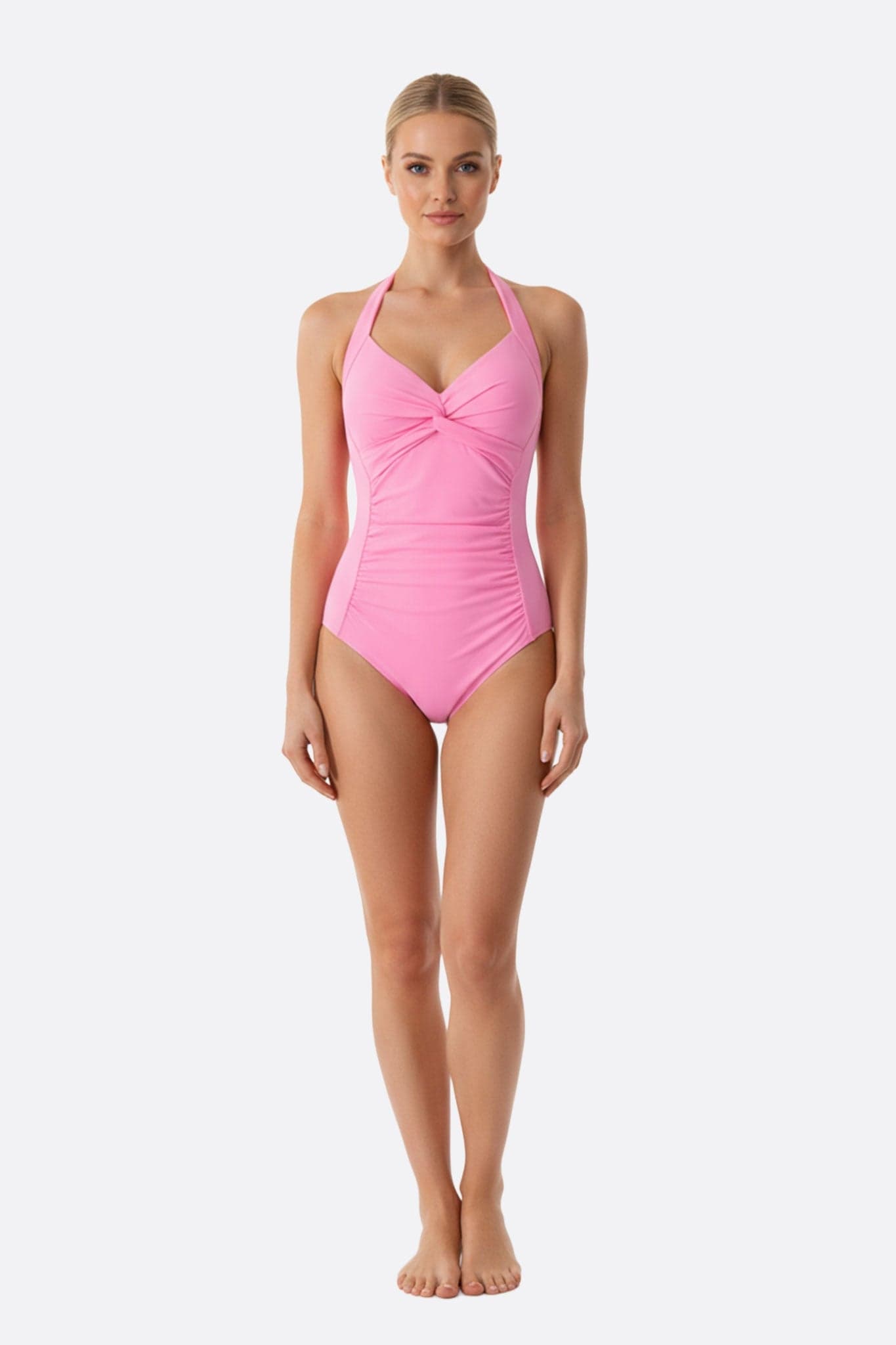
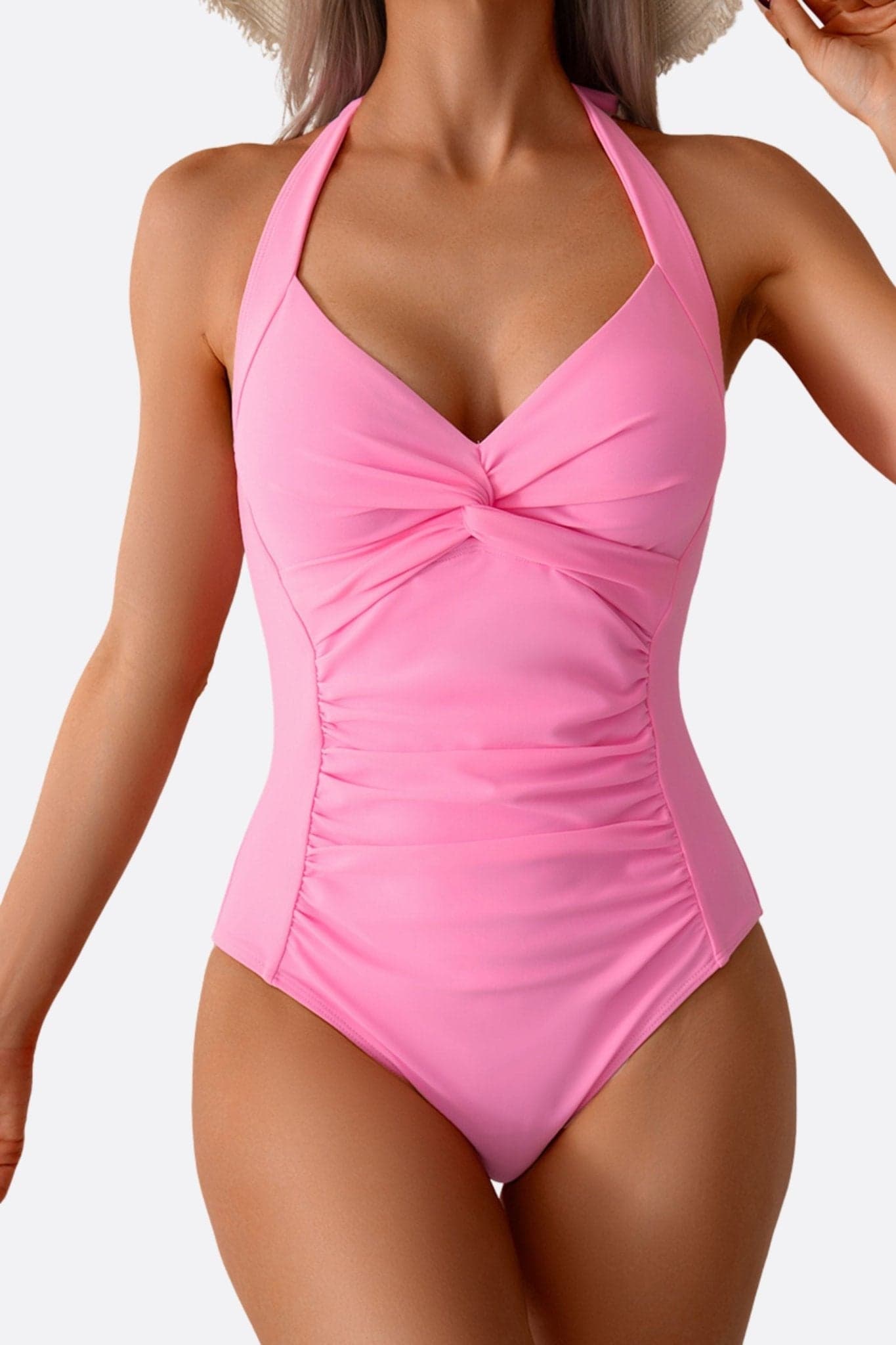
Three families of pink with opposing chromatic effects. Cool pink (lilac, lavender, cornflower pink): creates a refreshing contrast on warm-dominant skin. Warm pink (peach, salmon, coral): harmonizes with golden tones, creates amplified warmth on tanned skin. Neutral pink (nude pink, powder pink): almost neutral, close to complexion, natural nude effect similar to pastels.
Pink According to Complexion
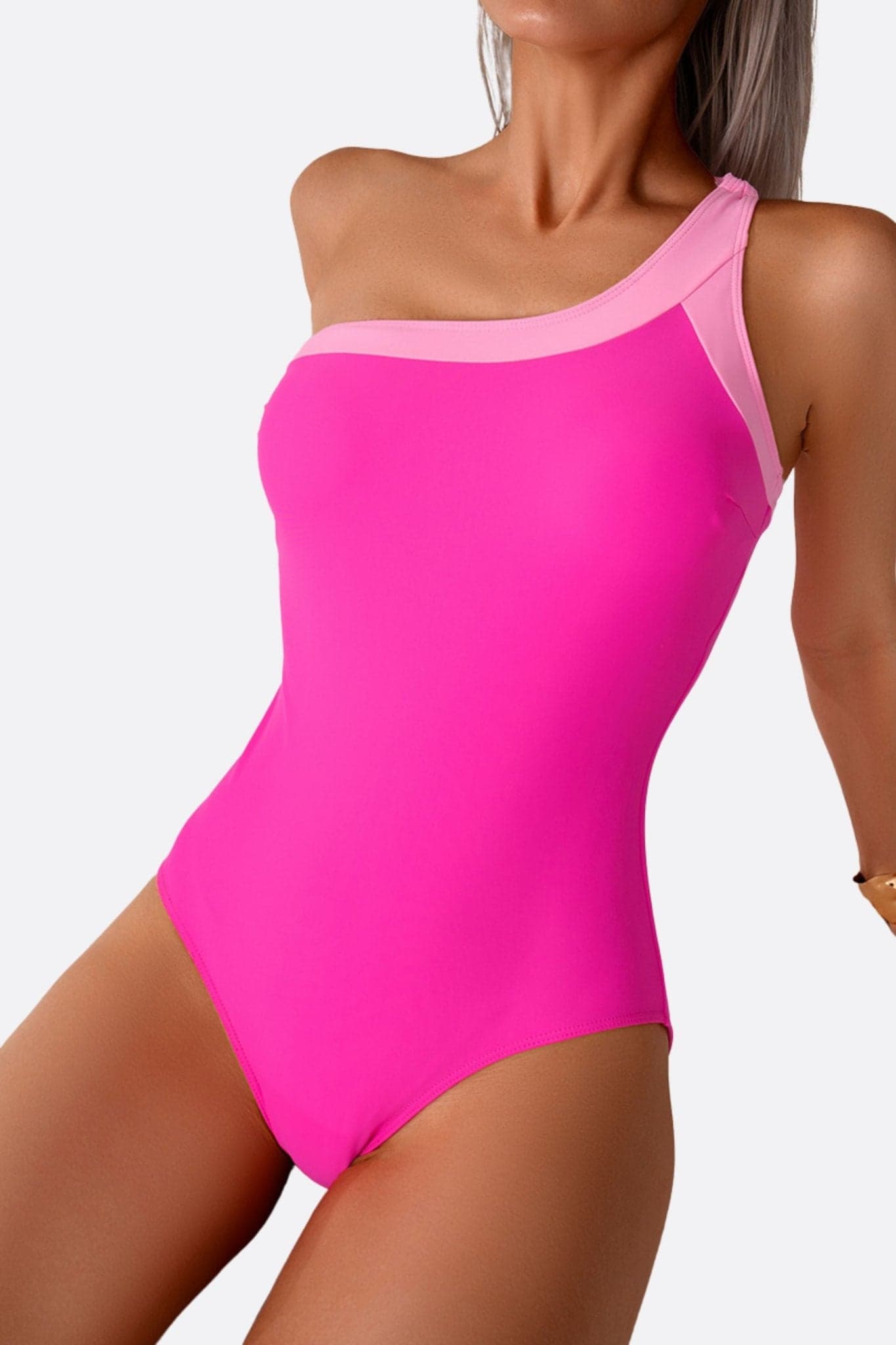
Fair and rosy skin: cool pink or lavender, the contrast creates brightness without harshness. Olive or golden skin: peach or coral pink, warm analogue harmony, skin appears even more sun-kissed. Dark skin: bright pink or intense fuchsia, strong contrast that enhances. Very pale or neutral skin: nude or powder pink, skin effect and natural extension. The rule: the right pink does not "cover" the skin, it reveals it.
Documented Psychology of Pink
Baker-Miller pink (saturated bubble-gum pink) was studied in the 1970s-80s: exposure to this shade reduced heart rate and muscle tone in observers. In beachwear, pink is the non-verbal signal of relaxation and gentle femininity, opposed to sporty colors (navy blue, black, acid green). Choosing a pink is choosing an intention for the moment: vacation, rest, pleasure.
4 Pinks, 4 Concrete Uses
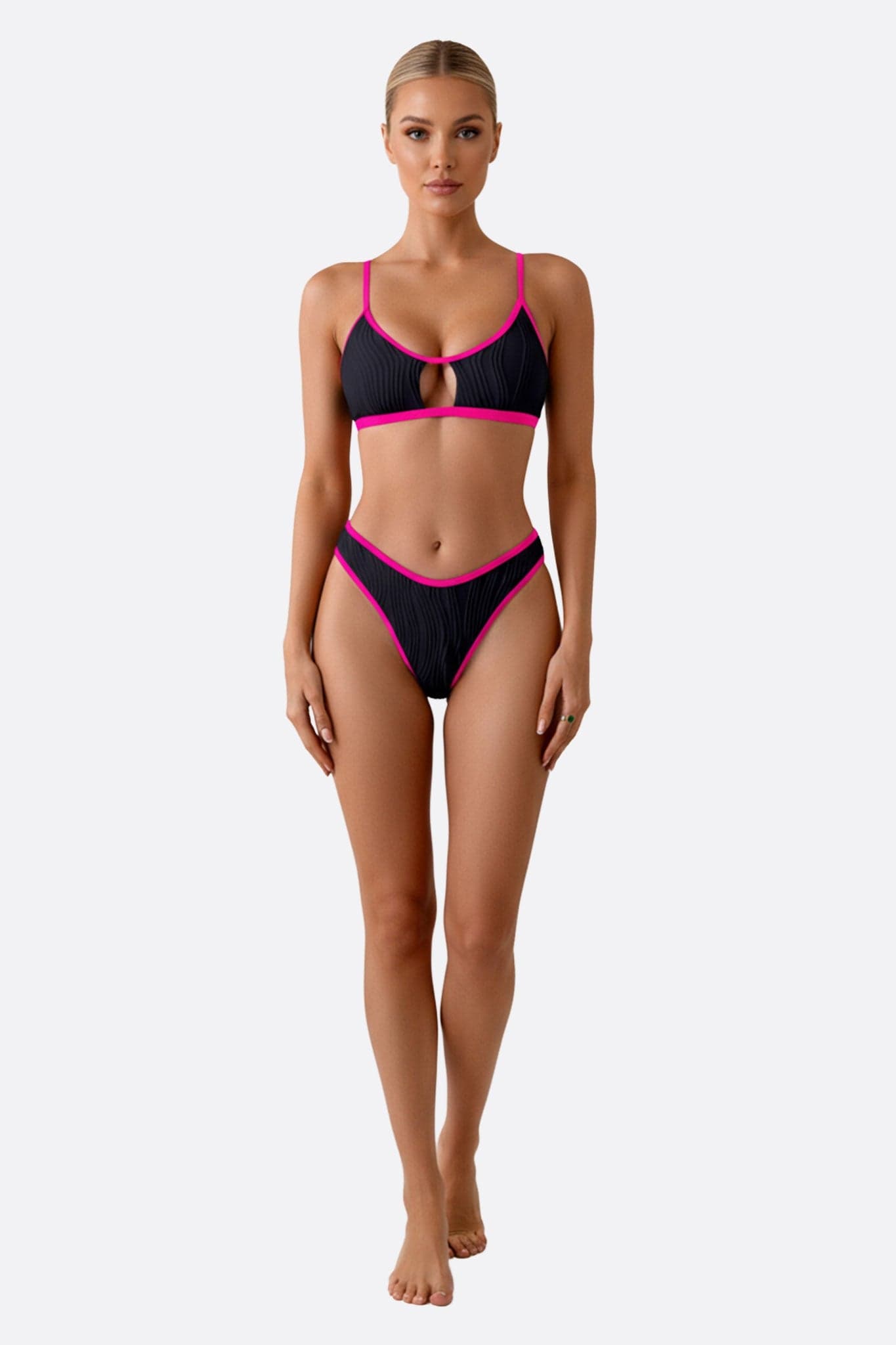
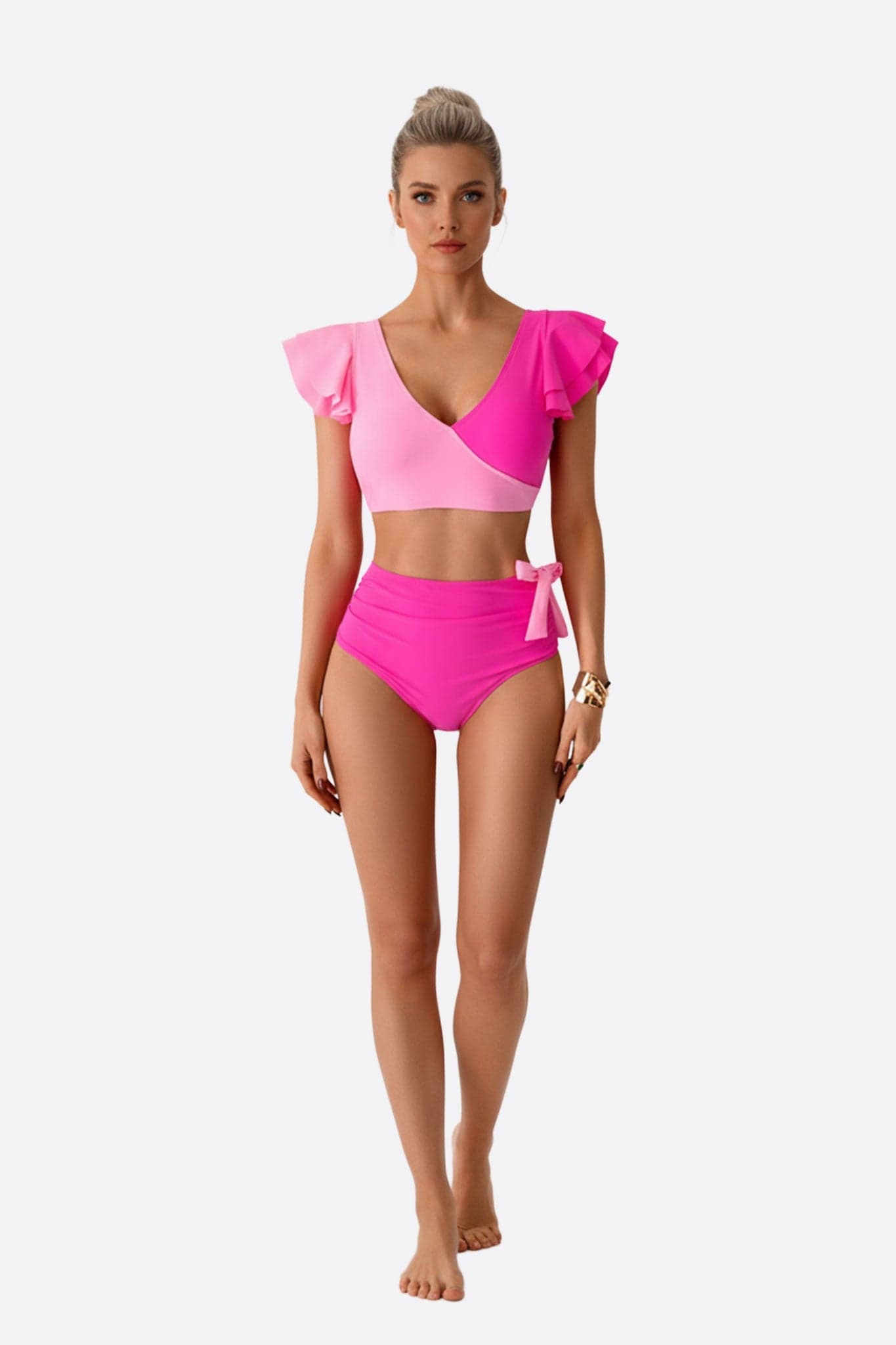
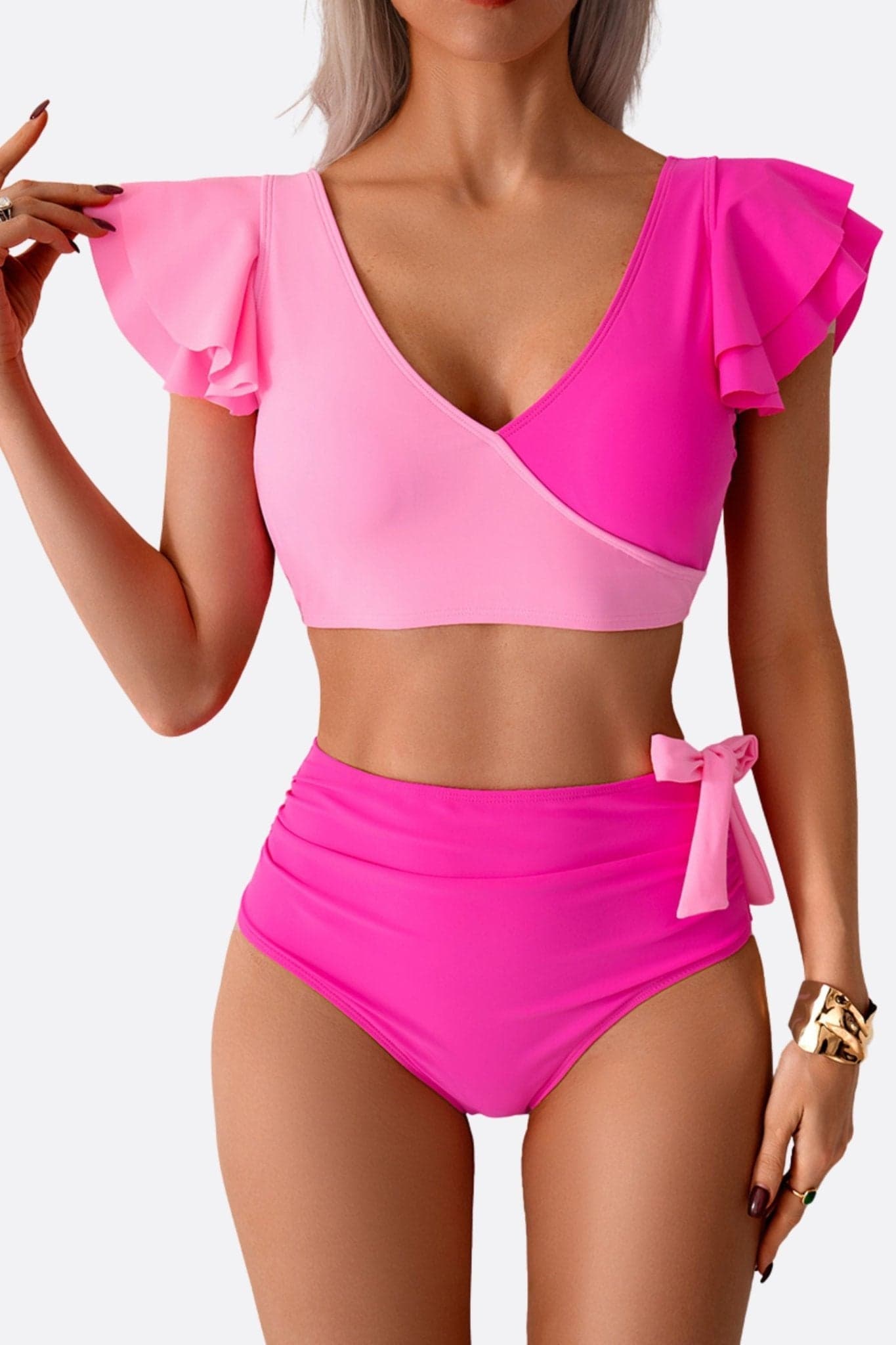
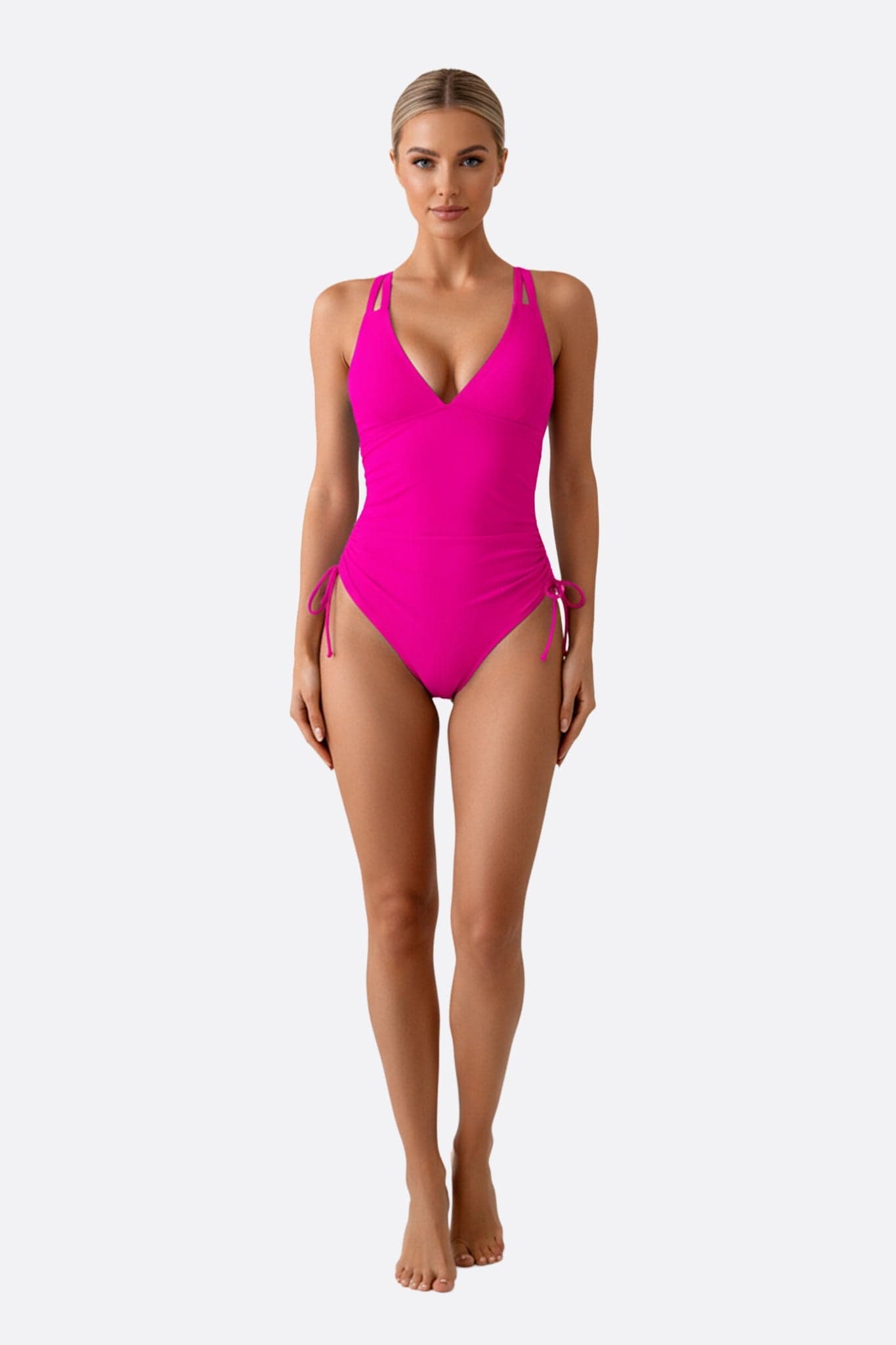
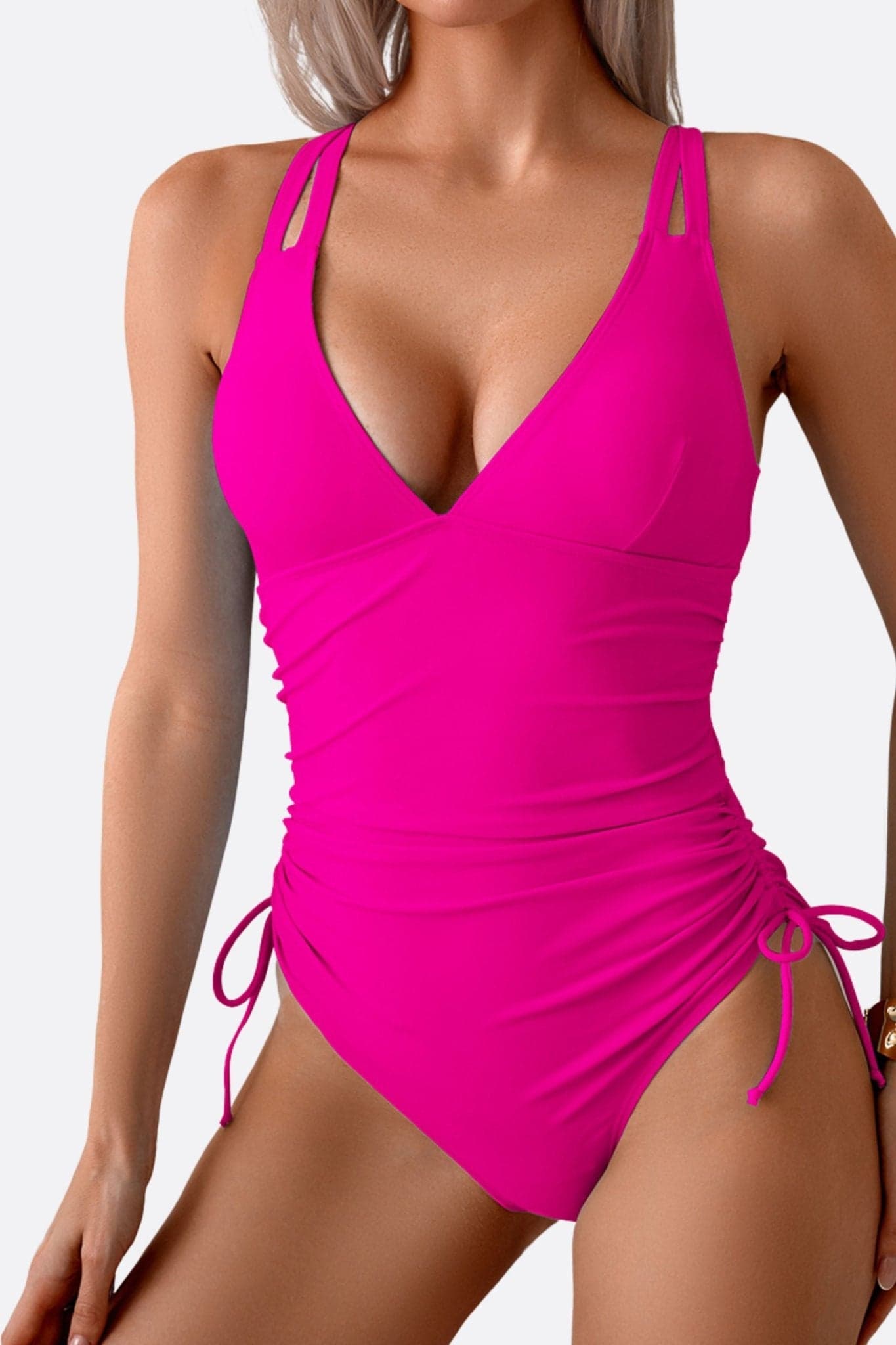
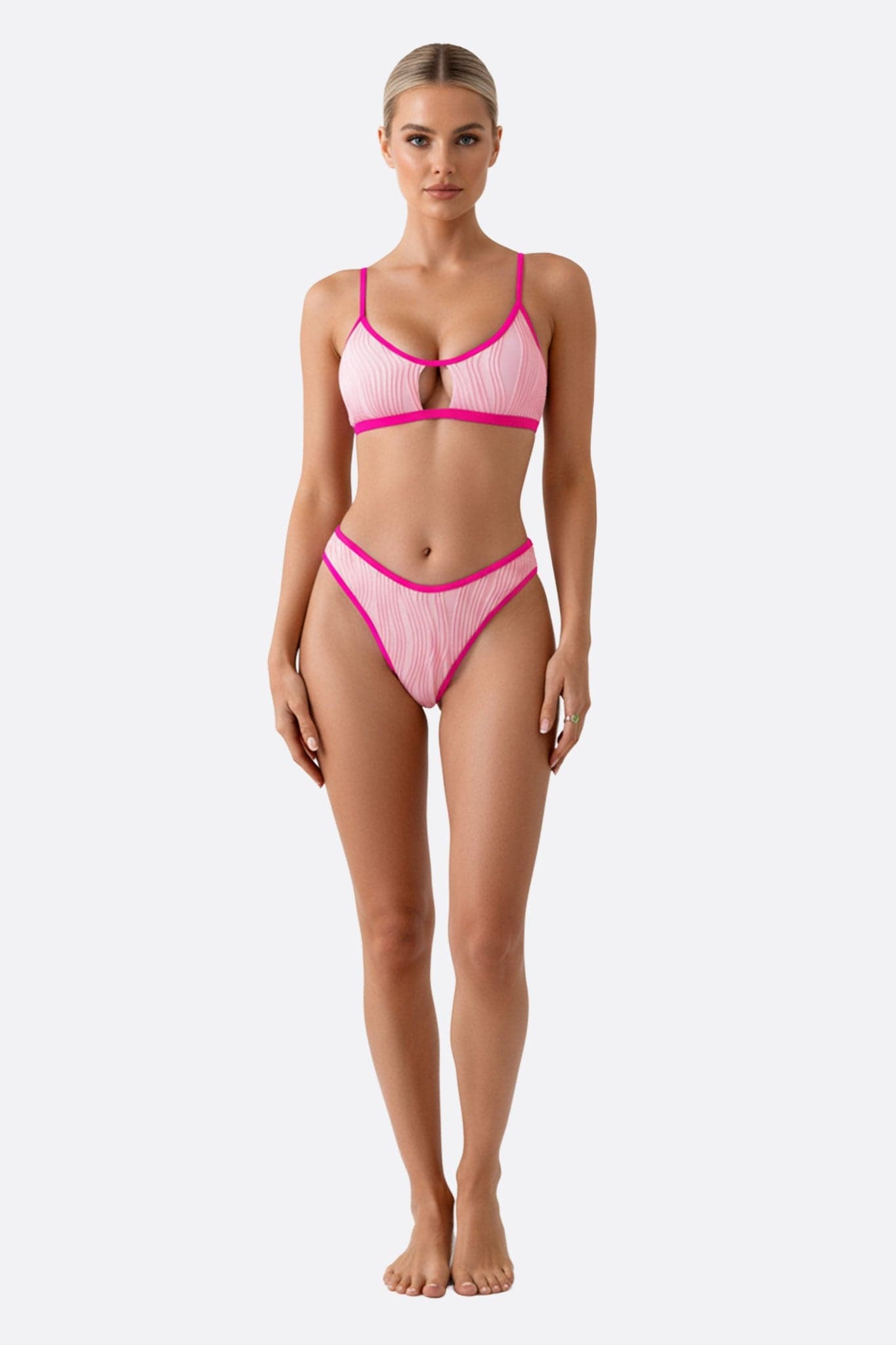
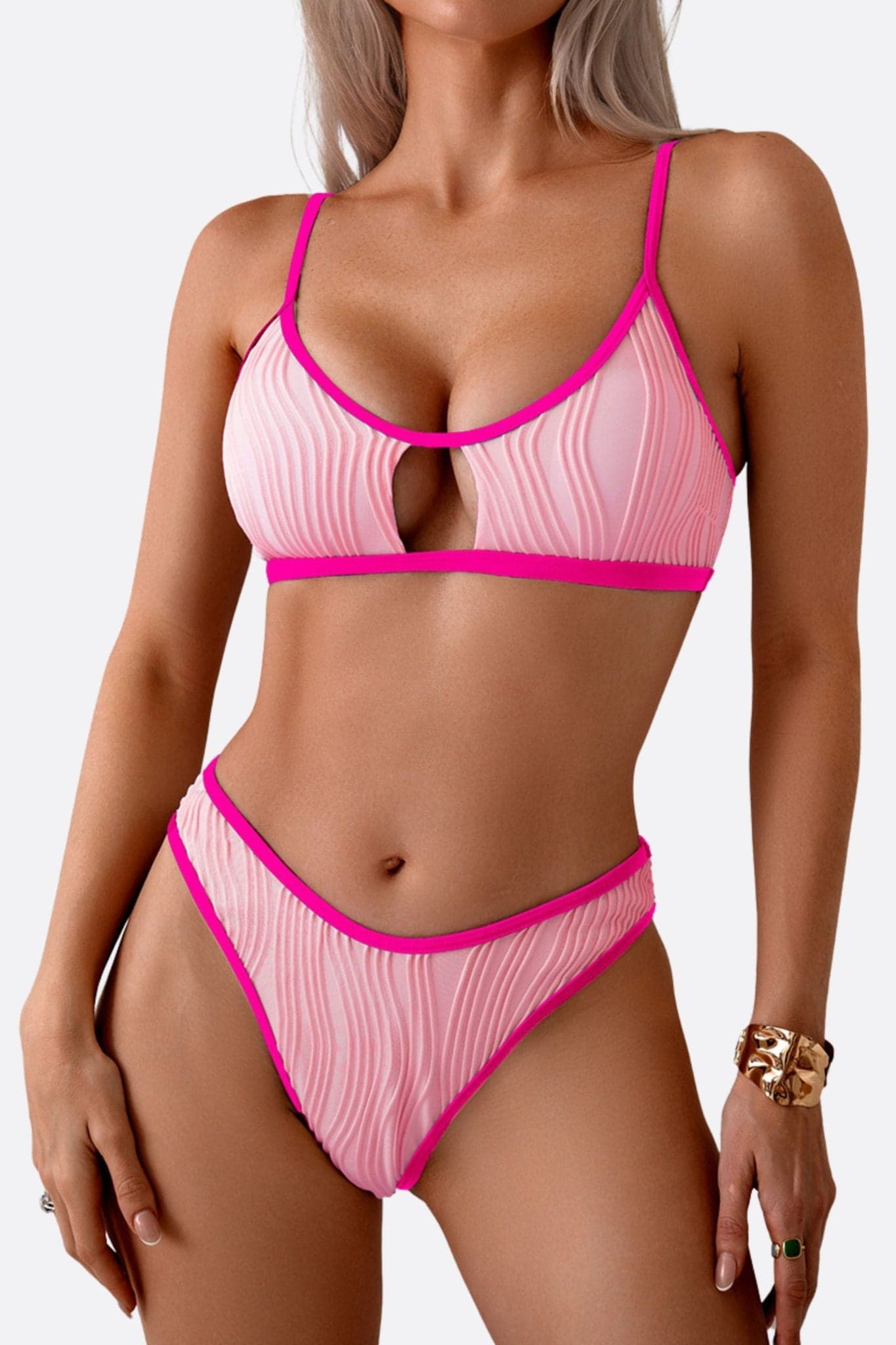
Pale/powder pink: discreet day, nude effect, quiet pool. Fuchsia: beach evening, cocktail, visible from afar, strong signal. Coral: active day, mix of warmth and dynamism, universal. Nude pink (skin-like): skin illusion, photographic effect, creates an impression of uncovered body.
Care for Pinks
Warm pinks (coral, salmon, peach) contain orange pigments that can turn yellow-orange under intense UV. Cool pinks (fuchsia, lilac) are more UV stable but can lighten in chlorine. Rinse with cold water immediately after swimming, dry in the shade. No harsh detergents on warm pinks: orange pigments are fragile to strong bases.
Fair skin: cool pink or lavender. Olive or golden skin: peach or coral. Dark skin: fuchsia or bright pink. The chromatic rule: pink must be sufficiently different from your complexion to create a visible contrast, not blend with it.
Can fuchsia be worn both day and night?
Yes, but the intensity changes everything. During the day, a matte fuchsia is dynamic and sunny. In the evening, a shiny fuchsia (lycra) under the lights becomes glamorous. The cut does the rest: fuchsia bustier = evening, high-waisted fuchsia = active day.
Is coral always classified in the pink category?
Coral is a pink-orange: between warm pink and strong orange. It belongs to the family of warm pinks. Its advantage: it is the most universally chromatic, flattering on almost all complexions including very fair ones.