Fast & secure deliveryFree shipping in France from €99Easy returns
Fast & secure deliveryFree shipping in France from €99Easy returns
Swimsuits
Women's swimwear: one-piece, two-piece, and choice by body type
The fabric of a swimsuit determines its lifespan as much as its appearance. Pool chlorine degrades polyester and elastane: fibers relax, seams stretch, colors fade. Polyamide (nylon) resists chlorine 30 to 40% better than polyester: it's the difference between a swimsuit that lasts 1 season and one that lasts 3 to 5 seasons. The composition label says it all: polyamide or elastane = chlorine-resistant. Polyester = less resistant.
The fabric of a swimsuit determines its lifespan as much as its appearance. Pool chlorine degrades polyester and elastane: fibers relax, seams stretch, colors fade. Polyamide (nylon) resists chlorine 30 to 40% better than polyester: it's the difference between a swimsuit that lasts 1 season and one that lasts 3 to 5 seasons. The composition label says it all: polyamide or elastane = chlorine-resistant. Polyester = less resistant.
Polyamide vs polyester: the key to longevity
Polyamide (nylon, Lycra XTRA LIFE) is the standard fiber for professional and high-end swimsuits. Its molecular structure resists the chemical attacks of chlorine (sodium hypochlorite) and UV without losing its elasticity. A swimsuit made of 80% polyamide / 20% elastane retains its shape and color significantly longer than a swimsuit made of 80% polyester / 20% elastane. Polyester is cheaper to produce: hence its presence in entry-level swimsuits. Lycra XTRA LIFE (Invista brand) is an elastane formulation specifically designed for chlorine resistance: swimsuits using it often mention it on the label. For regular pool use: look for "polyamide" or "nylon" in the composition.
Why swimsuits fade and how to prevent it
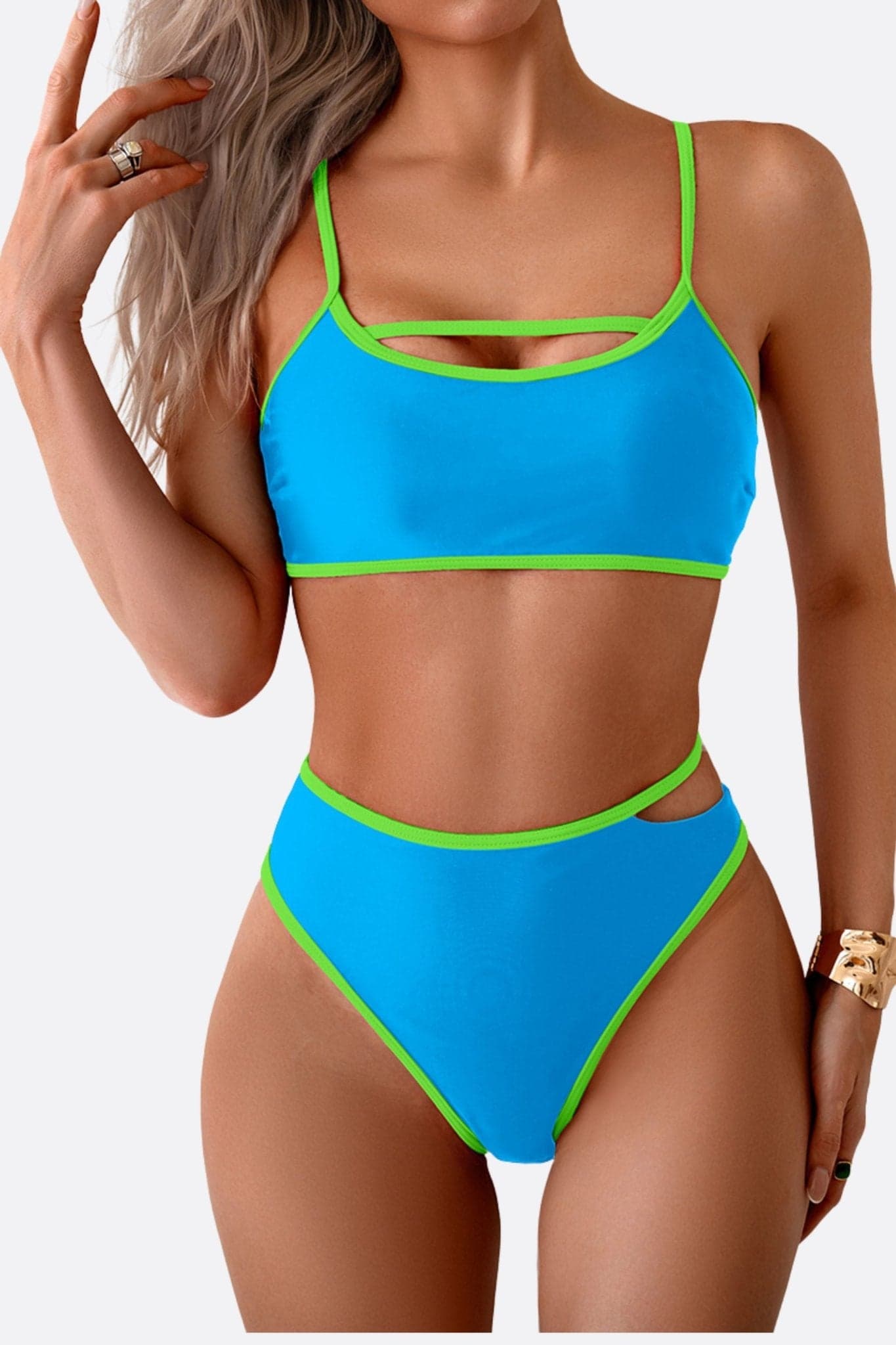
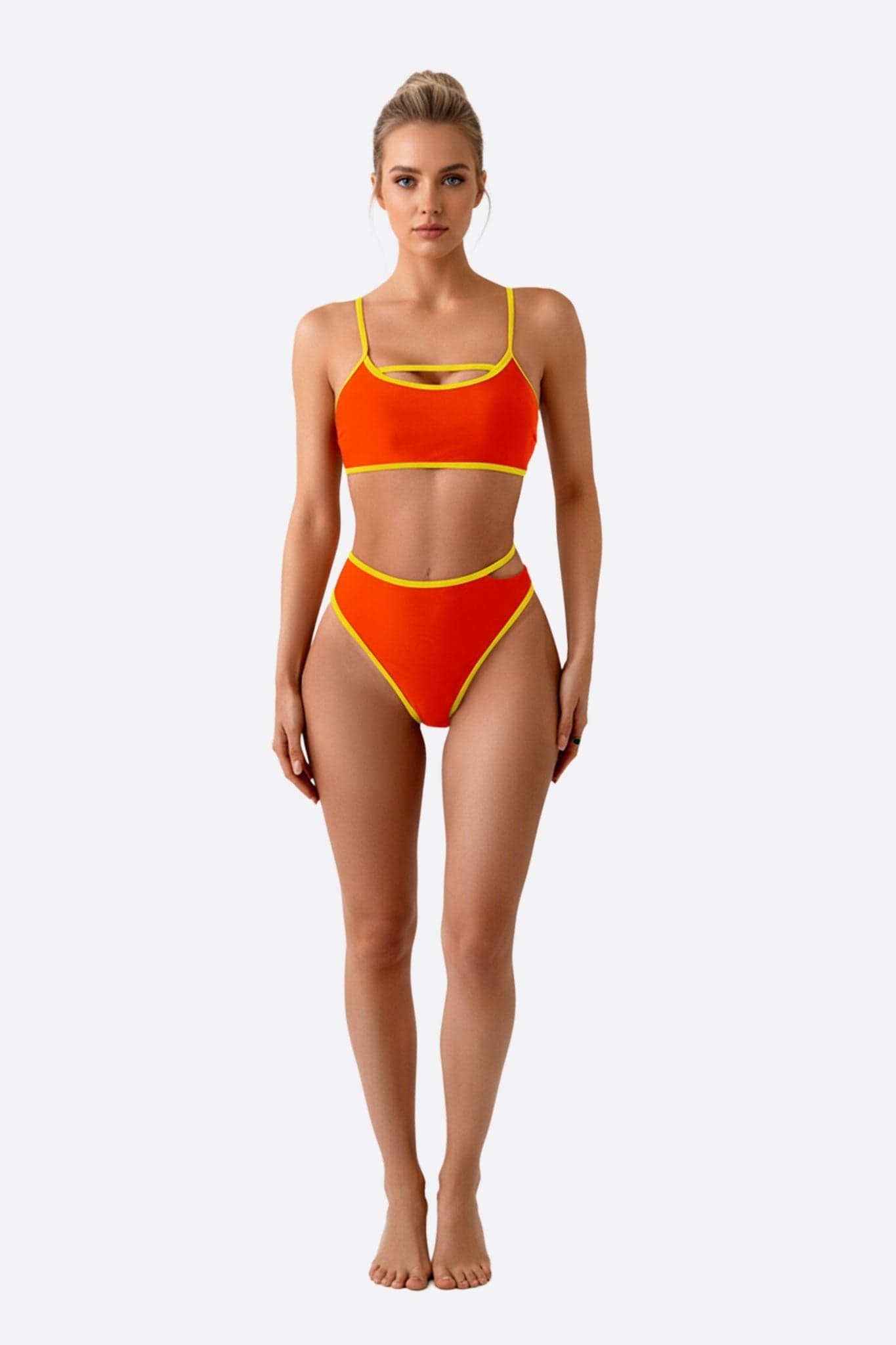
Chlorine fading: chlorine oxidizes textile pigments and degrades fibers: bright colors (red, electric blue) fade faster than dark colors (black) because they contain more soluble pigment. Pastel swimsuits (little pigment) also fade faster. To limit fading: rinse the swimsuit in cold water BEFORE entering the pool: the fabric saturated with clean water absorbs less chlorine. Rinse immediately after. Never leave a wet swimsuit folded in a pool bag: chlorine concentrates in the folds. UV fading: the sun degrades all pigments: dark swimsuits absorb more UV (heating more) but light swimsuits fade more visibly. UPF protection (Ultraviolet Protection Factor): some swimsuit fabrics are certified UPF 50+: they block 98% of UV and preserve color.
Support and underwire: when and why
A swimsuit without underwire (no boning or preformed cups) holds by the elasticity of the fabric alone: suitable for small busts (cup A-B) with little weight to support. From cup C and beyond: swimsuits without underwire offer insufficient support for activities (swimming, water sports) and may lack comfort. Underwires in swimsuits are made of plastic (not metal) to resist water and chlorine. A swimsuit with pre-formed cups (padded or thermoformed foam) maintains shape independently of the fabric: ideal for small busts seeking a more structured look. An integrated swim bra (bralette or bustier with lining) is halfway between the two.
UPF and sun protection of swimsuits
The Ultraviolet Protection Factor (UPF or FPU) measures a fabric's resistance to UV. A UPF 50+ fabric blocks 98% of UV A and B: equivalent to SPF 50 sunscreen on covered skin. An ordinary swimsuit (standard polyester or polyamide) has a UPF of 15 to 25: filters 90 to 96% of UV depending on the color (dark fabrics and tightly woven fabrics filter better). UPF 50+ swimsuits have denser fabric (less breathable) but truly protect covered skin without additional sunscreen. For sensitive skin, children, or high-altitude vacations: UPF 50+ is a real advantage. For sea use where UV is reflected by water: relevant.
Care: protocol for 3-5 seasons
Before each pool use: rinse the swimsuit in cold water (saturates the fabric with clean water, reduces chlorine absorption). After each use: rinse immediately in cold running water, do not twist or wring (damages elastanes), lay flat to dry in the shade. Regular washing: by hand only, cold water, mild detergent (no machine detergent). The machine, even at 30°C, damages elastanes through friction. Dryer: prohibited (heat destroys elastanes). Storage: clean and dry, away from UV. A polyamide swimsuit with these precautions lasts 3-5 active seasons. A polyester swimsuit without these precautions: 1 season.
One-piece vs two-piece: the choice guide
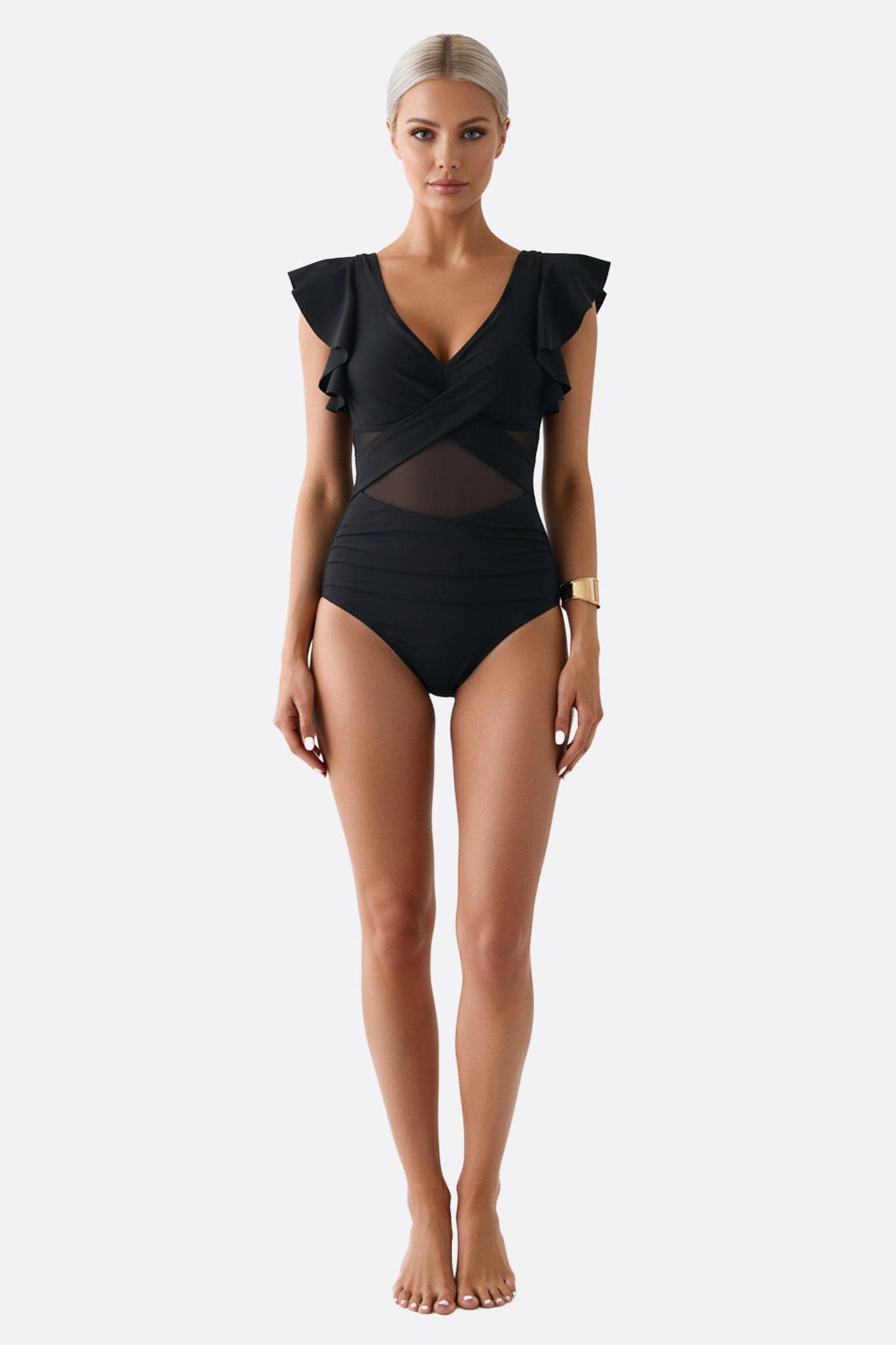
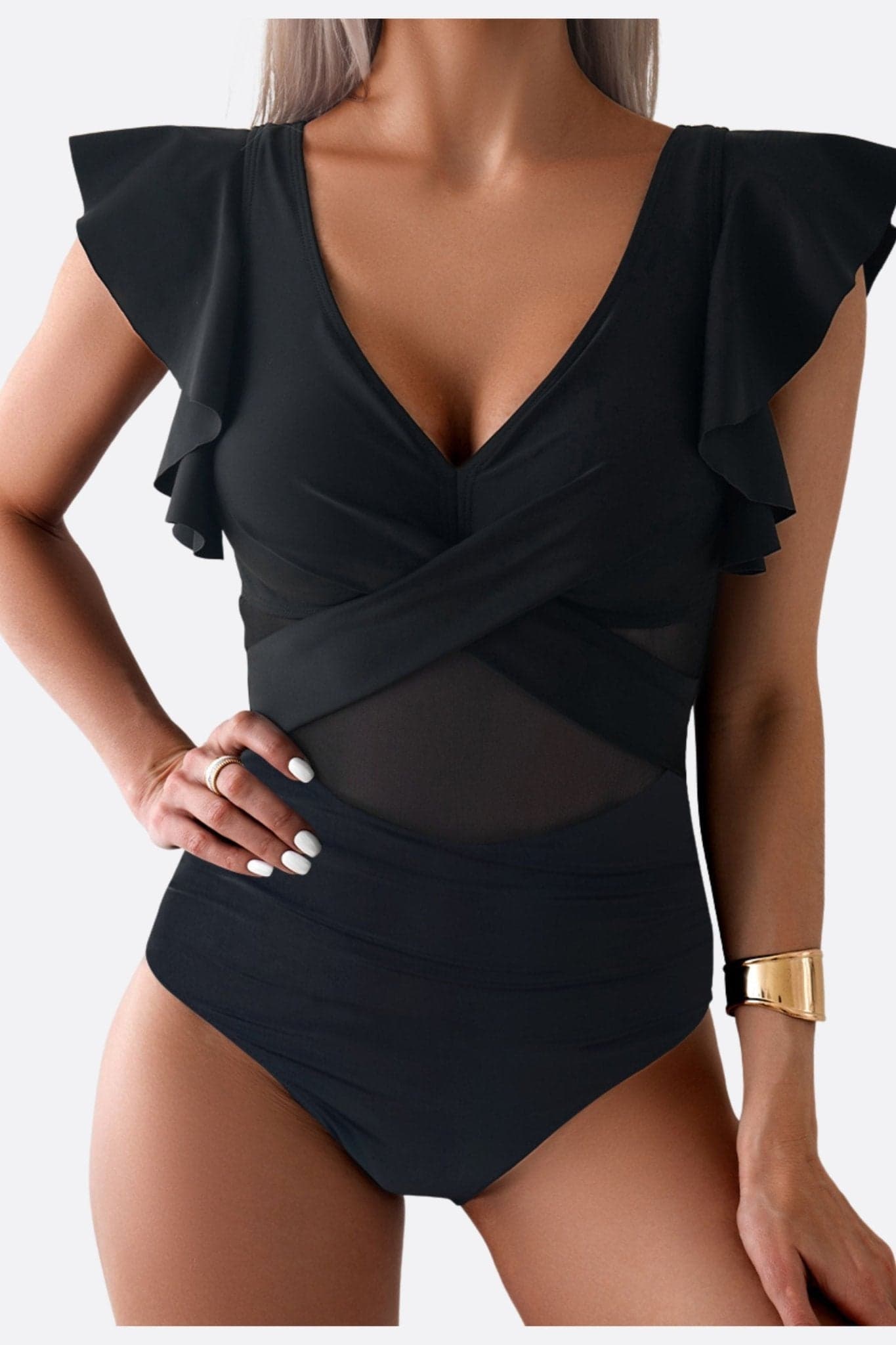
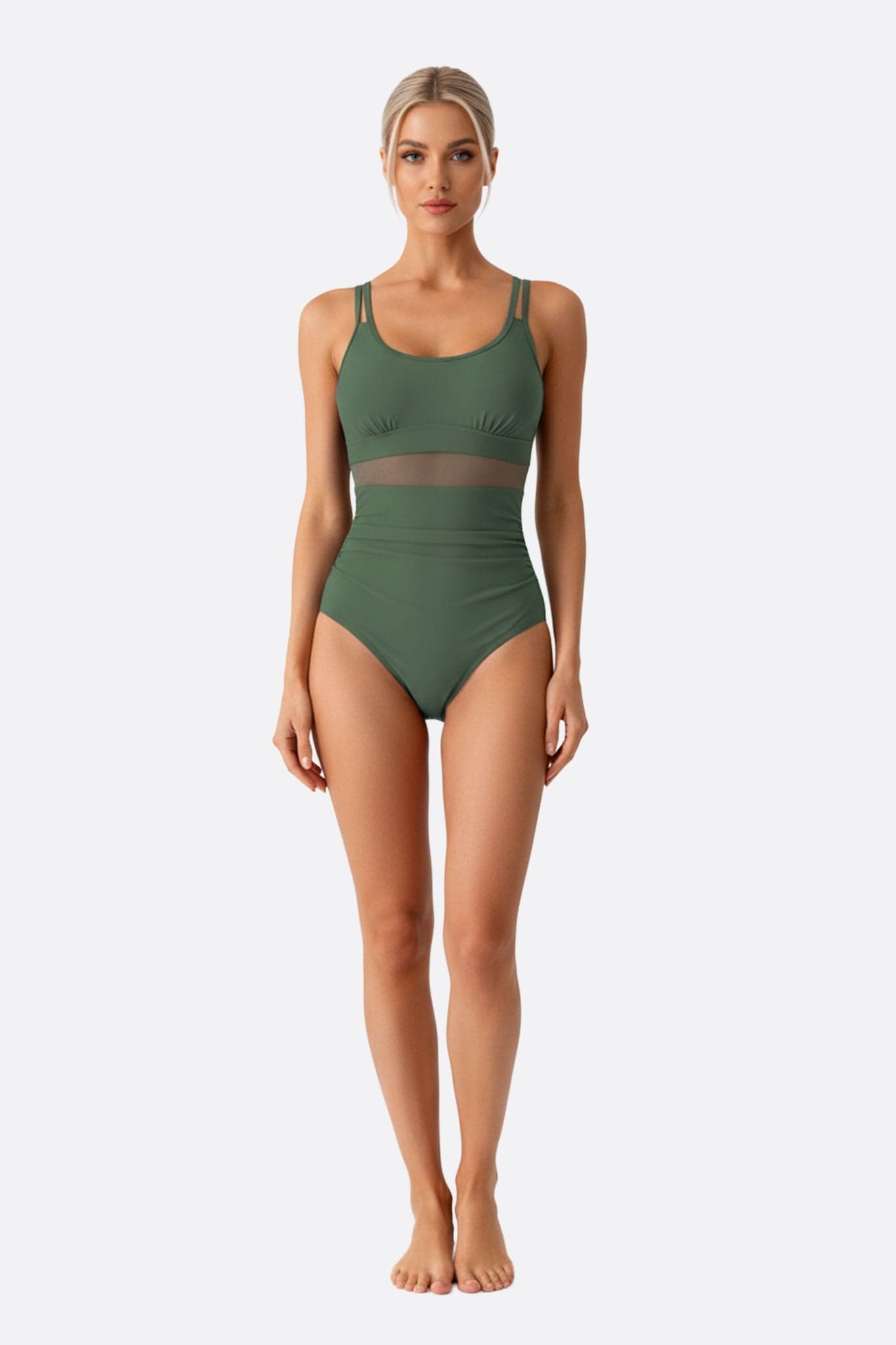
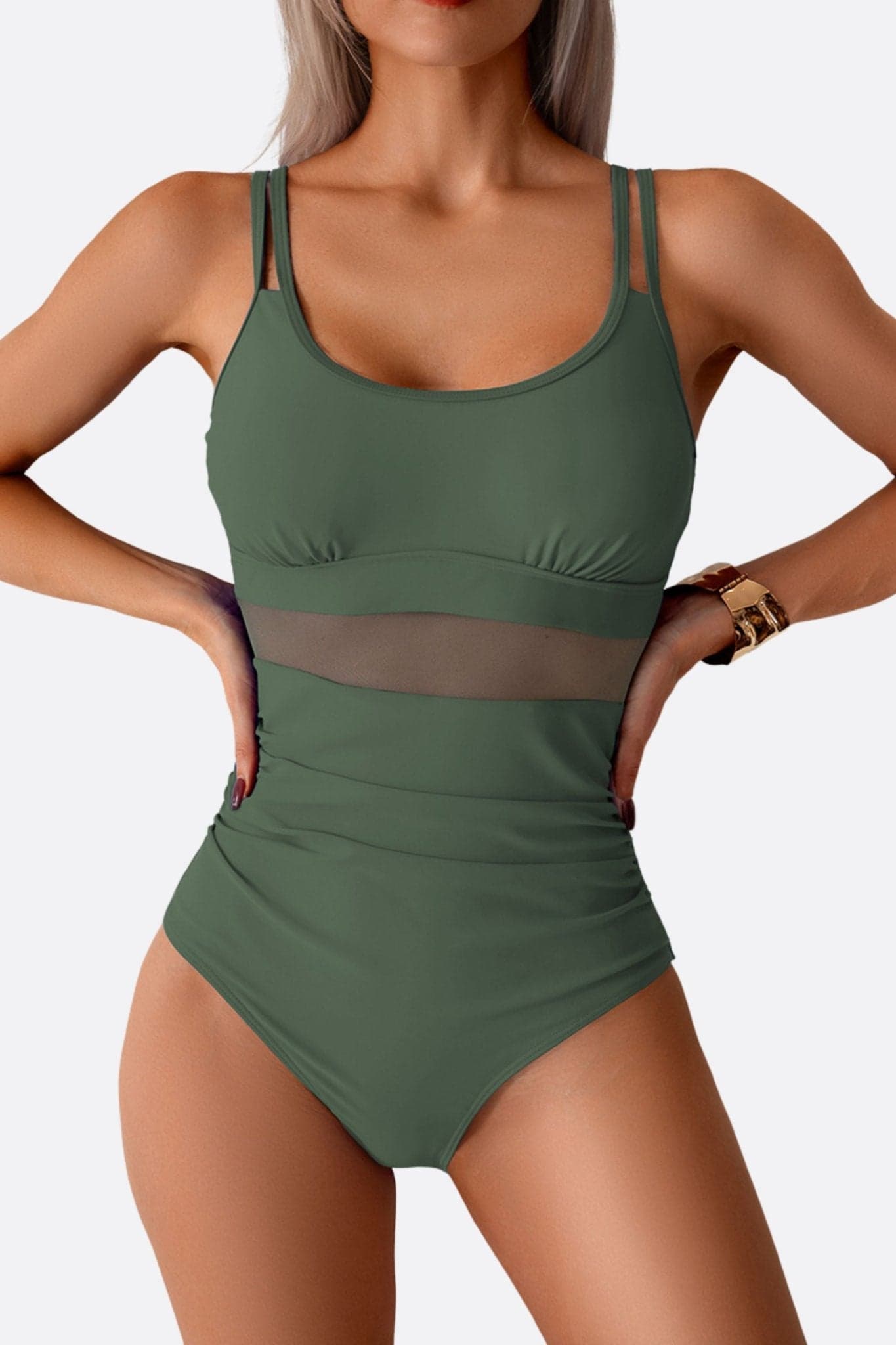
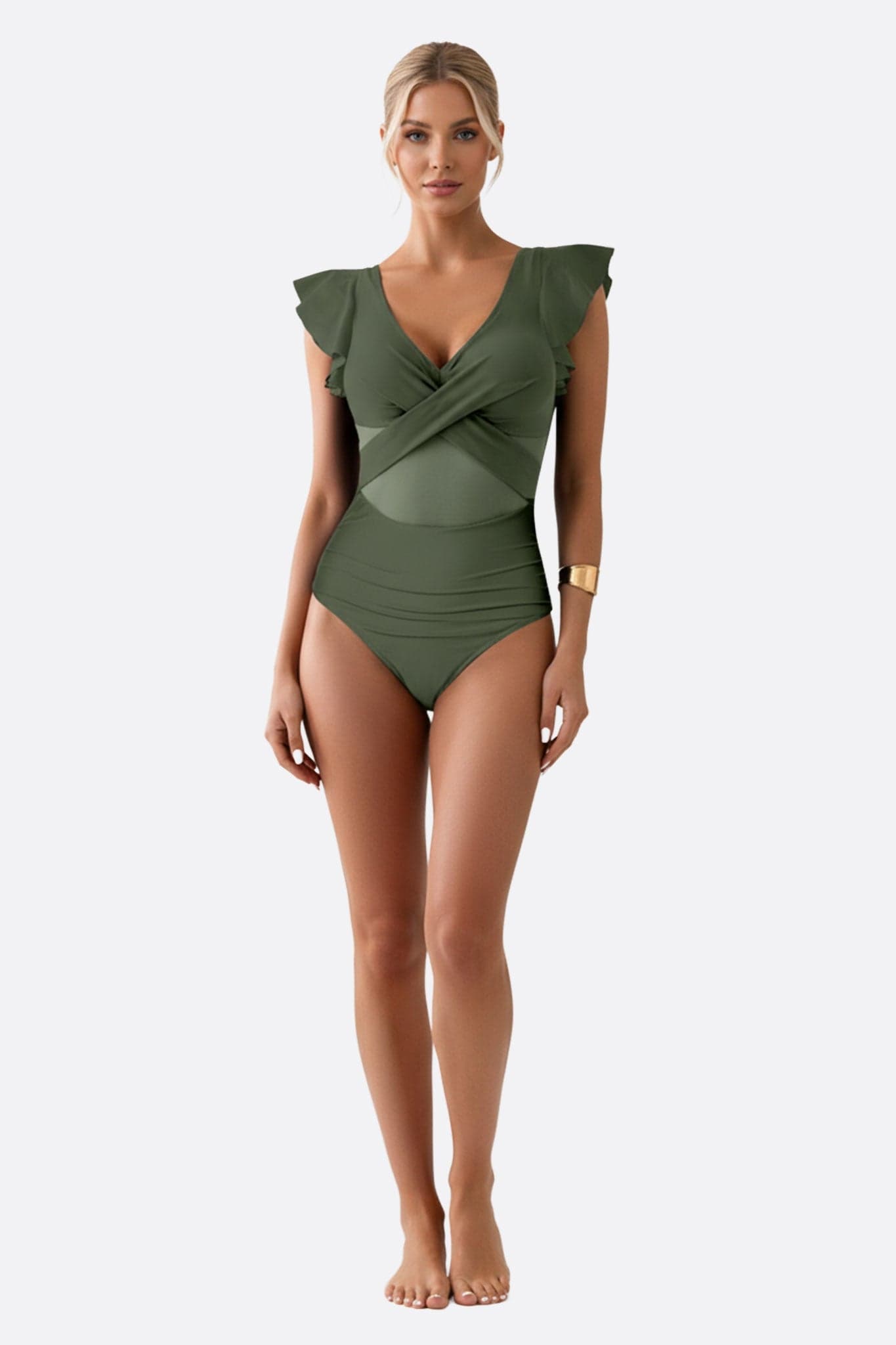
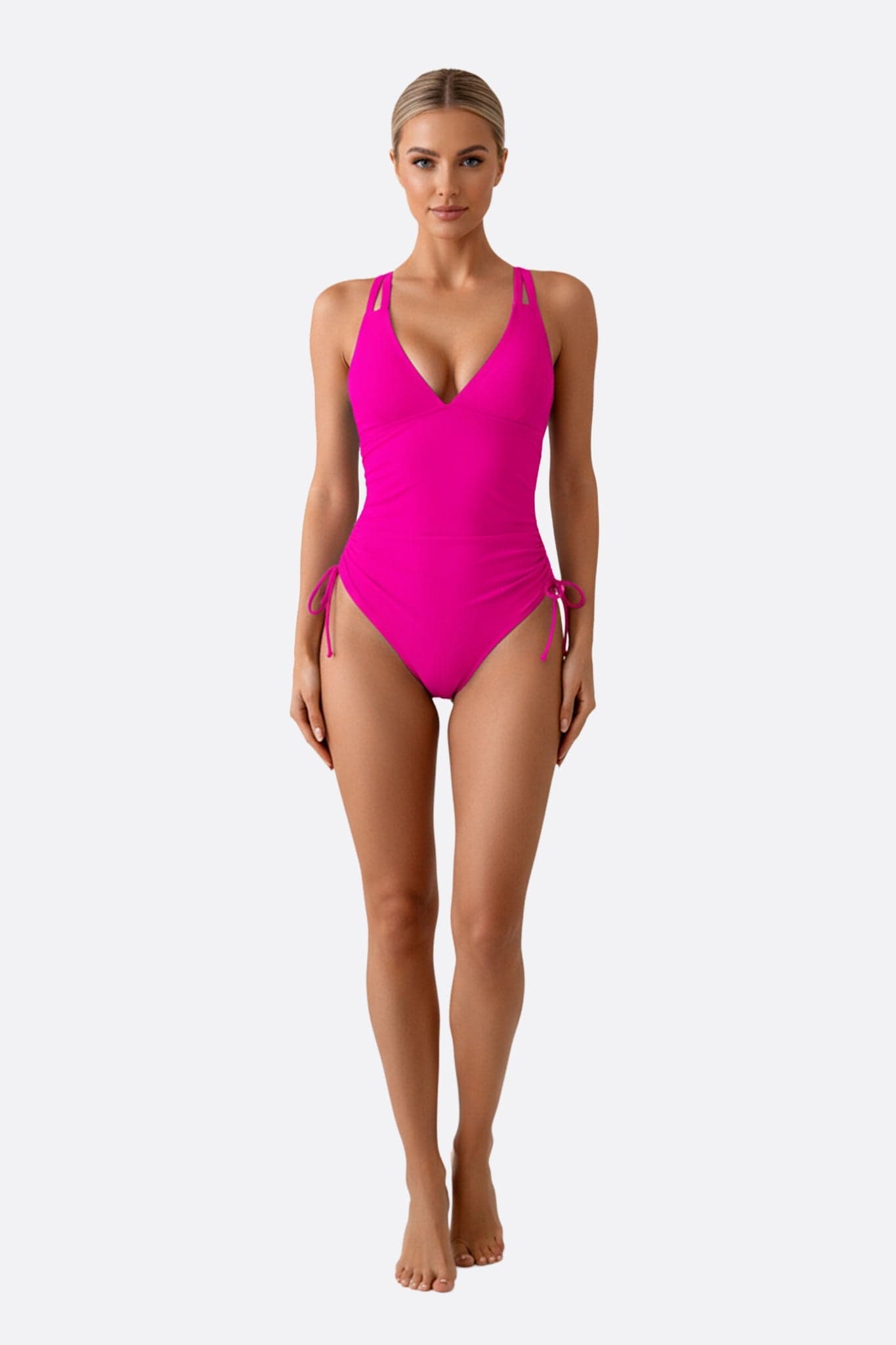
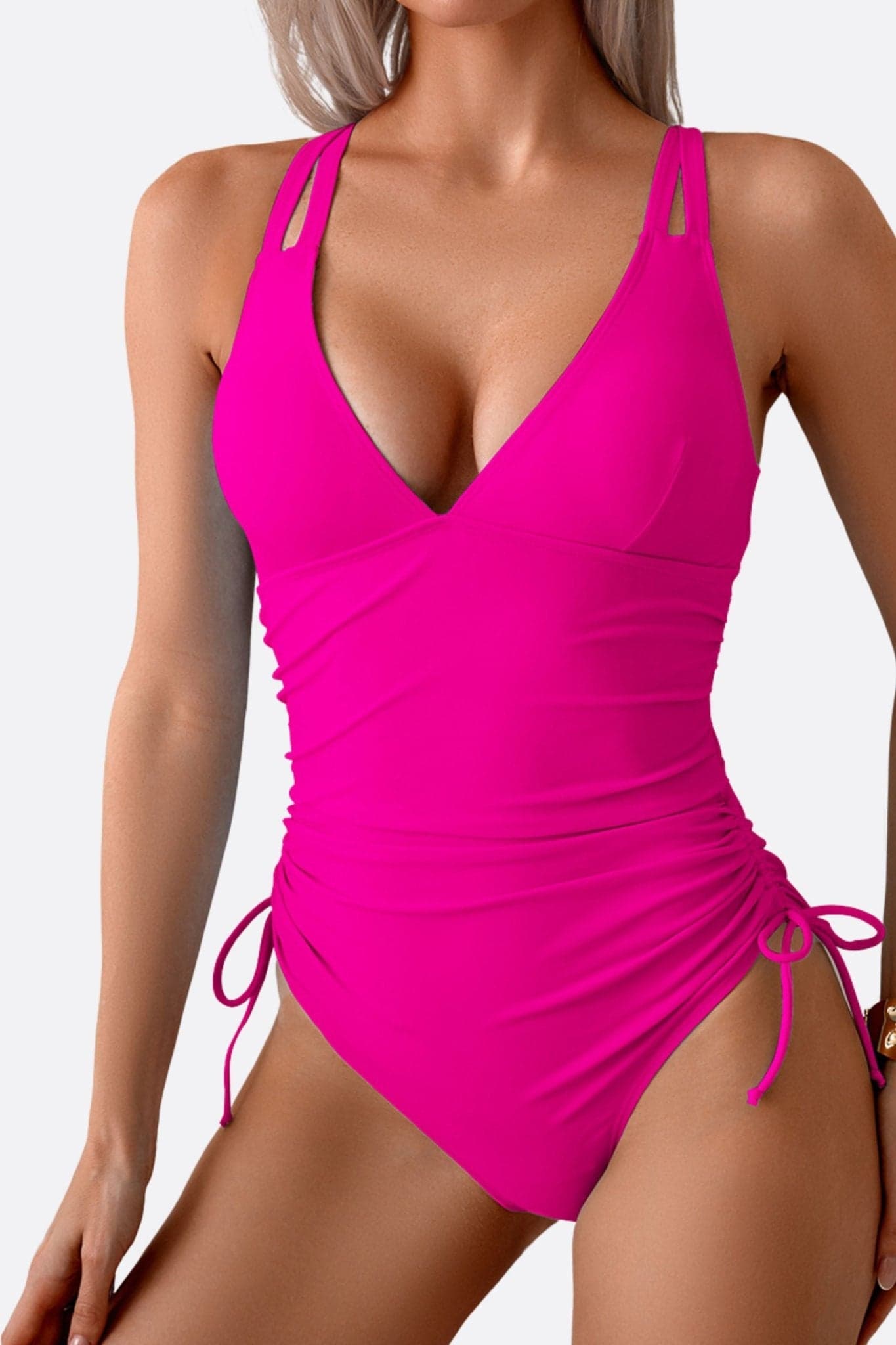
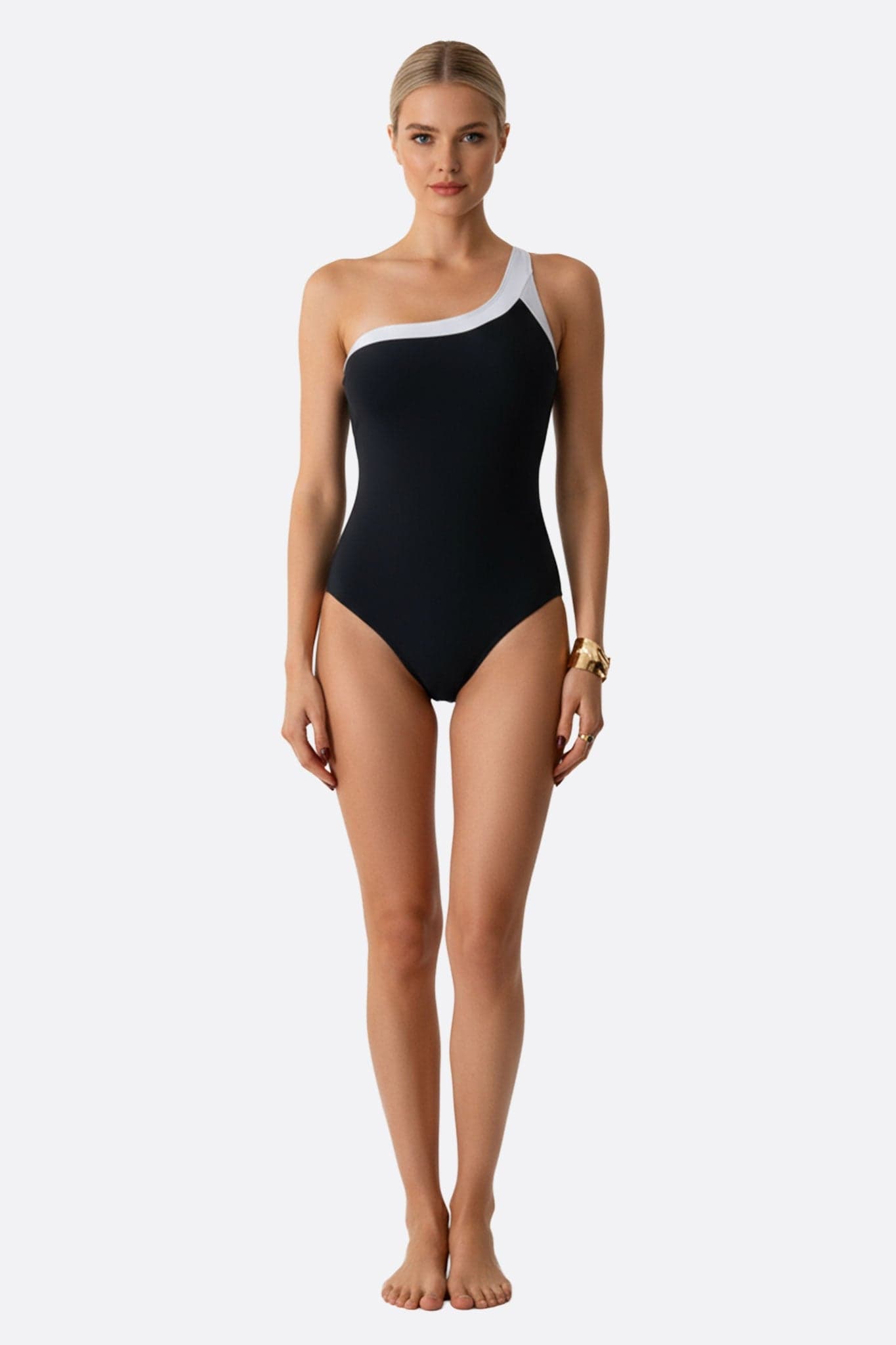
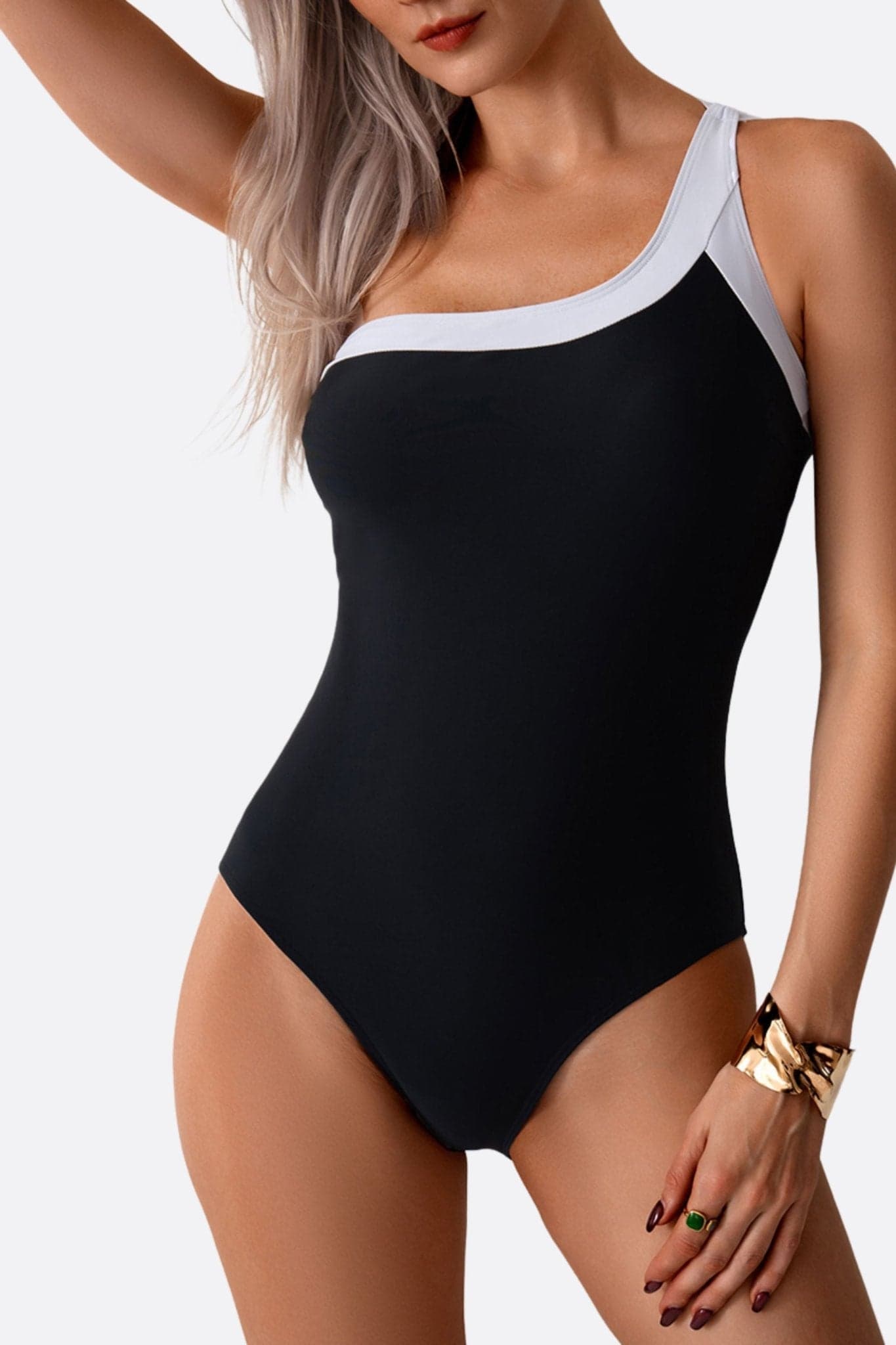
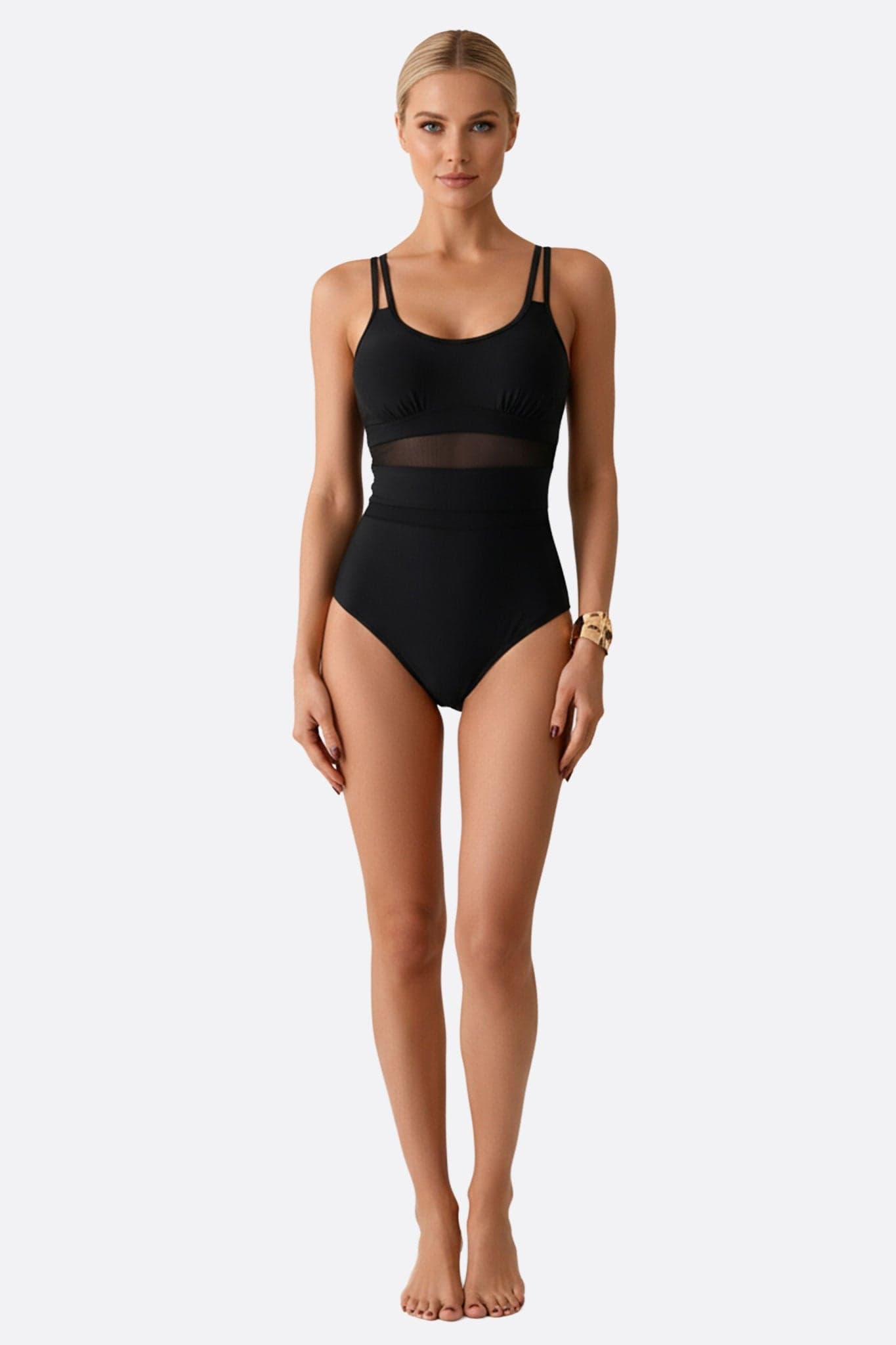
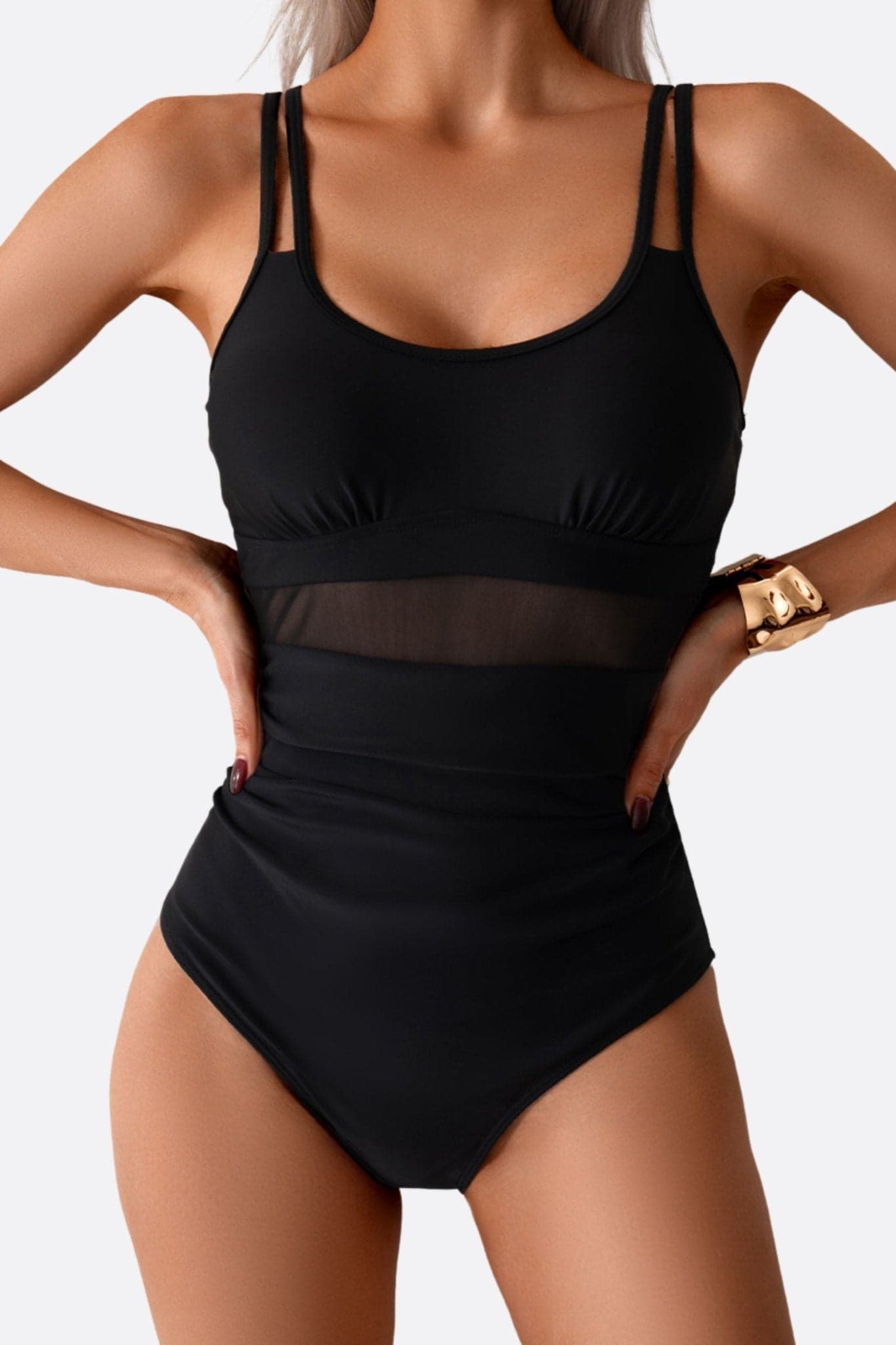
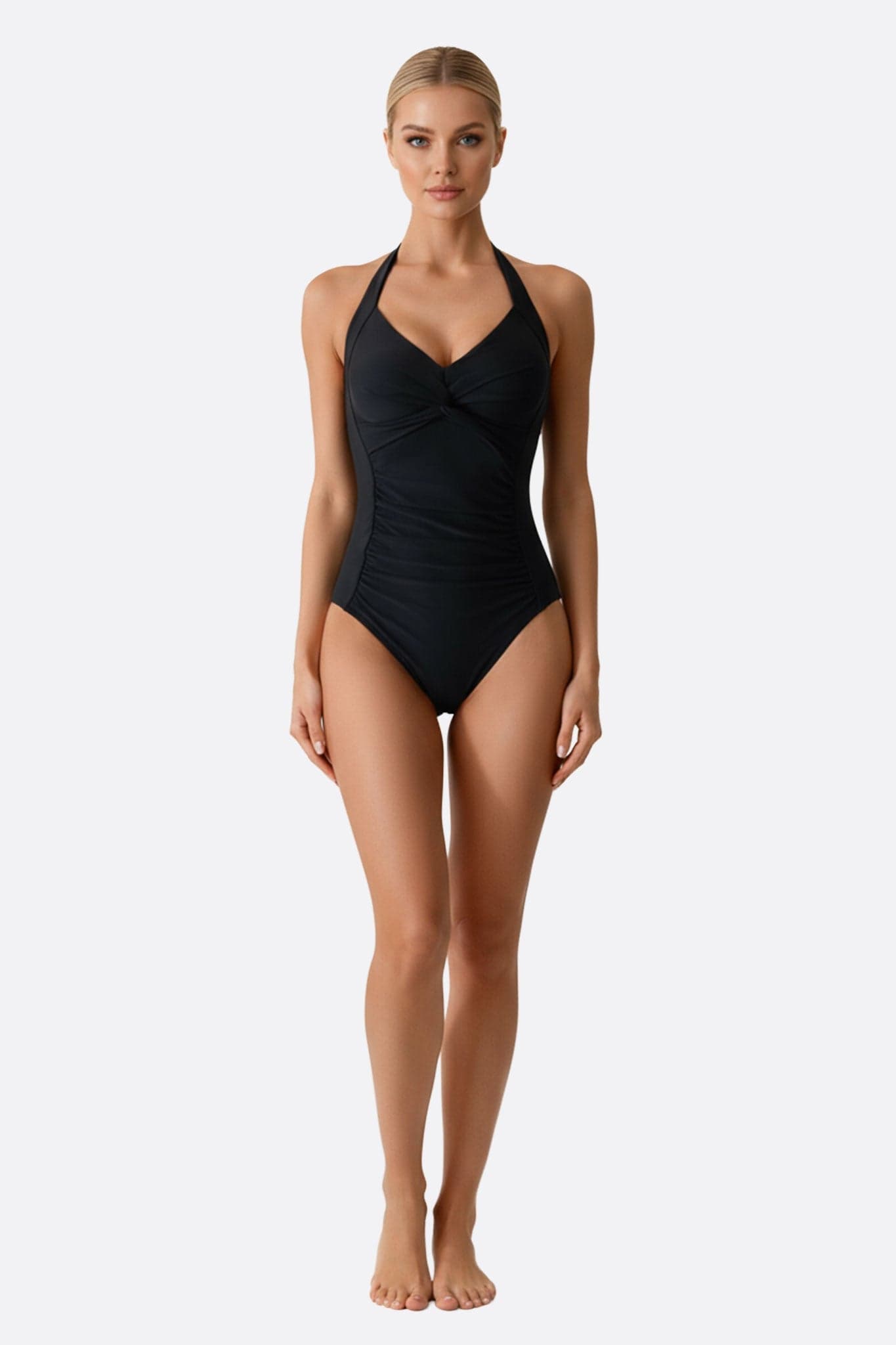
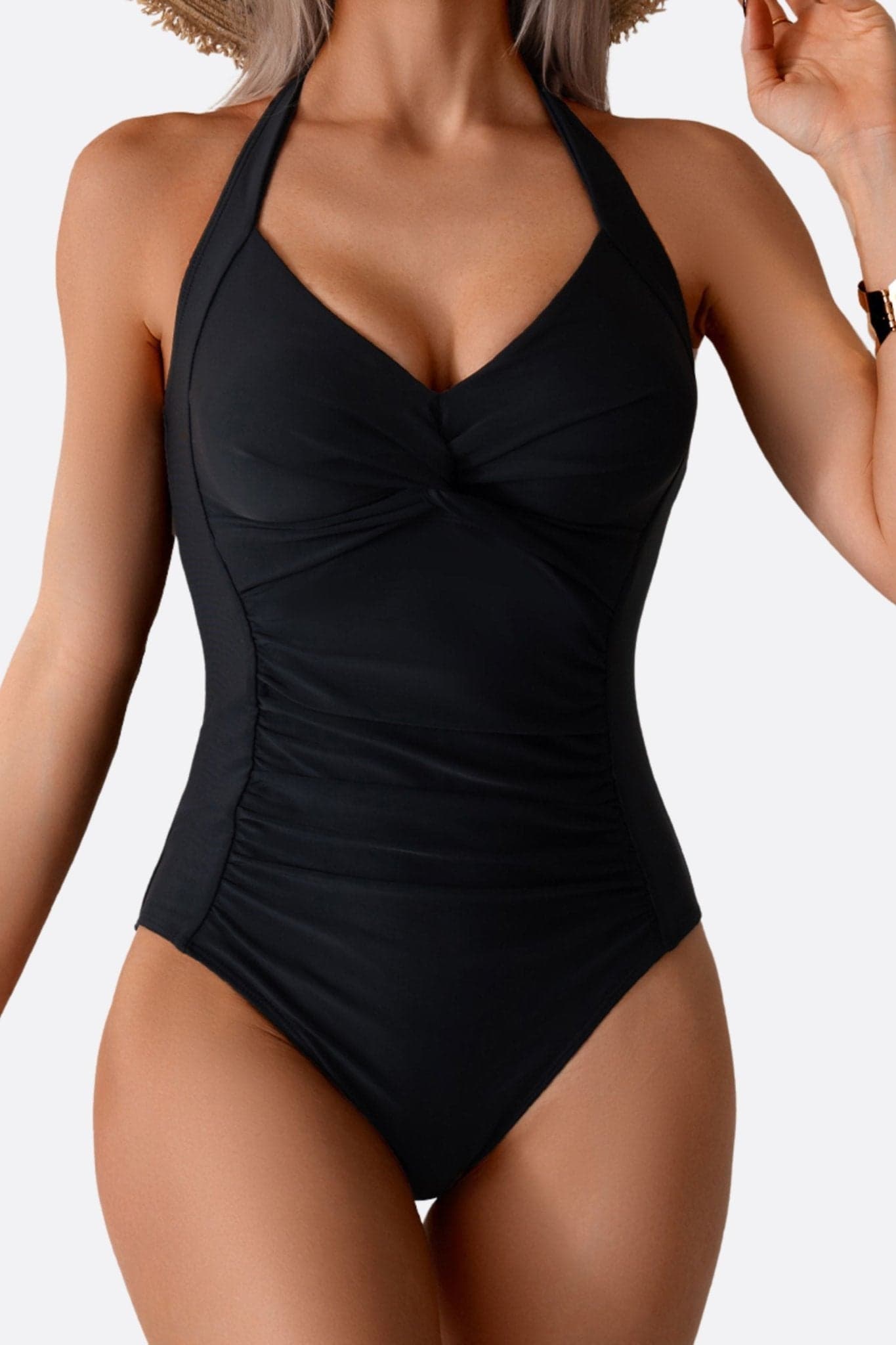
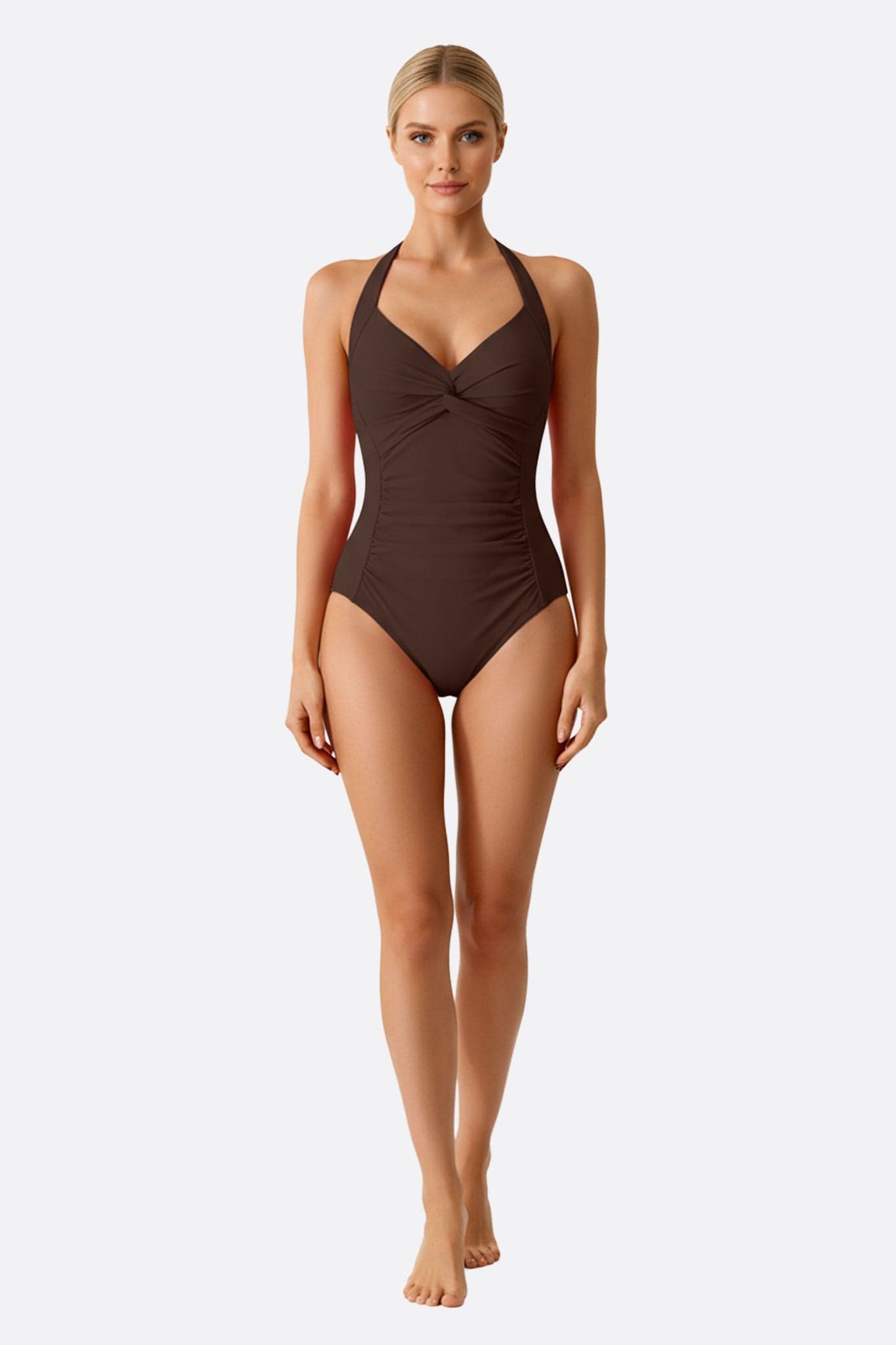
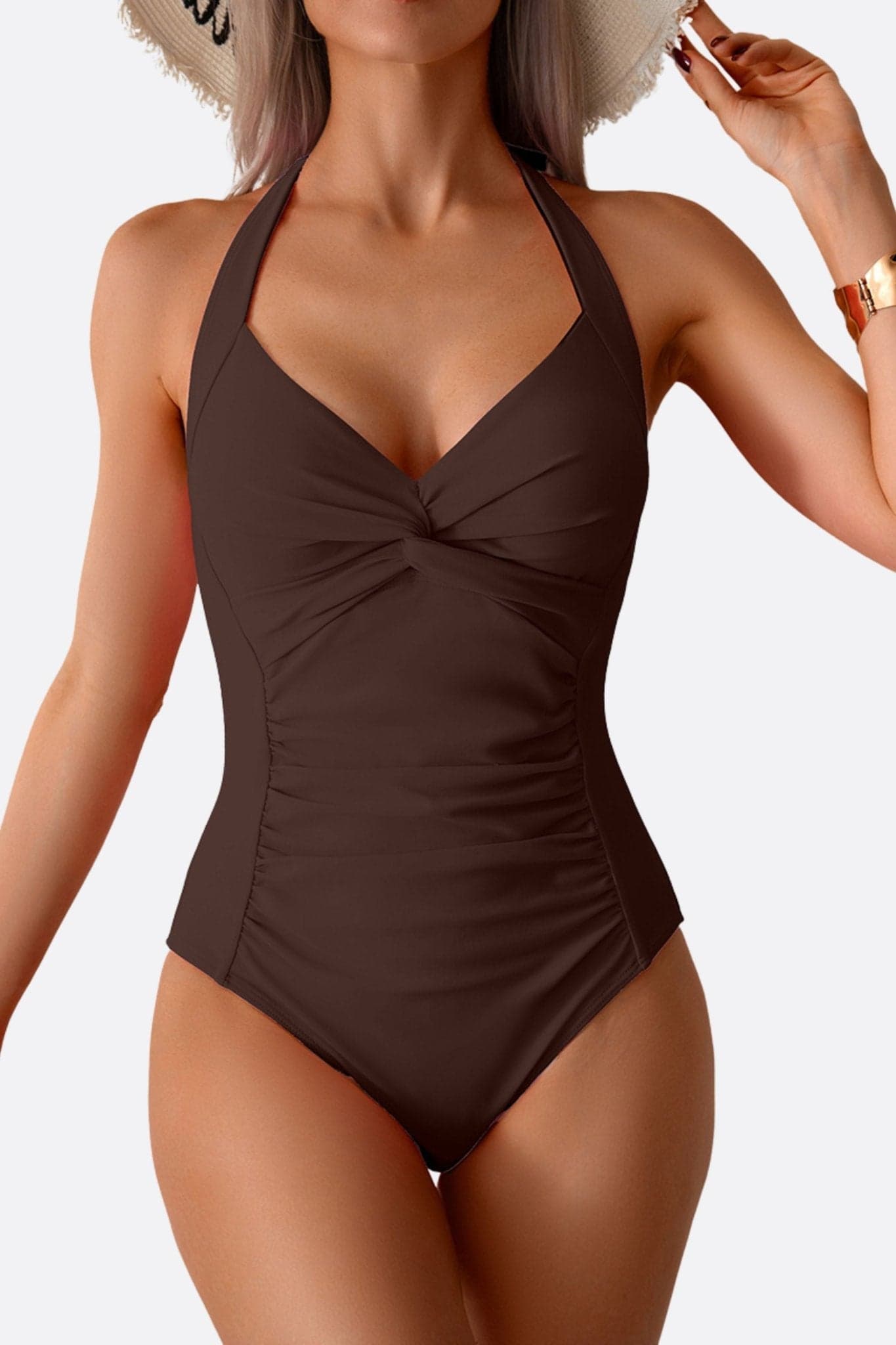
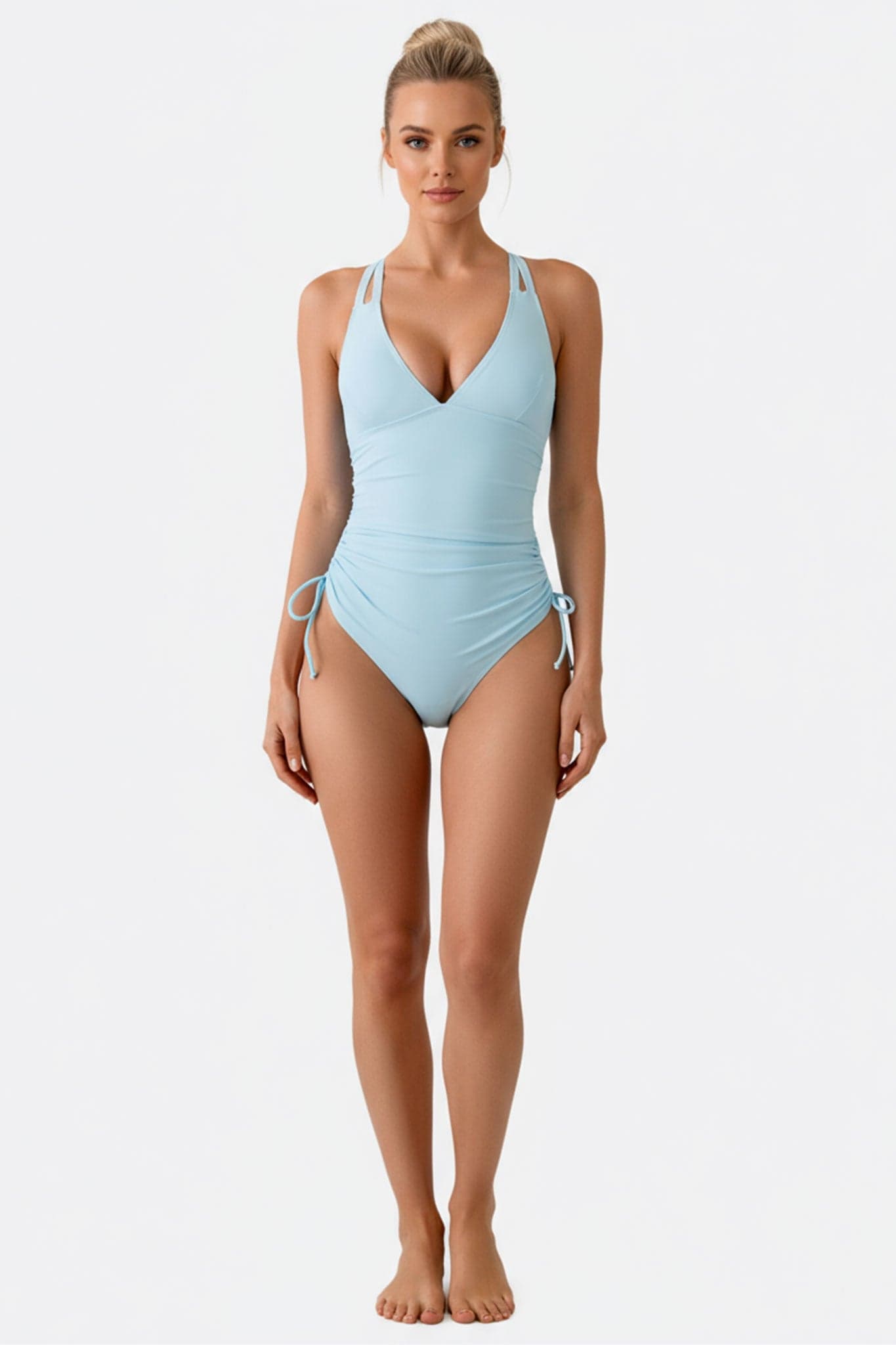
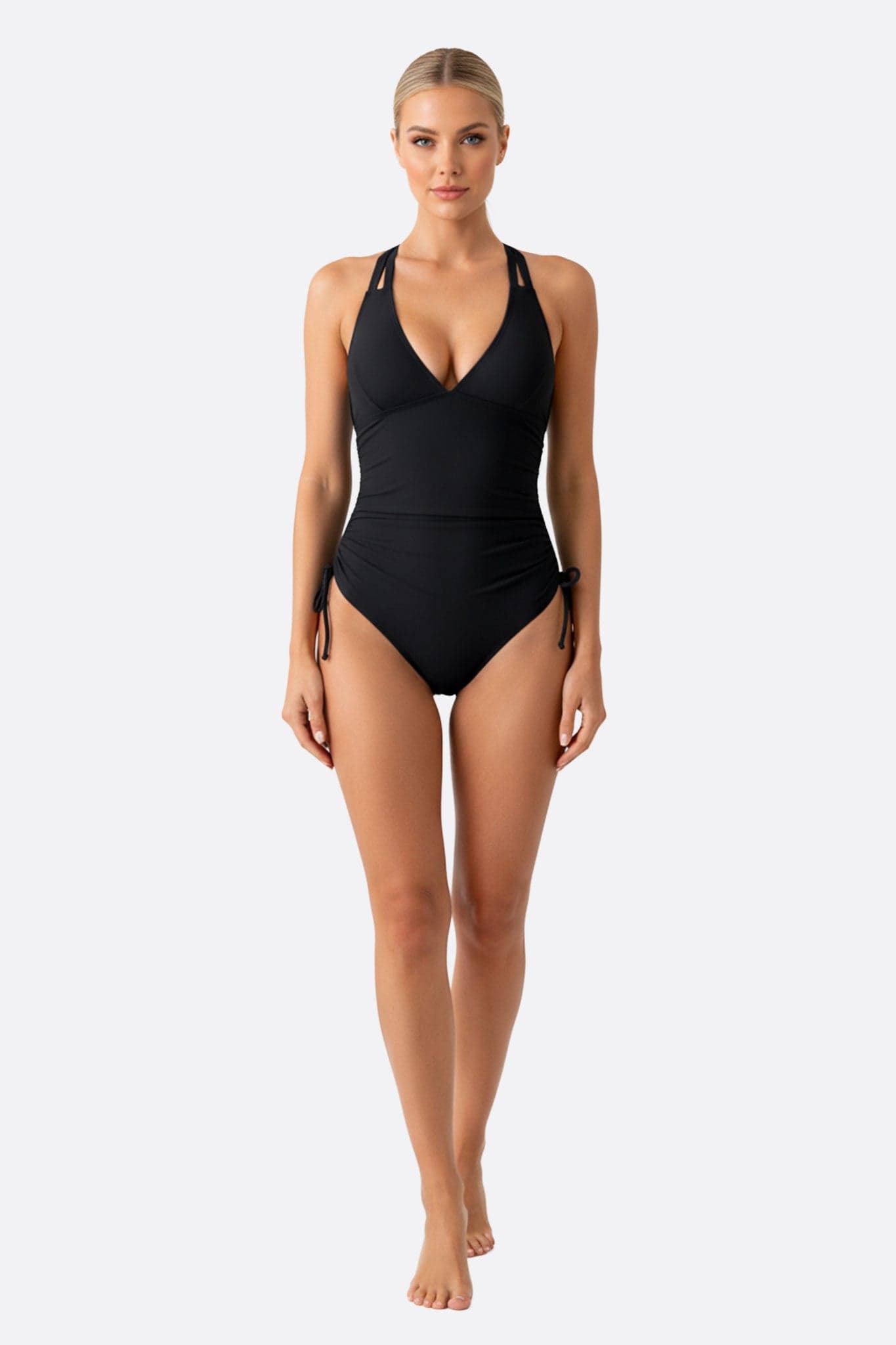
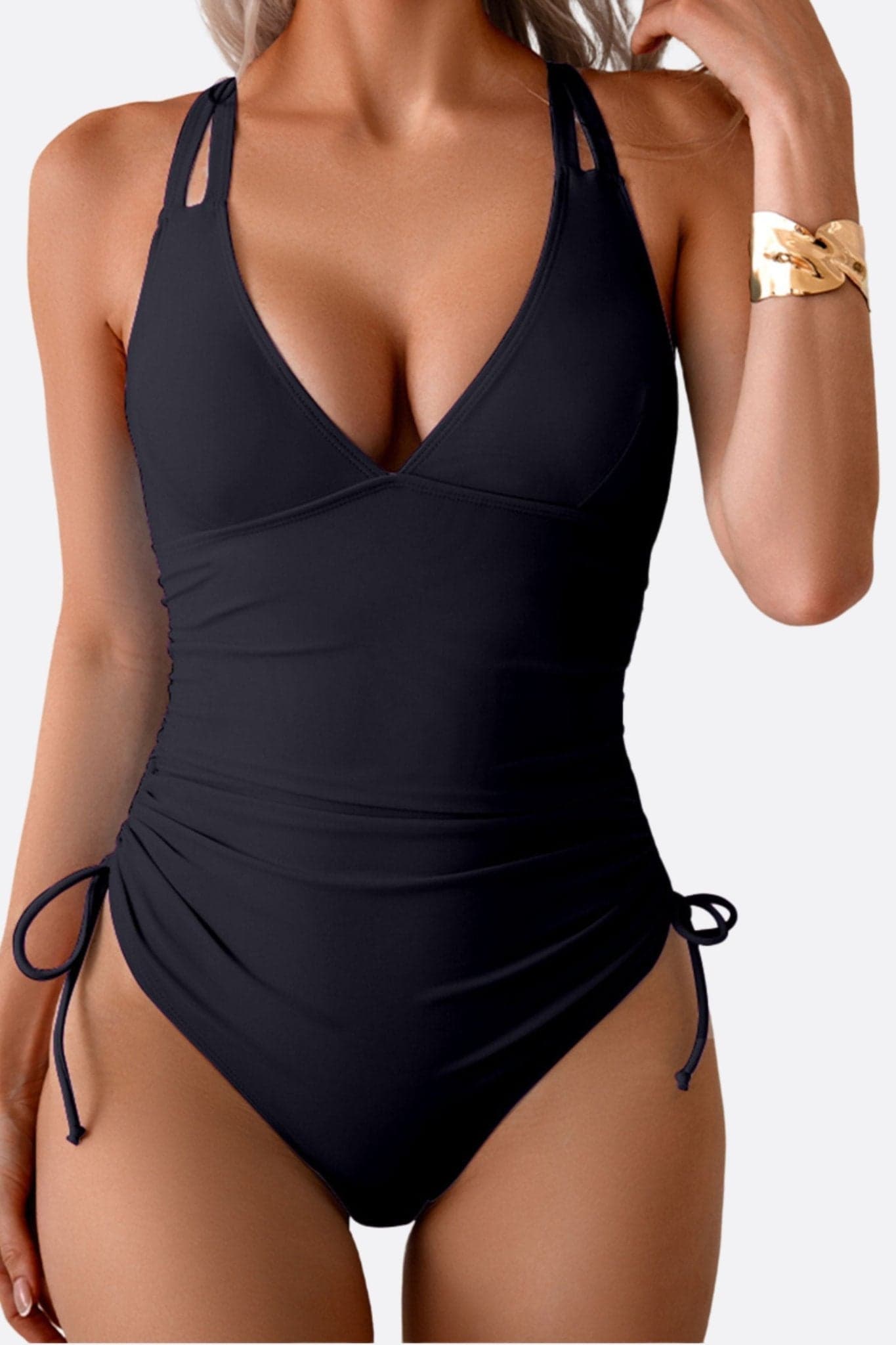
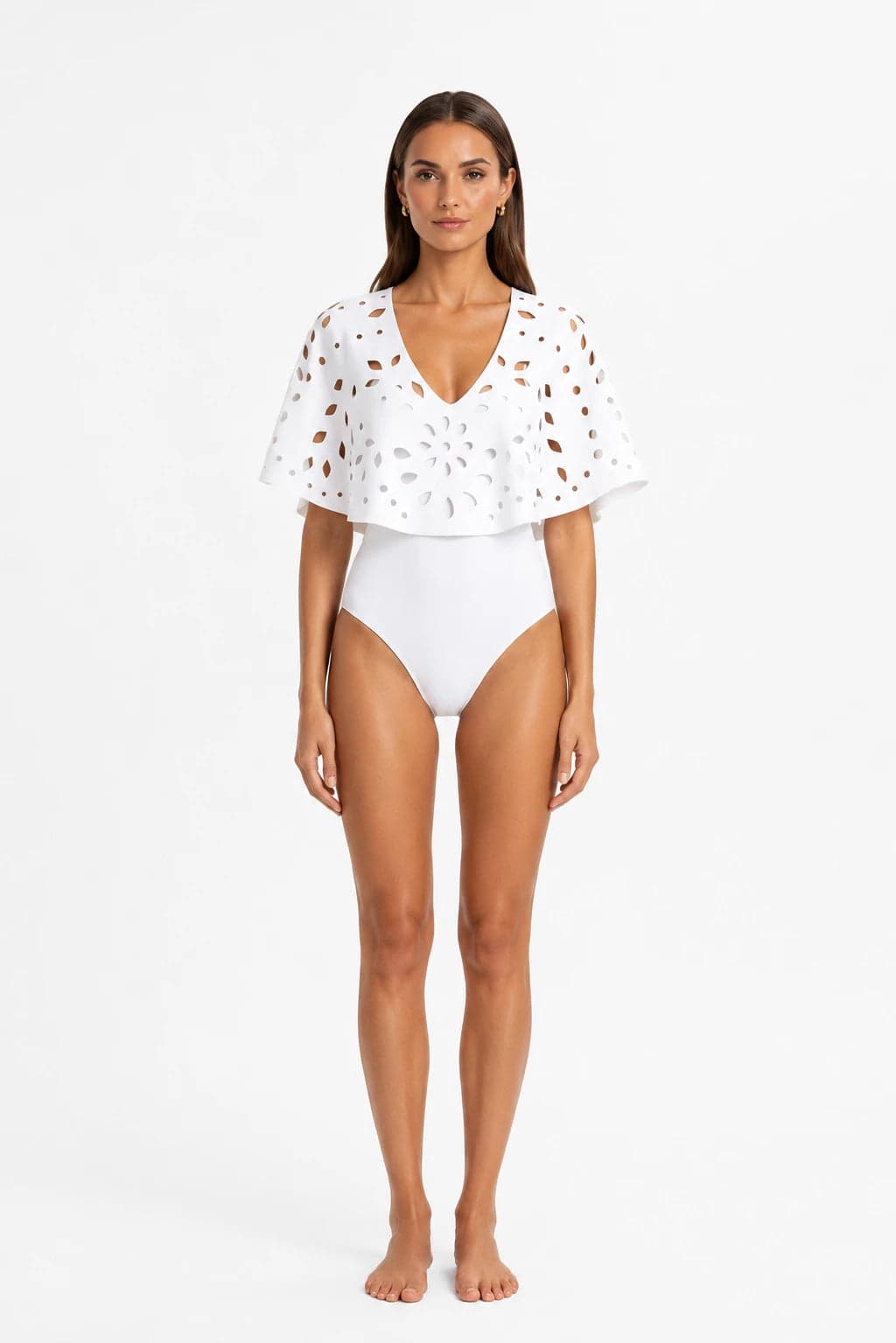
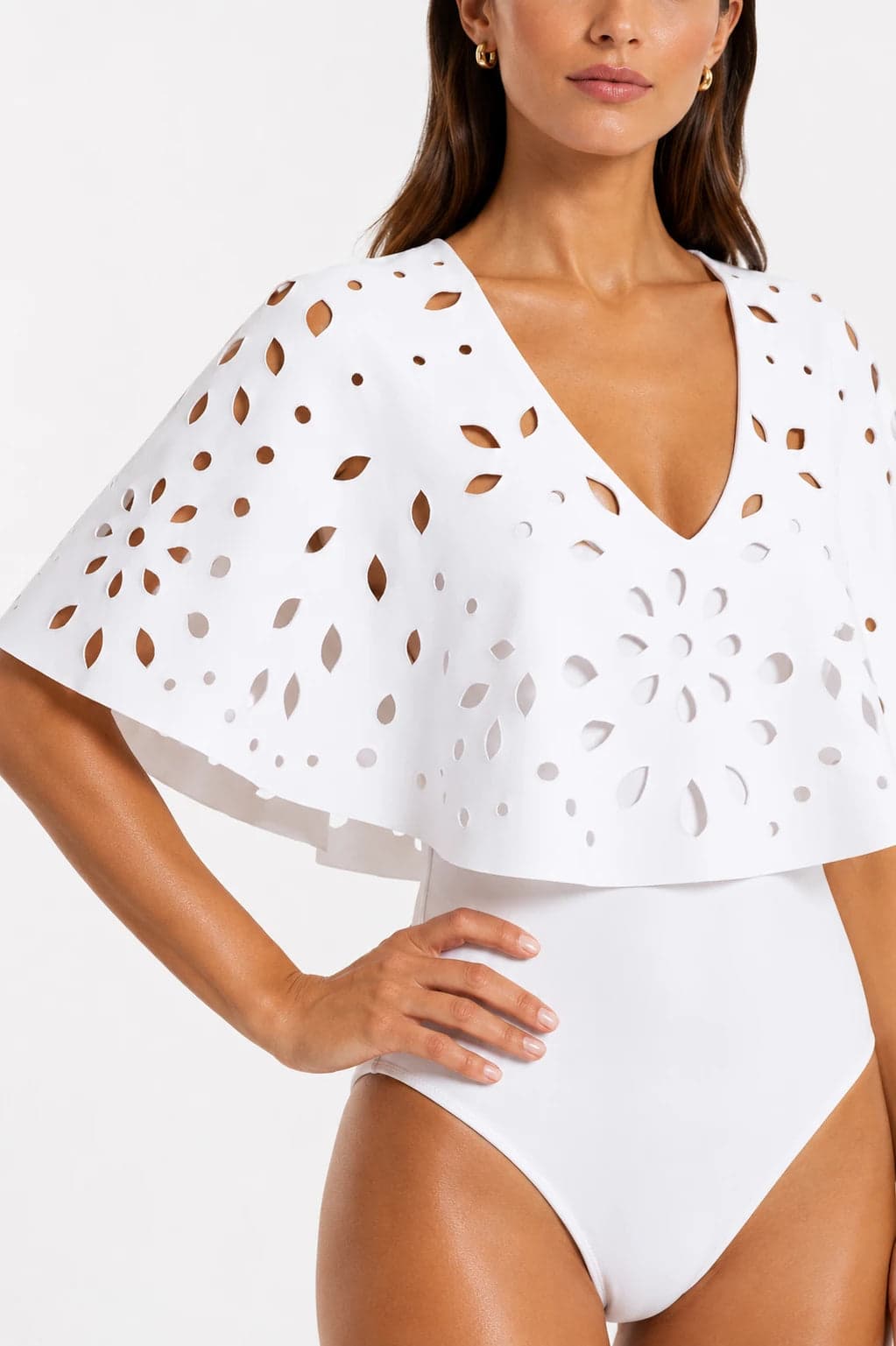
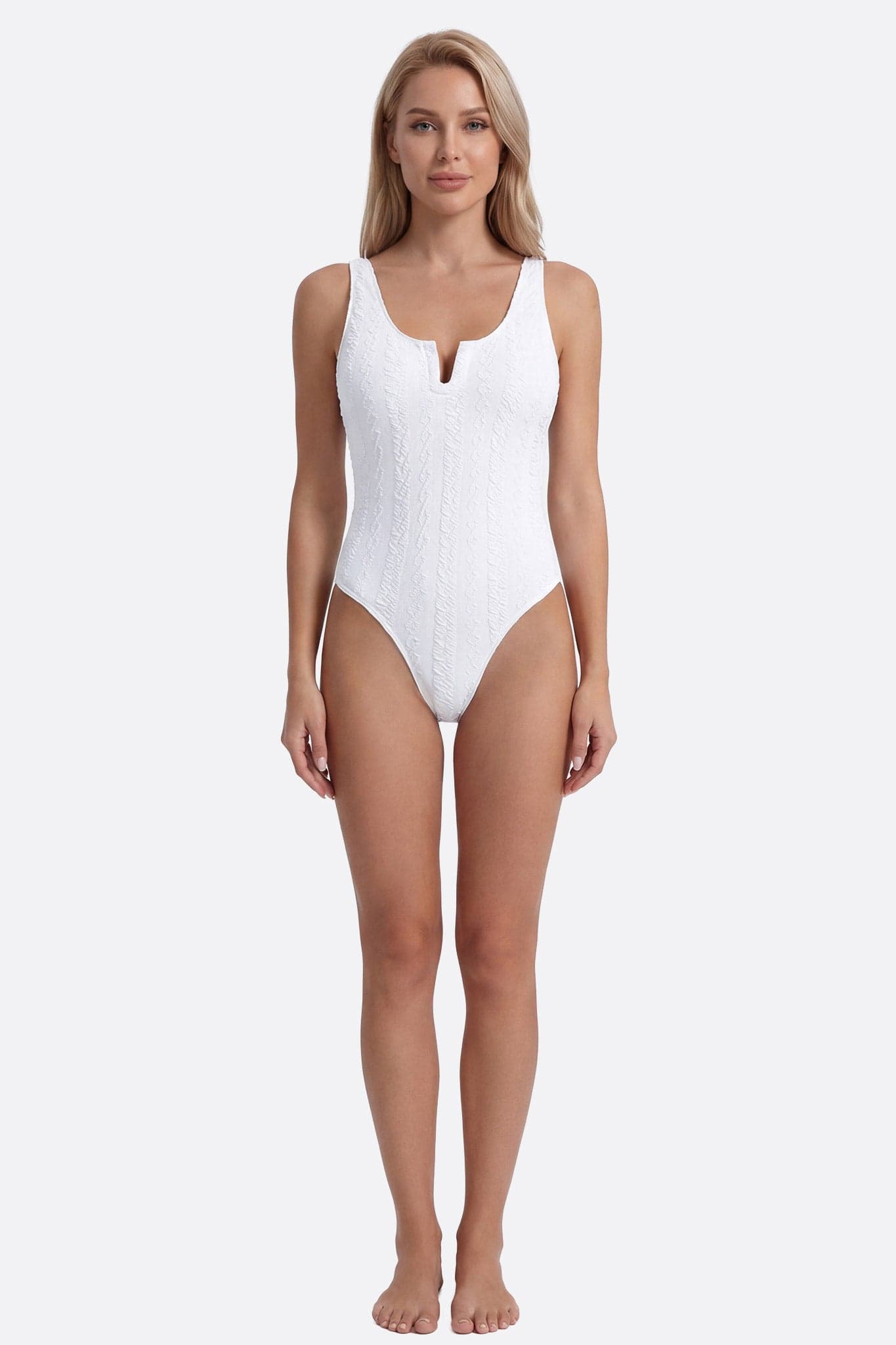
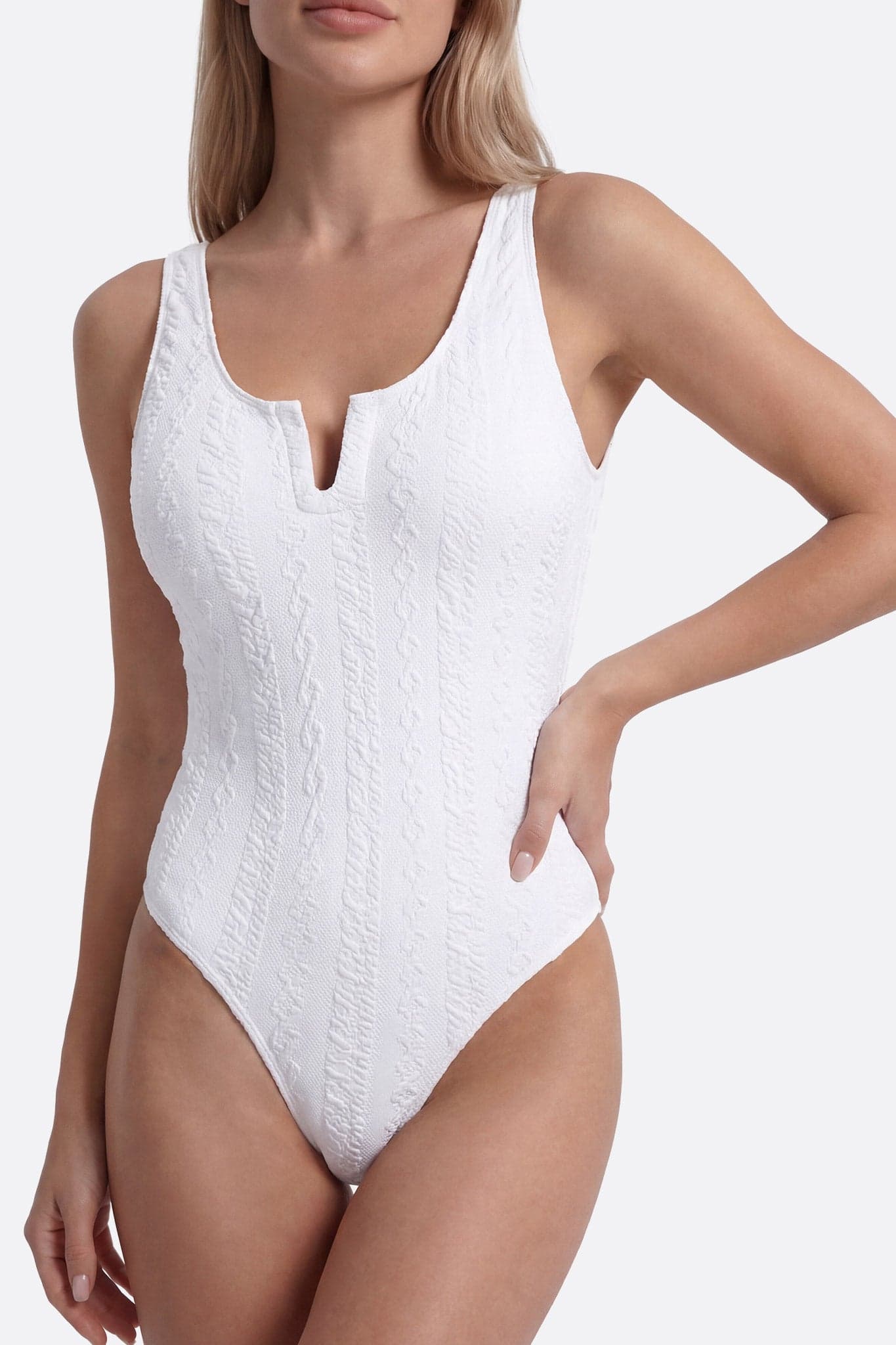
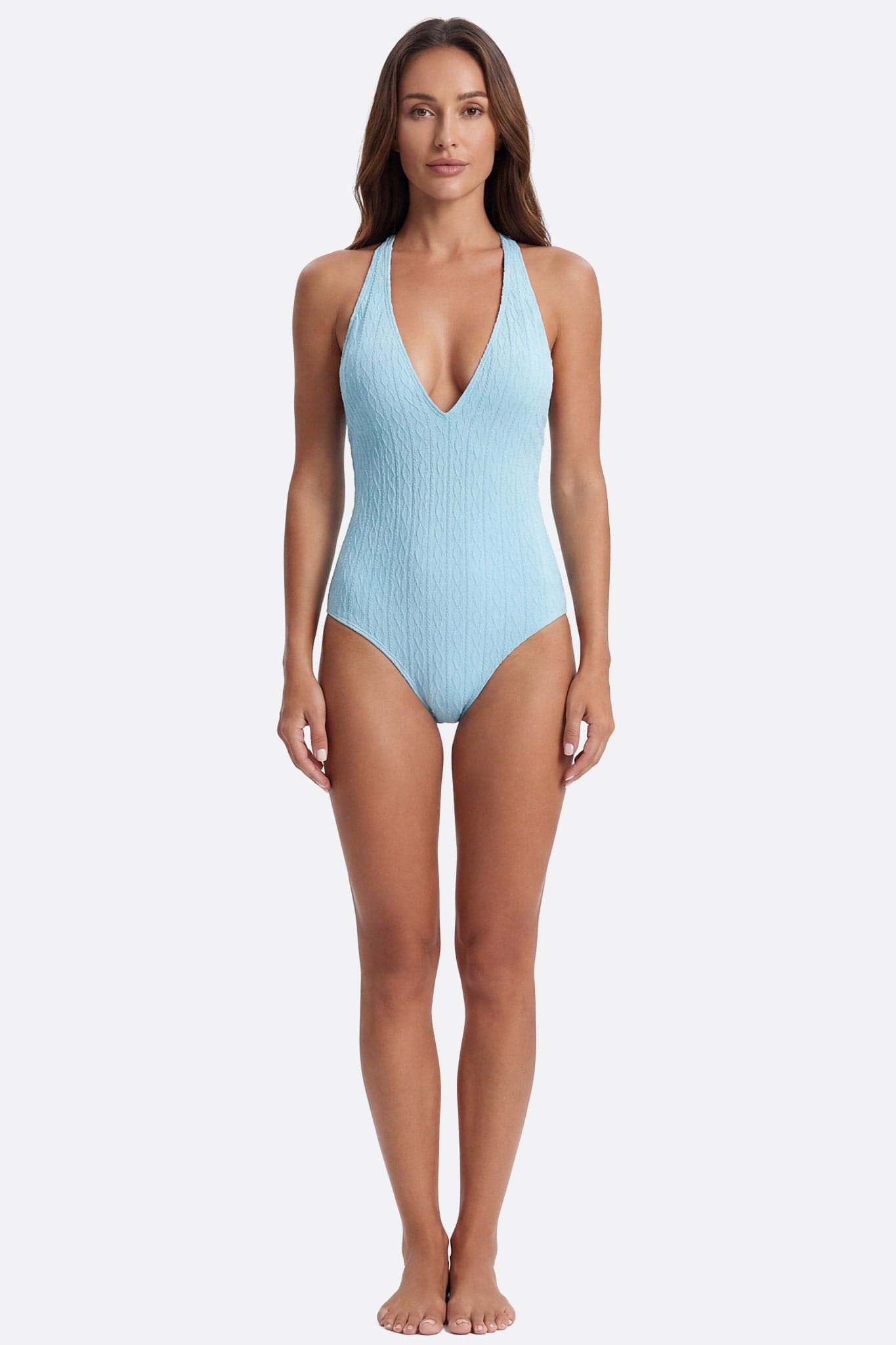
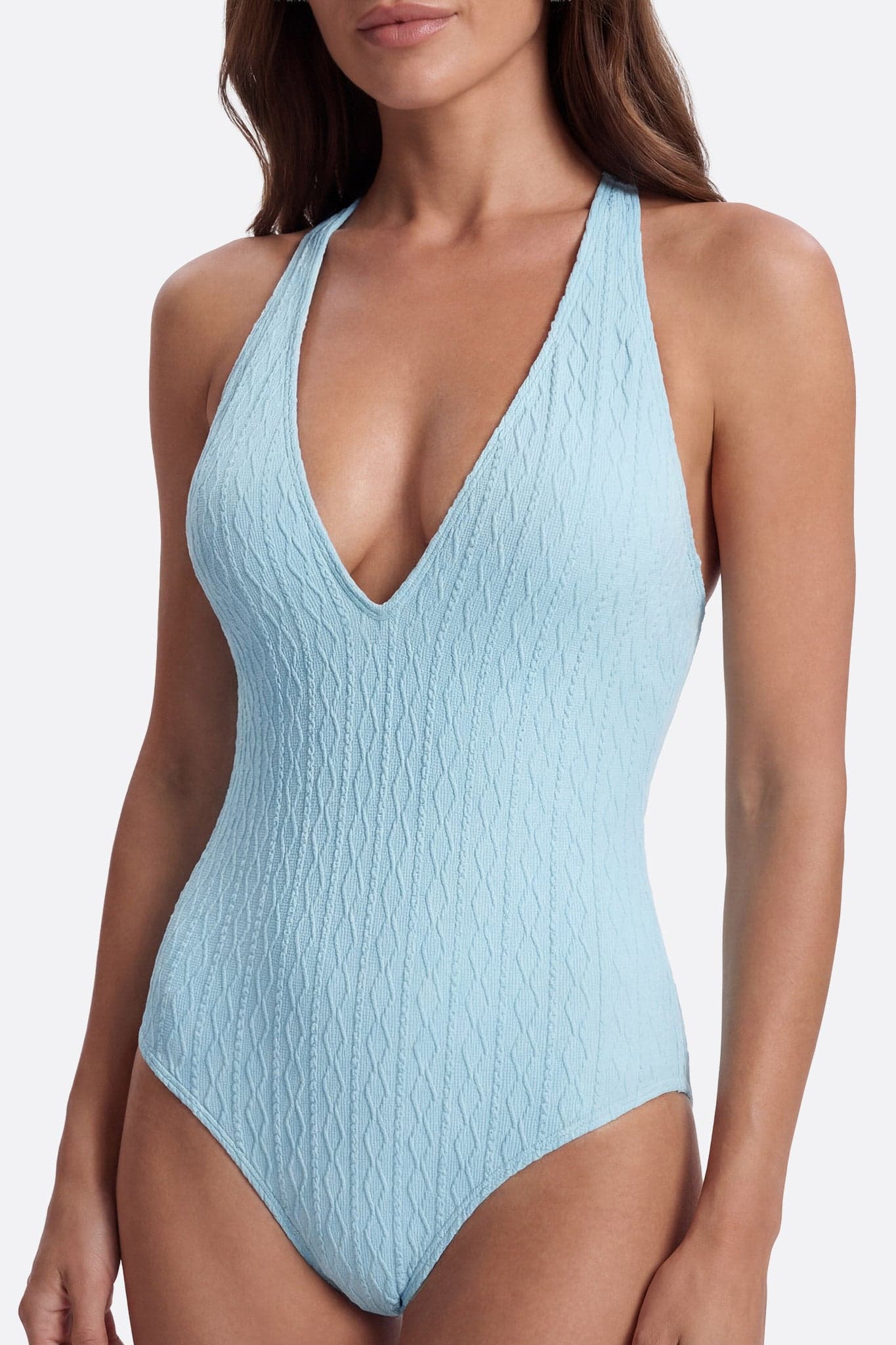
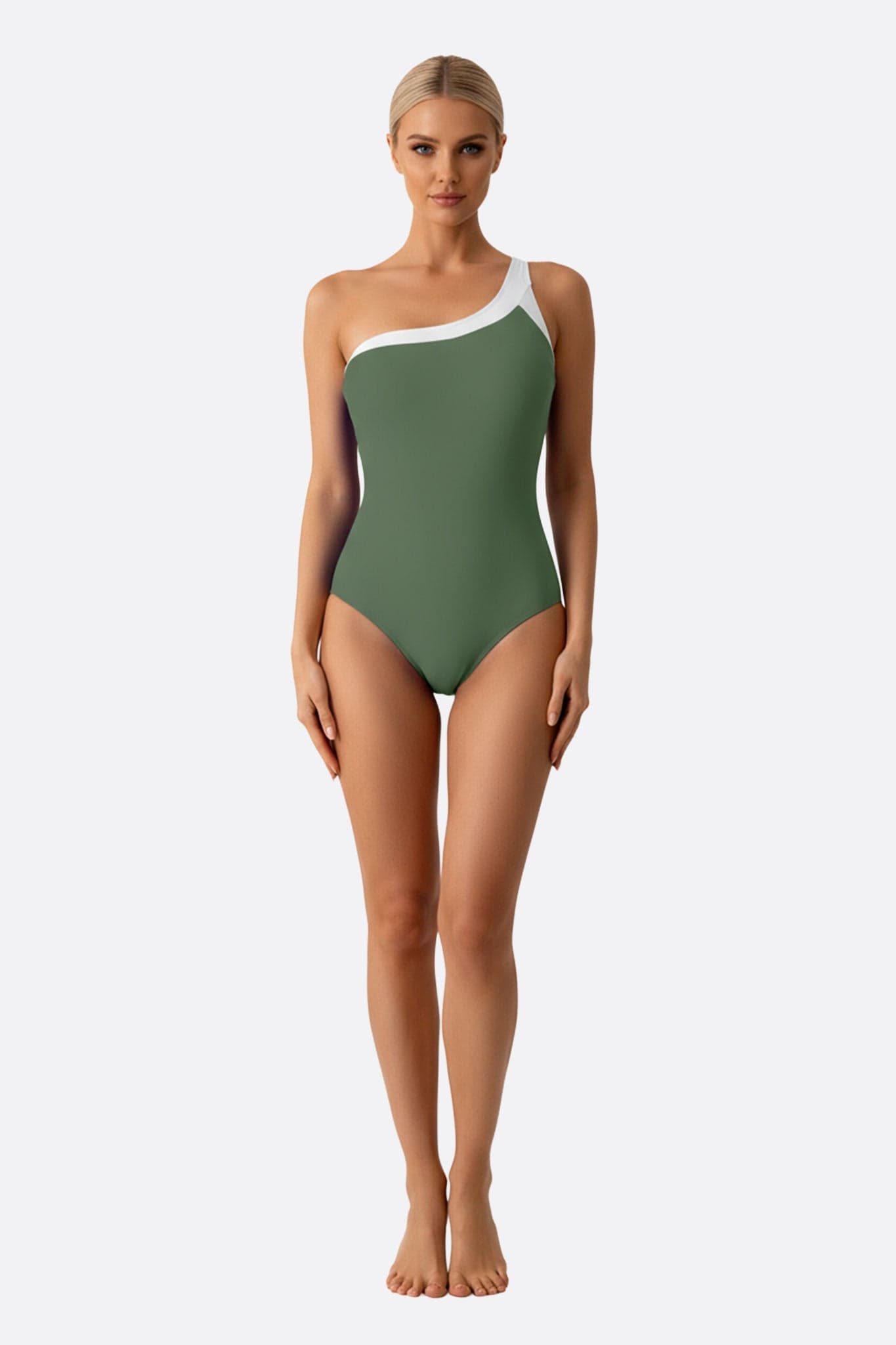
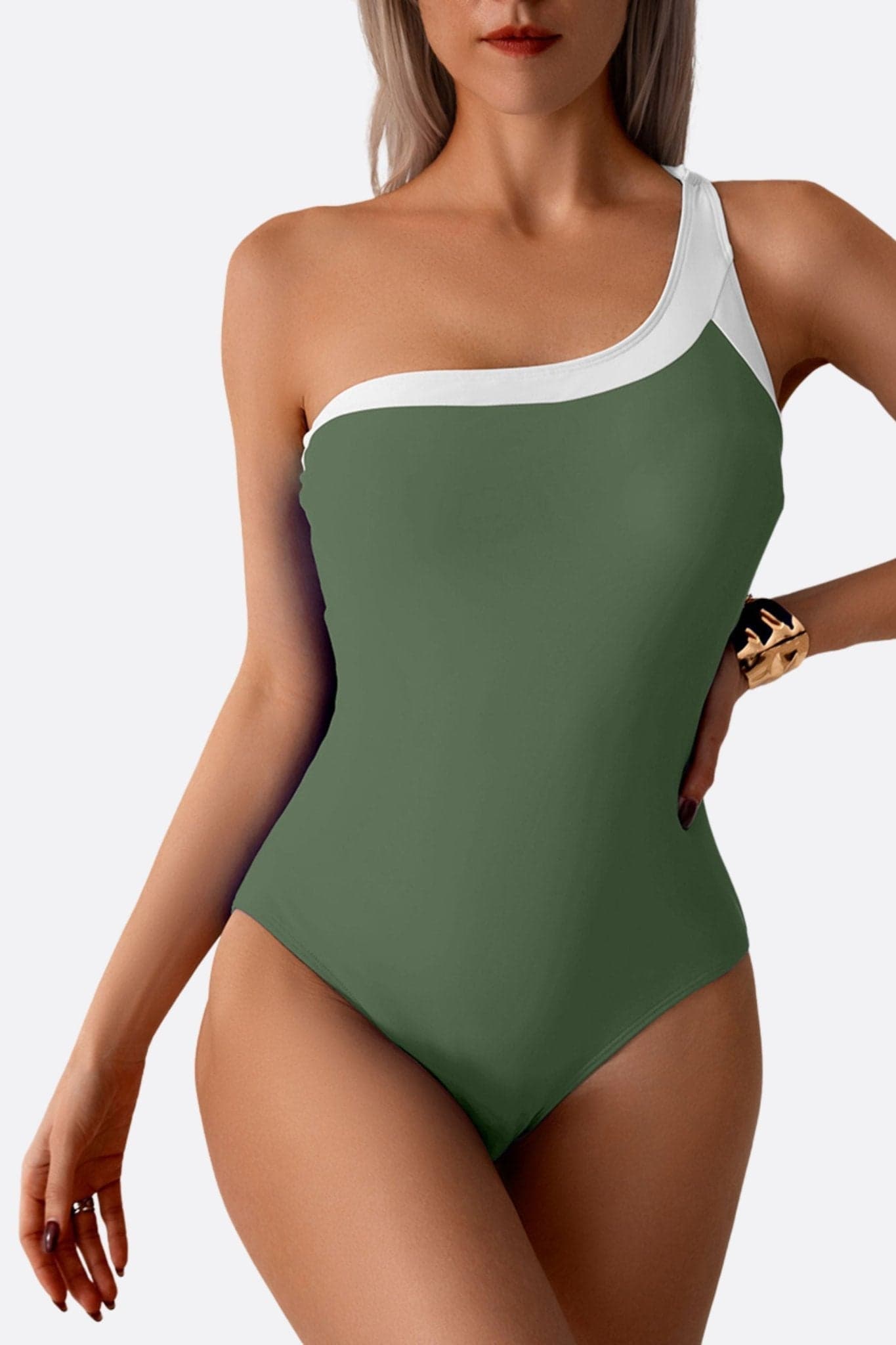
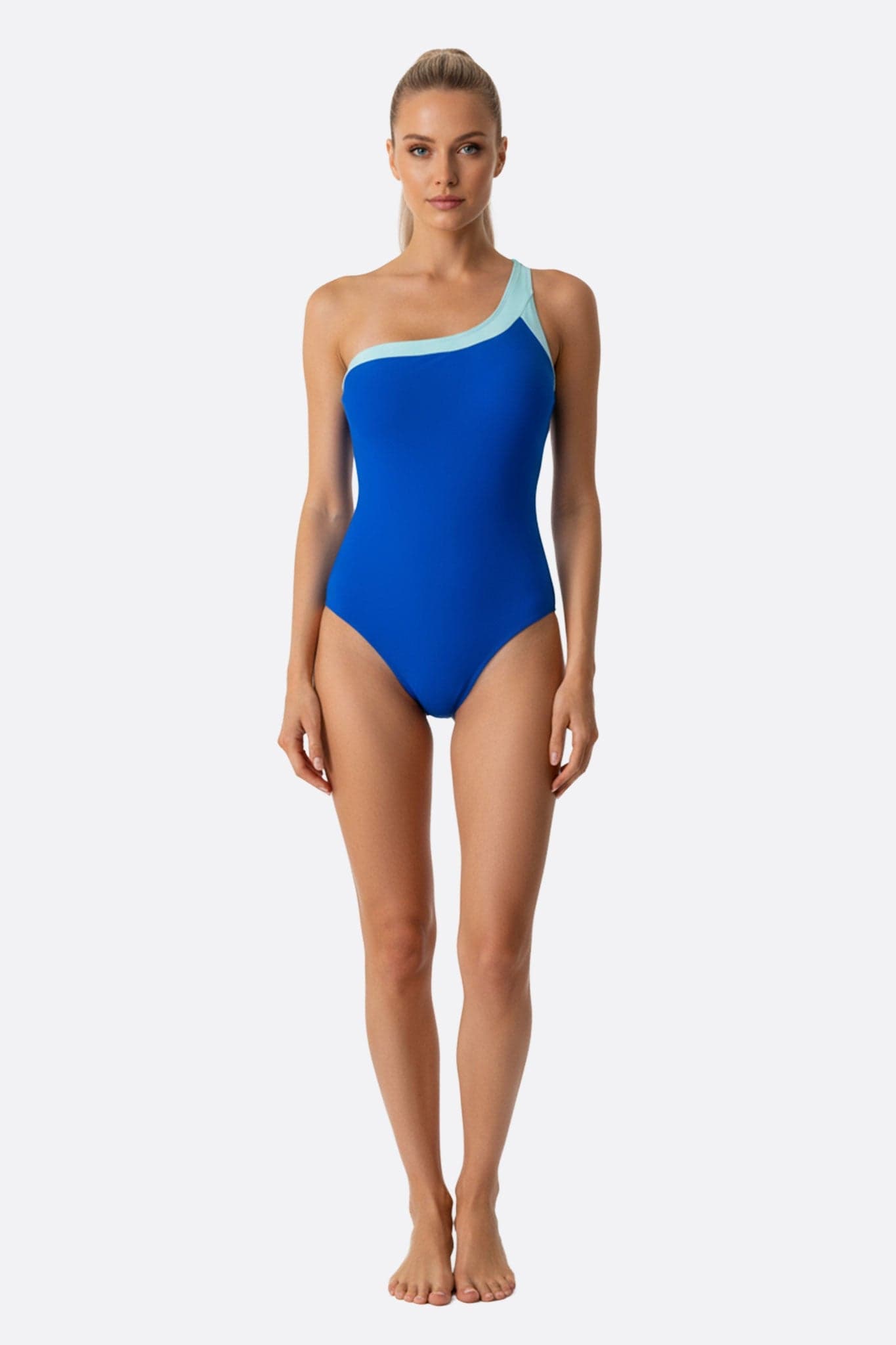
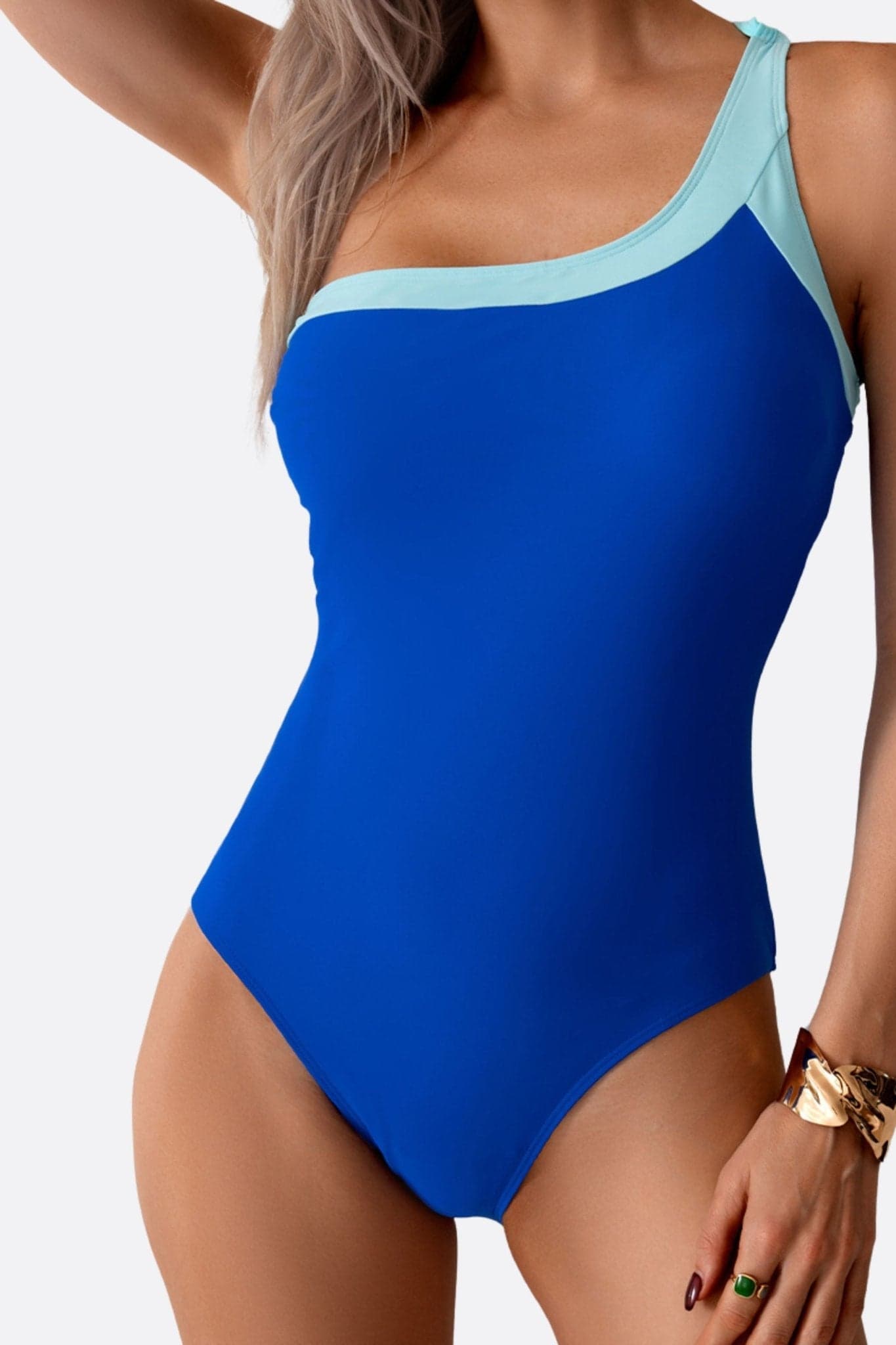
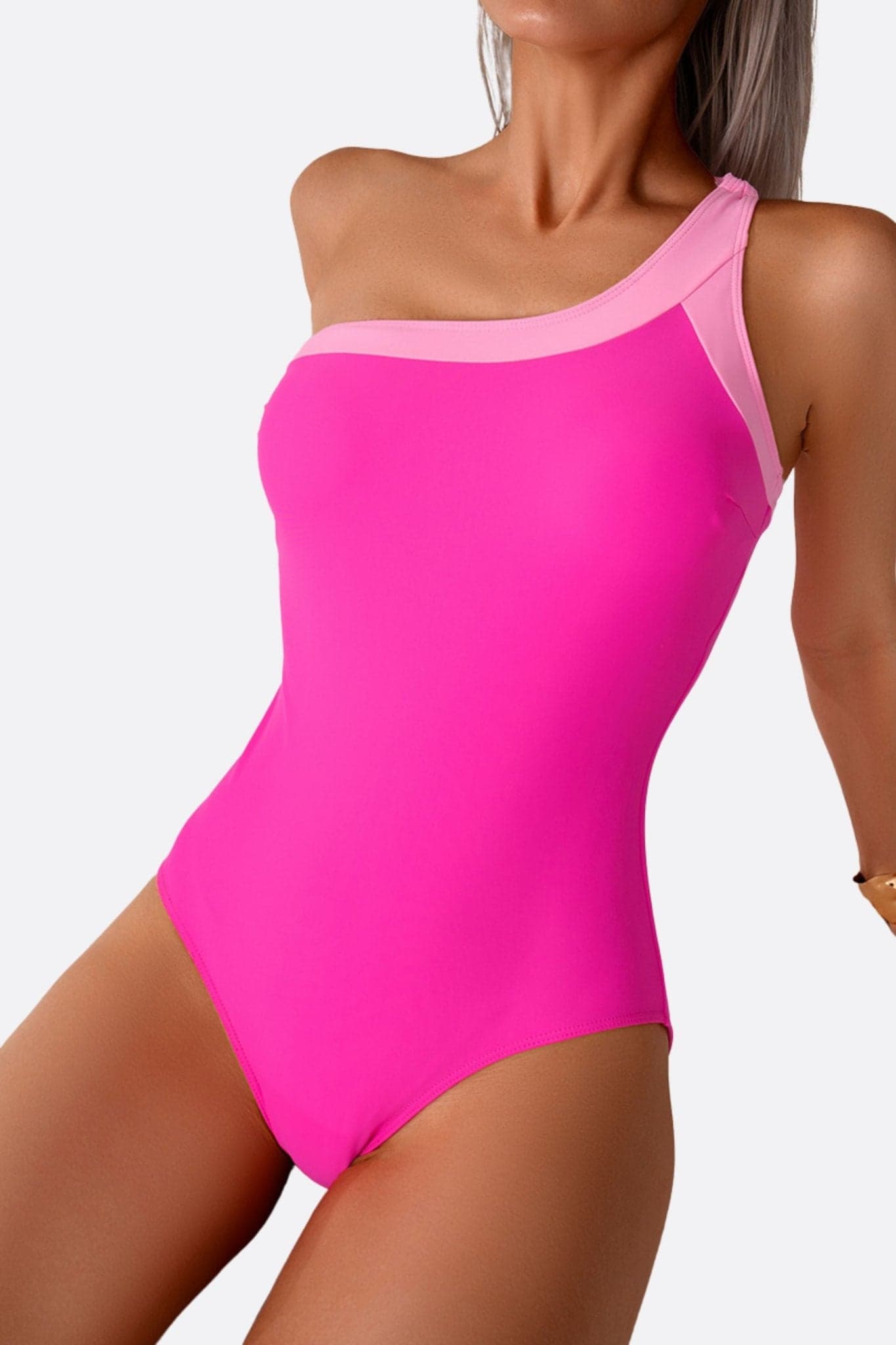
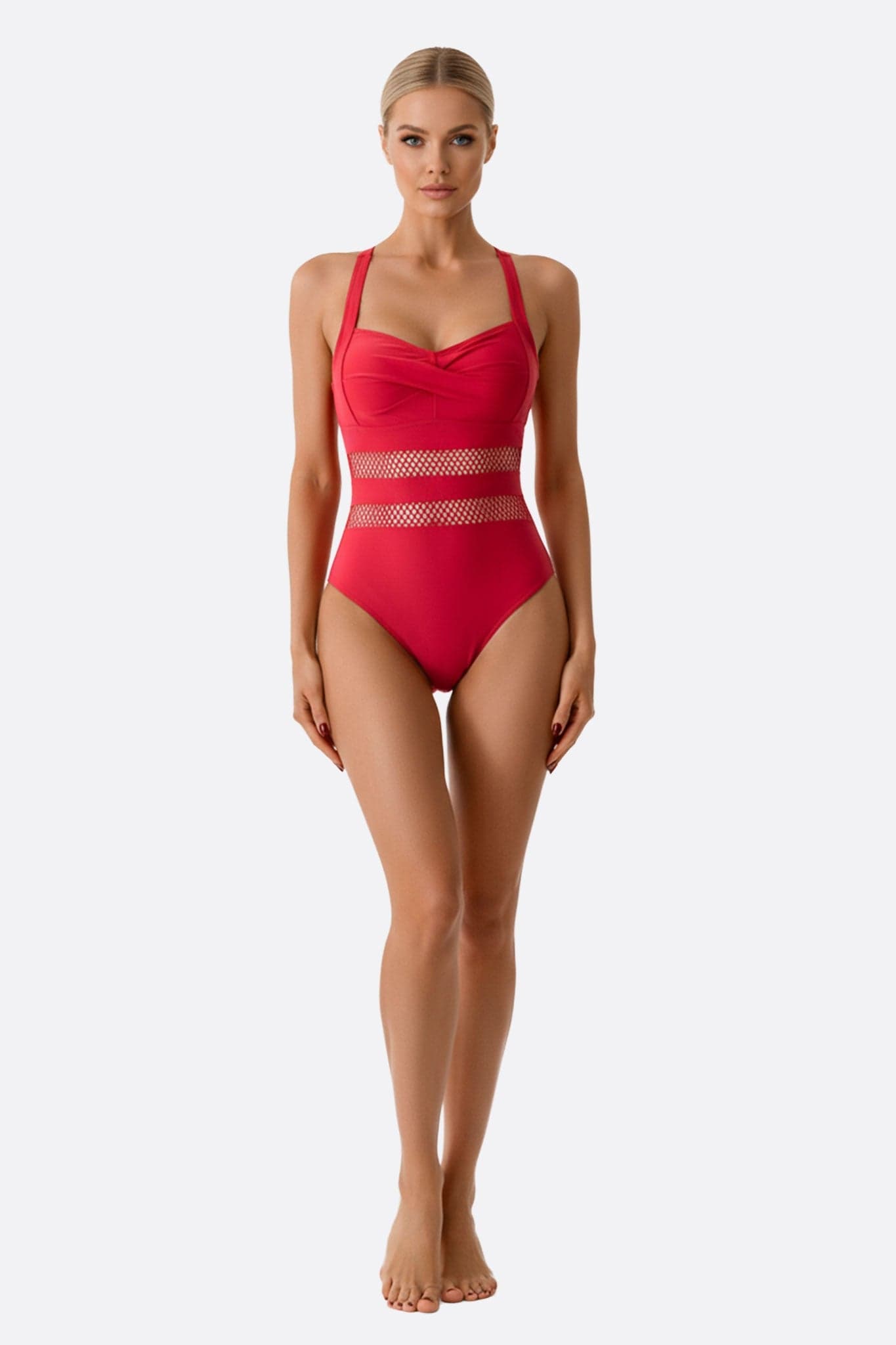
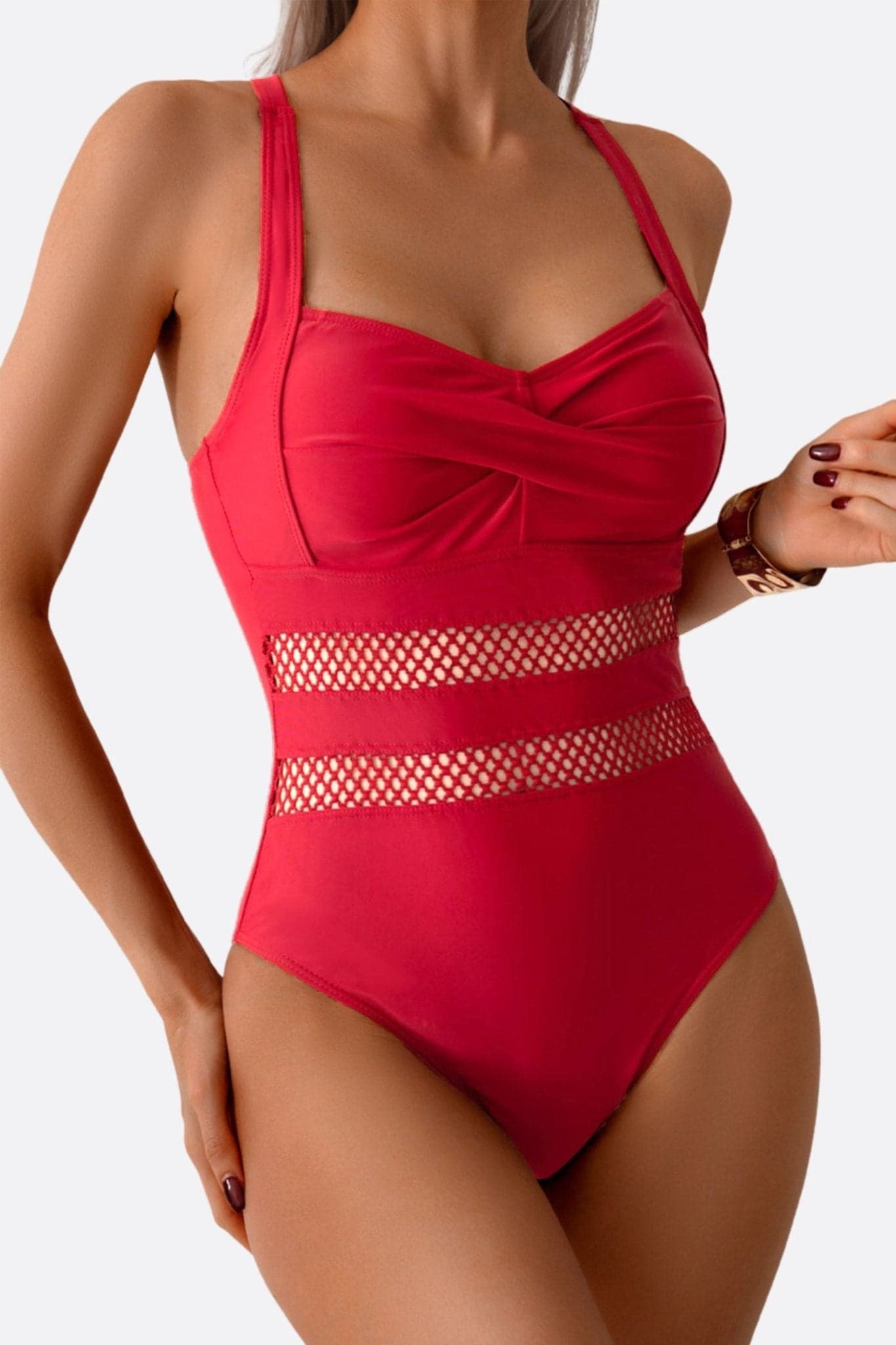
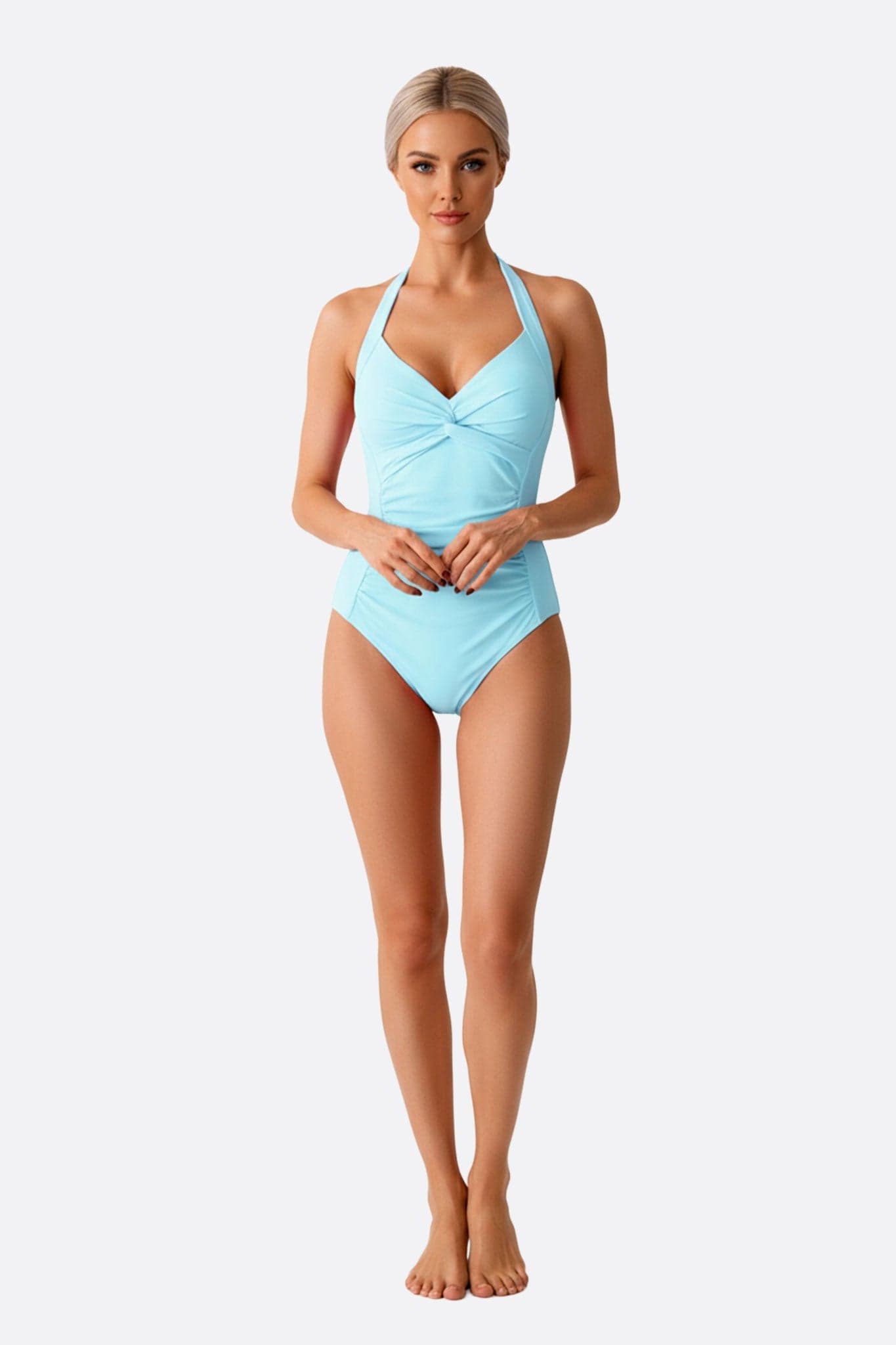
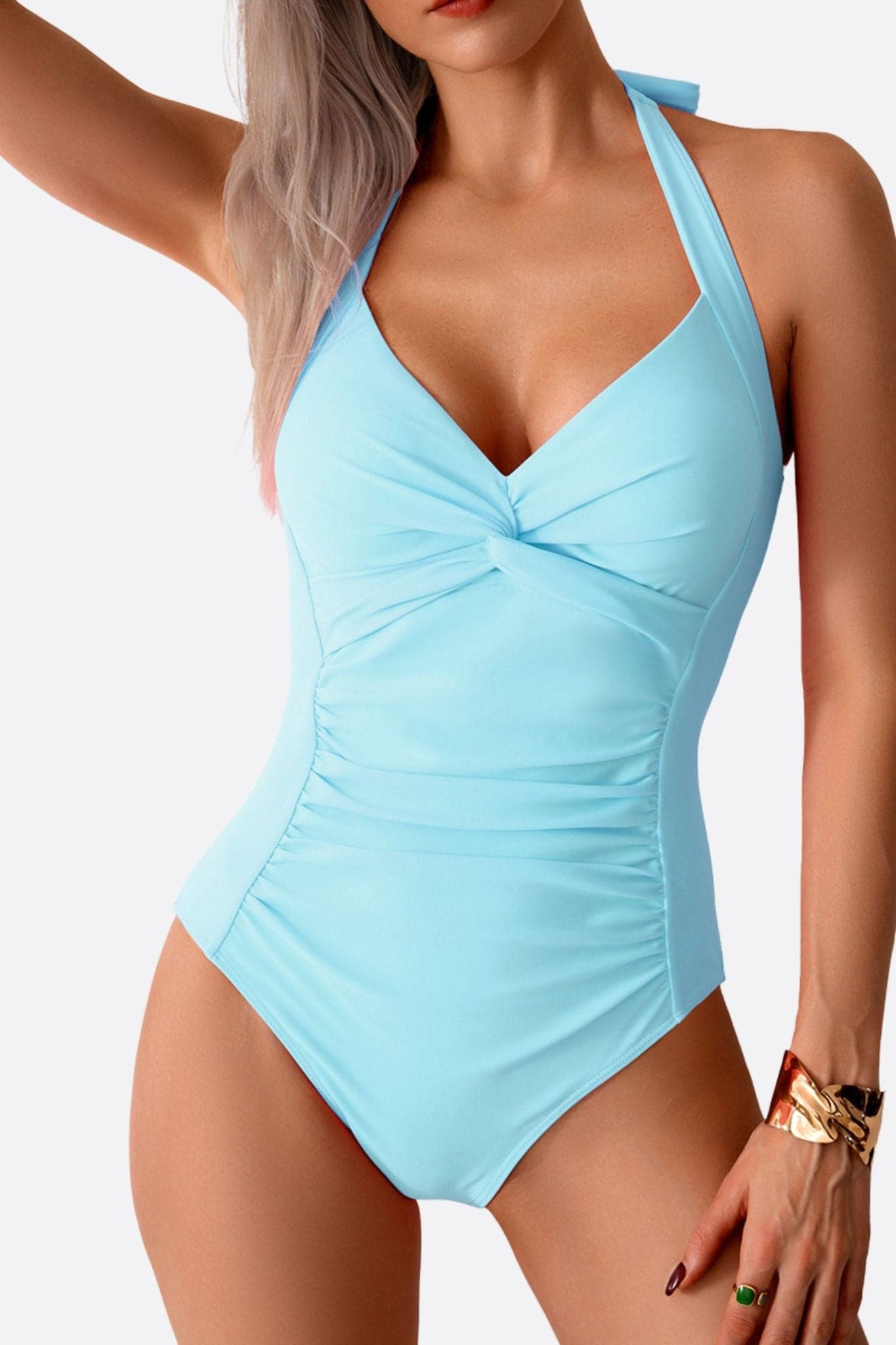
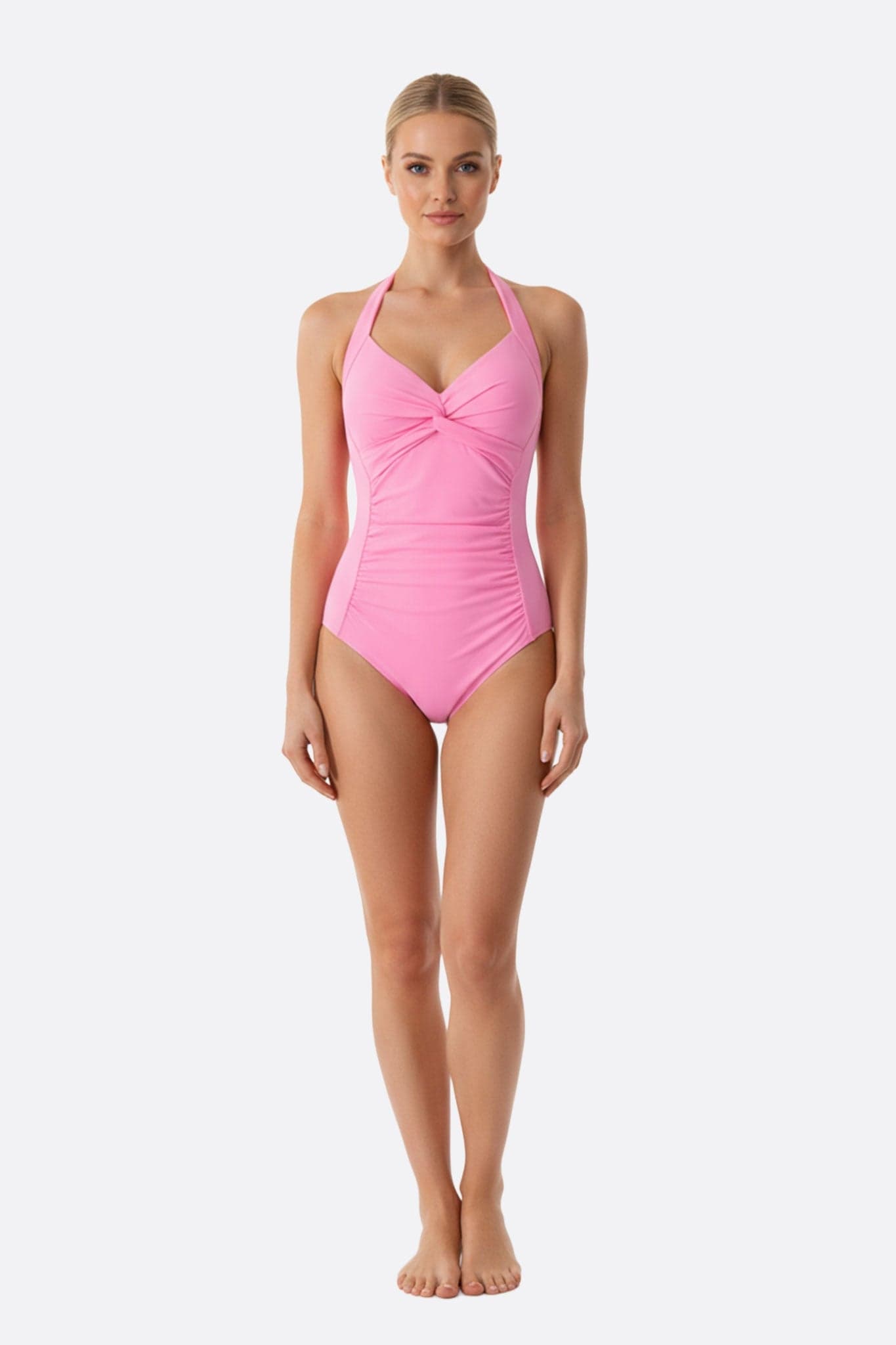
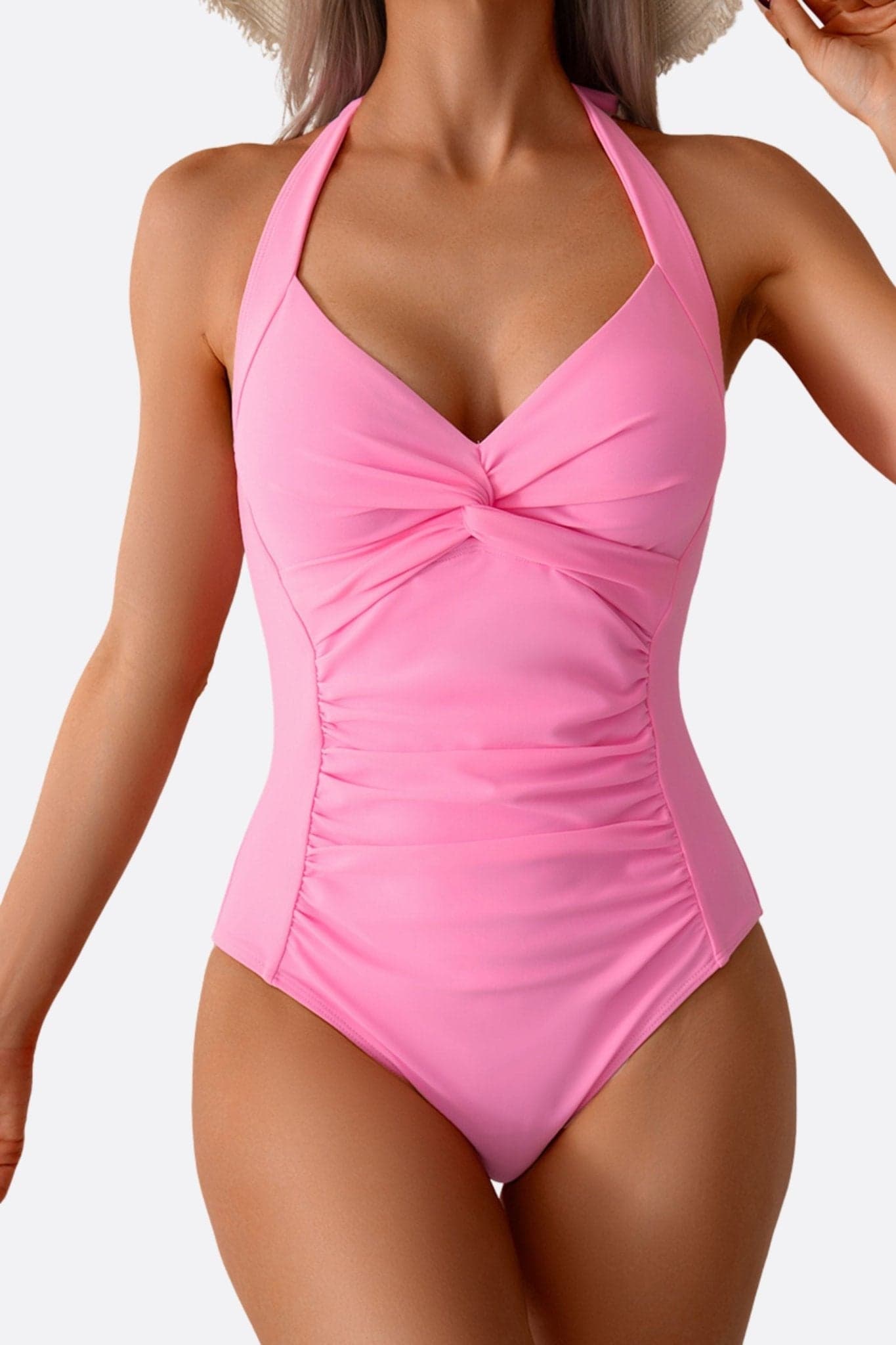
One-piece: continuous support from bust to hips in a single structure. Ideal for active swimming (racerback, no risk of slipping), partial tanning, and body types preferring abdominal coverage. A dense fabric (200+ g/m², 25-30% elastane) exerts real compression on the stomach. For the one-piece collection.
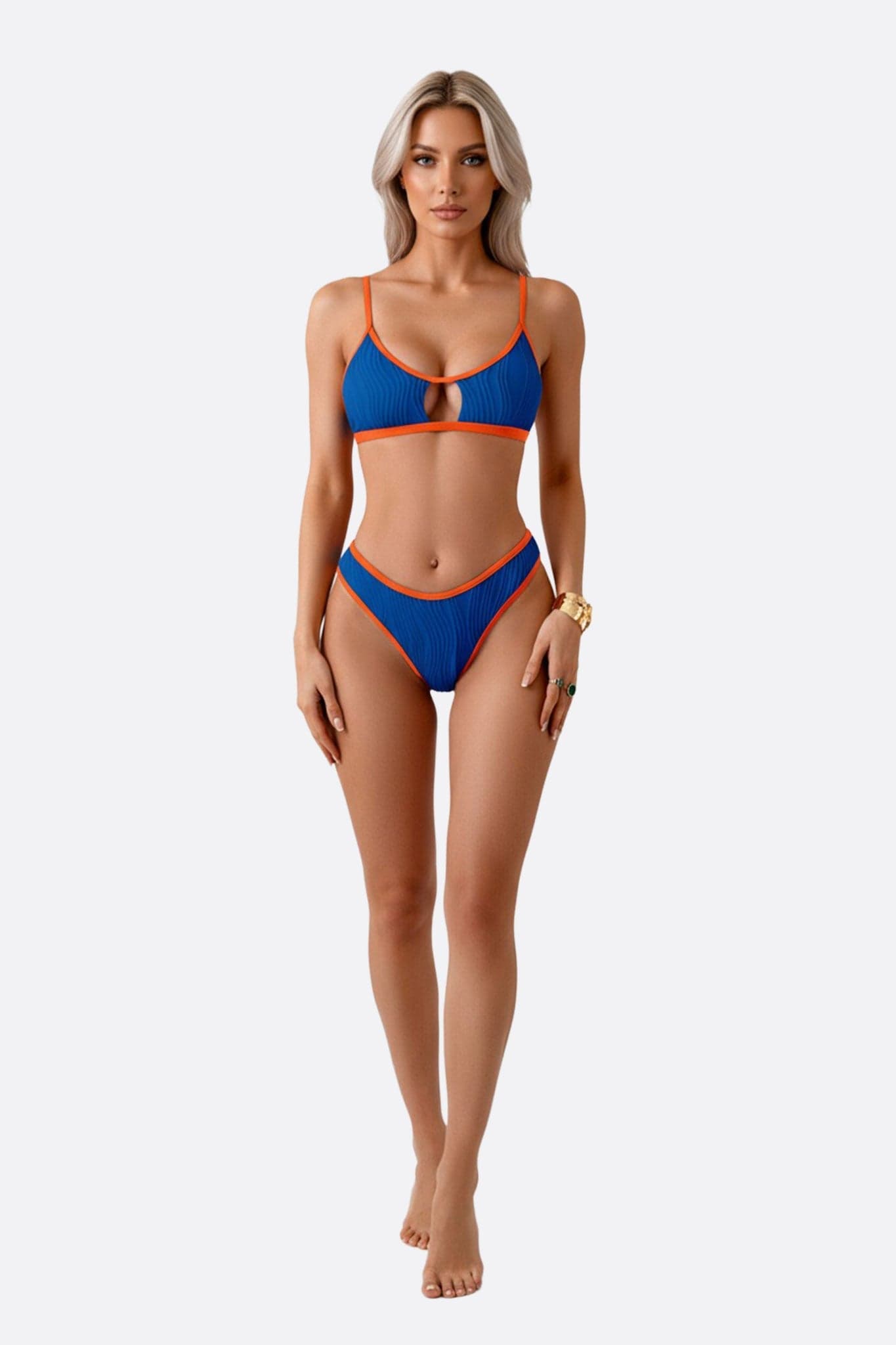
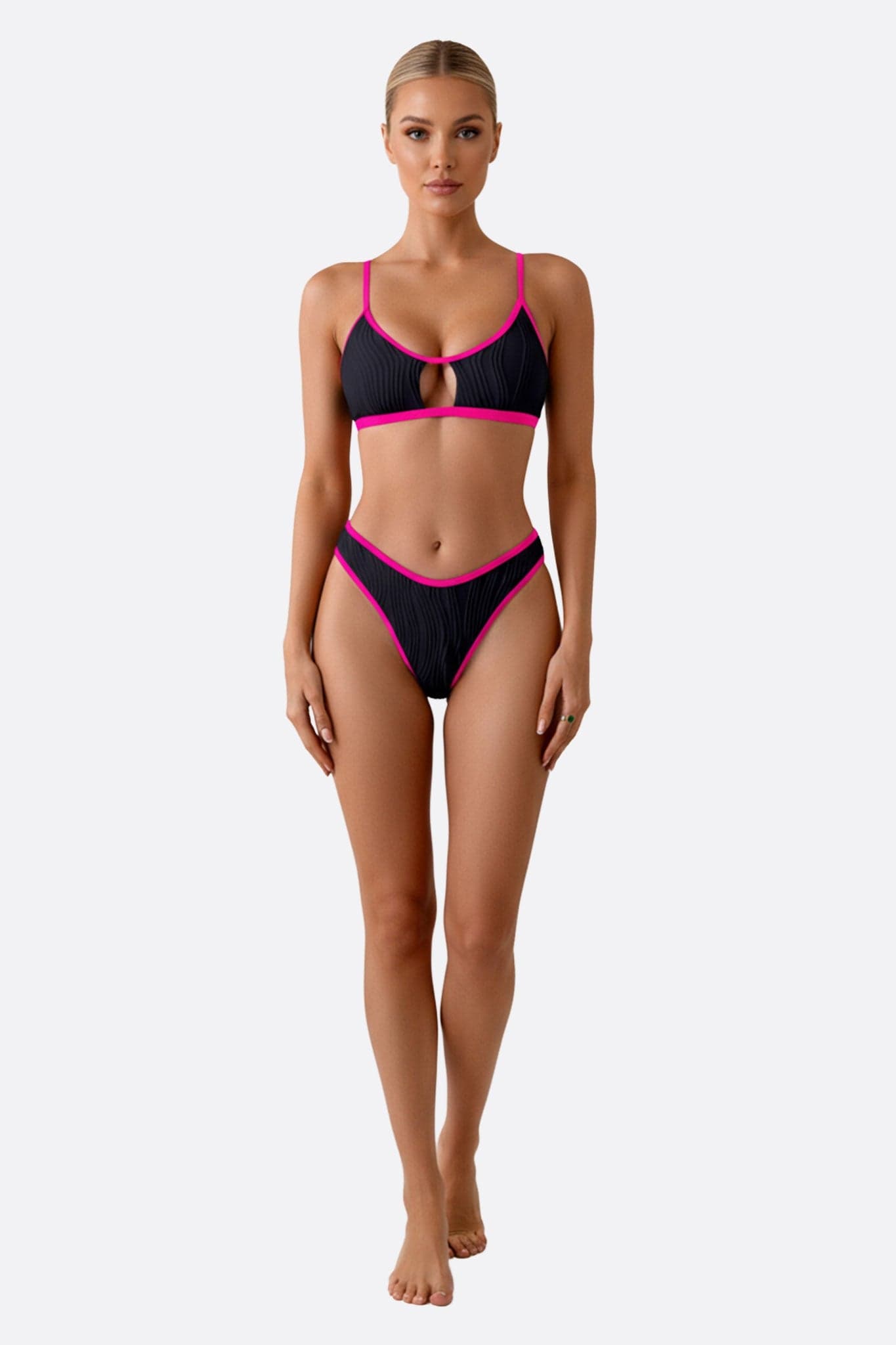
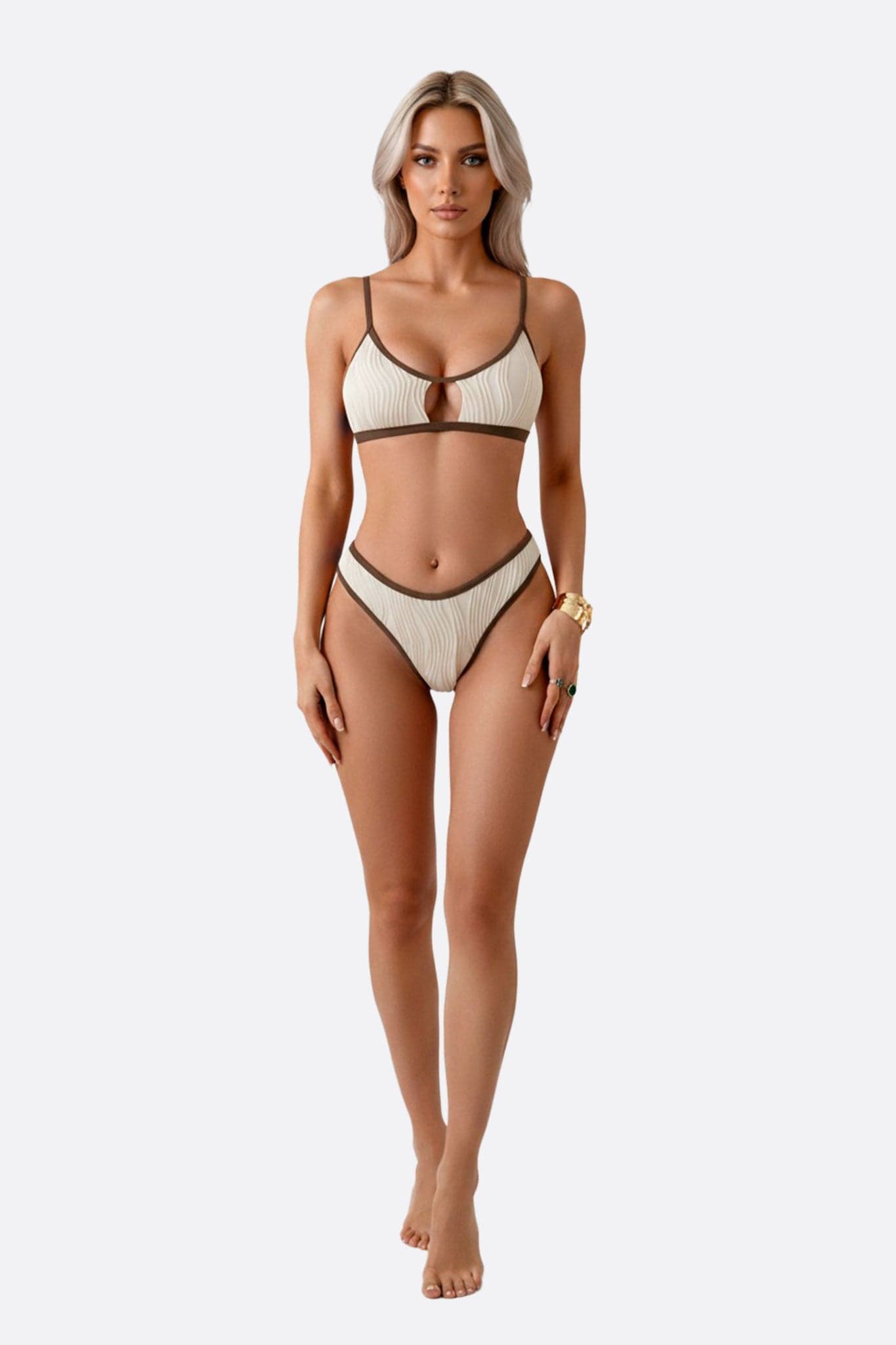
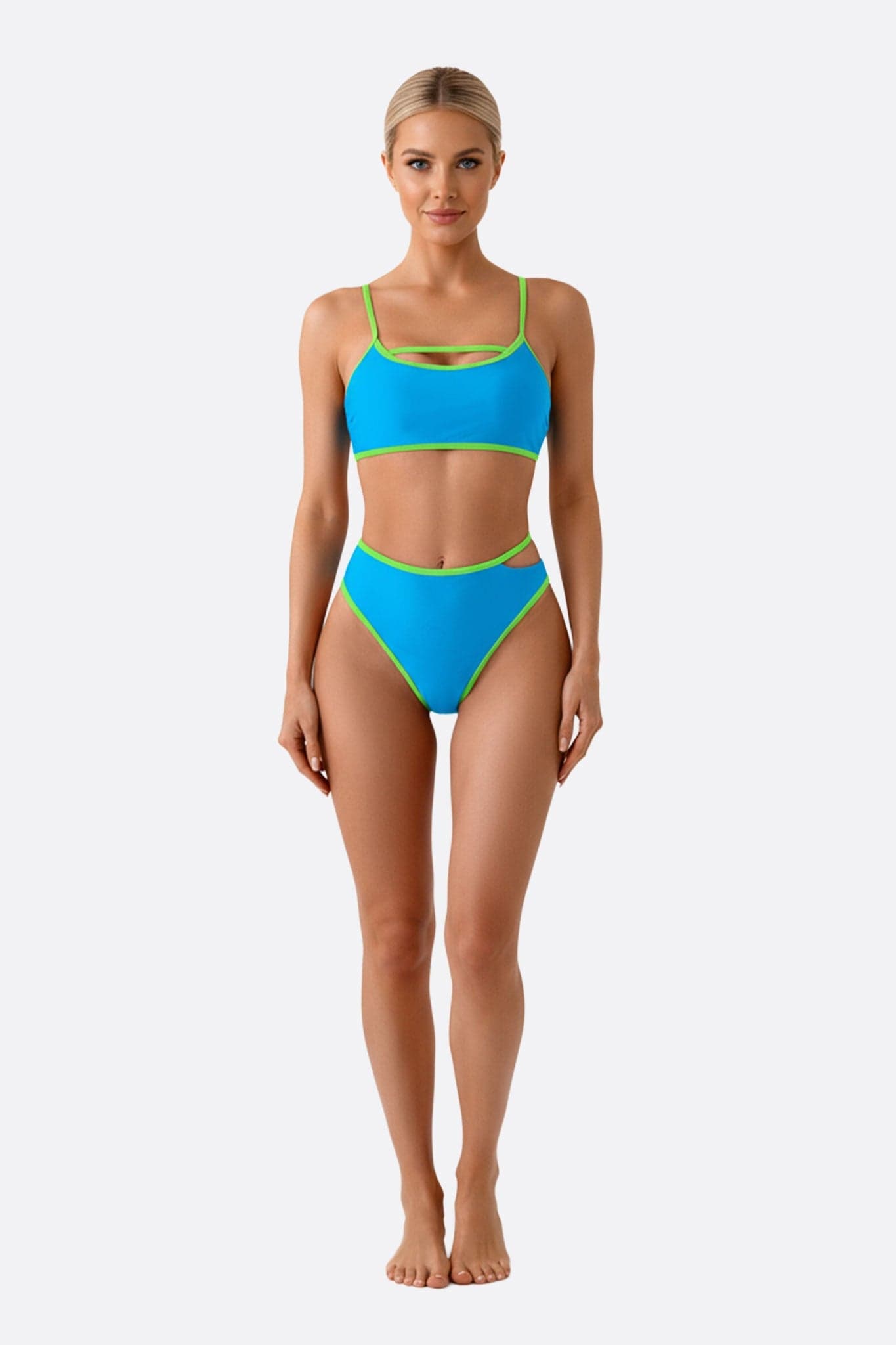
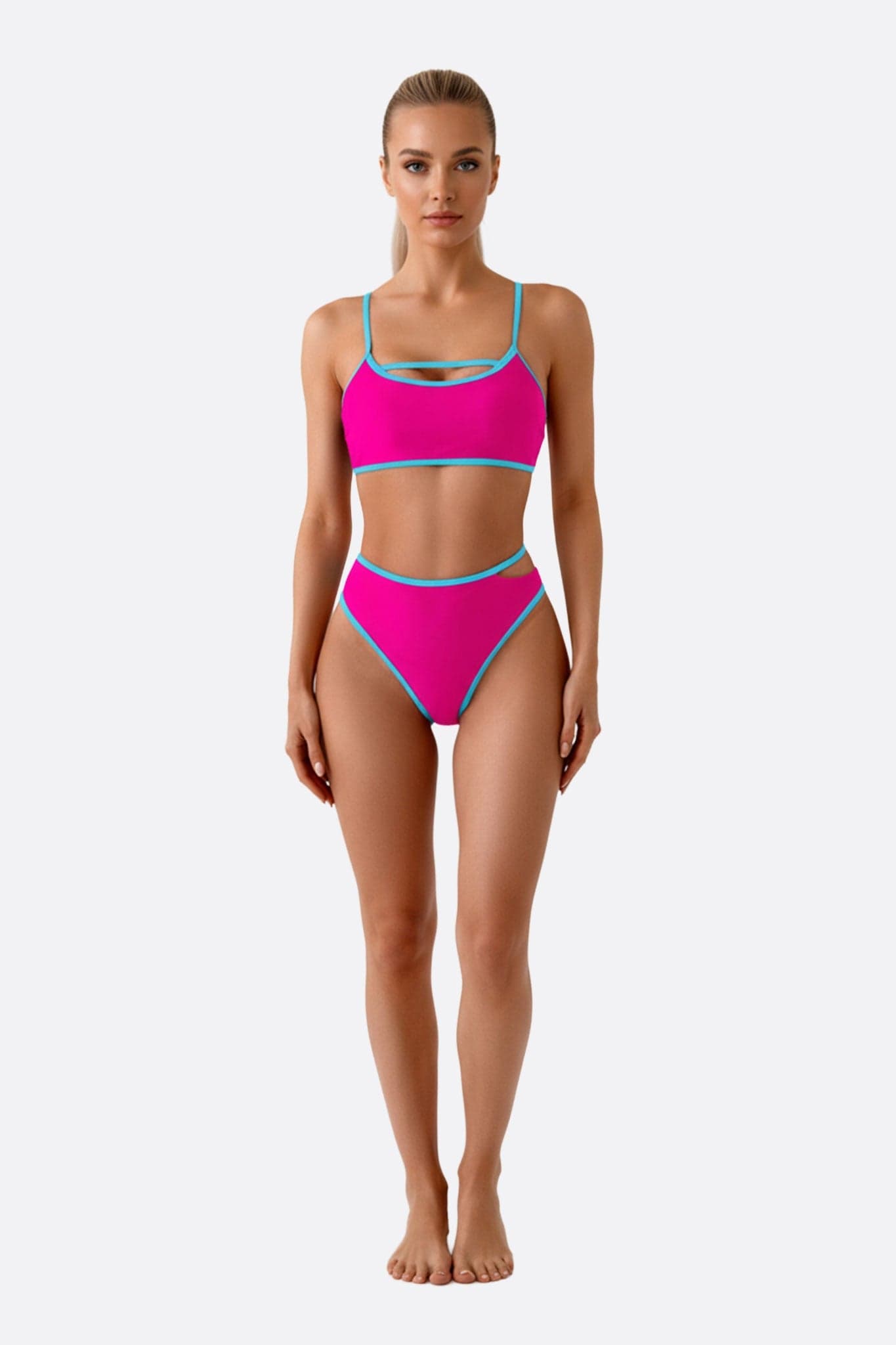
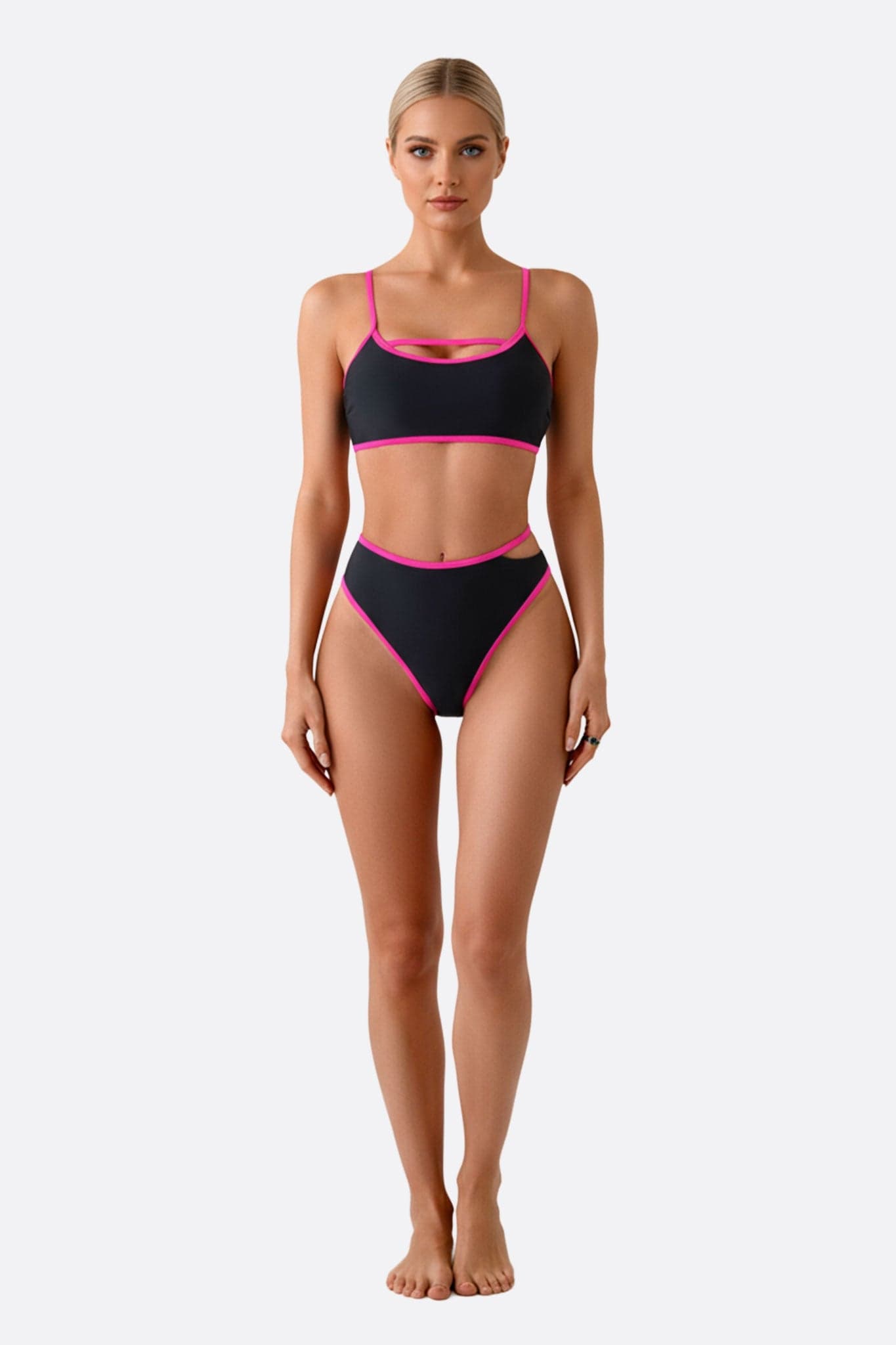
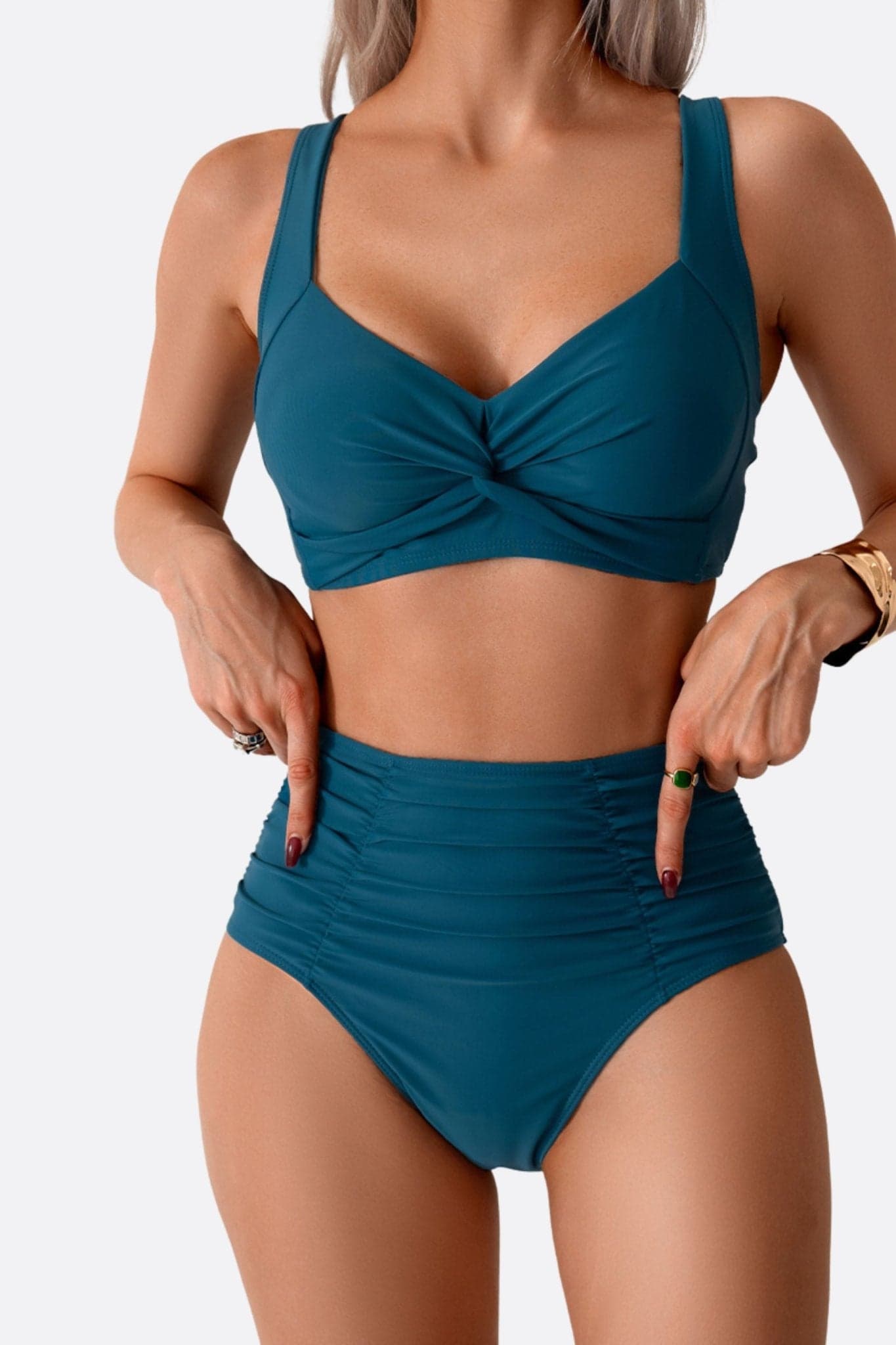
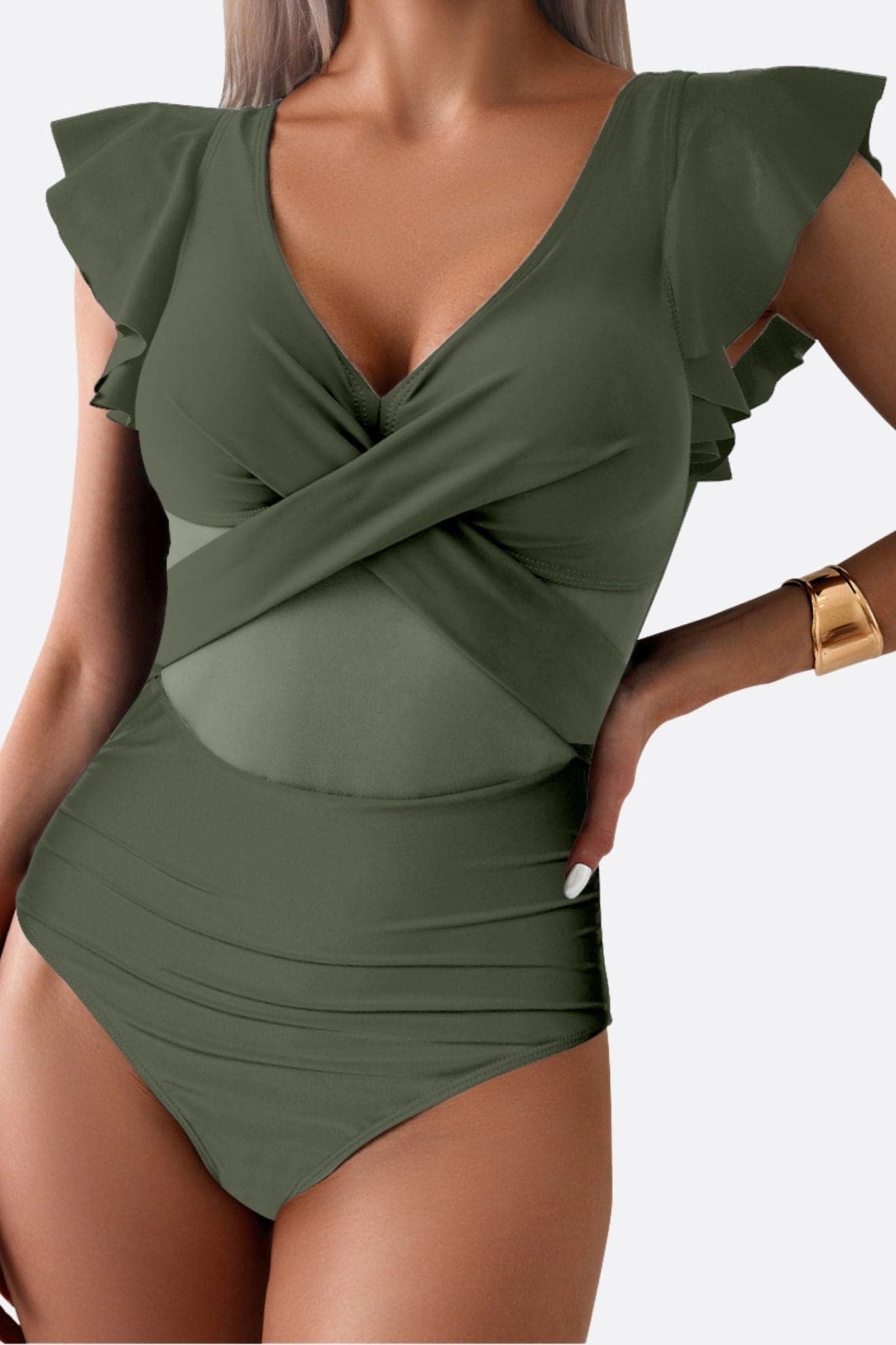
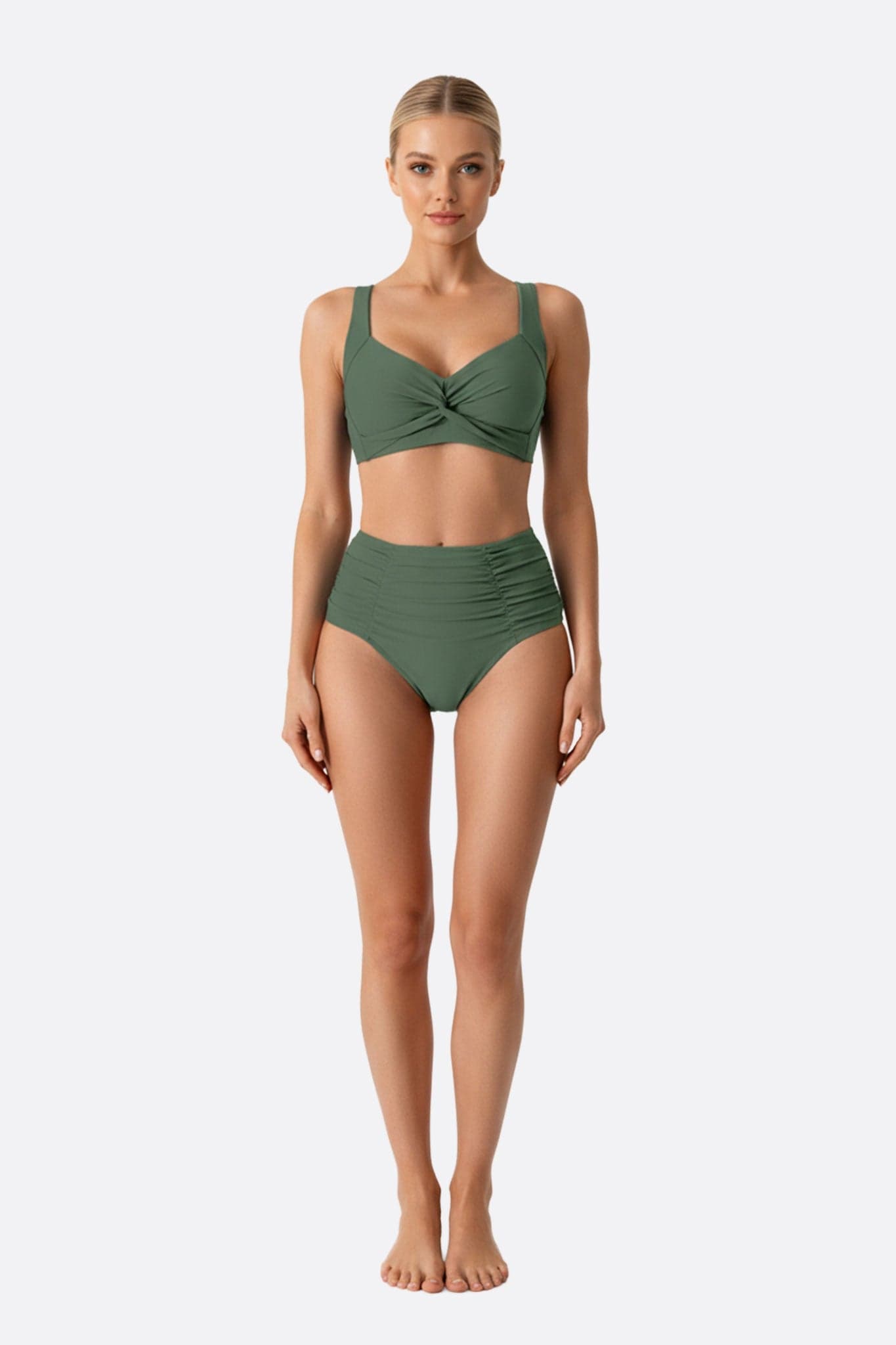
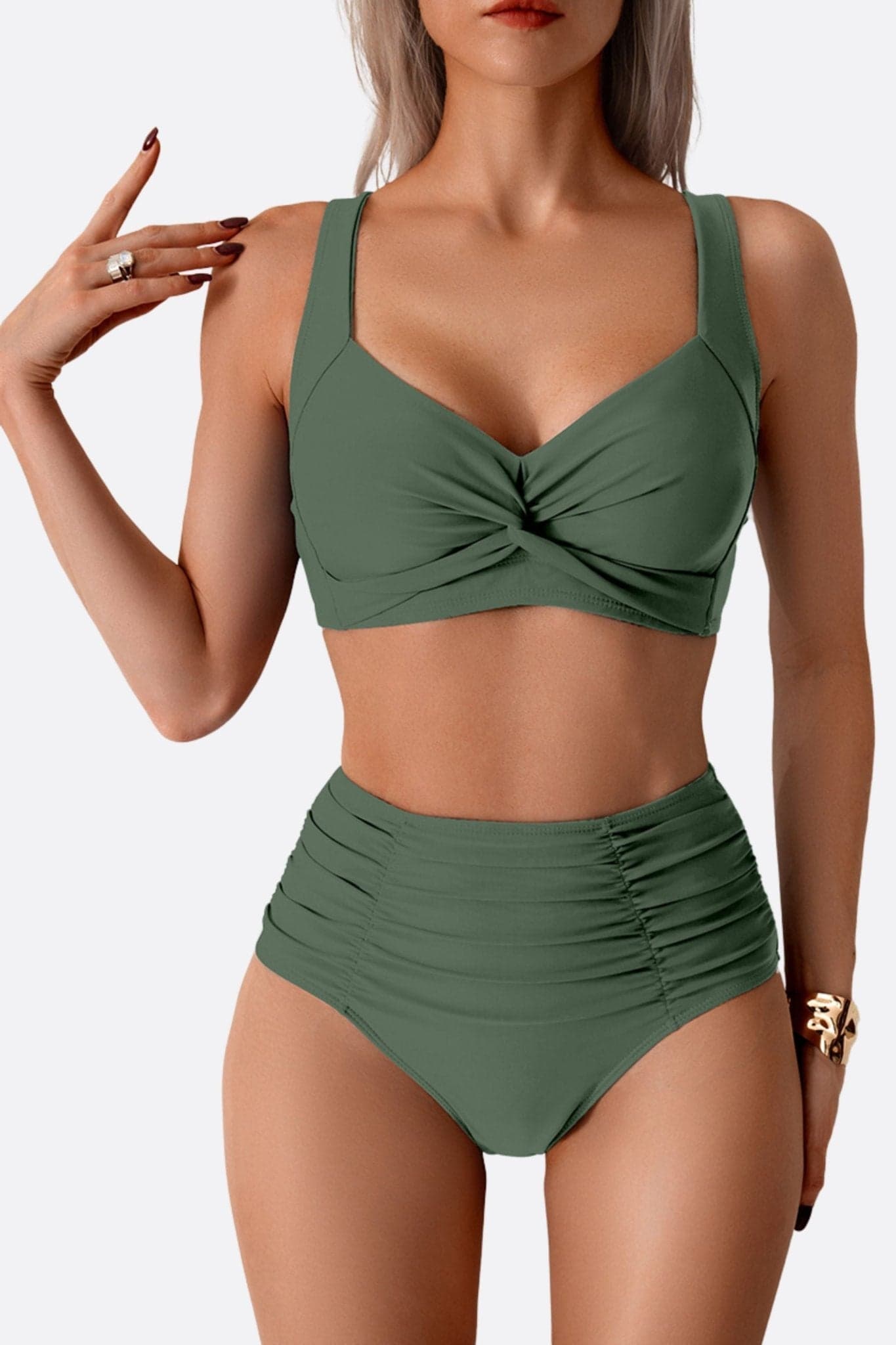
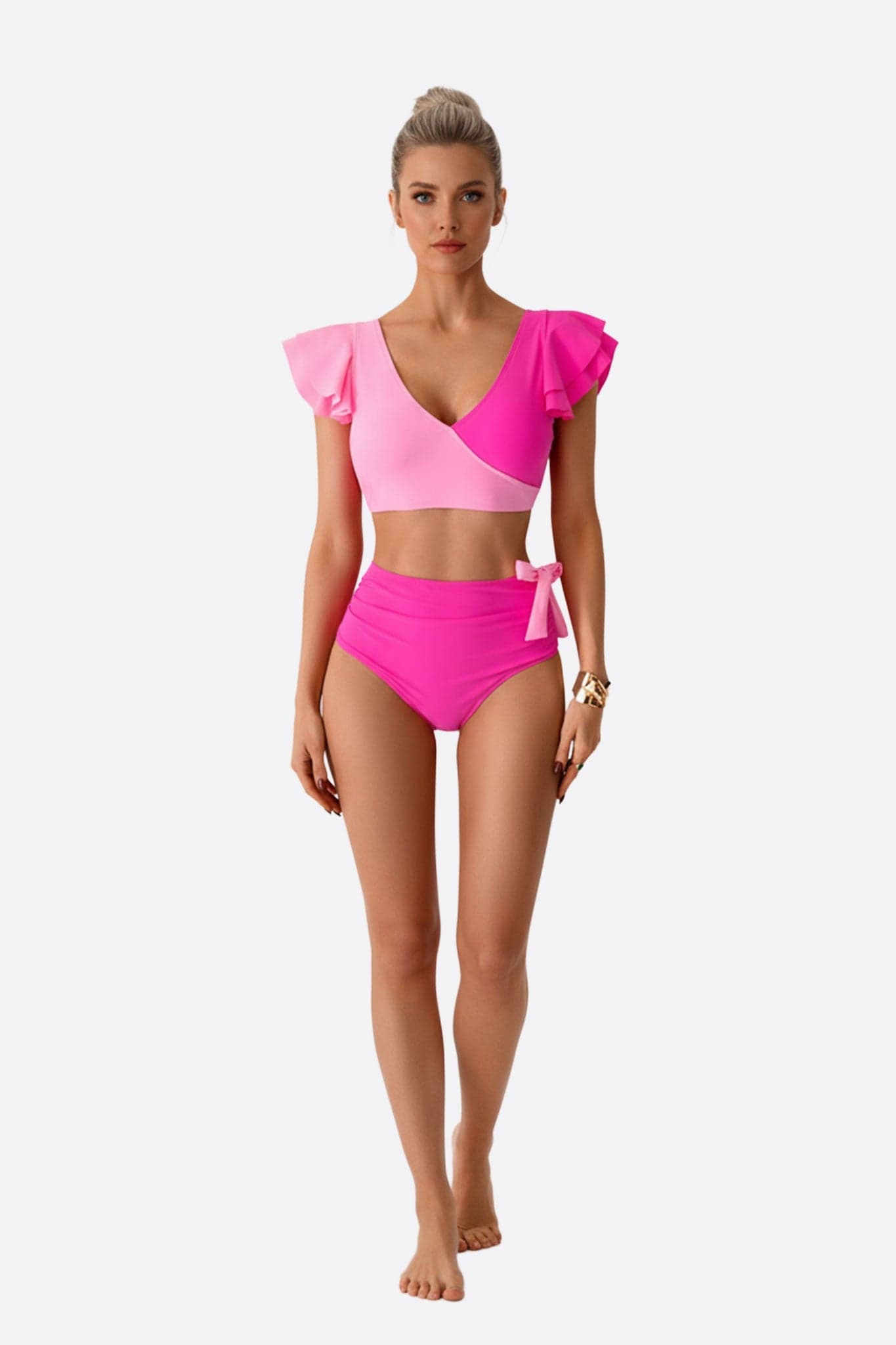
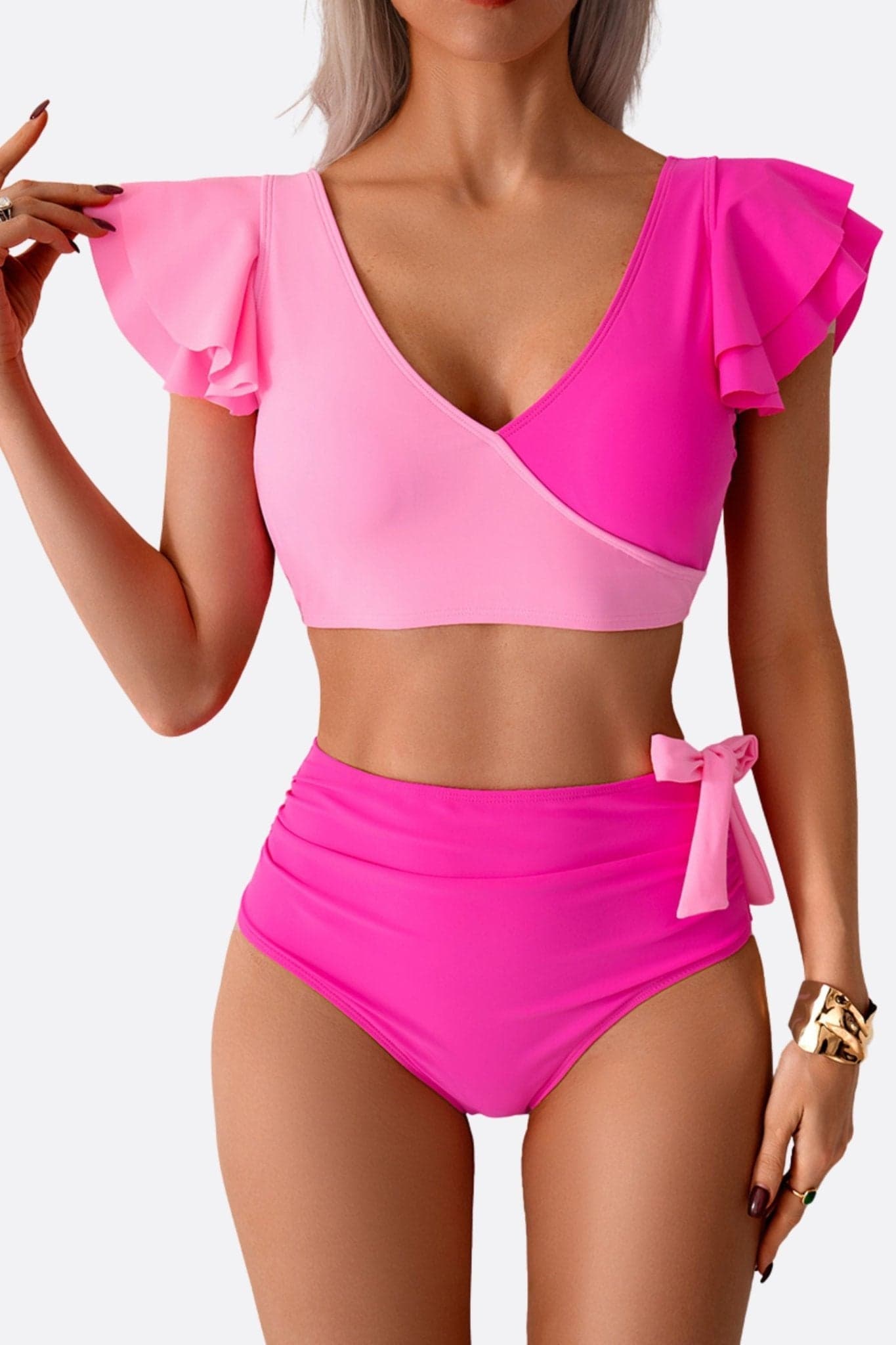
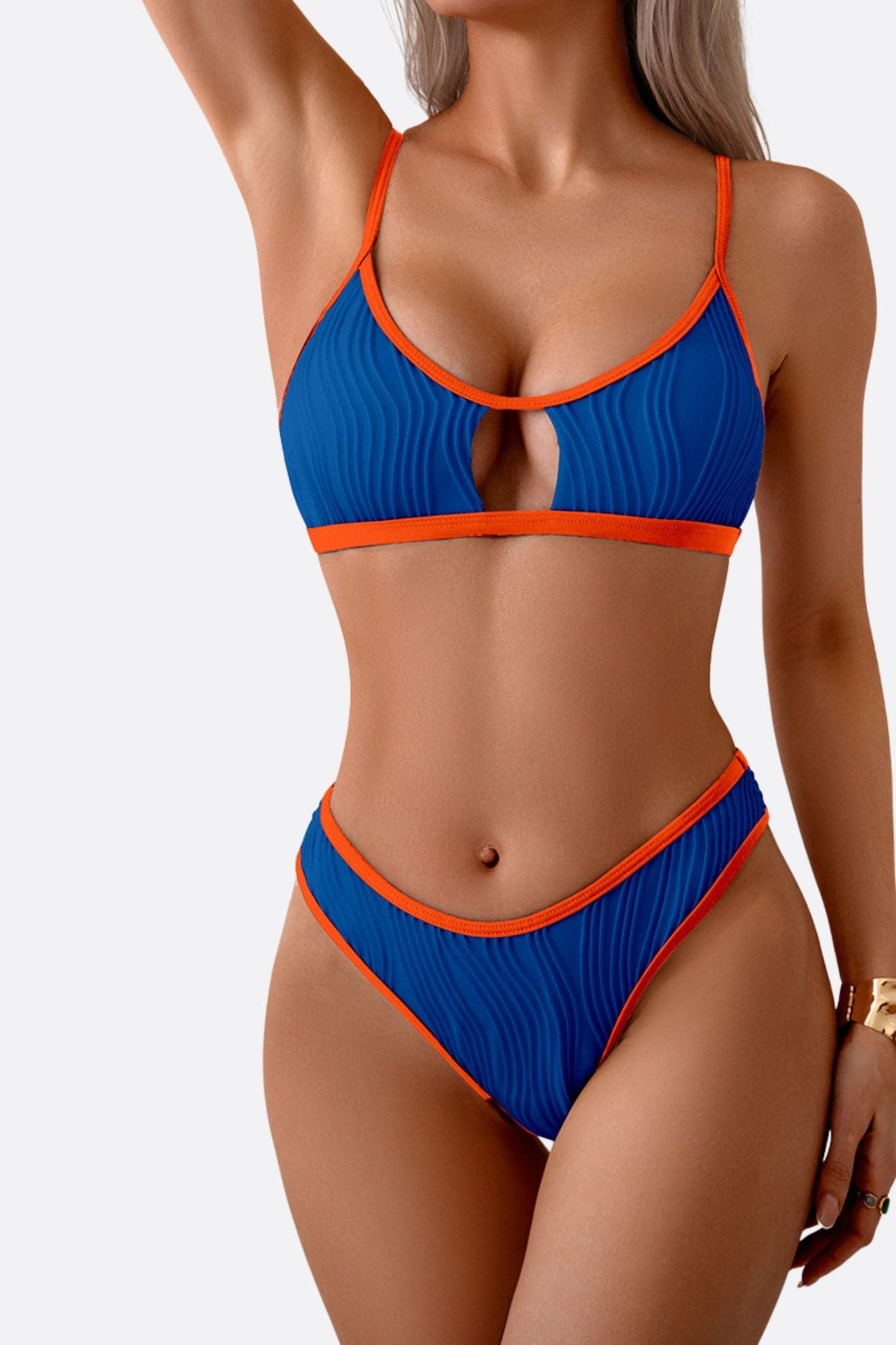
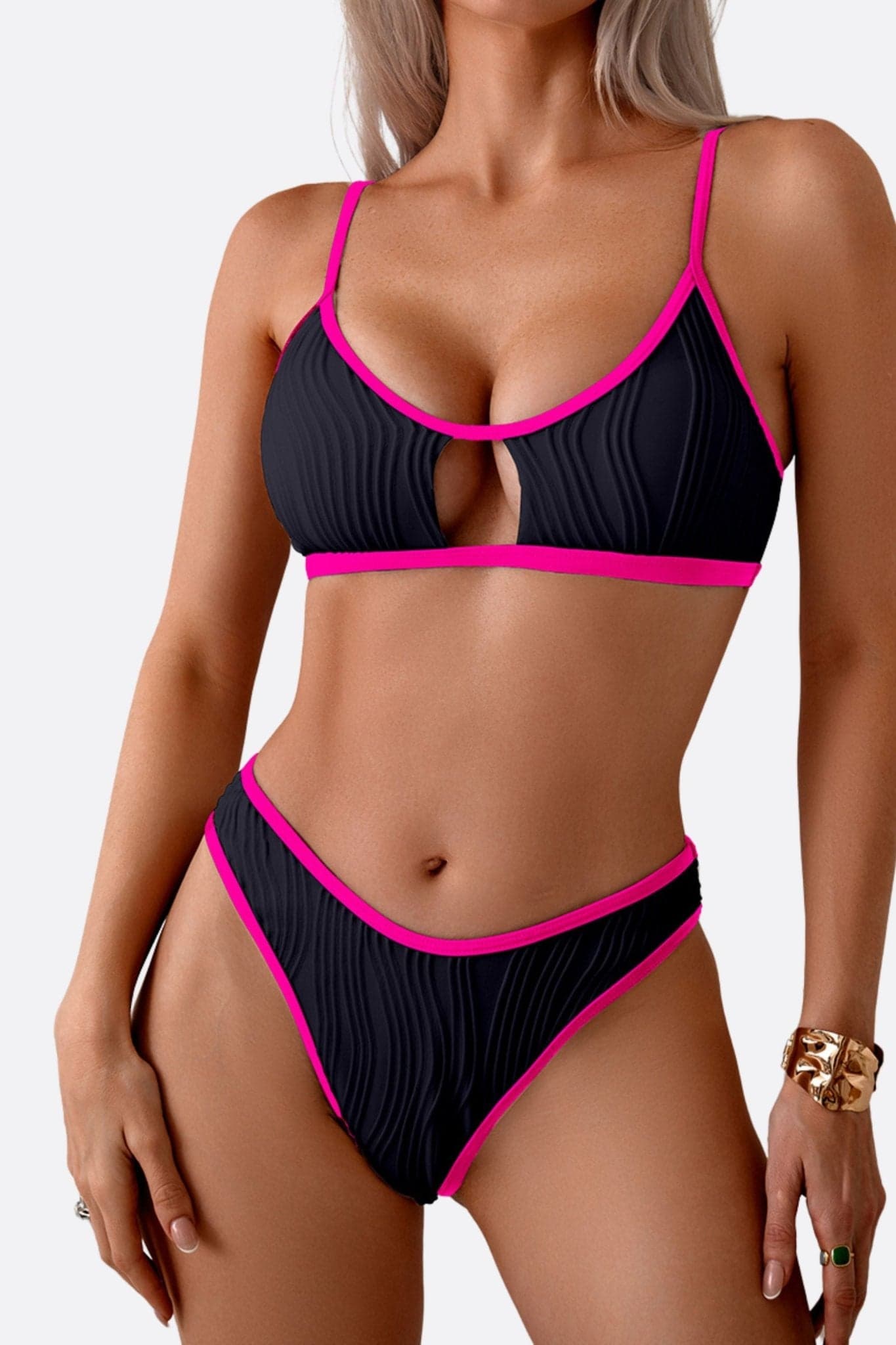
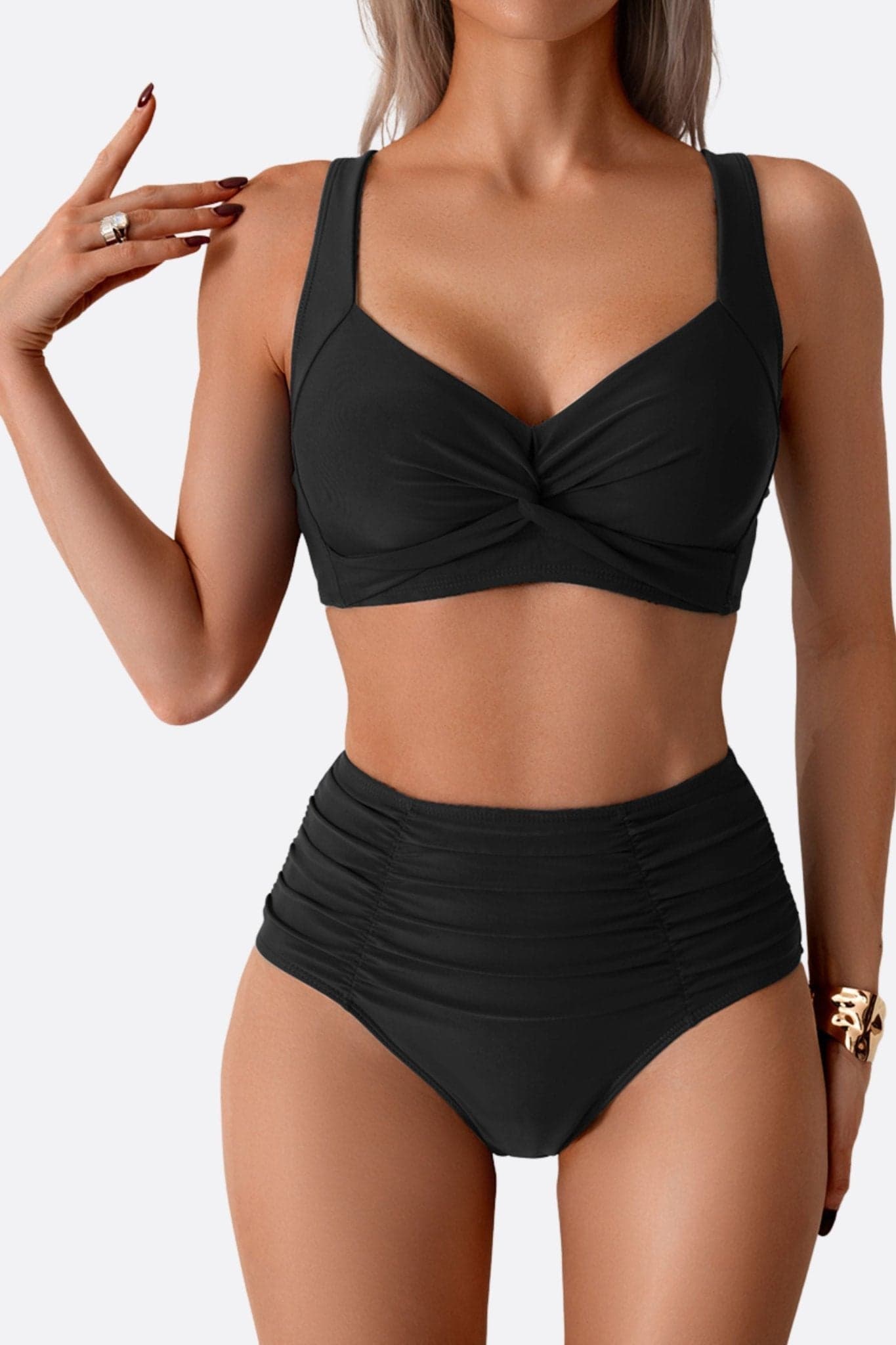
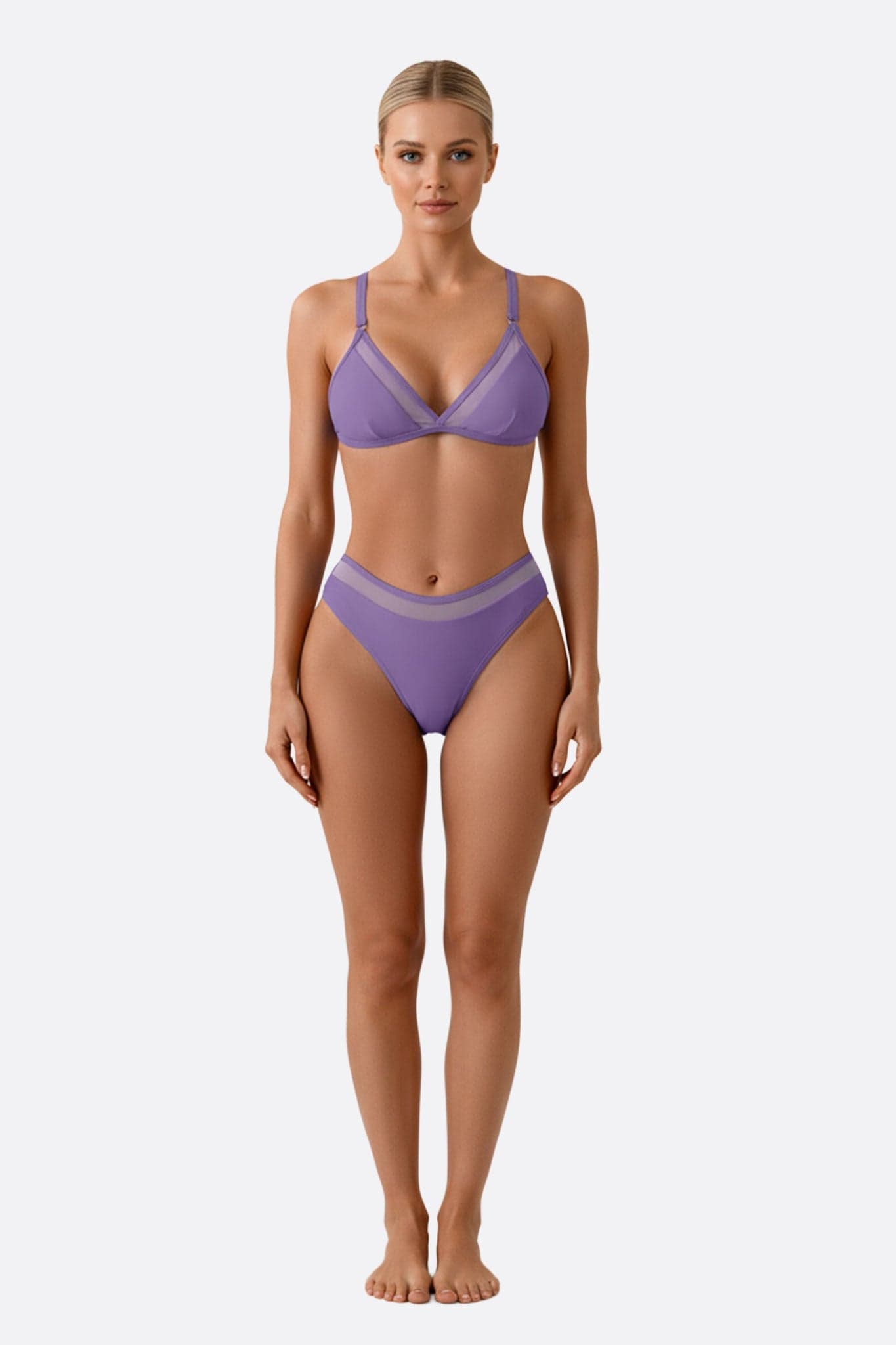
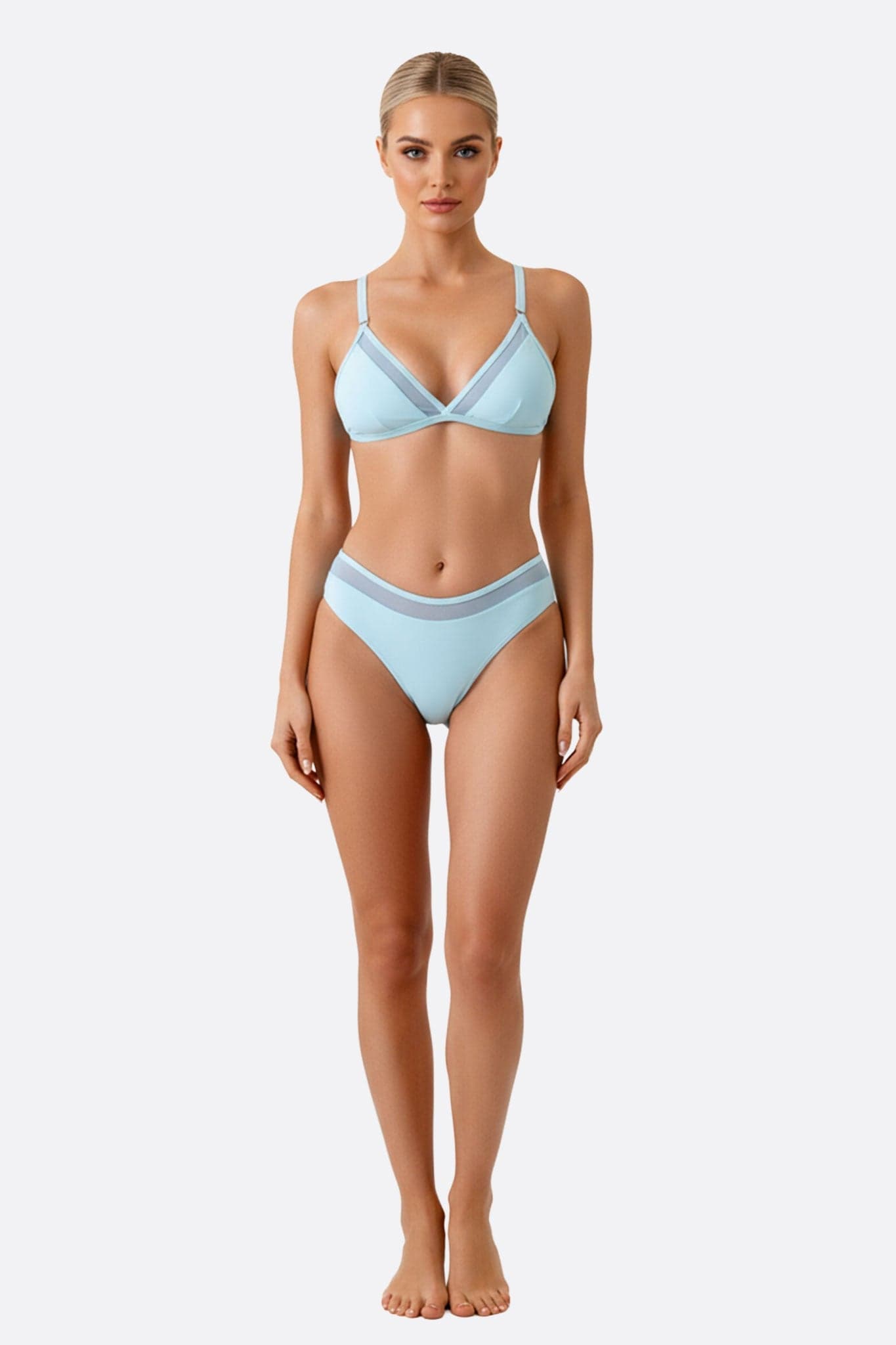
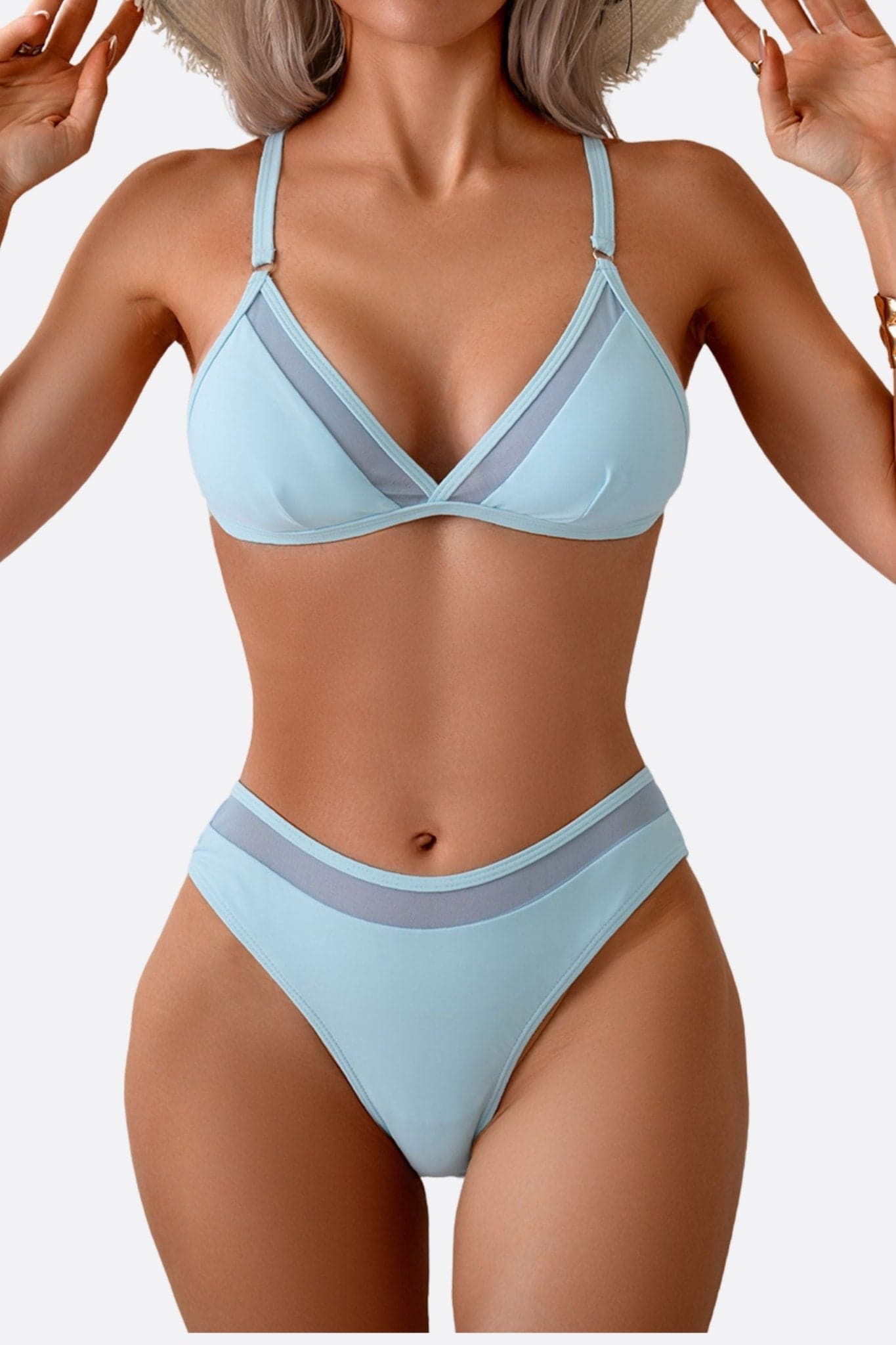
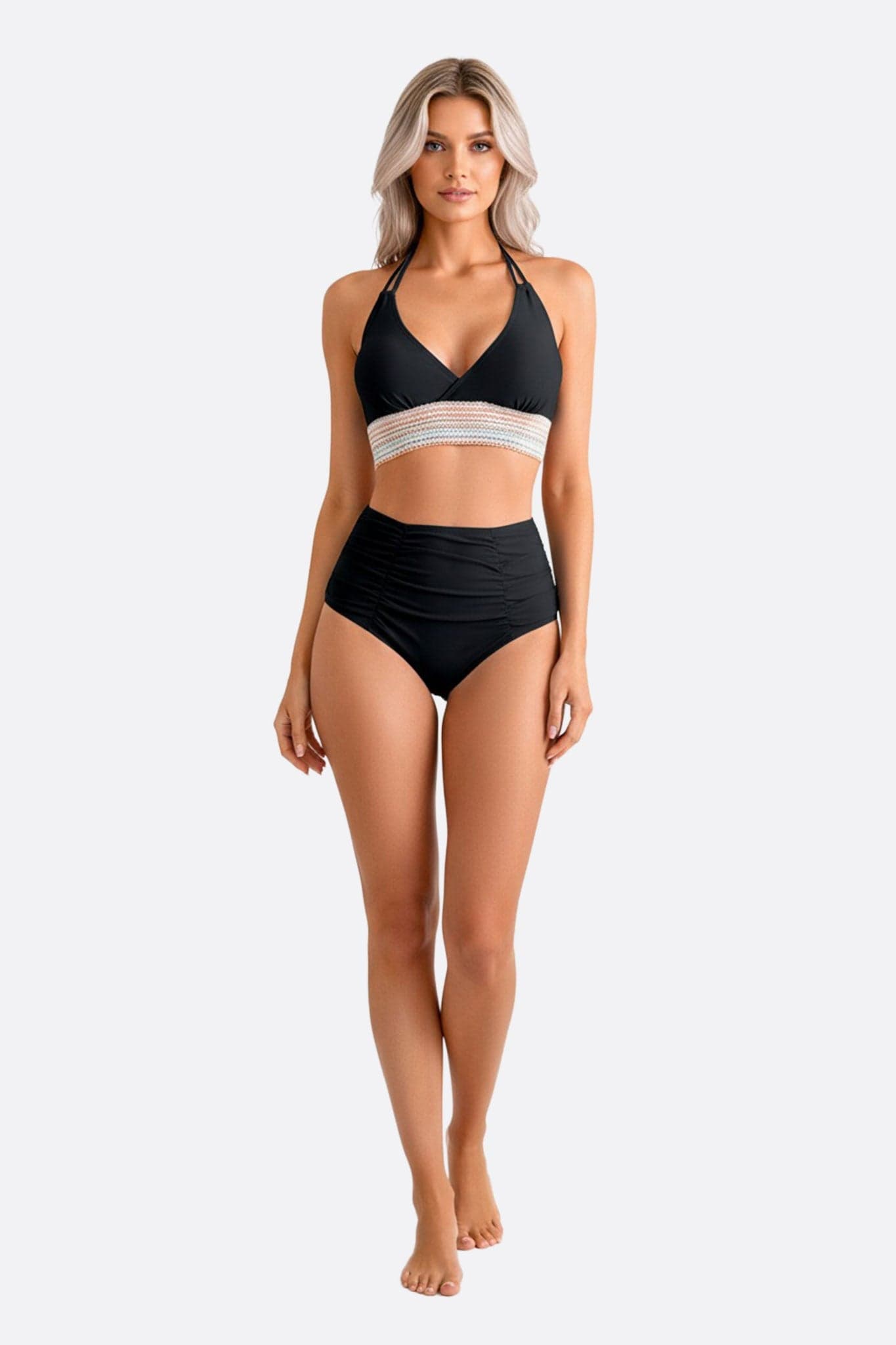
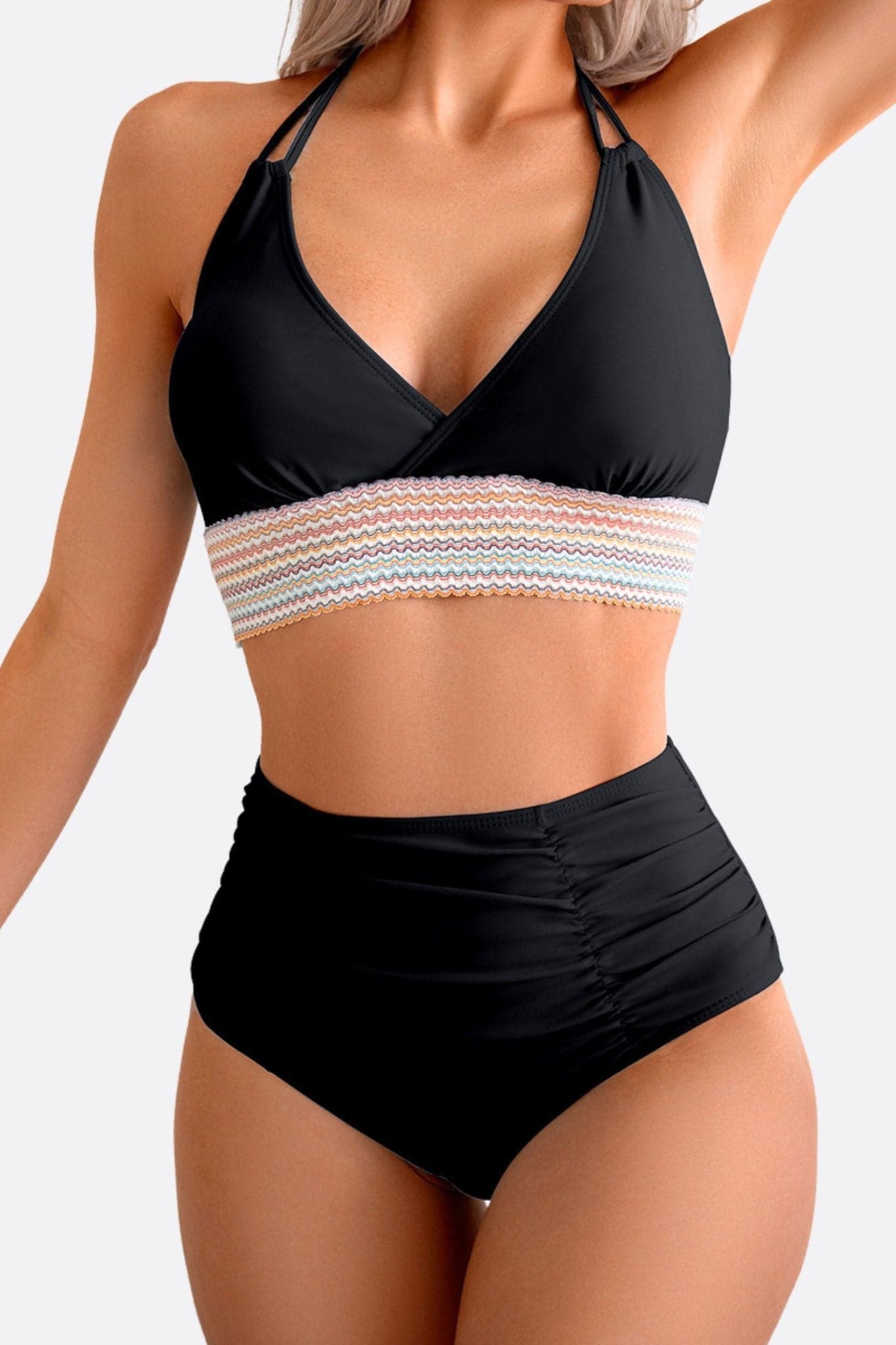
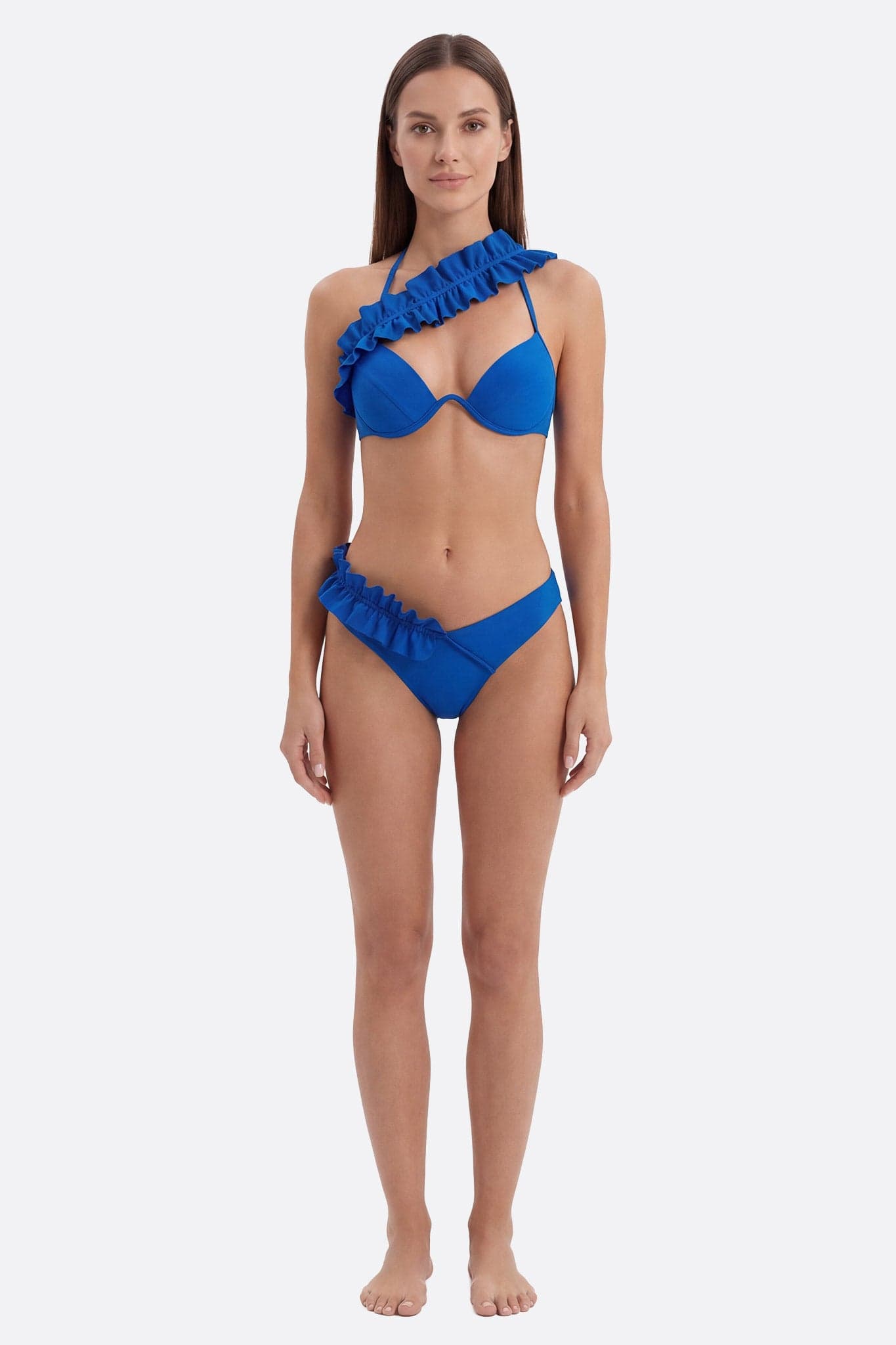
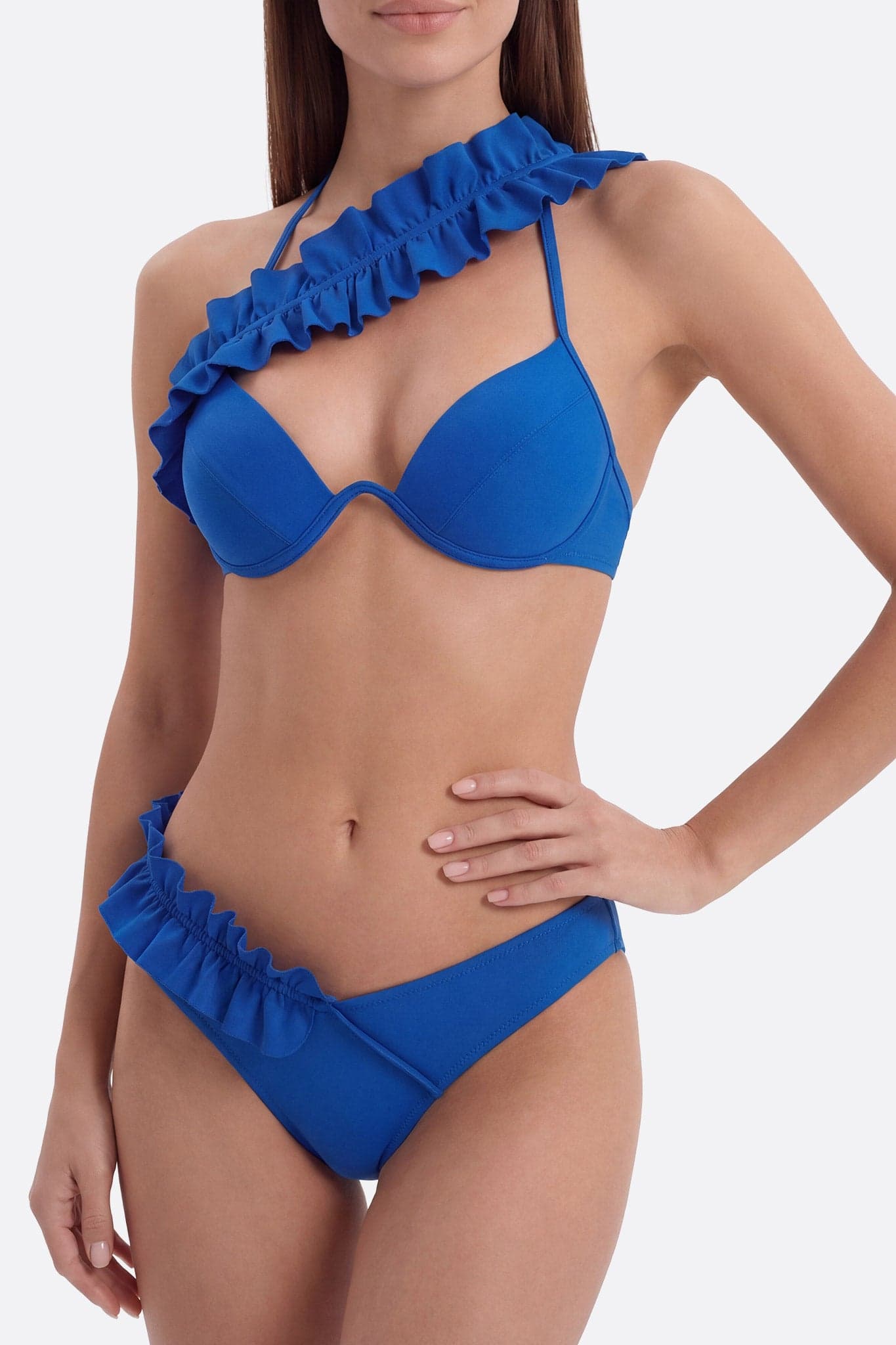
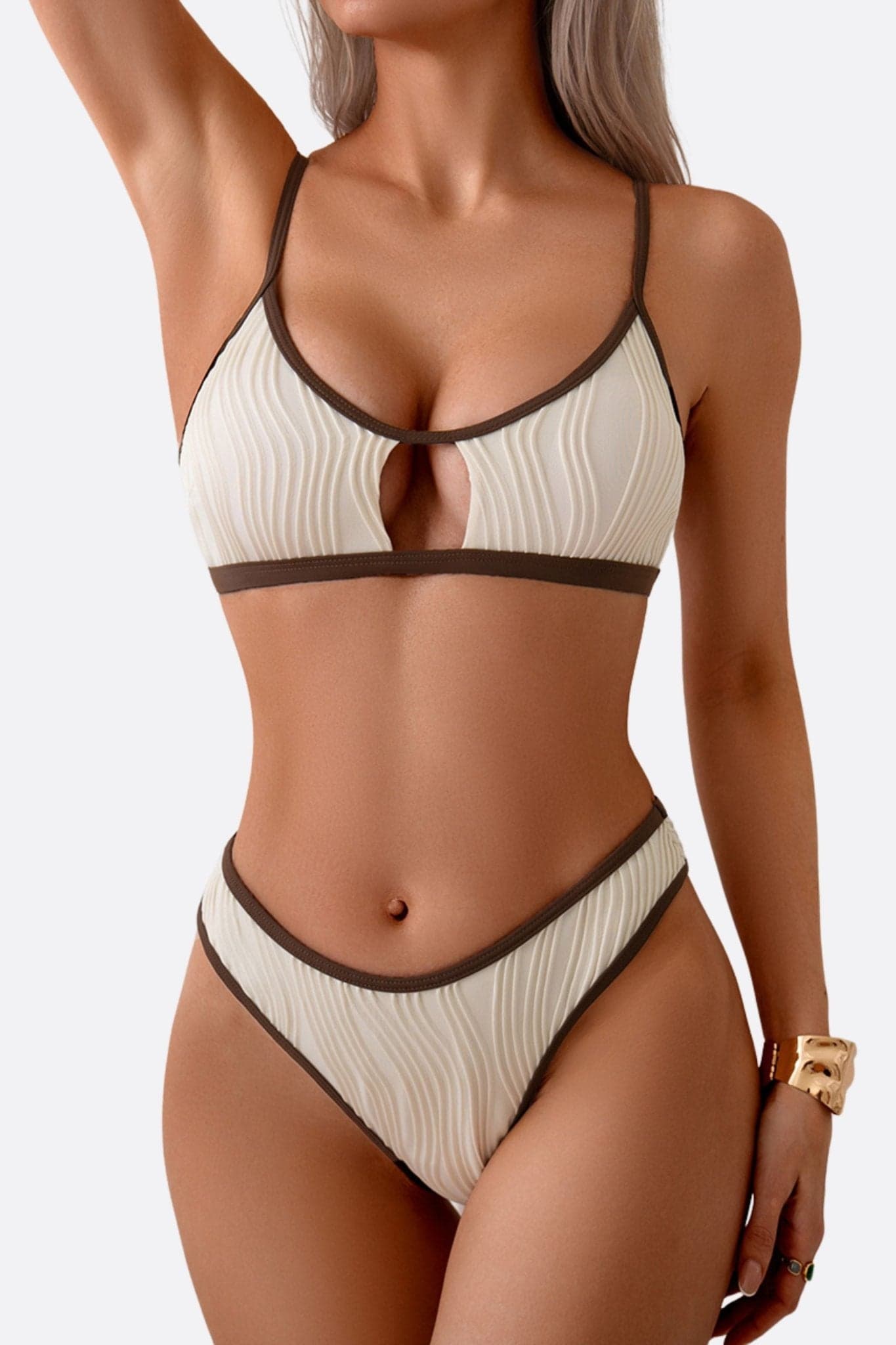
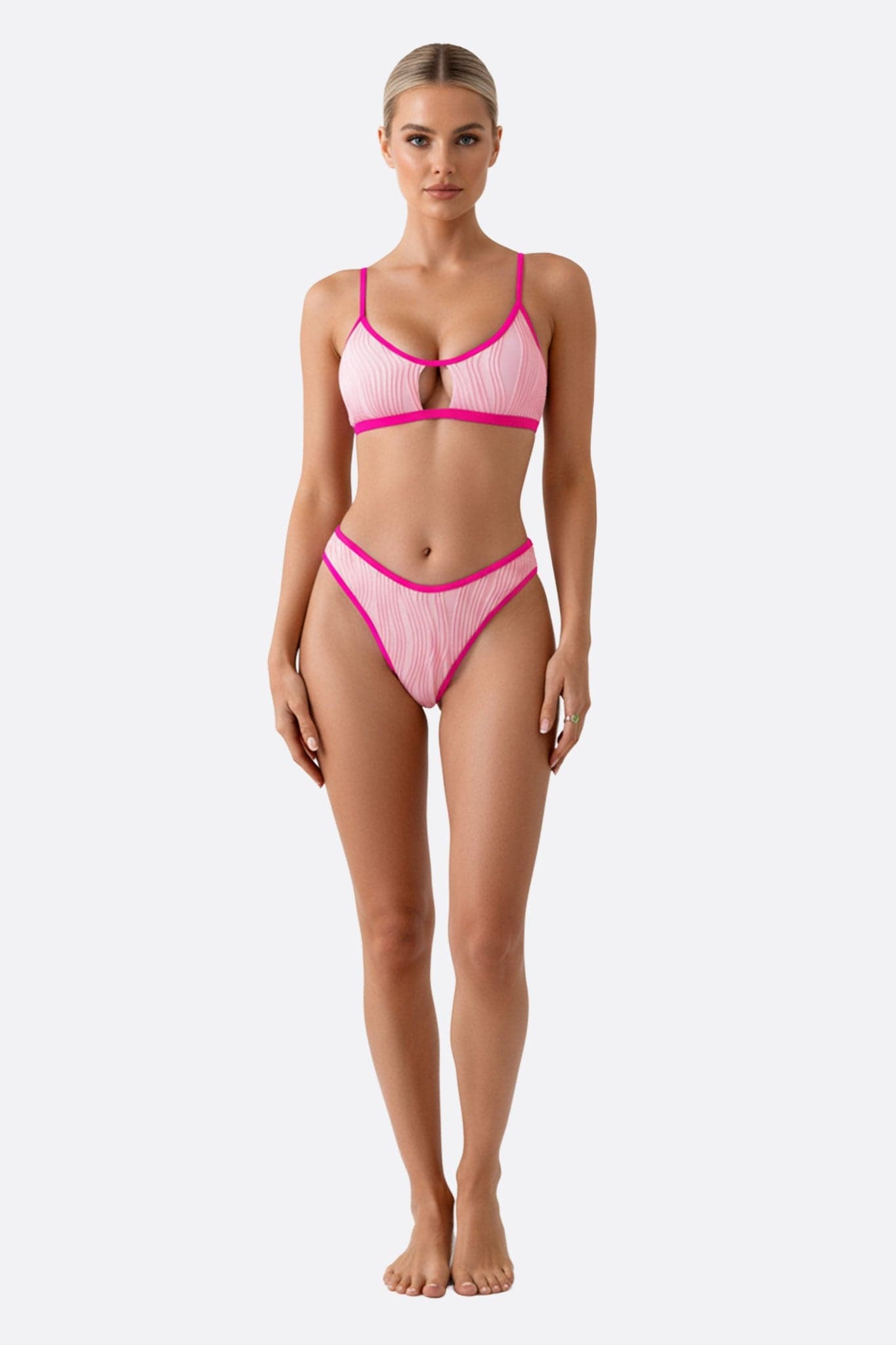
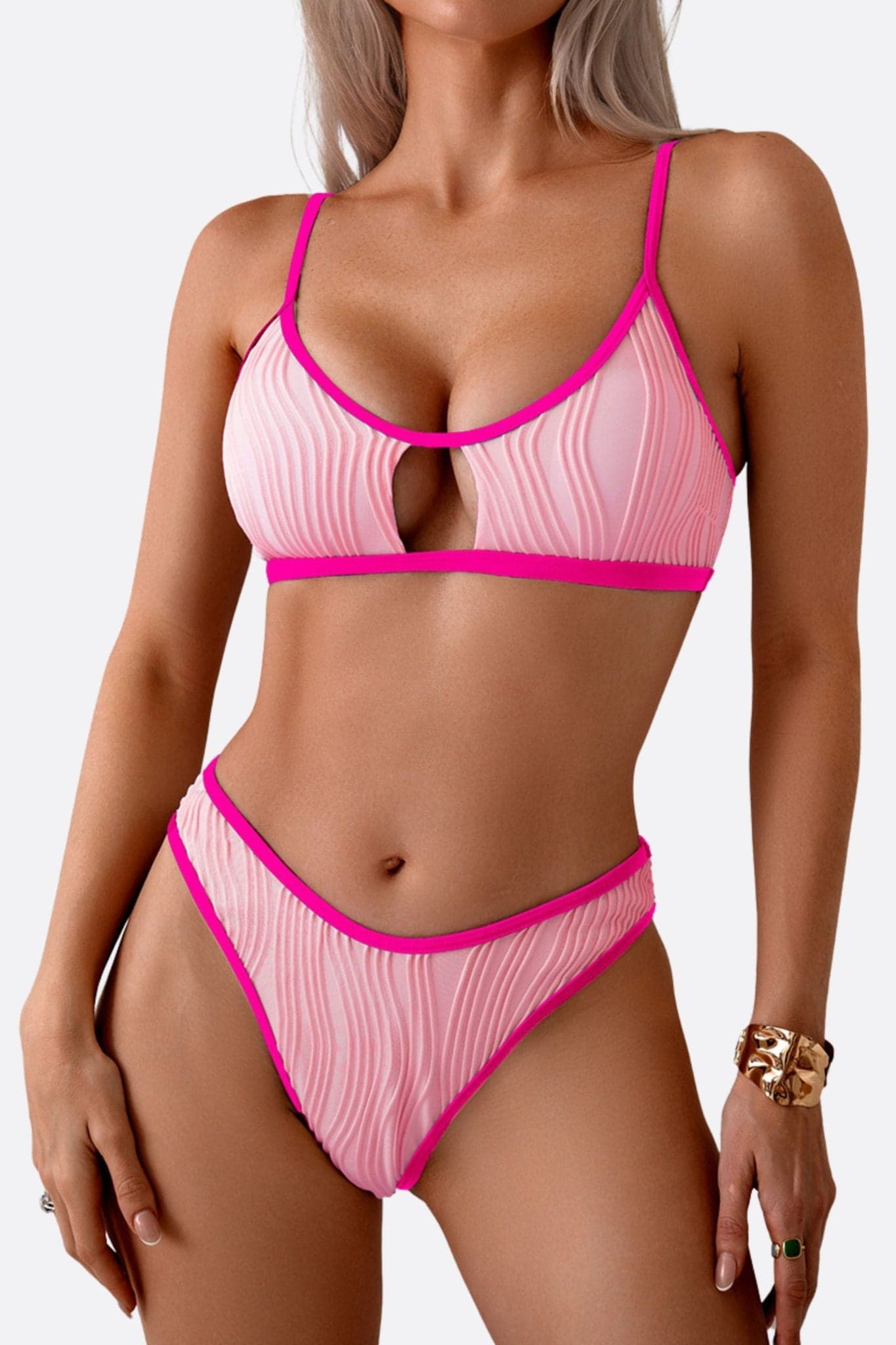
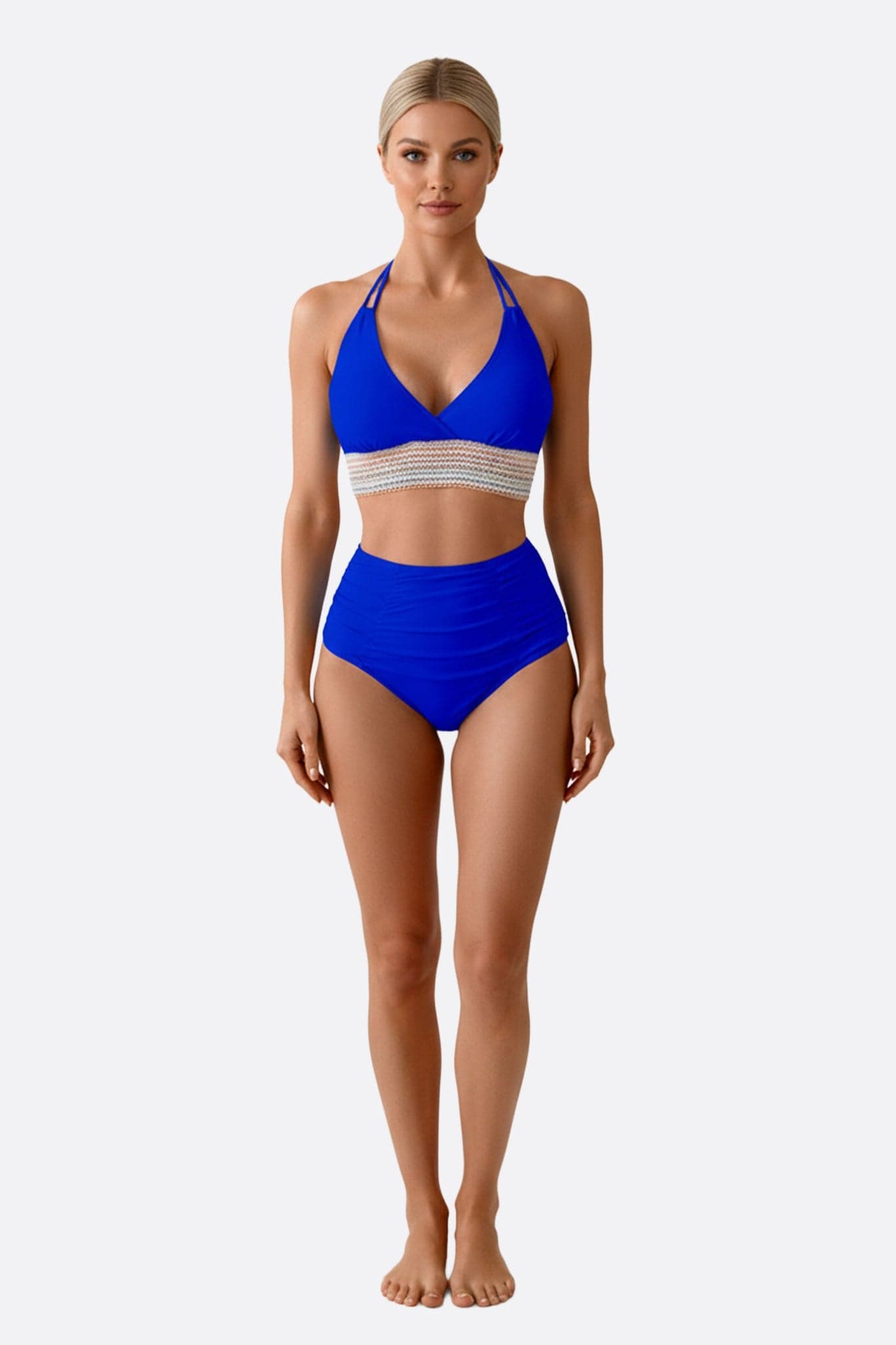
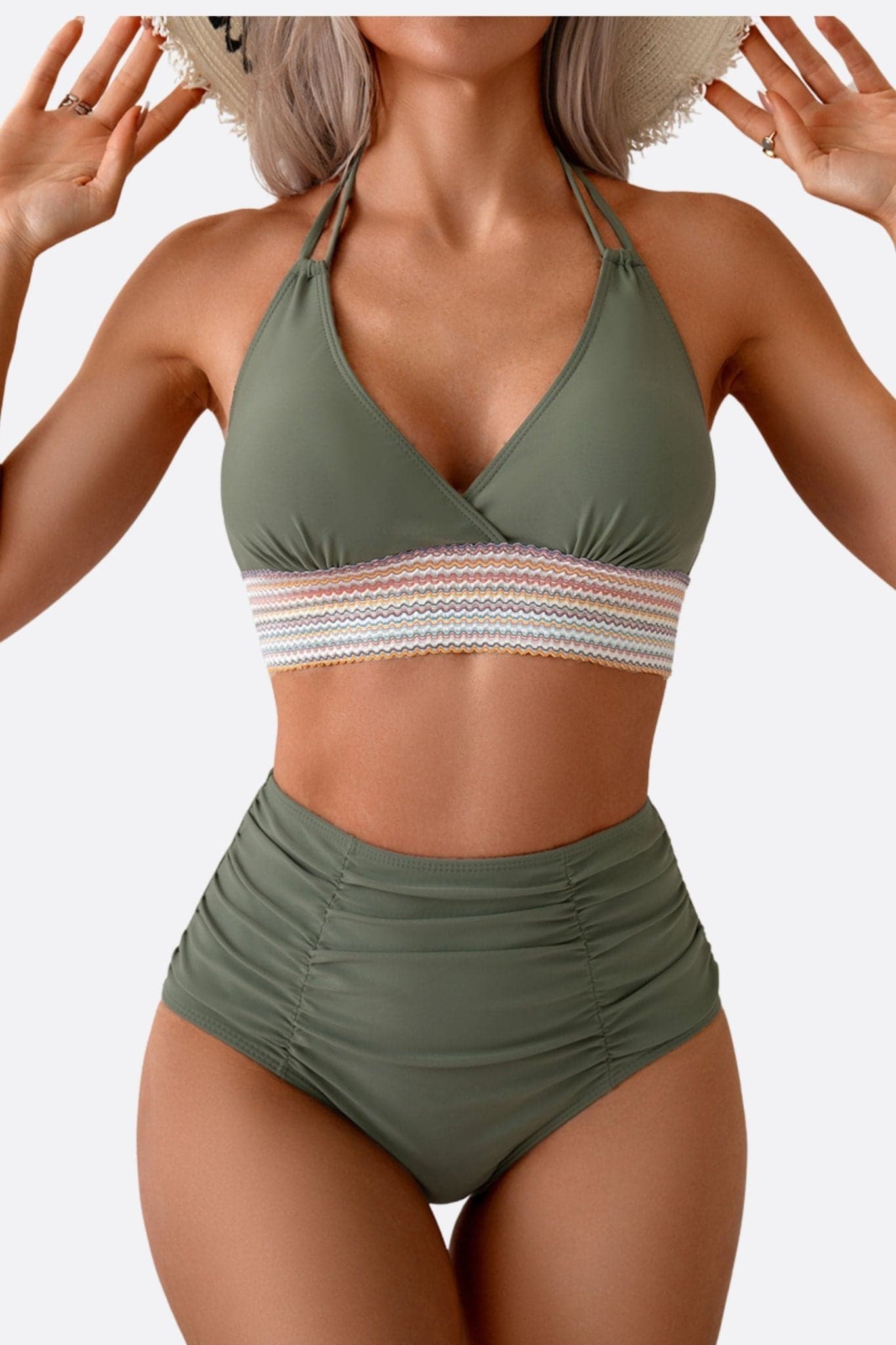
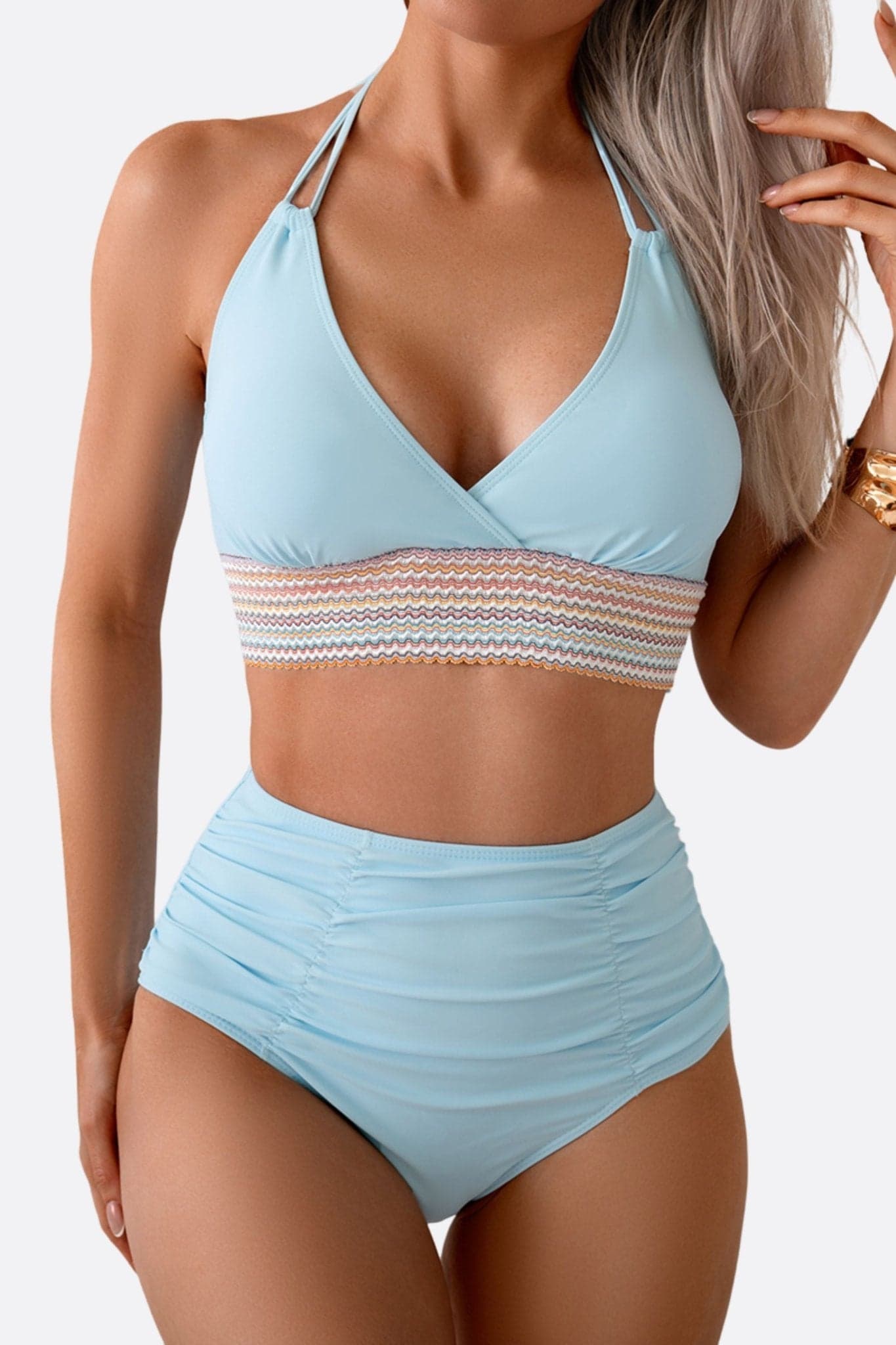
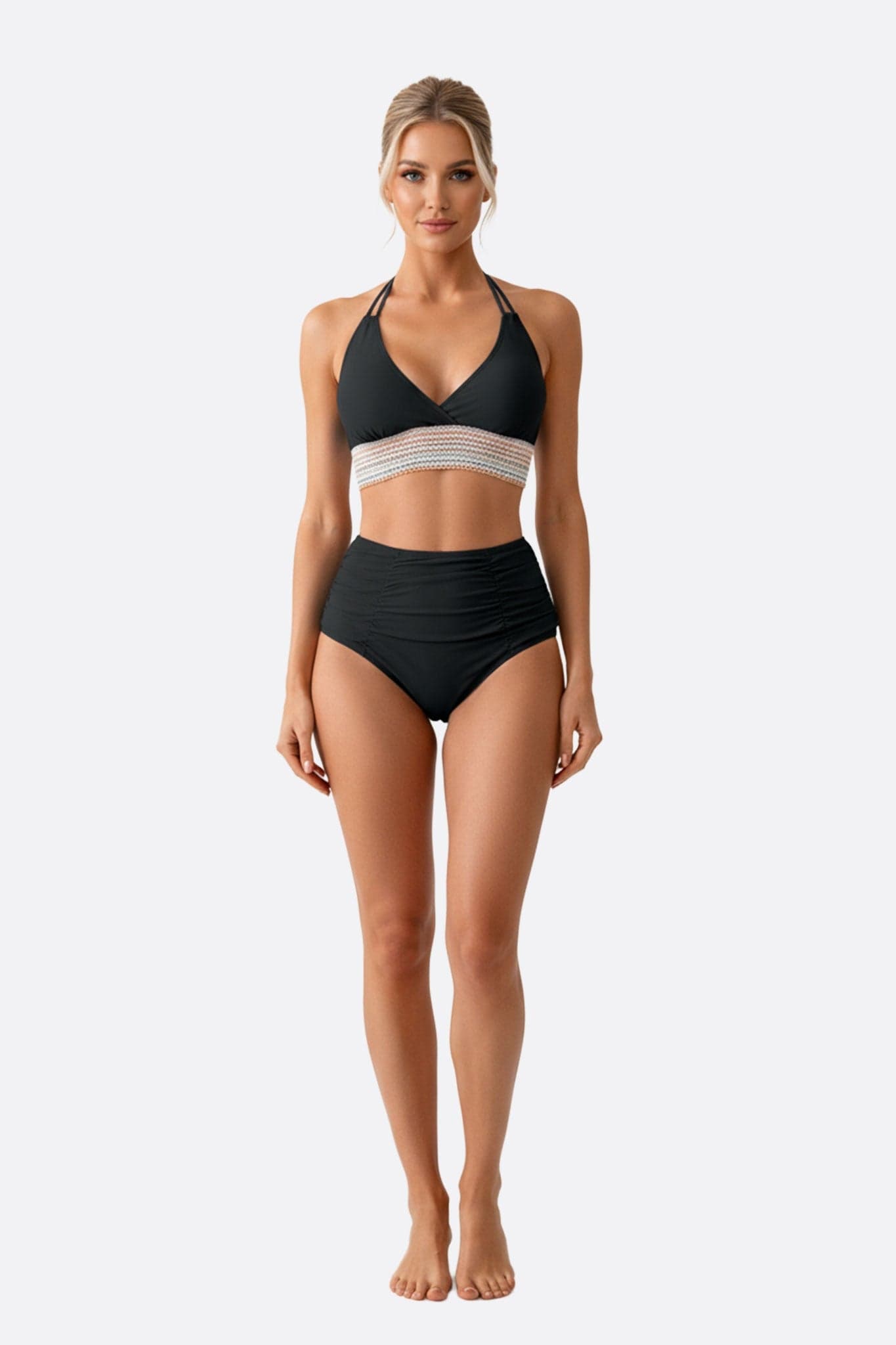
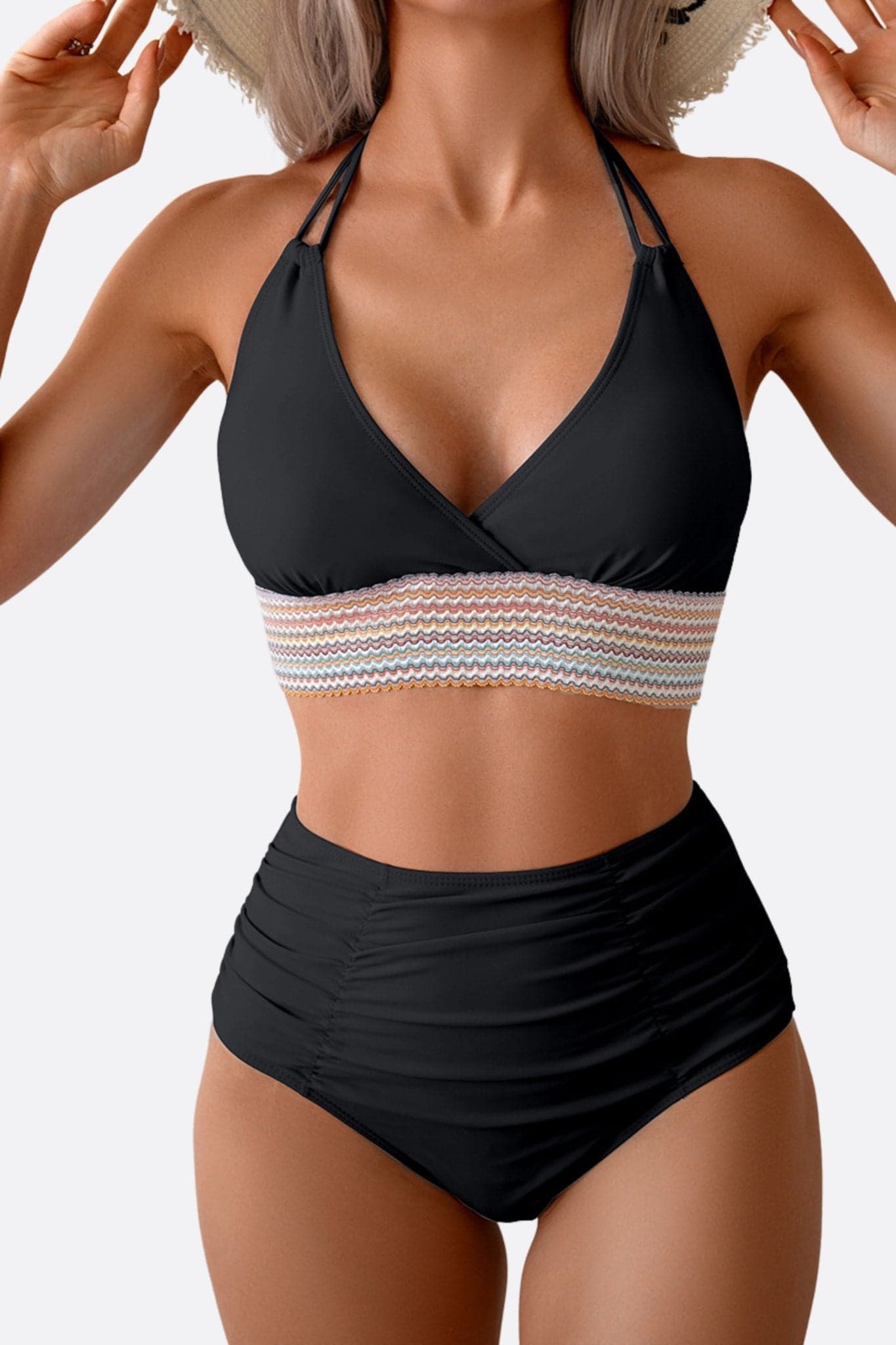
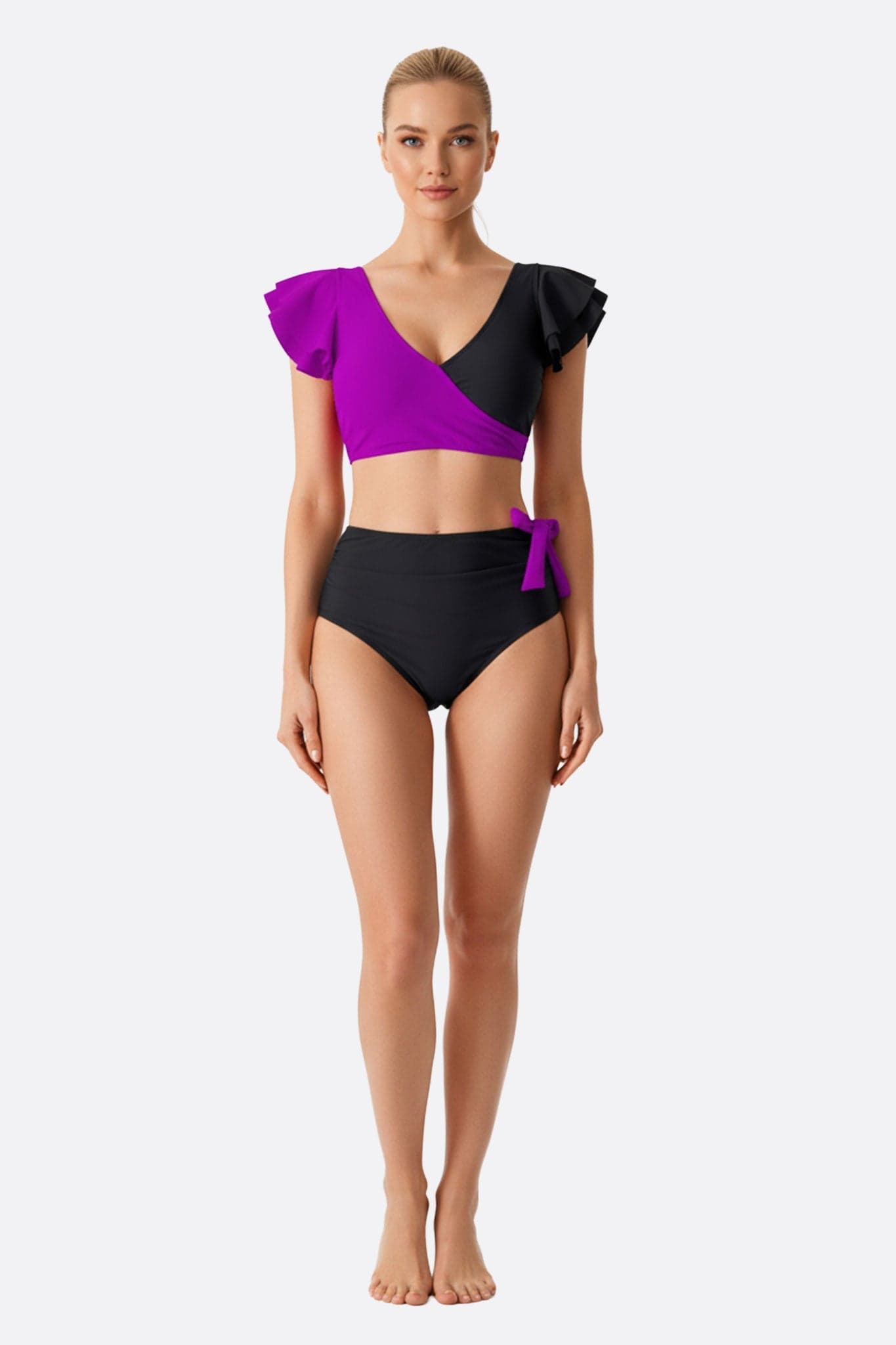
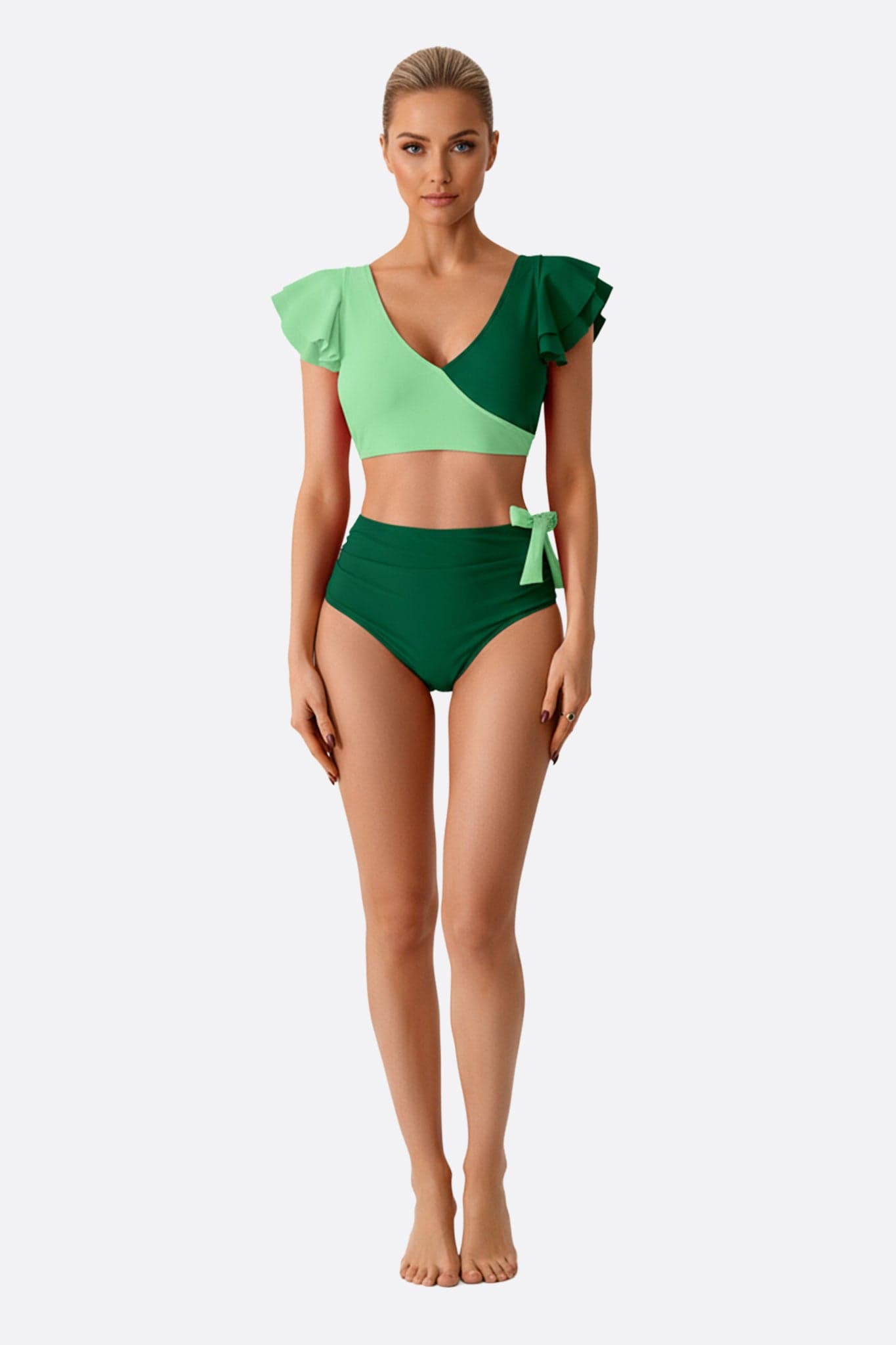
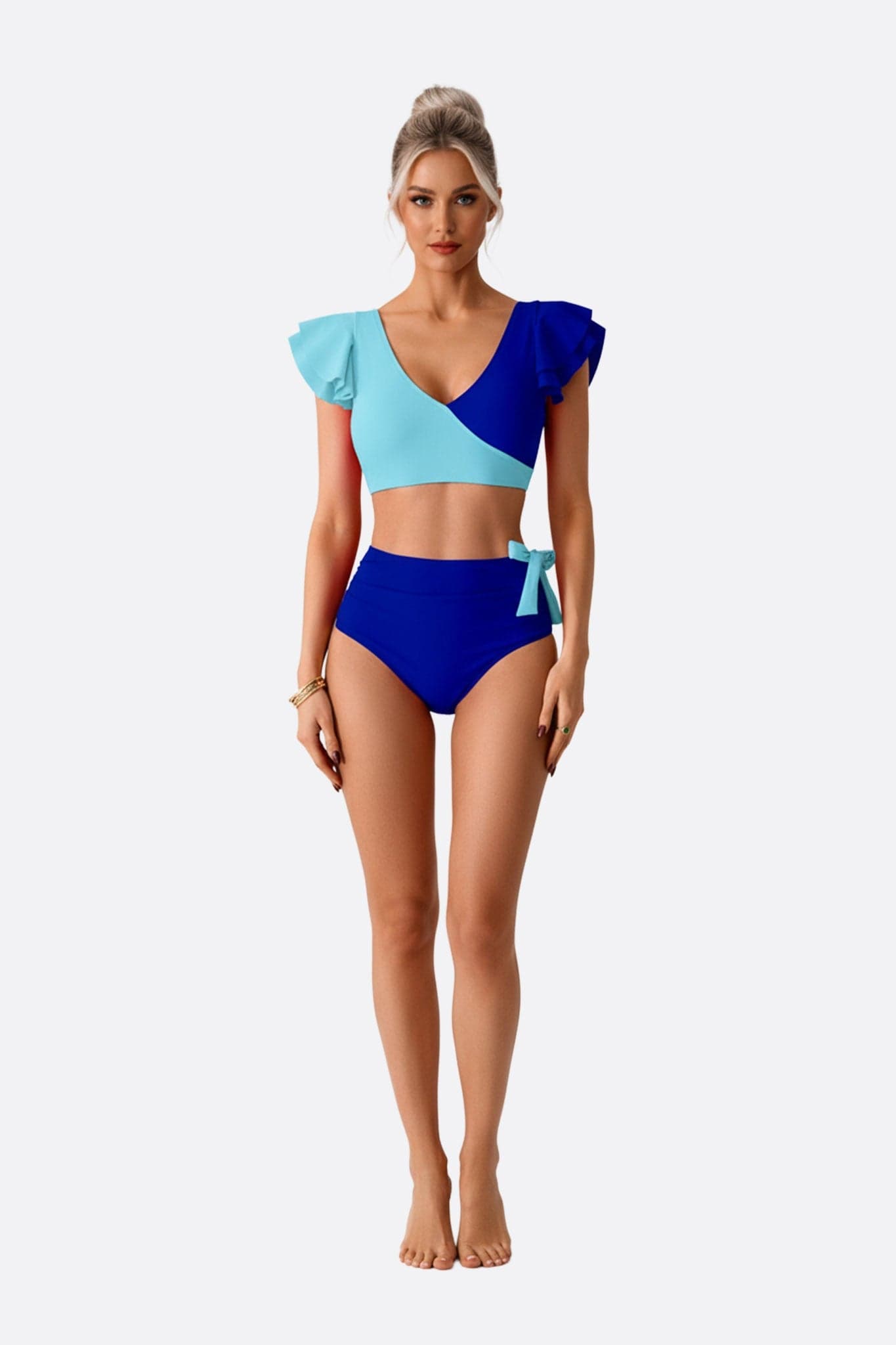
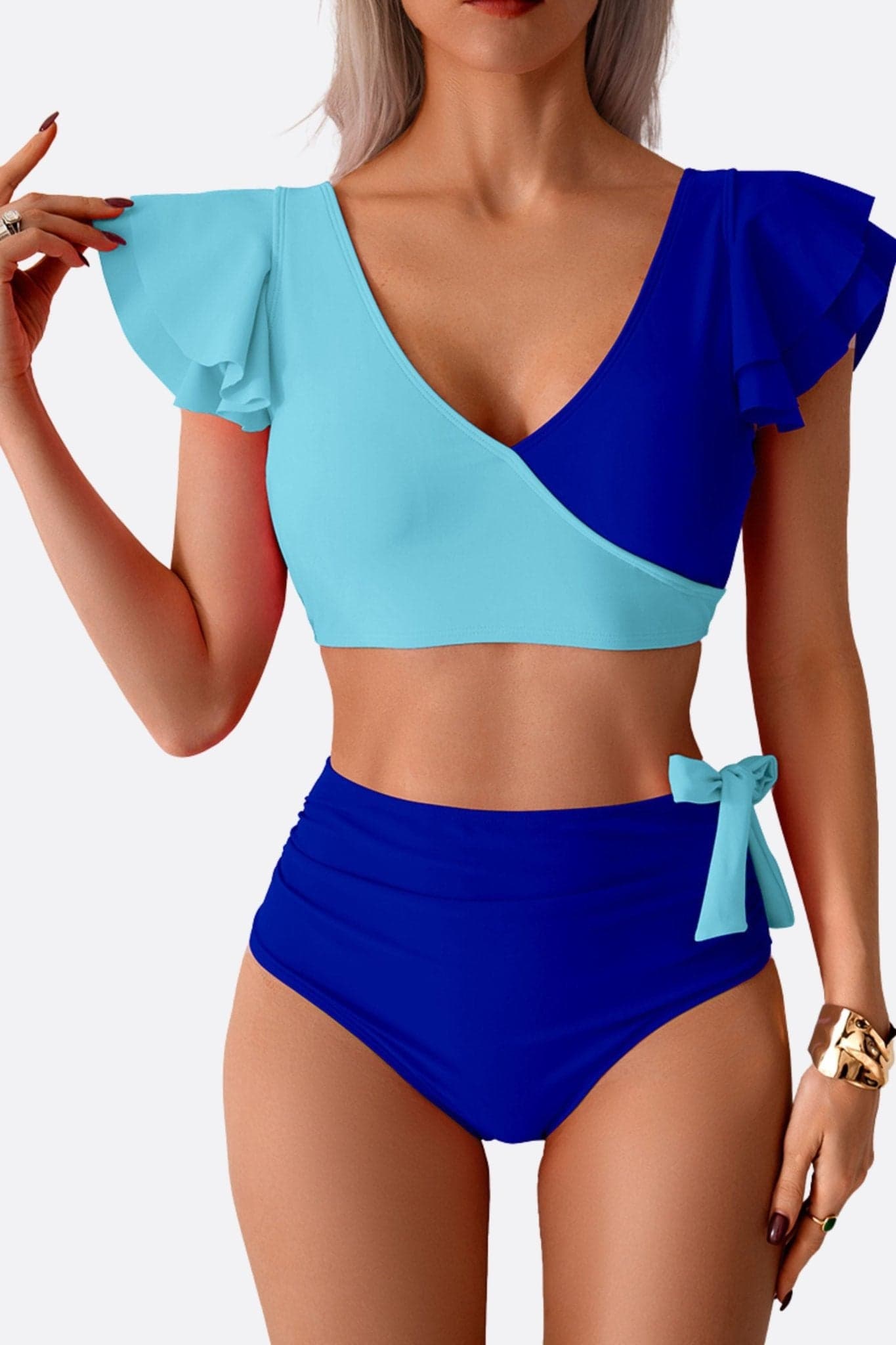
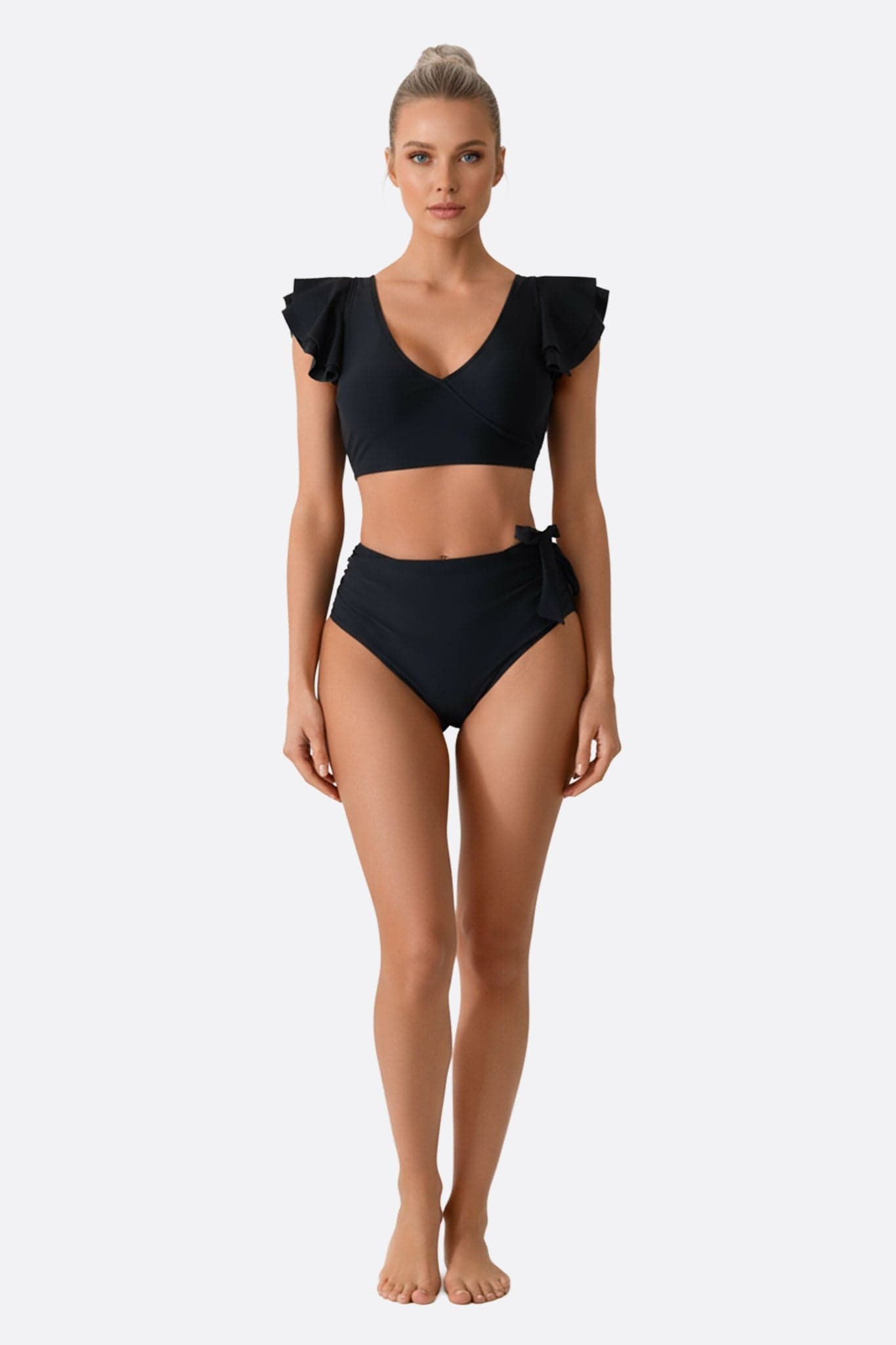
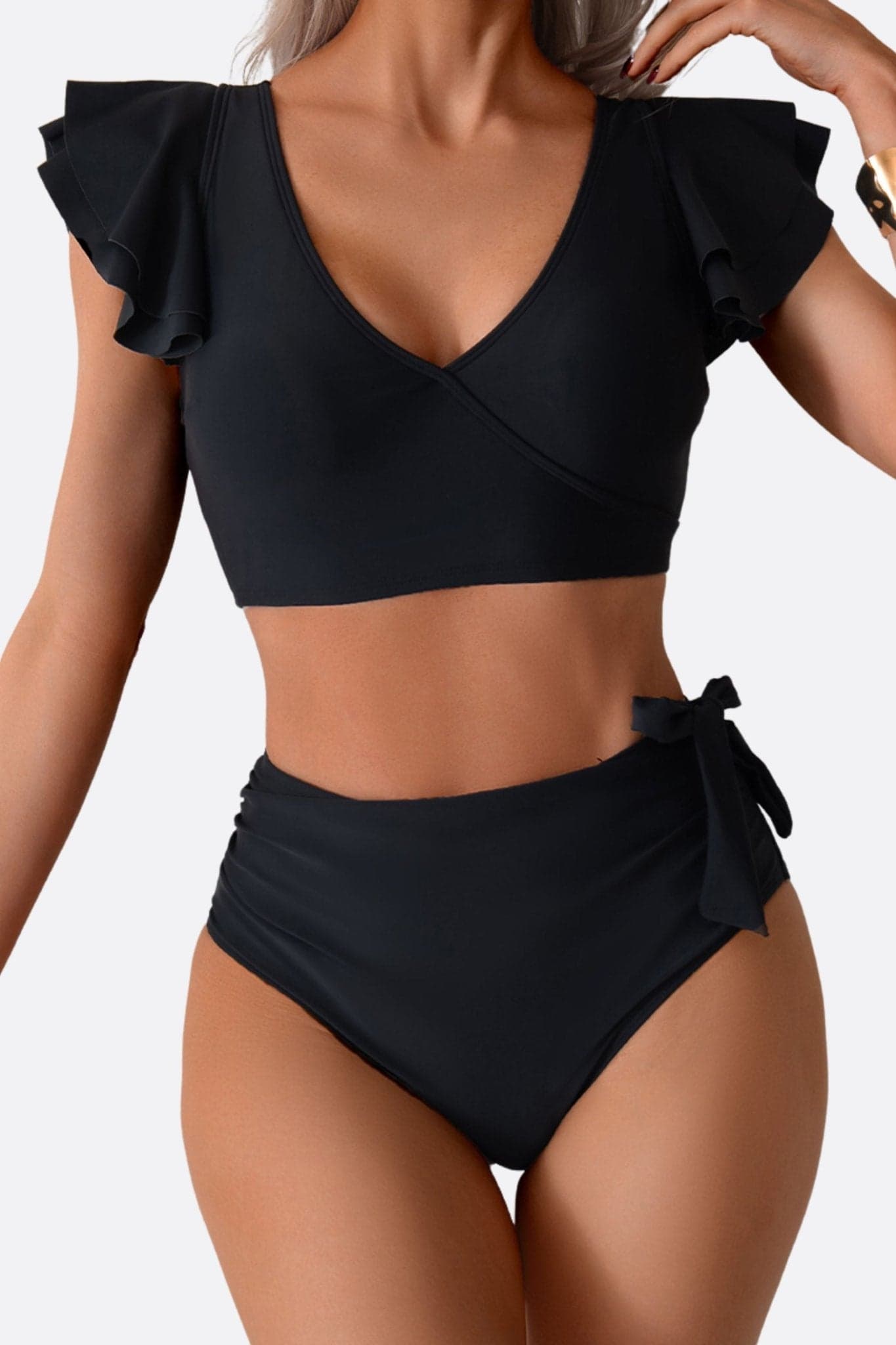
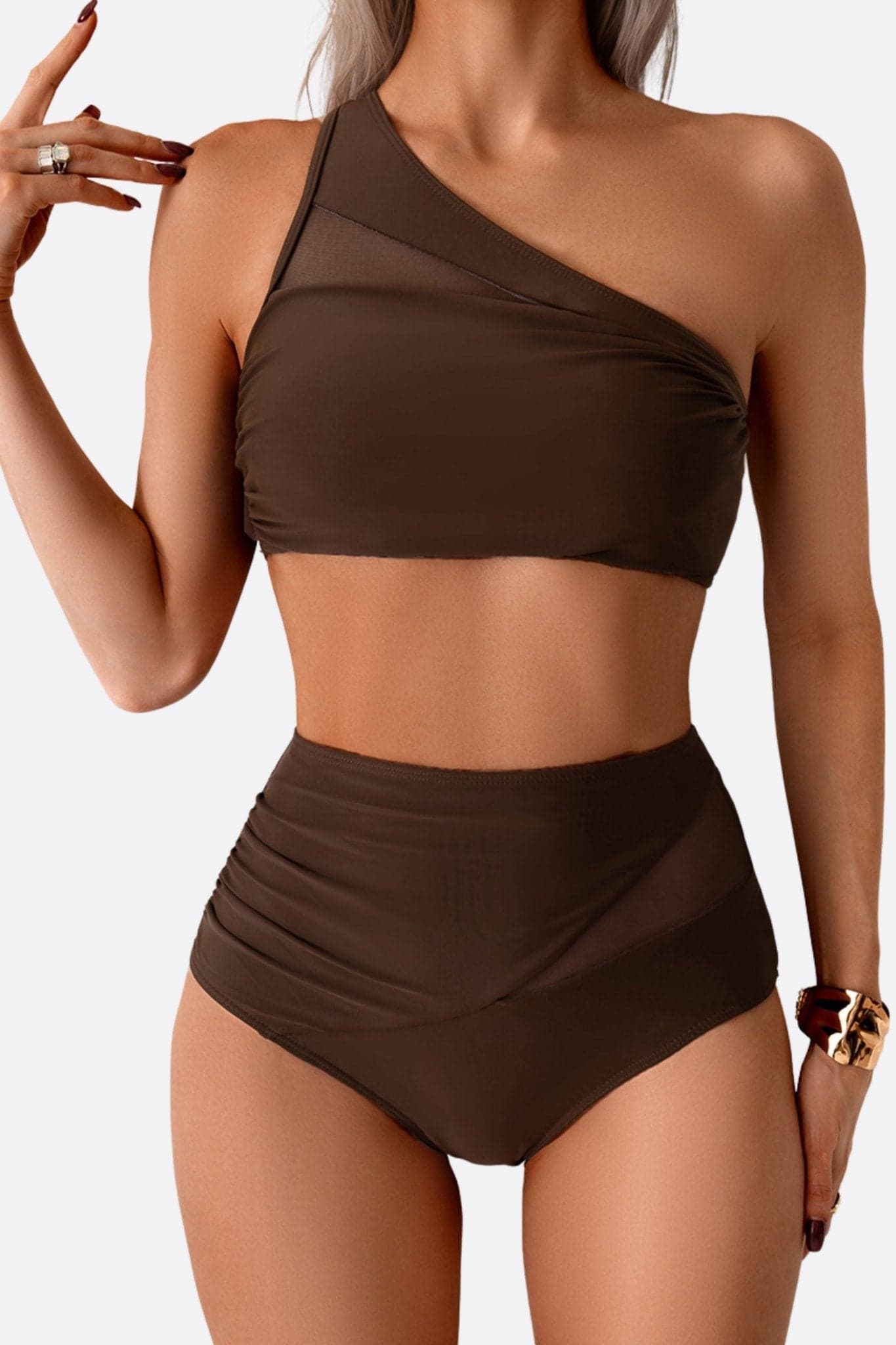
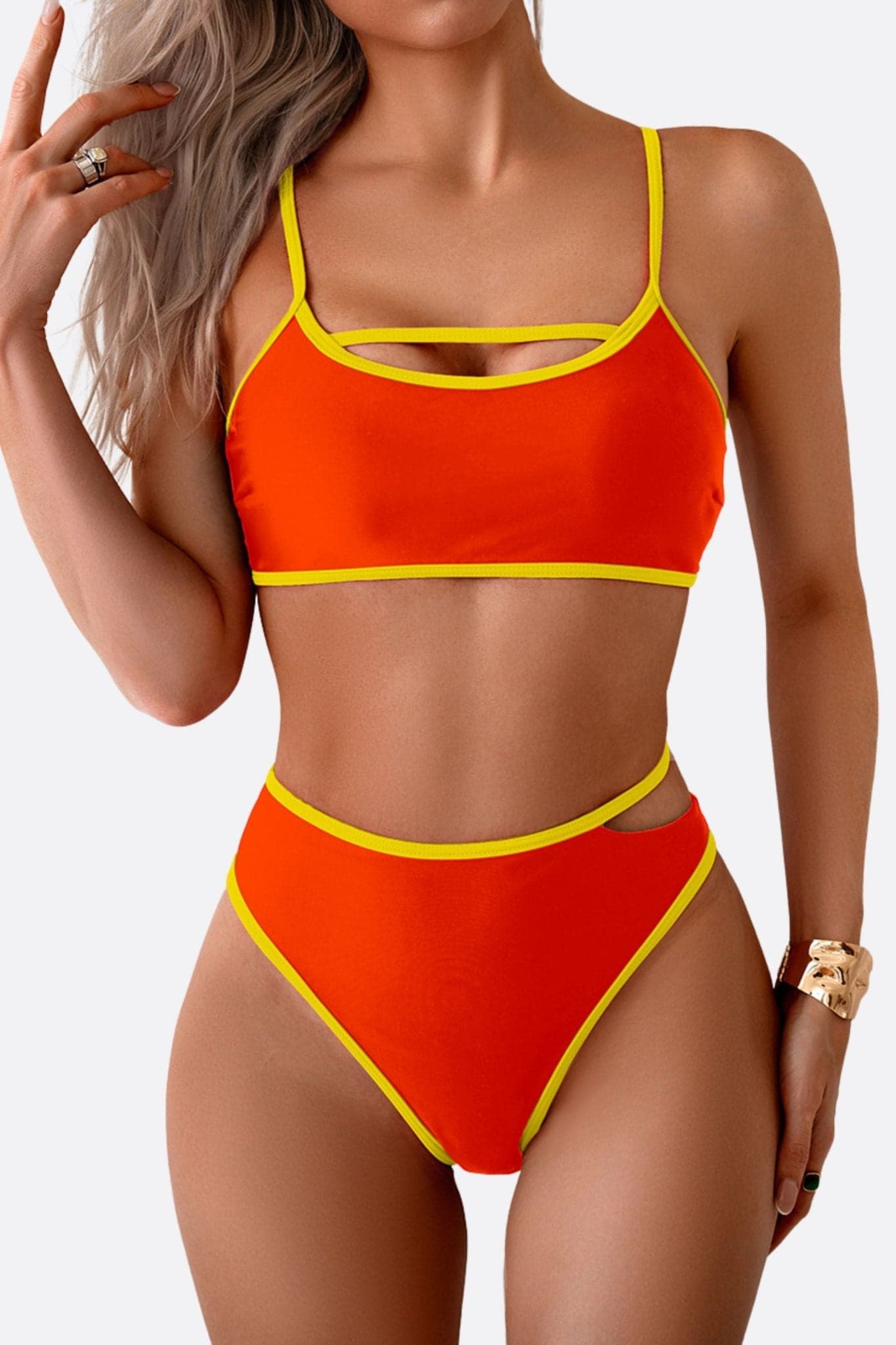
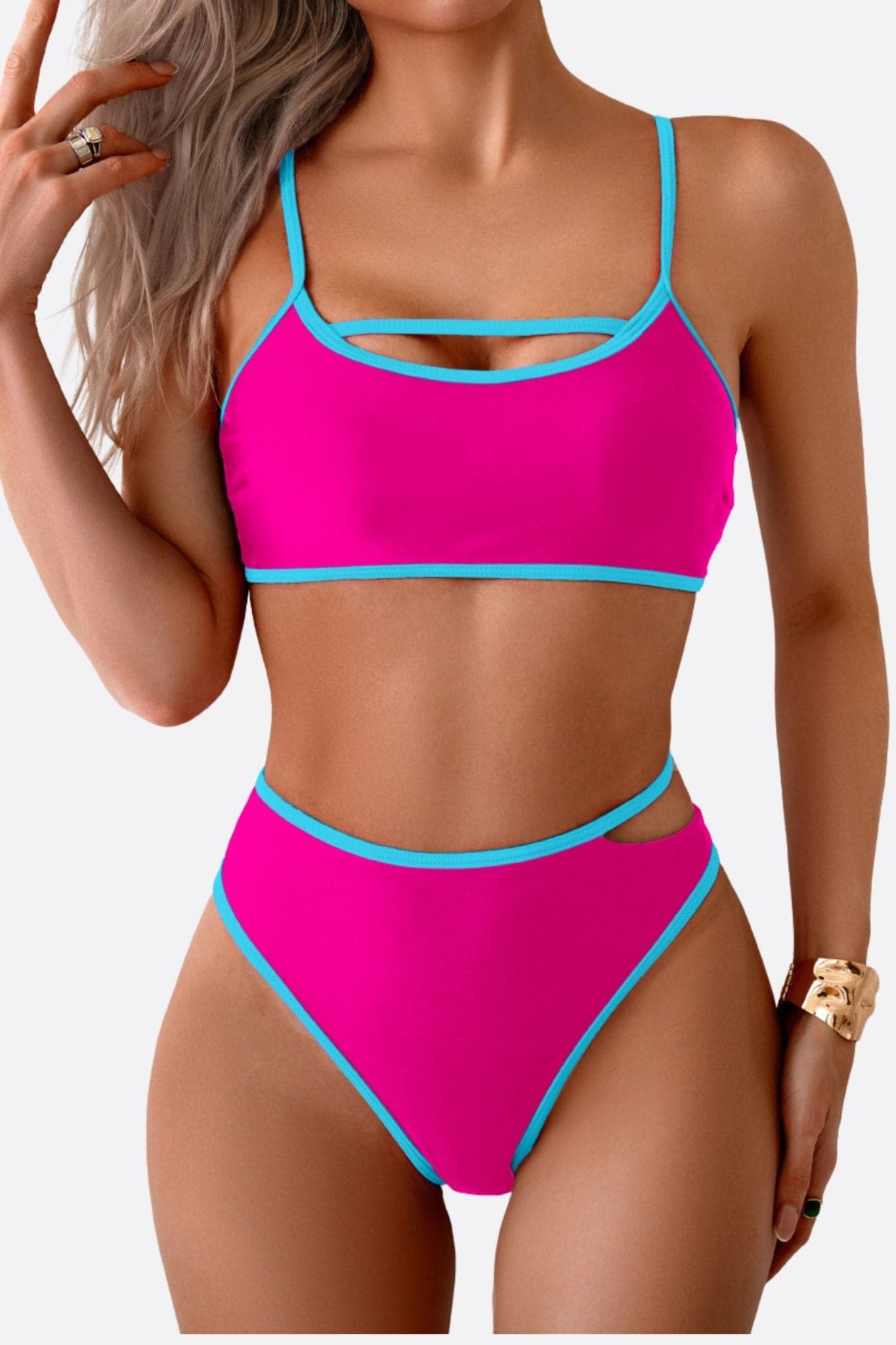
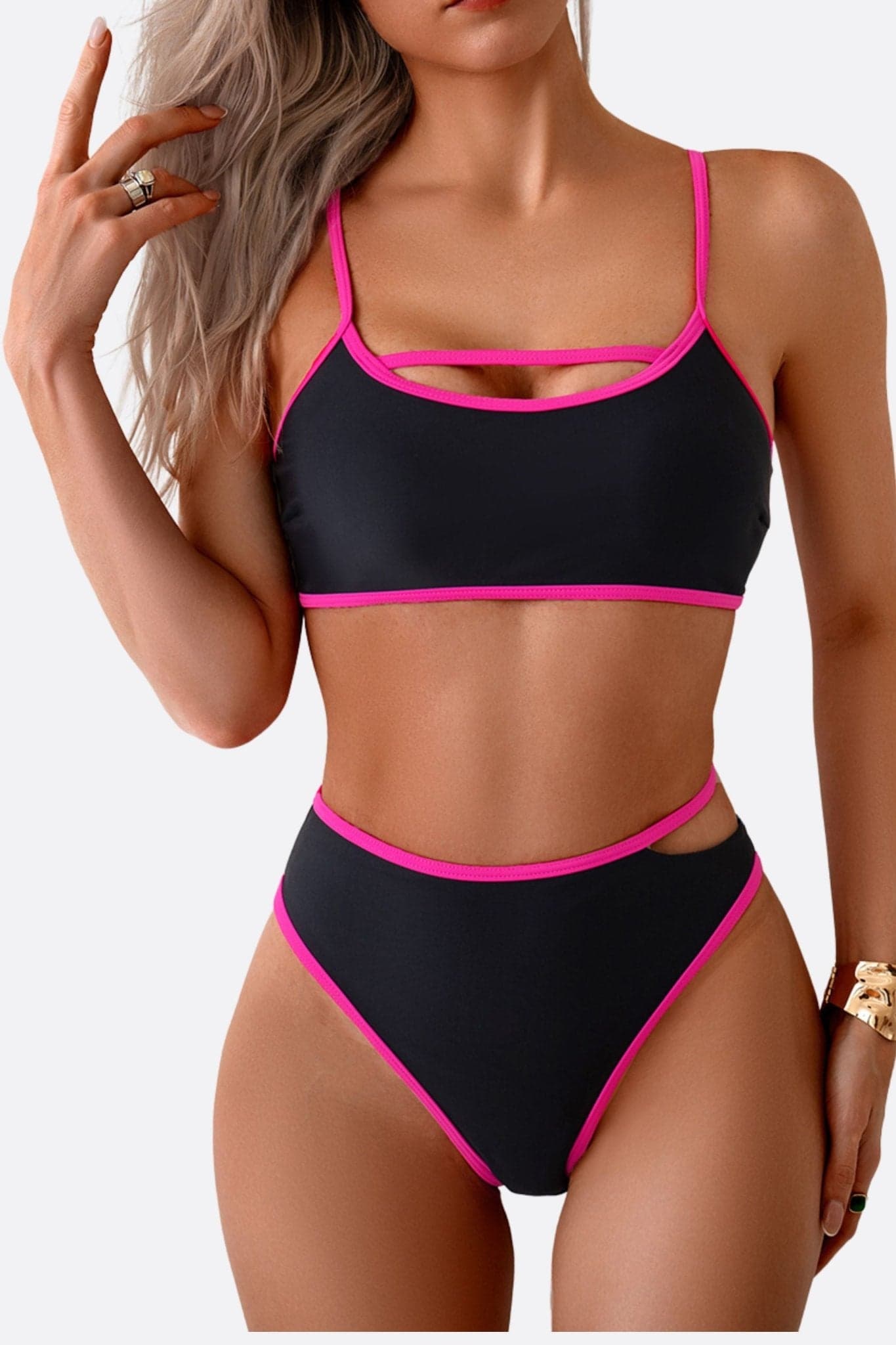
Two-piece: independent top and bottom, adjustable separately. Allows adjustment of two different sizes (cup C with hip M, for example). Maximum tanning. Four top cuts with opposing effects: triangle (minimalist), bandeau (horizontal), wrap (structuring V), tankini (covering). For the two-piece collection. For high-waisted bikinis specifically: high-waisted bikinis. By color: black swimsuits, pastel swimsuits, blue swimsuits, green swimsuits, pink swimsuits. For all beachwear: beachwear.
FAQ: women's swimwear
Which fabric to choose for a chlorine-resistant swimsuit?
Look for "polyamide" or "nylon" in the composition (not "polyester"). Polyamide resists chlorine 30 to 40% better. Lycra XTRA LIFE is a formulation of elastane specifically chlorine-resistant. For regular pool use (2-3 times a week), the polyamide composition is the only variable that really makes a difference in lifespan.
Why does my swimsuit fade so quickly?
Chlorine oxidizes pigments: bright colors fade faster than black. To limit: rinse the swimsuit in cold water BEFORE entering the pool (fabric saturated with clean water = absorbs less chlorine), rinse immediately after, never leave wet folded in a bag. A polyester swimsuit will fade faster than a polyamide one for the same color.
Can a swimsuit be machine washed?
Not recommended: machine friction damages elastanes and accelerates the loss of elasticity. Hand wash only: cold water, mild detergent, rinse, gently press without wringing, dry flat in the shade. The dryer is prohibited (heat irreversibly destroys elastanes).