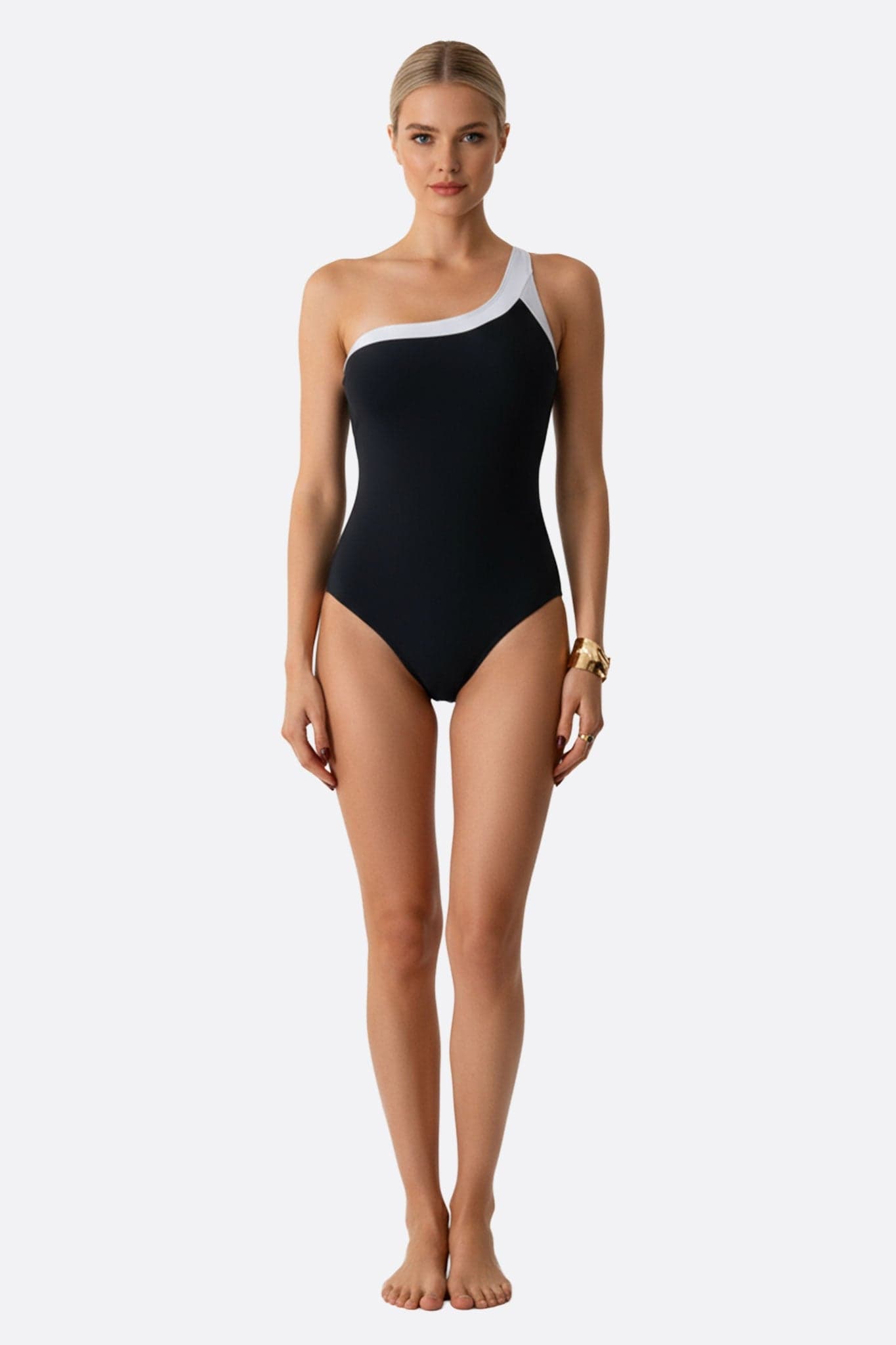
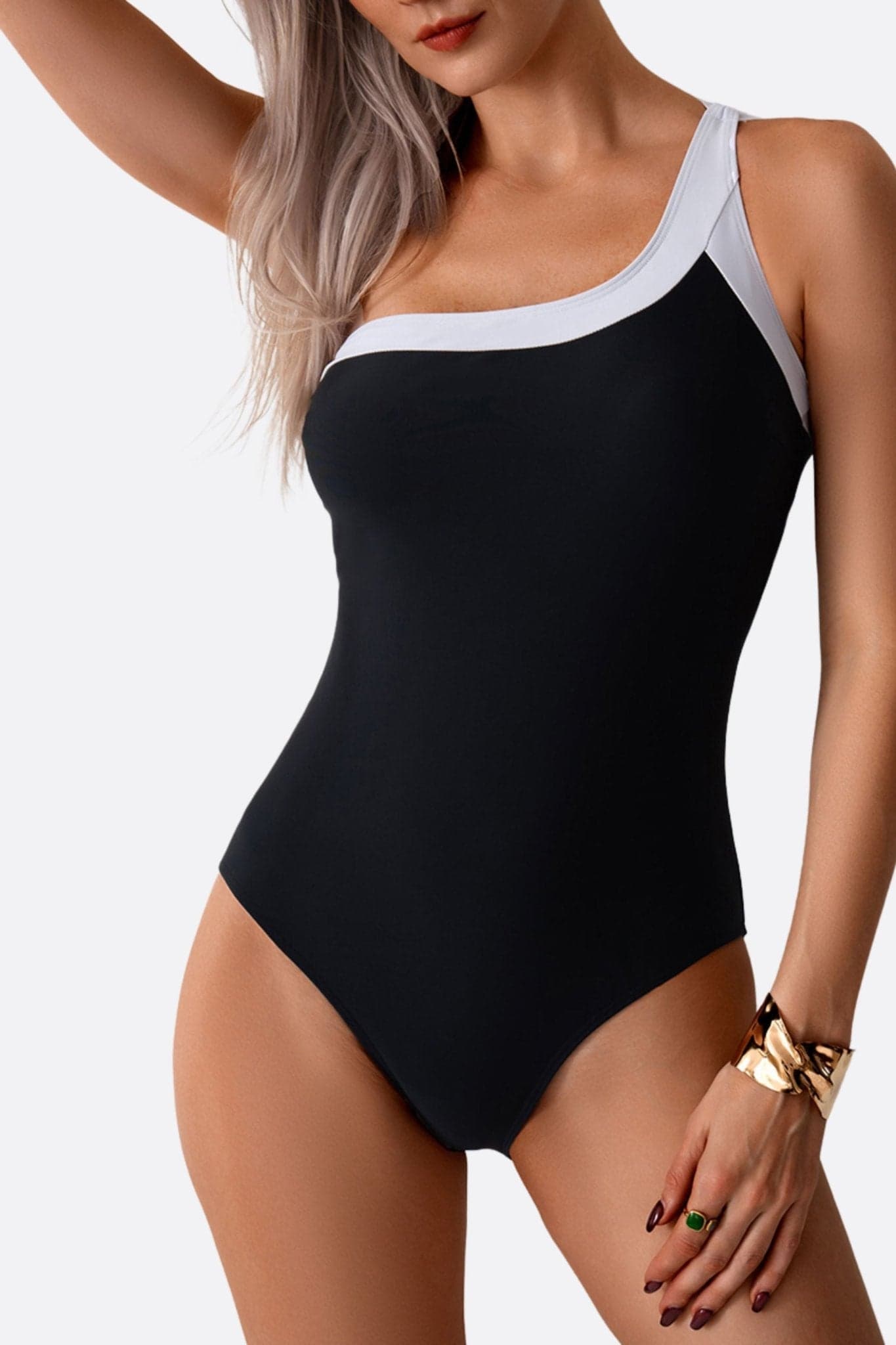
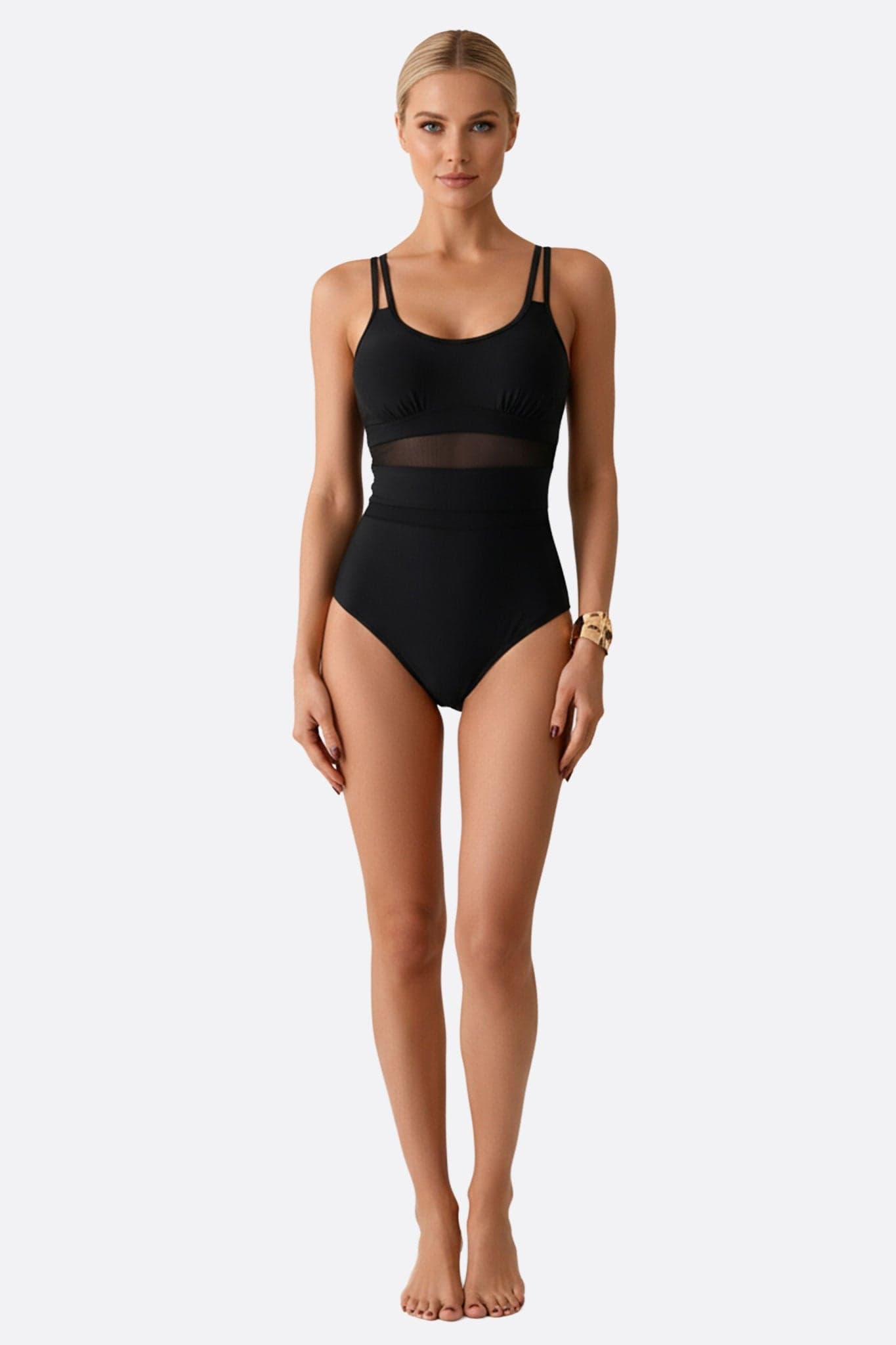
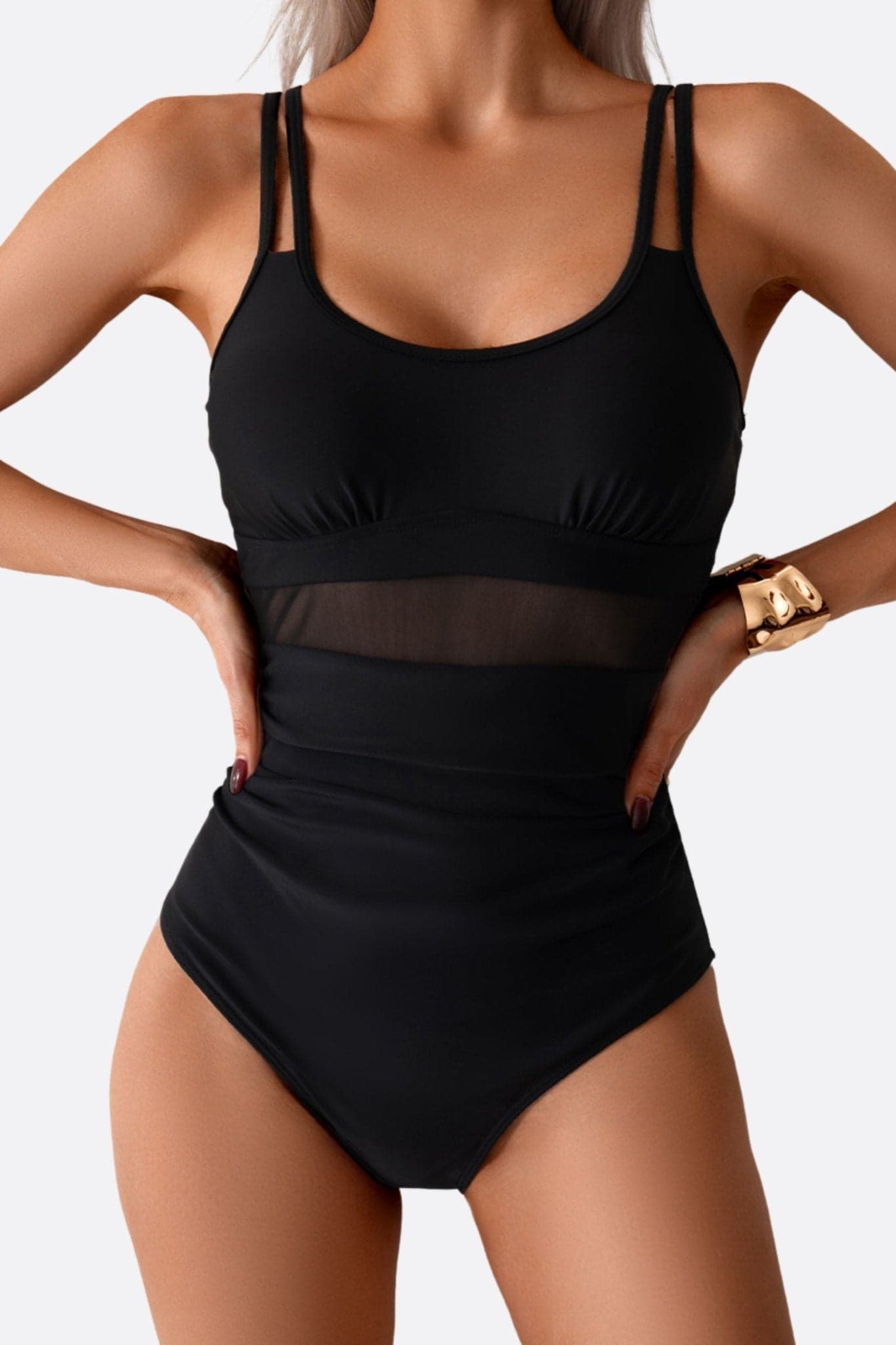
Fast & secure deliveryFree shipping in France from €99Easy returns
Fast & secure deliveryFree shipping in France from €99Easy returns
One-piece swimsuits
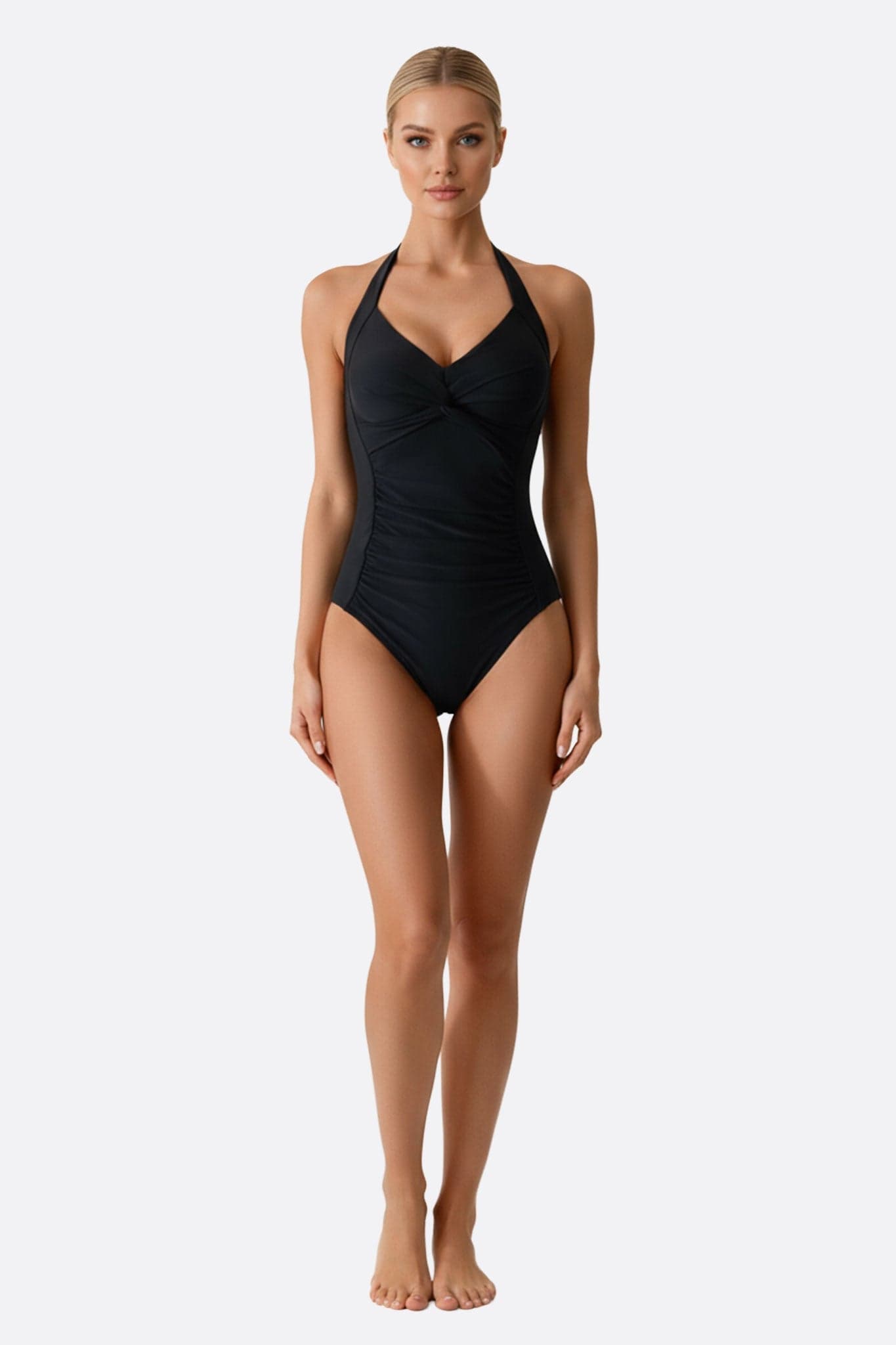
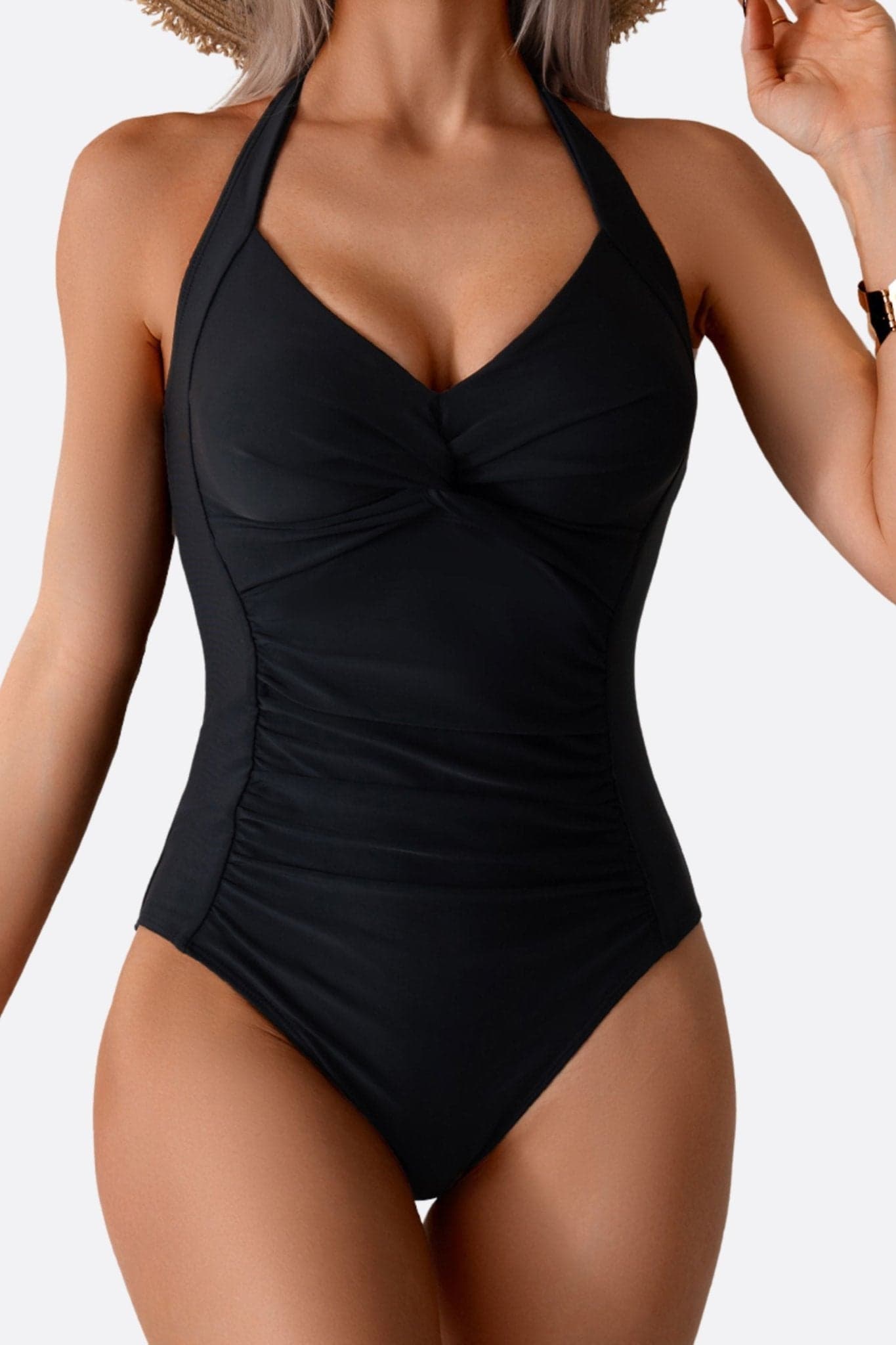
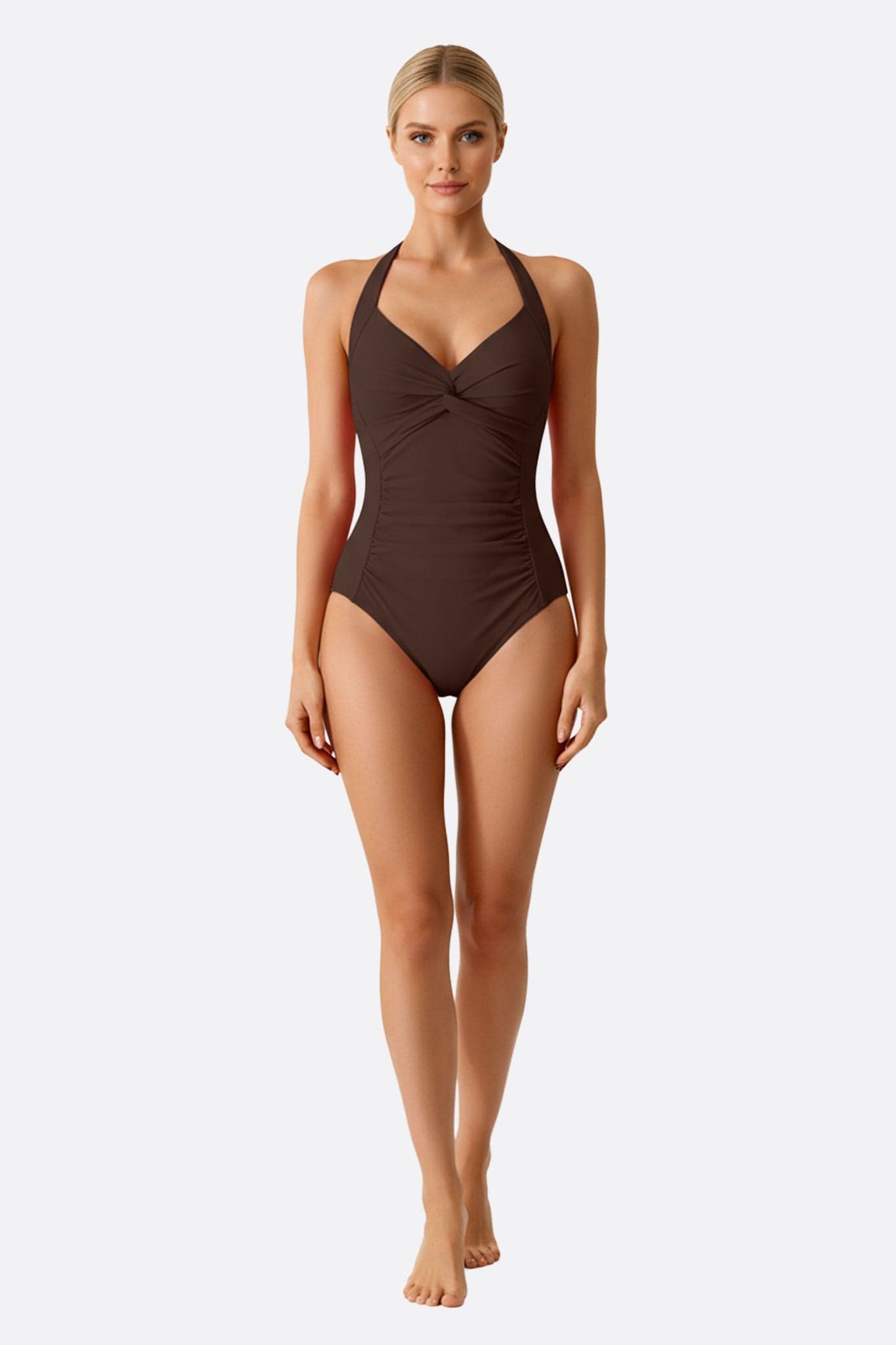
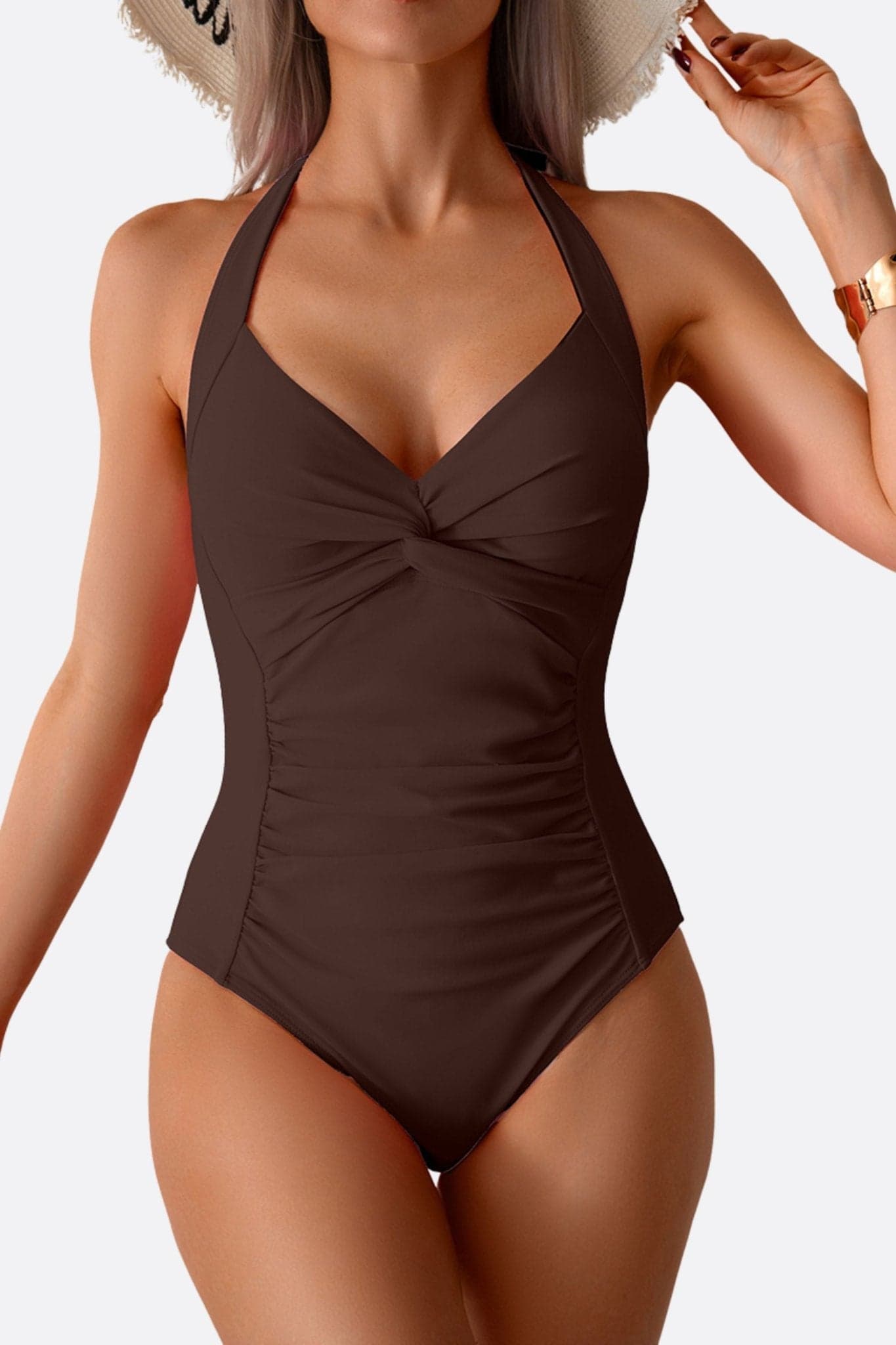
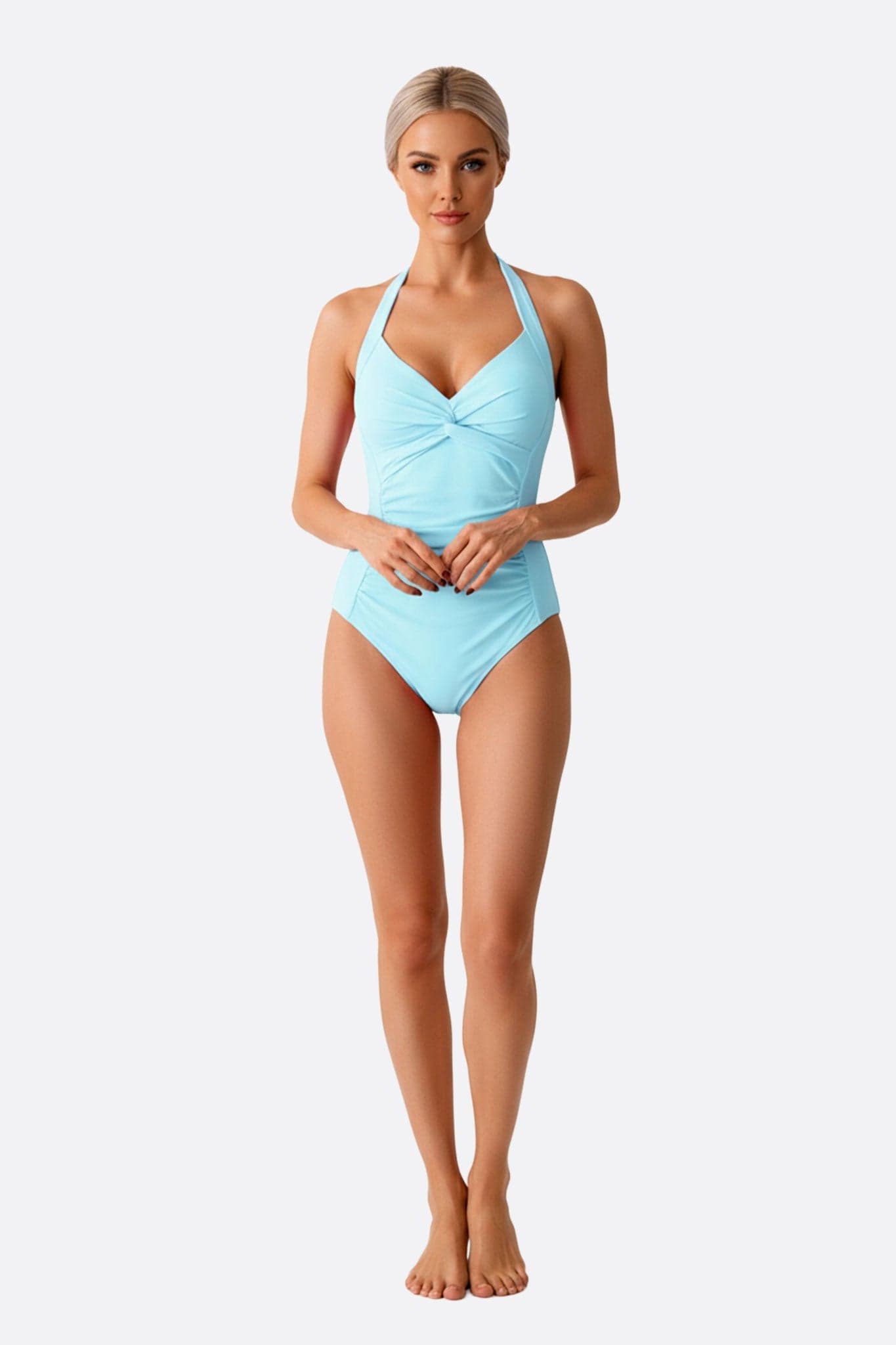
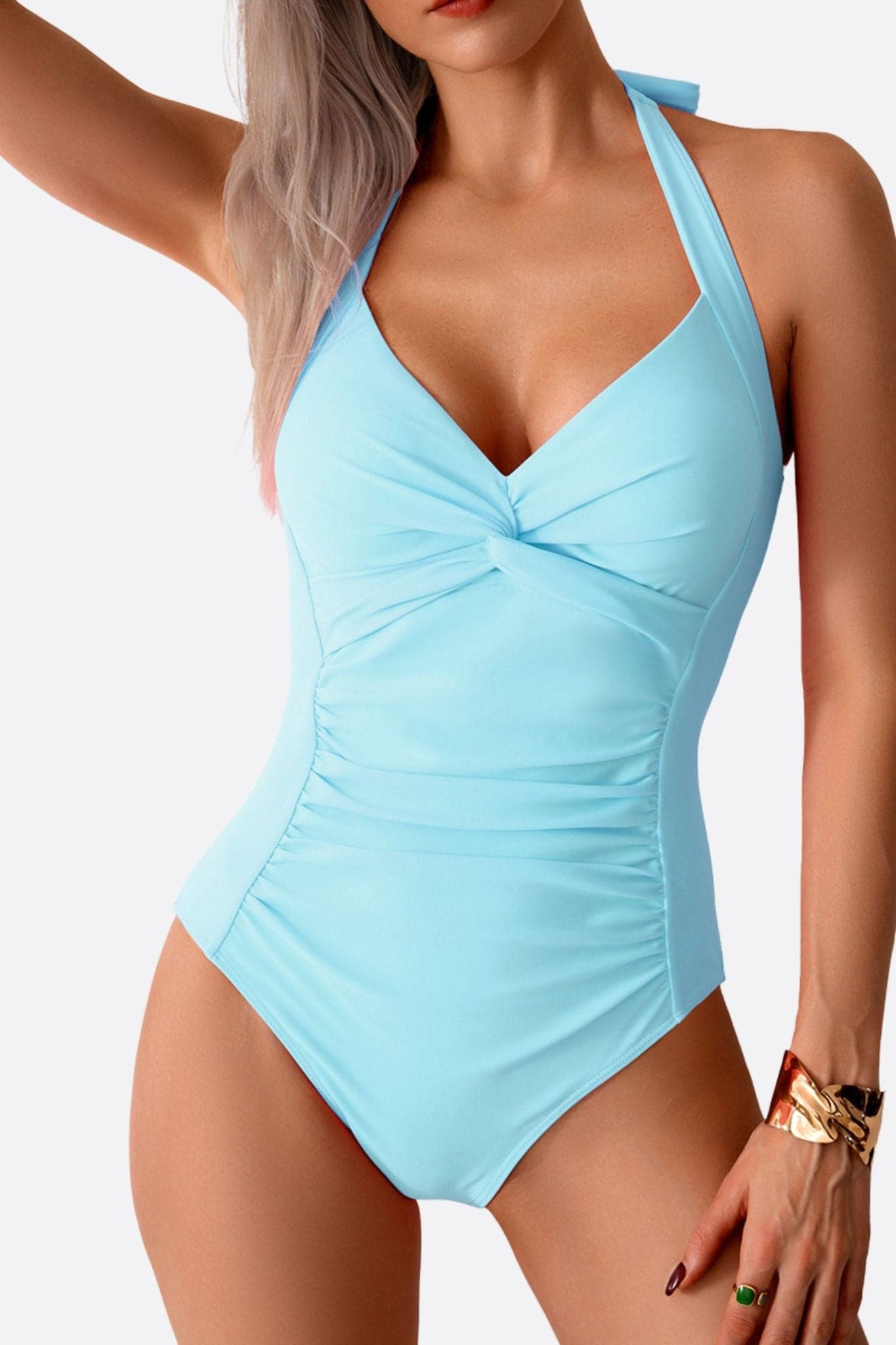
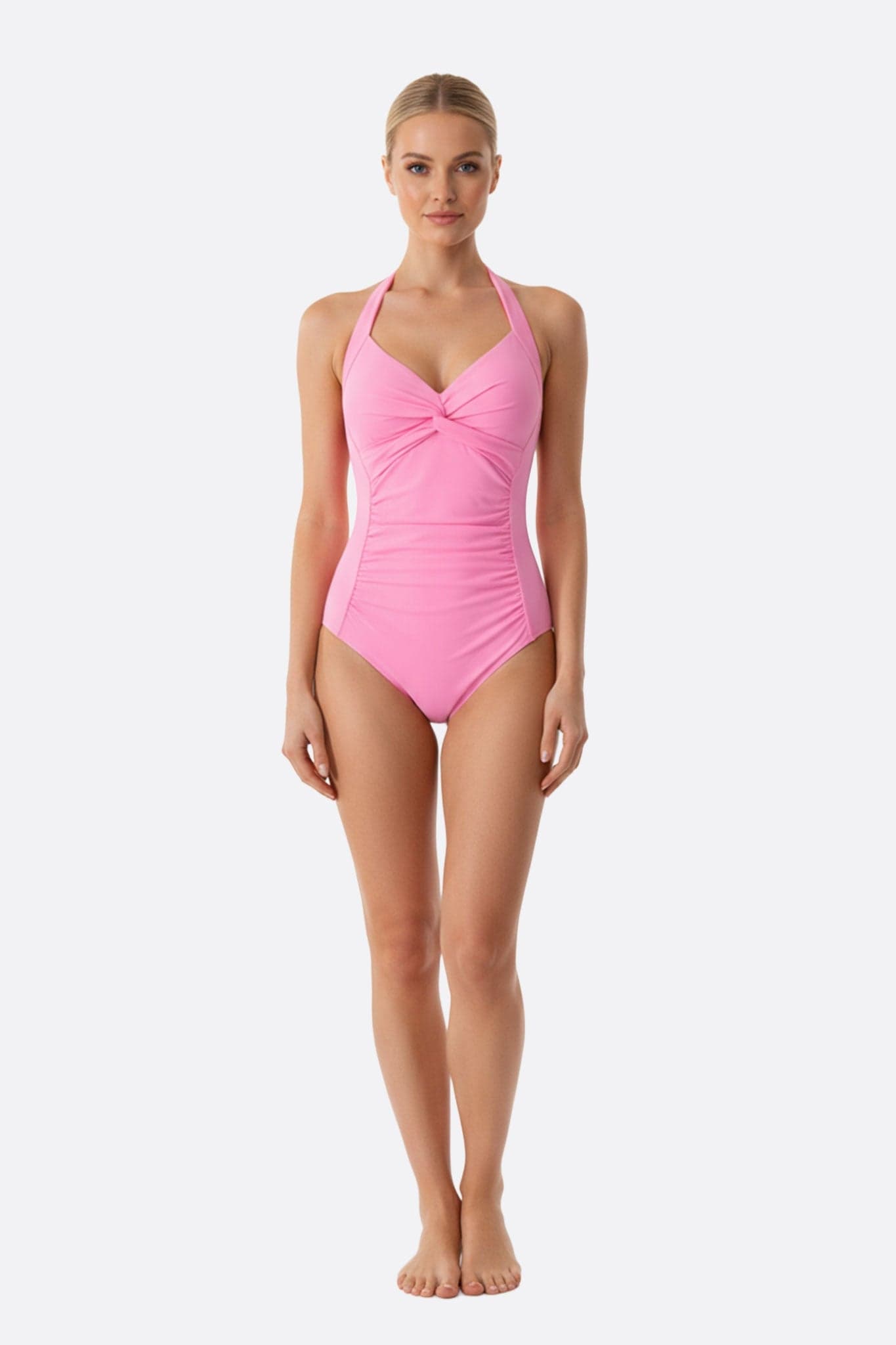
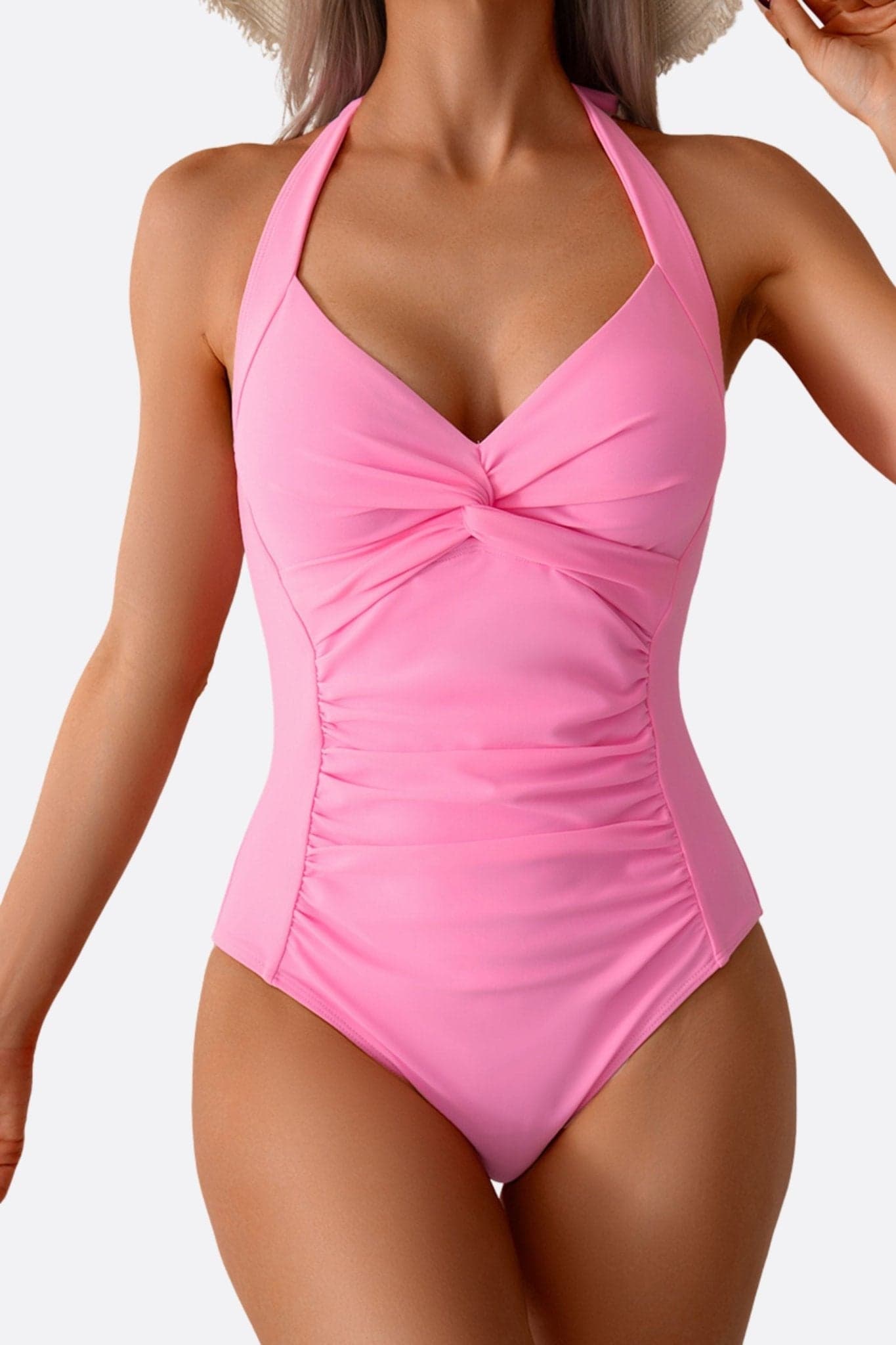
Women's one-piece swimsuit: back shaping, integrated support, and continuous coverage
The one-piece swimsuit covers more than the two-piece, but that's not its only feature: it's also the only cut that creates continuous support from the bust to the hips in one piece. A one-piece swimsuit with compressive fabric (220+ g/m², tight weave) exerts uniform pressure on the stomach and hips, reducing the perception of volume: a real and documented shaping effect, different from a simple color illusion. Compression is proportional to the fabric density.
The one-piece swimsuit covers more than the two-piece, but that's not its only feature: it's also the only cut that creates continuous support from the bust to the hips in one piece. A one-piece swimsuit with compressive fabric (220+ g/m², tight weave) exerts uniform pressure on the stomach and hips, reducing the perception of volume: a real and documented shaping effect, different from a simple color illusion. Compression is proportional to the fabric density.
The shaping effect: compression and fabric density
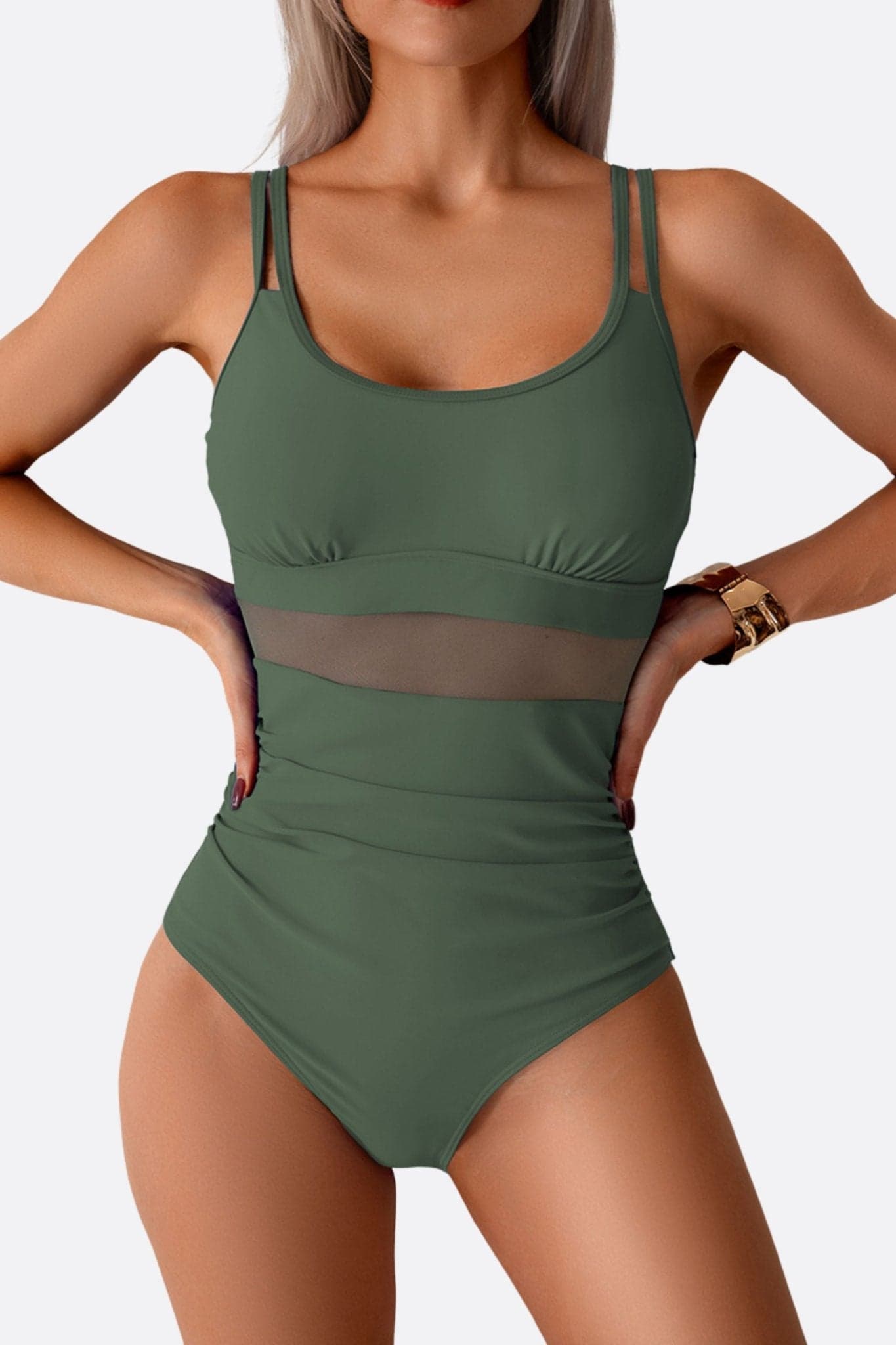
The compression of a swimsuit is determined by the elastic tension of the fabric on the body: it depends on the fabric density (number of threads per cm²) and weight. A lightweight swimsuit fabric (160-180 g/m²) hugs the body without compressing. A dense fabric (200-240 g/m²) exerts light but real pressure on the areas it covers: stomach, hips, waist. This pressure reduces the apparent volume of these areas by 1 to 3 cm depending on the density. It's the same principle as shaping underwear (Spanx), but adapted for swimming. Fabrics labeled "shaping" or "sculpting" generally correspond to a density greater than 200 g/m² with a high elastane content (25-30% instead of the standard 20%). The downside: a denser fabric is less breathable and warmer out of the water.
Cuts: from classic swimsuit to monokini
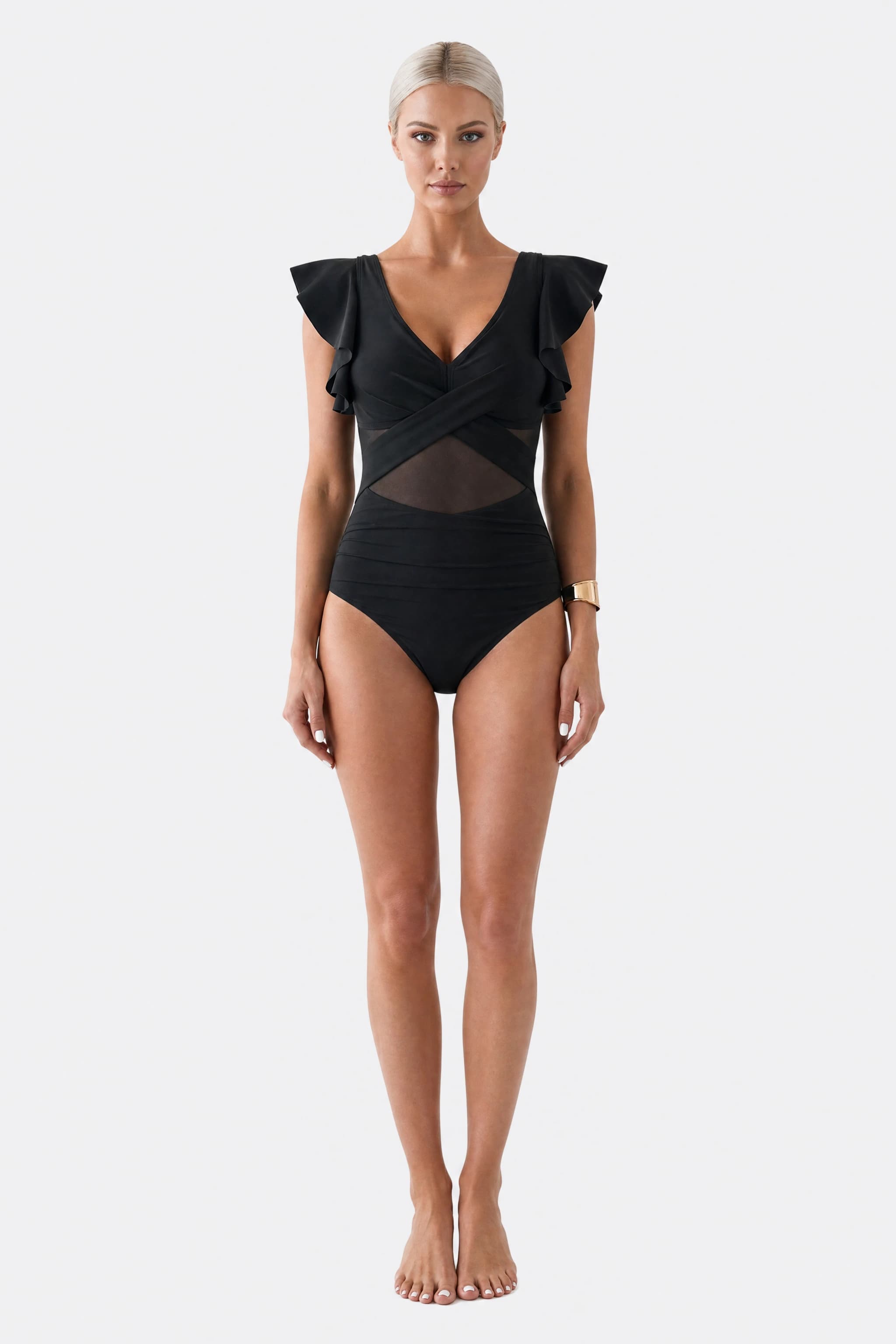
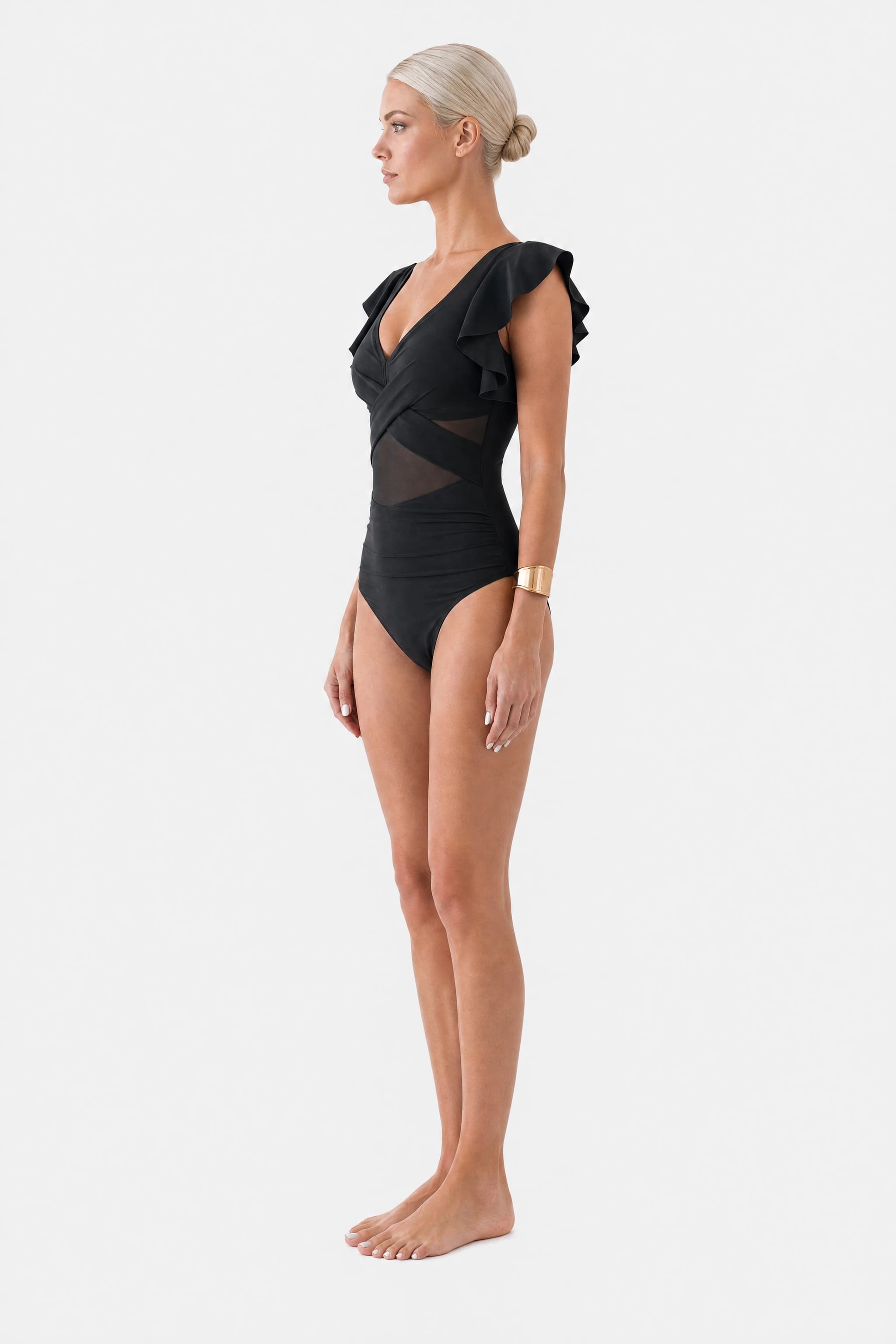
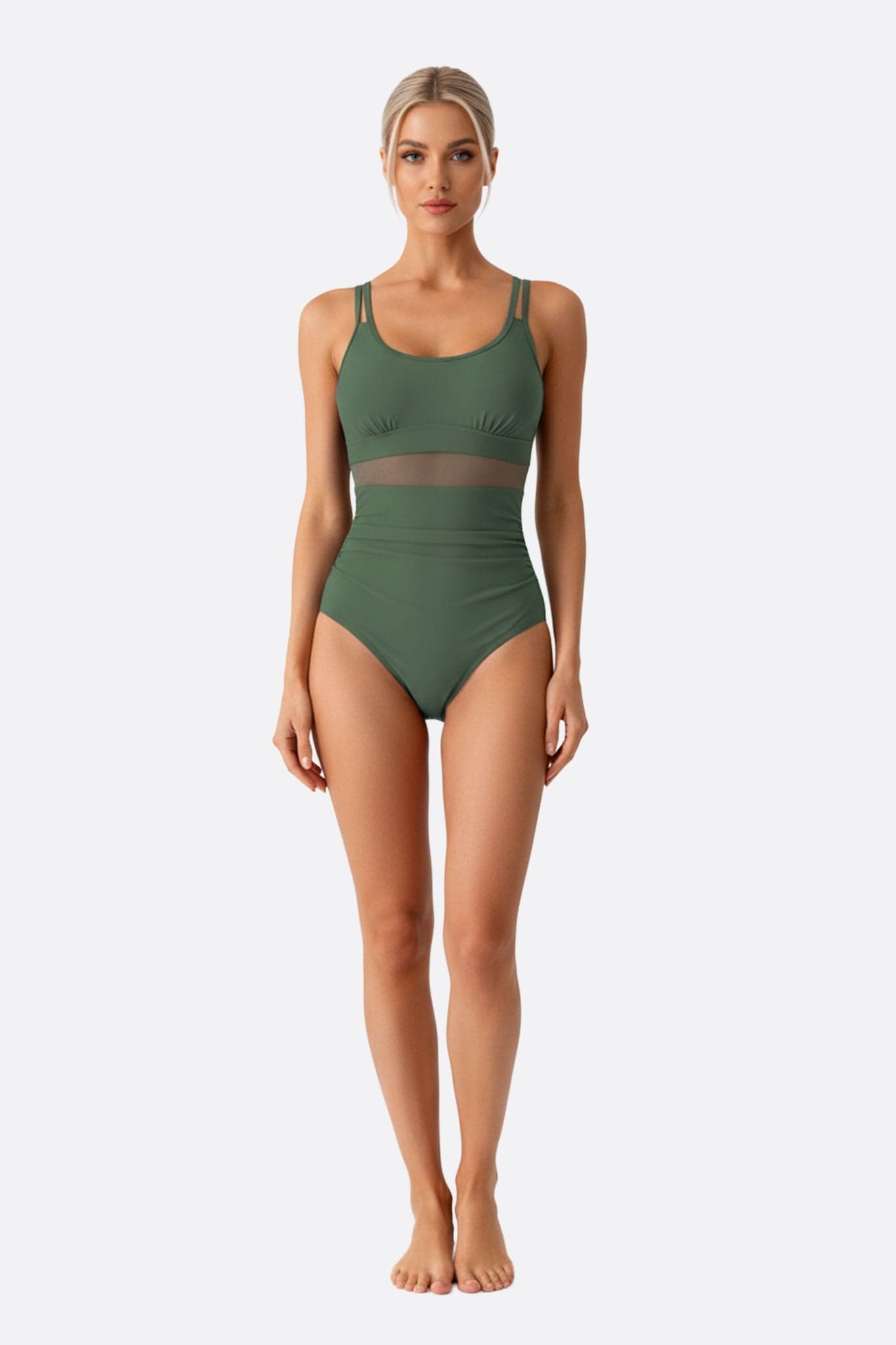
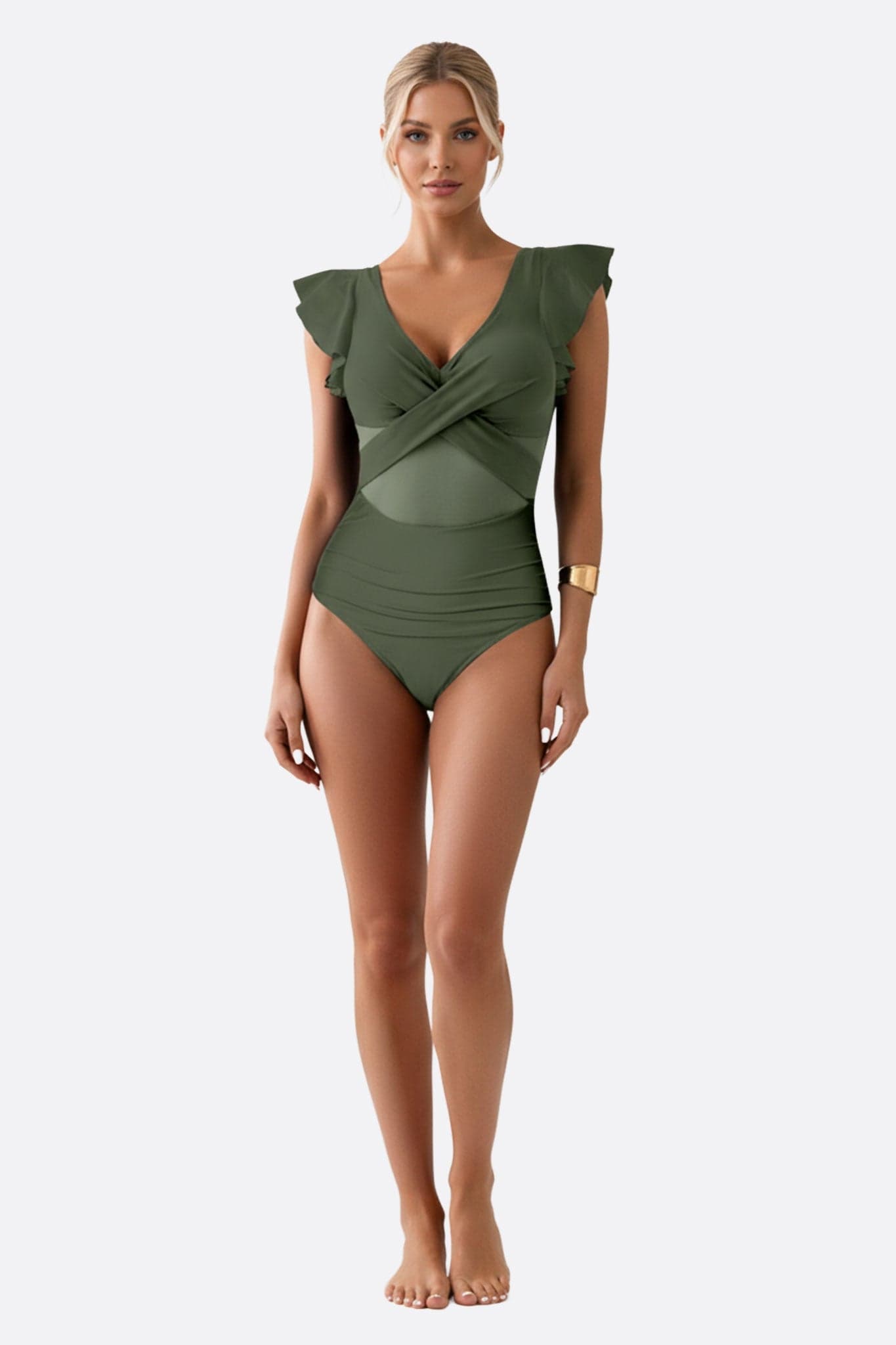
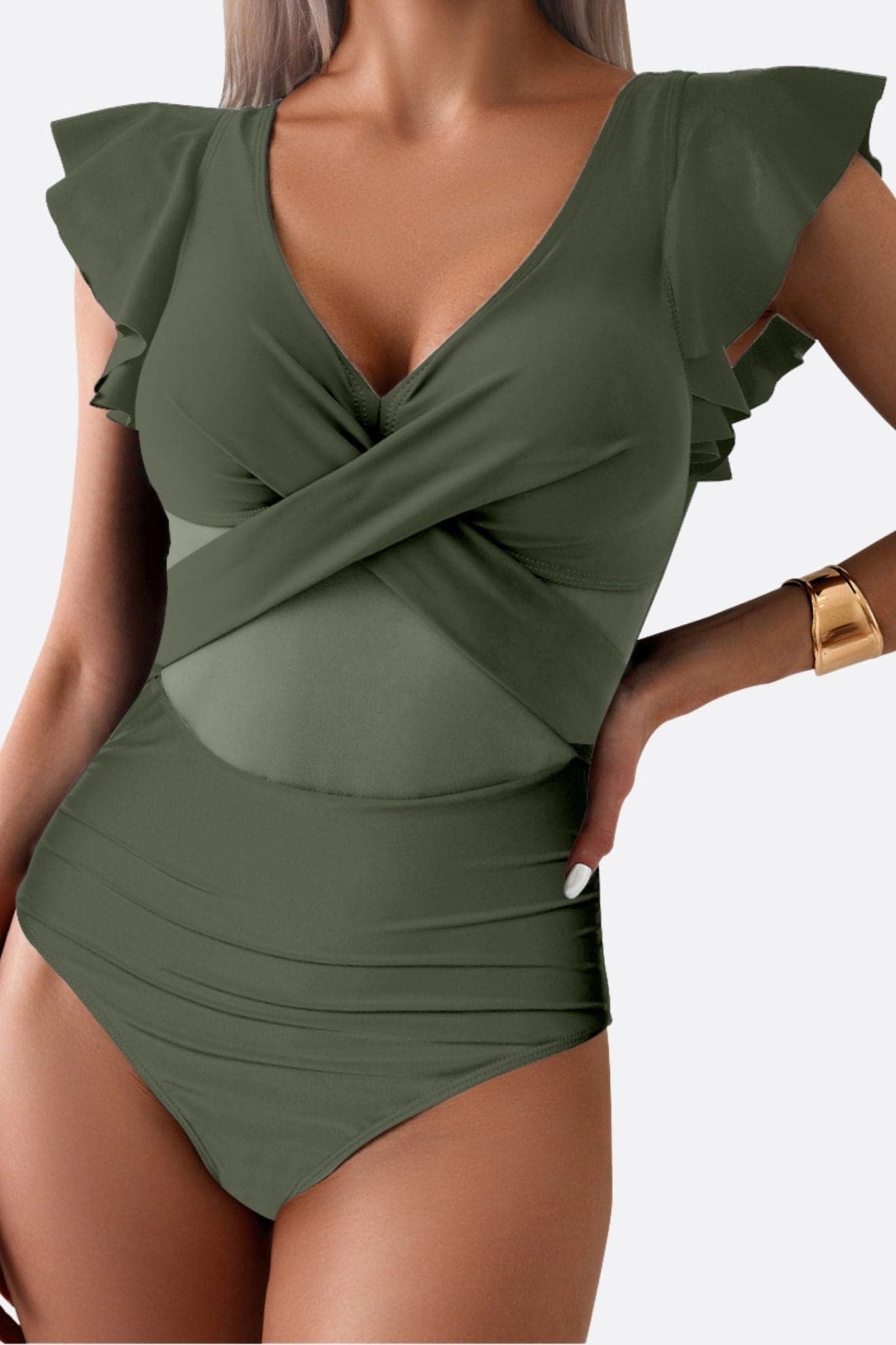
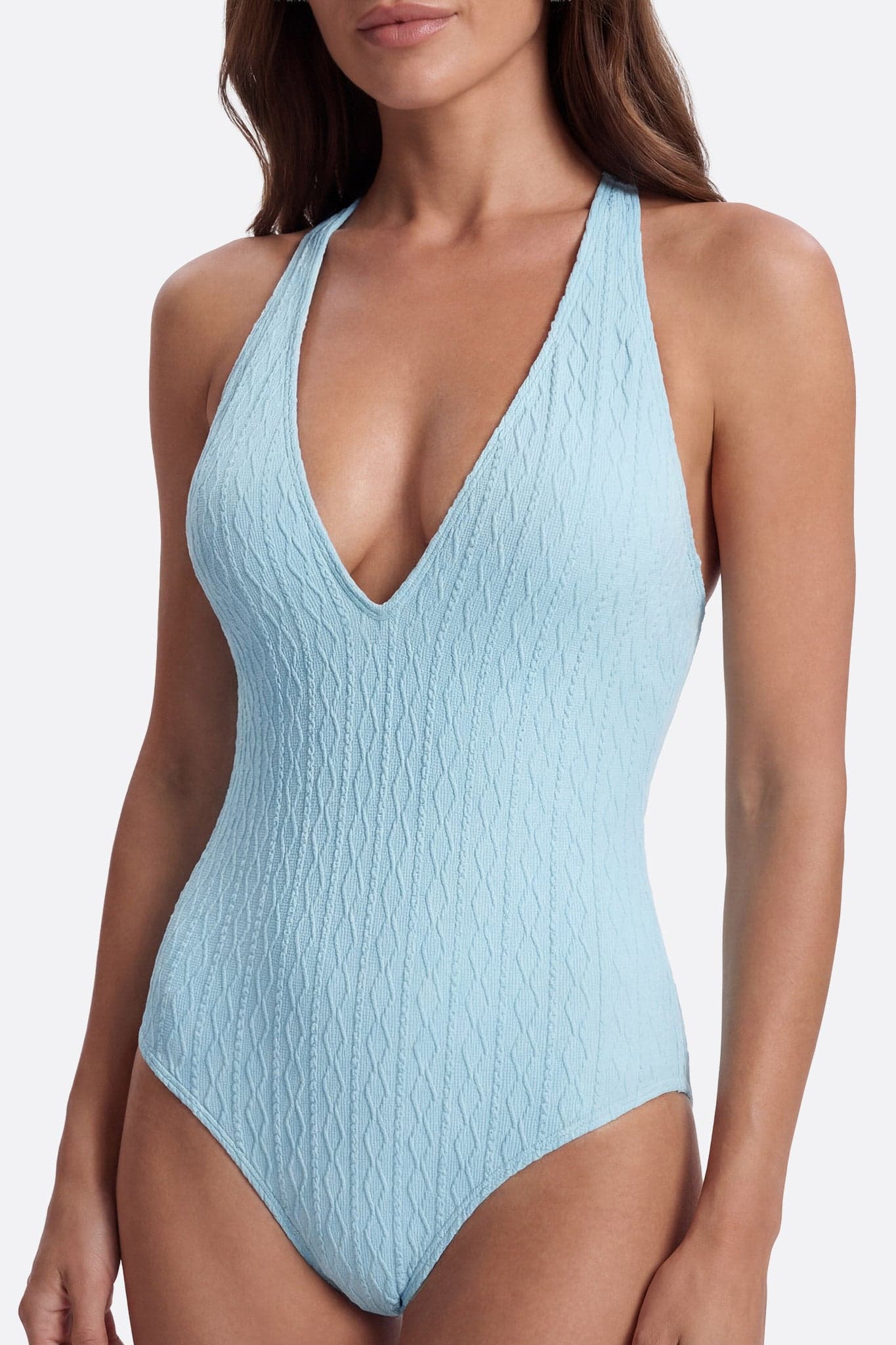
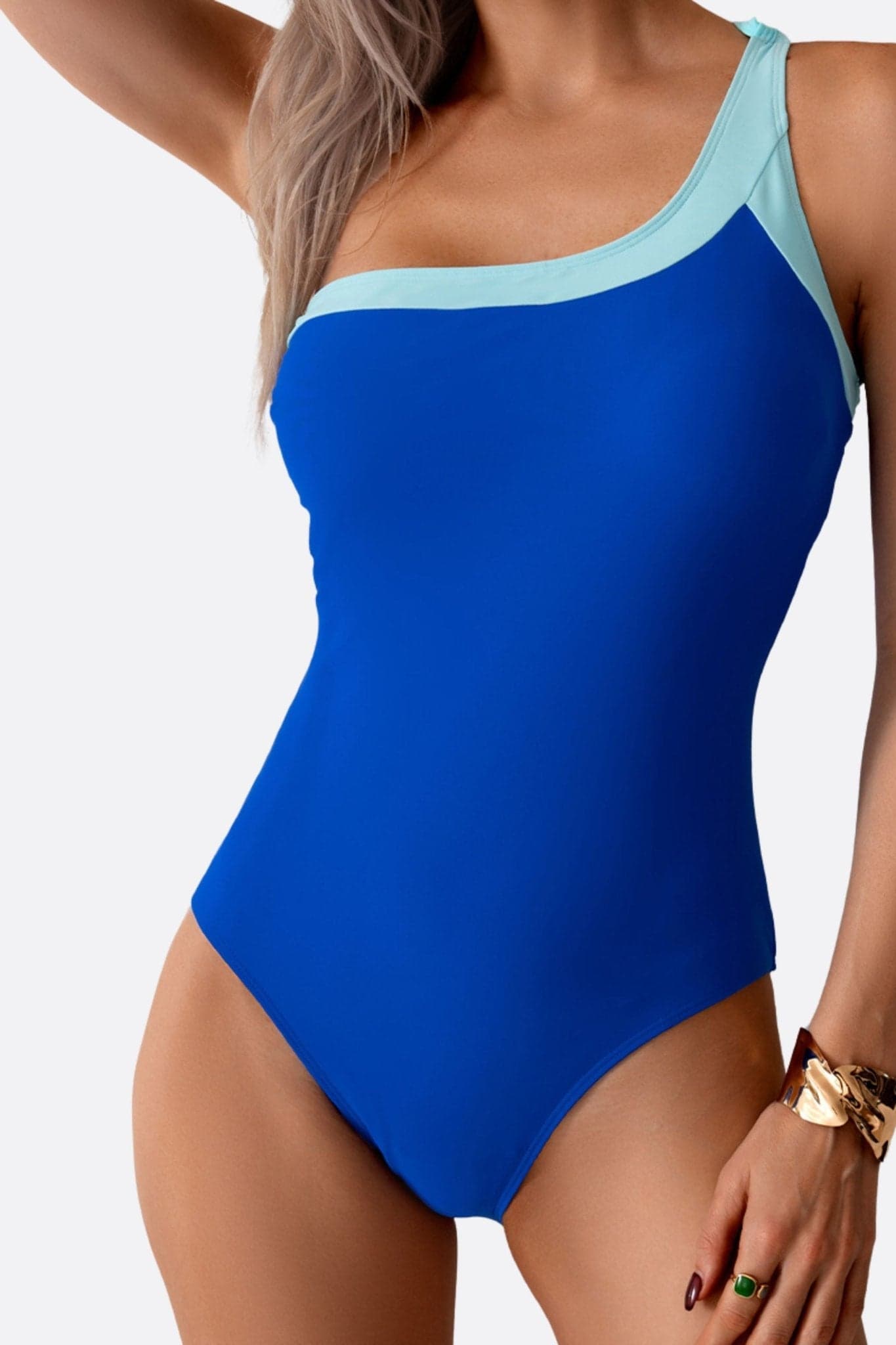
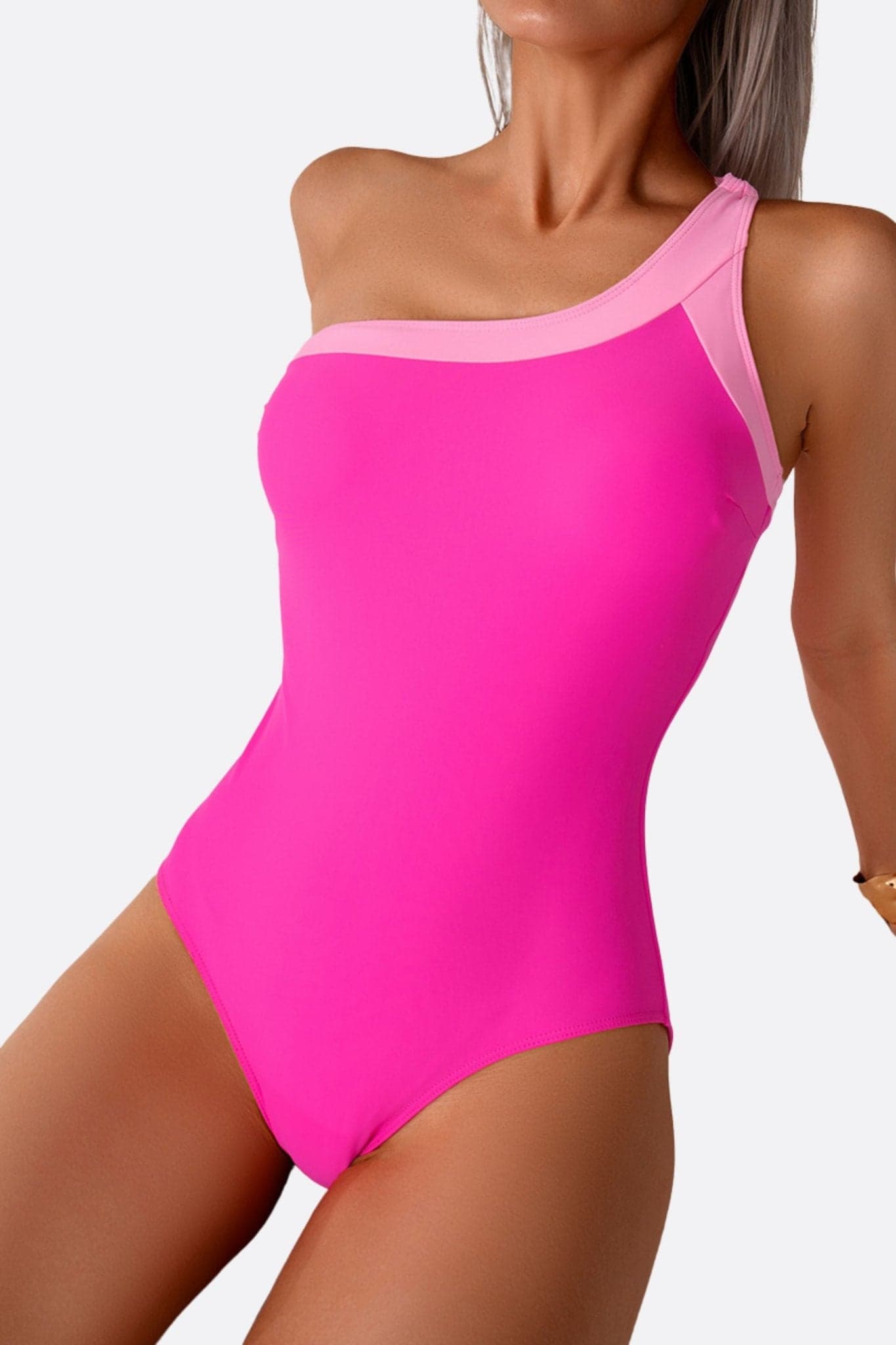
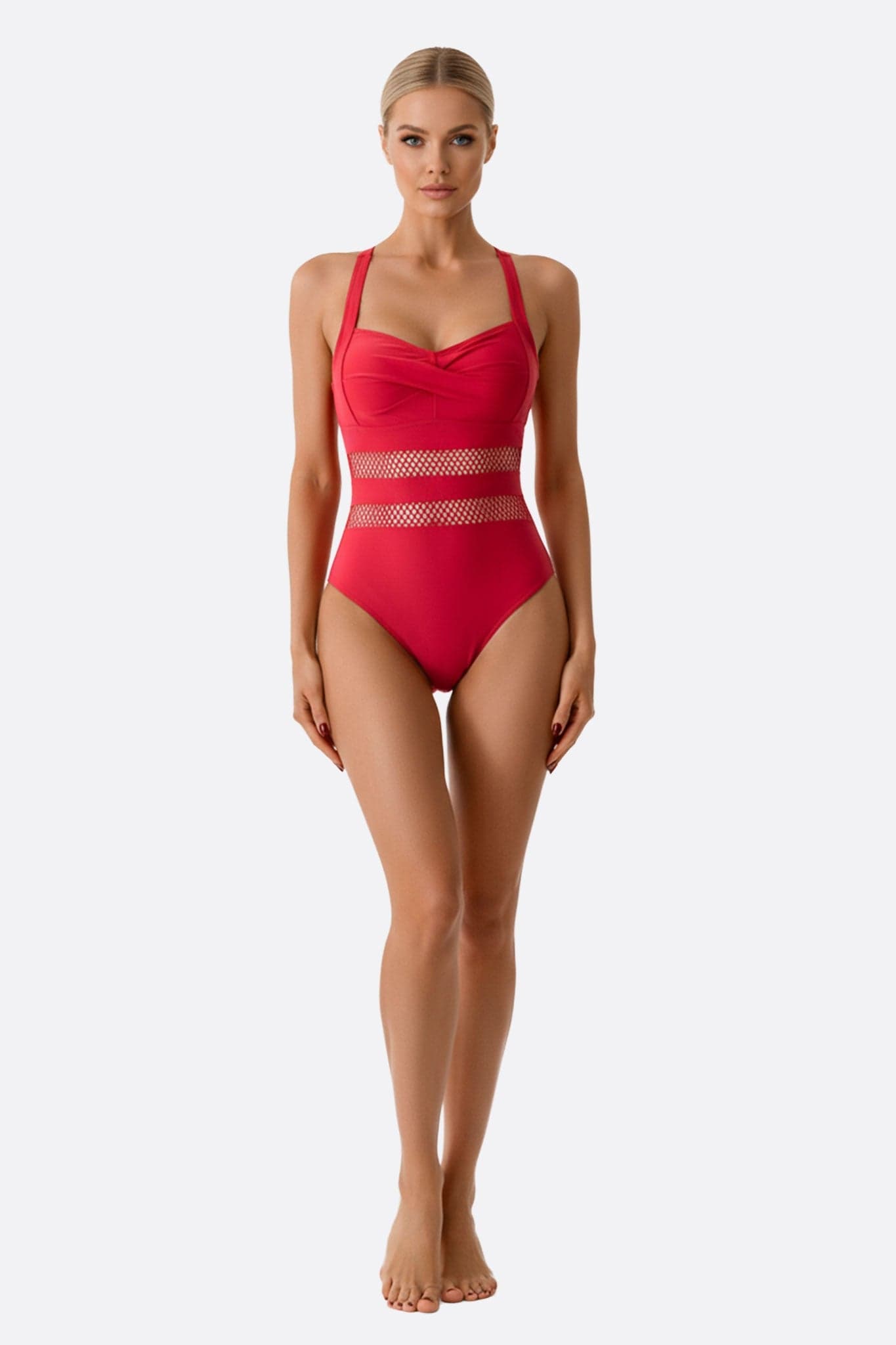
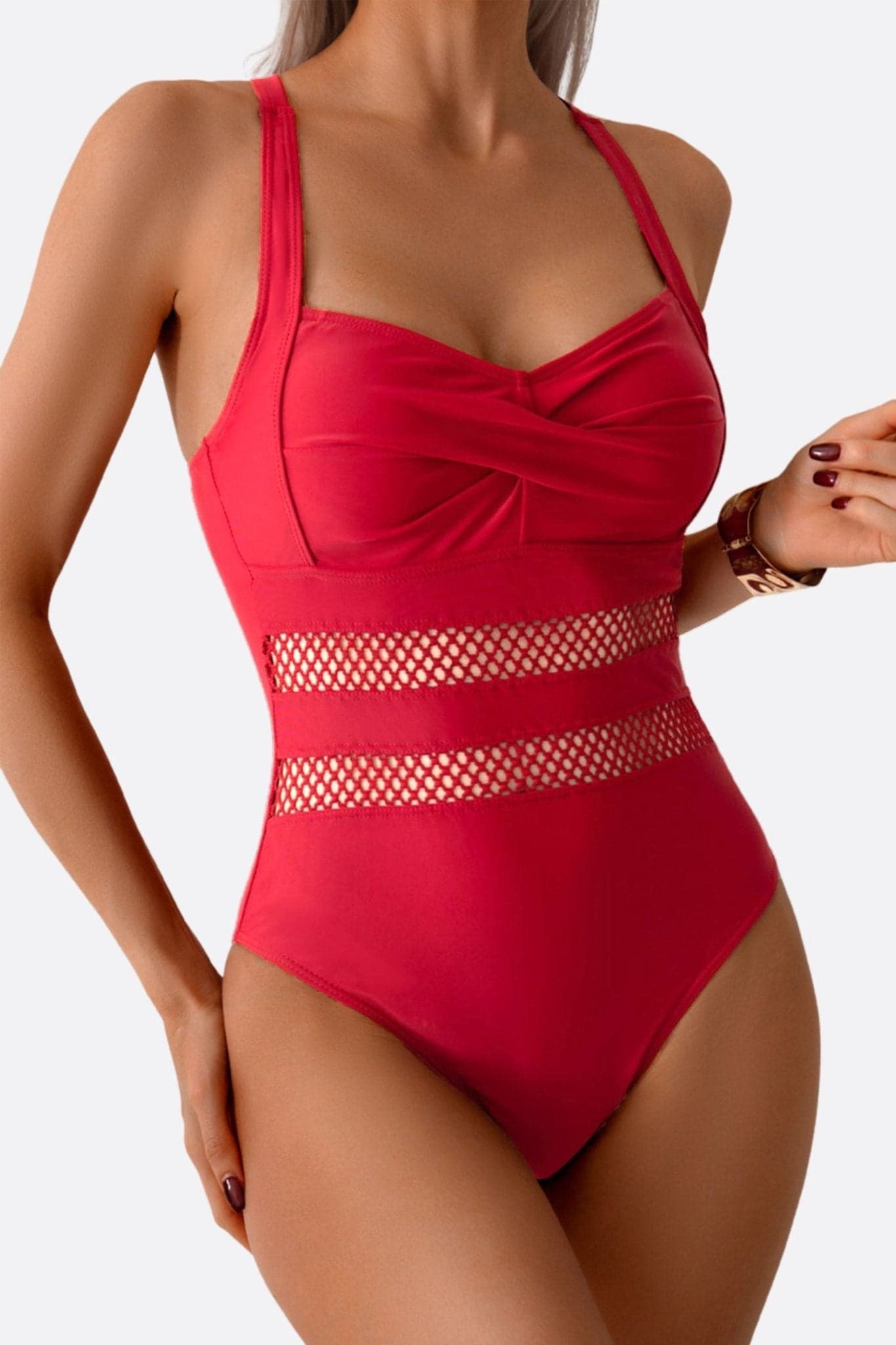
Classic swimsuit (covering): covers the entire torso, standard neckline or high collar. The most conservative and versatile: pool, sea, aquagym. Plunging swimsuit (deep V neckline): covers the stomach and hips, exposes the chest with a V. Creates the illusion of elongation. Monokini (trikini with cutouts on the sides or in the middle): reveals areas of the stomach or sides through cutouts: the coverage effect is present but the design creates different tanning zones. Monokini with geometric cutouts: the cutouts frame the covered areas and create geometric patterns on the silhouette. A lateral cutout that connects the top and bottom of the swimsuit into a single central band visually slims the waist.
Straps and back: style variables
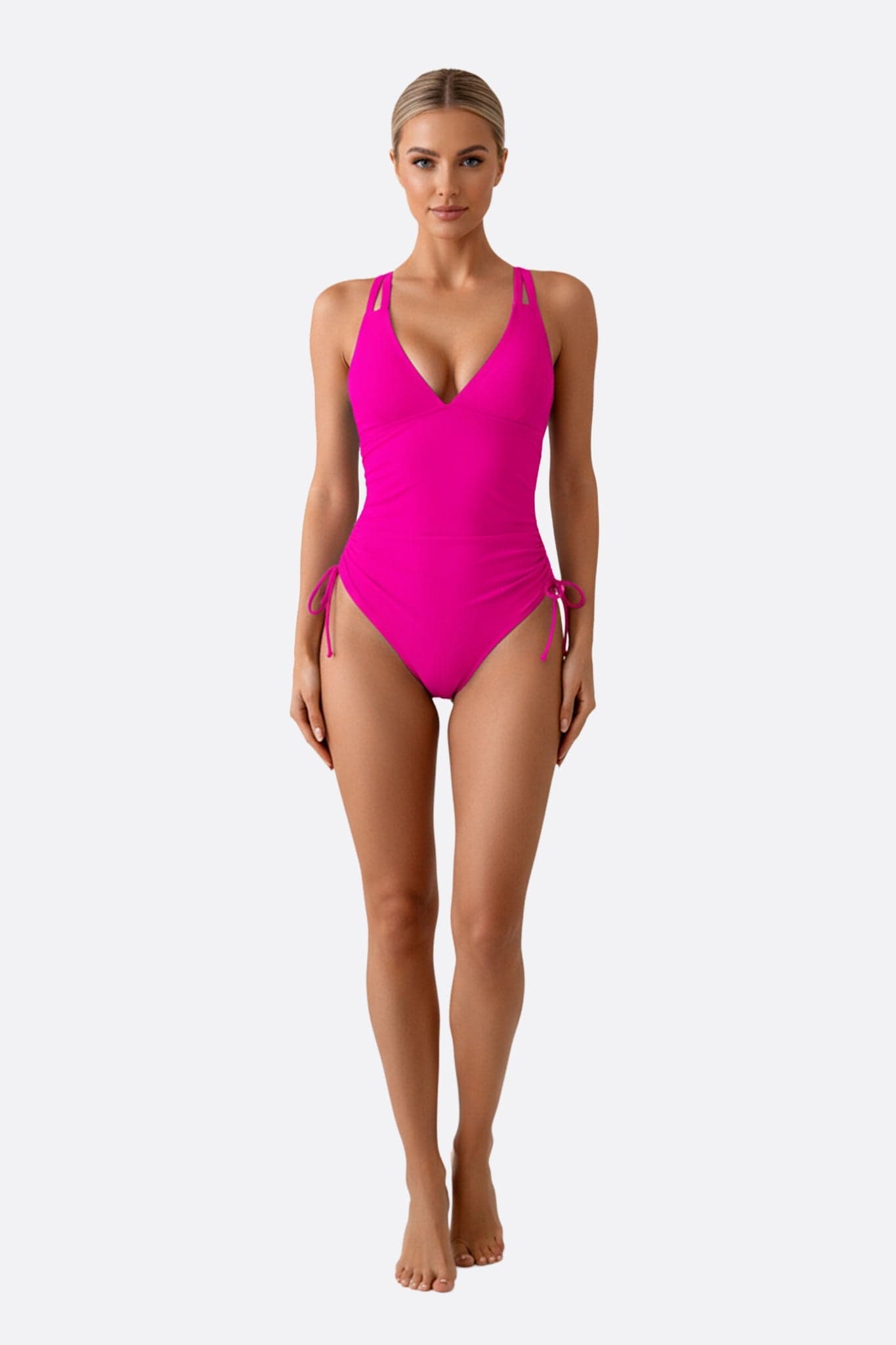
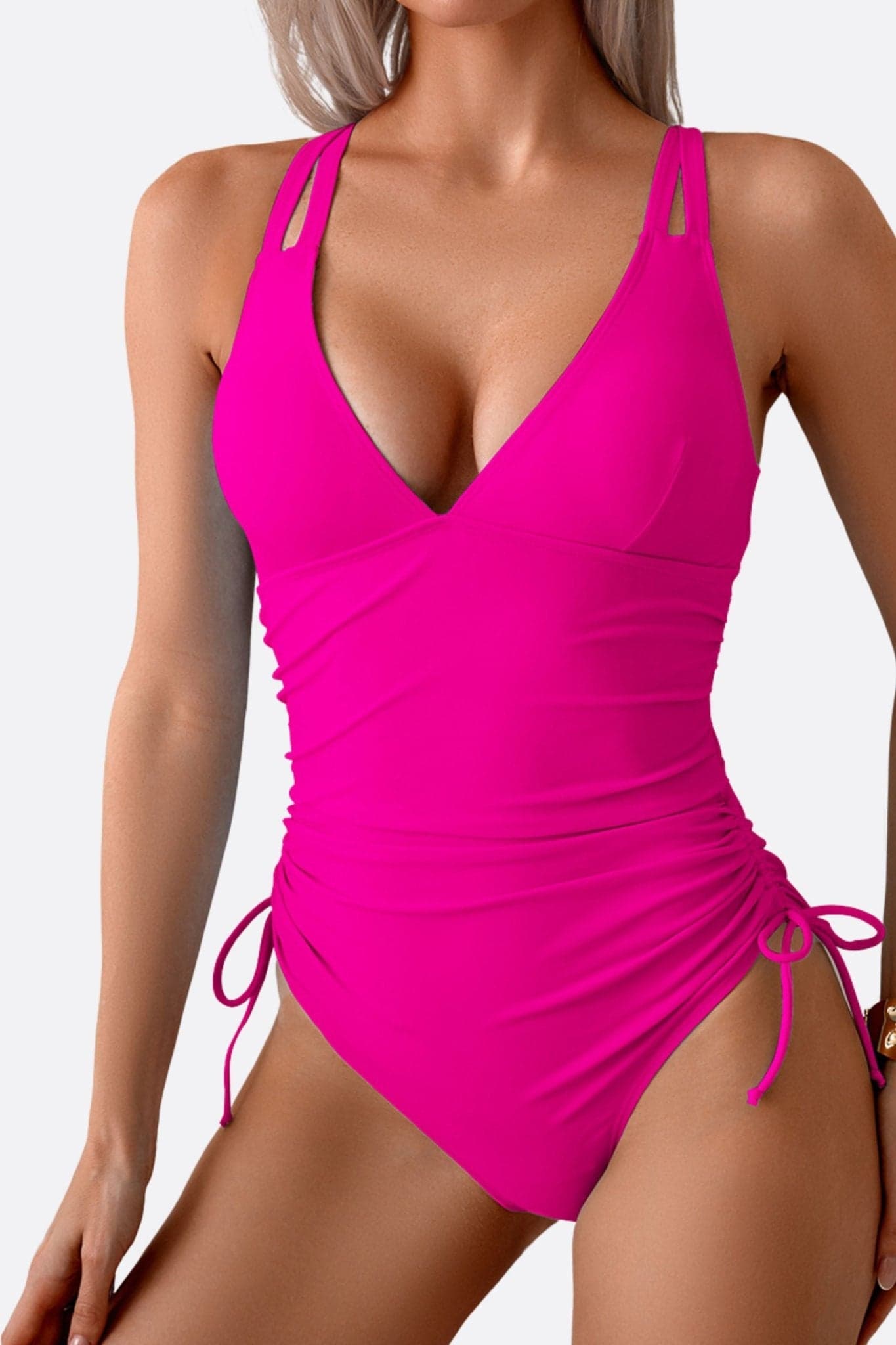
Thin straps: minimal, shoulder tanning, but can create marks if the swimsuit is heavy. Wide straps: more support, fewer marks, cover more of the shoulders. Crossed straps in the back: distribute weight differently and shift the pull point from the bust to the middle of the back. Racerback (two straps forming an X or T in the back): maximum support for active swimming: the straps stay in place regardless of movement amplitude. Backless (no straps): support only by fabric and gathers: suitable for small busts. An open back (halter back, back cutout) creates a special tanning area on the back.
Body shape and one-piece cut
H shape (little defined waist): swimsuit with side cutouts or contrasting color on the sides: creates the illusion of a waist. Pear shape (hips wider than shoulders): swimsuit with pattern or detail on the top (shoulders), dark color on the bottom: balances proportions. V shape or inverted triangle (broad shoulders, narrow hips): simple swimsuit or with pattern on the bottom: adds volume to the bottom and balances broad shoulders. Apple shape (prominent stomach): compressive shaping fabric + plunging neckline (draws attention upwards and elongates). Hourglass shape: all cuts work: covering swimsuit that highlights the defined waist.
Composition and use
For aquagym and active swimming: polyamide 80% + elastane 20%, racerback, strong support. Breaststroke and crawl exert significant pulls on the straps and neckline: stitching points must be reinforced. For the beach and tanning: all compositions, aesthetics take precedence over support during effort. For chlorine resistance: polyamide or Lycra XTRA LIFE (see general swimwear section). A one-piece swimsuit uses more fabric than a two-piece: it is naturally more expensive at equal composition.
Yes: if the fabric is dense (200+ g/m², 25-30% elastane). The compression exerted by a dense fabric reduces the apparent volume of the stomach and hips by 1 to 3 cm. It's a real physical effect, not a color illusion. Labels "sculpting" or "shaping" generally correspond to this higher density. A light swimsuit (160-180 g/m²) hugs the body without compressing: it has no real shaping effect.
What cut of one-piece swimsuit to slim the waist?
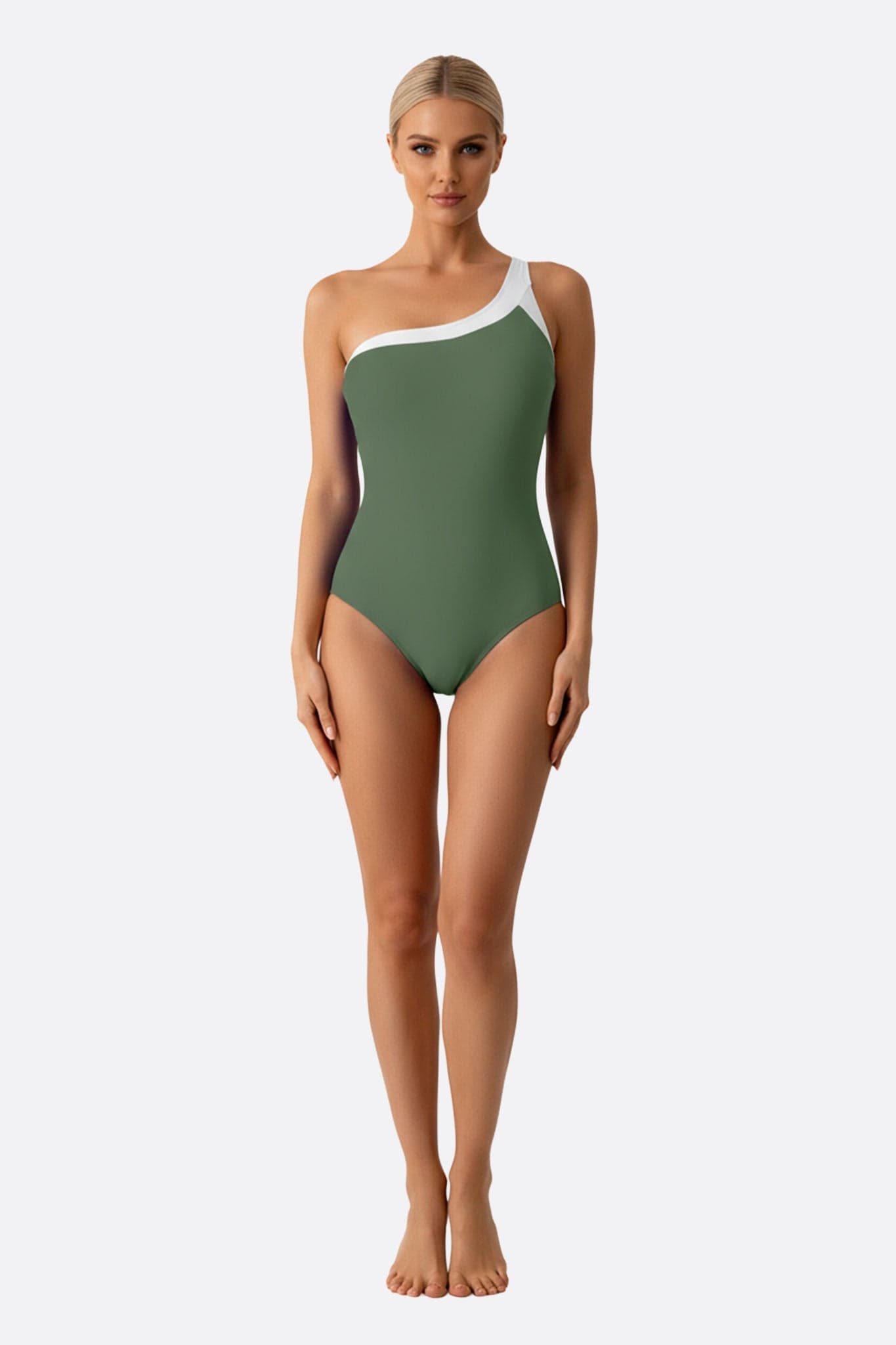
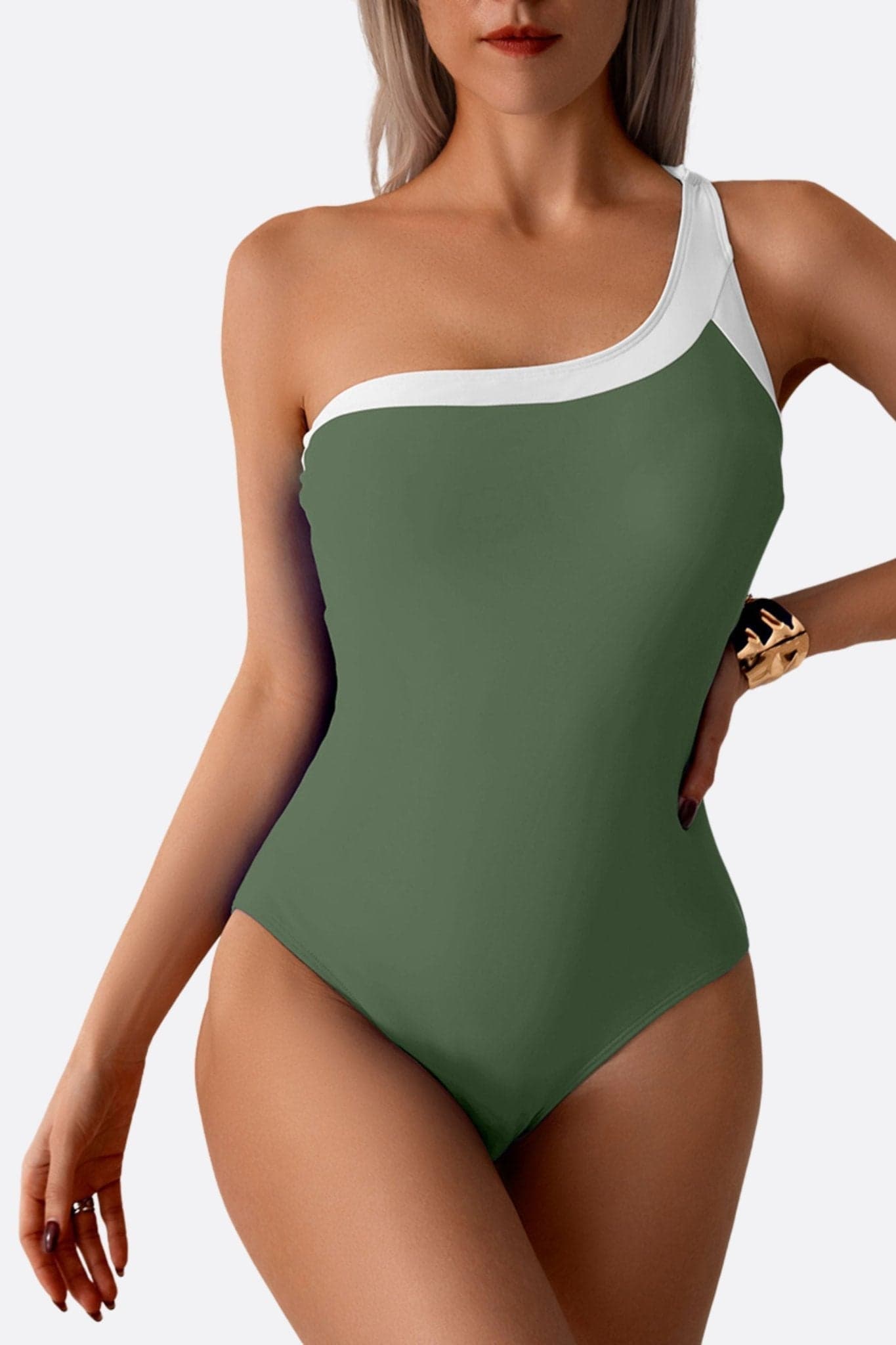
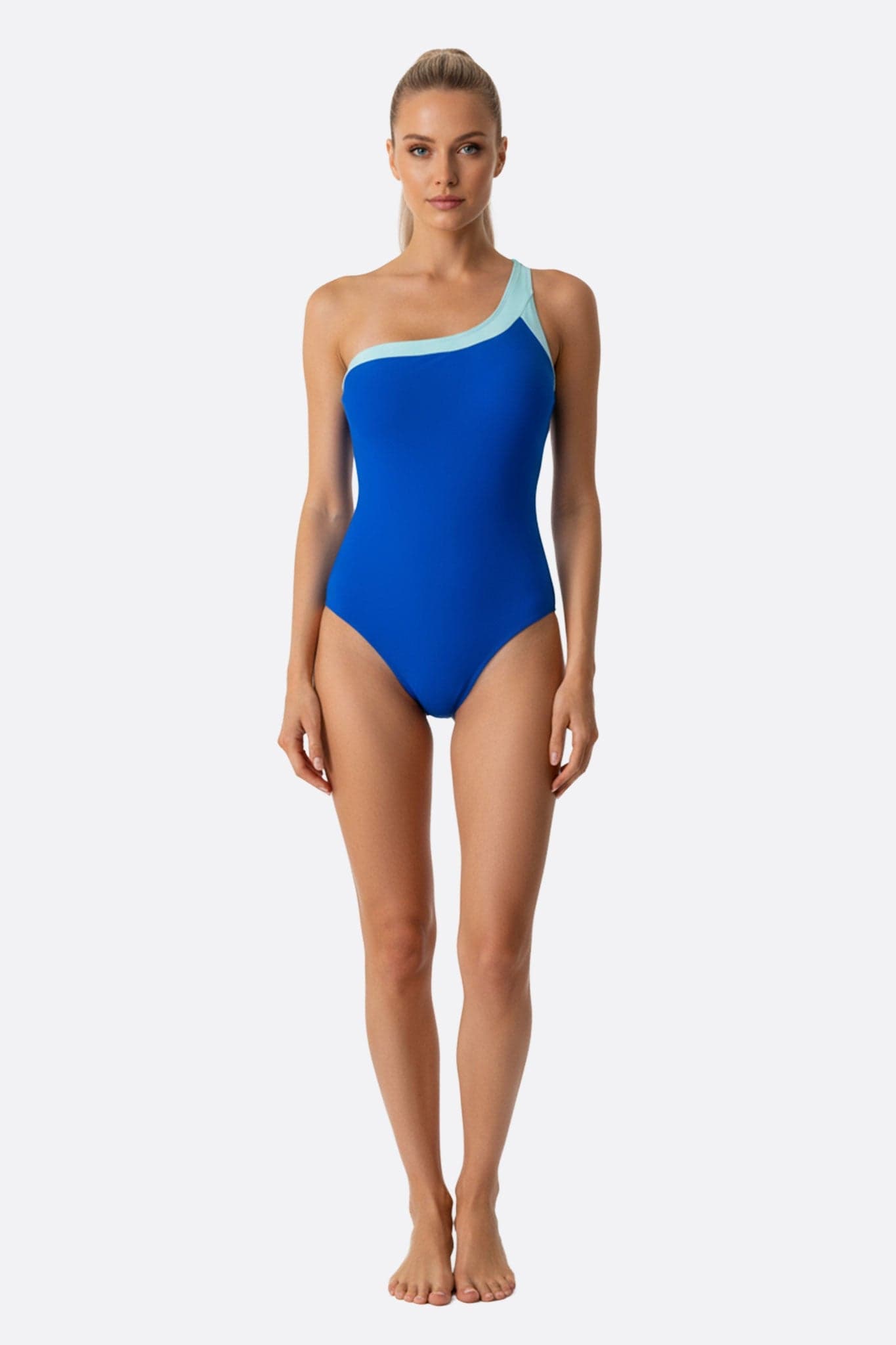
Side cutouts (areas of fabric in contrasting color or actually open cutouts on the sides) create the illusion of a slimmer waist by visually delineating the central area. A contrasting vertical central band also helps. A plunging V neckline draws the eye upwards and elongates: an indirect slimming effect. Avoid wide horizontal bands that divide the body into equal segments.
How to choose between a one-piece and two-piece swimsuit?
One-piece: full coverage of the stomach and hips, continuous support from bust to hips, possible shaping, practical for active swimming, less tanning. Two-piece: modular (separate top and bottom for non-uniform body shapes), maximum tanning, support specific to each piece, less shaping. The decisive criterion: if you swim actively or prefer coverage, one-piece. If you seek maximum tanning or modularity, two-piece.