Fast & secure deliveryFree shipping in France from €99Easy returns
Fast & secure deliveryFree shipping in France from €99Easy returns
Satin dress women
women's satin dress: guide to lengths, cuts, and occasions
Satin owes its shine to its weave: the weft threads are positioned on the surface over 4 or 8 rows before diving under a single warp thread. This positioning creates an intense directional reflection that changes with the angle of light. A long satin dress with a bias cut exploits this reflection with every step: the fabric ripples and the light moves across the surface like water. A straight cut in heavy satin gives a different effect: rigid, architectural, without movement.
Satin owes its shine to its weave: the weft threads are positioned on the surface over 4 or 8 rows before diving under a single warp thread. This positioning creates an intense directional reflection that changes with the angle of light. A long satin dress with a bias cut exploits this reflection with every step: the fabric ripples and the light moves across the surface like water. A straight cut in heavy satin gives a different effect: rigid, architectural, without movement.
Long satin dress: bias and straight cut
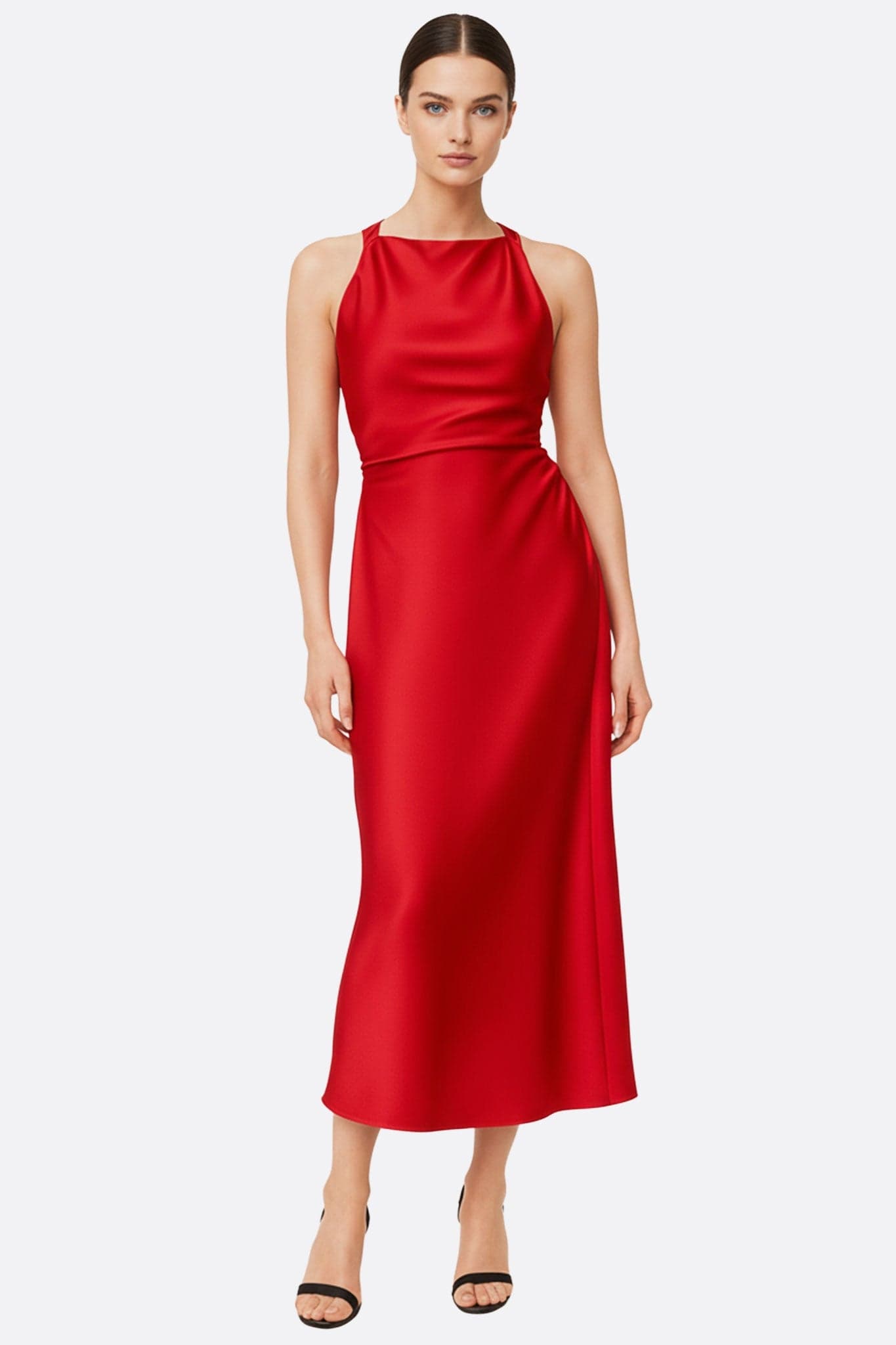
The bias cut (fabric cut at 45 degrees to the grain) is the historical cut of satin: it exploits the natural elasticity of the fabric cut diagonally to create a drape that hugs the body in motion. Invented by Madeleine Vionnet in the 1930s, it remains the most elegant technique for long satin dresses. The straight cut (along the grain) gives a more rigid and structuring satin: the dress retains its shape independently of the body. For a long evening satin dress: the bias cut maximizes the fabric's effect. For a structured midi satin dress: the straight cut.
Midi satin dress: versatility and occasions
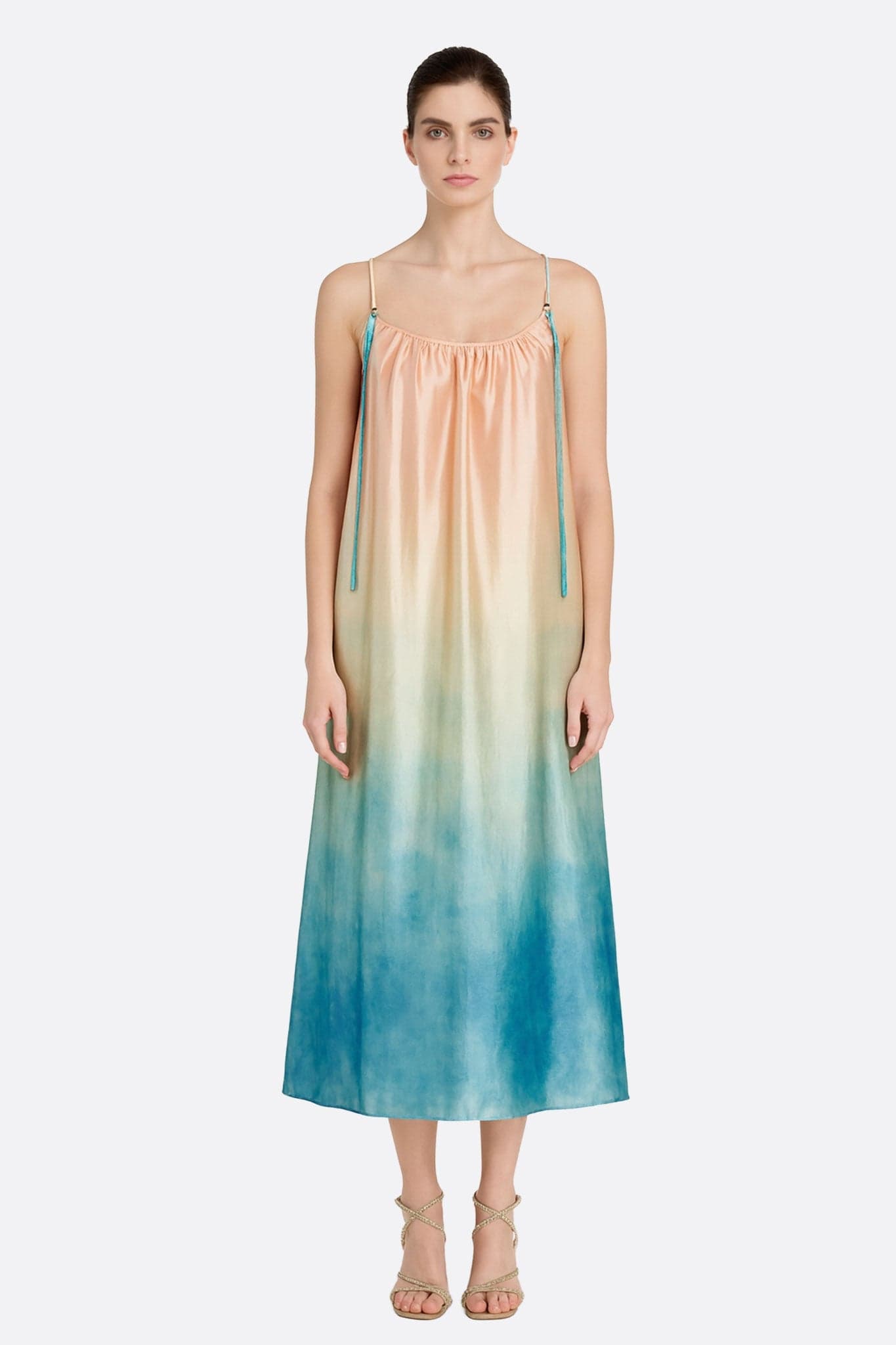
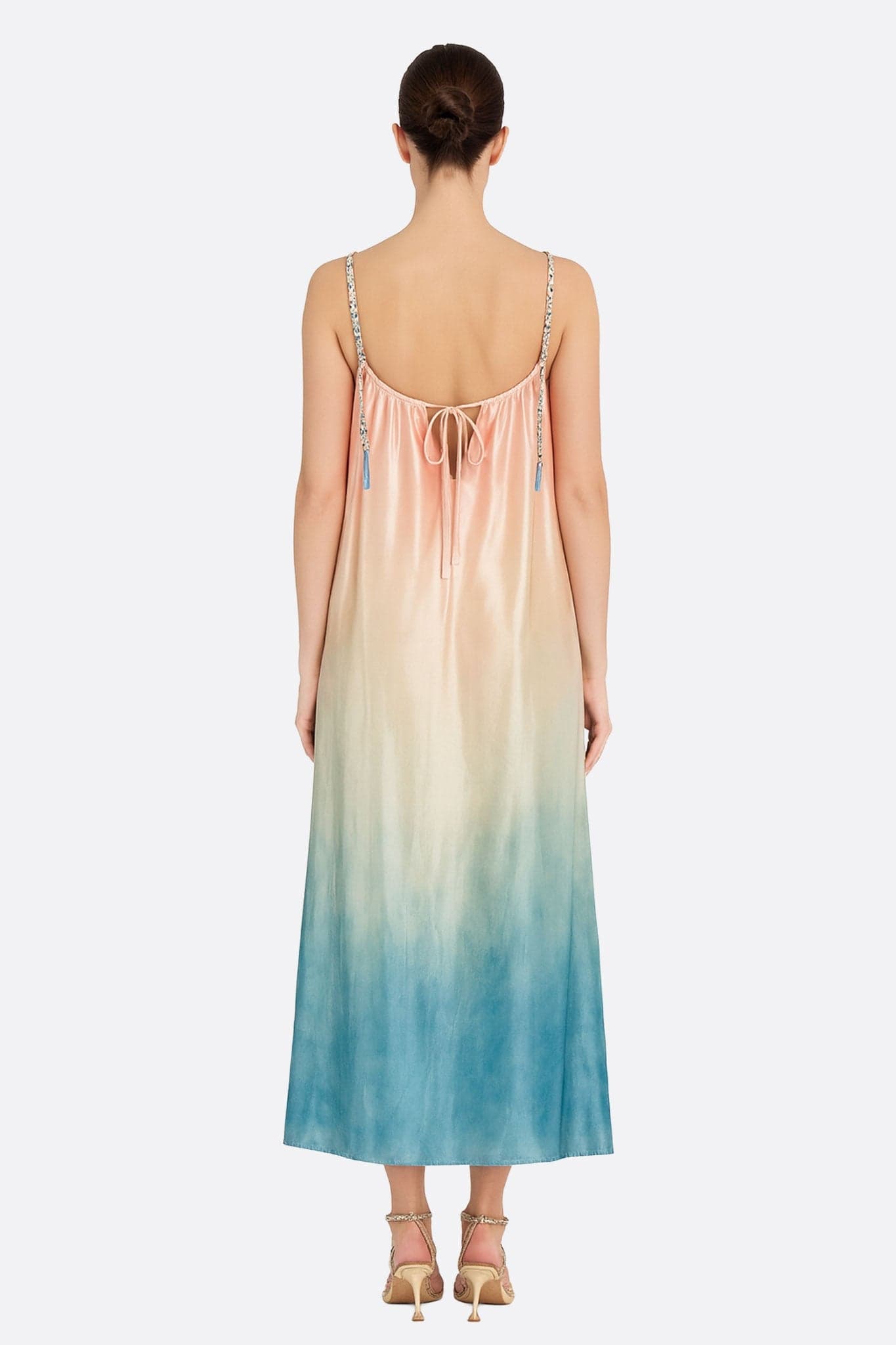
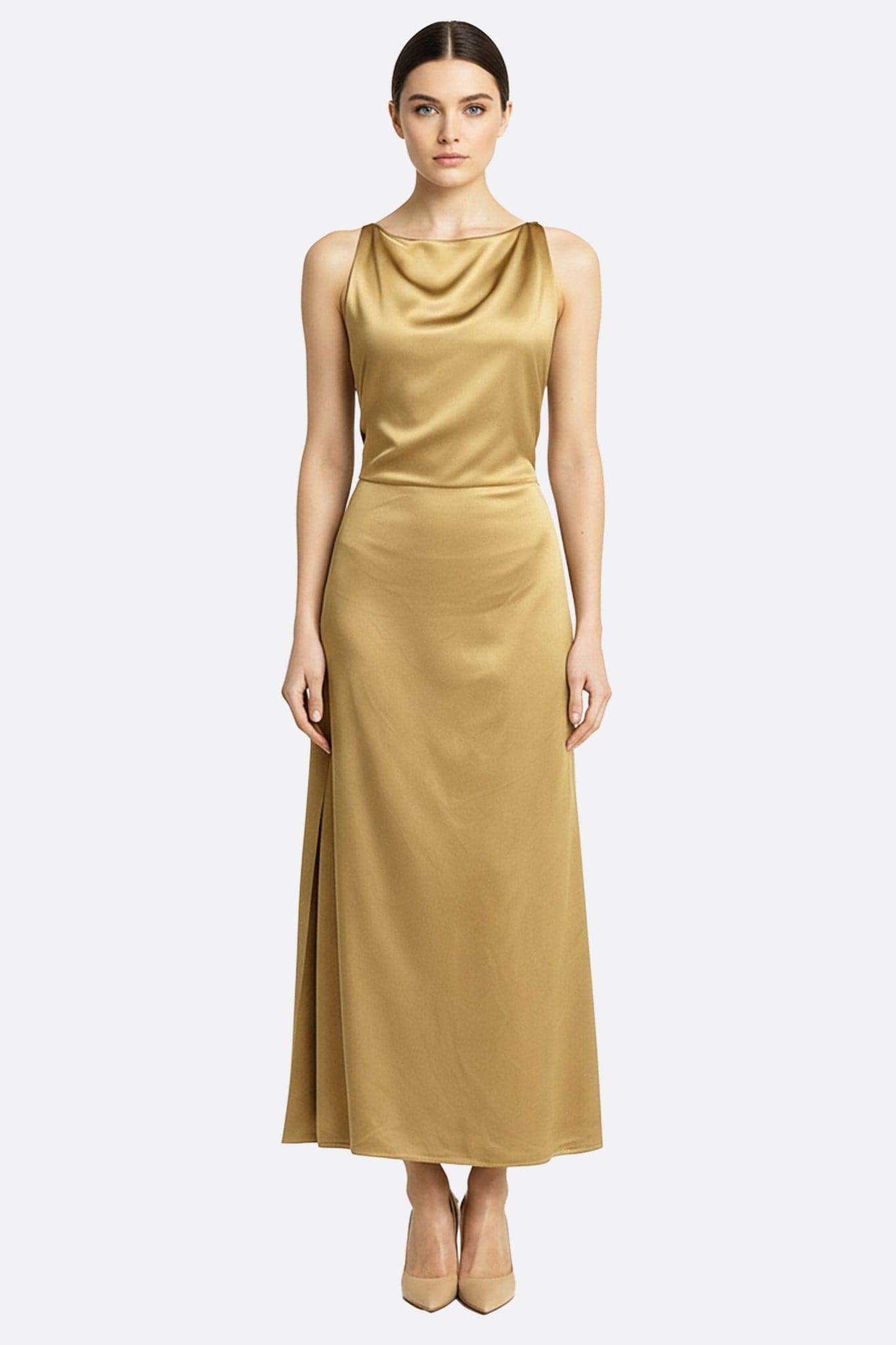
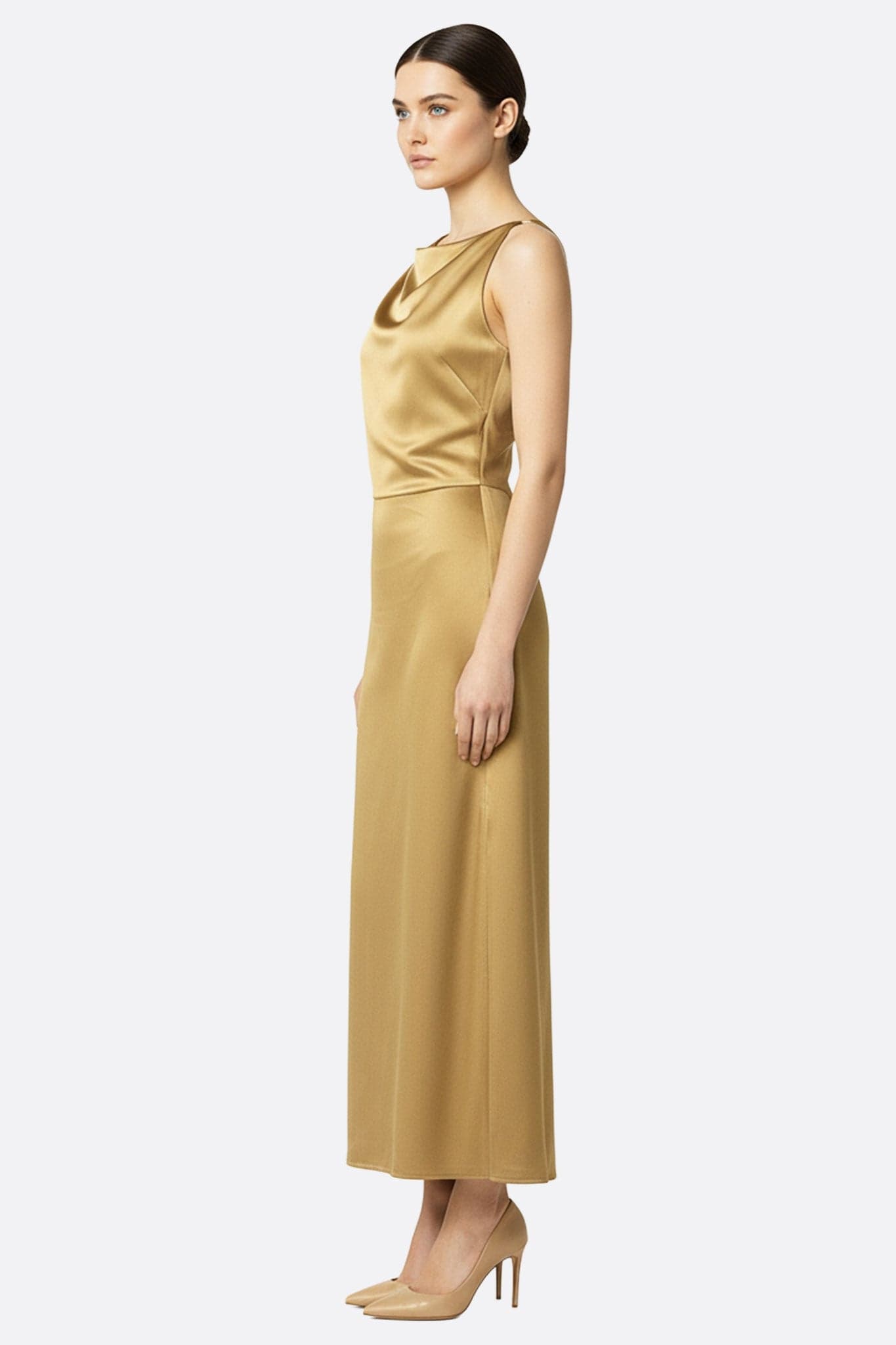
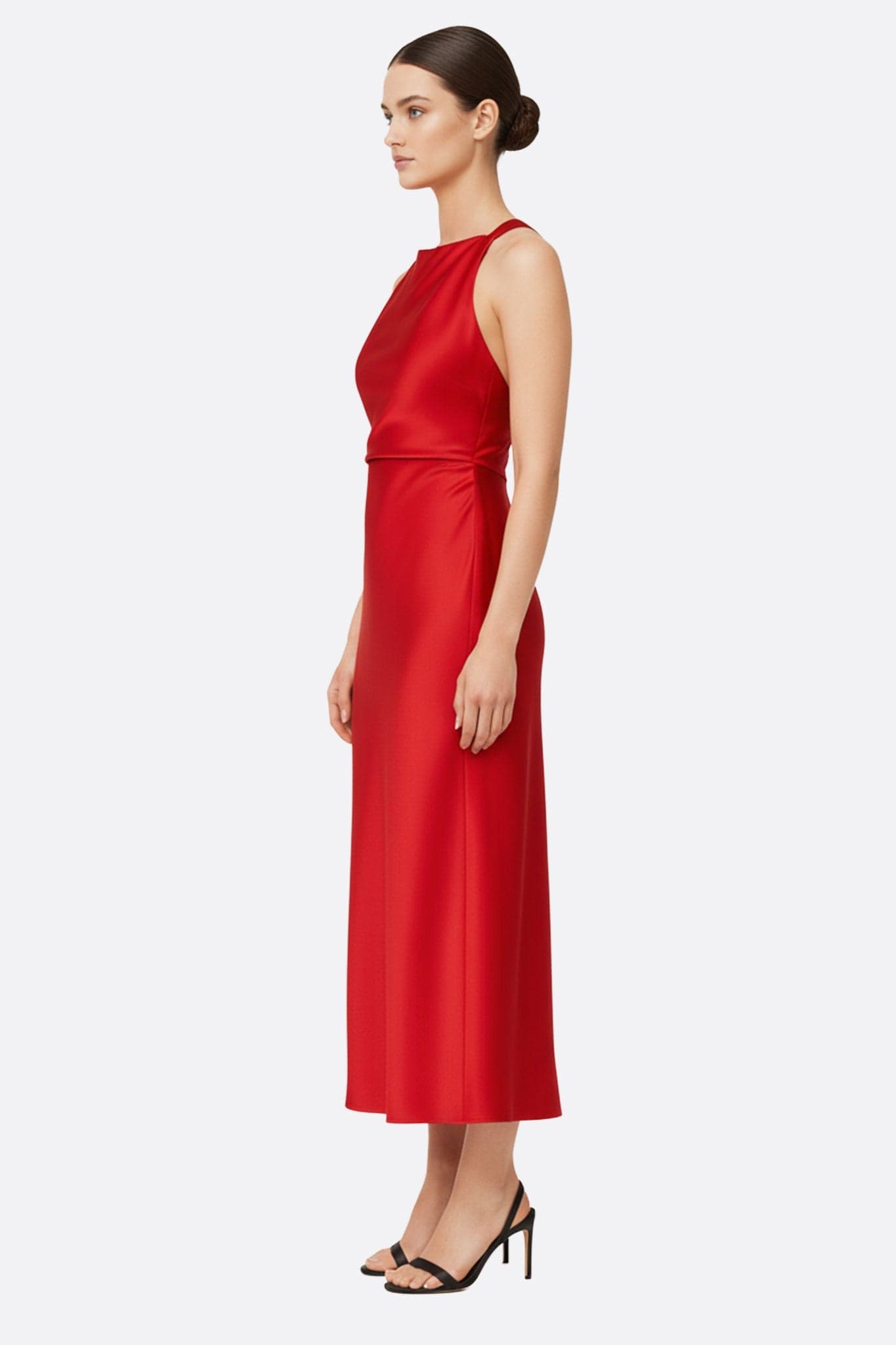
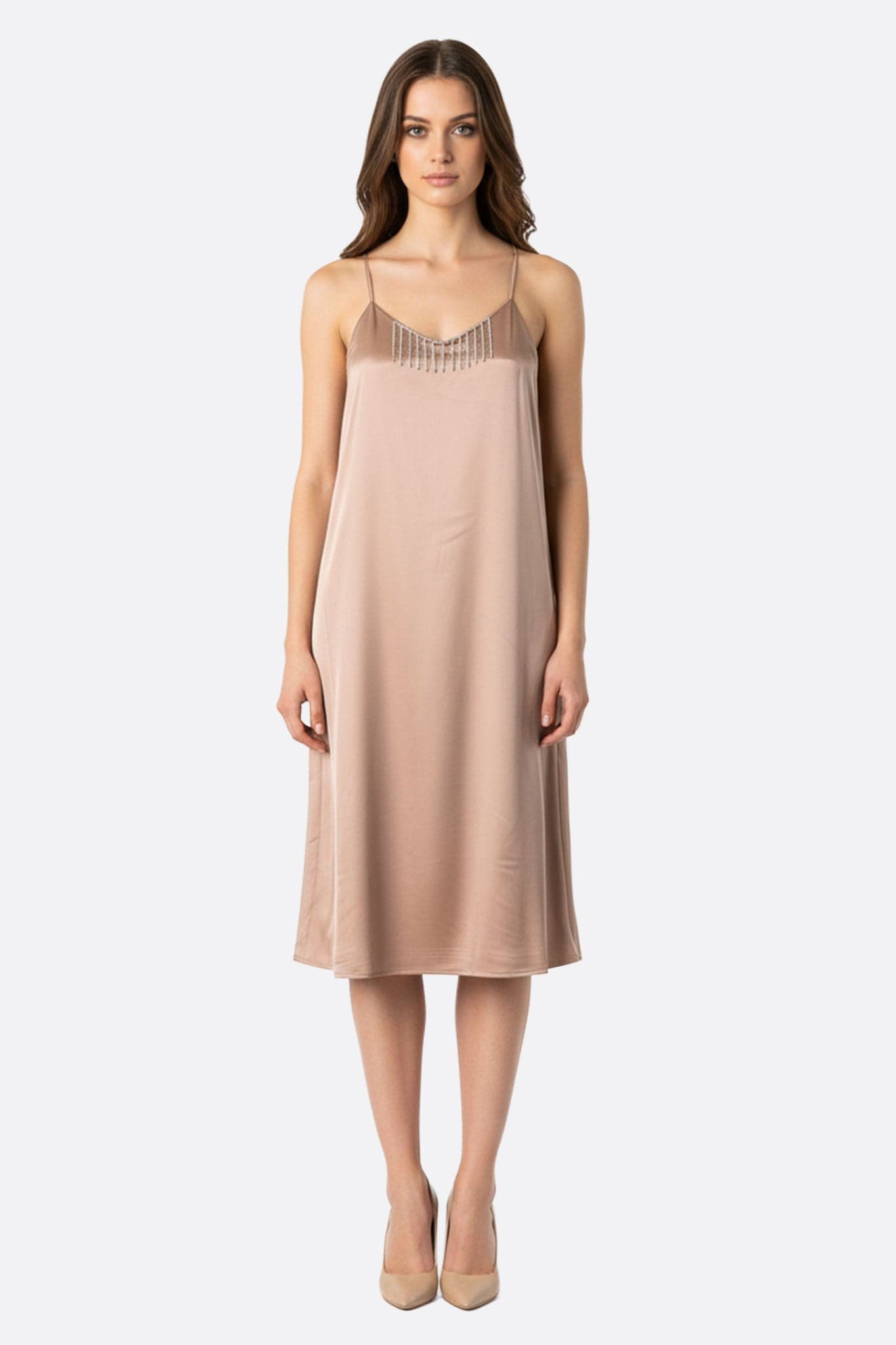
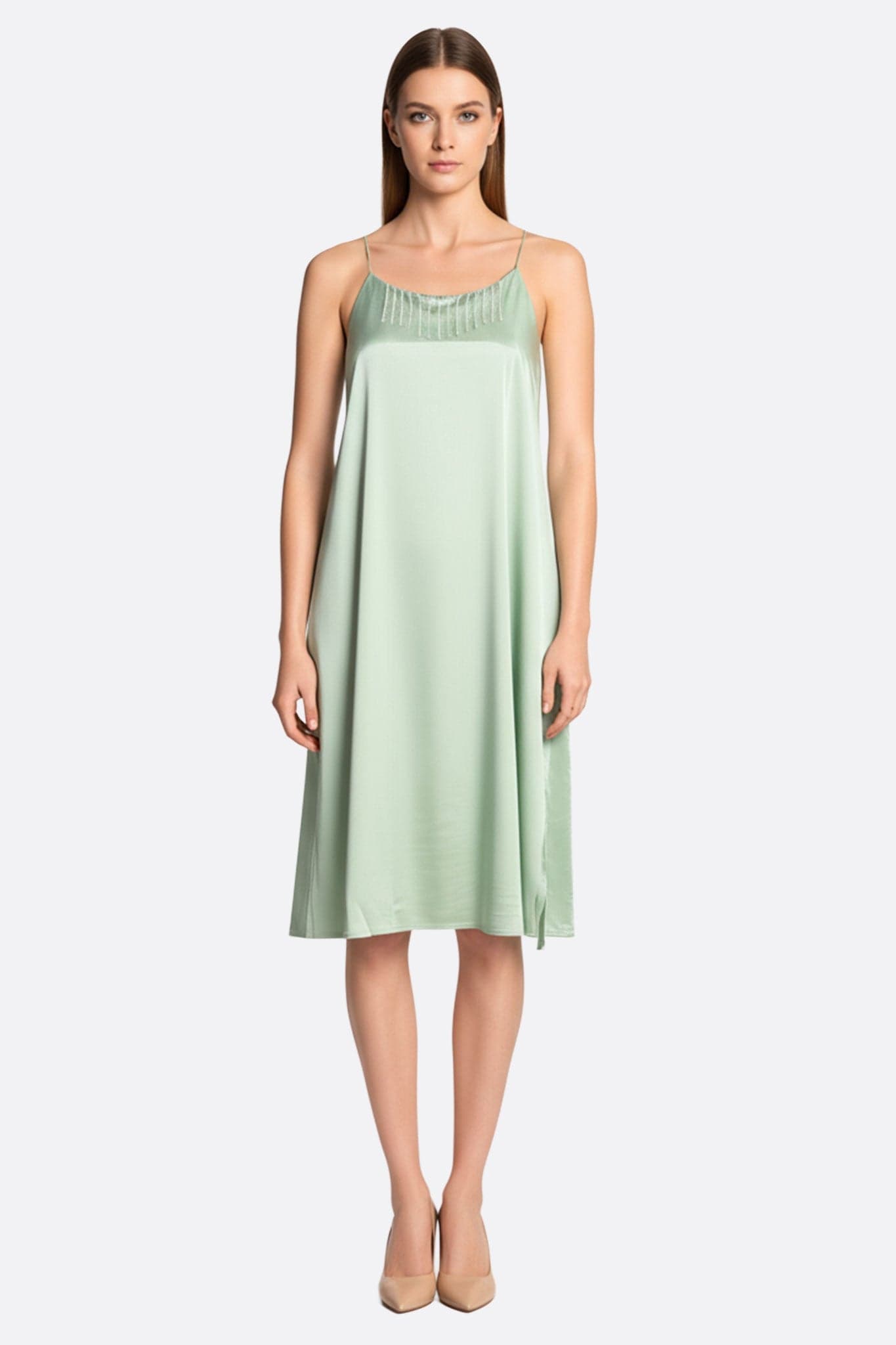
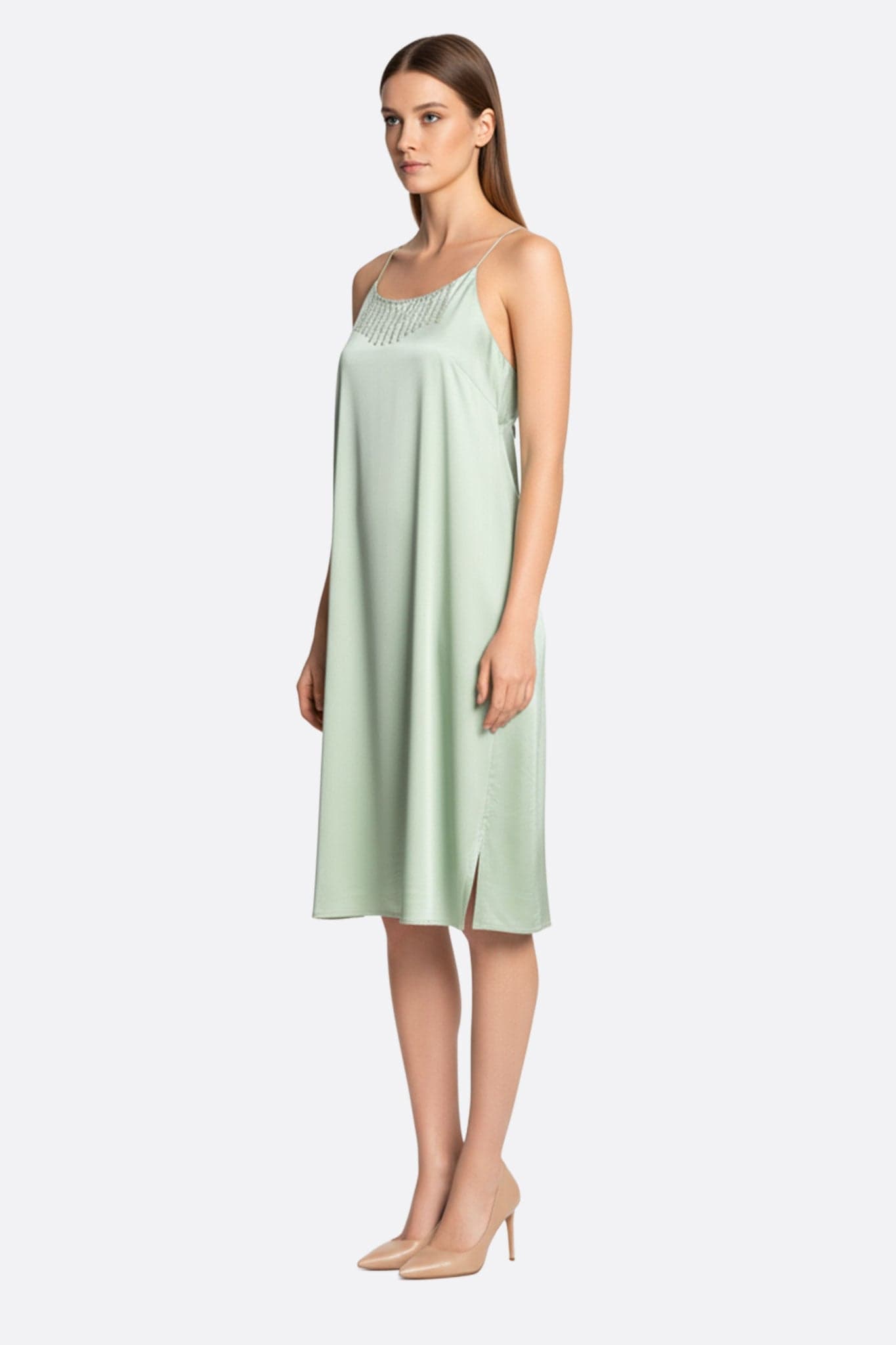
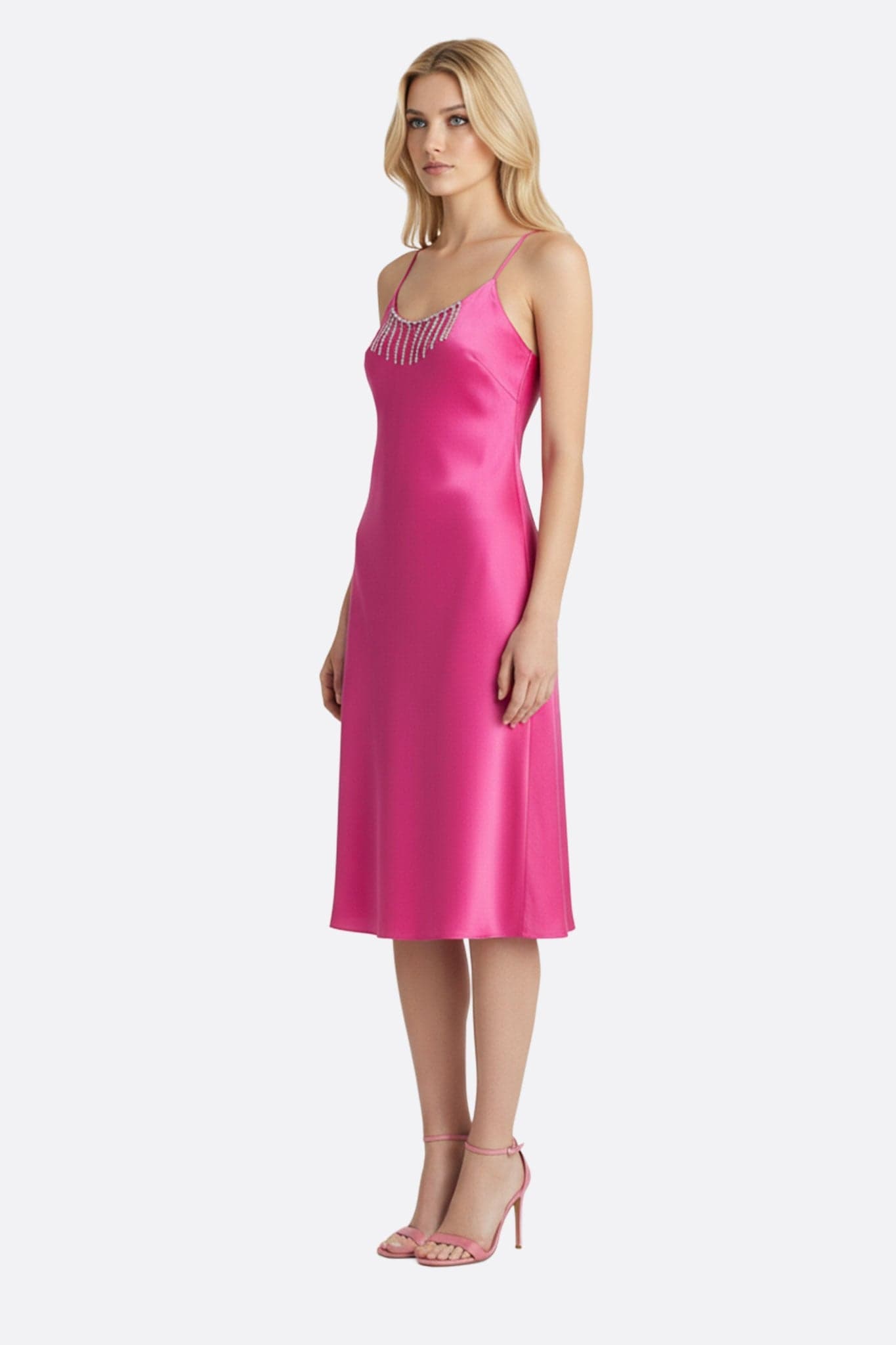
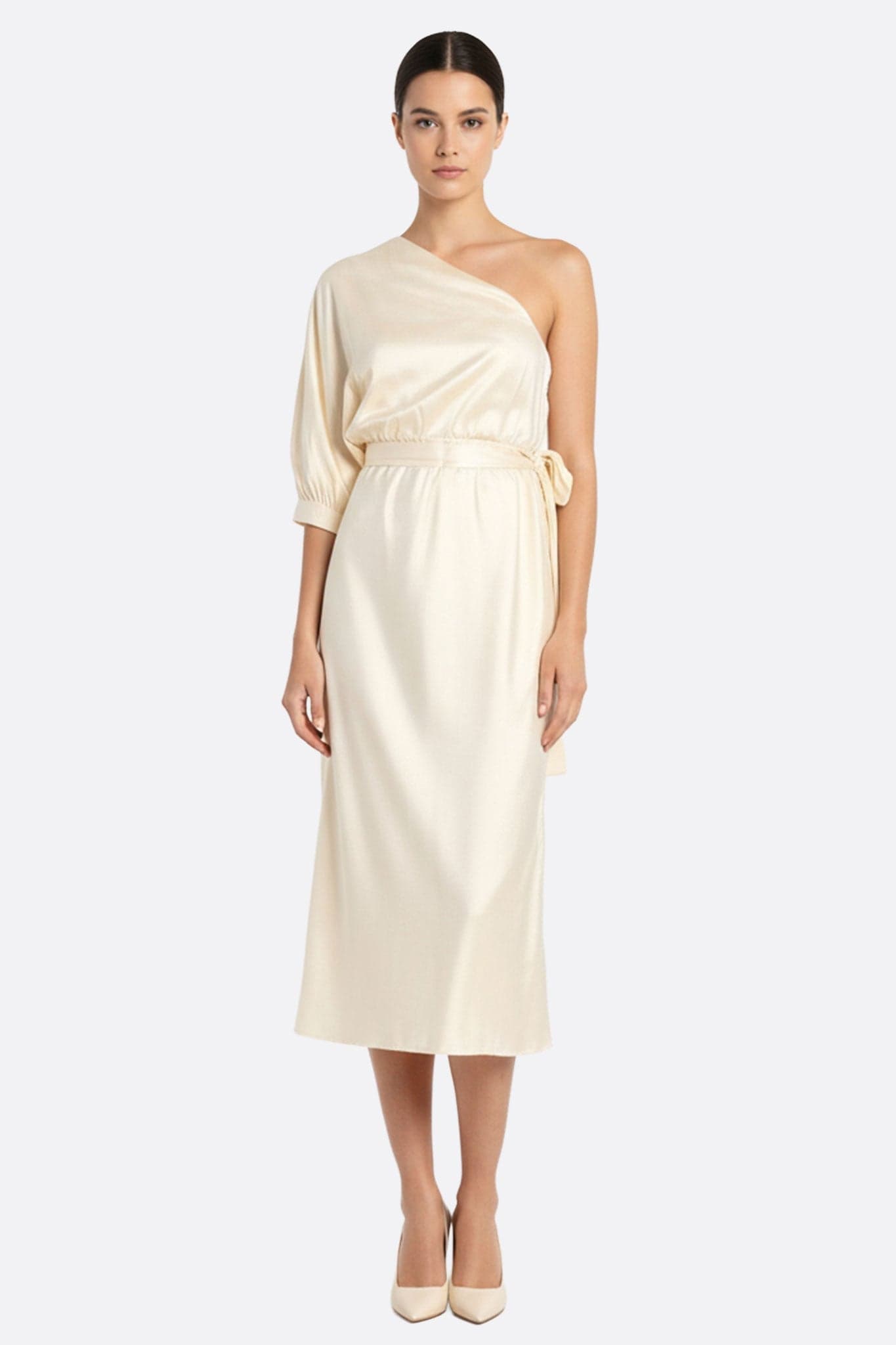
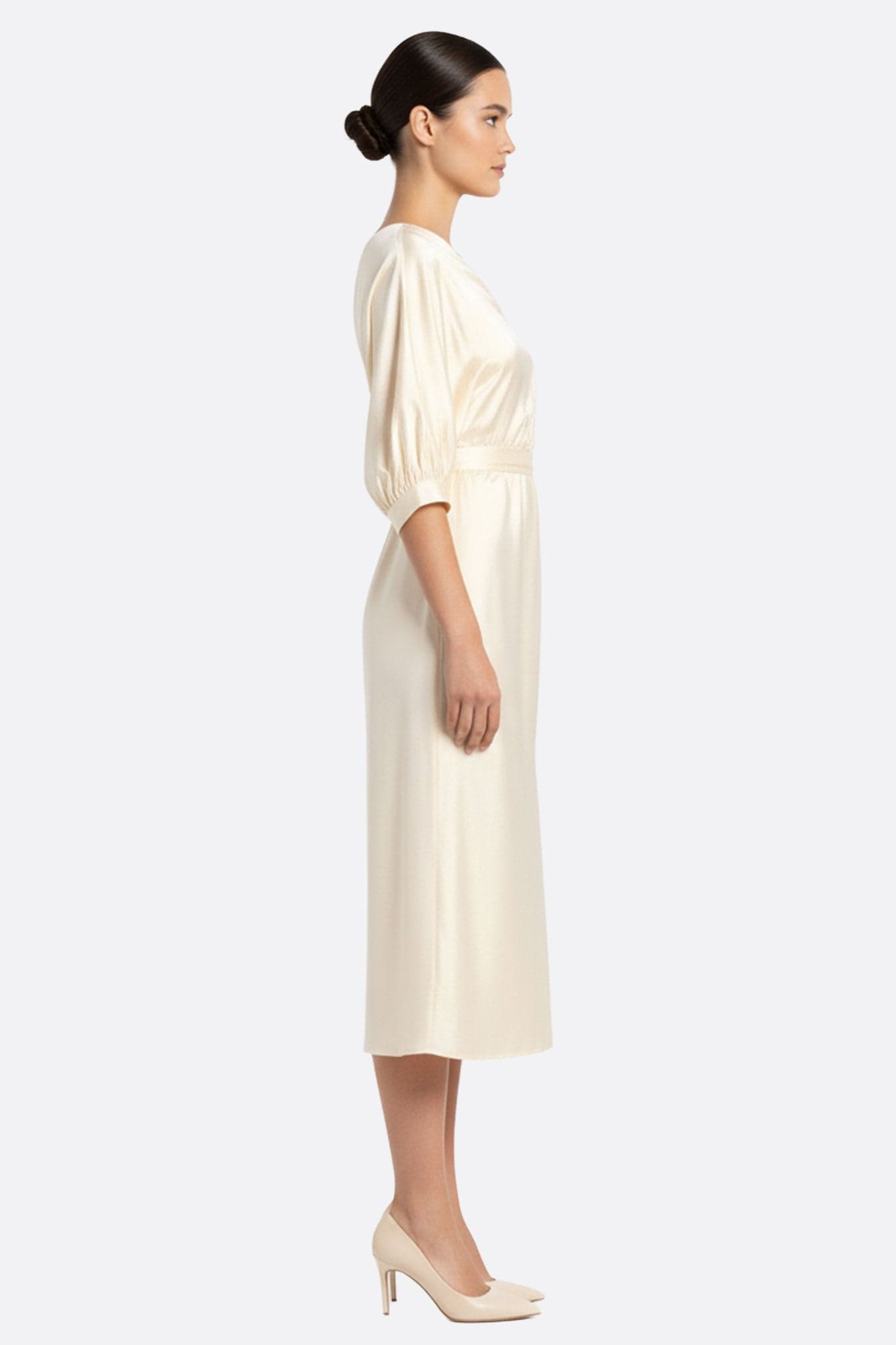
The midi satin dress (length from below the knee to ankle) is the most versatile length: dressy enough for a dinner or cocktail, not too formal for a lunch. The midi satin in sheath cut (fitted) highlights the silhouette from the waist to the knees. In flared or trapeze cut, it creates controlled volume. Paired with heels, the midi satin dress elongates the visible leg from ankle to floor. Paired with flat sandals or mules, it remains elegant without formality.
Short satin dress: cocktail and evening
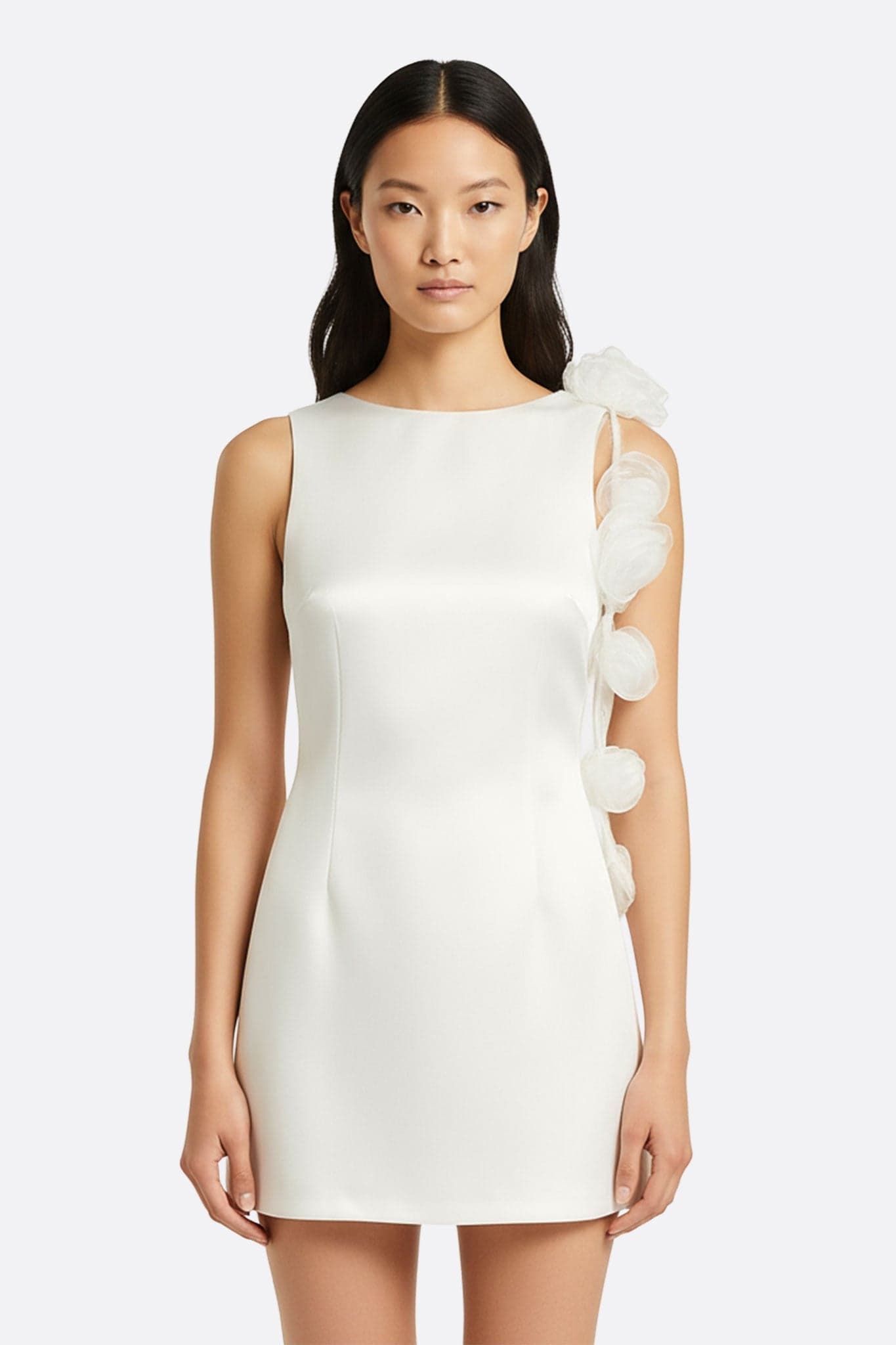
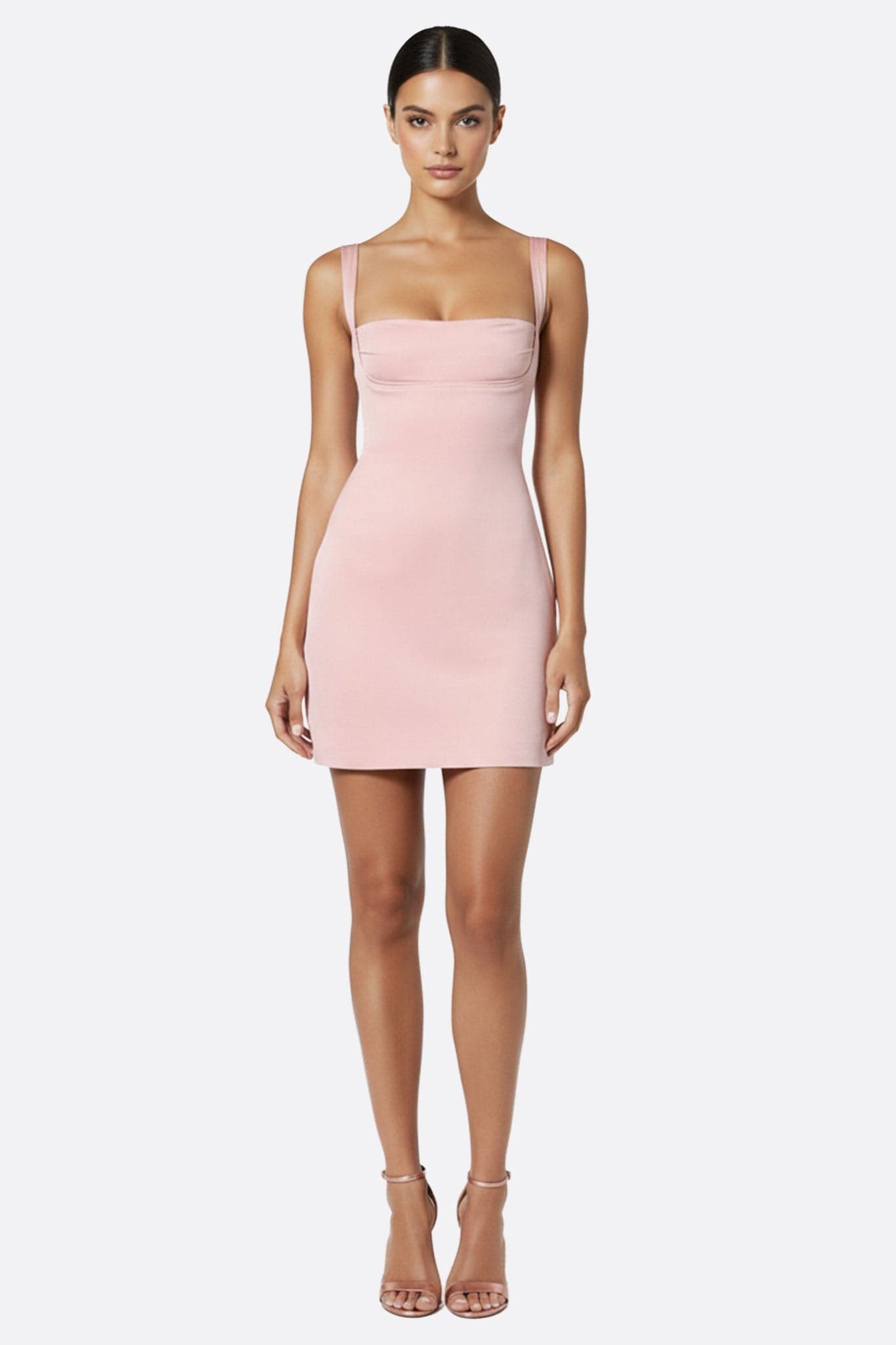
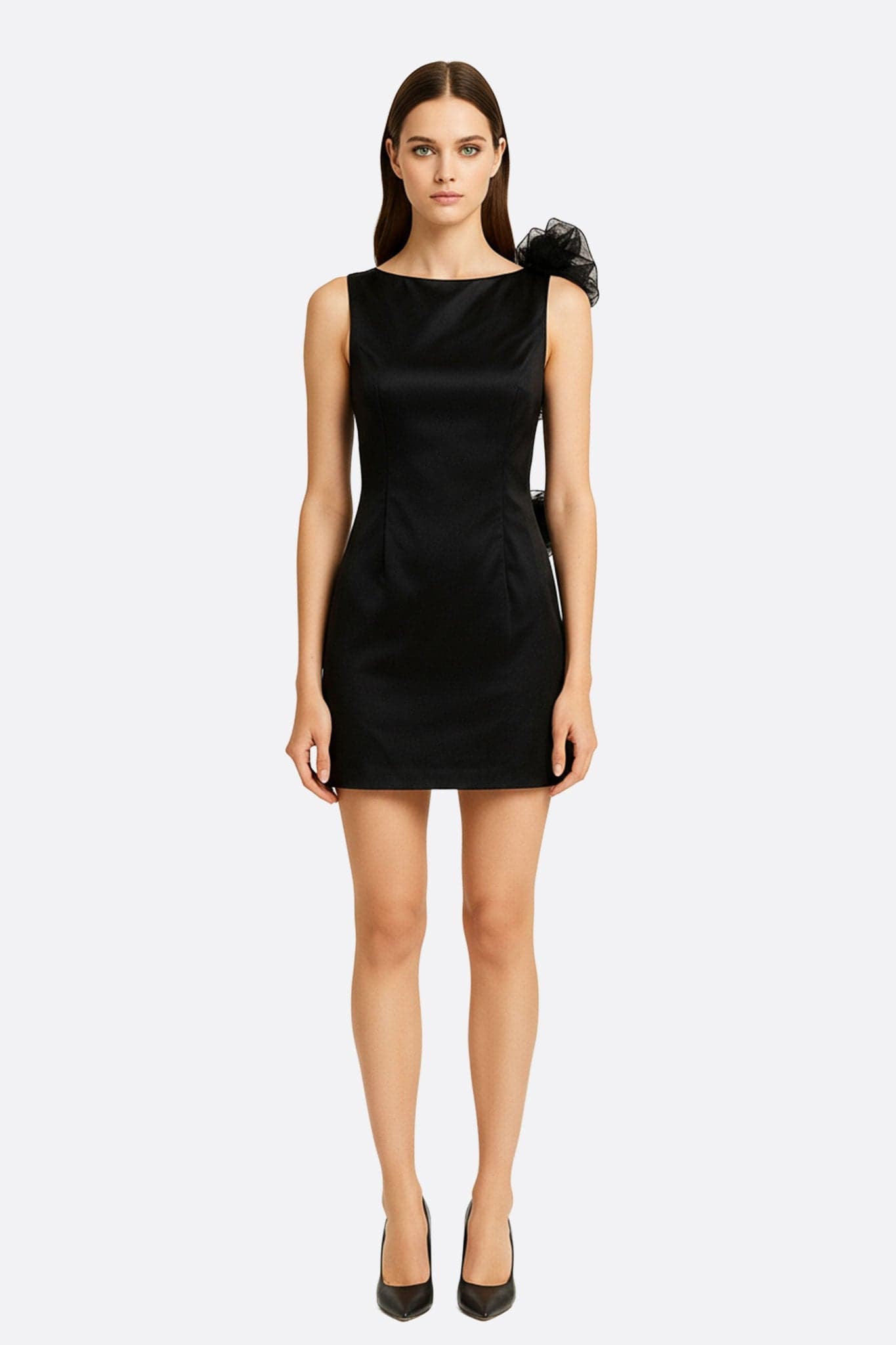
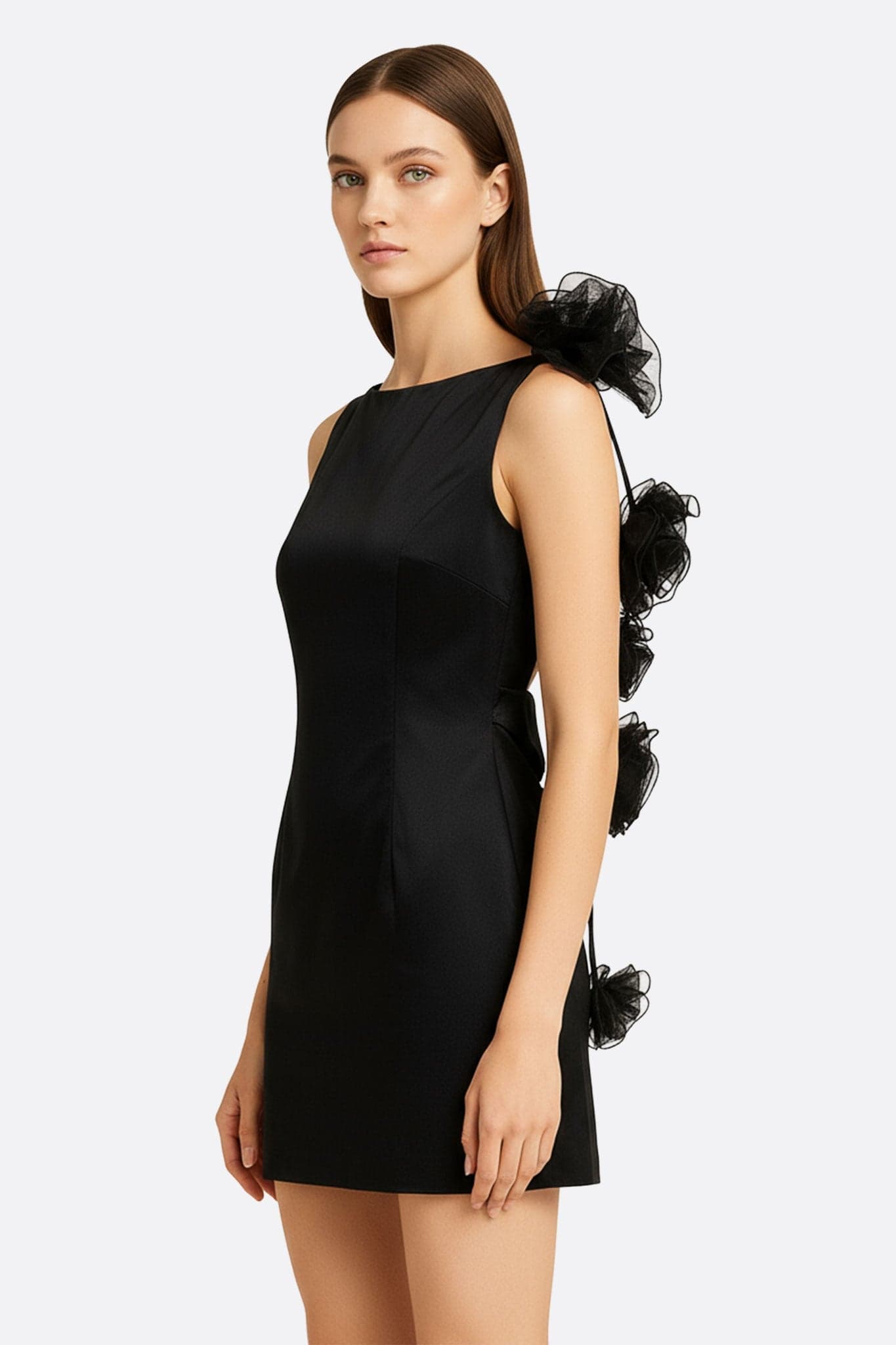
The short satin dress (above or at knee level) is the most accessible version of everyday dressy satin. In a fitted version, it is ideal for cocktails and dinners. In a babydoll or long-sleeved version, it can be worn for a casual evening. The short satin shows more leg: a length precisely at mid-thigh is the most flattering as it cuts at the thinnest part of the thigh. Too short (upper thigh), it may lack elegance. At the knee, it elongates the leg.
Satin colors: white, black, pink, champagne
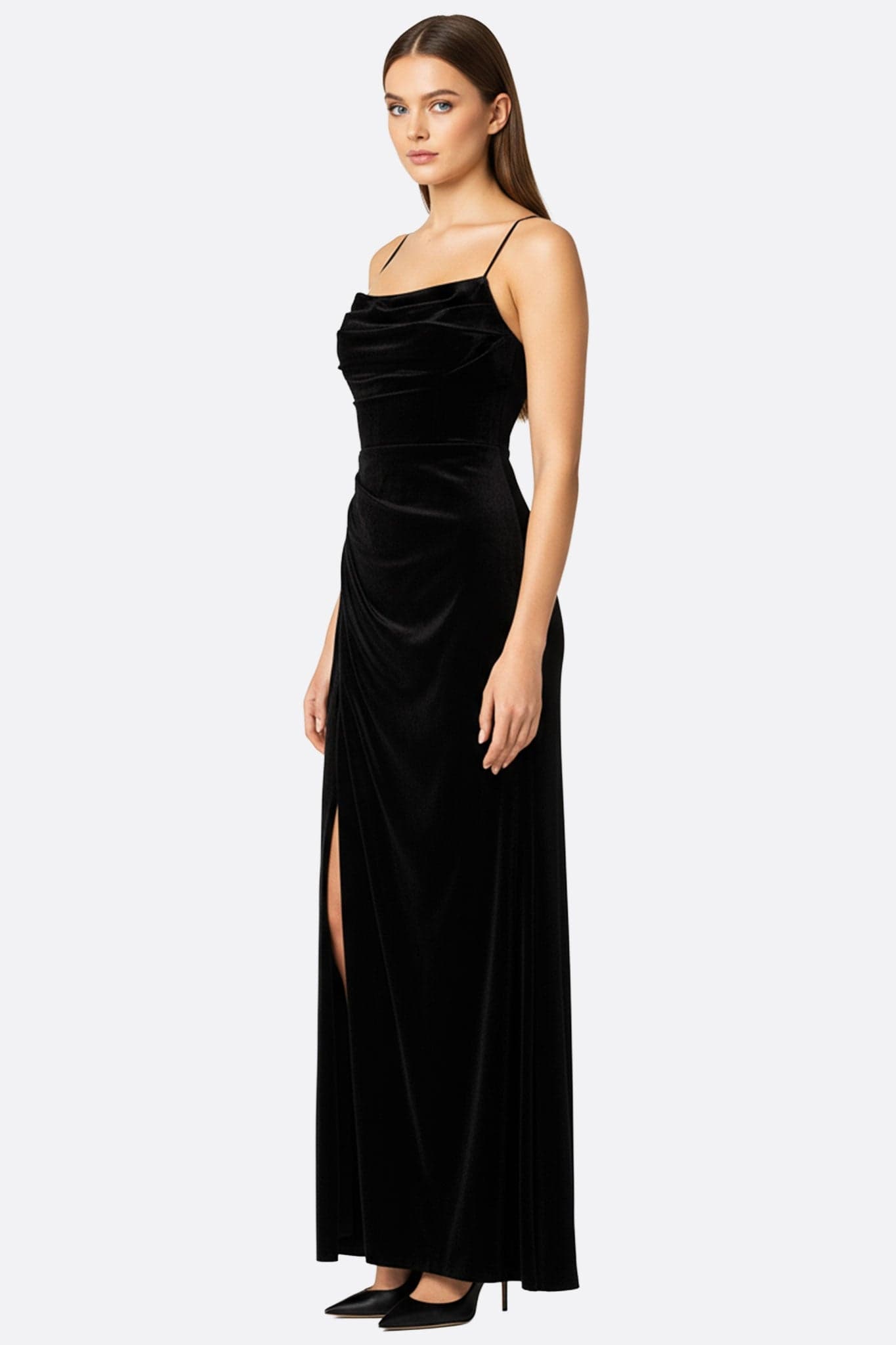
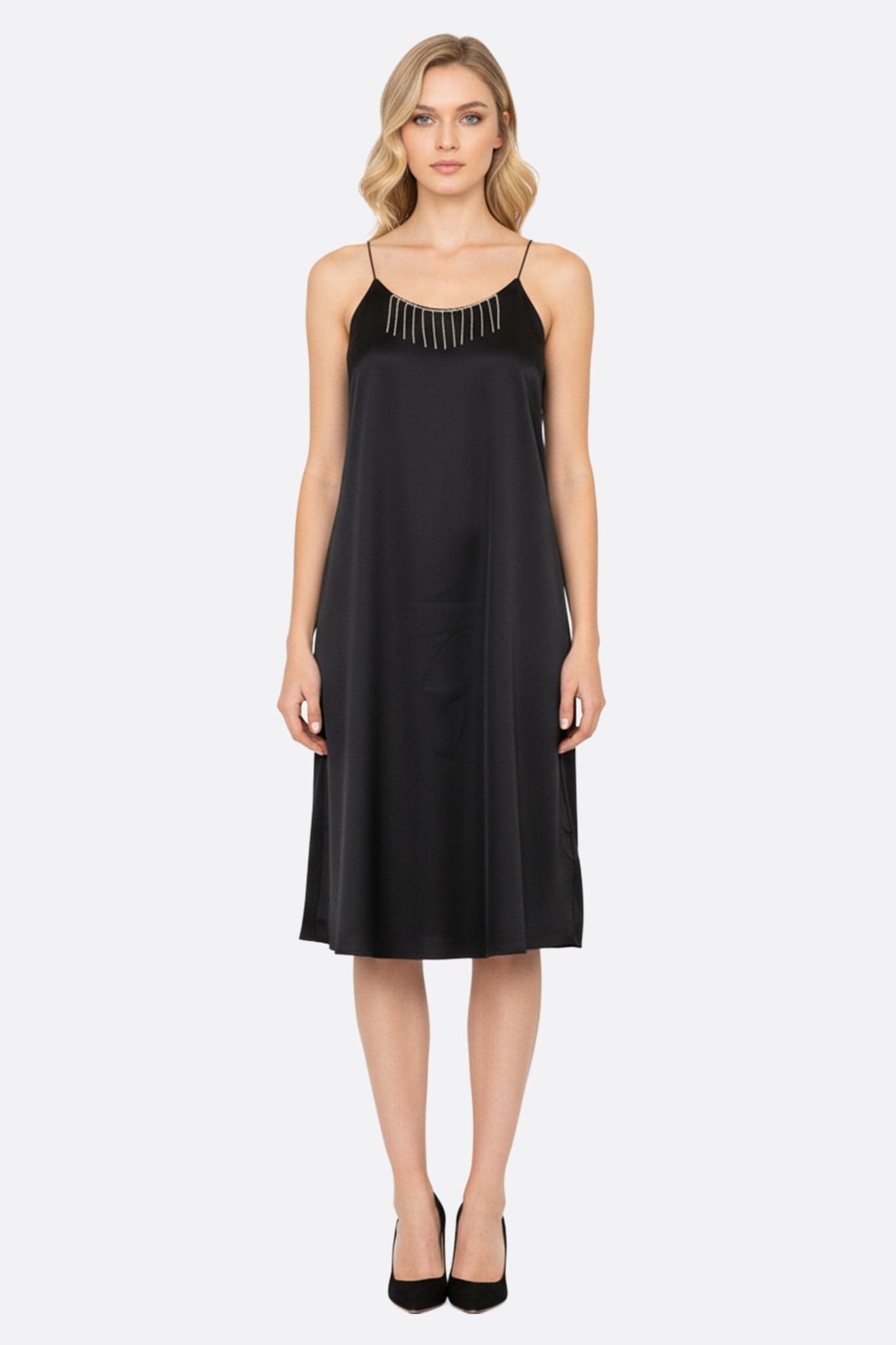
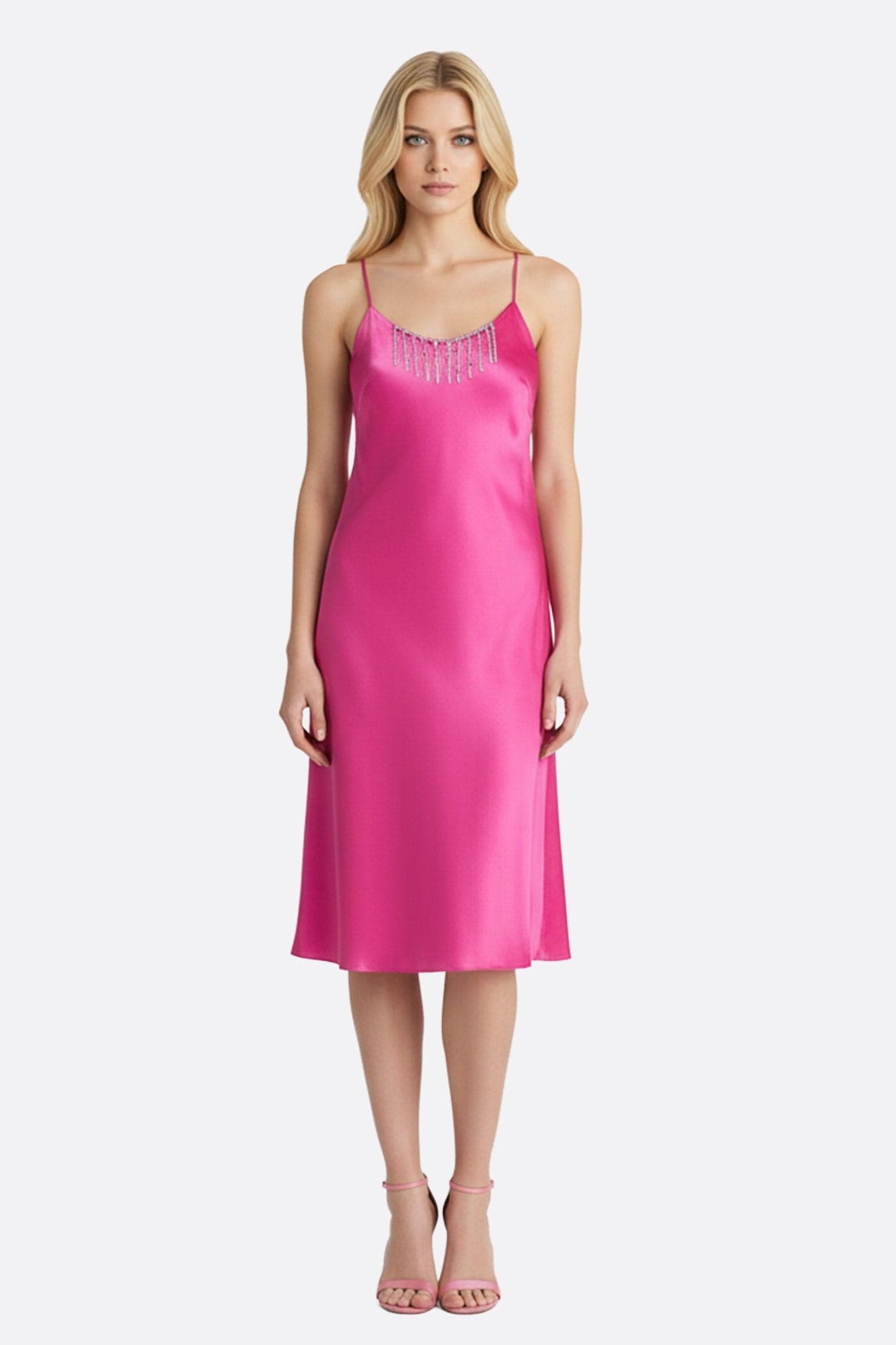
White satin: the color that maximizes reflection: white reflects all wavelengths and amplifies the shiny effect. Reserved for formal occasions (wedding guest, gala) because very prone to stains. Black satin: absorbs light but black satin retains a residual reflection on raised areas (bust, hips): this effect is more subtly flattering than white satin. Champagne or nude satin: closest to the skin, elegant second-skin effect. Pink or blush satin: romantic effect, maximized on fair skin tones. See the blue dresses and pink dresses for color variations.
Polyester satin vs silk satin: choose according to use
Polyester satin: cold shine, very resistant, machine washable at 30°C (delicate cycle), affordable price. Disadvantage: static: clings to the body in winter. Silk satin: warm shine, naturally more fluid drape because silk is heavier and softer. Anti-static, thermoregulating. Hand wash only. Higher price. For a unique occasion: silk is worth the investment. For regular use: well-maintained polyester is very convincing. Acetate satin is in between: shine close to silk, intermediate price, but wrinkles more.
Mesh: finding the right satin dress
For an evening satin dress: evening dresses. For a wedding guest satin dress: wedding guest dress. To understand the physical properties of satin (weave, reflection): satin dress collection. For a complete guide to shiny materials: satin dress guide.
FAQ: women's satin dress
How to choose the length of a satin dress?
For a formal evening (gala, wedding): long (ankle to floor), bias cut for movement. For a cocktail or dinner: midi (below the knee): the most versatile length. For a casual event or a young evening: short (knee or above). The midi length in satin is the one that best suits various occasions.
What is the bias cut for a satin dress?
The bias cut means that the fabric is cut at 45 degrees to the grain line. This exploits the natural elasticity of satin diagonally: the dress hugs the body's curves in motion and the fabric ripples with each step. It is the historical cut of evening satin, invented by Madeleine Vionnet. It is more complex to make and uses more fabric than a straight cut.
Can you wear a satin dress during the day?
Yes: a midi or short satin dress in matte satin (lightweight, less shiny) can be worn during the day with casual accessories: white sneakers, canvas bag, blazer. The too intense shine is specific to artificial evening lighting. In broad daylight, lightweight satin with a discreet sheen is perfectly acceptable.