Fast & secure deliveryFree shipping in France from €99Easy returns
Fast & secure deliveryFree shipping in France from €99Easy returns
Lace Dresses
Women's lace dress: three techniques, three physical properties
Lace is not a unique fabric: it is three manufacturing techniques with opposing physical properties. Calais lace (tulle base + pattern) is flexible and drapable. Guipure (pattern without base) is rigid and self-supporting. Broderie anglaise (perforated fabric) is opaque with cutouts. These three structures behave and are maintained differently: choose a lace dress according to the technique, not just the pattern.
Lace is not a unique fabric: it is three manufacturing techniques with opposing physical properties. Calais lace (tulle base + pattern) is flexible and drapable. Guipure (pattern without base) is rigid and self-supporting. Broderie anglaise (perforated fabric) is opaque with cutouts. These three structures behave and are maintained differently: choose a lace dress according to the technique, not just the pattern.
Calais lace: flexible and drapable
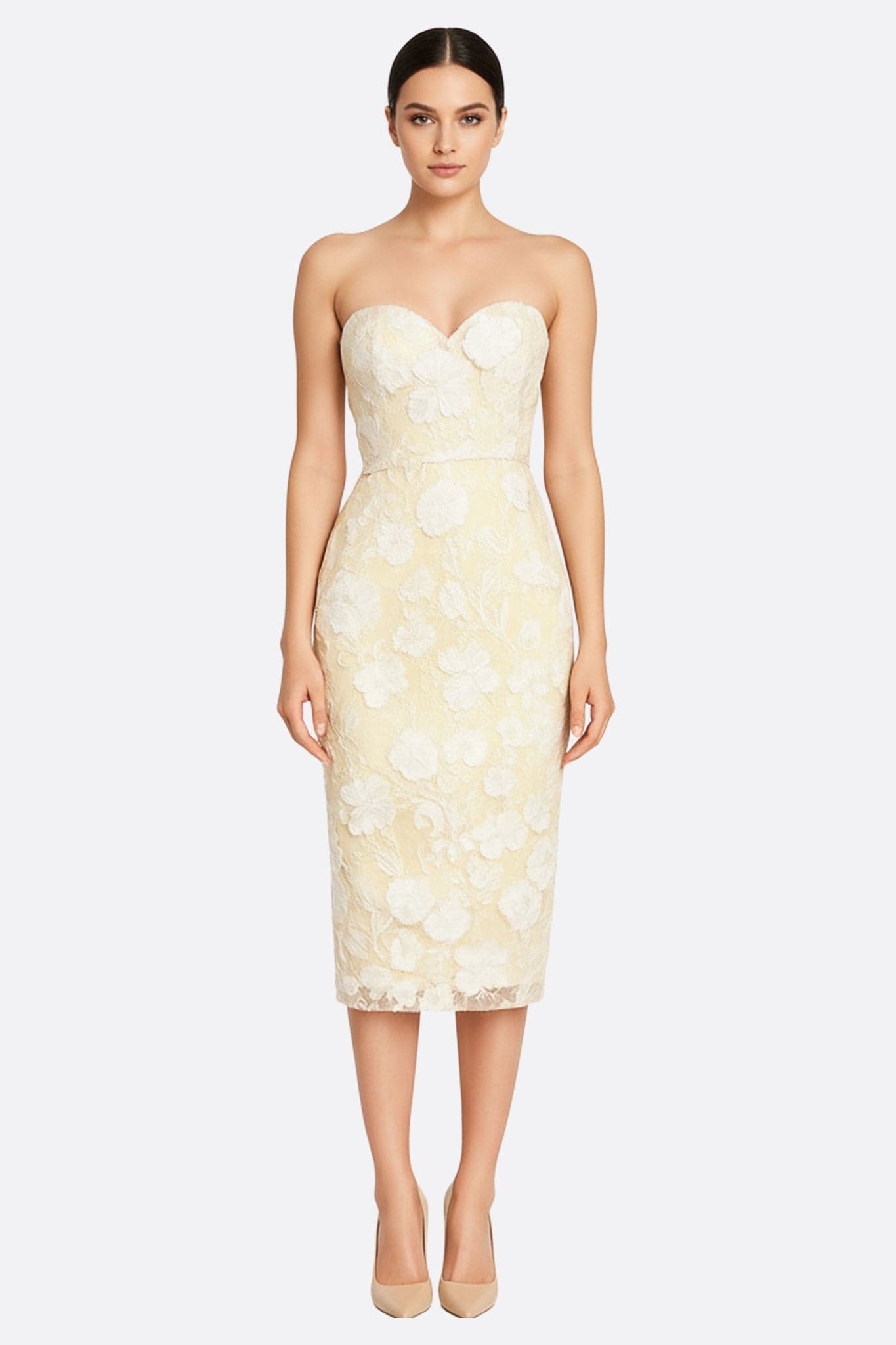
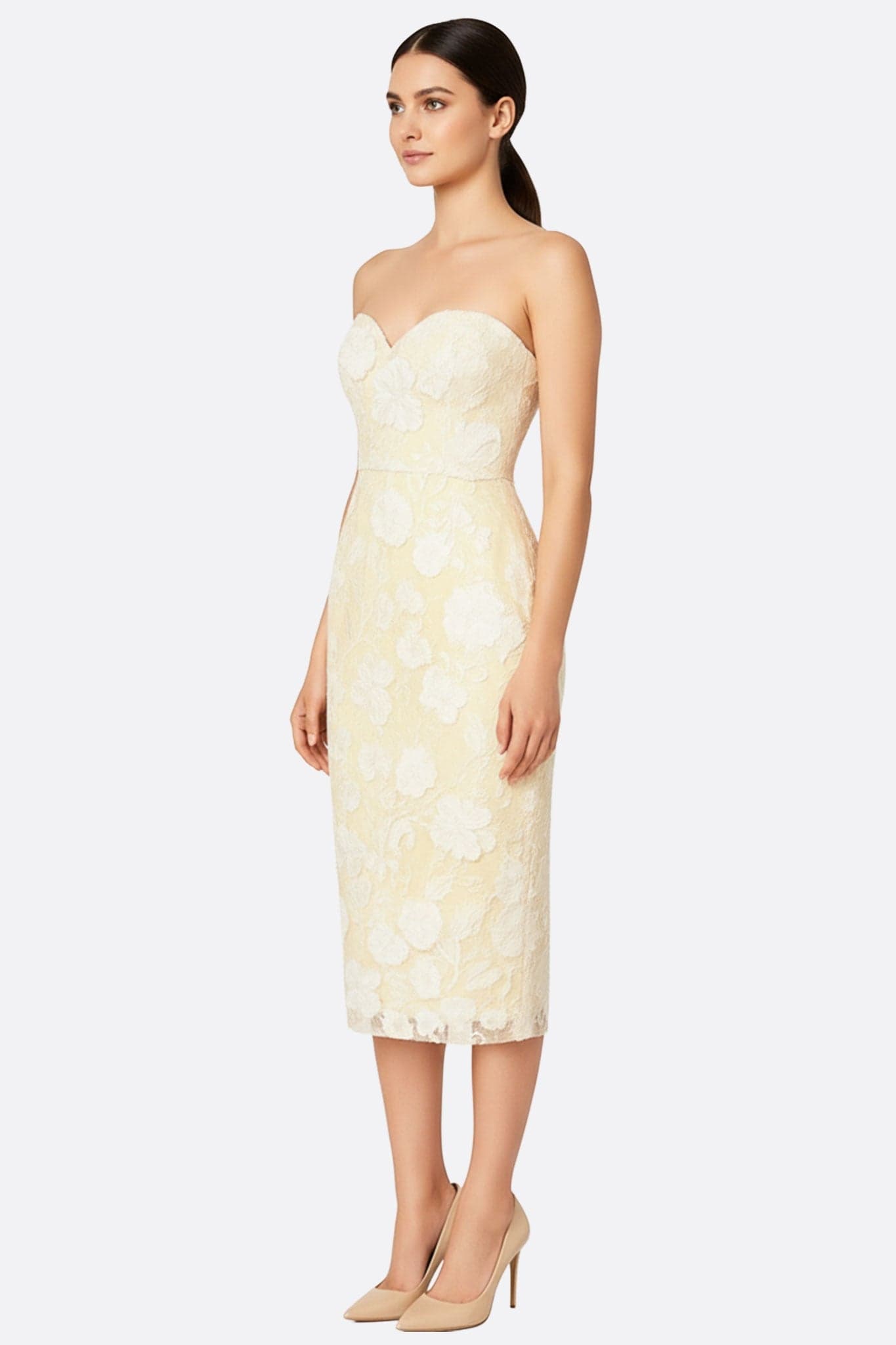
Calais lace is made on a Leavers loom (machine invented in Nottingham, perfected in Calais in the 19th century): a weft thread braided around a cotton or nylon tulle base. Result: a flexible lace, elastic in the width direction, that drapes like ordinary fabric. It can be cut on the bias, pleated, gathered. Its tulle base makes it partially transparent: lining underneath is necessary for opaque areas. Authentic Calais lace bears the mention "Dentelle de Calais" or "Dentelle du Nord": protected geographical distinction. The industrial version (raschel lace) is much less flexible and is recognized by its regular and plastic appearance.
Guipure: rigid structure without base
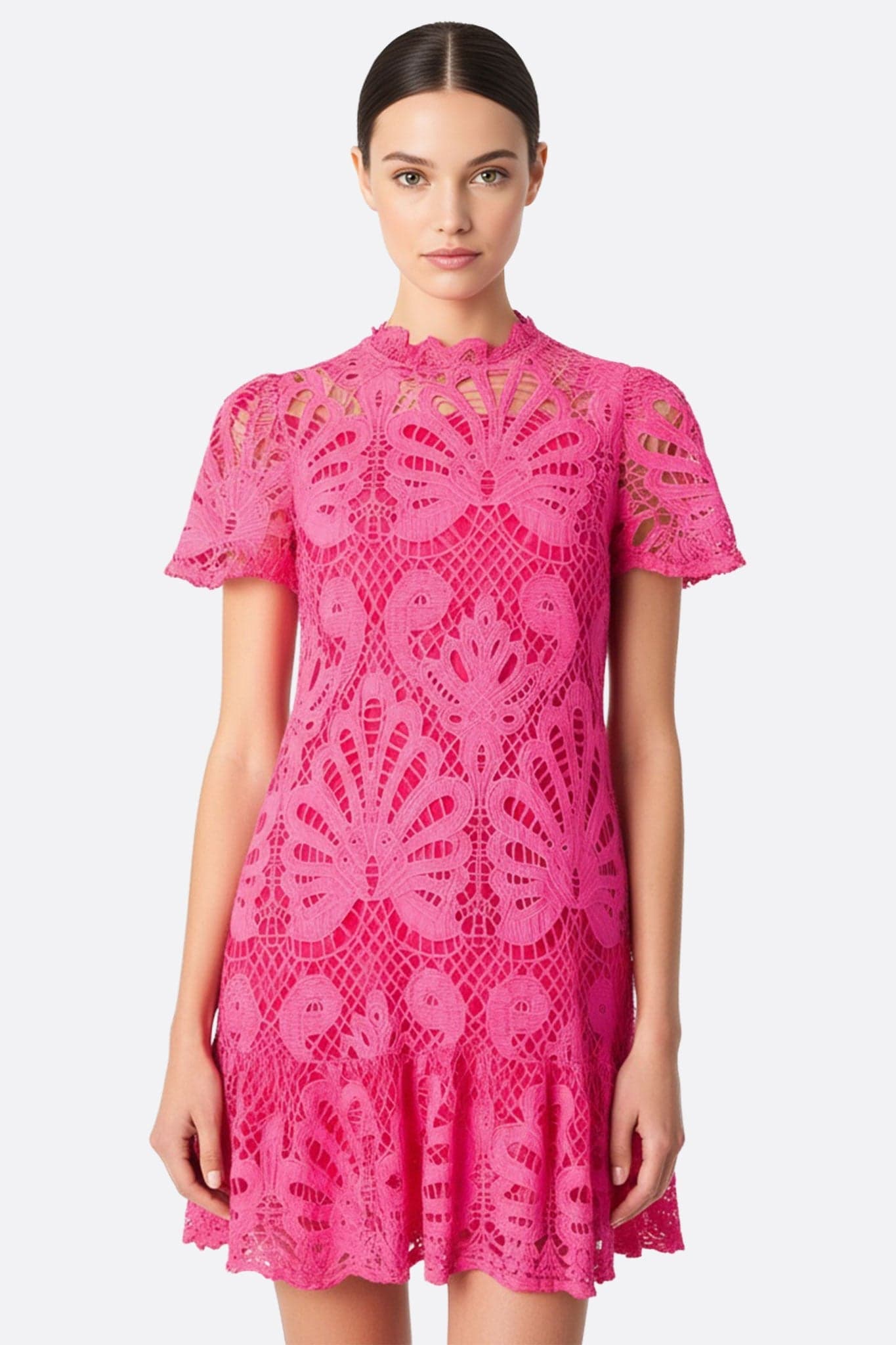
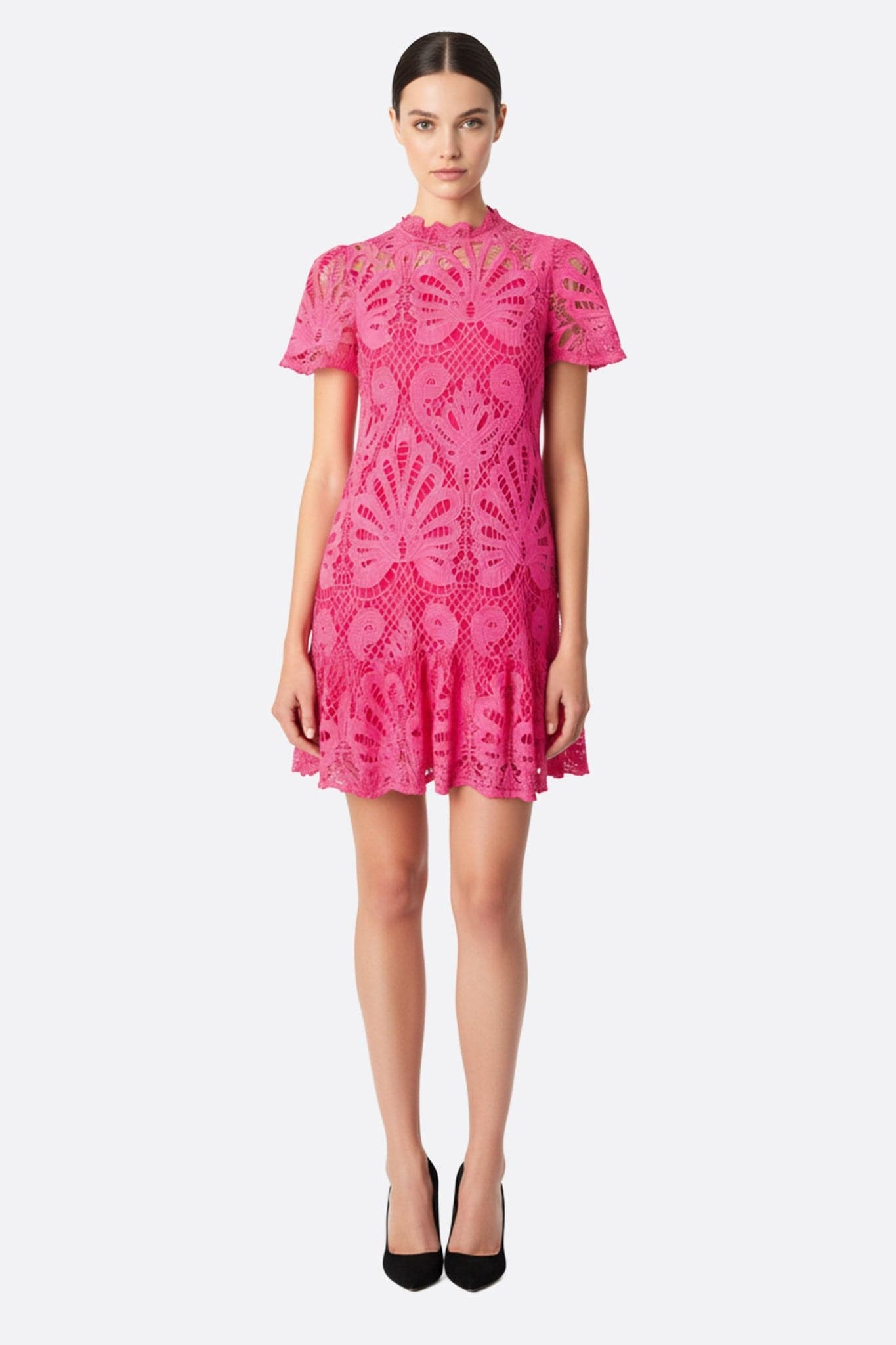
Guipure is a lace without a base: the patterns (flowers, leaves, geometric) are connected by small thread bridges, not by a supporting tulle. This self-supporting structure gives guipure its characteristic rigidity: it does not wrinkle, retains its shape without lining, but does not drape. A guipure dress retains its line independently of the body: guipure structures the silhouette from the outside. Guipure is often used for collars, cuffs, bodices, and hems of dresses because it creates clear boundaries without seams. On a complete guipure dress, it may appear rigid: many dresses combine guipure (bodice and hem) and Calais lace (body) to unite structure and flexibility.
Broderie anglaise: opacity and cutouts
Broderie anglaise is not lace in the strict sense: it is a fabric (cotton or linen) in which holes are cut and bordered with buttonhole stitch to prevent fraying. Broderie anglaise is opaque (the fabric is full between the cutouts), more structuring than Calais lace, and behaves like ordinary fabric in cutting and sewing. It is much simpler to maintain (machine washable) than true lace. It is characteristic of summer dresses and children's clothing. Its appearance is less "dressy" than Calais lace or guipure: it is more suitable for casual chic than evening wear.
Transparency and lining: the rules
Calais lace on tulle: partially transparent: silk, viscose, or mesh lining necessary under intimate areas. The lining can be short (bodice) with lace falling lower in transparency, or full (complete opacity). Guipure: partially transparent depending on the density of the patterns: the bridge areas (between the patterns) let light through. A full lining in flesh or contrasting fabric completely changes the effect. Broderie anglaise: opaque everywhere except at the cutouts: no lining necessary. The choice of lining (color, length) is an important style element in a lace dress.
Care: protocol by type of lace
Calais lace: hand wash in cold water (max 30°C), delicate detergent, no wringing, flat drying. The tulle base is fragile: snags on a catch (jewelry, zipper) are irreparable. Guipure: hand wash in lukewarm water, flat drying: guipure is more resistant than Calais lace because it has no tulle base. Do not iron directly on guipure (the thread bridges flatten and lose their relief): iron on the reverse side with a damp cloth. Cotton broderie anglaise: machine wash at 30°C delicate cycle, ironing possible. All lace: never wring, never tumble dry, store in tissue paper (not plastic which concentrates moisture).
Occasions: which lace for which event
Wedding guest: Calais lace or guipure: both give an appropriate dressy appearance. Cocktail party: guipure (structure, hold, no need for full lining) or Calais lace on short lining. Parties and Christmas: black or burgundy lace with contrasting lining. Day ceremony: ivory Calais lace on nude or white lining. Summer casual chic: white or ecru broderie anglaise, without lining. See also the wedding guest dresses and the evening dresses for dressy occasions.
FAQ: women's lace dress
What is the difference between Calais lace and guipure?
Calais lace is constructed on a tulle background: it is flexible, drapable, and used like ordinary fabric. Guipure has no background: the patterns are connected by thread bridges, making it rigid and self-supporting. Guipure retains its shape without lining, while Calais lace requires a lining under the opaque areas.
How to wash a lace dress?
Calais lace and guipure: hand wash in cold water only, delicate product, no wringing (press in a towel), flat drying in the shade. Machine: same delicate program: can snag the tulle or deform the guipure bridges. Cotton English embroidery: machine 30°C delicate program possible.
Can you wear a lace dress without lining?
It depends on the type: guipure is sometimes dense enough to be worn without lining depending on the areas (collar, sleeves). Calais lace on tulle background is always transparent: a lining is necessary for intimate areas. English embroidery is opaque and does not require lining. The transparency of lace can be checked by holding it up to a light source.