Fast & secure deliveryFree shipping in France from €99Easy returns
Fast & secure deliveryFree shipping in France from €99Easy returns
White Shirts
Women's White Shirt: Transparency According to Weight and Practical Solutions
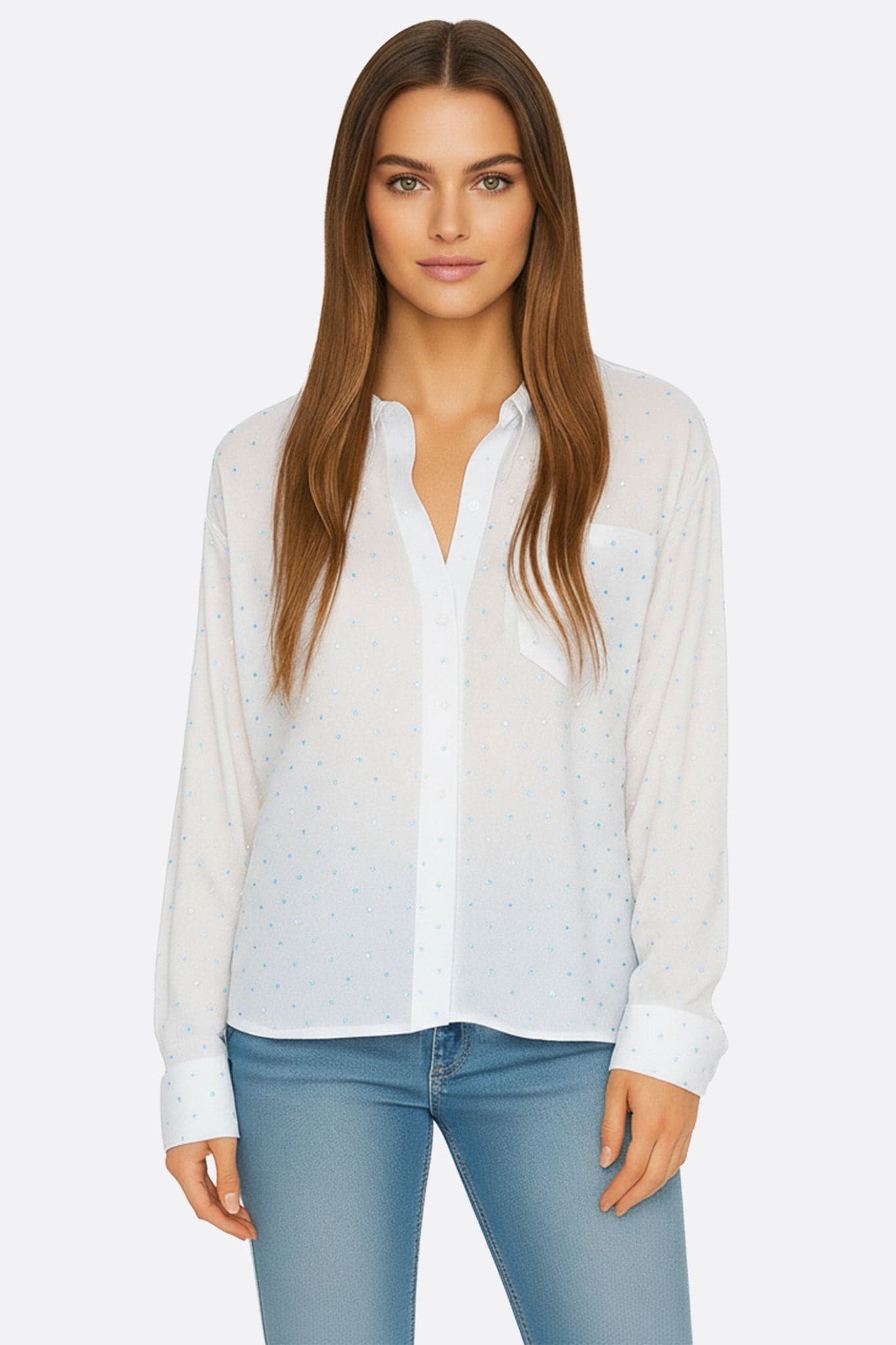
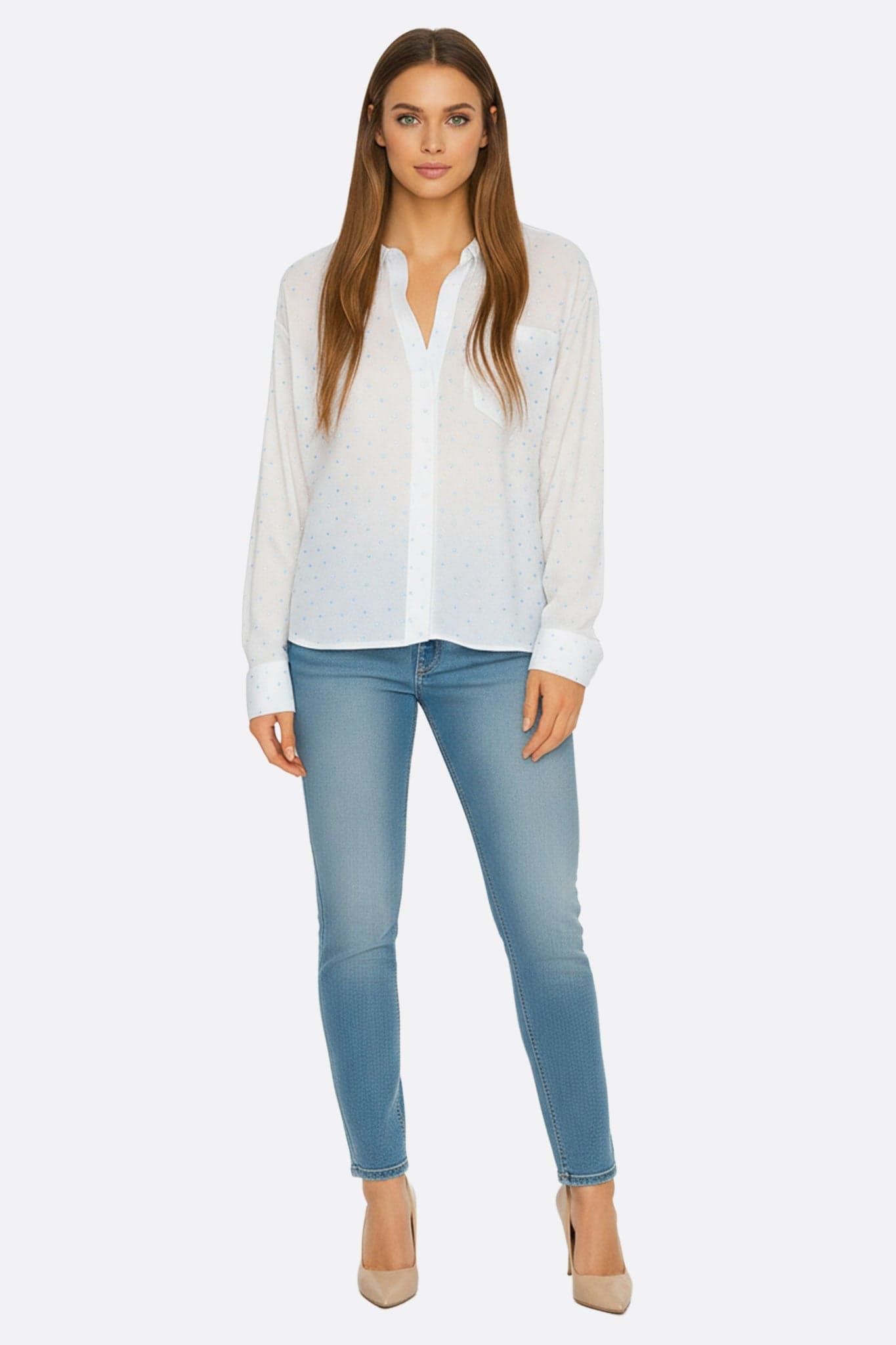
The white shirt has a specific problem that colored shirts do not: transparency. A weight below 100 g/m² in cotton poplin reveals the underwear underneath: not because the fabric is bad, but because white reflects and diffuses light through its fibers. It is not the brand that determines transparency, it is the weight. And the weight is almost never indicated on the labels: you have to test before buying.
The white shirt has a specific problem that colored shirts do not: transparency. A weight below 100 g/m² in cotton poplin reveals the underwear underneath: not because the fabric is bad, but because white reflects and diffuses light through its fibers. It is not the brand that determines transparency, it is the weight. And the weight is almost never indicated on the labels: you have to test before buying.
Transparency and Weight: How to Evaluate
Quick test before purchase: hold the folded shirt up to a light source. If you can see your hand behind the fabric, the shirt will be transparent when worn. Indicative weights: less than 100 g/m² (voile, batiste) = almost always transparent, requires a camisole. 100-130 g/m² (fine poplin) = slightly transparent depending on thread density. 130-160 g/m² (thick poplin, oxford) = generally opaque. More than 160 g/m² (oxford, chambray) = opaque. The number of threads per cm² (density) counts as much as the weight: a very tight poplin at 110 g/m² can be more opaque than a loose poplin at 130 g/m². For a white office shirt where nothing should be visible: look for a poplin of at least 120-130 g/m² or oxford.
Whites: Optical, Ivory, Ecru, Chalk
Optical white (pure): contains fluorescent agents that absorb UV and re-emit it as visible blue light: hence the "bright" and slightly bluish white. Very visible, strong contrast with tanned or bronzed skin. If it makes optical white under UV light (nightclub, black light): it glows. Ivory: slightly yellow-cream white. Warm, flattering on the vast majority of skin tones. Less visible than optical white but more harmonious with the skin. Ecru: beige-natural white, not bleached (natural color of raw cotton). The most casual and "natural" of whites. Chalk white: cold white slightly grayish: elegant, no shine, discreet. For the office: ivory or chalk are the most professional. For an intentional graphic look: optical white.
Care: Whiteness and Longevity
Washing at 60°C once a month maintains the whiteness of a cotton shirt by destroying the bacteria responsible for yellowing (notably under the armpits). For regular care: 40°C with detergent for whites (nowadays without phosphate, uses optical agents). Never mix with colored clothes in the machine: color transfers are permanent on white. White deodorant stains (aluminum salts): dab with pure white vinegar before washing. Makeup stains: neutral soap and cold water immediately. Grease stains (sauce, butter): talc or flour applied to the dry stain 30 minutes before washing: absorbs the grease. Progressive overall yellowing: soak in baking soda (1 tablespoon/liter of cold water, 1h) then wash at 60°C.
Cuts: Fitted, Straight, Oversize
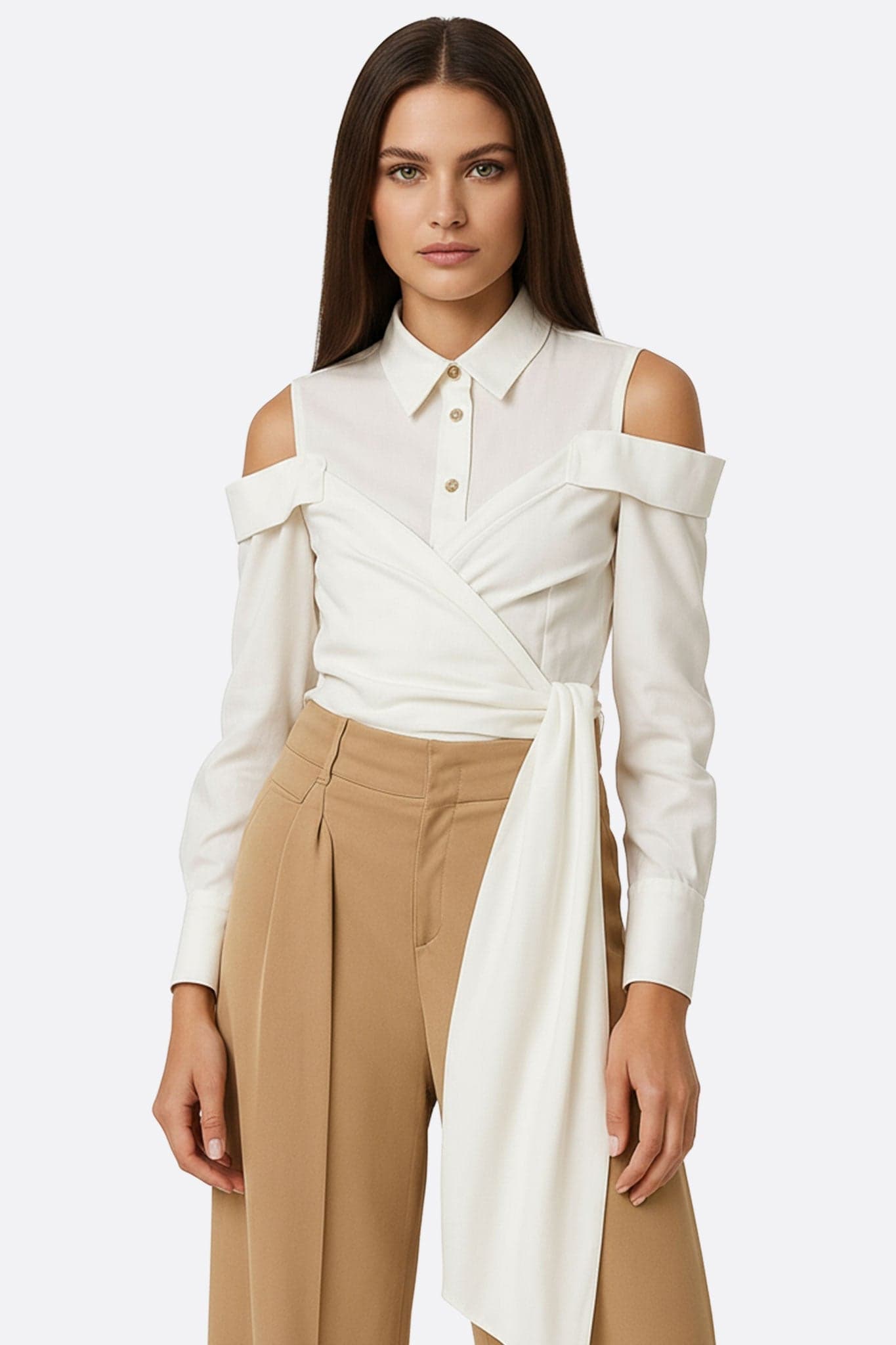
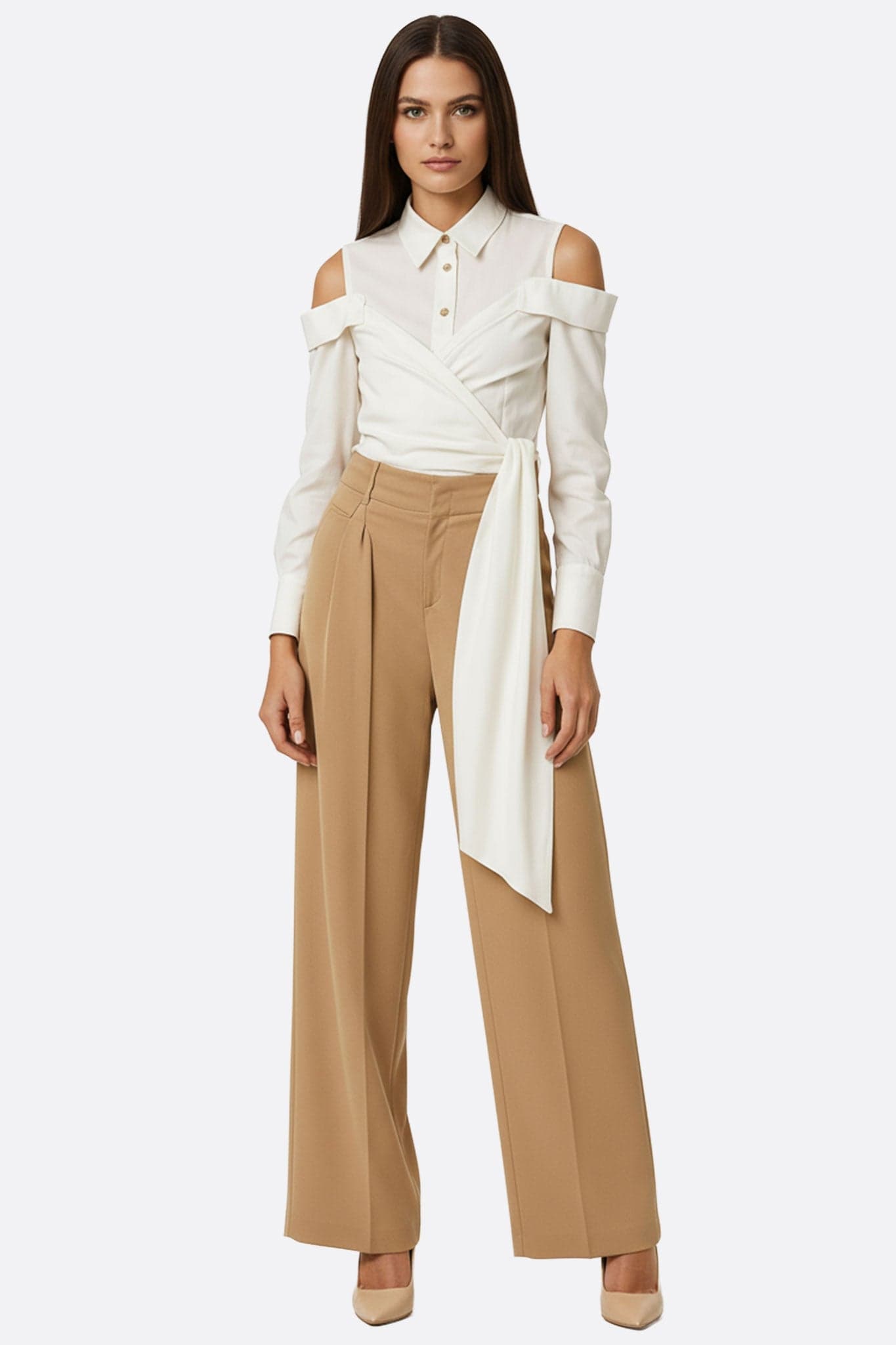
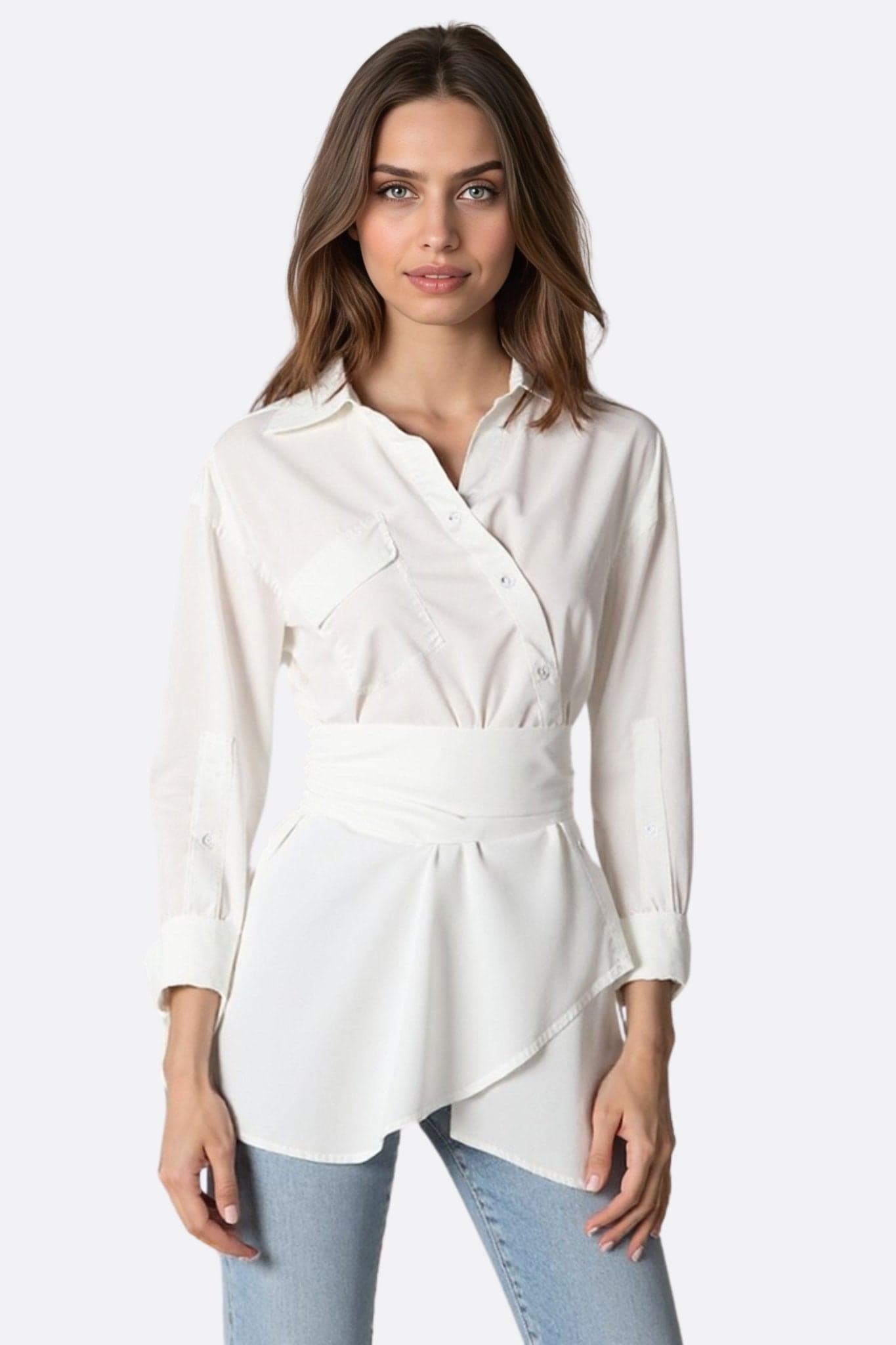
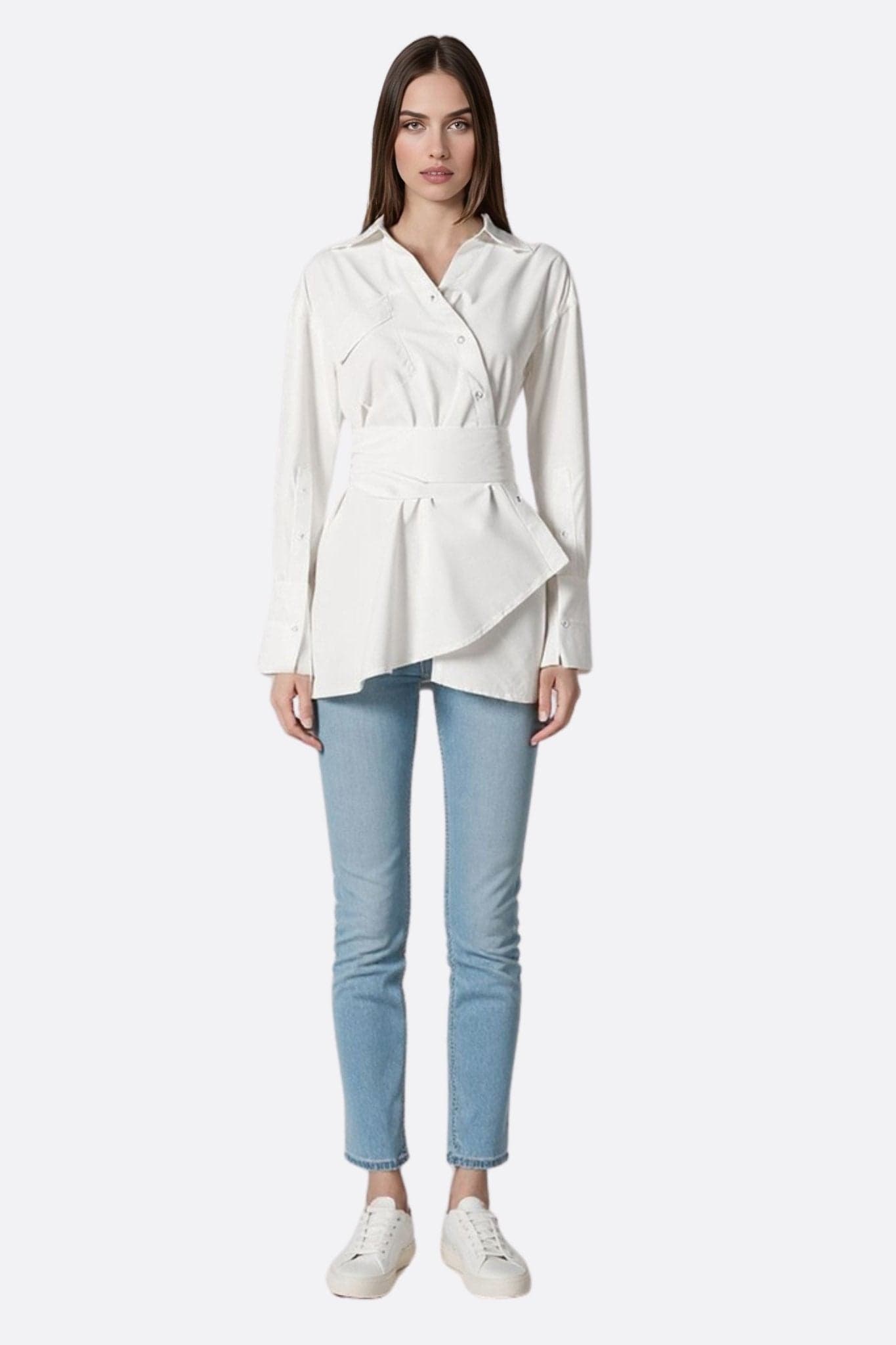
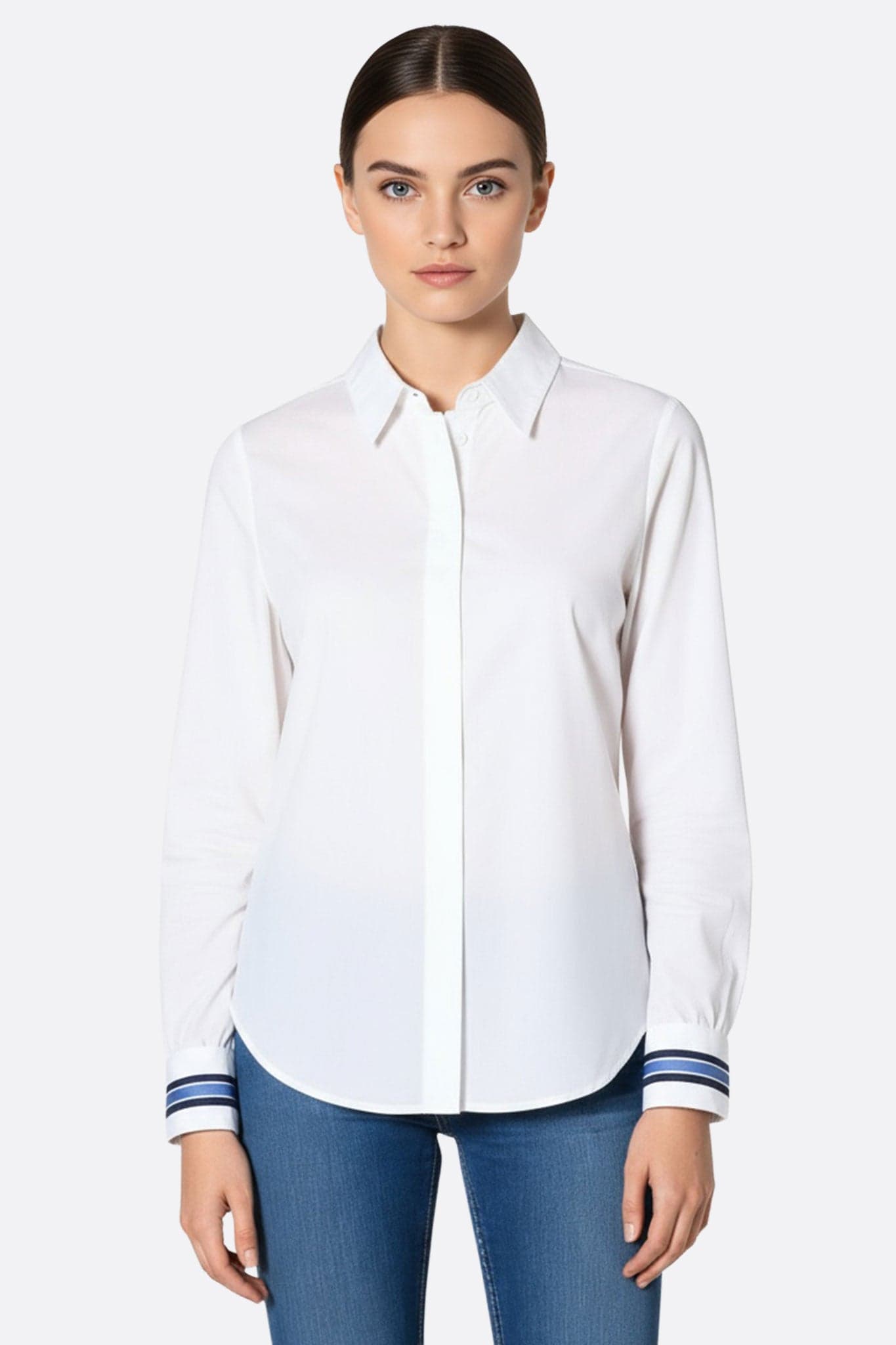
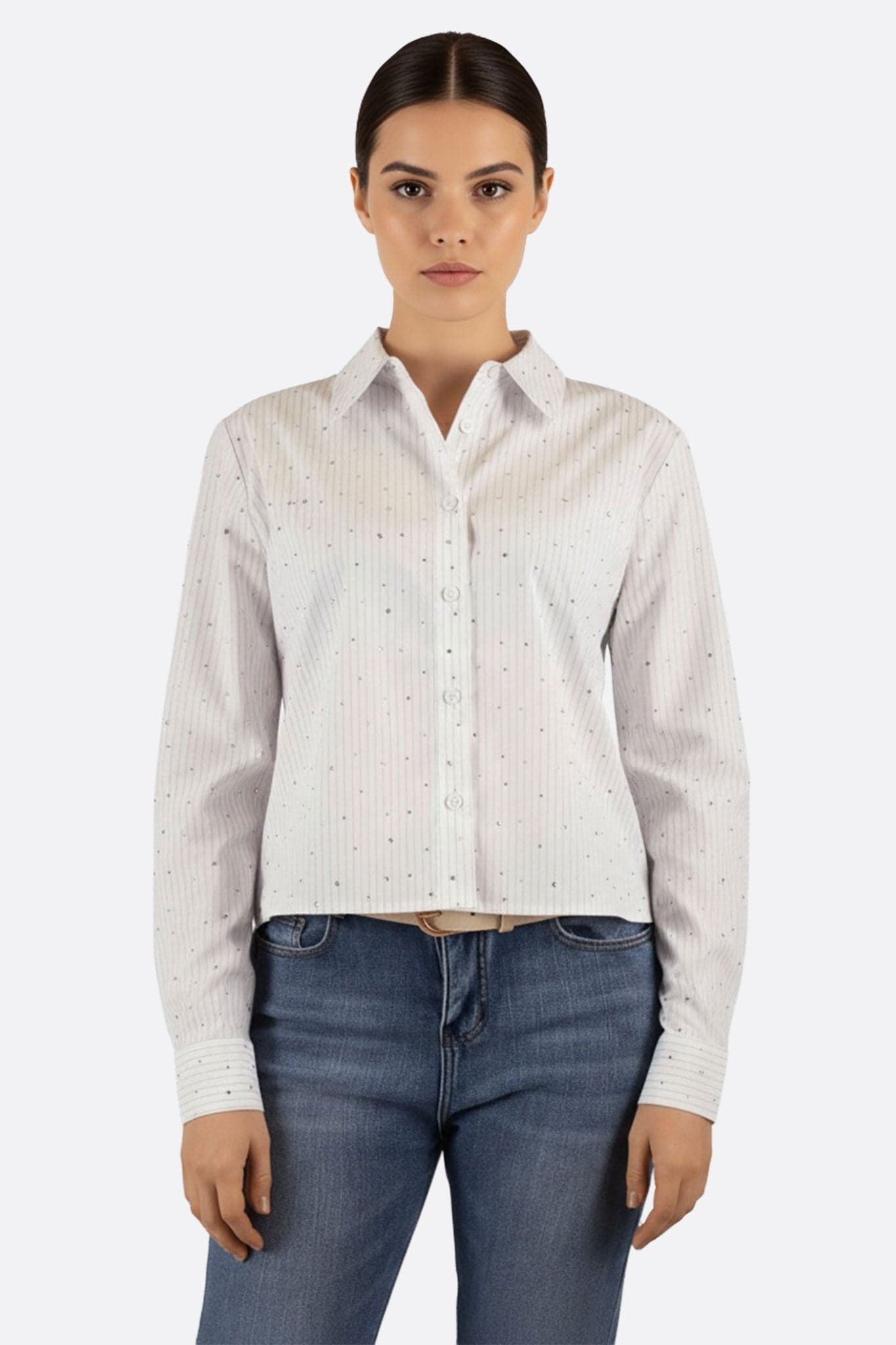
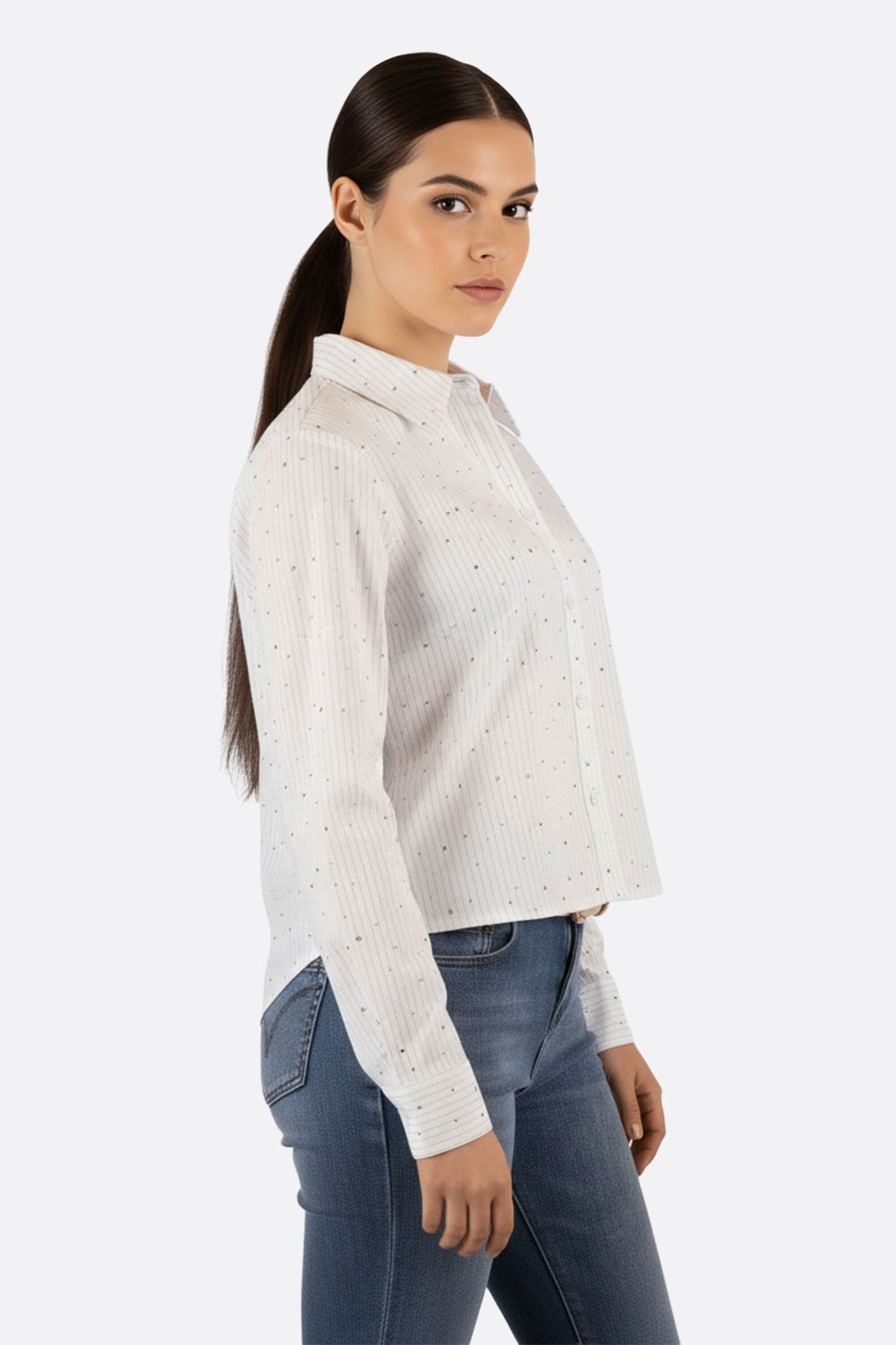
Fitted white shirt (slim fit): hugs the bust, easily tucked in, clean line. Risk: button gaping on a generous bust (the fitted cut does not leave extra fabric at the bust). Straight white shirt (regular fit): looser, no gaping, can be worn tucked in or loose. The most versatile version. Oversize white shirt: worn loose or rolled up, contemporary style. Tucked into jeans or a skirt, it creates controlled volume on top. The top button open is almost mandatory on a tucked-in oversize: otherwise, the effect is dressed despite the loose cut. White shirt with lavallière or tie collar: in silk or satin: between a blouse and a shirt, more feminine.
The Office White Shirt: The Rules
The white shirt is the most formal piece in the wardrobe after the tuxedo: in the office, it signals "professional, neat, attentive to detail". Conditions for it to remain formal: opaque fabric (sufficient weight), perfectly ironed (creases = sign of negligence), buttoned up to at least the second button. A poorly ironed or slightly transparent white shirt produces the opposite effect of the intended signal. The wrinkled white shirt is deliberately casual (effortless style): acceptable in casual settings, inappropriate in formal contexts. Ironing: collar and cuffs first (the most visible areas), then the body.
Test before purchase: hold the shirt folded in half against the light: if you can see your hand behind it, the shirt will be transparent when worn. Look for a weight of 120-130 g/m² minimum in poplin, or choose oxford (140-180 g/m²) which is naturally opaque. Transparency is not a defect in quality: it is a characteristic of the fabric. A transparent shirt with a nude camisole underneath is a deliberate choice.
How to remove yellowing from a white shirt?
Light yellowing: soak in cold water + baking soda (1 tablespoon per liter, 1h) then wash at 60°C. Yellowing under the arms: dab pure white vinegar before washing. Persistent overall yellowing: specialized white detergent with sodium percarbonate. Never use bleach on a silk or wool shirt. For prevention: wash after 2-3 wears (do not store with unwashed stains), do not dry in direct sunlight (UV yellows white cotton).
What is the difference between optical white and ivory for a shirt?
Optical white: bright, slightly bluish (contains fluorescent agents), strong contrast with all skin tones. Ivory: slightly cream-yellow white, warm, harmonious with the vast majority of complexions, less "aggressive". For the office: ivory is often more flattering and less clinical. For an intentional graphic look or a very formal occasion: optical white. Ivory ages better (optical white yellows more visibly over time).