Fast & secure deliveryFree shipping in France from €99Easy returns

Cashmere scarves, ponchos and shawls for women

This collection brings together what keeps you warm and what dresses an outfit: the open-knit cashmere scarf, the women's poncho in knit or cashmere, the evening shawl, and our gradient scarves in silk and cotton. Pure silk has its own collection: see our silk squares.

25 products
Sort

This collection brings together what keeps you warm and what dresses an outfit: the open-knit cashmere scarf, the women's poncho in knit or cashmere, the evening shawl, and our gradient scarves in silk and cotton. Pure silk has its own collection: see our silk squares.
Cashmere scarf for women: warmth without bulk

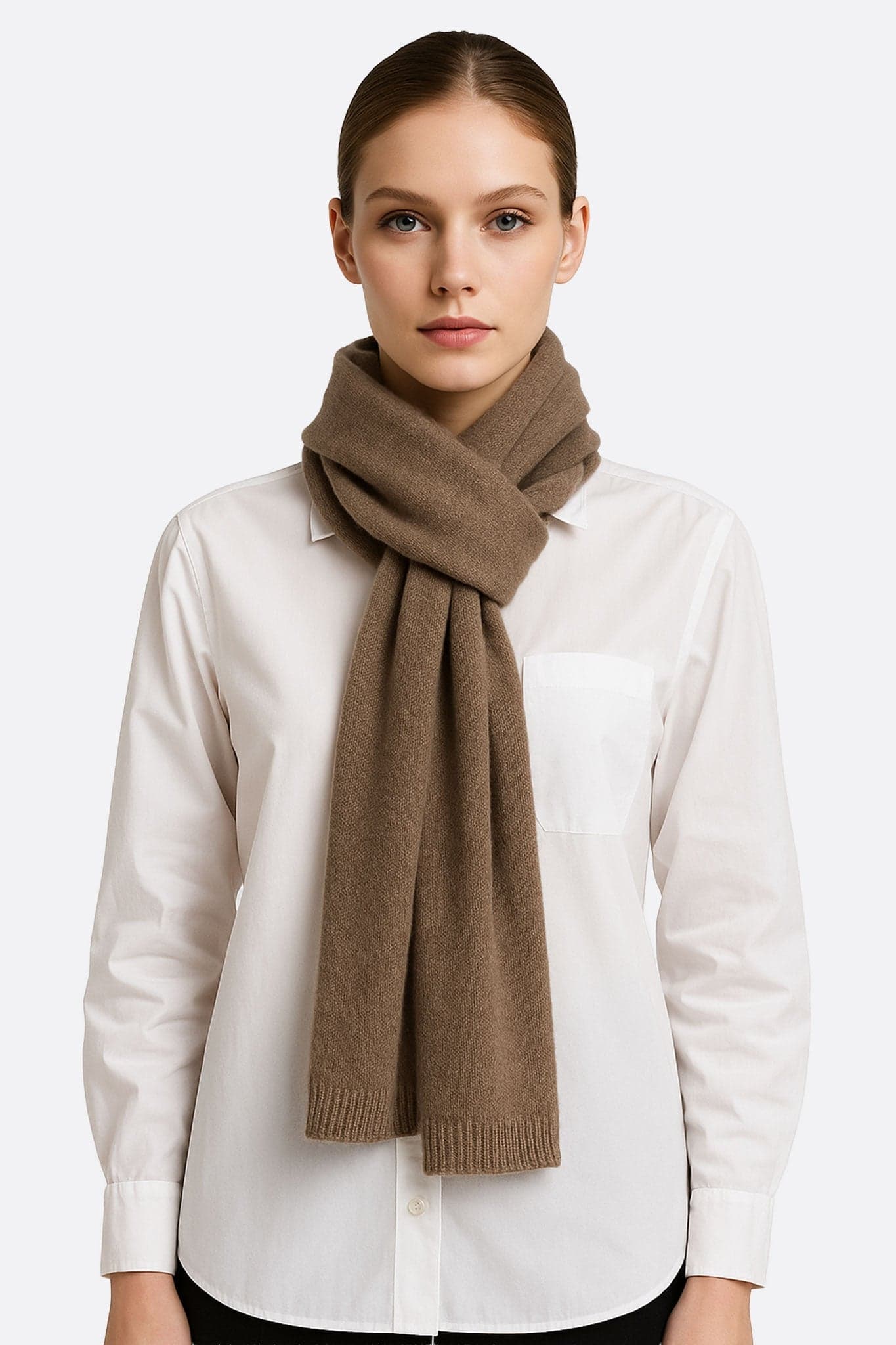
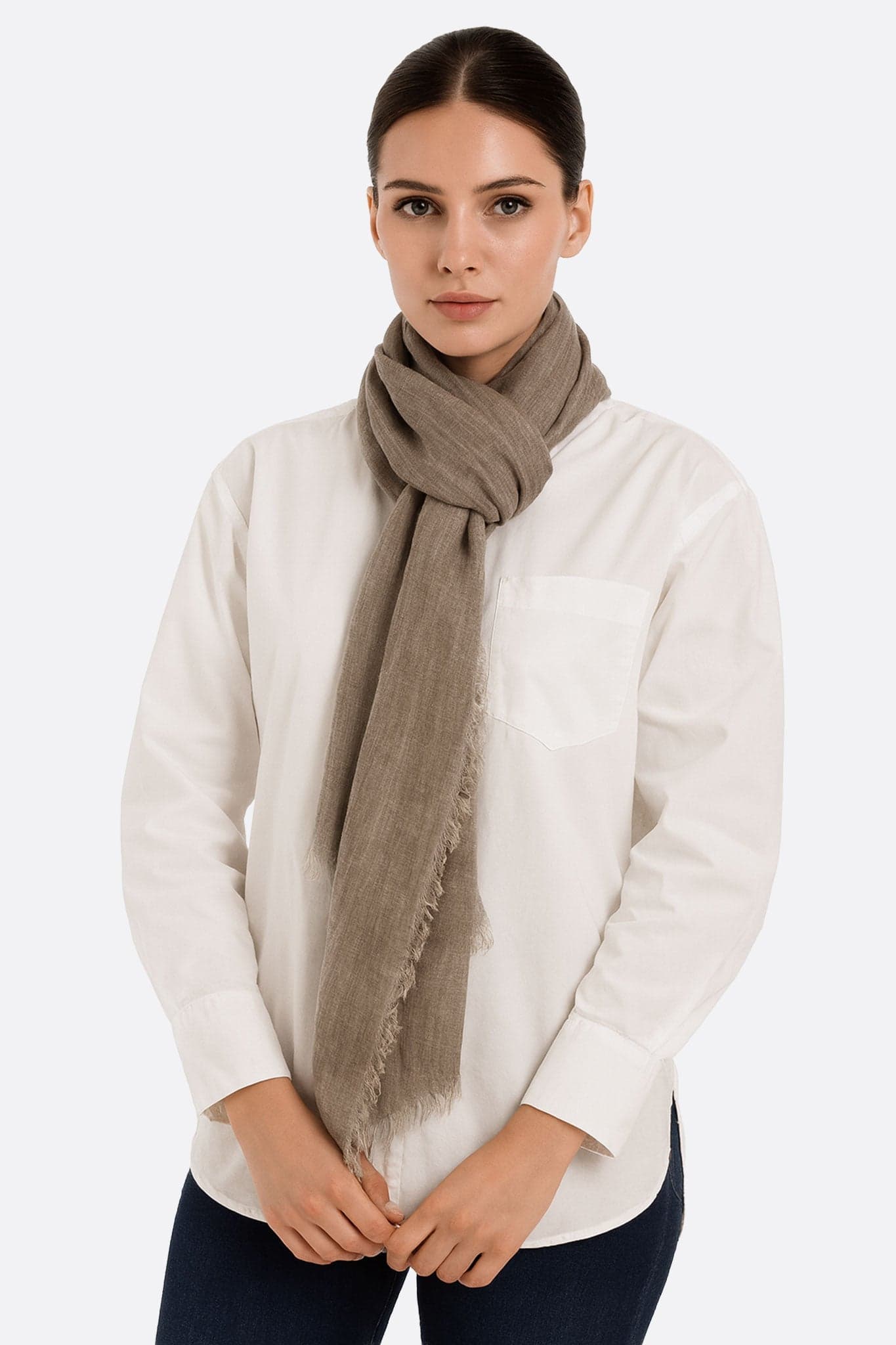
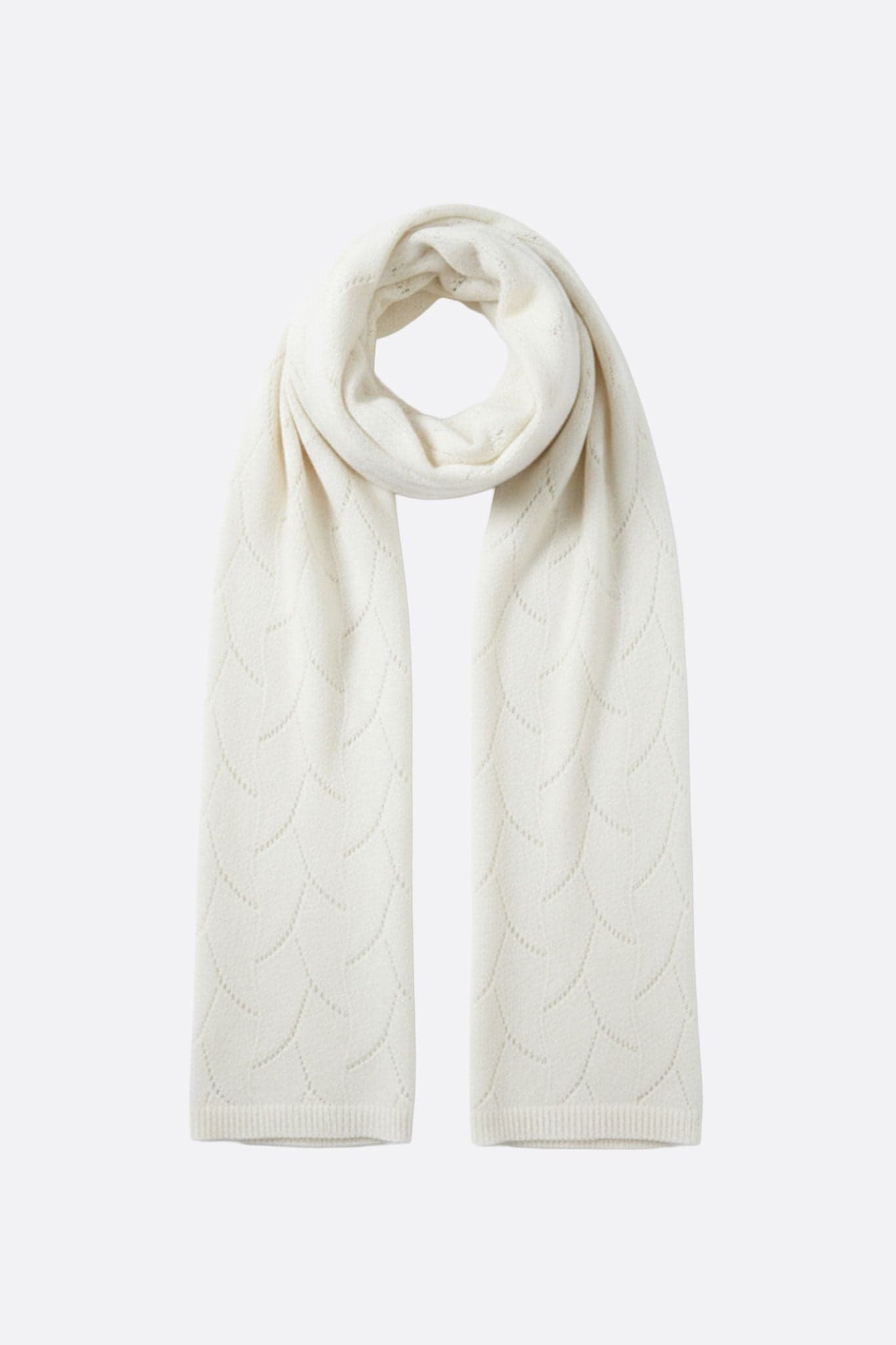
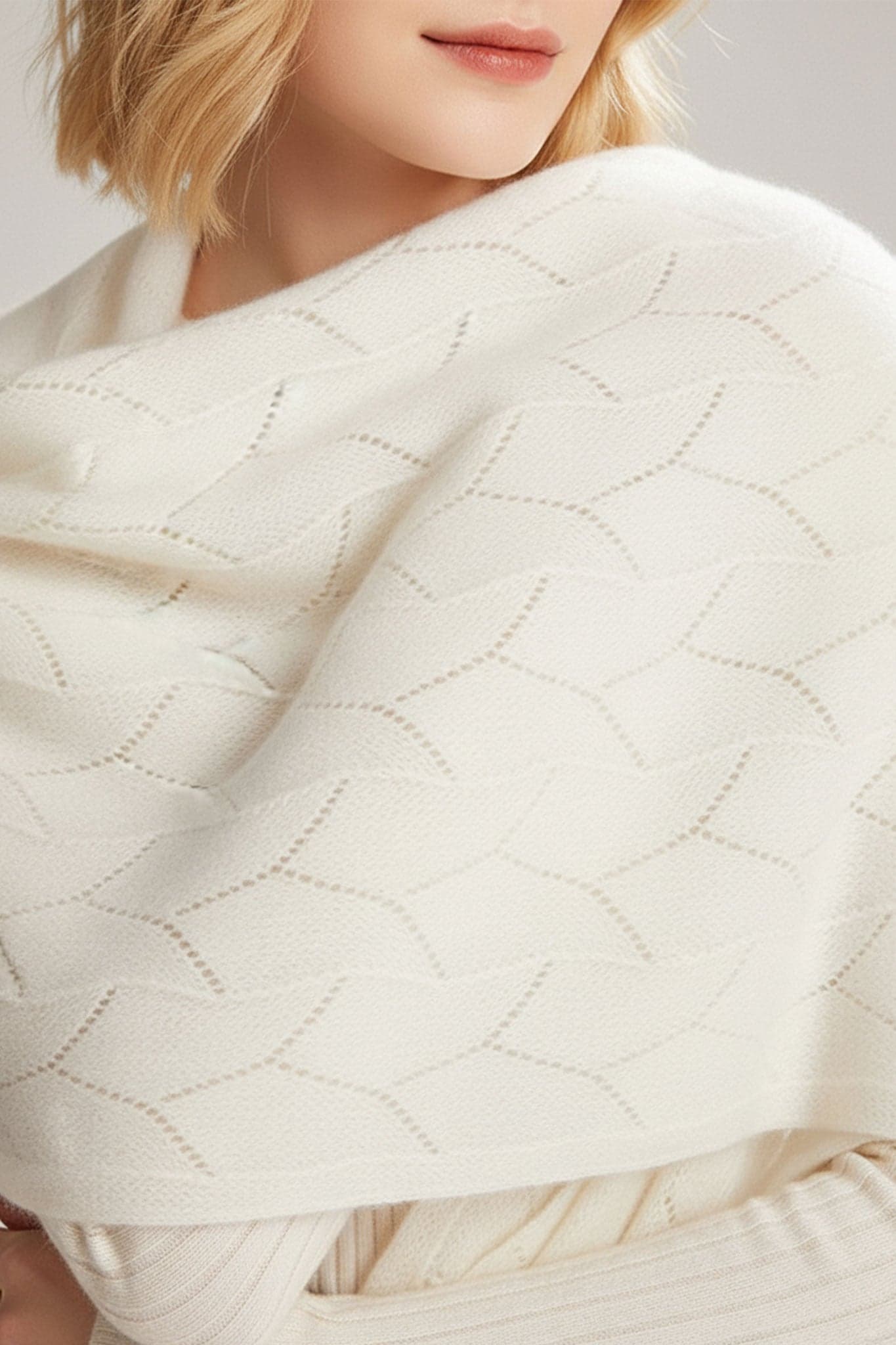
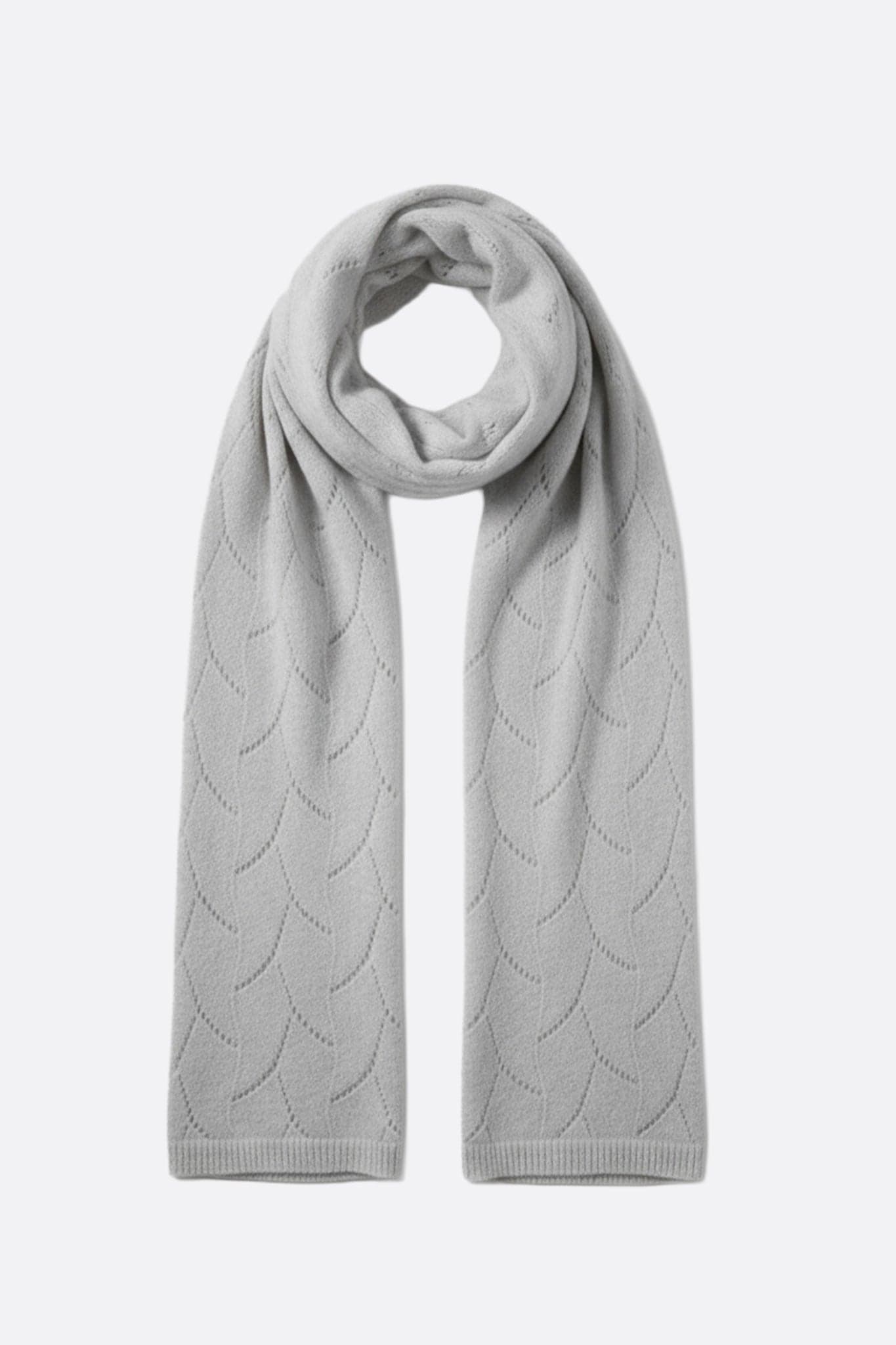
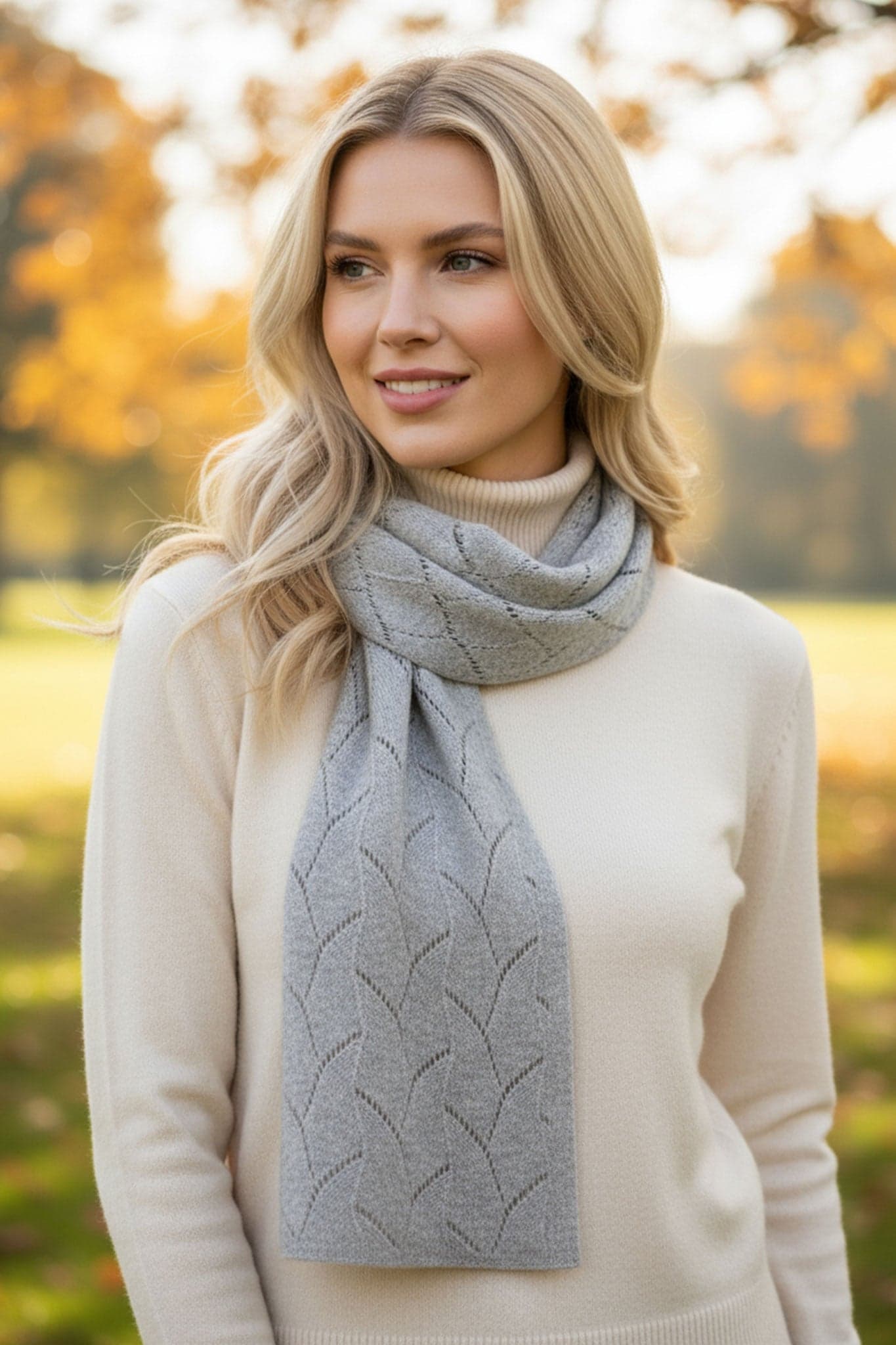
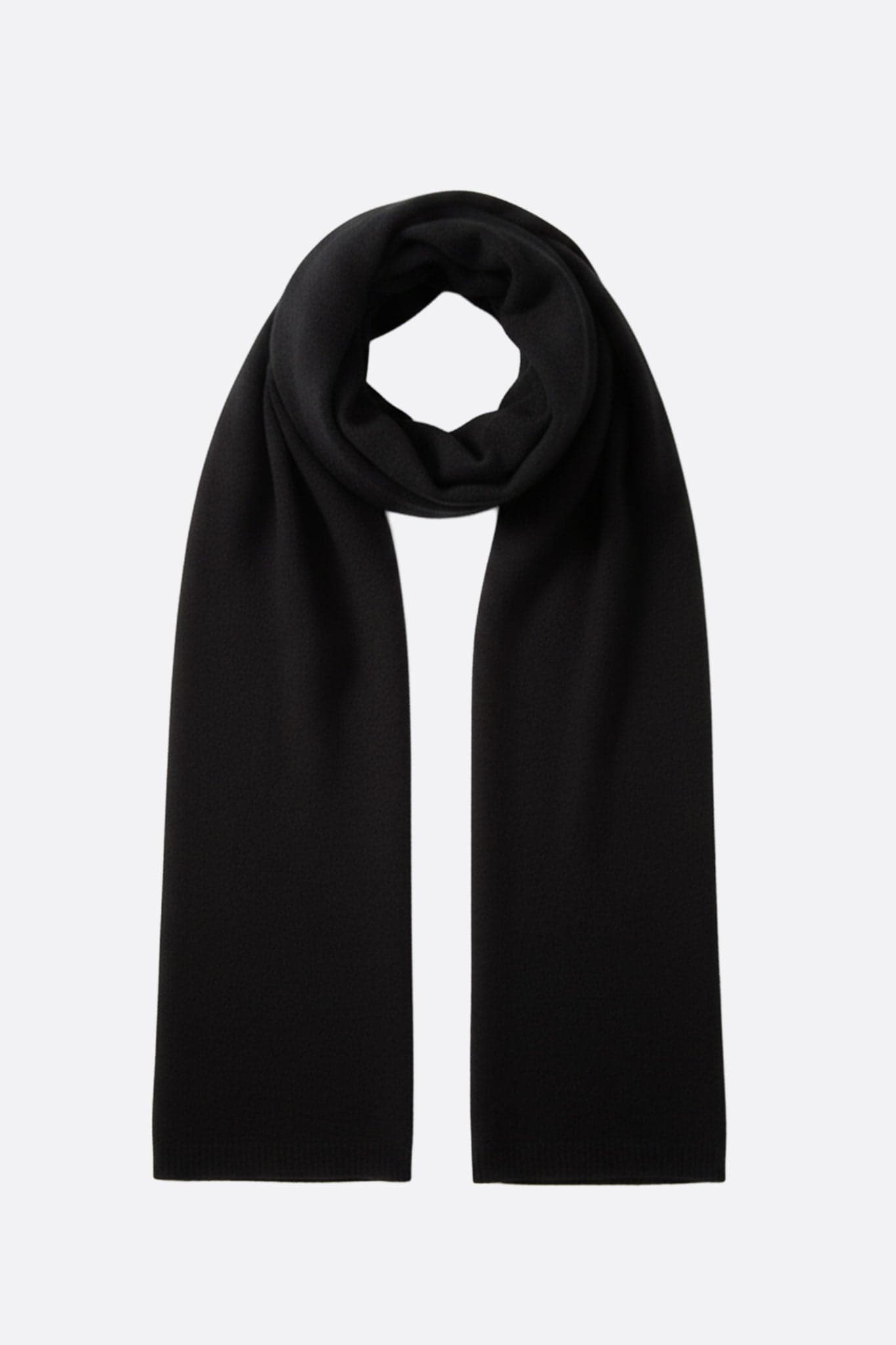
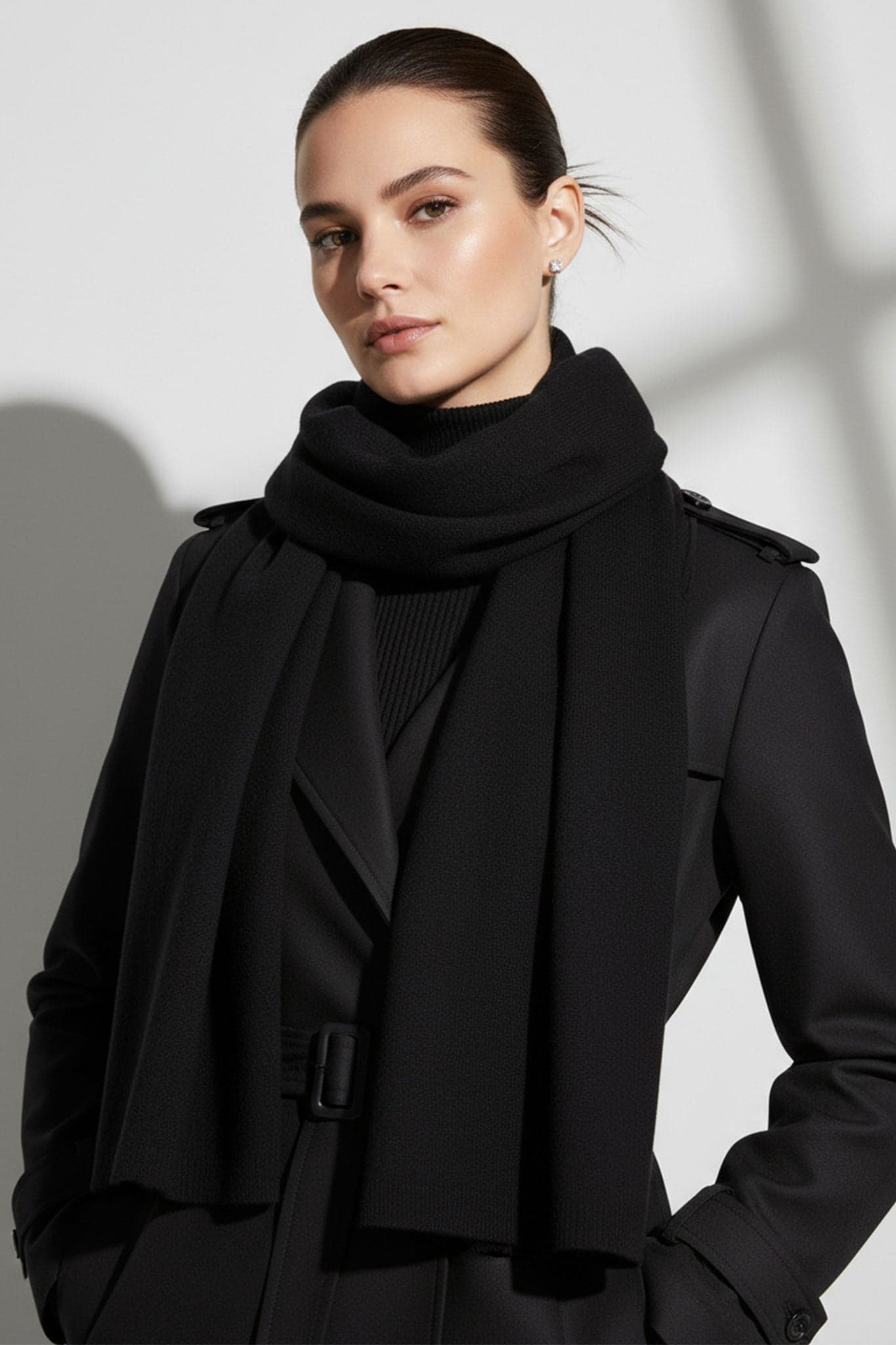
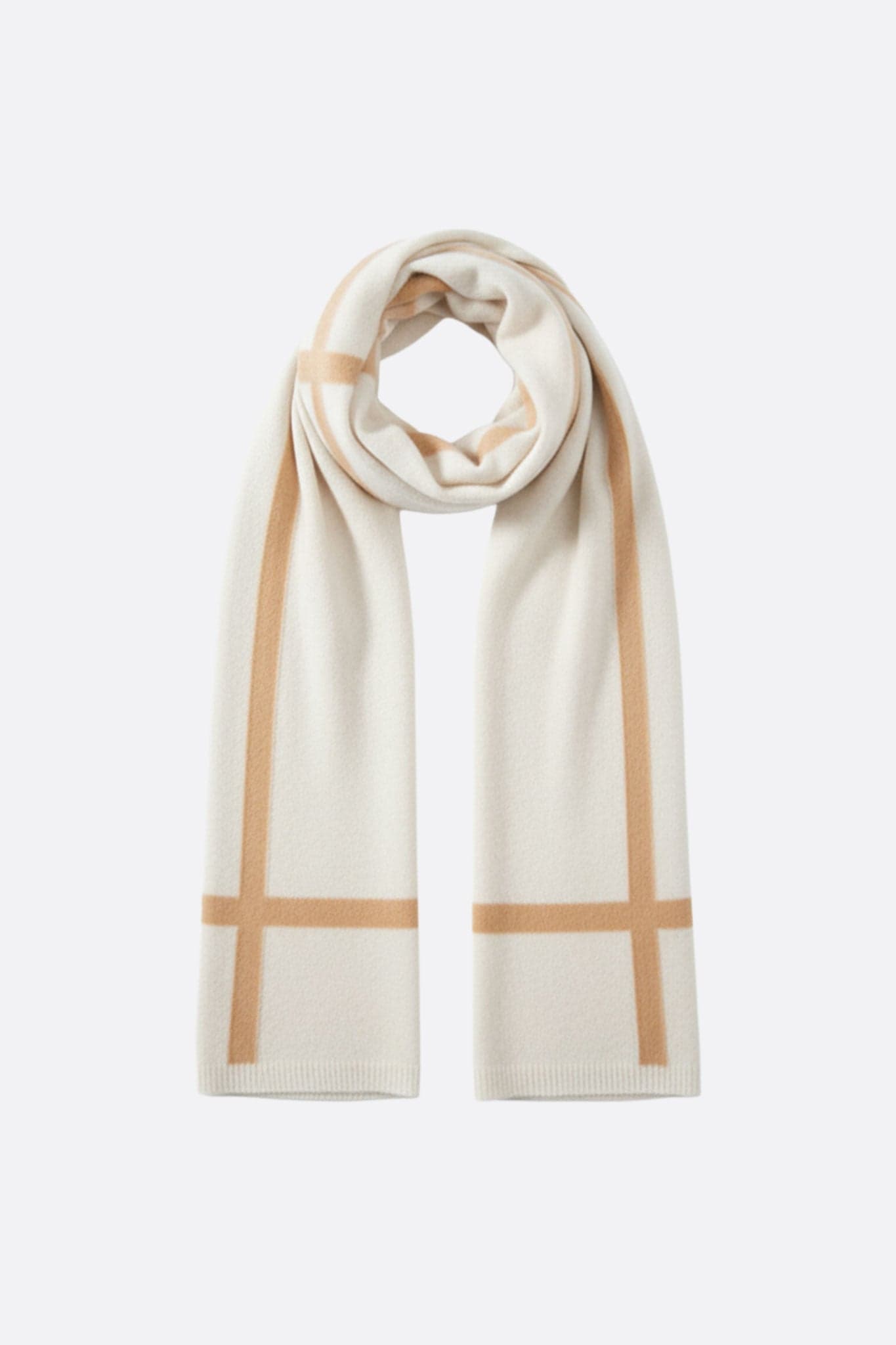
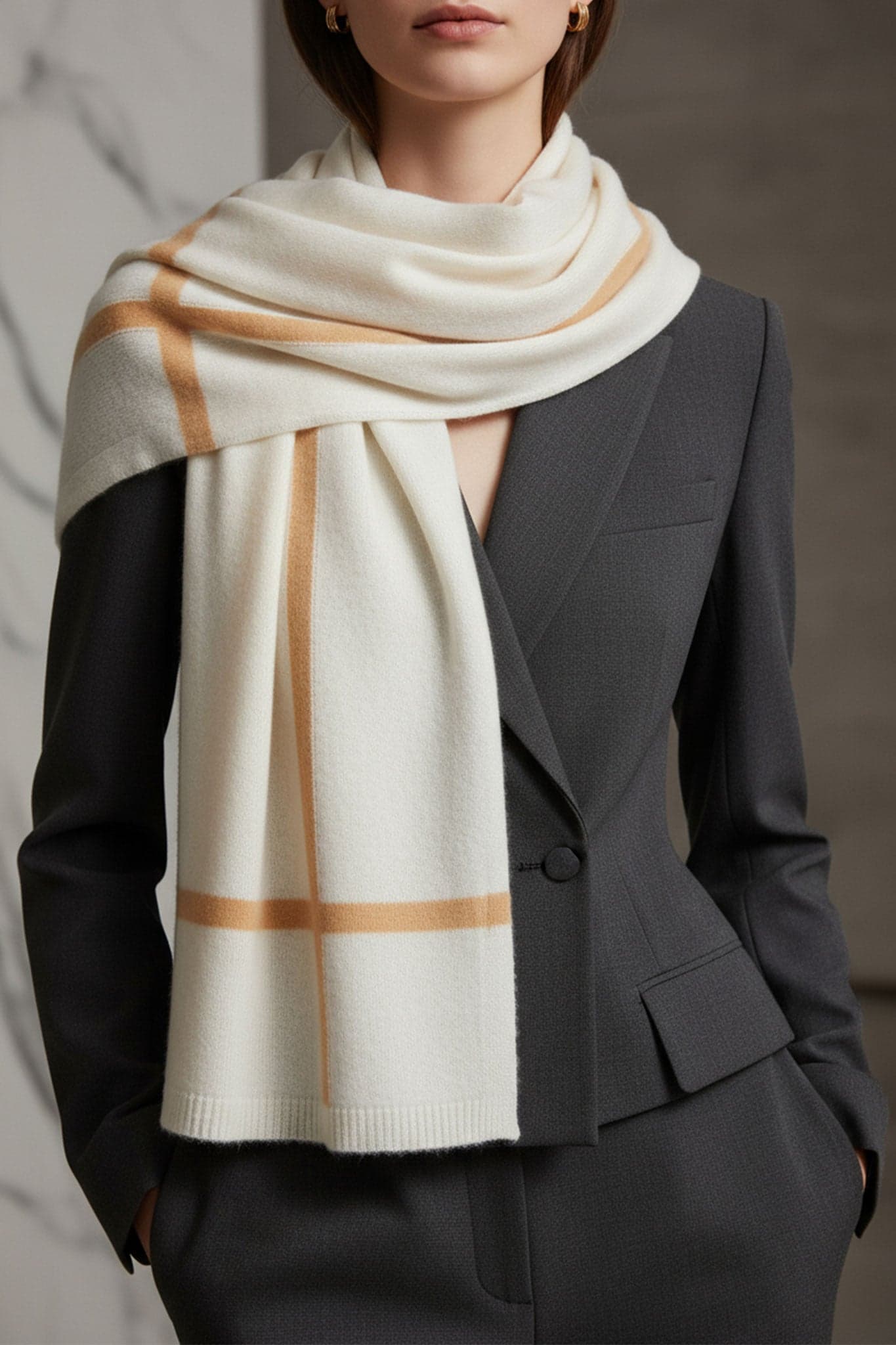
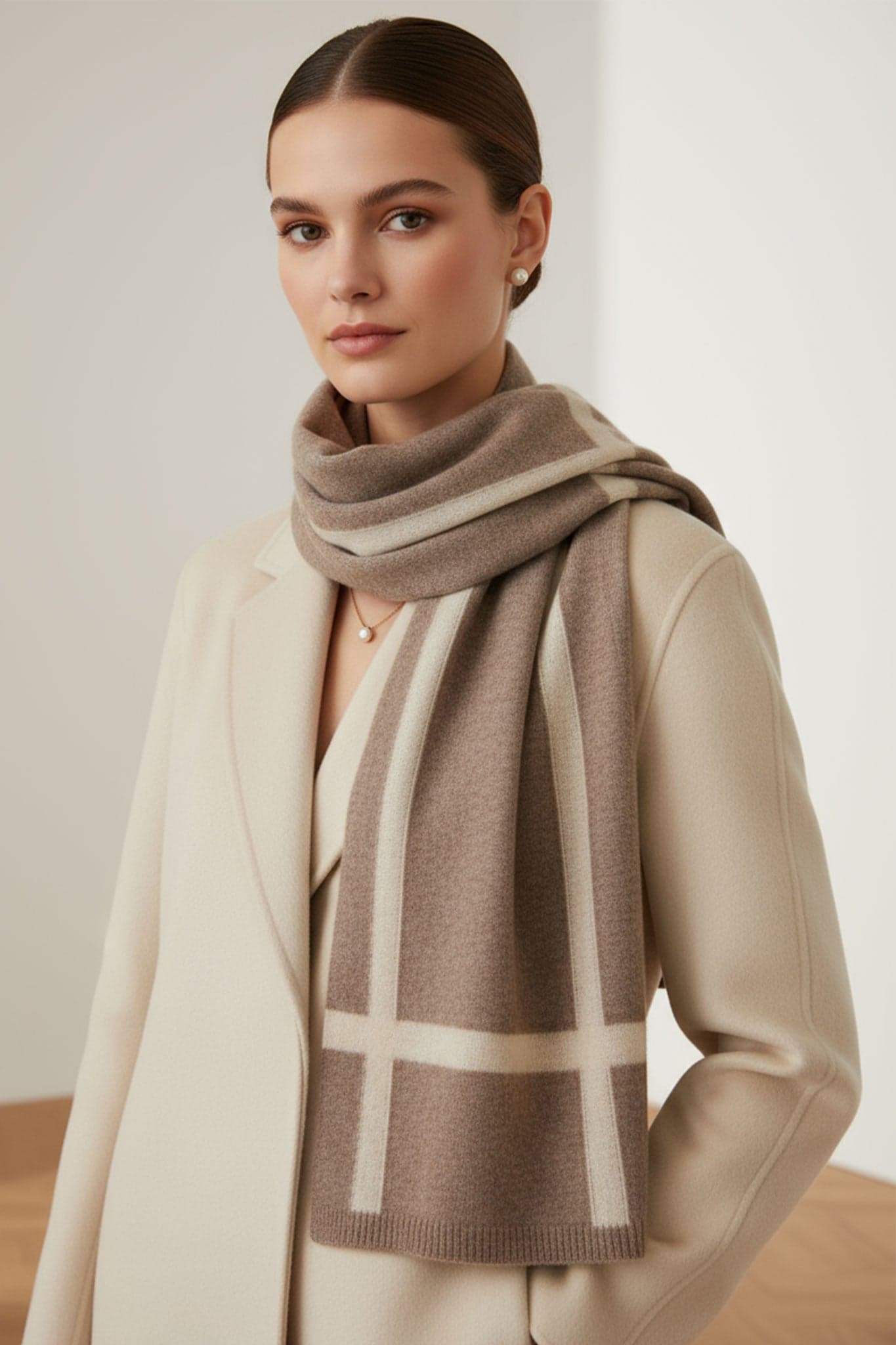
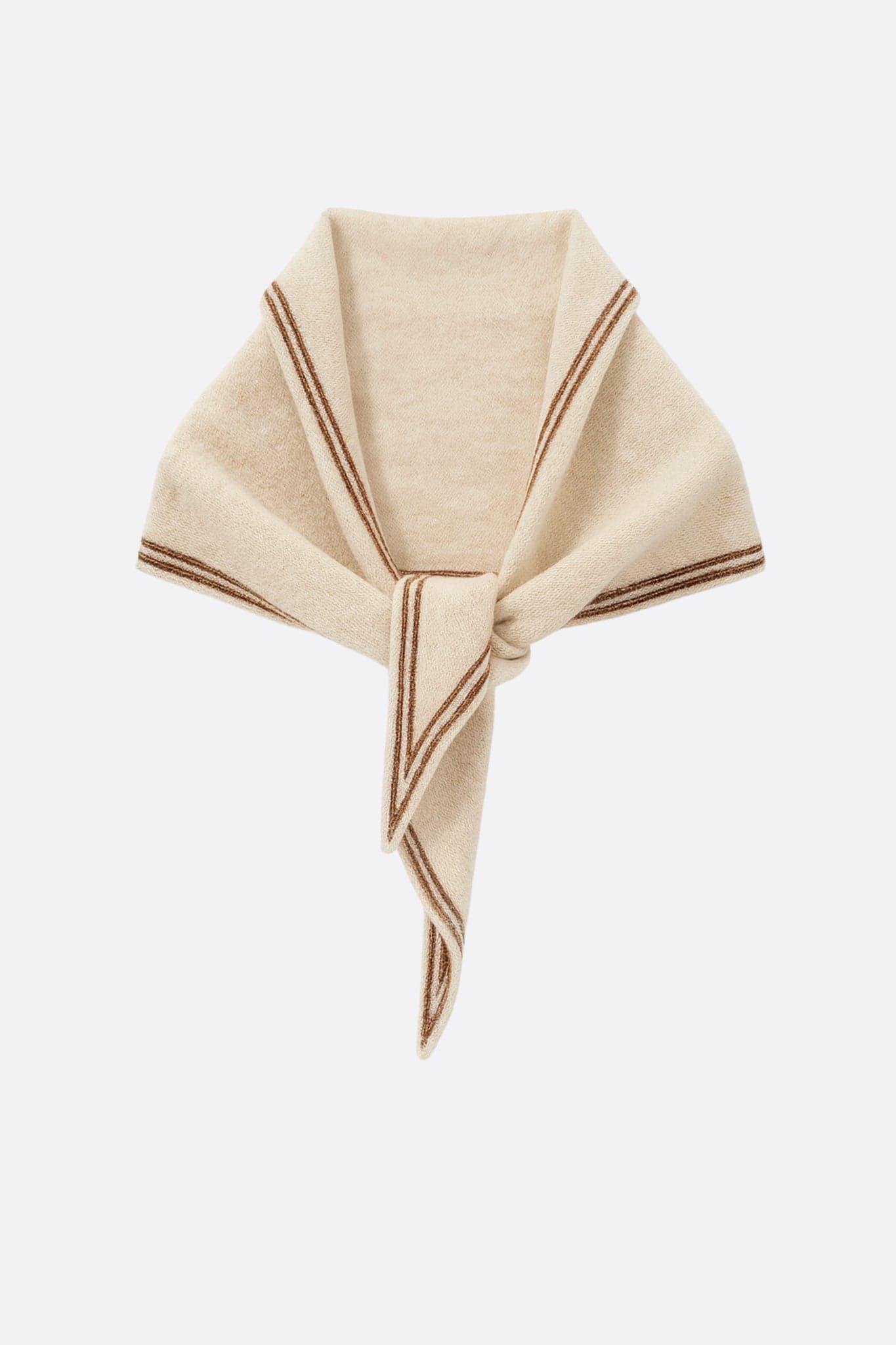
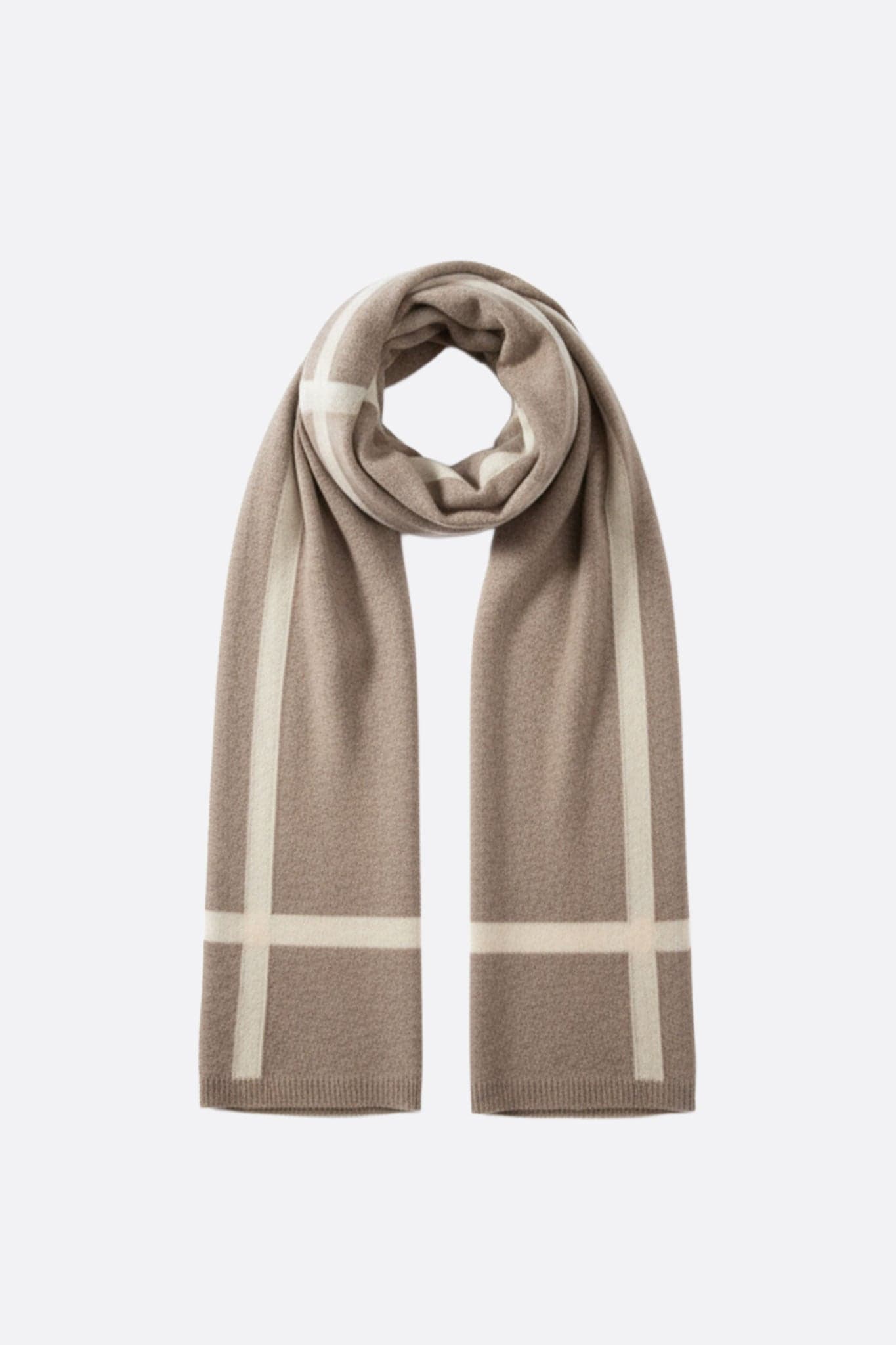
A cashmere scarf is the most efficient piece in a winter wardrobe because it warms through the fineness of its fibre rather than through volume. Cashmere insulates roughly three times better than wool at equal weight, which allows a supple wrap that adds no mass under a coat collar. Our cashmere scarves for women come in open knit, an airy structure that traps warm air while staying breathable indoors, and in solid knit for deep cold. Sand beige, pearl grey, black, white, marbled pink and sage green are chosen to carry across several seasons. Some pieces use a contrasting band, beige with brown or white with brown, which gives structure to a neutral silhouette without adding a bright colour. Pair them with our other cashmere pieces.

Women's poncho: open knit in summer, cashmere in mid-season

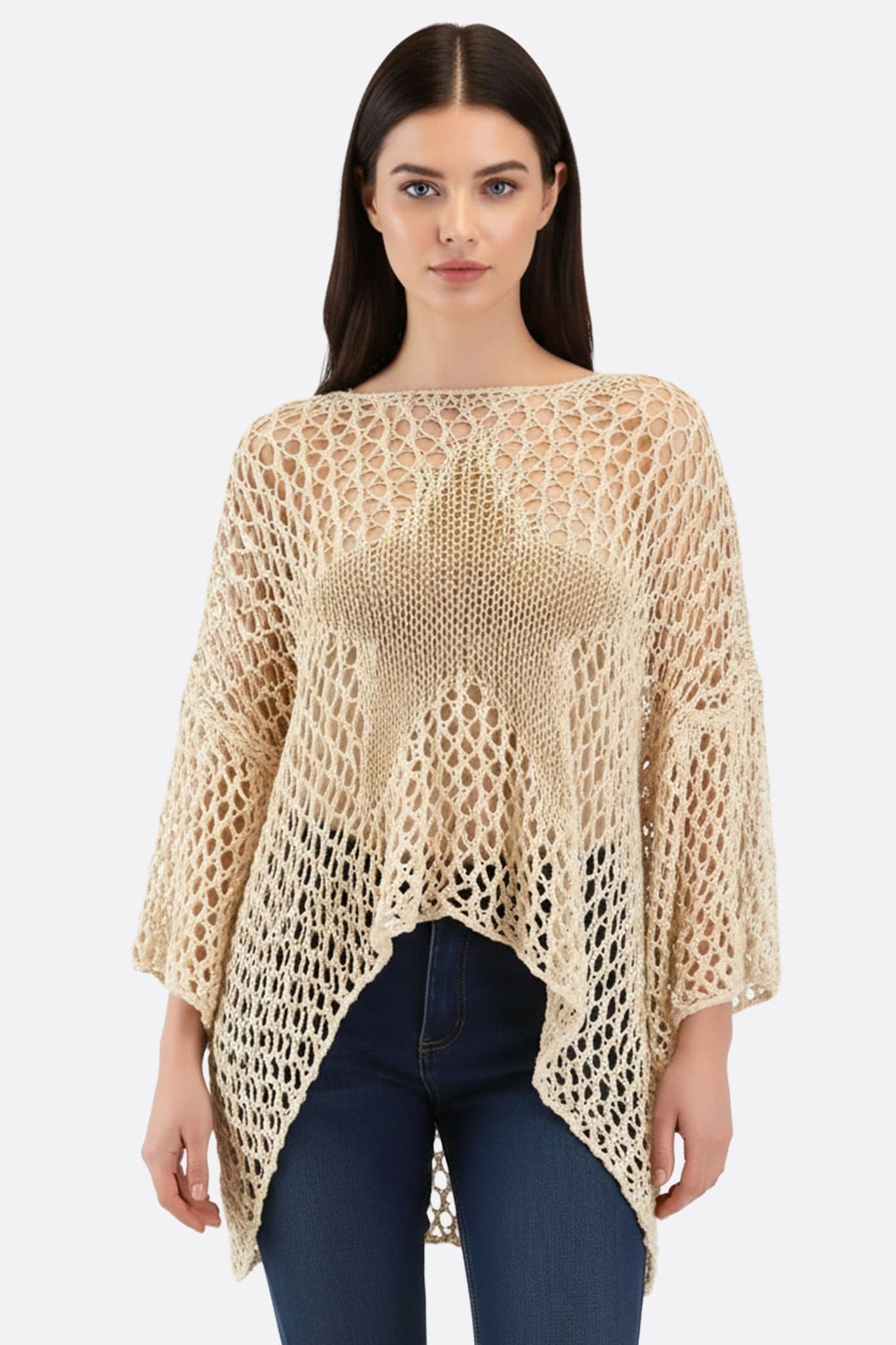
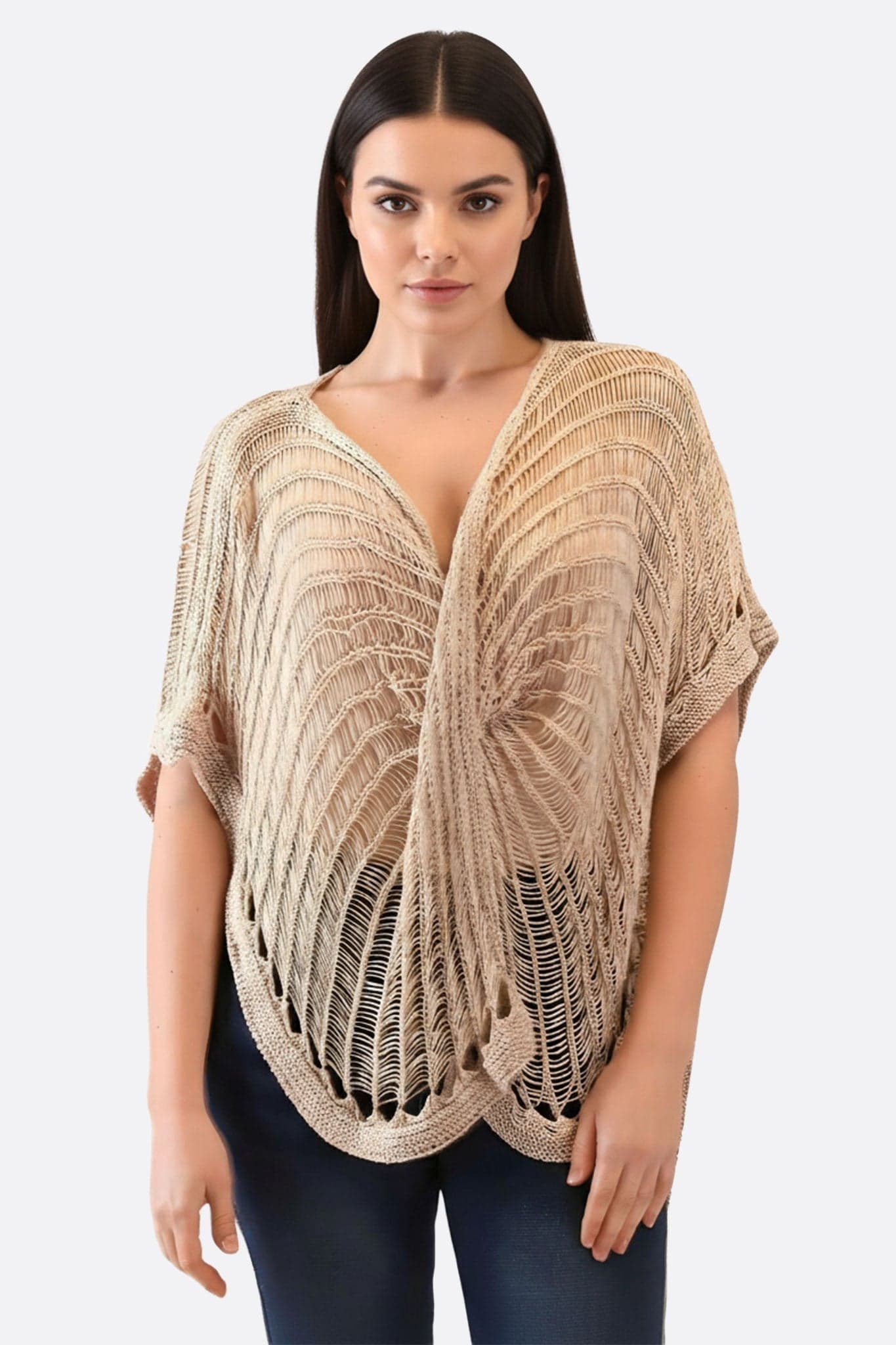
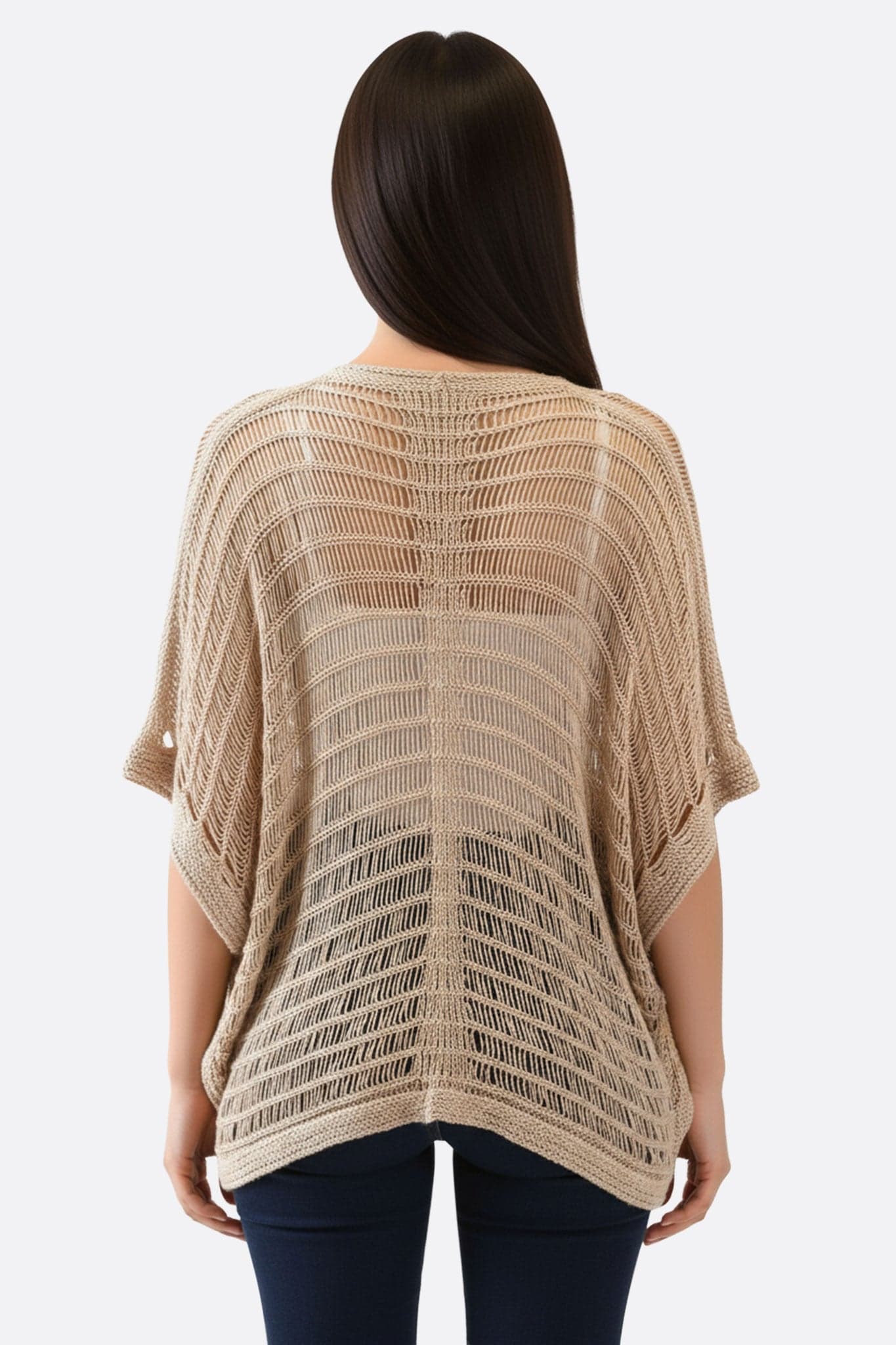
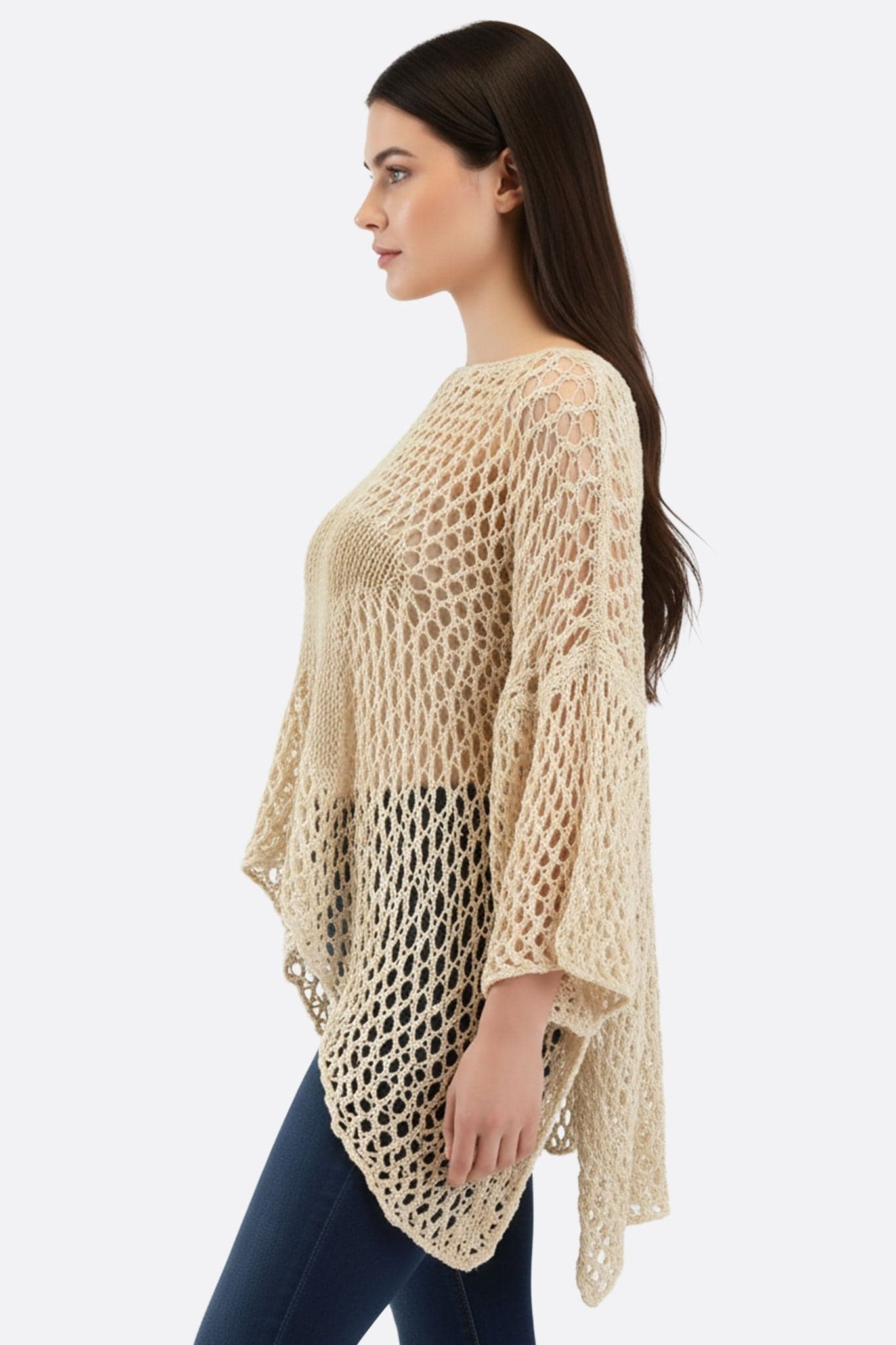
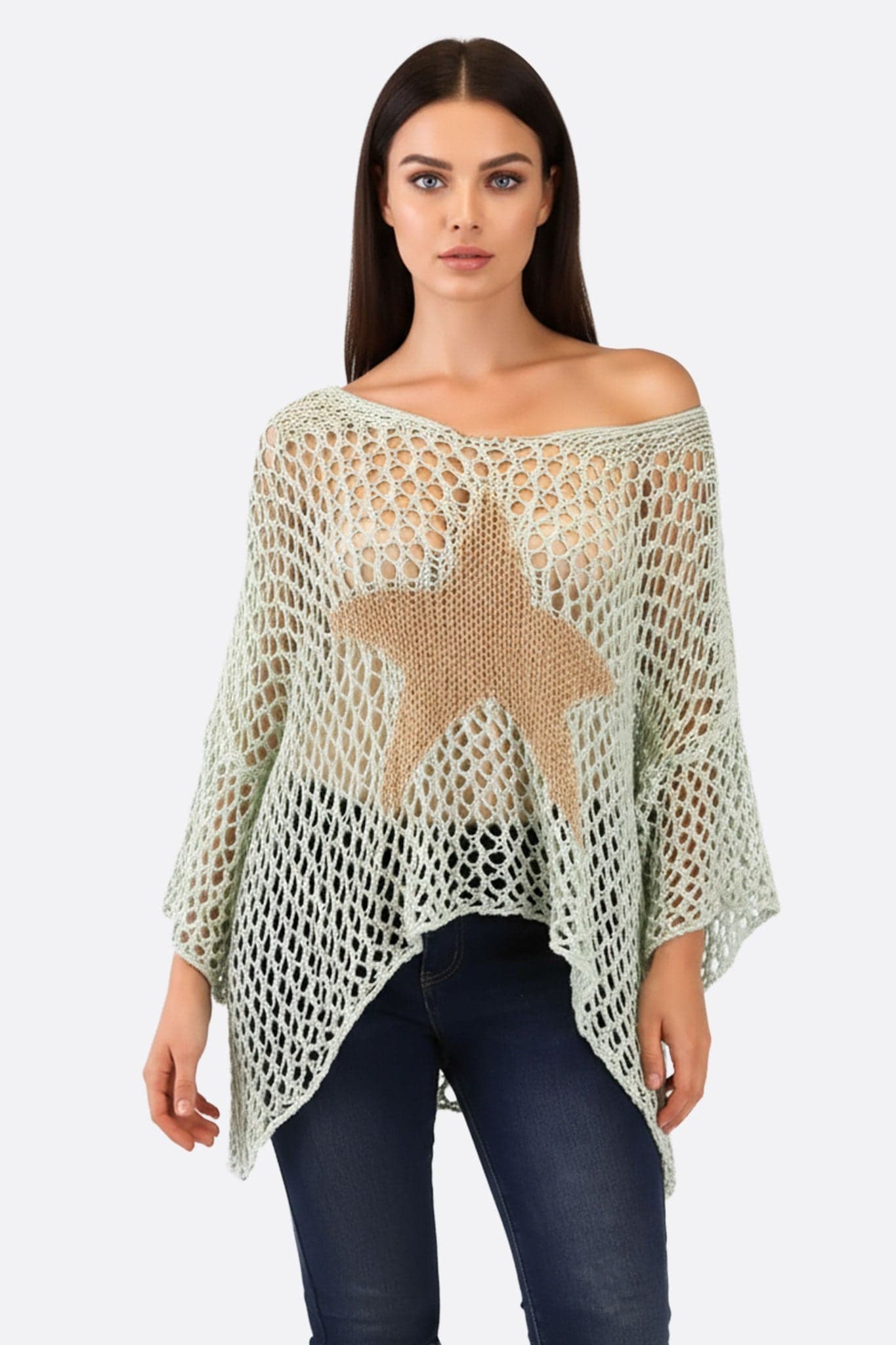
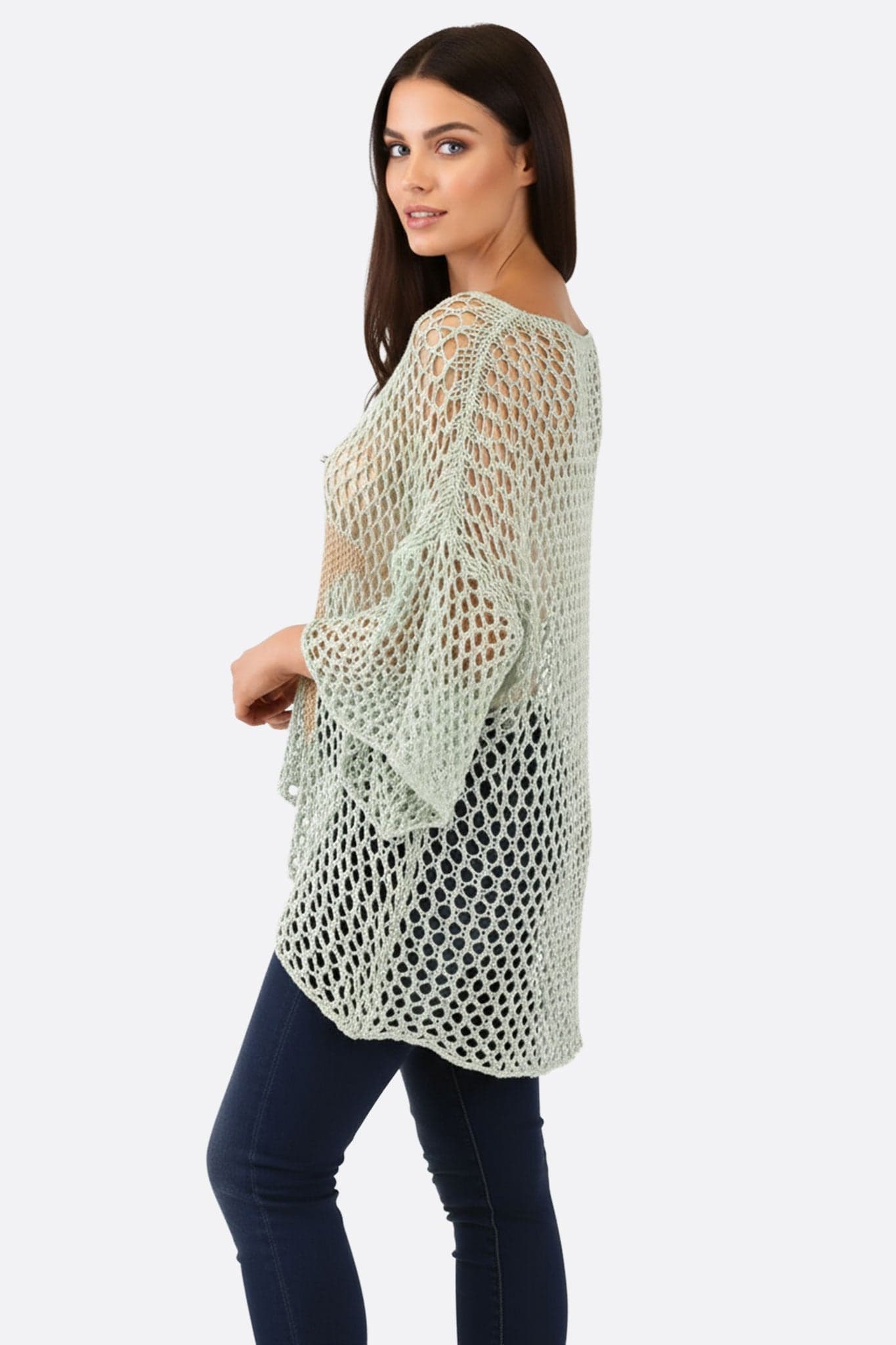
The women's poncho covers two uses that should not be confused. The beach poncho in open knit, beige with a star motif or in multicoloured crochet with a bohemian feel, is worn over a swimsuit as you leave the water: the knit dries quickly and lets air through. The cashmere poncho, cut like a large triangular wrap in beige with taupe bands or in two tones, does something else entirely: it replaces a light jacket in mid-season and goes over the shoulders with no sleeves to put on. It is the simplest thing to wear when the temperature swings ten degrees in a day. A knit poncho should be chosen one size larger than instinct suggests, because the drape makes the piece, not the fit.

Shawls and wraps: ceremony, weddings and evening

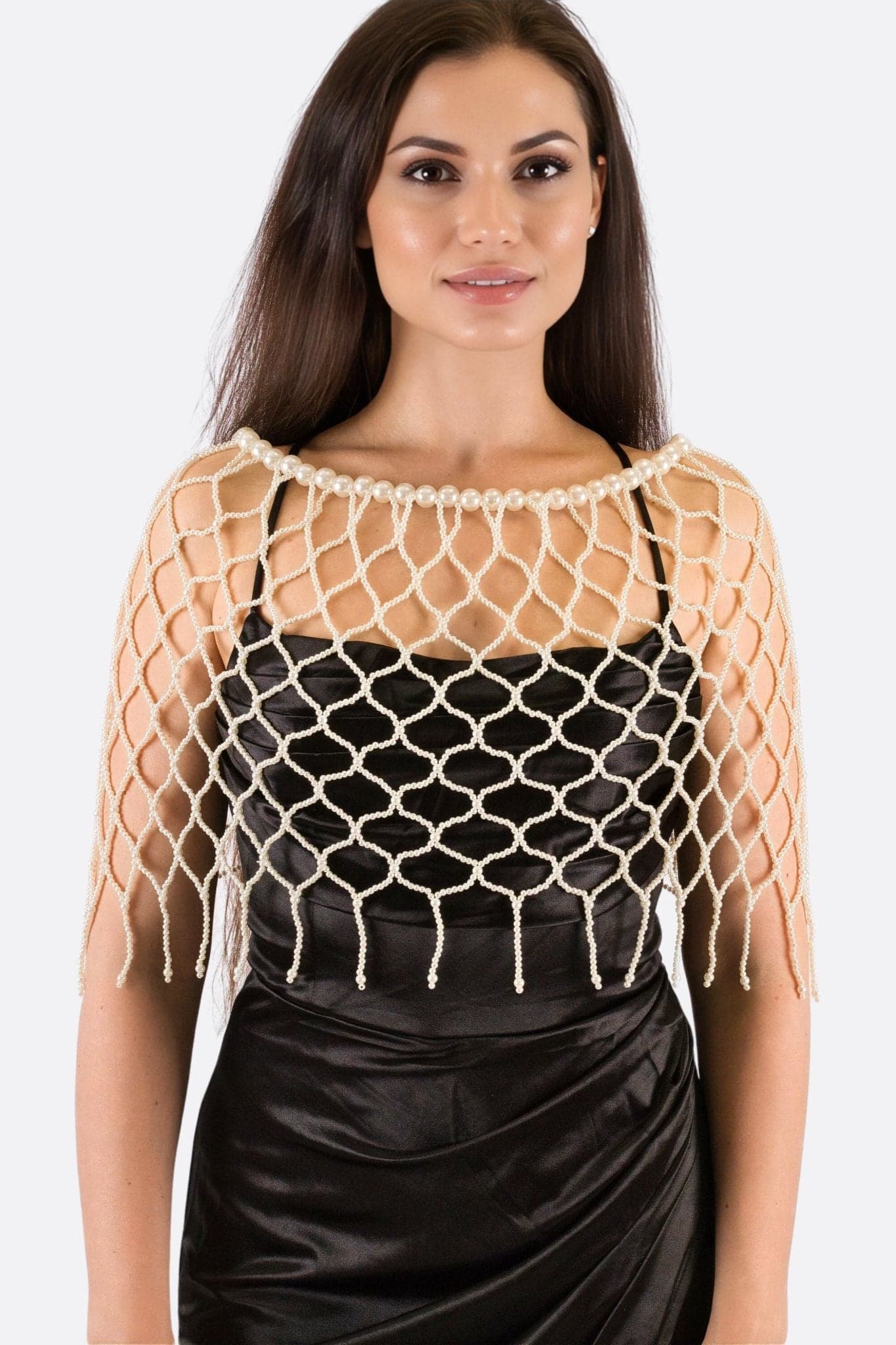
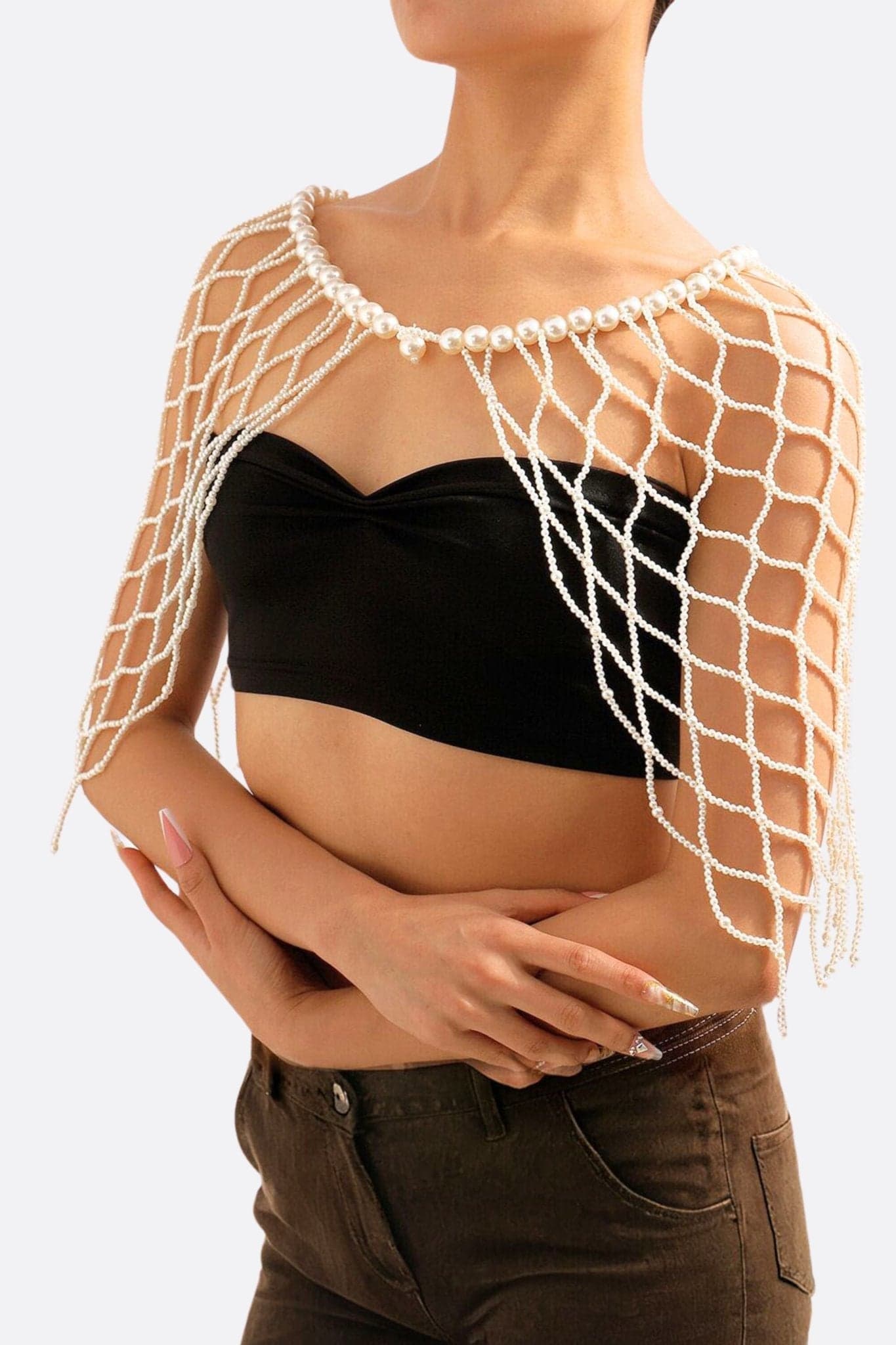
A shawl answers the problem every evening outfit poses: covering the shoulders without breaking the line of the dress. Our white beaded shawl works with light rather than with bulk, which makes it compatible with an evening dress that is already detailed. For a wedding shawl, the rule fits in one sentence: choose it against the dress, not matched to it. A plain dress calls for a textured wrap, an embroidered dress calls for a smooth one. If you are a wedding guest, pick a piece that works as well over the shoulders during the ceremony as folded over the arm during dinner. A wider cashmere wrap does the same job with more material, which is useful for an outdoor ceremony.

Wool, modal and natural blend scarves

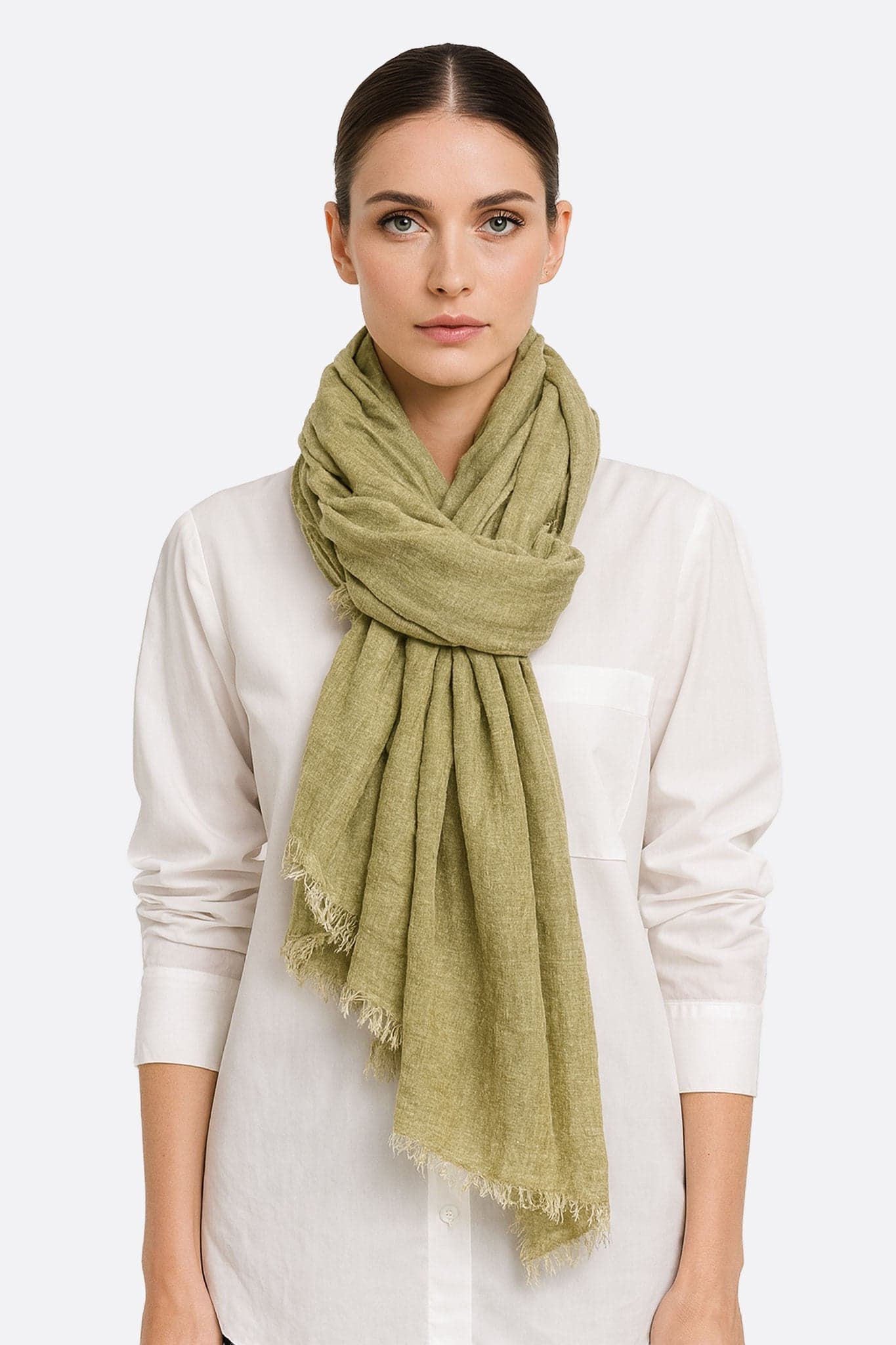
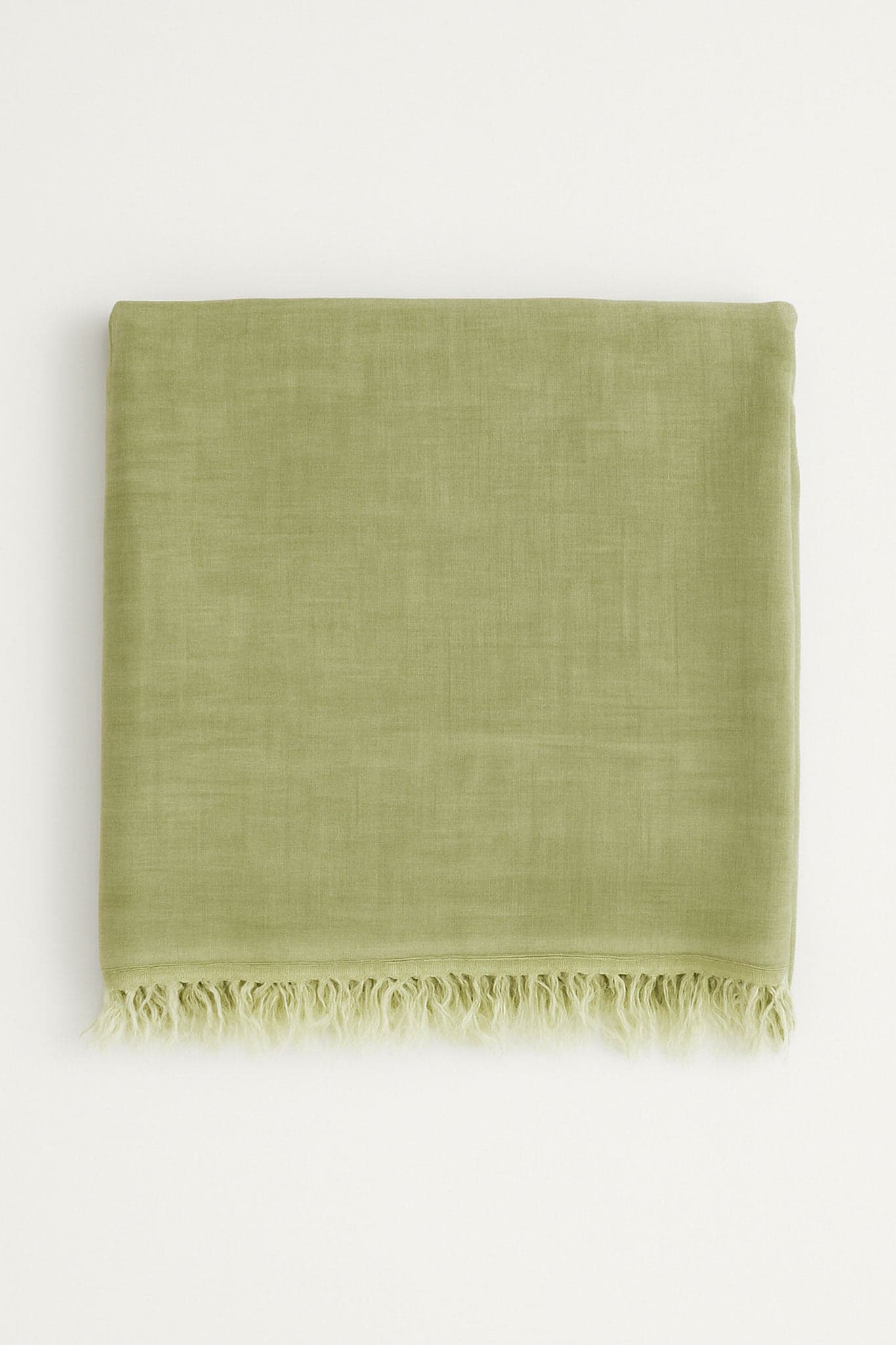
Between cashmere and silk sits a middle ground that is often overlooked. A wool scarf for women offers the best ratio of warmth to durability: the fibre resists abrasion better than cashmere and copes better with daily city wear. Our cream and lightweight scarves in modal, wool and cashmere combine all three logics: modal brings fluidity and a discreet sheen, wool brings structure, cashmere brings softness against the skin. This blend is the right answer for anyone who finds pure cashmere too delicate and pure wool too scratchy. The green 180 x 85 cm scarf in modal, cashmere and wool shows the register well: a generous size that works as a double-loop scarf or as a light wrap.

Cashmere scarves and gradient silk-cotton scarves

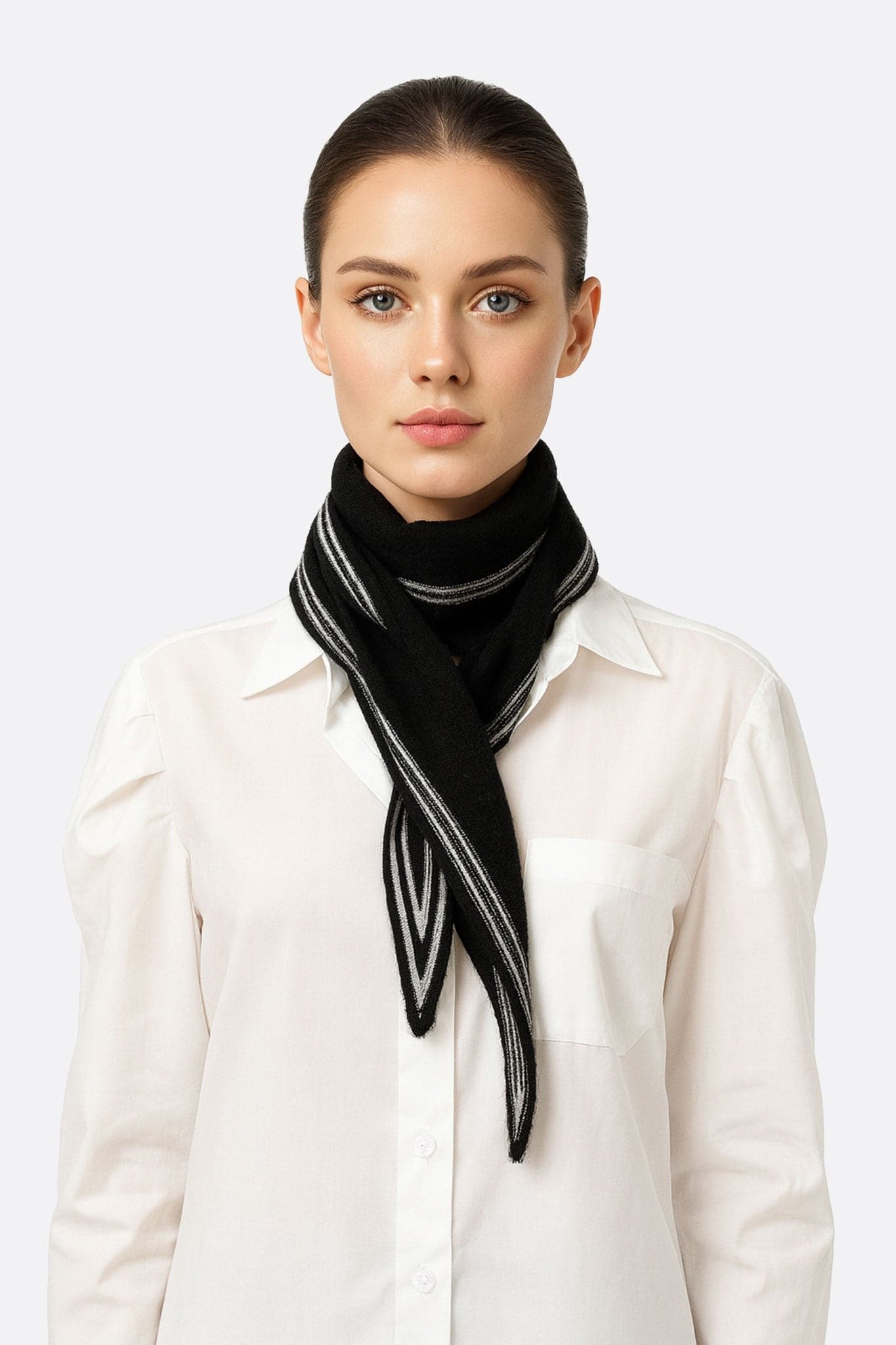
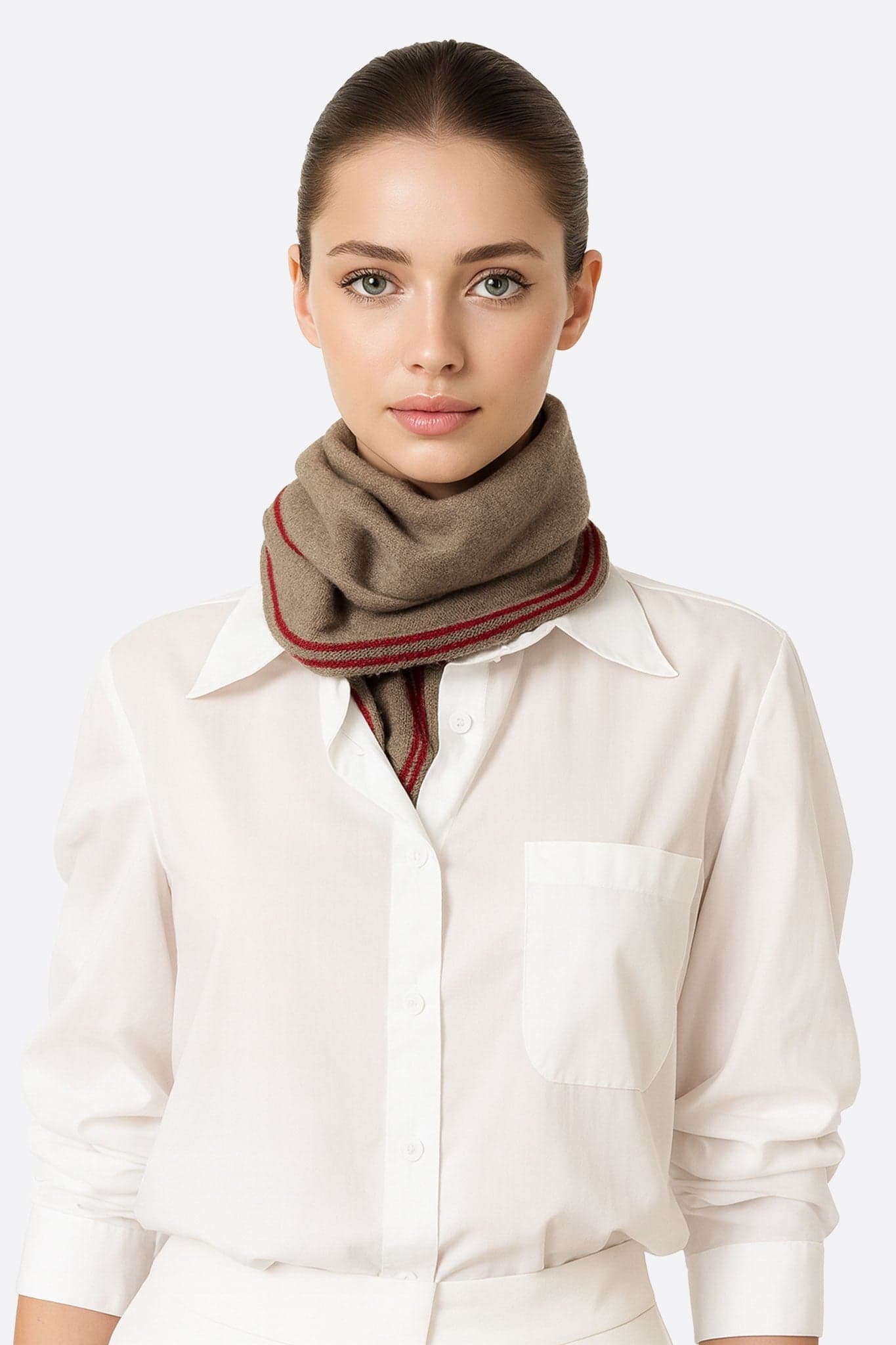
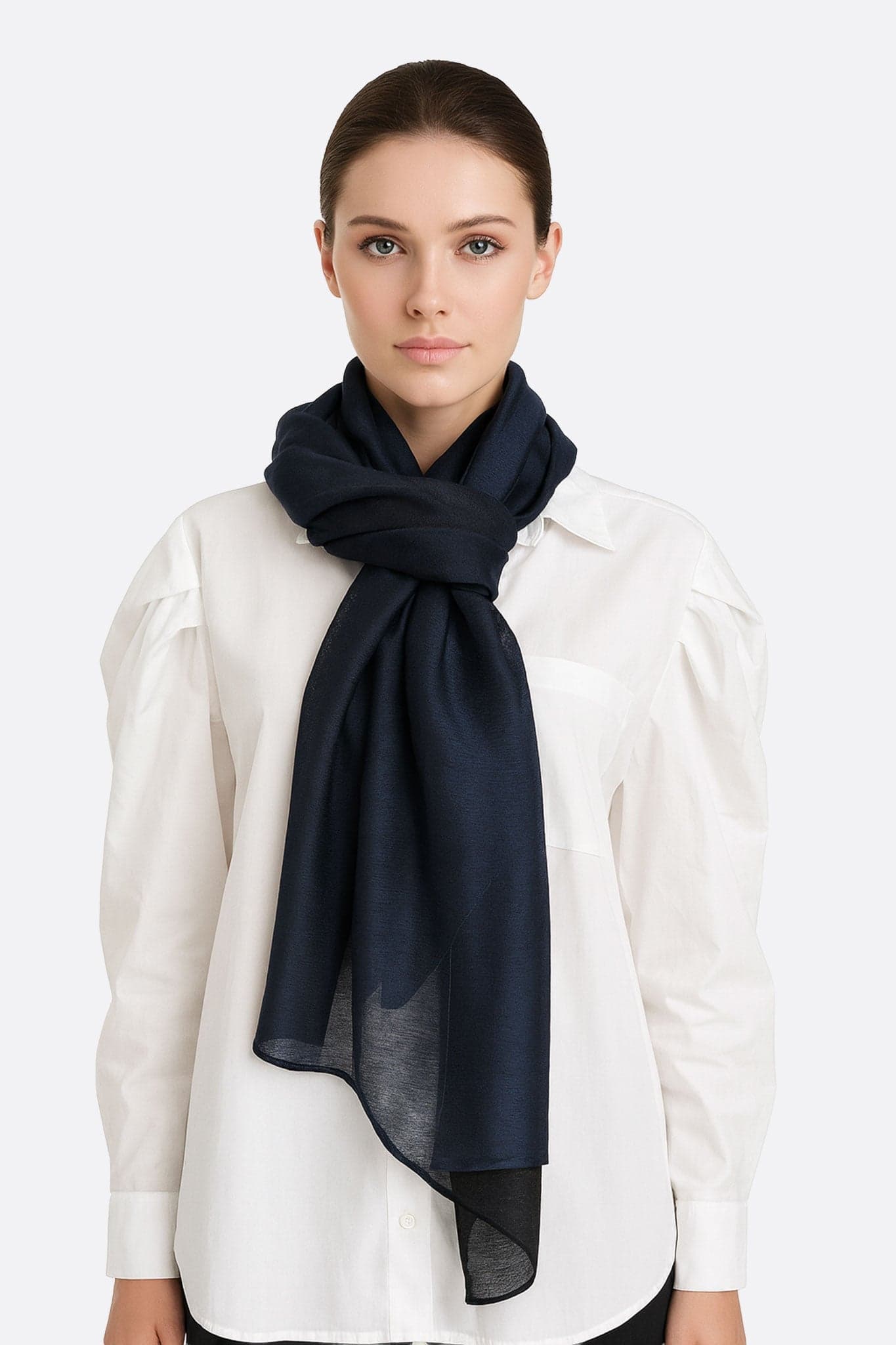
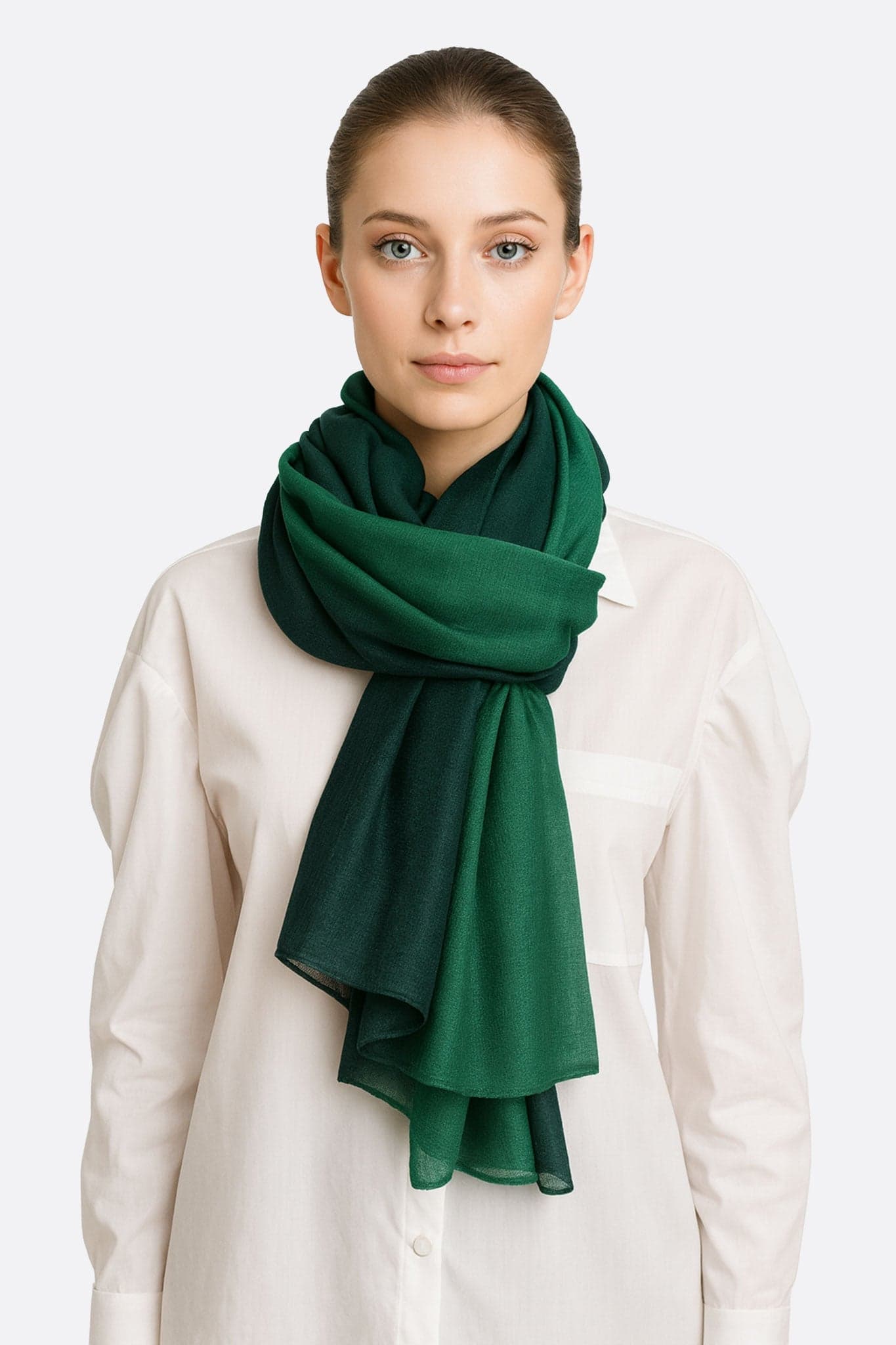
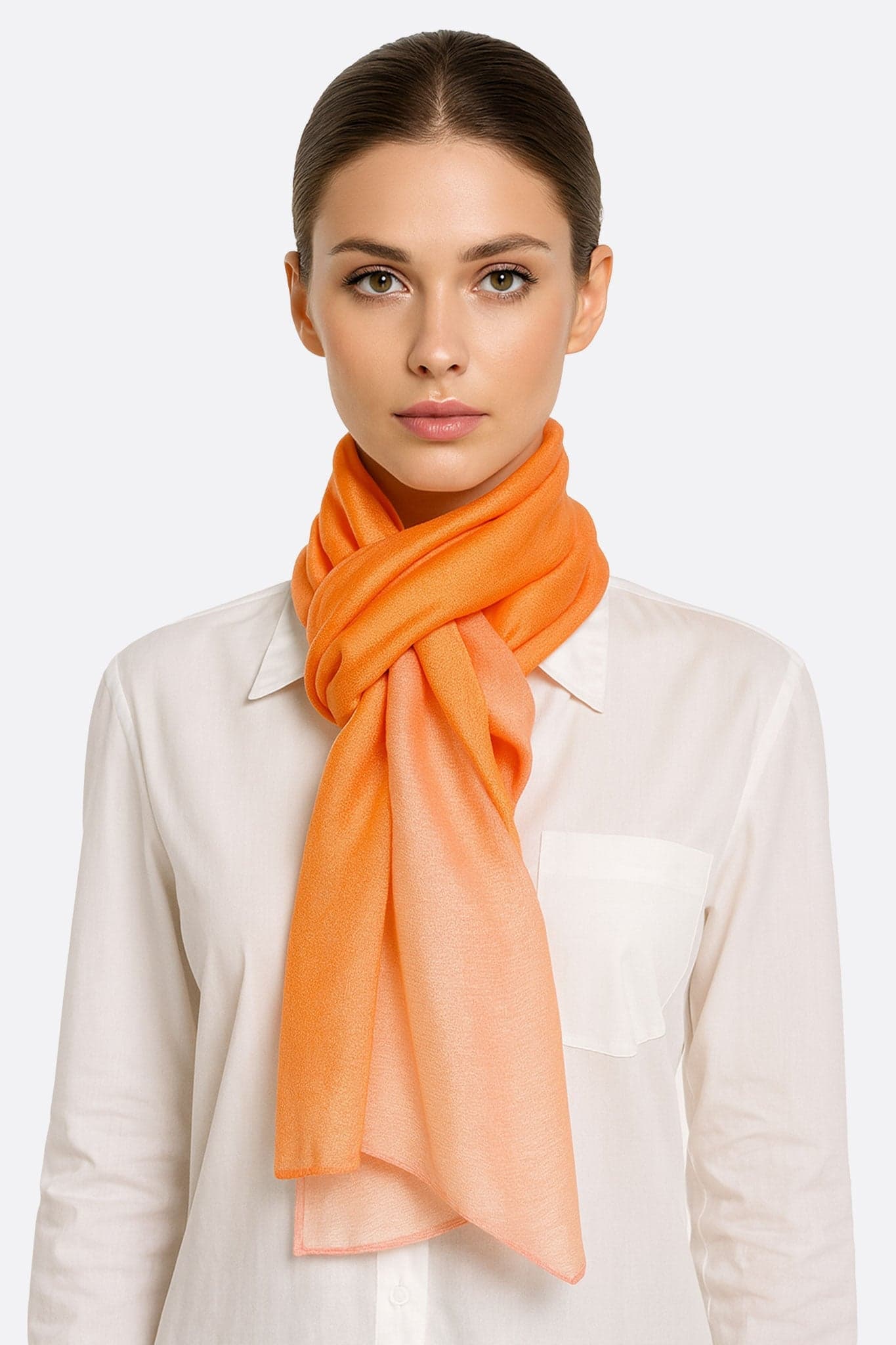
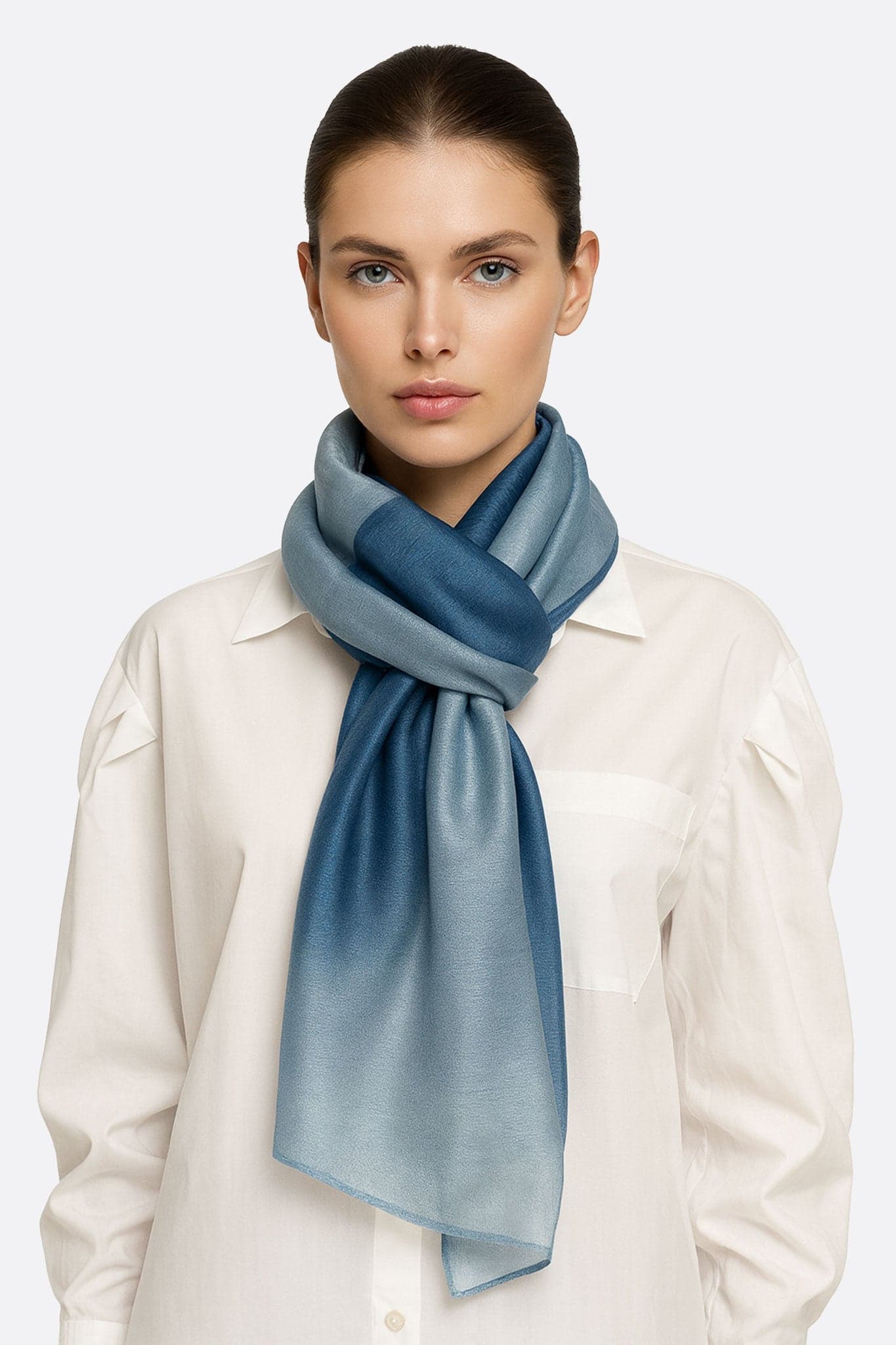
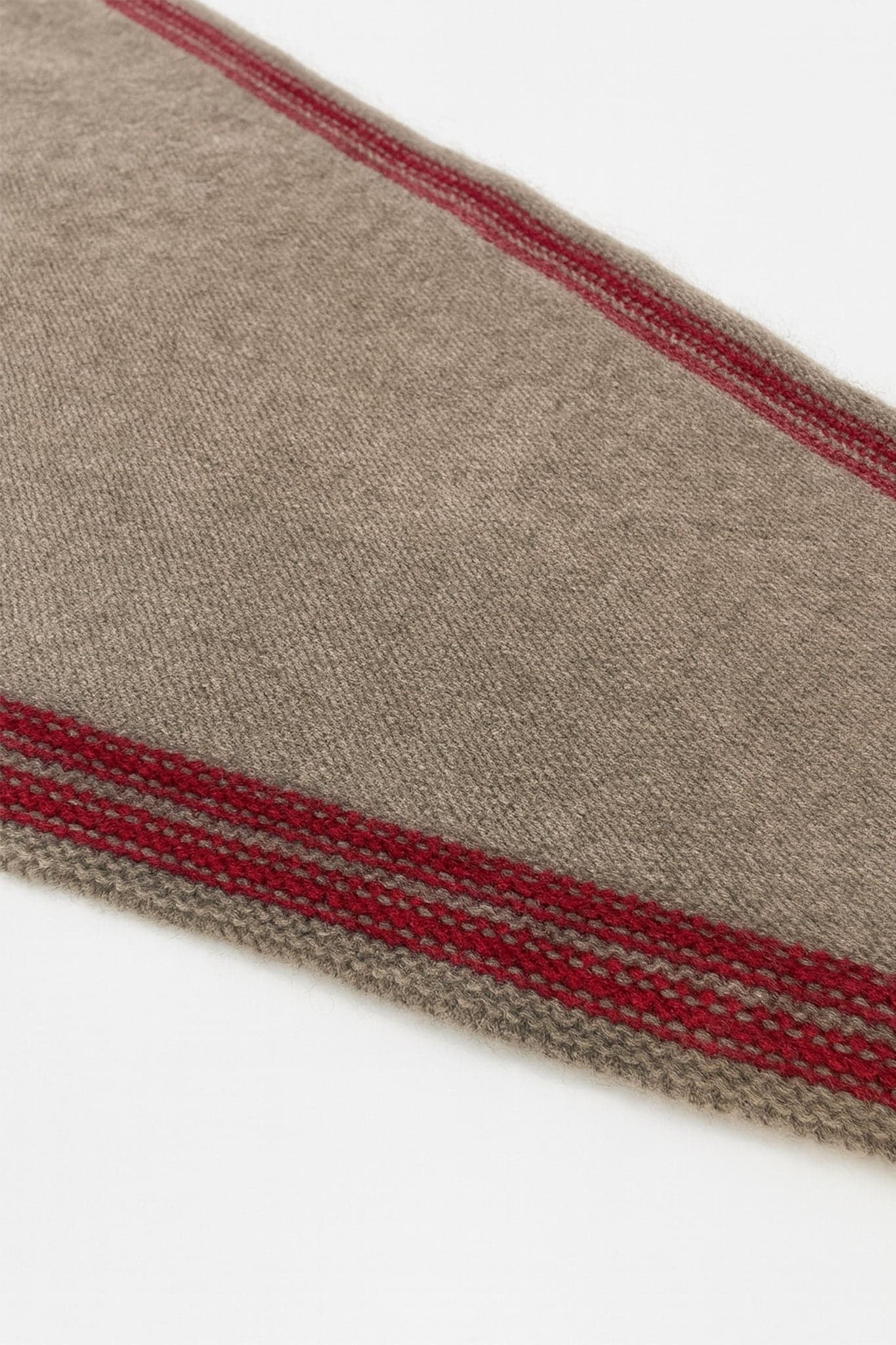
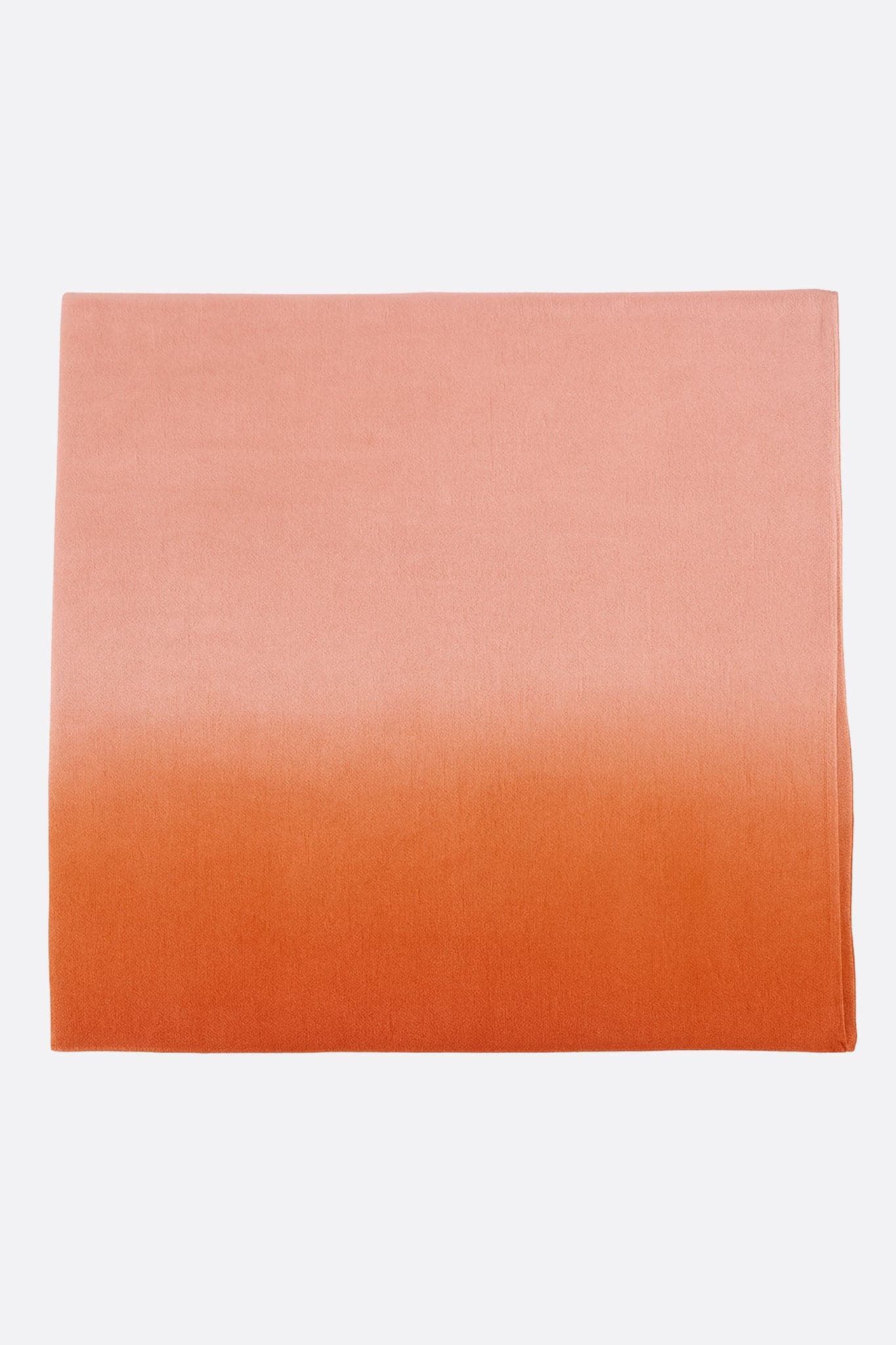
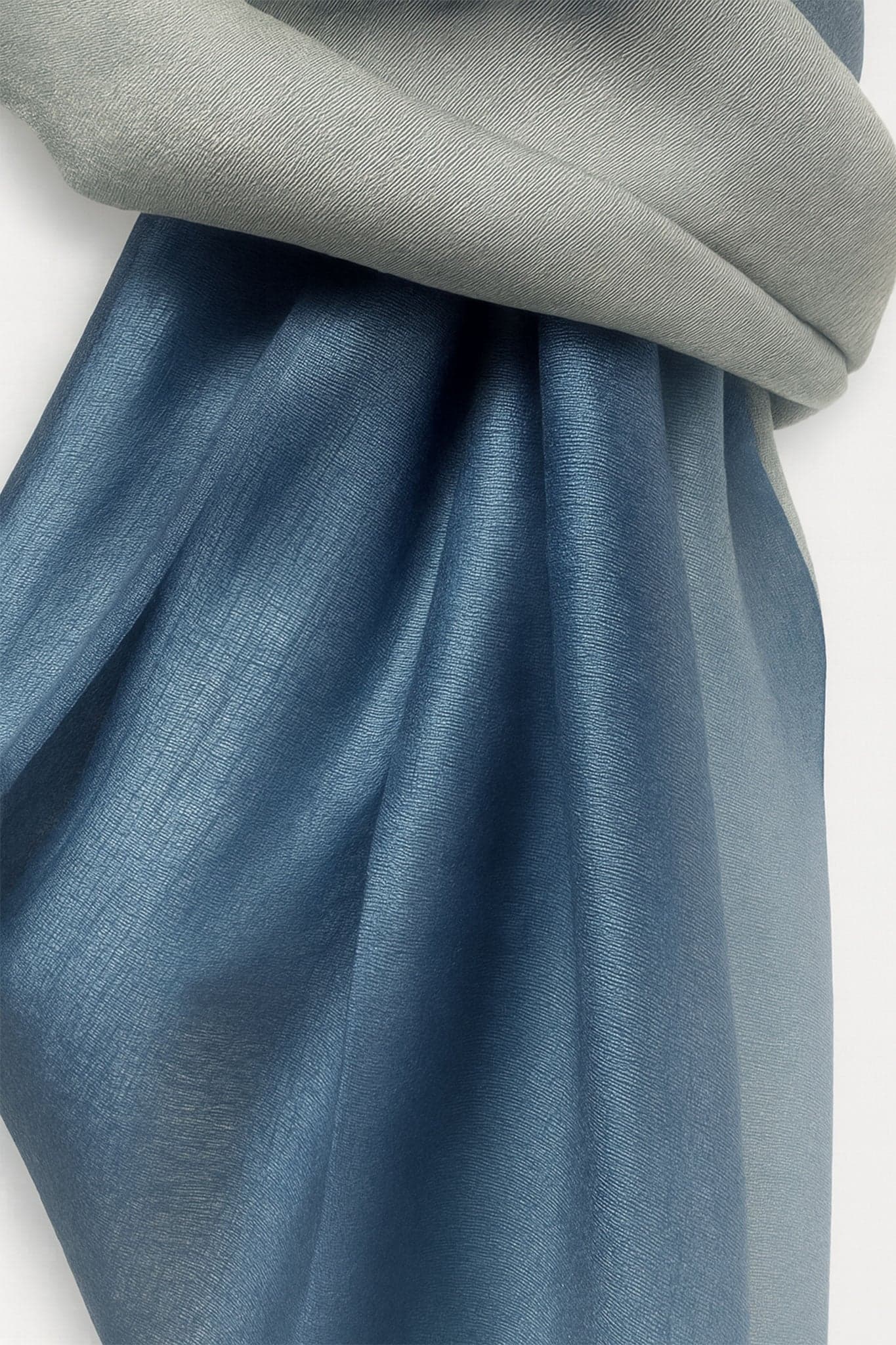
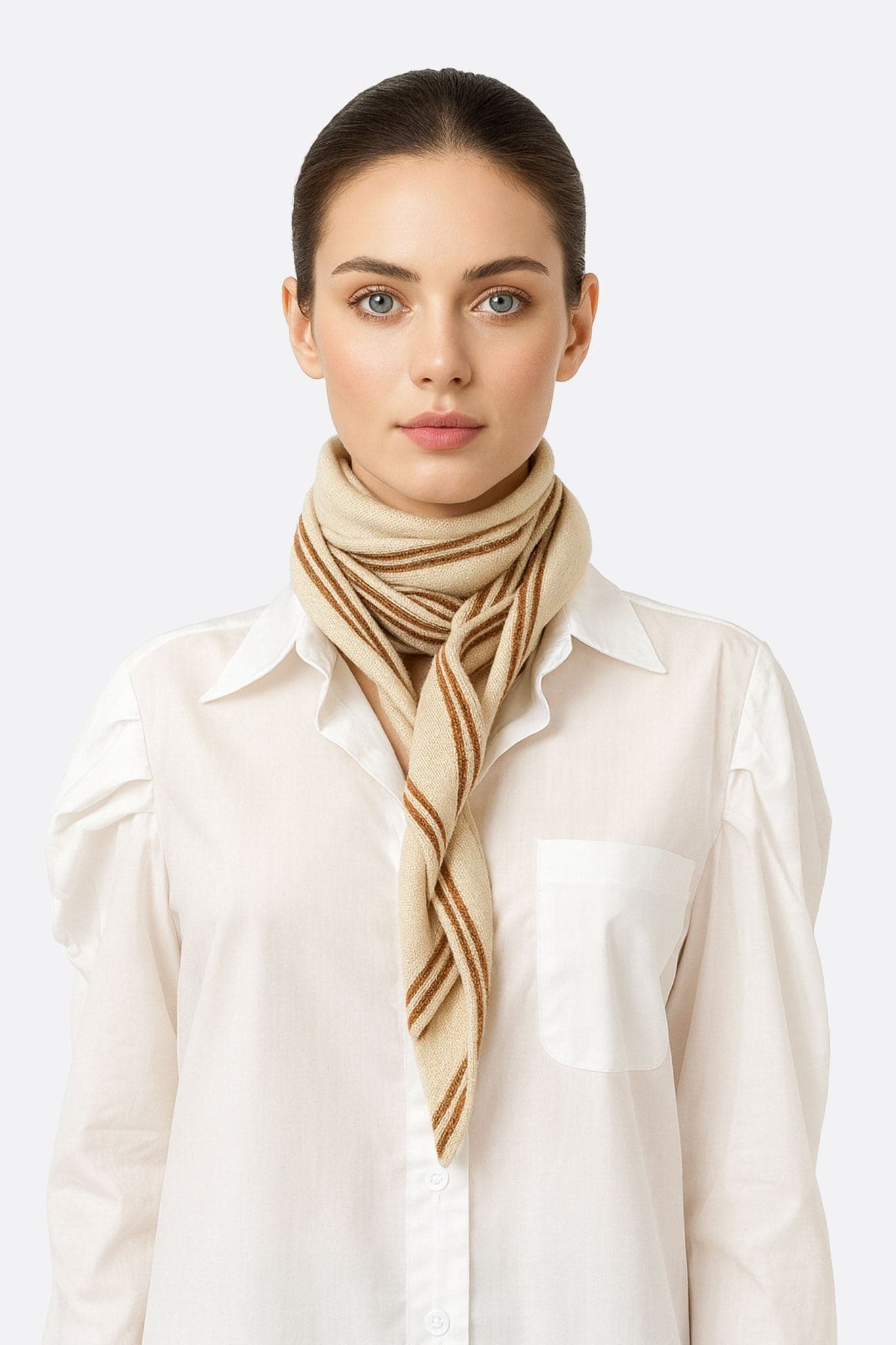
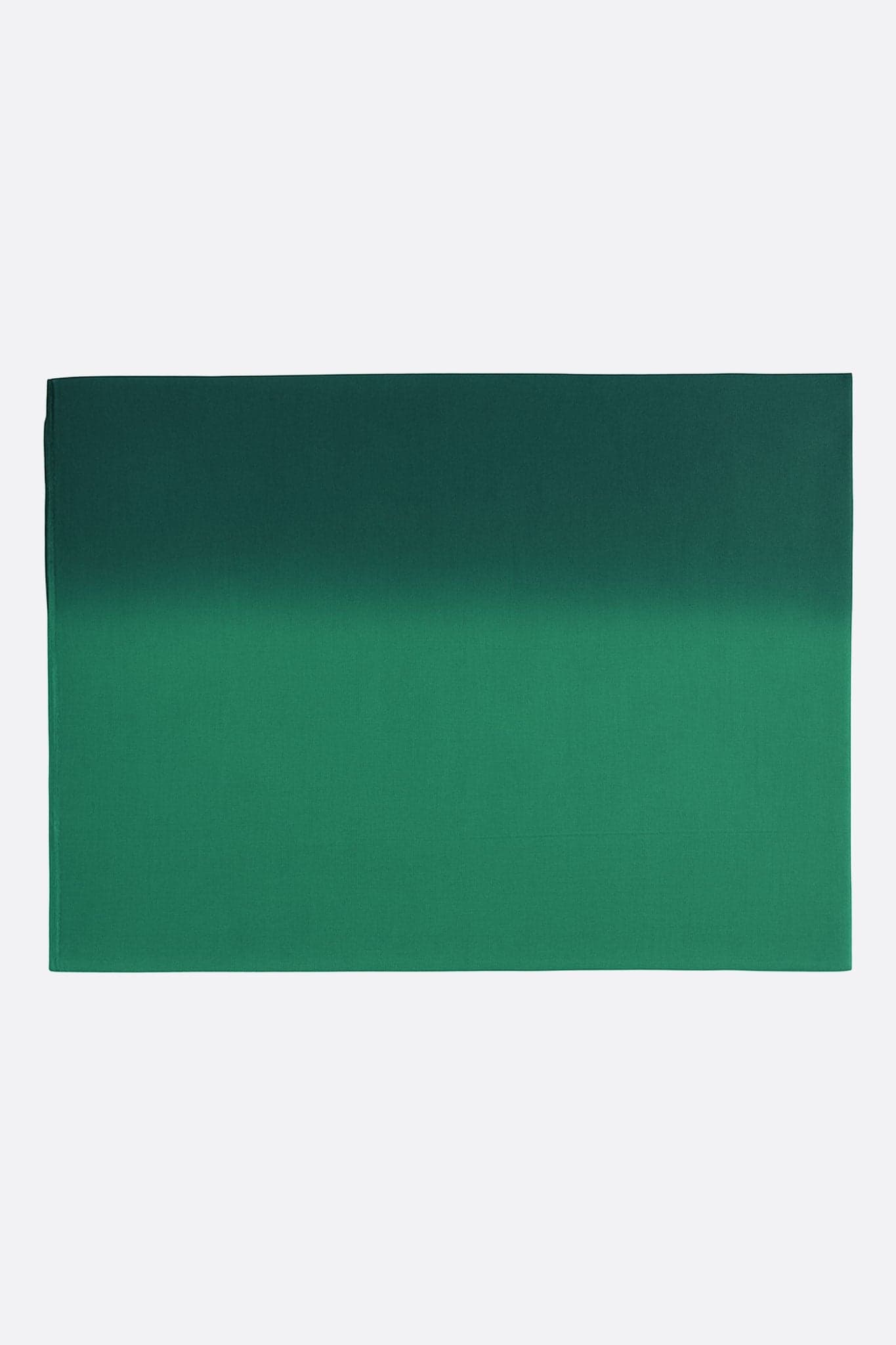
A wide cashmere scarf differs from a narrow one in how it ties: more enveloping, it is often worn open. Alongside these, our gradient scarves in silk and cotton form a family of their own. The blend is a technical choice rather than an economy: cotton gives body and holds a knot, silk gives light and fluidity at the ends. A gradient in blue, midnight blue and black, green, orange, or sand nude into powder pink reads differently depending on how you fold it, which a fixed print cannot do. The beige models with brown or red stripes and the black with white stripes take the opposite route, working a graphic line. For a 100 % silk square with a hand-rolled hem, look to our silk squares.
Choosing colour: neutrals that last, contrasts that lift

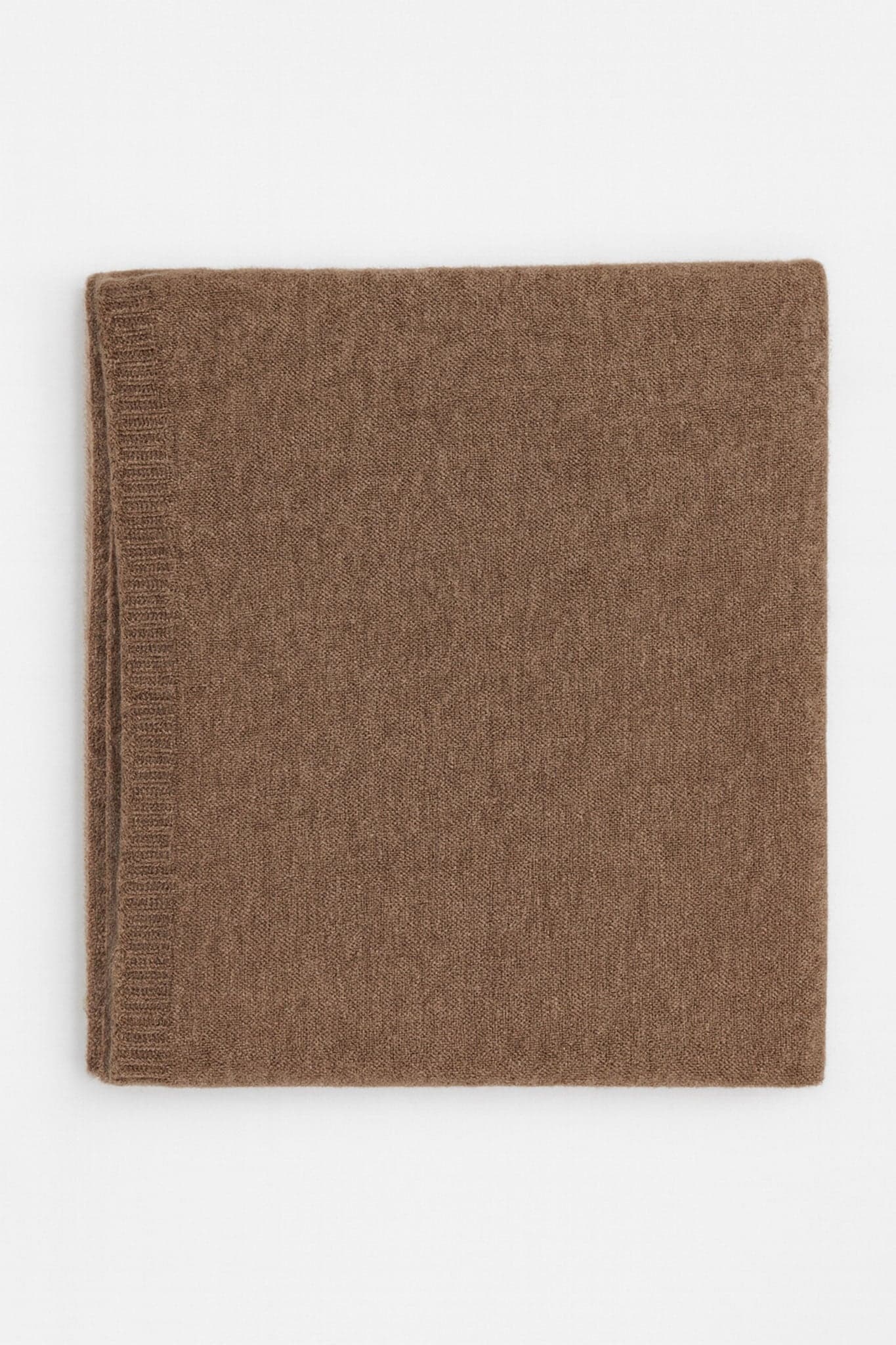
Choose a scarf colour against the outfit, not with it. Deep neutrals, black, pearl grey, sand beige, white and brown, are worn daily and do not date; buy these first and in good material, since they will do the most work. Intermediate tones such as marbled pink, sage green and taupe add a nuance without committing the whole outfit. Sharp contrasts, orange or midnight blue, belong on restrained silhouettes where they become the single point of focus: on a black dress, one coloured piece is enough and two cancel each other out. A simple rule for building a base: two neutrals, one nuance, one contrast.

Open knit and finishing: what separates a good piece

Open knit is a construction, not a decorative pattern. The gaps hold air, and therefore warmth, while keeping the piece light and breathable: that is what lets you wear a cashmere scarf indoors without overheating. The trade-off is vulnerability to snagging, which means storing it flat and away from zips. On a knitted piece, look first at the regularity of the border and at how the ends are finished: a hand-knotted fringe holds, a cut fringe frays within a few washes. On a blend, check the actual composition rather than the commercial name, because a blend containing very little cashmere is often still sold under that word.

Caring for cashmere, wool and blends

Wash cashmere by hand at 30 °C maximum with a mild soap or a dedicated wool detergent. Never wring the piece: press it between two towels, then dry it flat, in the shade, reshaping it by hand. A wet scarf hung up will stretch and will not recover. The pilling of the first few weeks is normal on new cashmere and lifts with a cashmere comb; do not pull it off by hand, as that breaks the neighbouring fibres. Store flat, never on a hanger, with a cedar moth sachet. Our article on the cashmere scarf covers the habits that make the material last.

How to wear and tie these pieces

Knots follow the material rather than the trend: a thick knit holds a simple loop and refuses tight knots, while a fluid scarf takes structured tying. Our guides cover each gesture: tying a square around the neck, wearing a scarf in your hair, choosing by occasion and the art of the scarf. By season, a warm material belongs to winter and an open knit to summer.

FAQ: cashmere scarves, ponchos and shawls

Cashmere or wool scarf: which should I choose?
Cashmere is warmer at equal weight and softer against the skin: it is the choice for comfort and fineness. Wool resists abrasion better and copes with heavy daily use: it is the choice for durability. If you are unsure, a modal, wool and cashmere blend combines fluidity, structure and softness, and suits anyone who finds pure cashmere too delicate.
What is the difference between a beach poncho and a cashmere poncho?
They are two different garments under one name. The open-knit beach poncho dries quickly and is worn over a swimsuit as you leave the water. The cashmere poncho, cut like a large triangular wrap, replaces a light jacket in mid-season and sits on the shoulders. The first is a summer accessory, the second a transitional piece between two seasons.
Which shawl should I choose for a wedding?
Choose the shawl against the dress rather than matched to it: a plain dress calls for a textured wrap, an embroidered or beaded dress calls for a smooth one. Pick a piece that works over the shoulders during the ceremony and folded over the arm at dinner. For an outdoor ceremony, a wider wrap gives the extra material you will want late in the evening.
How do I care for a cashmere scarf?
Hand wash at 30 °C maximum with a mild soap, never wringing the piece. Press it between two towels, then dry flat in the shade, reshaping by hand. Never hang a wet scarf, as it will stretch permanently. The pilling of the first weeks lifts with a cashmere comb, never by hand. Store flat with a cedar sachet.
What does a silk and cotton blend add compared with pure silk?
Cotton gives body and holds a knot, while silk brings light and fluidity at the ends. A gradient scarf in silk and cotton therefore holds a structured knot better than pure silk, which is more slippery, while keeping its sheen. If you are looking instead for a 100 % silk twill square with a hand-rolled hem, the silk squares collection is where to go.
Why does open knit keep you warm when it is full of gaps?
It is the gaps that insulate: they hold a layer of still air against the skin, and it is that air, not the material, that does the insulating. Open knit therefore stays warm while remaining breathable, which is why you can keep it on indoors without overheating. The trade-off is sensitivity to snagging: store these pieces flat, away from zips and jewellery.