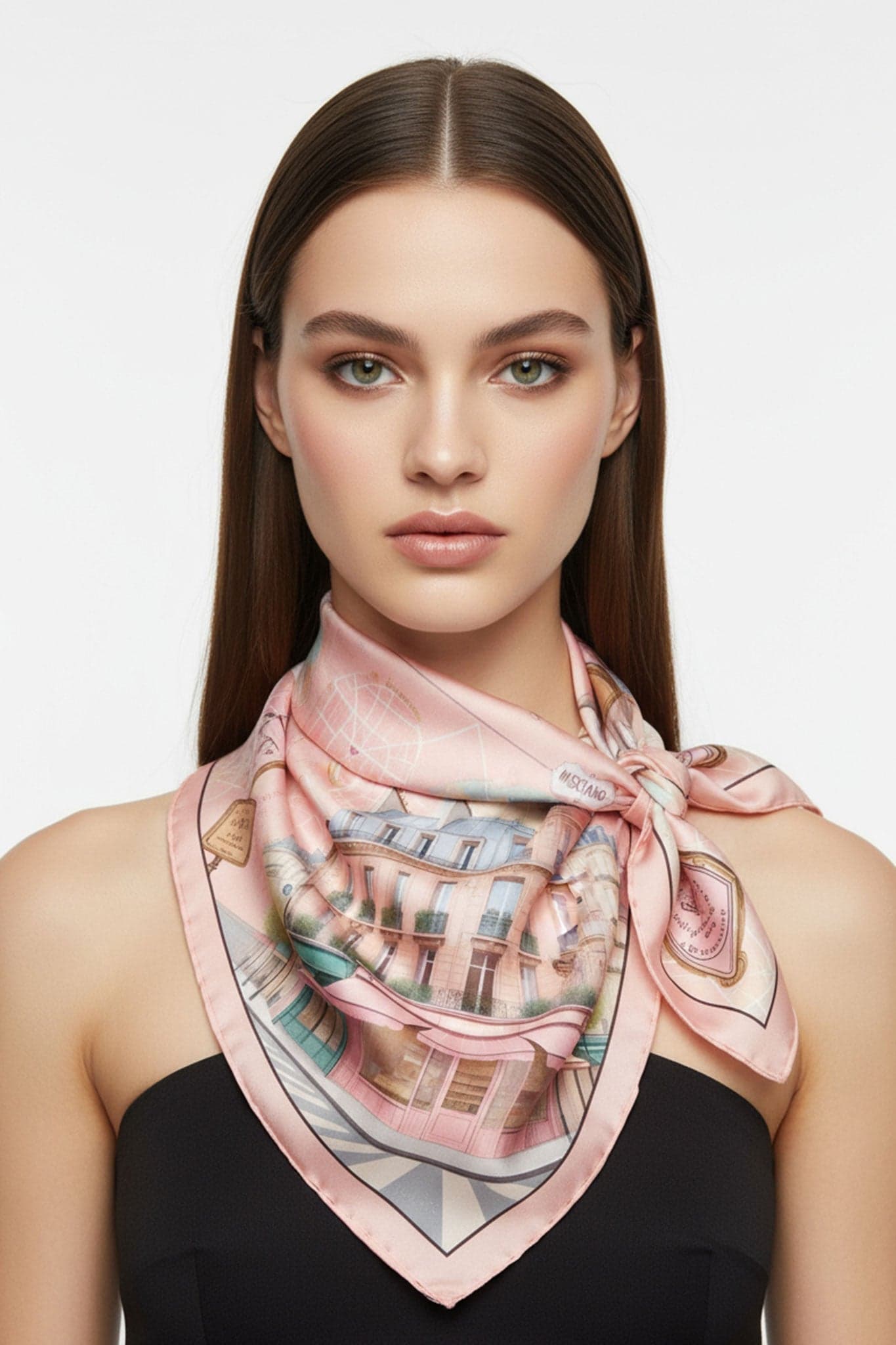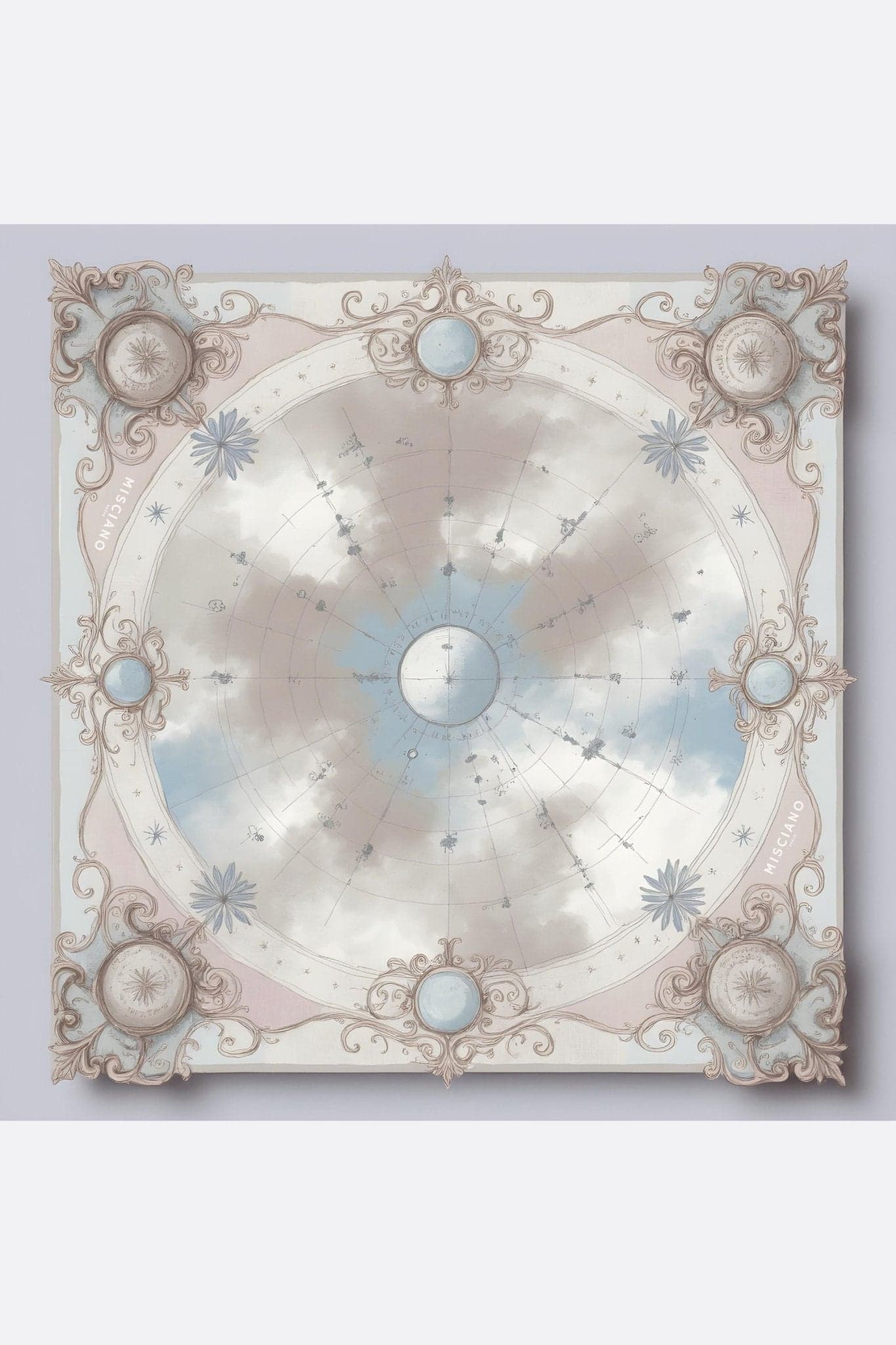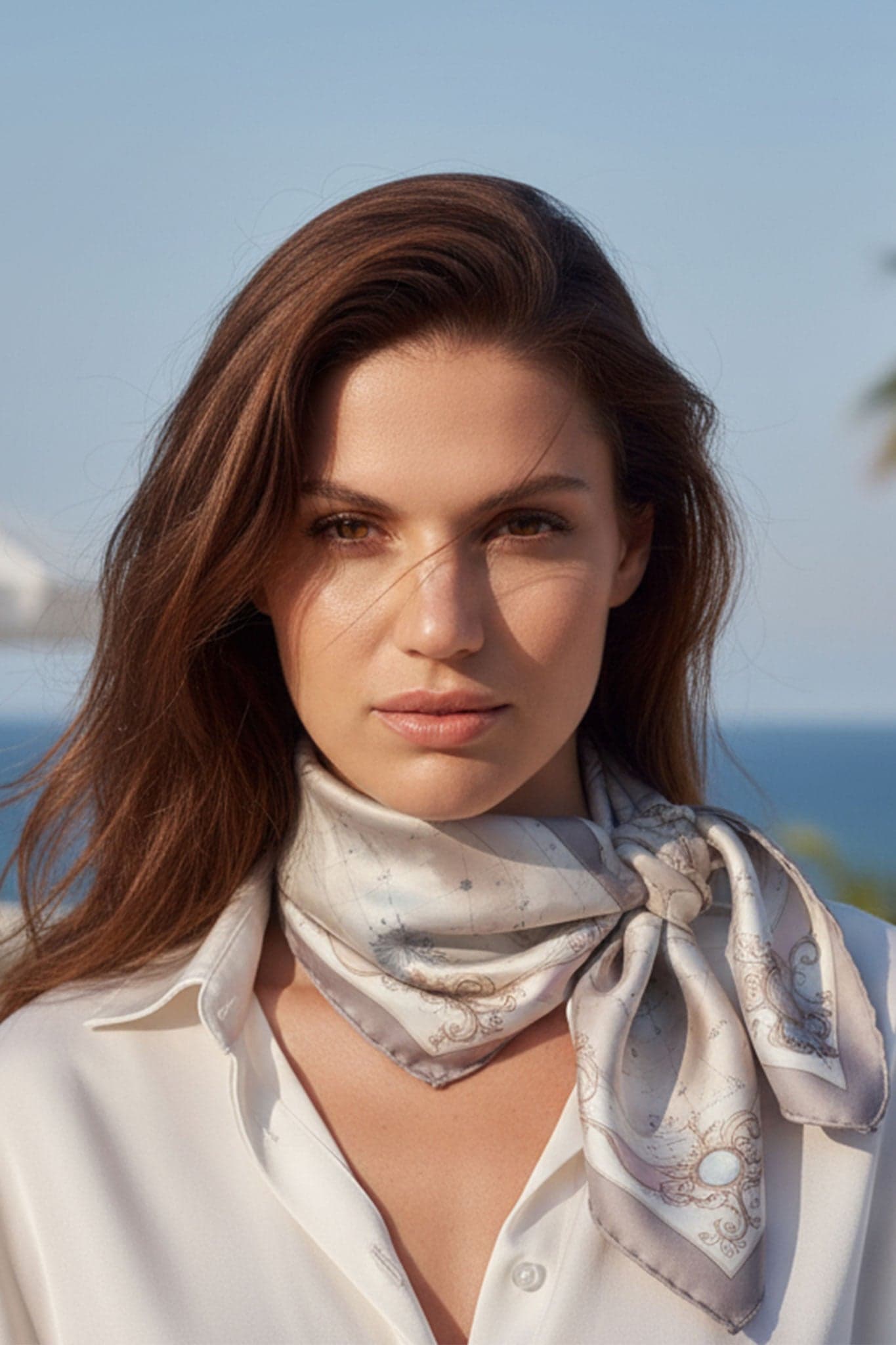
How to tie a silk scarf around your neck: 13 neat and elegant ways

You have a silk scarf in hand, an already assembled outfit... and that moment of hesitation in front of the mirror: "how do I tie it, so it holds, falls well, and the silk remains impeccable?"
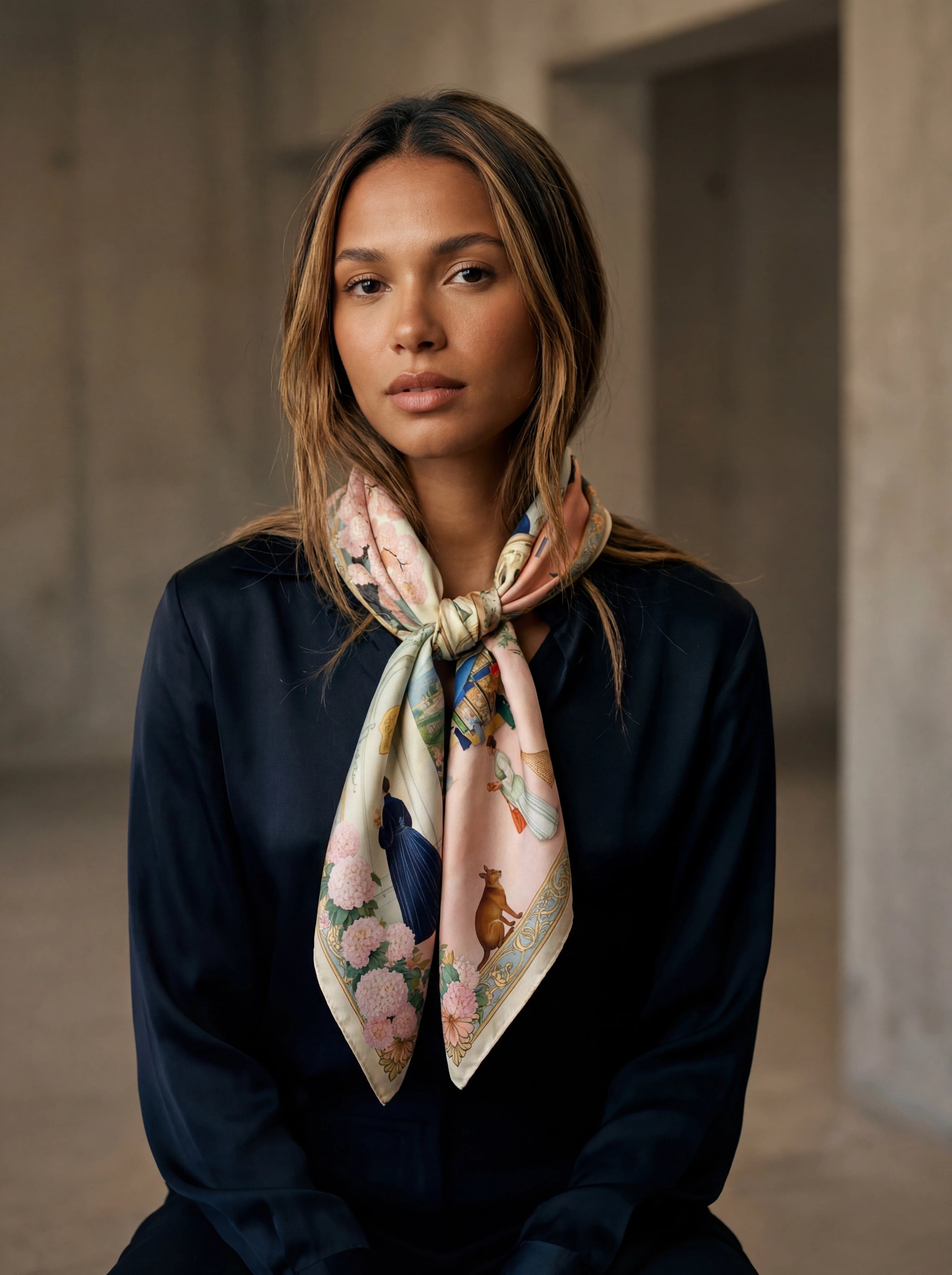
Around the neck, the 70x70 silk square makes two turns as a band and the 90x90 square three.
The difference between a knot that looks approximate and a neat tie is rarely complexity: it's the preparation (folding, tension, placement) and two or three precise gestures to tame the natural glide of silk.
Here, I show you how to tie a silk scarf around the neck in 13 ways, with concrete markers: where to place the tip, how to adjust the volume, how to prevent the knot from "rolling" or the ends from escaping throughout the day.
Before tying: 4 adjustments that change everything (folding, tension, placement, hold)
A successful tie starts before the first knot. Silk has a light fold memory, a fluid hand, and a glide that magnifies the drape... but is less forgiving of approximations.
First step: choose your folding. For most neck knots, work in "triangle" (fold the square in half) or "band" (roll/fold in width). The triangle gives presence and a graphic point; the band offers a finer, more "drawn" line.
Just like Grace Kelly, who embodied a chic and sophisticated style, the choice of knots for a silk scarf can transform your outfit into a timeless fashion statement.
For a neat band, fold in small regular sections rather than rolling tightly: you get a flatter ribbon, which fits better under the collar and marks the fiber less.
Second adjustment: the tension. Silk doesn't like sudden pulls: pull gently, with micro-adjustments. A knot too tight "breaks" the volume and can crease the center; a knot too loose slips and turns.
Seek medium tension, then fix the shape by flattening the knot with your fingertips (and not by pulling on the ends). Third adjustment: the placement on the neck. Higher (near the base of the neck), the effect is neat and dressed; lower (on the collarbone), it's more relaxed, more casual.
Finally, consider hold: on a fluffy knit, silk slightly grips and holds better; on a very smooth shirt, it can turn. In this case, place the knot on the side or under a collar, or make a double loop to create friction.
If you want to go further on the criteria of hand, finish, and hold (and on maintenance that preserves the shine), keep this guide as a reference: Expert guide: choosing, wearing, and maintaining a silk scarf. Here, we deliberately focus on the gesture: tying around the neck, with precision.
13 ways to tie a silk scarf around the neck (step by step, rendering, and when to choose them)
For each method, I indicate the ideal folding, the step-by-step, and then the result. General tip: if your silk is very fluid, prefer a slightly wider band folding (3 to 5 cm): the knot "bites" better, and the design remains readable.
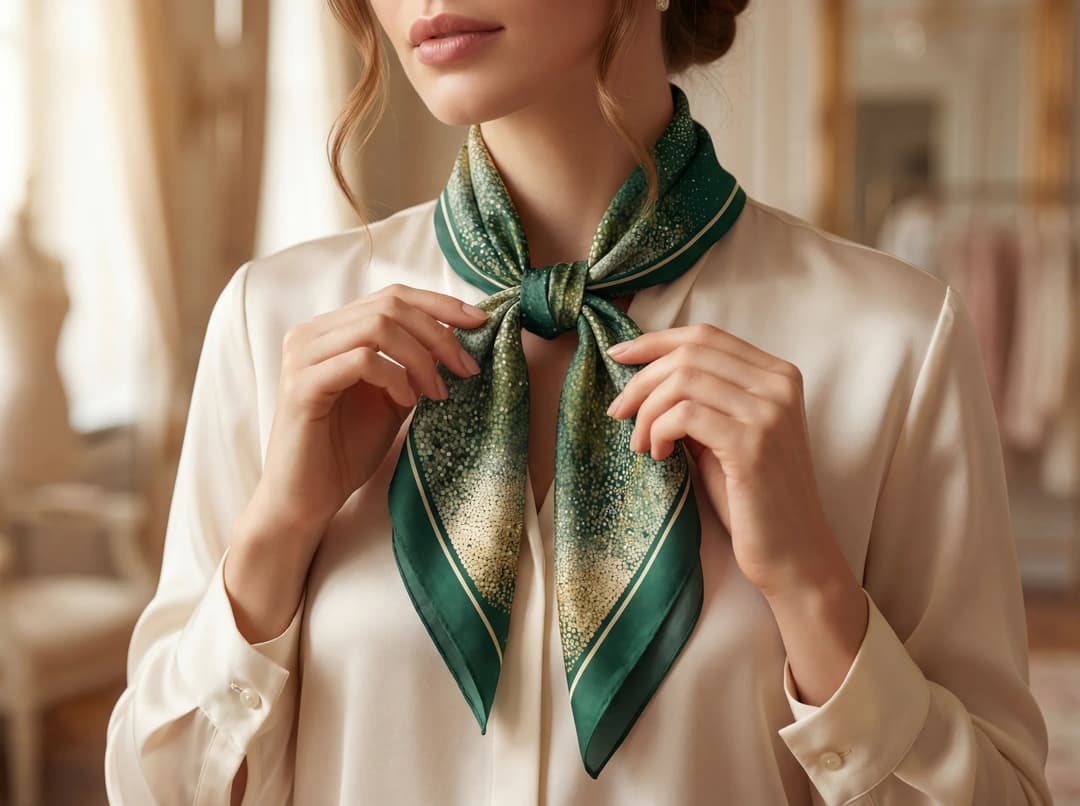
The simple neck wrap (band)
Folding: regular band, obtained by a neat folding across the entire width to create a continuous line, without unnecessary thickness.
Gesture: place the band around the neck, ends in front, ensuring the lengths are balanced. Cross once without tightening, then make a simple knot in the center. Gradually adjust the tension, and flatten the knot with the thumbnail to avoid any visible excess thickness.
Result: a neat and controlled line, highlighting the neck without weighing it down. This knotting enhances exposed necks and pairs particularly well with a round collar, boat neckline, or shallow neckline. It is suitable for medium to large silk squares, whose hold allows for a regular band throughout the day.
Usage: ideal for a streamlined silhouette, this neck wrap works well in both a daily setting and a more dressed-up outfit, when seeking a discreet yet structuring presence.
The mini double wrap (band)

Folding: thin and regular band, worked with precision to limit thickness and ensure good flexibility when worn. The narrower the band, the more delicate and controlled the result will be.
Gesture: wrap the square twice around the neck, without twisting, ensuring each wrap lies flat. Then bring the ends to the front, adjust the lengths, and make a simple knot or a small flat knot depending on the desired effect. The tension should be firm but comfortable, to ensure stable hold without marking the neck.
Result: a discreet textile jewelry effect, similar to a flexible choker. This knotting creates an elegant visual presence while remaining minimalist, and maintains excellent stability throughout the day, even during repeated movements.
Usage: particularly suited to streamlined silhouettes and sober outfits, the mini double wrap complements both a closed shirt and an open collar. It highlights silk squares with fine designs or subtle contrasts, whose patterns are read in the repetition of the wraps.
The flat knot (band)
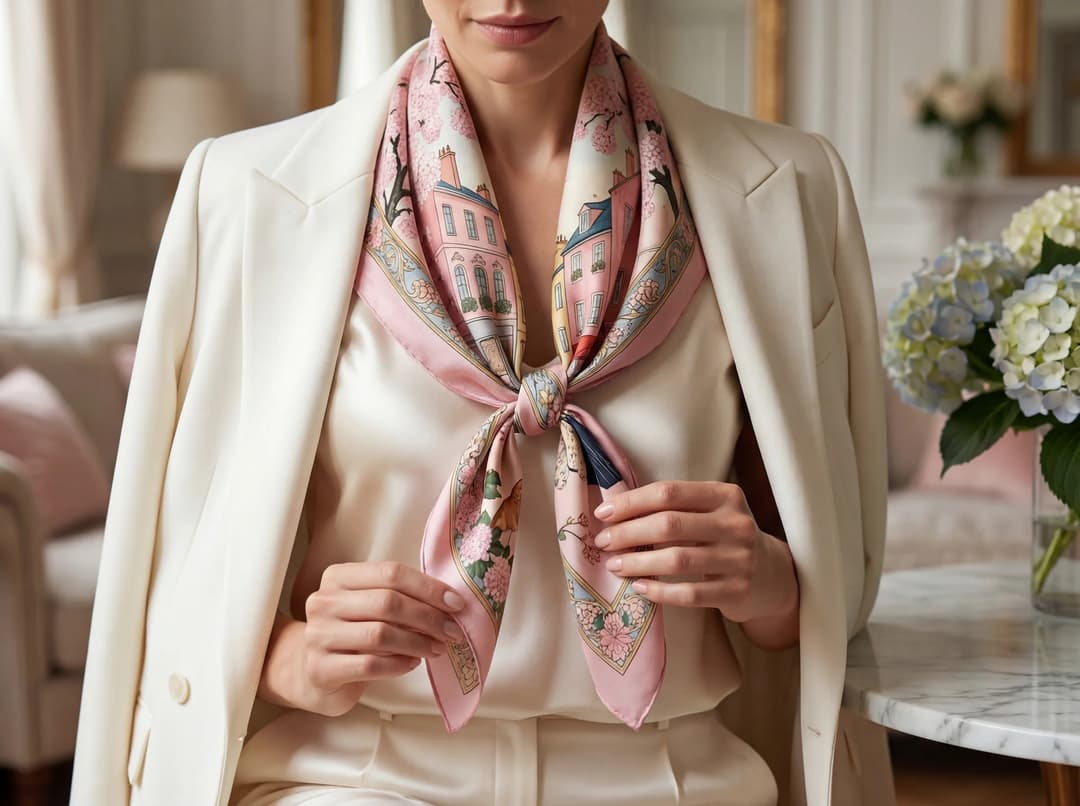
Folding: medium-width band, regular throughout the length, to maintain a good balance between hold and flexibility. A band that is too thin would lack presence, while a band that is too wide would create unnecessary excess thickness at the knot.
Gesture: first make a simple, centered, and moderately tight knot. Then make a second knot on top by reversing the crossing direction, as for a shoelace, which allows for a flat and stable knot. Carefully flatten the whole with fingers or the thumbnail to smooth the volumes and achieve a neat finish.
Result: a clean and graphic result, with a clear reading, structuring the upper bust without drawing excessive attention. The knot stays well in place and retains its shape throughout the day.
Usage: particularly suitable under a jacket, coat, or trench, this knotting accompanies structured silhouettes and straight lines. It works well with silk squares with geometric patterns or centered designs, whose regularity is highlighted by the neatness of the knot.
The side knot (band)
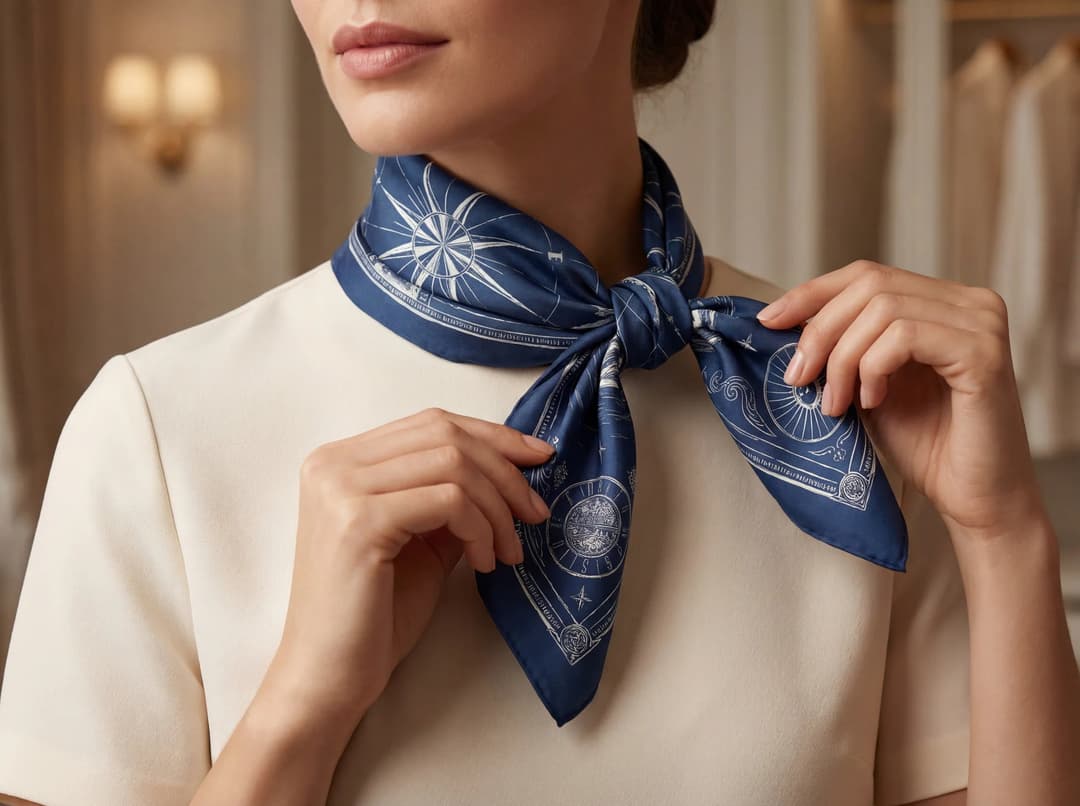
Folding: regular band, neither too thin nor too wide, allowing a good compromise between flexibility and support. The regularity of the folding is essential for the knot to maintain a clear appearance once off-center.
Gesture: place the band around the neck, then deliberately move the crossing point slightly to the left or right, depending on your preference or the line of the garment. Then make a simple knot or a flat knot, adjusting the tension progressively. Flatten the knot so that it naturally follows the curve of the neck without creating visible bulk.
Effect: an elegant look, less formal than a centered knot, which brings a discreet asymmetry to the wearing of the scarf. This visual shift draws the eye without breaking the balance of the silhouette.
Usage: particularly practical when the silk tends to turn during the day: the lateral positioning acts as a natural blocking point. This knotting works well with open jackets, low necklines, or pieces with clean lines, to which it adds a touch of controlled movement.
The sliding knot (band, "slide")
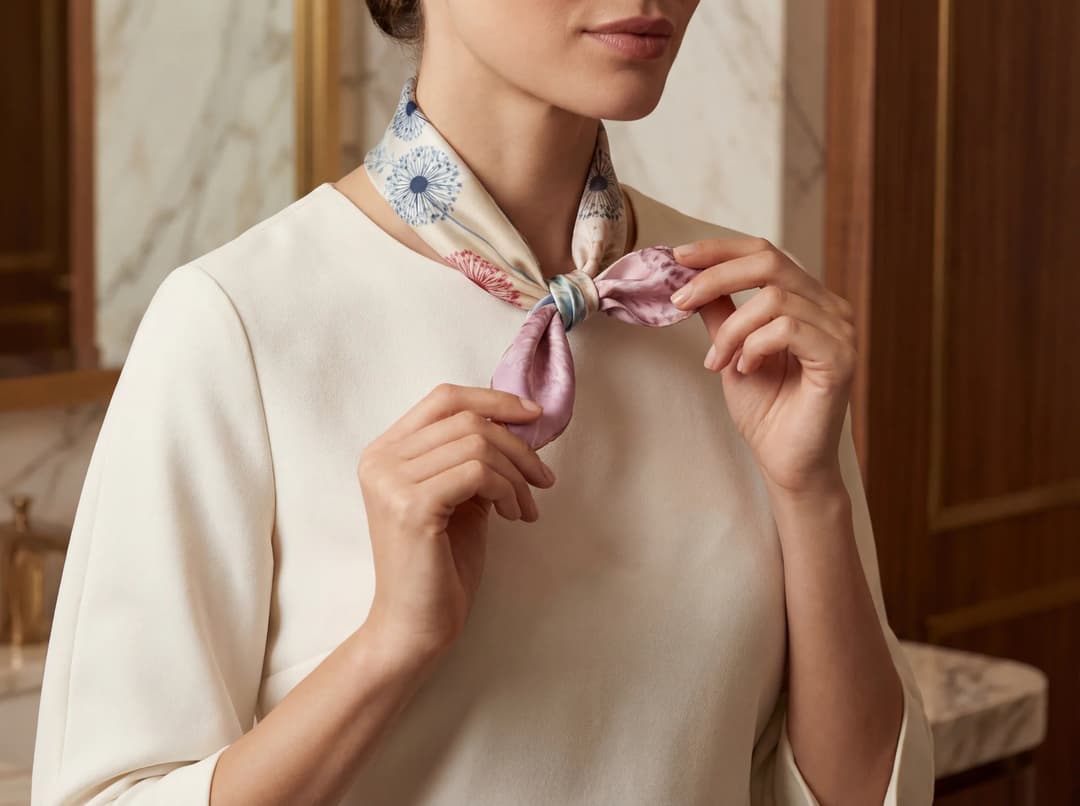
Folding: thin and flexible band, carefully regular to allow smooth sliding without snags. A band that is too thick would hinder the sliding and affect the precision of the adjustment.
Gesture: form a small loop with one of the ends, without tightening it. Then pass the other end inside this loop, and gradually adjust the position of the knot by sliding the silk. The movement should remain smooth and controlled to preserve the neatness of the band and avoid any deformation of the fabric.
Effect: a discreet and technical knot, whose main quality lies in its precision. The height of the scarf is adjusted to the millimeter, allowing instant adaptation according to the neckline or layering of clothes.
Usage: particularly useful when alternating between a closed collar and an open collar during the day, this knot offers great flexibility without having to undo the whole thing. It is suitable for light silk scarves, whose fluidity allows for stable and lasting adjustment.
The discreet "cowboy" (triangle)
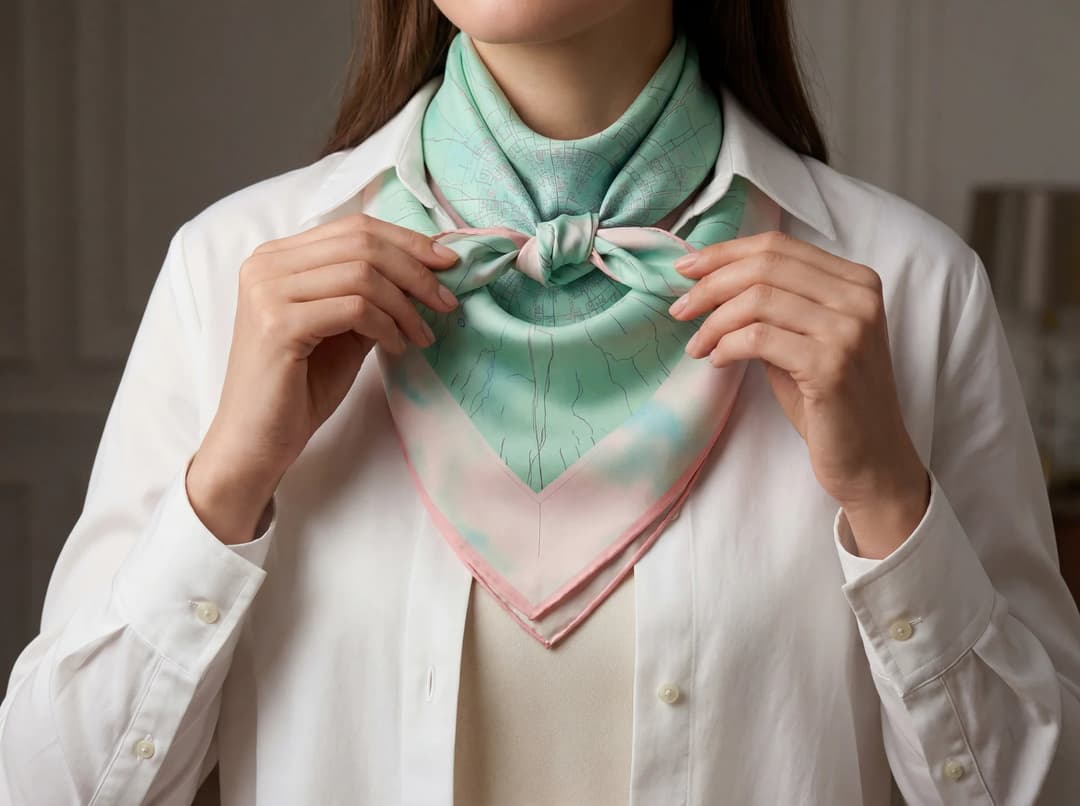
Folding: neat triangle, obtained by precise folding so that the central point is well marked and symmetrical. The quality of the folding directly affects the readability of the final effect.
Gesture: place the point of the triangle forward, centered on the sternum. Pass the two ends behind the neck, cross them without twisting, then bring them forward. Tie them under the point with a simple knot, adjusted but not tight, so that the silk retains its natural fluidity. Make sure the point slightly covers the knot for a clean and discreet effect.
Effect: a neat and structured point, well readable, which brings a graphic presence without excess. This knotting highlights the central axis of the torso and creates an elegant contrast when worn over a white shirt or a plain piece.
Usage: ideal for those looking for a softer alternative to the high-tied scarf, this discreet "cowboy" works well under an open jacket or with a slightly unbuttoned shirt. It is particularly suitable for silk squares with balanced patterns or a light background, whose point remains visually stable throughout the day.
The urban bandana (triangle)
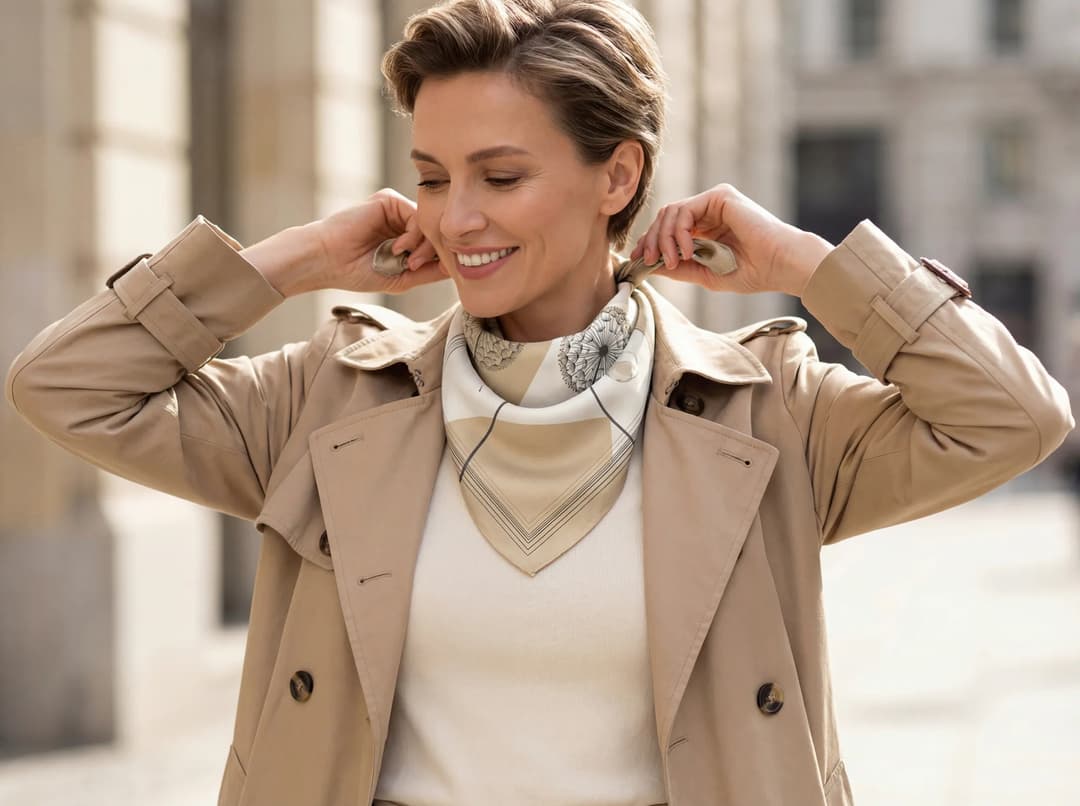
Folding: start by forming a neat triangle, then fold the base once or twice depending on the desired length to shorten the tip. This fold allows you to control the volume and avoid an overly ample or drooping effect.
Gesture: place the tip of the triangle forward, well-centered. Pass the ends around the neck and tie them behind the neck with a simple, adjusted but comfortable knot. The knot should keep the square in place without compressing, to maintain a feeling of lightness.
Effect: a relaxed and contemporary look, evoking a controlled weekend spirit. The shortened tip creates a more dynamic line while offering light neck protection against wind or temperature variations.
Usage: particularly effective under a trench or open coat, this urban bandana stays in place and naturally accompanies movements. It is suitable for medium-sized silk squares, plain or with discreet patterns, and easily integrates into a simple and functional urban silhouette.
The short lavallière (wide band)

Folding: wider band, about 6 to 8 cm, obtained by regular folding that retains material without creating rigidity. This width allows for flexible and well-shaped loops.
Gesture: first make a simple, centered, and loosely tied knot. Then form two loops, like a gift bow, ensuring they have equivalent volume. Gradually tighten by holding the loops rather than the ends, to preserve their roundness and avoid a crushed effect. Finally, adjust the orientation so that the lavallière rests naturally on the upper chest.
Effect: a controlled and balanced volume, bringing a distinctly feminine touch without falling into rigidity. The loops remain flexible, slightly moving, and maintain a fluid elegance when worn.
Usage: ideal with a blouse, shirt, or dress with a low neckline, the short lavallière gently structures the silhouette. It is particularly suitable for silk squares with a soft drape, whose texture allows for an expressive yet comfortable knot to wear over time.
The minimal bow tie (band)

Folding: thin and regular band, carefully worked to limit thickness and achieve a neat finish. A band too wide would visually weigh down the knot and detract from its minimal character.
Gesture: proceed as for a lavallière, forming two loops, but keeping them intentionally small and tight. Minimize the length of the ends, then "cut" the whole visually by tucking the tips behind the knot. Adjust by holding the loops to maintain a clean symmetry and a well-defined line.
Effect: a precise and graphic knot, with a clear reading, evoking the bow tie without adopting its rigid formality. The volume is contained, almost architectural, which enhances its discreet elegance.
Usage: perfect with a buttoned shirt collar, this knot brings a touch of controlled sophistication to a structured outfit. It is particularly suitable for silk squares with fine or plain patterns, whose sobriety highlights the clarity of the gesture
The soft ascot (rolled triangle)

Folding: form a neat triangle, then roll it from the base to the tip to obtain a soft and regular roll. The rolling should remain light, not too tight, to retain material and a natural relief.
Gesture: place the roll around the neck, letting the ends fall in front. Cross them in the center, then bring one end up through the loop formed at the crossing. Gradually adjust the height and tension so that the ascot fits the neck without rigidity.
Result: an elegant central relief, both structured and fluid, subtly drawing attention to the neckline. This knot creates a soft volume, never strict, and brings a refined presence without excess.
Usage: particularly flattering under an open collar, the soft ascot complements both a shirt and a dress with a light neckline. It is suitable for silk squares with a fluid drape, whose texture allows for a soft and comfortable roll to wear over time.
The "short tie" (band)
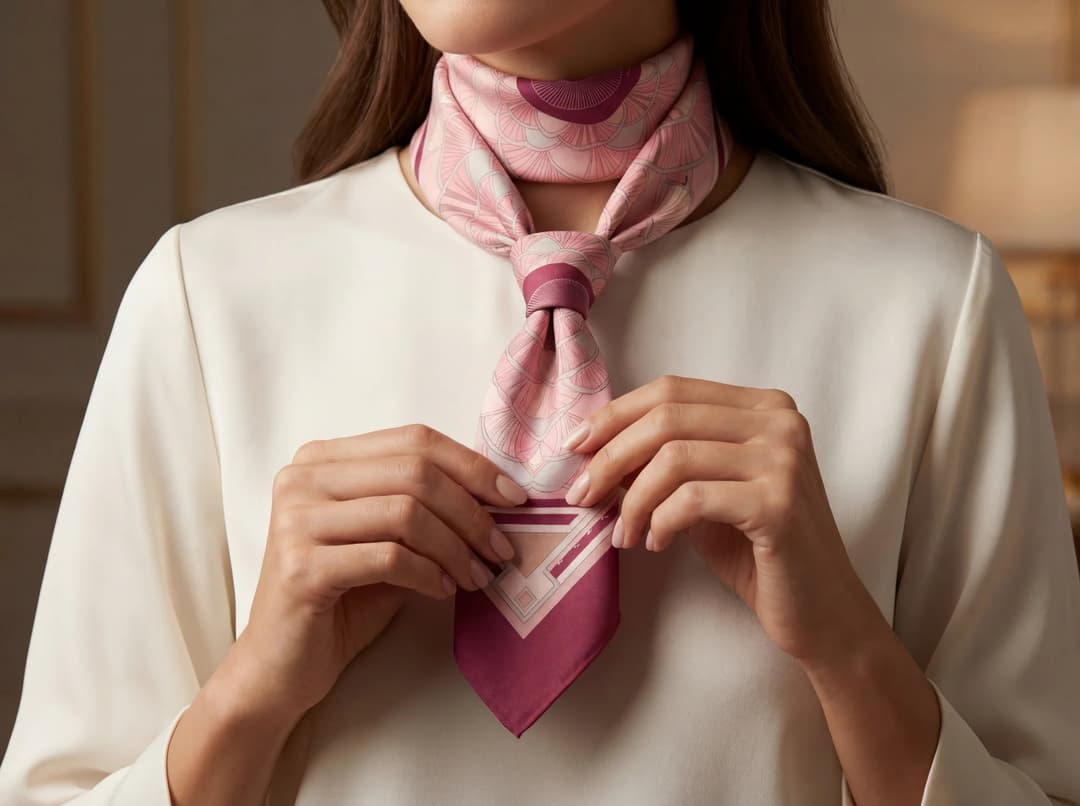
Folding: regular band, of medium width, allowing for a readable knot without excess volume. The folding should remain neat to maintain a well-defined vertical line.
Gesture: place the band around the neck, intentionally leaving one end longer than the other. Make a simple tie knot: make a loop with the long end, then pass it through the loop formed in the center. Gently tighten while guiding the knot with your fingers, then center the whole to achieve precise alignment. Adjust the final length so that the tip remains short and controlled.
Result: a light and elegant verticality, structuring the upper bust without rigidity. The knot brings a graphic presence while remaining discreet, creating a line that naturally guides the eye downward.
Usage: ideal for visually elongating a neckline or balancing a silhouette, this knot works well with both a shirt and a dress with an open collar. It is suitable for silk squares with elongated designs or sober patterns, whose simplicity highlights the neatness of the gesture.
The hidden knot (band, under collar)
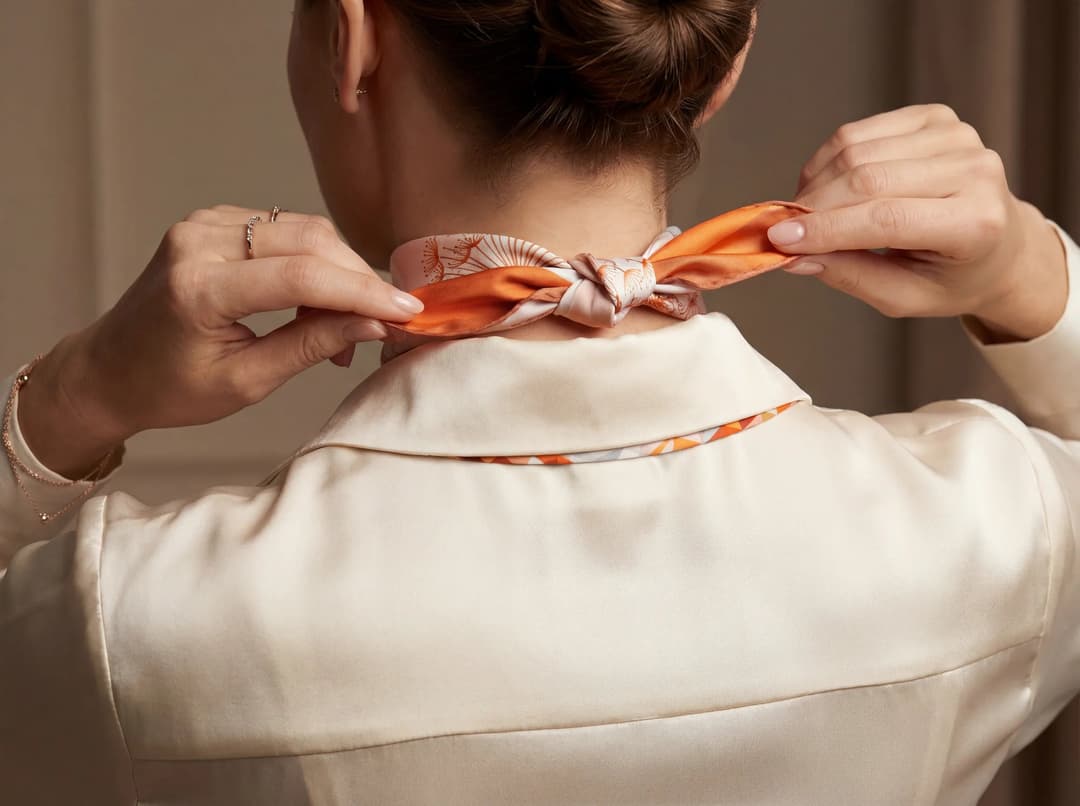
Folding: thin and regular band, worked with precision to remain almost invisible when worn. The softer the band, the more natural and discreet the result will be.
Gesture: place the band around the neck, then make a flat knot behind the neck or directly under the garment's collar. Adjust the position so that only a small portion of silk appears in front, just at the neckline. Make sure to smooth the band so that it does not create any folds or thickness under the collar.
Result: a subtle and controlled detail, suggesting the presence of silk without imposing it visually. The scarf becomes almost a texture element rather than a visible accessory in its own right.
Usage: particularly appreciated by those who wish to enjoy the contact and quality of the material without displaying a marked "scarf effect." This knot works very well with buttoned shirts, structured collars, or closed jackets, where it brings a refined and almost confidential touch.
The headscarf (triangle or wide band)
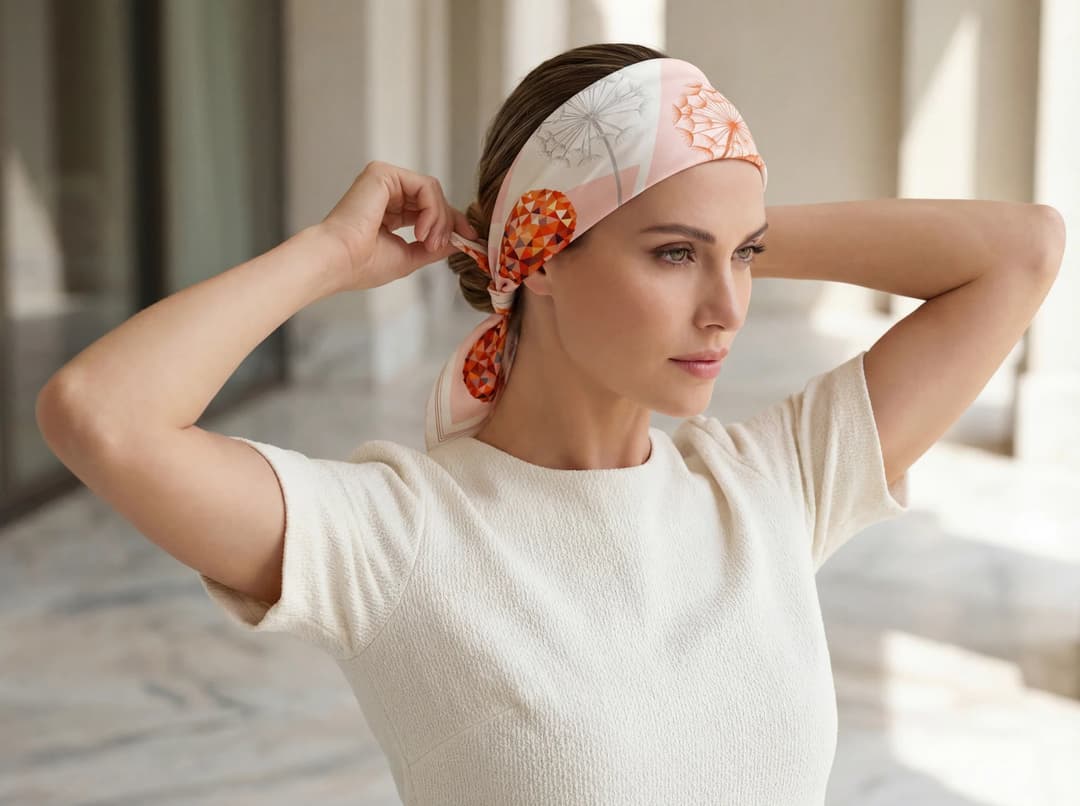
Folding: fold the square into a triangle for a classic look, or into a wide band if you want to cover more of the head while maintaining lightness. The folding should remain neat to ensure a good hold.
Gesture: place the scarf on the head, triangle tip towards the back or slightly offset depending on the desired effect. Bring the ends to each side, then tie them under the neck or behind the head with a simple knot. Adjust the position to frame the face without being too tight.
Result: an elegant and graphic look, highlighting the features while adding a touch of character. The scarf structures the silhouette and creates a natural focal point around the face.
Usage: ideal in the city as well as on vacation, the headscarf provides slight protection from the sun or wind while asserting a confident style. It works particularly well with minimalist outfits, allowing the silk to play a central role, and highlights squares with readable patterns or balanced contrasts.
Technical advice: For each knot, we recommend using a silk square of size 70 or 90 and an adjusted band width (about 3 to 5 cm for optimal results). Adapt these guidelines according to the material (twill, satin) and the type of collar (round, shirt, turtleneck).
To choose, think "intention": if you want a neat and urban line, stick to band + flat or sliding knot.
If you are looking for presence and a visible design, triangle + point (discreet cowboy) is your ally. And if your day is long, double loop or side knot are the most stable: they better resist movement and friction.
Misciano finishes: keeping the knot in place, mastering the volume, and preserving the silk's shine
The most beautiful square can lose its impact if the knot deforms. The key is in the finishes: flatten, orient, balance. After each knotting, place your fingers flat on the knot and "comb" the silk outward to smooth out micro-creases.
Avoid pulling on the tips: you lengthen the fibers and move the knot. Prefer micro-pulls on the part that surrounds the neck, as if you were adjusting a collar.
Mastering the volume : if the knot seems too bulky, it is often because the band is too wide or the triangle has not been folded before knotting. Fold once more, then start again: you will achieve a neater silhouette.

Article by Camille Laurent
Published on 01/11/2026 at 13:21
About the author
What interests me above all is the intimate relationship we have with clothing: why we choose it, how we wear it, and especially how long it accompanies us.
→ Learn more about Camille LaurentFREQUENTLY ASKED QUESTIONS
What types of fabrics are recommended for tying a scarf around the neck?
For an elegant tie around the neck, opt for lightweight fabrics like silk or satin. Silk, with its smooth texture and fluid drape, offers unmatched comfort while providing a subtle shine. Satin, on the other hand, has a surface that captures light, enhancing the scarf's sophistication. These choice materials ensure durability while being gentle on the skin.
How to choose the size of my scarf for a successful tie?
The ideal size depends on the desired tying style. For a classic look, a square scarf of 90 cm to 120 cm is perfect. Its dimension allows for various styles without compromising aesthetics. For bolder ties, a rectangular scarf of 200 cm in length offers great versatility, while remaining lightweight for comfortable wear throughout the day.
What are the best tips for maintaining my silk scarves?
To preserve the beauty of your silk scarves, opt for hand washing with a mild detergent. Avoid excessive heat; air drying is recommended. Store them flat or rolled to avoid creases. Paying attention to these details not only ensures the longevity of your pieces but also their brilliance over time.
How to tie a scarf for a chic and casual look?
For a chic and casual style, try the simple knot. Fold your scarf into a triangle, place it around your neck with the longest end at the front, then tie a loose knot. This style highlights the texture of the scarf while adding a touch of effortless elegance. Soft cotton or viscose scarves are ideal for this type of tying, offering comfort and fluidity.
What type of knot is best suited for a wool scarf in winter?
For a wool scarf, the loop knot is particularly suitable. Wrap the scarf around your neck and pass one end through the formed loop. This style not only warms but also highlights the rich textures of wool, adding an elegant dimension to your outfit. Wool, with its insulating properties, ensures comfort and warmth while remaining chic during the cold months.
Our silk squares