
Silk square: expert guide to choose, wear, maintain
Our silk squares in stock

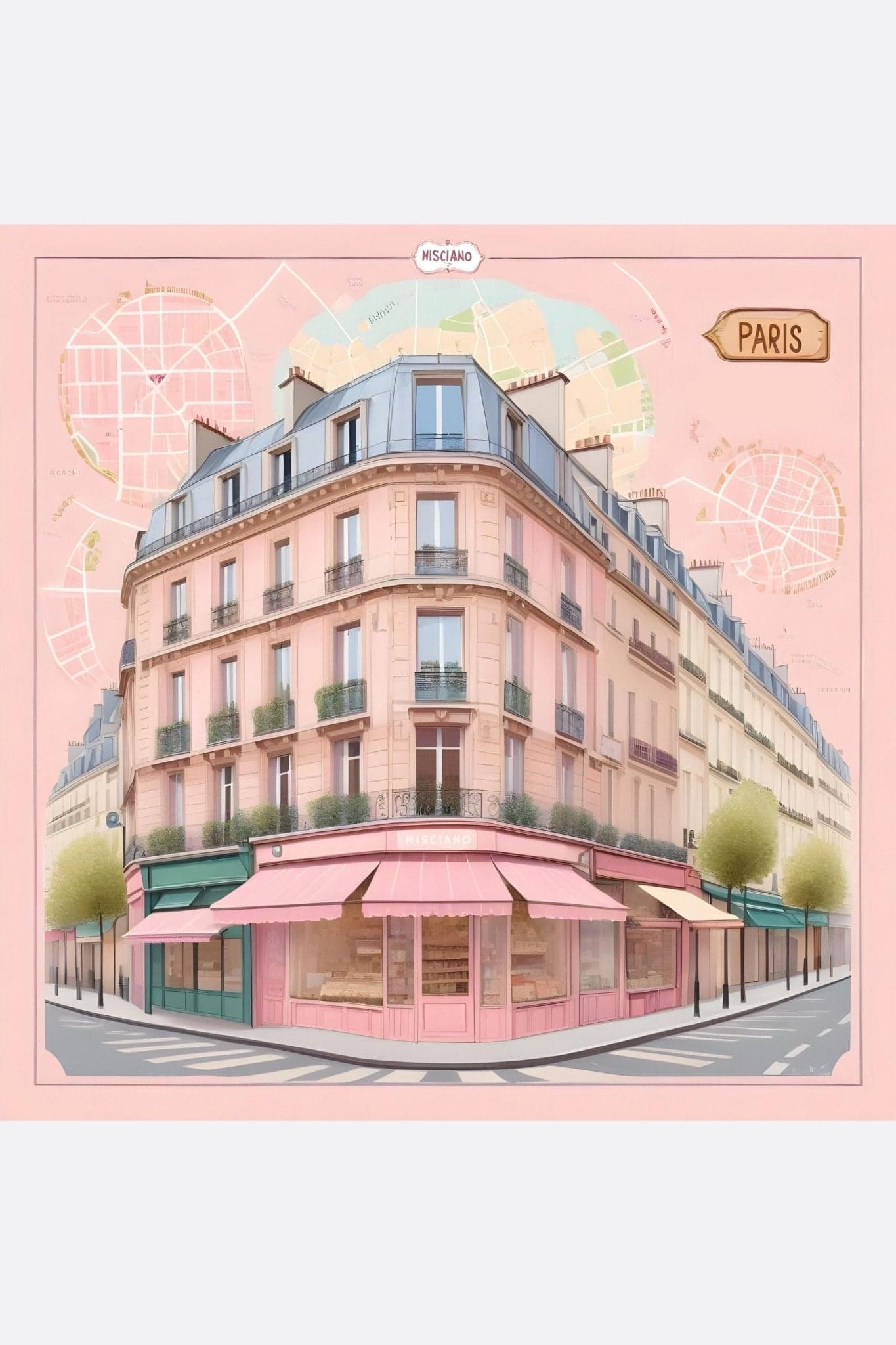
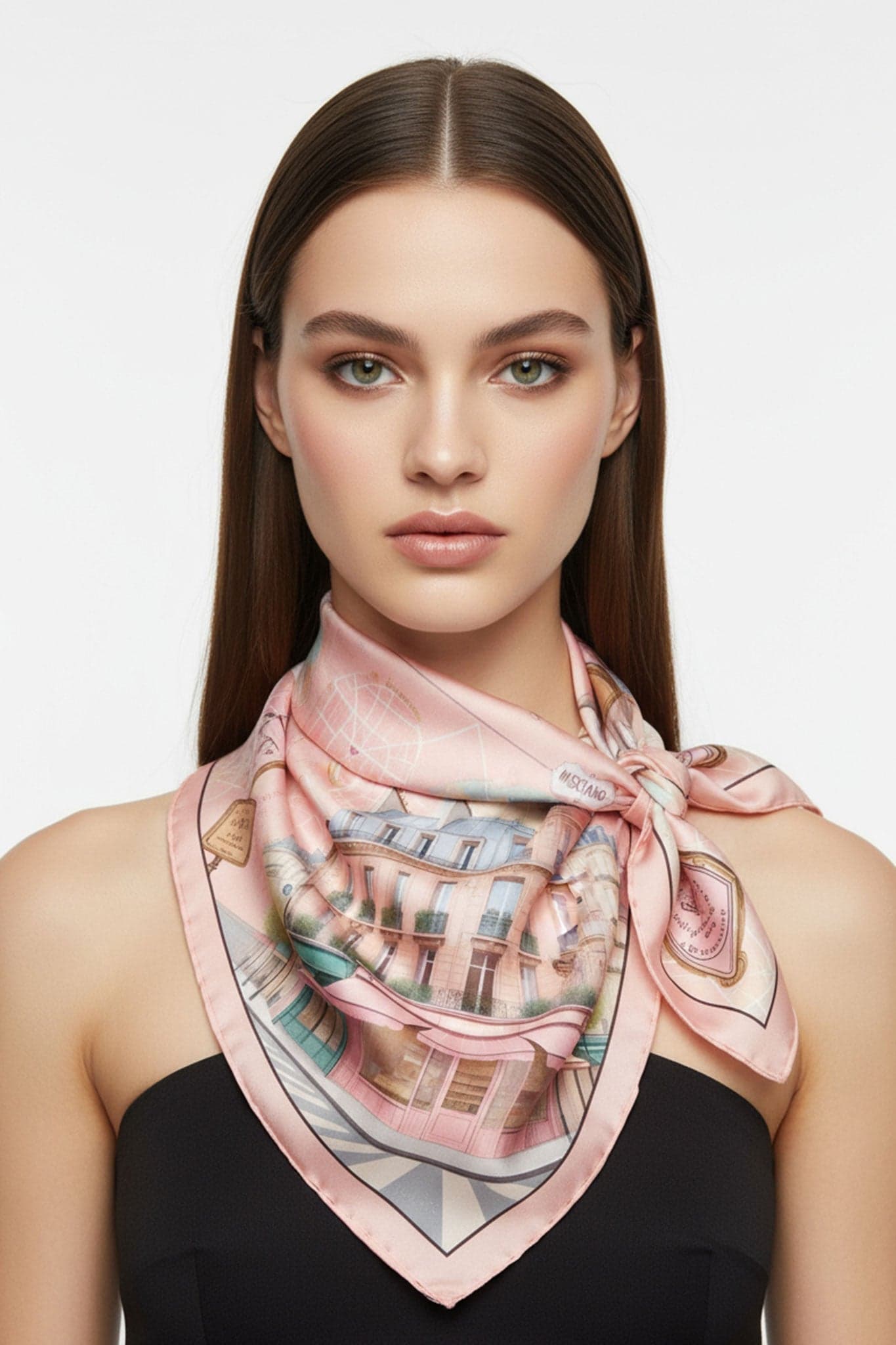
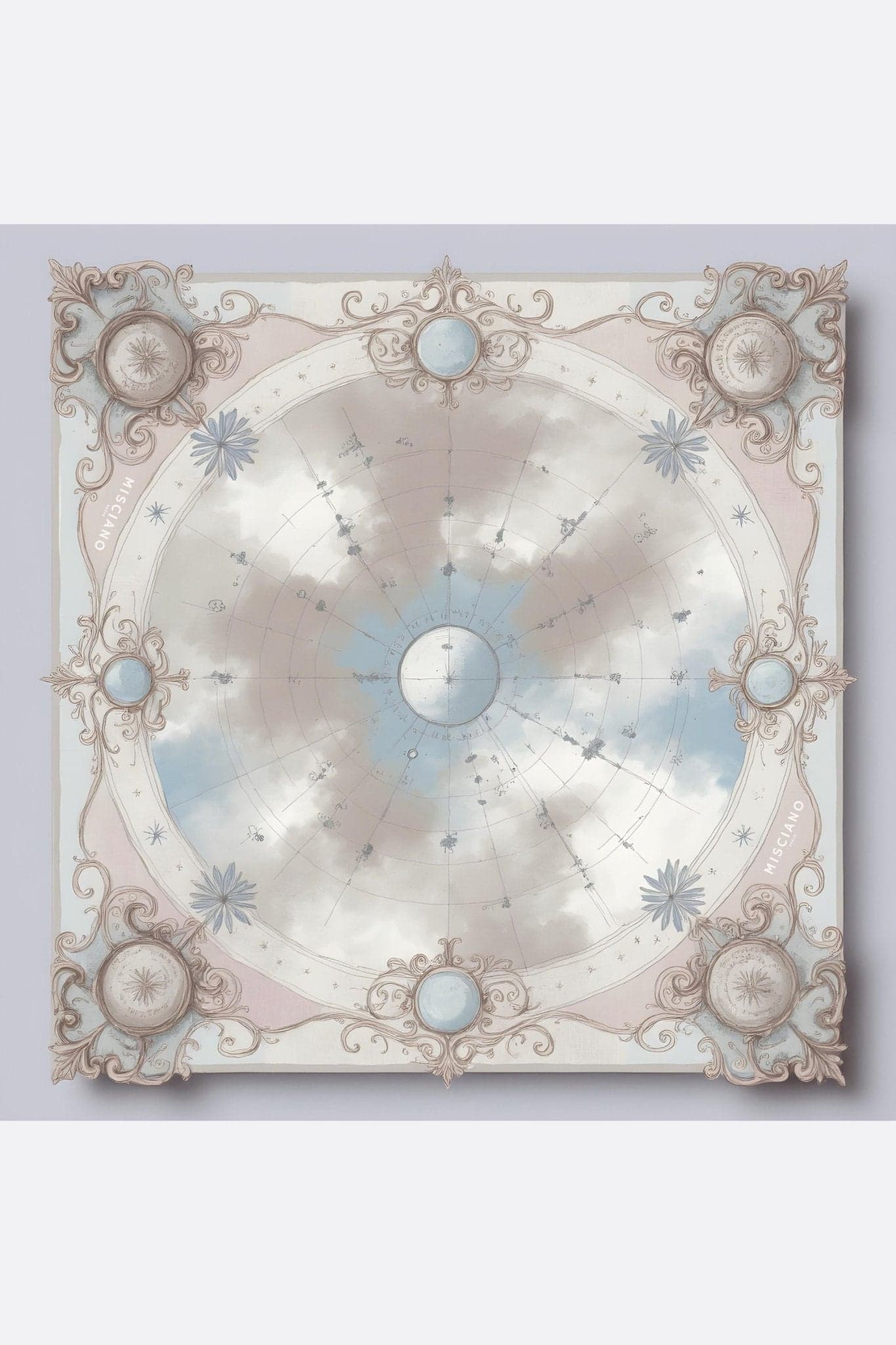
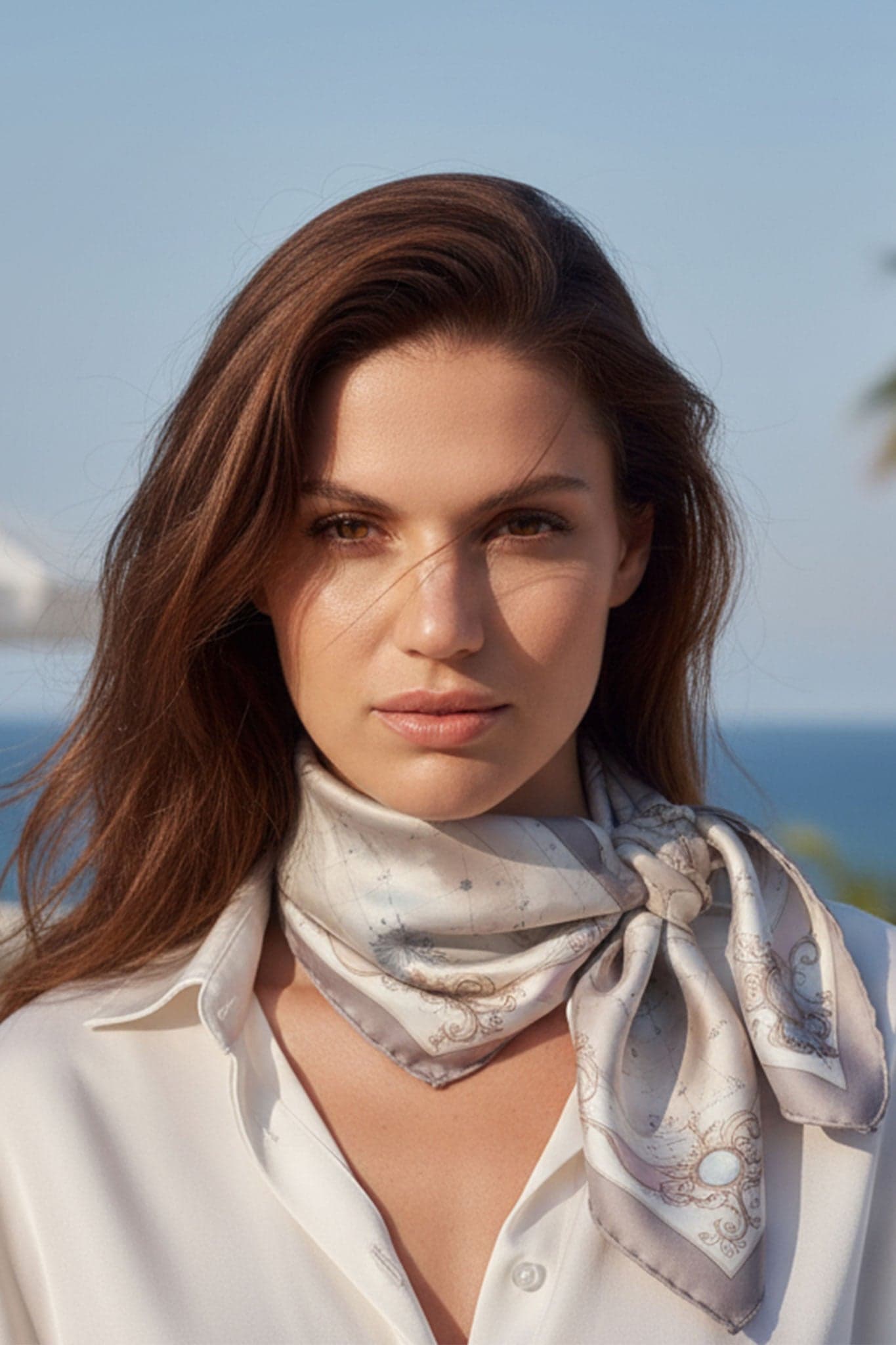
Silk Square: What Exactly Are We Talking About
Scarf, square, shawl: shapes, dimensions, and actual uses
A silk square is not just a "silk" scarf: it is a piece defined by its geometry (a true square), its drape, and its ability to fold into neat volumes. In everyday language, any textile accessory worn around the neck is often called a "scarf." In workshops and stores, the distinction is useful because it determines how the material behaves and what can be done with it.
The scarf is a generic term: it can be rectangular (for example, 180×70 cm), triangular, or square. It is worn around the neck, on the shoulders, sometimes as a belt. The square, on the other hand, is a scarf specifically square: 45×45, 70×70, 90×90, 110×110 cm are common references. The square shape favors symmetrical folds (triangle, band, accordion) and balanced knots. The shawl is larger, often rectangular or very ample: it is draped over the shoulders like a stole, with a more enveloping function.
Practically, a 70×70 cm square has a different logic than a 90×90 cm. The 70 is often perfect for a touch around the neck, a discreet knot, worn on the wrist or on a bag. The 90 provides more material: it allows for a more generous triangle, a more prominent knot, an easier headband wear. Beyond that, 110×110 cm shifts towards a "light stole" use: more drape, more amplitude, more possibilities (but also more attention to silhouette balance).

Why silk changes the drape: slippery, hold, light according to the weave
A square in cotton, viscose, or polyester can be pretty, but it will not give the same sensation as a silk square. Silk has a particular fluidity: it folds without breaking, follows the movement, and easily repositions itself. Depending on the weave (twill, satin, crepe...), silk can be more or less "slippery," more or less firm, more or less luminous.
The key point: silk can be both supple and firm. This combination is precisely what makes a square pleasant to wear daily. A square that is too soft collapses: the knot "falls," the triangle's point deforms, wearing it around the neck becomes uncertain. Conversely, a textile that is too stiff creates an artificial volume and marks the fold. Silk, when well-chosen, offers a balance: the knot is neat, the point remains clean, and the material maintains a presence without rigidity.
Light is the other signature. A silk square captures the light and reflects it in a lively way: not a harsh shine, but a light that glides over the folds. This quality depends on the fiber, but also on the weave and density: a satin accentuates the shine, a twill diffuses it, a crepe softens it. At Misciano, we use an internal protocol of observation and control of the luminous rendering, inspired by recognized textile standards.
What we call "premium" at Misciano: density, hand, finishes
The word "premium" is often used without precision. At Misciano, it refers to three concrete criteria, observable from the first touch.
1) Density. A premium square has a density that can be felt: it does not seem "empty." In the light, it is not unintentionally transparent. This density, measured in momme (weight), provides better knot hold and greater longevity: the fiber works less, the folds are less harshly marked.
2) Hand. The "hand" is the overall feel: the way the material glides between the fingers, the suppleness of the fold, the sensation of coolness or warmth. A beautiful hand is recognized by a controlled glide: the silk moves but does not slip away. Around the neck, this translates to immediate comfort and knot stability.
3) Finishes. A premium square is judged by its details: regular hem, neat corners, clear print. These are the elements that make a square worn with refinement: even simply tied, it looks just right. At Misciano, each square undergoes a rigorous inspection in our partner workshops, which meticulously check the corners and hem regularity.
Finally, a premium square is coherent: the density, weave, print, and finish go together. A very shiny satin with an approximate print, or a dense twill with an irregular hem, immediately loses that sense of balance that makes the difference.
These criteria are not theoretical: they serve as a concrete basis for selecting a square that ties well, lasts over time, and retains its light.
To discover silk squares in natural silk that meet these criteria of density, hand, and finishes, our Misciano collection includes models selected according to these requirements.
Why is silk so special to the touch and light (Technical)
Fiber structure: natural shine and softness (simple explanation)
Silk is a protein fiber, produced by the silkworm in the form of a continuous filament. This continuity explains a lot. Where some fibers are shorter and need to be spun by multiplying the junctions, silk offers a more regular surface. Result: a natural softness, without the need for artifices.
The shine of silk does not come from a "varnish": it comes from the way light reflects on a smooth fiber, and on a structure that acts almost like a small-scale prism. Depending on the weave, this shine is either concentrated (satin), diffused (twill), or softened (crepe). This is why two "100% silk" squares can look very different: the fiber is the same, but the fabric construction changes the visual perception.
To the touch, silk often combines two sensations: a coolness to the touch and a gentle warmth when worn. This is not contradictory: the fiber quickly adapts to the skin's temperature, and the fineness of the fabric leaves an impression of lightness while maintaining a presence. These observations are based on repetitive tests conducted in the Misciano workshop according to standardized protocols.

Thermoregulation and comfort: why it is worn in both summer and winter
Silk is sometimes associated with a fragile piece, reserved for certain seasons. In reality, a silk square is one of the most versatile accessories. Silk is appreciated for its thermoregulation: it protects from drafts without suffocating, it provides a thin but effective layer.
In summer, a twill or chiffon square can be worn around the neck in the evening, on the hair, or even as light protection on the shoulders. The sensation remains airy. In winter, the square becomes a "thin insulator": it slips under a coat collar, provides comfort on the skin (without the irritation that some wools can cause), and adds a touch of elegance without weighing down. Note that the insulating effect depends on the weave and thickness of the square.
Comfort also depends on the quality of dyeing and finishing. Well-treated silk does not "stick," does not give a plastic sensation, and does not leave residual stiffness. This is a point often overlooked: silk must remain lively, not cardboard-like.
Feedback from Misciano workshop: what makes a "beautiful hand" upon unpacking
When unpacking a square, some signs are unmistakable. The first is the sound: quality silk has a discreet, almost dry rustle, never shrill. The second is the way the fabric falls: when held by a corner, it should form a fluid curve, without stiffness or excessive sagging.
Next, observe the reaction to folding. Fold the square into a band: fine silk marks the fold clearly, but does not retain a hard crease. Unfold: the fabric quickly returns to its line. This "return" is an indication of weaving and finishing quality, validated by our internal technical checklist.
Finally, the hand is judged by contact with the skin: around the neck, premium silk does not scratch, does not heat up too quickly, and does not slip to the point of coming undone. This stability is valuable for daily wear: you tie it once, forget the square, while enjoying its presence. These observations have been corroborated by several real customer cases observed in the Misciano workshop.
Which silk weaves to choose for a silk square (Materials)
Twill: firm and neat knots, ideal for neck and hair
The silk twill is the weave most associated with the classic scarf. Twill is often recognized by its subtle diagonal (the "ribs"), visible up close. This construction gives a silk that is both supple and structured: it folds well, holds knots, and offers an elegant finish without excessive shine. At Misciano, we specify the density of our twill in momme, thus ensuring an optimal balance between opacity and suppleness.
For the neck, twill is an obvious ally: a simple knot, a tie knot, a triangle fold, everything stays in place. For hair, it also has an advantage: it grips just enough. A satin may slip and come undone, a chiffon may lack body; twill maintains a comfortable stability.
Practical use case: a 70×70 twill scarf, folded into a band, tied as a headband or around a ponytail, holds without needing to be tight. Around the neck, a 90×90 twill, folded into a triangle then rolled, gives a balanced volume that frames the face without overwhelming it.
Satin: more pronounced shine, more slippery, be careful with knots
The silk satin offers a smoother surface and more visible shine. It is a magnificent material when seeking a light effect, a more precious finish, or a contrast with matte textures (wool, denim, thick cotton).
Its point of attention: satin is more slippery. Knots must be designed to hold. For neck wear, knots that "lock" (double loop, well-adjusted flat knot) are preferred over a simple loose knot. For hair, sometimes support (elastic, clips) is needed to prevent the scarf from moving.
Satin is also more sensitive to marks: a knot too tight can leave a visible trace for longer. It is therefore beneficial to work the material gently: fold, place, adjust, rather than pull.
Crepe and chiffon: transparency, drape, more fashion use than "classic scarf"
The silk crepe is distinguished by a slightly grainy surface, very softened shine, and a supple drape. It is excellent for a discreet, less luminous, more "powdery" finish. Around the neck, it gives a muted elegance. However, it shapes less defined knots: the volume is softer, more blended.
The silk chiffon is lighter and more transparent. It floats, it moves, it is willingly worn as a light veil, an airy knot, a layering. On a scarf, it offers a particularly graceful effect, but requires attention: the edges can move, and the transparency implies choosing the pattern and color in harmony with the outfit.
If you are looking for a "signature" scarf to wear often, twill remains the most versatile. If you are looking for an effect scarf, to play with light (satin) or lightness (chiffon), these weaves are splendid choices, provided you accept their more demanding nature.
What size silk scarf to choose according to use (Advice)
Practical benchmarks: 45, 70, 90, 110 cm and what each size allows
Size is the first criterion that determines how to wear a scarf. The same pattern, in two different sizes, does not give the same look: the scale of the design changes, the volume around the face changes, and the knot becomes more or less prominent.
45×45 cm: this is the small scarf, perfect for wearing on the wrist, a knot on a bag handle, or a detail around the neck (thin neck style). It is excellent for starting out, as it adds a touch of color without transforming the silhouette. However, it is limited for hairstyles and voluminous knots.
70×70 cm: this is a very practical size. Around the neck, it allows for a discreet triangle or a wider band. On the hair, it makes a pretty headband or ties around a bun. On a bag, it stands out without excess. It is often the "everyday scarf" par excellence.
90×90 cm: this is the iconic size, which allows for most classic folds: generous triangle, tie knot, lavallière knot, bandana style (depending on the hairstyle). It gives a stronger presence to the face and bust. If you want a scarf that can do everything (neck + hair), the 90 is an excellent balance point.
110×110 cm: this is the large scarf. It approaches a stole in its possibilities: worn on the shoulders, as a light shawl, as a knotted top (depending on thickness), as a more enveloping turban. However, it requires more mastery: too much material around the neck can weigh down the line, especially on a small silhouette or a short neck.
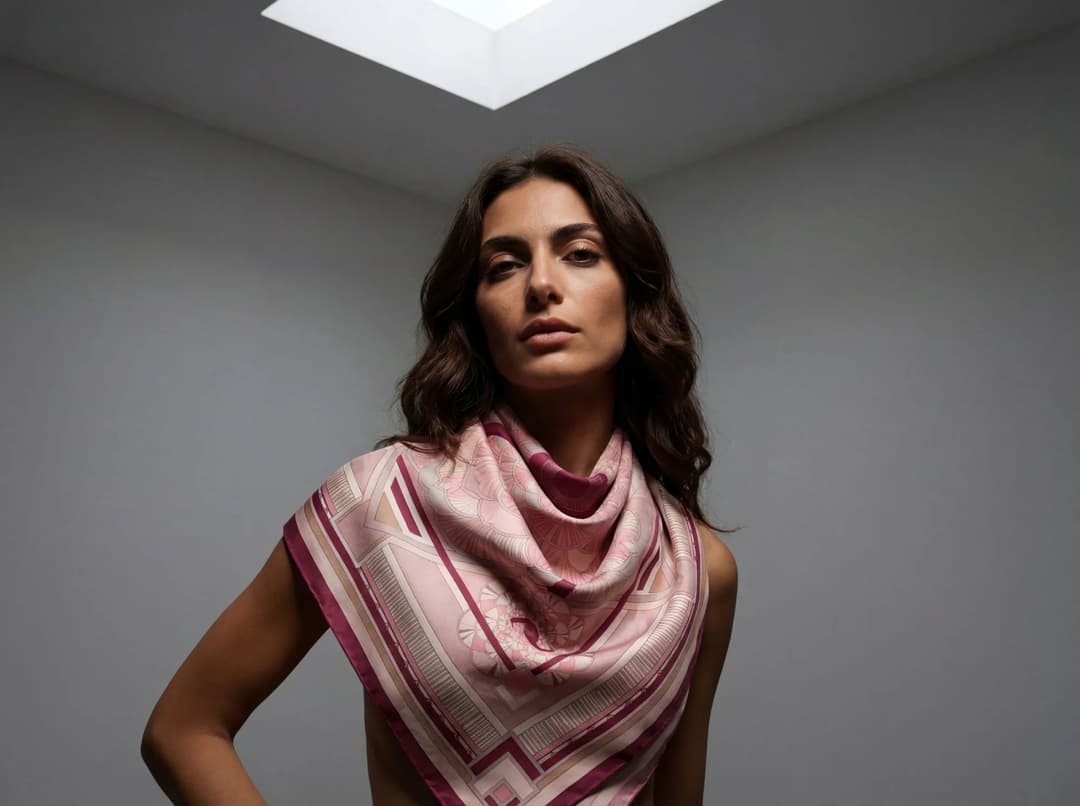
Misciano tip: choose the size according to the type of knot
Before buying, imagine the knot you will make most often. This is the most reliable method, as it starts from your actual use.
Thin neck style: 45 or 70. The band fold requires little length, and the result is precise. Tie knot: 70 or 90 depending on the desired effect. The 90 gives a longer and more visible fall. Classic triangle: 70 for a discreet result, 90 for a more present result. Headband style: 70 or 90; the 45 is often too short to tie well without being tight. Turban: 90 minimum, 110 ideal if you want material to wrap and secure.
Another point: the weave influences the "useful" size. A slippery satin may require a bit more length to secure a knot. A more stable twill can make do with a smaller size for the same use.
Common mistakes: too small for a turban, too large for a tie knot
The first mistake is wanting to do everything with a scarf that is too small. A 45×45, as charming as it may be, will not make a comfortable turban: you will have to tighten it, creating tensions that mark the fiber. The second mistake is the opposite: choosing a 110×110 for mainly neck use. The volume quickly becomes excessive, and the effect can seem "too much" for simple everyday wear.
The right approach: a scarf adapted to your gestures. If you like simplicity, a 70 in twill will follow you everywhere. If you like elaborate knots and hairstyles, a 90 (or even 110) becomes a playful piece, more expressive, but to be tamed.
How to recognize a quality silk scarf before buying
Density and opacity: how to judge by touch and light (simple test)
The quality of a silk scarf is quickly identified when you know what to look for. The first indicator is the density, meaning the amount of material and the regularity of the weave. A scarf that is too light may be intentional (chiffon), but a twill or satin intended for a classic scarf should offer a certain presence.
Simple test: place the scarf in front of a light source (window or lamp) and observe. A quality twill shows diffused light, but not irregular transparency. If you see thinner areas, "voids," or an uneven appearance, it is often a sign of less regular weaving or insufficient density. At Misciano, we use a technical checklist including momme measurement and weave regularity to validate each scarf.
To the touch, pinch the fabric between your thumb and index finger, then slide it gently. Quality silk gives a feeling of continuity: no snags, no unexpected roughness. It remains supple, but with a minimum of resistance, as if the fabric had a "spine."
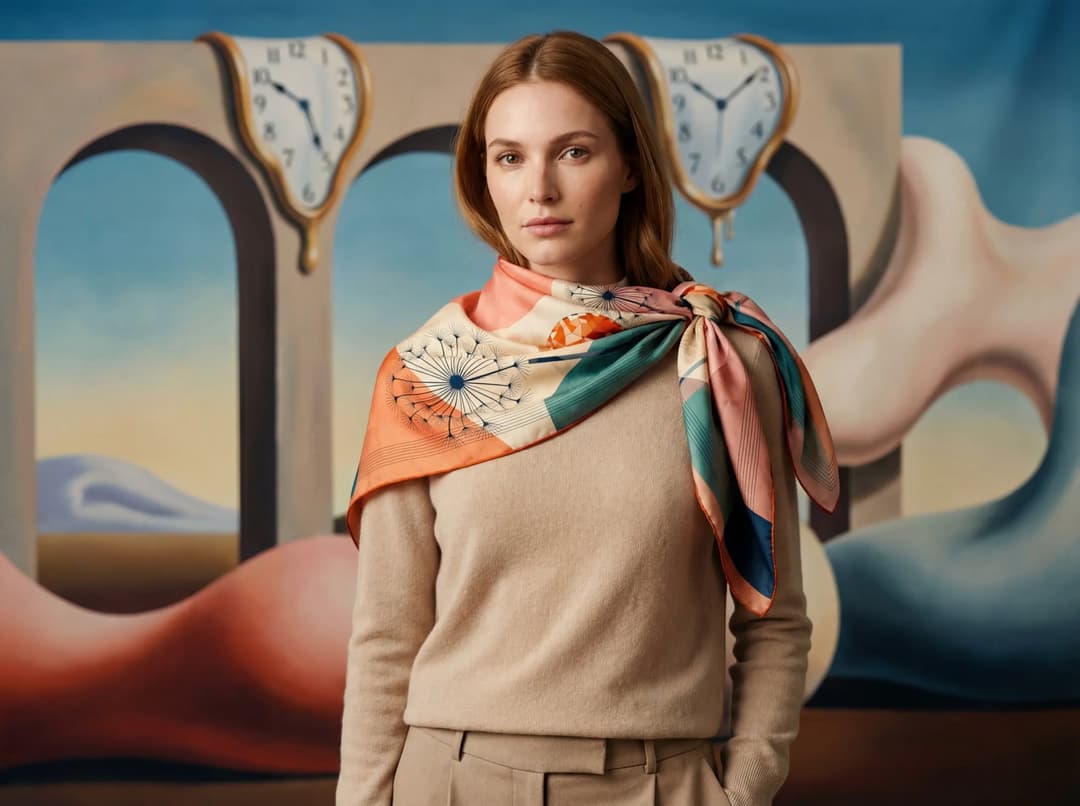
Finishes: hem, regularity, angles
The finishes are often what distinguish a simply pretty scarf from a truly premium one. The hem should be regular, clean, without waves. The angles are revealing: a beautiful angle is sharp, balanced, without unsightly thickness.
Also check the strength: pull very slightly on the edge (without forcing). A good hem does not deform immediately. The finish is essential, as the scarf is a handled object: it is folded, tied, undone. A fragile edge ages quickly.
Printing and colors: sharpness of contours, front-back, pigment hold
A silk scarf is often chosen for its design. The quality of printing is seen in the sharpness: precise contours, clean lines, regular flat areas. Micro-details (stripes, small letters, fine patterns) are a good test: if they bleed, the printing is less controlled.
Look at the front-back. On some prints, the back may be lighter: this is normal, but it should not be "dull." A quality scarf maintains a good appearance even when the fabric moves and reveals the reverse side.
Finally, the hold of the pigments depends on the quality of dyeing and fixing. Without performing an aggressive test in the store, you can already observe if the colors seem deep and stable, rather than "applied" on the surface. A successful print integrates with the silk: the pattern appears integrated, not overlaid. Our technical recommendations are based on European standards and textile care guides, regularly consulted by the Misciano team.
Which patterns and colors to favor for an easy-to-wear silk scarf (Styles)
“Easy” patterns: micro-patterns, stripes, polka dots vs large prints
The pattern of a scarf influences its ease of wear more than one might imagine. A scarf can be splendid when flat and difficult once tied, simply because the design doesn't fold well in the pleats.
Micro-patterns (small repetitions, fine geometries) are the easiest to live with: they remain readable even when folded, and they create an elegant visual texture without dominating the outfit. Polka dots, small chains, miniaturized paisley patterns, or fine mosaics work very well on a daily basis.
Stripes are also easy, provided you consider their orientation. Folded into a band, they become graphic and structure the neck or hair. They give an impression of neatness, ideal with a blazer or a trench coat.
Large prints are more expressive. They can be sumptuous but require a bit of method: you must accept that the pattern may not always be "centered" once tied. For large designs, choose a scarf where each area is interesting, so that even a fragment of the pattern remains beautiful.

Colors: neutrals, contrasts, harmonies with the premium wardrobe
For an easy-to-wear scarf, the color must interact with your wardrobe. In a premium wardrobe, you often find bases: ecru, beige, camel, navy, gray, black, chocolate, sometimes khaki. A scarf succeeds when it fits into these ranges without overshadowing them.
Neutrals (navy, ivory, black, taupe) are safe bets: they are often worn, go with everything, and age well. But a neutral scarf should not be "flat": look for a texture contrast (twill vs satin) or a discreet pattern that adds depth.
Contrasts add character: navy/ivory, black/camel, burgundy/cream, deep green/ivory. This type of contrast remains elegant and readable. Avoid too harsh contrasts if you want a soft look near the face, especially if your complexion is delicate: a very black/white contrast can harden features, whereas a navy/ivory or chocolate/ecru contrast remains more enveloping.
Harmonies are the path to refinement: choose a scarf that picks up a shade already present in your accessories (bag leather, shoes) or in your makeup (lipstick, blush). The effect is immediate: everything seems thought out, effortlessly.
Misciano advice: choose 1 signature scarf + 1 “everyday” scarf
To build a coherent accessory wardrobe, the ideal is to have two complementary scarves.
The “everyday” scarf: preferably in twill, size 70 or 90 according to your taste, in an easy palette (navy, ecru, camel, deep burgundy) with a micro-pattern or a stripe. This is the one you wear to the office, meetings, on the go, without thinking.
The signature scarf: more expressive, either by color (a deep green, a ruby red, a bright blue), or by pattern (large design, artistic composition), or by weave (brighter satin, softer crepe). This is the one that transforms a simple outfit, fine knit and well-cut pants, into a memorable silhouette.
These suggestions are based on experience gained in our workshop and real customer feedback, validated by our Misciano internal control method.
How to wear a silk scarf daily without looking too dressed up (Styles)
3 realistic looks: blazer, fine knit, trench
The silk scarf can be intimidating: we fear the "too polished" effect. The key is to integrate it as an element of texture and color, not as a demonstration. Here are three concrete situations, easy to reproduce.
Look 1: blazer. Wear a navy blue or black blazer, a white or ecru t-shirt, raw jeans or straight pants. Choose a 70x70 twill scarf, fold it into a medium band (not too thin), and tie a slightly off-center flat knot. The scarf becomes a point of light near the face, without rigidity. The trick: leave a little air, don't tighten at the neck.
Look 2: fine knit. With a fine merino wool or cashmere sweater (round neck or V-neck), the scarf adds relief. A 90x90 twill, folded into a triangle then rolled, tied at the front, works very well. Choose a discreet pattern if the knit is already textured. If the knit is plain and matte, a satin can give a soft light, provided the knot is secured.
Look 3: trench. The trench is the natural ally of the scarf. Wear a beige trench, a white shirt or a fine sailor top. A 90x90 scarf, folded into a triangle, point down, simply tied, gives a neat look. You can also wear it under the collar, like a visible lining: it's particularly elegant on windy days.
Placement: neck, wrist, bag, belt, impact on the silhouette
The placement changes the reading of the silhouette. At the neck, the scarf draws attention to the face: ideal if you want to brighten the complexion. At the wrist, it adds a discreet detail, almost like jewelry, and balances a minimalist outfit. On the bag, it brings color without touching the face: practical if you are already wearing noticeable earrings or bold lipstick.
As a belt, the scarf becomes more fashionable, but requires a sufficient size (90 or 110) and a material that doesn't slip too much (twill is preferable). It can highlight the waist on a shirt dress, or accompany high-waisted pants. Be careful: as a belt, a scarf that's too thick creates extra bulk at the stomach. Prefer a well-defined band folding.
A simple principle: if your outfit is structured (blazer, trench), you can choose a looser knot. If your outfit is very fluid (viscose dress, long skirt), a more defined folding at the neck can give the whole outfit more structure.
Misciano's feedback: what works for meetings, office, dinner
In meetings or at the office, elegance comes from moderation. A twill scarf, fine pattern, in a coherent palette, worn as a band or discreet triangle, is almost always appropriate. Avoid overly bulky knots: they can give the impression of a "constructed" outfit when we often seek natural ease.
For a dinner, you can allow more light. A satin scarf, worn at the neck with a simple knot and a matte blouse, gives a very flattering contrast. Another option: wear the scarf on the shoulders indoors, like a light stole, then tie it to the bag when going out. This mobility is part of the charm of the scarf: it accompanies the evening.
Finally, if you fear the polished effect, choose a "non-central" wear: at the wrist or on the bag. You enjoy the silk, its light, its refinement, without the scarf becoming the main subject of the outfit.
Silk scarf and body shapes: what tips to balance the silhouette (Body shapes)
Volume near the face: choose size and knot according to neck and shoulders
The scarf is often worn close to the face: it therefore influences the perception of proportions. The rule is not to "correct" a morphology, but to create a balance that suits you.
If you have narrow shoulders, a 90 square in a triangle can add a bit of visual width and structure the upper body. If you have broad shoulders, a folding in a thinner band, or a slightly off-center knot, can lighten. Twill, more structured, gives more presence; crepe, softer, blends more.
The neck is crucial. A long neck accepts a 90 with a more generous knot very well. A short neck often prefers a more open wear: low knot, triangle pointed downwards, or square worn like a loose necklace. The goal is not to saturate the area under the chin.

Lengthen vs widen: vertical (tie) or horizontal (triangle) placement
The scarf can lengthen or widen depending on its orientation. A vertical wear (tie style, falling ends) creates a line that stretches the torso. This is useful if you want to visually slim the upper body, or simply give an impression of height.
A horizontal wear (wide triangle, short point) accentuates the width at the shoulders and torso. This can be very beautiful on a slender silhouette, or to balance more pronounced hips. The important thing is to master the size: a 110 in a very wide triangle can quickly dominate a small silhouette.
Another detail: the knot position. A centered knot draws the eye to the middle; an off-center knot creates an elegant asymmetry and often more natural in everyday life. For a very symmetrical face and pronounced features, the centered can be superb. For a softer look, the off-center is an ally.
Practical cases: small size, generous bust, short neck
Small size: favor 70×70 or 90×90 with neat folds. Avoid too ample volumes near the face. A band wear, or a discreet triangle, gives a clean line. If you like the 110, wear it rather as a light stole on the shoulders, leaving some verticality, rather than a big knot at the neck.
Generous bust: be careful with the point of the triangle which can stop at the strongest level and draw the eye. Prefer a higher knot, in a band, or a "tie" wear that creates a vertical line. A 90 square in twill, folded in a band and tied low but narrow, works very well: it dresses without adding volume.
Short neck: avoid tight knots. Choose a 70 square, folded in a thin band, tied on the side, or a 90 worn lower, with visible space between the chin and the fabric. Very shiny weaves near the face can accentuate the area; a twill or a crepe, with more diffuse light, is often more flattering.
In any case, the best method is to try in front of a mirror, varying only one parameter at a time: size, folding, knot position. In a few minutes, you identify what gives you that feeling of rightness, the one that makes you wear the scarf with ease.
How to wash and care for a silk scarf without damaging it (Care)
Golden rules: cold water, silk detergent, no twisting (checklist)
A well-maintained silk scarf lasts for years. Maintenance is not complicated, but it requires precision. Silk does not like thermal shocks, rough agitation, or harsh products.
Misciano Checklist:
• Cold or very lukewarm water (ideally cold): hot water can relax the fiber, alter the fit, and promote pigment migration.
• Special silk detergent: avoid regular detergents, especially those containing bleaching agents. A small amount is sufficient.
• No prolonged soaking: a few minutes maximum. Long soaking increases the risk of bleeding, especially on contrasting colors.
• No twisting: never twist the scarf to wring it out. Twisting eventually breaks the fiber and creates marked creases.
• Gentle handling: press gently in the water, rinse without rubbing. If an area is stained, dab rather than rub.
If you need to hand wash, work in a clean basin, rinse with cold water until the water is clear. To remove excess water, lay the scarf flat on a towel, roll the towel, and press gently: the towel absorbs without traumatizing the silk.
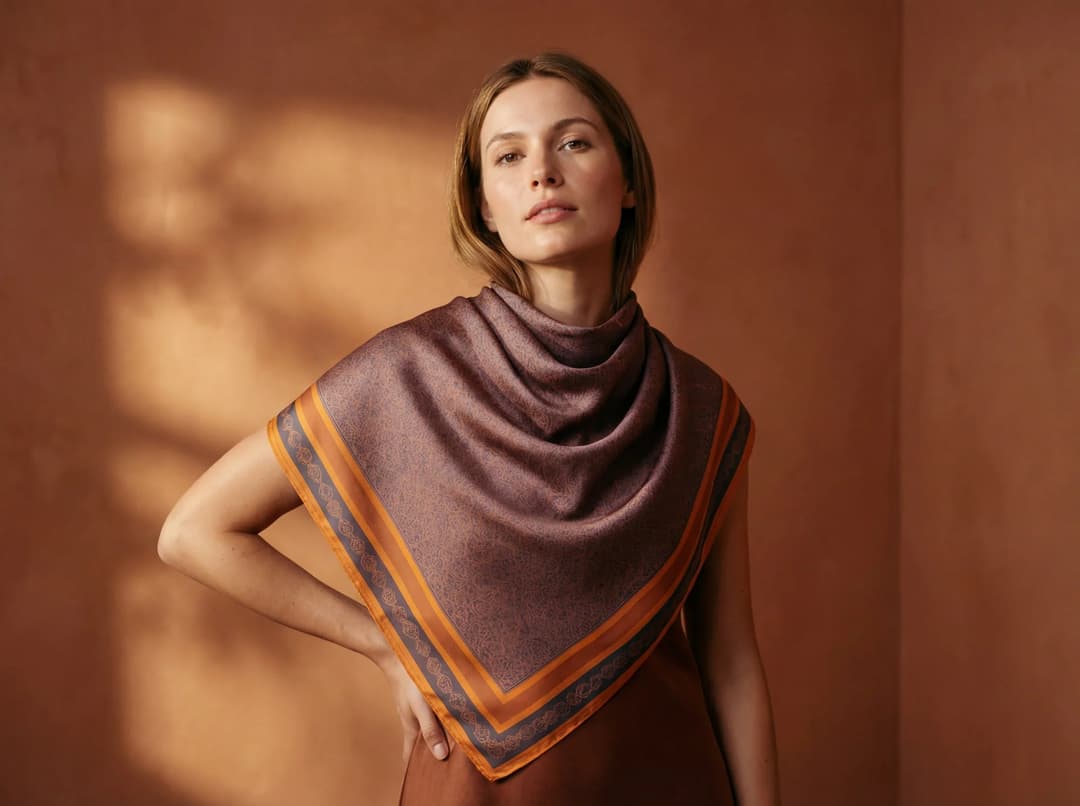
Drying and ironing: temperature, damp cloth, steam at a distance
Drying is ideally done flat or on a clean surface, away from direct sunlight. The sun can alter certain colors, especially deep shades. Avoid the radiator: direct heat dries out the fiber and can mark the fabric.
For ironing, the rule is simple: low temperature (silk setting), and iron on the reverse side if possible. A damp cloth (a slightly damp thin cloth) can help smooth without making certain weaves shine. Steam is possible, but at a distance, without saturating the silk with moisture. Too much steam can create halos, especially if the water is hard.
A practical tip: iron the scarf when it is still very slightly damp. The fold is easier to make, and you avoid pressing too hard with the iron. The goal is not to achieve perfect stiffness, but to restore a smooth surface and a neat edge.
Important: Always refer to the care label and specific recommendations provided by Misciano to preserve the longevity of your scarf.
When to entrust to dry cleaning: greasy stains, contrasting colors, delicate pieces
Dry cleaning is recommended in three situations: greasy stains (makeup, oil, butter, sauce), very contrasting scarves (risk of bleeding), and particularly delicate pieces (chiffon, very fine finishes, sensitive prints).
If a greasy stain appears, avoid water immediately: water can set certain greases. Dab with absorbent paper, without rubbing, and entrust to dry cleaning specifying the nature of the stain. The faster you act, the cleaner the result.
Choose a dry cleaner experienced with silk. Poor treatment (inappropriate solvent, excessive heat, too strong pressing) can dull the fiber or alter the feel. A premium scarf deserves maintenance that matches its quality.
What mistakes to avoid with a silk scarf (Mistakes)
Knots too tight: long-term marks and fiber breaks
Silk is strong, but it does not like repeated stress in the same spot. A knot that is too tight, redone every day at the same point, ends up marking the fiber. You then observe duller areas, sometimes a slight break in the thread, and a loss of fluidity.
To avoid this, adopt two simple habits: do not tighten unnecessarily, and vary the way you tie. A flat knot, adjusted but flexible, often holds better than a tight knot that "cuts" the material. If you wear your scarf very often, change the location of the knot (centered, left side, right side) and alternate the folds (band, rolled triangle).
Another point: do not leave a tightly knotted scarf on a bag handle for weeks. Friction and constant tension can wear out the edge. It is better to undo it when you come home, and store it flat or gently rolled.
Perfume and alcohol: halos and localized discolorations
This is a very common mistake because it is invisible at the time it is made. Perfume, hairspray, certain deodorants, and alcohol-based solutions can create halos on silk, or cause localized discoloration. Silk reacts to these products, and the pigments can be affected.
The best practice: perfume yourself, let it dry, then put on the scarf. If you use hairspray, do it before tying the scarf in your hair, or protect the silk. Also, avoid cleaning a small stain with an alcohol-based product "quickly": you risk worsening the problem.
In case of a halo, do not rub. Dab lightly with a clean, dry cloth, and consult a specialized dry cleaner if the mark persists. These recommendations come from regular tests in the Misciano workshop and concrete feedback from customers.
Storage: unsuitable hanger, clips, friction, and pilling on knitwear
Storage directly influences the lifespan of a scarf. Avoid clips that mark the silk, especially on satin. Also avoid thin metal hangers that can create hard creases at the fold. The ideal: store the scarf flat in a drawer, or roll it gently and place it in a box or breathable pouch.
Also beware of friction. Worn under a rough coat, or in constant contact with a pilling knit, the scarf can snag. Silk does not pill like wool, but it can become marked, lose some of its shine, or show small snags. On very textured knitwear, opt for a more open wear (higher knot, or scarf on the bag) or a more resistant weave like twill.
Finally, avoid ironing too hot "to go fast": it is one of the main causes of abnormal shine, loss of hand, and irreversible marks. It is better to use gentle ironing, or even light steaming from a distance, than to force the silk.
A silk scarf is a piece of gestures: you fold it, you tie it, you store it. If these gestures remain gentle and regular, the silk retains its light, fluidity, and elegance year after year. Note that these tips return to proven protocols in the Misciano workshop and adapt according to the dye and weave.

Article by Maryna Svistunova
Published on 01/07/2026 at 19:22
About the author
I am the editorial director of Misciano Paris. I define the editorial line with the conviction that fashion must be timeless, with rigor, coherence, and sincerity.
→ Learn more about Maryna SvistunovaFREQUENTLY ASKED QUESTIONS
What distinguishes a true silk square from a simple scarf?
A true silk square is distinguished by the quality of its material, the precision of its weaving, and its finishes. It is generally made of natural silk, often mulberry, with a specific weave (twill or satin) that allows it to hold the knot while remaining fluid. The edges are rolled or sewn with care, and the print respects the drape of the fabric. In contrast, a simple scarf often prioritizes decoration at the expense of hold, of the...
What is the difference between mulberry silk and other types of silk?
Mulberry silk is considered the most qualitative. Produced from worms fed exclusively on mulberry leaves, it offers a longer, more regular, and more resistant fiber. The result: a softer touch, controlled shine, and better durability over time. Other silks, more irregular or mixed, may appear beautiful at first glance but age less well and show signs of wear more quickly.
How to care for a silk scarf to make it last over time?
To preserve a silk scarf, it is essential to limit washing, avoid excessive friction, and protect it from perfumes and cosmetics. Hand washing in cold water with a gentle product suitable for silk remains the safest method. Drying should be done flat, in the open air, without twisting. Respectful care allows silk to retain its suppleness, colors, and shine over the years.
How to wear a silk scarf with elegance every day?
The elegance of a silk scarf is primarily based on simplicity. A discreet knot around the neck, a slightly off-center wear, or using it as a headband can structure an outfit without overloading it. The choice of size, weave, and patterns plays a key role: a well-proportioned scarf with balanced colors naturally integrates into a silhouette, even in a daily or professional context.
What criteria to check to recognize a quality silk scarf before buying?
Several elements allow evaluating the quality of a silk scarf: the fabric density, the regularity of the weave, the sharpness of the print, and the edge finish. A quality scarf holds the knot without excessive rigidity, does not slip excessively, and retains its shape once worn. Finally, the coherence between material, pattern, and use is an essential indicator: a beautiful scarf is above all designed to be worn sustainably.
Our silk squares