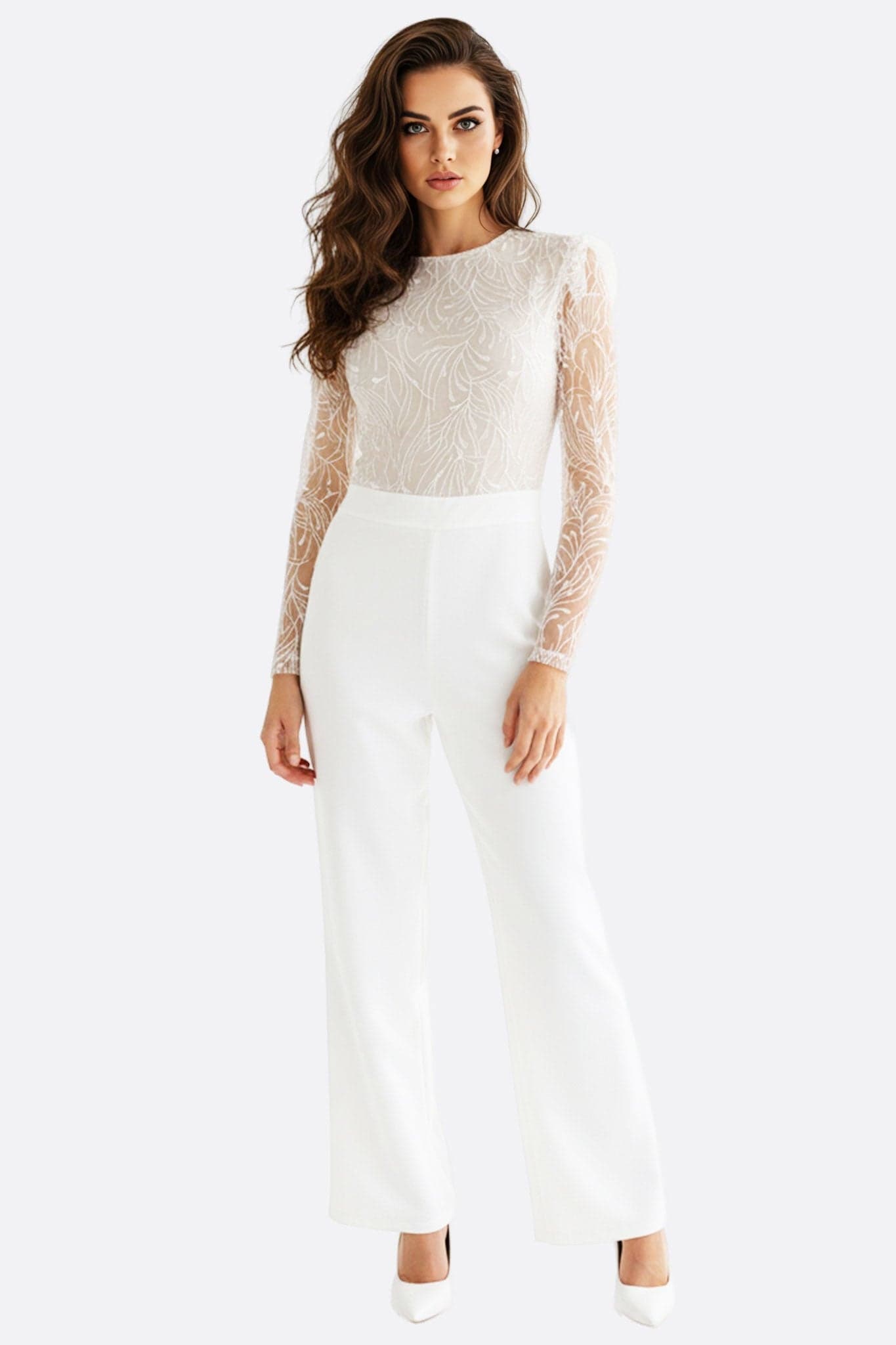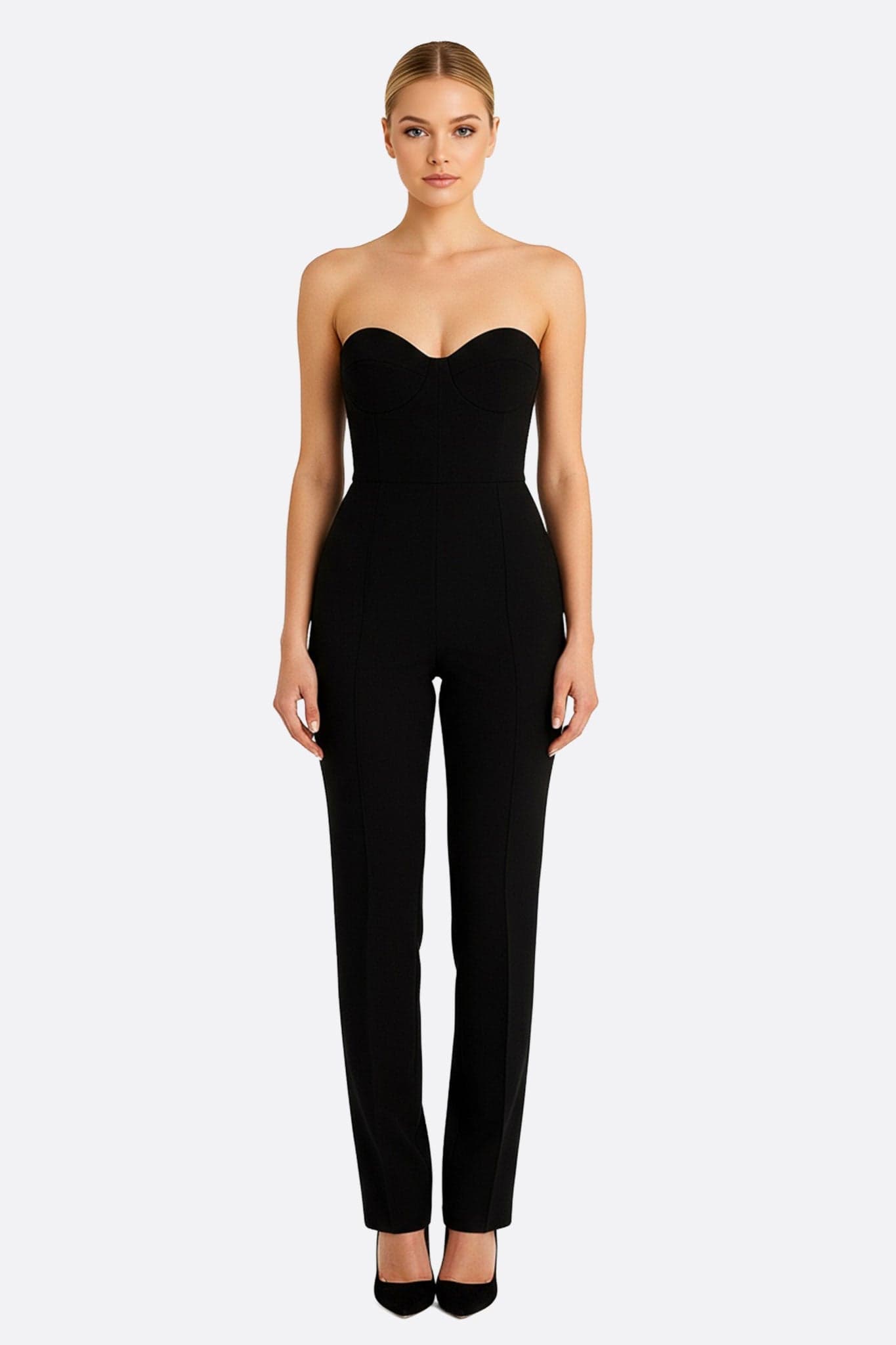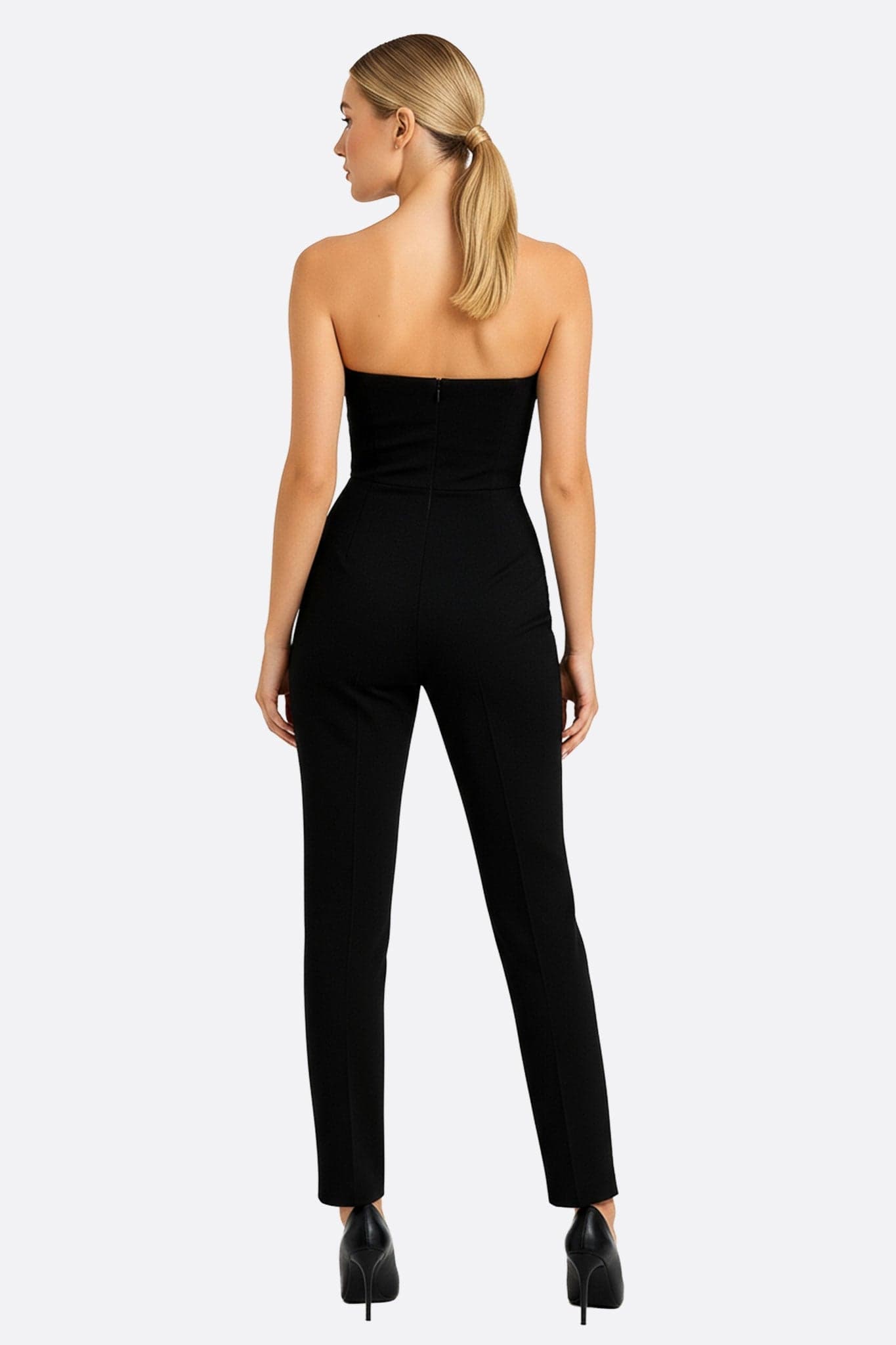
Quality women's jumpsuit how to choose: concrete criteria and realistic prices to buy right

Feel the fabric: what defines a quality women's jumpsuit (and what reveals a compromise)
When looking for quality women's jumpsuit how to choose, the answer rarely starts with the cut. It starts with the hand: what the fabric tells through touch, sight, and crumpling. A successful jumpsuit must maintain a precise balance: fall cleanly without stiffness, follow movement without deforming, remain pleasant on bare skin without becoming "sticky" as the temperature rises.
Fibers and their sensory signals. High-quality viscose has a supple freshness, a fluid drape, and a discreet crumple that quickly disappears. Conversely, too light viscose often gives a somewhat flat appearance and highlights tension areas (hips, thighs) as soon as you sit down. (These characteristics comply with OEKO-TEX standards and calibration tests in the textile industry.) Lyocell/Tencel is an excellent quality indicator when well woven: soft hand, slightly powdered surface, controlled fluidity. Cotton (poplin, twill, gabardine) provides a more structured hold: if the gabardine is beautiful, it "responds" under the fingers, without plastic noise, and maintains a clean drape at the legs.
Wool and blends. For a dressy jumpsuit, a well-balanced wool/viscose or wool/polyamide blend gives a clean line and durability. The unmistakable sign: the fabric returns to place after a slight pull, without puckering. Too dry wool can itch at the neck or armholes: quality is judged by the softness of the fiber (and the presence of a lining where the skin is most sensitive). (These behaviors are validated by international textile standards such as OEKO-TEX.)
Stretch: useful, but not just any way. A little elastane (1 to 4%) can save comfort, especially on a fitted jumpsuit. But beyond that, an artificial shine and poor "memory" often appear: knees bag, seat marks. (According to several technical studies, beyond 4% elastane, and depending on the weaving and finishing, these phenomena are often observed.) To check, pinch the fabric and release: a quality material returns to its surface without waves.
Risky fabrics if aiming for quality. Very thin polyesters can look beautiful in photos and disappoint in reality: static electricity, heat, shiny crumpling. Quality polyester exists (heavy crepe, matte satin), but it must have weight and a balanced surface. If the fabric "crackles" when crumpled, or catches light like a film, be cautious.
Check the label (without limiting to the percentage). How to read a textile composition label: the precise decoding to choose the right material: look for mentions of crepe, twill, gabardine, twill, weave… which indicate a construction. And if possible, identify the implicit weight (for example, a weight of about 200–250 g/m² is often recommended for a well-structured winter jumpsuit). (These benchmarks are indicative and based on tests conducted in workshops by our experts.)
Finishes and construction: seams, lining, closures, details that justify (or not) the price
A jumpsuit is judged like a technical garment: it combines bust + waist + hips + legs, so the mechanical constraints are numerous. This is precisely where quality pays off, or can be spotted in two minutes, provided you look in the right place. (Our criteria were validated during several fitting room tests conducted by our team.)
The seams: where the truth is visible. Open the jumpsuit (or imagine it online via zoomed photos) and look for:
- Regular topstitching: consistent stitches, without "tight" then loose areas.
- Sufficient seam allowances: a garment too "nibbled" inside is hard to alter and tears faster.
- Clean finishes: neat overlock, or better, bound/felled seams on fine fabrics. On a premium piece, the interior should not be neglected.
The zipper: decisive detail. A jumpsuit is often put on and taken off under tension (back, side, sometimes front). A quality metal or nylon zip slides without catching. Reliable brands (like YKK) are a reference, but not the only one: what matters is the interfacing around the zip. Without reinforcement, the fabric ripples, and the zip "pulls" over time. Also check for the presence of a facing or an inner flap: more comfortable, more durable, visually neater.
The lining: not necessarily everywhere, but in the right place. A quality jumpsuit is not judged by systematic full lining. It is judged by strategy: lining on the bust for comfort and opacity, sometimes up to the top of the thigh for smoothness, or partial lining on a light fabric. A lining that is too synthetic can make the piece stifling; a well-chosen lining is forgettable, with a smooth and fresh feel.

The details that change the use.
- Pockets: patch pockets that gape distort the line; pockets set in the side seam, well stabilized, remain elegant.
- Belt loops and belt: a loop that is too thin twists; an interfaced belt holds its shape and marks the waist without "breaking" the fabric.
- Hems: a hem that is too narrow on a wide leg often looks "cheap." A more generous hem adds weight and a calmer drape.
If you want to cross-check these points with a broader view of silhouettes and uses, only one useful detour: Women's jumpsuit: complete guide to choosing it well. Here, we deliberately focus on quality and fair pricing.
Fit, drape, comfort: simple tests to know if it will last the day
Quality is not limited to a beautiful fabric: a jumpsuit can be splendid on a hanger and become restrictive after two hours. To answer quality women's jumpsuit how to choose, you need to test the mechanics of the garment: mobility, balance, stability of volumes. The goal: a piece that accompanies the body without pulling, riding up, or twisting.
The arm test. Raise your arms as if to reach for an object at height. If the crotch rises significantly, the torso length is insufficient or the waist is placed too high. A quality jumpsuit provides ease (or construction) for this movement: well-designed armholes, a thought-out back, sometimes a discreet ease pleat.
The sitting test. Sit down: the waist should not "cut" the stomach, and the seams should not pull at the hips. On a fitted cut, a slight stretch can help, but true quality comes from the distribution of ease and the shape of the pattern. If the fabric whitens on tension areas (especially on dark shades), it is often a sign of excessive constraint.
The walking test. Take big steps. A leg that is too narrow or a poorly designed crotch limits the range. On a wide leg, watch the balance: if the fabric twists and the side seam moves forward, the drape is unstable (often linked to fabric that is too light or an approximate pattern).
The drape: what we want to see. A quality jumpsuit "falls" in continuous lines: no pulling pockets, no unwanted folds at the hips, no horizontal tension on the thigh. The fabric should form a natural movement when you pivot: controlled fluidity, not limpness.
The waist: where most pieces fail. An elasticated waist can be very comfortable, but it must be neat: elastic wide enough, regular gathers, belt that does not roll. On a fitted waist with a belt, quality is measured by the interfacing: too soft, it ripples; too stiff, it breaks the line.
Leg length and hem: the detail that changes the perception of price. A leg that is slightly too long can be altered, but be careful: if the cut is designed to be worn with a certain type of shoe, shortening can unbalance the width. A well-designed jumpsuit leaves material at the hem (and thus room for proper adjustment).
Realistic prices: how much does a quality women's jumpsuit really cost according to material, manufacturing, and level of finish
The price of a quality jumpsuit is not summed up by "expensive = good". It reads like an addition: fabric (and its weight), assembly complexity, interior finishes, type of closure, lining, place of manufacture, quality control. Here are realistic benchmarks to buy right, without paying for a label. (The prices mentioned here mainly apply to the FR/EU market and may vary depending on many factors such as season, place of manufacture, and complexity of the piece.)
Decent entry-level (around €70–120). You can find good surprises, especially on simple cuts and easy fabrics (twill cotton, decent viscose). However, expect compromises: absent lining, basic interior finishes, sometimes average zip, simplified pockets. At this level, the key is to aim for: fabric not too thin, clean stitching, and a cut that does not pull. Beware of ultra-fluid fabrics at low prices: they often age poorly (pilling, twisting seams).
Quality mid-range (around €120–220). This is the area where you most often see a real leap: better fabrics (denser crepe, lyocell, gabardine cotton), more reliable zips, better interfaced belts, better stabilized pockets. The finishes become consistent: neat overlock, clean facings, sometimes partial lining. For a "office + evening" jumpsuit that must remain impeccable, this is often the most rational budget.
Controlled premium (around €220–400). Here, the difference must be tangible: superior drape, more noble or better-constructed fabrics (cool wool, heavy crepe, pleasant technical blends), more elaborate interior finishes, chosen linings, more complex assembly (darts, cuts, worked back). You also pay for better size regularity and stricter quality control. If the price rises without improvement in the feel of the fabric or construction, you are mainly paying for marketing.
Beyond (€400 and +): to buy with criteria, not with eyes. This level can be justified if you have: a remarkable material (high-end wool, heavy silk, Italian/Japanese weaving, etc.), an impeccable cut, and consistent internal finishes. Otherwise, the risk is paying for prestige. Demand proof: well-placed lining, impeccable zip, neat seams, consistent drape, and above all comfort in movement.
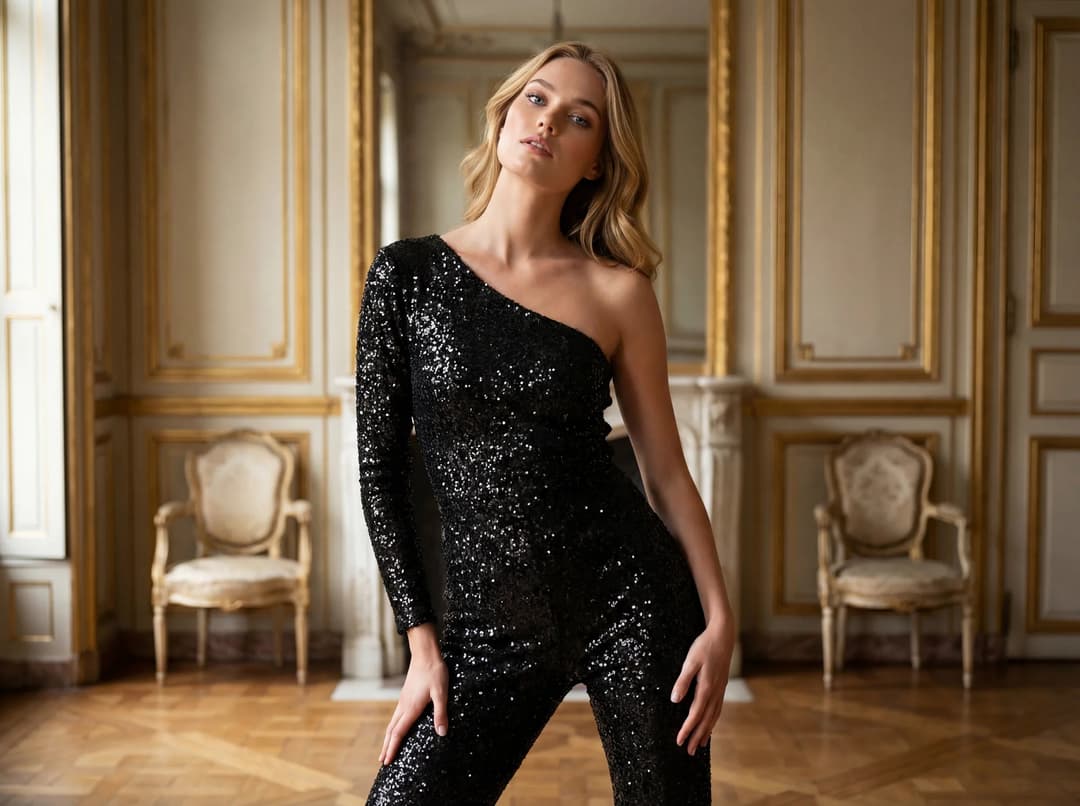
What drives up the price (and when it's legitimate).
- Heavy and stable material: more expensive, but better hold and durability.
- Lining + interfacings: comfort, opacity, stability.
- Complex assembly: cuts, darts, pleats, adjustments that take time.
- Interior finishes: bindings, French seams, interior cleanliness.
What should not, by itself, justify a high price. A "trendy" print, a simple branded button, or a very basic cut in light polyester. The fair price is seen in the feel of the fabric and in the hold of the stress areas (waist, seat, armholes, zip).
Purchase checklist and warning signs: decide quickly, without making a mistake
You want a quick, actionable method to decide. Here is a quality-oriented checklist designed to avoid the most common mistakes when typing quality women's jumpsuit how to choose and hesitating between two models with similar promises. (These criteria result from a process of repeated fittings and a field evaluation methodology proven by our team of specialists.)
In-store checklist (5 minutes).
- Fabric hand: touch + slightly crumple. The fabric should return, without staying "broken" or shining artificially.
- Opacity: put your hand behind the fabric (especially on light shades). A beautiful material does not become transparent as soon as it is under tension.
- Movement test: arms in the air, walk, sit. Nothing should pull violently at the crotch or hips.
- Zip: open/close several times. If it catches already, it will be worse later.
- Interior: look at the seams, cleanliness, stability of the pockets.
Online checklist (without touching, but without naivety).
- Zoom on photos: look for the sharpness of the topstitching, the alignment of the seams, the fit of the belt.
- Implicit weight/thickness: if the material is described as "light" and the cut is structured, beware: it may float and deform.
- Composition + weave: favor precise descriptions (crepe, twill, gabardine) rather than "premium fabric".
- Photos worn in motion: a single static photo can hide tensions.
- Return policy: essential for testing the fit and amplitude at home.
Warning signs (often related to average quality).
- Transparency on light areas, or need for a "technical" undergarment for the piece to work.
- Localized shine at seams/pleats during fitting: fabric too thin or too synthetic.
- Twisting seams: side seam that moves forward, leg that twists.
- Rolling elastic at the waist, irregular gathers.
- Wavy zip: lack of reinforcement, poor hold over time.
Deciding between two models: simple rule. Choose the one that keeps its shape when you move. The fabric may be very beautiful, but if the construction pulls, the jumpsuit will stay in the closet. Conversely, a slightly less "spectacular" but stable, comfortable, and well-finished material will give a neater look, longer.
Last price/quality benchmark. If you pay a mid-range or premium price, demand at least: fabric with hold, reliable zip, clean finishes, and comfort in movement. It is this trio that transforms the purchase into a durable piece, not a fragile impulse buy.
To go further:
- To choose a jumpsuit suitable for heat according to its composition, Women's summer jumpsuit: breathable materials and lightweight cut for a fresh and elegant style
- To preserve the quality and shape of your jumpsuit over time, Maintenance of a women's jumpsuit: the protocol to keep a piece clean, fluid, and well-cut
- To compare the quality, durability, and drape of each material, our complete comparison of textile materials

Article by Maryna Svistunova
Published on 08/02/2026 at 07:54
About the author
I am the editorial director of Misciano Paris. I define the editorial line with the conviction that fashion must be timeless, with rigor, coherence, and sincerity.
→ Learn more about Maryna SvistunovaFREQUENTLY ASKED QUESTIONS
How to recognize a quality women's jumpsuit by touch?
To evaluate the quality of a women's jumpsuit, start by examining the material by touch. A quality jumpsuit is distinguished by a pleasant feel, a fluid drape that follows movements without stiffness, and a texture that remains comfortable on the skin. Signs of good viscose include a supple freshness and a discreet wrinkle, while lower quality viscose may appear flat and accentuate shapes.
What is cost per wear and how does it influence my purchase?
Cost per wear refers to the price of a garment divided by the number of times you plan to wear it. Investing in a quality piece that lasts and remains timeless can prove more economical in the long run, making each wear more affordable. This encourages a thoughtful purchasing approach, promoting sustainability and reducing waste.
Why is sustainability important in choosing my clothes?
Sustainability is essential because it ensures that clothes withstand the test of time, both in terms of material quality and manufacturing. Opting for durable pieces reduces the need to frequently renew your wardrobe, which is beneficial for the environment and supports more ethical practices in the textile industry.
How does brand transparency influence my purchasing choices?
Brand transparency is crucial for understanding the origin of materials and manufacturing conditions. A brand that clearly communicates its practices and environmental impacts allows you to make an informed choice, aligned with your values, and encourages responsible and ethical consumption.
What are the characteristics of high-quality viscose?
High-quality viscose is distinguished by its lightness, suppleness, and fluid drape. It has a subtle wrinkle that quickly disappears, ensuring a neat appearance. In contrast, lower quality viscose may feel flat and less elegant, marking shapes unflatteringly. Choosing quality viscose improves the longevity of the garment.
Shop the selection