Women's jumpsuit: complete guide to choosing it well

Women's jumpsuit: what exactly are we talking about
Choosing a women's jumpsuit may seem simple, until it's time to decide between material, cut, torso length, or occasion. Between casual, ceremonial, or professional models, the differences in comfort and quality are considerable, directly influencing the silhouette, mobility, and durability of the garment.
This Misciano guide has been designed as a comprehensive reference to understand how to select a truly suitable jumpsuit: analysis of textile constructions, material behavior, morphological adjustments, care, and practical uses. The goal is not only aesthetic but practical, to enable you to choose a piece that you will actually wear, for a long time, and with stylistic coherence.
Whether you are looking for an elegant jumpsuit, a versatile everyday piece, or an alternative to a dress for a formal occasion, the following sections detail the essential criteria validated by textile observation and workshop practices.
Definition: a unique piece, a continuous drape
The women's jumpsuit is a "one-piece" garment that combines a top and bottom in a single construction: a torso (with or without sleeves, with or without a collar) and a bottom (pants or shorts) connected by a waist seam, a mounted belt, or sometimes a more discreet joining line. This continuity creates a clear vertical reading: the eye follows an uninterrupted line, which often gives an impression of elongation, provided the torso, crotch, and leg length are correct.
The term "jumpsuit" is often used in common parlance, but behind this word lie significant variations. Confusing them risks choosing the wrong cut for your silhouette or the wrong material for the occasion. A jumpsuit is not just The evening suit, an elegant alternative to the dress: it is a textile architecture that is judged both statically (in front of a mirror) and in motion (sitting, walking, arms raised).
Key points to remember before choosing a women's jumpsuit
- The torso length influences comfort more than standard size.
- The drape of the fabric affects the silhouette and the readability of the lines.
- A balanced shoulder-hip construction enhances visual harmony.
- The choice of material impacts breathability, creasing, and durability.
- A well-designed jumpsuit is judged as much in motion as in front of the mirror.
The main variations: jumpsuit, playsuit, ceremony, work
Jumpsuit: it is the most versatile version. The bottom is pants (straight leg, cigarette, carrot, bootcut, wide leg...). It can be structured like a suit (lapels, darts, welt pockets) or more flexible (wrap, tie belt, fluid viscose). It also requires the most precision on the torso length: too short, it pulls at the shoulders; too long, it wrinkles at the waist and "breaks" the line.
Playsuit: same logic, but with shorts. It is also called "playsuit" in a more summery context. It allows more freedom on the torso length, but requires particular attention to hip ease and crotch height: a crotch that is too high rides up when walking, too low visually widens the hips and creates unwanted folds.
Ceremonial jumpsuit: it is distinguished less by shape than by material, finish, and detail design. It features draping effects, elaborate necklines, controlled open backs, long legs with a clean fall, sometimes a marked waist with a wrap effect. A successful ceremonial jumpsuit must remain comfortable for several hours: breathability, opacity, seam integrity, and material behavior under light (flash, room lighting).
Work jumpsuit: inherited from workwear, it prioritizes functionality: pockets, topstitching, visible zipper, cotton canvas, denim, twill. Today, this variant comes in more urban versions: more fitted cut, integrated belt, shirt collar, cuffs, and a more pleasant fabric feel. Its challenge: avoid the "uniform" effect by paying attention to proportion (waist, leg length) and the quality of finishes.
Jumpsuit vs playsuit: a useful difference, not just a word
In fashion language, jumpsuit most often refers to a pantsuit, while playsuit refers to the playsuit. But the most useful difference for choosing is not linguistic: it is functional. The jumpsuit engages more verticality (thus the perception of stature), and requires real rigor on torso length and leg line. The playsuit, on the other hand, emphasizes the bare leg and top/bottom balance: a too bulky torso or too short shorts can quickly unbalance the silhouette.
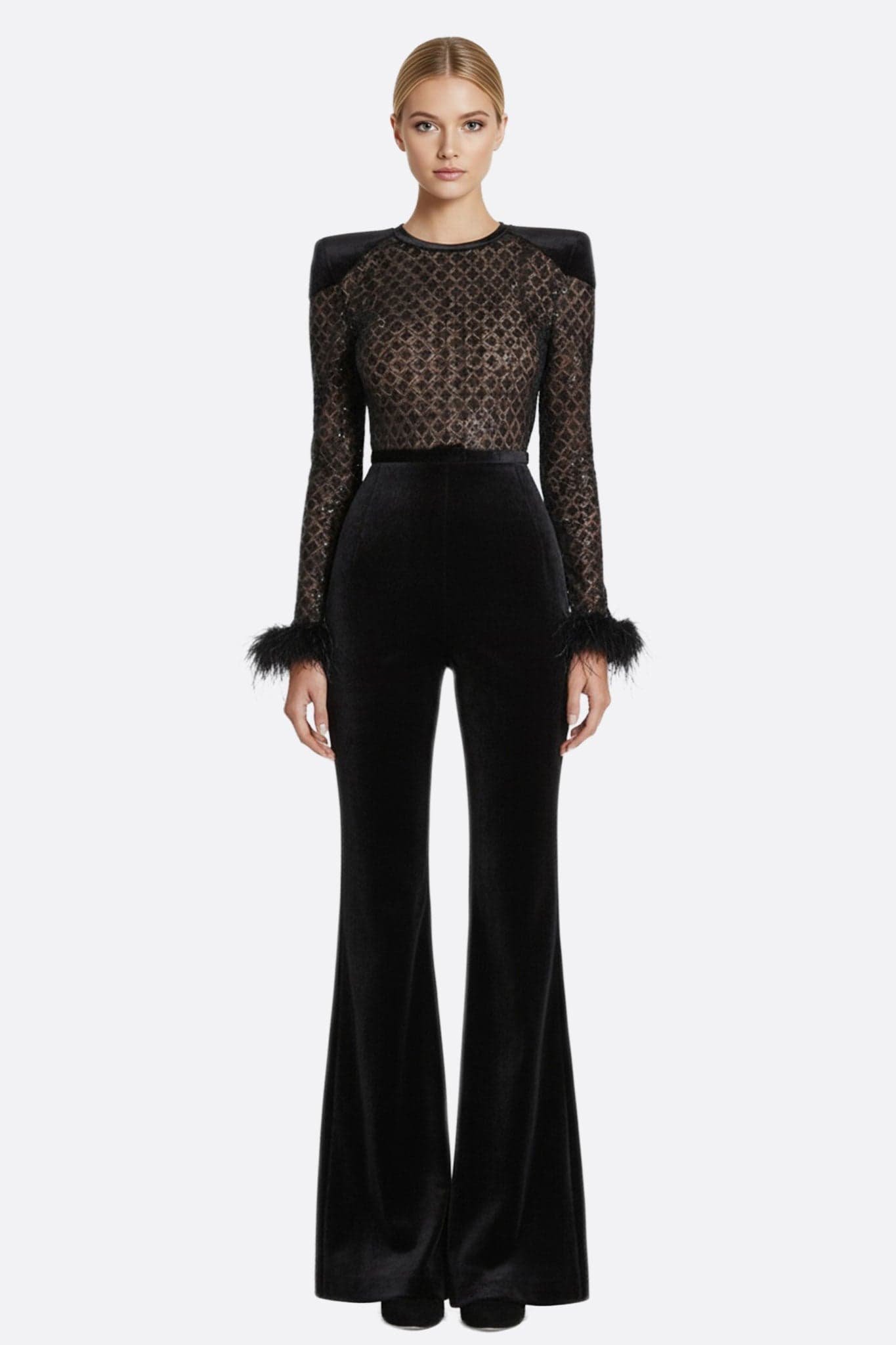
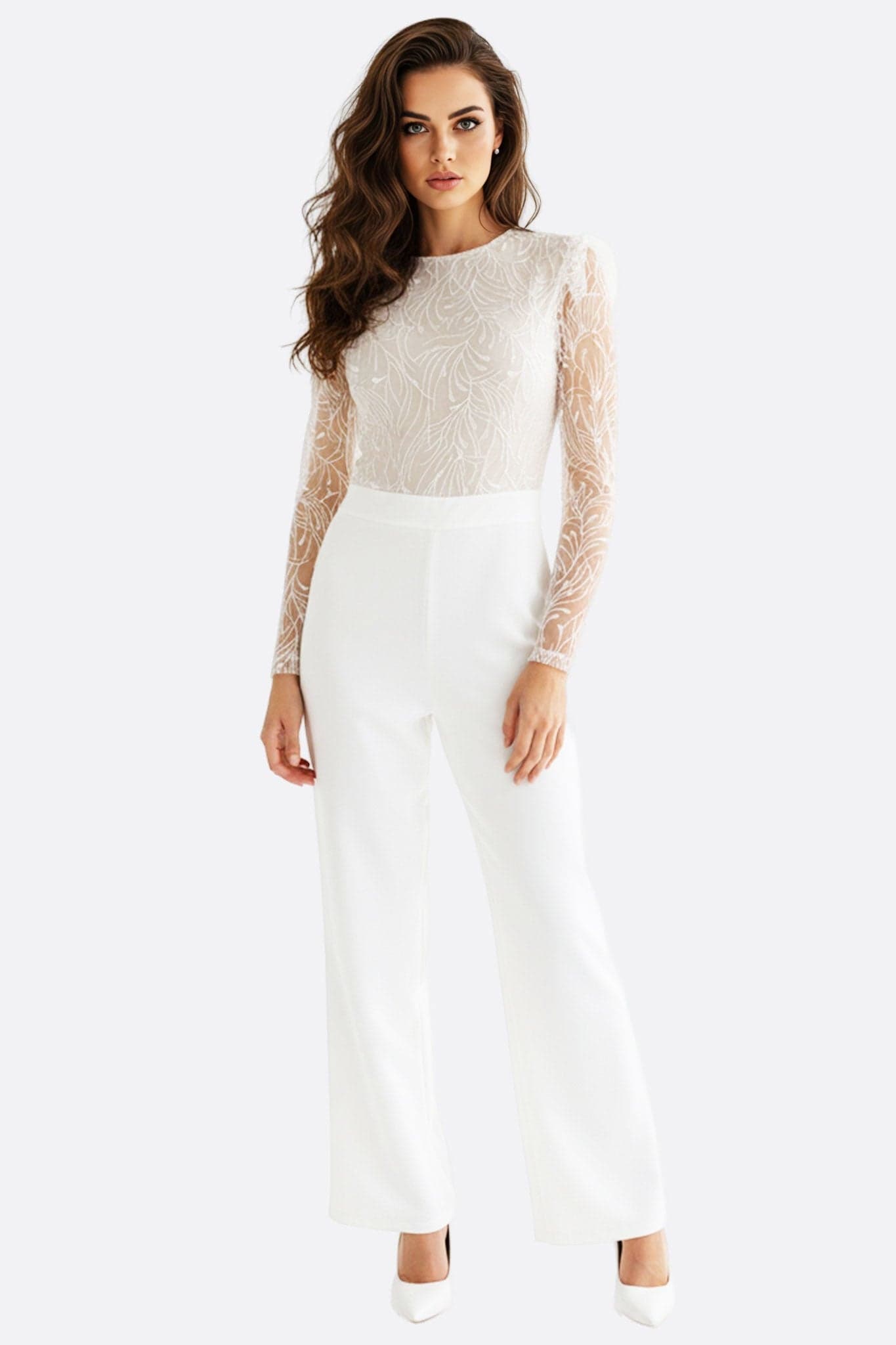
Example of a jumpsuit illustrating the behavior of fabric drape and the balance of proportions between torso and leg.
Why the jumpsuit structures the silhouette: 3 effects to know
1) Vertical continuity: a solid color or homogeneous material creates a visual "column". This is one of the great advantages of the jumpsuit: it avoids the top/bottom break of a top + pants duo. Even with a belt, the look remains more continuous than with two separate pieces.
2) Waist effect: the jumpsuit can give a more defined waist, even without being tight, thanks to the position of the seam and construction (darts, back elastic, mounted belt). The secret is not to compress, but to place the waist in the right place: a waist too low compresses the torso; too high, it shortens the torso and can widen the top of the hips.
3) Shoulder-hip balance: depending on the neckline, sleeve, and leg volume, one can rebalance a silhouette. A slightly structured shoulder (small shoulder pad, sleeve head) can harmonize marked hips; a wide leg can soften a broad build; a V-neck elongates the neck and refines the torso's appearance.
Practical guide Misciano: the 3 areas to check at the first fitting
Before even judging "if it suits you", check three areas. It's a workshop reflex: if these points are wrong, the rest deteriorates, even with a beautiful material.
1) Shoulders: the shoulder seam should fall in the right place (neither too towards the arm nor too towards the neck). If it pulls when you raise your arms, the torso length or armhole is probably the cause. If the neckline gapes, the build is too wide or the neckline too open for your body type.
2) Crotch: walk, sit, climb a step. A well-thought-out crotch accompanies movement without riding up or creating hard folds. A material that is too thin accentuates this area; a cut that is too tight makes it uncomfortable.
3) Torso length: look at the waist: is it in place? Are there horizontal folds at the belly or back? Excess length creates an unwanted "blousing"; a lack of length pulls and raises the waist. It is the most underestimated measurement in the purchase of a jumpsuit.
Why the women's jumpsuit has become a wardrobe essential
Utilitarian origins: when the cut first responded to movement
The jumpsuit was born from a simple logic: to protect the body and clothes, offer ease of movement, and prevent the top from separating from the bottom. In work environments (industry, mechanics, aviation), the jumpsuit is primarily a response to reality: accessible pockets, quick closure, durable fabric, reinforced stitching. Beauty is not the primary goal, but technical accuracy – and it is precisely this accuracy that will later inspire fashion.
In the DNA of the jumpsuit, we find details that remain current: visible zippers, tightening tabs, integrated belts, patch pockets, topstitching. Even when a jumpsuit becomes dressy, it often retains an echo of this origin: a clean line, a readable construction, a direct relationship to the body.
From functional to chic: the fashion shift
Fashion embraced the jumpsuit when it understood its silhouette power. Where a dress can float or depend on an undergarment, the jumpsuit "holds" the body through its construction. It creates a look without multiplying pieces and offers an alternative to the suit: the same rigor, but more possible fluidity. At Misciano Paris, we rely on fashion museum archives and specialized works to ensure the accuracy of our historical approach.
According to the archives of the Victoria & Albert Museum and publications dedicated to the evolution of utilitarian clothing in the 20th century, the jumpsuit spread into civilian wardrobes after its adoption in aviation and industry, where its design was primarily aimed at freedom of movement and body protection. This origin explains the persistence of certain technical codes still visible today in contemporary fashion.
Textile studies on the mechanical behavior of fibers also indicate that the perception of drape mainly depends on surface weight and yarn twist, confirming the importance of material choice in the overall construction of a jumpsuit.
As materials diversify (soft crepes, satins, cool wools), the jumpsuit leaves the workshop to enter parties, ceremonies, and then everyday life. It becomes a garment of practical elegance: you put it on, adjust a belt, choose a shoe, and the look is already constructed.

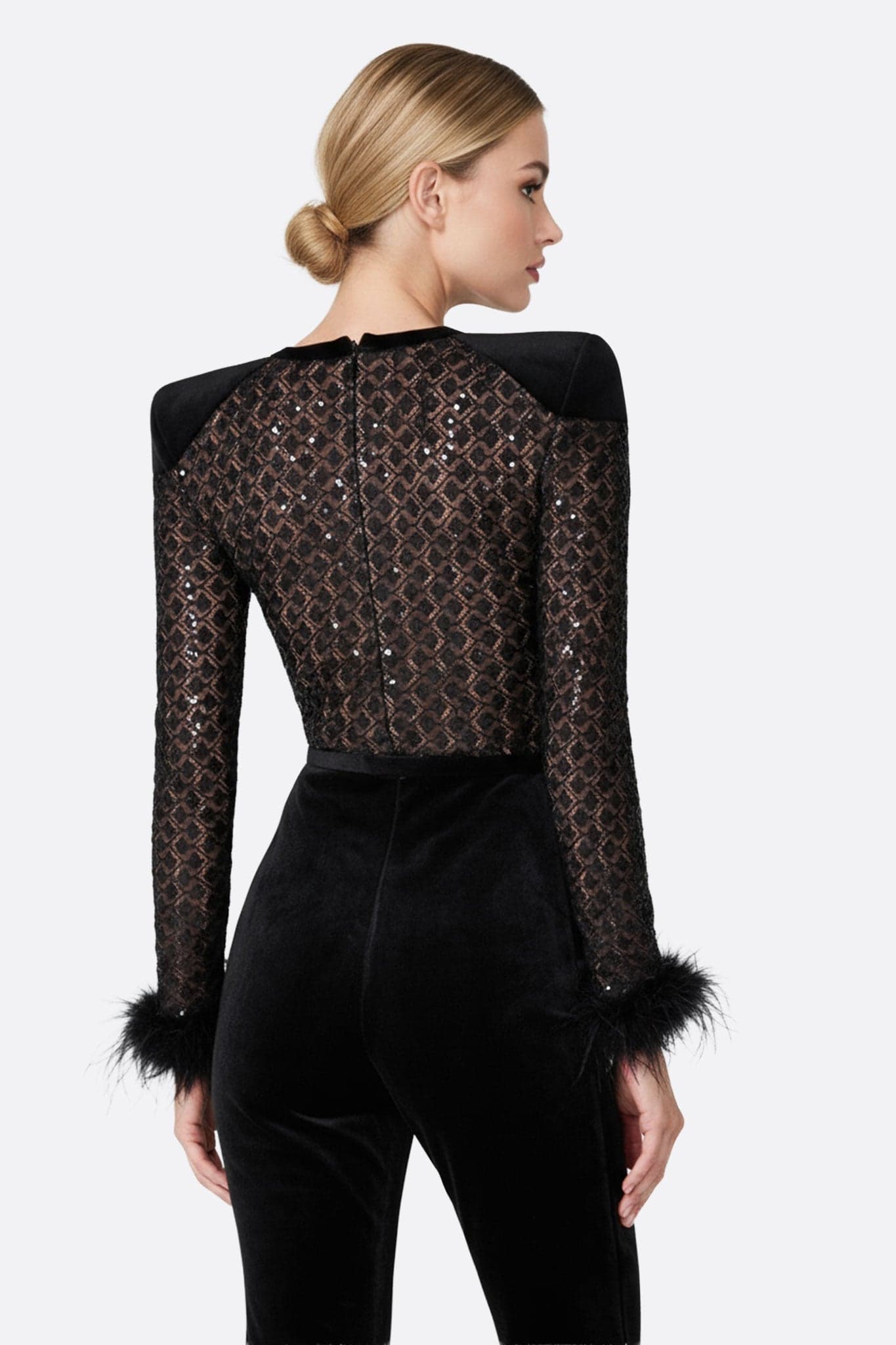
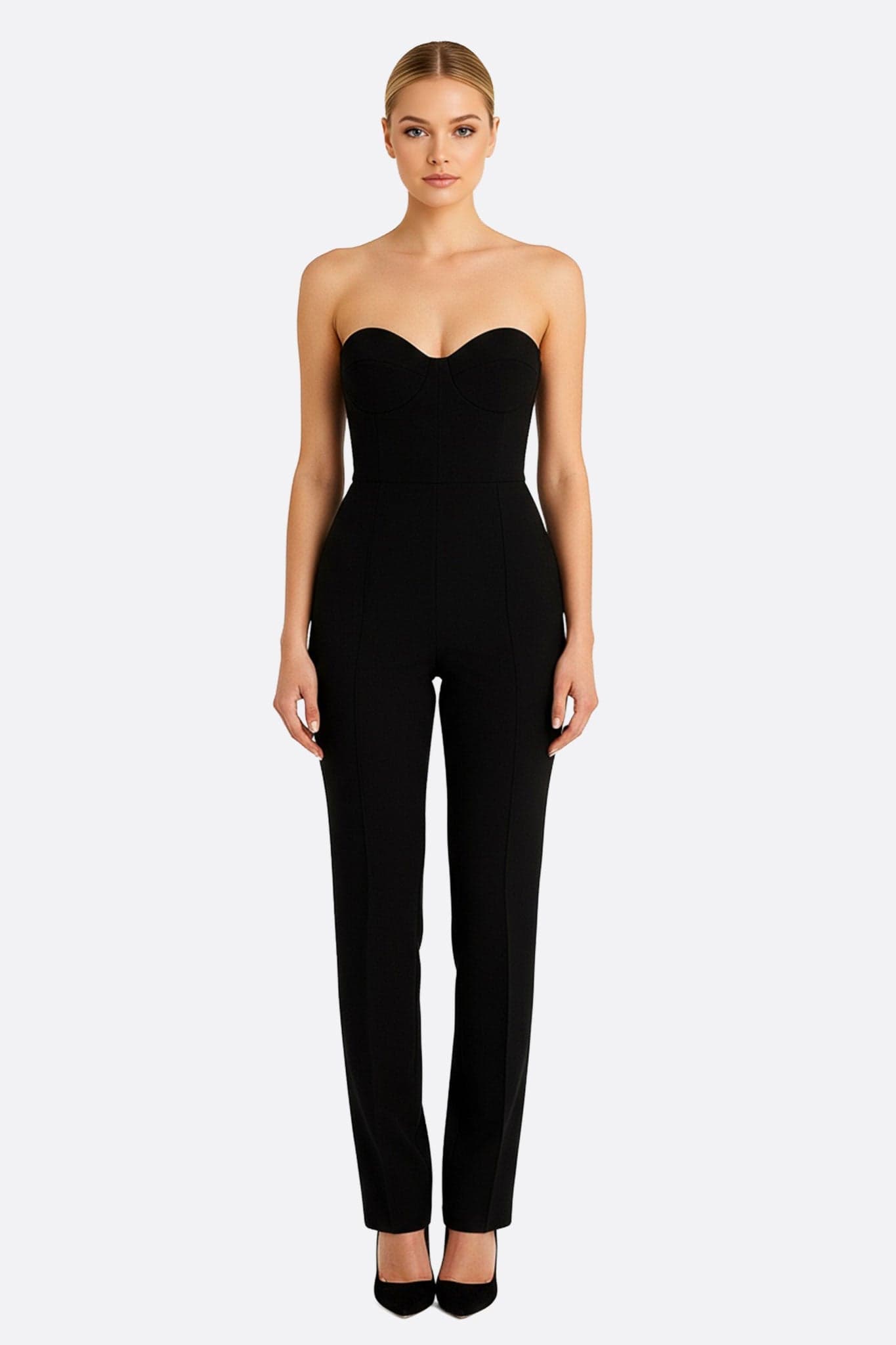
Example of a jumpsuit illustrating the behavior of textile drape and the balance of proportions between bust and leg.
Heritage influences: tailoring and 70s glamour
Two major influences explain the anchoring of the jumpsuit in women's wardrobes.
Tailoring: the jumpsuit borrows from the suit its precision codes: lapels, darts, pleats, welt pockets, materials with a clean drape. A successful "tailored" jumpsuit is judged like a jacket: collar cleanliness, angle sharpness, waist placement, leg fall.
70s glamour: the decade popularized long, fluid silhouettes, sometimes very close to the body on the bust then flared at the leg. We find deep necklines, fitted long sleeves, matte satins, heavy crepes that glide over the skin. This visual memory explains why the jumpsuit remains associated with a certain confidence: it asserts a line.
Connecting history and cut choices: the "gap" we fill
Many contents tell the story of the jumpsuit as an anecdote, without drawing concrete references. Yet the utilitarian heritage and tailoring legacy explain very current cut choices:
– Visible or invisible zipper: the visible zipper comes from workwear and gives a more graphic reading; the invisible one fades to let the material speak, more suited to ceremonies.
– Patch vs welt pockets: patch pockets are practical but add volume; welt pockets are flatter, neater.
– Visible topstitching: they highlight the construction and reinforce the fit; on a fine material, they can stiffen and mark. At Misciano Paris, our pricing is based on a detailed evaluation of assembly operations, including the complexity of assembling the bust, crotch, and waist, thus justifying the pricing position of our pieces.
Understanding where the jumpsuit comes from helps better understand why some versions "fall" better: they respect a proven construction logic, adapted to the material and use.
Why it prevails today: a piece that solves the everyday equation
The jumpsuit has prevailed because it meets several contemporary needs: saving time without sacrificing style, varying registers (office, dinner, ceremony) with a coherent base, and favoring clothes that stand on their own. A beautiful, well-cut jumpsuit allows for building a silhouette without accumulation: a piece of jewelry, a shoe, possibly a jacket, and the ensemble is readable.
Finally, it offers elegance that does not depend on complex "styling." It is a piece of balance: between structure and fluidity, between precision and comfort, between presence and simplicity.
Which materials to choose for a well-draped jumpsuit
Why the material is decisive for a jumpsuit
For a jumpsuit, the material is not just about being beautiful: it must support a complete construction (bust + waist + crotch + legs). A material suitable for pants may fail on a jumpsuit if it lacks structure at the bust or if it emphasizes the crotch too much. Conversely, a material perfect for a jacket can stiffen a jumpsuit and break the expected fluidity.
Three words guide the choice: drape (how the fabric falls), hand (feel to the touch), memory (ability to wrinkle or return to shape).
Technical comparison of materials: advantages, limitations, uses
Crepe (polyester, viscose, silk, acetate): crepe offers a subtle texture and beautiful fluidity. In a heavier version, it falls sharply without clinging. It's a safe choice for a dressy jumpsuit. Caution: a crepe that is too thin can reveal underwear, pockets, and accentuate the crotch area.
Cool wool: excellent for "suit" jumpsuits. The drape is sharp, the leg maintains its line, and the pleats are clean. It breathes well if the quality is there. Be mindful of ease: cool wool without elastane requires a precise cut, otherwise it pulls at the shoulders and crotch.
Viscose: very pleasant to wear, with a fluidity that accompanies movement. Ideal for belted, wrap, or wide-leg jumpsuits. Limitations: possible wrinkling, water sensitivity depending on finishes, and tendency to "live" (stretch) throughout the day if the fabric is light.
Cotton: versatile, reassuring, easy to live with. In poplin, it gives a sharper, almost shirt-like appearance; in twill, it recalls workwear. Caution: cotton wrinkles and can stiffen the line if the pattern is not designed for mobility.
Linen: remarkable breathability, dry hand, natural light. On a jumpsuit, linen is superb when the cut is simple and the leg rather wide. Control point: assumed wrinkling, but opacity and waist structure must be monitored (too soft linen can sag).
Satin (silk, viscose, polyester): it captures light, enhances a long line, and gives immediate refinement. But it requires impeccable craftsmanship: satin highlights every seam, every tension. It also easily marks underwear. Prefer a slightly heavy satin with stable glide.
Denim: perfect for a daytime jumpsuit. It structures, reassures, and ages well if the quality is good. Be mindful of comfort: rigid denim requires a looser cut; stretch denim must remain stable to avoid deforming at the knees and hips.
Knit: maximum comfort, but risk of "loungewear" effect if the knit is too soft. A compact, well-knitted fabric can make an elegant jumpsuit, especially with a straight leg. Caution: knit reveals any irregularity in underwear and sometimes requires flat drying.

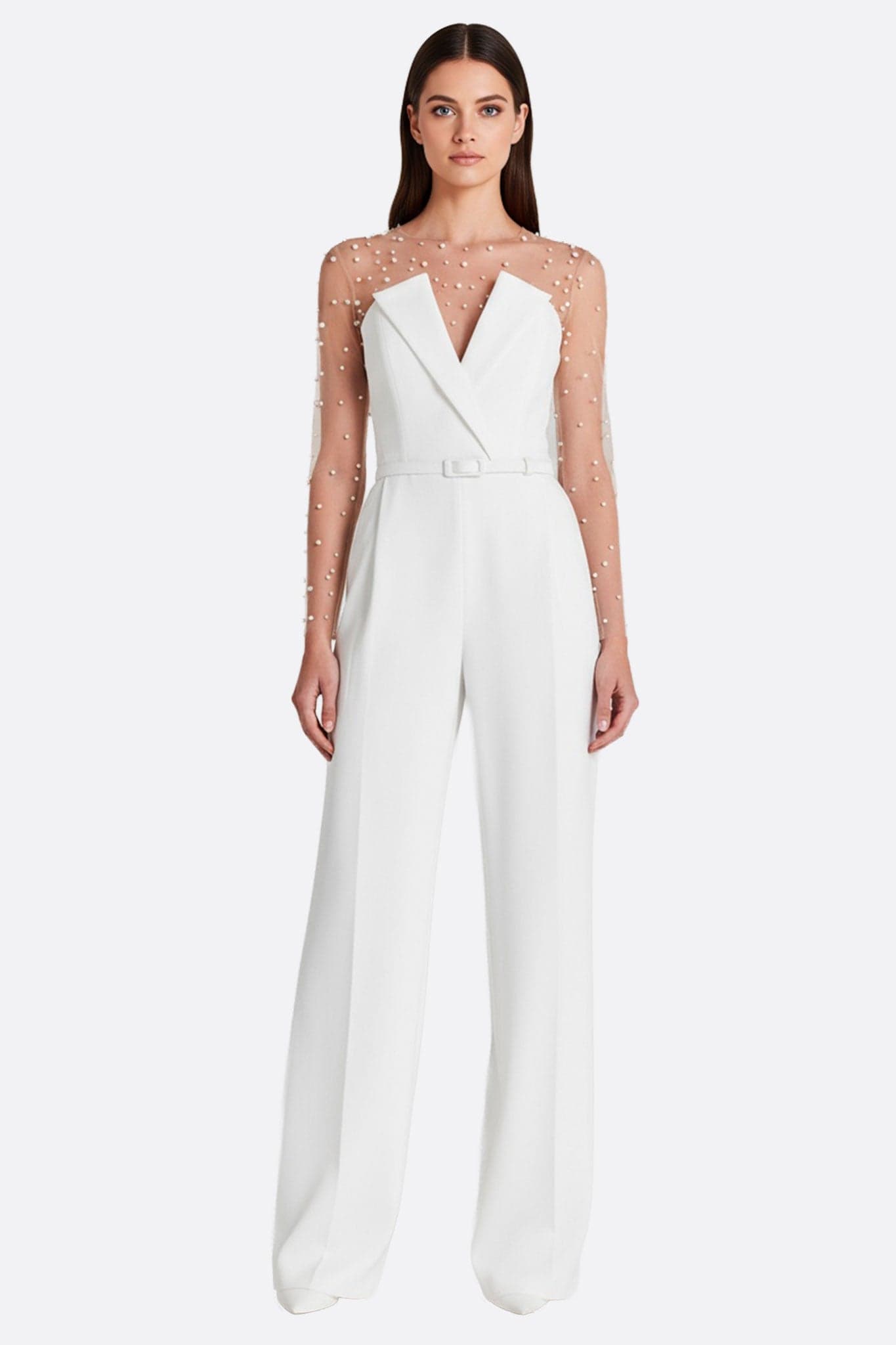
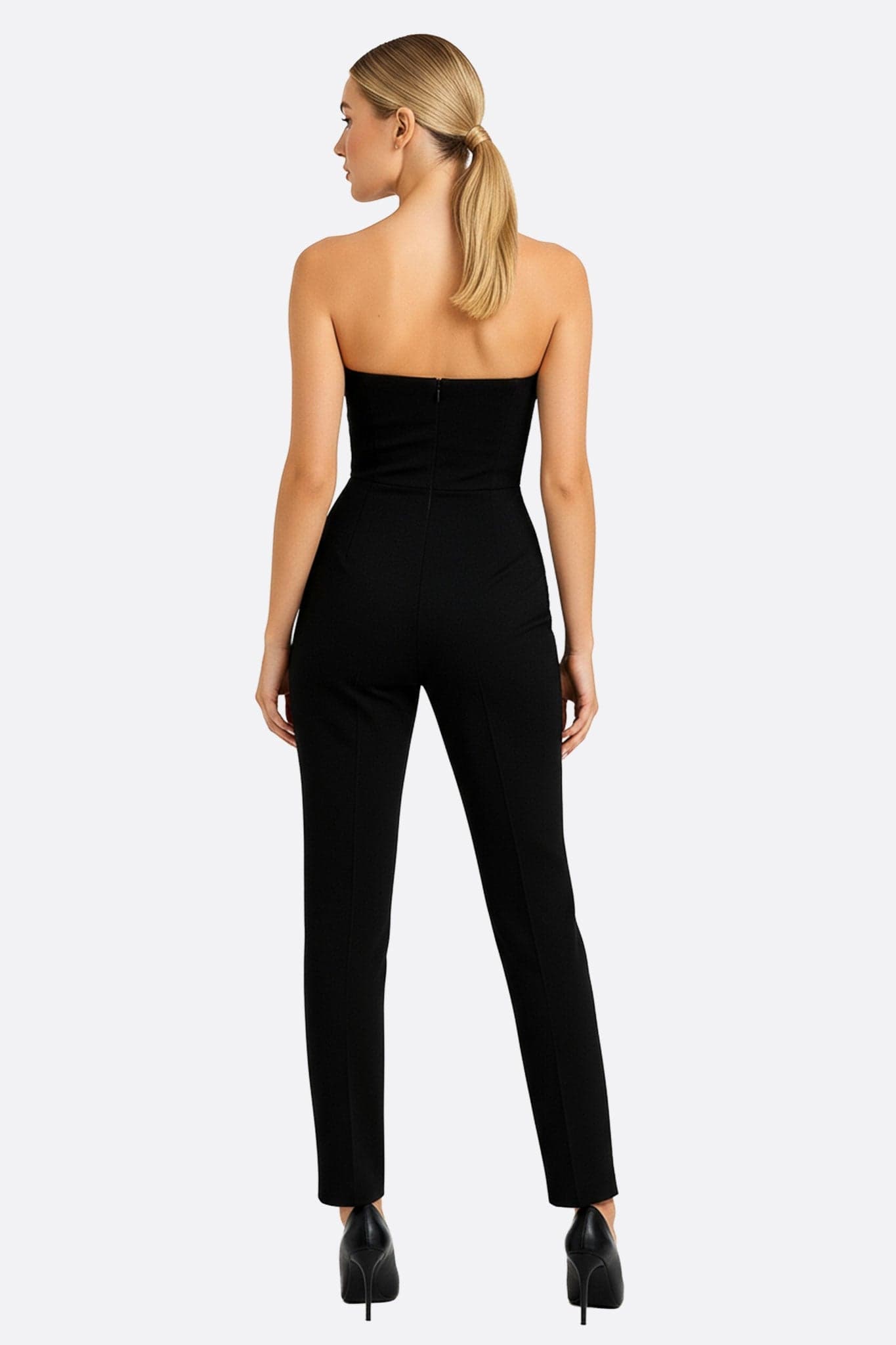
Example of a jumpsuit illustrating the behavior of fabric drape and the balance of proportions between bust and leg.
Control points: what to look for before buying
Weight: the more fitted the jumpsuit, the more the weight must be sufficient to smooth. A material that is too light "clings" and reveals the construction (seams, pockets, crotch). Conversely, a weight that is too heavy can weigh down the silhouette and stiffen the walk.
Opacity: test in the light: the thigh and hip area is the most critical. Light colors (ivory, beige, pastel) often require partial lining or a denser fabric.
Wrinkling: pinch the fabric in your hand: if it marks strongly and retains the trace, plan for more occasional use or embrace the wrinkled look (linen). For the office, a more stable memory material is preferable.
Elasticity: slight elasticity can save the comfort of a jumpsuit, especially at the crotch and shoulders. But too much elastane can degrade the line and give a less sharp appearance.
Hand: a beautiful hand is not just a luxury: it predicts the behavior of the fabric. A "dry" hand can be superb but less comfortable; a "slippery" hand can reveal more of the underwear.
Breathability: essential for long days. Cool wool, linen, quality viscose breathe better than some synthetics. But a well-woven polyester can offer remarkable structure and reduced wrinkling: it all depends on the quality.
Misciano workshop feedback: two common pitfalls
A material that is too light accentuates the crotch and marks the pockets: on a jumpsuit, the crotch area is stressed with every step. A thin fabric will "outline" the crotch, and the pockets (especially patch pockets) may show through or in relief. Solution: choose a denser fabric, partial lining, or better-integrated pockets.
A material that is too stiff breaks the line: a rigid fabric can create angles at the waist and hips, and prevent the leg from falling straight. Result: the jumpsuit appears "placed" on the body instead of accompanying it. Solution: favor a material with a minimum of flexibility, or a looser cut that allows the fabric to breathe.
How to recognize a well-made jumpsuit
Why the jumpsuit requires more than just a "nice fabric"
A jumpsuit is a technically demanding garment: it combines the constraints of a top (armholes, chest, neckline) and a bottom (crotch, hips, leg fall). An average construction is quickly noticeable: a wavy zipper, a twisted waist, an uncomfortable crotch, gaping pockets. Conversely, a well-made garment is felt: it follows the body without unnecessary tension, maintains its line in motion, and remains comfortable over time.
Key finishes: what distinguishes a premium piece
Topstitching: it must be regular, without skipped stitches, with stable tension. On a workwear jumpsuit, it can be bold and graphic; on a dressy version, it should be discreet.
Facings: a clean neckline requires a well-interfaced facing that does not roll outward. A too-soft facing leads to a gaping neckline.
Partial linings: they are valuable on light or delicate fabrics. A well-placed lining improves comfort, opacity, and fit. It must be neatly fixed to avoid riding up when walking.
Reinforcements: at the waist, at stress points (zipper, crotch, belt loops). An invisible reinforcement can change the lifespan of the piece.
Interior cleanliness: look at the inside. The overlocks should be neat, the margins regular, the seams pressed where needed. A well-finished interior is not a whim: it prevents irritation and improves the garment's stability.
At Misciano Paris, our editorial approach is based on the analysis of manufacturing standards and workshop practices observed in the industry, to objectively evaluate the quality of the pieces.
Adjustments and construction details to examine
Bust darts: they should point towards the bust point without exceeding it. Poorly placed darts create fan-shaped folds and distort the neckline.
Pocket placement: a pocket too low weighs down the thigh; too forward, it widens the hips. Pockets should remain flat when empty, without "gaping."
Integrated belt: a mounted belt (or drawstring) must be stable and well-positioned. A too-soft belt twists; too rigid, it breaks the fluidity.
Invisible zip vs metal zip: the invisible zip is suitable for fine fabrics and dressy jumpsuits, but it must be perfectly placed to avoid waves. The metal zip is more robust, more graphic, often easier to handle, but it requires stylistic coherence.

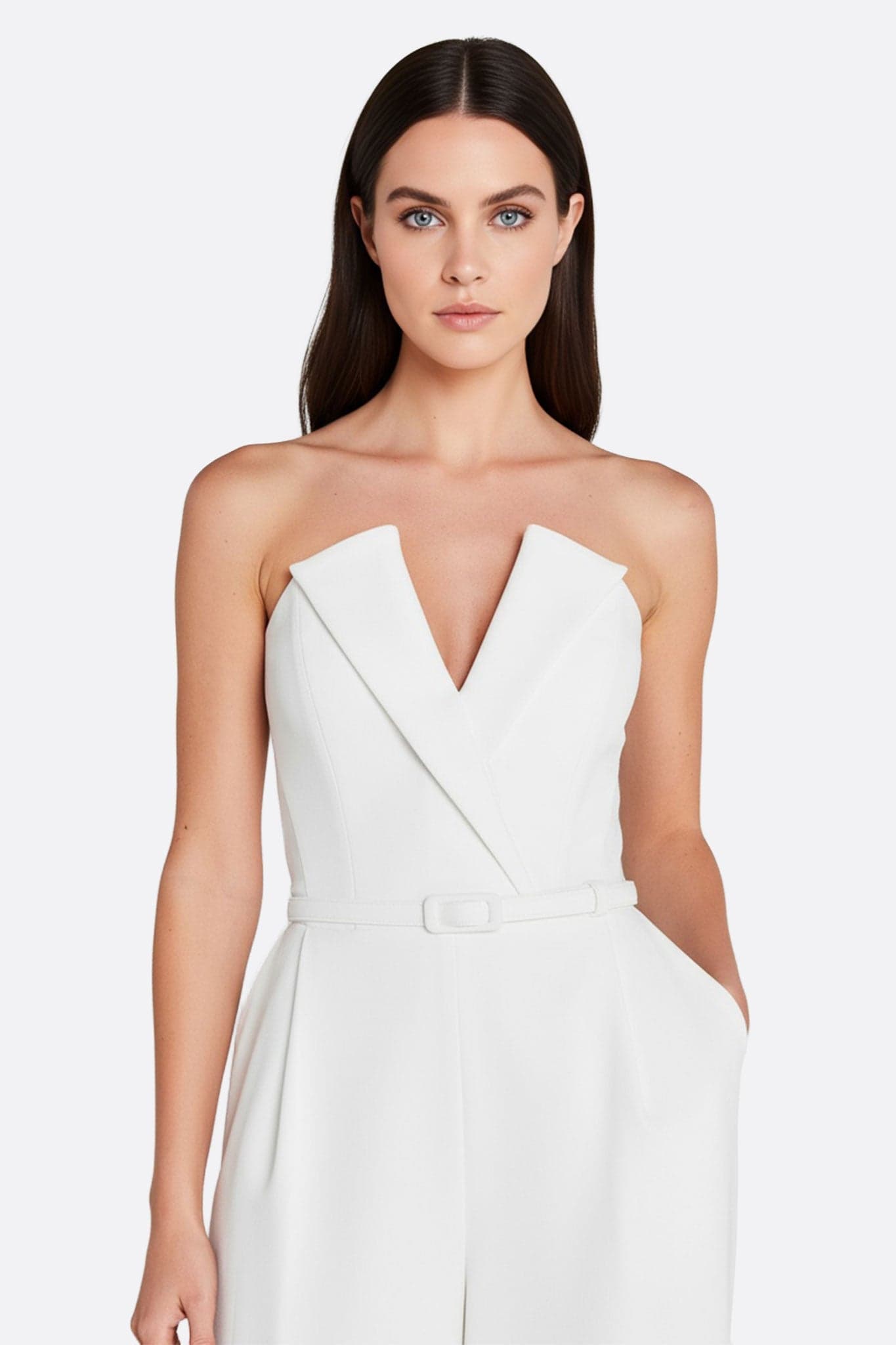
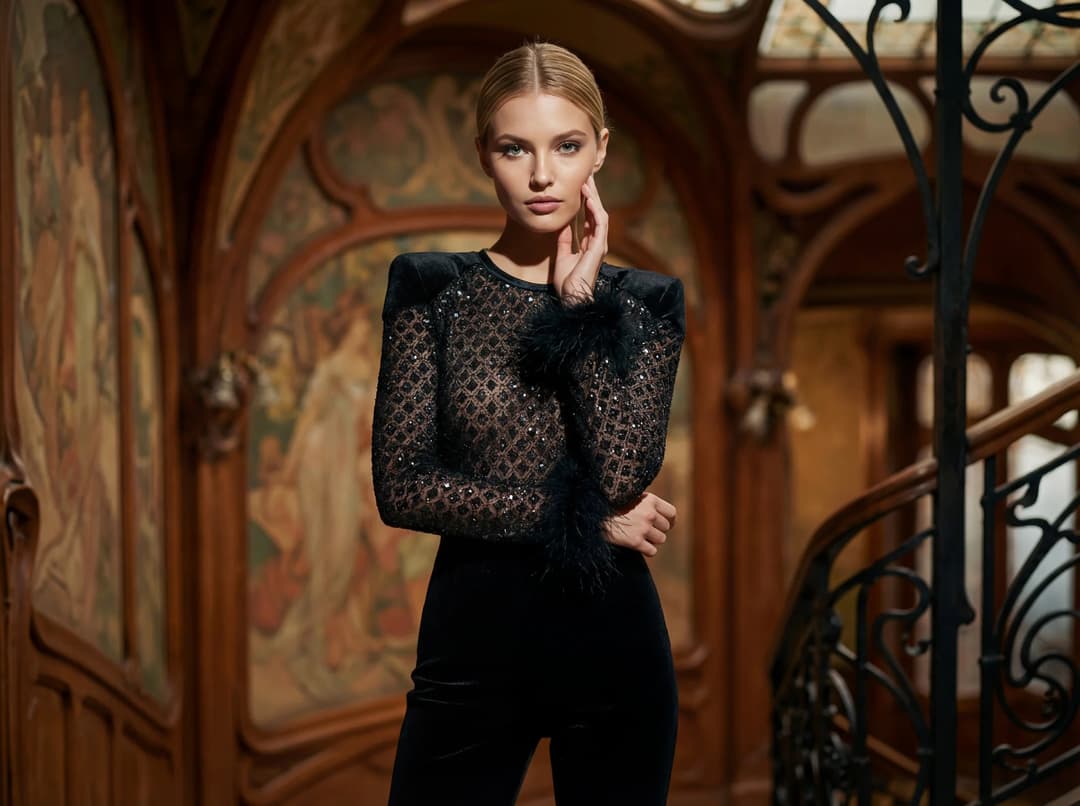
Example of a jumpsuit illustrating the behavior of fabric drape and the balance of proportions between bust and leg.
Credible pricing: why a jumpsuit often costs more to make well
A premium jumpsuit generally requires more operations than pants alone, and often more than a simple dress: it is necessary to assemble a top (neckline, sleeves, darts), assemble a bottom (crotch, pockets, fly or back zip), then connect the two at the waist while maintaining balance and symmetry. Added to this are the interior finishes, the belt installation, and sometimes the lining. In practice, the difficulty is not only in assembling: it is in maintaining the coherence of the lines. A slightly misaligned waist seam is immediately noticeable. A lack of balance in a leg is noticeable with every step.
Our quality indicators, validated by numerous fitting room tests in real conditions, demonstrate the time and number of operations necessary to ensure impeccable Misciano finishing.
Fitting room test: 5 simple gestures to judge the construction
1) Raise your arms: the neckline should stay in place, the waist should not rise excessively.
2) Sit down: the crotch should not pull, the zip should not deform.
3) Walk quickly: the leg should remain aligned, without twisting.
4) Put your hands in the pockets: they should remain flat, without opening the seam.
5) Look at the back: a clean back is a sign of correct patterning (no excessive horizontal folds, no hollow at the lower back without reason).
Which jumpsuit cut for women according to body shape
Universal markers: what matters more than the "letters"
Rather than classifying silhouettes into fixed categories, it is more useful to observe four parameters that determine the choice of a women's jumpsuit: torso length, waist height, shoulder width, hip volume. These markers are concrete, and above all actionable: they guide the neckline, the sleeve, the waist position, and the leg shape.
Torso length: if your torso is long, favor a well-placed waist (not too low) and details that structure (belt, darts). If your torso is short, avoid too wide belts and very high waists that further shorten the torso.
Waist height: some have a naturally high waist, others lower. A poorly positioned jumpsuit waist is immediately noticeable: folds at the stomach, pulling back, feeling of discomfort in movement.
Shoulder width: a marked shoulder can be softened by a more open neckline and a soft sleeve; narrow shoulders can gain presence with a structured sleeve.
Hip volume: the more prominent the hips, the more the leg should fall with balance: neither too tight (which highlights every contour), nor too voluminous without structure (which widens).
Each Misciano creation is the result of demanding expertise and a meticulous selection of materials. Our quality commitment is reflected in elegant, durable pieces designed to enhance every silhouette with naturalness and refinement.
Discover our commitmentCutting solutions: necklines, sleeves, legs, waist
V-neck to elongate: the V-neck elongates the neck and refines the look of the bust. It is particularly flattering if you want to lighten a generous bust or add verticality to a slender silhouette. Pay attention to the depth: a V that is too low may lack support and require lingerie adjustments.
Structured sleeves to balance: a well-designed sleeve head, a slightly controlled puff sleeve, or a subtly constructed shoulder can balance pronounced hips. Conversely, if you already have a strong build, prefer a fluid sleeve, raglan or kimono, or a softer armhole.
Straight leg vs wide leg: – Straight leg: provides a clean line, easy for everyday wear, flatters many silhouettes. It requires impeccable length. – Wide leg: brings fullness and beautiful fluidity, particularly elegant in heavy crepe, dense viscose, or cool wool. Caution: if the bust is already ample, a point of structure (belt, marked waist, neckline) is needed to avoid the "total volume" effect.
Marked waist or not: a marked waist gives a defined silhouette, but it must be at the right height. An unmarked (straight) waist can be very beautiful in a neat fabric and with a long leg, but it requires impeccable build and drape, otherwise the piece appears floating.
Fitting checklist by body shape
Here is a simple checklist, more useful than vague advice:
If you are petite: – Check that the waist does not drop to the hips. – Prefer a straight or slightly flared leg, adjusted length. – Avoid overly voluminous pockets on the thighs. – A V-neck or an open shirt collar helps to elongate.
If you are tall: – Watch the torso length: some jumpsuits pull at the shoulders. – Wide legs are superb if the material has structure. – A belt can structure without shortening if it remains thin to medium.
If you have a generous bust: – Look for bust darts, or a thoughtfully constructed design (stable wrap). – Avoid fabrics that are too thin and shiny on the bust. – Check the ease in the buttonhole if shirt collar.
If you have pronounced hips: – Favor a straight leg or wide leg that falls from the hip. – Avoid patch pockets on the hips. – A slightly structured shoulder often rebalances very well.
If you have little marked waist: – A tone-on-tone belt, positioned just right, can create a waist. – A play of darts or a discreet smocked back helps without tightening. – Worked necklines draw the eye upwards.
The most important point: torso length takes precedence over size "S/M/L"
Two people wearing the same pants size can have very different torsos. On a jumpsuit, this is crucial. If you should remember only one guideline: the jumpsuit should allow you to breathe and move without shifting the waist. If the waist rises as soon as you raise your arms, the torso length is insufficient. If the waist sags and wrinkles, it is excessive or the cut is too large.
Which women's jumpsuit for every occasion from daily life to events
At the office: balance between sharpness and ease
For the office, the jumpsuit must fulfill a simple promise: remain impeccable from 9 am to 7 pm, without constraining you. The best choices are those that combine stable material and clear cut.
Colors: navy, black, anthracite gray, deep beige, chocolate, deep khaki. These shades withstand the day well, coordinate easily, and maintain a sober elegance.
Materials that don't wrinkle too much: cool wool, dense crepe, certain viscose twills, well-woven blends. Avoid too thin viscoses if you are often seated: they show creases.
Cut: shirt collar or reasonable V-neck, sleeves (structured short or long), straight or slightly wide leg. A slightly marked waist is often the most flattering and the most "held".
Layering blazer: the jumpsuit and blazer form a very effective duo. Choose a blazer whose length stops above the hip or just below, to avoid cutting the leg. A blazer that is too long can weigh down the ensemble, especially if the leg is already wide.
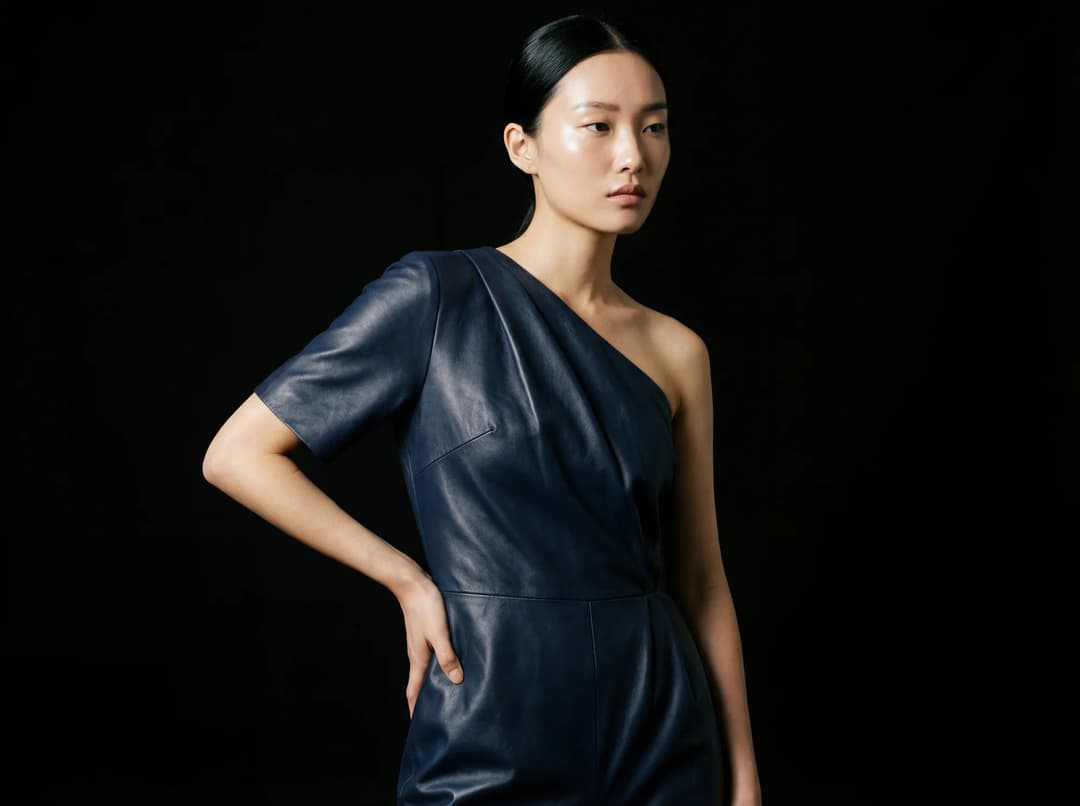
Example of a jumpsuit illustrating the behavior of the fabric drape and the balance of proportions between torso and leg.
Evening: neckline, backless, light, but controlled
In the evening, the jumpsuit can replace the dress with a different presence: more graphic, often more assertive. The goal: to play on a strong detail while keeping a pure line.
Neckline play: a deeper V, a well-constructed bustier, an asymmetrical neckline. The key point is support: a beautiful neckline should not force you to remain still. Check stability by moving your arms.
Controlled backless: a backless design can be superb, but it must remain compatible with lingerie (or plan solutions: adhesive bra, bands, cups). A clean finish at the edge of the back is essential: a wavy edge ruins the look.
Accessories and shoes: in the evening, shoes change everything. A heel slims the leg, especially with a wide-leg cut. If you choose a thin sandal, make sure the hem doesn't "eat" the foot. As for jewelry: if the neckline is strong, prefer earrings and a bracelet; if the neckline is simple, a necklace can structure.
Ceremony: the alternative to the dress, designed for photos
For a ceremony (wedding, baptism, formal evening), the jumpsuit must be beautiful in real life and in photos. Fabrics react differently to flash: too shiny satin can create harsh reflections; a matte material often gives a more flattering result.
Palette: powdered pastels, midnight blue, deep green, burgundy, ivory (with caution depending on the context). Shades too close to white can be tricky to wear at a wedding.
Cut: a long leg, a well-fitted torso, a defined waist without compression. Details that work well: draping at the waist, fluid sleeves, tone-on-tone belt, front pleats.
Comfort for a full day: this is the forgotten criterion. A ceremony involves sitting, walking, dancing. The jumpsuit must follow. Favor a breathable material, sufficient ease at the crotch, and a closure you can easily manage.
Weekend and travel: the "easy" but held jumpsuit
For the weekend, look for a material that wears well: soft denim, twill cotton, compact knit, thicker viscose. A slightly wide cut, a tie belt, and well-placed pockets make the piece pleasant. When traveling, avoid fabrics that wrinkle excessively, or plan for a steamer.
How to accessorize a jumpsuit to change style without distorting it
Belts: Redefine the waist without breaking the line
The belt is the most powerful tool on a jumpsuit, but also the riskiest: if poorly chosen, it cuts the verticality that is the charm of the piece.
Width: – Thin (1 to 2 cm): ideal for maintaining fluidity, adding a discreet point of light, and marking without compressing. – Medium (3 to 5 cm): provides more structure, perfect on a tailored jumpsuit. – Wide: reserved for silhouettes that can support a very defined waist and thicker materials. On a thin fabric, a wide belt can create folds and distort the bust.
Placement: a belt should be placed at the natural waist or slightly above depending on the desired effect. Too low, it widens the hips. Too high, it shortens the torso. On an already belted jumpsuit, avoid adding a thick belt: you risk creating an inelegant bulk.
Material and buckle: a large buckle draws the eye to the center. If your jumpsuit already has details (pockets, collar, buttons), opt for a more discreet buckle. Smooth leather adds sharpness; suede softens; a braided belt is more casual.
Shoes: the equation of leg + hem + use
Heels to elongate: with a wide leg or long straight leg, the heel provides poise. A heel too thin on a very heavy material can unbalance: seek coherence between the weight of the fabric and the presence of the shoe.
Flats for neat elegance: loafers, structured ballet flats, well-made flat sandals. The crucial point is the length: a jumpsuit too long with flats drags and loses its line. An adjusted hem is then essential.
Sneakers for premium casual: choose a clean sneaker with simple lines. It works very well with a denim, twill cotton, or denser crepe jumpsuit. Pay attention to proportion: a very wide leg + massive sneaker can weigh down the ensemble.
Jewelry and bags: balance rules according to collar, sleeves, leg volume
According to the neckline: – V-neck: thin necklace or pendant, or more prominent earrings. – Shirt collar: earrings and bracelet, or very discreet necklace. – Strapless/asymmetric: favor earrings, avoid overloading the neck.
According to the sleeves: long sleeves call for a more graphic bracelet if the wrist is exposed. Short sleeves allow for balance with more visible earrings.
According to the leg volume: the wider the leg, the more the bag can be structured to match the fluidity: a handbag, a rigid clutch, a leather with good hold. On a slim leg, a soft bag can work.
Jackets and coats: maintain verticality
A jumpsuit supports a short jacket (like a fitted blazer) that reveals the waist, or a long coat worn open that extends the verticality. Avoid intermediate lengths that stop at the widest point of the hip if you aim to refine the line.
Mistakes to avoid when wearing a women's jumpsuit
Error #1: Incorrectly adjusted torso length (the major trap)
This is the most common mistake, and the hardest to spot without a method. A jumpsuit may seem "pretty" at first glance, then become uncomfortable in ten minutes.
Signs of a torso that's too short: pulling at the shoulders, feeling that the waist is rising, diagonal creases starting from the crotch, discomfort when you sit down. The garment "holds" you back.
Signs of a torso that's too long: horizontal creases at the waist, excess fabric that blouses, a crotch that descends, impression of a heavier silhouette. The line loses its sharpness.
Solution: favor a brand that offers lengths (petite/tall), or plan for an alteration if the construction allows. And above all: test in motion, not just standing.
Error #2: Wrong choice of underwear
The jumpsuit, especially in fluid material, reveals a lot. Poorly chosen underwear can ruin a perfect drape.
Visible marks and lines: opt for seamless panties, or smooth materials. Thick boyshorts often show under a crepe.
Transparency: under a light jumpsuit, choose a shade close to your skin rather than white, which is often more visible.
Bust support: depending on the neckline, a classic bra may show. Anticipate: multi-position straps, quality bandeau, or adhesive solutions for occasional events.
Error #3: Unbalanced proportions (leg length + shoes)
A leg that's too long with flat shoes creates a "crumpling" effect: the fabric breaks on the foot, the line becomes heavy. Conversely, a leg that's too short can give the impression that the jumpsuit is too small, even if the torso is good.
Solution: adjust the hem to the shoe you will wear most often. A jumpsuit does not have the same drape with 2 cm heels or 8 cm: decide before altering.
Error #4: Total volume without a point of structure
A very loose jumpsuit at the torso and very loose at the leg can be stunning on some silhouettes, but it requires a point of structure: a neckline that defines, a slightly marked waist, a material that falls with sharpness. Without this, the silhouette becomes indecisive.
Solution: if you like fullness, choose a material with a bit of weight, and add a thin belt or a piece of jewelry that draws the eye upward.
How to care for a jumpsuit according to the material to keep it long-lasting
General principles: preserve the line and the feel
Maintaining a jumpsuit means preserving two things: the shape (leg hang, waist stability, bust cleanliness) and the feel (touch, flexibility, sheen). A poor maintenance routine can harden viscose, shine wool, or deform knitwear.
First of all: read the label, but keep a critical mind. A delicate material labeled “washable” may not like aggressive cycles. And a structured piece can benefit from occasional dry cleaning, even if not required.
Protocols by material: steam, washing, dry cleaning, drying
Crepe: often compatible with a delicate cold wash (depending on composition). Steam restores shape without crushing the texture. Hang on a suitable hanger to avoid shoulder marks.
Cool wool: favor airing and light steam. Dry cleaning is relevant to keep a sharp crease and clean without harshness. Avoid washing too often: wool wears out more from friction and washing than from wearing.
Viscose: delicate wash, gentle spin, dry on a hanger or flat depending on weight. Viscose can shrink or deform if mishandled. Gentle ironing on the reverse, ideally with a damp cloth.
Cotton: machine washable, but beware of creasing. Remove quickly from the drum, dry on a hanger, iron while still slightly damp for a neat result.
Linen: gentle wash, moderate spin. Linen loves steam. Creasing is part of its charm, but light ironing improves the line of a jumpsuit.
Satin: caution. Delicate wash possible for some polyester satins, but silk often requires professional cleaning. Distant steam avoids watermarks. Never rub a stain: dab.
Denim: wash inside out, cold, infrequently. This way, denim retains its color and shape. Air dry, no tumble dryer if you want to preserve the hang.
Knitwear: often dry flat to avoid stretching. Use a mild detergent. Steam can help, but without pulling the material.
Stain management: act quickly, according to the fiber
Grease: sprinkle (Sommières clay if possible), let it work, then brush gently. On satin, avoid hot water.
Makeup: on the collar or neckline, use a mild solution (very lightly with Marseille soap) and dab. Always test on a hidden area.
Wine: dab, cold water, then appropriate cleaning. On silk, it's better to quickly entrust it to a professional.
Perspiration: air immediately. Stains set with heat: avoid ironing before cleaning.
Misciano transparency: when to avoid dry cleaning, when it is recommended
Avoid dry cleaning too frequently on fine viscose pieces or certain satins: solvents and repeated handling can alter the feel and color. Prefer gentle steam and local cleaning.
Recommend dry cleaning for structured cool wool jumpsuits, or ceremonial pieces with linings and delicate finishes: dry cleaning preserves the line, cleans without deforming, and maintains the elegance of the drape.
How to choose your size and plan alterations on a jumpsuit
Key measurements: what you really need to take
To choose a jumpsuit, the classic measurements (bust, waist, hips) are not enough. Always add:
Height: it influences leg length and waist position.
Bust circumference: essential for darts and bust ease.
Waist circumference: important if the waist is marked or belted.
Torso length (shoulder → waist): the most determining measurement. It affects comfort and line.
Inseam: useful for anticipating the hem and drape.
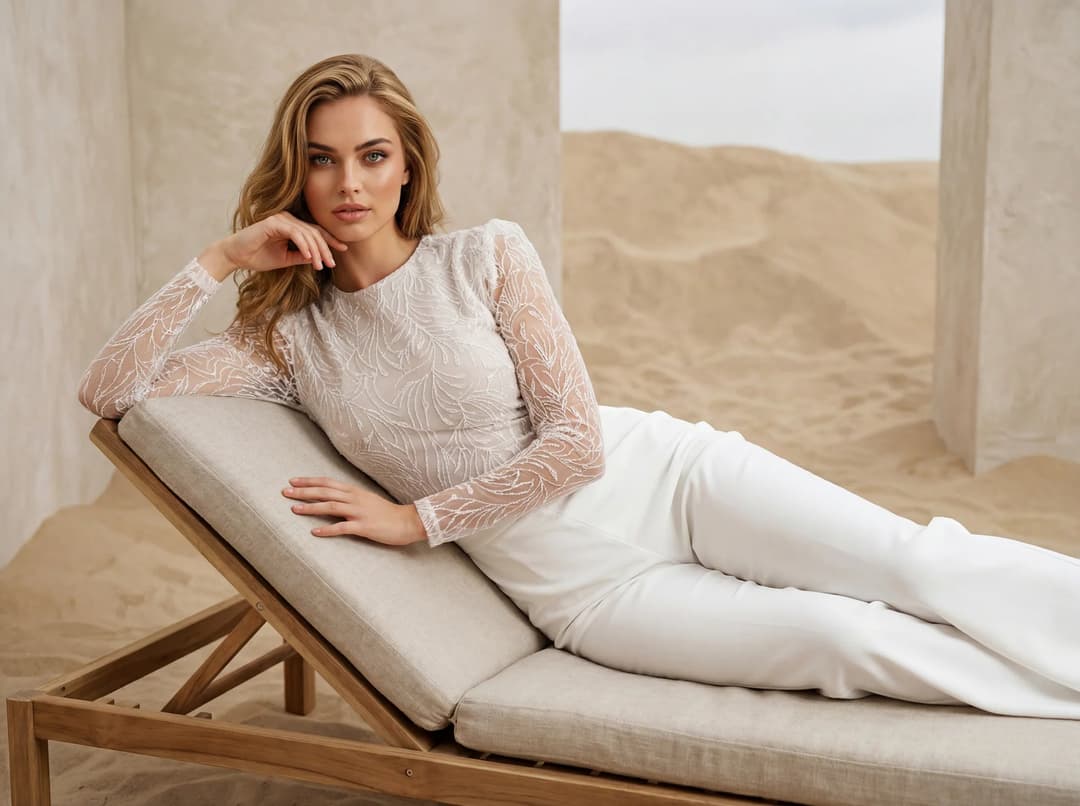
Example of a jumpsuit illustrating the behavior of fabric drape and the balance of proportions between torso and leg.
How to read a size guide when buying online
If the brand provides a "torso length" or "shoulder-to-waist length" measurement, rely on it. Otherwise, look at the total length and compare it to a piece you own. And above all: check the return policy, as trying on is often essential.
A tip: if you are often "between two sizes," choose the one that best respects the torso and shoulders. Hips and waist can be more easily altered than an insufficient torso length.
Possible alterations: what is well done (and what is risky)
Hem: the most common alteration. It immediately transforms the look. To be done according to the shoe.
Waist cinching: possible if the jumpsuit has side seams or a mounted belt. It can be slightly taken in to shape.
Strap adjustment (on strap models): very effective for adjusting the torso and raising the line.
Dart adjustment: possible, but requires an expert hand to avoid distorting the neckline.
Torso length adjustment: more complex. Sometimes feasible if the jumpsuit has an accessible waist seam and sufficient margin, but it is a technical alteration, thus more costly.
Misciano's experienced advice: prioritize torso adjustment first, then the hem
If you have to choose, first ensure the torso is right: shoulders in place, comfortable bust, waist at the right height, comfortable crotch. Only then adjust the leg length. A jumpsuit can be neatly shortened; it cannot "gain" a missing torso length without heavy intervention.
How to choose a women's jumpsuit that you will actually wear
Start from your real life: frequency, contexts, weather
A jumpsuit can be sublime and remain in the closet if it doesn't fit your daily life. Before buying, ask yourself three simple questions: where will you wear it, how long at a time, and in what weather. A light satin jumpsuit, beautiful, does not have the same utility as a navy cold wool jumpsuit that you can wear to the office, then to dinner.
If you spend a lot of time outdoors, think about the coat: the jumpsuit works well with a long coat worn open, but less with very short jackets if you are cold. If you drive often, check the discomfort at the crotch and the wrinkle resistance.
Choose a color and material that withstand repetition
The pieces we actually wear are those that can be repeated without becoming tiresome. A deep color (navy, chocolate, dark green) and a stable material (dense crepe, cold wool, twill) allow for varying accessories without the piece seeming like "the same outfit."
Conversely, a very distinctive jumpsuit (strong print, very shiny satin) is often more occasional. This is not a flaw, but you need to buy it knowingly: it will have a lower frequency of use.
Anticipate constraints: toilets, seating, transport
This is a concrete point, rarely stated precisely: a jumpsuit requires practical management, especially on a long day. If the closure is at the back, can you open it easily? If the fabric is delicate, will it withstand a day sitting? If you often take public transport, does the material wrinkle too much?
For regular use, prioritize: side or front zip, material that retains its shape, and a cut that doesn't pull at the crotch.
Build 3 looks around the same jumpsuit
Before buying, imagine three concrete outfits:
1) Office version: blazer + loafers + structured bag.
2) Evening version: heeled sandals + earrings + clutch.
3) Weekend version: sneakers + short jacket + discreet jewelry.
If you can't build these three versions with what you already own, the jumpsuit risks remaining an isolated piece. A jumpsuit that is truly worn is one that interacts with your wardrobe.
The right level of detail: neither too much nor too little
Details add charm, but they must serve stylistic longevity. An overly elaborate collar, a too prominent buckle, a complex cutout design can date quickly. Conversely, a too minimalist jumpsuit, without structure, may lack presence.
Seek a balance: a beautiful neckline, a well-defined waist, an impeccable leg, and a signature detail (buttons, belt, cuffs) are enough.
Comfort and mobility: what you're never told about jumpsuits
The comfort of a jumpsuit depends on 4 areas, not on the "size"
Many think that comfort mainly depends on the chosen size. In reality, for a jumpsuit, comfort depends on four technical areas:
1) Armhole: too tight, it limits the arms; too wide, it gaps at the bust. A well-designed armhole allows movement without the whole garment shifting.
2) Torso length: this is the key. A correct torso length allows you to sit without pulling and to raise your arms without the waist riding up.
3) Crotch: it must be deep enough for sitting, but not too low. A well-cut crotch is barely noticeable: it supports.
4) Ease of hips and thighs: especially if you walk a lot. A leg that is too narrow may look good in the mirror but be tiring in daily life.
The "mobility" tests to do before keeping the piece
In the fitting room (or at home), do these simple tests:
– Sitting test: sit down and stay for 30 seconds. If you feel pulling at the shoulders or crotch, the torso length or crotch is not right.
– Walking test: walk with a long stride. A comfortable jumpsuit does not ride up and does not get caught between the thighs.
– Arm test: raise your arms as if to reach for an object above. The waist should not "rise" by several centimeters.
– Pocket test: put the phone in a pocket. A well-designed pocket does not distort the hip and does not pull on the seam.
What the material changes in comfort: friction, heat, noise
Comfort is not only mechanical, it is also sensory.
Friction: some materials (satin, smooth polyester) glide on the skin, others (linen, dry cotton) have a firmer hand. If you are sensitive, opt for a partial lining or a softer material.
Heat: a jumpsuit covers more than a summer dress. In summer, choose linen, breathable viscose, light but sufficiently opaque cotton. In winter, cold wool, dense crepe, and think about layering (thin turtleneck underneath, or blazer on top depending on the cut).
Noise: a rarely mentioned detail: some synthetic fabrics "rustle" when walking. If you seek discreet elegance, test in motion in a quiet place.
The practical point: closure and daily management
A jumpsuit can be impeccable and yet rarely worn if its closure complicates life. A very long back zip is beautiful, but sometimes difficult to handle alone. A front zip is more practical, but more visible and therefore more stylistically present. Buttons are charming, but can gap at the bust if the cut is too tight.
Choose according to your use: if you wear it often, opt for a closure that you can manage easily, without contortion, and that does not create tension on the material.
Style conclusion: the elegance of a jumpsuit is freedom of movement
A truly successful jumpsuit does not impose a posture on you. It lets the body live: walk, sit, dance, breathe. This is where true refinement lies: a clean line, a pleasant material, and a construction that disappears to leave only the silhouette.

Article by Camille Laurent
Published on 07/02/2026 at 20:22
About the author
Camille Laurent works on the analysis of clothing and textile behaviors applied to women's ready-to-wear. Her editorial approach is based on the observation of constructions, assembly methods, and material-silhouette interactions, in order to produce content oriented towards real use and stylistic durability. Her contributions are part of Misciano's editorial line aimed at linking textile understanding and concrete clothing choices.
What interests me above all is the intimate relationship we have with clothing: why we choose it, how we wear it, and especially how long it accompanies us.
→ Learn more about Camille LaurentFREQUENTLY ASKED QUESTIONS
What differentiates a jumpsuit from a dress?
The jumpsuit is a unique piece that combines a top and bottom in a continuous construction, offering a vertical line and a sleek silhouette. Unlike the dress, which generally consists of a single part, the jumpsuit allows for a variety of cuts and styles, suitable for different body shapes and occasions.
How to choose the right cut of jumpsuit for my silhouette?
The choice of cut depends on several factors, such as the shape of your body and the desired style. It is essential to pay attention to the length of the torso, the size of the crotch, and the length of the legs. A well-fitted cut will highlight your assets while offering comfort and elegance.
Which materials to prioritize for an elegant and durable jumpsuit?
Opt for noble materials like natural silk, cotton, or linen, which ensure both comfort and durability. These breathable and refined textiles allow for better fit of the jumpsuit while offering a pleasant feel on the skin, essential for a garment worn all day long.
How to accessorize a jumpsuit for different occasions?
Jumpsuits are versatile and can be adapted to various occasions. For a casual look, pair it with sandals or sneakers. For an elegant outing, choose heels and delicate jewelry. A belt can also enhance the waist, adding a touch of sophistication.
What tips for maintaining my jumpsuit to preserve its quality?
To preserve the quality of your jumpsuit, it is advisable to follow the care instructions on the label. Prefer hand washing or machine washing at low temperature, and avoid the dryer. Gentle ironing on the reverse side will help maintain the texture and shine of the materials used.
Shop the selection