History of textile materials and fabrics: reliable benchmarks, accurate vocabulary, and reading of fabrics

This guide is the result of a practical method and workshop tests, and remains indicative. For a precise analysis of the composition of a fabric, additional checks (laboratory or standardized techniques) are recommended.
When buying, inheriting, or altering a piece, the question is not “which material is the best?” but “where does this fabric come from, how was it constructed, and what does it imply in terms of feel, drape, and aging?”.
The history of textile materials and fabrics serves precisely this purpose: to give you concrete references to no longer confuse a twill with a plain weave, a combed yarn with a cut fiber, a “cotton” satin with a “polyester” satin. Here, we do not aim to cover everything: we aim for a reliable, practical, and verifiable reading on a real fabric.
Useful chronology: what the history of textile materials and fabrics really explains about our clothes
When tracing back the history of textile materials and fabrics, one discovers a constant: innovations do not completely replace the old ones, they add to them. Natural fibers (linen, wool, silk, cotton) have never ceased to exist; they have simply changed in availability, price, and quality depending on trade routes, spinning techniques, and industrial constraints.
First reference point: the material is not enough, construction matters. In ancient times, the difference was often less about “which fiber” than about “how it was spun and woven”. A carded wool, fluffy and matte, does not have the same presence as a combed wool, smoother, clearer, more “drawn” in its surface.
This contrast, still current, is one of the keys to understanding why two “100% wool” coats can behave like two different species: one catches the light and felts quickly, the other maintains a sharper line and brushes easily.
Second reference point: industrialization standardized, then segmented. With mechanization (spinning and weaving), we gained in regularity, yardage, and accessibility. But this regularity created a new language: yarn counts, densities, weaves, finishes. Quality shifted from “rare” to “mastered”.
A cotton became a “combed”, “compact”, “mercerized”, “sanforized” cotton. A wool became “super”, “combed”, “flannel”, “gabardine”. The history is therefore not only chronological: it is technical.
Third reference point: the arrival of artificial and synthetic fibers changed the feel and maintenance. Viscose, acetate, then polyester, nylon, acrylic… It is not just a matter of cost. It is a matter of hand (the feel), creasing, drying, resistance, pilling, colorfastness.
And it is also a matter of blends: many current fabrics are intentional compromises (a bit of elastane for recovery, a bit of polyester for strength, a bit of viscose for drape).
To situate these evolutions in time, here is an indicative mini-chronology:
- End of the 18th century: emergence of mechanization in spinning and weaving.
- Mid-19th century: development of mercerization and sanforization techniques.
- Early 20th century: appearance and gradual democratization of artificial and synthetic fibers.
- Today: extensive diversification with blends and finishes adapted to contemporary uses.
In short: knowing the history of textile materials and fabrics means understanding why your “cotton” shirt can be dry and crisp, or conversely soft and silent; why a “satin” can be slippery but fragile, or smooth but surprisingly robust; why some fabrics age beautifully while others visually wear out.
Essential textile vocabulary: fiber, yarn, weave, knit, and finishes (the words that prevent misunderstandings)
The vocabulary is your sorting tool. Without it, one confuses a fiber (the basic material) and a fabric (the structure), or a weave (weave pattern) and a knit (knitted structure). Yet, in practice, these distinctions explain the drape, warmth, transparency, resistance, and appearance.
Fiber: it is the origin. Natural (cotton, linen, wool, silk), artificial (viscose, modal, lyocell), synthetic (polyester, polyamide, acrylic). This word does not yet tell how the surface will behave: it gives a tendency (absorption, elasticity, resistance), not a final result.
Yarn: it is the way the fiber is assembled. A yarn can be more or less twisted: more twist often gives a more nervous, more “sonorous” hand, better hold, and sometimes less immediate softness. Less twist can give a rounder, more delicate hand, but sometimes more prone to pilling. The yarn can also be combed (aligned fibers, smoother surface) or carded (more mixed fibers, fuzzier surface).
Weave (weaving): it is the way the threads intersect. Three families dominate the reading:
- Plain weave: simple intersections, regular surface, often more stable. Think poplin, percale, linen canvas. To the touch: clear, sometimes a bit dry, very readable.
- Twill: diagonal ribs, more flexible, often more resistant to wear and less wrinkling. Think denim, gabardine. To the eye: discreet diagonals; to the touch: rounder, more “flowing”.
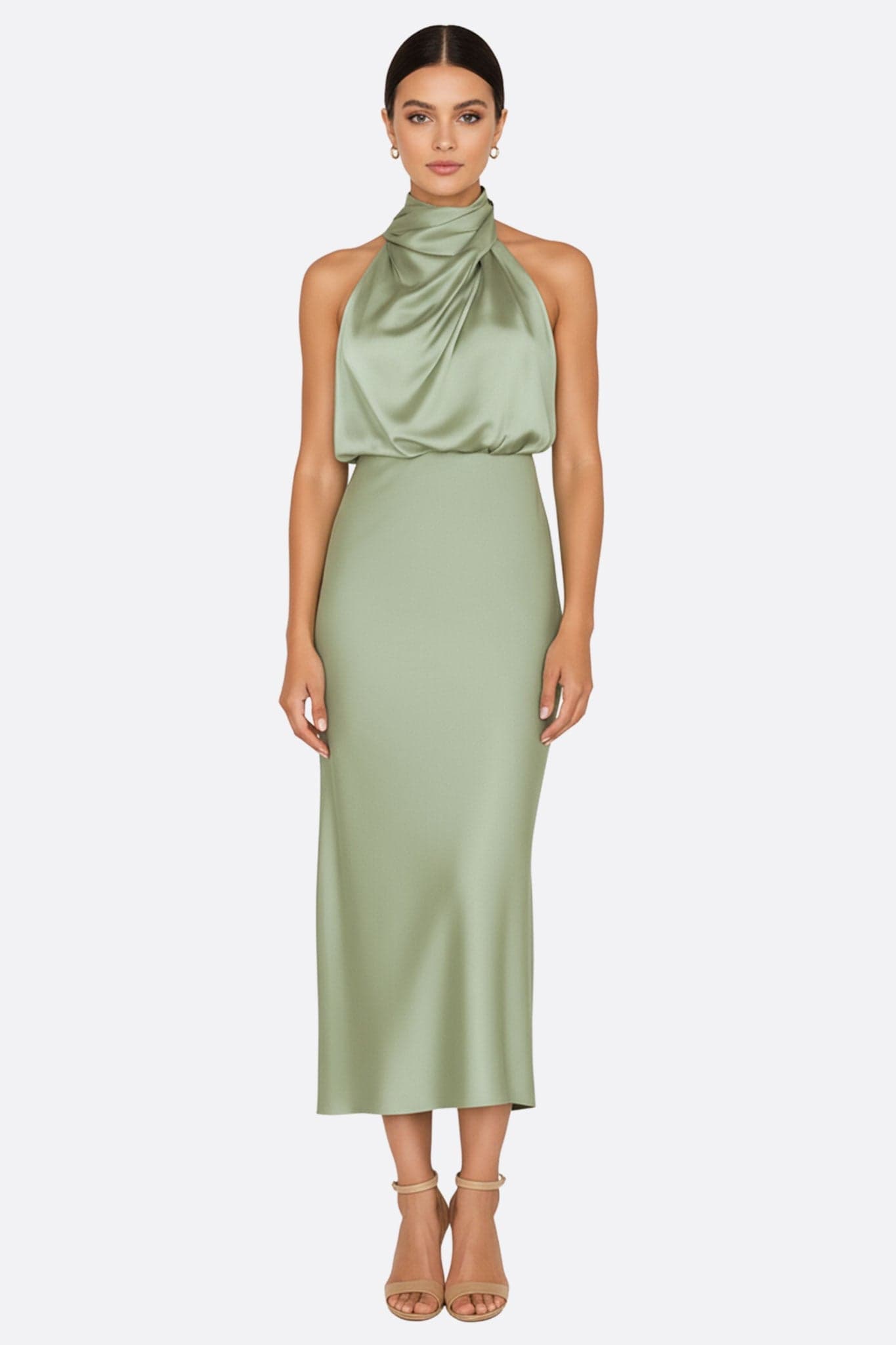
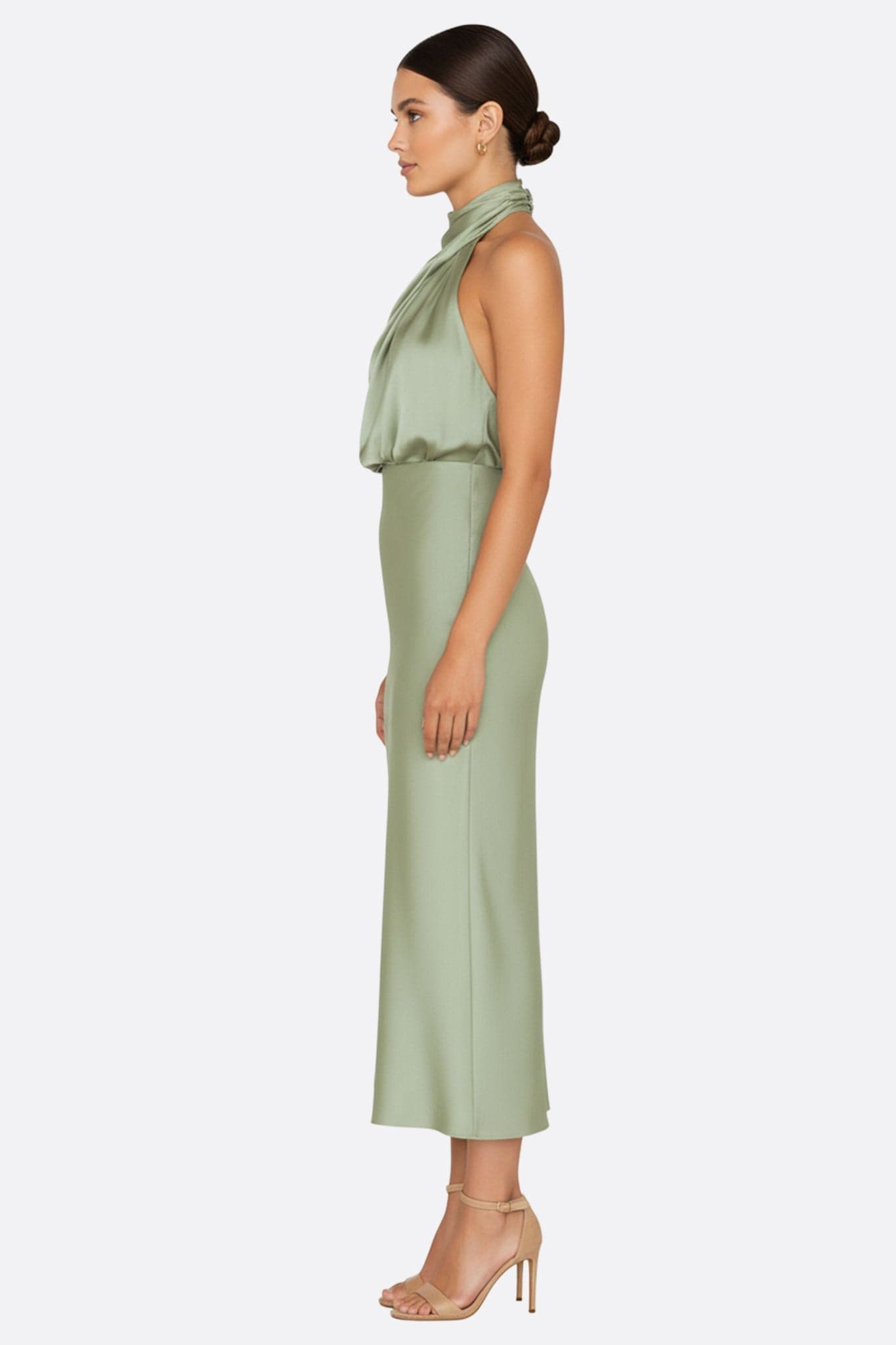
- Satin: long floats, smooth and shiny surface. Think cotton satin, silk satin. Sensation: glides, freshness, but beware of snags depending on the fiber and density.
Knit: this term specifically refers to the structure of a knitted fabric, which stretches differently and breathes better than woven or non-woven structures (like felt or spunbond). Jersey, for example, is a cotton knit that behaves differently from a viscose or merino wool jersey.
Finishes: these are the treatments that transform perception. Mercerization (more lustrous, more stable cotton), sanforization (shrinkage reduction), brushing (fluffier flannel), calendering (smoother surface), coating (more “structured” feel, sometimes waterproofed). Many “surprises” in wear come from a finish, not the fiber.
This vocabulary is your safeguard: it prevents believing that a “satin fabric” implies silk, or that “cotton” guarantees softness. If you want to connect these notions to a choice of piece (shirt, pants, dress) without getting lost, you can complement with how to choose a clothing material well, a single reading is enough, then you come back here to refine the eye and the hand.
Sensory markers: reading a fabric by touch, eye, and sound (without a laboratory)
The best “field” skill in-store or in front of your wardrobe is to connect a sensation to a technical cause. The goal is not to guess the exact composition to 1% accuracy, but to identify behaviors: wrinkles, slides, grips, breathes, holds the line, relaxes, marks seams, pills.
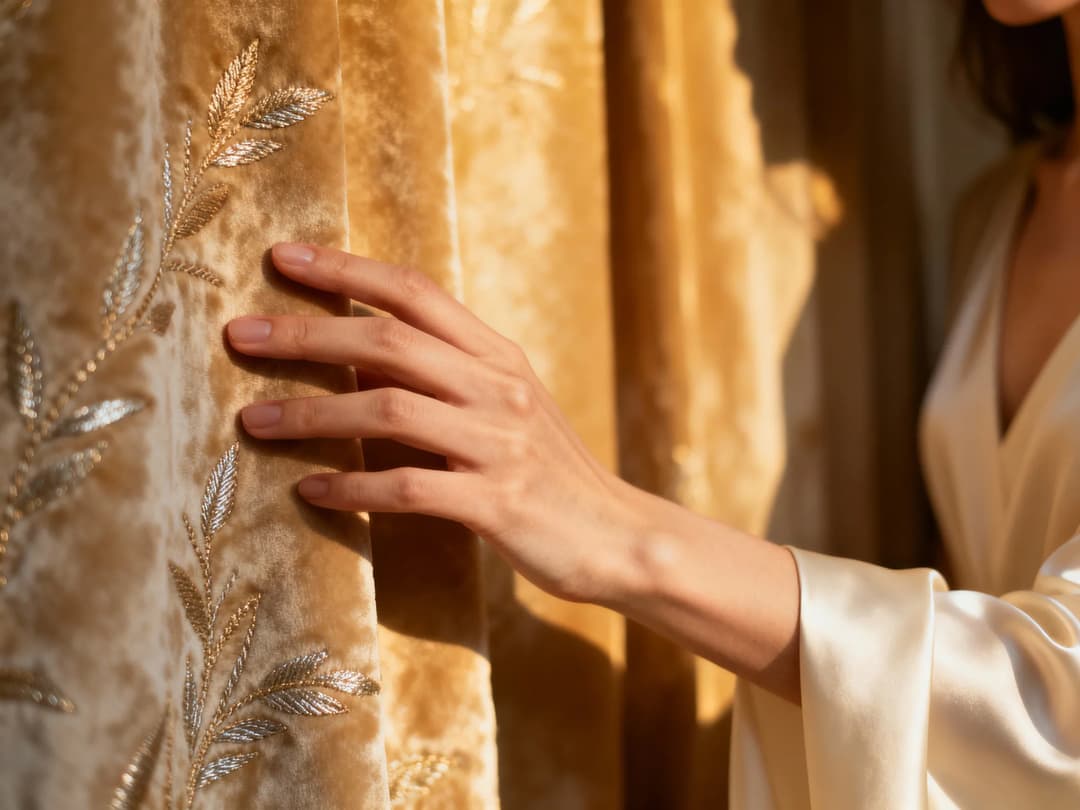
The touch (the “hand”):
- Dry hand: clear sensation, sometimes slightly rough, with little glide. Often linked to a tight weave (percale), certain finishes, or fibers like linen. Advantage: clear look, good hold; disadvantage: visible wrinkling if the construction is sensitive to it.
- Round hand: softer, more “full” feel, often associated with bulkier yarns (carded) or weaves that give body. It’s pleasant, but watch for pilling in areas of friction.
- Cold and slippery hand: typical of satins and some well-finished viscoses/polyesters. Elegant visual effect, but beware of static electricity and snags if the fabric is fragile.
The look: look for the “reading” of the surface.
- Diagonals often indicate a twill: better drape, less harsh wrinkling.
- A mirror surface (uniform shine) suggests a satin or a glossy finish; on polyester, the shine may appear more “hard” and continuous, whereas on silk the light is often more lively, slightly vibrant.
- An irregular grain can signal linen, wild silk, or slub yarn: very beautiful visually, but the resistance will depend on the density and quality of the yarn.
The sound: yes, the sound.
- A fabric that “rustles” or “talks” (taffeta, some tight poplins) often indicates a very tense structure, with a marked hold.
- A silent fabric, which folds without noise, may be more flexible (viscose, flannel, some jerseys), with a more fluid drape.
The wrinkle test (discreet, without mistreating): pinch a small area, release. If the folds remain sharp and angular, the fabric will mark when worn. If the fold softens quickly, the fabric “recovers” better. Note: some fabrics recover visually but relax in width (knits, heavy viscoses).
The seams and hem: look at how the fabric “folds” at the topstitching. A fabric that is too soft may ripple; a fabric that is too stiff may break into folds. These are indicators of dimensional stability, often more reliable than the label alone.
These sensory markers provide an immediate reading. They are particularly useful when the label is vague (“blended materials”) or when the piece has been washed: the history of textile materials and fabrics is also read in the patina, not just in the original composition.
True markers (and common traps): blends, names, and behaviors over time
The last level is time: how the fabric ages, stretches, shines, pills, loses its color, or conversely gains character. This is where the history of textile materials and fabrics becomes a compass: it teaches you to interpret labels and anticipate compromises.
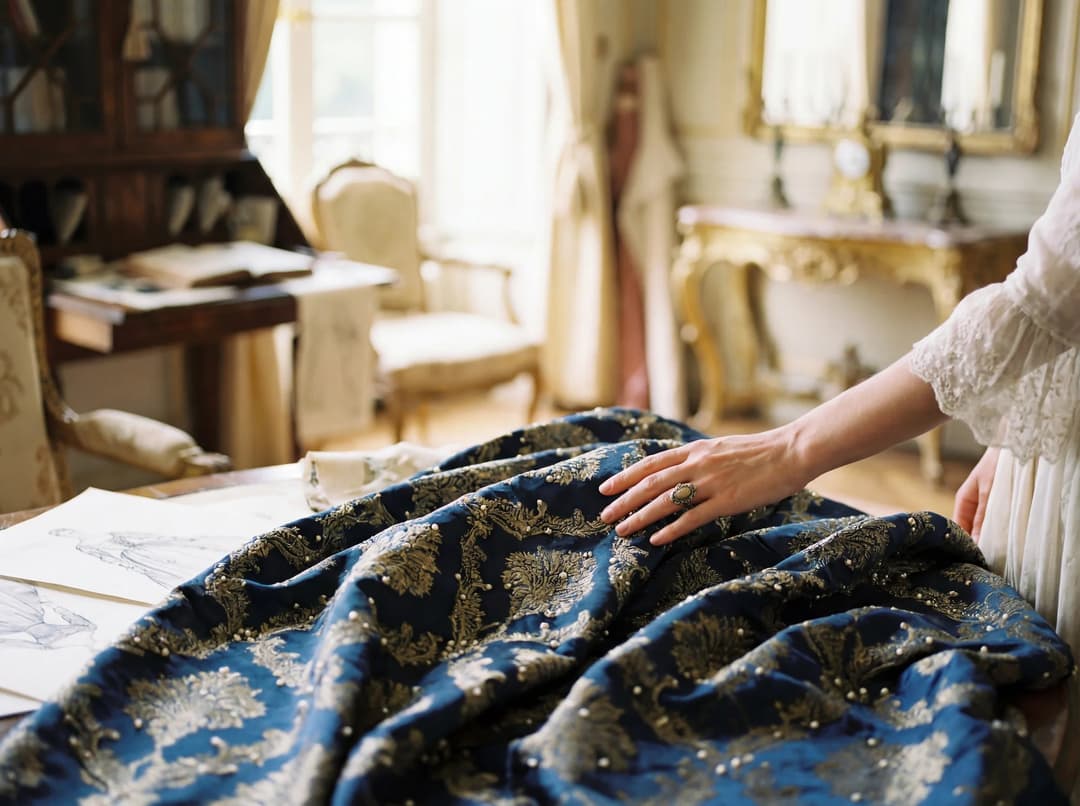
Trap #1: believing that “natural” = always more pleasant. A low-quality linen can scratch and wrinkle harshly; a short-fiber wool can pill quickly; an uncombed cotton can become rough. Conversely, some well-constructed viscoses offer remarkable freshness and drape. The truth lies in the thread, the weave, the density, the finishing.
Trap #2: confusing “blend” with “inferior quality.” A blend can be a precise adjustment:
- Wool + polyamide (in low %) : better abrasion resistance for pants, fewer marked knees.
- Cotton + elastane: comfort and recovery, but beware of heat and loss of shape if the fabric is too light.
- Viscose + polyester: drape + strength; watch out for static electricity and breathability depending on the percentage.
The reliable guide: ask yourself what defect is being corrected (wrinkling, fragility, lack of shape), and what side effect it may create (static, shine, heat).
Trap #3: “marketing” labels that hide the structure. “Satin,” “crepe,” “tweed,” “flannel” can refer to families of appearance more than compositions. A crepe comes from a twist and a grain; it can be silk, viscose, polyester. A flannel comes from a brushing; it can be wool or cotton. A tweed is a universe of threads and textures; the feel can vary greatly.
Trap #4: poorly anticipating the patina.
- Combed wool: can shine in friction areas (elbows, seat); brushing and light steam help revive the surface.
- Denim: fading is an aesthetic, not a defect. Quality is seen in the density, the regularity of the twill, and how the fabric “breaks” at the folds.
- Viscose: superb drape, but can mark with water and suffer from too direct heat when ironing; prefer steam and a damp cloth.
- Polyester: very stable, but can retain odors and shine on areas heated by the iron; gentle ironing, ideally on the reverse side.
Simple but very reliable buying guide: if you hesitate between two pieces, compare the density (weight in hand), the readability of the weave (plain/twill/satin), and the reaction to wrinkling. Only then, look at the label as a confirmation. It's a very Misciano way of proceeding: starting from the real, the hand, the drape, the surface, then validating with words.
Note: This guide, although based on field experience and technical benchmarks, does not exclude variations related to manufacturing methods, densities, and specific finishes. The data presented should be considered as trends rather than absolute certainties.
In summary, the history of textile materials and fabrics is not a decorative story: it is a reading guide. It gives you a language to describe what you feel, and benchmarks to anticipate what you will experience with the piece, at the first wear, the tenth wash, and in two years.
To extend the reading: from thread to cut
If this guide has helped you better read the material, you can extend this exploration to the gesture of the garment itself. Because between the fiber and the silhouette, there is the cut and the drape. This is where textile culture meets the wearer's eye.
To understand how a fabric reacts once shaped, discover our article choosing the material according to your morphology: it translates these benchmarks into concrete gestures to choose a cut adapted to each fabric.
And if you want to refine your view on the durability and neatness of fabrics, explore Which material does not pill: choose a clean, durable, and elegant fabric to wear: a precise guide to recognize finishes that age well.
Finally, to place this knowledge in everyday practice, consult How to choose a clothing material without making a mistake: it summarizes the selection criteria at the time of purchase, between comfort, drape, and maintenance.
The essence of textile according to Misciano
At Misciano, each material is observed, touched, draped, then thought to last. The history of fabrics is not ancient knowledge: it is a living requirement, that of a balance between comfort, shape, and style. Understanding the material is already honoring the garment.
Because a fabric is never just its composition: it tells a know-how, a touch, a way of accompanying the gesture. It is in this silent dialogue between the fiber and the movement that true elegance is found.
To extend this sensory experience, discover the Misciano scarves and shawls collection: silks, wools, and natural blends where each weave is chosen for its perfect drape and softness against the skin.

Article by Alexander Chekushine
Published on 02/07/2026 at 14:32
About the author
A specialist in style and fashion trends, I bring a sharp eye to Misciano's creations. My in-depth knowledge of noble materials and Italian craftsmanship enriches each of my articles with a precise and demanding reading of contemporary elegance.
→ Learn more about Alexander Chekushine