Women's summer jumpsuit: breathable materials and lightweight cut for a fresh and elegant style

When the heat rises: what a women's summer jumpsuit in breathable material must solve
You feel it right away: as soon as the thermometer climbs, the jumpsuit can become your best ally... or a piece you abandon after an hour. The problem is not the jumpsuit itself, but the equation heat + humidity + friction + lack of air circulation. A women's summer jumpsuit in breathable material must first meet a very concrete use: remain pleasant on the skin when the body heats up, without sticking, without marking, without forcing you to "survive" your outfit.
The first indicator is sensory: a breathable material gives a feeling of relative dryness even after a walk in the sun. It does not cling to the back, does not "glass" on the chest, does not saturate at the waist. We want a supple hand, a lively drape, and above all a surface that allows air to circulate. Conversely, some fabrics (compact polyester, coated fabrics, tight knits) trap heat: it feels like the skin is heating under a film. Breathability is as much about the fiber as it is about the construction of the fabric: a very tight cotton can be less comfortable than an airy viscose, and a blended linen can breathe better than a too heavy "100%".
Second point: the cut. In summer, the cut must create a buffer zone between the skin and the garment. Too close to the body, even a beautiful material ends up sticking. Too loose, you lose the line and create unnecessary friction at the crotch or under the arms. The right compromise: controlled ease, armholes designed to move, and a waist that does not strangle (shaping but flexible elastic, flat belt, or adjustable tie). During fitting room tests conducted on a 30°C day, we found that friction zones are significantly reduced when the cut offers optimal freedom of movement.
Finally, there is the practical question: a summer jumpsuit is often worn in motion (walking, driving, traveling, dining out). It must dry quickly, wrinkle "nicely" or little, and remain neat after several hours.
To summarize the objective: you should be able to forget you are wearing it. The material must breathe, the cut must lighten, and the finishes must avoid anything that traps heat (unnecessary linings, extra thicknesses, rough seams). It is this triad that transforms a summer piece into an obvious choice.
Breathable materials: read a label (and feel the fabric) to choose the right fiber
A women's summer jumpsuit in breathable material is first chosen based on the textile. The label is a starting point, but your hand and eye confirm: density, texture, flexibility, and ability to let air through. Here are the materials that give the best results in summer, with their nuances.
Linen: it is the queen fiber when looking for an “air circulation” effect. Linen absorbs, releases, dries quickly, and provides immediate freshness. To watch out for: the weight (linen that is too heavy becomes stiff and warm), and the rigidity (which can be bothersome if the cut is fitted). Ideal in a jumpsuit: washed linen, not too tight weave, and a bit of ease at the hips.
Cotton: excellent if the fabric is designed for summer (light poplin, voile, double gauze, seersucker). Very compact cotton can retain heat. In a jumpsuit, light cotton gives a clean, neat feel and withstands washing well. Seersucker (crinkled appearance) is particularly interesting: it keeps the fabric slightly away from the skin, so less contact, more air.
Viscose: often the most flattering in drape. It brings a fluidity that “breathes” if the weight is light. However, be careful: viscose can show moisture if it is too thin, and it wrinkles depending on the quality. For summer, opt for textured viscose or viscose crepe: the texture limits the sticky effect.
Tencel / Lyocell: soft feel, cool sensation, and good moisture management. It is a very comfortable option for those who do not like the wrinkles of linen. However, on some very smooth qualities, the material can “slide” and reveal underwear: the cut and color then become crucial.
Hemp: similar to linen, sometimes more robust, with remarkable breathability. It brings a slightly raw aspect, very pleasant in summer. Perfect in a blend (hemp-cotton) to gain flexibility.
Smart blends: a little elastane (1–3%) can save comfort at tension points (waist, hips) without suffocating the material, provided the base is natural or cellulosic. A linen-viscose blend can also limit wrinkling while maintaining good breathability, if the proportion of linen remains sufficient and the fabric is not too dense.
What often traps: full linings (especially synthetic), “satin effect” polyester fabrics, and very tight knits. If you insist on synthetic for color retention, look for truly airy constructions (micro-structure, loose weave), but in practice, for a summer feel, natural and cellulosic fibers dominate.
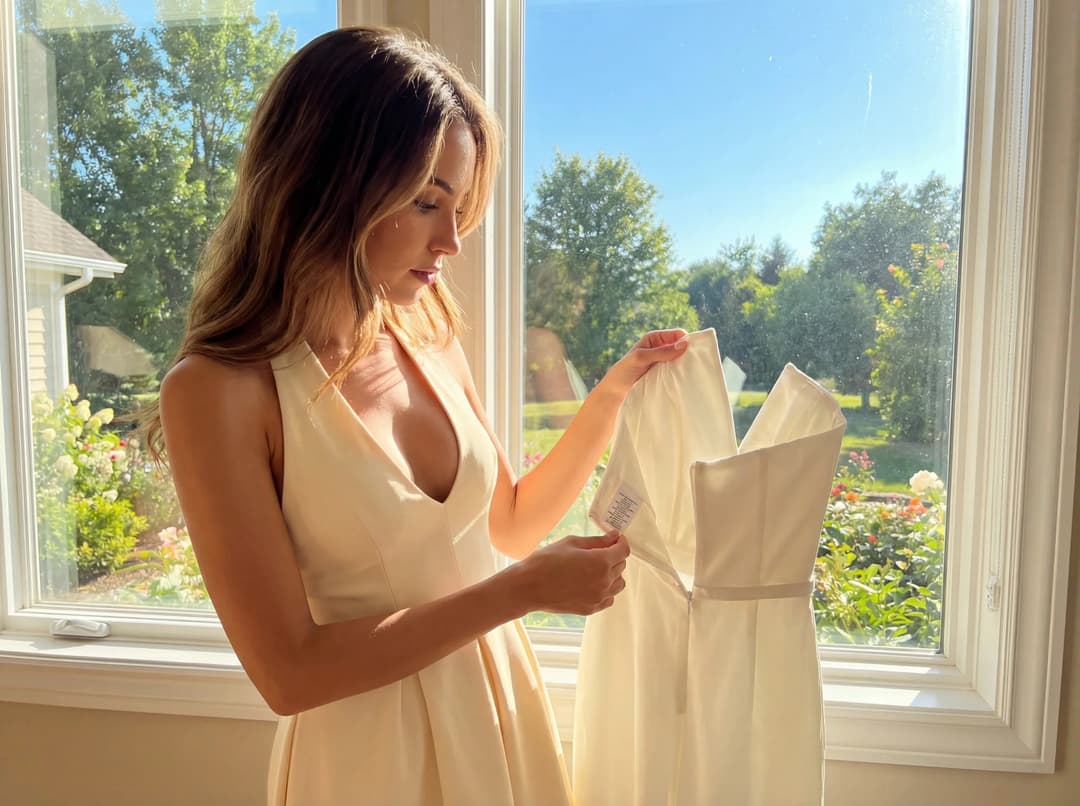
Fitting room tip: pinch the fabric and crumple it slightly in your hand. If it “squeaks” and remains stiff, it is likely to be warm. If it unfolds with flexibility and air seems to circulate when you move, you are on the right track. Also do the contact test: place a part of the fabric on the forearm. A breathable material does not give that hot film impression.
Light cut: the pattern details that really make a difference in summer
The material is not everything. A women's summer jumpsuit in breathable material becomes truly pleasant thanks to a cut that allows the body to move. In summer, we sweat mainly in contact areas: back, waist, lower back, armpits, upper thighs. The pattern must therefore create mobility and air circulation, without falling into shapeless oversize.
Armholes and sleeves: a too-tight armhole is a classic trap. It blocks movement, and the armpit heats up. Prefer a slightly open armhole, or a short sleeve with enough ease. “Butterfly” sleeves or light kimono sleeves can be very comfortable, provided the fabric is not thick (otherwise, it creates a warm layer). For a neat feel, a well-cut short sleeve in light poplin is extremely effective.
Neckline and opening: a too-closed neckline increases the sensation of heat. A V, a wrap, or a square neckline brings air and elongates the line. Openings (buttons, zips) are not just a practical detail: they allow for ventilation adjustment. A front buttoning, even partial, provides comfort at the table, on the move, or during a humid day.
Waist: in summer, we do not tolerate compressions well. An elasticated waist can be excellent if the elastic is soft and well distributed, or if the belt is flat at the front and elastic at the back (best compromise: fit + comfort). Tie strings are very relevant: they allow adjustment without rigidity. Avoid too thick or interfaced belts that create a hot zone in the middle of the body.
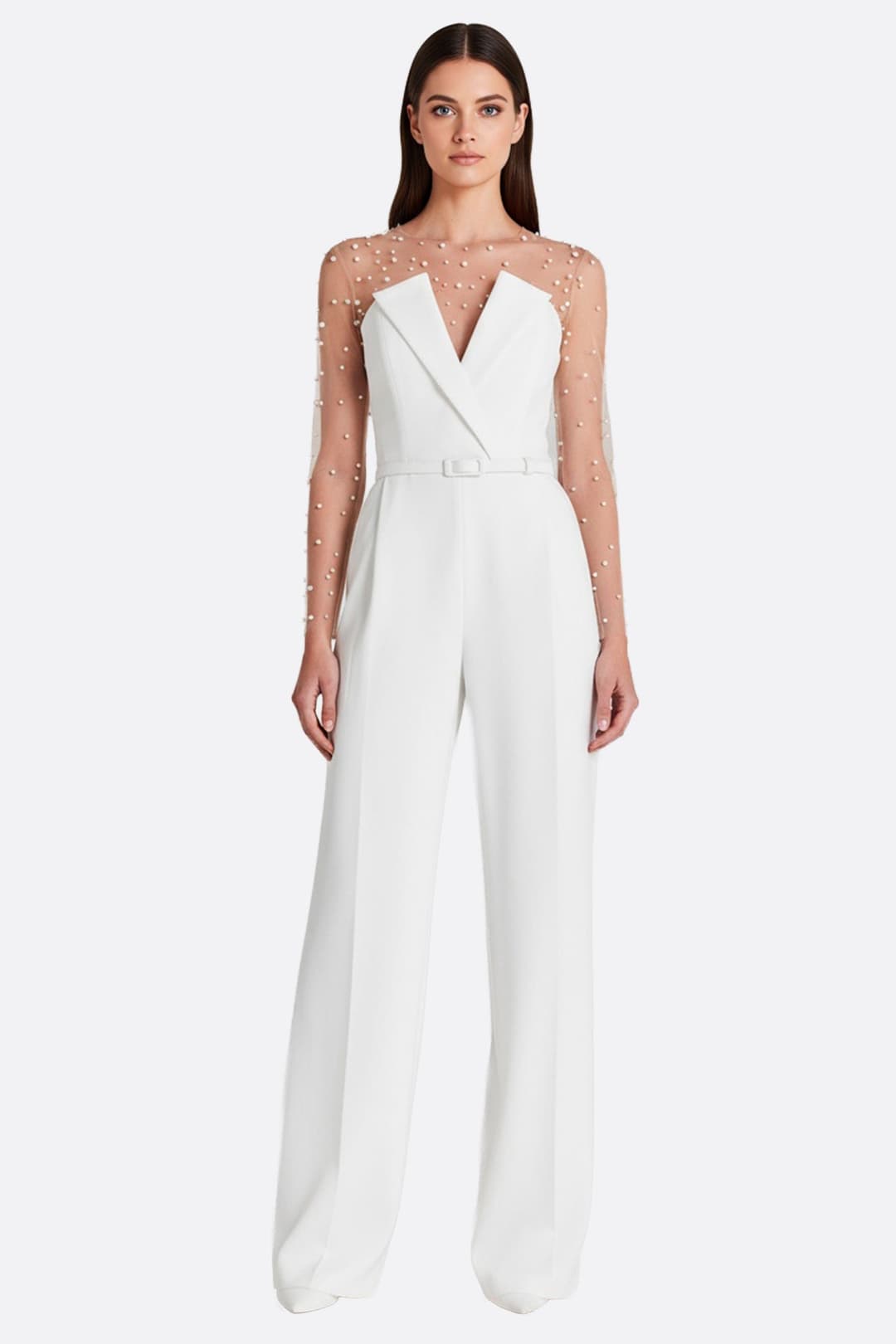
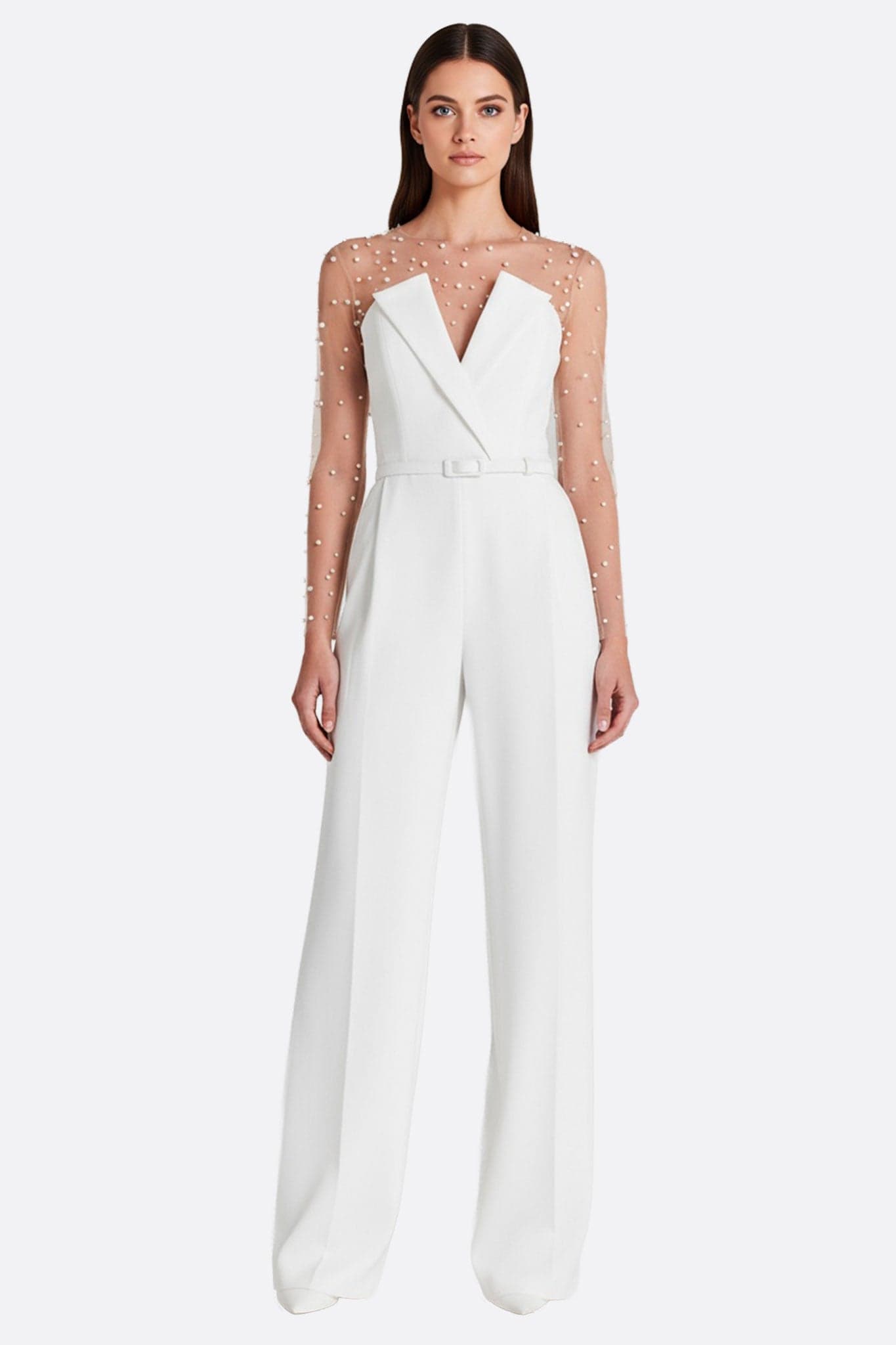
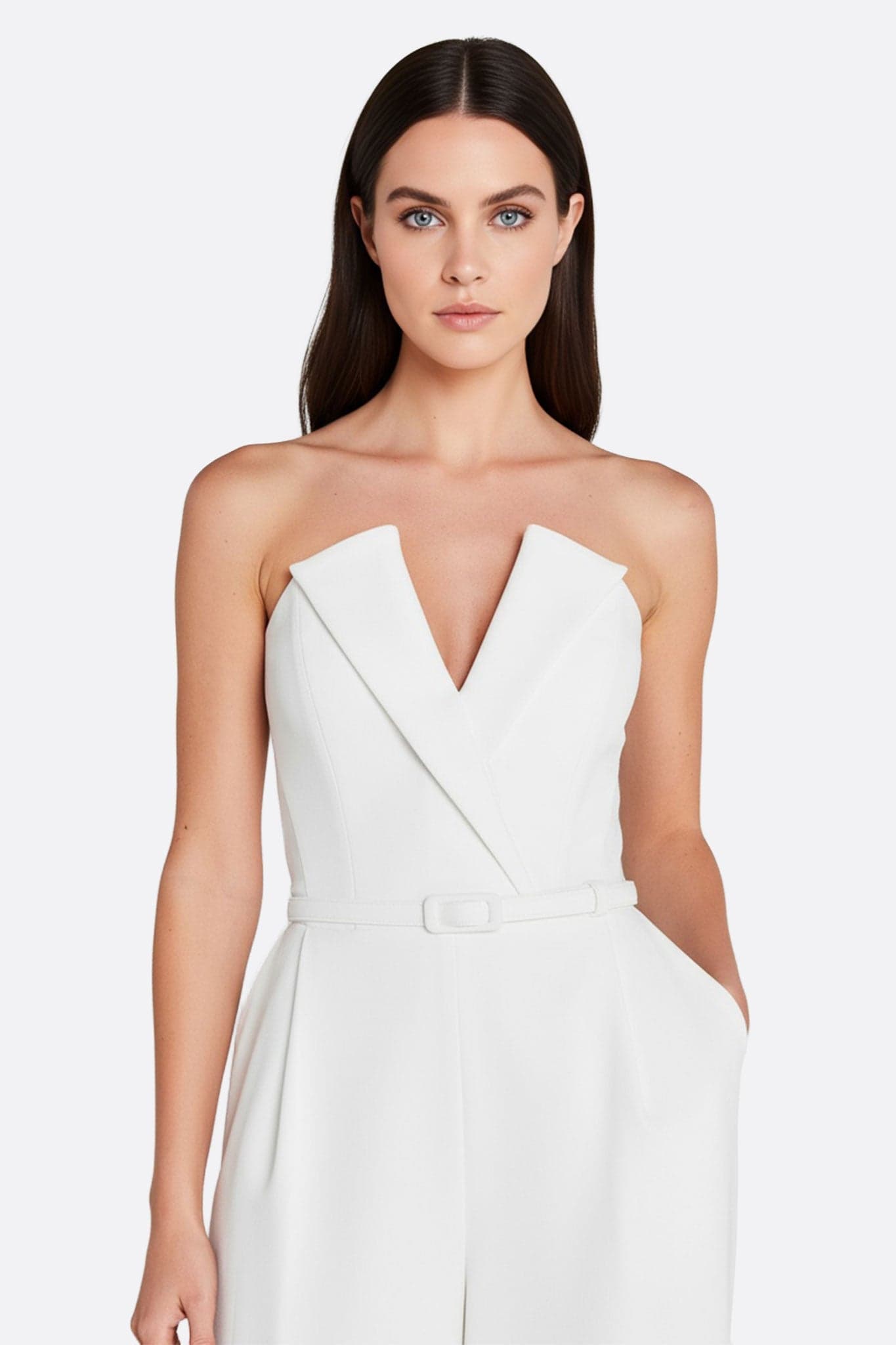
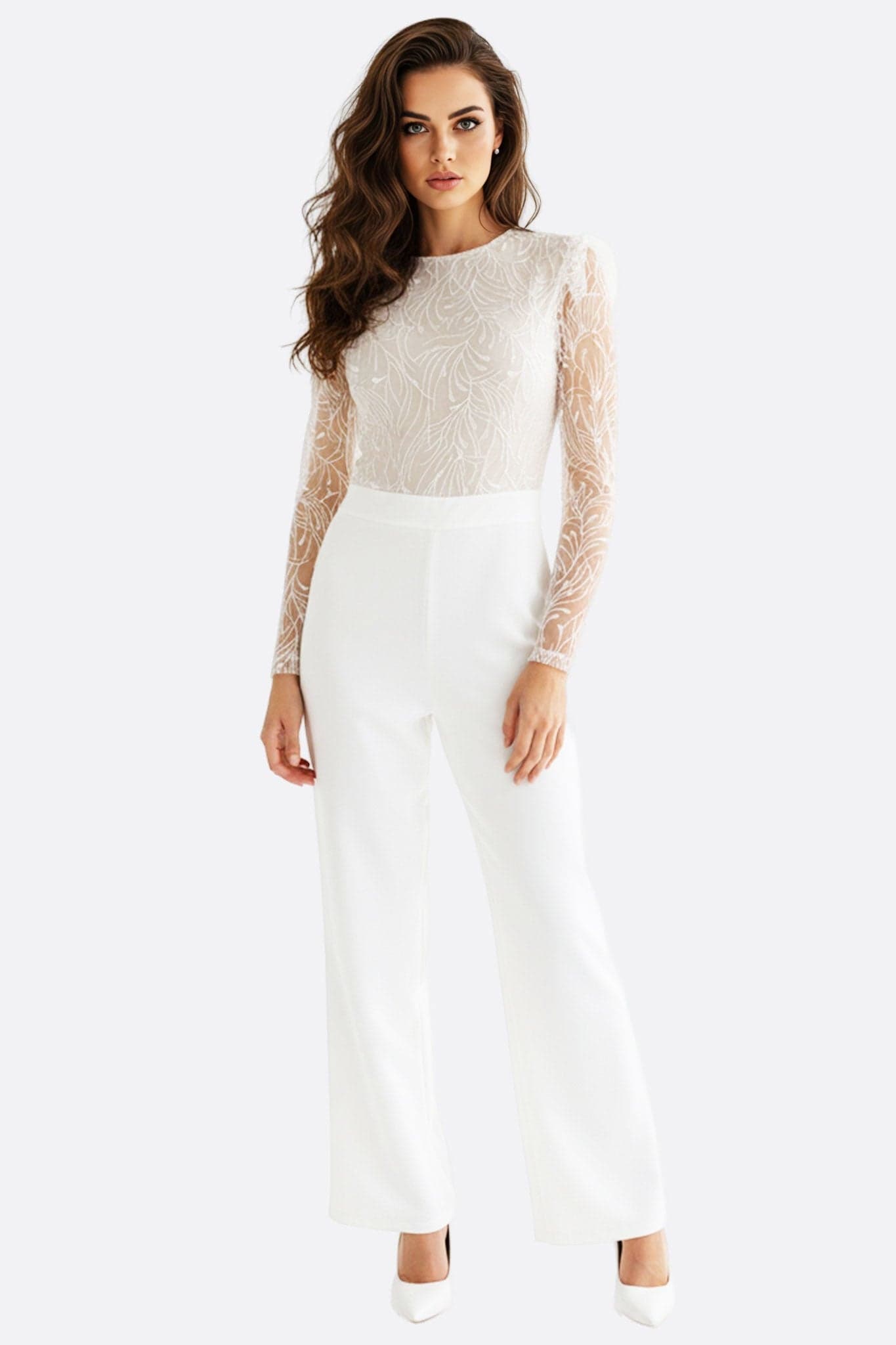
White strapless jumpsuit with illusion pearl sleeves
An exceptional product to enhance your style. The white strapless jumpsuit with illusion pearl sleeves embodies the elegance and craftsmanship of Misciano, combining quality materials and meticulous finishes.
Discover this productCrotch and hip ease: this is the technical point that decides your freedom. A jumpsuit too tight at the crotch creates friction and pulling, especially when walking. Look for sufficient ease at the hips, and a fall that does not ride up when you raise your arms. A good indicator: if you raise your arms and the waist rises significantly, the cut is too short in the torso.
Leg: cigarette, straight, wide: in summer, the straight or slightly wide leg ventilates better. A very slim leg sticks and accentuates the heat. The wide leg is ideal with a fluid material (viscose, tencel): it creates an air movement with each step. If you like the tapered leg, compensate with a very breathable material (light linen, seersucker) and a 7/8 length that frees the ankle.
Internal finishes: look inside. Clean overlocked seams, non-thick margins, and discreet fastenings make a real difference. In summer, a rough seam quickly becomes irritating. Darts and pleats can help lift the material off the body: a well-placed front pleat provides ease without unnecessary volume.
If you hesitate between two sizes: in summer, we often choose the one that lets you breathe rather than the one that “molds.” The line will remain elegant if the waist is well placed and the shoulder falls just right. The feeling of lightness rarely comes from a smaller size; it comes from a cut that accompanies. For specific body types and occasions, consult our complete guide which details other essential criteria, while this article focuses on heat and breathability.

How to wear a women's summer jumpsuit with breathable material: colors, linings, underwear, and heat-resistant care
Once the material and cut are validated, summer comfort depends on very concrete choices: color, transparency, sweat management, and care. A women's summer jumpsuit with breathable material should remain pleasant from 9 a.m. to 7 p.m., without you having to think about it.
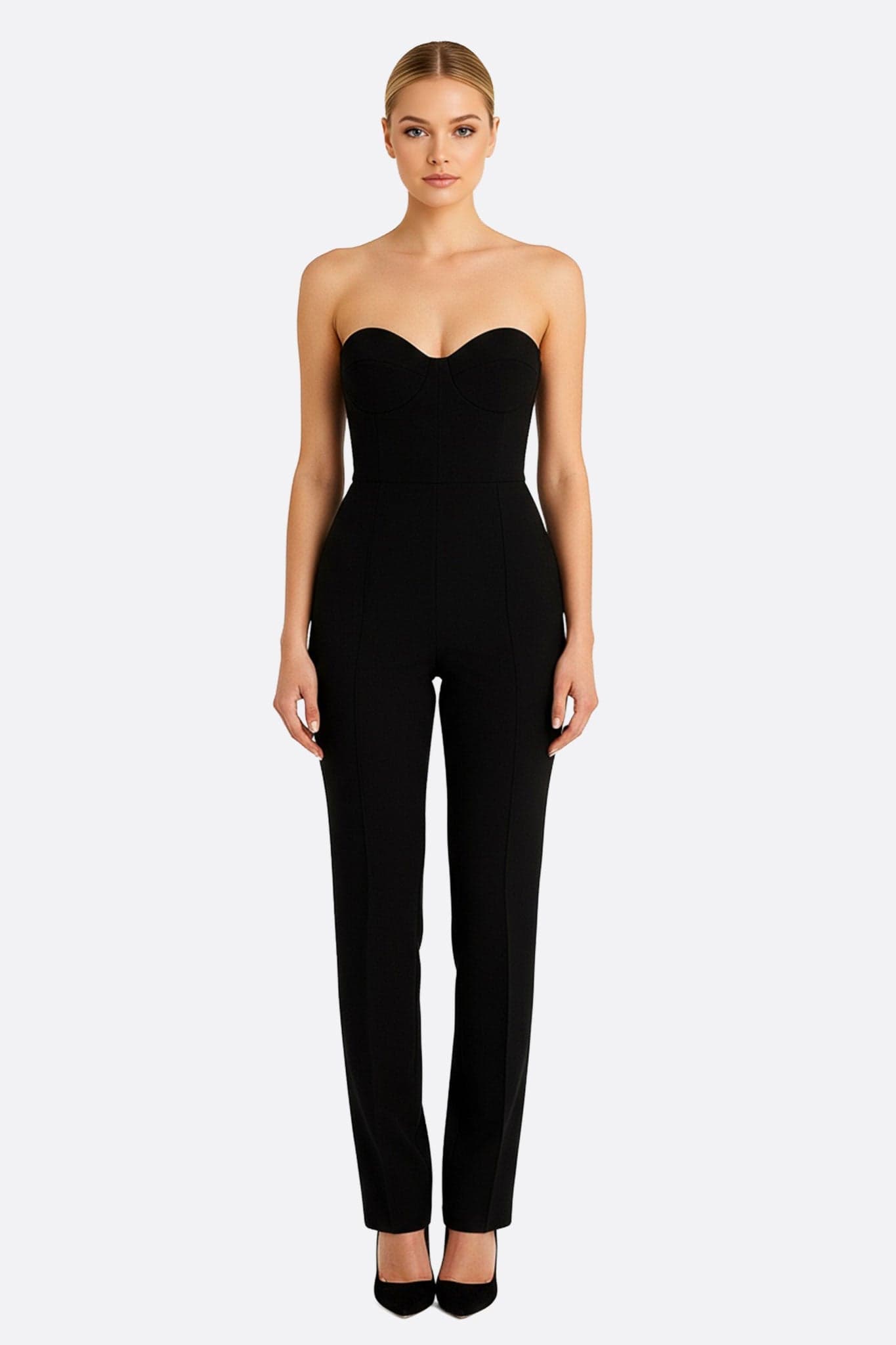
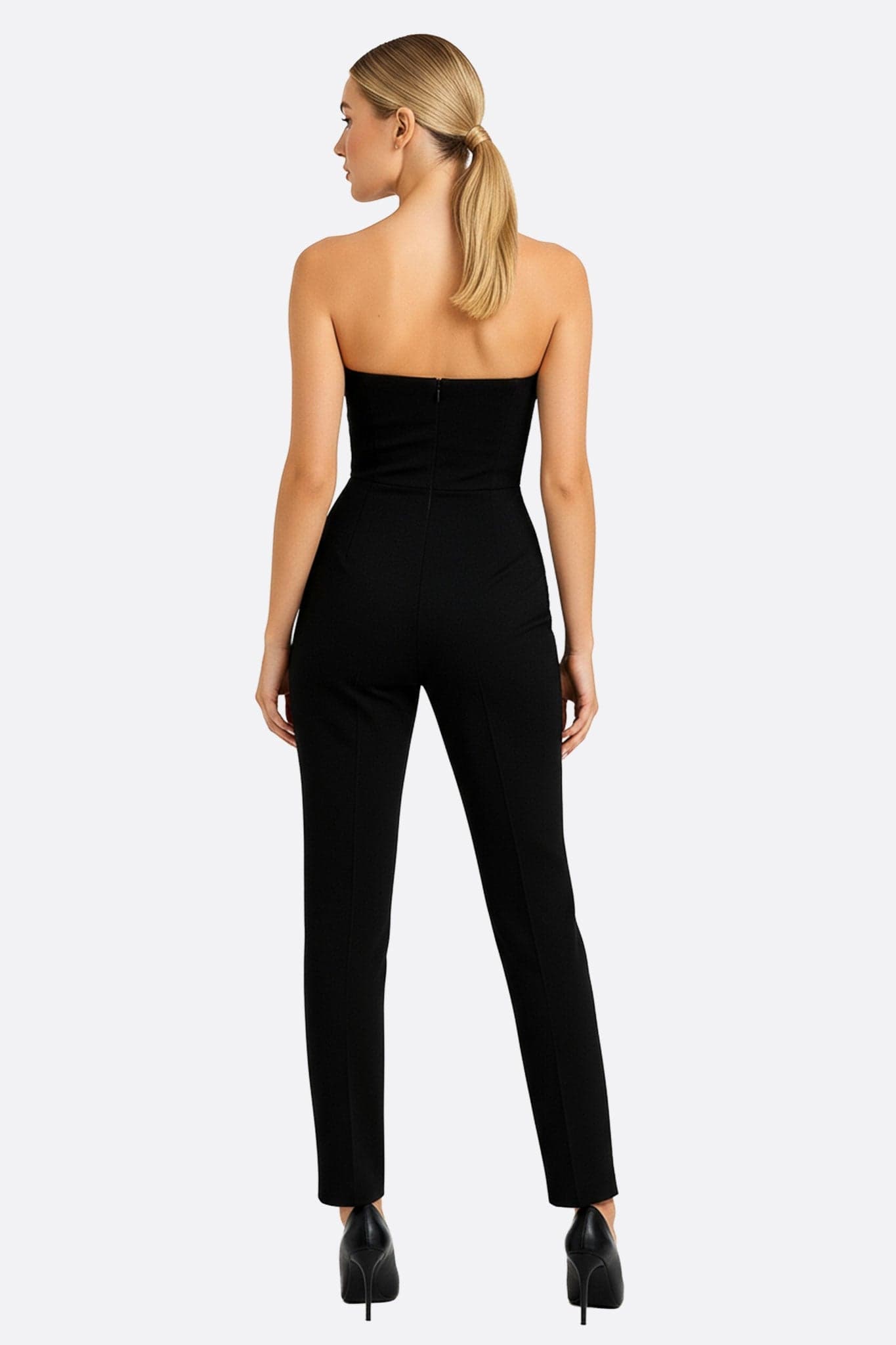
Colors and heat: light tones (ecru, sand, off-white, sky blue) reflect more heat, but they can reveal transparency and marks. Medium tones (light khaki, light denim blue, soft terracotta) are often the best balance: less “heating” than black, more forgiving than white. Black can be beautiful, but in full sun, it quickly becomes demanding: if you insist, choose a very breathable material (linen, seersucker) and a loose fit.
Linings: the discreet enemy: many jumpsuits become stifling due to a synthetic lining. In summer, prefer: no lining, or a partial and light lining, ideally in cotton or viscose. If the piece is lined, check where: a lining on the torso can be acceptable, a lining on the legs is rarely so when it's hot.
Underwear: to avoid the sticky effect, choose breathable underwear. Fine cotton is a safe bet. For very fluid materials (viscose/tencel), seamless underwear limits marks. If you sweat easily, a small light cotton top under a strappy jumpsuit can change the day: it absorbs and prevents the main material from “drinking” too quickly.
Accessories that really help: a thin belt can structure without adding a hot layer, provided it is not thick. As for shoes, sandals and mules let the body “breathe” overall; this affects the general thermal sensation. A thick leather shoulder bag can increase sweating on the contact area: in the middle of summer, a thinner strap or a hand-held bag may be more comfortable.
Care to preserve breathability: too much softener can clog certain fibers and reduce the feeling of freshness. Wash at low temperature, spin moderately, and air dry. Linen and hemp often gain softness over washes. For viscose, avoid wringing: it likes delicacy, otherwise it deforms. A light ironing (or steaming) restores the fall without “cooking” the fiber.
Express purchase checklist (very effective): 1) majority breathable material (linen/cotton/viscose/tencel); 2) not too dense fabric; 3) comfortable armholes; 4) non-compressive waist; 5) no full synthetic lining; 6) raised arms test; 7) walk a few steps to check the crotch. If you want a more comprehensive method to compare shapes and uses, you can consult the reference guide Women's jumpsuit: complete guide to choosing it well (a single useful detour, then we return to your summer criterion: breathe).
In the end, a successful summer jumpsuit is not noticeable by artifices: it is recognized by the silent comfort it provides. When the material lets air through, the cut creates just enough space, and the finishes remain light, your look holds effortlessly, even when the air is hot and dense.
To go further:
- To go further in choosing a long-lasting jumpsuit, how to choose a quality women's jumpsuit
- To adapt your summer jumpsuit to the professional setting, Women's office jumpsuit: stylish and comfortable all day long
- To compare breathability and comfort of each material in summer, the silk, cashmere, viscose comparison table

Article written by Esther Arnaud
Published on 08/02/2026 at 07:43
About the author
What interests me above all is not the immediate trend, but the coherence of a wardrobe. I like to analyze why a piece works, how a material influences movement, and how a garment can accompany a woman over time, without ever imposing itself.
→ Learn more about Esther ArnaudFREQUENTLY ASKED QUESTIONS
What materials are considered breathable for a summer jumpsuit?
Breathable materials for a summer jumpsuit mainly include linen, lightweight cotton, and certain technical synthetic fibers. These fabrics allow air to circulate while wicking away moisture, providing a feeling of freshness and comfort, even in hot weather.
How to know if a jumpsuit is suitable for hot and humid conditions?
To assess the suitability of a jumpsuit for heat, examine the textile composition and fabric structure. A good jumpsuit should be designed with lightweight and airy materials, often featuring details like openings or cutouts to promote air circulation.
What are the signs of an inappropriate jumpsuit for summer?
An inappropriate jumpsuit for summer is characterized by heavy materials that stick to the skin, lack of ventilation, and a feeling of discomfort after a short period. If you feel a sensation of moisture or excessive heat, it is likely that the fabric is not suitable.
Why is it important to choose a jumpsuit with good air circulation?
Choosing a jumpsuit with good air circulation is essential to maintain optimal comfort in hot weather. Good circulation reduces the buildup of heat and moisture, thus preventing skin irritations and allowing you to fully enjoy your outfit without discomfort.
What tips would you give for maintaining a breathable fabric jumpsuit?
To maintain a breathable fabric jumpsuit, opt for a gentle wash at low temperature and avoid fabric softeners that can alter the breathability of the fabric. Air dry it in the shade to preserve the quality of the material while ensuring its durability.
Shop the selection