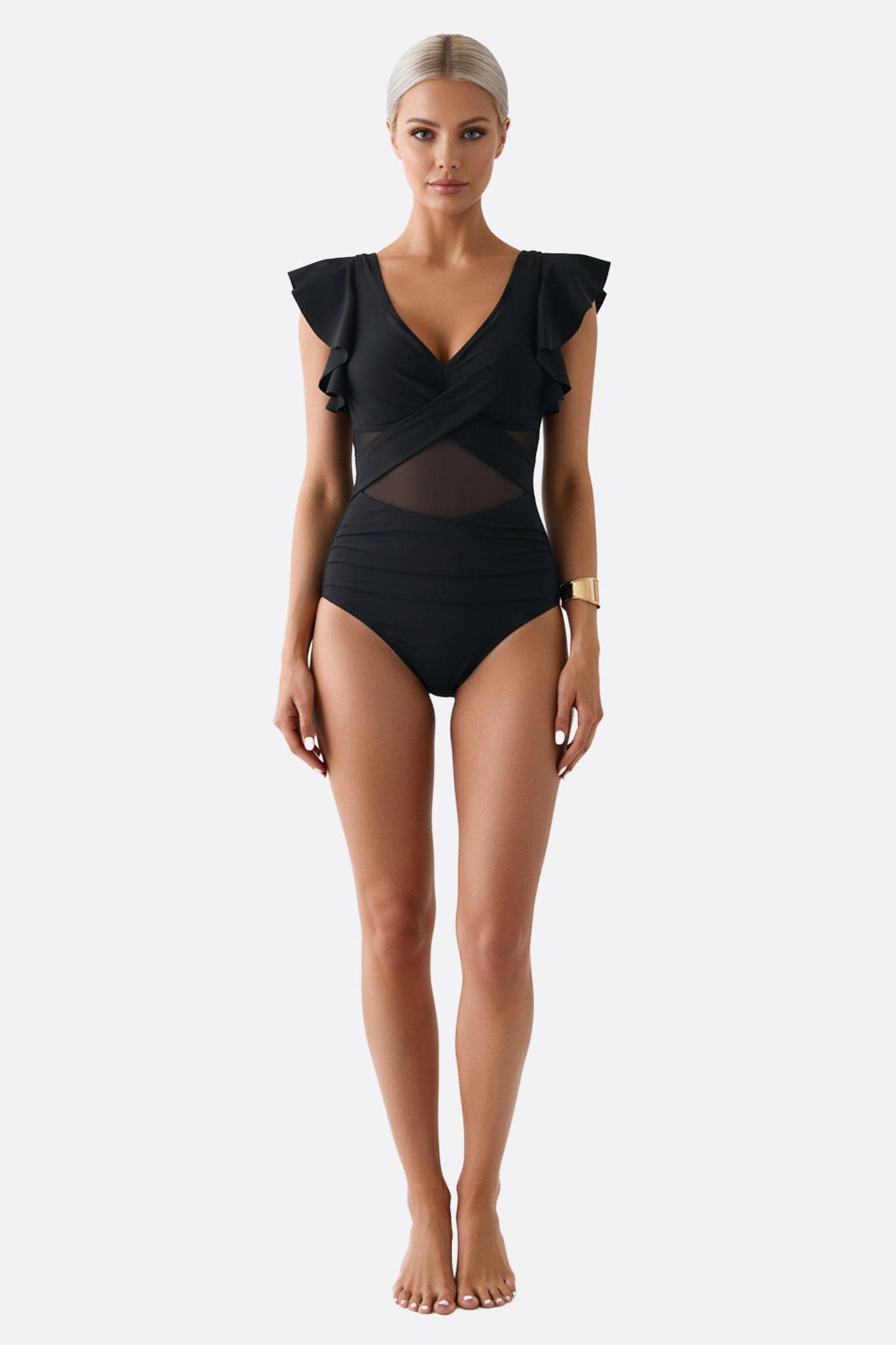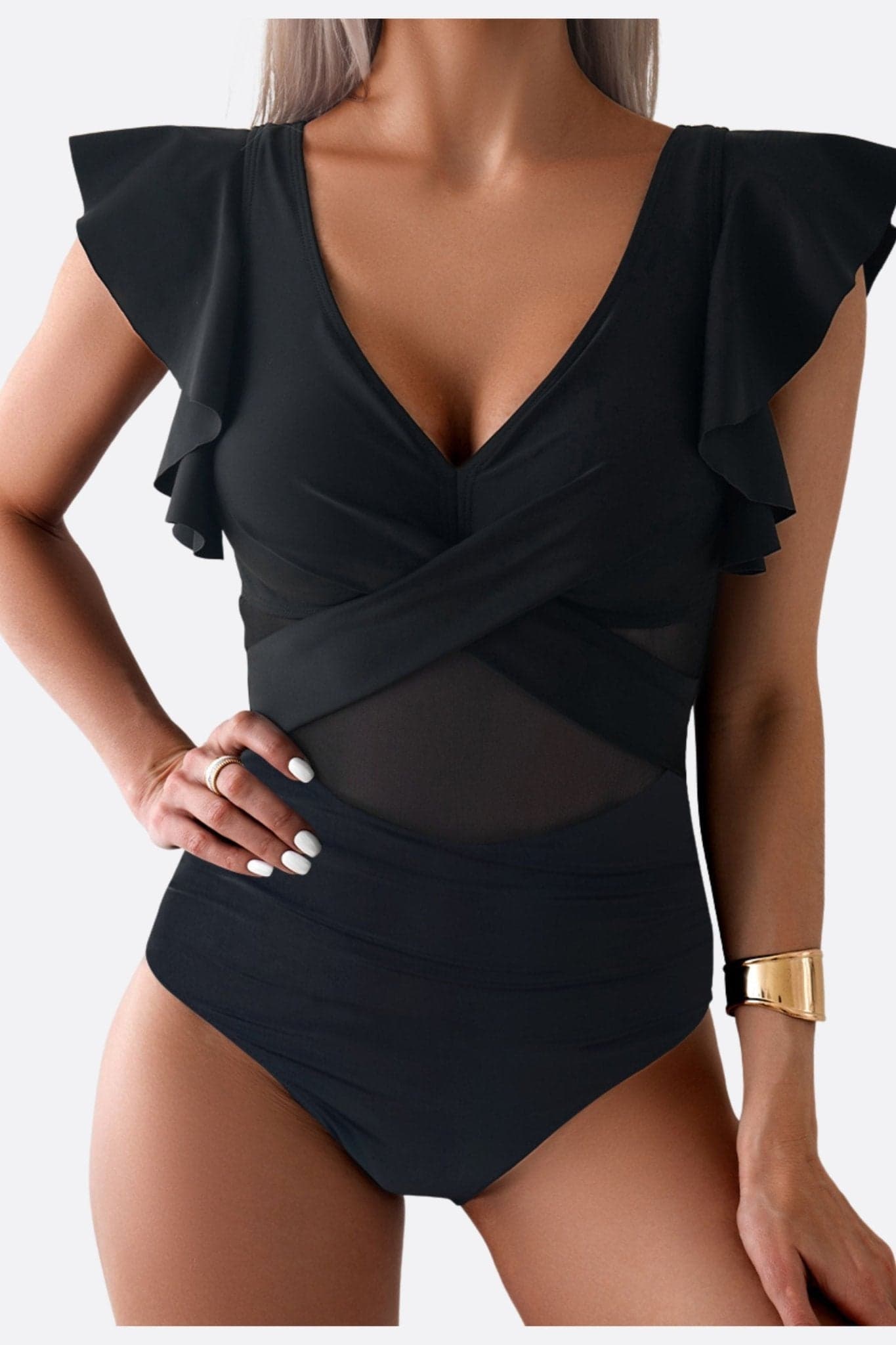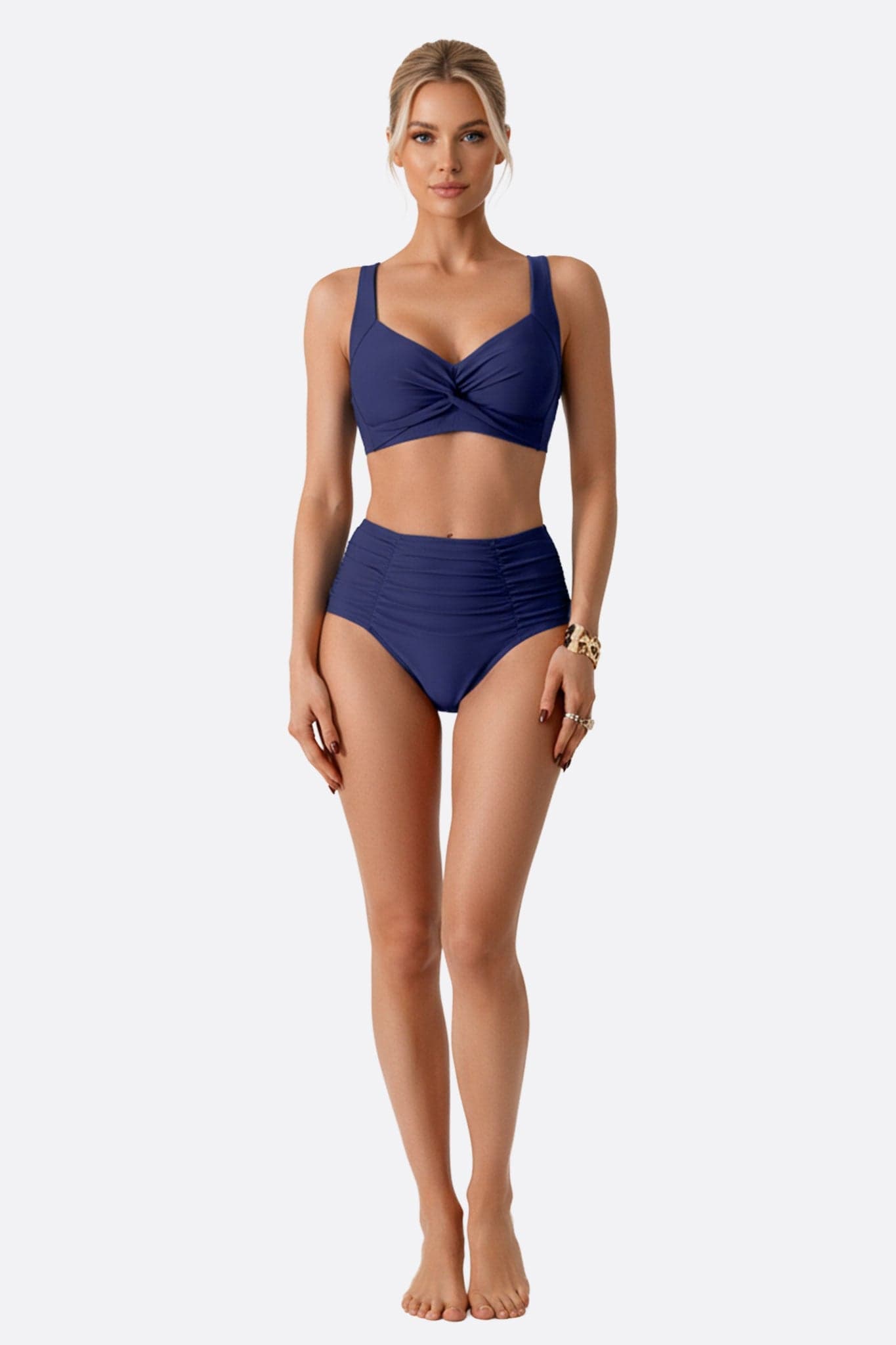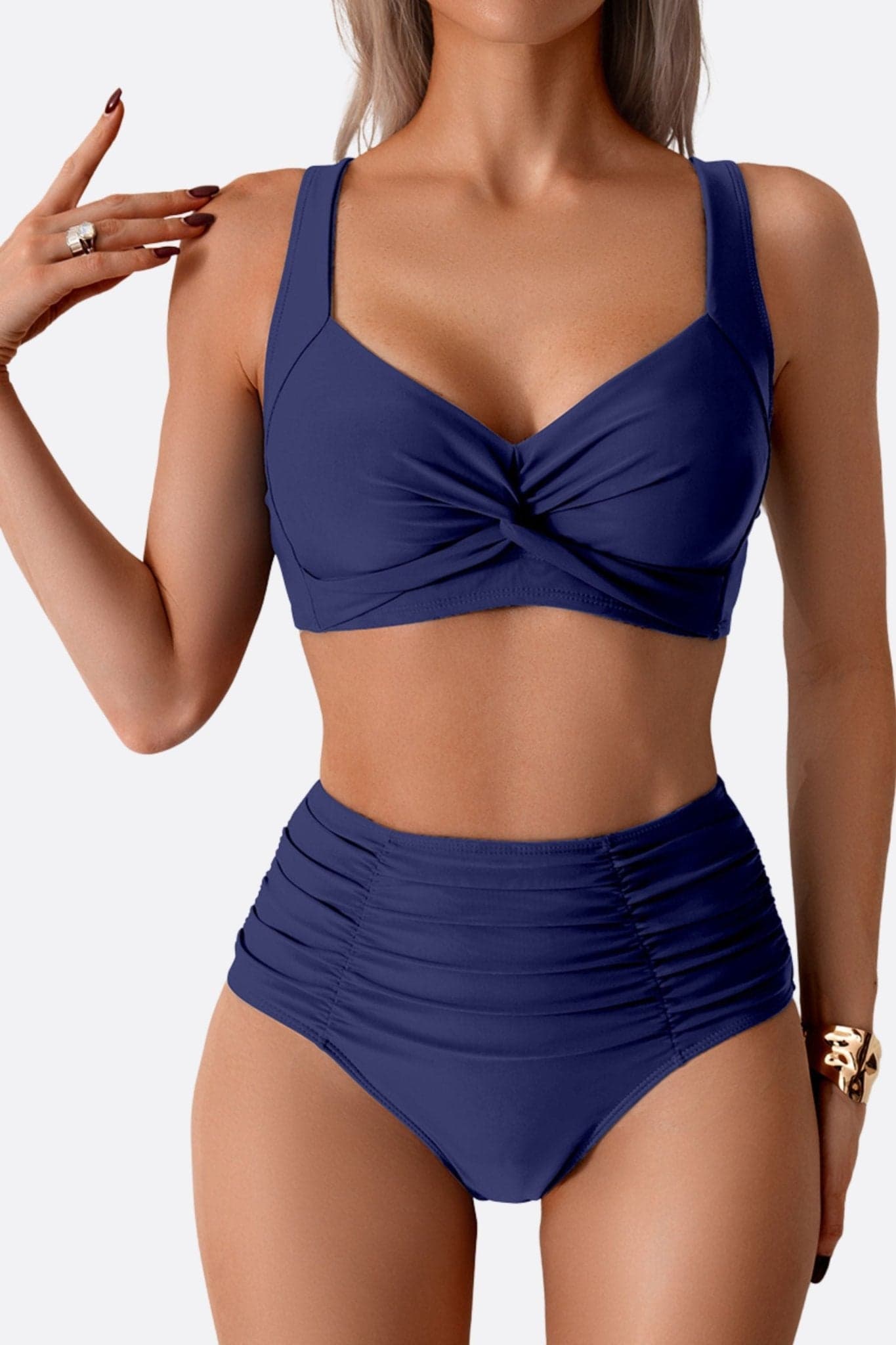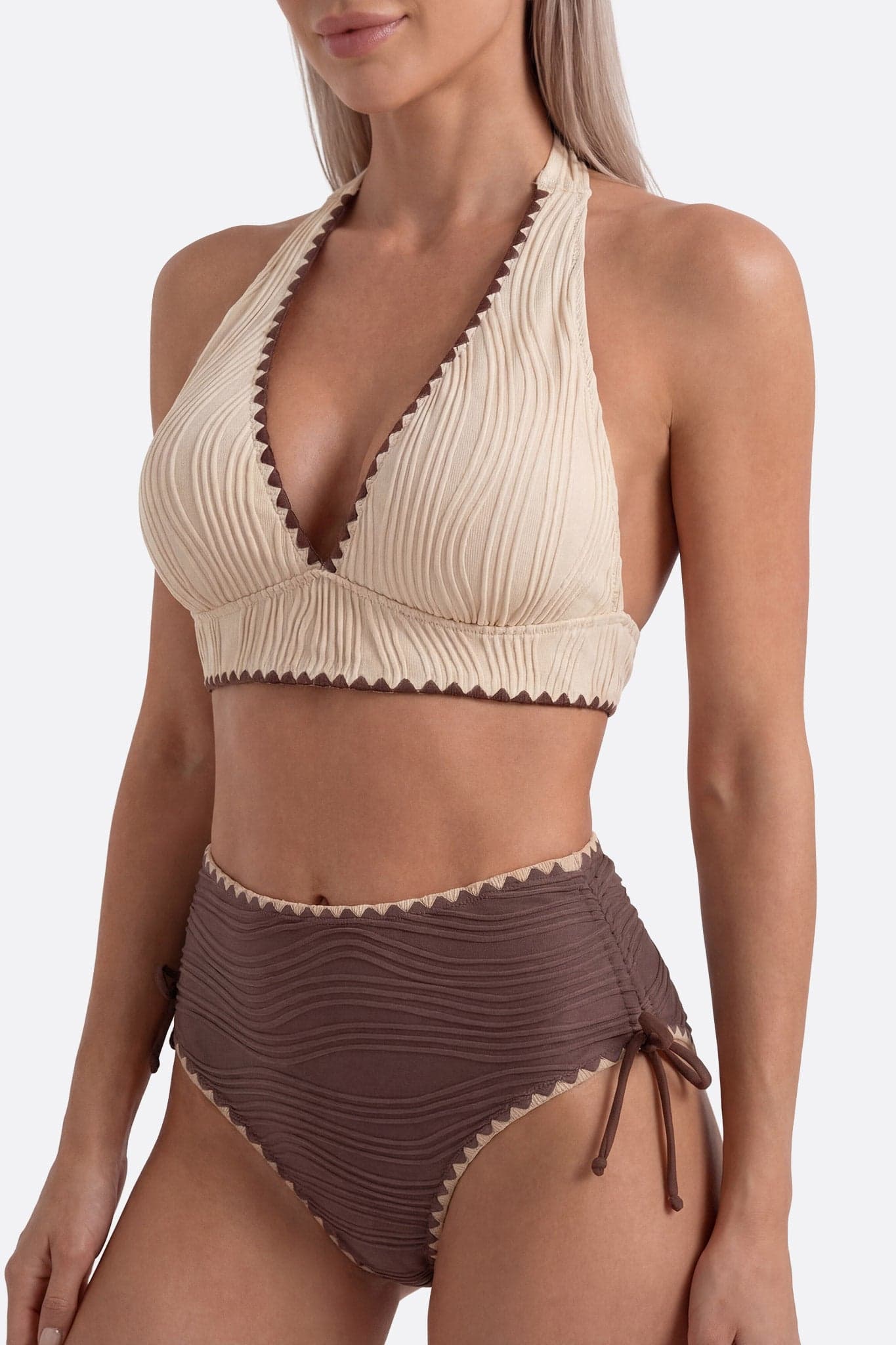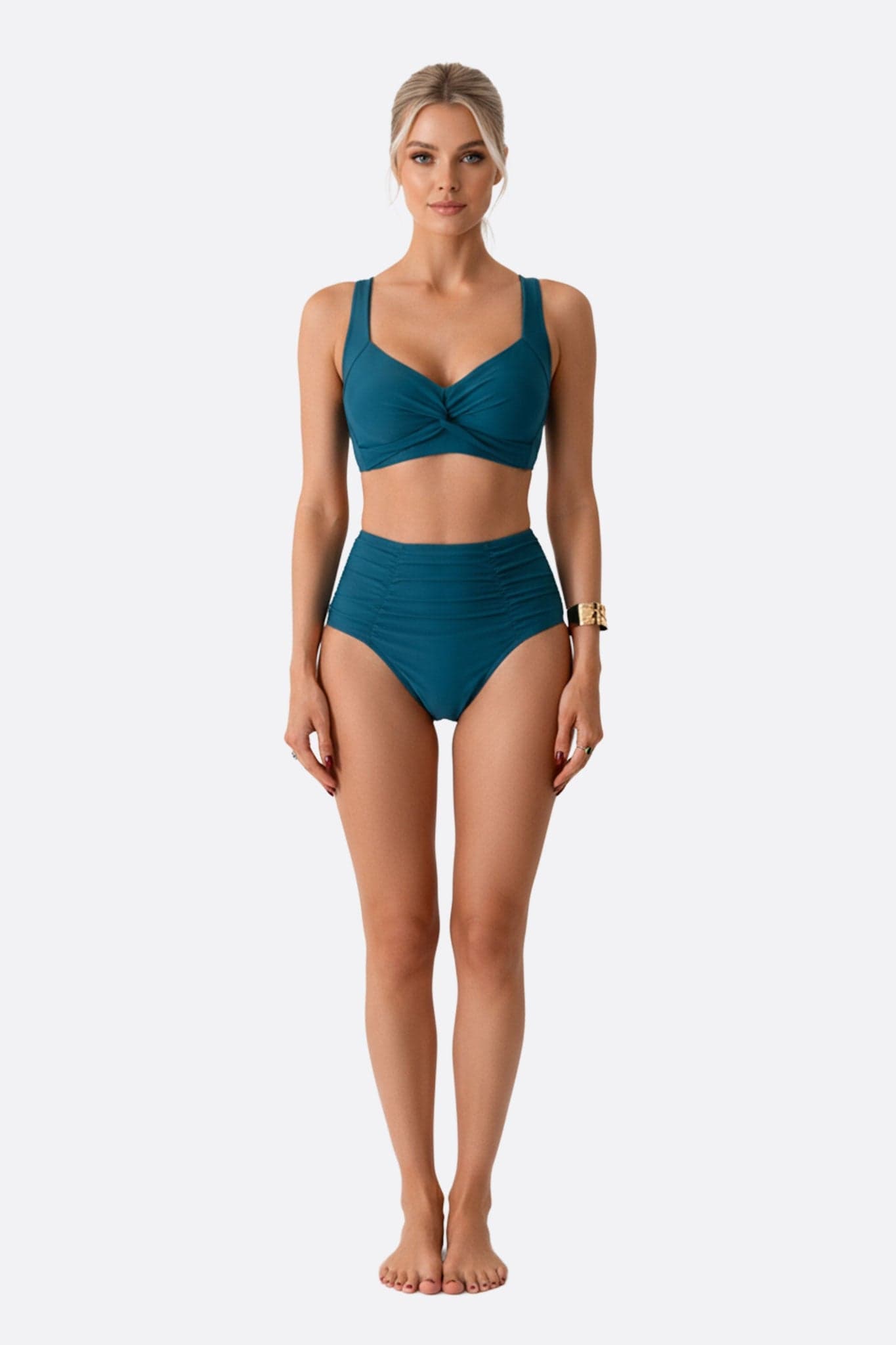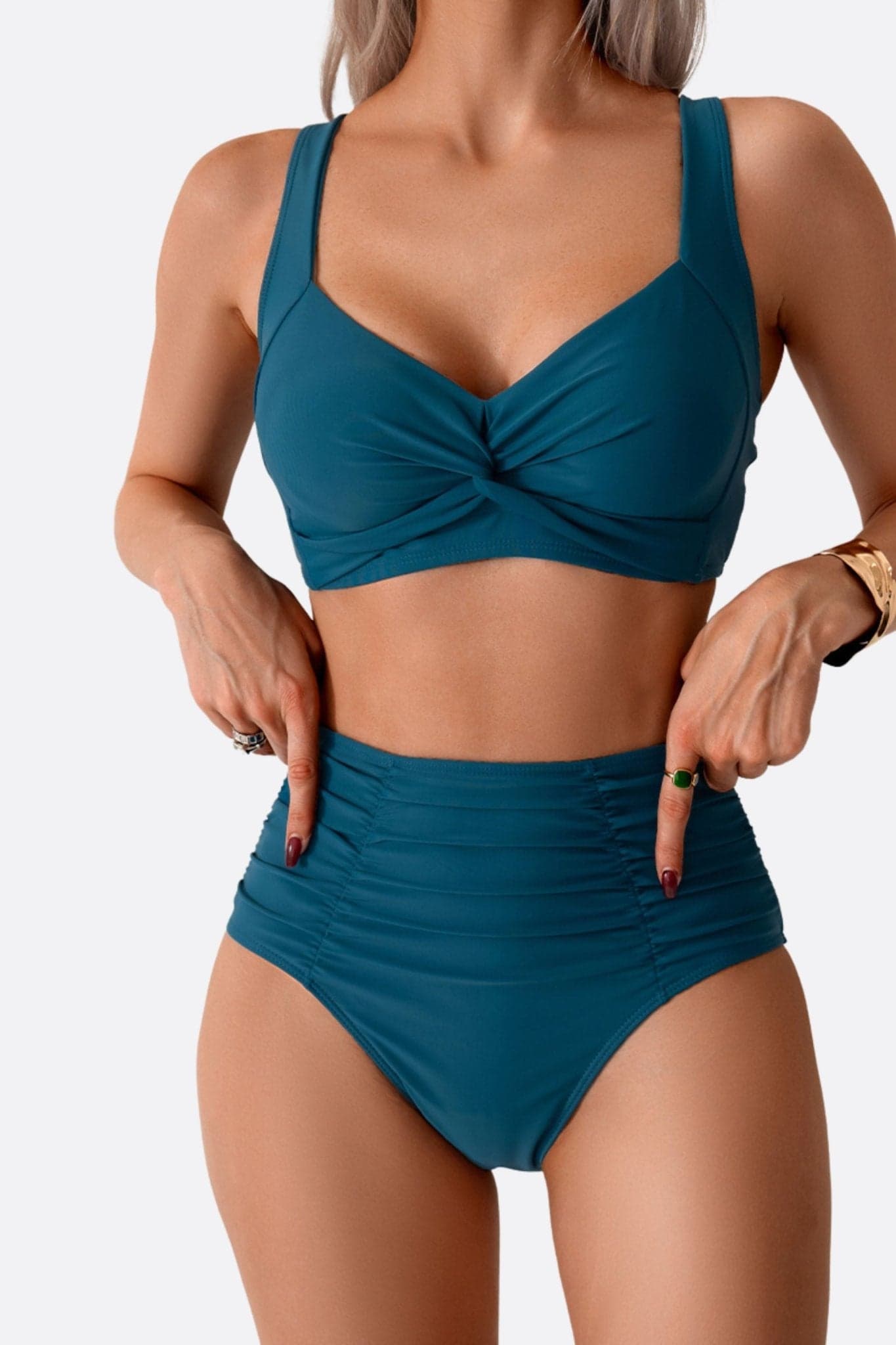
Women's swimsuit: how to choose when you are between two sizes

You know that precise moment: the bottom gapes at the waist but is tight on the hips, the top rides up when you tie it, or conversely, it floats at the neckline.
Being "between two sizes" is not a detail, it's a real question of proportions, textile, and cut. And on a women's swimsuit, the slightest variation is noticeable and felt: an elastic that's too tight leaves marks, a fabric that's too dry cuts, a poorly placed underwire slips. The goal is not to "make do," but to choose the right size... or the right sizing strategy, depending on the piece and the material.
Diagnosing "between two sizes": useful measurements and decisive areas
When hesitating between two sizes, the temptation is to rely on the label. However, the label has no idea of your volume distribution: a long torso, high hips, projected bust, defined waist... Before deciding "I'll take the larger one" or "I'll take the smaller one," you need to identify where you are between two sizes, and which area dictates comfort.
The three measurements that really matter (and that prevent blind purchases):
- Bust measurement at the fullest point, breathing normally (not holding your breath). This is the measurement that determines the tension on seams, darts, and the top edge of the top.
- Underbust measurement (just below the breast). This is where most of the support is determined – according to our internal tests –: if this area is too wide, the swimsuit "lives its own life"; too tight, it cuts and rides up.
- Hip measurement at the fullest point. For a bottom, it's the key measurement; for a one-piece, it determines overall tension and leg cut.
Two often forgotten indicators, yet decisive when between two sizes:
- Torso length (from the shoulder, through the crotch, back to the shoulder). On a one-piece, it's the number one friction point: if you have a long torso, a "correct" size in width can become too short and pull on the straps.
- Hip height (high hips vs low hips). This changes how a bottom fits: a slightly too small size can roll, a slightly too large size can bunch.
How to know if you should favor the smaller or larger size? Ask yourself in terms of sensitive areas:
- If you mark easily (sensitive skin, prone to marks), avoid overly tight elastic: often the larger size is favored, but not just any way (material and cut must follow).
- If you're looking for firm support (active bust, swimming, beach volleyball), the underbust must be precise: sometimes it's better to go a size down on the top, provided there are adjustments.
- If your discomfort comes from the torso (one-piece that pulls), the larger size or a cut designed for a long torso is often the most elegant solution.
Finally, a simple sign: if you're hesitating between two sizes and the smaller one fits "standing but not sitting," it's not the right one. A swimsuit should remain comfortable when you walk, sit, bend over, and especially when it's wet.
Materials and linings: the real elasticity that changes the size to choose
Between two sizes, the textile is your referee. Two swimsuits displaying the same size can behave differently depending on the composition, knitting, and lining. At Misciano, we always observe the material as we observe a drape: its feel, its tension, its ability to regain its shape. Our advice is based on real-world tests, including wet and dry trials as well as customer feedback.

The key point: elasticity is not just “stretch.” There is:
- Width elasticity (comfort on the hips, bust circumference).
- Length elasticity (essential for a one-piece, and bandeau tops).
- Recovery (ability to return to place after tension). A material that stretches without recovering quickly feels “too big,” especially when wet.
Polyamide/elastane: the most common duo. But the percentage of elastane is not everything: an 18% can be “firmer” than a 22% depending on the knitting. Concretely:
- Shaping, tense material, with a drier touch: if you are between two sizes, you can take the larger one to avoid marks, while maintaining support thanks to the fabric's tension.
- Very flexible material, “buttery” to the touch, very stretchy: it forgives in the fitting room but can loosen. If you are between two sizes, we often lean towards the smaller one, especially for a top that needs to hold.
Full vs partial lining: the lining changes the usable size. A lining on the front of the bottom or on the cup adds a micro-thickness and limits elongation. Result: the same model can seem tighter when lined. If you are between two sizes:
- Lined bottom: the size above often becomes more comfortable, especially if the cut is not very high.
- Lined top with foam/removables: the space in the cup is reduced; it's better to check the bust volume rather than follow the “S/M/L” size.
Wet effect: the test no one does, but which decides everything. A material that loosens in water results in a top that slips and a bottom that falls. If you are between two sizes and really swim, favor a material with good recovery (more “tonic”) and, at equivalent size, a more precise fit rather than too generous ease.
If you want an overview of the selection criteria (without losing track of your “between two sizes” issue), the main guide women's swimsuit can serve as a reference, especially on the balance of cuts/materials. Note that this article focuses on the decision to choose between a size “above” or “below” and complements our comprehensive guide on styles, trends, and care tips.
Choosing the right size according to the cut: bikini, one-piece, bandeau, triangle, high waist
When you are between two sizes, the cut is not a style: it's a mechanism. Some cuts tolerate the gap, others highlight it. The idea is simple: the more adjustable the cut, the more you can “make up” for half a size. Conversely, a rigid cut without adjustment requires a more exact size.
Tie triangle tops: these are the most forgiving. You can adjust the band (back) and the proximity of the cups. If you are between two sizes:
- For a bust that needs support: choose the smaller one to avoid the cup spreading too much and losing its shape.
- For a fuller or sensitive bust: the larger one can avoid tension on the upper edge, provided the ties are long and stable enough.
Underwired / balconette tops: they require precision, especially under the bust. Between two sizes, focus primarily on this area: if the band is too wide, the underwire doesn't sit flat, the breast “floats” and the top rides up. Here, often choose the size that secures the under-bust, even if it means adjusting the volume with adjustable straps or a multi-position hook.
Bandeau: this is the most demanding cut when between two sizes, as it fights against gravity without straps (or with removable straps). If you're unsure:
- To prevent slipping: prefer the smaller one, but only if the material is not “dry” and if an internal silicone/elastic band is present.
- If you mark easily: choose the larger one but with a firm closure system and a material with strong recovery.
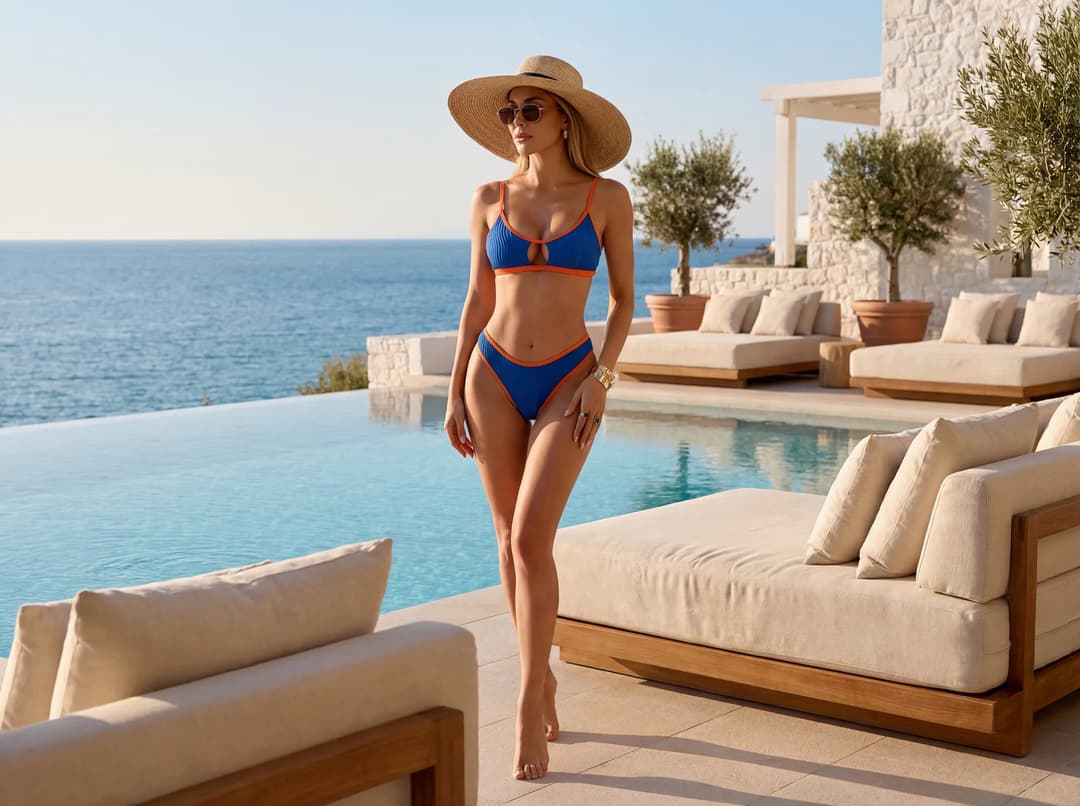
High-cut vs full coverage bottoms: the cutout changes the size feel. A very high-cut bottom can tolerate a slightly smaller size (less fabric to distribute), while a full coverage bottom, especially with a more horizontal seam, immediately reveals tightness. Between two sizes:
- Full coverage / low-rise bottoms: often size up to avoid the line cutting the buttock.
- High-cut bottoms: you can stick with the smaller one if the elastic is soft and if you like a more defined line.
High-waisted: an excellent ally when oscillating between two sizes, as it distributes tension over a larger surface. If you are between two sizes, the high waist better supports the larger size (it “holds” by surface), provided the waistband doesn't gape. Look for a structured waistband or a front lining.
One-piece: this is the most complex case, as you have to manage width + length. Between two sizes:
- If you have a long torso: almost always size up, otherwise the swimsuit pulls, digs, and rides up.
- If your hesitation is mainly about the hips: choose the size that respects the hips, then check the neckline (a neckline that's too open is often a sign of insufficient length or too short straps).
Adjustment strategies “between two sizes”: adjustments, mix & match, and fitting checkpoints
Being between two sizes does not mean “getting it wrong half the time.” It means adopting a method: choosing a consistent base, then using concrete adjustments and controls to validate. The right swimsuit is not judged in a still mirror, but in motion, with particular attention to the edges (where the fabric meets the skin).
1) Use mix & match (separate sizes)
This is the cleanest solution: a top in one size, a bottom in another. If your bust and hips do not “speak” the same size, do not force them to negotiate. Between two sizes, mix & match allows:
- A precise underbust (for support),
- A more comfortable bottom (to avoid marks and rolling),
- A sharper silhouette, as each piece works at its proper tension.
2) Prioritize useful adjustments (not decorative)
Between two sizes, look for:
- Adjustable straps: they correct half a size in length and stabilize the neckline.
- Multi-notch back closure: it allows refining the underbust without “strangling.”
- Side ties on the bottom: they compensate for hip variation and prevent the bottom from slipping down.
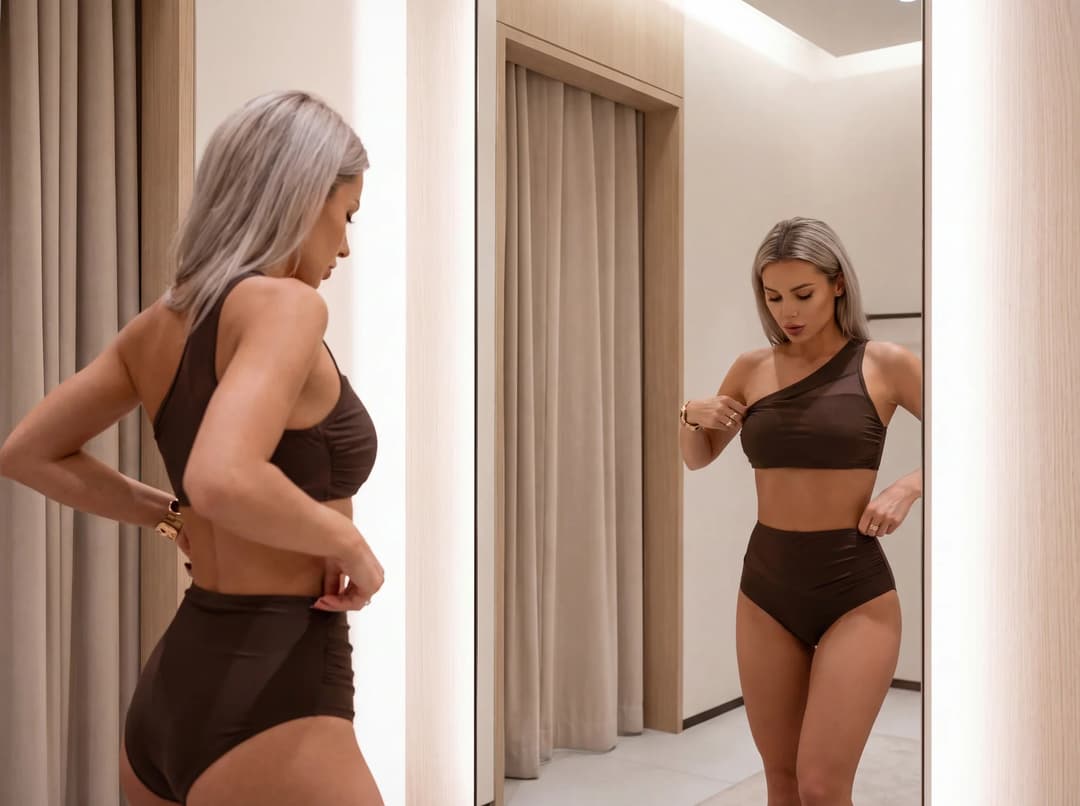
3) Read the signals during fitting: 7 checkpoints
Perform these tests in the fitting room, in less than two minutes:
- Arms up test: if the top rides up significantly, it lacks stability (often too large at the underbust or too small in the cup depending on the cut).
- “Sitting” test: a bottom that becomes uncomfortable when sitting indicates it is too small or too covering for your body shape.
- Walking test: if the bottom slips, it is too large or the elastic is too loose.
- Twist test (turning the torso): if the crotch pulls on a one-piece, the length is insufficient.
- The top edge of the top: it should be neat, without “waves.” A wave often signals a size too large or a lack of recovery.
- The seams: if they whiten (excessive tension) or deform, the size is too small.
- The marks: a slight imprint is normal; a deep and lasting line indicates an elastic too tight or a size to be reviewed.
4) Choose “the smallest” without punishing yourself: how to do it
If you opt for the smaller size (often for support), compensate intelligently: prefer a softer material, a more cut-out bottom, and adjustable straps. You get the fit without the tourniquet effect.
5) Choose “the largest” without losing shape: how to do it
If you opt for the larger size (often for comfort), secure: material with strong recovery, firm back closure, and avoid unstructured bandeaus. On the bottom, a structured high waist is often more flattering than a too loose low waist.
Concrete examples
- For a client with a long torso and medium hips, opt for the larger size in a one-piece with adjustable straps to reduce pulling.
- For a client with an active bust and generous hips, mix & match (top in slightly smaller size and bottom in larger size) will ensure support and comfort without creating marks.
- For those who notice slipping while swimming, a bandeau adjusted in a smaller size accompanied by a bottom with reinforced lining will offer better stability.
Before ordering: Always check your measurement guide and take into account manufacturing tolerances as well as variations between brands. Our advice is based on a rigorous internal protocol including fitting room tests and customer feedback. Do not hesitate to consult our size guide specific to each model.
Additional information & transparency
Remember that sizes (S/M/L, 36/38, etc.) can vary from one brand to another. It is therefore essential to base yourself on your personal measurements and, in case of doubt, to consult experience feedback or contact our after-sales service. Our return/exchange policy is designed to allow you a risk-free home fitting, so you can adjust your choice with peace of mind.
For a complete guide on choosing your swimsuit, consult Women's swimsuit: complete guide to make the right choice.
Discover our swimsuit collection (starting from 40€).
To go further, consult our size guide.
For a complete guide on choosing your swimsuit, consult Women's swimsuit: complete guide to make the right choice.
Discover our swimsuit collection (starting from 40€).
To go further, consult our size guide.

Article by Maryna Svistunova
Published on 06/10/2026 at 14:00
About the author
I am the editorial director of Misciano Paris. I define the editorial line with the conviction that fashion must be timeless, with rigor, coherence, and sincerity.
→ Learn more about Maryna SvistunovaFREQUENTLY ASKED QUESTIONS
How do I know if I am between two sizes for a swimsuit?
Being between two sizes often results in uncomfortable adjustments: a bottom that gaps at the waist while squeezing the hips, or a top that rides up at the straps. To diagnose this situation, it is essential to take your actual measurements, including waist, hips, and bust, and compare them with the manufacturer's size guide.
What role does the material play in choosing a swimsuit?
The material is crucial in choosing a swimsuit, especially when you are between two sizes. A fabric that is too rigid can cut into and mark the shapes, while a more elastic and soft textile will better fit the curves. Opt for materials that offer good support without being too restrictive, such as lycra or polyamide mixed with elastane.
How to choose the right size if I am between two sizes?
If you are between two sizes, it is advisable to choose the larger size for optimal comfort, especially if the chosen model has adjustable elements like straps or drawstrings. You might also consider opting for adjustable size swimsuits or more enveloping cuts that allow for greater flexibility.
Which body areas should be considered when choosing a swimsuit?
When choosing a swimsuit, it is essential to consider several key areas: the waist, hips, and neckline. Each area has its own fit requirements. For example, a swimsuit should support the bust well without slipping, while offering comfort at the hips and waist to avoid unsightly marks.
Are swimsuit labels reliable for determining my size?
Labels can sometimes be misleading, as they do not account for variations in cut and style. It is better not to rely solely on the label, but to consider your personal measurements and the comfort felt in the swimsuit. Since each brand has its own size chart, it is wise to always try the model before buying.