Cashmere: Choosing, Wearing, and Caring for Your Knitwear, The Misciano Guide

A precious material par excellence, cashmere deserves special care. Its fine fiber, naturally thermoregulating, calls for measured gestures: gentle washing, flat drying, airy storage, and fiber protection.
This comprehensive cashmere care guide brings together our workshop practices for washing a cashmere sweater, caring for a cashmere scarf, preventing pilling, treating stains, and keeping knitwear supple season after season. You'll find step-by-step routines, practical checklists, and cashmere storage tips for winter.
To build a cohesive and lasting wardrobe, also explore our inspirations: the art of building a wardrobe that spans the seasons, our selection of elegant autumn dresses, and the essentials from office to weekend.
Understanding cashmere: a noble and delicate fiber
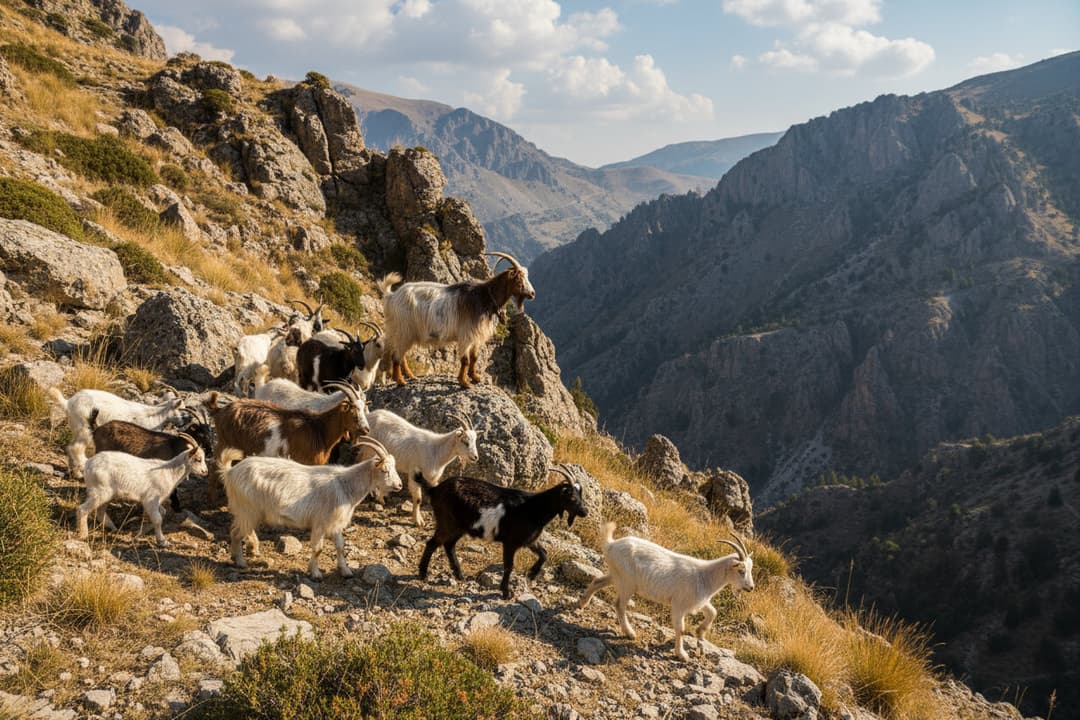
Cashmere comes from the down of Capra hircus goats. Its strengths: extreme fineness, natural elasticity, high insulating power with a featherlight weight. In return, the fiber fears excessive heat, repeated friction, and aggressive twisting that lead to felting, deformation, or pilling. Successful cashmere care combines controlled temperature, limited movement, suitable detergents, and patient drying.
- Gauge & weight: a fine knit requires more caution than a tighter one.
- Blends: pure cashmere, cashmere & silk, cashmere & merino; each composition affects washing.
- Elasticity: shape recovery is natural if the knit is neither hung nor spun vigorously.
The house's cashmere



Reading the label: your first guide

The symbols indicate the temperature, the type of wash (hand wash or wool program), the allowed spin, and drying precautions. When in doubt, favor a spot test on the inside. Remember: even when a "machine wash" mention is present, success depends on precise control of the settings.
Pre-wash
Soft brush to remove dust; turn the garment inside out; close buttons/zippers; sort by color.
Washing
Cold water at 20–30°C maximum; enzyme-free wool detergent; slow movements, no rubbing.
Rinsing
Same temperature as the bath; rinse until water runs clear; no fabric softener, opt for a few drops of diluted white vinegar.
Drying
Press out water in a towel; dry flat away from heat sources; reshape the silhouette.
Finishing
Light steam from a distance; shave pills with a cashmere comb; fold, do not hang.
Storage
Breathable garment bag, cedar anti-moth, dry place; air out regularly.
Washing a cashmere sweater by hand: the master method
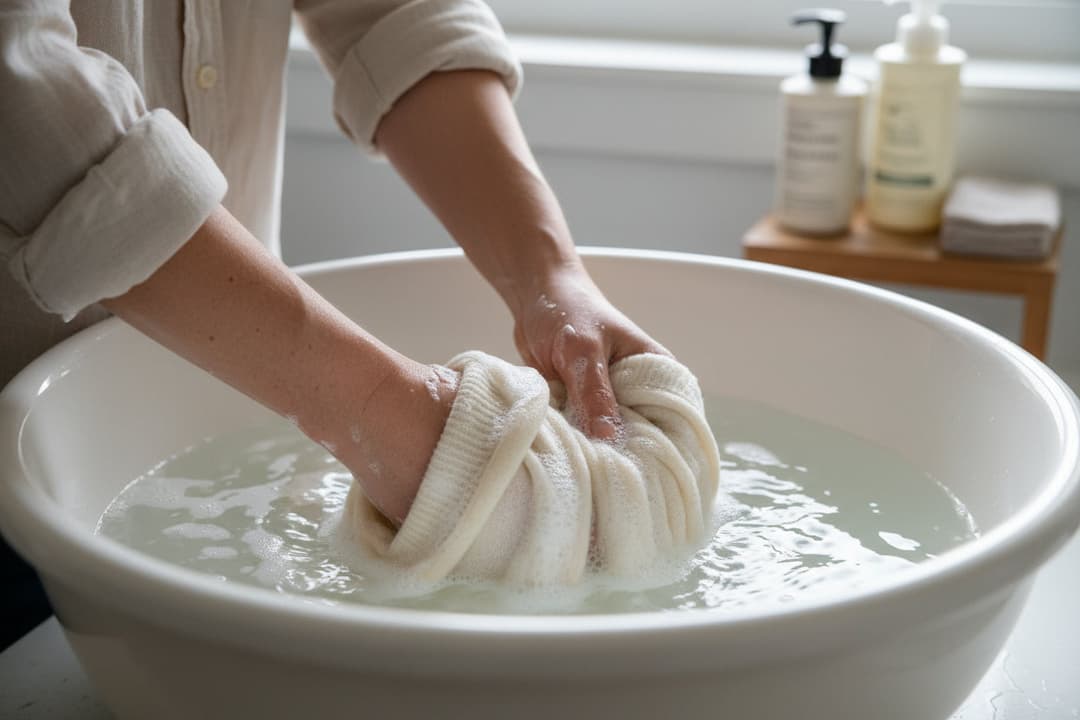
Hand washing cashmere remains the gentlest solution. Fill a basin with cold water (20–30°C). Add a special wool & silk detergent without enzymes (no bleach, no optical brighteners). Turn the garment inside out, immerse it, press gently to distribute the bath. Avoid friction and prolonged circular movements.
- Dosage: follow the indicated cap; excess detergent makes rinsing difficult and weighs down the fiber.
- Time: 5–7 minutes is enough; beyond that, the fiber soaks up unnecessary water.
- Rinsing: two to three clear water baths at a stable temperature (thermal shock = risk of felting).
- Vinegar option: one tablespoon in 2L of water for the final rinse to seal the scales and soften.
Washing cashmere in the machine: precise settings

If your machine has a wool program, you can wash your knits carefully: temperature 20–30°C, very low spin (400–600 rpm), laundry bag, few items at a time. Select a liquid wool detergent, dose sparingly, and avoid fabric softener and enzymatic stain removers.
- Sorting: similar colors, similar textures. No jeans, no aggressive zippers.
- Load: half drum maximum to limit friction.
- Spin: you can also disable it and press in a towel afterward.
Flat drying: the step that changes everything
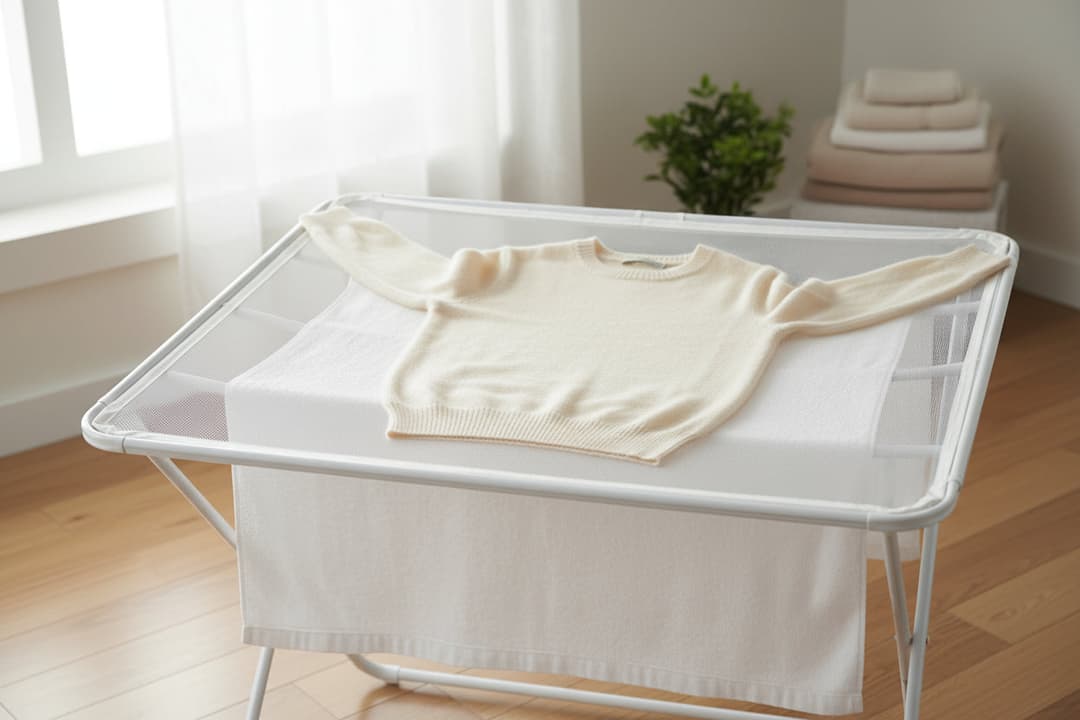
Successful cashmere drying is done flat, on a clean terry towel, away from direct sunlight and any heat source (radiator, hairdryer, tumble dryer).
Before letting it dry, press the knit in a towel to remove excess water, without twisting. Reshape the silhouette: shoulders, neckline, ribbed edges. Drying time varies depending on thickness; allow 12–24 hours.
Ironing, steaming, de-wrinkling: the right moves
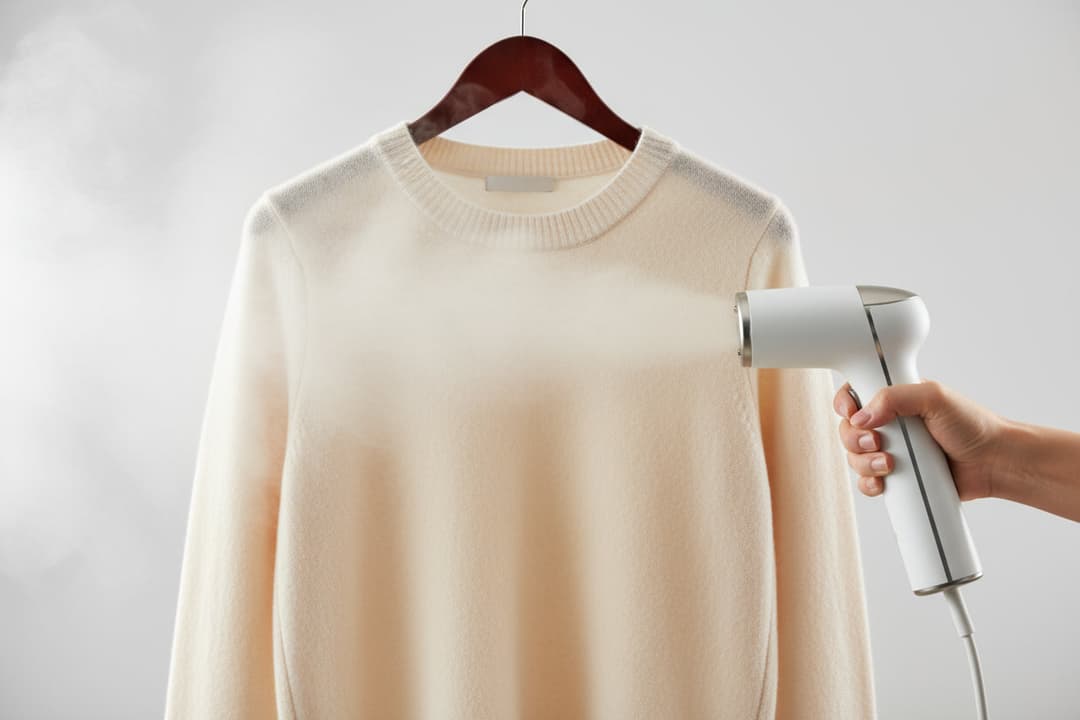
Favor gentle steam from a distance; direct heat can crush the fibers. Place a cotton cloth between the iron and the knit if using a very low-heat iron (wool setting).
To refresh a piece, briefly hang it in a humid bathroom, then let it rest flat. Steam also helps realign the fibers and prevent creases.
Like silk, cashmere requires regular attention to preserve its softness, following principles similar to caring for delicate fibers.
Pills on cashmere: prevent and remove
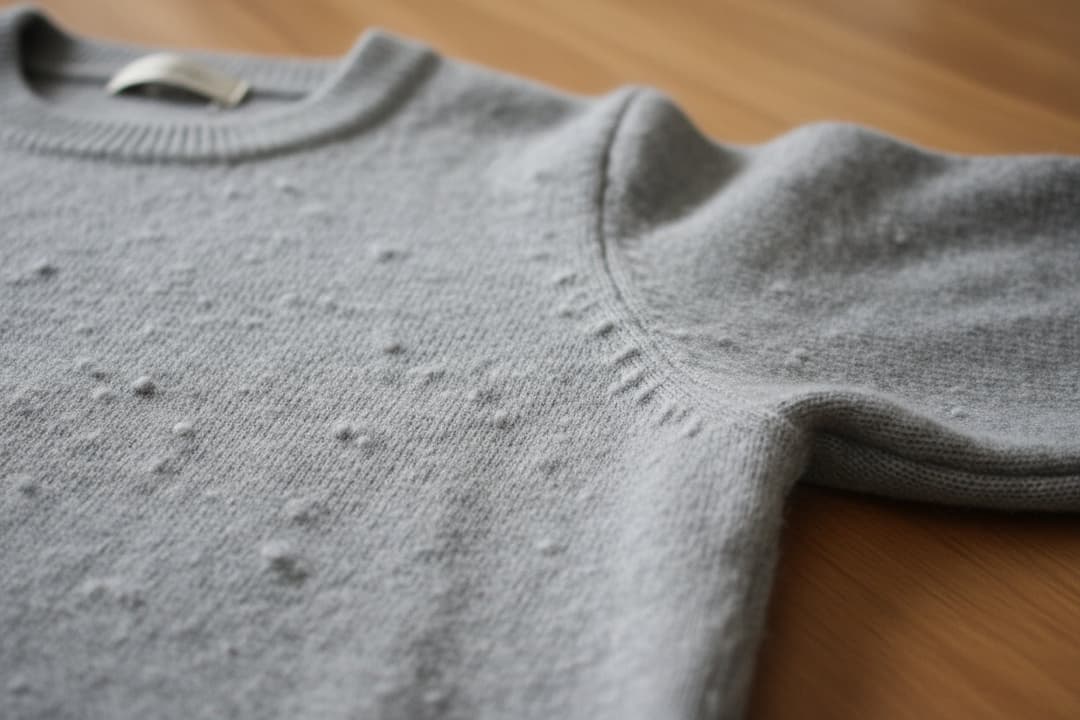
Pills appear due to friction (shoulders under a bag, sides, underarms). They are not a defect, but an excess of down on the surface.
Use a cashmere comb or a quality fabric shaver, with short, light strokes, always on a dry, flat garment. Space out passes to preserve the nap. To prevent, avoid rubbing against abrasive materials and let the knit rest for 24 hours between wears.
Treating a stain on cashmere: protocol by type
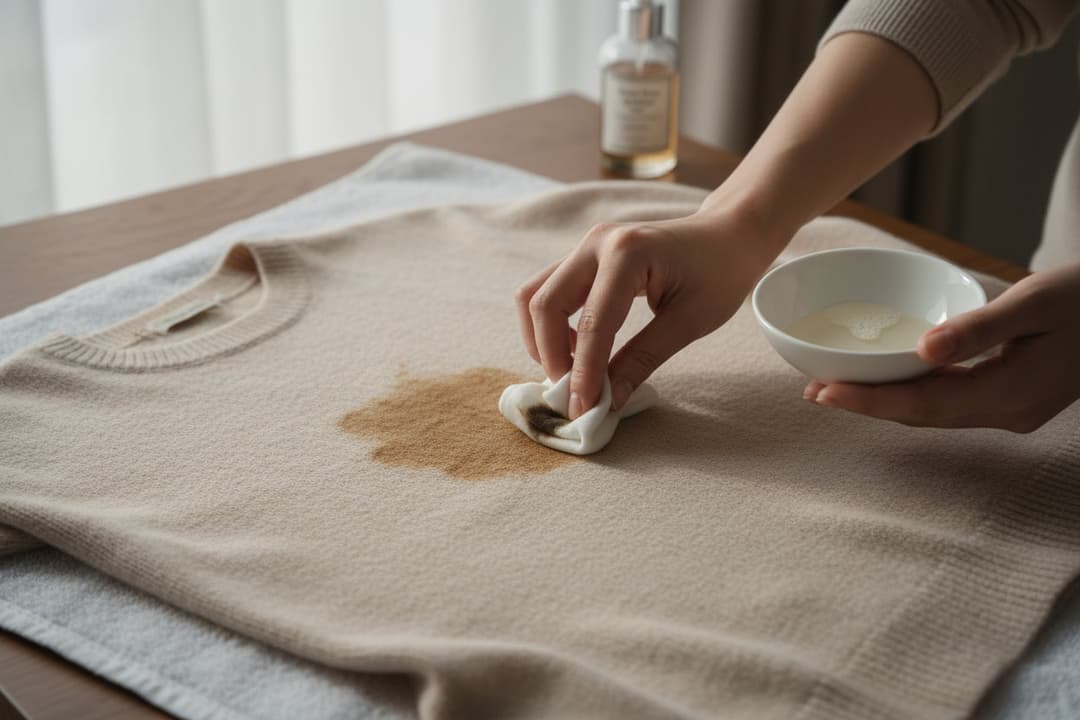
Act quickly, but without rubbing.
- Grease / makeup: sprinkle with Fuller's earth, leave on for 2–3 hours, brush gently, then hand wash.
- Wine / coffee / tea: dab with cold water, then soak with wool detergent; avoid hot water which sets the stain.
- Perspiration: rinse with clear lukewarm water, then gentle wash; acidity is neutralized with a diluted vinegar rinse.
- Ink: test a special wool stain remover locally, never undiluted; if in doubt, use a specialized dry cleaner.
Storing and protecting your cashmere: anti-moth & seasonality

Successful cashmere storage combines: impeccable cleanliness before storing (residues attract moths), careful folding, a breathable bag, and a dry, temperate place. Slip in cedar, lavender, or lemon thyme to repel naturally. Air out every two months. Avoid airtight plastic bags that retain moisture.
- Between seasons: rest for 24 hours in the open air after the last wear, then gentle brushing before bagging.
- Winter: rotate your pieces; the fiber resets during rest.
- Travel: roll the knit in a cotton bag, never loose in a suitcase.
How often should you wash cashmere?
Cashmere does not need washing after every wear. Air it out between uses. During periods of heavy wear, wash every 4–6 wears, or as soon as a persistent odor appears. Opt for more steam refreshes rather than successive washes.
Small repairs and long-term care

A snagged stitch? Don't cut the thread! On the inside, redistribute the tension using a darning needle. For a small hole, ask a workshop for a graft (invisible repair). Stretched ribbed edges regain their shape after a gentle wash and corrective flat drying (reshape delicately). For a sweater neckline, steam from a distance restores shape.
Colors & water: avoiding transfer
Wash dark shades, deep reds, and indigo separately. Set new colors with a quick first soak and a diluted vinegar rinse. Use individual mesh bags when washing several pieces in the machine.
Cashmere detergent: what to choose, what to avoid

Choose a wool/liquid detergent with a mild pH, without enzymes or optical brighteners. Avoid bleach, fabric softener, and tumble drying. Concentrated scented additives weigh down and permeate the fiber; prefer a clean rinse. A splash of vinegar rinse (well diluted) helps close the scales, thus improving durability.
Scarves, openwork scarves, and cashmere accessories
Cashmere scarves and openwork pieces require even more measured handling: place them on a thick cloth during hand washing to avoid tension. For fringes, secure them with a cotton ribbon during the soak, then dry flat, straightening the strands with your fingertips.
Caring for cashmere through the seasons
Spring: sort, wash everything, inspect for moths, fold, and bag. Summer: occasional airing, humidity control. Autumn: restart with light steaming. Winter: rotate wears to let the fiber regain its shape. This rhythm ensures optimal durability.
10 common mistakes to avoid
- Rubbing a cashmere sweater to remove a stain.
- Changing temperature between washing and rinsing.
- Wringing out the knit by twisting it.
- Hanging a damp sweater on a hanger.
- Using an enzymatic detergent or scented fabric softener.
- Washing with items with zippers or Velcro.
- Drying in direct sunlight or on a radiator.
- Neglecting the 24-hour rest between wears.
- Storing without washing beforehand at the end of the season.
- Forgetting natural anti-moth protections.
Quick checklists

Hand wash, quick guide
- Cold water 20–30°C; wool detergent; no enzymes.
- Immerse, press gently; 5–7 min.
- Rinse at same temperature; optional diluted vinegar.
- Press in towel; dry flat; reshape.
Machine wash, quick guide
- Wool program; 20–30°C; 400–600 rpm max.
- Individual mesh bag; half load.
- Liquid wool detergent; no fabric softener.
- Dry flat only.
Seasonal storage, quick guide
- Wash before storing; brush, air out.
- Fold carefully, use breathable cotton storage bag.
- Cedar or lavender; dry, temperate place.
Where cashmere comes from, and why ours is finished in Italy
Cashmere is the winter undercoat of the Capra hircus goat, combed in spring in the cold, dry regions of Central Asia. The cold determines the fineness of the fiber: the harsher the winter, the finer and longer the undercoat, and the softer and more durable the knit will be. A sweater requires the annual harvest of about two goats, more for a dense winter knit. This rarity drives the price, and it is fiber length that determines quality.
At Misciano, the fiber then travels to Italy, where the stage that turns yarn into fabric takes place: finishing. Washing, fulling, and finishing give the knit its airy hand and soft glow without stripping its structure. Our knits often blend cashmere with merino wool, whose fine fiber adds body and resistance to wear, and our lightweight scarves blend it with modal and wool: a fully natural mix, lighter than pure cashmere, perfect from mid-season onward.
How to recognize good cashmere before you buy
Good cashmere doesn't shout. It reveals itself through four signs. The hand: a dense softness that springs back under your finger, not a pasty softness that flattens. The surface: even, with a light uniform halo, without fuzzier patches. The light: hold the knit up to the light, it should filter an even glow, with no thin spots. The rub: ten seconds of palm against the knit, a long fiber releases almost nothing, a short fiber pills immediately.
Pilling in the first few wears is not a quality flaw: it's the excess surface down, which comes off with a cashmere comb and disappears after two or three washes. What signals a short fiber is pilling that keeps returning in the same spots, under the bag, at the sides, under the arms.
Wearing cashmere all winter without giving it up in spring
Cashmere's strength is keeping you warm without bulk. A fine merino and cashmere sweater under a jacket replaces two layers of cotton and stays crisp at the end of the day; layered over a silk shirt, it plays with textures, matte against sheen. The fiber's lightness allows what carded wool forbids: wearing the knit against bare skin, and keeping it on in a heated room.
The poncho styled as a large scarf is the transitional piece between seasons. Draped over the shoulders on an April morning, tied as a scarf on an October evening, laid over an evening dress leaving a dinner, it replaces the coat when a coat would be too much. It folds flat into a travel bag and comes out wrinkle-free. It's the piece our clients repurchase in a second color.
Key takeaways
·Fiber length determines quality; winter cold determines fiber length.
·Pilling that disappears after two washes is normal; pilling that returns signals short fiber.
·Merino and cashmere: the structure of one, the softness of the other.
·The cashmere poncho replaces the mid-season coat and folds flat for travel.
·Air out between wears, wash every four to six outings, dry flat: three habits that make it last ten years.
Misciano icons : Top-selling cashmere

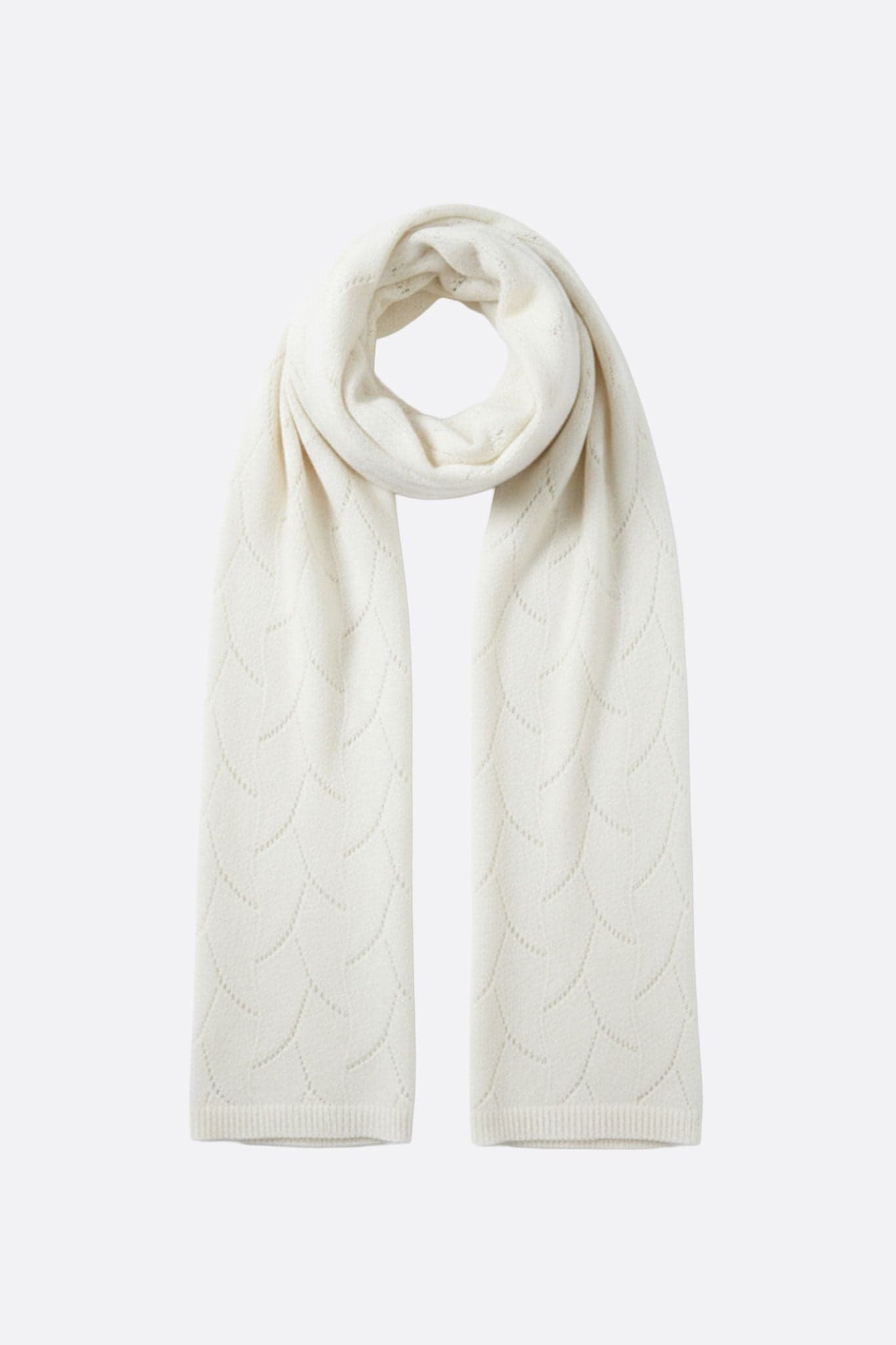
White openwork cashmere scarf
Openwork knit, cloud-like touch, light warmth.

White openwork cashmere sweater, turtleneck & sequins
Openwork stitch, measured shimmer, enveloping warmth.

Black Millenero cashmere scarf
Plush density, impeccable hold, deep color.

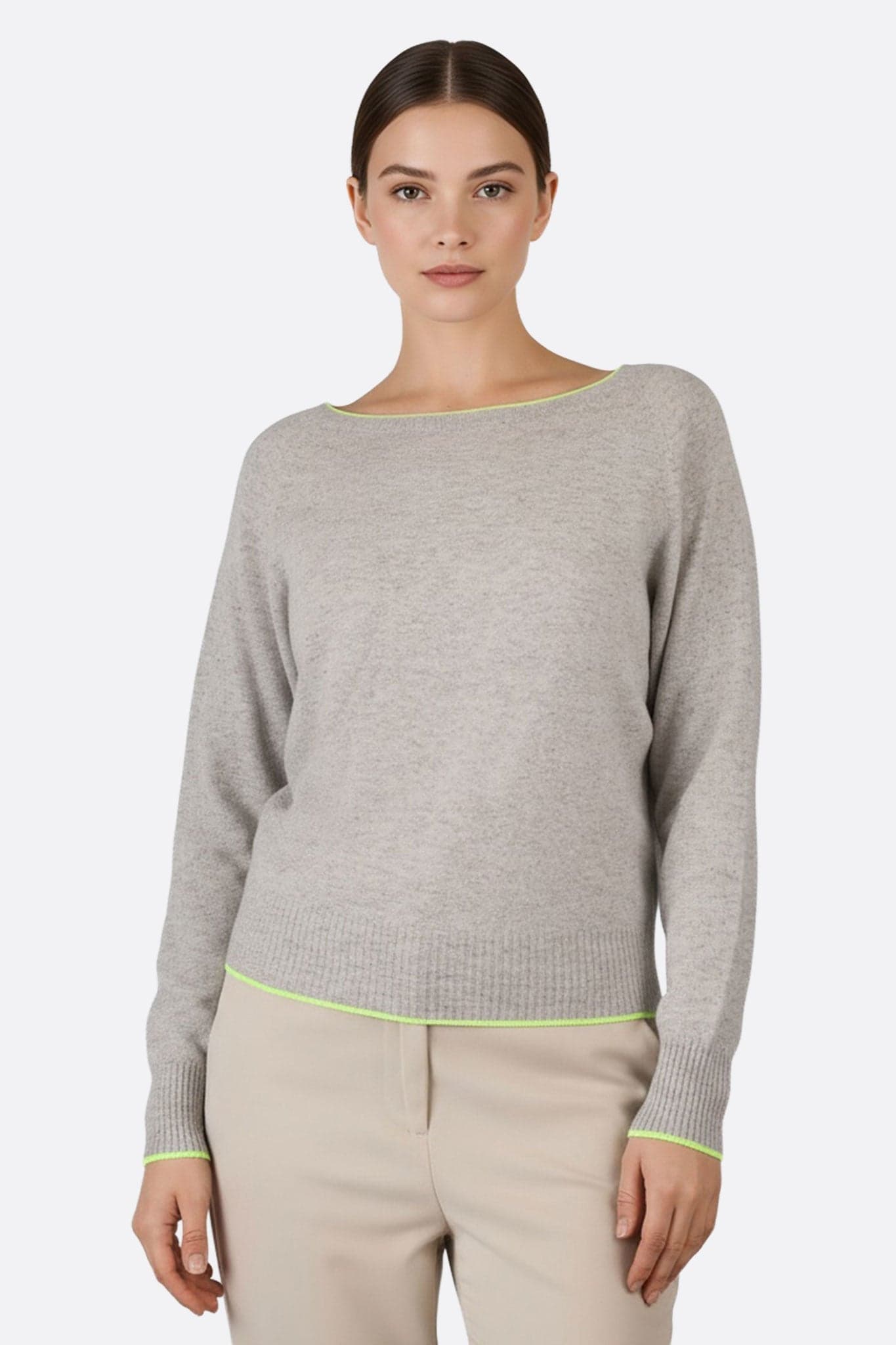
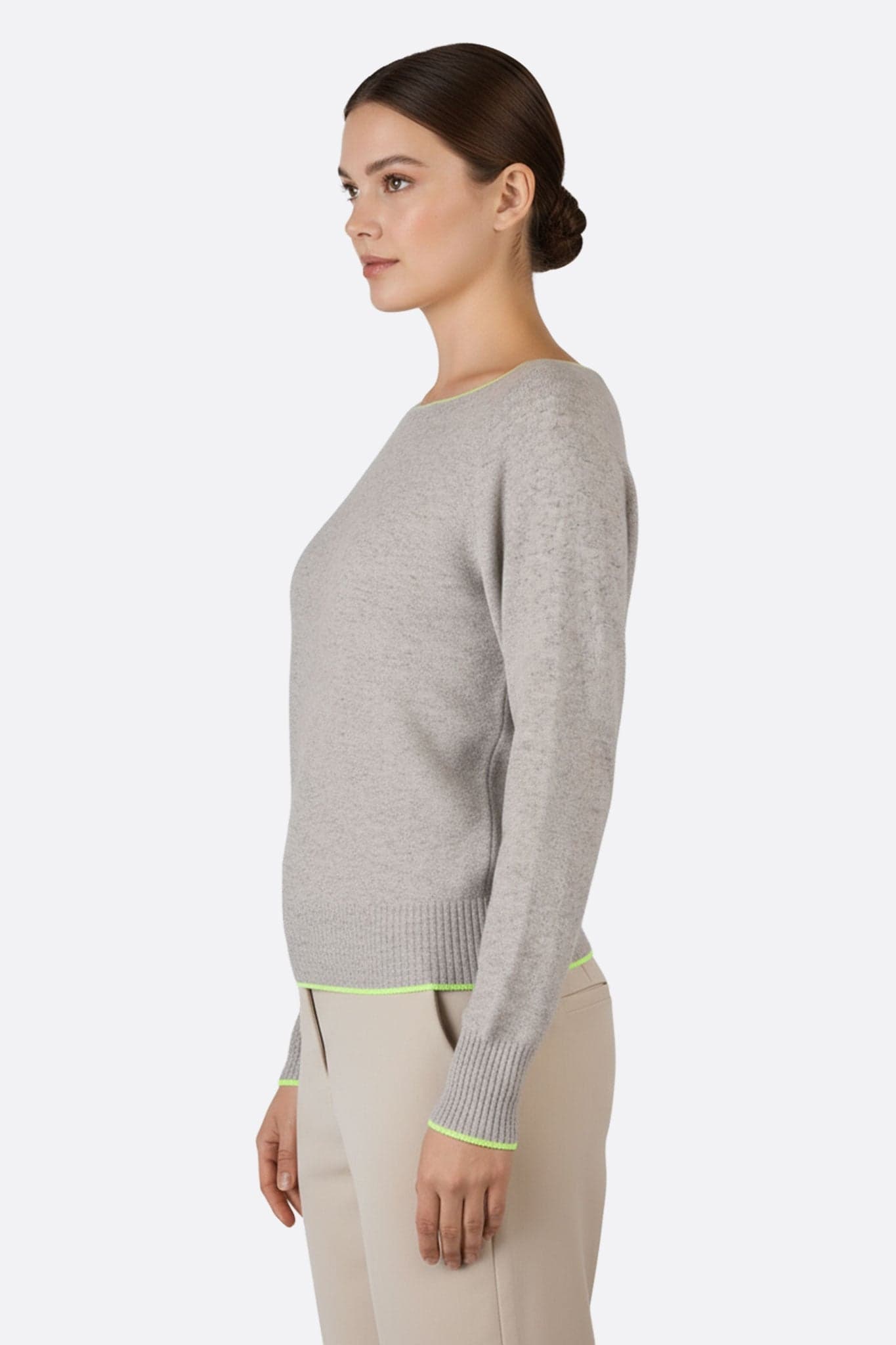
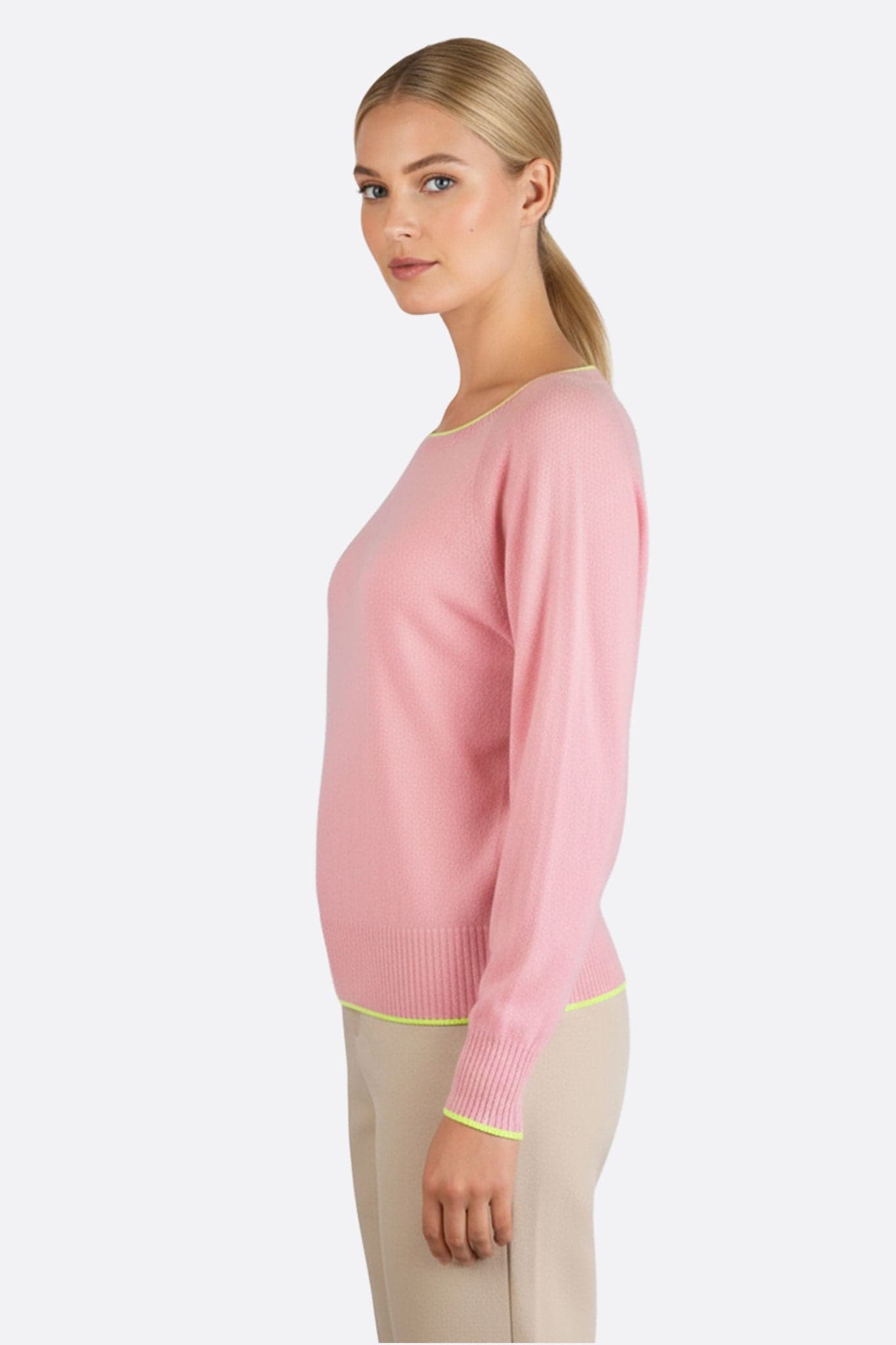
Beige merino & cashmere sweater, pink finishes
Blend of noble fibers, lasting comfort, subtle contrast.
Also to discover
Continue reading with our focus on materials & style.
To go further:
- To compare the properties and durability of each noble material, the Misciano Materials Observatory

Written by Camille Laurent
Published on 29/10/2025 at 09:00
About the author
Camille Laurent is a fashion writer for Misciano Paris. A specialist in textile materials and formal dress codes, she has guided readers in choosing elegant pieces since 2019.
→ Learn more about Camille LaurentFAQ : cashmere care
To go further:
Can cashmere be machine washed?
Yes, using a wool program at 20–30°C, 400–600 rpm, liquid wool detergent, a laundry bag, half load, and flat drying. Otherwise, hand washing is preferable.
How do you remove pilling from a cashmere sweater?
Do it dry, on a flat surface, with a cashmere comb or a quality fabric shaver, using short, gentle strokes without lingering on the same area.
Drying: why should you avoid a hanger?
The weight of the water distorts the knit. Always dry flat, reshape the silhouette, then fold for storage.
Which detergent should you use for cashmere?
A special wool/liquid detergent with a gentle pH, free of enzymes and optical brighteners. Use sparingly and rinse thoroughly.
How do you protect cashmere from moths?
Store clean knitwear in a bag, use cedar or lavender sachets, keep it in a dry, temperate place, and air it out regularly. Avoid humidity and airtight plastic covers.
Conclusion: a simple ritual, precise gestures
Cashmere reveals all its charm when treated with gentleness: cold water, limited movement, flat drying, light steam, and rest between wears. Regular care enhances the texture and extends the life of the knit, a vision dear to Misciano, where quality and durability combine with a naturally elegant style.
Shop the selection