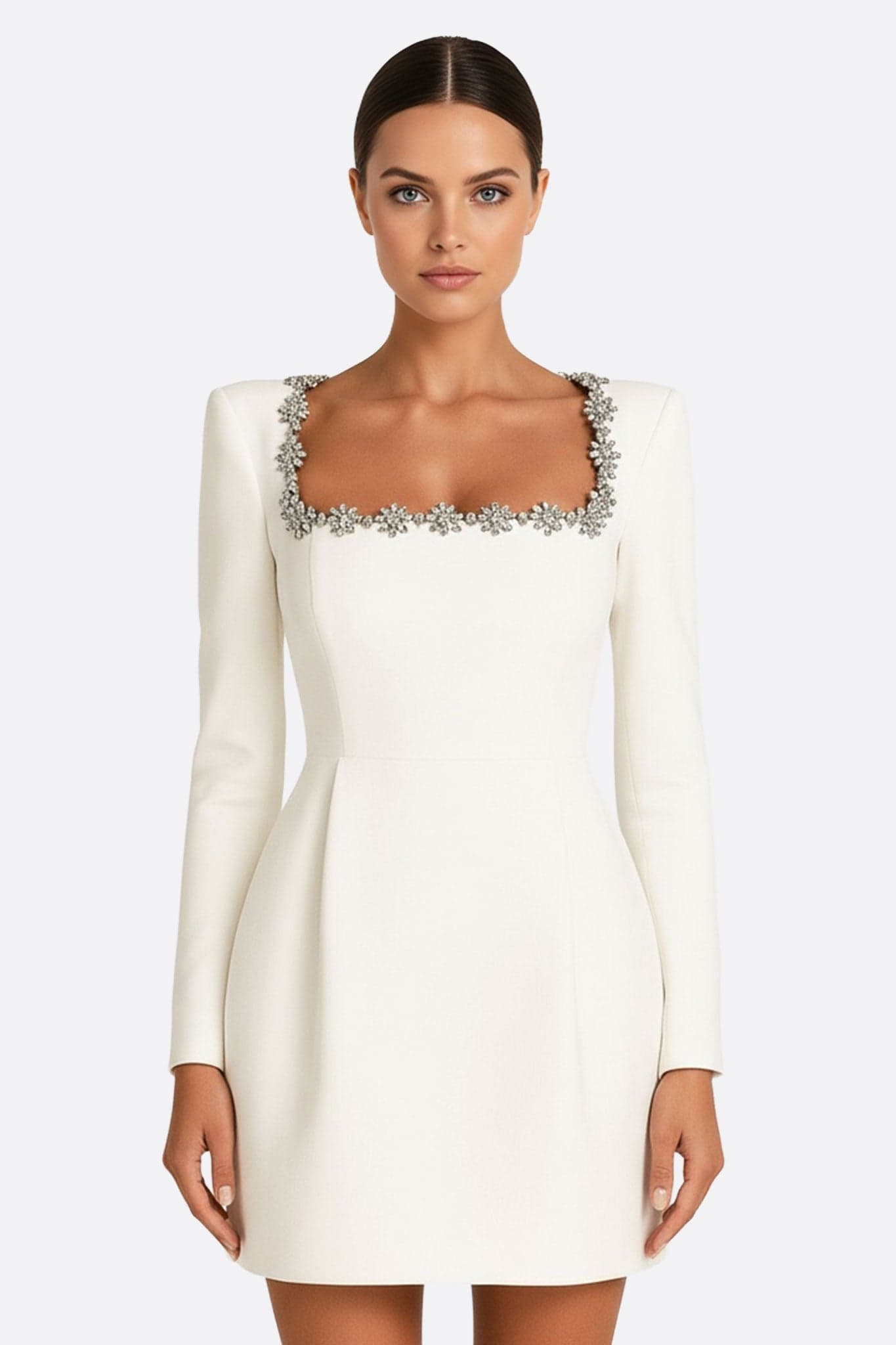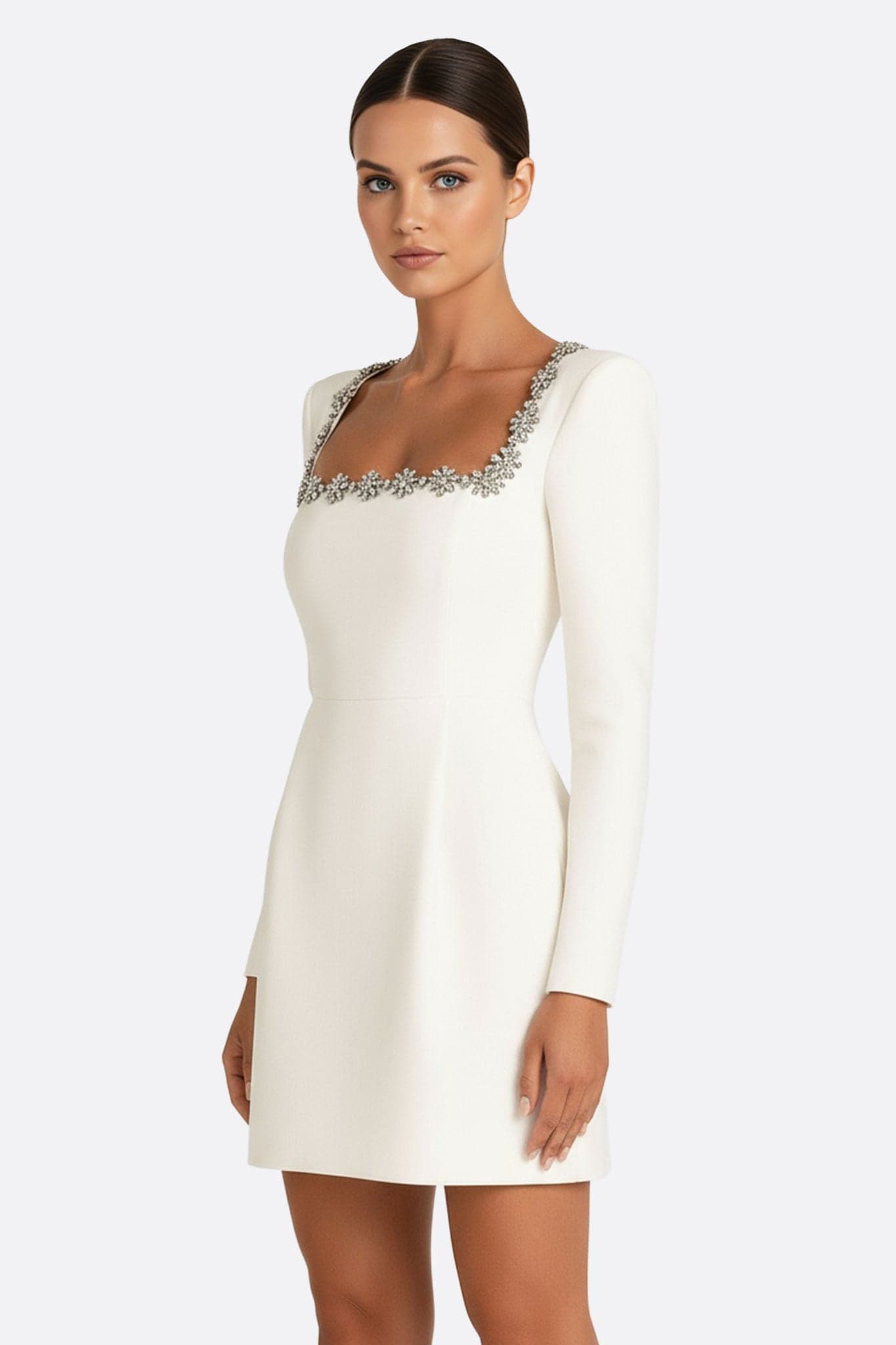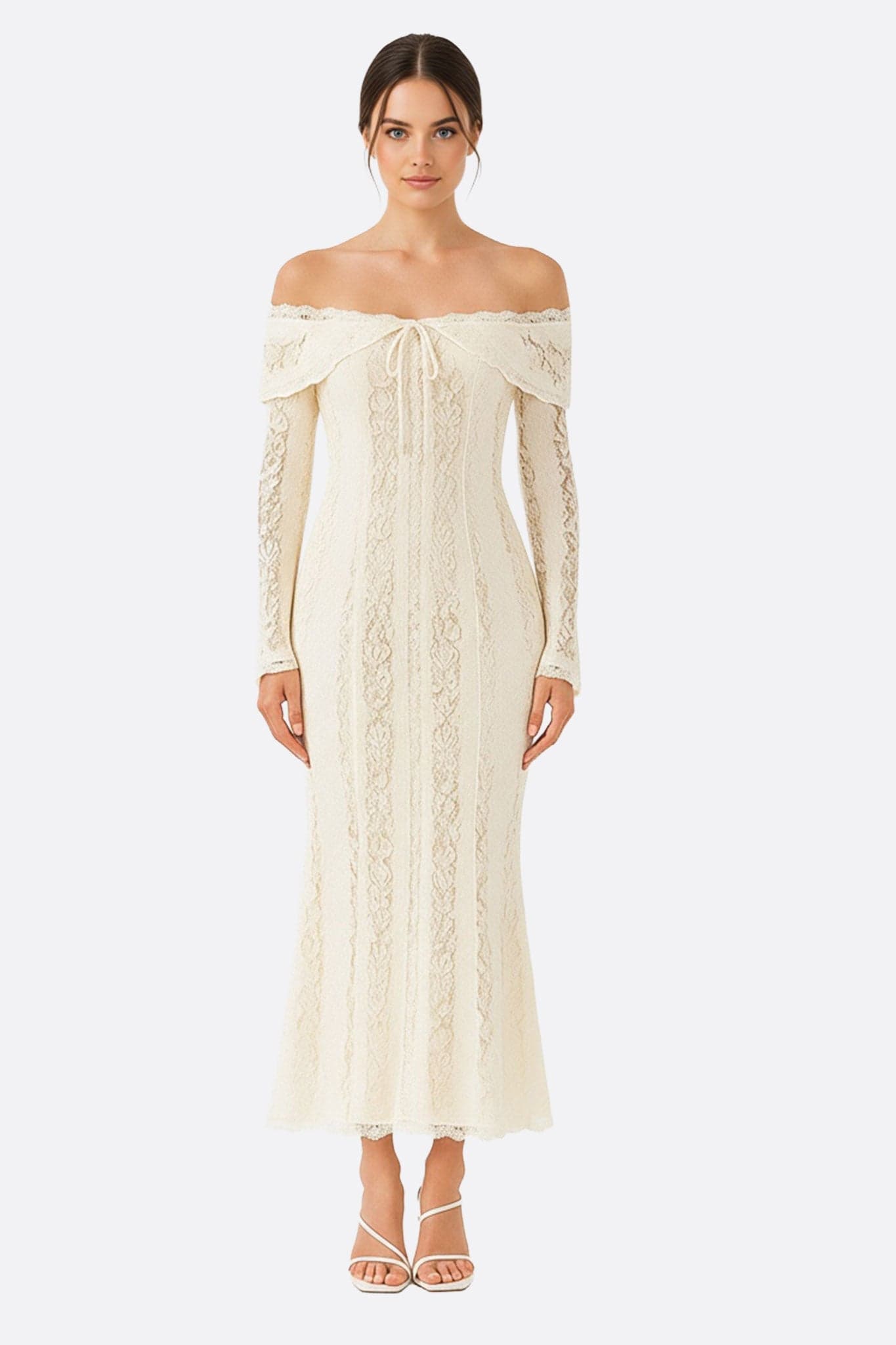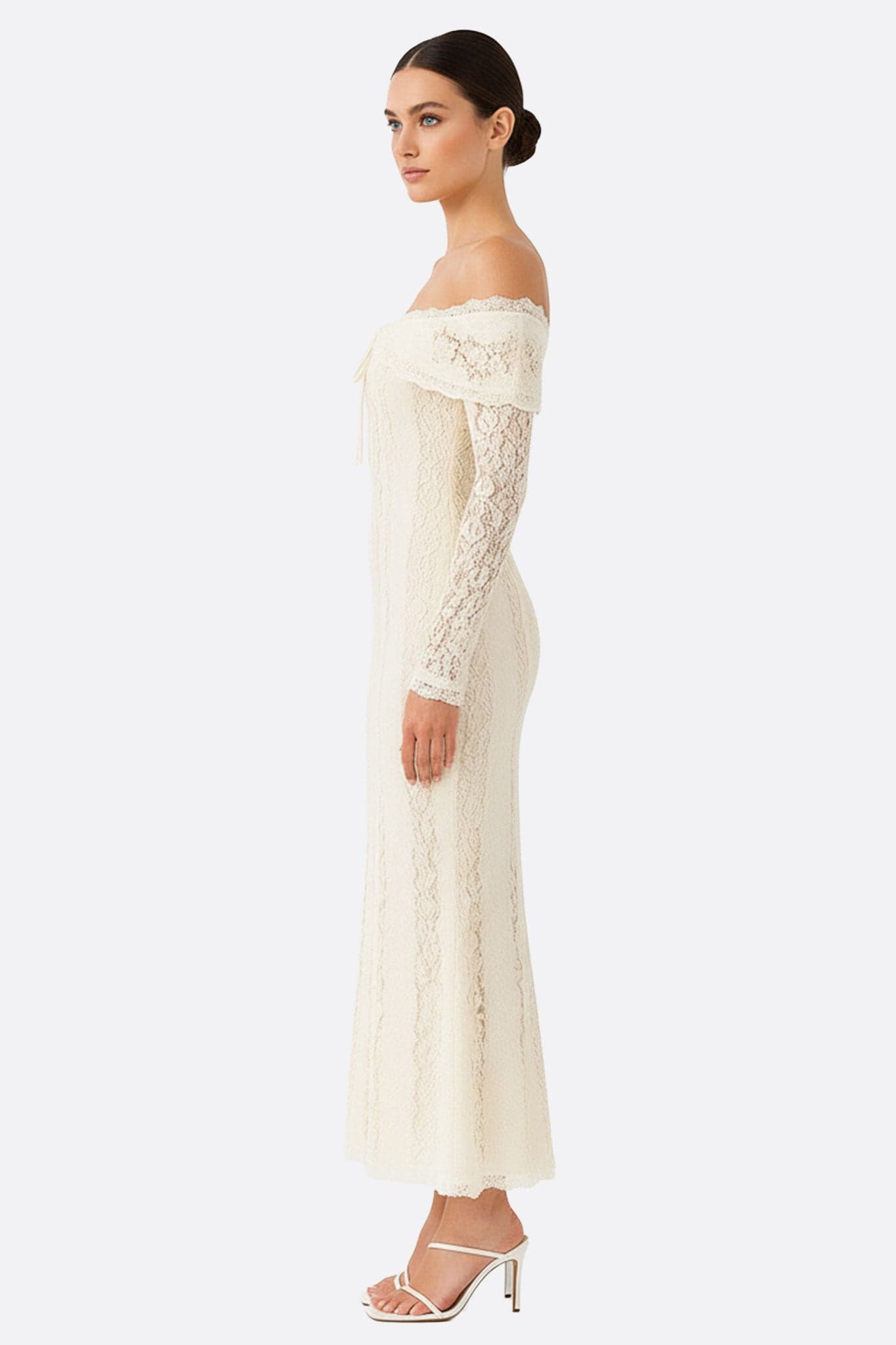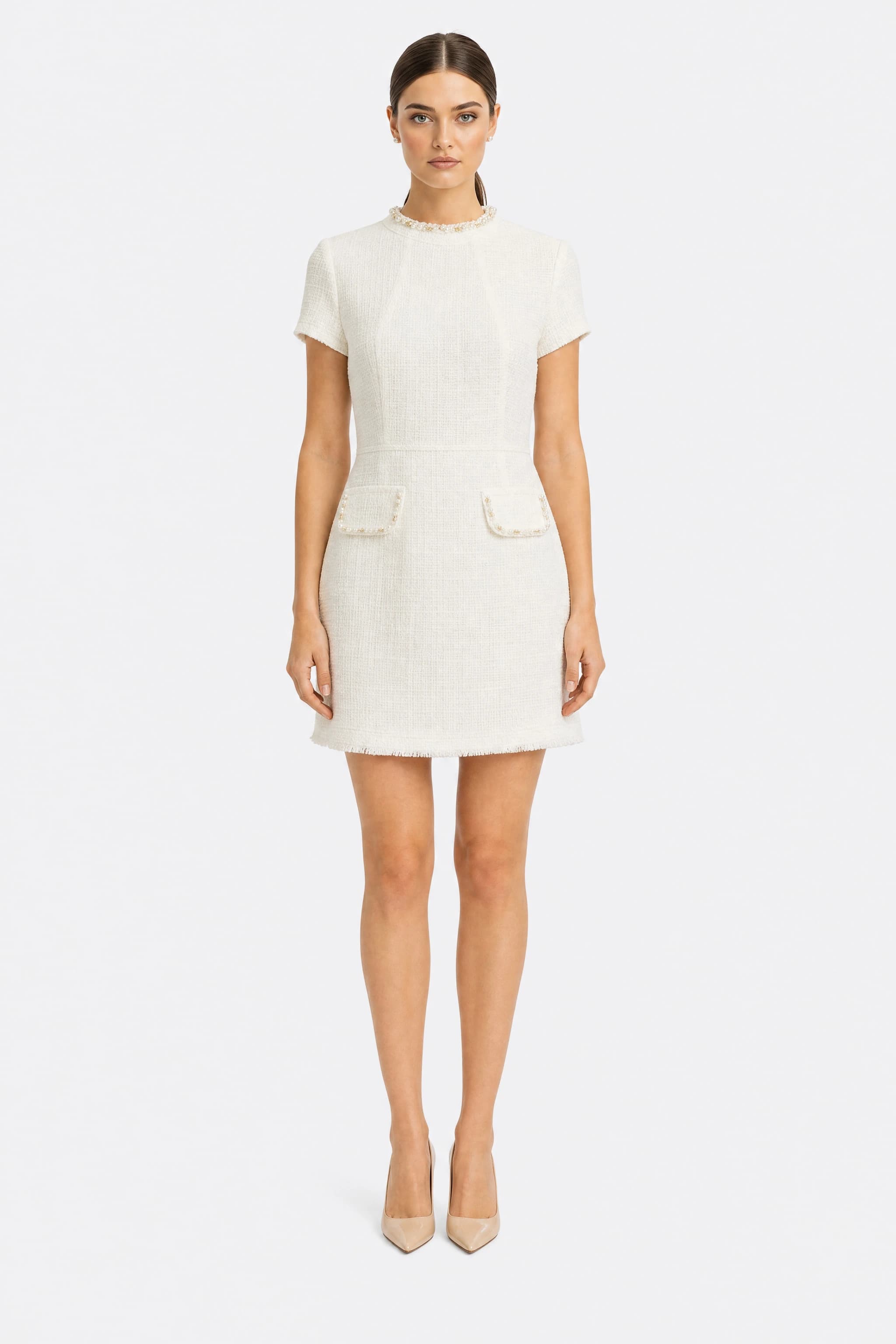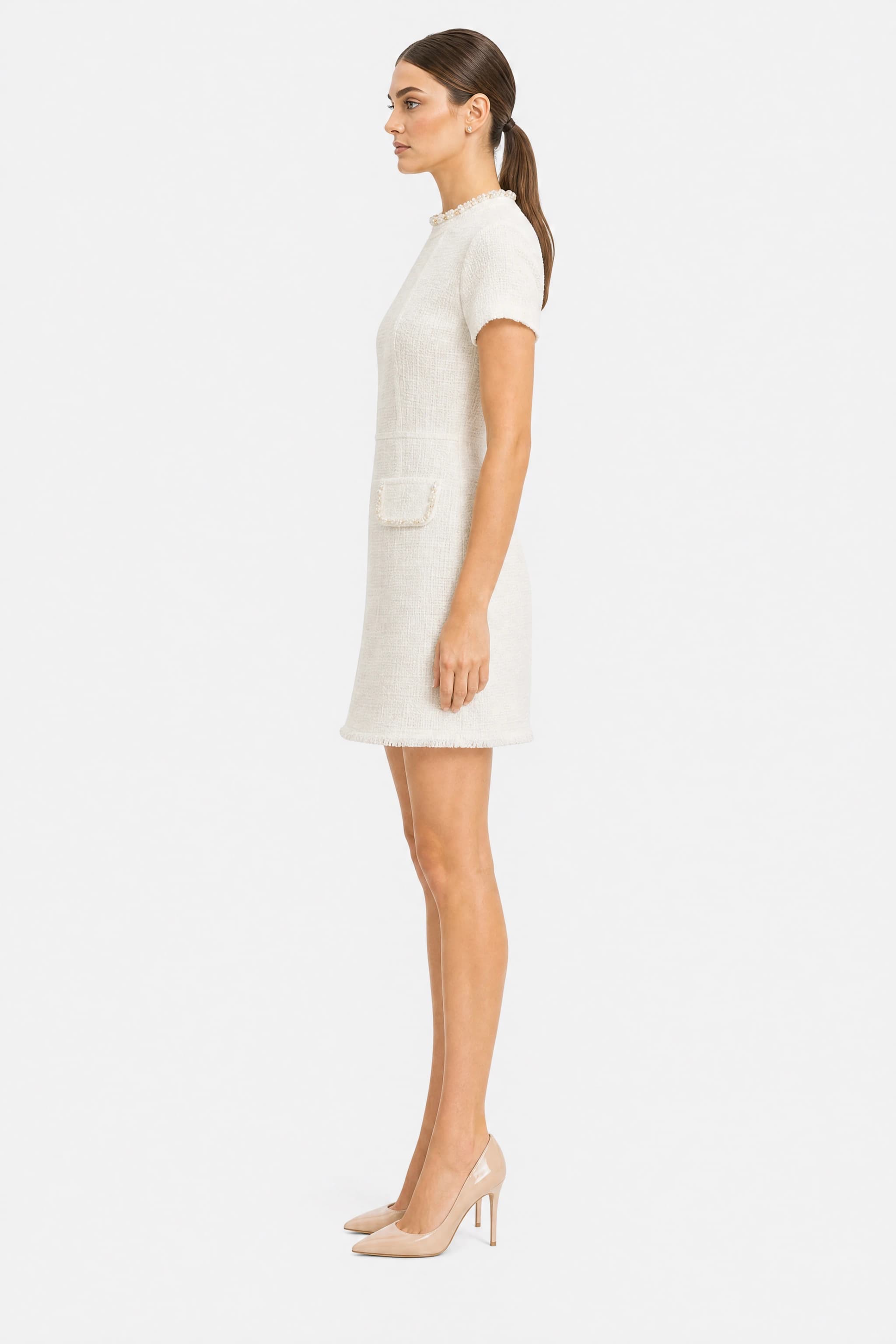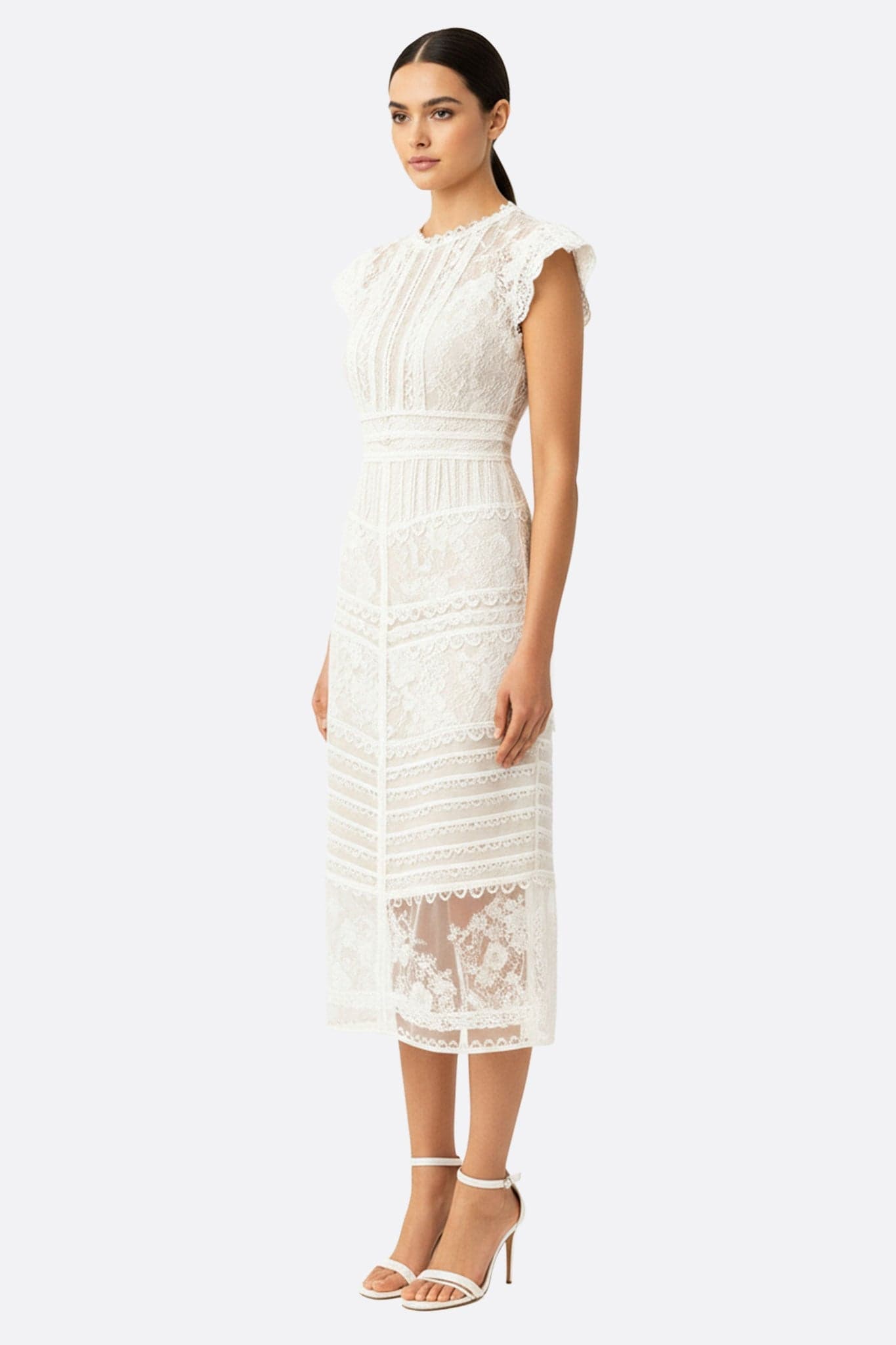
Chic and elegant white dress: materials, lines, and light by Misciano

Why the white dress is a fundamental piece of the wardrobe
The chic and elegant white dress is not a fashion trend. It has been present in women's wardrobes for over a century, and each decade has given it a new meaning without ever erasing it. In the 1920s, Coco Chanel removed its ceremonial status to make it an everyday piece.
In the 1960s, it became minimalist and graphic with Courrèges and Saint Laurent who imposed it in immaculate white cotton. In the 1990s, the white slip dress silhouette of Kate Moss redefined its relationship to sensuality. Today, it is both casual and ceremonial, adaptable to the woman who wears it.

This timeless character is based on a simple logic: white is the color that combines with everything. With beige and camel for a total natural look, with black for a graphic contrast, with prints to highlight the printed piece, with colorful accessories for a touch of fantasy.
This chromatic neutrality makes the white dress a pivotal piece in a wardrobe built with intention: it does not take symbolic space, it creates it.
Culturally, the white dress also carries a universal symbolism: purity, light, freshness, new beginnings. It is the only color that crosses all latitudes, all seasons, and all dress codes with the same coherence.
Mediterranean cultures adopt it in summer for its thermal properties, Western ceremonies have made it the color of beginnings, and haute couture houses make it their signature piece each season.
White reveals the quality of the material
Contrary to popular belief, white is not an easy color. It is unforgiving on the quality of materials: a poorly finished seam, a fabric too thin, an approximate drape, everything shows on white.
It is precisely for this reason that a quality white dress is a demanding and rewarding piece. It does not forgive compromises on material or craftsmanship.

White amplifies light and reveals textures. This interaction is at the heart of the choice:
Shades of white and complexions: how to choose
Not all shades of white flatter all skin tones in the same way. Pure white (or optical white) is the brightest and most contrasting: it works particularly well on dark and tanned skin tones, where the contrast creates a strong presence. On very fair or rosy skin tones, it can accentuate redness.
Ecru is a slightly beige, natural white, without industrial bleaching. It is versatile and flattering on most skin tones: neither too warm nor too cool, it complements fair skin without washing it out and warms olive skin tones.
Ivory is warmer, with a subtle yellow touch that brings it closer to untreated noble materials like raw silk. It is particularly harmonious on warm, golden, or Mediterranean skin tones. Off-white or cream white includes all non-pure whites: their exact shade varies by brand.
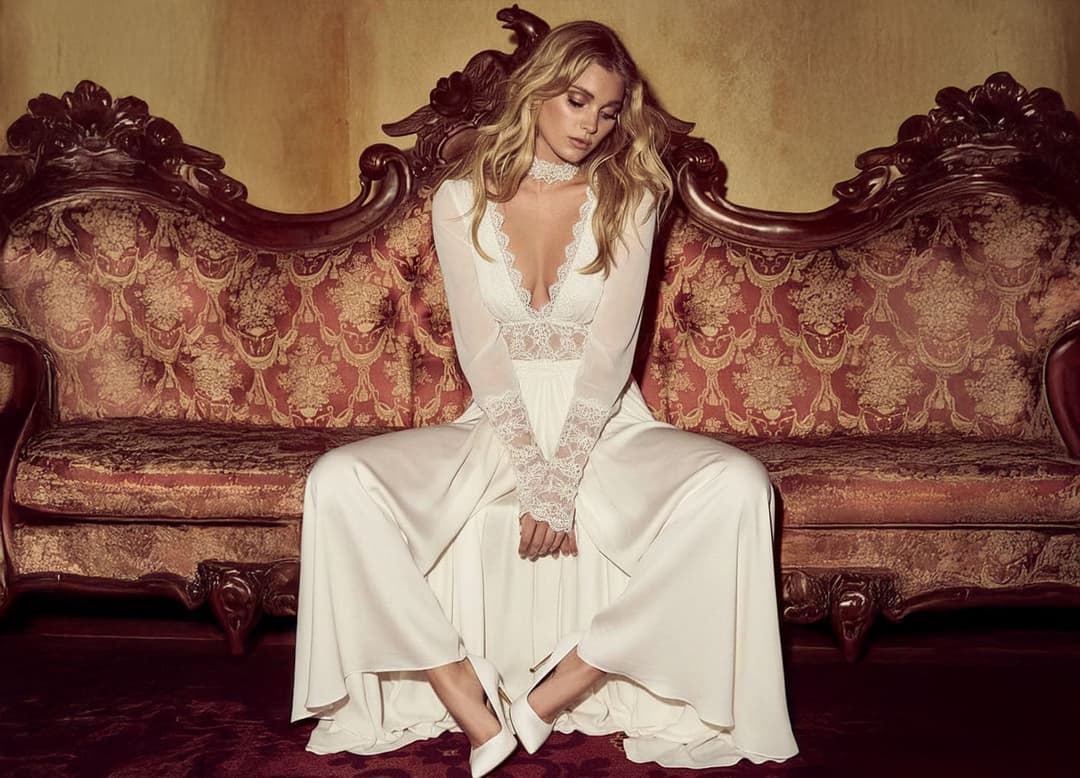
The practical rule by skin tone:
Luxury white dress: what really makes the difference
The concept of a luxury white dress is based on two objective criteria: the material and the craftsmanship. The quality of the fabric is verifiable by touch and visible in the drape from the first fitting.
A pure silk crepe of 120 g/m², a washed linen of 200 g/m², or a silk charmeuse satin have a density, softness, and behavior in light that synthetic materials cannot replicate. The hand of the fabric (this couture term that describes how the fabric holds between the fingers) is the first indicator.
Craftsmanship is the second criterion. On a luxury piece:
This level of finish guarantees durability: a well-maintained white dress can be worn for years, even decades, without ever appearing outdated.
Italian white dress: the art of tailoring in the service of white
The concept of an Italian white dress refers to a tailoring tradition that places cutting above all else. Italian ready-to-wear houses have developed a specific approach to white: clean lines, worked shoulders, attention to the drape of the back that other fashion traditions rarely reproduce with the same precision.
This expertise translates into white dresses structured without rigidity, that follow the silhouette without constraining it.
In terms of materials, the Italian tradition favors:
The Italian dress: the sculptural elegance signed by Misciano illustrates this philosophy: each white piece is designed to reveal the quality of the material, not to cover it. A beautiful white dress in this tradition is not identified by an external detail, but by the way it holds on the silhouette even after several hours of wear.
The white dress in culture: from Bridgerton to fashion icons
The white dress holds a special place in popular culture and the collective imagination. In the series Bridgerton, the white dresses of the English Regency have become global style references: light muslin, puffed sleeves, high empire waist. This enthusiasm confirms what costume historians have long known: the white dress transcends eras without ever losing its relevance.

In the history of contemporary fashion, a few white silhouettes have become absolute icons. Marilyn Monroe's pleated white dress in "The Seven Year Itch" in 1955, Grace Kelly's white sheath dress, Audrey Hepburn's civil wedding dresses.
Each decade produces its own iconic images in white, confirming the universal and timeless nature of this color. The classic white dress is precisely the one that draws inspiration from these references without copying them: simple, well-cut, in a noble material.
White dress: which material according to the use?
The material is the first criterion to consider before any cut or style consideration. It determines comfort, maintenance, transparency, drape, and occasion of use. To go further on this subject, our guide What material to choose for summer when it's very hot: the guide to staying cool details the differences between linen, cotton, viscose, and silk according to climatic conditions.
Linen is the ultimate summer material: thermoregulating, slightly absorbent, not very transparent at high density (190 g/m² and more), elegant even when wrinkled. Its slightly irregular texture is its signature and is particularly well seen in white. A good quality white linen combines structure and lightness, two qualities difficult to unite.
Silk crepe is the reference for refined occasions: perfect drape, textured surface that diffuses light without shining, almost timeless. It is the material that designers choose by default for white ceremonial pieces.

Cotton poplin is the most versatile: tight weave, non-transparent, machine washable, impeccable hold. It is suitable for both the office and casual occasions. Viscose is fluid and light but can be transparent depending on the density: always test in the light before purchase.
White silk satin is the ultimate evening material, with its smooth surface and way of capturing light reflections. Our article on the satin dress explores in detail its properties and maintenance.
| Material | Transparency | Maintenance | Ideal occasion |
|---|---|---|---|
| Linen (190 g/m² +) | Low | Machine 30°C | Summer daily, holidays |
| Silk crepe | Very low | Hand / silk cycle | Cocktail, dinner, wedding |
| Cotton poplin | None | Machine 40°C | Office, versatile |
| Light viscose | High | Hand / delicate | Leisure, travel |
| Silk satin | Very low | Hand / silk cycle | Evening, ceremony |
| Cotton jersey | Low to none | Machine 30-40°C | Everyday |
Transparency depends primarily on the fabric's density, not just its color. A 200 g/m² linen is less transparent than a 120 g/m² linen, even if both are white. The weight and weave density are the two reliable indicators.
To understand these concepts in detail, our guide on fabric weight explains how to read these technical details and interpret them for your purchases. Always test in natural light before buying: never under the artificial lighting of a store, which can mask transparency.
White dress cuts and body shapes: the complete guide
The cut is the second fundamental criterion. A white dress in an unsuitable cut can be visually disappointing: not because you are not made for white, but because the cut does not enhance your natural proportions. The good news: for every silhouette, there are several cuts that work perfectly.

For H-shaped silhouettes (few marked curves, undefined waist): the wrap cut creates a V-shaped waist at the front, the empire cut positions the high belt to simulate a waist, the belted cut with a thin belt outlines the silhouette.
For V-shaped silhouettes (shoulders significantly wider than hips): flared or trapeze cuts rebalance by adding volume downward, U or round necklines avoid further widening the shoulders. For A-shaped silhouettes (hips significantly wider than shoulders): the empire cut or V-neck draws attention upward without clinging to the hips, slightly puffed sleeves create visual balance.
Our guide Choose a comfortable dress for everyday use delves into these criteria with concrete examples for each type of silhouette.
| Cut | Recommended silhouette | Occasion | Ideal material |
|---|---|---|---|
| Wrap (envelope) | H, hourglass | Cocktail, office, everyday | Crepe, viscose, jersey |
| Empire (high waist) | H, A | Vacation, everyday, summer | Linen, cotton, viscose |
| Sheath | Hourglass, slim H | Evening, ceremonies | Silk crepe, satin |
| Flared / trapeze | V (broad shoulders) | Casual, everyday | Cotton, linen, poplin |
| Boat neck | A, hourglass | Office, dinner | Crepe, poplin |
| Deep V-neck | A, H | Evening, cocktail | Silk, satin, crepe |
For hourglass silhouettes (balanced shoulders and hips, defined waist), almost all cuts work. It's an opportunity to explore styles you don't usually dare: silk crepe sheath, viscose wrap, strapless dress. The white dress in silk or crepe will be particularly flattering thanks to the natural drape of these materials.
Length is also a key parameter: the mini white dress is ideal for highlighting legs and naturally pairs with thin-heeled sandals. The midi dress is the most versatile: elegant without being formal, it suits both office and dinner. The maxi dress in linen or silk is the most summery and fluid, perfect for casual occasions or vacations.
OUR SELECTIONS
White Dresses
Full Collection
Evening Dresses
Silk, crepe, satin
All Dresses
Linen, cotton, silk
The choice of length interacts with the material: a maxi dress in crumpled linen has a naturally casual presence, while a maxi dress in silk crepe takes on an immediate ceremonial character. The same length, two distinct worlds.
White midi dress: the most versatile length
Among all lengths, the white midi dress (hem between the knee and ankle, usually mid-calf) is the most versatile. It suits all body types without exception: it elongates the silhouette without exposing the legs, it is suitable for the office as well as ceremonial occasions, and it ages less quickly stylistically than the mini or maxi. This is why designers choose it as the reference length for their white ceremonial and cocktail dresses.
The chic and elegant white midi dress comes in all premium materials: silk crepe for formal occasions with a fluid drape that falls well below the knee, thick linen for a relaxed summer wear, poplin for the office with a slightly rigid structure that holds its shape all day.
In a long white dress (maxi) model, crepe and silk satin are preferred for grand occasions: their natural drape creates a continuous line from the bust to the ankles, without visual interruption.
Strap white dress and backless white dress: summer cuts and light elegance
The strap white dress is the quintessential summer cut. It highlights the shoulders and arms while allowing the material to work freely. Without sleeves or shoulder structure, crepe, chiffon, or silk satin can express their natural drape to the fullest.
A small white dress with silk crepe straps is the ideal vacation piece: wearable both on the beach with flat sandals and in the evening with heeled mules.
The backless white dress takes this logic a step further: by exposing the back, it creates a visual line that elongates the silhouette while adding a discreet sensuality. The most elegant backless versions use a crossed drape or thin straps that support without any visible hardware.
In premium materials, silk chiffon and charmeuse satin are particularly suitable: their fluidity allows the fabric to naturally hug the back without clinging or wrinkling. For a beautiful backless or strap white dress, the quality of the lining is as important as that of the main fabric: it determines comfort and the absence of transparency.
White ceremonial dress: how to choose according to the occasion
The white ceremonial dress follows distinct codes depending on the nature of the event. For a wedding as a guest, the white dress remains acceptable in certain contexts (casual civil wedding, outdoor secular ceremony), provided you choose a cut and material that clearly distinguish it from the wedding dress.
A structured crepe in midi length or a long-sleeved dress in off-white chiffon immediately signals that the piece is not a wedding dress. For other ceremonies (baptisms, communions, corporate galas), the white dress is always appropriate, regardless of length.
For a baptism or communion, the classy long white dress brings a natural solemnity: wool crepe or silk crepe in a straight or empire cut remain the safest choices. For a gala or a chic and glamorous evening, satin or ivory velvet in sheath or with a worked neckline is more suitable.
The ceremonial dress collection by Misciano offers models suitable for every type of occasion. See also: Women's jumpsuit or dress for a ceremony: what to choose according to the occasion according to the occasion.
How to wear a white dress: occasions, styles, and combinations
The white dress is one of the most versatile pieces in a woman's wardrobe, provided the material, cut, and accessories are adapted to the occasion.
At the office: a white dress in poplin or structured crepe, paired with a navy or camel blazer, is sober and professional. The midi length and closed collar ensure a level of formality suitable for most work environments.

For ceremonial occasions (wedding as a guest, cocktail, reception), the main challenge is to differentiate from the bride. The safest solution: choose a non-pure shade (ivory, ecru, off-white) and accessorize with bold colors.
To What dress for a wedding in 2026: styles according to the ceremony and pairing advice, a caramel belt, warm gold jewelry, and a colorful bag immediately create a clear stylistic distance from the wedding dress.
For evening occasions, the white dress in satin or silk is a strong choice. Its luminous effect under evening lights is unmatched. Our evening dress guide details how to choose the cut and material according to the formality level of the event. The most effective evening combination: white satin silk dress, white gold jewelry, black patent leather clutch.
White dress in summer: natural combinations
In summer, crumpled linen with flat sandals and a silk scarf tied around the neck is the most natural and photographed combination.
The summer white dress suits both the relaxed Mediterranean style (sandals, wicker bag, oversized sunglasses) and the elegant Riviera style (golden espadrilles, silk scarf, fine jewelry). The difference lies in the details and accessories, not in the dress itself.
TO PAIR WITH
White dress in winter: layering and contrasts
The white dress in winter is a rarer but visually strong choice. The keys: choose a high-weight material (thick jersey, crepe wool, thick cotton) and layer intelligently.
A structured black blazer over a mid-length white dress creates a very effective minimal graphic contrast. A camel coat over a white jersey dress creates a natural and warm total look. A black or brown leather jacket over a short white dress is the most urban and assertive combination.
Thick tights (60 denier and above) are essential to make the white dress worn in winter coherent and comfortable. In black, they create a sharp contrast. In flesh or nude, they discreetly extend the dress. Square-toed ankle boots in natural leather complete the silhouette with sobriety.
White dress and accessories: building a coherent outfit
White being a non-color, it offers almost unlimited freedom of association. But this freedom deserves to be framed by a few principles. For a coherent outfit, choose a chromatic axis and stick to it: either a natural palette (nude, camel, terracotta, beige), a strong contrast (black, navy, burgundy), or a single touch of color (a red belt, an emerald bag). Avoid mixing several bright colors: the white dress is sufficiently present for the accessories to remain in a complementary register.

The materials of the accessories also interact with the dress. A white linen dress calls for natural accessories: raw leather, raffia, rattan, cotton. A white silk or crepe dress is better accompanied by smooth leather, gold metal, or silk. The material match between the dress and the accessories creates an immediate visual coherence, even without knowing the formal stylistic rules.
Jewelry on a white dress:
Common mistakes with the white dress and how to avoid them

The white dress is a piece that does not forgive certain common mistakes. Knowing these pitfalls in advance helps avoid disappointments and fully appreciate the piece.
The first instinct is often to choose a fluid and light material for summer, without checking the transparency: result, a dress that reveals underwear from the first outing in the sun.
The second pitfall is maintenance: many women wash their white dress at 60°C to "better clean it," which accelerates the yellowing of natural fibers and deforms the seams.
White is washed cold or at 30°C, with a mild detergent without optical brighteners. These bleaching agents, paradoxically, degrade the fibers in the long term and create an unflattering "over-white" effect that accentuates later yellowing.
MISTAKES TO AVOID
The third pitfall concerns storage: a white linen or cotton dress stored folded in a drawer for several months develops permanent creases that are difficult to remove and may yellow at the folds.
Hanging it on a padded hanger in a natural cotton cover (never plastic, which traps moisture) is the correct method for long-term preservation.
Finally, a lesser-known pitfall: perfumes and colognes. Applying perfume directly on a white dress can create invisible yellow stains when hot, but which appear after drying or the first wash.
The rule: always apply perfume on the skin or undergarments, never directly on the white dress. For perfumes with a high alcohol concentration, let it evaporate for a few seconds before contact with the dress.
White dress care: complete protocol by material
Maintenance is the determining factor for the lifespan of a white dress. A well-maintained white dress can be worn for years without losing its shine.
A poorly maintained dress yellows, deforms, and loses its structure in a few seasons. The protocol varies significantly depending on the material.

Linen and cotton: robust but demanding
Linen and cotton poplin withstand machine washing well, but not at any temperature. The rule: 30 to 40°C maximum, delicate or cotton cycle, reduced spin (600 rpm maximum).
These materials shrink slightly during the first washes: if your dress was not pre-washed at purchase, expect slight initial shrinkage. Ironing slightly damp at medium temperature (preferably with a fabric iron) is essential to restore the initial fit.
Against yellowing: mild liquid detergent without optical brighteners + a pinch of baking soda in the softener compartment.
Stain treatment on linen or white cotton:
Silk and crepe: delicacy required
Silk and silk crepe require special attention. Hand washing in cold water with a little soap is the safest method. In the machine: silk or delicate cycle at 20-30°C, in a closed washing pouch, without spinning (or 200 rpm maximum). Never tumble dry: heat irreparably deforms silk fibers.
Drying is done in the shade, flat or hanging, never in direct sunlight which yellows silk. Ironing: 120°C maximum, through a protective muslin, never directly on the silk.
Long-term storage: essential rules
End-of-season storage is a critical step often overlooked. Before storing a white dress for several months: wash or dry clean, even if it seems clean. Invisible traces of sweat and organic impurities develop yellow stains as they age. Check for any residual stains under bright light before storing.

Recommended storage method: natural cotton blown cover (not plastic or non-woven), padded hanger in wood or fabric, in a dry and airy place, away from direct sunlight. For very precious pieces (silk crepe, satin): wrap in acid-free tissue paper before placing in the cover. Our article on Easy-care fabric: women's fabrics to prioritize for a hassle-free daily life provides a broader perspective on the comparative care of different textile fibers.
One last useful habit: inspect the dress under bright light before each wear, especially under the arms, around the collar, and on the seams. Dry sweat marks and slight impurities are invisible to the naked eye under normal lighting but are clearly visible in direct natural light.
Treat these areas before washing with mild soap and cold water is much more effective than waiting for the full wash cycle to reveal embedded stains.
TO GO FURTHER
These additional resources will allow you to delve deeper into each aspect of your wardrobe, from materials to seasonal elegance.
The white dress fits into a broader logic of a wardrobe built with intention, where each piece is chosen for its versatility and durability.
TO REMEMBER
The well-maintained white dress is a piece that is passed down. Its chromatic neutrality, adaptability to materials and cuts, and its ability to transition from everyday to ceremonial make it a fundamental piece in any wardrobe built with intention.
It requires rigor in the choice of material and maintenance, and it pays back tenfold in presence and durability. It is this exacting nature that makes it a valuable piece: not an easy piece, but a fair one, which rewards the care given to it.

Article by Esther Arnaud
Published on 08/03/2026
About the author
Fashion editor and textile analyst at Misciano Paris, I explore materials, cuts, and everyday uses with a technical and practical eye, to help every woman find the pieces that truly resemble her.
Read all articles by Esther ArnaudWhat material to choose for a white dress that is not see-through?
To avoid transparency, opt for high-density materials: thick linen (190 g/m² and more), silk crepe, tightly woven cotton poplin, or Milano jersey. Viscose and light fluid fabrics are the most at risk. If in doubt, test the fabric in natural light before purchasing. A slip or a thin petticoat remains the most reliable solution, regardless of the material.
How to wear a white dress to a wedding without looking like the bride?
Favor non-pure shades: ivory, ecru, off-white, or cream clearly stand out from a wedding dress. Opt for a mid-length, relaxed fit, and accessorize with colors: caramel belt, raffia bag, gold jewelry. A white dress with embroidery or a subtle print is also clearly differentiated.
How to wash a white dress without it yellowing?
Wash cold or at a maximum of 30°C, without detergent containing optical brighteners. For linen and cotton: a delicate cycle is sufficient. For silk and viscose: hand wash cold or silk cycle only. Avoid the dryer. To revive the white: a pinch of baking soda in the rinse water, or 30 minutes of soaking in cold water with a few drops of lemon.
White dress: which cut for which body shape?
H shape: the wrap or empire cut creates the missing curve. V shape (broad shoulders): flared or trapeze cut to balance. A shape (wide hips): empire cut or V-neck to draw attention upwards. Hourglass shape: all cuts work, take the opportunity to explore the sheath or wrap.
Can you wear a white dress in winter?
Yes, with the right layering. A white dress in thick jersey or crepe wool is very wearable in winter. Add a structured black blazer, a camel coat, or a leather jacket for a graphic contrast. Thick tights and ankle boots complete the look. The white dress in linen or silk is more suited to warm seasons or heated interiors.
What is the difference between white, ecru, ivory, and off-white?
Pure white is the brightest and most contrasting on the skin. Ecru is a slightly beige, natural white, without industrial bleaching. Ivory is warmer, with a subtle yellow touch, often associated with noble materials like silk. Off-white is a generic term for any non-pure white. On fair skin tones, ecru or ivory are often more flattering than pure white.
How to care for a white linen dress?
Wash at 30-40°C, without strong spin. Iron slightly damp at medium temperature. White linen may slightly whiten with repeated washes, this is normal. Avoid prolonged contact with sweat before washing. Store hanging or carefully folded, never folded for long to avoid permanent creases.
Is the white dress truly timeless or a fashion trend?
The white dress has been in wardrobes since the 19th century and has crossed all decades without ever disappearing. Its timeless nature is based on its chromatic neutrality: white combines with everything, and its ability to adapt to all materials and cuts, from ultra-casual to ceremonial.