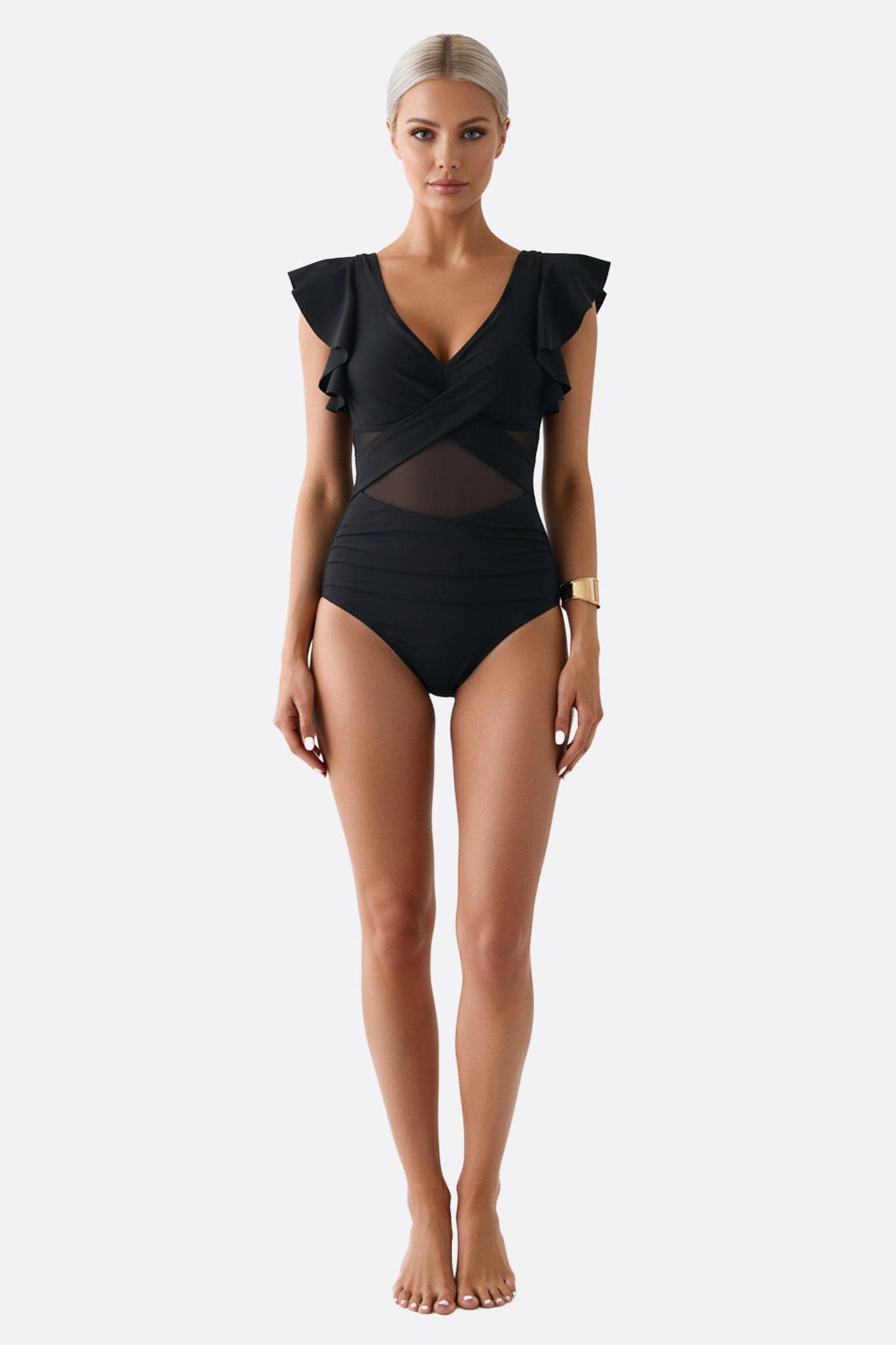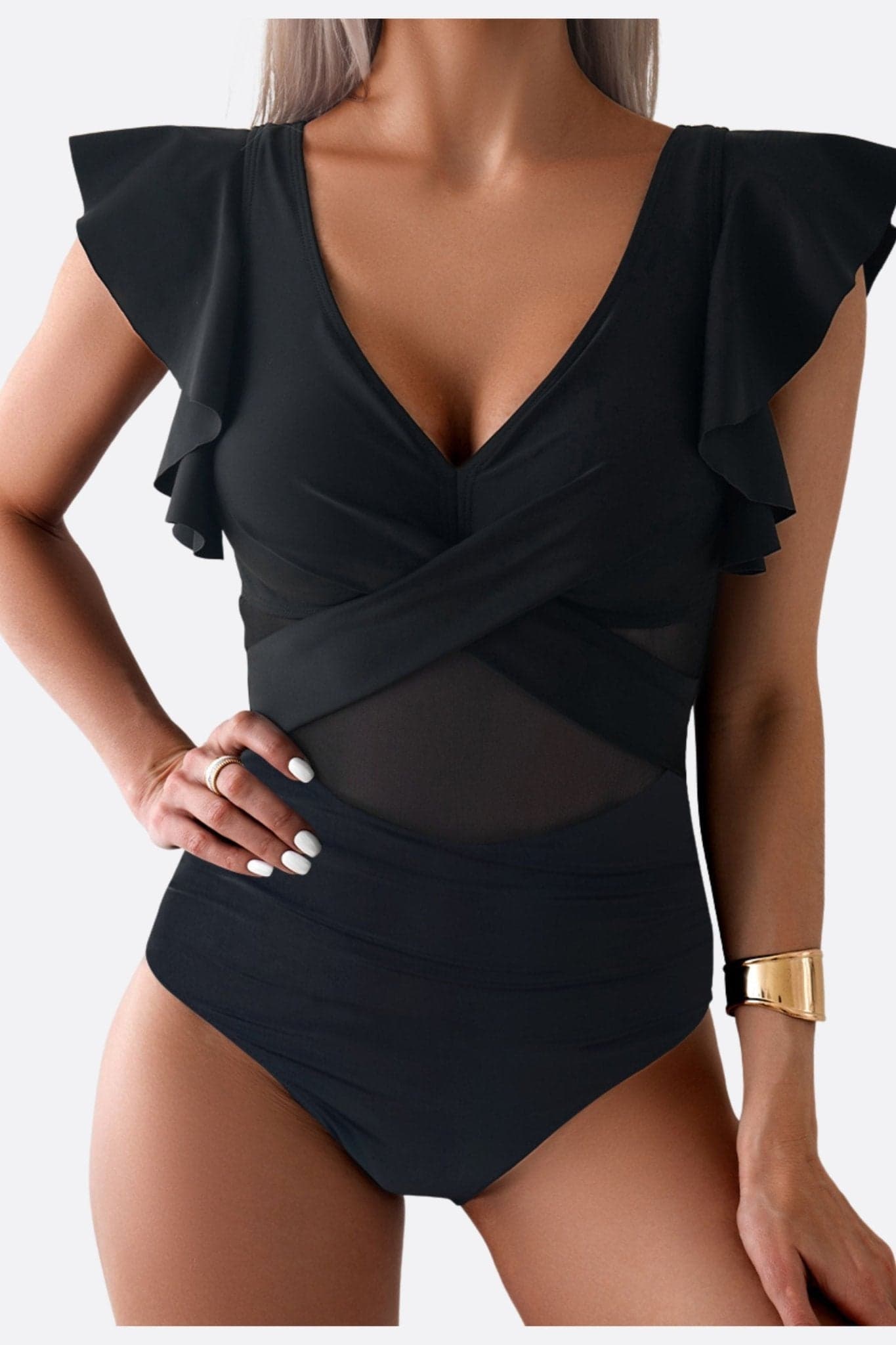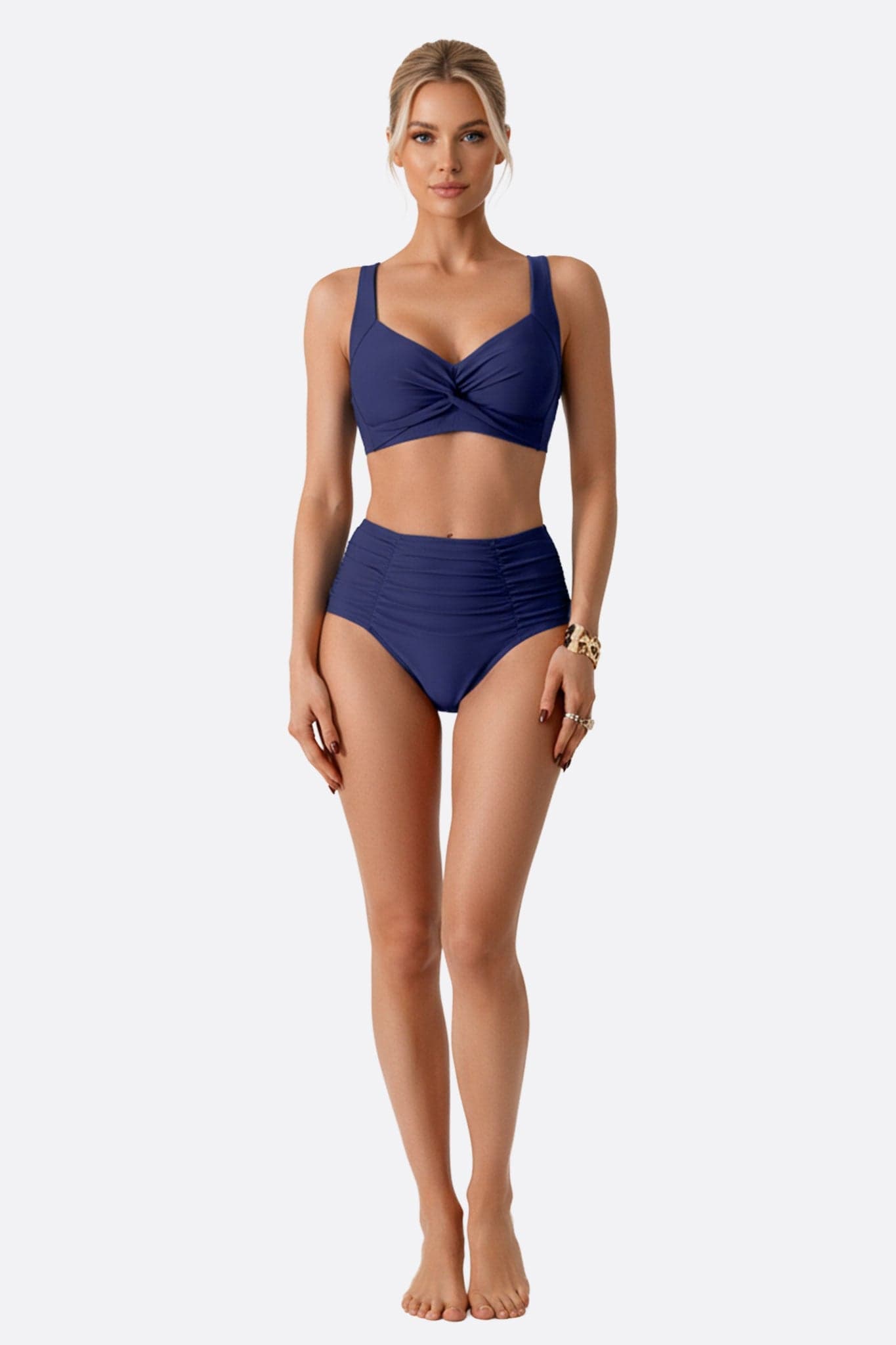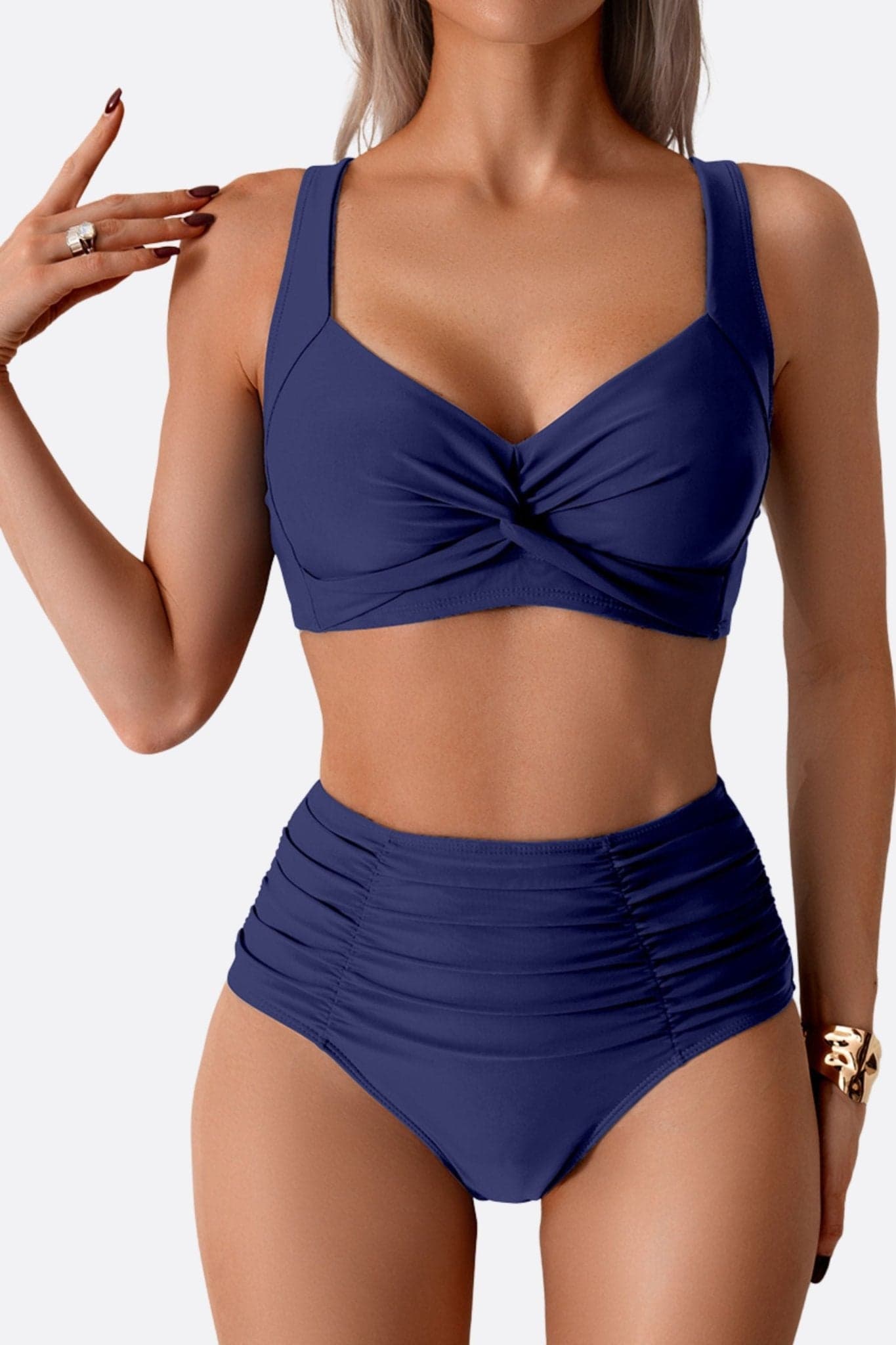
Women's swimsuit cut for a flat stomach
Are you looking for a women's swimsuit with a flat stomach cut capable of smoothing the front of the body without compressing, while giving that clear impression of longer legs and an elongated torso. The key point is not to “hide”: it is to direct the gaze, stabilize the material in the right place, and choose a construction that accompanies the volumes instead of opposing them.
In the fitting room, the difference often comes down to a few details: a seam placed 2 cm higher, a gather at the right angle, a neckline that opens up the line of the neck, or a waist that falls exactly on the thinnest part.
Below, I guide you cut by cut: those that truly “elongate,” why they work, and how to recognize them by touch and fitting.
One-piece cuts that elongate: targeted shaping, vertical seams, and necklines that open up
If your main goal is a flatter stomach effect with an elongated silhouette, the well-constructed one-piece remains the most reliable option. Here, the elongation comes from two levers: verticality (lines, seams, panels) and openness (neckline, back, leg cut). A good “flat stomach” one-piece should not feel like a straitjacket: it should hold by architecture rather than brute compression.
Princess seams (from shoulder to hip) or slightly darker side panels are your allies. Visually, they create a central corridor that slims and elongates. To the touch, look for a main material that is flexible but dense, and especially a shaping lining (power mesh) on the front panel: it should be firm, thin, and immediately return to place when pulled between the fingers.
The V-neckline is one of the most effective for “pulling” the torso upwards. It elongates the neck, clears the chest, and creates a continuous line down to the stomach. For the same reasons, a well-designed square neckline can also work: it structures the upper torso and gives an impression of a straighter posture. Conversely, a top that is too closed and horizontal tends to “compress” the line.
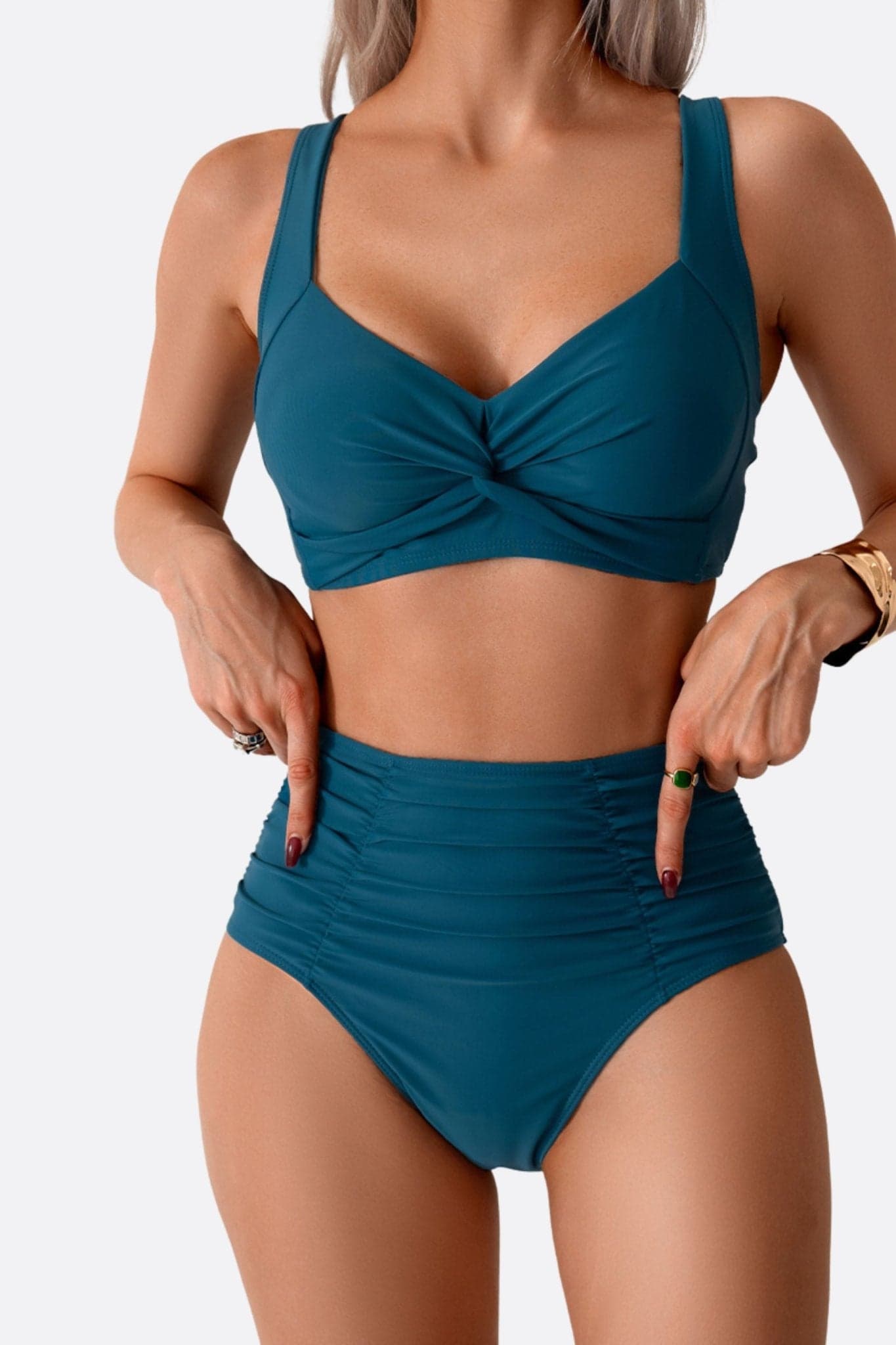
On the stomach side, diagonal drapes and placed gathers are valuable: they break the light on the abdomen and avoid the “smooth surface that reveals everything” effect. The rule: the gather should start from a point of tension (often on the side) and cross the stomach diagonally. A centered gather, too symmetrical, can instead draw the eye to the middle.
Finally, watch the leg cut. A slightly higher leg cut (without excess) immediately elongates. If you're unsure, do this test in the fitting room: from the side, check that the leg line does not cut the hip at its widest point. When the leg cut rises just enough, the leg appears longer and the stomach more “held” by the effect of balance.
One-piece swimsuits with a shaping effect are ideal for smoothing the stomach. Discover our sculpting one-piece swimsuits.
Flat stomach two-pieces: high waists, structured belts, and placements that elongate
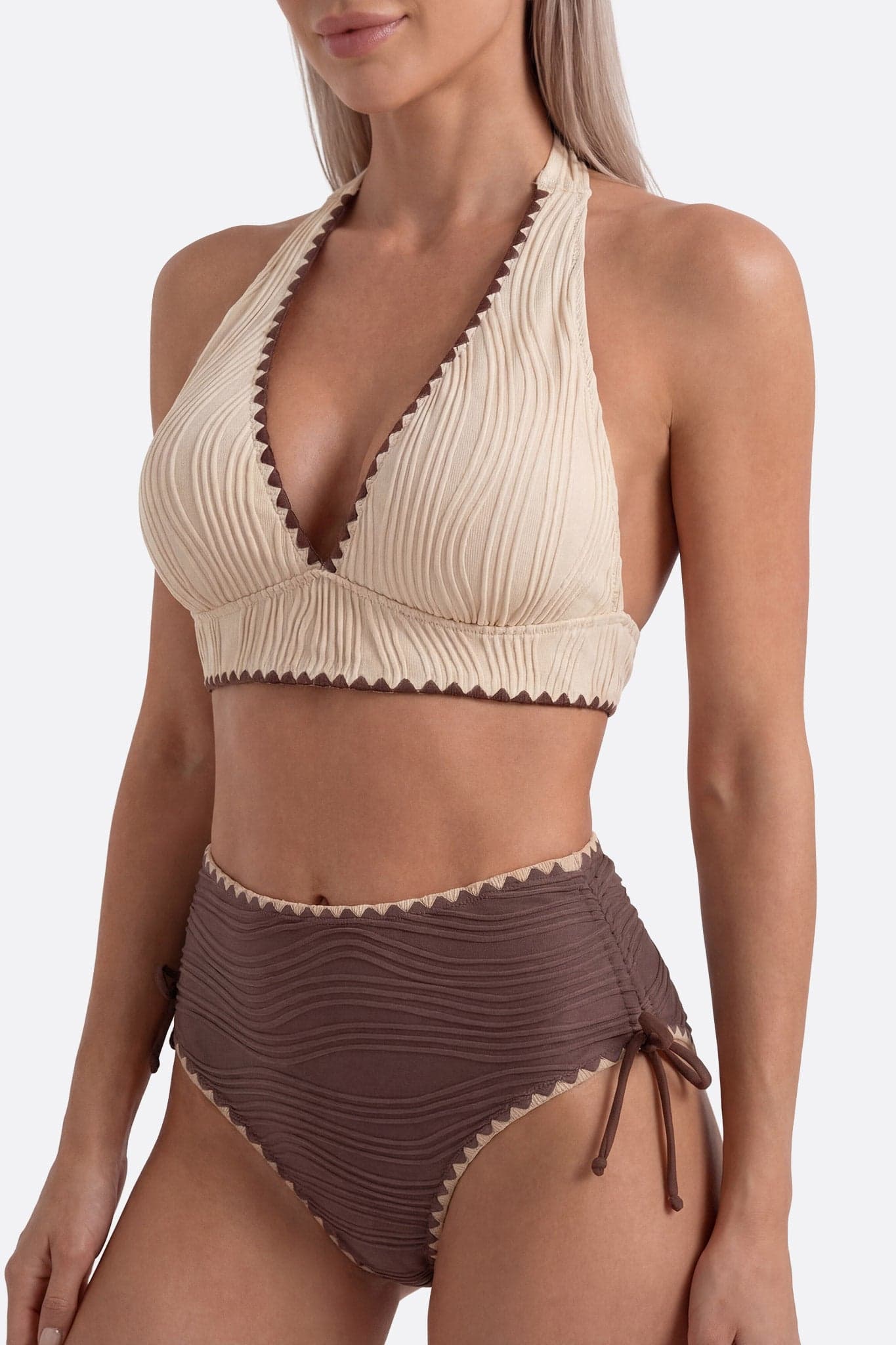
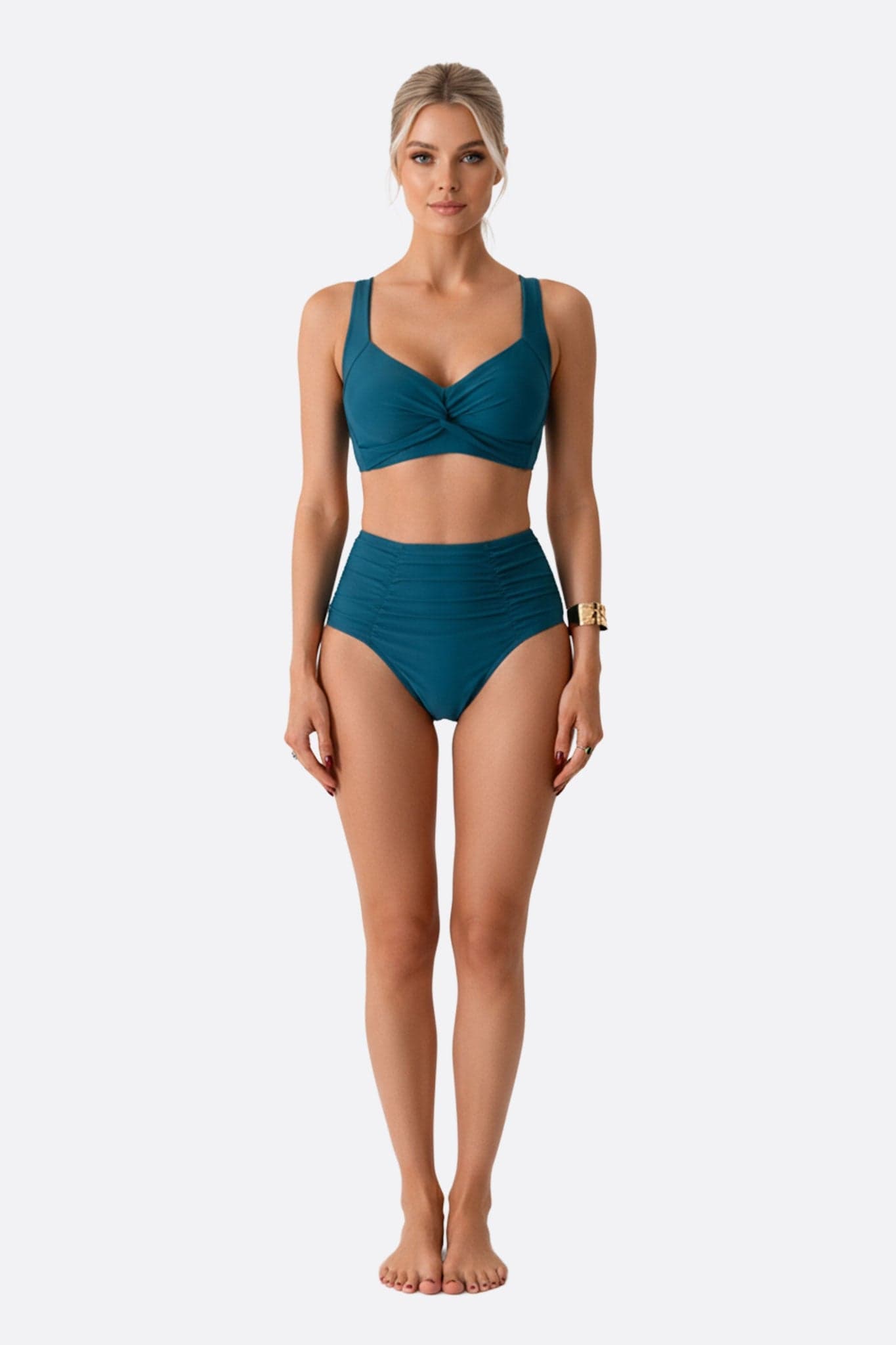
A two-piece can give a very convincing flat stomach effect provided you choose a high-waisted brief designed as a light corsetry piece. The elongation here comes from the waist position and how the belt “shapes” the middle of the body. A successful high waist should not rise randomly: it should reach the most stable area of the torso (often just above the navel) and stay in place when you walk.
The most flattering cut is often the high waist with a wide belt and a lined front panel. Look for a belt that does not roll: to the touch, it should be firmer than the rest, with controlled elasticity. If the belt is too soft, it wrinkles, marks, and creates the opposite effect of what is desired. A clean interior finish (flat elastic, regular stitching) is an indicator of fit.
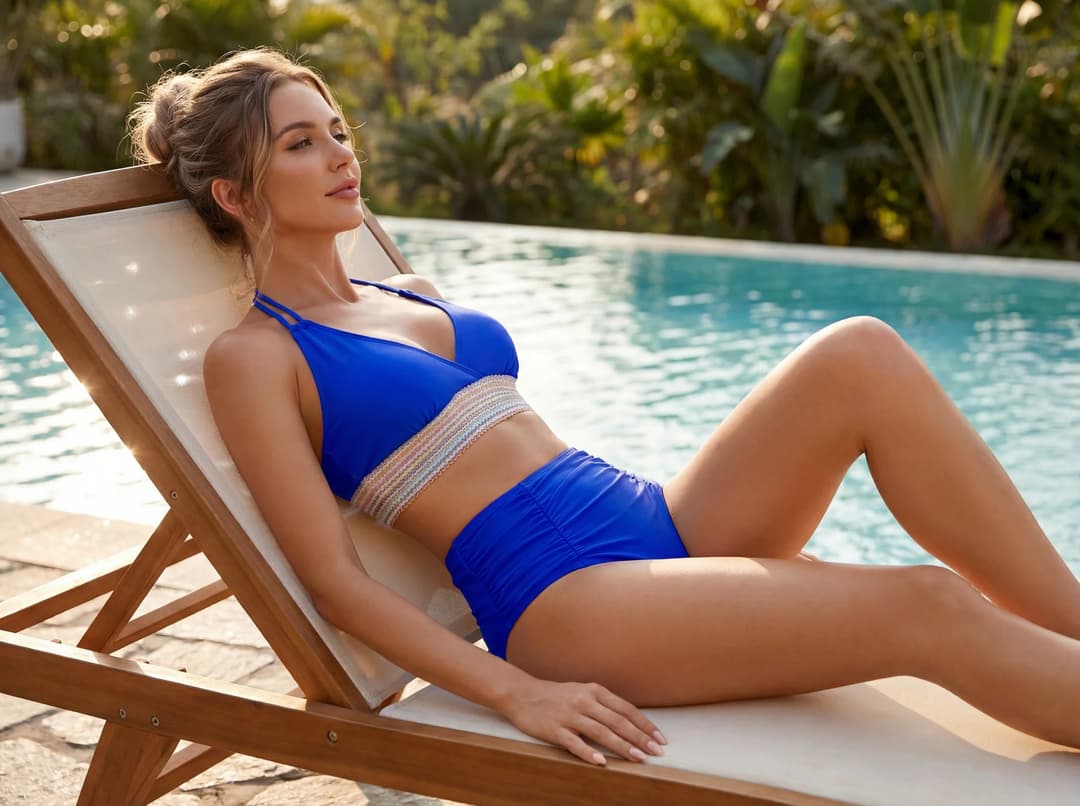
To elongate, favor a high-waisted brief with a slightly high-cut leg line rather than a very horizontal “shorty” cut. A cut that is too covering on the upper thigh cuts the leg. Conversely, a well-placed cut elongates, especially if the brief is well anchored on the hips and does not pull backward.
If you like visual effects, side panels (plain, more matte, or micro-textured) are excellent. They optically tighten the waist and leave the center more uniform. Vertical stripes or patterns placed in a “V” (soft chevrons, diagonals) accompany the body line. However, avoid large patterns centered on the stomach: they draw attention exactly where you seek discretion.
On the top side, elongation also plays a role. A well-fitted triangle or balconette opens up the upper bust. If you need support, choose adjustable straps and a firm underbust band: when the bust is stabilized, the torso appears longer and the whole look is neater. To refine your purchase intention and compare options (one-piece, two-piece, support, body types), you can consult the main guide women's swimsuit, then return here to decide on the flat stomach cut that elongates.
If you prefer the two-piece, opt for a high-waisted bikini that covers and supports the stomach.
Construction details that (really) create a flat stomach: linings, gathers, materials, finishes
Two swimsuits can display “flat stomach” and yet have nothing in common when worn. The difference lies in the internal construction and the quality of the material. To achieve a visually smoothed stomach, a thick material is not enough: you need a material that holds its shape, that does not whiten under tension, and that returns perfectly after movement.
The shaping lining (power mesh) is the first marker. It should be placed on the front panel (sometimes in the form of technical “tulle”) and ideally anchored in the side seams to prevent it from moving around. To the touch: it is a fine mesh, slightly dry, that offers a clear resistance. If you feel a simple “comfort” lining that is very soft, the flat stomach effect will be mostly cosmetic.
Gathers are a tool, not a decoration. The most effective are:
- Side gathers that pull diagonally: they sculpt without pointing to the center.
- Cross draping (wrap effect): it creates an oblique reading from bust to hips, very elongating.
- Knot or ring on the side (not in the middle): it shifts attention and structures the waist.
A drape that is too thick, however, can add volume. The ideal: a material sufficiently fluid to form fine folds, but dense enough not to cling.
The material: look for a swim jersey with good elastic recovery, with a smooth hand and a rather matte or discreet satin appearance. Materials that are too shiny catch the light and highlight the contours. Micro-textures (fine ribbing, light piqué) can be excellent: they diffuse light, thus they “blur” visually. Moreover, many models combine a blend of polyamide and elastane (e.g., 80/20) with a high-density power mesh lining to ensure opacity, chlorine resistance, and fit even when wet.
The finishes matter as much as the cut. An irregular seam, a twisting elastic, a too-thin edge: all this creates parasitic lines that shorten. When trying on, move: sit down, raise your arms, walk. A good flat stomach swimsuit stays in place, does not roll on the stomach, and does not “cut” the waist. If you feel localized pressure in the middle of the stomach, it is often a sign of a poorly positioned waist or too rigid elastic.
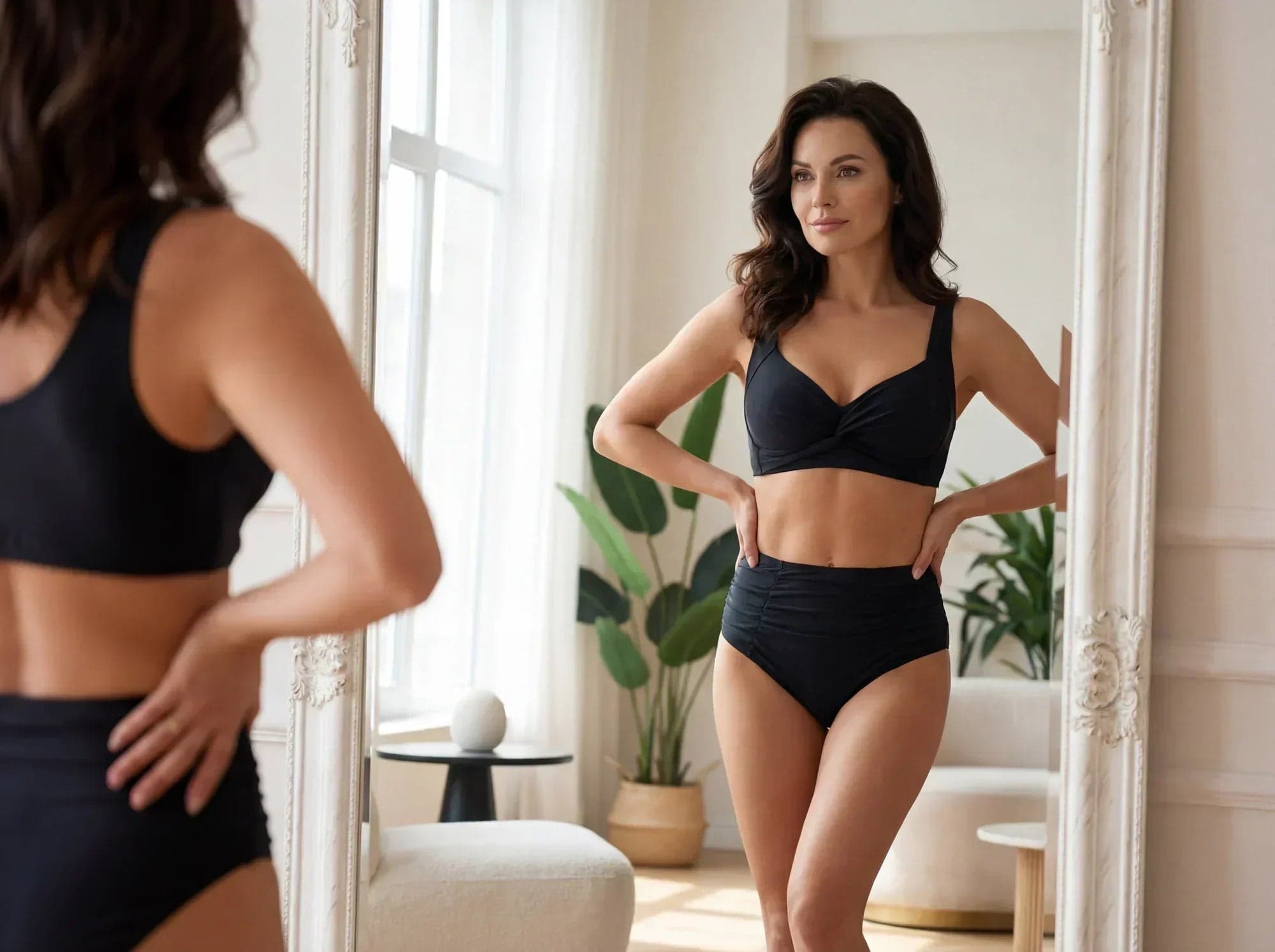
Black remains the most slimming color for a flat stomach. See our slimming black swimsuits.
Choosing the right cut in the fitting room: immediate markers, mistakes that shorten, adjustments that elongate
To validate a lengthening cut, you need to look at the swimsuit as a composition of lines. In the fitting room, don't rely solely on the front: observe front, profile, three-quarters, and especially in motion. Here are some simple and very concrete guidelines to decide quickly.
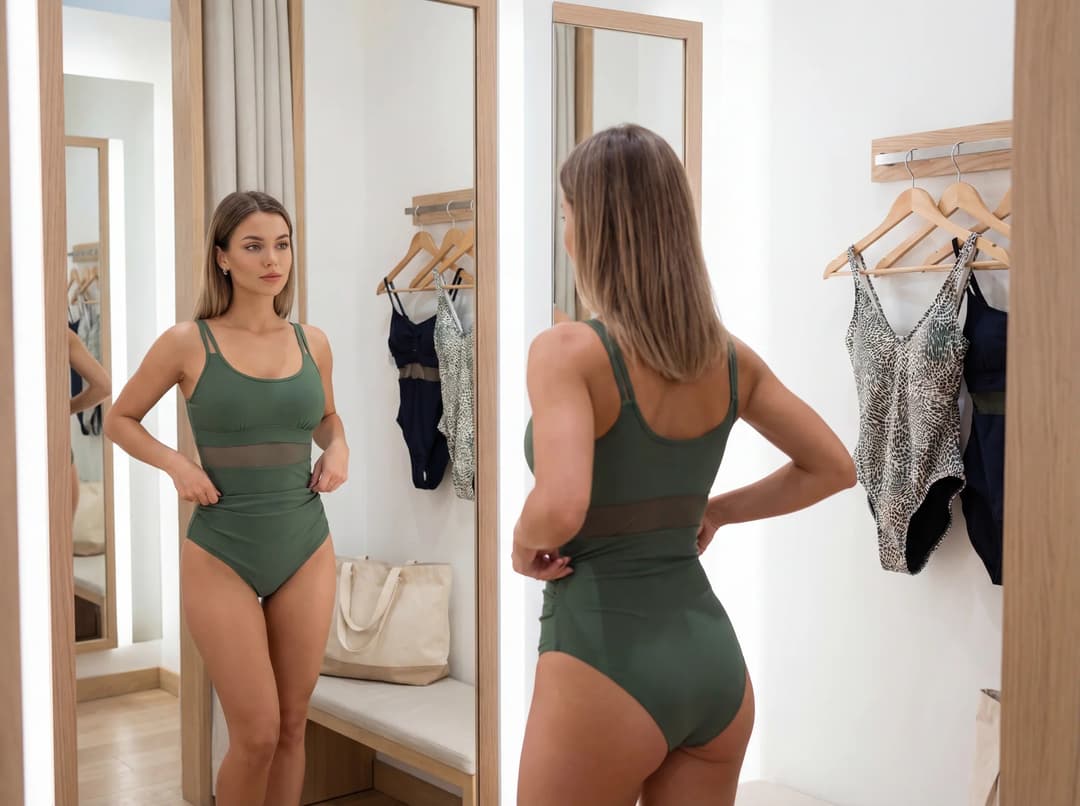
Guideline #1: the waist "falls" in the right place. On a high-waisted panty, the belt should sit on a stable area. If it goes too high, it shortens the torso and can create a fold under the chest. If it's too low, it cuts the belly at the roundest point. The ideal: a line that wraps and smooths, without creasing. If you see small horizontal waves on the belly, it's often a lack of support (material too thin) or a size that's too tight.
Guideline #2: the cutout lengthens or shortens. A cutout that's too low creates a wide horizontal line: the leg appears shorter. A slightly higher, clean cutout gives an effect of "leg starting from the hip." To check: from the front, the leg line should rise smoothly, without pulling forward (a sign that the size is too small) or gaping (a sign that the cut doesn't fit).
Guideline #3: the neckline creates verticality. A well-placed V elongates. A straight bandeau, if not perfectly proportioned, can compress. If you like the bandeau, compensate with a higher cutout or vertical panels on the body. The idea: reintroduce verticality elsewhere.
Guideline #4: beware of visual "cuts." Horizontal contrasts (highly contrasting belt, band at the navel level, large band pattern) segment the body and shorten it. Prefer lateral or diagonal contrasts. The same goes for ruffles: a ruffle placed on the belly adds volume and draws the eye. If you like a detail, place it rather on the shoulder, the neckline, or on one side.
Guideline #5: comfort should be "silent." A good flat-belly swimsuit is forgettable. If you need to readjust it every thirty seconds, the cut is not right, even if the mirror effect is flattering at the moment. The good test: take a deep breath. If the top lifts and the belly marks more, the tension is poorly distributed. Look for a piece that distributes support between the bust, waist, and hips, with a material that remains stable once wet.
Recommended fitting protocol: For a complete validation, test the swimsuit in different situations: standing, sitting, walking, with arms raised, and even once wet. These tests allow you to check that the belt doesn't roll, the lining stays in place, and the whole offers uniform support.
In summary: prioritize verticality (seams, panels), openness (V, square), stability (supportive lining, belt that doesn't roll) and a cutout that frees the leg.
It's this trio, line, material, placement, that gives the true lengthening effect, without compromising on style. Note, however, that the final effect depends on your body shape, the level of support, and the size chosen. For optimal results, make sure not to oversize or undersize to avoid marks and discomfort.
For a complete guide on choosing your swimsuit, consult Women's swimsuit: complete guide to make the right choice.
Discover our swimsuit collection (starting at 40€).
To go further, consult our size guide.
For a complete guide on choosing your swimsuit, consult Women's swimsuit: complete guide to make the right choice.
Discover our swimsuit collection (starting at 40€).
To go further, consult our size guide.

Article by Esther Arnaud
Published on 04/25/2026 at 19:20
About the author
What interests me above all is not the immediate trend, but the coherence of a wardrobe. I like to analyze why a piece works, how a material influences movement, and how a garment can accompany a woman over time, without ever imposing itself.
→ Learn more about Esther Arnaud