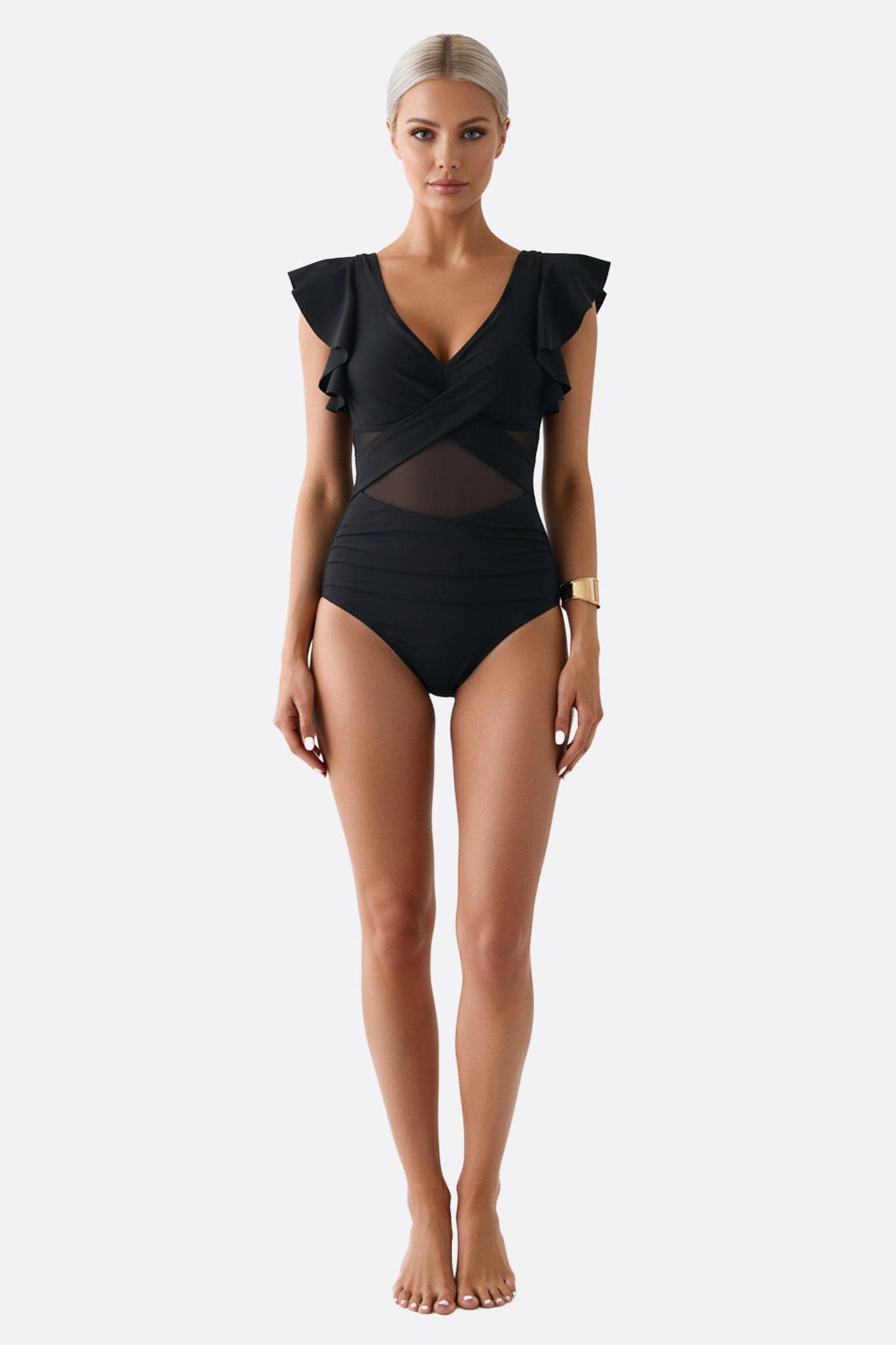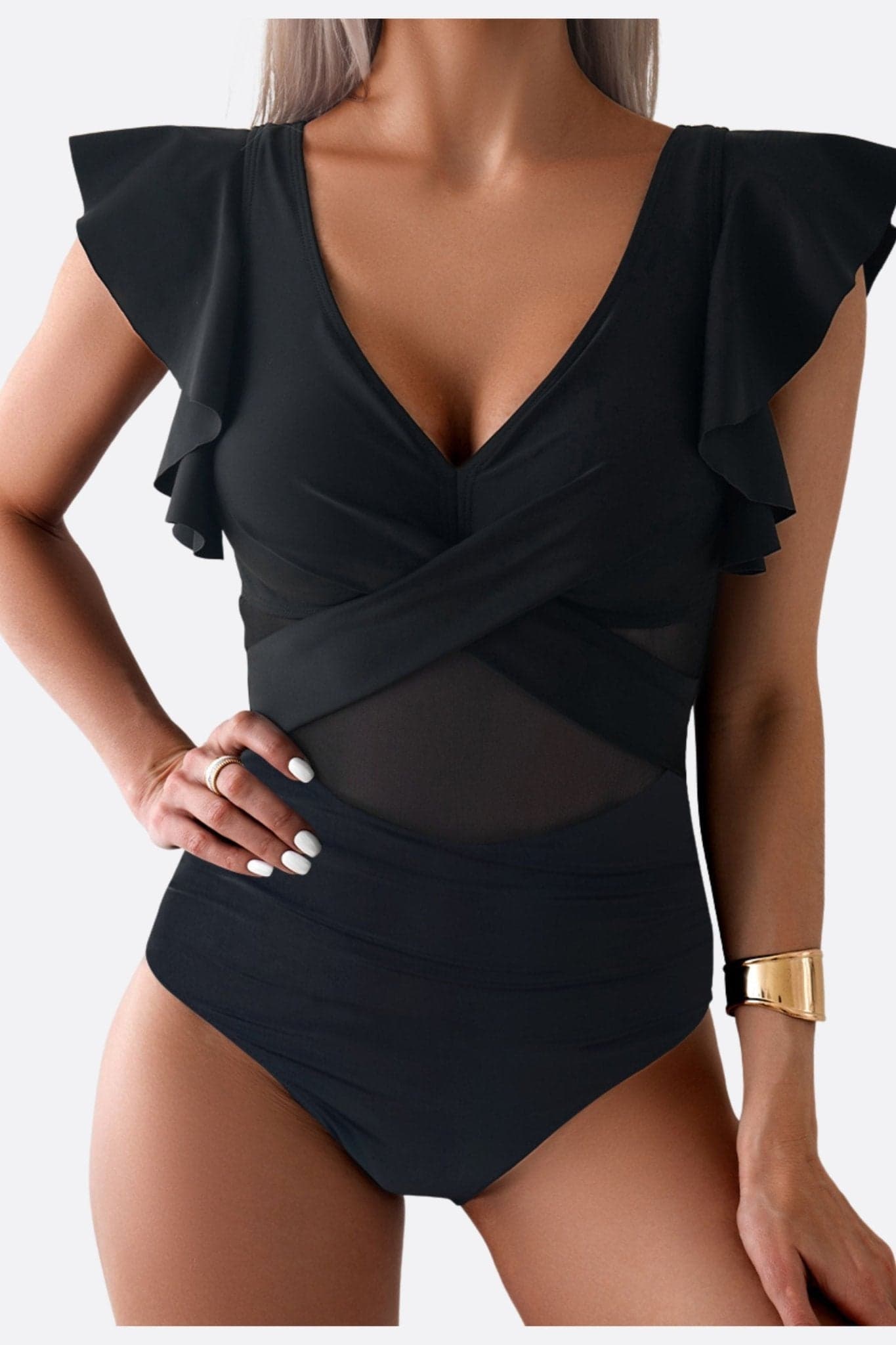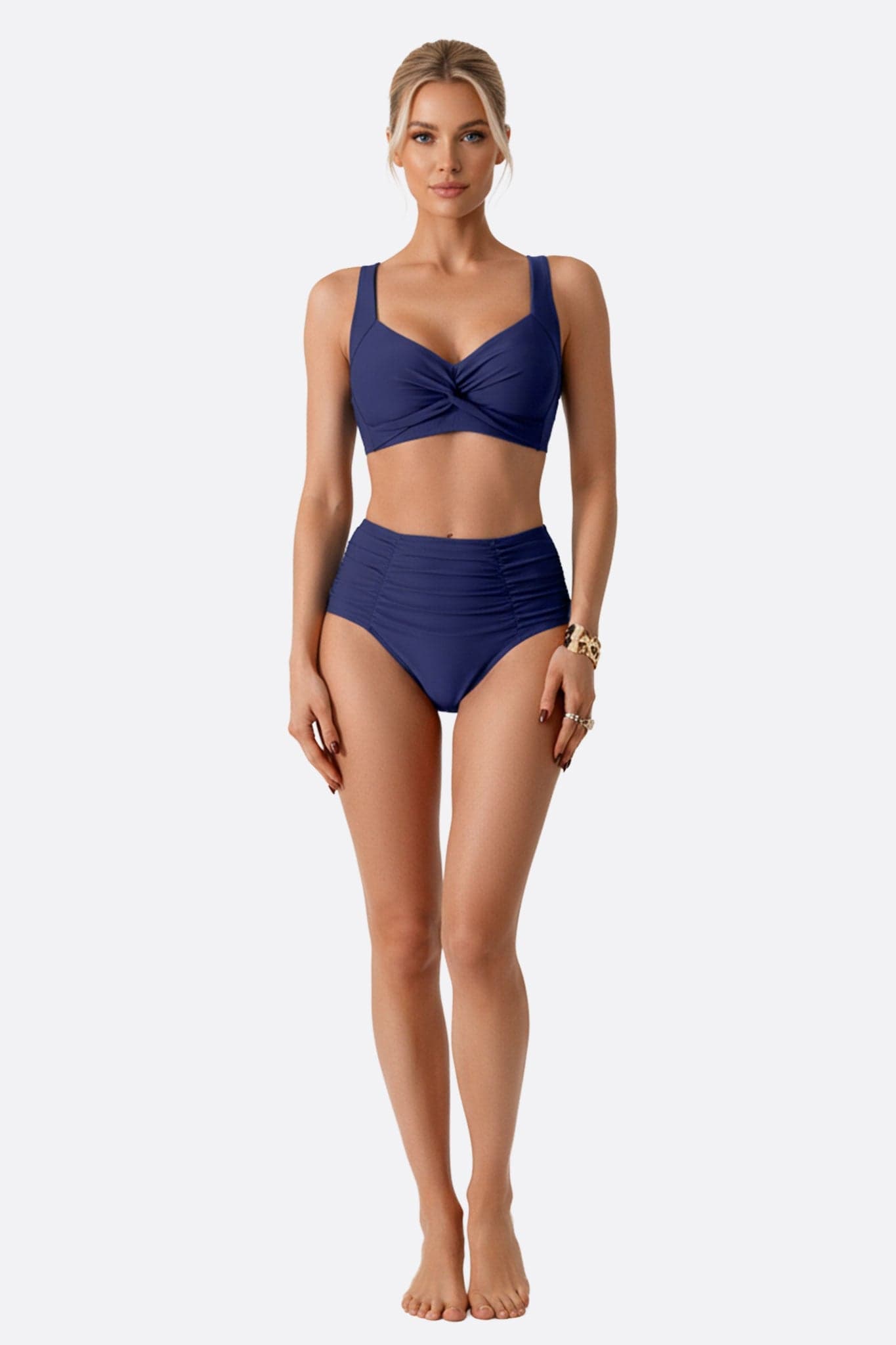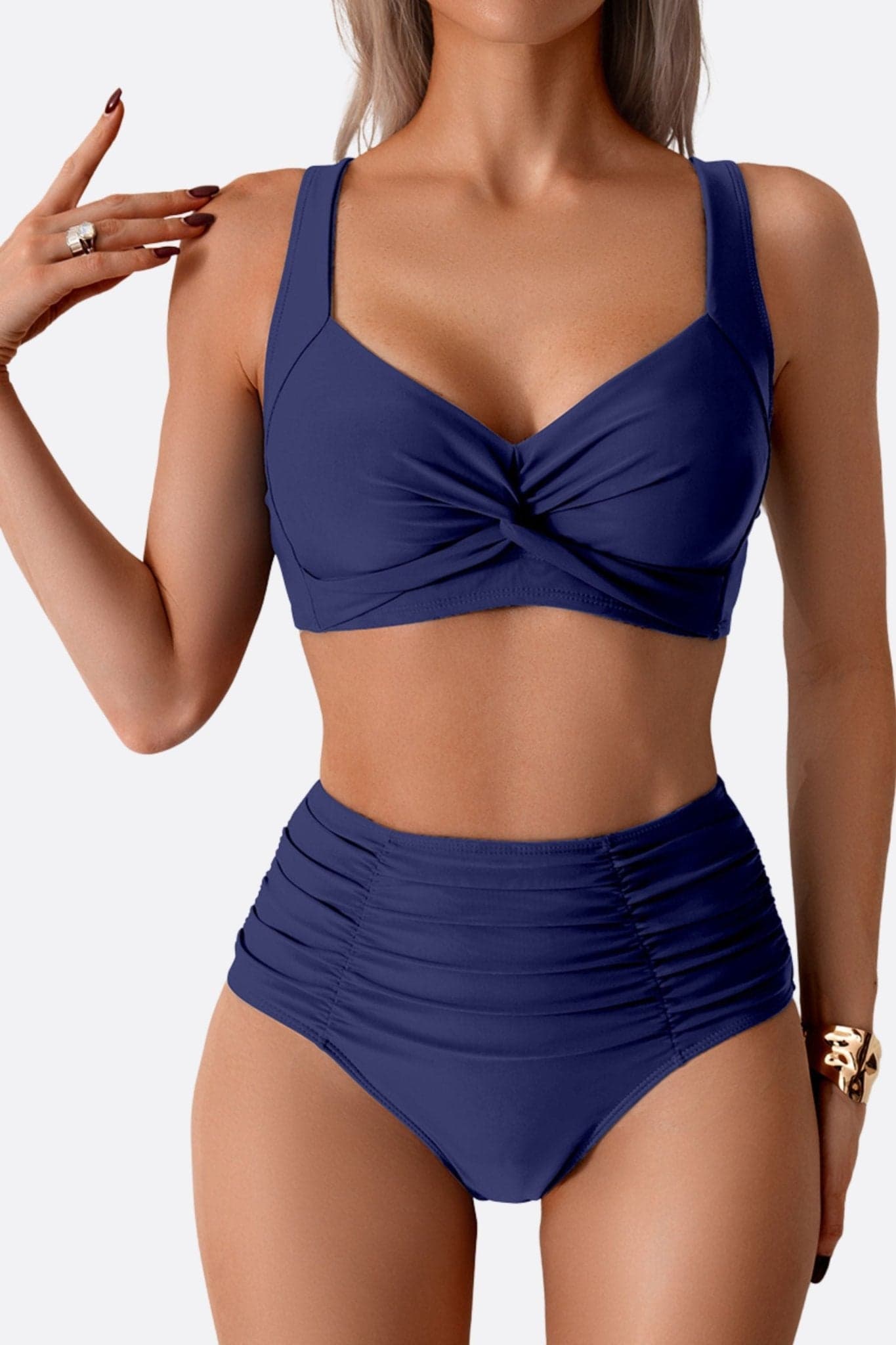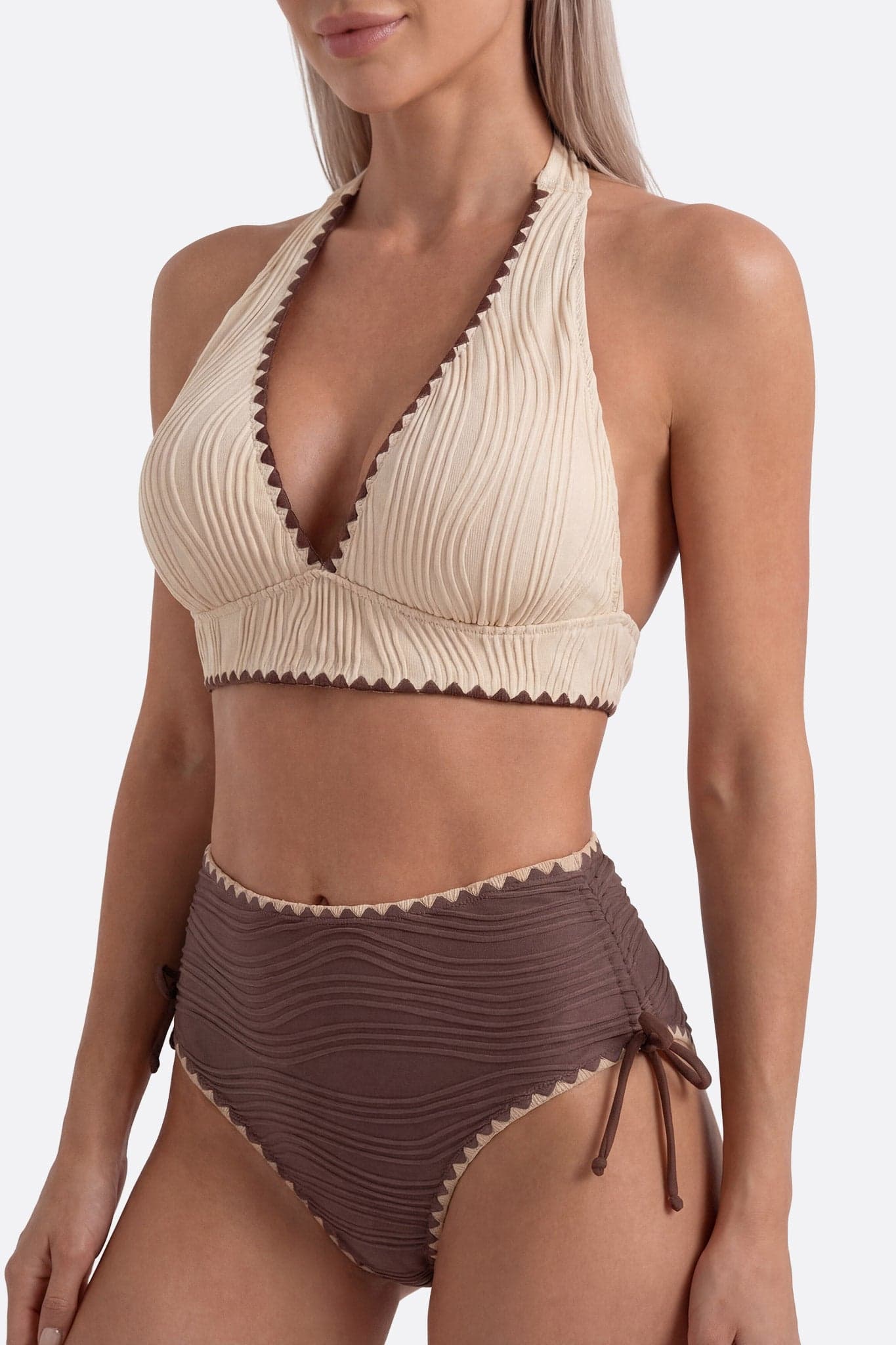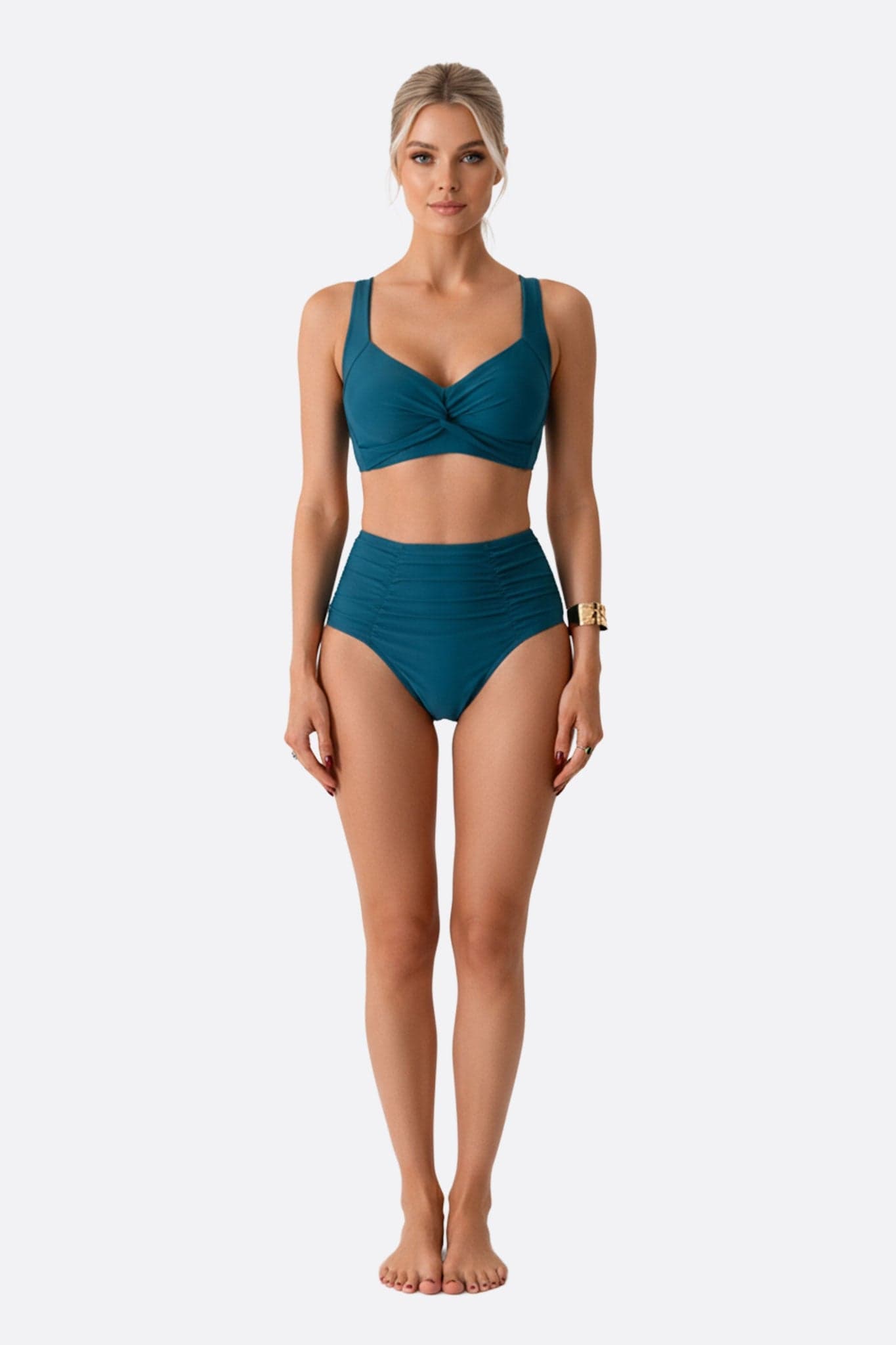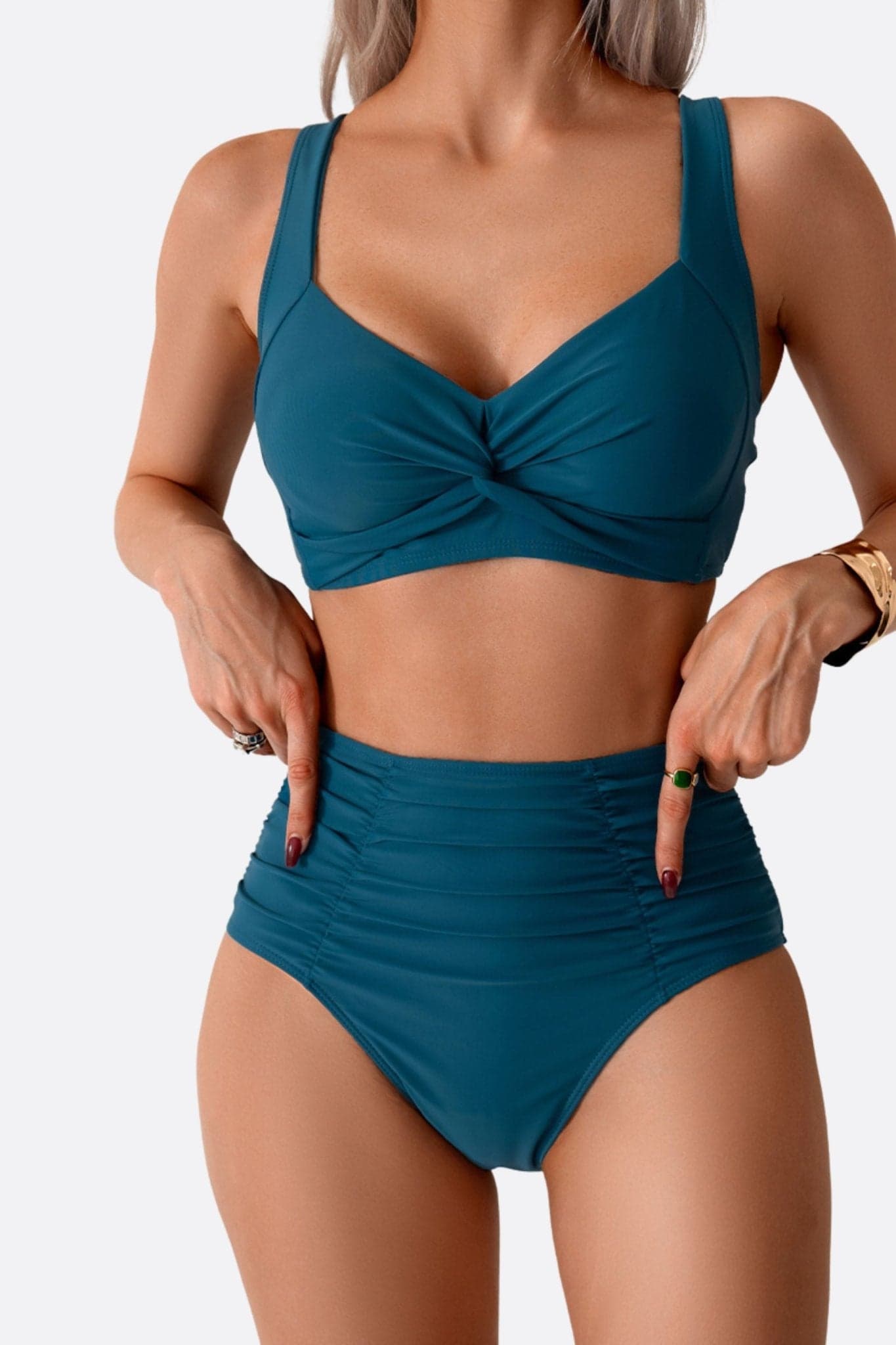
SPF fabric and UV protection: marketing myth or real protection in a women's swimsuit?
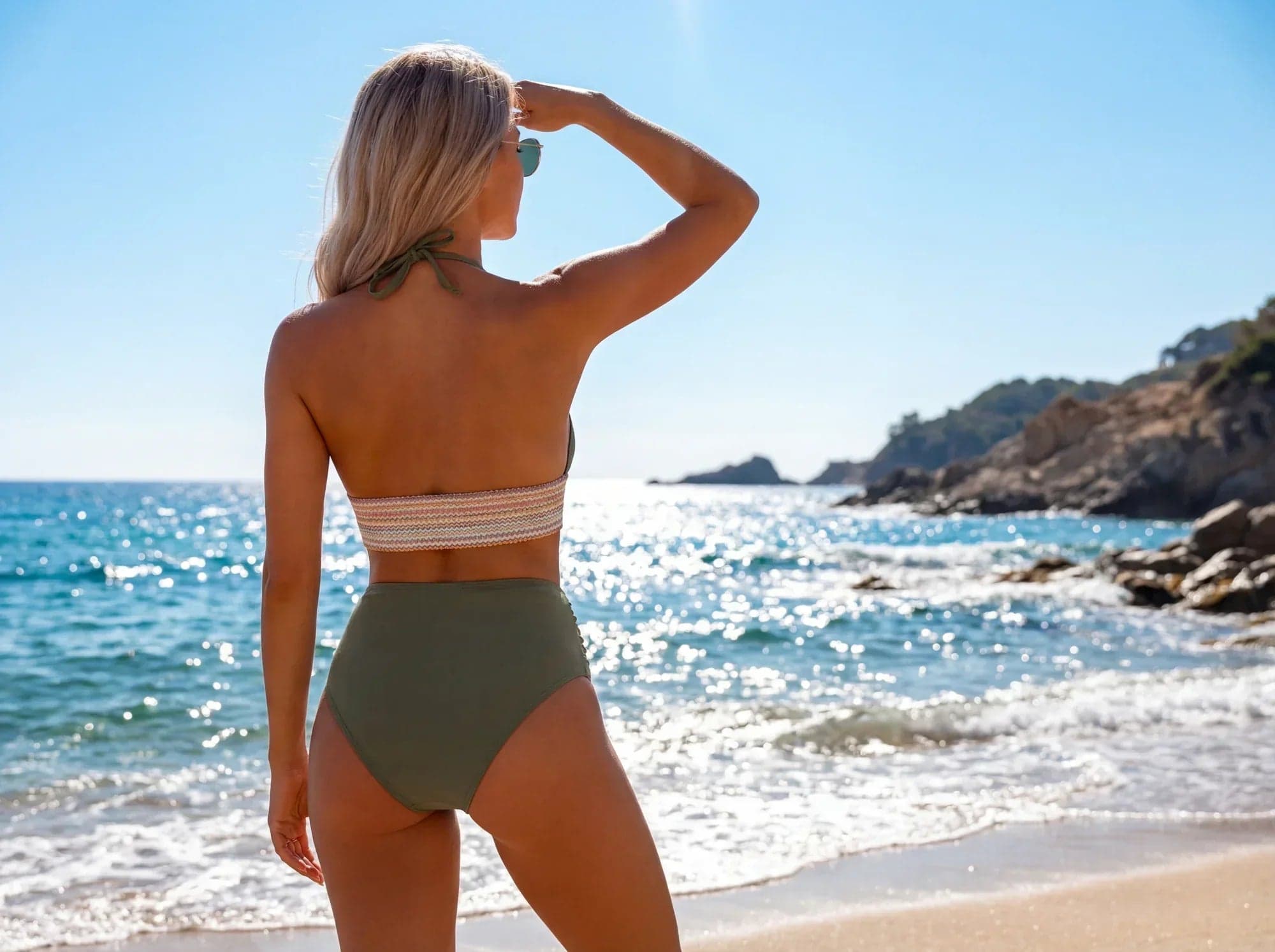
UPF, "textile SPF" and UV promises: what your women's swimsuit really blocks
You have already seen mentions of "SPF 50", "anti-UV" or "UV protection" on a label, and you wondered if your women's swimsuit could really act as a sun shield. The answer deserves more nuance than a yes/no, because the UV protection of a textile is not read like that of a cream: it is measured, it depends on the fabric construction, and it varies with use.
Sources and references: This information is based on international standards such as AS/NZS 4399, EN 13758-1, and EN 13758-2 – the latter specifying respectively the UV transmission for the fabric alone and the finished garment – as well as on recommendations from recognized organizations like the WHO and the Skin Cancer Foundation.
First clarification: in textiles, the reliable term is UPF (Ultraviolet Protection Factor), not SPF. UPF indicates how many UV rays pass through the fabric. A UPF 50 lets about 1/50 of the UV through (or ~2%). A UPF 30 lets through ~3.3%. The mentions "textile SPF" are often a marketing shortcut to talk about UPF, sometimes without standardized testing, sometimes with confusion maintained between skin protection (cosmetic) and textile barrier.
Next, an essential nuance: a fabric can be very covering and yet not very protective if it is openwork, thin, very stretched, or wet. Conversely, a dense, stable, well-dyed fabric can offer excellent UV barrier even if it appears light. Protection mainly depends on:
- The mesh density (tightness, weight, microfibers): the more compact it is, the fewer "windows" UV finds.
- The composition: polyamide/elastane and polyester/elastane can be very protective if the construction is dense; cotton or viscose, rarer in swimwear, protect less at the same thickness.
- The color and dye: deep and saturated shades absorb more UV; pastels and whites let more through.
- The finishes: some brands add UV absorbers in the fiber or as a finish. Effective, but variable over time.
Finally, one must accept a reality of use: the UV protection of a swimsuit is not an eternal figure. It changes with stretching, water, salt, chlorine, and the age of the fabric. If a label announces "UV protection", look for signs of seriousness: UPF 50+, mention of a standard (often AS/NZS 4399, EN 13758-1, or EN 13758-2 – the first measures the fabric taken alone, the second evaluates the complete garment), and a clear indication of the scope (fabric alone, garment in worn condition, etc.). Without this, the promise may be true... or simply decorative.
What increases the UPF of a women's swimsuit: material, mesh, color, lining
If you want to judge protection without getting lost in slogans, observe the fabric like an expert: in light, by touch, and in motion. A women's swimsuit that is protective is often recognized by a more "held" feel, a sharper drape, and a knit that does not open when stretched.
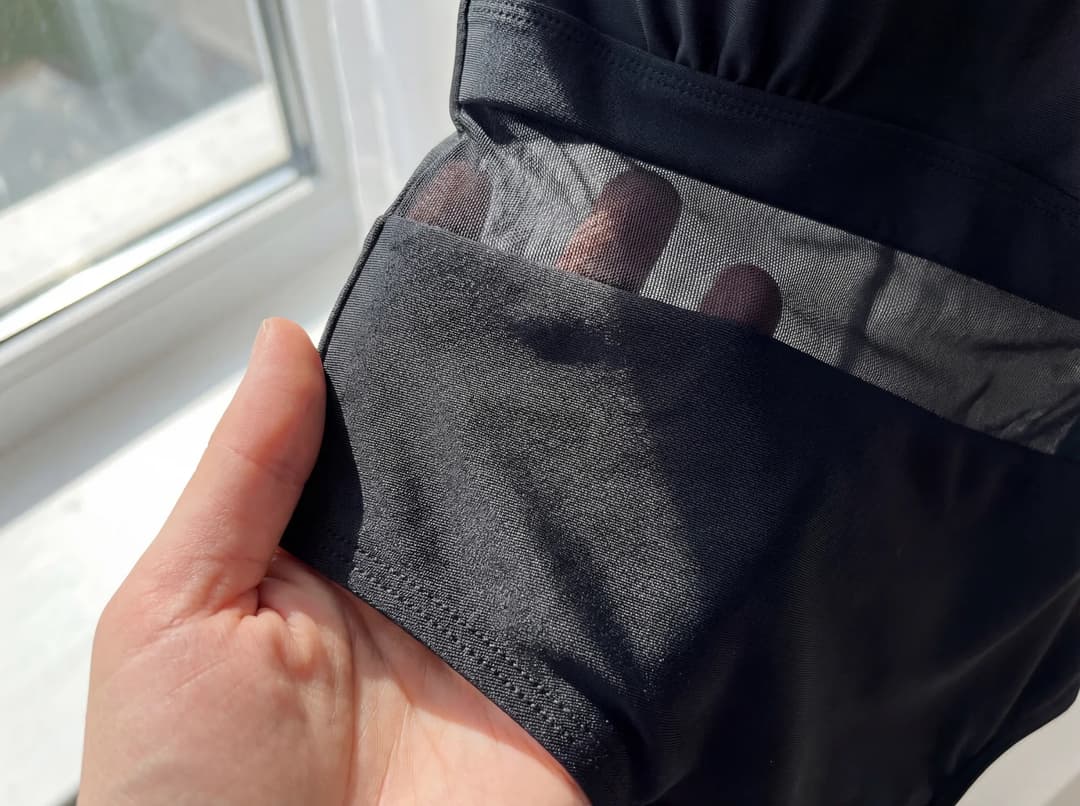
1) Textile construction: the real heart of the matter. Swimsuits are mostly made of knit (knitting): it's comfortable, stretchable, but the knit can open. The tighter the knit is (compact microfiber, fine and dense knitting), the higher the UPF rises. A very thin fabric, almost "veil-like," can be pleasant on the skin, but it sometimes lets more UV through, especially when stretched.
2) The role of elastane: ally... and risk factor. Elastane provides fit, but it also encourages stretching. However, stretching = enlarging the gaps. On a swimsuit that is too small, the knit opens, light passes through, and the actual UPF drops. Practical advice: if you hesitate between two sizes, choose the one that respects your body shape without excessive tension on the most exposed areas (shoulders, upper back, neckline if one-piece, hips if high-waisted bottom).
3) Color and prints: more technical than you think. Deep colors (black, navy, chocolate, burgundy) absorb more UV. Dense prints can also increase protection, not by magic, but because the pigment load and dye overlays reduce transmission. Conversely, a bright white or very light pastel, especially in thin fabric, can be significantly less protective.
4) Lining and cups: localized protection. A full or partial lining (front) increases density, thus UPF, but only on the lined area. Cups and reinforcements can improve protection at the chest level, while the back, often unlined, remains more dependent on the main knit. At the beach, it's often the upper back and shoulders that take the most: don't let all the protection rely on a lined front.
5) Material: polyester vs polyamide. Both can protect very well if the knitting is dense. Polyester often has excellent stability and good light resistance; polyamide is appreciated for its more "silky" feel and smoother hand. It's not the name of the fiber that makes the UPF, it's the combination of fiber + dye + density + use.
Wet, stretched, salty, chlorinated swimsuit: when UV protection degrades
The moment when you most need protection is also when the fabric is most tested: heated skin, vertical light, reflections on the water, and living fabric. A women's swimsuit can display a promising anti-UV feature on the hanger, then lose some of its effectiveness in real conditions. Understanding these mechanisms allows you to act without falling into paranoia.
1) Water changes the game, but not always as you might imagine. A wet fabric can sometimes let more UV through if the fiber flattens and the structure becomes more "translucent." On dense microfibers, the effect is less; on thin or light fabrics, the increase in transparency is more noticeable. Simple test: wet an area, stretch slightly, observe against the light. If the mesh becomes diaphanous, consider that the actual UPF is probably lower in use.
2) Stretching is the number one enemy. A swimsuit too tight on the straps, hips, or chest creates tension zones. It is precisely there that the mesh opens. To limit this phenomenon:
- opt for a cut that follows without compressing (adjustable straps, well-anchored back);
- avoid ultra-minimalist models if your goal is protection;
- choose a material with good recovery (it returns to place without stretching).
3) Chlorine, salt, UV: the trio that tires fibers. Chlorine attacks elastane, salt stiffens and can weaken, UV degrades dyes. Over time, the fabric loses elasticity, the mesh deforms, and protection can become less uniform. A swimsuit "rinsed quickly" and dried in the sun day after day ages faster: by hand, it becomes drier, less bouncy; visually, the color fades. These are concrete signals that the performance (including UPF) is no longer that of the first summer.
4) Anti-UV finishes are not always eternal. Some textiles integrate UV absorbers into the fiber (more durable), others apply a finish (potentially less durable). Without a technical sheet, it's impossible to decide. But you can adopt a rule of caution: if the swimsuit is your main shield (very fair skin, photosensitization, long exposure), choose a model whose protection is documented (UPF 50+ + standard), and renew it before it becomes visibly worn.
5) Maintenance that truly protects. Rinse with clear water as soon as possible, hand wash with mild soap, wring without twisting, dry in the shade. It's not a whim: it's the most effective routine to preserve elasticity, mesh density, and dye quality, thus the UV barrier.
Choosing a women's anti-UV swimsuit wisely without getting caught: labels, tests, details to demand
When the intention is clear, to limit UV exposure via textiles, the choice must be methodical. The classic trap: believing that a "SPF 50" print is enough. A women's swimsuit can be very attractive, very pleasant to the touch, and yet not very protective if the mention is not regulated. Here is a practical reading grid, in-store as well as online.
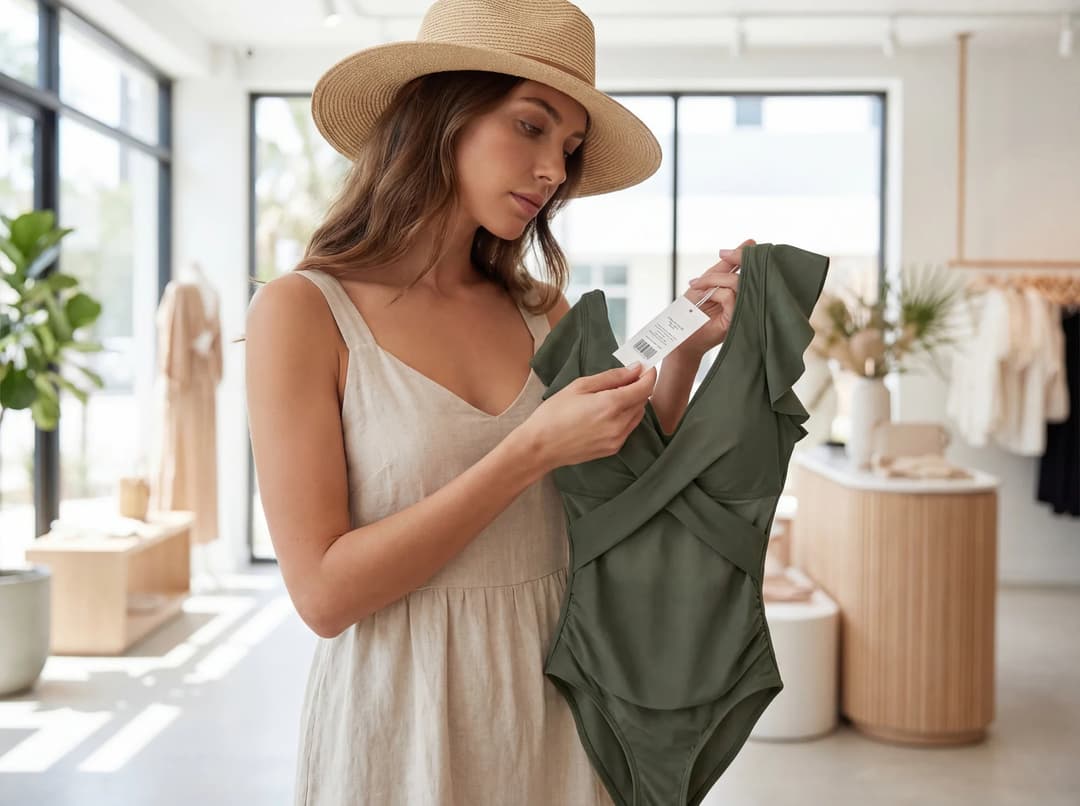
1) Look for "UPF" rather than "SPF". A serious label looks like: "UPF 50+" or "UV Protection UPF 50+", with reference to a test standard. Note that the EN 13758-1 standard concerns the fabric alone while EN 13758-2 applies to the finished garment. Among the most common standards:
- AS/NZS 4399 (Australia/New Zealand): a very commonly used historical reference.
- EN 13758-1: measures the UV transmission of the fabric tested in isolation.
- Sometimes EN 13758-2: for the evaluation of the complete garment.
Example of a compliant label: "UPF 50+ certified according to EN 13758-1". If nothing is mentioned (neither UPF nor standard), consider the promise unverifiable.
2) Examine the actual coverage. UPF only acts where there is fabric. A minimal triangle or a narrow band, even in UPF 50+, leaves a lot of skin exposed. If your goal is protection, opt for:
- a piece with a sufficiently high back,
- two pieces with a more enveloping bra,
- or even a rashguard/swim tee type top (when justified by use).
3) Favor density + color + lining. Without a technical sheet, combine clues: dense fabric (not very transparent against the light), medium to dark shade, lining at least on the front. A tight print on a dark background is often a good compromise if you don't want a dark solid color.
4) Pay attention to areas under tension. Ruching, very cut-out designs, and thin ties create areas of tension. This can be charming, but if you're looking for a stable UV barrier, prefer more structured cuts, more anchored straps, and a size that doesn't pull. UV protection is also a matter of patterning.
5) Distinguish "anti-UV" from "anti-transparency". A lined swimsuit can be opaque without being highly protective if the fabric is light and very thin, but in practice, opacity is a good indicator of density. Let's put it this way: opacity is a useful empirical test, but not a certification.
6) For an overall choice of cut, support, and style/use balance, you can rely on our main guide women's swimsuit (and return here to settle the specific question of UV protection).
True protection in everyday life: combining textile, use, and elegance
The best decision is rarely extreme. Yes, a women's swimsuit can offer real UV protection, sometimes excellent, but it does not replace a controlled exposure strategy. Elegance here is about accuracy: choosing a fabric that works for you, and adopting simple actions that prevent turning a promise into an illusion.
1) Consider the swimsuit as a "protected area," not armor. Even with UPF 50+, there remain the face, neck, neckline depending on the cut, hands, legs. The most effective consistency: protective fabric on the most exposed areas (shoulders, upper back, chest if you tan little), and cosmetic protection on uncovered areas. If you spend hours in the sun, add a light shirt, a dense pareo, or an anti-UV top when you're not in the water.
2) Adapt the cut to your exposure scenario.
If you swim for a long time: look for a stable material, a well-supported back, few thin ties, a color that does not fade quickly. If you are mostly on a deckchair: prioritize covering vertical areas (shoulders/upper chest), as they take the most. If you alternate between swimming and lounging: think about drying in the shade and quick rinses, which prolong the fabric's durability.
3) Do a "light diagnosis" before keeping a model. It's a concrete, very telling gesture: place the fabric (or swimsuit) in front of a window, stretch slightly. If you can clearly see your fingers through it, the density is low. Repeat the test by wetting a small area. It's not a UPF measure, but it's an intelligent filter to eliminate overly transparent fabrics, often less protective.
4) When should you be wary of marketing claims? Three signals: (a) "SPF" mention without UPF or standard, (b) complete absence of technical data when the promise is central, (c) very light and thin fabric sold as "total screen." In these cases, rely on the physics of the textile: density, dye, lining, resistance to stretching.
5) The real luxury: a swimsuit that remains reliable. A beautiful swimsuit is also a material that retains its bounce, a color that remains deep, a surface that stays smooth without pilling. This sensory quality, the fresh feel, the right elastic tension, the knit that does not loosen, is precisely what maintains consistent protection season after season. If your swimsuit becomes soft, dull, or irregular, it is not only "less pretty": it is probably less effective.
Disclaimer: These tips are for informational purposes and do not replace medical advice. The textile should not be considered a substitute for applying sunscreen on uncovered areas. In case of photosensitivity or special conditions, consult a healthcare professional.
Marketing myth? Sometimes, yes, when "textile SPF" is just a word. Real protection? Absolutely, when the fabric is dense, the cut well thought out, and the performance documented. The decisive point is here: the UV protection of a swimsuit is built, in the knit, the dye, the fit, and the maintenance, much more than on a label.
For a complete guide on choosing your swimsuit, consult Women's swimsuit: complete guide to make the right choice.
Discover our swimsuit collection (starting at €40).
To go further, consult the Materials Observatory.
For a complete guide on choosing your swimsuit, consult Women's swimsuit: complete guide to make the right choice.
Discover our swimsuit collection (starting at €40).
To go further, consult the Materials Observatory.

Article by Esther Arnaud
Published on 05/26/2026 at 13:46
About the author
What interests me above all is not the immediate trend, but the coherence of a wardrobe. I like to analyze why a piece works, how a material influences movement, and how a garment can accompany a woman over time, without ever imposing itself.
→ Learn more about Esther ArnaudFREQUENTLY ASKED QUESTIONS
What is the term 'UPF' and how does it relate to the UV protection of my swimsuit?
The term 'UPF', or 'Ultraviolet Protection Factor', refers to the measure of protection a fabric offers against UV rays. Unlike the SPF of sunscreens, which indicates the exposure time before sunburn, UPF quantifies the percentage of UV rays blocked by the fabric. A swimsuit with a high UPF offers better protection, but it is essential to consider the construction and condition of the fabric.
Are the 'anti-UV' labels on my swimsuit reliable?
The 'anti-UV' labels can be misleading if they are not accompanied by UPF values. To ensure effective protection, it is preferable to check that the swimsuit complies with international standards, such as AS/NZS 4399, which certify the fabric's ability to block UV rays. This offers a stronger guarantee of the promised protection.
Does the UV protection of a swimsuit vary depending on its use?
Yes, the UV protection of a swimsuit can vary depending on its use. For example, prolonged exposure to water, friction, or stretching of the fabric can decrease its effectiveness in blocking UV rays. It is therefore recommended to properly maintain your swimsuit and not rely solely on its initial protection, especially after multiple uses.
How should I choose a swimsuit for optimal UV protection?
For optimal UV protection, it is advisable to choose a swimsuit with a high UPF fabric, preferably over 50. Also check the density and weave of the fabric, as a thicker or tightly woven swimsuit generally offers better protection. Finally, opt for styles that cover more skin to reduce direct sun exposure.
Can a swimsuit replace sunscreen?
No, a swimsuit, even with UV protection, does not replace the application of sunscreen. Fabrics do not block 100% of UV rays, and exposed skin areas can still be vulnerable. It is therefore recommended to combine wearing protective clothing with sunscreen for complete protection, especially during prolonged sun exposure.