Chic beach summer dress for women: between lightness and beach elegance
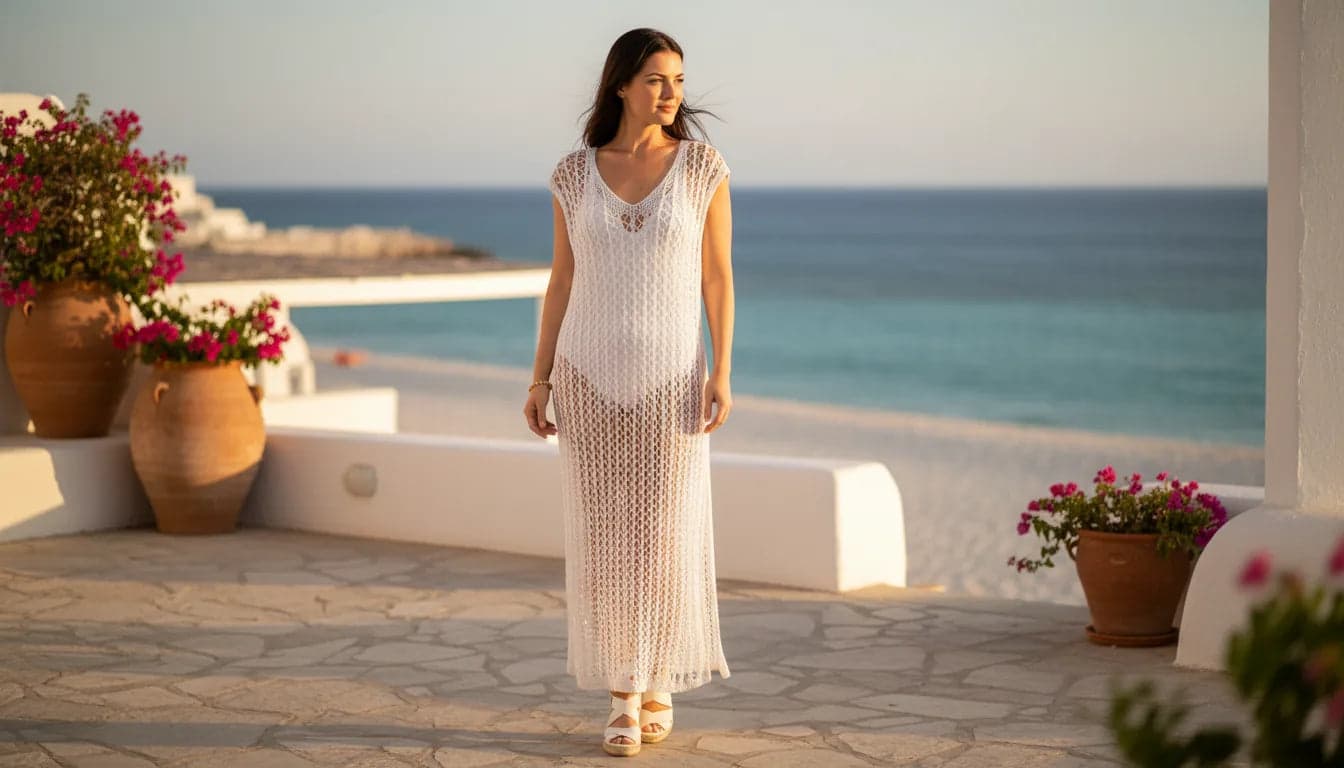
Chic beachwear is not a contradiction. It is a requirement of material and cut: a dress that withstands salt, wind, and sun without deforming, and remains presentable from the sea bath to the terrace dinner. Between the shapeless pareo and the overly dressed-up dress, there is a precise territory.
This guide defines the concrete criteria of a chic women's summer beach dress: durable materials, versatile cuts, and colors that last.
The chic beach dress: between functional cover-up and true elegant piece
The fundamental distinction lies in the intention of the cut. A purely functional dress prioritizes quick donning and drying, often at the expense of the silhouette. A chic beach piece, designed to be worn from towel to table, has a discernible structure: darts at the waist, fitted armholes, or a form-fitting bodice. This light architecture, often in tightly woven linen or cotton poplin, maintains a discreet elegance even after exposure to sea air, avoiding the "shapeless sack" effect.
The choice of material is decisive for this versatility. Avoid overly thin fabrics that, once wet, cling to the body or reveal what's underneath. Favor natural fibers with a dense weave like a linen-viscose or cotton-linen, which absorb moisture without deforming and dry while keeping their shape. Their resistance to salt and sand, simply shaken off, is incomparable. These basics are further explored in our guide on Summer dress for women: choose a light, flowing, and comfortable dress.
REAL SITUATION
From the beach to the restaurant
The dress comes out of the suitcase 30 seconds after landing. No visible crease. On a hanger in the bathroom in the evening, everything is erased by morning. This behavior is not due to luck: it is entirely determined by the choice of material at the time of purchase.
The dress comes out of the suitcase 30 seconds after landing. No visible crease. On a hanger in the bathroom in the evening, everything is erased by morning. This behavior is not due to luck: it is entirely determined by the choice of material at the time of purchase.
The dress comes out of the suitcase 30 seconds after landing. No visible crease. On a hanger in the bathroom in the evening, everything is erased by morning. This behavior is not due to luck: it is entirely determined by the choice of material at the time of purchase.
The dress comes out of the suitcase 30 seconds after landing. No visible crease. On a hanger in the bathroom in the evening, everything is erased by morning. This behavior is not due to luck: it is entirely determined by the choice of material at the time of purchase.
Length and movement complete the chic equation. Midi or maxi models offer this poised and graceful look. A slightly flared skirt or a straight sheath in cotton crepe provides the necessary ease without falling into negligence. The goal is a dress that follows you in all your movements, from swimming to aperitif, without ever requiring a change, thanks to a high-end practicality intrinsic to its design.
Materials that resist salt, sand, and chlorine without losing their allure
The choice of material is decisive for a beach dress that combines elegance and durability. Favor voile cotton or linen, two natural fibers remarkably resistant to the assaults of salt and sand. Their great advantage is absolute practicality: machine washable at 40°C, they dry quickly and retain their shape. An internal study shows that high-quality cotton (80%+) withstands more than 50 washes in saltwater without notable alteration of color or fabric.
Viscose, although fluid and pleasant, requires more caution. Its repeated contact with seawater can lead to slight shrinkage and weakening of the fibers. Linen, on the other hand, although very resistant, tends to wrinkle more once wet, an aspect to incorporate into its style. The idea is to opt for materials that live with you, without constraint.
OUR SELECTIONS
Navy blue shirt dress
Discover →
Fluid blue shirt dress
Discover →
Camel beige shirt dress
Discover →
Some materials are absolutely to be avoided for beach use. Silk is the most fragile: seawater irreparably degrades sericin, the natural protein that gives it its shine and strength. Also avoid textures like velvet or delicate lace that are not lined, as they trap sand and are difficult to wash.
Our editorial recommendation is clear: for a chic and durable beach wardrobe, select dresses in natural materials or technical blends designed to be machine washable at 30-40°C. This practicality ensures perfect hygiene after each exposure to salt and sun, and guarantees the longevity of your favorite piece.
Chic cuts for the beach: fluid maxi, structured mini, or long tunic
The flowy maxi dress embodies seaside elegance. Opt for a voile cotton or a light muslin (about 80 g/m²) for an airy silhouette that sways with the wind. This length offers optimal sun protection for the legs and proves perfectly versatile, from the beach to a seaside dinner. Its fluidity prevents the fabric from sticking to the skin, even in high heat.
For a more dynamic style, the structured mini dress in poplin cotton (about 120 g/m²) is ideal. Its slightly more substantial weight gives it an impeccable hold, while its short cut facilitates movement and spontaneous swimming. It is the perfect choice for active days, combining practicality with a neat look that requires no ironing after a dip in the water.
The long tunic in batiste linen (about 100 g/m²) is the ultimate cover-up piece. This breathable and lightweight material covers without weighing down and quickly absorbs moisture, making it perfect to wear over a swimsuit. It offers adjustable protection against the sun and wind while maintaining a relaxed elegance typical of vacations.
The choice of cut is closely linked to the weight of the material. A maxi length requires a fabric of less than 100 g/m² to avoid a heavy effect and ensure optimal comfort under the sun. Discover how these silhouettes are embodied in our selection of beach dresses and beachwear.
Colors and prints for a chic beach dress: what holds up in the wash
The seaside palette revolves around two axes. The optical white remains a delicate choice, as it frankly reveals the translucency of light materials, requiring a controlled cut or weight. Conversely, the ecrus and sands offer a more forgiving alternative, enhancing the tan while masking the micro-impacts of the marine environment, such as salt or sand.
The choice of print defines the character of the dress. Botanical patterns, flowers or foliage, bring an organic and fluid dimension, often perceived as more timeless. Geometric prints, straight lines or circles, have a more structuring and graphic effect, potentially sculpting the silhouette visually.
MYTH VS REALITY
| Common belief | Reality |
|---|---|
| ✘ Beach dress = cheap dress | ✓ The best beach dresses are in premium voile cotton or batiste linen |
| ✘ White on the beach = gets dirty | ✓ White is the freshest and easiest color to maintain by the sea |
| ✘ Long dress = too hot | ✓ A maxi in fine voile cotton protects from the sun while staying cooler than a short dress |
| ✘ Transparency is a flaw | ✓ Over a swimsuit, the slight transparency of a voile cotton is precisely what makes it elegant |
The summer essentials of the season.
The color fastness against water is crucial. For cellulosic fibers like cotton or linen, reactive dyes offer good durability. For silk or nylon, acid dyes are common but less resistant to chlorine, risking fading. The technical advice is simple: rinse the dress immediately with fresh water after a swim in the pool to preserve the brightness of the colors.
From the beach to the restaurant: how to transform your beach dress into an evening outfit
The beach-to-evening transition requires a precise method for lightweight dresses. After swimming, immediately rinse the dress in cold fresh water for 3 minutes to remove salt and sand. Drain without wringing, then hang it on a hanger in the shade or in moderate sun for 30 to 45 minutes. This quick step prevents deep wrinkles and preserves the cut.
The stylistic transformation relies on strategic accessories. Replace flat sandals with heeled mules for an elongated silhouette. The key element is the addition of a Misciano silk scarf tied at the waist, which redefines the silhouette and brings a luxurious texture.
TO PAIR WITH
The summer essentials of the season.
To complete your beach look.
The summer essentials of the season.
Success depends on the choice of material. Favor batiste linen (lightweight, 110-130 g/m²) which, although wrinkled, regains its shape, or viscose crepe for its better wrinkle resistance. Absolutely avoid absorbent materials like terry cotton or synthetic terry fabric, which dry slowly and maintain a heavy and informal appearance.
Maryna Svistunova leads the editorial line of Misciano with a keen eye on trends and know-how. She translates the universe of the house into useful and precise narratives.
Maryna Svistunova leads the editorial line of Misciano with a keen eye on trends and know-how. She translates the universe of the house into useful and precise narratives.
The summer essentials of the season.
Maryna Svistunova leads the editorial line of Misciano with a keen eye on trends and know-how. She translates the universe of the house into useful and precise narratives.
Opt for technical fabrics like lightweight polyester, bamboo viscose, or blended linen, which dry quickly and resist the corrosive effects of salt. These materials retain their shape and color despite repeated exposure to seawater.
Shirt dresses or wrap models with an adjustable belt are ideal. Their structured yet fluid cut allows for an easy transition from a casual look to an elegant outfit by simply tightening the silhouette.
Favor mineral shades like sand, glacier blue, or sage green, which hide splashes and match all accessories. Discreet geometric prints are also perfect for hiding salt marks.
Select models in breathable materials with a slightly flared or asymmetrical cut. Avoid fabrics that are too thin or tight-fitting cuts that cling unpleasantly to the skin after a swim.
Look for finishes like flat seams, removable microfiber linings, and discreet closures. These elements prevent chafing on wet skin and ensure an impeccable fit all day long.
Maryna Svistunova leads the editorial line of Misciano with a keen eye on trends and know-how. She translates the universe of the house into useful and precise narratives.
Opt for technical fabrics like lightweight polyester, bamboo viscose, or blended linen, which dry quickly and resist the corrosive effects of salt. These materials retain their shape and color despite repeated exposure to seawater.
Shirt dresses or wrap models with an adjustable belt are ideal. Their structured yet fluid cut allows for an easy transition from a casual look to an elegant outfit by simply tightening the silhouette.
Favor mineral shades like sand, glacier blue, or sage green, which hide splashes and match all accessories. Discreet geometric prints are also perfect for hiding salt marks.
Select models in breathable materials with a slightly flared or asymmetrical cut. Avoid fabrics that are too thin or tight-fitting cuts that cling unpleasantly to the skin after a swim.
Look for finishes like flat seams, removable microfiber linings, and discreet closures. These elements prevent chafing on wet skin and ensure an impeccable fit all day long.
TO REMEMBER
- A chic beach dress stands out for the quality of the fabric and the simplicity of the cut.
- Voile cotton and batiste linen are the two premium beach material references.
- Natural tones (white, ecru, terracotta) resist the sun better than bright colors.
- The ideal beach dress goes directly from the seaside to the restaurant without a change.

Article written by Maryna Svistunova
Published on 06/03/2026 at 11:30
About the author
Maryna Svistunova leads the editorial line of Misciano with a keen eye on trends and expertise. She translates the world of the home into useful and precise narratives.
→ Learn more about MarynaFREQUENTLY ASKED QUESTIONS
What materials should be favored for a beach dress resistant to salt and sand?
Opt for technical fabrics like lightweight polyester, bamboo viscose, or blended linen, which dry quickly and resist the corrosive effects of salt. These materials maintain their shape and color despite repeated exposure to seawater.
What dress cut facilitates the transition between the beach and a restaurant?
Shirt dresses or wrap models with an adjustable belt are ideal. Their structured yet fluid cut allows for an easy transition from a casual look to an elegant outfit by simply tightening the silhouette.
What colors are both trendy and practical for the beach?
Favor mineral shades like sand, glacier blue, or sage green, which hide splashes and match all accessories. Discreet geometric prints are also perfect for hiding salt marks.
How to choose a beach dress that doesn't stick to wet skin?
Select models in breathable materials with a slightly flared or asymmetrical cut. Avoid fabrics that are too thin or tight-fitting cuts that unpleasantly stick to the skin after a swim.
What technical details ensure the comfort of a chic beach dress?
Look for finishes like flat seams, removable microfiber linings, and discreet closures. These elements prevent chafing on wet skin and ensure an impeccable fit all day long.