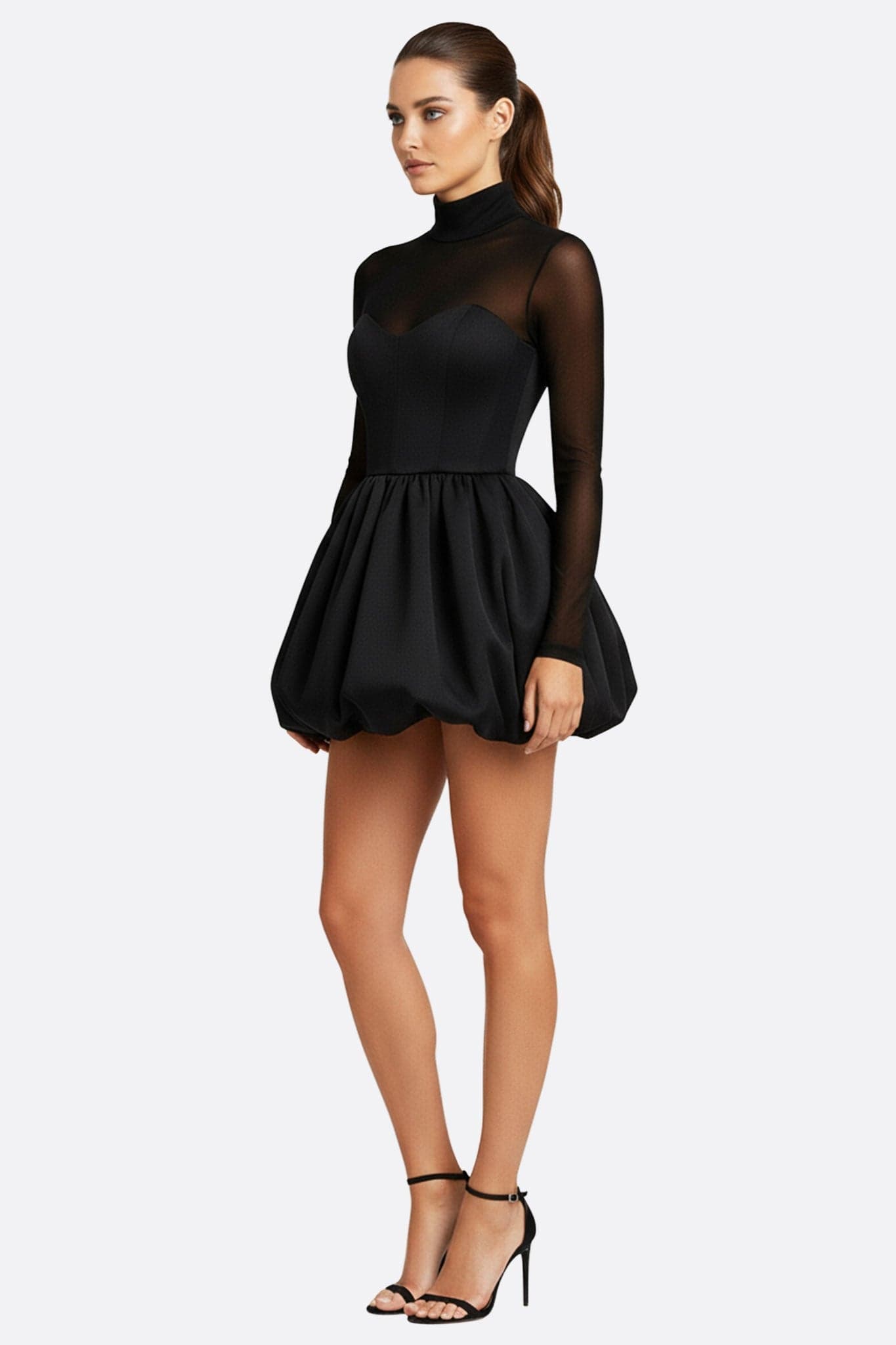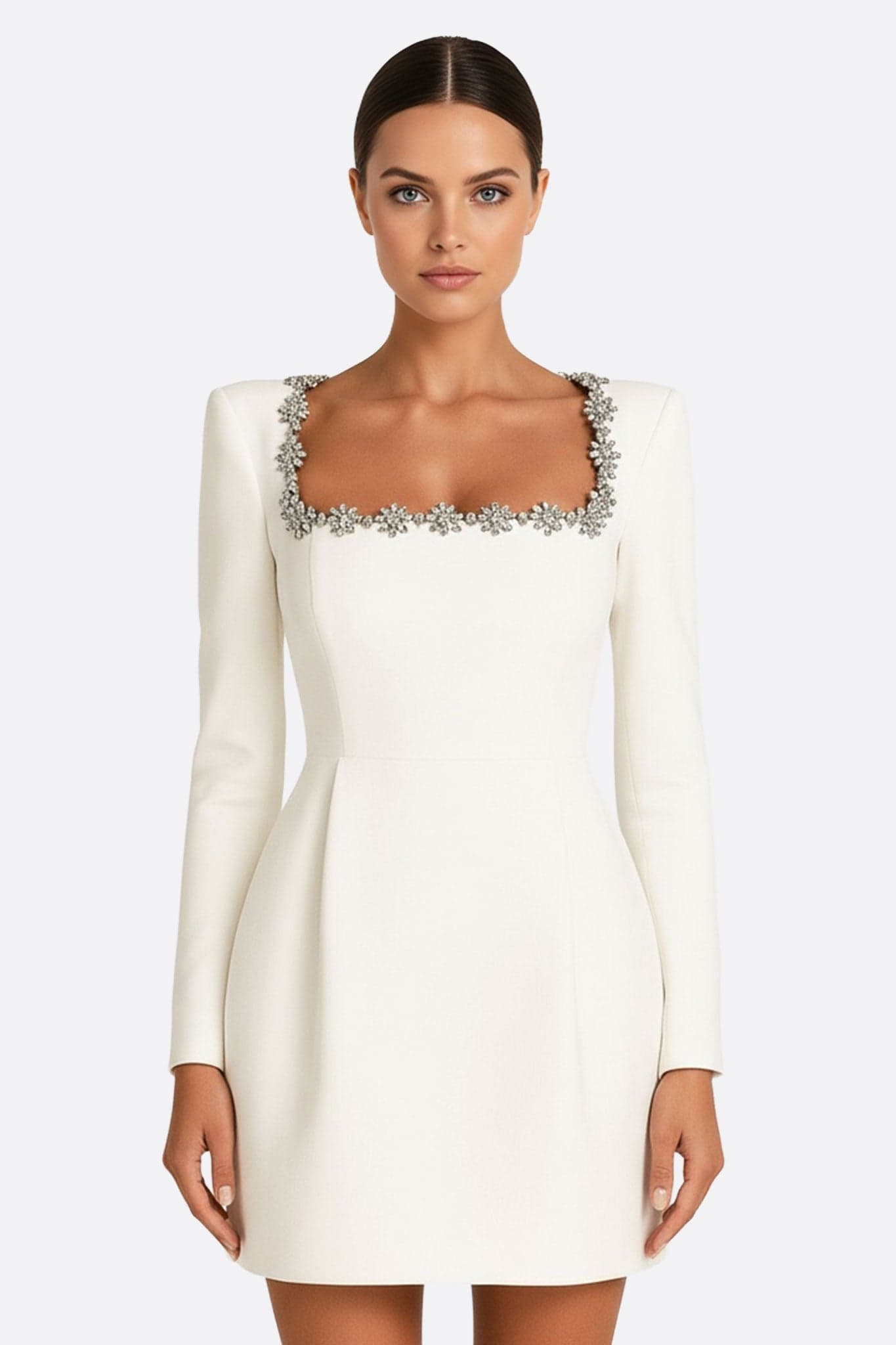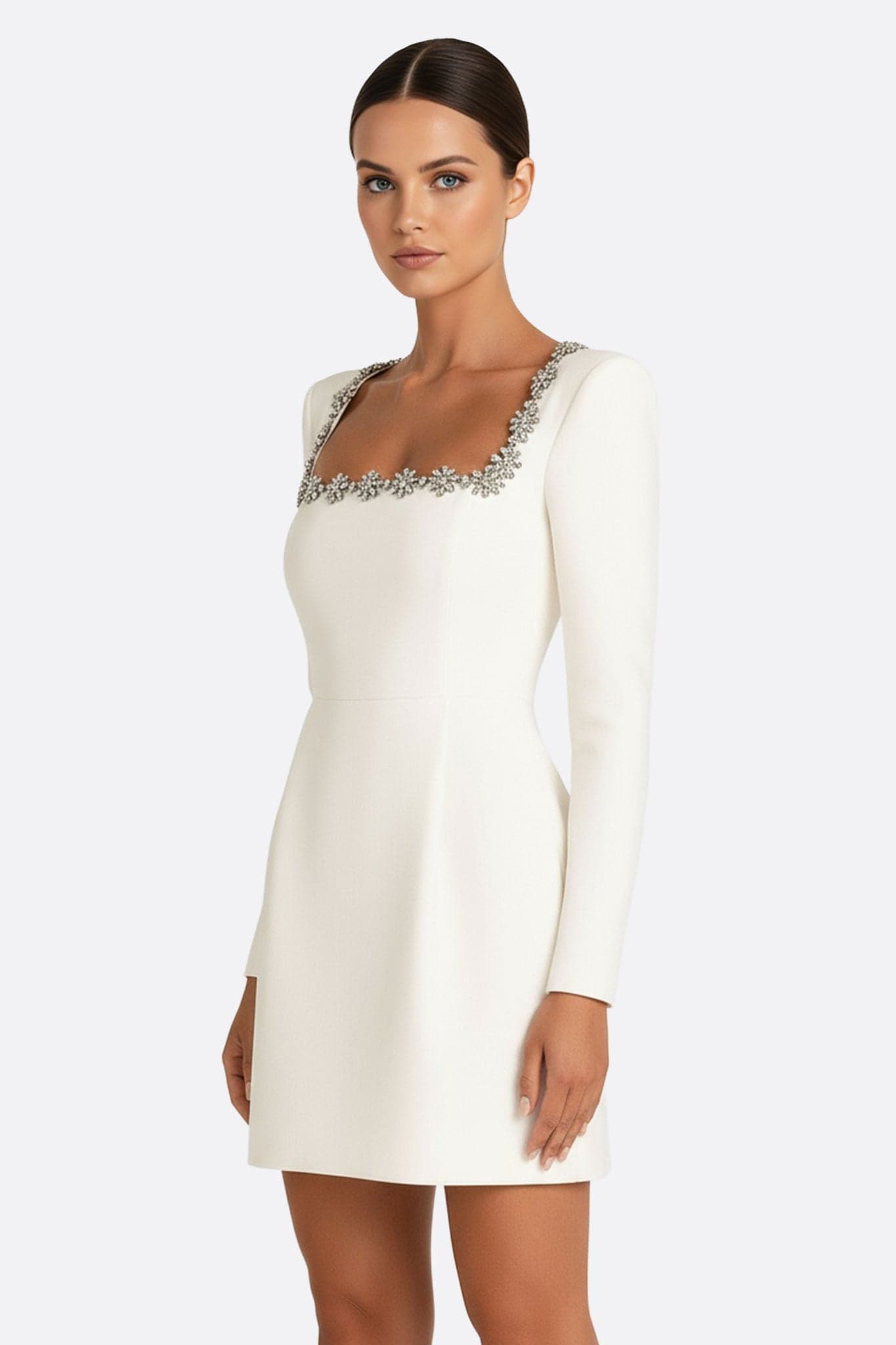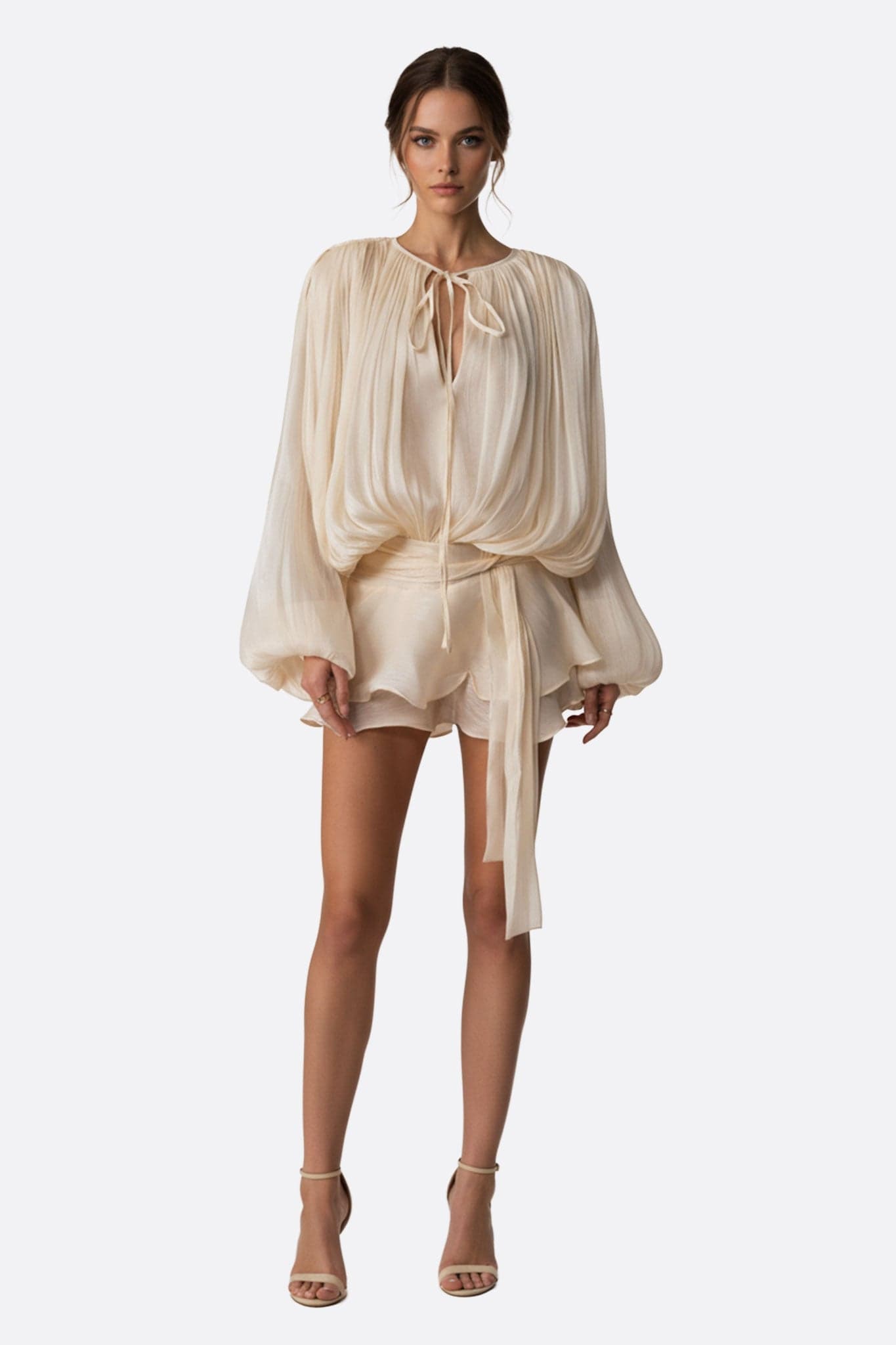
Summer dress for women: choose a light, flowing, and comfortable dress
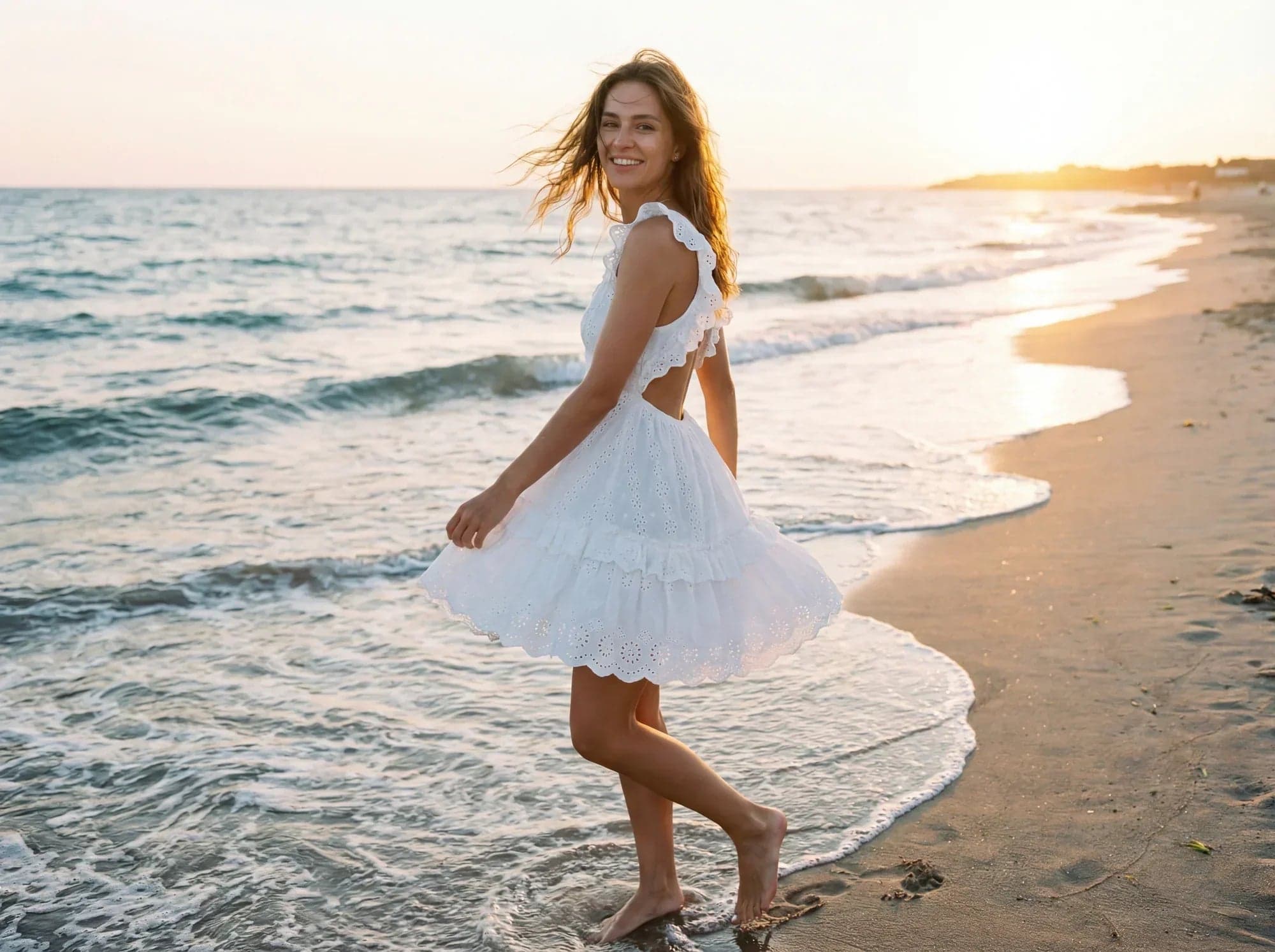
What is a women's summer dress and how to recognize a truly light dress
Women's summer dress: a useful (and testable) definition
A women's summer dress, in the Misciano sense, is not “a dress with flowers” nor a dress sold in shop windows from April. It is a piece designed to be worn without thermal discomfort when the air exceeds 28°C, sometimes up to 35°C, while maintaining an elegant appearance, a neat drape, and a pleasant feel on the skin.
Concretely, a truly summer dress is recognized by three elements: the weight of the fabric (its density), breathability (the ability to let air and water vapor pass through) and construction (cut, lining, finishes) that avoids areas of heat accumulation. A dress can be light but poorly cut (too tight, tight armholes), and become suffocating. Conversely, a slightly denser dress but very well ventilated and well constructed can remain comfortable. These recommendations result from an internal protocol implemented in the Misciano workshop for 15 years, based on a rigorous material charter and precise customer feedback.
The most telling criterion: the weight of the fabric (g/m²) and what it changes
The weight of the fabric is measured in grams per square meter (g/m²). It is a simple indicator that helps anticipate the sensation: the denser the fabric, the more it can “retain heat” (even if the fiber and weave count). For summer, we often aim for densities that allow the dress to float without sticking. These g/m² ranges are indicative benchmarks, which vary depending on the weave, yarn count, and finishes applied to the fabric.
Concrete benchmarks (indicative, as fiber and weave modify perception):
• 60–90 g/m²: very fine voiles (cotton voile, some very light viscose crepes). Airy sensation, but frequent transparency and wind resistance to watch out for.
• 90–160 g/m²: ideal zone for many summer dresses. A light poplin, a voile a little more “held”, a balanced viscose. You get fluidity without sacrificing coverage.
• 160–220 g/m²: more structured fabrics (medium linen, denser cotton). Possible comfort if the cut is loose and ventilated, but the sensation is less “cloud-like”.
When the brand does not provide the g/m², we can use clues: a fabric that folds into very fine small pleats and “falls” in a cascade is often lighter; a fabric that forms wide and rigid pleats is often denser. These indications are also based on reference textile studies and our field experience.

What we observe in the Misciano workshop: 4 simple tests (drape, light, creasing, hand)
In the workshop, we do not rely on a “summer dress” label. We test the material and construction.
1) The drape hold: we let the dress hang, then grab it at the waist and release it. A pleasant summer dress has a fluid drape that follows gravity without stiffening. Too much stiffness = sensation of “corset” and poorly circulating air.
2) Transparency to light: we place the fabric facing a window. Transparency is not a defect in itself, but it must be controlled: either assumed (with smart lining, a separate slip, or a cut that avoids the “nightgown” effect), or compensated by a tighter weave. The common trap: a very fine fabric + a light color + no lining = dress impossible to wear in full sun.
3) Reaction to creasing: we squeeze a part of the fabric in the hand for 10 seconds, then release. If the fabric retains a very marked crease, one must accept a more “lively” aesthetic (linen) or plan for steam. For example, our “Light Summer” model in 75 g/m² voile showed, during workshop tests, a rapid relaxation of the crease, validated by several positive feedbacks from our clientele.
4) The “hand” (the touch): a successful summer dress has a hand that does not “scratch”, does not “stick”, and does not give the impression of plastic film. The fibers and surface finishes count: some viscoses are wonderfully fresh, others become sticky if the finish is heavy. Some recycled polyesters are very decent in airy weaving, others trap.
“Summer dress” marketing vs wearable dress at 28–35°C: the difference lies in the details
Marketing warning signs: a strappy dress, printed, sold as summer, but with dense synthetic fabric, full polyester lining, very tight waist, and armholes that compress. Result: at 30°C, the dress sticks to the back, marks sweat, and the slightest walk becomes a challenge.
The truly wearable dress: a breathable or intelligently woven material, sufficient ease at the bust and hips, armholes that allow the arm to move, a partial lining (or a slip) if necessary, and finishes that do not rub. It is not just “pretty”: it respects the body in heat. These recommendations come from our manufacturing expertise and our quality control process in the Misciano workshop.
The right reflex: before buying, imagine the dress in three situations: full sun, subway/air conditioning, 20-minute walk. If even one scenario already seems uncomfortable, it is not a true summer dress, it is a “seasonal” dress in the commercial sense.
What material to choose for a summer dress when it's hot
What really matters: thermal sensation, absorption, and drying
To choose the material for a women's summer dress, avoid slogans (“breathable,” “natural”) and consider three concrete criteria:
• Thermal sensation: does the material give an impression of freshness or confinement? This depends on the fiber, weaving, and finish.
• Absorption: does the fiber absorb sweat (and to what extent)? Good absorption can improve comfort, but if the fabric dries slowly, the opposite effect occurs.
• Drying speed: a fabric that dries quickly limits persistent stains and the “wet” feeling.
Concrete example: a light viscose can be delightful at 32°C because it remains supple and “cool” to the touch, but if it is too thin and very absorbent, it may show more moisture. A medium linen, on the other hand, absorbs and dries relatively well, but wrinkles and can irritate if the thread is dry or if the seam is stiff.

Cotton: poplin, eyelet, voile... very different summers
Cotton is often the first choice, and rightly so, but it all depends on the weaving.
• Cotton poplin (lightweight): crisp feel, pleasant, good hold. At 90–140 g/m², it is a reliable material for the city: it holds up, resists, and remains breathable if the cut is well-ventilated. A poplin that is too dense can become hot in full sun.
• Cotton voile: very airy, ideal for dry heat. Beware of transparency and wind; the lining must be considered (partial, or petticoat).
• Eyelet embroidery: the openwork pattern promotes air circulation, and the visual effect is naturally elegant. The point of caution: the lining. An eyelet embroidery lined with full polyester often negates the thermal benefit. A cotton/viscose lining, or a well-placed partial lining, is preferred.
In practice: if you sweat a lot, a cotton that is too stiff can “mark” in patches. A slightly textured cotton (gauze, voile) is often more forgiving visually.
Linen: the great ally, provided you accept its truth (wrinkled, lively)
Linen is one of the most pleasant fibers when it is very hot: it allows air to circulate, absorbs and then releases moisture, and often gives a feeling of freshness on contact. It is a material that “breathes” in the tangible sense: you feel it from the first minutes.
Its two realities:
• The wrinkle: this is not a quality defect, it is the nature of the fiber. The wrinkle of linen can be very elegant if accompanied by a simple cut and a refined color. But if you are looking for a neat look all day, you will either have to accept the steam or choose a blend.
• The feel: linen can be dry or soft. A softened (washed) linen is often more pleasant on bare skin, especially at the armholes and waist.
In the workshop, we love linen for shirt dresses, structured wrap dresses, and long dresses with slits: linen provides structure without suffocating.
Viscose: fluidity, drape, and vigilance on quality
Viscose is precious for summer because it offers a naturally fluid drape: the dress moves with you, doesn't "stiffen," and creates an elegant movement. To the touch, it can be cool, almost "slippery" without being cold.
Points of caution:
• Sensitivity to water and wrinkling: some viscoses wrinkle a lot and can shrink if not properly stabilized.
• Stains: viscose absorbs well, so it can show moisture if the color is light and the weave is fine. This can be offset with prints, medium colors, or partial lining.
• Variable quality: two viscoses can be completely different. The finish, yarn twist, and type of weave change everything. Quality viscose has a "clean" fluidity: it falls without clinging and doesn't create excessive static electricity.
Silk: noble freshness, but demanding (and not always the most "practical")
Silk can be wonderful in summer: light, breathable, with a very delicate touch. A silk crepe or chiffon dress (smartly lined) can be very pleasant in the evening when you want elegance without heaviness.
But you have to be realistic:
• Silk marks: sweat can leave marks, and some silks darken on contact with moisture.
• Maintenance: often delicate cleaning, sometimes dry cleaning. For an "everyday" dress under 35°C, silk is not always the simplest choice.
The right use: ceremonies, dinners, "dressed" vacations, when you control the environment (travel, air conditioning, pace).
Lyocell (Tencel™): softness, moisture management, clean drape
Lyocell is a cellulosic fiber (like viscose, but with a different process) that often combines softness, good moisture management, and drape. In a summer dress, it can offer a "cleaner" look than some viscoses, with less wrinkling depending on the weaves.
When worn, it can be very pleasant for sensitive skin: less "paper" feeling than dry cotton, less "sticky" than dense synthetics. It works very well in a midi dress, soft shirt dress, or wrap dress.
Recycled polyester: possible, but only if the weave is designed for heat
Recycled polyester is not automatically a "no" for summer. It all depends on the weave, density, and lining. A very fine, well-woven polyester can dry quickly and limit stains. But it can also trap heat and create a film sensation if the fabric is tight.
To watch out for: static electricity, "plastic" shine, and especially linings. A dress with a decent main fabric but lined with thick polyester quickly becomes uncomfortable.
Misciano transparency: reading a composition and understanding why "100%" is not always better
Reading a composition is useful, but not enough. A 100% cotton can be a dense poplin that retains heat; a 70% cotton / 30% linen can be more pleasant due to better air circulation and a more elegant wrinkle. A 95% viscose / 5% elastane can improve movement comfort, but if the fabric becomes too "jersey," it can cling more. For a visual and numerical aid, check our detailed table of compositions and thermal behaviors on the Misciano website.
Our approach: we judge the material on actual wear. If you buy online, look for: the type of weave (voile, poplin, crepe), the presence of a lining, and reviews mentioning "breathes," "clings," "marks." And if the brand provides the g/m², you have a rare and valuable clue.
Fluid summer dress: cuts that let air circulate and accompany movements
The technical parameters that change everything: ease, armhole, heat zones
A women's summer dress is not just about being “loose”. Fluidity comes from a balance between material and construction. Three areas determine thermal comfort: the upper back, underarms, and waist/stomach (where the fabric can stick).
• Ease: it is the margin between your measurements and those of the garment. In summer, we look for ease that allows air to circulate. As a guideline, for a woven dress: often aim for +6 to +12 cm at the bust depending on the desired effect (more if very loose fit), and +6 to +14 cm at the hips to walk without pulling. Too little ease = fabric that pulls and heats. Too much misplaced ease = unnecessary volume that visually weighs down. For more details, we offer a detailed table of recommended tolerances by cut type and body shape on our website.
• Armhole: a too-tight armhole creates friction and heat. A slightly open armhole, or a well-cut short sleeve, can be more comfortable than a thin strap that cuts in.
• Ventilation zones: slits, buttoning, well-placed neckline, slightly open back (if appropriate). Ventilation is not provocation: it's a comfort strategy.
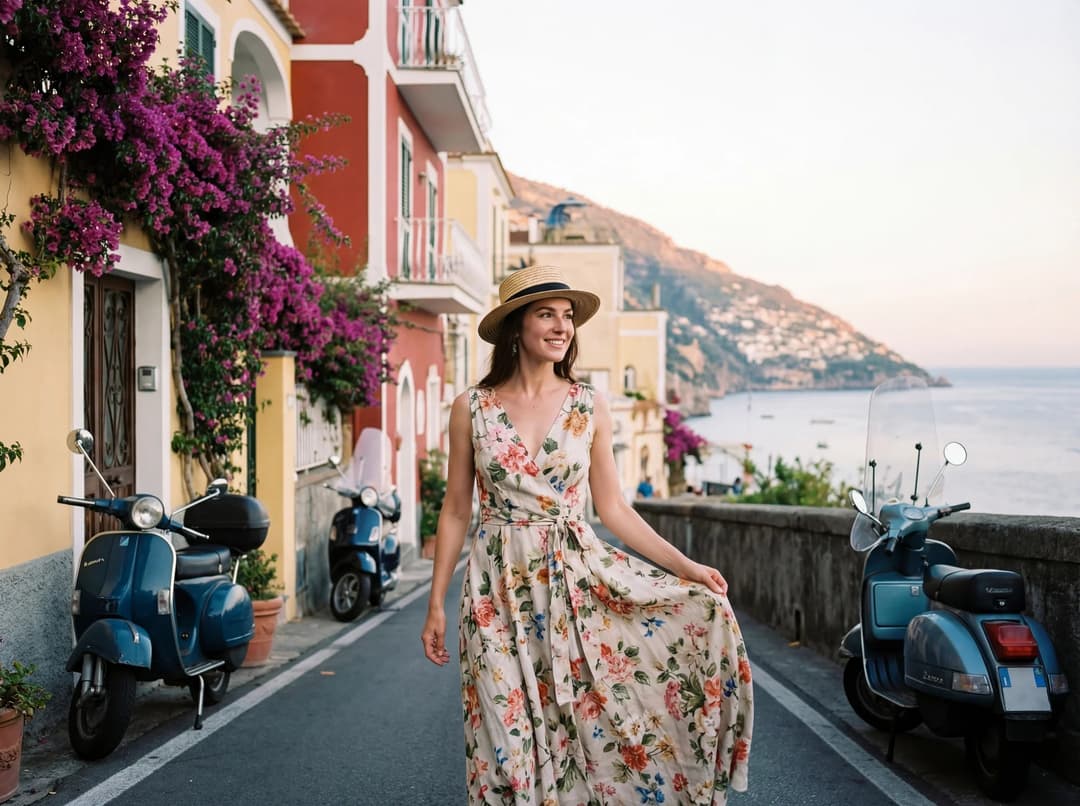
Elasticated waist vs darts: immediate comfort or controlled line
The waist is a key point in summer: it's often where the fabric sticks when you sweat.
• Elasticated waist: very comfortable, adaptable, ideal for daily variations (meals, heat). But the elastic can create a slight “puff” above, and concentrate the material. We prefer it when it is flexible, not too tight, and paired with a fluid fabric that doesn't balloon.
• Darts and cuts: more elegant and neater. A dress with bust darts, princess seams, or a fitted belt can shape the silhouette without compressing. It's often the best choice for a refined look in the city or at a ceremony, especially if the material breathes.
In the workshop, we often see this problem: a “pretty” dress but too tight at the waist, with a non-breathable material. On a hanger, it's perfect; when worn, it becomes a thermal trap. The solution: choose a construction that shapes without tightening.
Slit, buttoning, partial lining: fluidity is crafted
• The slit: on a midi or long dress, a slit (front, side, or back) improves mobility and ventilation. It also prevents the dress from “riding up” when walking. A well-finished slit (reinforcement, stop stitches) is a sign of quality.
• Buttoning: a cotton/linen shirt dress is a summer classic. Buttoning allows you to adjust the opening, thus the ventilation. However, beware of poorly placed buttons that gape at the bust: it's not a detail, it's a constant discomfort.
• Partial lining: it is often preferable to a full lining. For example: lining only on the skirt, or only on the front. This avoids transparency without creating a “hot layer” over the entire bust.
Fitting examples (customer feedback): what works according to body shapes
Petite stature: dresses that are too long and too loose “swallow” the silhouette and retain heat by creating unnecessary volume. What works: a midi dress just below the knee, a slightly marked waist (by darts or a thin belt), and an open neckline. Very fluid fabrics (viscose, lyocell) elongate without weighing down.
Curvy silhouette: the goal is not to “hide”, but to avoid areas of friction and pulling. A well-constructed wrap dress (with enough overlap), a shirt dress with ease at the hips, or a ventilated trapeze dress are often excellent. Customers tell us they appreciate: armholes that don't pinch, and fabrics that glide over the skin without catching.
Generous bust: the common problem is a gaping neckline or pulling buttons. A construction with bust darts or princess seams is the most stable. Adjustable straps help, but they must be wide enough not to mark. In summer, a well-cut square neckline is often more comfortable than a too-deep V that requires “holding”.
For additional visual assistance, consult our table of ease and recommended measurements by body shape available on the Misciano website.
What summer dress length to choose according to use
Mini, midi, long: real thermal comfort and everyday constraints
The length of a women's summer dress is not just a matter of style. It influences ventilation, mobility, friction, and how the dress reacts to the wind.
• Mini: excellent ventilation, feeling of freedom, quick drying after the sea or a hot day. On the downside: possible friction at the inner thighs depending on walking, and caution with the wind (especially with light fabric). The mini is often the most “simple” thermally, but not always the most practical in the city (stairs, transport).
• Midi: the most versatile length. It protects from the sun, remains elegant, and works in the city. Thermally, it all depends on the fullness: a midi too close to the body can stick to the thighs. A midi with a slit or flared skirt is an excellent compromise.
• Long: paradoxically comfortable if the cut is loose and the fabric breathable. It creates a shadow zone on the legs and avoids some friction. However, it can become hot if the fabric is dense or if the lining is full. And it requires attention to the wind and stairs.
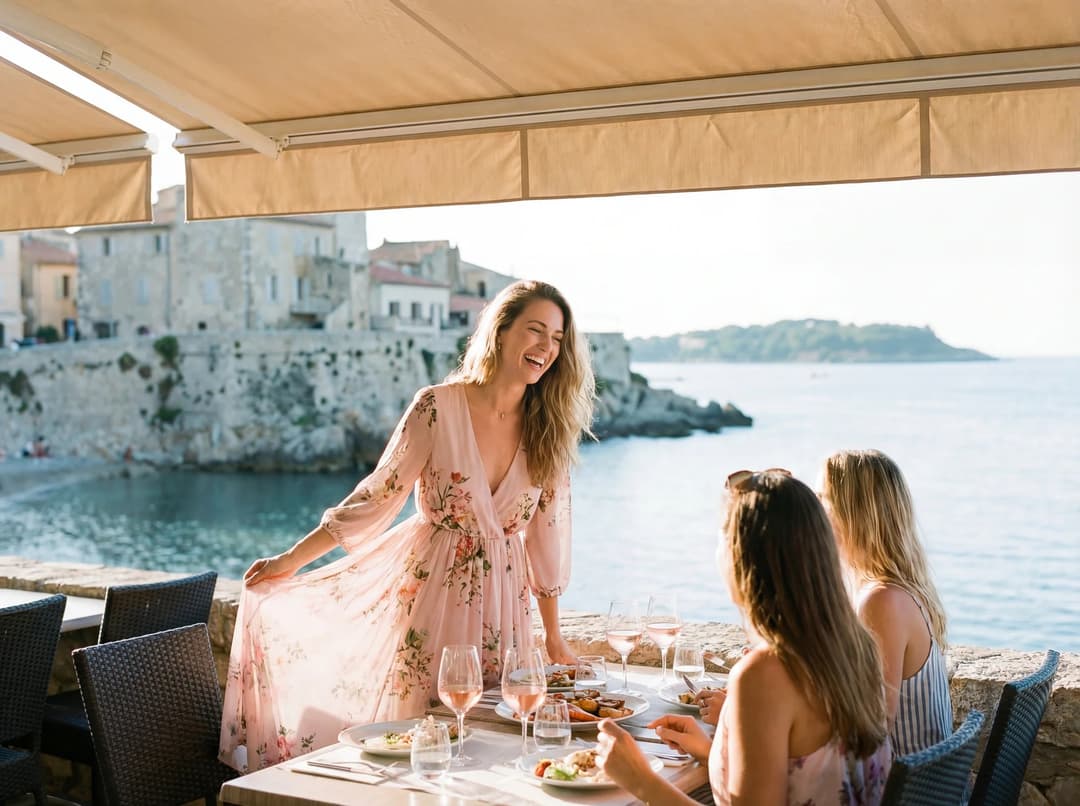
Practical cases Misciano: choose according to use (city, vacation, evening)
Midi dress for the city: we prefer it when we need to chain appointments, walking, transport, and air conditioning. The midi in light poplin cotton or lyocell, with comfortable armholes and an opening (slit or buttoning), offers a balance: elegance and functionality. A medium color (ink blue, olive green, soft terracotta) limits the appearance of halos and maintains visual refinement.
Long dress for the evening: for a dinner or a terrace, a long one in fluid viscose or silk (if one accepts the maintenance) gives a dressed look without heaviness. We look for a dress that moves: movement makes elegance. A discreet slit or a worked back brings air and poise.
Mini for vacation: by the sea or on a very hot day, the mini in cotton voile or light linen is an obvious choice. We choose a cut that does not ride up when walking and a stable neckline. To avoid the “too simple” effect, we focus on a detail: embroidery, mother-of-pearl buttons, or a thin belt.
The purchase checklist: 5 tests to do before keeping the dress
1) Sitting test: sit down. Does the dress ride up too much? Does the fabric pull at the hips? A summer dress should remain comfortable without requiring you to readjust.
2) Walking test: take ten quick steps. If the dress tightens the thighs or “blocks” the step, it lacks ease or a slit.
3) Stairs test: climb a few steps. A long one must have enough clearance not to be caught by the tip of the foot.
4) Bike test (if applicable): the midi can be perfect… or impossible. Check the fullness and stability in the wind. Sometimes, a buttoned shirt dress is more practical because you can adjust the opening.
5) Air conditioning test: in summer, we go from hot to cold. A very light dress may require an open shirt or a light blazer. Choose a length and neckline that accept layering without losing balance.
Wind resistance: the detail we always regret too late
Light fabrics move. It's their charm, but also their trap. A very light mini without lining can prove delicate in the city. A very fluid long one can wrap around the legs. The solutions: a partial lining, a hem weight (discreet), a wrap cut with enough overlap, or simply a midi length with a controlled slit. Summer elegance is also serenity.
The manufacturing details that make a dress pleasant to wear in summer
Lining: useful, but not at the cost of heat
The lining is often the boundary between a wearable summer dress and one that stays in the closet. It serves to: reduce transparency, improve the drape, prevent the fabric from marking the body, and reinforce certain areas. But in summer, a poorly chosen lining turns the dress into a "double layer."
When lining is necessary: very light fabrics, veils, openwork English embroidery, close-fitting cuts, or fabrics that cling statically.
Fibers to avoid in lining in full heat: thick and tight 100% polyester linings, which retain heat and can create a feeling of dampness. This does not mean "never polyester," but it must be thin, breathable, and chosen for a specific reason.
Smart alternatives:
• Partial lining: lined only on the skirt, or only on the front.
• Separate petticoat: allows adjustment according to light and occasion, and to wash separately.
• Viscose/lyocell lining: often more pleasant to the touch, with better moisture management.
Finishes: the difference between "pretty in photo" and "comfortable for 12 hours"
In summer, the skin is more sensitive: heat, perspiration, friction. Finishes become crucial.
• French seams: they enclose the edges of the fabric, prevent scratching threads, and improve durability. On fine fabrics, it's a sign of care.
• Clean overlock: an overlock can be very correct if it is neat, flat, and done with suitable thread. A thick and rigid overlock, however, can irritate the armholes and waist.
• Bias: a well-placed bias (neckline, armholes) provides comfort and support. A bias that is too rigid or too narrow can "cut" the skin.
• Rolled hem: perfect for very fine fabrics, it gives a light finish that follows the movement. It avoids the thick hem that weighs down and retains heat at the bottom of the dress.
Buttons, zippers, hooks: irritation points to anticipate
A metallic detail on warm skin can become unbearable. Points to check:
• Side zipper: if it is in direct contact with the skin, it can irritate. An inner protective flap is a real plus.
• Buttons: their position is crucial. A button too high that compresses, or too low that creates gaping, forces you to adjust all day. Prefer well-spaced buttons, with a stable placket.
• Adjustable straps: they are useful, but if the buckle is placed in the wrong spot, it can rub. A slightly wider strap distributes the weight better.
Chic summer dress: how to stay elegant even during high heat
Summer Chic: prioritize line, material, and breathability
Being chic in summer is not about adding layers, but choosing a dress that keeps its promise: fluidity, balance, and comfort. An elegant summer dress is often noticeable by what it avoids: excessive shine, uncontrolled transparency, overly saturated prints, coarse finishes.
Chic, in hot weather, comes from coherence: a material that falls well, a cut that lets you breathe, and accessories that lighten instead of burden.
Concrete associations: shoes, belts, and light layering
• Thin sandals: they elongate the silhouette and allow air. With a midi or long dress, a sandal with thin straps (soft leather) creates immediate elegance. Avoid overly thick soles if the dress is already voluminous: the whole can become heavy.
• Minimalist sneakers: perfect in the city. With a shirt dress or a fluid midi dress, a simple sneaker brings a neat look. Favor simple lines and a light or tone-on-tone color.
• Belt: in summer, a belt can structure without tightening. A thin belt in soft leather or fabric allows you to “set” the waist. Be careful not to compress too much: thermal comfort is paramount.
• Light blazer: useful for air conditioning, meetings, or a dinner. Choose it in linen or a breathable blend, unlined or partially lined. It must remain flexible: a rigid blazer cancels the fluidity of the dress.
• Open shirt: a very summery alternative to the blazer. A cotton or linen shirt worn open over a strappy dress creates an elegant silhouette and protects from the sun.
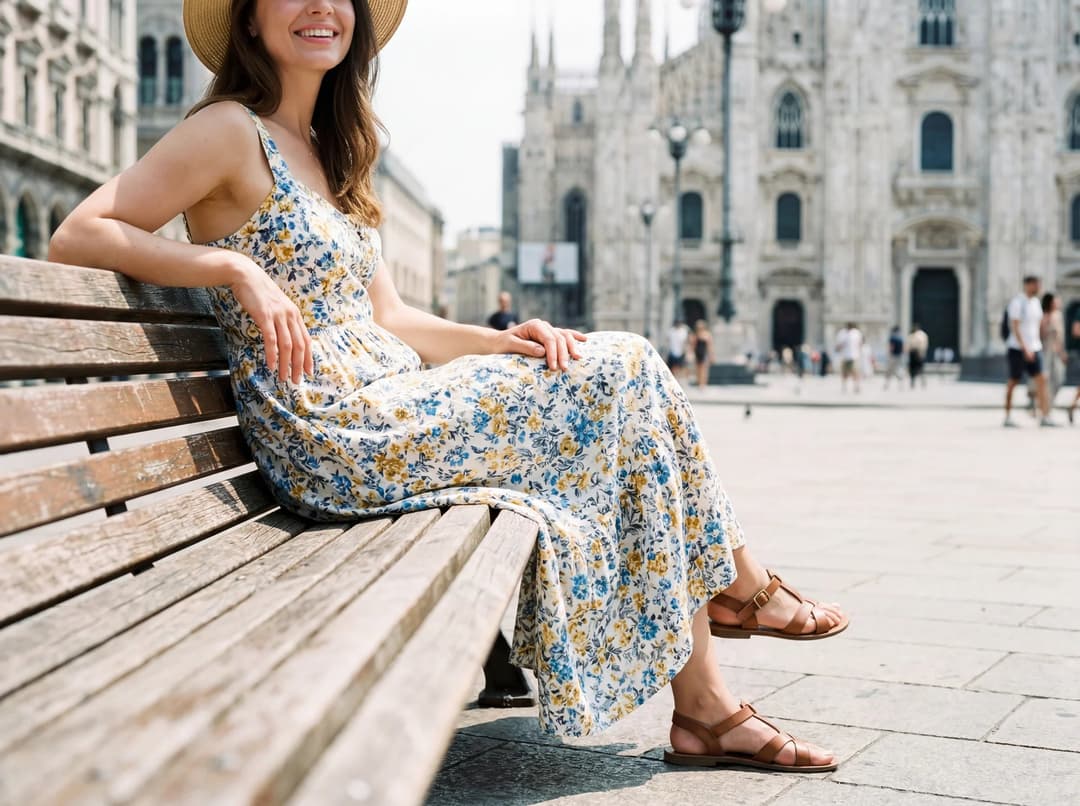
Palette and prints: avoid the “cheap” effect with precise choices
The risk in summer: very saturated colors on thin fabrics can appear less refined, especially if the material shines. For an elegant result:
• Prefer “settled” colors: off-white, ecru, navy, chocolate, olive, grayish blue, brick red. They age better and withstand strong light.
• Master the contrasts: a very contrasting print can be magnificent, but it must be clear and well-printed. On a low-quality fabric, the contrast accentuates the flaws.
• Scale of the pattern: a micro-pattern can “vibrate” from afar and give a confused look; a too-large pattern can dominate the silhouette. The ideal: a scale proportionate to your stature (medium patterns on medium stature, smaller patterns on small stature, larger patterns possible on tall stature if the cut remains simple).
Misciano look examples: 3 capsule silhouettes (work, weekend, dinner)
1) Work (city, meetings, air conditioning): midi shirt dress in light poplin (ink blue), tone-on-tone thin belt, white minimalist sneakers, unlined ecru linen blazer. Structured bag. Result: comfort, poise, refinement without rigidity.
2) Weekend (walk, market, terrace): trapeze dress in broderie anglaise (off-white) with partial lining, flat sandals in natural leather, basket or tote, simple sunglasses. A linen shirt worn open if strong sun. Result: visible freshness, elegant simplicity.
3) Dinner (evening warmth): long dress in fluid viscose (olive green or chocolate), slightly high thin sandals, discreet but present jewelry (matte gold), small clutch. Possibly a light silk/cotton shawl. Result: movement, controlled light, effortless elegance.
Which summer dress to choose for a wedding, baptism, or ceremony
Respect the protocol without condemning yourself to the heat
Choosing a women's summer dress for a ceremony is a balancing act: adhering to the codes (colors, level of formality), being photogenic, and staying comfortable for several hours, sometimes outdoors.
The first criterion: anticipation. A ceremony is not “20 minutes in the sun,” it often involves: arrival, waiting, ceremony, photos, reception, meal, dance. The dress must survive all this without making you regret your choice.
Colors to avoid and levels of formality: simple rules
• Avoid white (and very close ivory) for a wedding, unless explicitly requested. Very light champagne can also be questionable: in photos, it may appear white.
• Avoid total black depending on the context (baptism, daytime ceremony). It can be perceived as too strict. For an evening ceremony, a light black well-accessorized can be acceptable, but softer deep tones (navy, chocolate, plum) are often preferred.
• Very bright colors: they can be beautiful, but beware of saturation in full sun. A very bright fuchsia or orange can dominate the photos. If you like bold colors, choose a matte material and a simple cut.
Level of formality: a very casual linen dress can be perfect for a rustic wedding, but insufficient for a more formal ceremony. Conversely, a very satin dress may be too “evening” for a midday baptism. The balance lies in the material and finishes.
Materials suitable for photos and heat
• Quality viscose/lyocell: very good allies for a summer ceremony. Fluid drape, often matte or slightly satin finish depending on the weave, elegant movement in photos.
• Silk (crepe, lined chiffon): superb in photos, very pleasant if well constructed. But it requires vigilance on sweat marks and maintenance.
• Embroidered cotton / English embroidery: ideal for baptisms and daytime ceremonies. Very photogenic, especially in soft tones. Pay attention to the lining: choose breathable.
• Linen: excellent for heat, but creases will be visible in photos. If this bothers you, prefer a linen/viscose or linen/cotton blend, which creases a little less while keeping airiness.
Visible anti-sweat solutions: color strategy, thickness, lining
The subject is rarely addressed frankly: in ceremonies, we want to avoid visible sweat marks.
• Colors: very light shades (pearl gray, sky blue) can show marks. Medium colors and prints are often more forgiving. White and some pastels require a denser material or a lining.
• Thickness: a fabric too thin shows everything. It's better to have a slightly more “held” but breathable material than a veil that reveals every mark.
• Lining: a partial viscose lining can help stabilize and limit transparency without suffocating. A full polyester lining can worsen sweating.
Deodorants: textile vs skin: choose a deodorant suitable for your skin and let it dry before putting on the dress. “Textile deodorants” or scented sprays on fabric should be used with caution: they can stain, especially on silk and viscose. As a reminder, it is important to follow the manufacturer's care recommendations.
Buying a summer dress online: mistakes that make you regret your purchase
The 5 classic mistakes (and how to avoid them before removing the tag)
Mistake #1: transparency under real light: in the fitting room or at home, the light is often softer than outside. Test the dress in front of a window and, if possible, in the sun. Check with skin-colored underwear. If you can clearly see the seams, the dress will require a solution (slip, lining) or another choice.
Mistake #2: slipping straps: a thin strap on a very fluid material can slip, especially if the neckline is wide. Check the position of the straps on your shoulders while moving. Adjustable straps help, but they must be well placed.
Mistake #3: gaping neckline: very common on wrap dresses or deep V-necks. Do the test: lean slightly forward as if to grab a bag. If it opens, you'll spend the day monitoring it. Look for a construction with a discreet snap, or enough coverage.
Mistake #4: fabric that marks: a fabric that is too thin or too "soft" can mark lingerie, skin folds, or cling to the stomach. This is not always visible in photos. Test with your usual underwear, and walk: if the fabric clings, it lacks either density, lining, or ease.
Mistake #5: misleading length: "midi" does not mean the same thing depending on the size. Look at the length in cm and compare it to a dress you own. A long dress can become too long with flat sandals; a mini can become too short in motion.
Misciano Method: measure a dress you like and compare
The most reliable method to buy a women's summer dress online: measure a dress you enjoy wearing (ideally in a similar woven material).
Useful measurements (flat, without stretching):
• Bust width (from armpit to armpit)
• Waist width (at the narrowest point or where the dress sits)
• Hip width (about 20 cm below the waist, depending on the cut)
• Total length (shoulder to hem)
• Shoulder width if the dress is structured
Then, compare to the size guide and especially to the garment measurement chart (when available). Sizes S/M/L mean nothing without measurements. This method drastically reduces returns.
Home fitting tips: 10 minutes to avoid disappointments
Try the dress with: your skin-colored underwear, your planned shoes, and real movement (walking, sitting, raising your arms). Photograph yourself in natural light: you will immediately see the transparency, the fit of the drape, and the stability of the neckline. And above all: keep the dress on for 5 minutes. A summer dress should remain comfortable when the body heats up slightly. If, after a few minutes, you already feel discomfort, it will be worse outside.
How to care for a summer dress to preserve the fabric's fluidity
Maintenance is what maintains fluidity (or destroys it)
A summer dress goes through a lot: heat, salt, sunscreen, sweat, frequent washes. To preserve the fluidity and elegance of the drape, maintenance must be adapted to the fiber. A bad wash can make a fabric rough, break the drape, or create deformations. It is recommended to strictly follow the care instructions on the garment's label.
Washing according to fibers: temperatures, spinning, drying
Cotton: generally simple washing. To preserve color and feel, prefer 30°C, moderate spin. Avoid overloading the machine: friction increases creasing. Air drying, ideally on a hanger for a shirt dress, or flat if the fabric is very thin.
Linen: 30°C, gentle to moderate spin. Linen loves water but hates excessive twisting. Quickly remove the dress, shake it, reshape it. Air drying. The dryer can break the fiber and increase shrinkage.
Viscose: delicate. Many viscoses prefer a gentle cycle at 20–30°C, low spin. Wet viscose is more fragile: avoid twisting. Dry flat or on a hanger depending on weight, reshaping as needed. If the dress has slightly shrunk, gentle steam can help relax it.
Silk: depending on the piece, hand wash in cold water with silk detergent, or dry cleaning. Very gentle spin (no twisting), flat drying in the shade. Be careful with deodorant and perfume stains: it's better to protect the skin than to treat silk aggressively.
Managing creases: steam, ironing, and travel tips
Steam: often the best friend of summer dresses. Steam relaxes fibers without crushing them. Hang the dress, pass the steam a few centimeters away, then let it fall naturally.
Ironing: on cotton/linen, ironing is possible, ideally on slightly damp fabric. On viscose, moderate temperature and damp cloth if necessary. On silk, warm iron on the reverse side, without insisting.
Travel: roll the dress rather than fold it (especially viscose). At the hotel, hang it in the bathroom during a hot shower: the light steam helps. Avoid "over-steaming" an already damp fabric: it can create marks.
Misciano transparency: what we recommend vs what we advise against
We recommend: gentle detergent, laundry bags for fine fabrics, reduced spin, air drying, steam for de-creasing, gentle and quick spot cleaning (Marseille soap on cotton/linen, specific products for silk/viscose if needed).
We advise against: fabric softeners (they coat the fiber, can alter absorption and leave a less fresh feel), tumble dryers (shrink, break the feel, increase permanent creasing), aggressive stain removers (risk of discoloration, halos, especially on viscose and silk), and prolonged sun exposure for drying (colors fade).
What budget to plan for a quality summer dress
Realistic price ranges: what you really pay
The price of a women's summer dress reflects (when the brand is honest) the material, density, quality of craftsmanship, lining, and sometimes the transparency of manufacturing. There are exceptions, but guidelines can be given.
Entry-level (around 25–60€): often synthetic materials or cottons of varying density, simple finishes, sometimes poorly breathable linings. You can find pleasant surprises, but the risk lies in transparency, wash durability, and comfort in high heat.
Mid-range (around 60–150€): better choice of materials (more pleasant cotton, linen, variable quality viscose), more refined cuts, sometimes partial linings. This is often the range where you can get a truly wearable dress at 30°C if you choose well.
Premium (around 150–350€ and more): more beautiful materials (silk, high-end lyocell, quality linen), careful finishes, cleaner assembly, better durability. You also pay for the design research and overall coherence. But premium does not automatically guarantee comfort: a poorly designed lining can ruin everything, even at a high price.
Trade-offs: invest in material or cut depending on use
For the city: invest in a cut that lasts the day (comfortable armholes, ease, clean finishes) and an easy-to-live material (light poplin, lyocell, stable viscose). A "city" dress must withstand washing and relative creasing.
For vacations: prioritize material and practicality: voile cotton, washed linen, viscose that de-wrinkles with steam. A dress that dries quickly and rolls up in a suitcase can be worth more than a very constructed but fragile dress.
For a ceremony: the cut and appearance in photos become priorities, without sacrificing breathability. A high-end viscose, a lyocell, or a well-lined silk (breathable lining) justify a higher budget if you wear it again later.
What justifies a price: density, smart lining, finishes, and manufacturing transparency
A quality summer dress is recognized by: a fabric with the right weight (neither cardboard nor uncontrollable voile), a thoughtful lining (partial, breathable), finishes that do not scratch, and a stable cut (no gaping neckline, no slipping straps). Add to this a brand that explains: material origin, type of weaving, care instructions. Transparency is a marker of seriousness, based on rigorous internal processes and permanent quality controls at the Misciano workshop.
Misciano call-to-action: go further without overpromising
To refine your choice of women's summer dress, we recommend consulting our satellite guides (summer materials, how to read a composition, cuts according to body shapes, online shopping checklists) and, if you wish, our Misciano selection designed for real heat: light dresses, comfortable finishes, controlled linings. The goal is not to promise "the perfect dress," but to give you concrete criteria to choose a dress that you will really wear, for a long time, and with pleasure.

Article by Esther Arnaud
Published on 03/05/2026 at 13:33
About the author
What interests me above all is not the immediate trend, but the coherence of a wardrobe. I like to analyze why a piece works, how a material influences movement, and how a garment can accompany a woman over time, without ever imposing itself.
→ Learn more about Esther ArnaudFREQUENTLY ASKED QUESTIONS
What criteria can be used to recognize a genuine summer dress for women?
To identify a summer dress, it is essential to focus on the weight of the fabric and its breathability. A lightweight dress should have a weight between 90 and 160 g/m², like a poplin or a light voile. In the workshop, we also observe the drape of the piece, its transparency to light, and its wrinkle resistance, to ensure optimal comfort in hot weather.
Why is it important to distinguish a marketing summer dress from a truly wearable dress?
The distinction between a marketing summer dress and a truly wearable dress is crucial to avoid disappointments during hot periods. A true summer dress, according to our criteria, must be designed to offer comfort and elegance as soon as temperatures exceed 28°C, and sometimes up to 35°C, without compromising the quality of the drape and the feel on the skin.
How does the choice of materials influence the comfort of a summer dress?
The choice of materials is fundamental for the comfort of a summer dress. Natural fabrics like cotton or silk promote good air circulation and wick away moisture, thus providing a pleasant feeling on the skin. In our workshop, we prioritize materials that meet these criteria, ensuring lasting elegance while meeting climatic demands.
What are the signs of a well-designed summer dress?
A well-designed summer dress is distinguished by a fluid drape and a cut that enhances the silhouette while allowing freedom of movement. It should also resist a certain degree of creasing and not be too transparent, while offering a feeling of lightness. These elements are closely observed during our creation process at Misciano.
How to care for a silk summer dress to preserve its lightness?
To care for a silk summer dress, it is recommended to hand wash it or use a delicate cycle at low temperature, using a mild detergent. Avoid direct exposure to sunlight when drying to prevent any risk of discoloration. Proper care helps preserve the lightness and beauty of the silk, ensuring longevity for your piece.