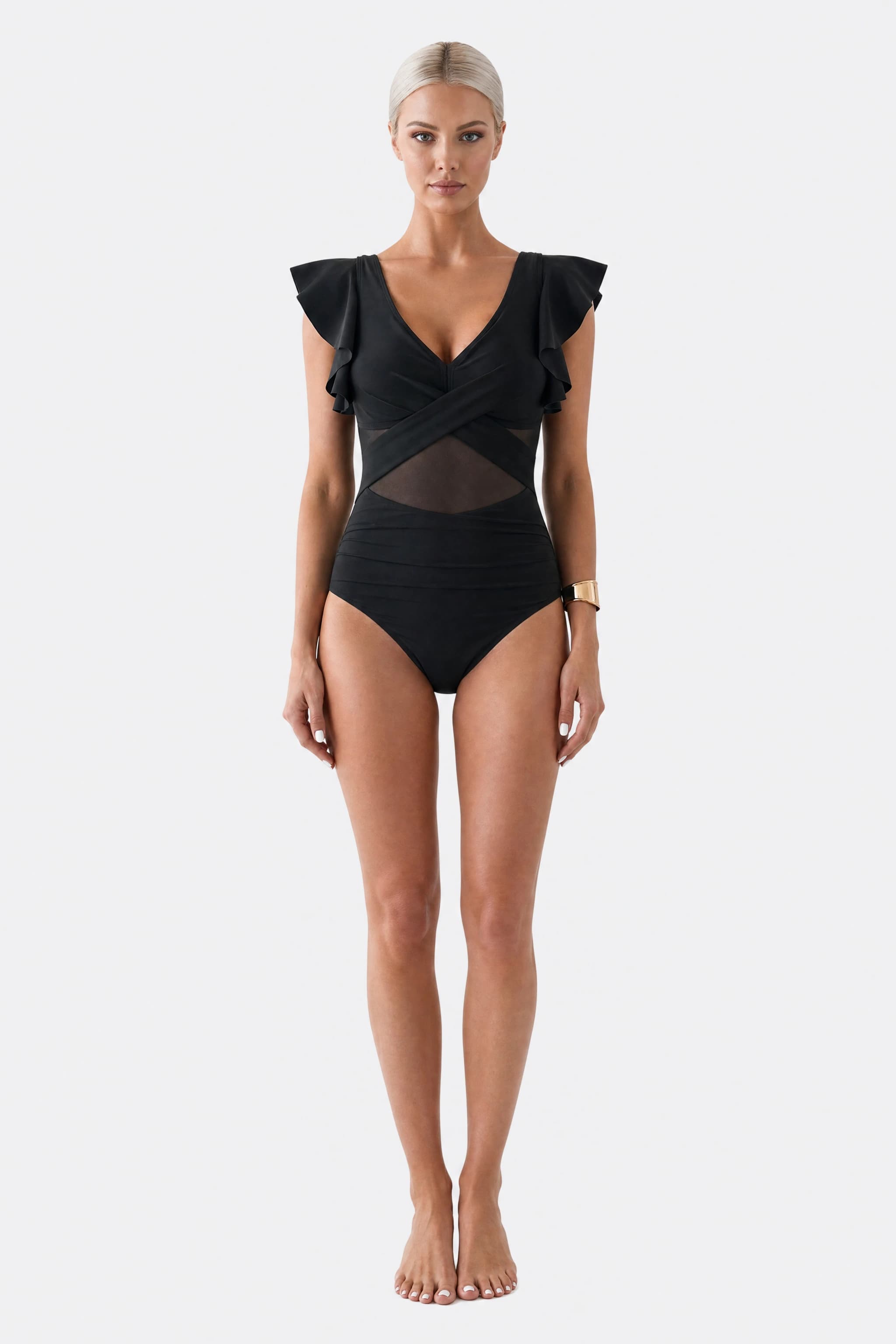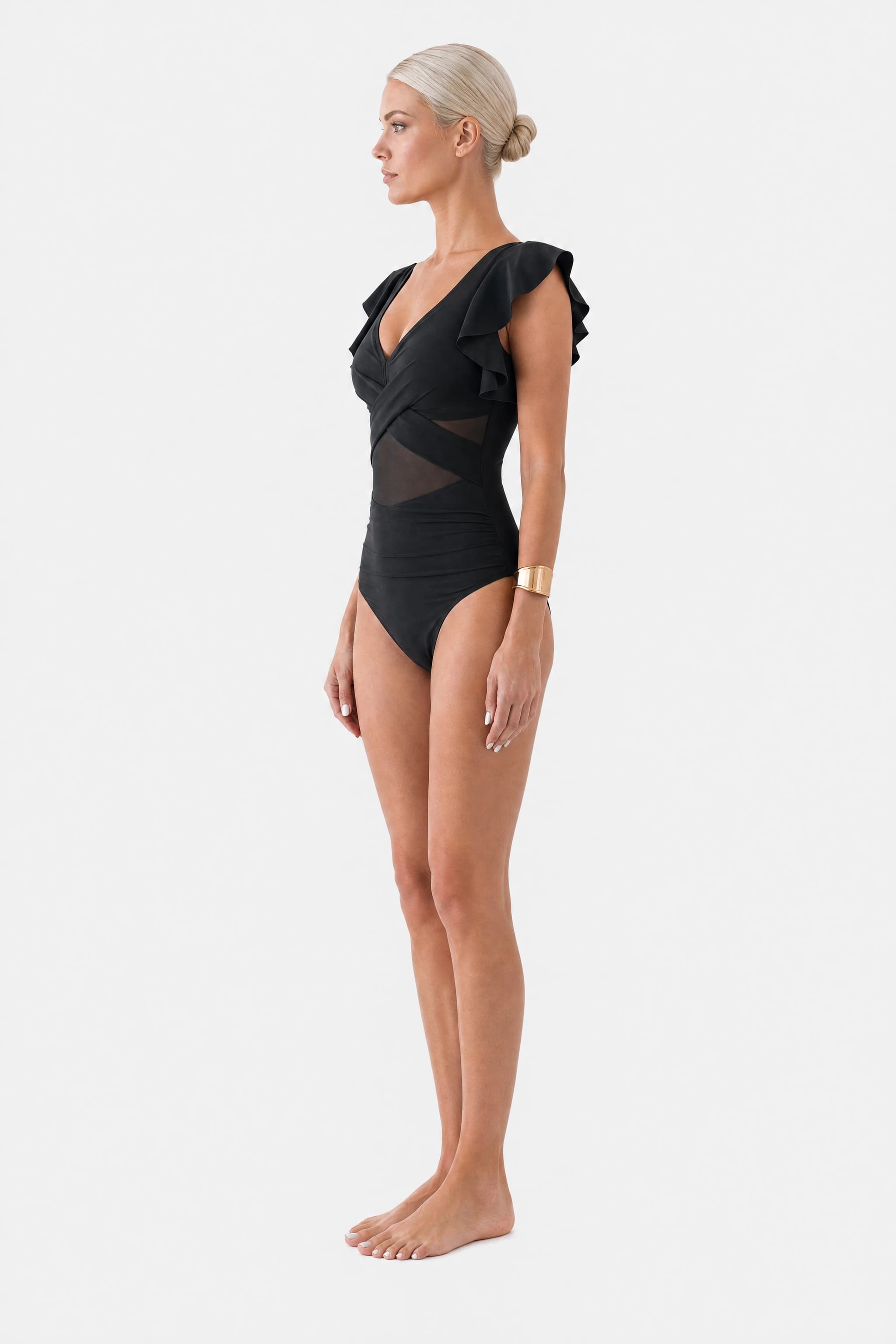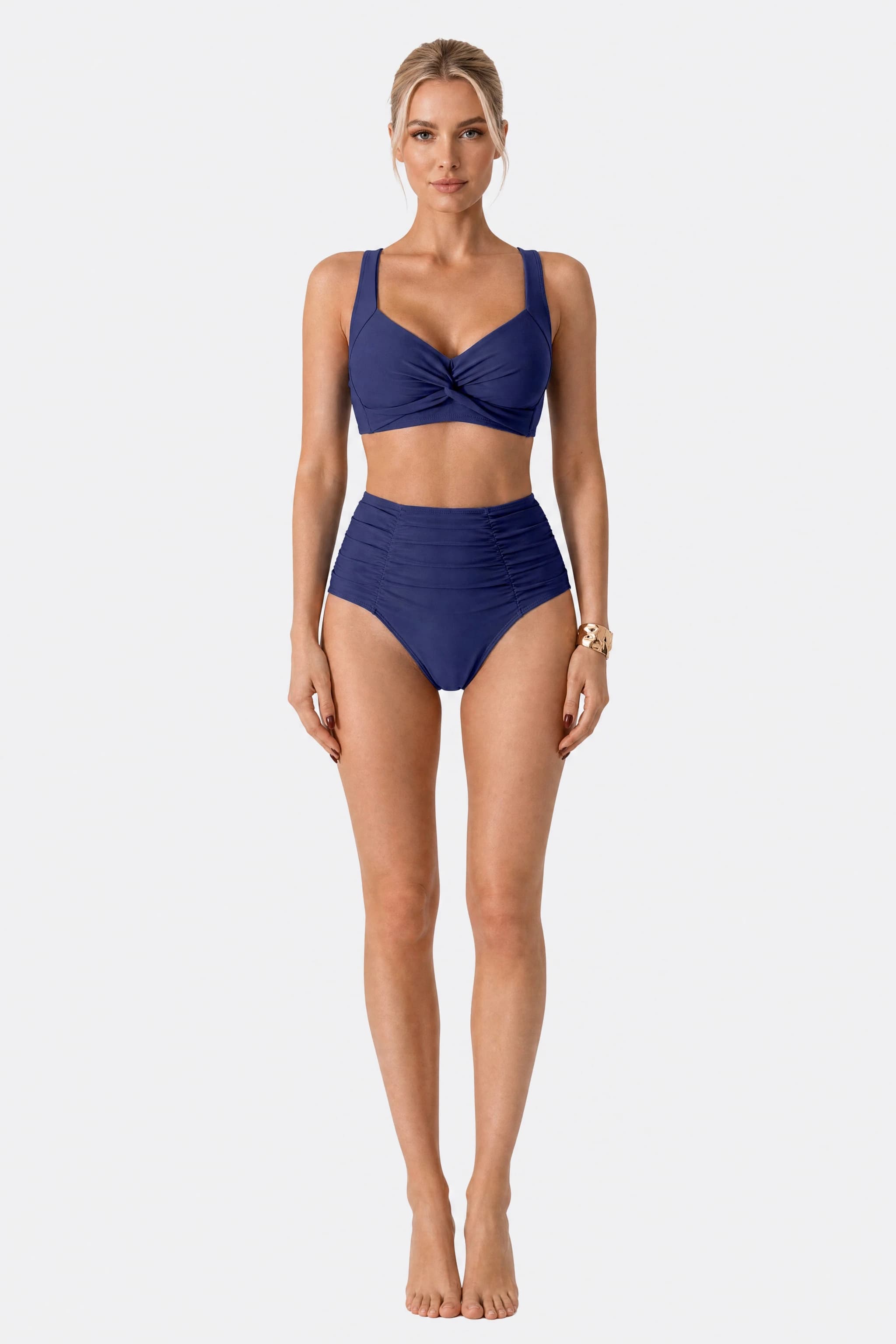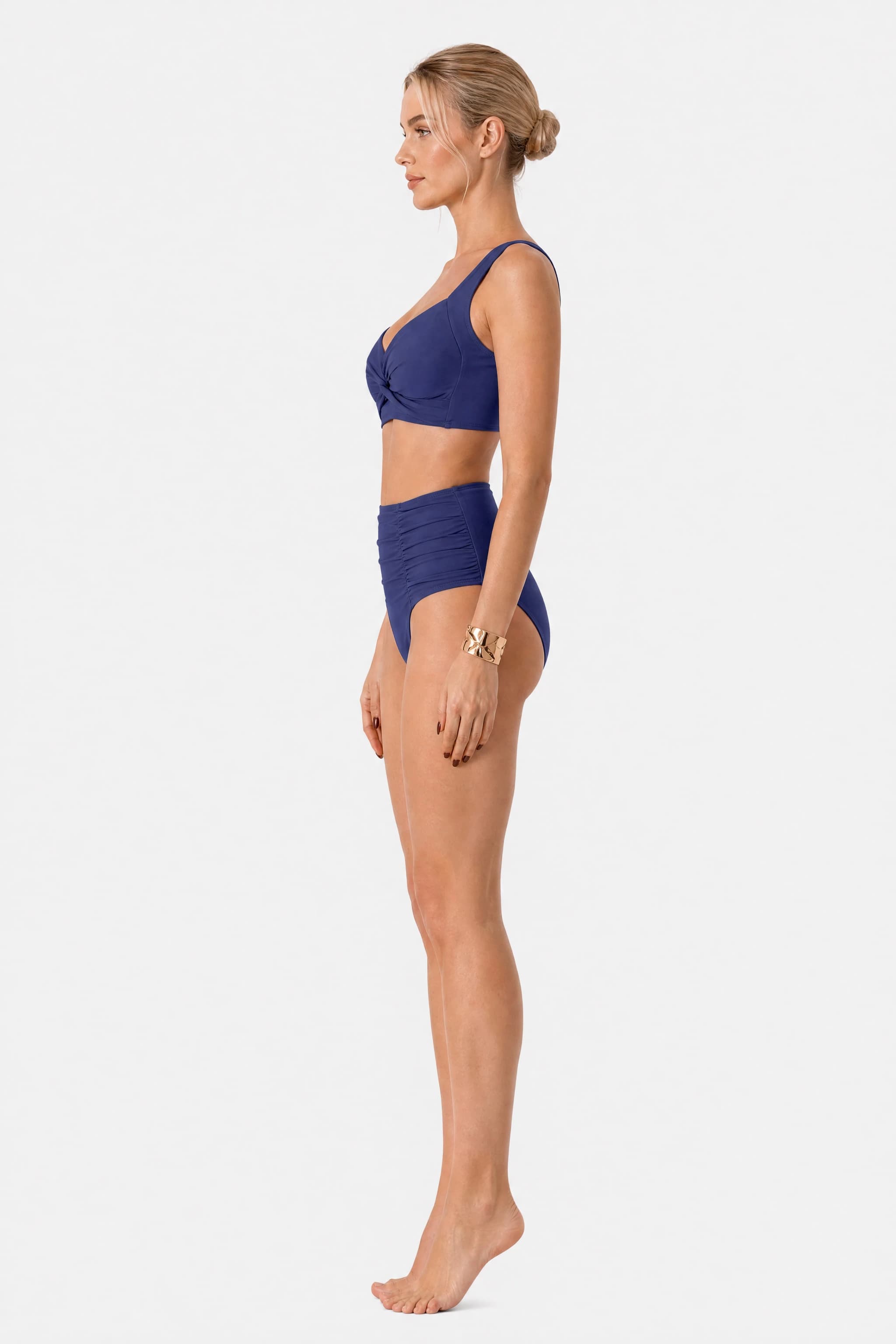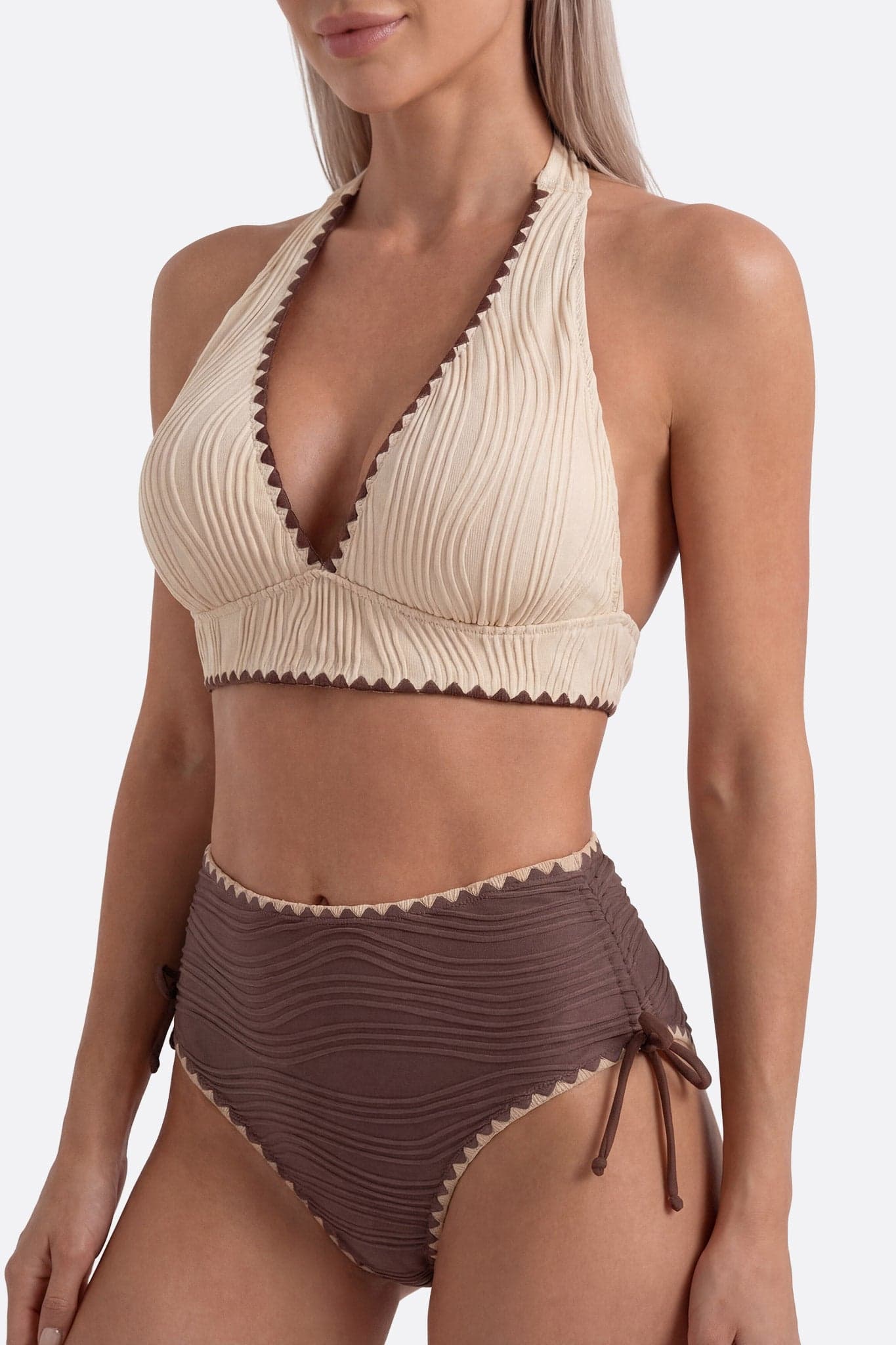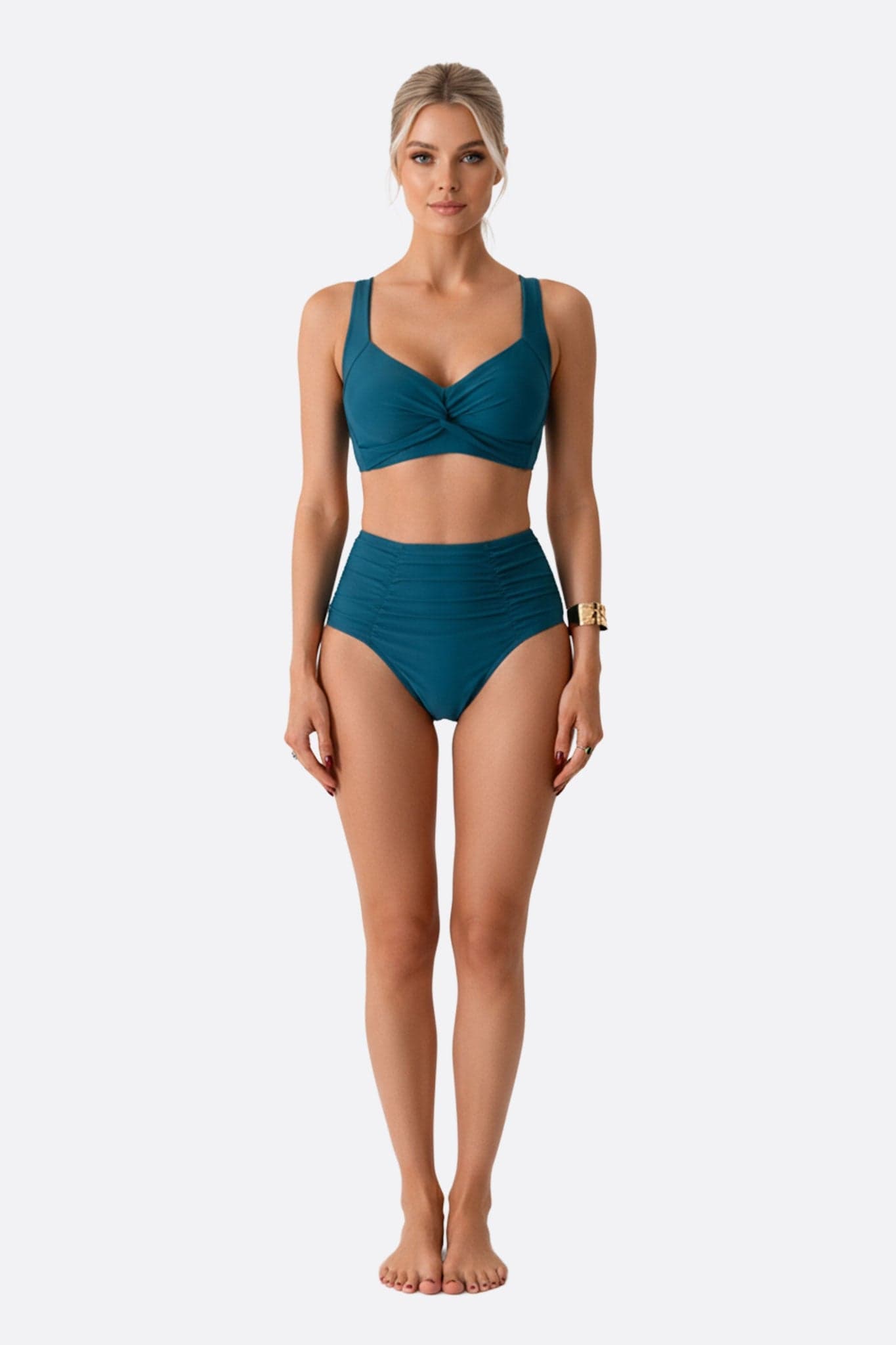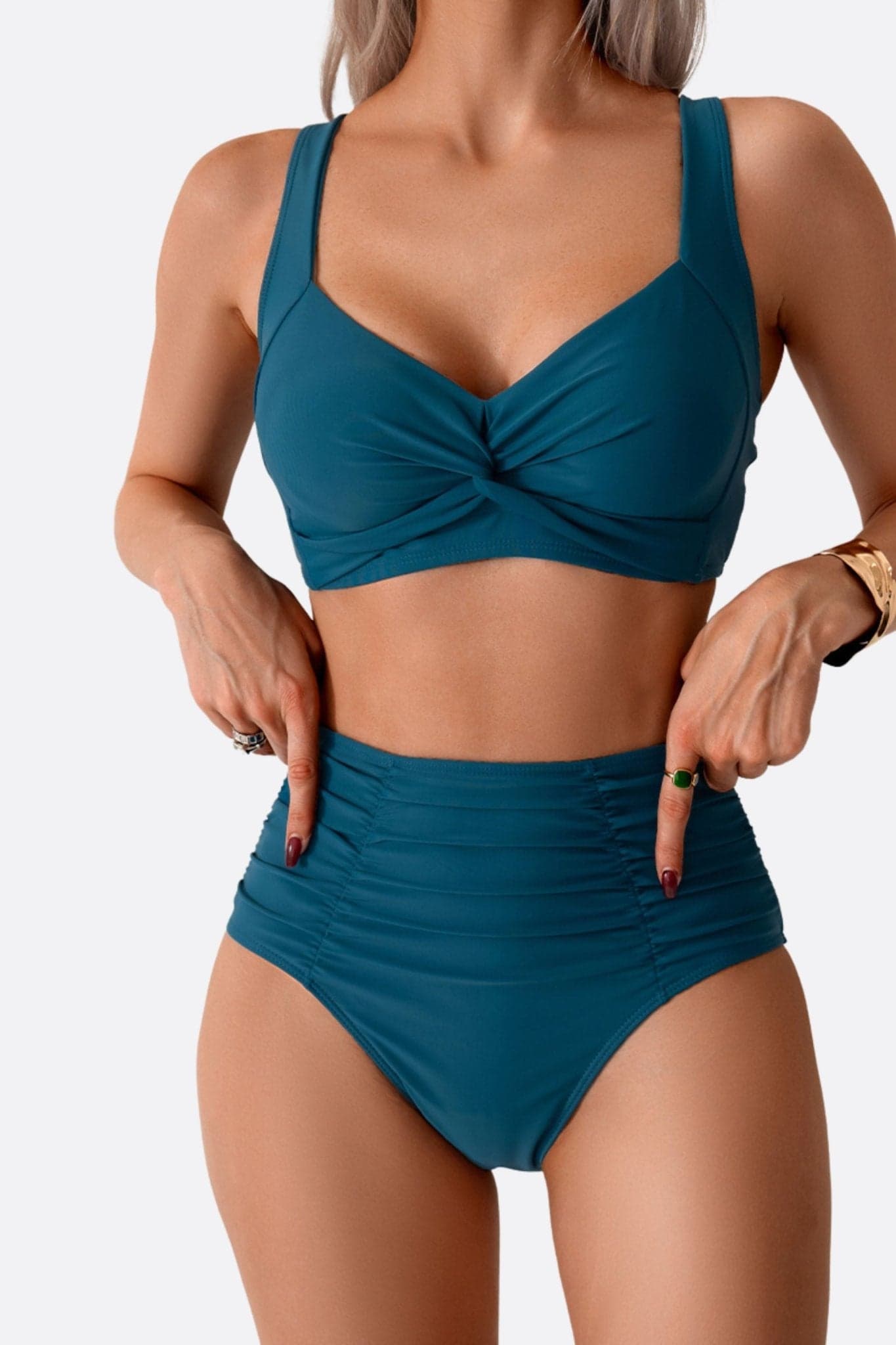
Anti-chlorine swimsuit: comfort and durable resistance
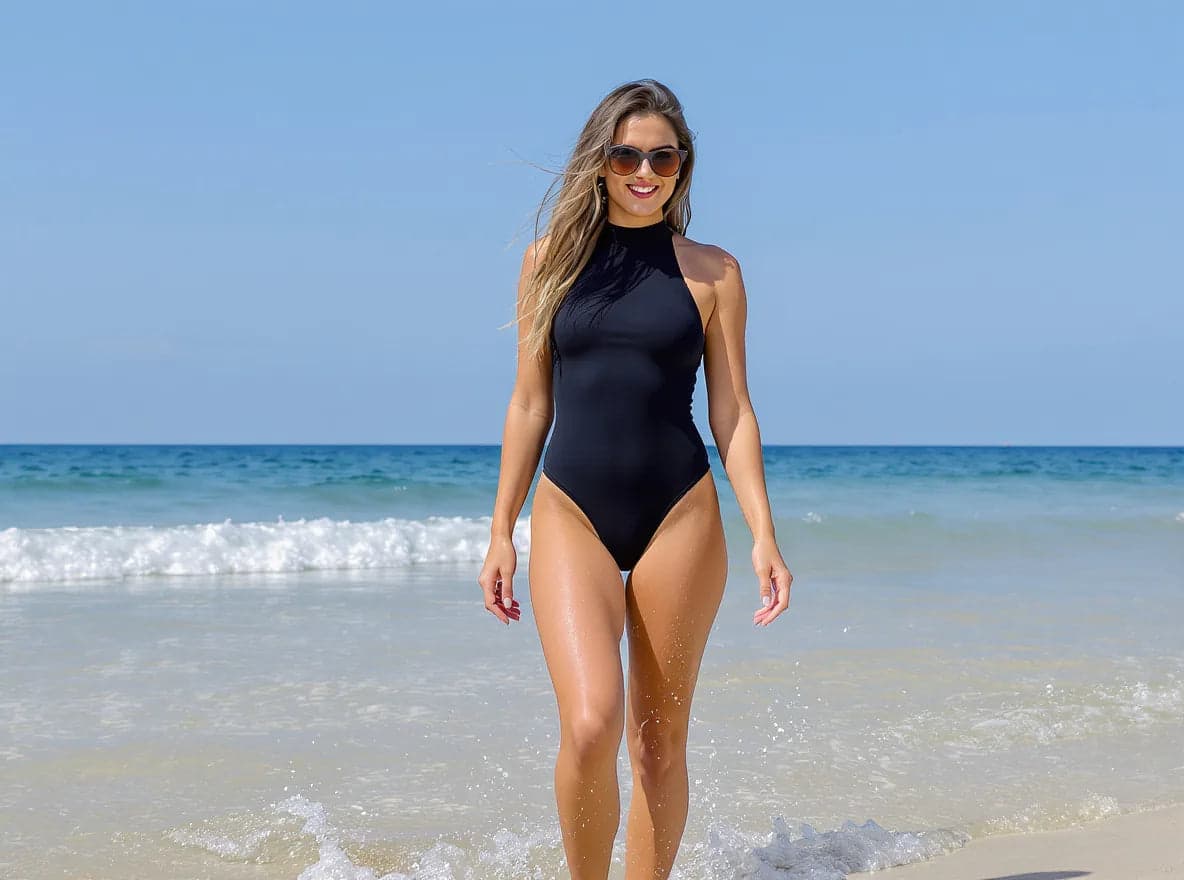
Women's swimsuit for municipal pool: chlorine resistance and support
Why is the municipal pool so demanding for swimsuits?
Municipal pools use high concentrations of chlorine to ensure water hygiene, which significantly attacks the fibers of swimsuits. Chlorine fades colors, weakens elasticity, and can even dissolve some cheap fibers within a few weeks of regular use.

In addition, there is friction against the pool edges, lane lines, and the pool bottom, which prematurely wears out the fabric. A classic beach swimsuit can lose its color and elasticity in a few weeks of regular pool swimming.
At Misciano, we have developed a specific range for pool swimming, using chlorine-resistant fibers (PBT polyester or high-tenacity polyamide) and dyes fixed at high temperatures that do not bleed.
TO REMEMBER
A good pool swimsuit should withstand at least 100 swimming sessions (about 6 months at 2-3 sessions per week) without losing its color or support. Our sports swimsuits are tested in real conditions in public pools to ensure this resistance.
Materials that resist chlorine: guide to technical fibers
PBT Polyester: the champion of chlorine resistance
PBT polyester (polybutylene terephthalate) is the most chlorine-resistant fiber currently available on the market. It retains its elasticity and color even after 200 hours of immersion in chlorinated water, equivalent to a year of intensive swimming.
Unlike regular polyamide which degrades upon contact with chlorine, PBT is chemically inert and does not react to chlorinated products. It is the material used by professional swimmers and in swimming clubs.
High-tenacity polyamide: the good compromise
High tenacity polyamide (also known as chlorine-resistant nylon) offers decent chlorine resistance at a more affordable cost than PBT. It is treated with an anti-chlorine coating that protects the fibers and extends the swimsuit's lifespan.
At Misciano, we use Italian polyamide certified Oeko-Tex with integrated anti-chlorine treatment, ensuring resistance for at least 100 swimming sessions. This material also retains good elasticity and a soft touch, unlike PBT which can be slightly more rigid.
Avoid blends with standard lycra
Standard lycra (or elastane) degrades very quickly when exposed to chlorine: it loses its elasticity in a few weeks and the swimsuit becomes loose and deformed. If your swimsuit contains lycra, make sure it is lycra Xtra Life (chlorine-resistant version) or a blend with PBT.
At Misciano, we exclusively use lycra Xtra Life in our pool swimsuits, which lasts 5 to 10 times longer than standard lycra.
MATERIAL COMPARISON
| Material | Chlorine resistance | Estimated duration |
|---|---|---|
| Polyester PBT | Excellent | 200h+ in chlorinated water |
| High tenacity polyamide | Good | 100+ sessions |
| Lycra Xtra Life | Fair | 5-10x standard lycra |
| Standard lycra | Low | A few weeks |
4 ultra chlorine-resistant swimsuits



Cuts for swimming: support and hydrodynamics
Racerback: the essential cut
The racerback is the most suitable cut for swimming in a pool. The wide straps pass across the back and meet between the shoulder blades, offering excellent chest support without compressing the shoulders. This cut distributes tension across the entire back, preventing localized compression and allowing for hours of swimming without discomfort.
At Misciano, our racerbacks feature lined and reinforced straps with flat elastics that do not roll or cut into the skin, even during intense movements like freestyle or breaststroke.
Sporty one-piece swimsuit: coverage and aerodynamics
A sporty one-piece swimsuit fully covers the bust and hips, thus avoiding direct skin friction against the pool wall or lane lines. Its fitted (but non-compressive) cut reduces water resistance and improves hydrodynamics.

Opt for models with side cutouts that slim the silhouette and allow for better arm movement. Our sporty one-piece swimsuits are designed with fabric panels oriented in the direction of movement for optimal comfort in freestyle, backstroke, and breaststroke.
Avoid details that hinder or detach
Ruching, ruffles, decorative knots, and thick push-up pads have no place in a swimming suit. They create resistance in the water, can detach with friction, and retain chlorinated water against the skin. Opt for sleek cuts, flat seams, and minimalist linings.
If you need chest support, choose an integrated bra (elastic under the chest) rather than rigid underwires.
PRACTICAL TIP
To test support before purchase, simulate breaststroke movements in-store: raise your arms above your head and spread them horizontally. If the straps slip or the bust moves, the swimsuit is not suitable for intensive swimming.
Colors and dyes: what resists and what fades
Black and navy: the most resistant colors
Black and navy blue are the colors that best resist chlorine. Dark dyes are fixed at high temperatures and penetrate deeply into the fibers, making them very resistant to fading.
At Misciano, our black and navy swimsuits retain their intensity even after 100 washes in chlorinated water. If you swim several times a week, choose these colors for a swimsuit that stays impeccable longer.
Bright colors: choose high-quality dyes
Bright colors (red, pink, turquoise) can fade quickly if the dye is not of professional quality. Ensure your swimsuit uses high-temperature fixed dyes certified chlorine-resistant.
At Misciano, all our colors (even the brightest) are tested in chlorinated immersion for a minimum of 50 hours to verify their durability. We avoid pastel shades that bleed easily and prefer saturated colors that retain their brightness.
Prints: favor thermal sublimation
Prints made by thermal sublimation (the dye is integrated into the fiber when hot) resist chlorine much better than surface prints (screen printing, transfer). If you like patterned swimsuits, check that the print is sublimated and not glued.
Our printed swimsuits exclusively use thermal sublimation, ensuring perfect durability even after dozens of swimming sessions.
GOOD PRACTICE
Resistance by color, from most to least durable:
1. Black and navy, deep dyes, the most resistant
2. Saturated dark colors, good resistance if high-temperature dye
3. Certified bright colors, acceptable if chlorine-resistant certification
4. Pastels and surface prints, to avoid for regular swimming
Care to extend lifespan: essential actions
Rinse immediately after each session
Chlorine continues to attack the fibers as long as it remains in the fabric. Always rinse your swimsuit with clear water immediately after swimming, ideally in the shower before getting dressed again.
A 30-second rinse with cold or lukewarm water is enough to remove 80% of the residual chlorine. If you cannot rinse immediately, place the swimsuit in a waterproof bag and rinse it as soon as you return home, without delay.
Hand wash with a mild detergent, not in a machine
Machine washing (even delicate) wears out the swimsuit's elasticity and can deform the seams. Always hand wash your swimsuit with a special sports mild detergent or a neutral shampoo. Avoid regular detergents that contain bleaching agents and harsh fragrances.
At Misciano, we recommend a weekly wash (after 2-3 sessions) to completely remove chlorine, sebum, and cream residues. Soak the swimsuit for 5 minutes in soapy lukewarm water, gently rub, rinse thoroughly, and squeeze without twisting.
Dry in the shade, never in direct sunlight
The sun fades colors and weakens elastic fibers. Always hang your swimsuit in the shade in a ventilated area, or lay it flat on a towel. Avoid the dryer which destroys elasticity and can shrink the swimsuit.
A well-maintained pool swimsuit dries in 30 to 60 minutes in the open air, and can be reused the next day if you alternate between two swimsuits.
3-STEP MAINTENANCE ROUTINE
1. After each session : Rinse for 30 seconds with cold water in the shower
2. Each week (after 2-3 sessions), Hand wash with mild detergent, squeeze without twisting
3. Drying : Always in the shade, flat or hung, never in the dryer or in the sun
How long does a good pool swimsuit last?
Lifespan according to swimming frequency
A quality chlorine-resistant swimsuit lasts on average 6 to 12 months depending on swimming frequency. If you swim twice a week, count on 12 months. If you swim five times a week, count on 6 months.
The first signs of wear are loss of elasticity (the swimsuit becomes loose), slight discoloration, and the appearance of small holes in areas of friction (thighs, straps). At Misciano, our sports swimsuits are tested for a minimum of 100 wash cycles, which corresponds to 6 to 8 months of intensive swimming.
Alternate between two swimsuits to double the lifespan
If you swim regularly, invest in two swimsuits that you alternate. This allows the fabric time to regain its original shape between sessions, and reduces overall wear.
You can thus use each swimsuit for 12 months instead of 6, which is more economical in the long run. Moreover, alternating between two swimsuits allows you to wash one while using the other, ensuring a systematic rinse after each session.
Signs it's time to replace your swimsuit
Replace your swimsuit when it becomes loose around the chest or hips (a sign that elasticity is lost), when the color has significantly faded, or when holes appear at the seams or areas of friction.
An overly worn swimsuit no longer provides the necessary support for swimming and can cause discomfort or even irritation. Don't force it: a swimsuit costs between 40 and 45 € and lasts 6 to 12 months, which is a very reasonable monthly cost for optimal comfort.
SAVINGS TIP
Alternating 2 swimsuits + systematic rinsing = doubled lifespan. An initial investment of 80-90 € (2 swimsuits) costs you less than 8 € per month over 12 months, compared to 90 € if you buy a new swimsuit every 6 months.
Misciano's expertise for pool swimming
At Misciano, we design our pool swimsuits in collaboration with regular swimmers and swimming clubs, to meet the real demands of the practice. Our fabrics are all chlorine-resistant (PBT polyester or high-tenacity polyamide with anti-chlorine treatment), our dyes are fixed at high temperature, and our seams are reinforced with elastic thread at tension areas (straps, crotch, side cuts).
Each swimsuit is tested in real conditions in public pools: we measure resistance after 50 and 100 swimming sessions, checking color retention, residual elasticity, and seam condition. Our straps are all doubled and sheathed to prevent chafing, and our linings are minimal (only at the bust) for quick drying and maximum comfort.
If you want to know more about our resistance tests and quality commitments, check out our guide on the sustainable quality of swimsuits.
FREQUENTLY ASKED QUESTIONS
Which material is most resistant to chlorine for a pool swimsuit?
PBT polyester (polybutylene terephthalate) is the most chlorine-resistant fiber. It retains elasticity and color even after 200 hours of immersion in chlorinated water. High tenacity polyamide with anti-chlorine treatment is a good quality-price compromise. Avoid swimsuits with classic lycra which degrades quickly in contact with chlorine.
How long does a quality pool swimsuit last?
A chlorine-resistant swimsuit lasts on average 6 to 12 months depending on the frequency of swimming. If you swim 2 times a week, count 12 months. If you swim 5 times a week, count 6 months. Alternating between two swimsuits doubles this lifespan by allowing the fabric time to rest between sessions.
Should you rinse your swimsuit immediately after the pool?
Yes, absolutely. Chlorine continues to attack the fibers as long as it remains in the fabric. Always rinse your swimsuit with clear water immediately after the session, ideally in the shower before getting dressed. A 30-second rinse is enough to remove 80% of the residual chlorine and significantly extends the life of the swimsuit.
Which cut to choose for regular swimming in the pool?
The racerback is the most suitable cut: wide straps in the back for excellent bust support without compressing the shoulders. Opt for a sporty one-piece swimsuit with a fitted cut and side panels for good hydrodynamics. Avoid decorative details (gathers, ruffles, knots) that create resistance and easily come off.
Why does my swimsuit fade after a few sessions?
This happens if the swimsuit does not use high-quality dyes resistant to chlorine. Bright colors and pastels are particularly fragile. Choose swimsuits with high-temperature fixed dyes and chlorine resistance certification. Black and navy blue are the most resistant colors. Systematic rinsing after each session also limits fading.
Can you wash a swimsuit in the machine?
It is not recommended. Machine washing strains the elasticity of the swimsuit and can deform the seams. Always wash by hand with a mild detergent, after 2-3 sessions. Soak for 5 minutes in soapy lukewarm water, gently rub, rinse thoroughly, and wring out without twisting. Dry in the shade, never in the dryer or direct sunlight.