Women's swimsuit with durable quality: invest without making a mistake

Women's swimsuit with durable quality: material checkpoints
You are looking for a durable women's swimsuit and you don't want to pay “a lot” for a fabric that stretches out after the third swim, fades in the sun, or pills from sand friction. Durability is not based on a vague promise: it is found in the composition, the hand of the fabric (its feel, its density), and especially in how the fiber reacts to three specific enemies: UV, salt, and chlorine. Your first filter should therefore be textile, not aesthetic.
The winning duo: polyamide + elastane... but not just any kind. Most performance swimsuits rely on polyamide (often called nylon) for strength, and elastane (Lycra/Spandex) for elasticity. To aim for durability, look for a good density polyamide (fabric that “holds” between the fingers, without transparency) and an elastane that doesn't feel “soft.” A too buttery, too thin sensation is often a sign of a light knit that will age faster in tension areas (straps, cutouts, buttocks).
Econyl, recycled polyamide, recycled polyester: durable does not mean fragile. A swimsuit made of recycled fiber can be excellent if the knitting and gauge (the fineness of the knit) are mastered. What matters: the density and the elastic return. Do a simple test in-store: slightly stretch the fabric over 3–4 cm, release, then observe if the mesh returns sharply, without rippling. A good fabric almost “snaps” back. An average fabric keeps a small wave, like a memory of the stretch.
The trap of overly shiny and too thin fabrics. Shine can be superb, but in some qualities, it signals a smooth thread, more sensitive to micro-scratches and pilling (especially if you sit on rough surfaces). If you like the satin effect, make sure the fabric remains compact and that the lining is up to par (we'll come back to this later). A good shiny swimsuit should remain “fresh” to the touch, not slippery to the point of seeming fragile.
Chlorine resistance: the discreet index that changes everything. If you swim in a pool, prioritize mentions of chlorine resistance or fabrics based on high tenacity polyester (often more durable in chlorine than some polyamides). However, polyester can offer a more “dry” hand. This is not a flaw: it is often a sign of stability.
Furthermore, check if the product carries the “chlorine resistant” mention certified according to standards such as ISO 105 or recognized labels (OEKO-TEX, GRS). The ideal is to balance comfort and actual use: regular pool = priority to chlorine resistance; sea and sun = priority to UV and dye quality.
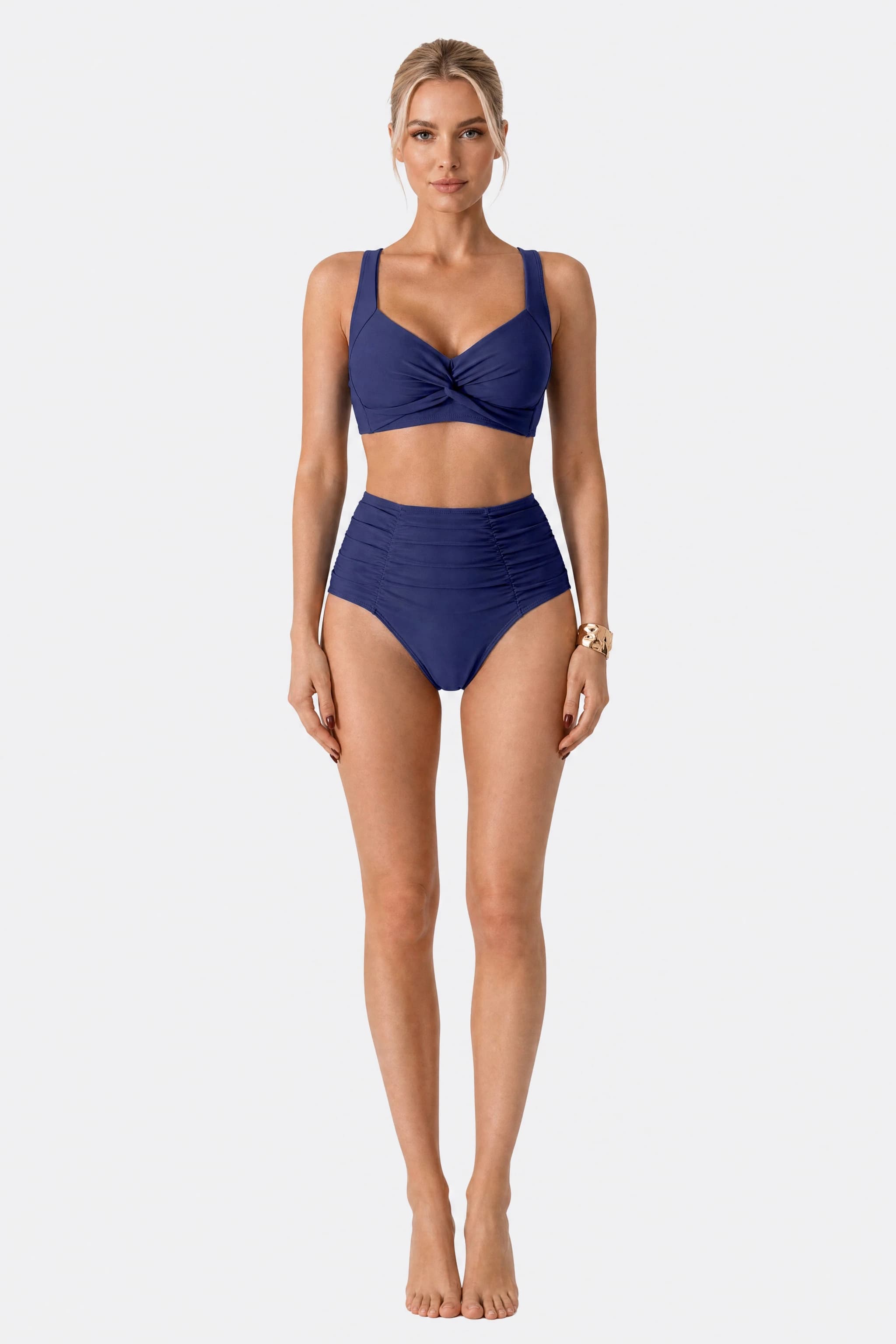
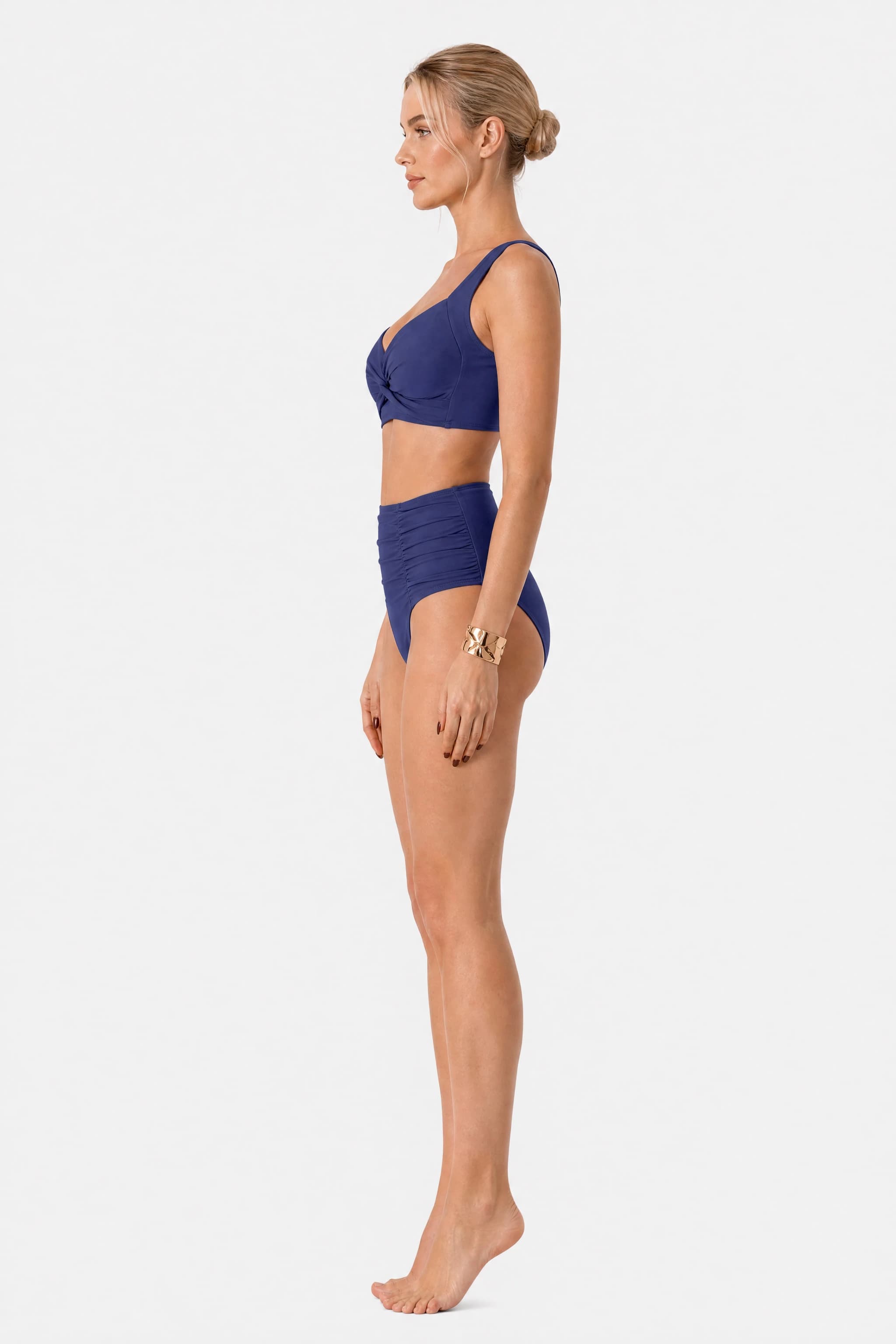
Color is a technical factor. Deep blacks and ink blues often hold better than some very light or very “acidic” shades, which are more demanding in dyeing. Whites and pastels require impeccable lining and stable dyeing to avoid wet transparency and yellowing. If you invest, demand a color that remains dense, even when stretched: stretch the fabric in front of a light source, the shade should remain uniform, without whitening in streaks.
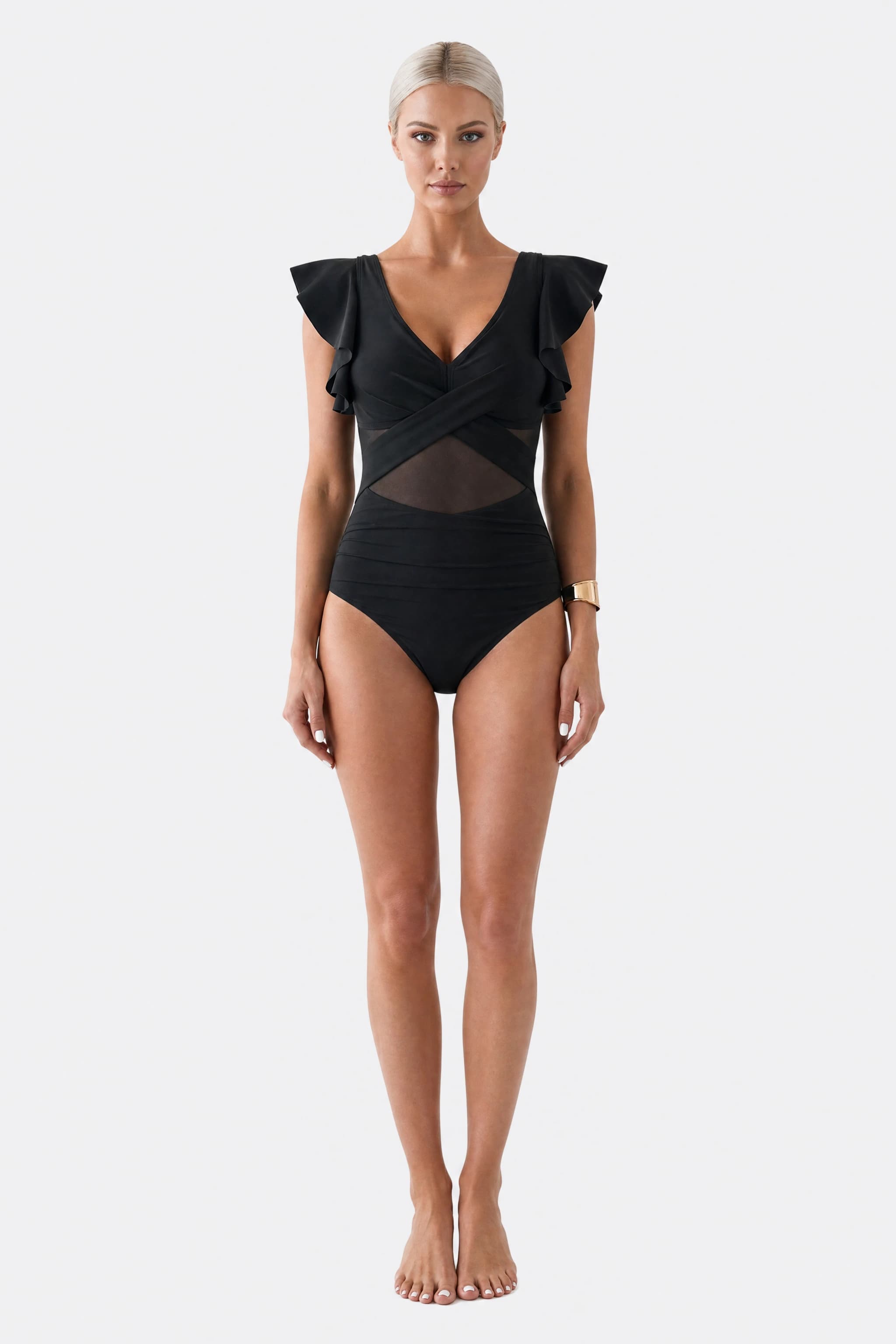
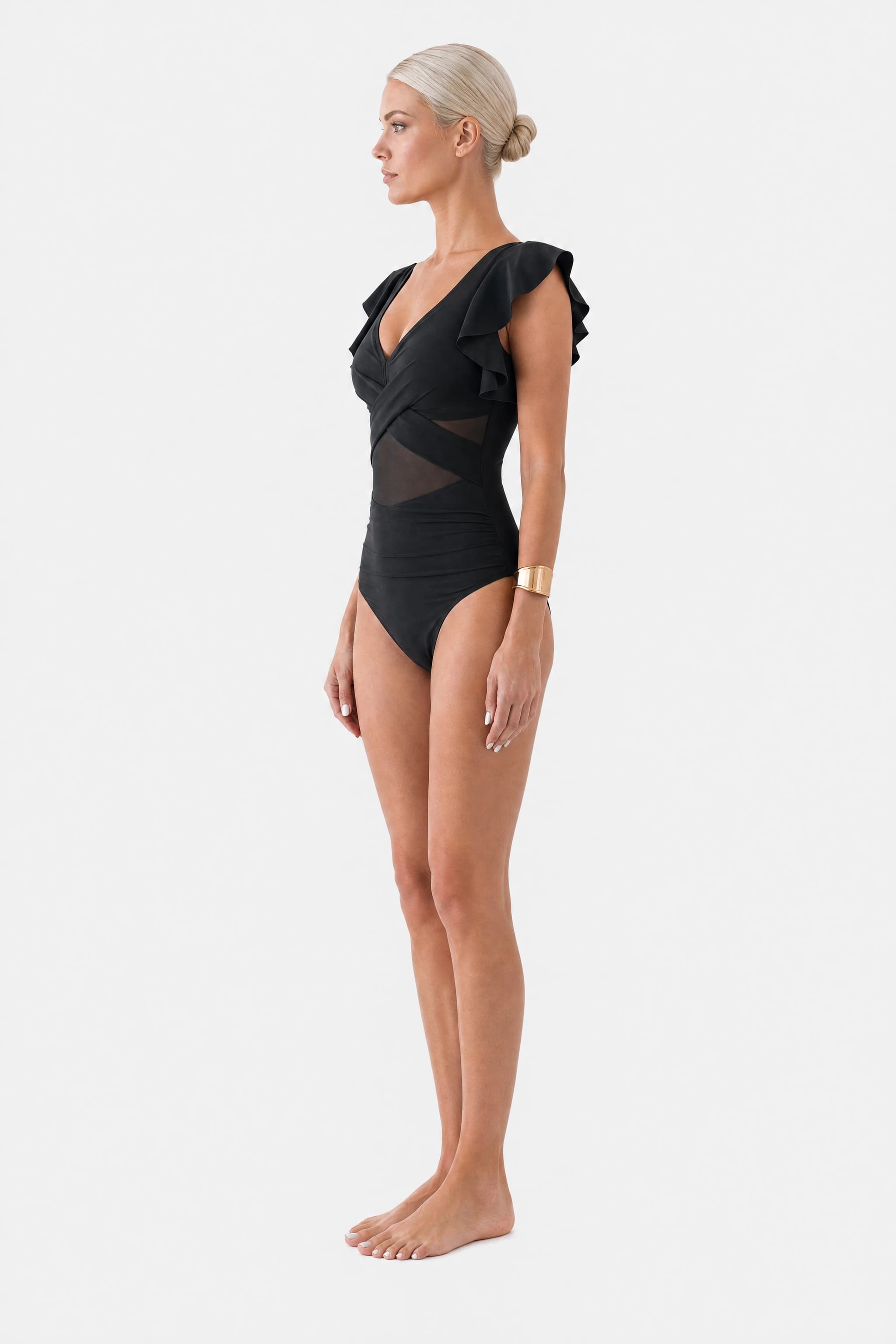
A quality black swimsuit is a durable investment that spans seasons. Discover our timeless black swimsuits.
Construction and finishes: lining, elastics, seams, the trio that separates a durable purchase from a disappointing one
A women's swimsuit with durable quality is recognized less by its print than by its construction. Two swimsuits can have the same composition but age differently: one remains sharp, the other deforms, marks the skin, wrinkles, or "bags." The difference lies in three areas: lining, elastics, seams. Here, the eye and hand are enough to avoid mistakes.
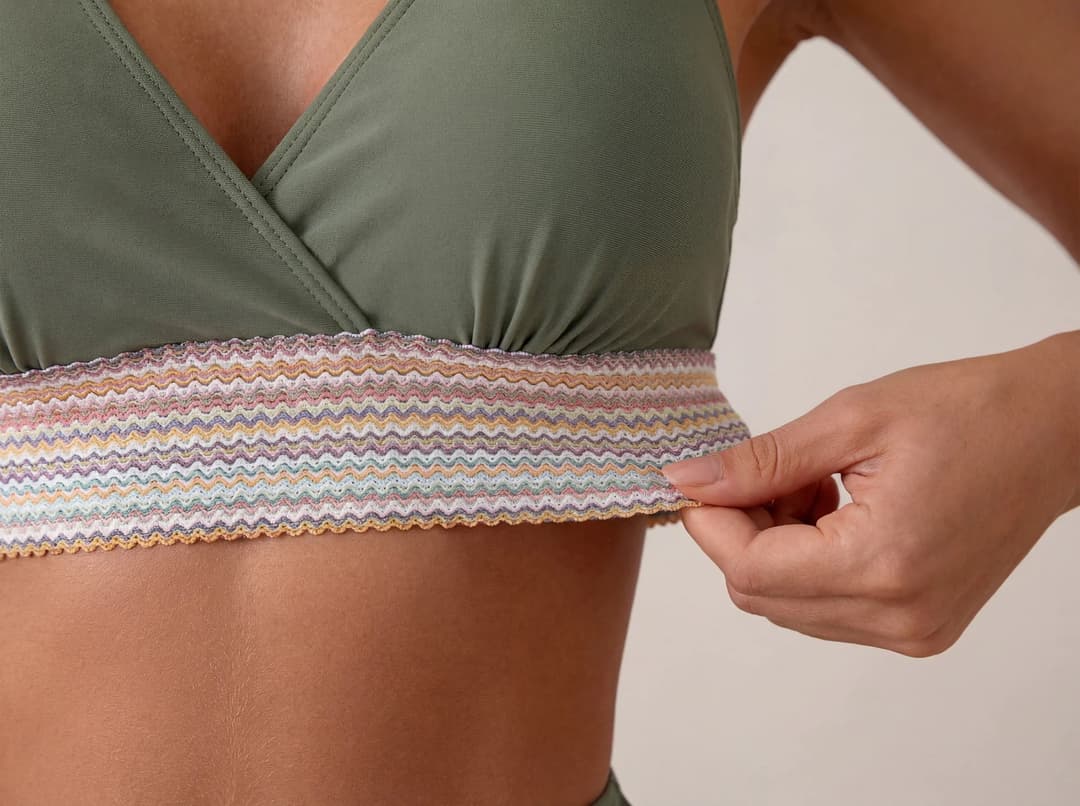
Lining: your anti-transparency and anti-deformation assurance. A well-thought-out lining stabilizes the swimsuit. On a one-piece, it can slightly shape the bust, smooth the stomach, and especially prevent the outer fabric from stretching over swims. On a bottom, it avoids the "wet transparent" effect and limits wear from friction. Touch the lining: it should be soft but not limp, with elasticity consistent with the main fabric. If the lining is too thin, it wrinkles and creates permanent creases. If it is too stiff, it pulls and deforms the seams.
Gusset and sensitive areas: interior cleanliness is a sign of seriousness. Turn the bottom inside out: the gusset should be neatly placed, without harsh edges. Overthicknesses should be controlled. A clean interior, without protruding threads, indicates better durability in washing. It's discreet but revealing: a brand that takes care of the interior often takes care of everything else.
Elastics: the real wear piece. The elastics (waist, thighs, neckline, back) are the first to give out if the quality is average. Feel the hem: you should sense a regular tension, without stiffer areas. Stretch the leg opening and release: the hem should return without puckering. A well-fitting elastic provides a "clean" support feeling, never cutting. If, during the fitting, you feel a very distinct mark on the skin, it is not necessarily support: it is sometimes an elastic that is too hard, which will age poorly and eventually twist.
Seams: flat, regular, without "trembling." Look at the stitch regularity. On a swimsuit, you often encounter overlock and coverstitch. What matters: the seam should be flexible (it accompanies elasticity) and stable (it does not wave). A seam that undulates flat on the table indicates fabric too stretched during manufacturing: over time, this can accentuate deformations. Run your finger over it: if you feel roughness, expect more friction, hence more wear.
Cups, underwires, reinforcements: durability = integration, not accumulation. Poorly calibrated removable cups fold, mark, and end up "living their own life." If you opt for cups, prefer a stable insertion, with a well-cut pocket. For underwires, check that the ends are well protected: it's a classic breaking point. As for reinforcements (shaping tulle, powernet), they are excellent if the cut is right: a reinforcement that is too tight tires the seams and accelerates deformation.
If you need to refine your choice logic on the cut, you can consult our complete guide to the women's swimsuit: you will find a useful reminder of shape balances, to reread later with your "material + construction" grid.
Buying durable without making mistakes: quick tests, warning signals, and maintenance that truly extends the life of the swimsuit
Investing in a durable women's swimsuit also means making quick decisions: in the fitting room, upon receiving the order, or before the first swim. Good habits are based on a few simple tests and a care routine that respects the fabric. Durability is not only “in the product”: it depends on how you put it to the test from the start.
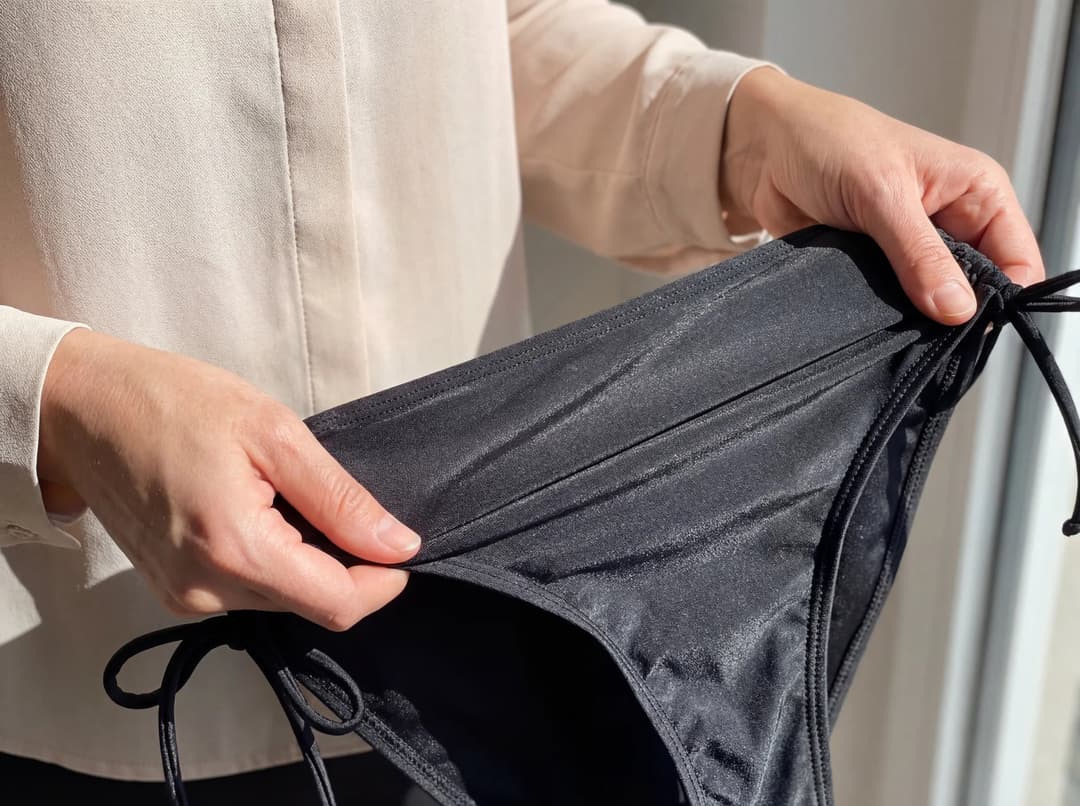
Test #1: controlled stretching (elastic return). Take an unlined area (often the side or back), gently stretch, then release. The fabric should return without rippling. If you see a persistent micro-wave, especially near the seams, it's a warning: the swimsuit may sag at the buttocks, waist, or neckline. A good elastic return gives a sense of neatness, almost “tonic”.
Test #2: light (opacity and density). In front of a window or phone lamp, slightly stretch the fabric. A durable swimsuit is not necessarily thick, but it should be dense. If the mesh opens a lot and reveals the hand behind, beware: wear from abrasion will be faster, and transparency in water more likely. On light colors, the lining should play its role without creating a visible demarcation.
Test #3: seam under tension (stability). Gently pull on either side of a seam. The stitches should remain regular, without visually “cracking”, without revealing a gap. A seam that separates is a sign of poorly distributed tension or unsuitable thread. On adjustable straps, also check the quality of the accessories: a slider that slips too easily will eventually become misaligned, and you'll compensate by tightening, which tires the elastic.
Mini-checklist “product label”: For an objective choice, check the label:
- The exact composition (percentage of polyamide and elastane).
- The mention “chlorine resistant” or other indication of chlorine resistance.
- Any certifications (e.g., OEKO-TEX, GRS).
- Precise care instructions.
Immediate warning signs. Avoid: (1) fabrics that whiten significantly when stretched, (2) hems that already ripple when flat, (3) linings that “block” and pull, (4) unprotected metal accessories (oxidation, marks), (5) prints that seem applied on the surface like a film, they crack faster than well-integrated prints. Also read the product label to know the exact composition and check for technical mentions.
Durable = consistent use (pool vs sea vs spa). If your swimsuit sees chlorine twice a week, it should be chosen for that: otherwise, even a high-quality “beach” suit will eventually lose its elasticity. Conversely, for the sea and sun, colorfastness and UV resistance become priorities. Your investment is more secure when you align the swimsuit with its true environment.
Care that changes everything (without complicated steps). The golden rule: rinse immediately. Salt, chlorine, sunscreen are agents that continue to act as long as they remain in the fiber. Rinse with cold or lukewarm water, without wringing. Then, hand wash with mild soap if necessary. Avoid fabric softener: it coats the fiber and can weaken elasticity. Dry flat, in the shade: direct sunlight on wet fabric accelerates dye oxidation and tires elastane. Finally, be careful with surfaces: rough stone, raw wood, abrasive pool edges. Many “pilling swimsuits” have simply rubbed too much.
Storage: the detail that prevents deformations. Do not leave a wet swimsuit balled up in a bag: prolonged heat and humidity attack elastane and set creases. At home, let it dry completely before storing. For molded models, reshape them while drying to avoid marks.
By applying these tests and actions, you turn a purchase into an investment: a swimsuit that retains its shape, color, and support, swim after swim, without the visual fatigue that betrays pieces “pretty at first”.
For a complete guide on choosing your swimsuit, consult Women's swimsuit: complete guide to make the right choice.
Discover our swimsuit collection (starting at €40).
To go further, consult the Materials Observatory.
For a complete guide on choosing your swimsuit, consult Women's swimsuit: complete guide to make the right choice.
Discover our swimsuit collection (starting at €40).
To go further, consult the Materials Observatory.

Article by Alberto Alagna
Published on 04/15/2026 at 15:31
About the author
Passionate about textile craftsmanship and sustainable design, Alberto Alagna brings to Misciano a vision where elegance meets ethics. With his experience in high-end ready-to-wear, he shares his style advice and the behind-the-scenes of the Misciano house.
→ Learn more about Alberto AlagnaFREQUENTLY ASKED QUESTIONS
What are the criteria to consider when choosing a durable swimsuit?
To ensure the durability of a swimsuit, it is essential to focus on the textile composition. Favor high-quality polyamide and elastane fabrics, which resist UV, salt, and chlorine damage. Also assess the fabric's hand, particularly its feel and density, which indicate its long-term resistance.
Why is the fabric composition so important for the longevity of a swimsuit?
The fabric composition plays a crucial role in the longevity of a swimsuit. Quality materials, such as a blend of polyamide and elastane, offer better resistance to degradation caused by natural elements. This allows the swimsuit to maintain its shape and appearance, even after multiple uses in aquatic environments.
How does the feel of the fabric influence the choice of a swimsuit?
The feel of the fabric is an important indicator of its quality. A fabric that is pleasant to the touch, dense, and flexible suggests better resistance to wear and deformation. This means that the swimsuit will not only be comfortable to wear but also more durable against friction and environmental conditions.
What natural enemies must a swimsuit be able to withstand?
A quality swimsuit must be able to resist three natural enemies: UV rays, sea salt, and pool chlorine. Each of these elements can quickly deteriorate a fabric if it is not designed to withstand them, highlighting the importance of choosing suitable materials to ensure optimal durability.
Why is investing in a quality swimsuit a wise decision?
Investing in a quality swimsuit translates to long-term savings. Although it may seem expensive at purchase, a durable swimsuit will stand the test of time, thus avoiding frequent replacement purchases. Moreover, a well-designed swimsuit offers better comfort and greater satisfaction during aquatic activities.