Women's swimsuit size bust length: How to avoid the bust error
Measure the torso length to secure your women's swimsuit size
If your one-piece "pulls" as soon as you pull it up, or if the crotch becomes uncomfortable after ten minutes, the problem may not necessarily be your bust or hip measurement. In most cases, the error lies in the torso length: this vertical distance dictates the placement of the straps, the height of the neckline, and especially the overall tension of the swimsuit. On the hanger, two models display the same size; on the body, one fits, the other constrains. The difference is often there.
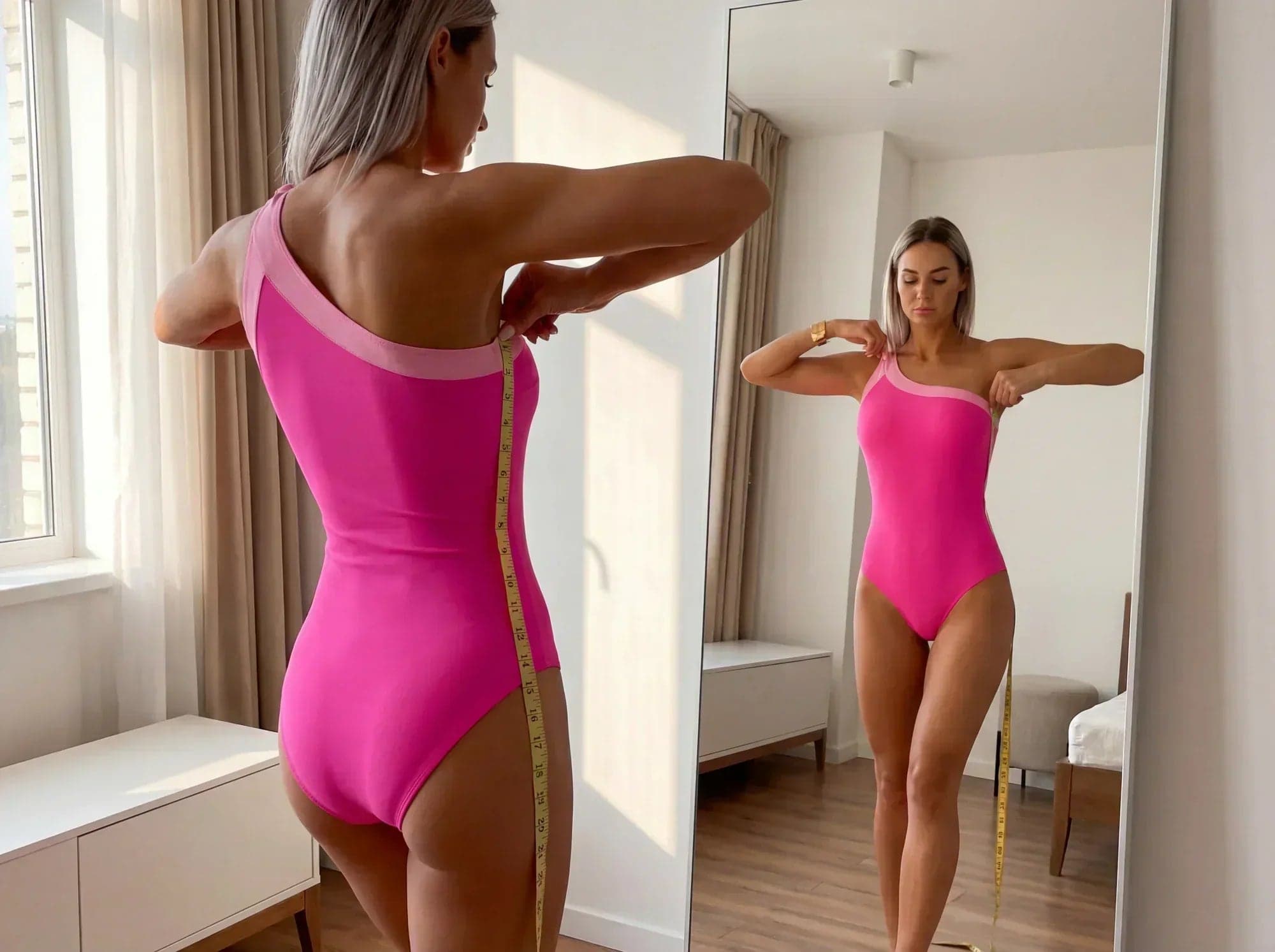
The most reliable measurement for a women's swimsuit size is the torso length and involves measuring your torso "in a loop," as a workshop does when checking the ease of a one-piece:
- Put on a thin undergarment or a swimsuit that you tolerate well.
- Take a flexible tape measure.
- Place it on the highest point of the shoulder (near the base of the neck), pass it in front of the chest, between the legs, then bring it up in the back to the starting point.
- Keep the tape in contact, without strangling it: it should glide, not mark.
This "loop" corresponds to the real constraint of a one-piece when you walk, sit, raise your arms. It is more telling than a simple shoulder-to-crotch measurement. Note the number, then repeat a second time: if you find two different values, it means the tape was not placed with the same tension. Practical tip: If the difference between two measurements exceeds 1 cm, it is advisable to retake the measurement, ensuring the tape measure is well-positioned and at the correct tension.
Common errors when taking measurements
- Not maintaining the tape measure at the correct tension (neither too tight nor too loose).
- Placing the tape measure outside the actual highest point of the shoulder.
- Taking the measurement in an inadequate position (bending over, sitting, or holding your breath).
- Not taking into account morphological particularities (tall sizes, large bust, etc.).
Then, observe where your body demands length: high chest, long rib cage, low marked waist, or high-placed hips. Two women can have the same height and the same pants size, but a different vertical distribution. The swimsuit, however, does not negotiate: it follows the body's line, and the slightest discrepancy results in rigid folds, a seam that rides up, or straps that cut into the shoulder.
Finally, measure under usage conditions: if you buy a swimsuit for swimming, take the measurement in an upright posture, shoulders open; if it's for lounging, also measure in a sitting position (the torso "shortens"). This double reading avoids the perfect standing size, unbearable as soon as you sit on the edge of a pool.
Recognize an unsuitable torso length: precise signs on a one-piece and a bikini
The torso length is not only visible on a one-piece. It also influences the balance of a bikini: panty height, placement of the underbust band, distance between the bottom of the sternum and the waist. But it is on the one-piece that the error becomes immediate, almost audible: the fabric "sings" in tension, the elastics become dry, and the line that is supposed to be neat starts to climb.

Signs of a torso too long for the swimsuit (the swimsuit is "short" on you):
- The crotch pulls forward or backward, with a continuous pulling sensation.
- The straps dig in, even when loosened, and the neckline seam rides up.
- The neckline closes: the material is drawn upwards, as if the swimsuit is "seeking" length.
- The cutouts become too high, not by style, but by constraint.
Signs of a torso too short for the swimsuit (the swimsuit is "long" on you):
For a complete guide on choosing your swimsuit, consult Women's swimsuit: complete guide to make the right choice.
Discover our swimsuit collection (starting at 40€).
For more information, consult our size guide.
For a complete guide on choosing your swimsuit, consult Women's swimsuit: complete guide to make the right choice.
Discover our swimsuit collection (starting at 40€).
For more information, consult our size guide.
- An excess of material forms at the waist or lower back, with soft folds.
- The bust lacks support: the underbust line drops and floats.
- The straps must be tightened to the maximum to stabilize, creating unnecessary compression.
- The swimsuit "gapes" at the sides, especially under the armpits.
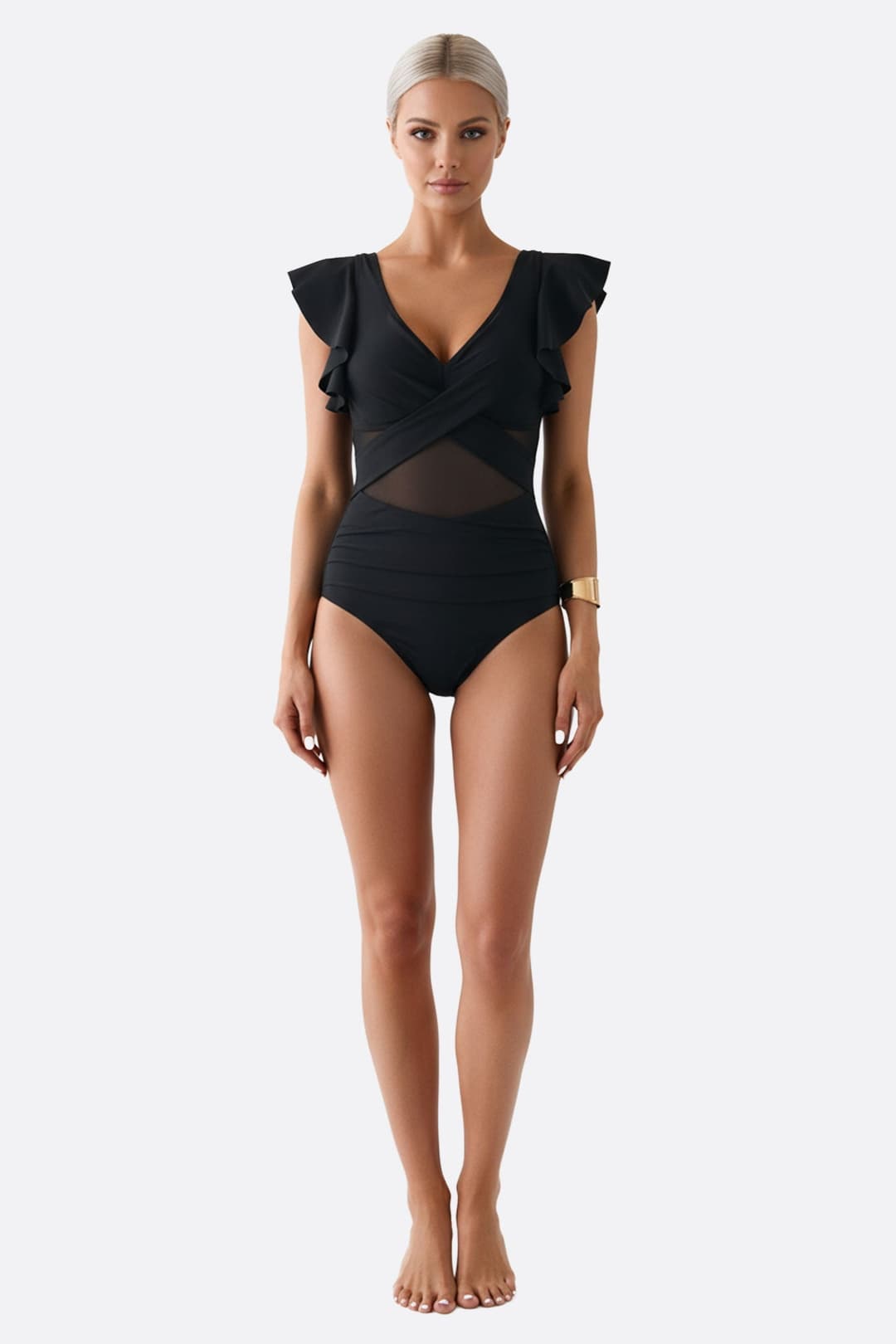
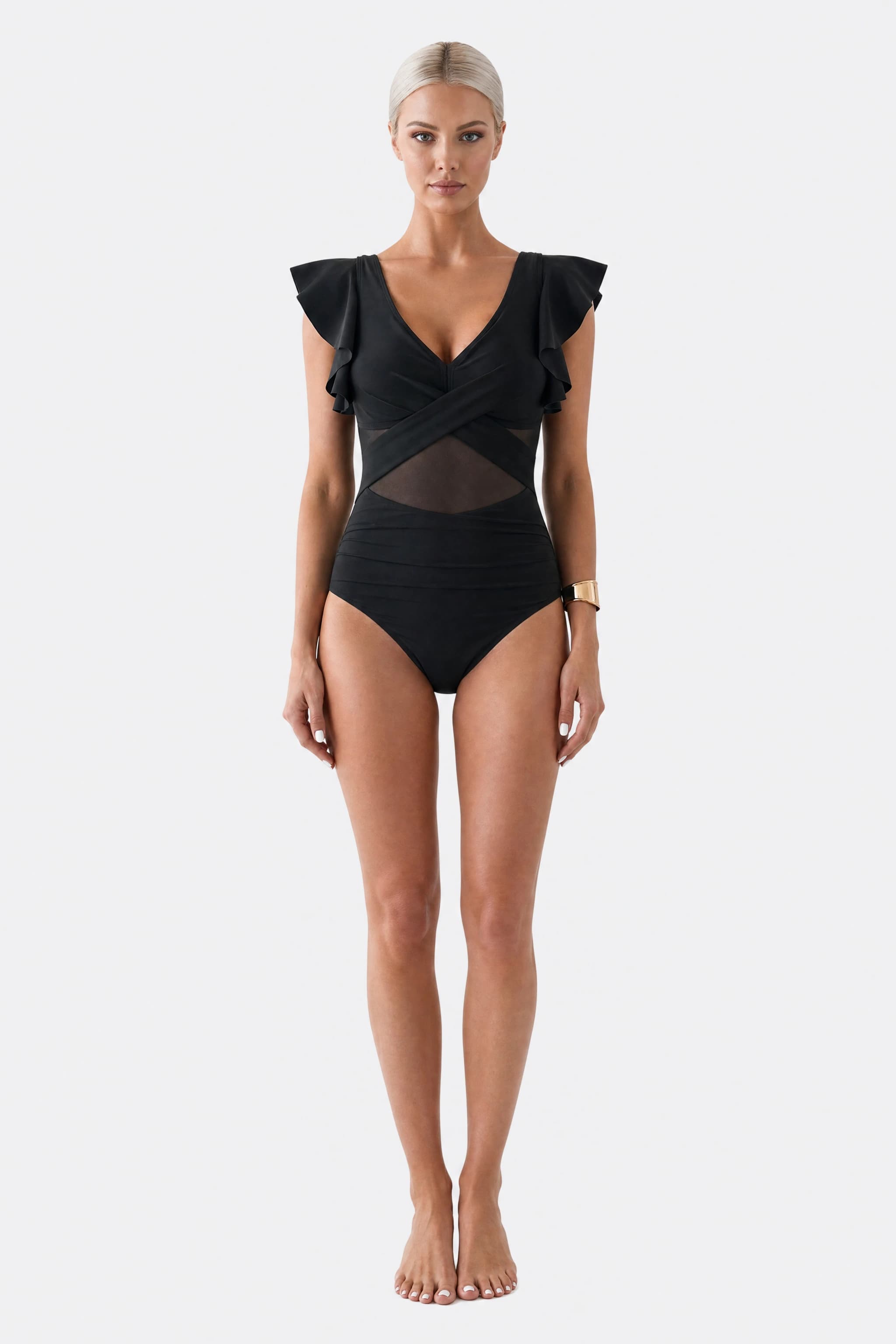
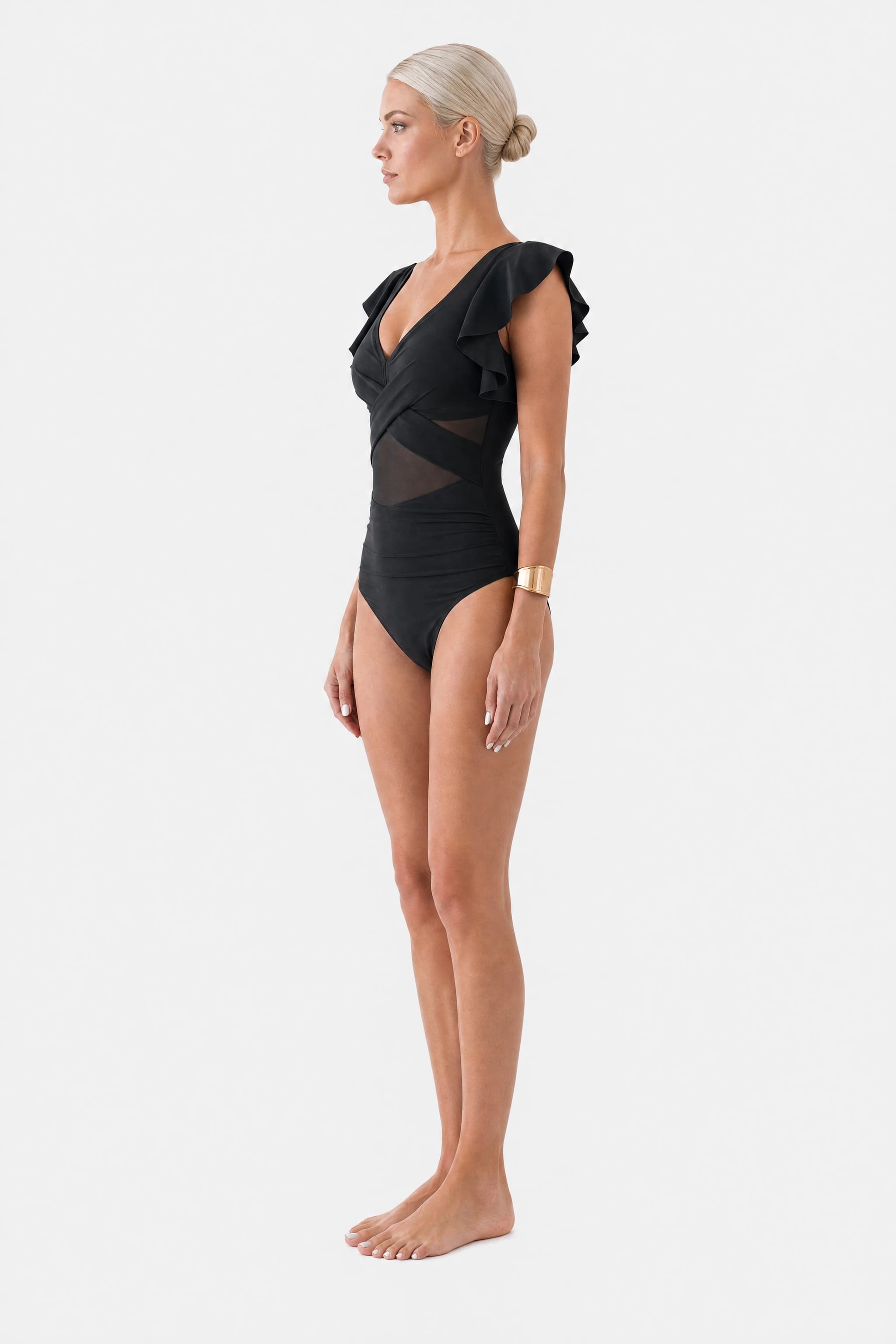
Women's black one-piece swimsuit with ruffles
An exceptional product to enhance your style. Women's black one-piece swimsuit with ruffles embodies the elegance and craftsmanship of Misciano, combining quality materials and meticulous finishes.
Discover this productOn a bikini, the mistake is more subtle but real. If your torso is long, a high-waisted bottom can cut too low and further elongate the torso: you will feel like the top is "far" from the bottom, even if each piece is the right size. Conversely, a short torso handles a high waist better (it lifts and rebalances), but can be bothered by a too-wide band that eats up the space between chest and waist.
A simple test to do in the fitting room: raise your arms, then sit down. A well-fitting swimsuit stays in place without reminding you. A swimsuit that is too short immediately starts pulling at the crotch and shoulders; a swimsuit that is too long wrinkles at the waist and loses its sharpness. The torso length is the difference between a "presentable" swimsuit and one that becomes wearable.
Choosing the right cut according to your torso length: where the standard size goes wrong
The difficulty is that the standard size (36, 38, 40...) is built on average proportions: a ratio between bust, waist, hips, and torso length. However, torso length varies greatly, even with equal measurements. Result: you take your usual size, and the swimsuit punishes you at the shoulders or crotch.
To avoid the torso mistake, you need to select a swimsuit architecture, not just a size. For specific body types (plus sizes, large busts, underwired swimsuits, racerbacks, etc.), don't hesitate to consult a fitting specialist for optimal adjustment.
If you have a long torso (or a large shoulder span):
- Favor adjustable straps with a real range (not a symbolic adjustment). A thin and stable metal buckle is often more reliable than a simple knot.
- Look for cuts with scooped back or U-back: this frees up useful length without pulling on the neckline.
- Models with tie strings (drawstrings) allow you to adjust the torso height: tension is distributed instead of endured.
- Avoid very shaping one-pieces that are not adjustable: compression + lack of length = clear traction, lasting discomfort.
If you have a short torso:
- Wrap-around cuts or those with high-placed gathers structure without creating excess at the waist.
- A higher neckline or a square neckline can stabilize the line and prevent "floating" under the armpit.
- Beware of very open backs: on a short torso, they can lower the under-bust line and create emptiness.

On the question "should I take a size up?", the answer depends on the material and the cut. Going up a size can add length, but also adds volume in width: if your problem is only vertical, you risk getting a longer but too wide swimsuit, with water ingress and weakened support.
When hesitating between two sizes, decide with a torso logic: if you are tight vertically (straps that mark, crotch that pulls), test the size up only if the model has support elements (under-bust elastic, firm lining, structured back). If you are too long (wrinkles at the waist), stick to your usual size and look for a shorter/more structured cut rather than drastically sizing down.
These tips are based on fitting room tests conducted by our workshop as well as customer feedback, in line with industry fitting guides. To place your choice within a global method (without scattering), you can cross these points with the brand's main guide: Women's swimsuit: complete guide to make the right choice. However, keep your priority here: torso length is your number one filter.
Materials, linings, elasticity: the textile impact on torso length and comfort
Two identical-looking swimsuits can behave oppositely on torso length, simply because their material does not react the same to tension. This is the point many overlook: the size is blamed, while it is the material + construction pair that decides if the torso is "tolerated" or "punished".
Elasticity and elastic return: a very stretchy fabric may seem accommodating in the fitting room, then relax in the water and lose its hold (feeling of the swimsuit slipping down, especially on a short torso). Conversely, a fabric with strong elastic return (it snaps back into place) can be wonderful for support, but ruthless if the length is insufficient: tension focuses on the shoulders and crotch. Ideally, for a difficult-to-fit torso length, is a distributed stretch: flexibility in the vertical direction, but lateral stability to avoid widening.
Linings and power mesh: an internal shaping lining (often a technical tulle) stiffens the vertical. On a long torso, this can accentuate the feeling of a "too short swimsuit". Look for localized linings (belly only) rather than a full girdle. On a short torso, on the contrary, a well-placed lining can "lift" the structure and prevent wrinkles at the lower back.
Seams and finishes: a clean, flat inseam with a well-calibrated elastic changes everything. When length is lacking, this area often becomes the point of friction. An elastic that is too firm creates a sharp bite; a softer elastic, combined with a clean construction, makes the constraint more bearable. Touch the material: if the elastic feels dry to the touch, it will be even more so on damp skin.
Feel when wearing: a good swimsuit, with an adapted torso length, gives an impression of "continuous" fit: the material is smooth, fresh, almost silent. A bad length adjustment feels like localized pulling, with areas that heat up (shoulders, groin fold) and others that float. Trust these signals: water will only amplify what you already feel when dry.
Sources and references: Our recommendations are based on industry fitting guides, textile standards, and feedback collected in workshops.
Concrete adjustments in the fitting room: adjust straps, cutout, and support to correct torso length
You have found a model close to the right one, but not perfect: before concluding "this swimsuit is not for me," test targeted adjustments. The torso length can sometimes be corrected with simple adjustments, provided you know what to observe. The goal is not to cheat, but to distribute tension elegantly and comfortably.
1) Adjust the straps last. Many tighten immediately to "hold." Mistake: if you tighten too early, you compensate for an unsuitable torso length by crushing the shoulder. Put it on, place the inseam correctly, adjust the chest, then only afterwards, reduce the strap length in small increments. The right tension: the strap stays in place, but you can slide a finger underneath without effort. These tips are based on feedback from our workshop.
2) Check the inseam in motion. Make three movements: walk, sit, raise your arms. If the inseam rises significantly, it's a lack of overall length. If it stays, but the back arches with a fold, it's rather an excess of length. This reading avoids confusing a cut problem (cutout) with a torso problem (verticality).
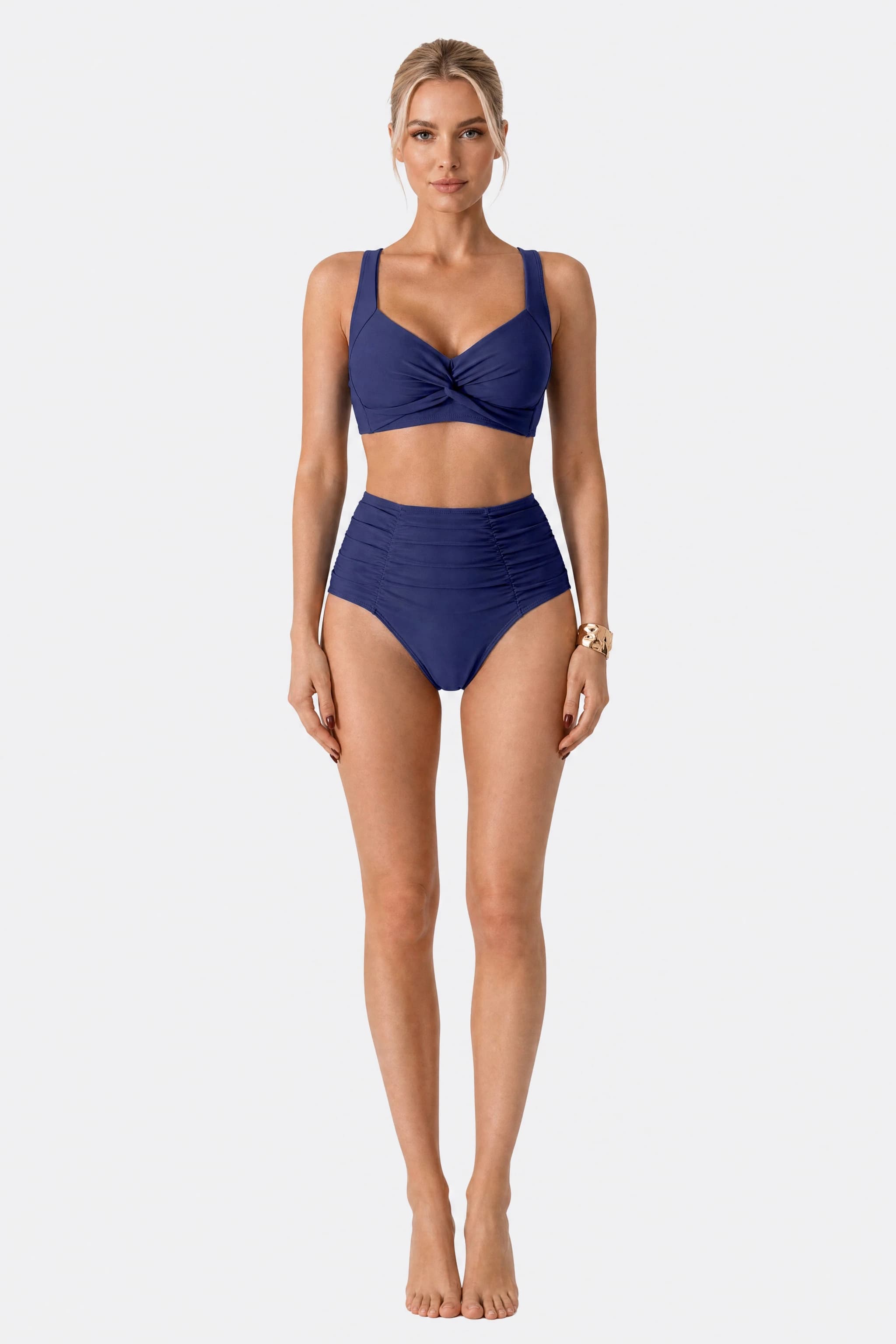
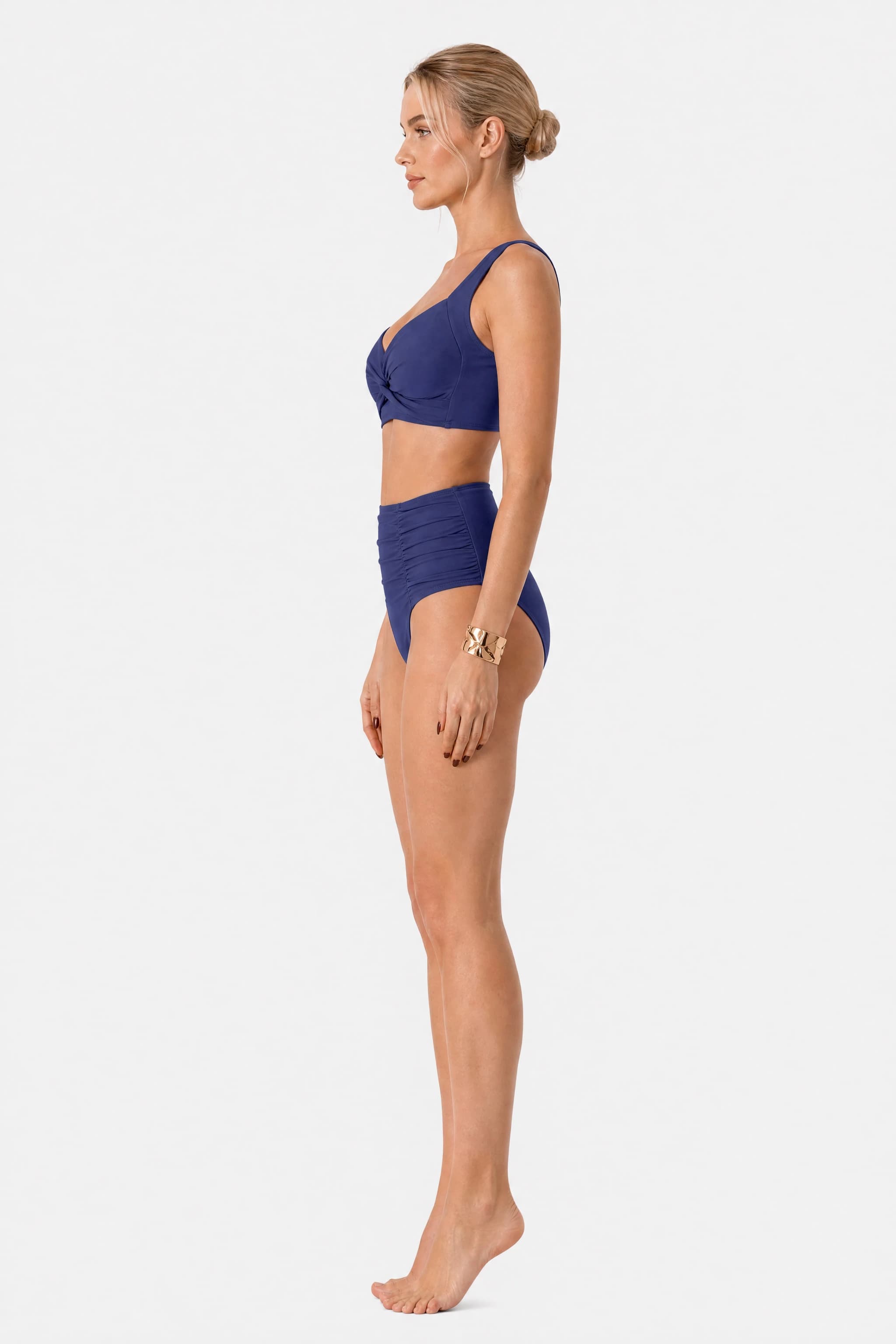
3) Use the "top/bottom" logic on bikinis. If your torso is long, visually raise the bottom: slightly higher panties (without compressing) shorten the torso. If your torso is short, slightly lower the line: less high panties or a less covering top give back space. Here, "size" is not just a number: it's a position on the body.
4) Track empty areas. On a short torso, the void often lodges under the chest or at the lower back. On a long torso, void is rare; tension rather dominates. A swimsuit that shows void is not "more comfortable": it will be unstable in water. If you see a soft fold, ask yourself if a more structured cut (or a different size) would not be more appropriate.
5) Decide with a simple rule:
If you have pain/pulling (shoulders, inseam): do not rely on habit. Change size or cut, as the constraint amplifies when wet.
If you have soft folds: change cut (shorter/more structured) before going down a size, to avoid losing support.

Article by Maryna Svistunova
Published on 03/22/2026 at 18:32
About the author
I am the editorial director of Misciano Paris. I define the editorial line with the conviction that fashion must be timeless, with rigor, coherence, and sincerity.
→ Learn more about Maryna SvistunovaFREQUENTLY ASKED QUESTIONS
Why is it important to measure the torso length when choosing a swimsuit?
The torso length is crucial because it directly influences the positioning of the straps and the overall fit of the swimsuit. An inappropriate measurement can lead to discomfort, such as tension or misalignment in the neckline. Thus, knowing your torso length ensures an optimal fit and allows you to fully enjoy your swimsuit.
How can I accurately measure my torso length?
To measure your torso length, it is advisable to do it in a loop. Place a measuring tape around your torso, passing through the most prominent point of your chest and holding the tape where you want the swimsuit to rest. This will give you an accurate measurement, essential for choosing the right size.
What if two swimsuits of the same size look different on me?
This situation is often due to variations in the torso length of the models. Even if two swimsuits display the same size, their fit can vary considerably depending on their design. It is therefore essential to consider your torso length measurement to choose the one that will best suit your body shape.
What are the consequences of an ill-fitting torso length?
An incorrect torso length fit can lead to various discomforts, such as excessive tension on the straps, a neckline that is too low or too high, and general discomfort. This not only affects aesthetics but can also impact self-confidence when wearing the swimsuit.
Do all swimwear brands measure torso length the same way?
No, each brand may adopt different measurement methods, which can lead to variations in sizes. It is therefore recommended to refer to the specific size guides of each brand and, if possible, try on the swimsuit to ensure it fits your torso length well.