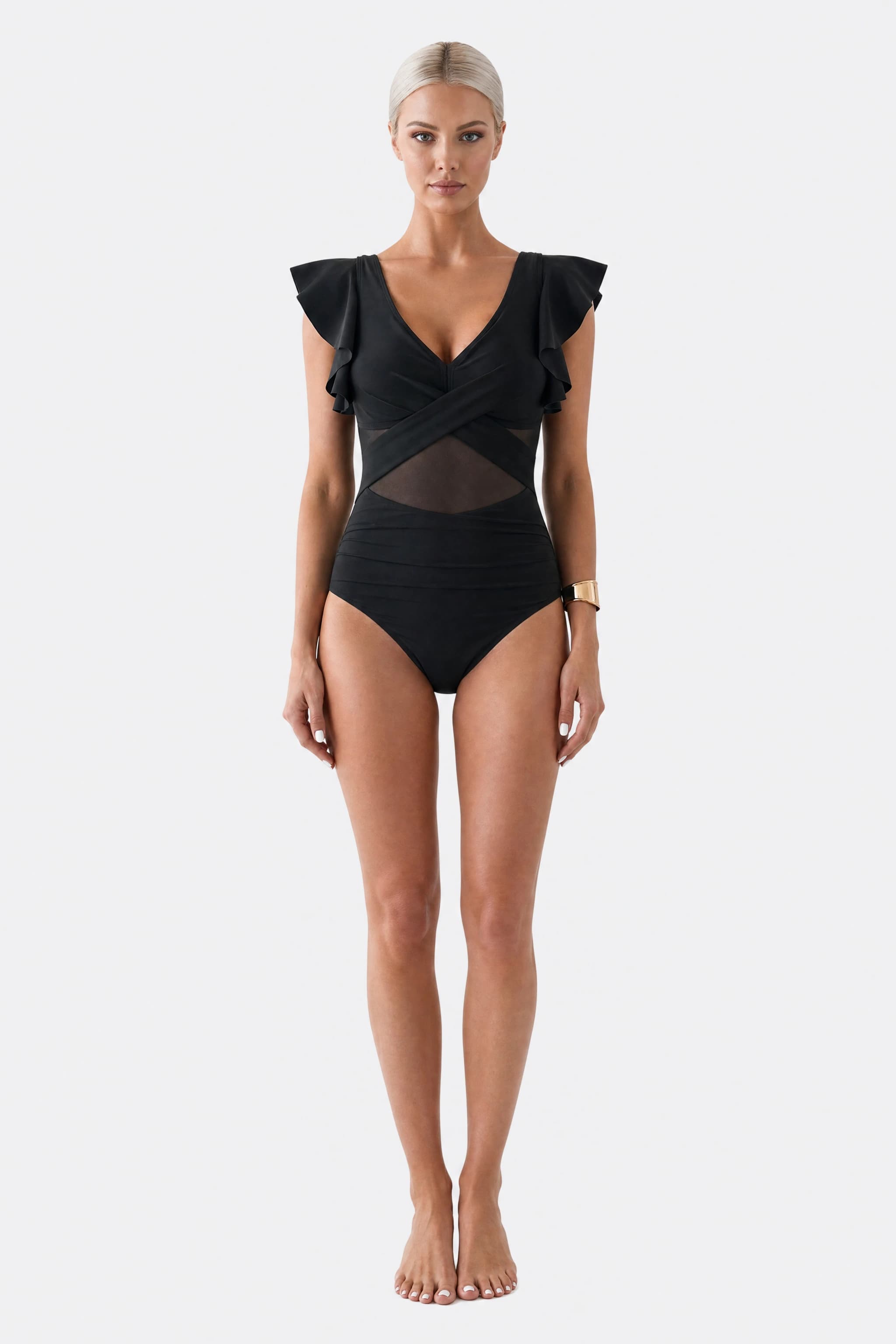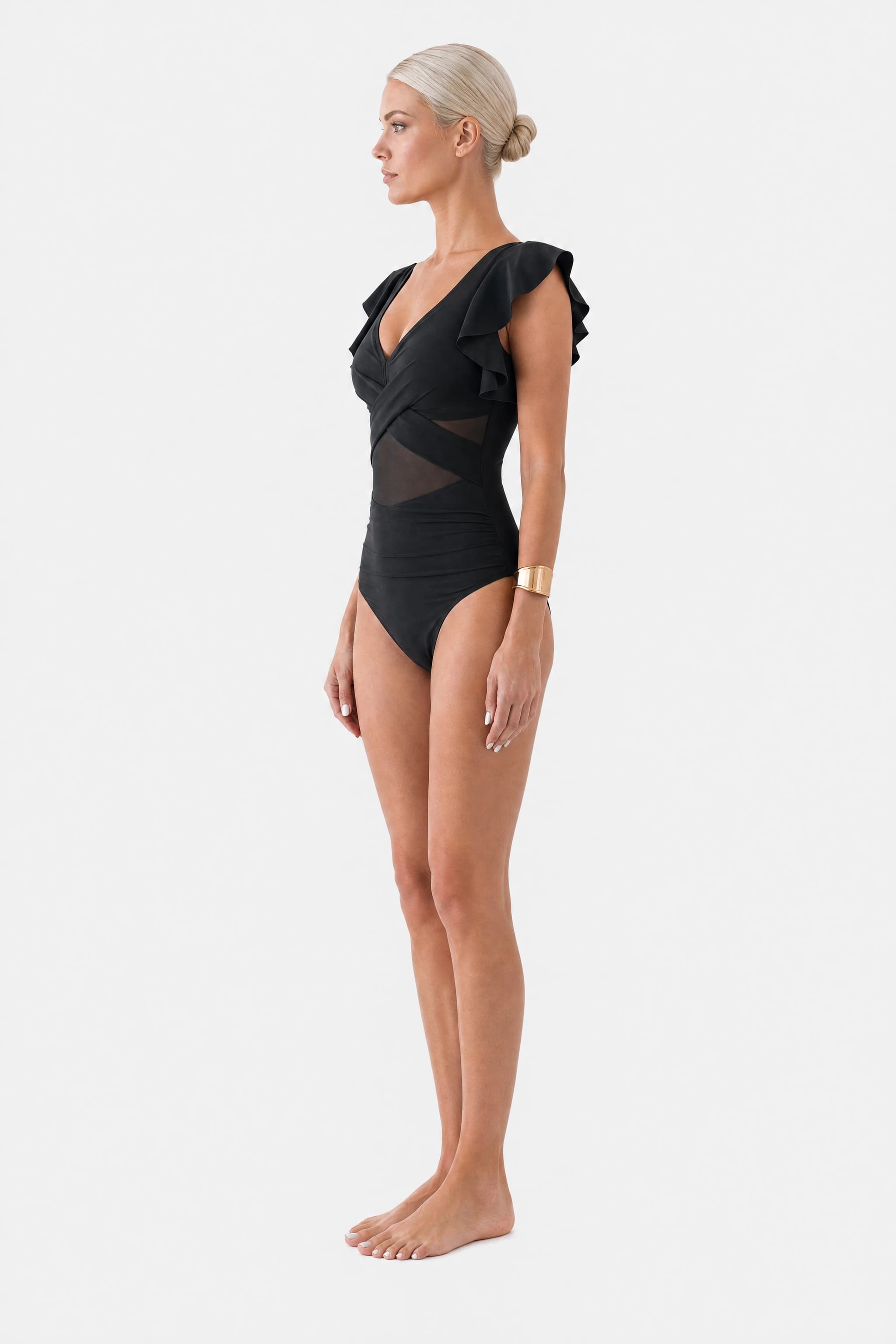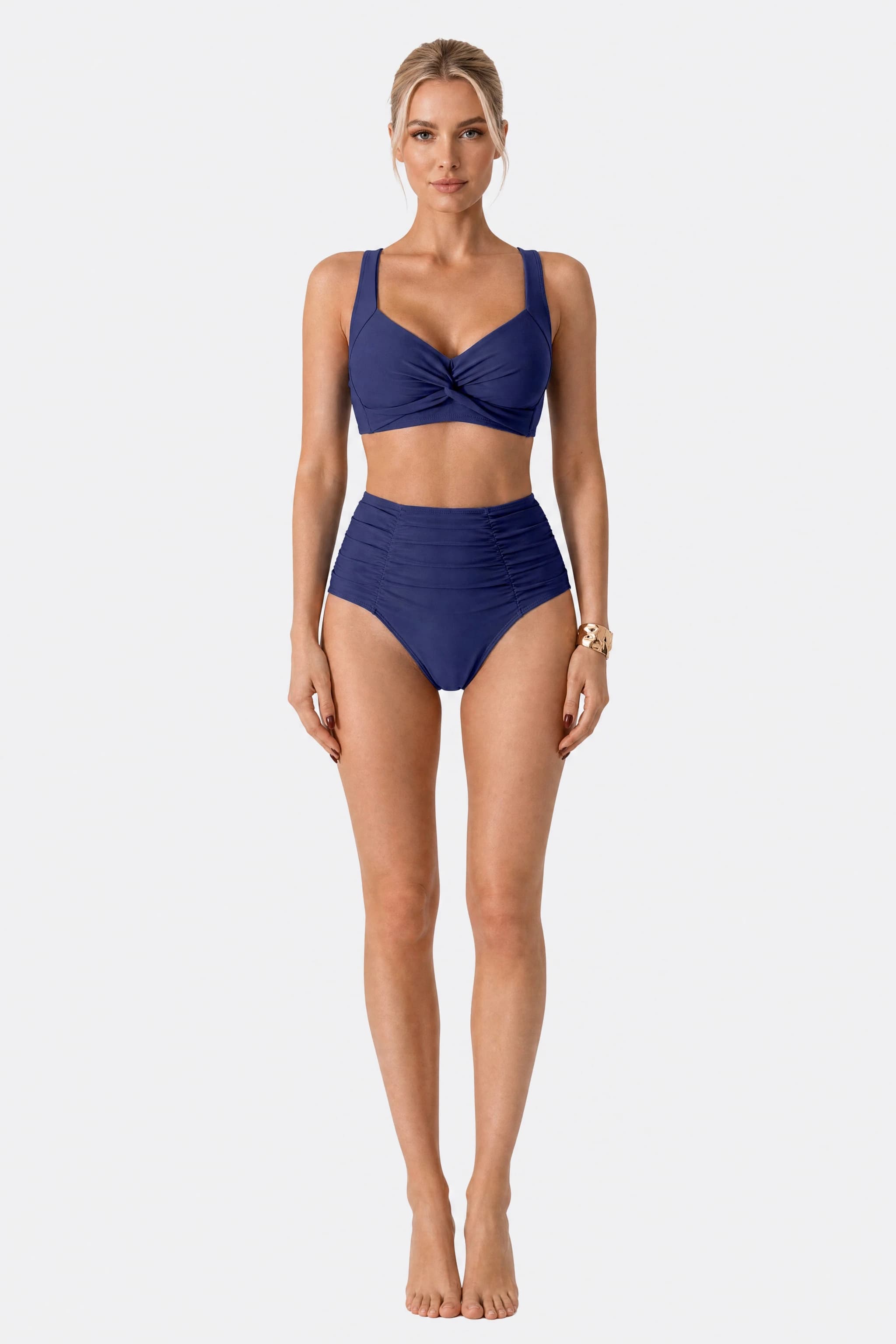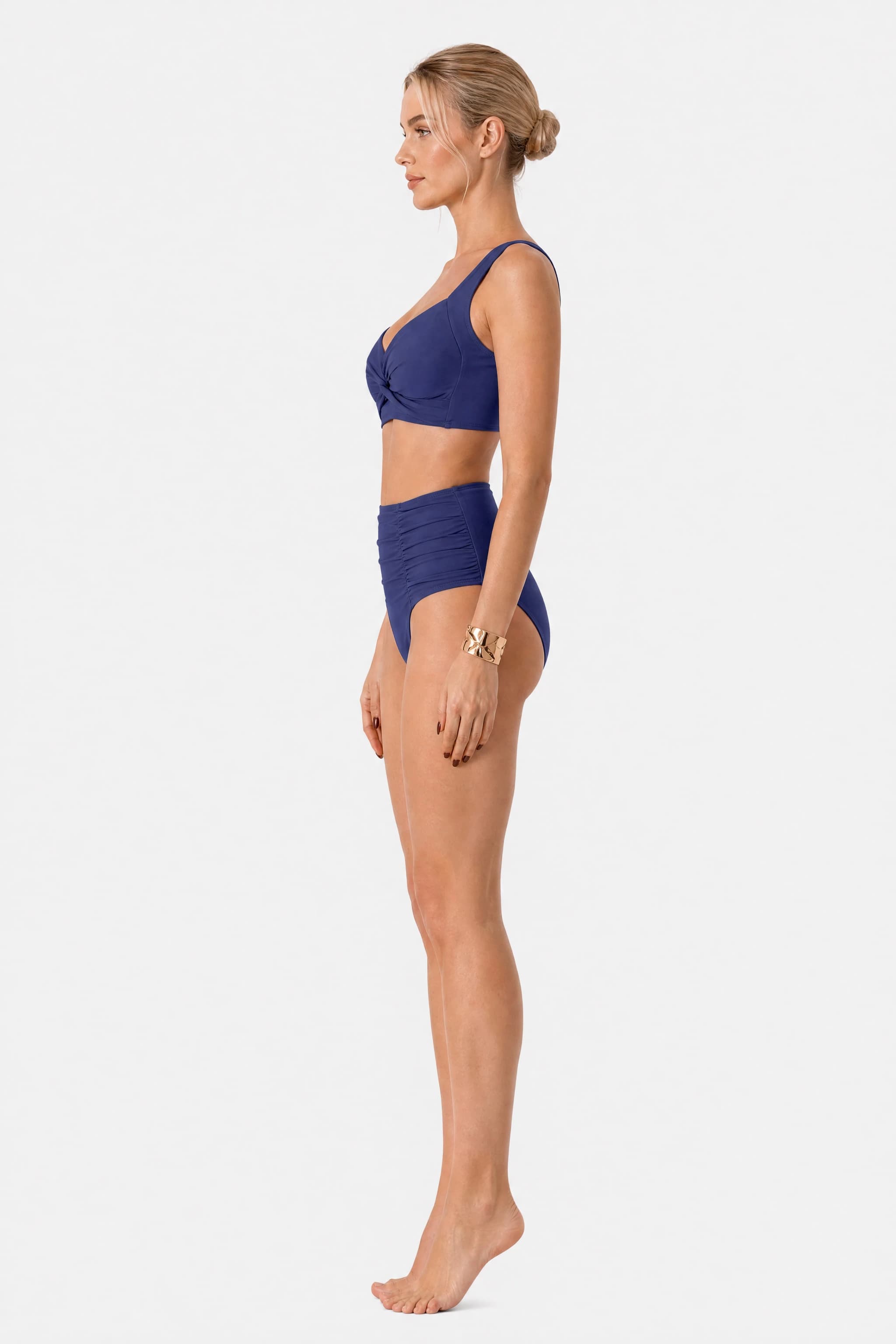
Women's swimsuit: lycra, polyamide, polyester: Which material ages the best?

Aging of a Women's Swimsuit: The 4 Decisive Tests
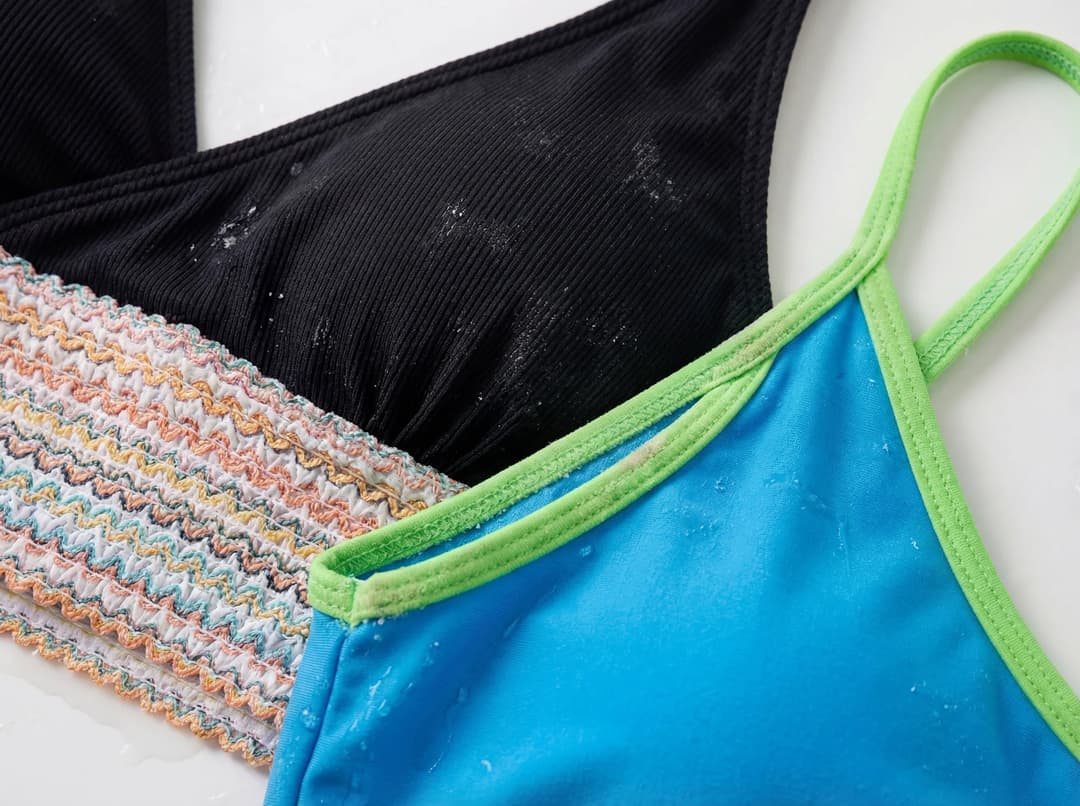
The aging of a high-end women's swimsuit rarely depends on the cut initially: it depends on what remains after ten, twenty, thirty swims. The material then tells its truth. To judge objectively, I always return to four tests, those that truly damage: chlorine, UV, salt, and friction.
Each attacks a different area of the textile. For example, during internal tests based on protocols close to ISO/AATCC standards (e.g., ISO 105-E04 for chlorine fastness), indicators such as loss of elasticity or pilling were meticulously measured.
1) Chlorine is the harshest judge. It breaks elasticity, fades colors, and "dries" the fabric's hand: a touch initially dense becomes rougher, almost creaky. For example, after 10 swimming pool cycles, a measured degradation of elasticity (according to internal tests) can be observed. If your swimsuit loosens at the neckline or leg openings after a few pool sessions, it's often the elastane that has been weakened.
2) UV not only fade the print: they oxidize the fibers and can make a black less deep, a white less crisp. On certain bases, the fabric retains the color but loses its surface sharpness: the appearance becomes slightly "dusty" visually, as if the light clings to micro-roughness. Our tests have also shown that prolonged exposure (e.g., 8 cumulative hours) can alter the surface measurably.
3) Salt is more insidious. It stiffens when drying, then acts as a micro-abrasive during rinsing if rubbed. Salt also accelerates the wear of tension areas (straps, seams, thigh edges) by creating hard points.
4) Friction (sand, deck chair, pool edge, bag) determines the pilling and surface hold. A fabric that pills quickly loses its "neat" appearance and gives the impression of a tired swimsuit, even if the elasticity still holds. Evaluation criteria notably include the pilling rate per standardized friction cycle.
Keep these four tests in mind: they help understand why, at the same price, two swimsuits do not age in the same way at all.
Lycra/elastane: perfect elasticity... but the first point of weakness if the dosage is not controlled
In common language, the term "Lycra" (registered trademark) often refers to the stretch component (the elastane) integrated into a base (polyamide or polyester). It is what gives that immediate elastic return, that clean, almost sculpting support sensation, and the ability to fit the body without wrinkles. On a high-end women's swimsuit, we look for elasticity that is neither too soft nor too tense to the point of marking: a balance between comfort and fit.
But elastane has a reality: it is the most vulnerable link against chlorine, heat, and certain fats (rich sunscreens, oils). When it degrades, the most common symptom is not the color: it is the relaxation. The fabric may still look nice when flat, then slip in motion, lose its "memory," create small air pockets at the lower back or under the chest. Sensorially, you can feel it: the material becomes less dense to the touch, more "soft."
The key is not to avoid elastane (that would deprive you of comfort), but to look at how it is used:
- The right percentage: internal tests show that a very durable swimsuit often aims for a balance around 15–20% elastane, depending on the construction, knit, and weight. Too low: insufficient fit and deformation. Too high: increased risk of chlorine fatigue if the base is not designed to compensate.
- The quality of the elastane: some types are specifically advertised as "chlorine-resistant." This is not an insignificant slogan: the durability over time can be significantly better in pool use, which corresponds to the results of our evaluations.
- The construction: a well-chosen lining and seams that distribute tension protect elasticity. A swimsuit can contain a very good stretch thread and yet age poorly if the tension areas are poorly designed.
To remember: elastane is the ally of drape and comfort, but, isolated, it never "wins" the aging contest. It must be supported by a base (polyamide or polyester) and by intelligent construction.
Polyamide: the most noble touch, a beautiful fit... and UV/chlorine vigilance depending on the finishes
The polyamide is the most common base in high-end, and it's no coincidence. To the touch, it has this more supple, more dense, and more "skin-like" feel than many polyesters. Visually, it often offers a deeper rendering: black appears more velvety, a saturated color seems better "settled." On a well-constructed women's swimsuit, polyamide gives a controlled glide sensation: the fabric follows the movement without creasing, with a very recognizable tactile elegance.
In aging, polyamide defends itself very well on two fronts:
- Resistance to abrasion: it often retains a cleaner surface, especially when the gauge (knit density) is high. Less pilling, less fuzzy appearance.
- General fit: with a good proportion of elastane, the silhouette remains stable, the support remains firm.
Where precision is needed: not all polyamides are equal, and their aging depends greatly on the dyeing and finishes. A luxurious polyamide but poorly protected can:
- fade faster in the sun (UV) on certain bright colors;
- wear out in the pool if the elastane is not chlorine-resistant.
The good indicator in store (or upon receipt): the density. Pinch the fabric: a high-end polyamide has a soft resistance, it returns to place without a "dry elastic" effect. Stretch slightly: it should return cleanly, without ripples. Finally, observe against the light: the less you see the light passing through, the more protective (and often durable) the construction is.
If you are still unsure about the overall selection criteria (cut, use, morphology), I refer you to the complete guide to choosing a women's swimsuit (cut, morphology, use), here, I remain deliberately focused on the aging of materials.
Polyester (and PBT): the champion of longevity in the pool, stable color, but a hand to choose with care
For pure longevity, especially in pool use, polyester, and more specifically constructions integrating PBT (a polyester with intrinsic elasticity), is often the most durable. It resists chlorine very well, retains color better over time, and withstands repeated cycles without losing its structure as quickly. In terms of "aging," it is often the one that maintains a new appearance the longest.

Why? Because polyester is, by nature, less sensitive to certain chemical aggressions than polyamide, and because, in PBT versions, elasticity does not solely depend on elastane. Result: even if a little elastane is present, the loss of support may be less dramatic than with a standard polyamide base.
The points of attention, however, are sensory and aesthetic, and this is where the high-end plays out:
- The feel: some polyesters may seem more "dry," less enveloping. A beautiful swimsuit polyester should be smooth, clean, without rigidity.
- The appearance: depending on the knit and dye, the shine can be more pronounced, sometimes too shiny if the finish is not controlled. In high-end, a controlled shine is sought, never flashy.
- Thermal comfort: some polyesters give a warmer sensation out of the water, especially if the lining is dense.
In practice, if your priority is a women's swimsuit that withstands pool lengths week after week, polyester/PBT is a remarkably rational choice. If your priority is the sensuality of touch and a very "skin" appearance, a premium polyamide may be more desirable, provided you accept stricter maintenance vigilance.
Practical conclusion: which material ages best according to your use
If we must answer the question "which material ages best?" directly, the answer depends on the dominant aggression. Here is the most useful reading, the one that helps you choose and keep your women's swimsuit impeccable.
- Pool use (frequent chlorine): clear advantage to polyester, ideally with PBT or mention of high chlorine resistance. It is the best option to retain elasticity and color. Polyamide may be suitable, but it will require stricter maintenance discipline and suitable elastane.
- Sea + sun use (salt + UV): more nuanced match. A dense polyamide with good finishes retains a superb touch and good hold, but some shades may change in the sun. A well-finished polyester often keeps the color very stable. In both cases, the density of the knit and the quality of the dye make the difference.
- "Sunbed / beach / friction" use: slight advantage to high-end polyamide when the surface is compact and the feel is very smooth (less fluffy appearance). Polyester can also be excellent, but versions that snag or mark quickly should be avoided.
Then, there is the most profitable part: the actions that double the lifespan, regardless of the fiber.
- Immediate rinsing with cold water after swimming (chlorine/salt). Not "later at the hotel": immediately if possible.
- No prolonged soaking in a sink: water loaded with chlorine/salt remains in contact and works the fiber.
- Gentle washing: by hand with a neutral soap, or delicate cold program in a net, without fabric softener (it coats the fiber and alters elasticity).
- Flat drying, in the shade: direct sunlight on a wet fabric accelerates oxidation and fades colors.
- Attention to surfaces: on the poolside or a rough sunbed, lay a towel. The most beautiful fabric in the world does not win against repeated abrasion.
Misciano's verdict: to age best in the strict sense (support + color in a chlorinated environment), polyester/PBT dominates. To age with the most beautiful touch and a deep appearance, premium polyamide is magnificent, provided you are demanding on maintenance and choose a dense construction. And in all cases, elastane should be considered a precious ingredient: essential for comfort, but to be protected.
Note: These recommendations are based on internal test conditions reproducing standardized protocols. Results may vary depending on the knit, weight, and actual use. Always refer to the manufacturer's labels for optimal care.
For a complete guide on choosing your swimsuit, consult Women's swimsuit: complete guide to make the right choice.
Discover our swimsuit collection (starting from €40).
To go further, consult the Materials Observatory.
For a complete guide on choosing your swimsuit, consult Women's swimsuit: complete guide to make the right choice.
Discover our swimsuit collection (starting from €40).
To go further, consult the Materials Observatory.

Article by Camille Laurent
Published on 05/21/2026 at 13:33
About the author
What interests me above all is the intimate relationship we have with clothing: why we choose it, how we wear it, and especially how long it accompanies us.
→ Learn more about Camille LaurentFREQUENTLY ASKED QUESTIONS
How does chlorine affect the durability of a lycra swimsuit?
Chlorine is a particularly aggressive agent for lycra, often causing a degradation of the fabric's elasticity. During tests, it has been observed that repeated exposure to chlorine can lead to fiber weakening and pilling, thus reducing the longevity of the swimsuit. Treated lycra choices can mitigate these effects, but caution is advised when swimming in pools.
Is polyester a good option for a UV-resistant swimsuit?
Yes, polyester offers excellent resistance to UV rays, making it a preferred choice for swimsuits intended for prolonged sun exposure. Thanks to its molecular structure, it retains its color and integrity even after multiple swims. This helps extend the lifespan of a swimsuit while providing protection against the harmful effects of the sun.
What are the effects of salt on polyamide swimsuits?
Polyamide, although resistant, can suffer from prolonged exposure to sea salt. Salt can dry out the fibers, leading to a loss of elasticity and an increased risk of tears. To preserve a polyamide swimsuit, it is advisable to rinse it with fresh water after each swim, which helps remove salt residues and prolong the life of the fabric.
How do frictions affect the longevity of a swimsuit?
Friction, whether from aquatic activities or contact with other surfaces, can cause significant damage to swimsuits. They are often responsible for the appearance of pilling and premature wear of the fibers. Choosing a swimsuit with reinforced seams and dense weaving can help minimize these effects and ensure better durability.
What tests can evaluate the resistance of a swimsuit to aging?
To evaluate the resistance to aging of a swimsuit, four main tests are conducted: those related to chlorine, UV, salt, and friction. Each of these tests measures specific aspects, such as color fastness, elasticity, and abrasion resistance, thus providing a precise view of the textile's durability under real usage conditions.