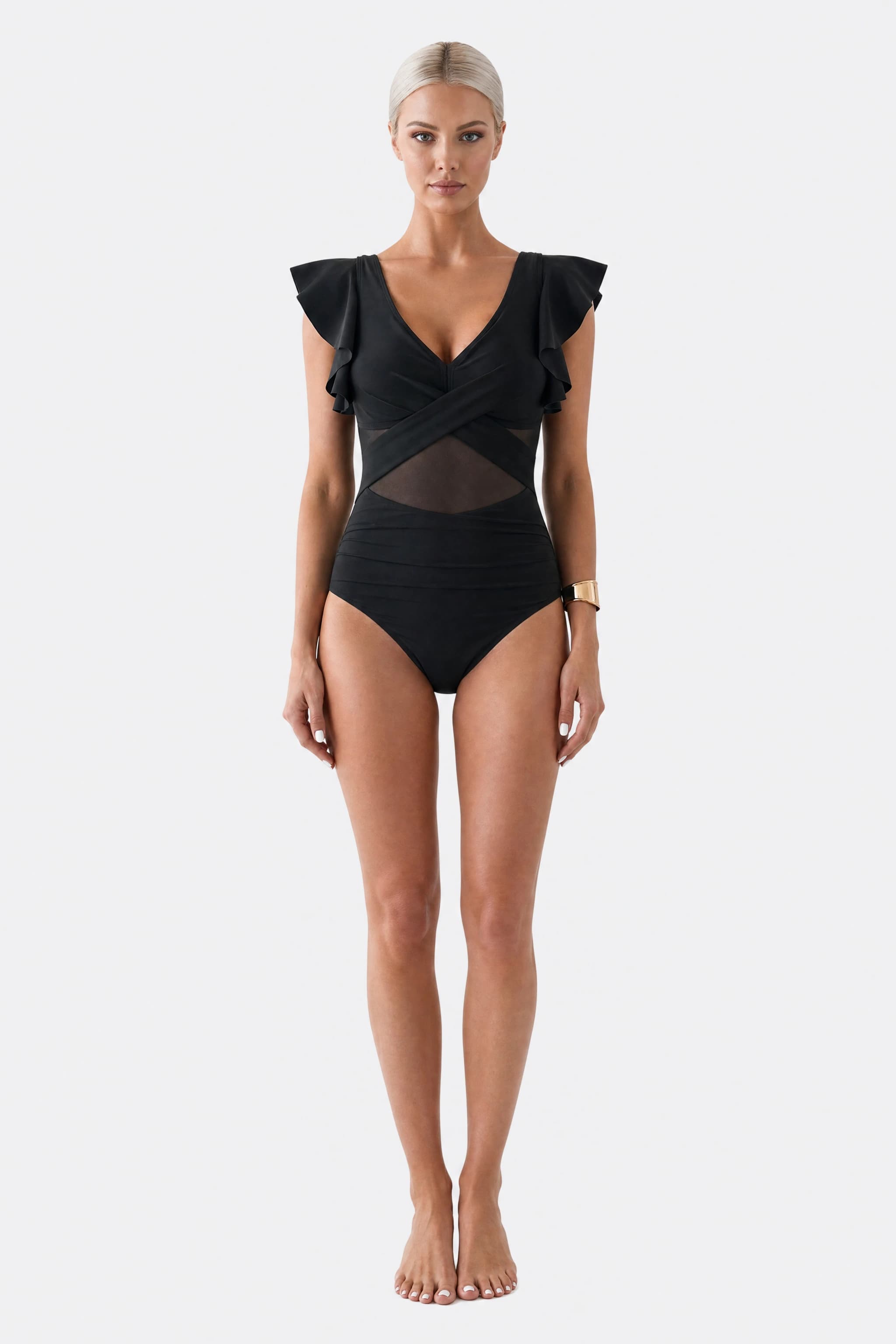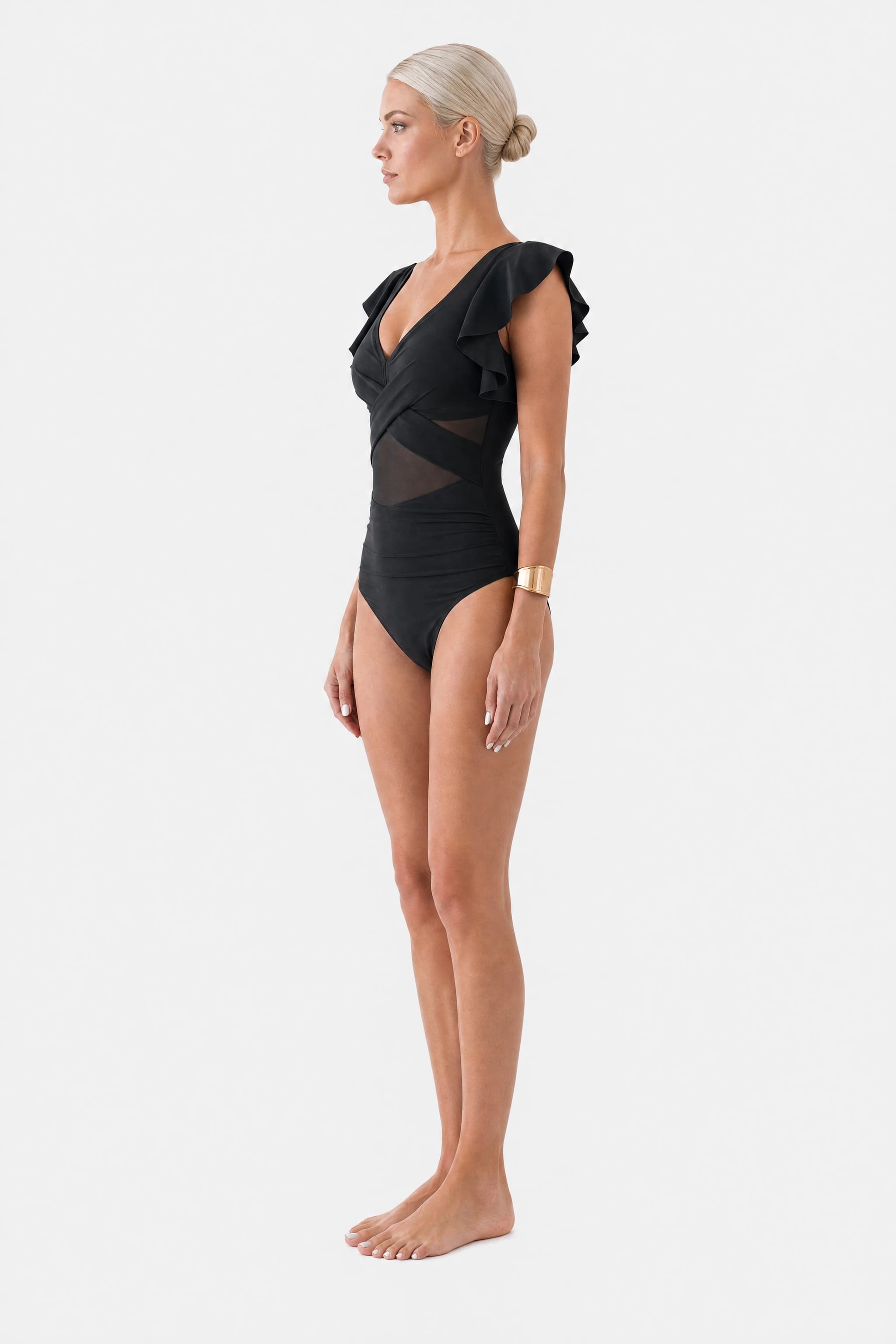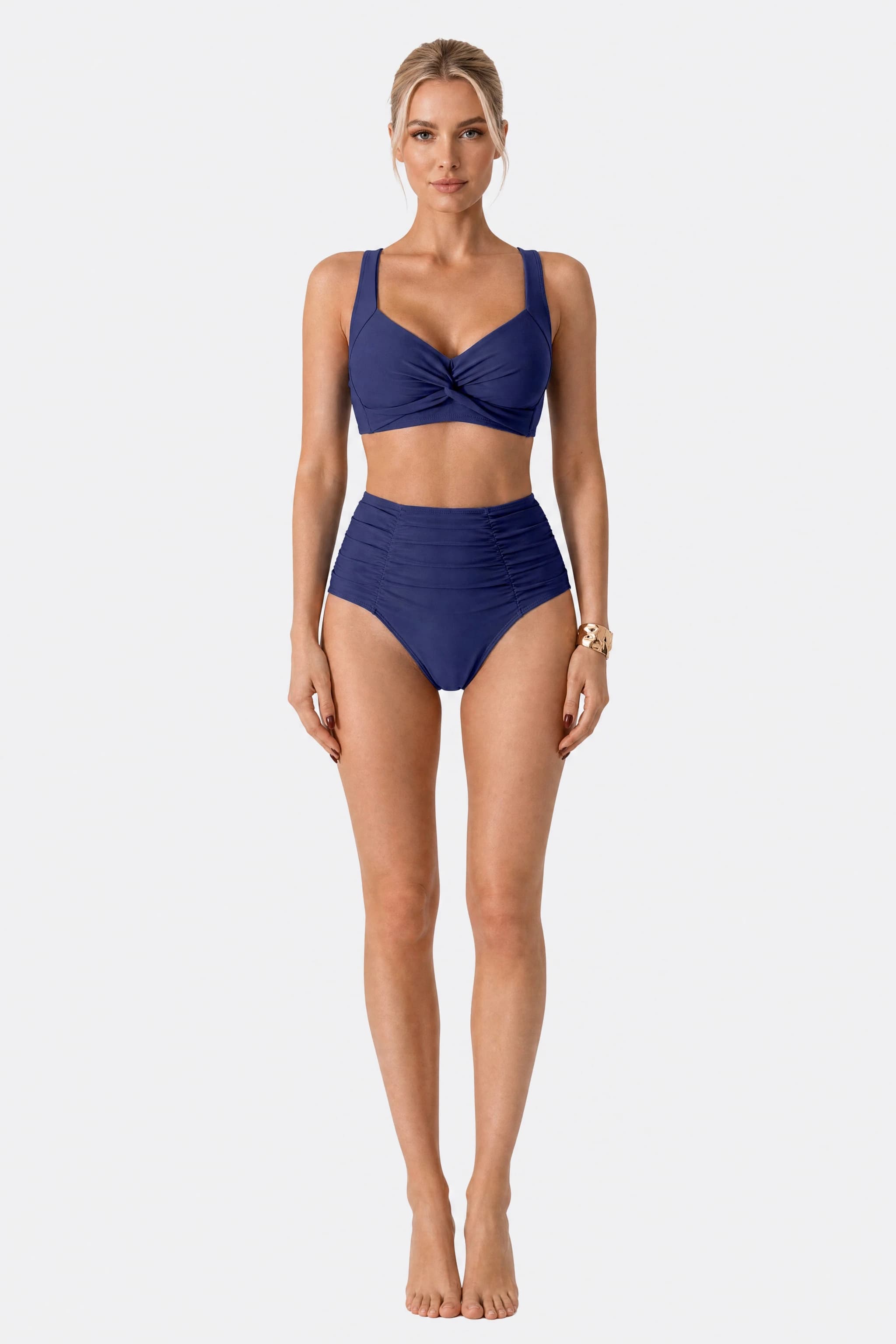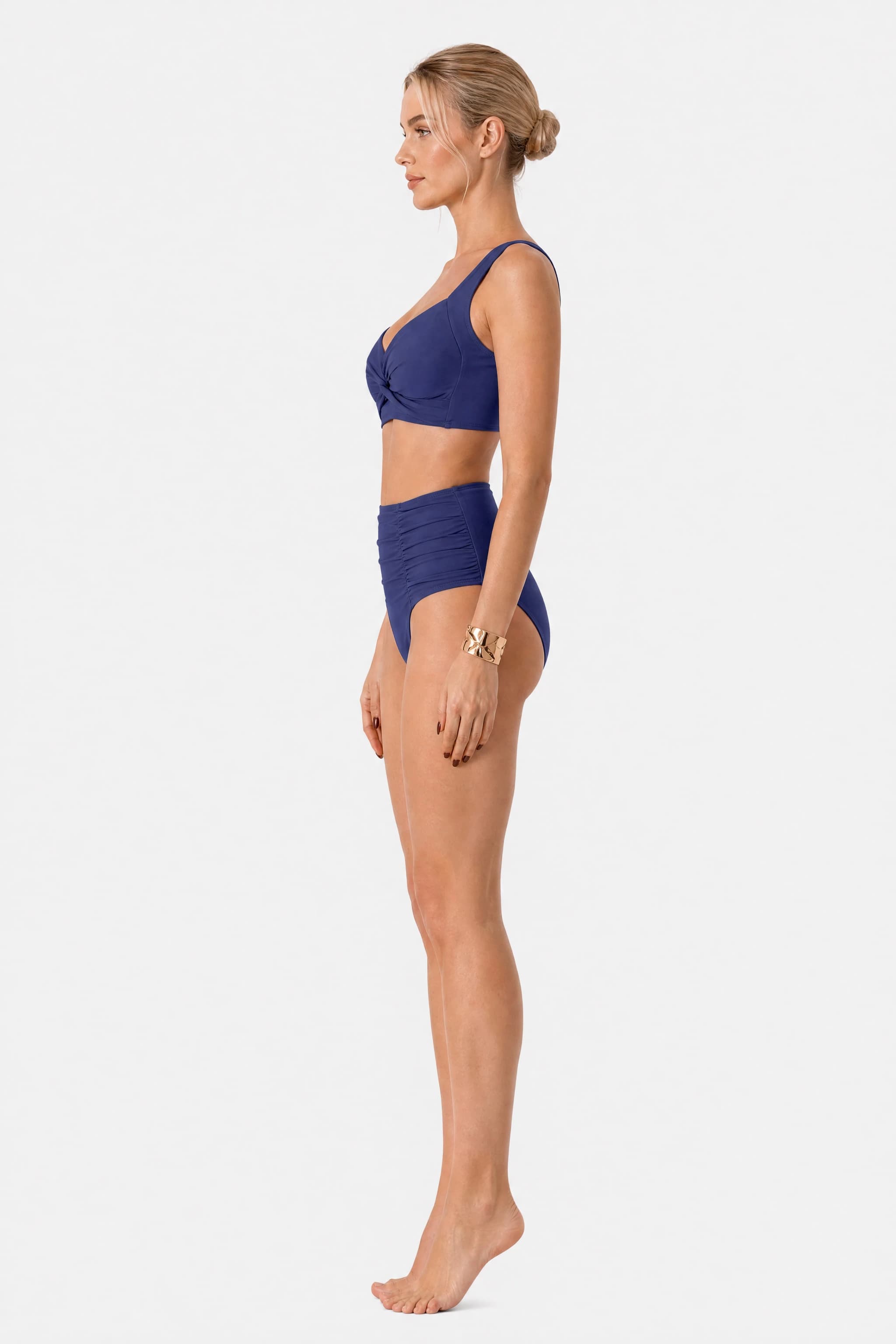
Women's swimsuit for spa or hammam: The materials that retain heat
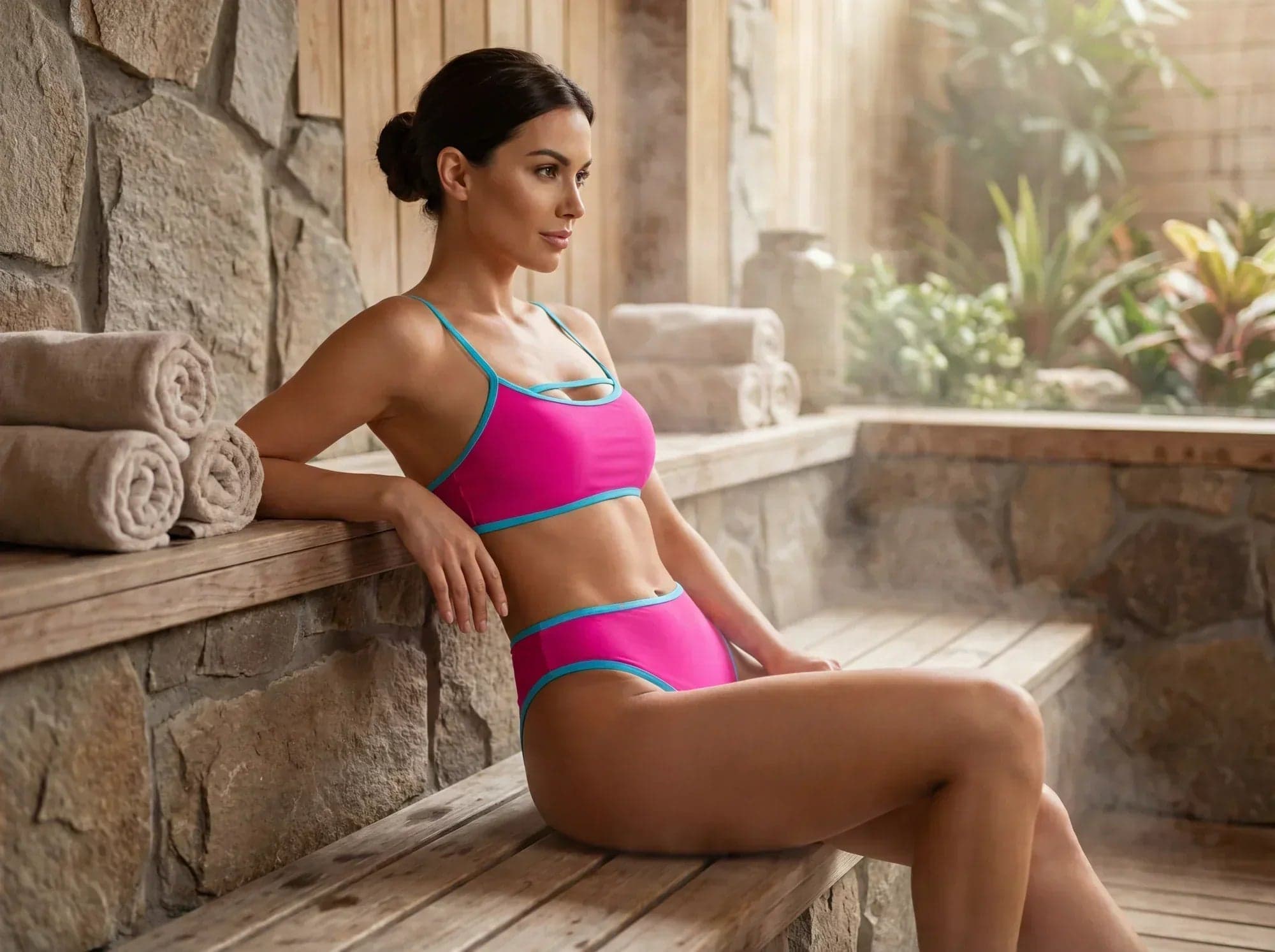
In a spa or hammam, the swimsuit behaves differently: humid heat, dense steam, hot benches, showers, then back to the mist.
The problem is not “looking good in a swimsuit,” it's staying comfortable without constantly monitoring transparency, strap marks, fabric sticking, or lining that takes too long to dry.
Here, the right choice depends on very concrete textile details: lining, mesh density, elasticity that doesn't loosen in a hot atmosphere, and cuts that protect without compressing.
Discover our swimwear collection
Materials that really work in a spa/hammam: density, feel, drying

When wearing a swimsuit for a spa or hammam, the priority is not “beach” performance but holding up in a hot and humid environment. Steam tends to soften fibers and accentuate anything already fragile: mesh too thin, light lining, low-quality elastics.
Result: a fabric that becomes more supple, sticks to the skin, and may reveal what you'd prefer to keep discreet when you sit down or come out of the shower.
The right reflex: aim for a dense mesh. On the product sheet, this is rarely translated into a number, but you can spot it by the “soft shaping” feel to the touch: a firm elasticity, but a clear return to place. A dense mesh also has a more stable drape: it doesn't wrinkle into small waves when wet, it stays smooth and “held,” which greatly contributes to discretion. (Source: Textile Research Centre, 2021)
Majority nylon (polyamide) + well-balanced elastane: this is the most reliable option in a hammam, as polyamide retains a silkier feel in the heat and generally dries better than very basic polyester. Elastane should be present but not to the point of making the swimsuit too “elastic”: in a hammam, too much elasticity often results in a swimsuit that moves and needs readjusting. A balance that maintains without tightening is ideal. (Recommendations Textile Institute, 2021)
Lining: your best ally against transparency. In a steam environment, the lining plays a dual role: it adds an optical layer (opacity) and stabilizes the piece (less “sticking” to the skin).
Favor full lining at the front, and if possible, lining at the back for light colors. A lining that's too thin can, on the contrary, “absorb” water and stay cold: look for a smooth, clean lining that glides under the fingers, without a rough mesh effect.
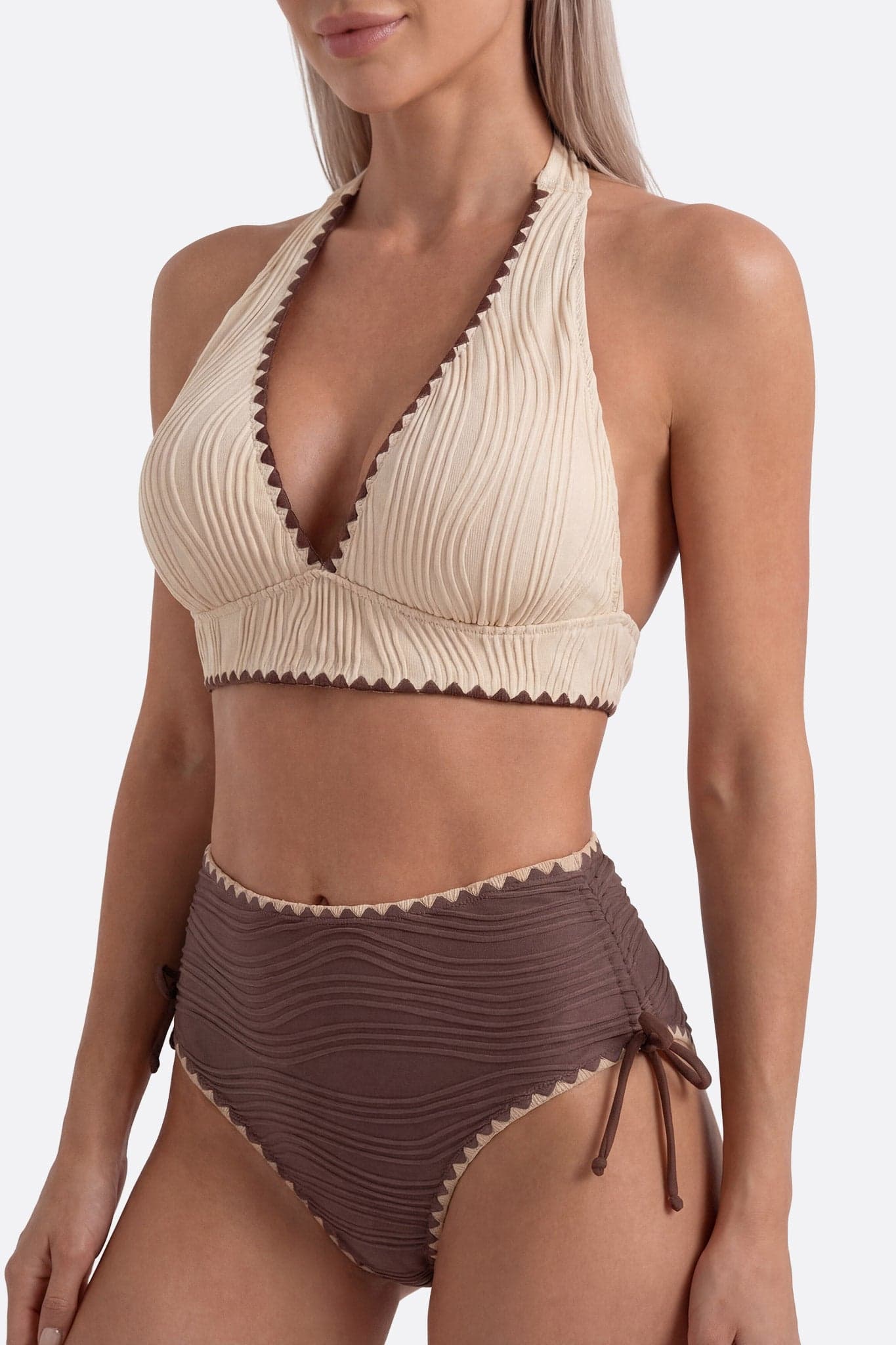
Beware of fancy textures. Ribbed, waffle, or highly textured meshes are appealing, but in a hammam, they can retain more moisture and mark more easily at pressure points (sitting on a hot bench). If you like texture, choose a fine and tight rib, not a wide relief.
Drying and feel on the skin. In a spa, we often alternate: hammam → shower → rest. A swimsuit that dries “halfway” can become uncomfortable, especially at the seams. Flat finishes (discreet seams, well-covered elastics) make a real difference: less friction, fewer marks, and a clearer contact on warm skin.
Cuts and construction: discretion, gentle support, zero constant adjustment
The cut of a women's swimsuit for a spa or hammam must meet one requirement: allow you to forget your outfit. In the steam, everything becomes more sensitive: a strap that twists, a metal ring that heats up, an underwire that presses when you lean back.
“Discretion” is not only visual, it is also gestural: not having to pull on the bottom, adjust the top, smooth the fabric.

One-piece: the safe choice in a hammam. It offers a continuity of material that limits the shifts between top and bottom. To stay comfortable, prioritize:
- Stable neckline (neither too plunging nor too open): the steam slightly relaxes, a too generous neckline starts to “gape.”
- Adjustable straps: adjust once, then forget about it. In a spa, it's crucial.
- Not too low-cut back: a very open back can be pretty, but it becomes more “present” when sitting, and can give a feeling of exposure.
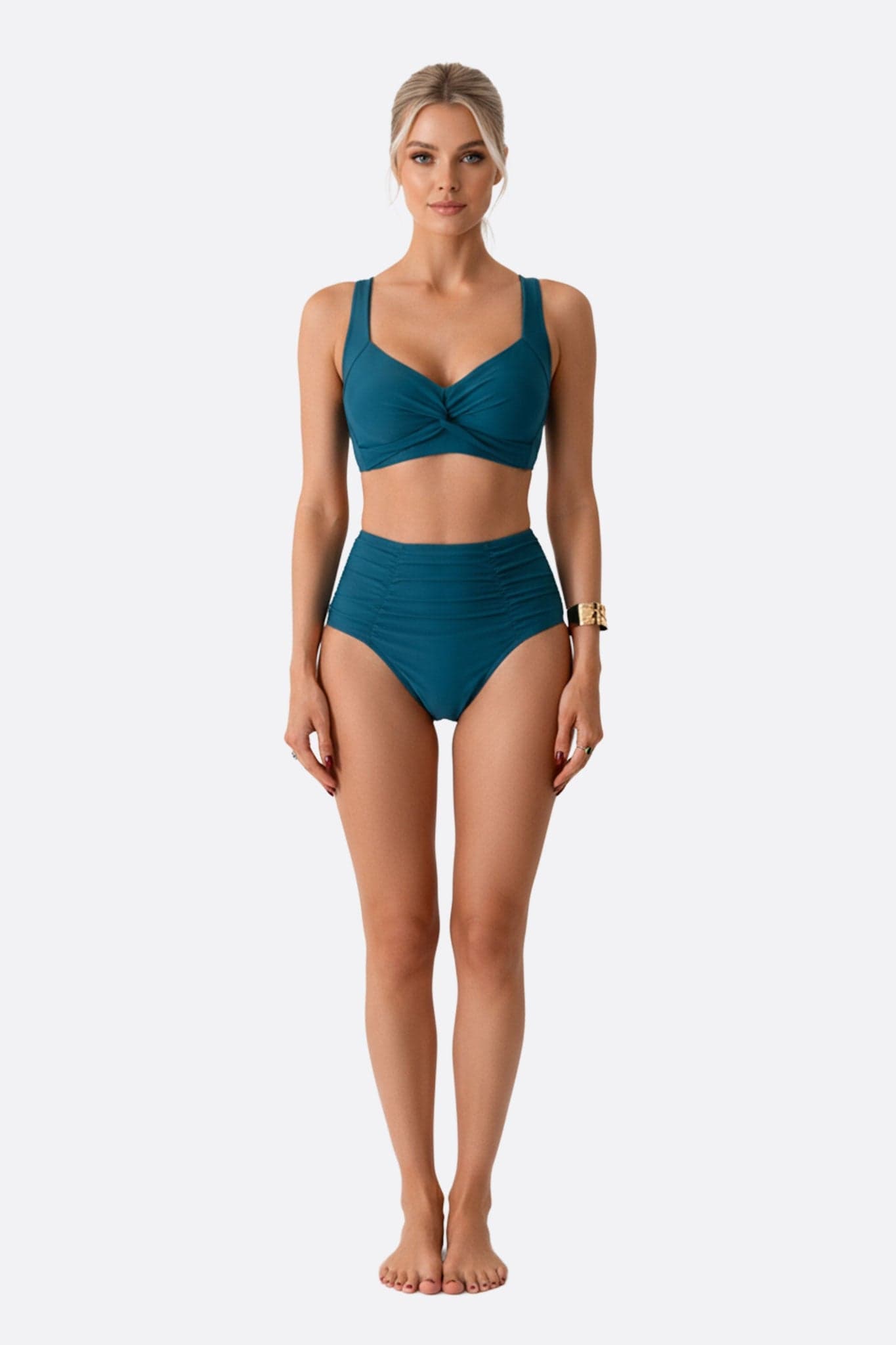
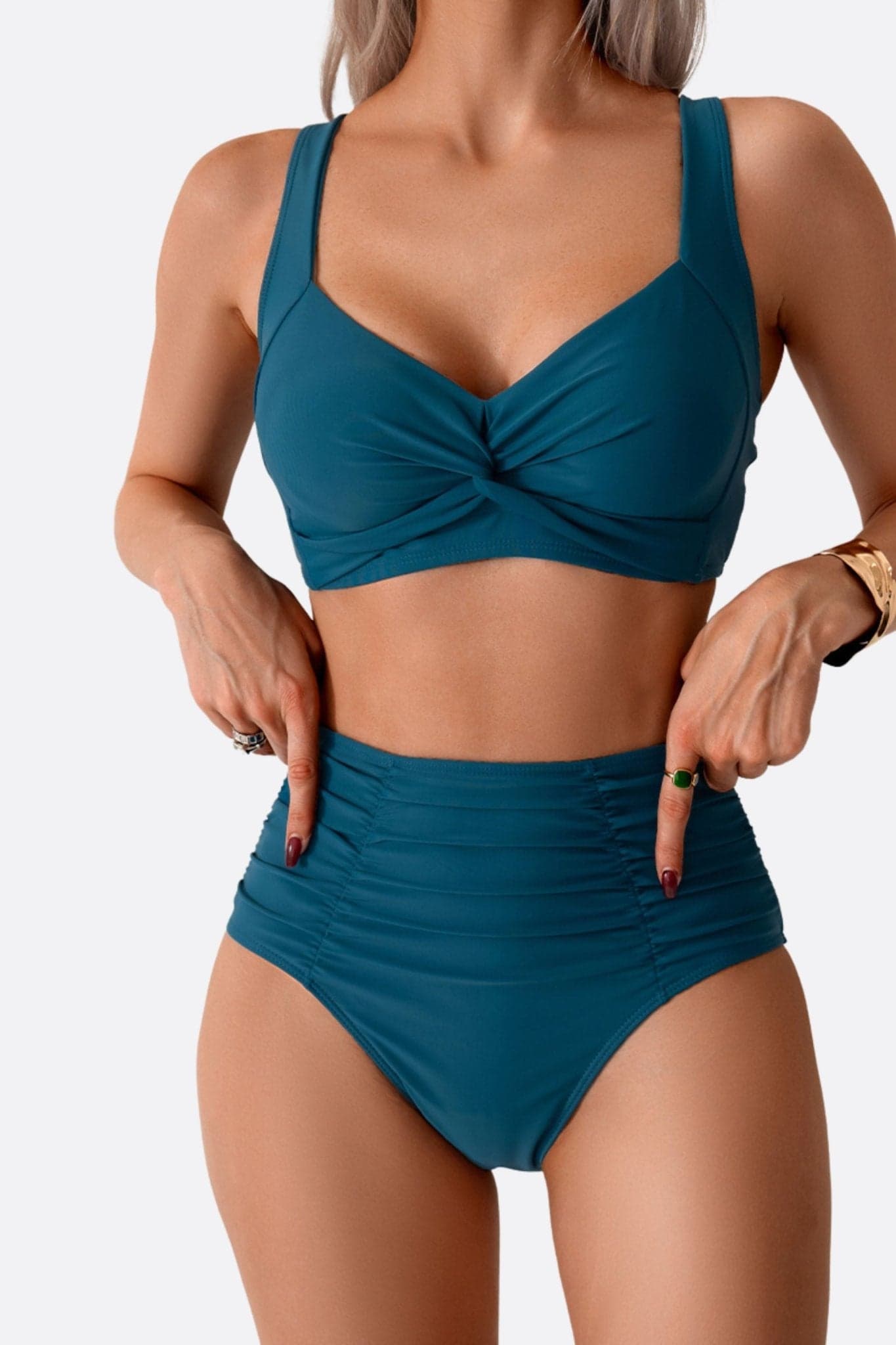
Two-piece: possible, but demanding. If you prefer a bikini or a bra/panty duo, the key is stability:
- Bra-type top with a wide band or well-fitted underbust band (not just a simple thin elastic).
- Closure: avoid small metal hooks that heat up or oxidize; a quality plastic closure or a slip-on model is more reassuring.
- Mid-rise bottom: it “locks” better when moving from sitting to standing, and it provides more protection during movements.
The critical point: the cutout. In a spa/hammam, a very high cutout has two drawbacks: it can accentuate the feeling of a “rising swimsuit” when the fabric is wet, and it exposes more in sitting positions. A medium, neat cutout with a well-fitted elastic remains the most comfortable and discreet.

Cups, underwires, reinforcements: to be used sparingly. Thin cups can help with opacity and support, but in the heat, they can become noticeable (edge that prints, area that stays wet). Underwires are rarely the best friends of the hot bench: pressure + heat = discomfort. Prefer support through construction (wide band, lining, cut) rather than rigidity.
Finishes that matter in a hammam. A good spa swimsuit is also identified by its details:
- Well-wrapped elastics (not “cord” under the fabric).
- Flat seams or clean seams, not too thick, that are not felt when leaning back.
- Absence of metal (rings, clasps, decorations): metal heats up quickly and can be bothersome.
If you hesitate between several cuts, keep a simple rule: in a spa/hammam, anything stable and soft is more elegant than what requires readjustment. For a more comprehensive view of morphology and construction criteria (beyond the spa), you can consult the Women's swimsuit: complete guide to make the right choice.
To complete your spa outfit, pair your swimsuit with a light short when leaving the hammam.
Opacity, colors, and anti-transparency details: staying serene under the steam
Steam changes the reading of a fabric. In a hammam, the light is often soft, sometimes indirect, and the humidity makes the knit darker... but also more clinging.
It is precisely this clinging that can create discomfort: the fabric hugs every contour and the lining, if not well designed, can draw sharp lines. The goal: constant opacity, standing or sitting, wet or drying.
The safest colors. For discretion, deep and bold shades are the most stable: black, navy, cocoa brown, dark burgundy, pine green. They tolerate humidity better without revealing the internal structure (seams, darts, lining edges). Pastels and whites require impeccable lining, otherwise, steam easily makes them “talkative”.
Prints: clever allies. A dense print (micro-patterns, tight foliage, fine graphics) naturally blurs the reading of wet fabric. It's an excellent choice if you want to avoid the “second skin” effect. Conversely, a very spaced print on a light background can accentuate transparency zones between the patterns.
The simple test before use. At home, slightly wet the swimsuit and place it on the forearm:
- if the knit becomes shiny and clearly reveals the skin, the opacity will be fragile in a hammam;
- if the knit remains matte, dense, with a stable color, you are on a safe base.
This test is rudimentary, but very revealing.

Lining and gusset: sensitive areas. The bottom of the swimsuit must have a clean, comfortable gusset that does not “draw”. A lining that is too small creates a visible demarcation; a well-cut lining blends into the piece. On a one-piece, a well-placed front lining also provides a sense of support, almost like an inner veil that smooths without compressing.
Avoid details that betray. In spa/hammam, some finishes become more visible: too concentrated gathers, bulky knots, decorative rings. Not that they are “forbidden”, but they attract the eye and can be uncomfortable when lying down. If your priority is discretion, choose flat details: a light drape, a princess seam, a play of sharp cutouts.
Sensation and visual support. A swimsuit that remains slightly “matte” even when wet always appears neater. It's a matter of thread quality and density: the surface captures less light, so it reveals less. In steam, this matteness gives a calm elegance and an impression of “controlled” fabric.
Comfort of use at the spa: heat, benches, hygiene, and maintenance without damaging elasticity
The last criterion, often underestimated, is the actual use: sitting on a hot bench, moving from hot to warm, rinsing, putting on a robe, and starting again. A women's swimsuit for a spa or hammam must withstand these cycles without deforming, without irritating, and without retaining moisture odors.
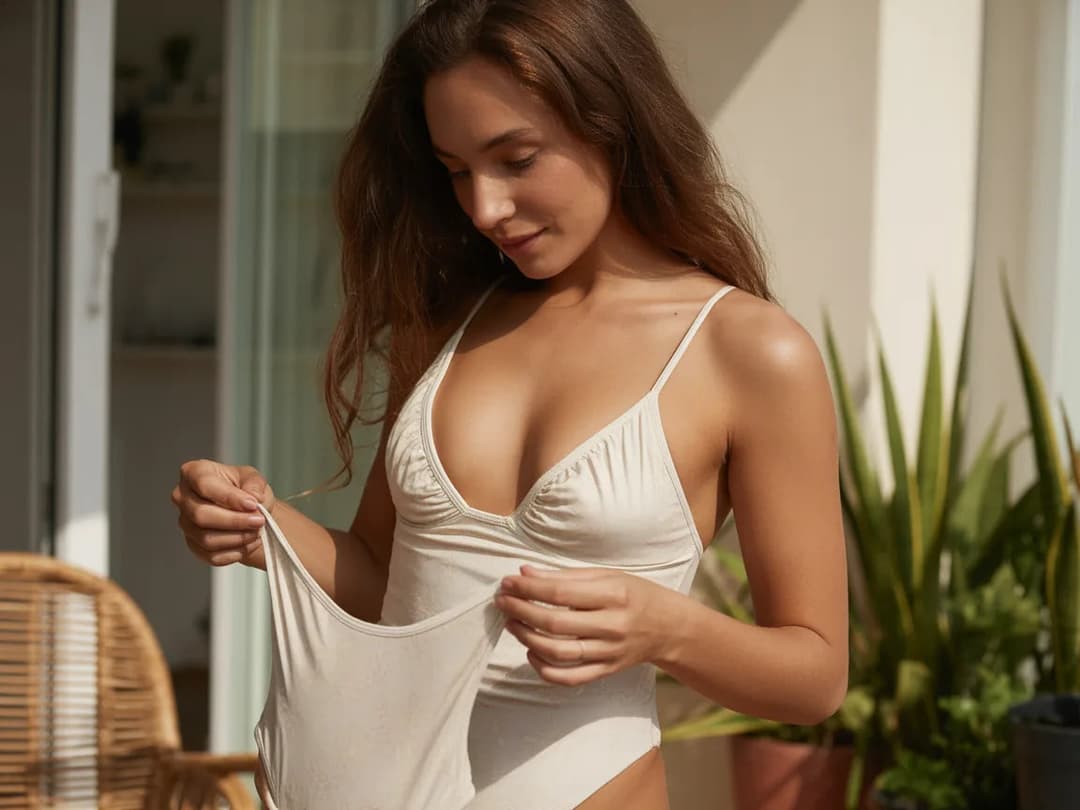
On the benches: protect the fabric (and your comfort). Even in impeccable establishments, use a towel to sit. From a textile point of view, this limits:
- localized overheating of fibers (which tires elasticity),
- repeated friction on seating areas,
- absorption of oils/products present on surfaces.
After the session: immediate rinsing. Steam is not chlorinated, but spas often combine showers, pools, oils, scrubs. Rinse the swimsuit with clear water as soon as possible, focusing on lined areas. Avoid scalding water: it tires elastane. Lukewarm water is sufficient, then a gentle pressing (without wringing) in a towel.
Washing: preserve elasticity and fabric feel. If machine washing, choose a mesh bag, delicate cycle, mild detergent, no fabric softener. Fabric softener coats the fibers and can alter drying capacity, while making the knit less “tonic”. Flat drying in the shade remains the safest: the radiator and tumble dryer are the silent enemies of swim knits.
Rotation and lifespan. If you go to the spa often, alternate two swimsuits. Elastane likes rest: this allows the fibers to regain their shape between two exposures to humid heat. You will gain in support, opacity, and comfort in the long term.
Discretion tip before leaving the humid area. Before crossing a cooler corridor (where the fabric can cool and cling), quickly rinse and then press in a towel. The swimsuit will be less clinging, therefore more discreet, and you will have a clearer sensation under the robe.
Note: These tips are based on field observations, recommendations from textile professionals, and technical studies, and do not replace medical advice for very sensitive skin.
In spa/hammam, elegance is measured by tranquility: a dense fabric that remains matte, a stable cut that does not go awry, soft finishes that are forgotten. It is this trio, material, construction, use, that transforms a simple swimsuit into a true comfort piece, designed for heat and steam.
For a complete guide on choosing your swimsuit, check out Women's swimsuit: complete guide to make the right choice.

Article by Alberto Alagna
Published on 04/15/2026 at 18:52
About the author
Passionate about textile craftsmanship and sustainable design, Alberto Alagna brings to Misciano a vision where elegance meets ethics. With his experience in high-end ready-to-wear, he shares his style tips and the behind-the-scenes of the Misciano house here.
→ Learn more about Alberto AlagnaFREQUENTLY ASKED QUESTIONS
What materials are best suited for a swimsuit when visiting a spa or hammam?
For a spa or hammam, it is preferable to choose materials with appropriate density, such as polyester or nylon, which dry quickly and do not become transparent under the effect of heat. Also opt for fabrics that offer a good feel, to ensure comfort and well-being during your treatments.
How to avoid discomfort related to the transparency of the swimsuit in a humid environment?
To avoid any discomfort related to transparency, it is essential to favor lined swimsuits or those with reinforced mesh density. These textile details ensure adequate opacity even in a humid environment, allowing you to relax without worry.
How important is fabric elasticity for a swimsuit in a spa?
The elasticity of the fabric is crucial in a hot environment like a spa or hammam. A swimsuit with good elasticity retains its shape and support, even after multiple showers or heat sessions, ensuring you optimal comfort.
How do swimsuit cuts affect comfort in a spa?
Swimsuit cuts play a determining role in comfort. Suitable cuts protect without compressing, allowing freedom of movement while avoiding marks on the skin. This is essential to fully enjoy the wellness experience without distraction.
What type of lining is recommended for a spa swimsuit?
For spa use, a soft and lightweight fabric lining is recommended. This not only ensures better opacity but also guarantees quick drying, thus avoiding the discomfort of a swimsuit that is too heavy or sticky after treatments.