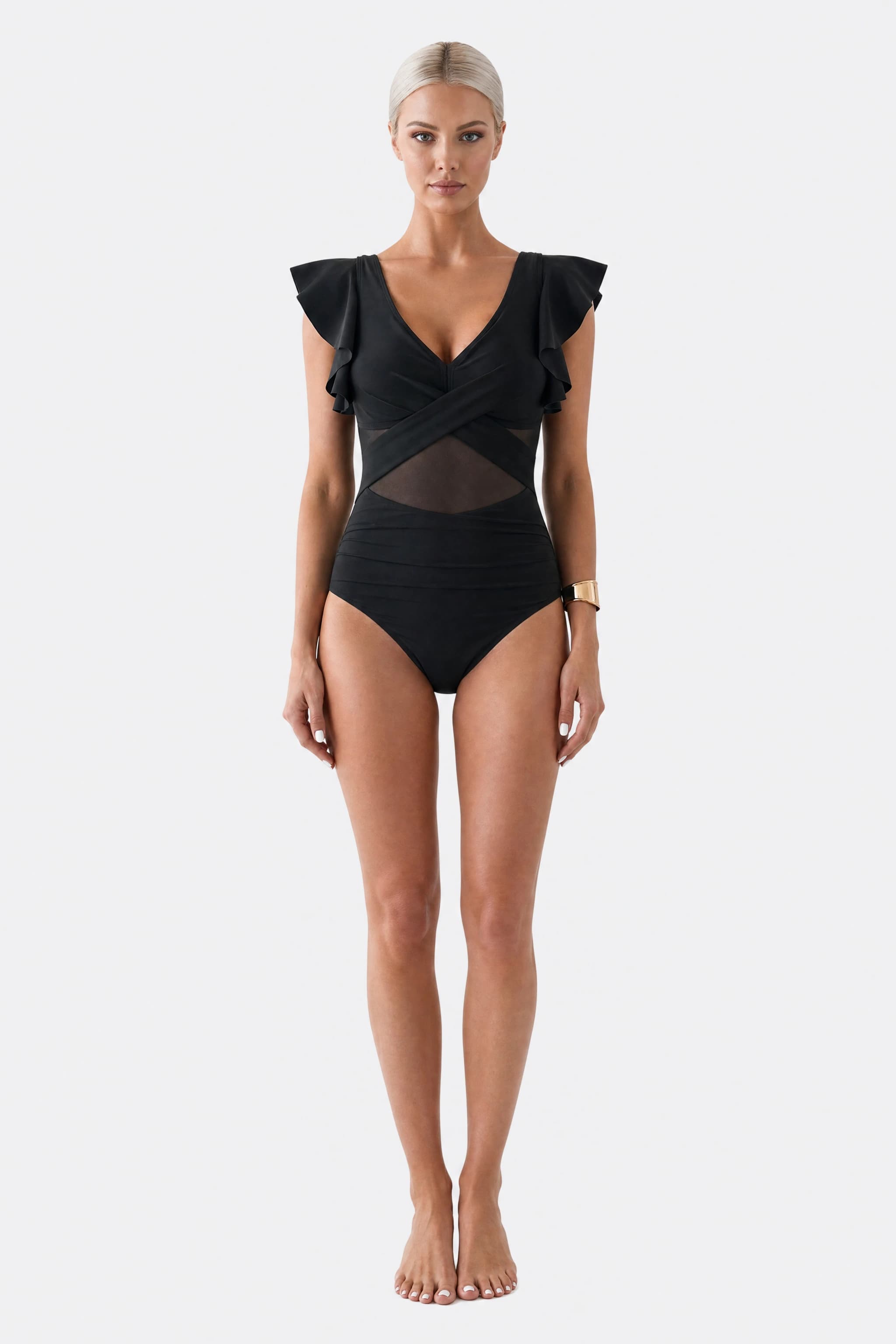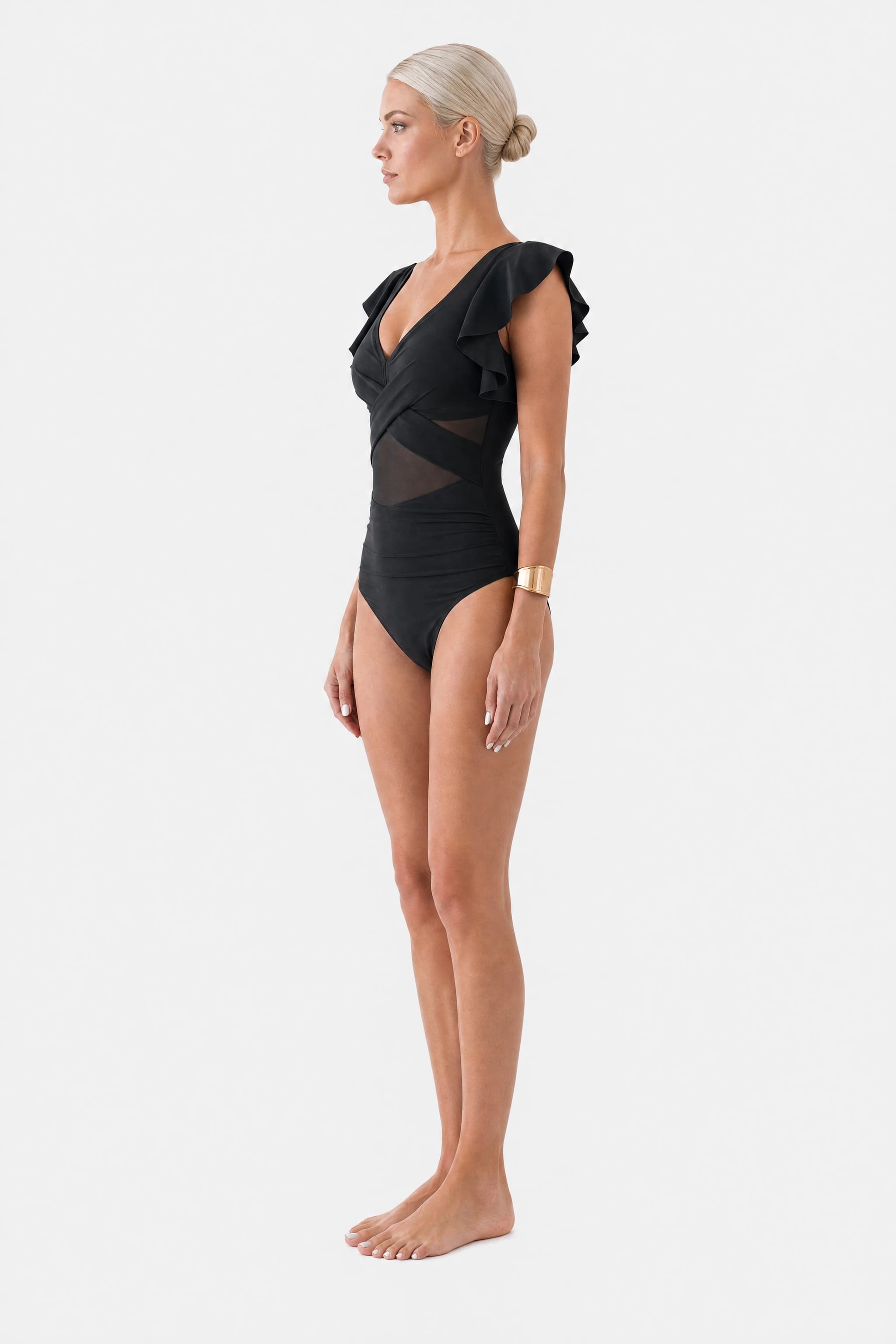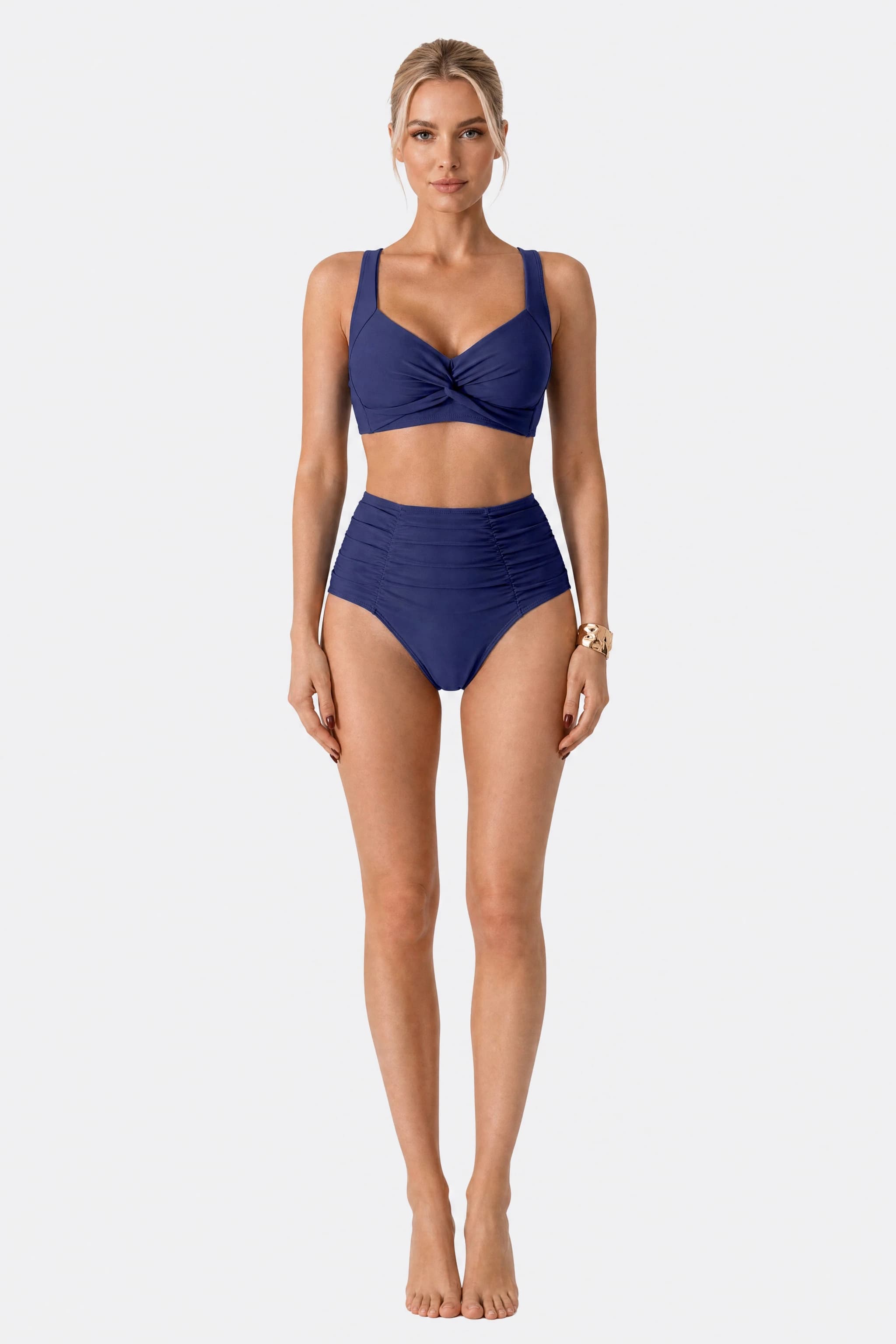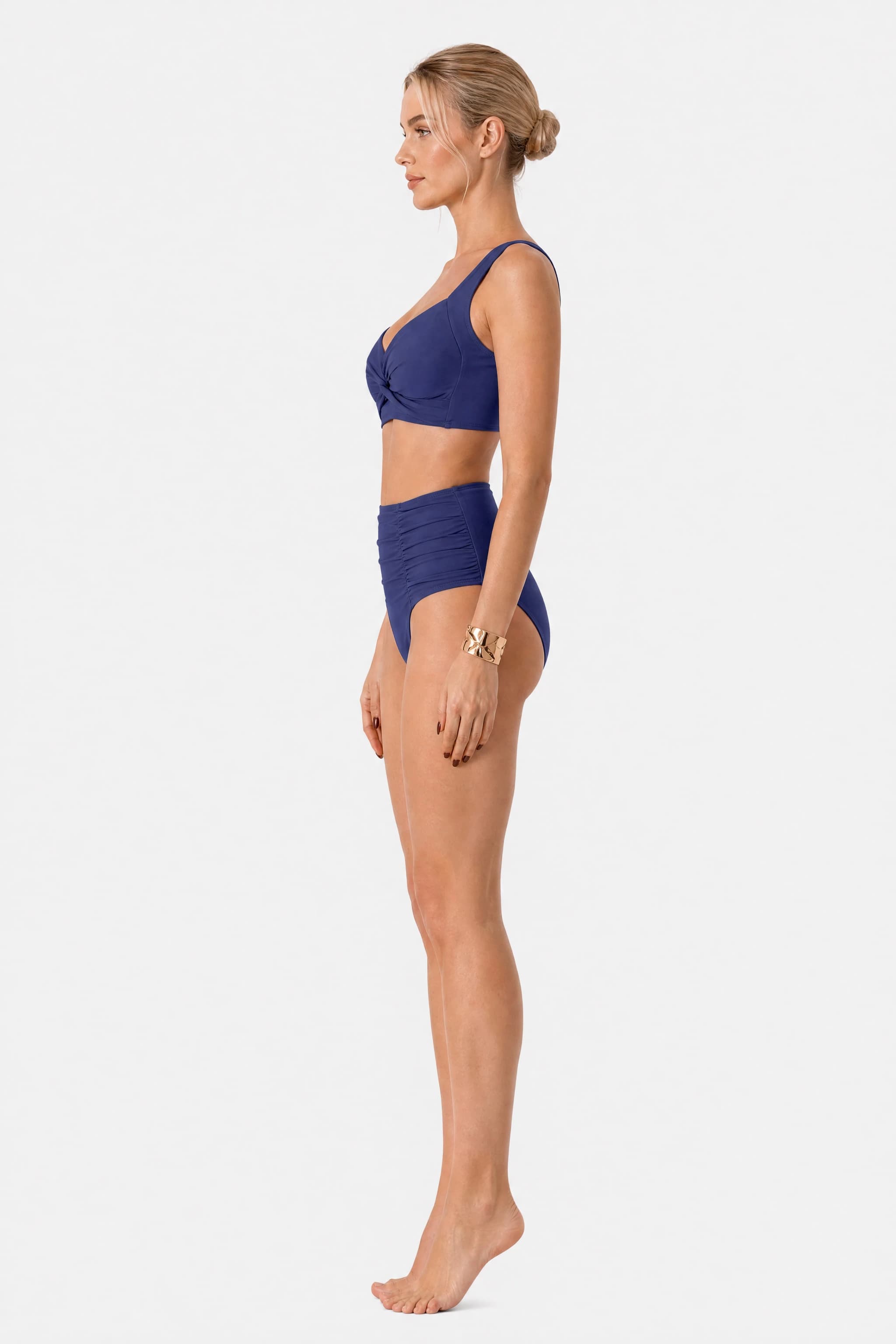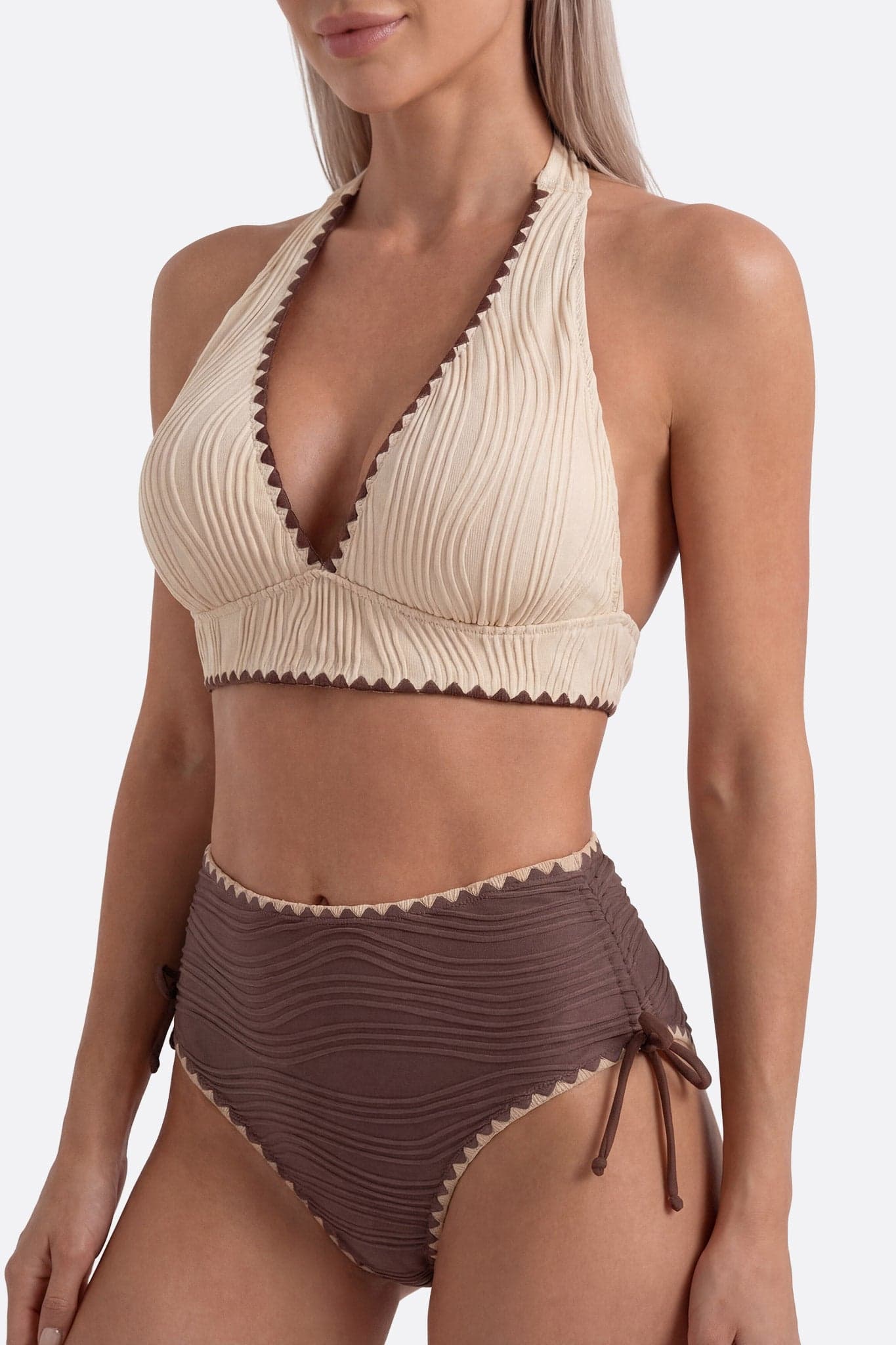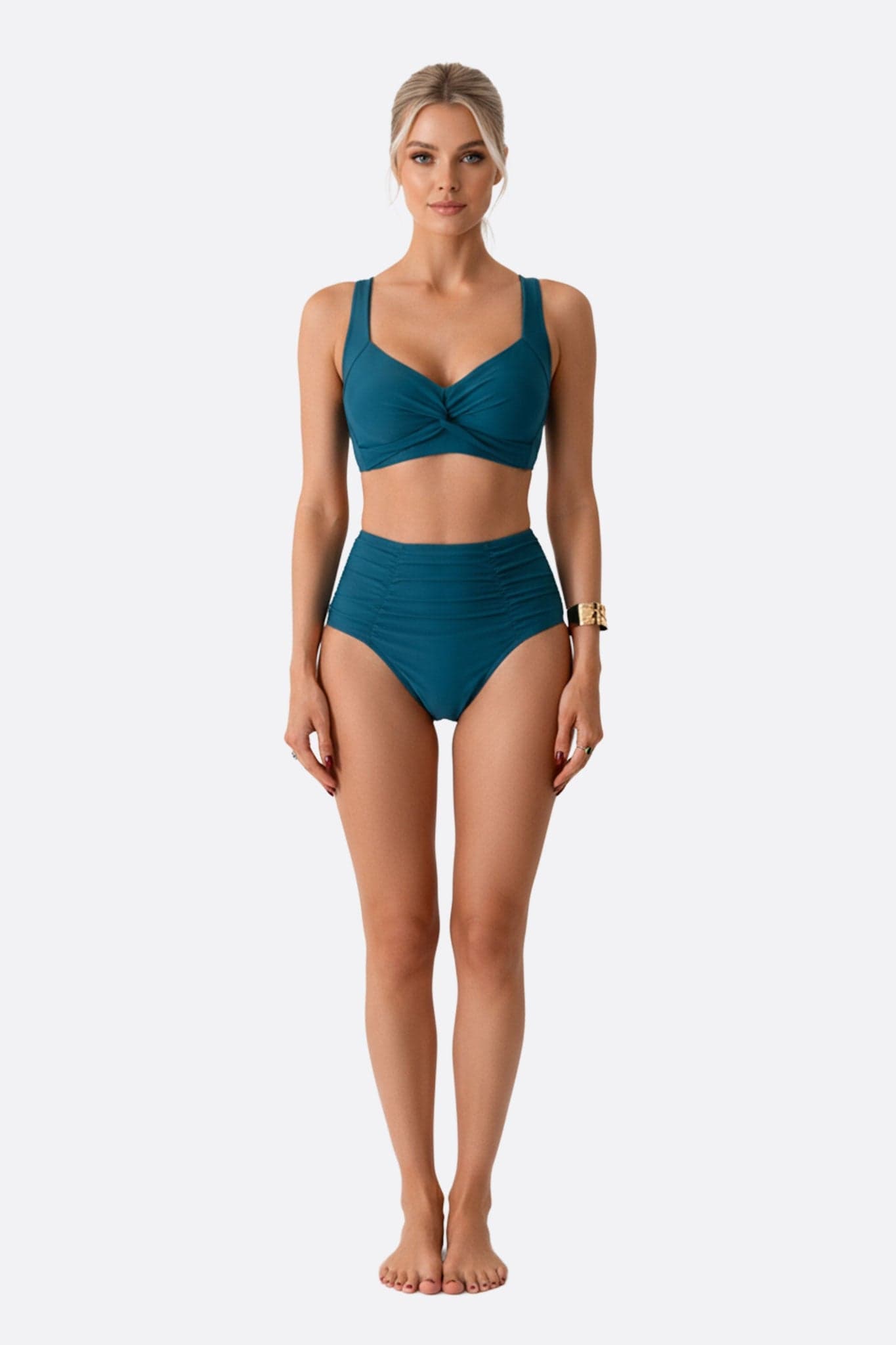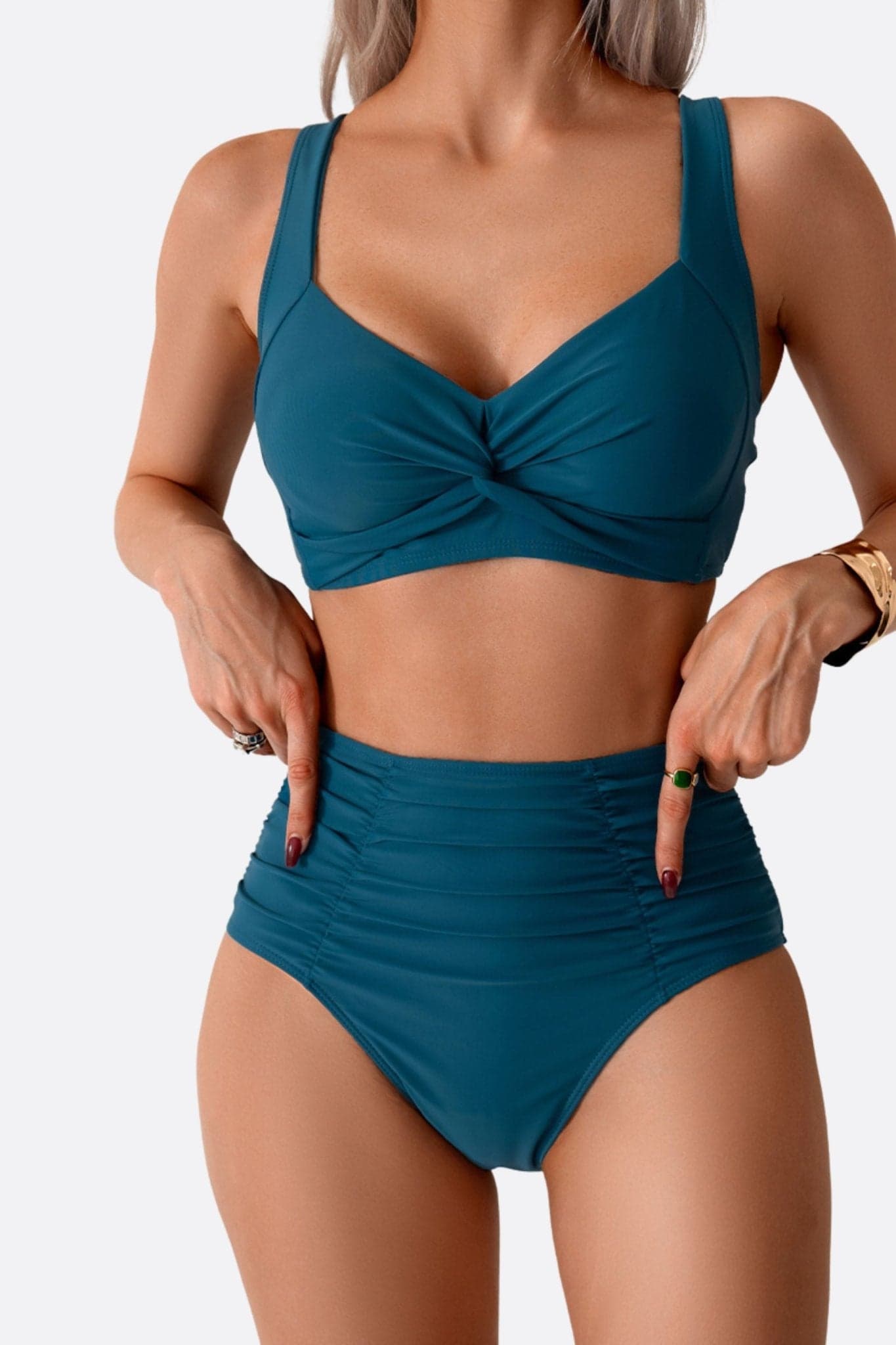
Why does a quality women's swimsuit cost more?

The price of a women's swimsuit starts with the material: fibers, gauge, opacity, and memory
When a women's swimsuit has a higher price tag, the first explanation is rarely visible on the hanger: it is hidden in the exact composition of the knit, its density, and its ability to remain impeccable over multiple swims.
A fabric "that holds" is not just a matter of elastane percentage. It is about a balance between the main fiber (polyamide, polyester, sometimes recycled polyamide), the quality of the yarn, the knitting gauge (fineness and tightness), and the dimensional stability after immersion.
A well-made polyamide, tightly knitted, gives that crisp and fresh feel, almost "icy" to the touch, and above all, a memory: the swimsuit returns to its shape instead of sagging at the hips or wrinkling at the cups.
Conversely, a knit that is too light or too loose becomes translucent when wet, highlights the seams more, and shows tension at attachment points (straps, cutouts). Opacity is a cost factor: it is paid for in grams, density, and more regular yarn.
The second point is chemical and mechanical resistance. A quality fabric is chosen to better tolerate chlorine, salt, and sun oils. This results in more stable color retention (less "fading," less bleaching) and a surface that maintains its sharpness. You can feel it by hand: a low-cost fabric "warms up" quickly, becomes too soft, and eventually loses its spring. A premium fabric retains a discreet bounce, a firm elasticity, and a more regular texture.
Practical advice: during fitting, slightly stretch the fabric between your fingers and then release. A good knit returns without residual creases. Also, look at the fabric in raking light: if you can easily see the weave or if the surface already seems to pill, aging will be rapid. Finally, wet your hand and press the fabric if possible: a well-constructed swimsuit remains more opaque and does not "stick" limply to the skin.
Linings, reinforcements, and support: what you don't see but your silhouette feels
The extra cost of a women's swimsuit is often justified by its internal architecture. The difference between a model that is simply "pretty" and one that is truly flattering lies in the linings, reinforcements, elastics, and how all of this is assembled. A full lining, well-chosen, provides a soft feel against the skin, limits transparency when wet, and stabilizes the cut. It also prevents the outer fabric from working alone, which delays the appearance of deformations.
Reinforcements are multiple: support band under the bust, shaping powermesh on the stomach, discreet cups or cup pockets, with or without underwires, and especially quality elastics. A basic elastic, too thin or too rigid, cuts and marks. A premium elastic has a more progressive elasticity: it supports without "biting," and withstands repeated swims better. It's a detail that costs, as it requires more reliable components and more precise implementation.
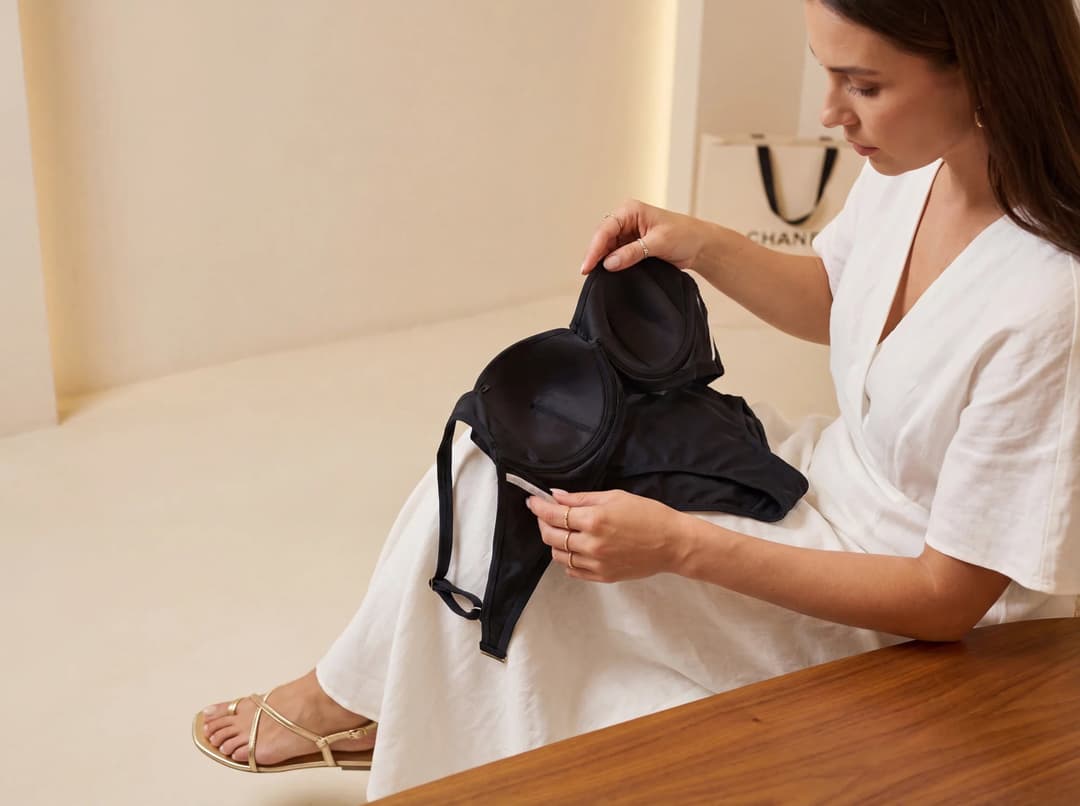
Support is not only for generous busts. Even with a smaller cup, good support changes posture: the swimsuit does not slip, the straps do not twist, and the cutout stays in place when you swim or walk. This stability comes from a combination: sufficient strap width, solid adjustments, well-placed stop points, and sometimes a multi-panel construction that "shapes" the bust instead of compressing it.
Applicable advice: check the inside. A lining should be neatly placed, without folds. Gently pull on the band under the bust: it should return to place without stretching. On a one-piece, observe the stomach: if the fabric ripples at rest, it is often a sign of insufficient internal structure. Finally, move around: the right swimsuit stays aligned, without needing to be adjusted every two minutes.
Cut, patterning, and fittings: the true luxury of a women's swimsuit is precision
The price of a women's swimsuit of quality reflects a much more demanding cutting work than it seems. A swimsuit pattern does not tolerate approximation: the material is stretchable, the use is dynamic, and the slightest error results in a strap that sags, a cut that pinches, a back that drops, or a neckline that opens when the material is wet. Brands that invest in cutting multiply prototypes, corrections, and fittings on different body types. This time is not “marketing”: it is concrete comfort.
A good pattern takes into account the direction of fabric elasticity (warp/weft in a woven, but especially knitting direction in a jersey), the distribution of tensions, and how the body behaves in motion. For example, a well-placed cut on a one-piece can smooth the waist without tightening, simply by directing the tension.
Similarly, a well-designed bikini does not just consist of a triangle: it anticipates link lengths that do not roll, a base that fits without creating bulges, and a back that remains stable.
Serious brands also work on size gradations: moving from size 36 to 38 is not just “2 cm more”. The bust, back, leg opening, and torso height evolve together. When these proportions are mastered, the silhouette appears sharper, and the swimsuit “fits” just right: no pulling at the crotch, no excess fabric at the small of the back.
To delve deeper into the choice according to your use and cutting criteria, you can consult the complete guide to choosing a swimsuit based on your body shape, style, and use.
Immediate fitting room tips: raise your arms, sit down, walk. A well-patterned swimsuit does not move. Look at the cut: if it rides up excessively in motion, the torso height is probably too short. Check the back: if it forms a “V” that drops when you move, the tension is poorly distributed. Finally, observe the neckline from the side: a good design follows the body without creating an opening.
Finishes, sewing, and components: where a “premium” women's swimsuit is recognized by touch
Two women's swimsuits may seem similar in photos, but the finishes tell a different story. On a quality product, the seams are designed to accompany elasticity, avoid irritation, and remain neat after multiple immersions.
We talk about specific stitches (coverstitch, controlled overlock), thread tensions carefully adjusted, and regularity that prevents the seam from puckering. A puckering seam is not just an aesthetic defect: it betrays inadequate tension and often indicates premature aging.
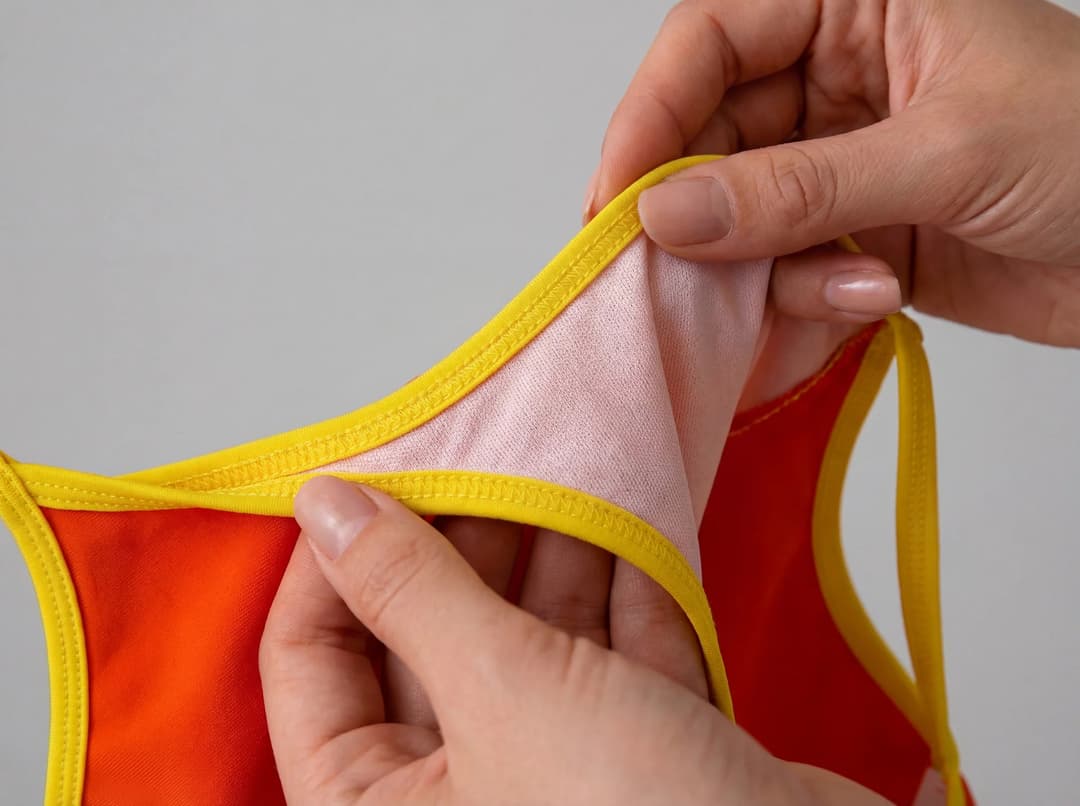
The edges are another clue. A neatly inserted elastic gives a thin, stable edge that does not roll. A poorly placed elastic creates ripples, marks the skin, or loosens. Invisible finishes, cleanliness bands, reinforced stop points in areas of tension (strap attachments, knots, clasps) add to the making time. This time is paid for, but it is felt: the swimsuit appears more “held”, calmer, and more pleasant on the skin.
Components matter just as much: rings, adjusters, clasps, cups, possible underwires. Poorly treated metal oxidizes in salt. Low-quality plastic whitens and breaks. A good component remains discreet, solid, and soft to the touch, without edges. Even the threads used are important: some threads resist chlorine better, others maintain better elasticity. These are technical choices rarely highlighted, but decisive.
Concrete tips: examine the inside. Seams should be flat and regular, without scratching thickness. Gently pull on a side seam: it should stretch with the fabric, without cracking. Look at the stop points: they should be clean, short, and placed in areas of tension. Handle the adjusters: they should slide without catching, then lock firmly to avoid deregulation in use.
Tests, durability, and cost per wear: paying more for a women's swimsuit that remains impeccable
A quality women's swimsuit costs more because it is designed to last in real conditions: UV, salt, chlorine, towel friction, sunscreen, repeated washes. Demanding brands invest in tests for dye fastness, elastic resistance, shape retention, and seam stability.
This work is not visible on a product sheet, but it is measured after ten, twenty, thirty swims: the color remains dense, the fabric retains its resilience, the edges do not loosen. For example, after 20 swims in a pool, the fabric maintains its opacity and optimal shape retention, validated according to protocols compliant with ISO standards.
Durability is also a matter of “aesthetic hold.” A good swimsuit keeps a clean surface: less pilling, fewer pulled micro-threads, less shiny appearance on friction areas. It often dries more evenly, without persistent odor, because the material and lining manage moisture better. And above all, it retains its shape: a one-piece does not stretch to the point of creating folds at the waist, a bikini does not loosen at the ties or back.
Thinking in terms of cost per wear changes the perception of price. If a cheaper swimsuit loses its shape after one season, you replace it quickly. A better-constructed model can accompany you for several summers, with consistent performance. The “more expensive” then becomes a form of economy, but also a mental comfort: you know you can swim, walk, sit, without monitoring your outfit.
Care tips to preserve quality (and make the purchase worthwhile): rinse immediately with clear water after swimming, avoid leaving the wet swimsuit balled up in a bag, hand wash with mild soap if possible, and lay flat to dry in the shade. Avoid abrasive surfaces (rough pool edges) and let sunscreen oils penetrate the skin before putting on the swimsuit. These simple actions significantly prolong elasticity and color.
In practice, if you hesitate between two models, ask yourself a simple question: which one will remain as neat after twenty swims? The answer lies in the fabric density, internal structure, precision of cut, and cleanliness of finishes. This is exactly where the price difference lies.
For a complete guide on choosing your swimsuit, consult Women's swimsuit: complete guide to make the right choice.
Discover our swimsuit collection (starting at €40).
To go further, consult our material guides.
For a complete guide on choosing your swimsuit, consult Women's swimsuit: complete guide to make the right choice.
Discover our swimsuit collection (starting at €40).
To go further, consult our material guides.

Article by Esther Arnaud
Published on 06/05/2026 at 13:54
About the author
What interests me above all is not the immediate trend, but the coherence of a wardrobe. I like to analyze why a piece works, how a material influences movement, and how a garment can accompany a woman over time, without ever imposing itself.
→ Learn more about Esther ArnaudFREQUENTLY ASKED QUESTIONS
Why is the composition of fibers so important in the price of a swimsuit?
The composition of fibers determines not only the comfort when worn but also the durability of the swimsuit. A well-balanced mix of polyamide, polyester, and possibly recycled polyamide ensures good elasticity and shape memory, guaranteeing that the swimsuit retains its original appearance after many swims.
What is knitting gauge and why does it influence the price?
The knitting gauge refers to the fineness and tightness of the knit. A fine gauge knit, made with high-quality yarn, offers a more pleasant texture and better opacity. This requires more precise manufacturing techniques and therefore, a higher production cost, justifying the final price.
How does the memory of the fabric impact the choice of a swimsuit?
The memory of the fabric is crucial for maintaining the shape of the swimsuit. A material with good memory does not loosen at the hips or cups, thus offering optimal support. This ensures not only an elegant silhouette but also prolonged comfort during aquatic activities.
What are the signs of a quality swimsuit when purchasing?
When purchasing, look for a swimsuit with dense fabric and a pleasant feel. A quality swimsuit will have satisfactory opacity, even when wet, and will be designed with careful finishes. These elements are indicators of careful manufacturing and increased durability.
How can the price of a swimsuit reflect the ethics of its production?
A higher price can often reflect more ethical production practices, such as the use of sustainable materials, fair working conditions, and environmentally friendly manufacturing methods. Choosing a quality swimsuit can also be a committed choice towards more responsible fashion.