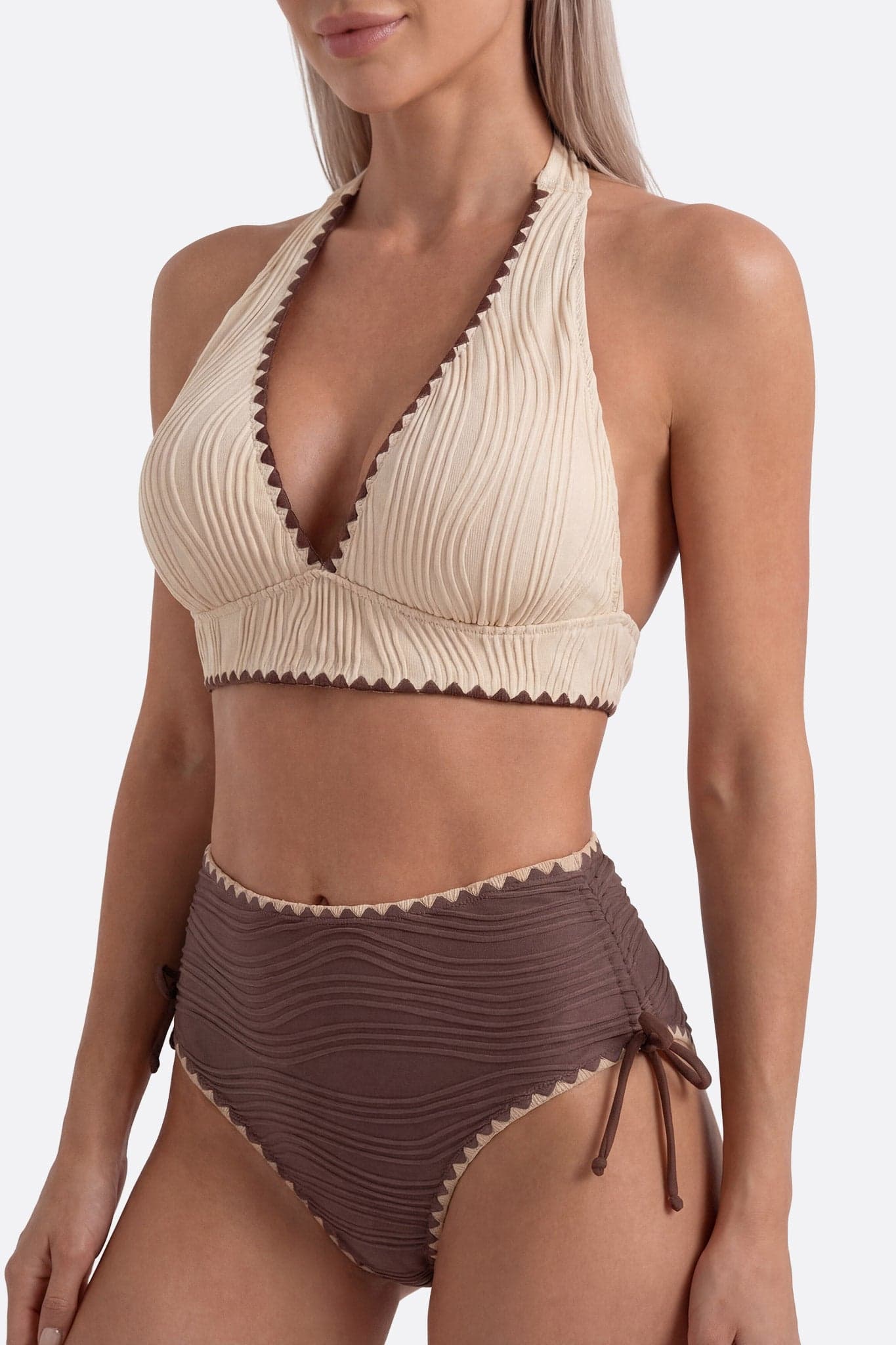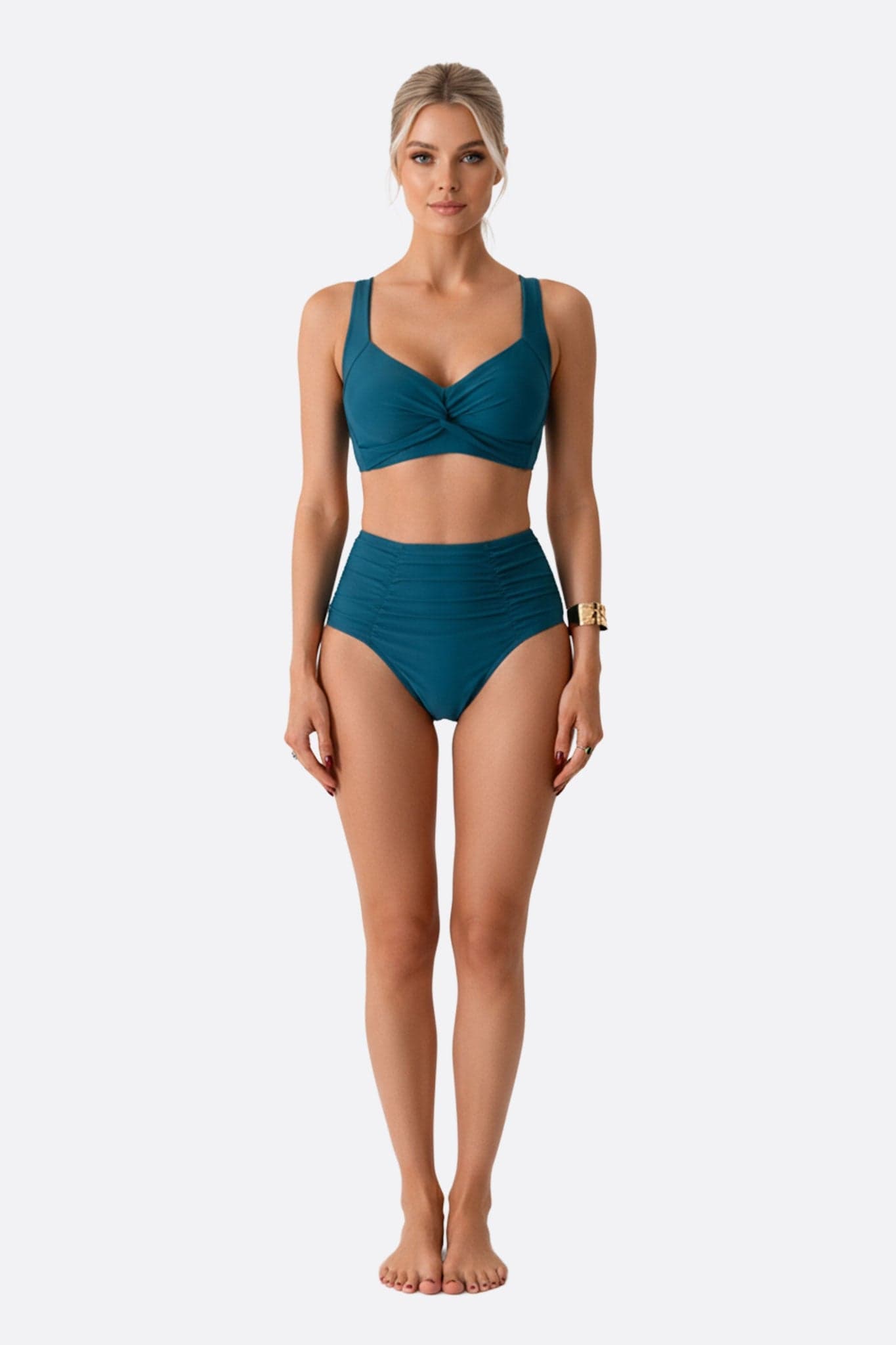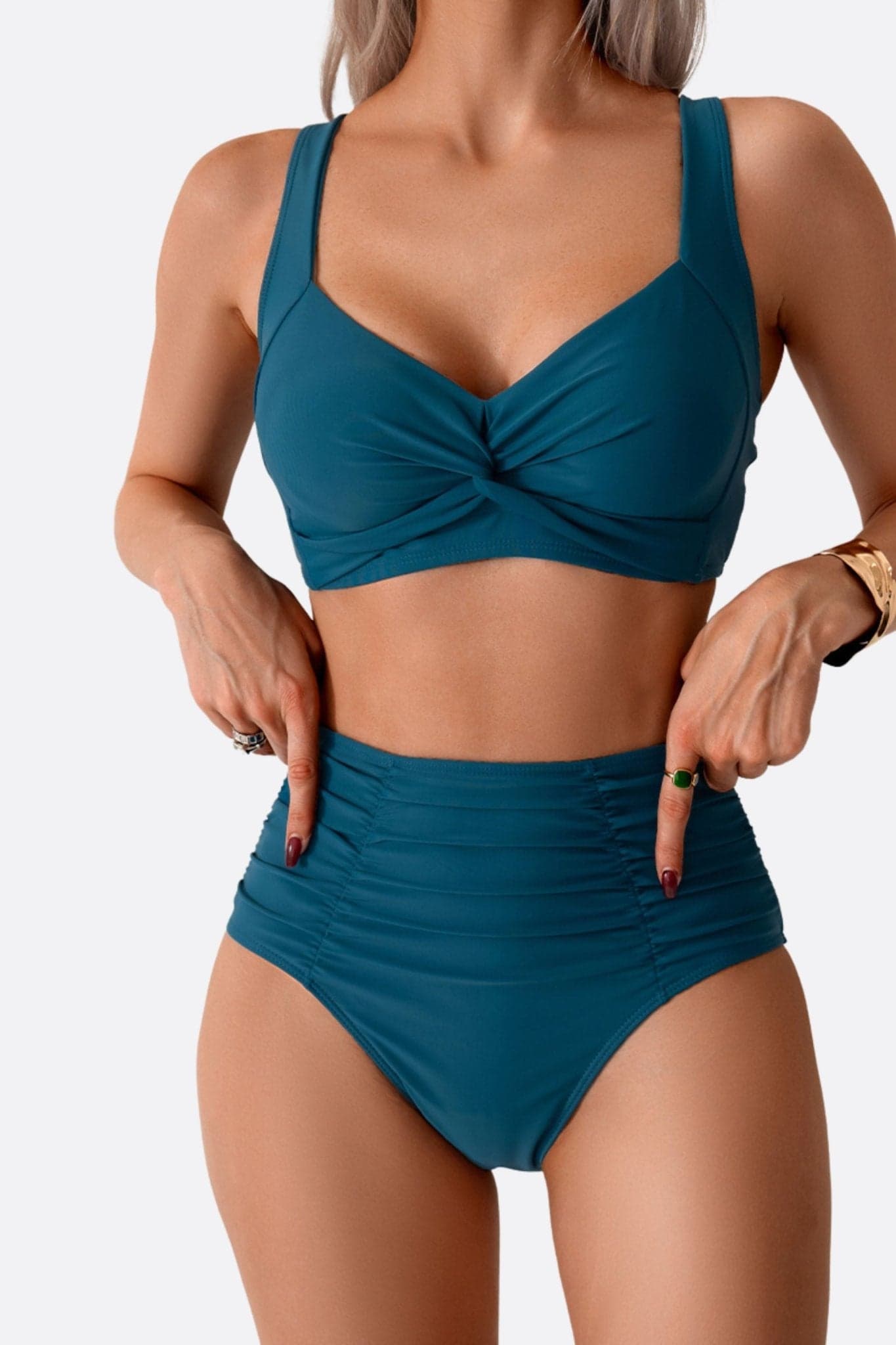
Maintenance of a women's swimsuit: How to keep elasticity wash after wash
Is your swimsuit starting to "float" at the straps, gape at the cutouts, or lose that firm bounce that fits nicely without compressing? It's not inevitable: elasticity can be maintained, but only if care follows the logic of the textile.
A swimsuit lives in an aggressive cocktail (chlorine, salt, UV, heat, friction) that first attacks the elastic fibers (often elastane) and then the fabric's feel, until the material becomes dull, less vibrant, sometimes slightly rough. Here, we focus on a single goal: successfully maintaining an elastic women's swimsuit to preserve its shape memory, fit, and adjustment, season after season.
Understanding what causes loss of elasticity: the invisible enemies of the fiber
To preserve elasticity, think like a workshop: identify what "breaks" the elastic fiber and what tires it. The first factor is oxidation (chlorine, heavily treated water, certain pool disinfectants). It gradually weakens elastane: to the touch, the fabric loses its spring, and visually it may appear more "flat," less dense.
The second factor is salt: less destructive than chlorine, but formidable through crystallization. Salt dries, forms micro-crystals, and with friction (towel, sunbed), acts like an abrasive powder that wears the surface and tires tension areas.
Third enemy: heat. Elasticity is a matter of polymer chains; too much heat (very hot water, radiator, prolonged full sun, tumble dryer) disrupts shape memory. You often feel it: a swimsuit dried in the blazing sun becomes more "stiff" and then, paradoxically, quickly loosens with use.
Fourth factor: greasy substances (suntan oils, creams, monoi). They embed, attract dirt, and disrupt elastic recovery, especially on contact areas (hips, back, straps). Finally, there are mechanical tensions: twisted wringing, vigorous rubbing, compressed wet bag, and even the habit of sitting on rough surfaces.
If you're looking for a simple guideline: elasticity is preserved when you limit oxidation, heat, and friction, while quickly removing what remains in the mesh (chlorine/salt/greasy substances). This is exactly the guiding principle of the actions below.
Rinsing and washing: the precise protocol for maintaining an elastic women's swimsuit
The best care is not complicated, it is immediate. As soon as you get out of the water, the swimsuit is loaded: chlorine or salt, mineral traces, sunscreen, sweat. The goal is to remove them before they dry into the fiber. Ideally, rinse with cold water (or if not, lukewarm, never hot) for 30 to 60 seconds, letting the water flow through the material. At this stage, do not wring: gently press between your hands, like wringing a delicate garment, without twisting.
For washing, prefer hand washing: a basin, cold to lukewarm water (max 30°C), and a small amount of mild detergent. If you have soap, choose one without harsh agents and avoid very alkaline soaps that can dry out the mesh. Simply circulate the swimsuit in the water, focus with your fingertips on the "cosmetic" areas (straps, neckline, buttocks, lined interior), then rinse thoroughly. Insufficient rinsing leaves residues that stiffen the hand and harm the bounce.
Machine? Possible if you have no choice, but with safeguards: delicate program, laundry bag, 20–30°C, and minimal spin. Anything that involves friction (drum + metal accessories from other clothes) accelerates elastic fatigue. Avoid fabric softener: it coats the fibers, alters breathability, and can affect durability over time.
 Special cases that deserve a dedicated routine:
- After pool: immediate rinse + quick wash the same day. Chlorine left to dry is the most costly mistake for elasticity.
- After sea: abundant rinse to dissolve the salt. If the swimsuit has dried with salt, rehydrate it in cold water before washing, to detach the crystals without scratching.
- After sunscreen: pre-rinse, then gentle wash a little longer (soak for a maximum of 10 minutes). Prolonged soaking is not a "care": it is prolonged exposure to water + detergent, so use with moderation.
If you are unsure about the consistency between cut, support, and material (and thus about sensitivity to care), keep in mind that the initial choice greatly conditions durability. You can rely on the reference guide Women's swimsuit: complete guide to make the right choice to connect support, linings, and use (pool/sea/sun) to your expectations of fit.
Drying, storage, and daily gestures: preserve shape memory and fit
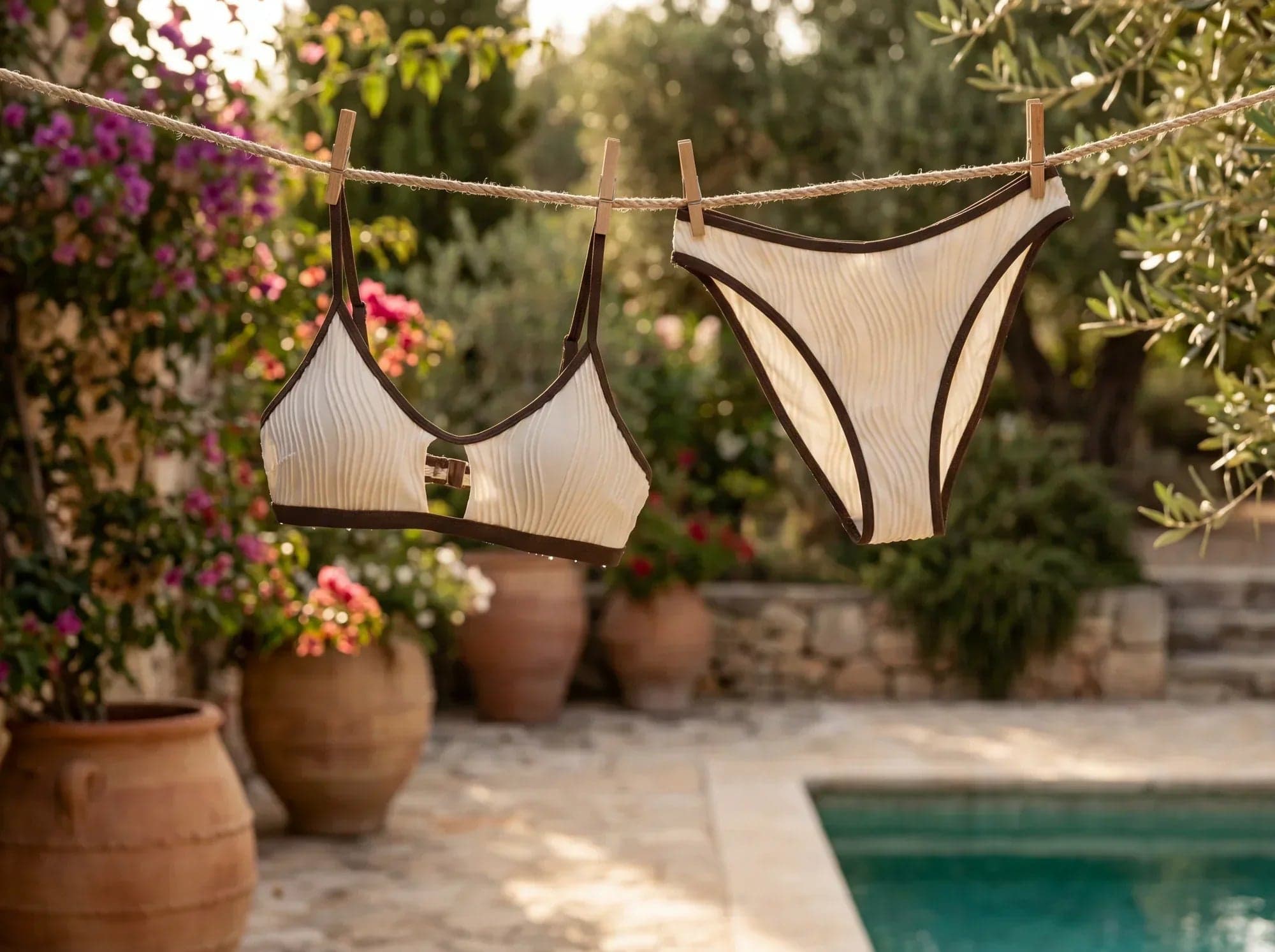
Drying is where most elasticity is lost... without realizing it. A swimsuit that dries in direct sunlight on a hot railing accumulates UV + heat + tension (the weight of the water pulls on the straps and sides). Result: the elastic fiber relaxes, and the cut subtly "deforms." The home rule: dry in the shade, flat, on a clean towel. You press the swimsuit in the towel (without twisting) to remove excess water, then let it breathe. The fabric should regain a soft hand, slightly fresh, never stiff.
Absolutely avoid:
- Tumble dryer: heat + tumbling = accelerated fatigue of elastane.
- Radiator / towel warmer: localized heat, often too high.
- Prolonged direct sunlight: UV attacks dyes and weakens the mesh; elasticity follows.
- Thin hanger: it marks, creates tension points on the straps, and deforms.
Regarding storage, the idea is to avoid wet compression and aggressive folds. Do not leave your swimsuit in a ball in a closed bag: warm humidity "cooks" the fiber slowly and fixes odors. If you need to transport it, rinse it, press it in a towel, then place it in a breathable pouch. Once dry, store it flat or folded without squeezing, away from a heat source. For models with cups or underwires, do not crush them: structural deformation leads to abnormal tensions and can pull on the mesh, which tires the elastic over time.
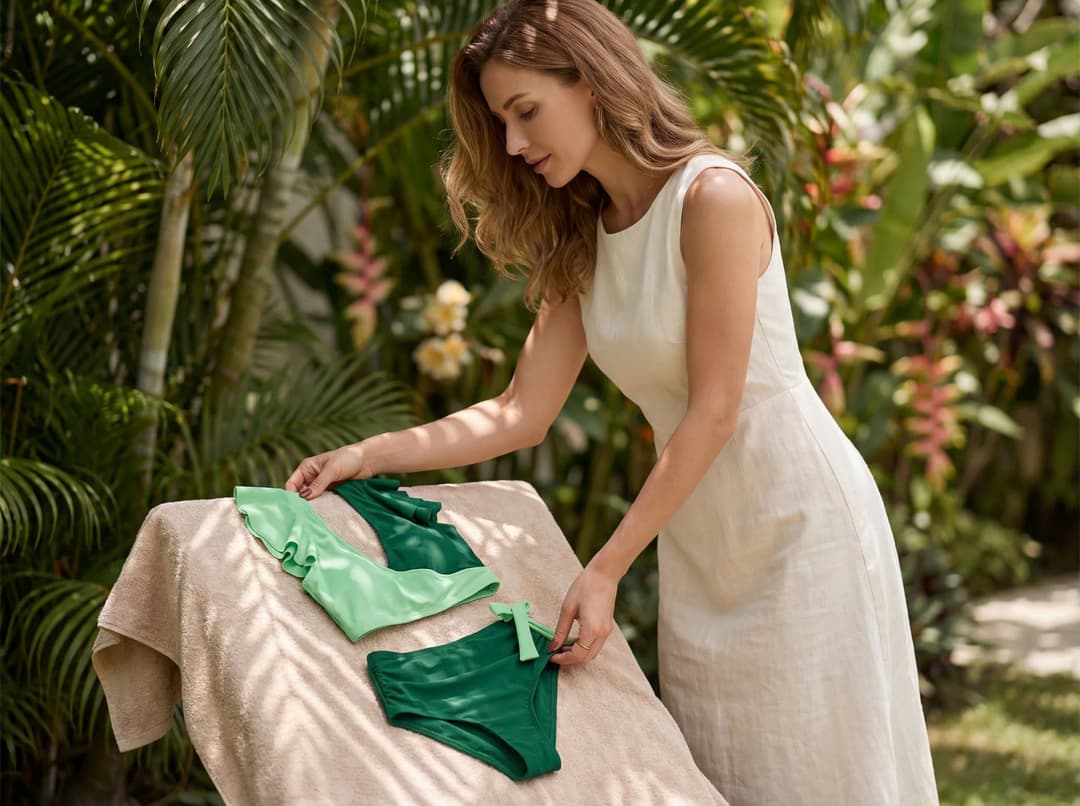
Finally, think about daily gestures that seem trivial but matter:
- Sunbed, concrete, raw wood: lay a towel, friction "shaves" the surface and relaxes the mesh.
- Jacuzzi and very hot waters: heat + products = unfavorable combo for elasticity.
- Rinse before swimming: a swimsuit slightly moistened with clear water absorbs a little less chlorine/salt and cream.
These are micro-precautions, but they extend the fit: a well-maintained swimsuit retains that discreet bounce, that sense of firm support, and a drape that remains true to the first outing.
Recovering a swimsuit that is stretching: diagnosis, realistic solutions, and limits
When elasticity decreases, two situations must be distinguished: clogging (residues that "weigh down" the fiber) and real fatigue of the elastane (altered chains). The first case can often be remedied; the second, rarely. Start with a sensory diagnosis: if the swimsuit is dull, a bit sticky, or if the hand feels thicker than before, there is probably a film of cream/detergent/salt. If, on the other hand, the material seems thin, soft, and the stretched areas (straps, back, cutouts) do not return to place even when dry, the elastic fiber is tired.
Realistic solution #1: gentle unclogging. Do a careful hand wash, long rinse, then a second rinse. The goal is to eliminate anything that stiffens or weighs down. Avoid aggressive recipes (hot water, stripping products): they give an illusion of "clean" but accelerate the loss of elasticity.
Realistic solution #2: controlled rest and drying. Sometimes, a swimsuit worn for a long time, left damp, then worn again, gives a feeling of relaxation. Let it dry completely flat, in the shade, then try again. The mesh recovers some of its spring when it is no longer saturated with water and residues.
Realistic solution #3: alternate. Elasticity likes recovery. If you wear the same swimsuit two days in a row, especially in the pool, you accumulate oxidation + tension without return time. Alternating two pieces really extends the wear, because the fiber has time to stabilize between two exposures.
The limits to accept: elastane really attacked by chlorine, heat, or the dryer does not "come back." You can improve the appearance (cleaner hand, sharper color), but not recreate the shape memory. In this case, be realistic: keep it for less demanding uses (occasional bathing, calm tanning) and reserve a more tonic swimsuit for swimming or long days.
Last point, often neglected: if only the straps loosen, repair is sometimes possible (shorten, change the elastic) depending on the construction. On a quality lined model, a clean alteration can restore a firm hold without touching the main mesh. It's a pragmatic approach: extend the life of the garment by intervening where the tension is strongest.
To remember: maintaining women's elastic swimsuits is based on three concrete pillars: rinse immediately, wash gently without twisting, dry flat in the shade. This triptych protects the fiber, maintains the fit, and keeps the swimsuit with that precise feel, a flexible hold, a lively elasticity, and a fit that remains just right. In case of doubt, do not hesitate to refer to the manufacturer's care label for specific indications adapted to each model.
Sources and References
- Lycra care recommendations on preserving elastane.
- Textile care guide published by Invista.
- Standards and care advice from recognized manufacturers in the swimwear textile sector.
In case of doubt, don't forget to consult the manufacturer's care label to adapt the actions to the specific composition of your swimsuit.
For a complete guide on choosing your swimsuit, consult Women's swimsuit: complete guide to make the right choice.
Discover our swimsuit collection (starting from 40€).
To go further, consult our material guides.
For a complete guide on choosing your swimsuit, consult Women's swimsuit: complete guide to make the right choice.
Discover our swimsuit collection (starting from 40€).
To go further, consult our material guides.

Article written by Esther Arnaud
Published on 04/11/2026 at 18:47
About the author
What interests me above all is not the immediate trend, but the coherence of a wardrobe. I like to analyze why a piece works, how a material influences movement, and how a garment can accompany a woman over time, without ever imposing itself.
→ Learn more about Esther ArnaudFREQUENTLY ASKED QUESTIONS
Why is my swimsuit losing its elasticity?
The elasticity of your swimsuit can decrease due to various factors such as chlorine, salt, UV exposure, and heat. These aggressive elements primarily attack the elastic fibers, often made of elastane, leading to material degradation and a loss of its ability to return to its original shape.
How can I properly care for my swimsuit to preserve its elasticity?
To preserve the elasticity of your swimsuit, it is recommended to rinse it with clear water after each swim to remove chlorine or salt. Wash it by hand with a mild detergent and avoid twisting it or exposing it to direct heat sources, such as the sun or a dryer.
Do sunscreen stains affect the elasticity of my swimsuit?
Yes, sunscreen stains can alter the elasticity of your swimsuit. These products contain chemical agents that can degrade the fabric fibers. It is essential to treat these stains quickly and wash the swimsuit according to recommendations to minimize their impact.
Is it true that using specific products can help maintain the elasticity of my swimsuit?
Yes, certain products dedicated to the care of elastic textiles can be beneficial. Look for cleaners specially formulated for swimsuits that help preserve the fibers while removing chlorine and salt residues, while respecting the fabric structure.
How often should I wash my swimsuit to maintain its quality?
It is recommended to wash your swimsuit after each use, especially after swimming in a pool or the sea. Regular maintenance helps remove impurities and preserve the elasticity, fit, and adjustment of the swimsuit, thus ensuring optimal longevity.