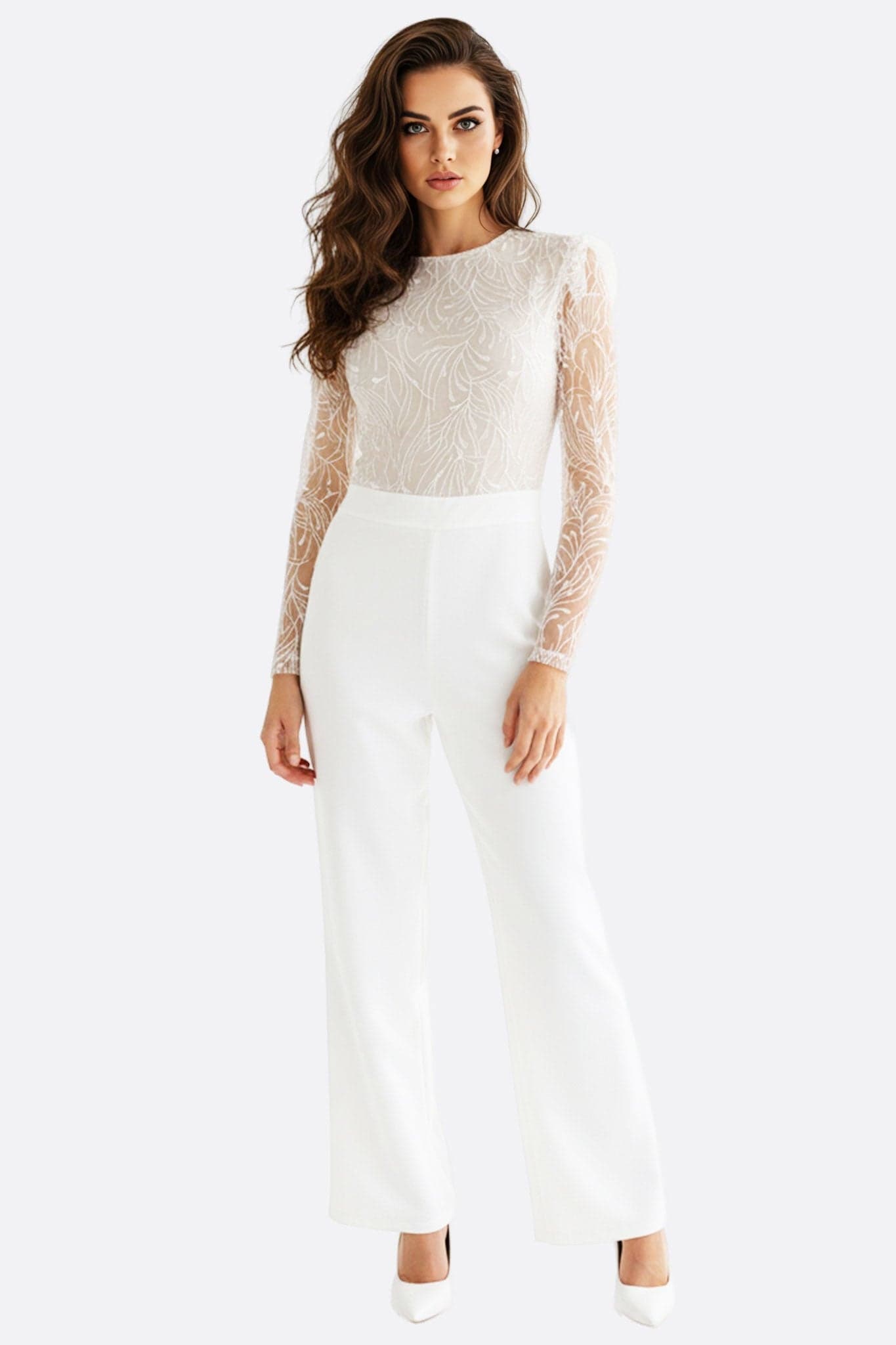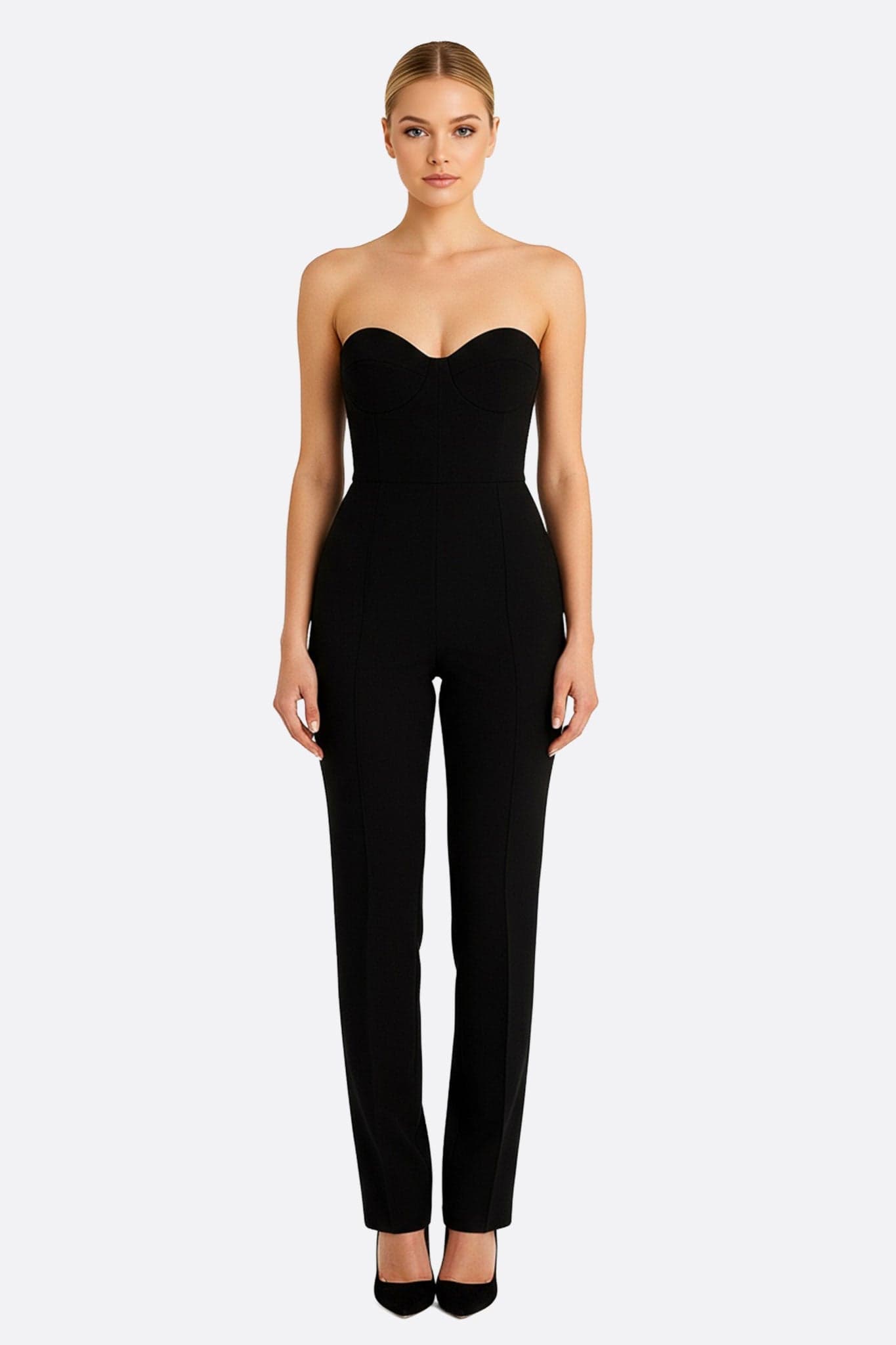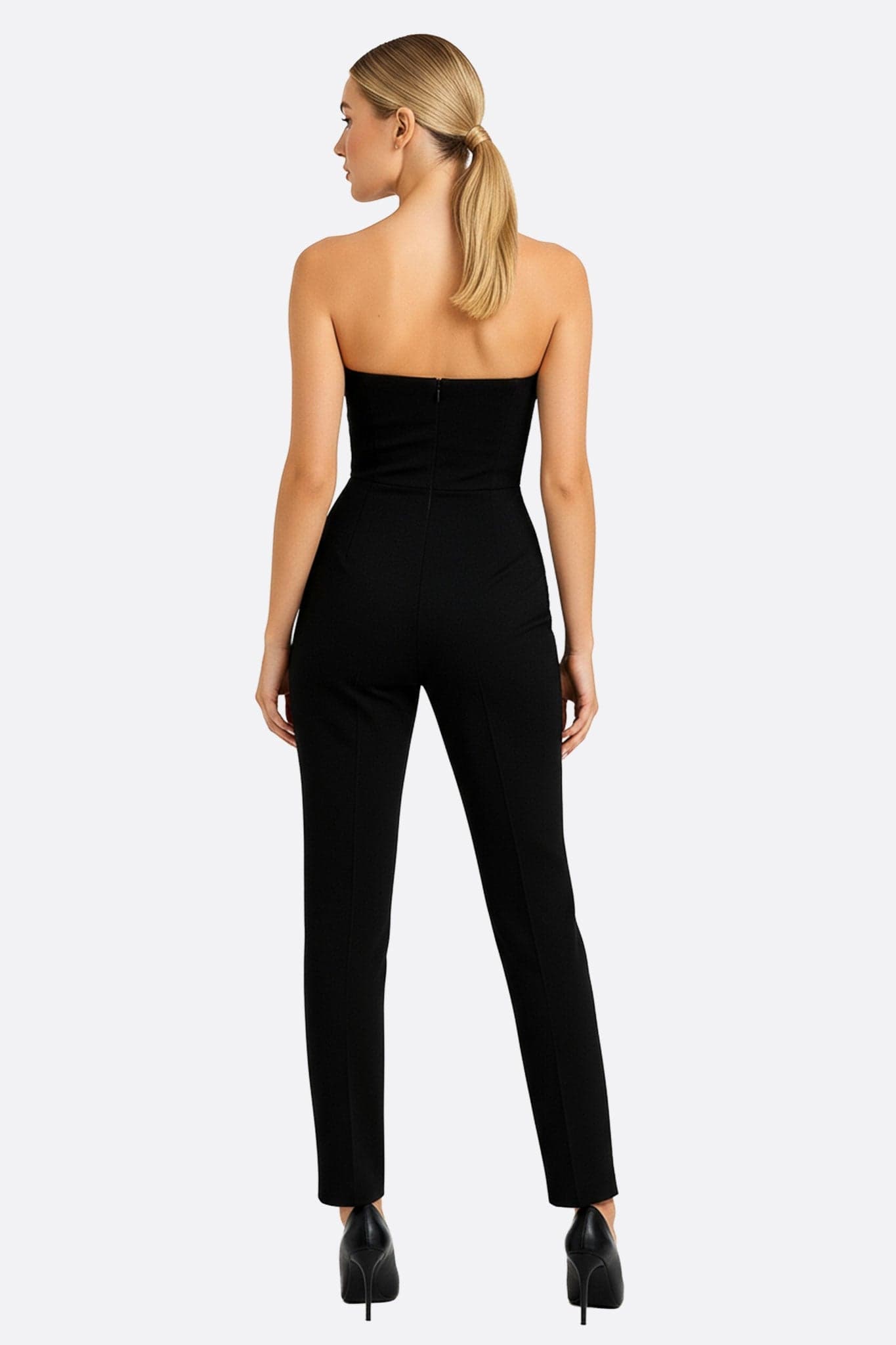
History of women's jumpsuits: from workwear to chic
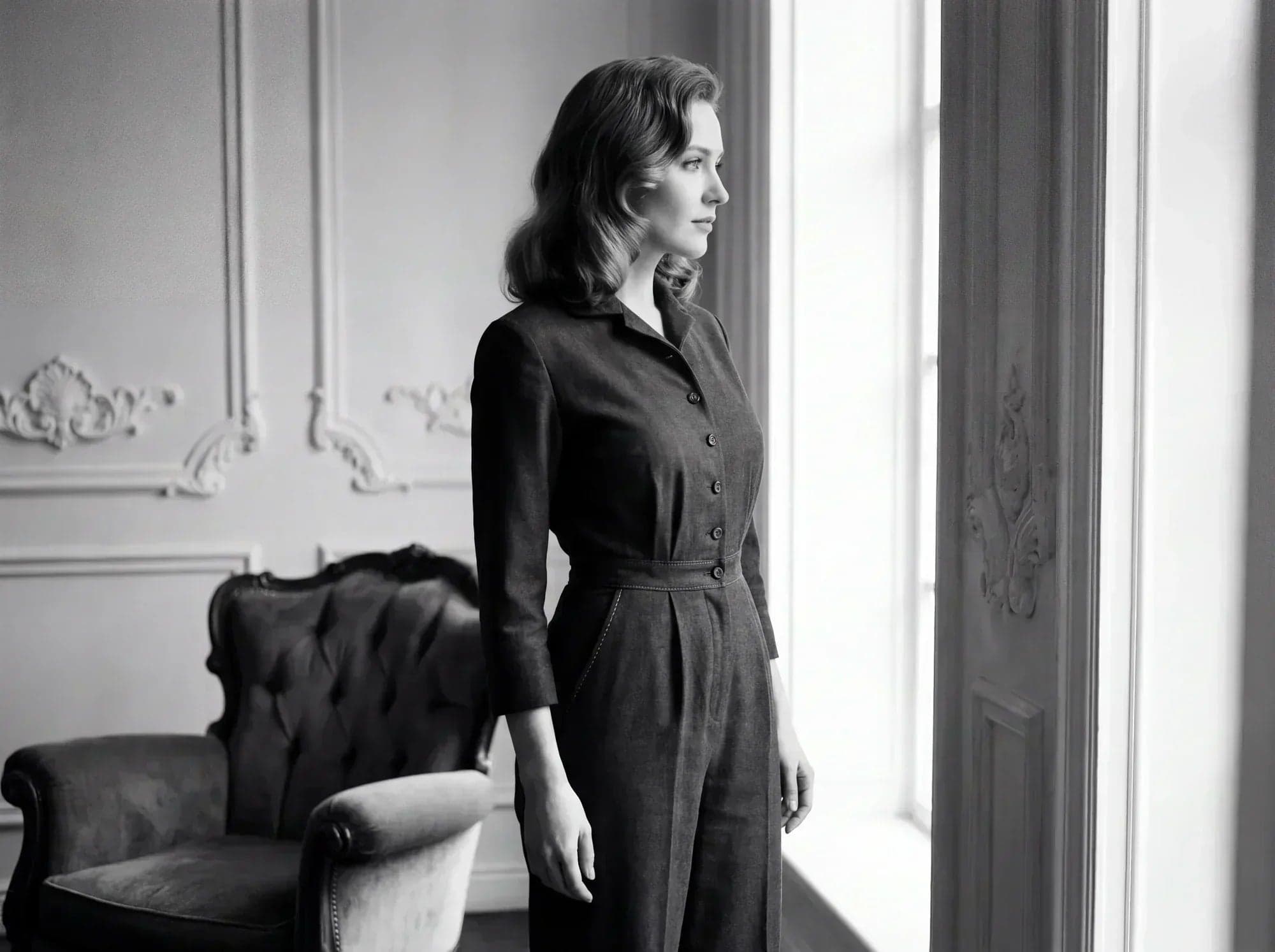
You may have already experienced it: putting on a jumpsuit and feeling, in a second, that your posture changes. The shoulders settle, the waist is defined (or freed), the silhouette becomes “all in one piece.” Yet, this confidence is not an aesthetic coincidence: it comes from a very specific history, made of uses, textile constraints, work gestures, and later, a real shift towards style.
This history of the women's jumpsuit is not a simple chronology of trends: it is a thread that connects functionality to evening wear, the useful pocket to the clean line, the sturdy canvas to the fluid crepe.
In this article, we follow this thread without digressing: how a garment designed to protect and facilitate movement has transformed into a wardrobe piece capable of being chic, structured, sometimes even ceremonial. And above all: what these stages have left in the cuts and materials you find today.
Origins: the utilitarian DNA and the first female appropriations
The jumpsuit is born from a simple need: to unite the top and bottom to avoid drafts, unnecessary friction, snags. Before being a “strong piece,” it is a tool. The first forms close to the jumpsuit are found in the world of workshops, factories, hangars, dirty jobs.
We talk about dense canvases, tight cottons, twills capable of withstanding abrasion. The touch is frank, almost dry, with that discreet sound of fabric that “holds” when you walk. The cut is not intended to highlight: it must allow amplitude, protect, support the repetition of gestures.
What matters here in the history of the women's jumpsuit is the moment when usage crosses gender boundaries. Female appropriation does not first occur through coquetry, but through necessity: working, driving, handling, moving quickly. The unique garment simplifies dressing and limits adjustments.
In the first versions worn by women, we often observe: a higher waist (to accompany the bust), armholes designed not to “pull,” and closure systems easier to manage alone (front zipper, snap buttons, longer tab).
The technical detail then becomes a style detail. A sewn belt (or a drawstring) is not a whim: it is a way to control volume. A patch pocket is not a graphic effect: it is immediate storage.
Even the visible and regular topstitching tells the demand for solidity; it also draws a geometry that, later, will be used for its visual qualities. At this stage, the women's jumpsuit is not “chic”: it is relevant. And it is this relevance that will later give it its stylish strength.
Concrete advice (reading utilitarian clues): when you observe a current jumpsuit, identify three markers inherited from workwear: the presence of a zippered fly or a buttoned tab, the nature of the pockets (patch/Italian), and the density of the fabric (dry hand vs. soft hand). These elements tell you where the piece comes from, and how it will behave on the body (fit, wrinkle, drape).
The shift towards style: when the cut borrows from couture
The transition from tool clothing to stylish clothing occurs when the jumpsuit stops being only protective to become composed. It is not a complete break: it is a shift. The top-bottom unity is maintained, but the line begins to be worked on as one would on a suit.
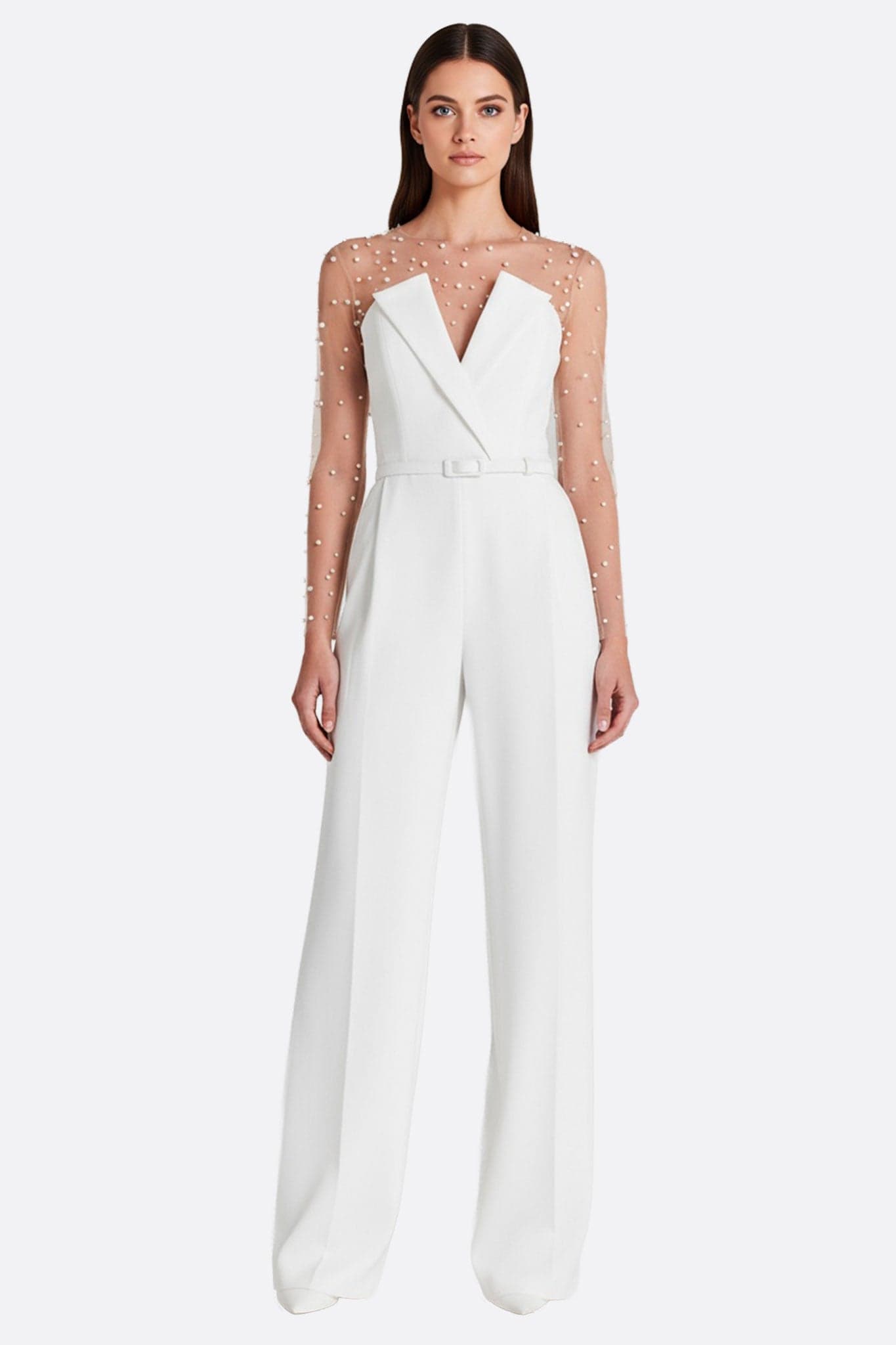
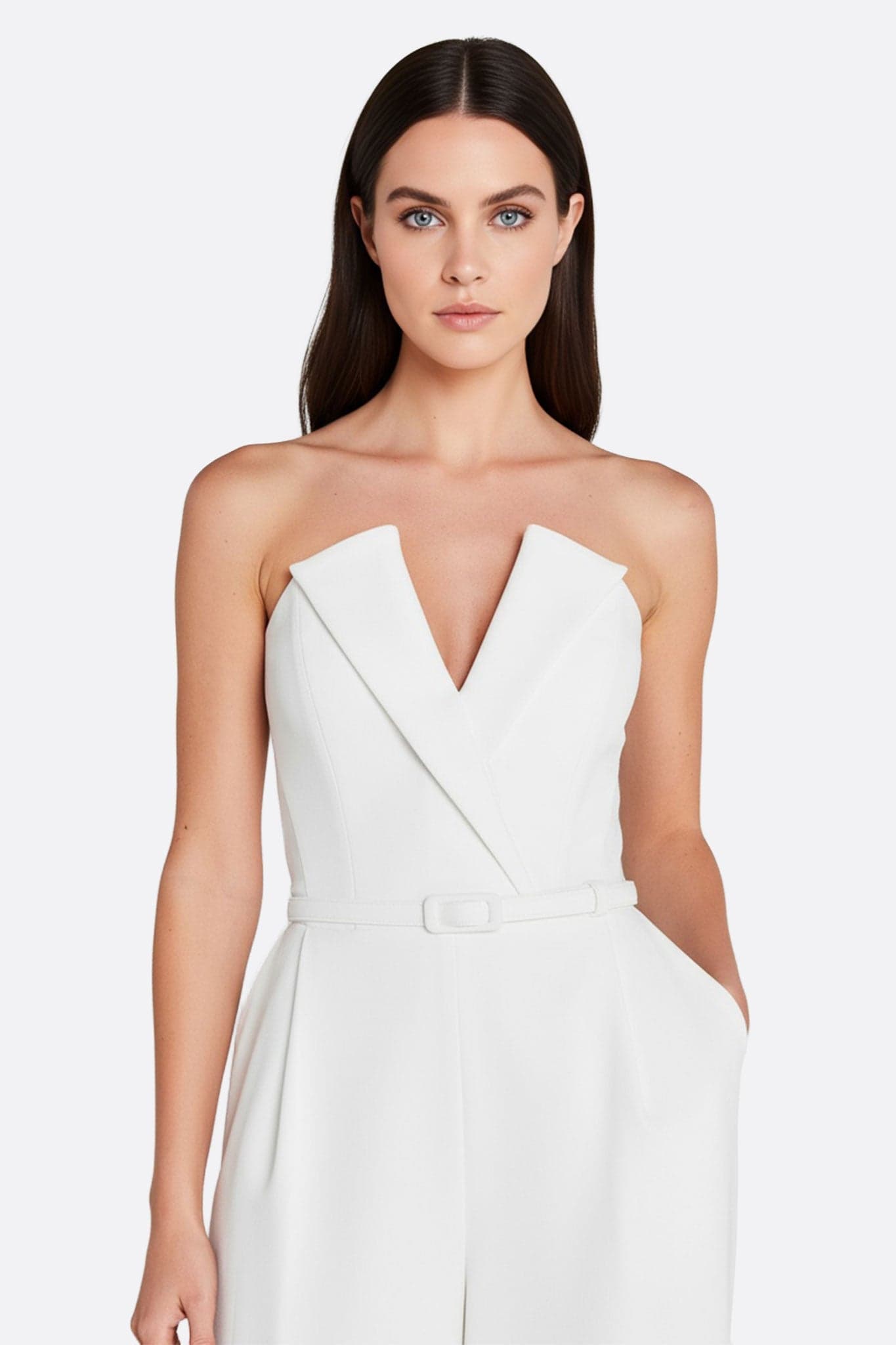
The waist is repositioned, sometimes marked by an added belt, sometimes sculpted by darts. The shoulders gain clarity: a better-defined sleeve head, a more pronounced build, a neckline designed to frame the face.
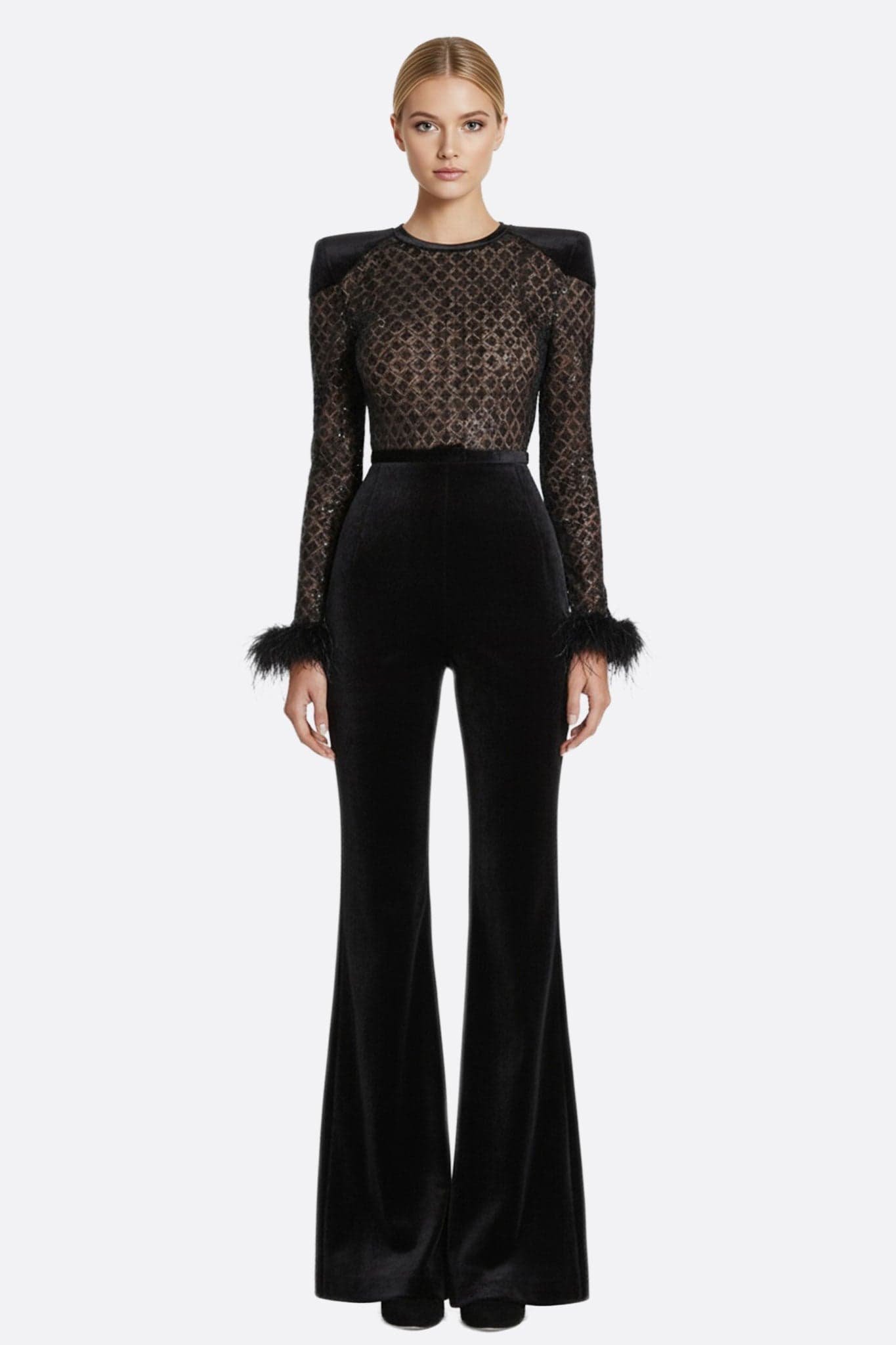
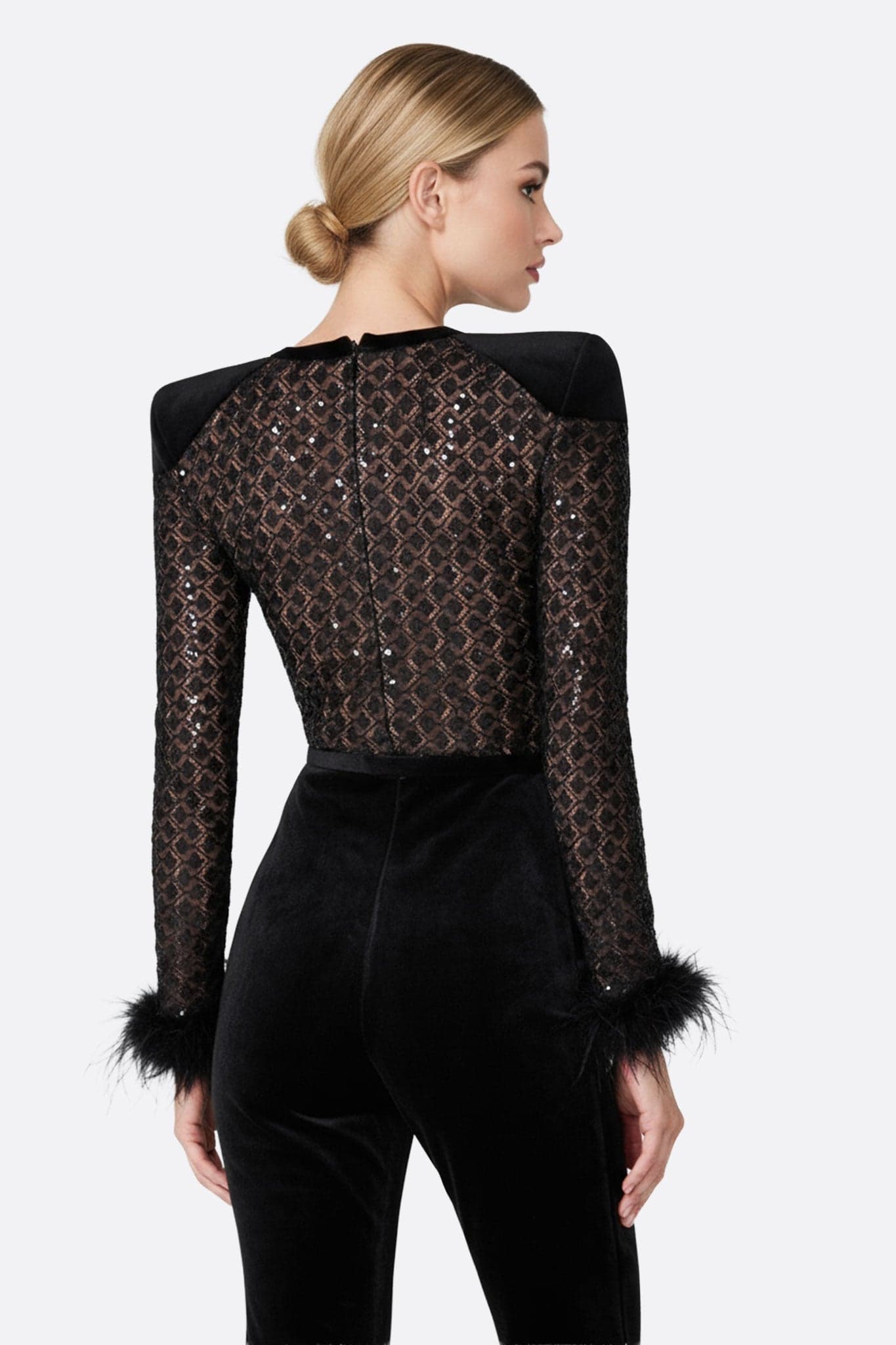
Textile-wise, the change is major. Robust canvas is succeeded by materials that interact with light: crepe, finer gabardine, supple twill, matte satin, sometimes dense jersey. The touch becomes more “skin,” less “armor.” A chic women's jumpsuit must not only resist: it must accompany movement silently, without parasitic stiffness. A clean but lively drape is sought: the leg must be positioned, the hip must breathe, the bust must remain neat without compressing.
In this phase of the history of the women's jumpsuit, the closure changes role. The zipper is no longer just practical: it becomes invisible (side zip), or on the contrary, assumed as a vertical line that elongates. Buttons can become jewelry, or hide under a flap to preserve the purity of the line.
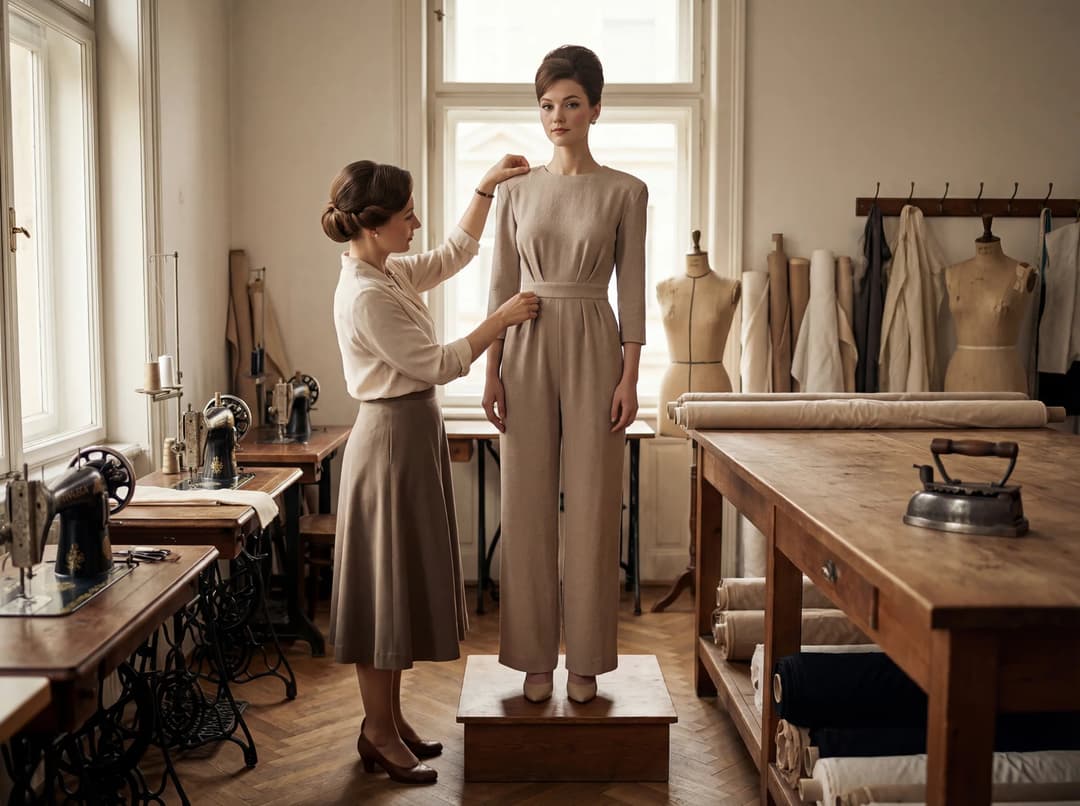
The finishes become refined: facings, partial linings, more precise hems. The jumpsuit begins to be worn as an alternative to the blouse-pants duo: it gains continuity, immediate presence.
This shift explains why some “dressed” jumpsuits can be disconcerting if one expects the comfort of workwear. Sewing imposes constraints: a more constructed waist, a more defined neckline, sometimes a less forgiving material. This is where the choice of cut becomes crucial.
To go further on selection criteria (without leaving the historical subject), you can consult Women's jumpsuit: complete guide to choosing it well, useful for linking these cut heritages to your morphology and uses.
Concrete advice (identify a “couture” jumpsuit): look for the presence of bust darts or princess seams (even discreet), an invisible zip on the side, and a material with continuous drape (crepe, supple twill). These three elements signal an intention of style: the piece is designed to be viewed from the front as well as the profile, with a stable line.
Years of democratization: from uniform to everyday wardrobe
When the jumpsuit steps out of strictly utilitarian or very dressy circles, it becomes a field of balance. Democratization does not mean “trivialization”: it means multiplication of uses and variations.
The jumpsuit becomes part of everyday life because it answers a precious equation: one piece, a complete silhouette. But to keep this promise day after day, it must incorporate intelligent concessions: more flexibility, adjustable sizes, easy-to-live fabrics.
Textiles and weaves play a central role. Cottons remain present, but often softer, sometimes blended (cotton-spandex) to recover after sitting. Viscose provides a fluid drape, with that slightly cool-to-the-touch movement, almost liquid, that follows the leg without engulfing it.
Compact jerseys allow for immediate comfort but require a clean cut to avoid the “pajama” effect: everything depends on the collar's hold, the shoulder's precision, the belt's quality.
In the history of the women's jumpsuit, this period is also when details inherited from workwear are reinterpreted. A cargo pocket can become a visual accent rather than massive storage. A contrasting topstitch can highlight a leg line. A buckle belt can structure without stiffening. The jumpsuit becomes a language: one can choose a “workshop” version for its poise, or a “city” version for its fluidity.
What distinguishes successful pieces is the management of sensitive areas: the crotch (comfort in movement), the waist (position and adjustment), and the upper back (ease when raising arms). A jumpsuit designed for everyday life is recognized by calculated ease: neither too loose (drowned silhouette) nor too tight (zip tensions, horizontal folds). Chic here is not decoration: it comes from accuracy.
Concrete advice (ease test in the fitting room): raise your arms, sit down, then take a wide step. If the piece “pulls” at the crotch or rides up at the bust, the torso length is too short. If it creates a pocket fold under the belt, the waist is too low or too tight. These signals are direct legacies of the usage constraints that have shaped the jumpsuit.
Observations from workshop feedback and real fittings reinforce these practical tips.
From chic to icon: materials, finishes, and sensory reading of a beautiful jumpsuit
The jumpsuit becomes truly chic when the material and finish create an impression of mastery. Chic is not an overload: it is an obviousness of line, a fabric hand that holds, a drape that does not betray.
In this final stage of the history of the women's jumpsuit, we understand that the piece can play the role of a dress... while keeping the straightforwardness of pants. It is precisely this mix that makes it so strong: a clear presence, but free movement.
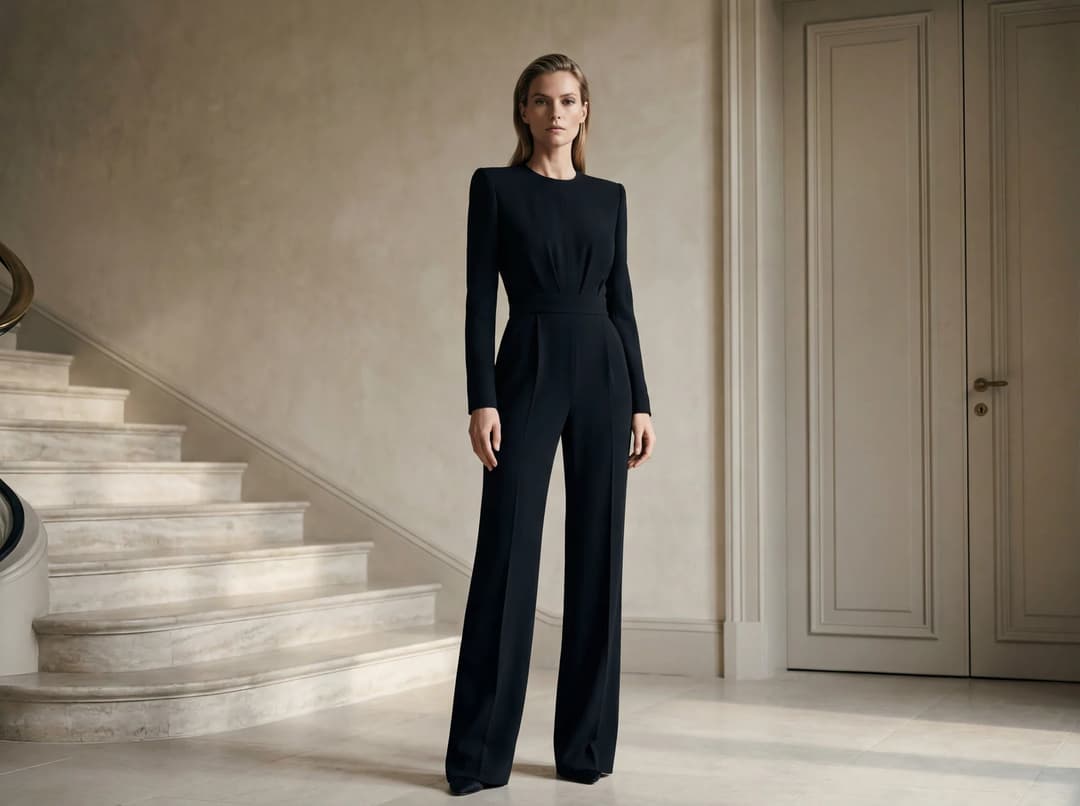
“Chic” materials are recognized by their behavior in light and creasing. A quality crepe has this fine, almost powdery grain that catches the light without shining. It falls in a soft curtain and returns to place. A fine gabardine has a discreet diagonal, a firmer hand, and an ability to outline an impeccable leg.
A matte satin can give depth, provided it is heavy enough to avoid a too-fragile effect. Conversely, a material that is too light can cling, mark, or float without intention.
Finishes make all the difference: a well-placed facing prevents the neckline from gaping; an invisible or perfectly stitched hem stabilizes the leg; a partial lining (bodice or top of pants) improves comfort and fit. Even the buttons matter: a button that is too light “sounds” hollow and weighs down the look; a dense, well-chosen button gives a subtle weight, an immediate seriousness.
Sensorially, a beautiful jumpsuit is also judged by what it makes you hear and feel. The fabric should not creak stiffly (a sign of fiber or finish that is too dry), nor crease at the slightest bend. To the touch, one looks for a regular surface, without aggressive roughness, with a coherent hand: either clear and structured, or fluid and enveloping, but never indecisive.
On the skin, the lining (or lack thereof) must be considered: an unlined viscose can be pleasant in summer but will require suitable underwear; a lined crepe will be more stable and more “meeting attire”.
Concrete advice (chic checklist in 30 seconds):
- 1) look at the leg: does it fall straight without twisting?
- 2) observe the waist: does the belt stay in place when you walk?
- 3) touch the neckline: is it stable, without undulation?
- 4) crease a small area: does the fabric regain its shape?
These are tangible criteria, inherited from decades of adjustments between utility and style.
Ultimately, if the jumpsuit spans the ages, it is because it retains the memory of its two lives: that of gesture (practical) and that of line (chic). Understanding this history of the women's jumpsuit is to read in a pocket, a seam, a material, a whole heritage.
And it is to choose with more precision: not “a jumpsuit”, but the right intention, workshop, city, evening, translated into the right fabric and the right cut.
Precise historical examples: the adoption of the jumpsuit in factories during the 1940s, its rise in fashion in the 1960s-70s, and its contemporary evolution.

Article by Alberto Alagna
Published on 03/12/2026 at 13:58
About the author
Passionate about textile craftsmanship and sustainable design, Alberto Alagna brings to Misciano a vision where elegance meets ethics. With his experience in high-end ready-to-wear, he shares his style advice and the behind-the-scenes of the Misciano house here.
→ Learn more about Alberto AlagnaShop the selection