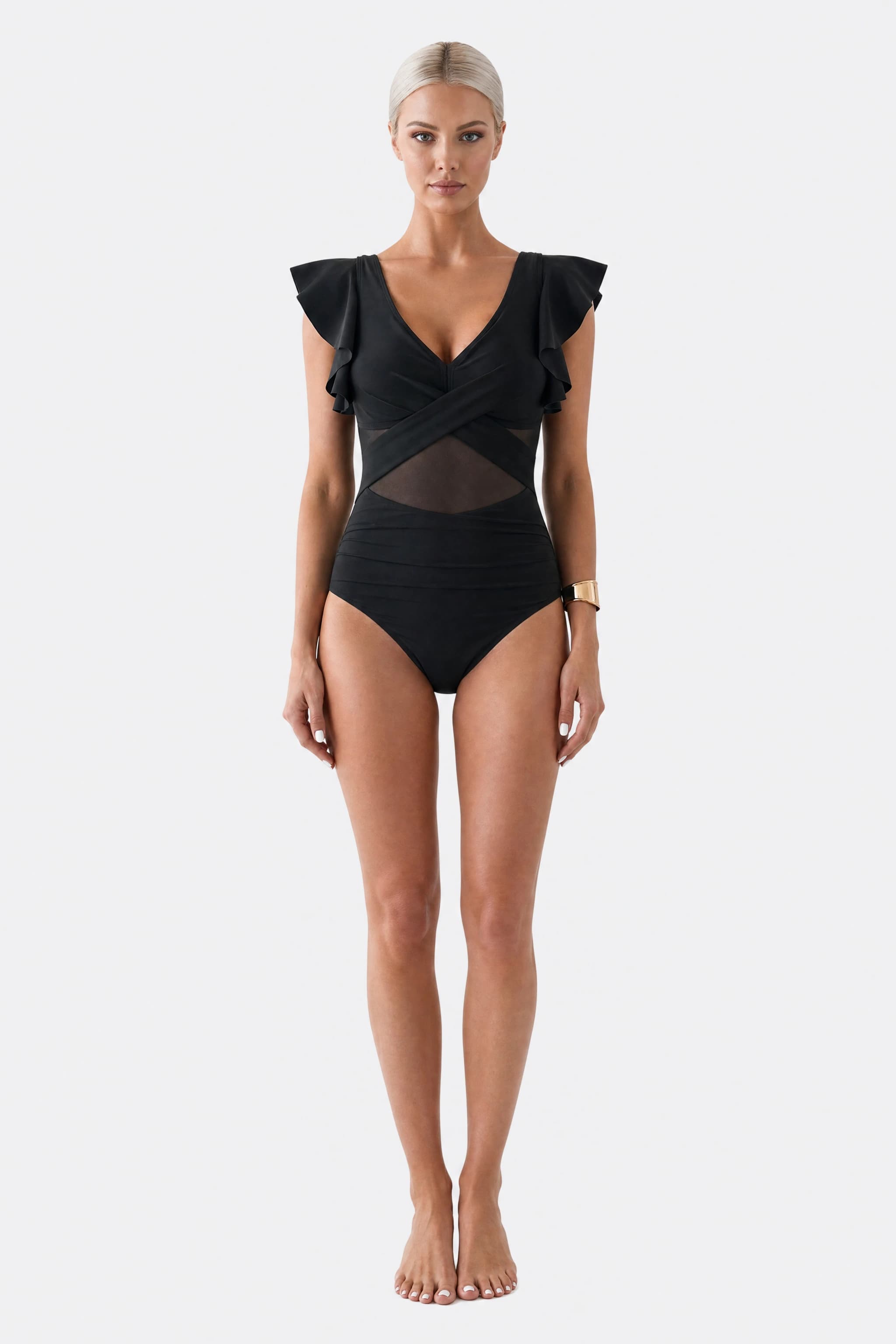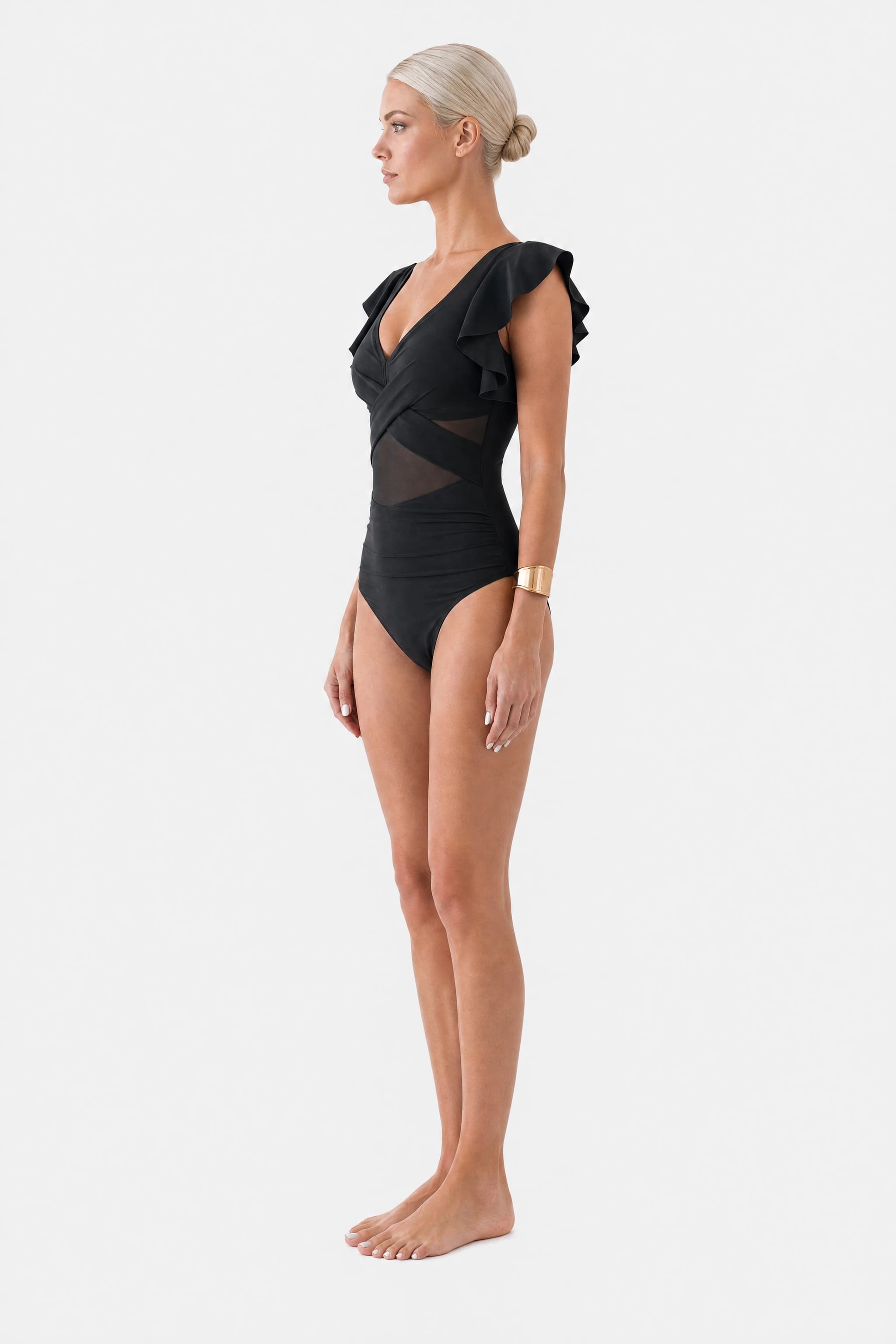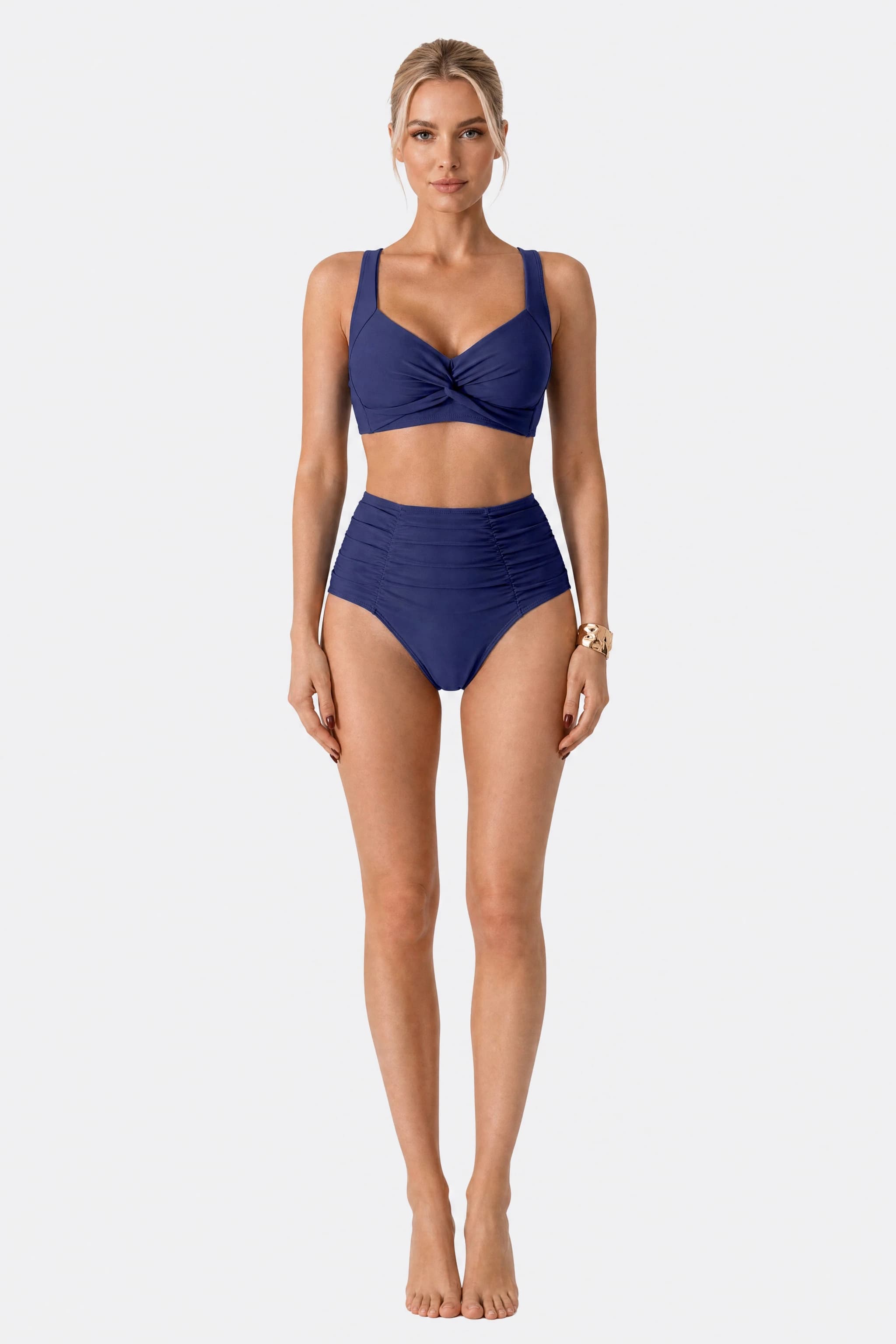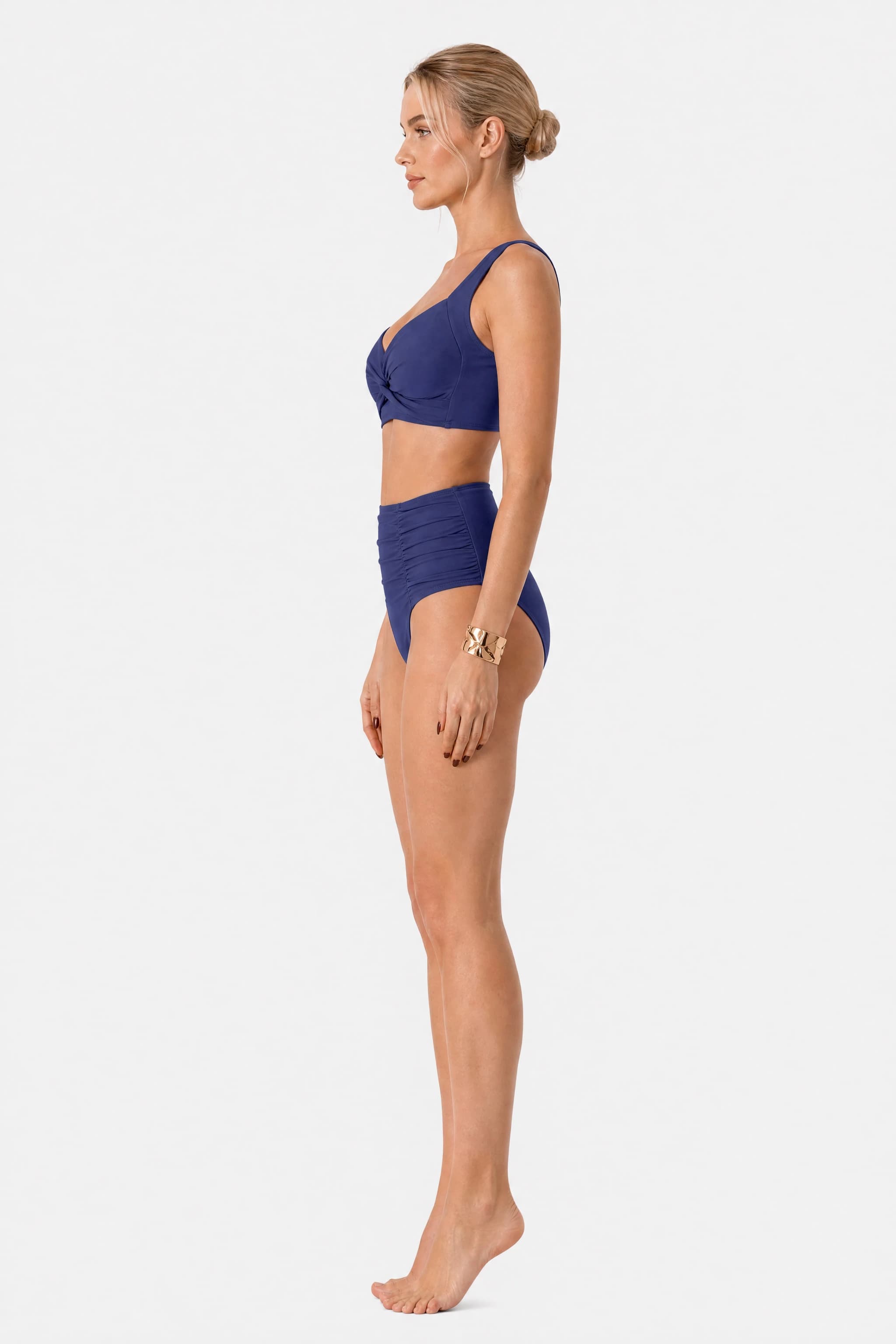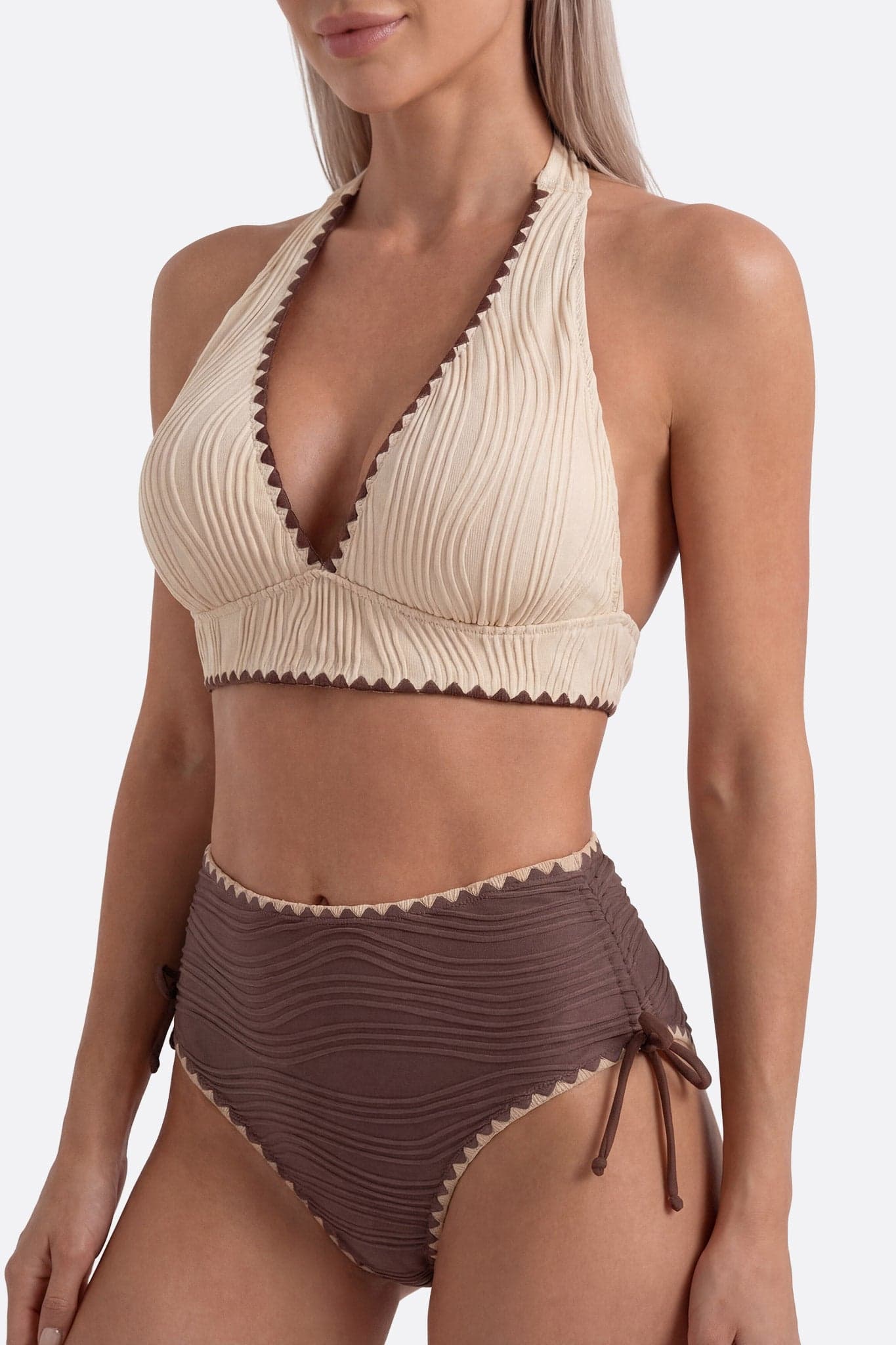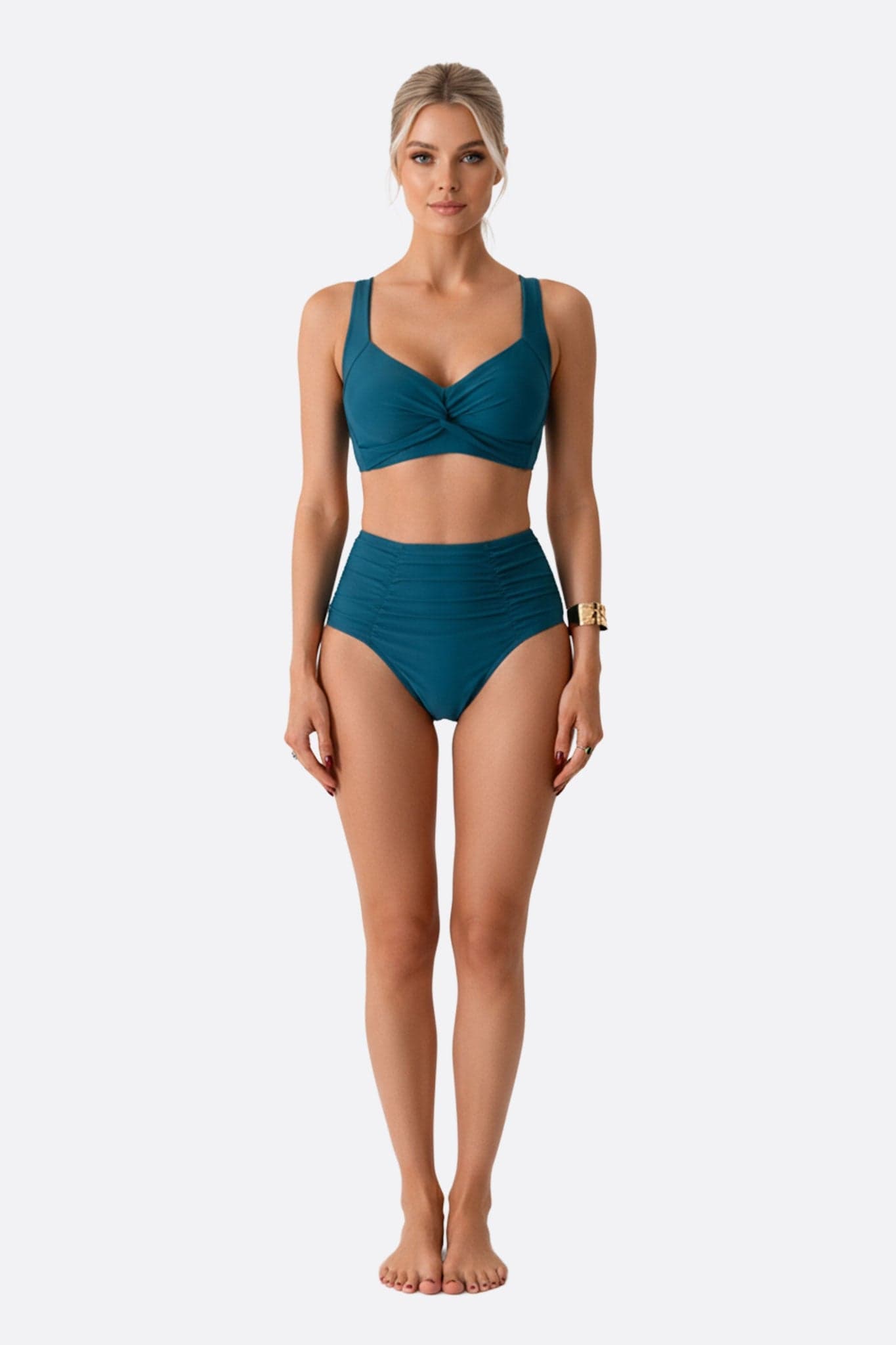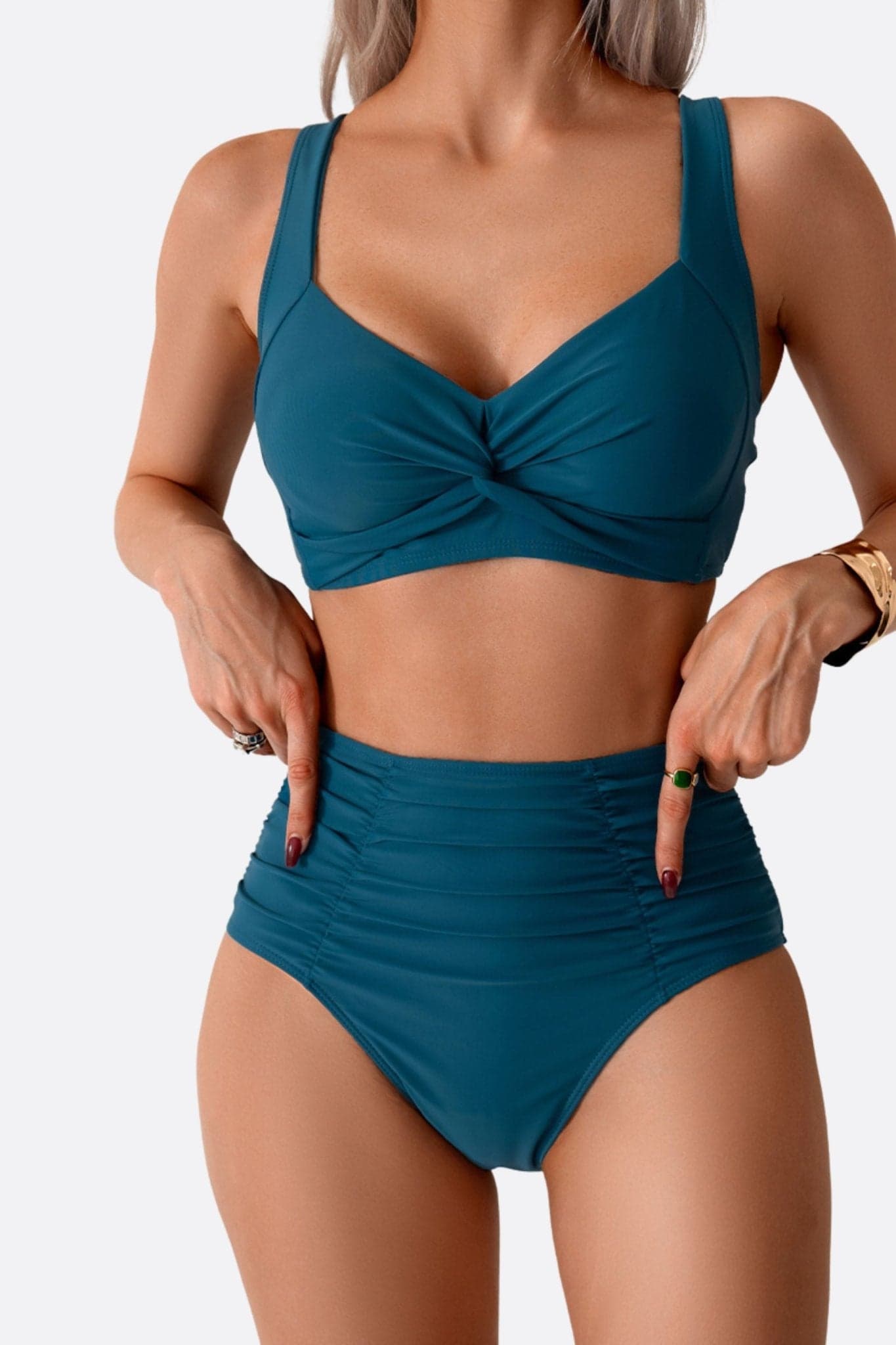
Women's swimsuit that does not mark the skin
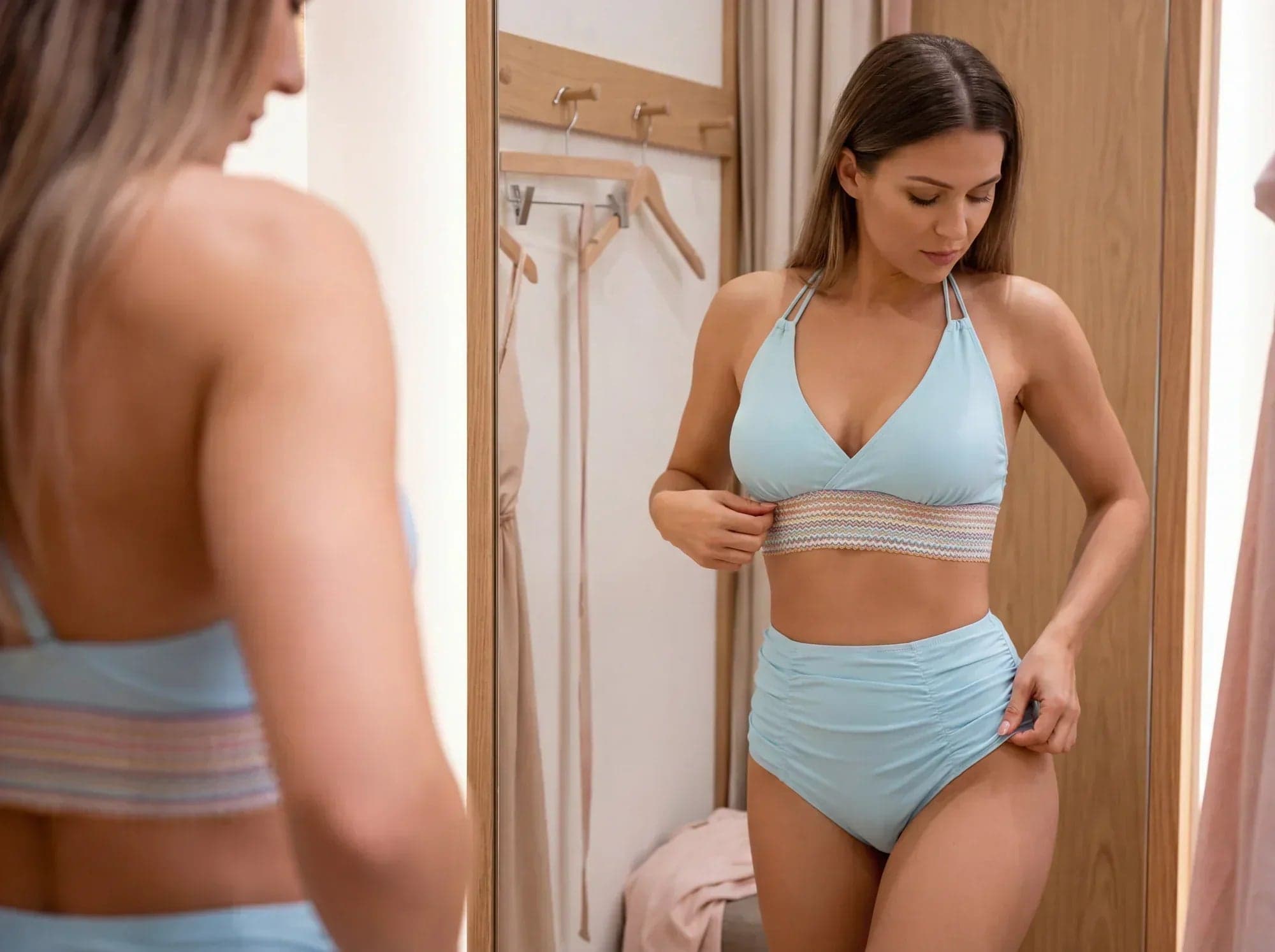
Women's Swimsuit: Understanding Why Some Models Leave Marks
If your women's swimsuit leaves a clear mark on the hips, under the bust, or on the upper thighs, it's not just a matter of size. The mark on the skin is often the result of a technical cocktail: tension of the elastics, nature of the seams, thickness of the lining, and the way the edges have been finished. The skin, slightly moistened by water or heat, becomes more sensitive to pressure; the textile contracts and “clings.” Result: a visible outline, sometimes accompanied by a pinching sensation.
When trying on, observe three critical areas: the cutout (where the elastic works the most), the waistband (especially on high-waisted bottoms or shaping one-pieces) and under the bust (underwires, support band, inner elastic). A model may seem comfortable when still and leave marks as soon as you walk: take a few steps, sit down, raise your arms.
The right signal is not the total absence of tension (a swimsuit must hold), but a tension distributed. When the pressure is distributed over a wider surface, the skin retains its smooth appearance, without a “graphic” cut.
Another concrete clue: run your finger inside the edge. If you feel a ridge (seam thickness, rolled elastic, overly present overlock stitch), there is a good chance the skin will feel it too after 20 minutes. Conversely, a well-constructed edge feels like a flexible line, almost satin to the touch, that hugs without catching. Finally, beware of “compensated” sizes: taking smaller to shape accentuates marks, as the elastic works in overload. Clear comfort comes from proper construction, not constraint.
Women's Swimsuit: Seams to Favor for a Clean Finish
The seam is the invisible framework of the swimsuit: it can smooth the silhouette or, on the contrary, “cut” it. To avoid marks, the goal is simple: reduce thickness and eliminate reliefs at pressure points. The first family to favor is flat seams (flatlock).
They distribute the assembly over a wider width, with minimal relief. To the touch, it's a flexible junction that doesn't “scratch” the skin. On a bikini bottom, a well-executed flatlock avoids the small ridge that prints a line on the hip.
Second option, more “second skin”: bonded seams (or thermobonded bands) and welded assemblies. They are identified inside: a thin, regular, often matte band that replaces a classic seam. Advantage: almost no thickness, thus fewer marks. Point of caution: the quality of the bonding. Good bonding remains flexible, follows the elasticity of the fabric, and does not create a rigid area. If the band is too thick or too stiff, it can instead form a fold and mark negatively.
Third option: the raw edge (clean cut) with a neat finish. Here, the idea is to avoid visible elastic and let the fabric, sometimes lined, hug the skin without tightening. This is particularly interesting on “invisible” panties and some one-pieces with clean lines. The raw edge is pleasant: it rests like a caress, without a drawstring. For it to be reliable, it must be associated with a material with good elastic memory and a precise cut. If the fabric is too soft, the edge rolls; if it's too firm, it cuts.
Finally, look at the reinforcement points: at the crotch, strap attachments, sides of the panties. A well-placed reinforcement is discreet; a poorly managed reinforcement creates a small bump that prints. The ideal: thin reinforcements, regular stitches, and no “ball” of thread. These details are felt from the first fitting and are visible after a day in the sun.

Women's Swimsuit: Linings and Gussets that Smooth Without Compressing
The lining is not just for opacity. It decides whether the swimsuit glides on the skin or clings, whether it holds gently or tightens abruptly. To minimize marks, opt for a full lining (front lining) on the front of the bottoms and on the bust of one-pieces, rather than a single localized piece. A continuous lining distributes tension and avoids the “border” effect: when the lining stops in the middle, its edge can create a visible pressure line, especially on wet skin.
Regarding material, a thin and dense lining with a peach skin feel is ideal: it smooths without adding weight. Linings that are too slippery may feel pleasant, but they sometimes cause the swimsuit to shift, prompting you to tighten (and thus mark). Conversely, a lining that is too rough clings and imprints. Look for a balance: softness to the touch, firmness when stretched, quick elastic recovery.
The gusset (crotch) deserves special attention. A well-designed gusset is slightly wider, with flat seams, and a material that remains comfortable even when wet. It’s a sensitive point: if the seam is thick, it is immediately noticeable. Also check the gusset/lining junction: poorly managed overlap creates a step, then a mark. On a premium model, the transition is gradual, almost imperceptible to the touch.
For those who want a firmer effect without marks, opt for a shaping lining (power mesh) placed on the stomach or sides, but only if it is well encapsulated: the mesh must be integrated into the construction, without a free edge. A shaping mesh left “bare” inside can cut. Well integrated, it provides a feeling of enveloping support, like a hand placed, not like a biting elastic.
If you hesitate between two models, do this test: gently stretch the lined fabric and release. A good fabric/lining duo returns to place without rippling. Rippling is often a sign of uneven tension… and thus of future marks.
Women's swimsuit: finishes and elastics that respect the skin
Marks often come from elastics. Not because they exist, but because they are too thin, too tight, or poorly placed. A thin elastic will concentrate pressure on a narrow line: this is the typical scenario of a clear “trace” on the hip. Conversely, a wider elastic, or better yet, tension distributed via a wrapped finish, reduces the imprint. Look for edges that seem “full,” with gentle elasticity, rather than a simple internal cord.
The placement is as important as the material. A well-placed elastic follows a regular curve, without gathers. Even slight gathers indicate too much tension: on the skin, this becomes a series of small marks. Observe the inside: the seam should be uniform, without tighter areas. On tops, the underbust band should hold without creating a sharp line. Models that do not mark often use a wider, lined band with progressive elasticity.

Regarding finishes, three details make the difference:
- Clean and flexible hem: it should fold without creating an edge. A hem that is too “stiff” imprints.
- Encapsulated elastic: the elastic is sandwiched between fabric and lining, softening the contact and distributing the pressure.
- Edges without extra thickness: the fewer layers at the edge, the less risk of marking.
Also pay attention to accessories: rings, sliders, side knots. They can create pressure points, especially if you are lying on your side. Prefer flat, well-polished pieces, placed slightly forward rather than directly on the hip bone.
To go further in the overall choice (shape, support, uses), you can consult the complete guide to choosing the shape and support according to your uses. Here, remember the essential: a successful finish is barely visible, but immediately felt. It leaves the skin undisturbed, even after several hours.
Women's swimsuit: purchase and care checklist to limit daily marks
Once you know how to spot seams, linings, and finishes, the next step is to secure the result in real life: heat, salt, chlorine, sunscreen. Marks often appear when the material loses its suppleness or when the fibers stiffen. All our tests, conducted in the cabin and in the field (beach, humid environment, and dynamic situations), confirm the effectiveness of these tips to preserve comfort and limit impressions on the skin. Here is a simple, very concrete checklist to choose and keep a women's swimsuit that respects the skin.
Purchase checklist (in the cabin, in 3 minutes):
- Finger test: follow all the inner edges. If you feel a ridge, imagine it after swimming. Aim for a smooth sensation.
- Sit/stand test: sit down, then stand up. A good model does not "dig" more in a sitting position. Our beach and cabin tests show that this criterion is essential, especially in hot weather.
- Tension test: slightly pull the edge of the bottom and release. It should return without snapping or wrinkling.
- Observation of gathers: gathers = locally too much tension = probable marks.
- Continuous lining: favor a lining that accompanies the area, without an abrupt stop in the middle.
Care checklist (to preserve suppleness):
- Immediate rinsing with clear water: salt and chlorine dry out, thus stiffen, thus mark more.
- Gentle washing (hand or delicate cycle) with a small dose: too much detergent leaves a film that "hardens" the touch.
- Flat drying in the shade: direct heat sets the fibers, the edges become firmer.
- Avoid aggressive spinning: it breaks elasticity, the elastic becomes uneven and bites more.
Sources: recommendations based on textile standards (AFNOR), field experience feedback, and manufacturer documentation.
Immediate comfort tip: if you have sensitive skin, avoid putting on a still damp swimsuit long after swimming. Moisture makes the skin more reactive and accentuates the imprint of the edges. A dry, supple swimsuit with flat seams and well-distributed elastics leaves a feeling of lightness: the support is there, but the skin remains visually serene.
In summary: for a swimsuit not to mark, it must not "fight" against the body. It must accompany it, with discreet seams, a smoothing lining, and finishes that distribute tension. It is this textile precision that changes everything, from the first outing.
Warning: these tips are provided for informational purposes and do not replace medical advice. If you experience pain, irritation, numbness, or any other unusual symptoms, it is recommended to change size or consult a specialist.
For a complete guide on choosing your swimsuit, see Women's swimsuit: complete guide to make the right choice.
Discover our swimsuit collection (starting at €40).
To go further, see our size guide.
For a complete guide on choosing your swimsuit, see Women's swimsuit: complete guide to make the right choice.
Discover our swimsuit collection (starting at €40).
To go further, see our size guide.

Article by Maryna Svistunova
Published on 05/12/2026 at 13:21
About the author
I am the editorial director of Misciano Paris. I define the editorial line with the conviction that fashion must be timeless, with rigor, coherence, and sincerity.
→ Learn more about Maryna SvistunovaFREQUENTLY ASKED QUESTIONS
Why do some swimsuits leave marks on the skin?
Marks on the skin often result from a combination of factors, including the tension of the elastics, the nature of the seams, and the thickness of the lining. When the skin is slightly damp, it becomes more sensitive to pressure, which can lead to unwanted impressions.
Which seams should I choose to avoid marks?
To minimize marks, look for swimsuits with flat seams or seamless finishes. These techniques help reduce the pressure on the skin, providing better comfort while maintaining the garment's aesthetics.
What type of lining is best suited to avoid impressions on the skin?
A light and soft lining, generally made of stretch material, is recommended. It should be thin enough not to create additional volume while providing good support, which contributes to a comfortable fit without marking the skin.
How to know if a swimsuit fits well during the fitting?
During the fitting, check critical areas such as the cut and seams. A good fit should not cause pinching or discomfort. It is essential to move around to ensure the swimsuit stays in place without being too tight.
What tips would you give for maintaining a swimsuit to prolong its lifespan?
To preserve the quality of your swimsuit, rinse it with clear water after each use to remove chlorine or salt. Avoid machine washing, prefer hand washing with mild soap, and dry it in the shade to prevent colors from fading.