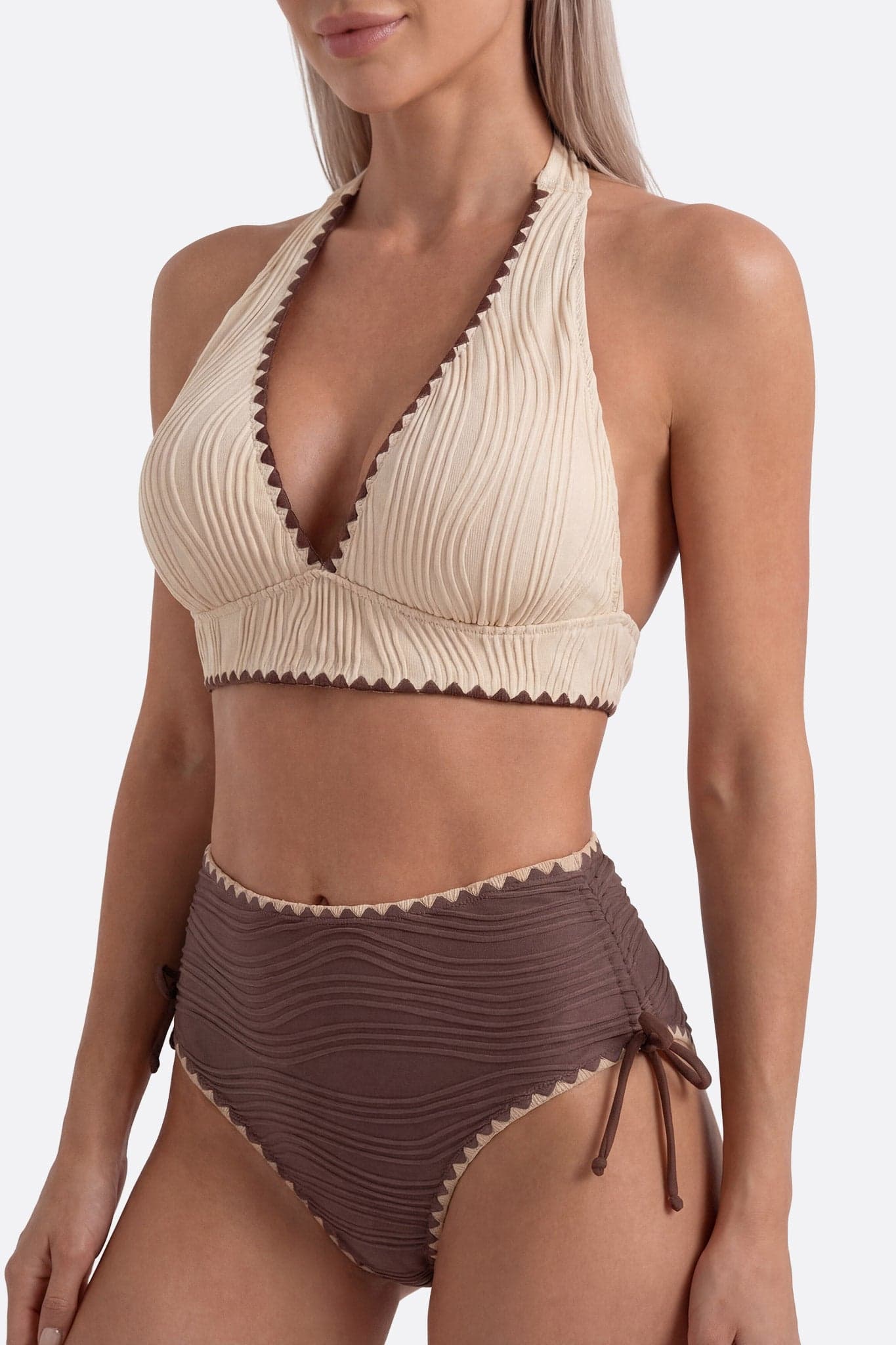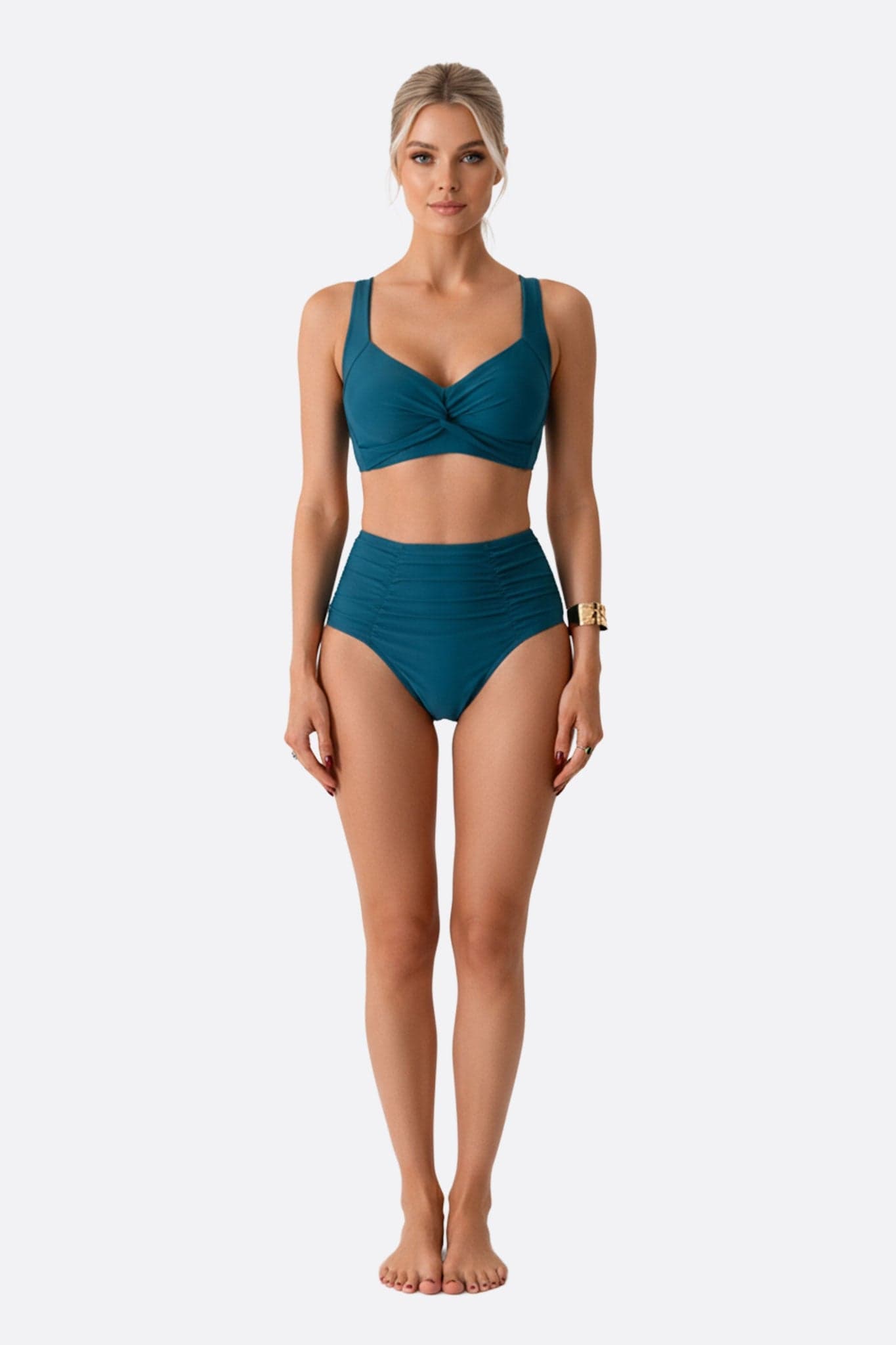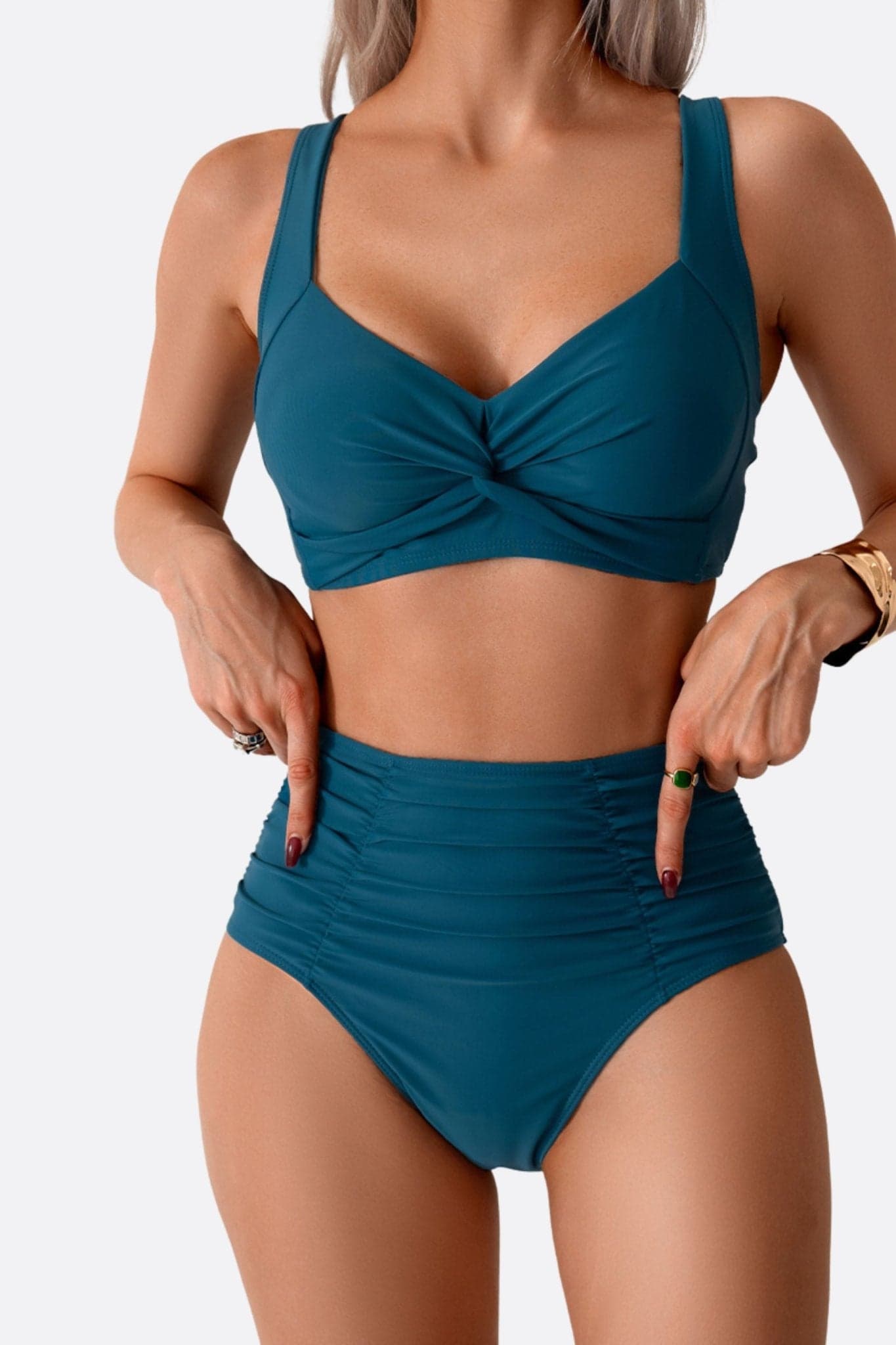
Women's power mesh shaping swimsuit: real support or illusion

You put on a shaping swimsuit, you stand up straighter... then, at the first dive, you feel that "everything" moves. This is exactly where the difference between real support and a simple marketing promise plays out: the quality of the women's shaping swimsuit is not judged by the eye, but by the behavior of the fabric on the body, at key areas (stomach, waist, back) and how the compression remains stable once wet. A convincing shaper should smooth without suffocating, support without cutting, stay in place without requiring you to readjust it.
In this article, we are not talking about "swimsuit" in the broad sense: we focus on power mesh, this technical net that promises a flatter stomach and a more defined silhouette. And above all: how to recognize real support, how to achieve it during fitting, and how to avoid illusions (those that flatter for two minutes in the fitting room and disappear as soon as you walk).
Real support of a women's shaping power mesh swimsuit: what you should feel, not just see
Real support is first recognized by a precise sensation: a distributed pressure. Effective power mesh does not "squeeze" randomly, it envelops. You should feel firm support on the lower abdomen and sides, but without a breaking point at the waist.
If, as soon as you put it on, you feel a strangulation at the top of the stomach or a clear mark forming, it is not support: it is misplaced compression, often due to a piece that is too short or a border that is too rigid.
For a complete guide on choosing your swimsuit, check out Women's swimsuit: complete guide to make the right choice.
Discover our swimsuit collection (starting from €40).
To go further, consult the Materials Observatory.
For a complete guide on choosing your swimsuit, check out Women's swimsuit: complete guide to make the right choice.
Discover our swimsuit collection (starting from €40).
To go further, consult the Materials Observatory.
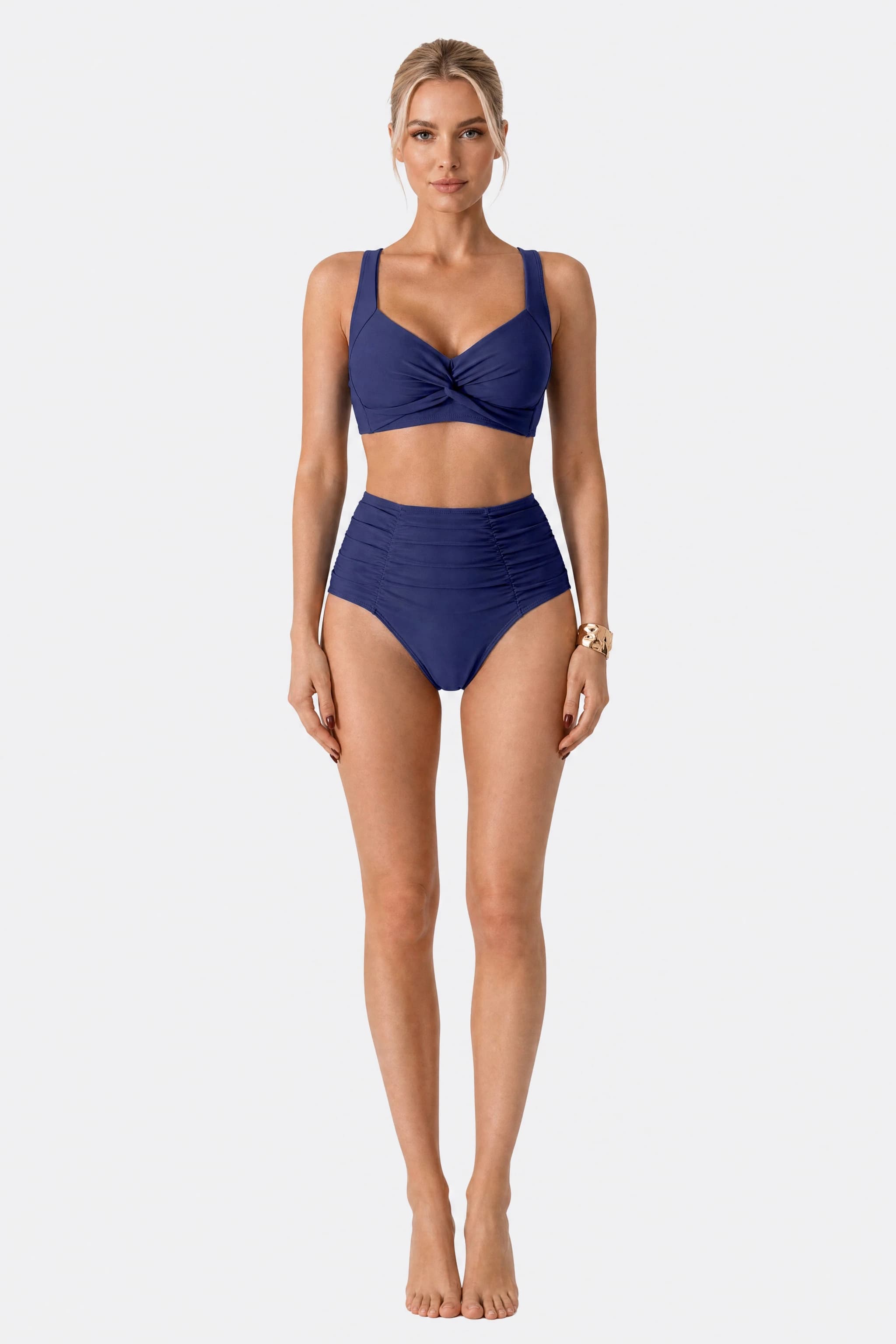
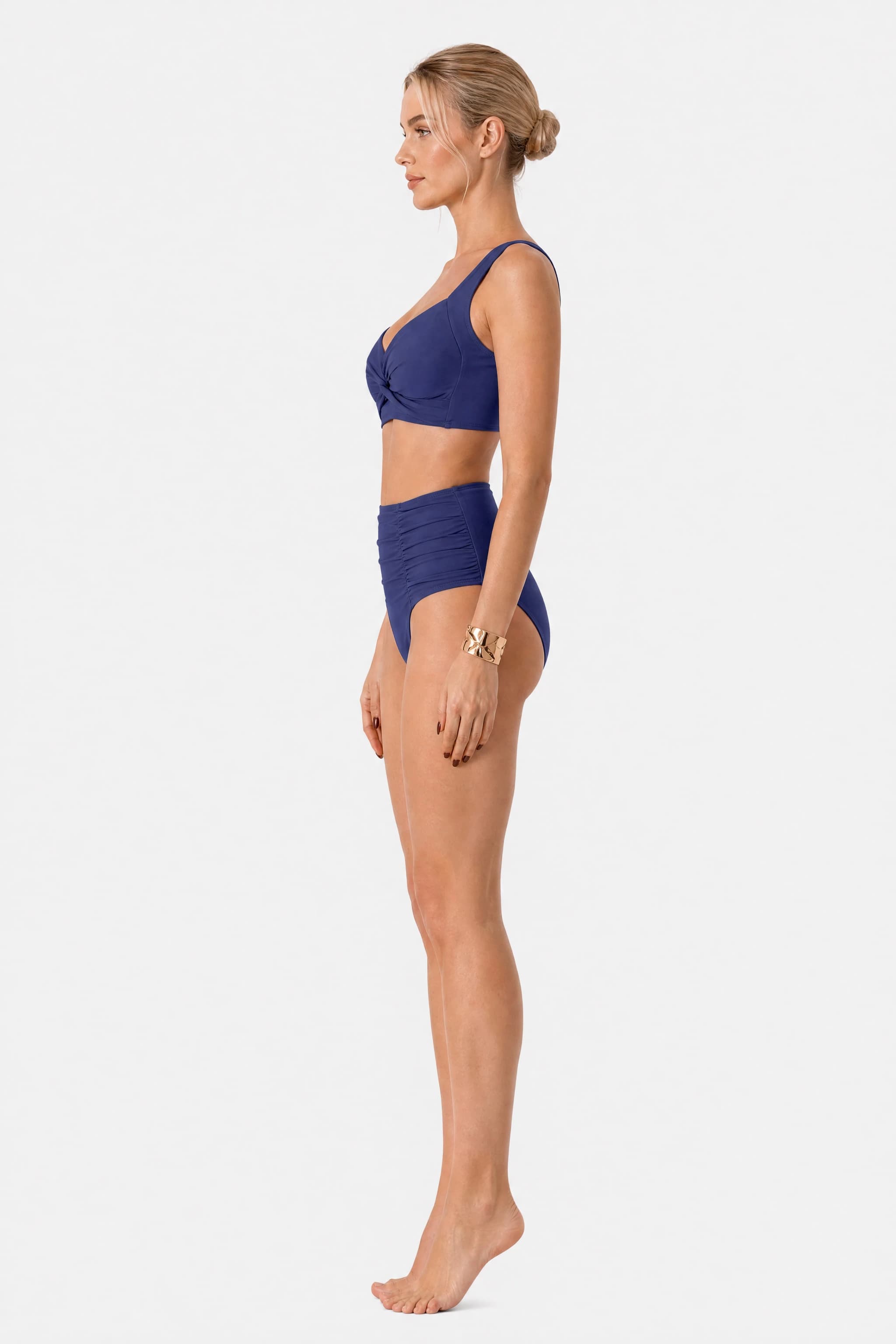
Women's high-waisted black shaping bikini swimsuit
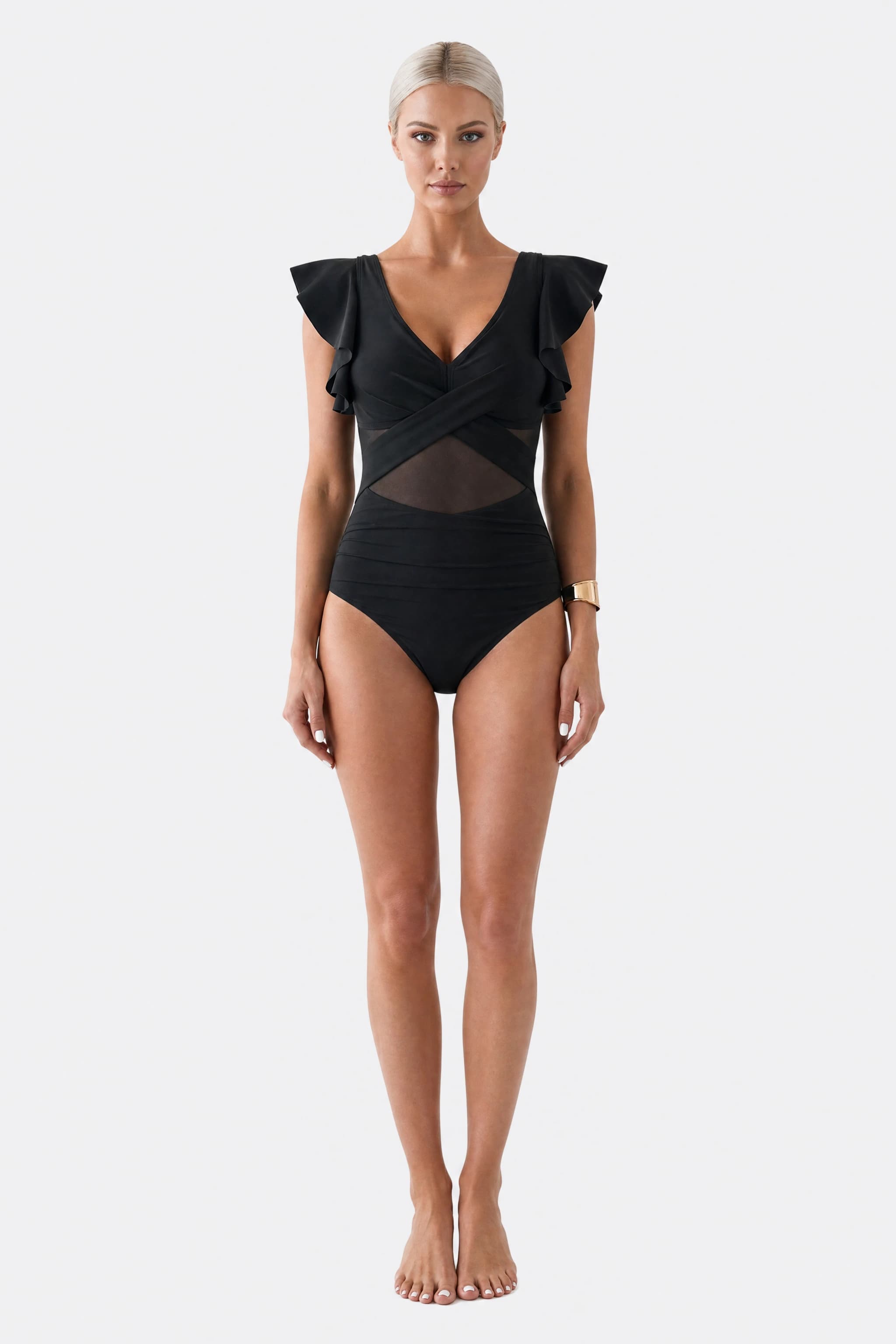
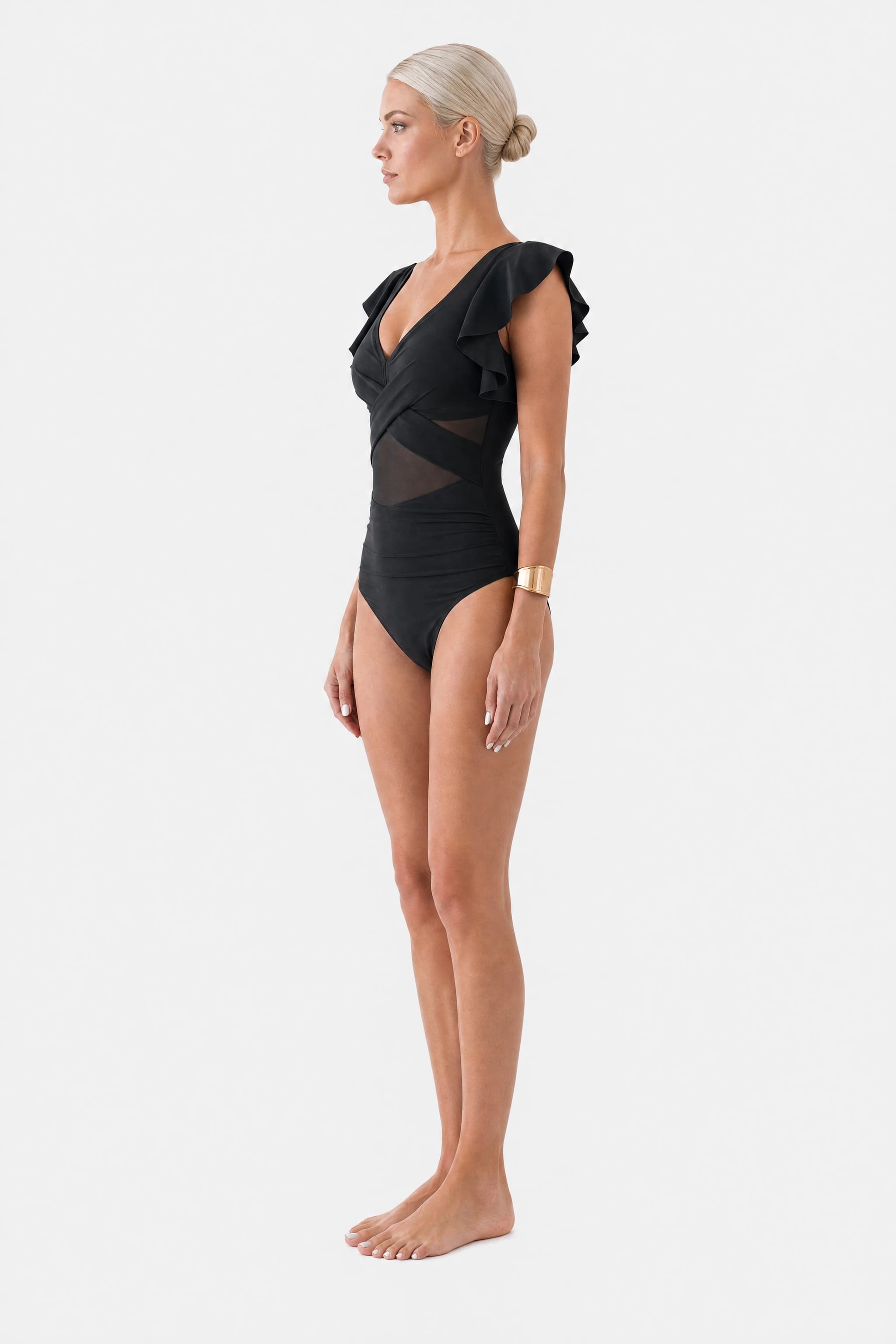
Women's one-piece black ruffled swimsuit
Women's one-piece sky blue swimsuit with adjustable ties
Women's one-piece olive green ruffled swimsuit
Women's one-piece black swimsuit with mesh details
The power mesh provides a smooth finish when it works in tandem with the cut. Specifically, check three areas:
- The lower abdomen: the fabric should "flatten" without creating an air pocket. If you pinch the material and catch excess that moves around, the tension is not properly directed.
- The waist and sides: a good shaper does not create an artificial hourglass effect; it stabilizes. When you turn your torso, the material should follow without slipping.
- The back: this is the indicator. If the back wrinkles horizontally, the mesh is not dense enough or the construction is not structured enough.
Visually, the most common illusion comes from prints, gathers, and drapes. They can flatter, yes, but they do not replace the support work. The simple test: place your hands flat on your stomach, then release. If the silhouette "falls" immediately, it's an optical effect. If it stays held, it's textile support.
Finally, true support remains consistent in movement. Walk, sit, raise your arms. A serious power mesh should not cause the bottom to ride up, nor compress the chest (often linked to excessive upward pulling).
The best feeling: continuous support, almost architectural, with possible breathing. Quality shapewear does not remind you of its presence with every move; it becomes forgettable while giving you a sharper line.
Power mesh: density, elasticity, lining... the textile criteria that make the difference
The word "power mesh" has become a selling point, but not all meshes are equal. What makes all the difference is the density (the feeling of a more or less compact net), the resilience (its ability to return to place), and the way it is laminated or combined with a lining.
To the touch, a high-performance power mesh has a drier, more technical feel: it slightly grips the fingertips, a sign of a mesh structure that works. A mesh that is too soft, too "low," often provides timid support that disintegrates once wet.
To reinforce the reliability of these criteria, recognized resources like the International Textile Guide specify that the ideal percentage of elastane is generally between 15% and 25% for optimal support, and that measurable indicators (weight, mesh density) can be checked on the label.
Elasticity is another trap: it's easy to confuse "elastic" with "shaping." A very stretchy mesh may be comfortable to put on, but if it stretches too easily, it doesn't hold. Instead, look for controlled elasticity: it stretches, but it resists. When you slightly pull the material, you should feel a firm return, like a discreet spring.

The internal construction is as important as the mesh itself. Two points to examine:
- Full vs targeted lining: a lining over the entire piece can smooth overall, but a targeted lining (stomach + waist) is often more effective and more comfortable, as it avoids compressing the chest or stiffening the hips.
- Assembly: a well-placed power mesh is anchored in the side seams, sometimes in an internal belt. If it is simply "floating" behind the main fabric, it can move, and the shaping effect becomes unstable.
The question of water is central. A swimsuit that holds dry can loosen when wet if the mesh absorbs or if the elastane is of low quality. The good indicator, during fitting (even without water): the material should not feel "heavy" or spongy. Prefer a compact, more lively sensation.
And beware of finishes: an edge that is too rigid can create marks, while a finish that is too soft can roll. The ideal is a flat finish that hugs without cutting.
If you need to cross-check with more general selection criteria (shape, use, morphology), keep a single compass and find it where it is structured: Women's swimsuit: complete guide to make the right choice. Here, we remain deliberately focused on power mesh and the reality of support.
Cut and placement of power mesh: the silhouette is played out to the millimeter
The power mesh does not "win" on its own. Its effectiveness depends on its placement and the cut that frames it. It's a tension mechanism: if the cut pulls in the wrong place, the mesh compensates... and you pay for it in discomfort. Conversely, a correct cut allows the mesh to work with equal power, without harshness.
Note: Results depend on morphology, size, and individual sensitivity to compression. The tests presented here are indicative and may vary depending on the case.
First point: the height of the shaping panel. Too low, it does not stabilize the waist; too high, it rises and compresses the diaphragm, giving that shortness of breath feeling. A good placement covers the lower abdomen and rises enough to smooth the transition to the waist, without creating a "step" under the chest.
Second point: the direction of tension. Some swimsuits use a power mesh oriented to pull towards the center (more defined stomach effect), others to support vertically (posture effect). You feel it immediately:
- If you feel a gentle centering of the stomach, it's a well-thought-out lateral tension.
- If you feel that the bust is "carried" and the back is held, it's a more vertical tension, often reinforced by straps and a constructed back.
Third point: the neckline and back. A back that is too scooped can be superb, but it reduces anchor points. For truly stable shaping power mesh, supports are needed: a more structured back, well-positioned straps, sometimes wider. Otherwise, the mesh does the work... and ends up pulling the main material, creating folds or a rise.
Fourth point: the leg (cutout). A very high cutout visually elongates, but can shift compression forward and create tensions at the groin. For a credible smoothing effect, a medium cutout is often the most flattering: it stabilizes the bottom of the swimsuit and avoids the "it rides up" effect with every step.
Finally, beware of shapers that promise a spectacular silhouette with minimalist construction. Support is a matter of architecture: the simpler the cut, the more impeccable the quality of the mesh and anchors must be. Otherwise, you get an illusion: pretty when static, unstable when dynamic.
Fitting and common mistakes: achieving the shaping effect without discomfort
The best power mesh in the world can disappoint if the size is not right. The most common mistake is choosing too small "so that it shapes." Result: the fabric rolls, marks, compresses at the top of the stomach, and the silhouette appears more segmented. An effective shaper is chosen for controlled compression, not for punishment.
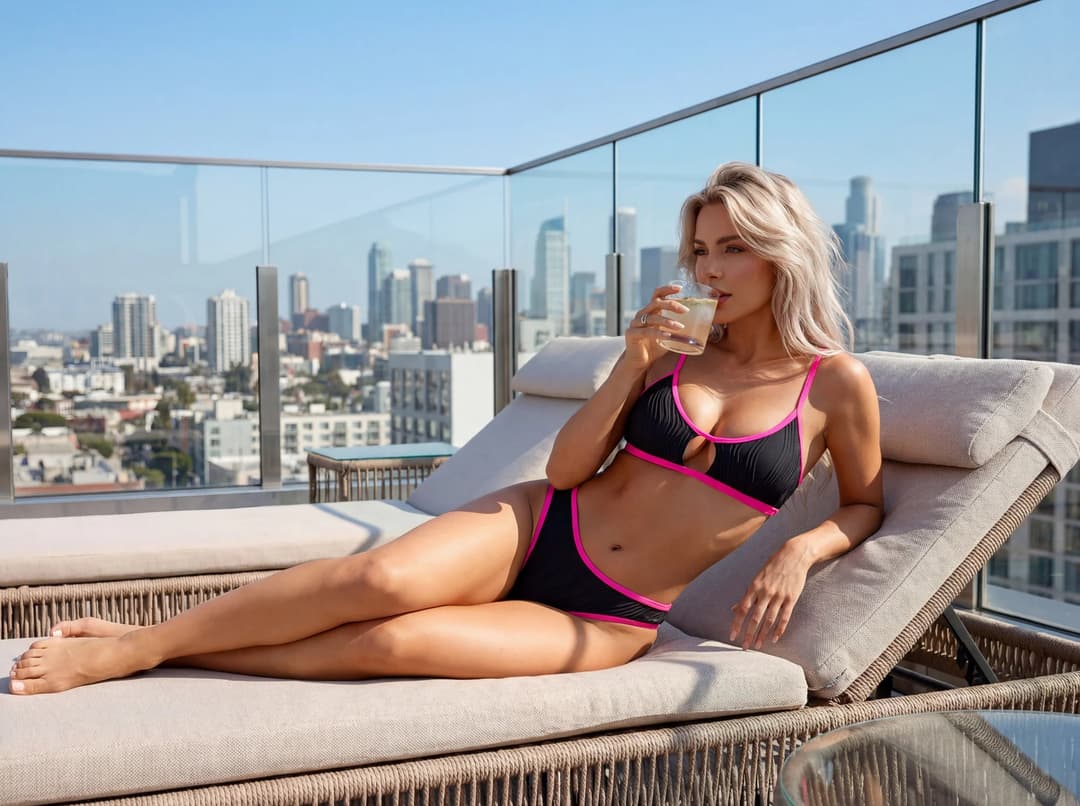
Proceed with a very concrete fitting method:
- Slow donning: a shaper is placed. Gradually pull up the material from the hips, without pulling only on the straps.
- Edge test: slide a finger under the finish at the waist and thighs. You should feel a hold, not a tourniquet. If the edge "cuts," you will have marks and often a rise.
- Movement test: sit down, then stand up. If the swimsuit shifts and does not return, the mesh anchoring is insufficient or the size is unsuitable.
- Posture test: the right shaper slightly straightens you without pulling on the neck. If you feel tension in the trapezius, the swimsuit compensates from the top, a sign that the support is not properly distributed.
Practical mini-test protocol: try the swimsuit dry then, after about 5 minutes of immersion in water, repeat the movement tests (sitting, standing, arms raised). Note any dissociation between the main fabric and the mesh, as well as any variation in compression areas.
Another common illusion: confusing smoothing and crushing. A swimsuit can visually flatten the stomach by compressing the entire torso, but you lose the natural line, and the chest may be pushed down. True power mesh support leaves a shaped silhouette, not a fixed one. You should be able to breathe deeply without feeling the material "fighting" against you.
After swimming, it's the finishes that make the difference. If the main fabric relaxes and the mesh remains firm, you may feel a dissociation (folds in front, hold behind). Conversely, if the mesh relaxes too much, the shaping effect disappears. Hence the importance of a coherent set: tonic main material, resilient mesh, flat and solid seams.
- Anti-illusion – Final checklist:
- No rolling edges
- No marked folds on the back
- Smooth lower abdomen area without air pocket
- No excessive tension on the trapezius
- Stability when walking and moving
- Positioning without marks after donning
Last point, very concrete: maintenance. Chlorine, salt, heat, and twists destroy elastane. Rinse with clear water, press without twisting, dry flat in the shade. A mistreated power mesh quickly becomes an illusion: it keeps the shape... but loses its strength. And a shaper without strength is just a lined swimsuit.
The verdict is simple: the women's shaping swimsuit offers real support when compression is distributed, anchored, stable in movement, and consistent with the cut. Everything else - decorative gathers, strategic prints, overly broad promises - is more about the mirror effect than textile engineering.

Article by Maryna Svistunova
Published on 02/04/2026 at 14:38
About the author
I am the editorial director of Misciano Paris. I define the editorial line with the conviction that fashion must be timeless, with rigor, coherence, and sincerity.
→ Learn more about Maryna SvistunovaFREQUENTLY ASKED QUESTIONS
What is power mesh and how does it work in a swimsuit?
Power mesh is a technical fabric, often made of nylon or polyester, designed to provide a compression effect while remaining lightweight and breathable. In a swimsuit, it works by hugging the body's curves, providing targeted support at the stomach, waist, and back, without causing discomfort. The key lies in its ability to smooth the silhouette while allowing freedom of movement.
How to know if a shaping swimsuit offers good support?
To evaluate the support of a shaping swimsuit, pay attention to how the fabric behaves on your body during the fitting. A good swimsuit should support without compressing, stay in place even when you are moving, and not require frequent readjustment. Feel free to simulate movements to test the stability of the support.
Is the shaping swimsuit suitable for all body types?
Yes, the shaping swimsuit can suit various body types as it is designed to offer targeted support. However, it is essential to choose a model that respects your unique silhouette. Trying it on remains crucial to determine which style and size provide you with the best comfort and desired support.
What are the advantages of a power mesh swimsuit compared to other fabrics?
Power mesh stands out for its lightness, breathability, and compression efficiency. Unlike other fabrics, it allows for firm support while offering some elasticity, thus promoting comfort. Additionally, it is water-resistant and dries quickly, making it an ideal choice for swimsuits.
What tips are there for maintaining a power mesh swimsuit?
To preserve the quality of your power mesh swimsuit, it is advisable to rinse it in cold water after each use to remove chlorine or salt. Hand wash it with a mild detergent and avoid machine washing. Air drying is preferable, avoiding direct sunlight exposure to prevent any fabric degradation.