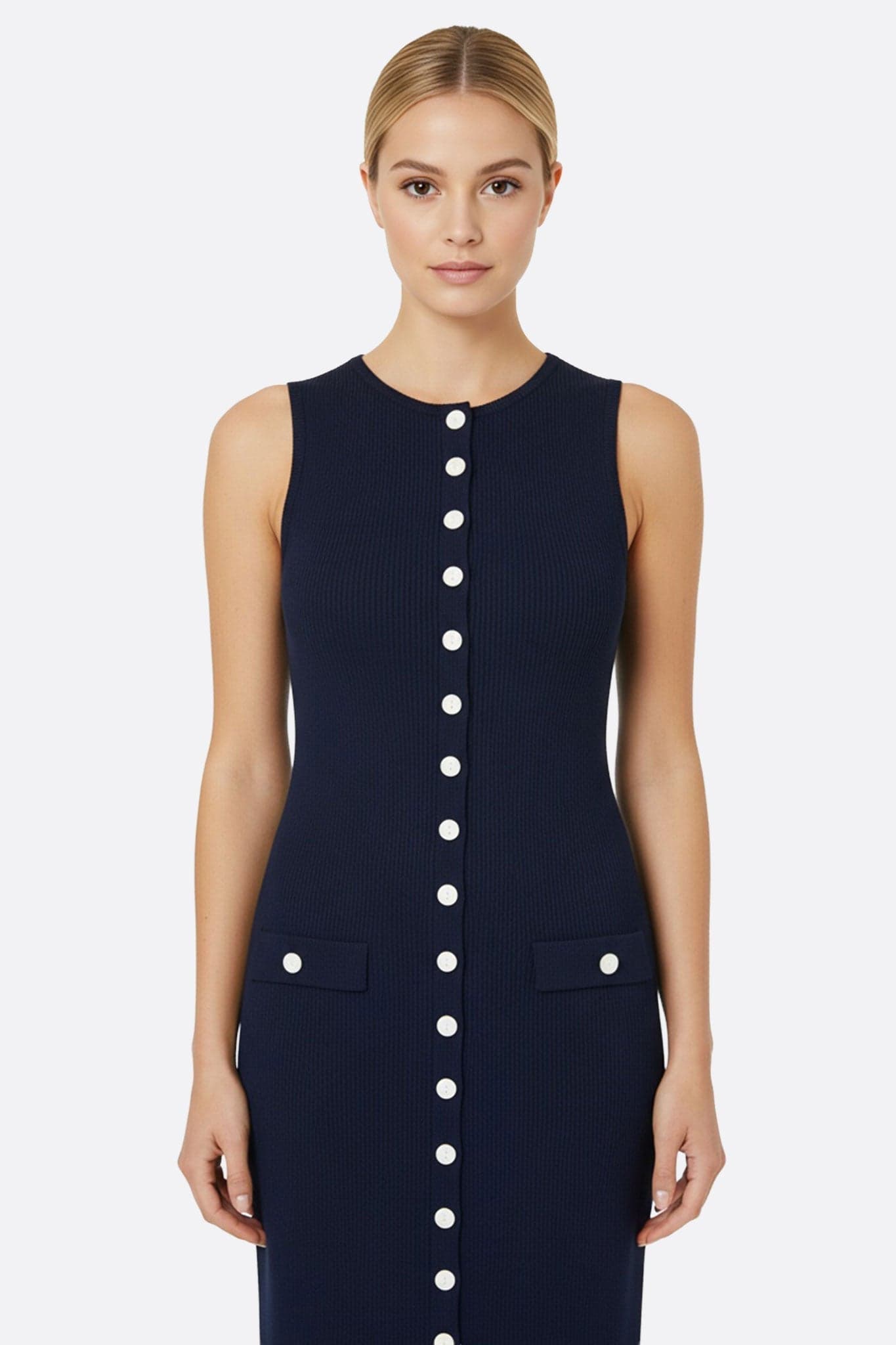
Viscose or polyester for a dress: which to choose based on drape, comfort, and use

Torn between two dresses that look almost identical: one in viscose, the other in polyester. On a hanger, they look alike. Worn, they tell a different story: feel on the skin, drape, reaction to heat, creasing during the day, hold after washing.
The right choice doesn't depend on a "better" fabric, but on your specific use: an office dress to wear without ironing, a breathable summer dress, a fluid dress that moves with your stride, an evening dress that keeps a clean line under the lights. Here, we settle it in a concrete way, based on the real result of a dress, not on preconceived ideas.
Drape and silhouette: what viscose and polyester really do to a dress
On a dress, the first difference between viscose and polyester shows in the movement. Viscose often has a more "flowing" drape: it follows the curves, creates soft folds, and gives that gentle sway when you walk. To the touch, you feel a softer hand, sometimes slightly cool, with a suppleness that visually translates into livelier draping.
For a wrap dress, a midi dress with godets, or a long dress that needs to ripple without stiffness, viscose is often the most flattering... provided the weight is well chosen (results also depend on fabric density, weave, and finishes).
Polyester, for its part, can produce two opposite effects depending on the construction: either a very fluid look (like polyester crepe or georgette), or a more structured hold. On a shirt dress, a straight dress, a pleated dress, or a cut that requires keeping a clean line, polyester is often more stable: it "holds" the shape, keeps the pleats, and moves less under the effect of humidity or friction. It can also give a "crisper" drape, sometimes a bit drier to the touch, with a less organic movement than viscose.
Misciano tip: to judge the drape, pinch the fabric at the skirt and release. If the material falls back into soft folds and spreads out quickly, you're looking at a fluidity typical of viscose or very soft crepe. If it keeps a more marked crease, returns to place, or seems to "bounce back," polyester (or a similar weave/finish) is likely dominant.
For a sleek, mobile silhouette, go for viscose or a high-quality crepe polyester; for a dress that must stay impeccable and structured, polyester has a clear advantage.
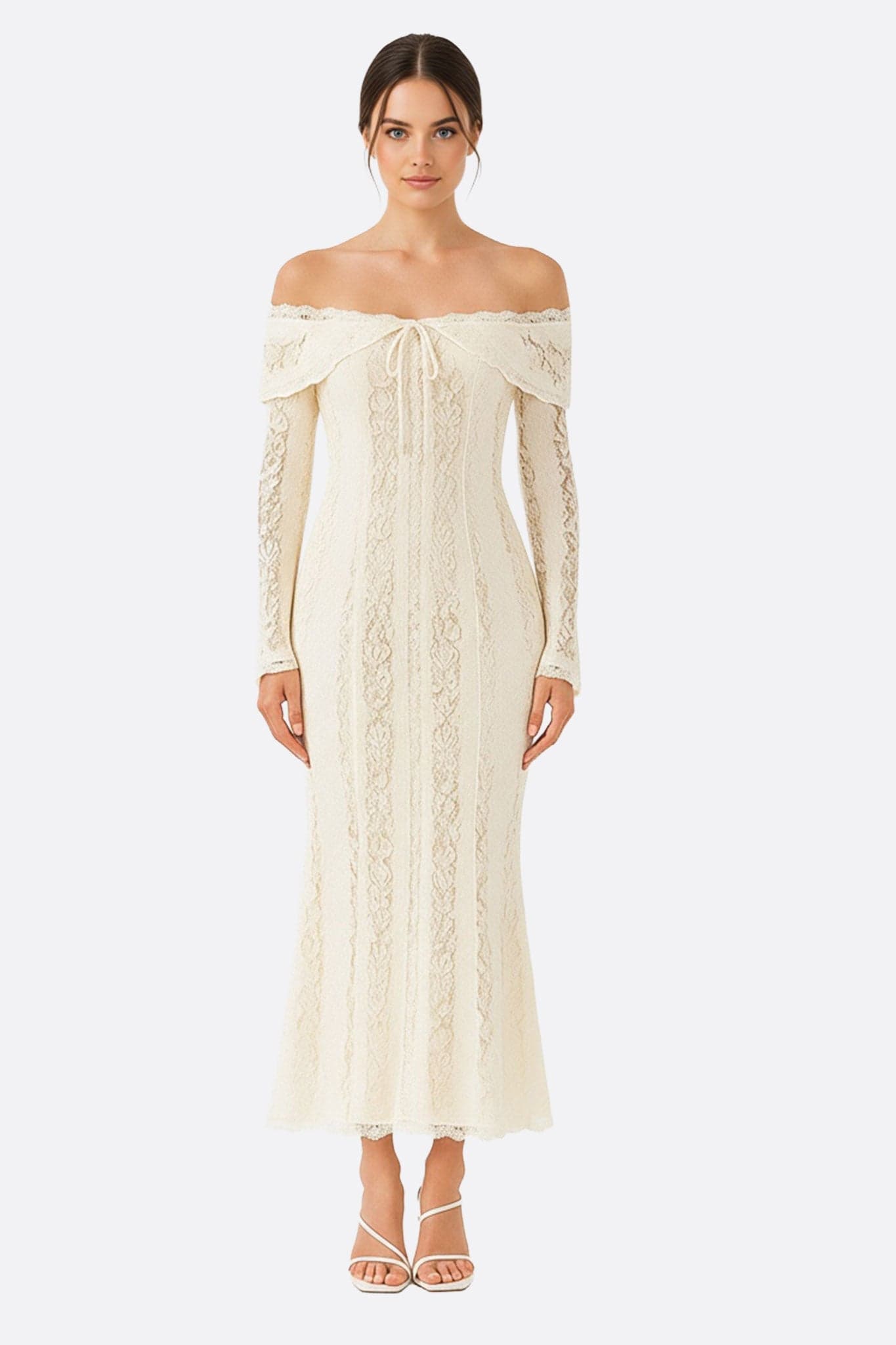
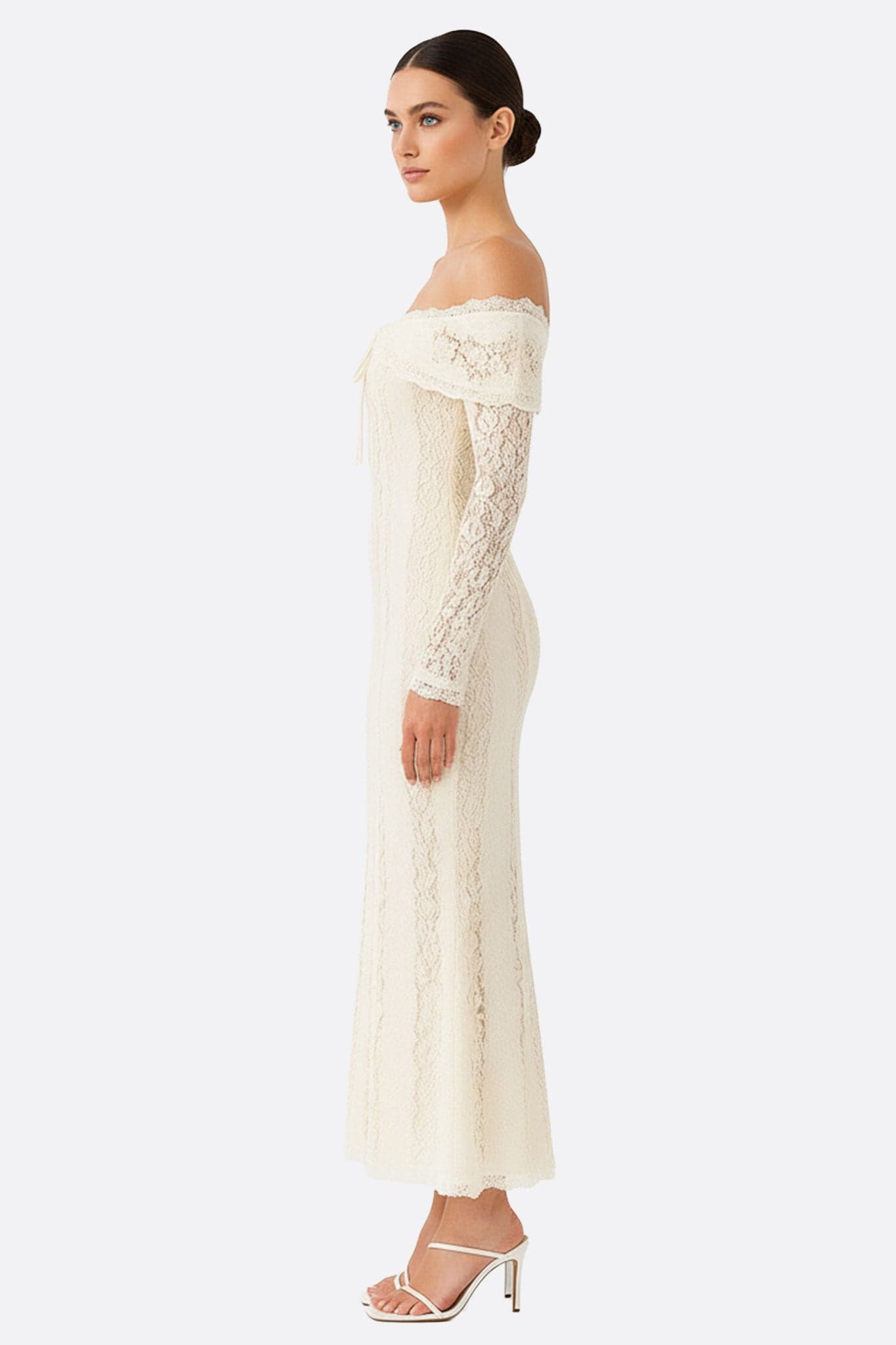
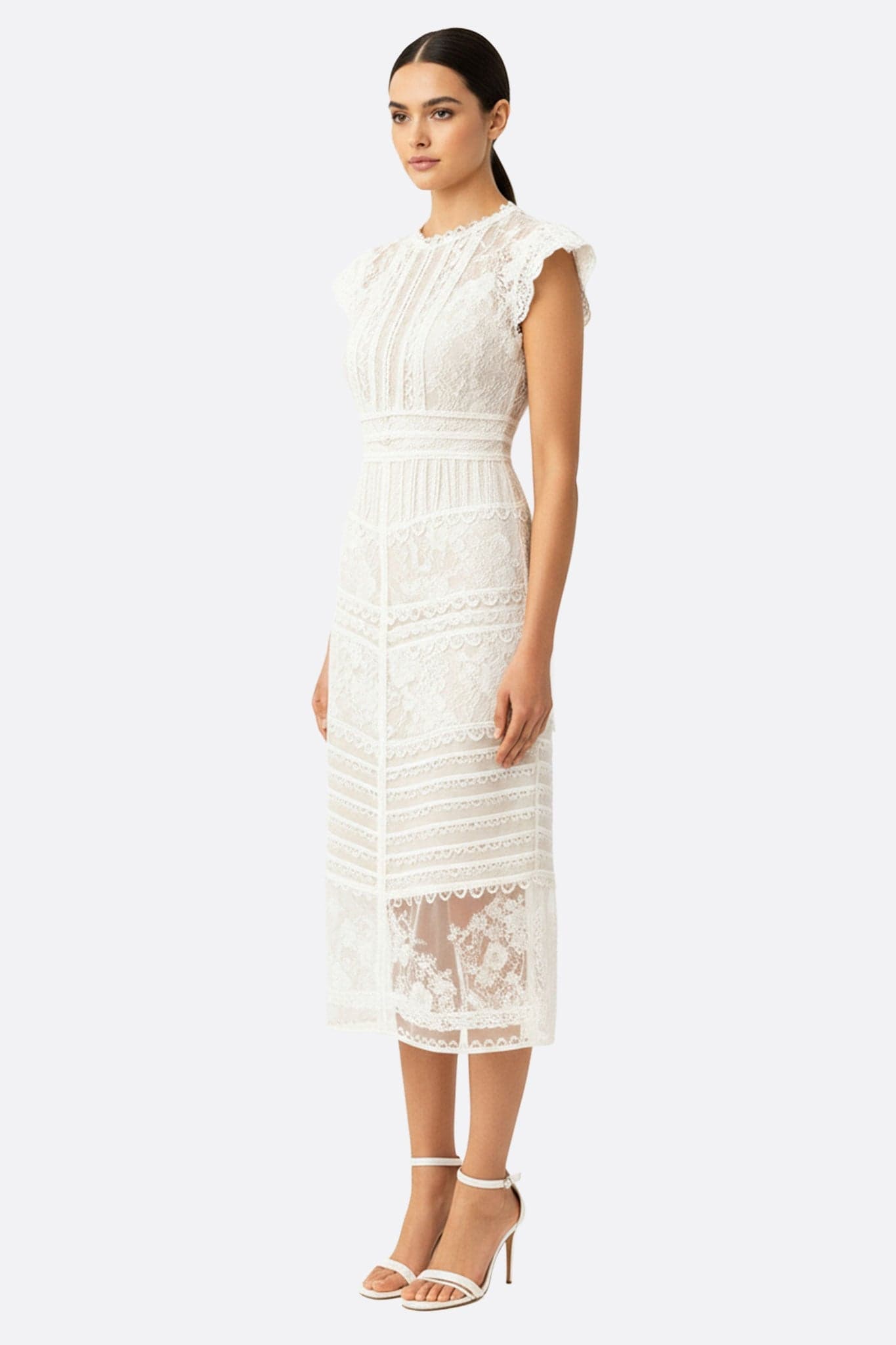
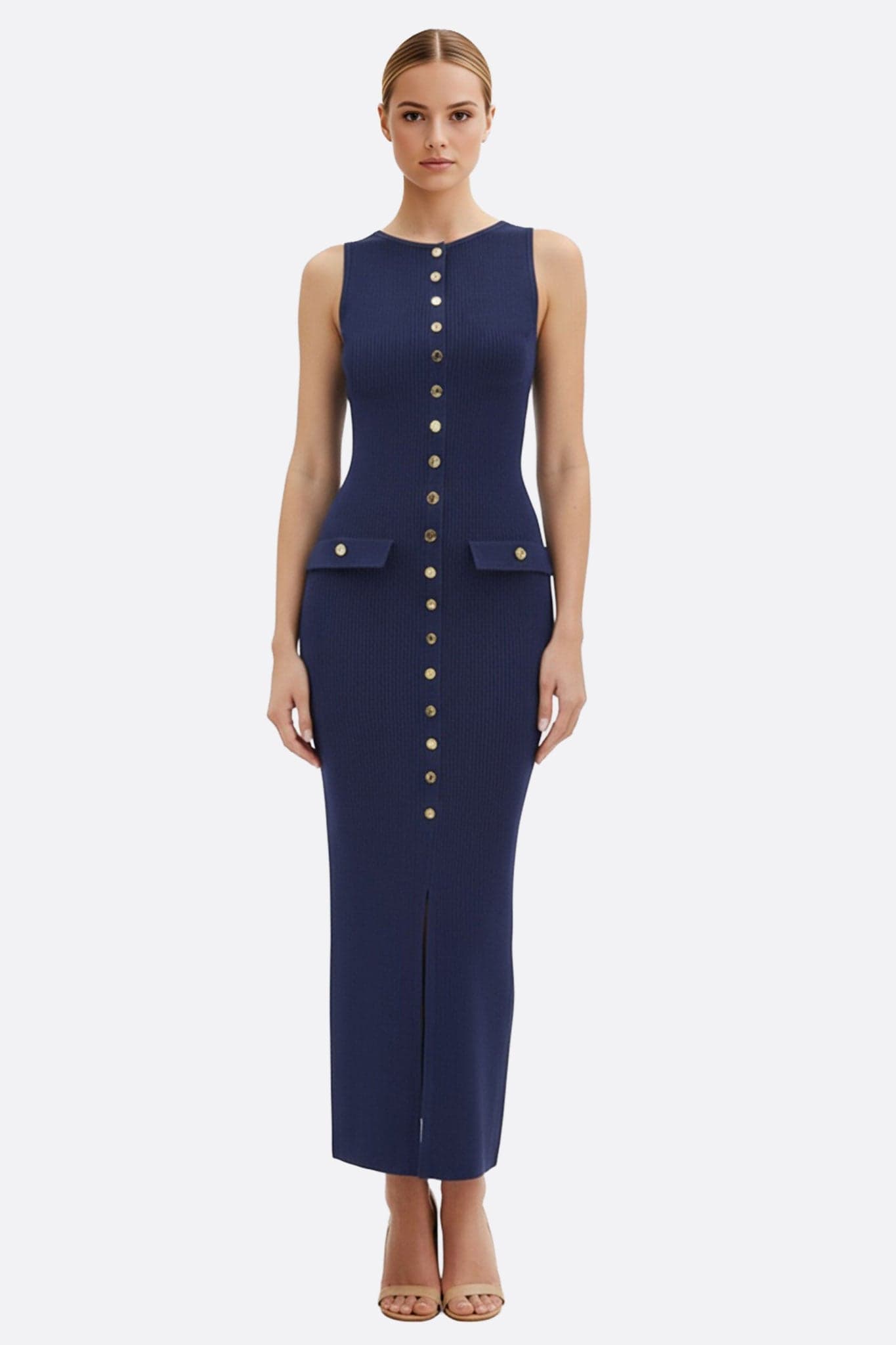
The house's fluid dresses
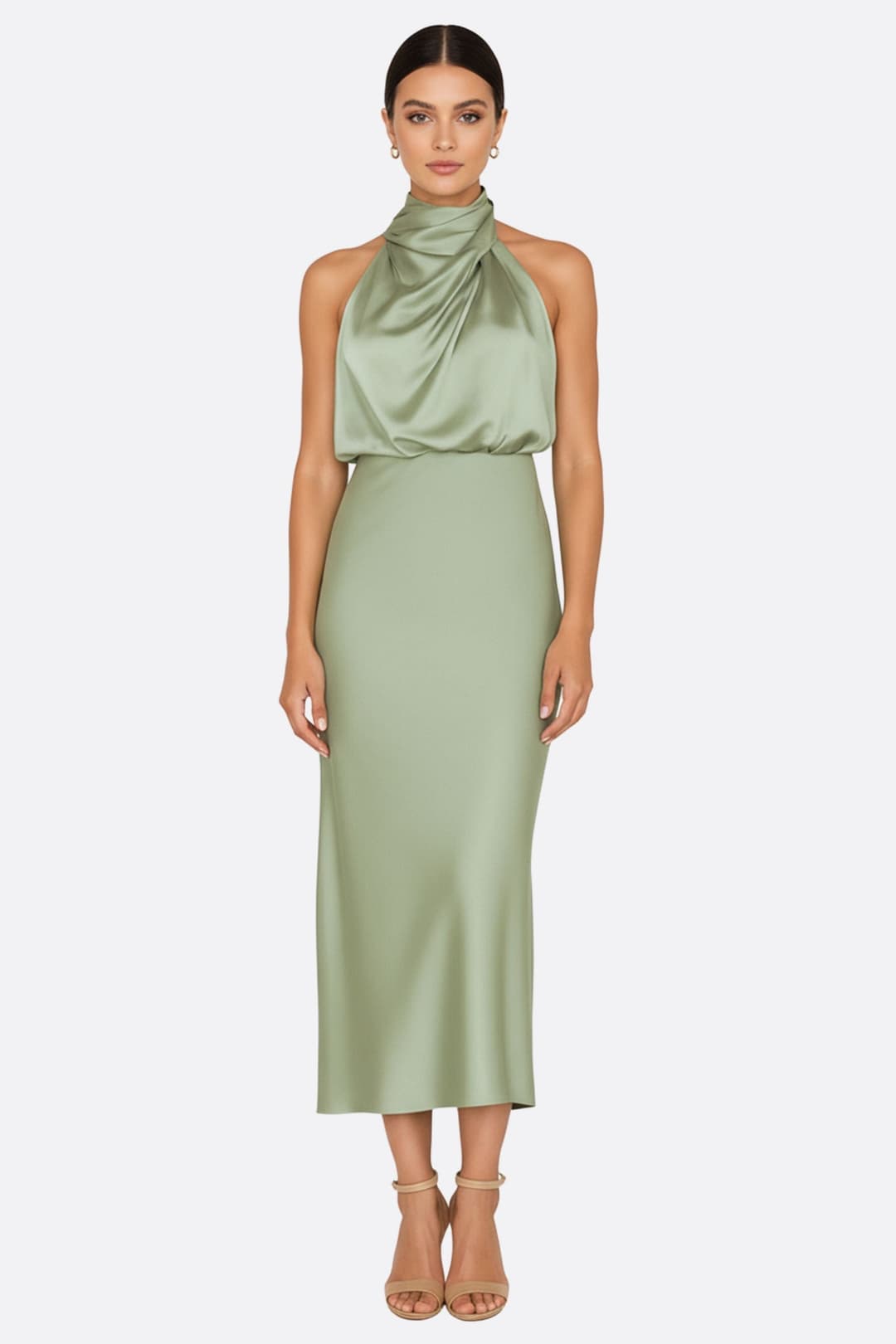

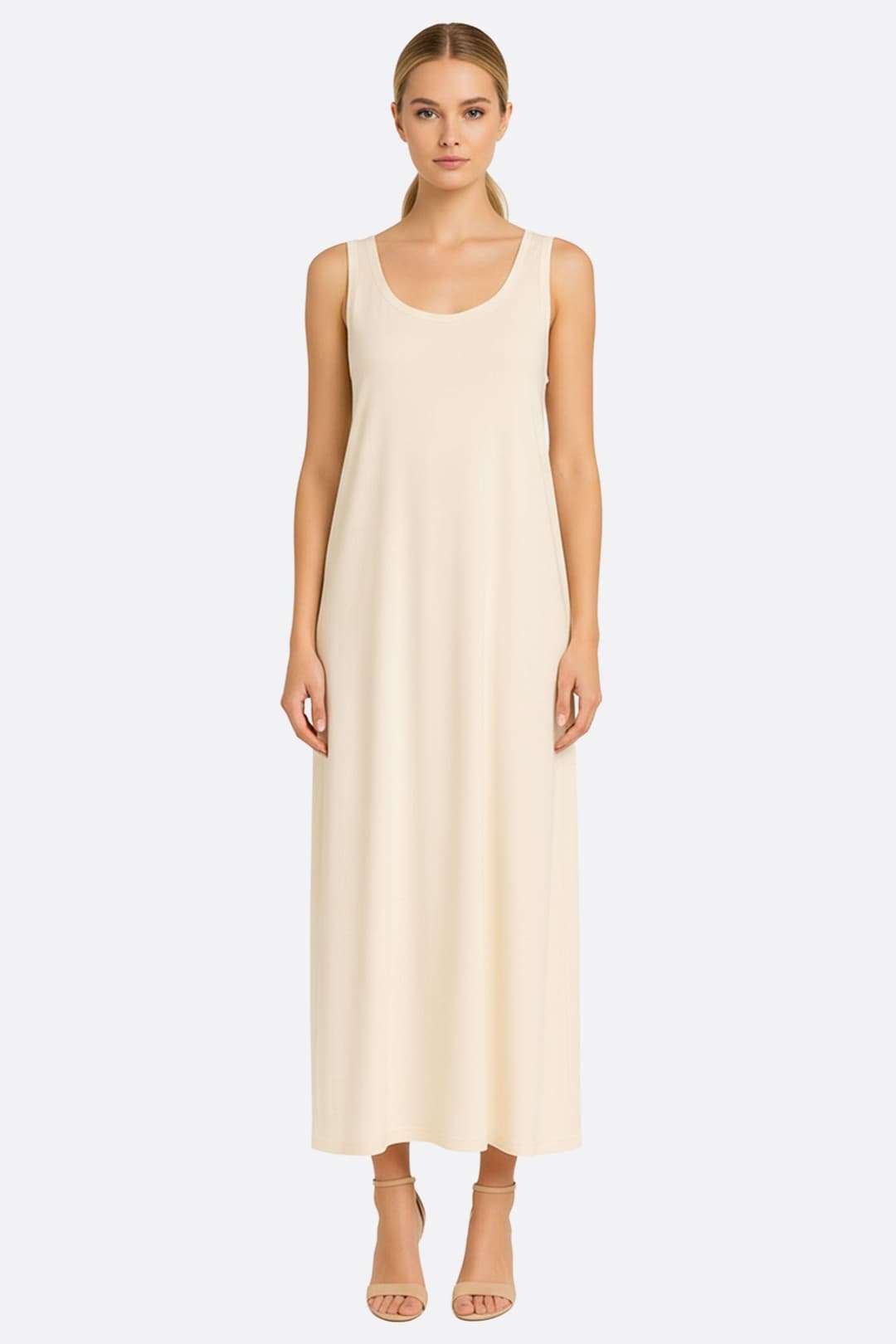
Wearing comfort: warmth, breathability, friction, and the "feel" of the fabric on the skin
A dress is lived in over several hours. That's where viscose and polyester part ways most clearly. Viscose tends to be more pleasant when the temperature rises: it feels more breathable and less "clingy".
On bare skin, it can give a more natural softness, with less static contact. In summer, or in a heated interior, a well-cut viscose dress often avoids the "film" effect that some people feel with synthetics.

On the flip side, viscose can become more sensitive to perspiration (this also depends on the weight, weave, and anti-static treatments): it can show marks faster, and above all lose some structure if the fabric is too light and thin. A very lightweight viscose dress can also slightly catch on tights or friction areas (thighs) depending on the finish.
Polyester stands out for its stability: it absorbs little moisture, dries quickly, and holds its shape even after an active day. That's valuable for a work dress, a travel dress, or a dress worn to an event where you want to stay impeccable without thinking about it.
But this low absorption power can backfire: if you sweat, the feeling can be warmer and less comfortable, especially on tight weaves or polyester satins. You often feel it in the back, under the arms, or at the waist if the dress is fitted. (These effects vary depending on the fabric's weave and any anti-static treatments applied.)
The often-overlooked point: static electricity. Some polyesters, especially in linings or fine fabrics, attract tights and make the skirt "ride up". Viscose is generally more manageable in this regard. If you often wear tights, test in the fitting room: sit down, stand up, walk. A dress that clings to your legs at the slightest movement will quickly become annoying.
Misciano tip: for a dress worn 8 to 10 hours (office, event day), choose based on your tolerance to heat. If you easily get hot, viscose is often your ally. If you're looking for "no-surprise" comfort and a dress that dries quickly (light rain, humidity, travel), polyester may be more reassuring.
And if you're hesitating, look for blends: a viscose with a small amount of polyester can gain structure, and a polyester with a crepe construction can gain contact comfort.
Care and durability: wrinkling, washing, pilling, color retention (the real daily life of a dress)
The choice between "viscose or polyester for a dress" also comes down to your lifestyle. Viscose wrinkles more easily: a viscose dress can crease at the waist, under a bag, or after a car ride. Visually, this gives it a slightly lived-in charm, but if you're looking for an always crisp look, you'll need to accept more frequent steaming.
The other point: viscose can shrink or become misshapen if washed improperly (water too hot, aggressive spin cycle). A viscose dress needs gentle care: wash cold or at 30°C max according to the label, moderate spin, dry flat or on a hanger, and iron/steam at the right temperature. Well cared for, it keeps a beautiful feel, but it demands attention.
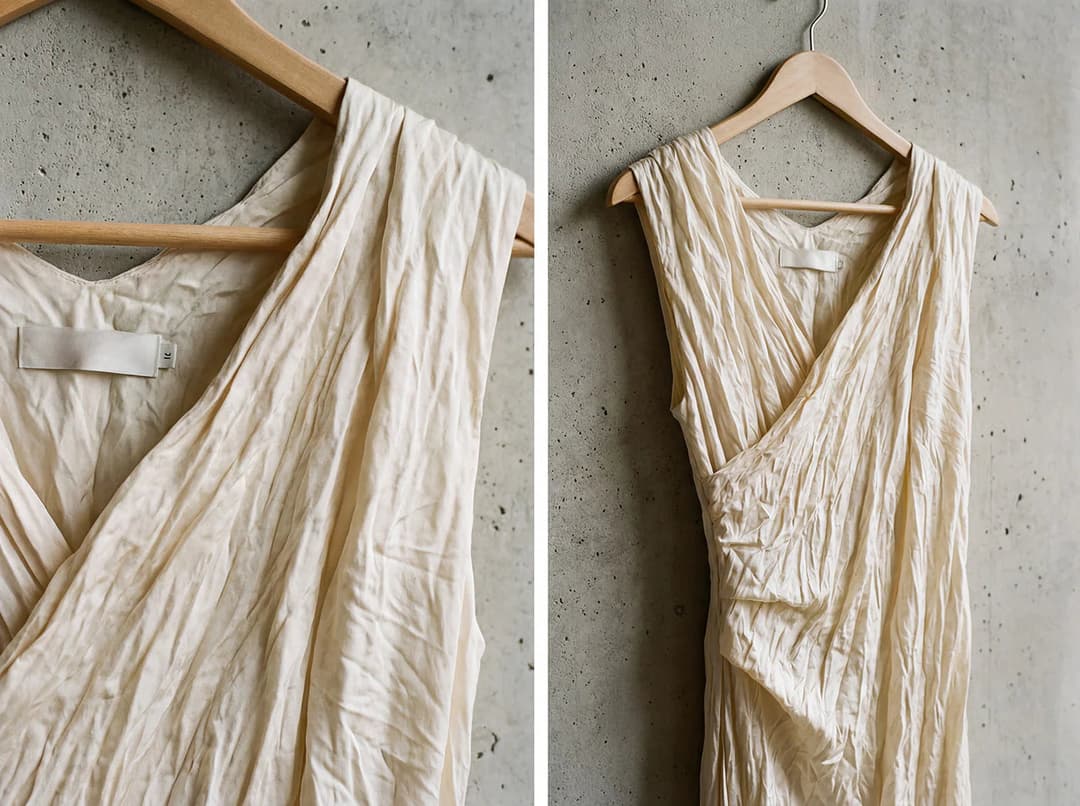
Polyester, on the other hand, is generally simpler: it wrinkles little, rarely needs ironing, and withstands regular washing better. For a dress you want to wear often without hassle, that's a strong argument. It also holds colors well, especially on prints: a patterned polyester dress can stay vibrant longer, especially if washed inside out and at low temperature.
However, some polyesters can pill if the quality is average and the dress undergoes a lot of friction (bag straps, coat, sitting). Another reality: polyester can retain certain odors if washed at too low a temperature without an appropriate cycle. A quality detergent and thorough drying help, but it's a point to be aware of.
If you want a reliable method for evaluating a fabric before purchase (beyond the label), keep these key checks in mind: density, elasticity, sheerness, reaction to wrinkling. We detail these benchmarks in a structured way in our guide how to choose a clothing fabric without getting it wrong, useful for confirming your choice when two dresses seem equivalent.
Misciano tip: if you hate ironing, polyester (or a blend with polyester) makes your life easier. If you love a more lively drape and accept a bit of upkeep, viscose often offers a superior wearing pleasure. To maximize durability, also look at the lining: a well-lined polyester dress can be very comfortable, and an unlined viscose dress can become more fragile if it's very thin.
Choosing by occasion: office, ceremony, summer, travel (concrete scenarios and quick decisions)
To decide quickly, start from the real use of your dress. Here are common scenarios where the "viscose or polyester" answer becomes obvious.
Dress for the office (long days, commuting, sitting): polyester has a major practical advantage. It wrinkles less, keeps a cleaner line at the elbows, waist, and skirt. If you're in meetings, wearing a blazer, or juggling metro/car/restaurants, a polyester dress (ideally in crepe) stays presentable without vigilance. Viscose can work if the cut is fluid and the fabric has weight, but it will require more attention to wrinkling.
Summer dress (heat, bare skin, walking): viscose is often the most pleasant. It feels more breathable and moves more fluidly. For a long summer dress, a dress with thin straps, or a wrap dress, viscose brings that drape that follows your stride and that comfort that avoids any feeling of overheating. In polyester, opt for airy constructions (georgette, chiffon) and be wary of thick satins that can trap heat.
Ceremony dress (photos, lighting, attire): here, everything depends on the desired look. For a dress that must stay impeccable, with a skirt that holds its shape, quality polyester is very relevant, especially in crepe or well-controlled satin. It photographs well if the finish is clean, and it withstands long hours. If you're seeking a softer, more "flowing" look with sensual draping and natural movement, viscose can be stunning, but anticipate wrinkling (car, banquet, dancing) and choose a sufficiently dense fabric.
Travel dress (suitcase, re-wearing, quick drying): polyester wins, without hesitation, especially if you want a dress that comes out of the suitcase nearly ready. Viscose can arrive wrinkled and require steaming, which isn't always possible. If you love viscose, aim for a viscose knit or a blend that limits wrinkling.
Bodycon dress (marking, sheerness, underwear): very fine viscose can show more marks and become more transparent in light. Polyester can offer more opacity and structure, but watch out for static cling. In any case, the most elegant solution often remains a good lining or a cut designed to drape without clinging.
Quick Misciano decision: choose viscose if your priority is comfort in warm weather and a lively drape. Choose polyester if your priority is structure, easy care, and a crisp look from morning to night. And if you come across a "perfect" dress in either one, look at the construction quality (density, finishes, lining): that's what tips the result from "okay" to "remarkable."
Sources and Disclaimer: The advice and observations presented are based on internal testing and various textile references (ISO, ASTM, IFTH standards). They account for critical variables such as fabric weight (g/m²), weave, density, finishes (anti-static), and the presence of a lining. This information is provided for guidance only, and it is recommended to check the care label of each garment for specific advice tailored to your use and the precise characteristics of the fabric.
Viscose or polyester for a dress: how to decide without getting it wrong
In the end, there is no universal answer to the question viscose or polyester for a dress. What makes the difference is not the word on the label, but the fit between the fabric, the cut, and your actual use. A well-constructed viscose can offer remarkable comfort and a flattering drape, while a quality polyester can prove invaluable in everyday reliability.

If you're primarily looking for a dress that feels pleasant on the skin, breathable, with a fluid movement that accompanies your stride, viscose is often the most sensible choice, provided you accept more careful maintenance.
Conversely, if your priority is durability over time, ease of washing, and a crisp silhouette from morning to night, polyester stands out as a pragmatic solution, especially in professional or travel contexts.
The decisive criterion remains construction quality: fabric density, weave, finishes, and any lining. A viscose that's too thin or poorly stabilized will quickly lose its shape; a low-end polyester can heighten discomfort and static cling. Conversely, a beautiful viscose or a well-crafted polyester can far exceed the expectations associated with the fiber alone.
Before choosing, take the time to test the dress as you'll actually wear it: sit down, walk, lightly crumple the fabric, observe its reaction to light and movement. These details, far more than the talk around the material, determine whether a dress becomes a piece of joy... or a compromise you wear without enthusiasm.
At Misciano, our approach remains the same: prioritizing coherence between the fabric, the use, and the worn result. A successful dress isn't one that ticks a technical box, but one that accompanies your day without constraint, while maintaining a just and lasting look.
To go further:
- For a complete comparison of viscose, polyester, silk, and linen, compare all materials on our observatory
What the fiber does to a flowing dress: satin, crepe, and chiffon
A fluid dress reads like architecture in motion: a living fabric, a precise drape, light gliding over the skin. But "fluid" does not refer to a fiber but to a behavior, and three surfaces produce it differently. Satin captures light and reflects it continuously: it elongates, brightens the complexion, and reveals every contour. Crepe disciplines it: its matte grain absorbs reflections, smooths volumes, and forgives creases. Chiffon lets it breathe: it floats, layers, and requires a lining.
Viscose and polyester exist in these three weaves. In satin, viscose offers a cooler glide and a heavier drape, while polyester gives a sharper sheen and a dress that comes out of a suitcase without a wrinkle. In crepe, the difference is felt in the heat: viscose breathes, polyester retains. That is why the question "viscose or polyester" always comes after "satin, crepe, or chiffon."
The drape: when fabric shapes the cut
A successful drape comes down to six things: a fabric with weight but no stiffness, an anchor point (the shoulder, waist, or neckline) from which the folds originate, vertical lines that slim, controlled volumes so the fabric's presence does not overpower the silhouette, a balance between the draped side and the clean side, and a length that lets movement express itself.
On the body, vertical lines elongate and slim, while horizontal drapes add volume where they sit. A figure with pronounced hips chooses a drape at the neckline and a smooth skirt; a straight silhouette can afford a waist drape that defines it. Our long black dress with a plunging cowl neckline is the clearest example: all the draping is at the bust, and the line descends without adding anything to the hips.
A viscose crepe is the safest fabric for a daytime drape: heavy enough to fall, matte enough not to emphasize sitting creases. A satin, whether viscose or polyester, reserves its drape for the evening, when the light suits it.

Article by Maryna Svistunova
Published on 20/01/2026 at 4:55 PM
About the author
I am the editor-in-chief of Misciano Paris. I define the editorial line with the conviction that fashion should stand the test of time, with rigor, consistency, and sincerity.
→ Learn more about Maryna SvistunovaFREQUENTLY ASKED QUESTIONS
Viscose or polyester: which fabric is the most comfortable for a dress?
As a general rule, viscose is perceived as more comfortable against bare skin, especially in hot weather. It offers a softer feel and a more breathable sensation. Polyester, being more stable, can be very comfortable for everyday wear, but it retains more heat in certain tight constructions.
Which fabric should you choose for a summer dress: viscose or polyester?
For a summer dress worn in extreme heat, viscose is often more comfortable thanks to its fluid drape and less stifling feel. Polyester can work if the fabric is very breathable (georgette, chiffon), but it is generally less heat-tolerant.
Does viscose show sweat marks more than polyester?
Yes, viscose absorbs more moisture, which can make sweat marks more visible if the fabric is thin or very light. Polyester absorbs little and dries quickly, but can feel warmer. The choice therefore depends on the trade-off between comfort and visual appearance.
Which fabric wrinkles the least for an everyday dress?
Polyester wrinkles significantly less than viscose and maintains a cleaner line throughout the day. Viscose can crease more easily, especially at the waist or after prolonged sitting.
Viscose or polyester: which fabric is easiest to care for?
Polyester is simpler to care for: it withstands repeated washing better and requires little ironing. Viscose needs more care (gentle wash, limited spin) to maintain its shape and drape.
Why do some polyester dresses stick to tights?
This is due to static electricity, which is more common on synthetic fibers. A lining, an antistatic treatment, or a higher-quality fabric usually helps limit this effect.