The women's shirt: cuts, materials, and occasions
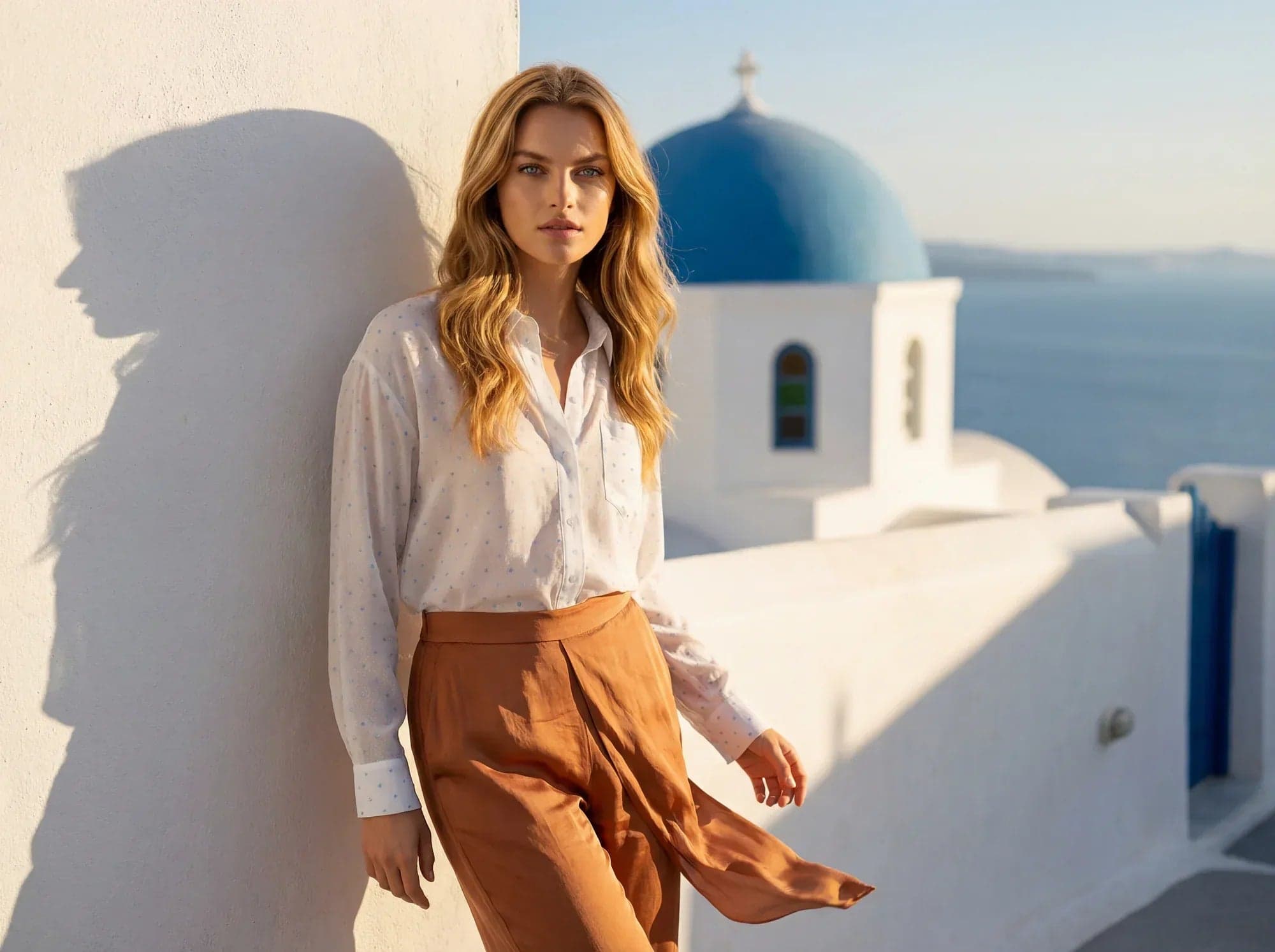
Women's shirt: a key piece in the wardrobe
The women's shirt is one of the few pieces that works just as well at the office as on the weekend, alone or layered, tucked in or loose. Its versatility lies in two elements: the cut and the material. Changing one or the other creates a completely different outfit with the same piece.
This guide covers the objective criteria for choosing a women's shirt according to use, body shape, and season: collar, cut, material, length, and care.
Women's shirt collars: which collar for which use
The collar is the structuring element of a shirt. It defines the style (formal, casual, feminine) and influences the perception of the neck and bust.
Classic collar (kent collar): two spread points, compatible with or without a jacket. The classic collar is the most versatile: it works at the office, in the evening, and casually. The spread points (semi-spread collar) enhance short necks by creating a horizontal line.
Mandarin collar: straight and high collar, without folded points. It visually lengthens the neck. Strict and structured, ideal under a fitted jacket for the office.
Mao collar: simple closing band of fabric, without points. Minimalist, worn open or closed. Less formal than the classic collar, very suitable for casual chic.
Peter Pan collar: round and flat collar, without a pronounced notch. Feminine and delicate, it is better suited to shirts in fluid materials (silk, viscose) than to shirts in stiff cotton. It highlights neck jewelry.
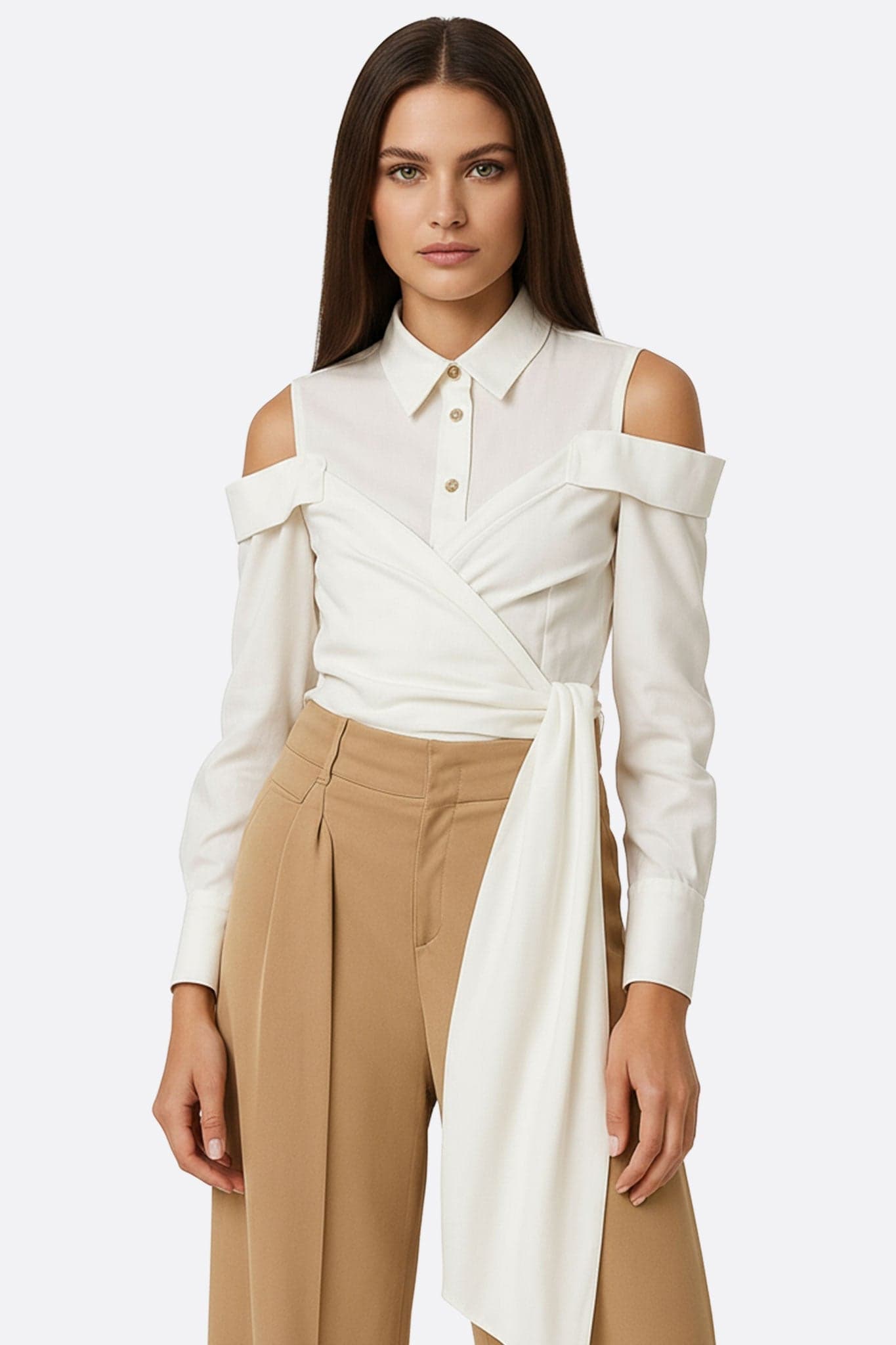
Open blouse collar (natural V collar): shirt without a stiff collar, which naturally opens in a V. The most relaxed option. Worn with a thin belt tucked into a high-waisted pants, it holds easily.

Structured collar in soft cotton: the shape of the collar determines the style of the outfit.
Women's shirt cuts: fitted, straight, or oversized
The cut defines the relationship between the shirt and the body. It is chosen based on body shape and use.
Fitted cut (tailored): follows the body's shape at the waist. The side seams are curved to accentuate the waist. Control point: shoulder seams should fall exactly on the shoulder bone. Suitable for X (hourglass) and H (straight) body shapes. For A body shape (hips wider than shoulders), prefer a slightly flared cut at the bottom to balance.
Straight cut: slightly looser than the body without excess fabric. The most versatile: can be worn tucked into bottoms, tied at the front, or loose. Ideal length: mid-hip.
Oversized cut (boyfriend): dropped armholes, longer length than the body. It must be balanced with a fitted bottom (slim jeans, straight skirt) to avoid a baggy effect. Worn open like a jacket over a t-shirt or closed tucked in at the front only (half-tuck).
Long shirt (shirt dress): falls to mid-thigh or below the knee. Worn with a belt, it becomes a summer dress. The length should be sufficient to cover comfortably in motion.
Women's shirt materials: cotton, linen, silk, viscose
The material determines the drape, breathability, care, and lifespan of the shirt.
Poplin cotton (130–160 g/m²): tightly woven fabric, wrinkle-resistant, good collar hold. It is the reference cotton for office shirts. It irons easily at 160°C and retains its shape after washing at 40°C. White poplin operates from 130 g/m² without transparency.
Oxford cotton: thicker and textured weave, matte and robust appearance. It wrinkles more than poplin but gives a more casual look. Ideal for casual chic shirts.
Linen: breathable, lightweight, naturally wrinkles. It's a quality, not a defect. To reduce wrinkling, opt for a linen/viscose blend (70/30). Wash at 30°C and iron damp at 200°C.
Silk: exceptional drape, soft touch, natural thermoregulator. Fragile to stains and perspiration. Delicate care: hand wash or professional dry cleaning. Ideal for evening shirts or special occasions.
Viscose: fluid like silk, cheaper, less fragile. Wrinkles moderately. Wash at 30°C. An interesting alternative to silk for office shirts with fluid cuts.

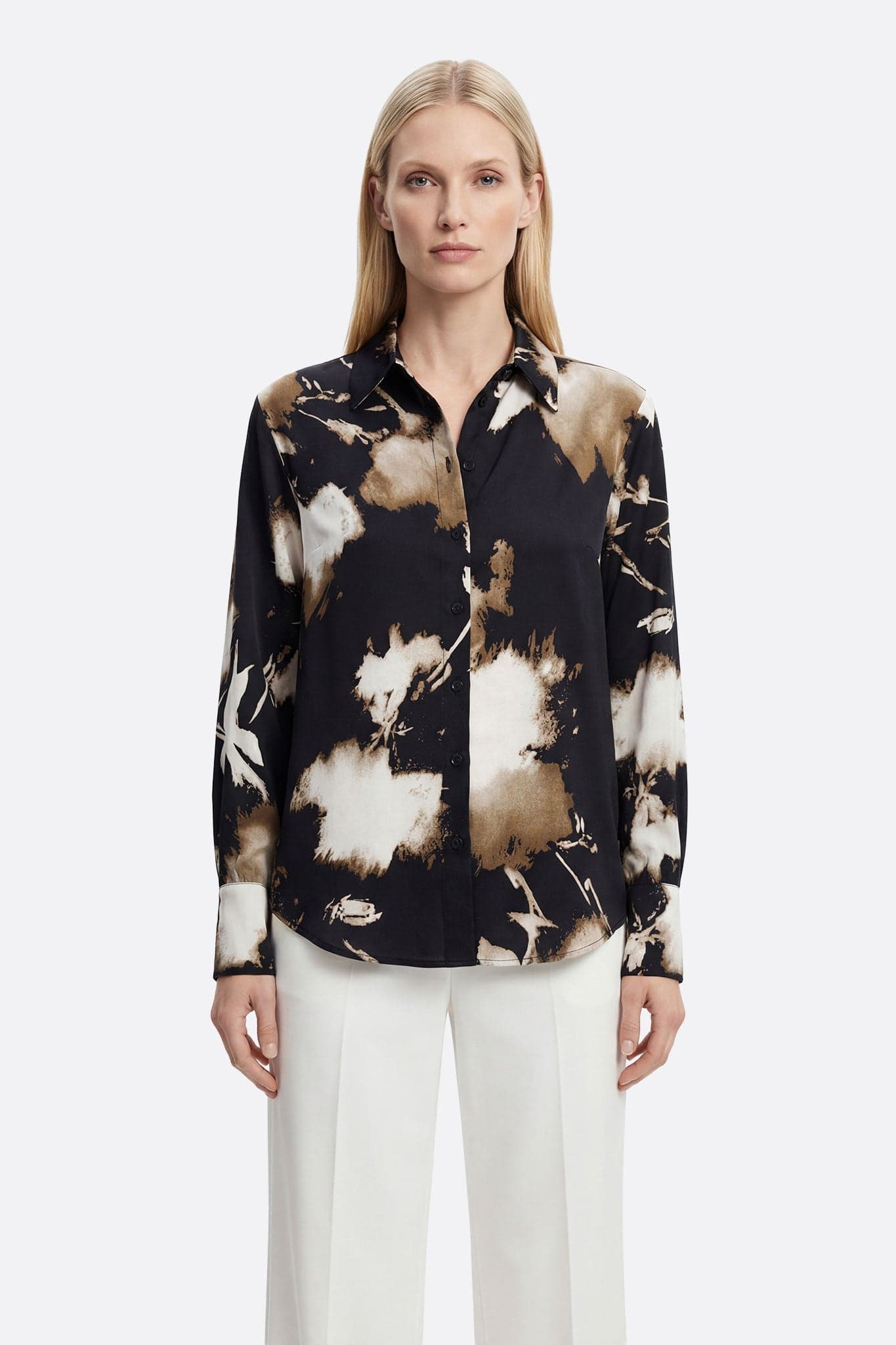
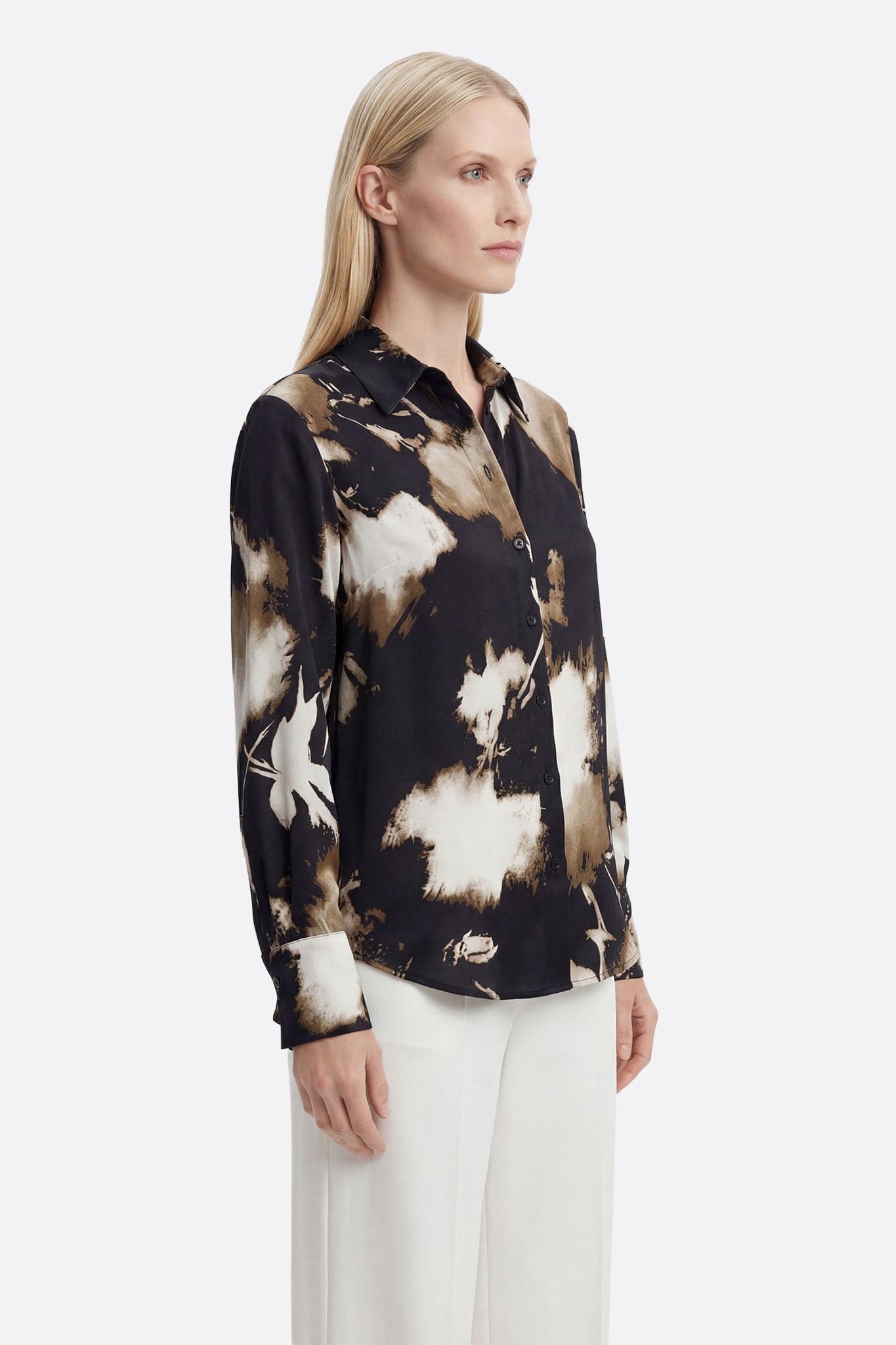
Black satin shirt: the satin material creates a fluid drape suitable for dressy occasions.
Women's shirt at the office: what really works
At the office, the shirt works in three configurations:
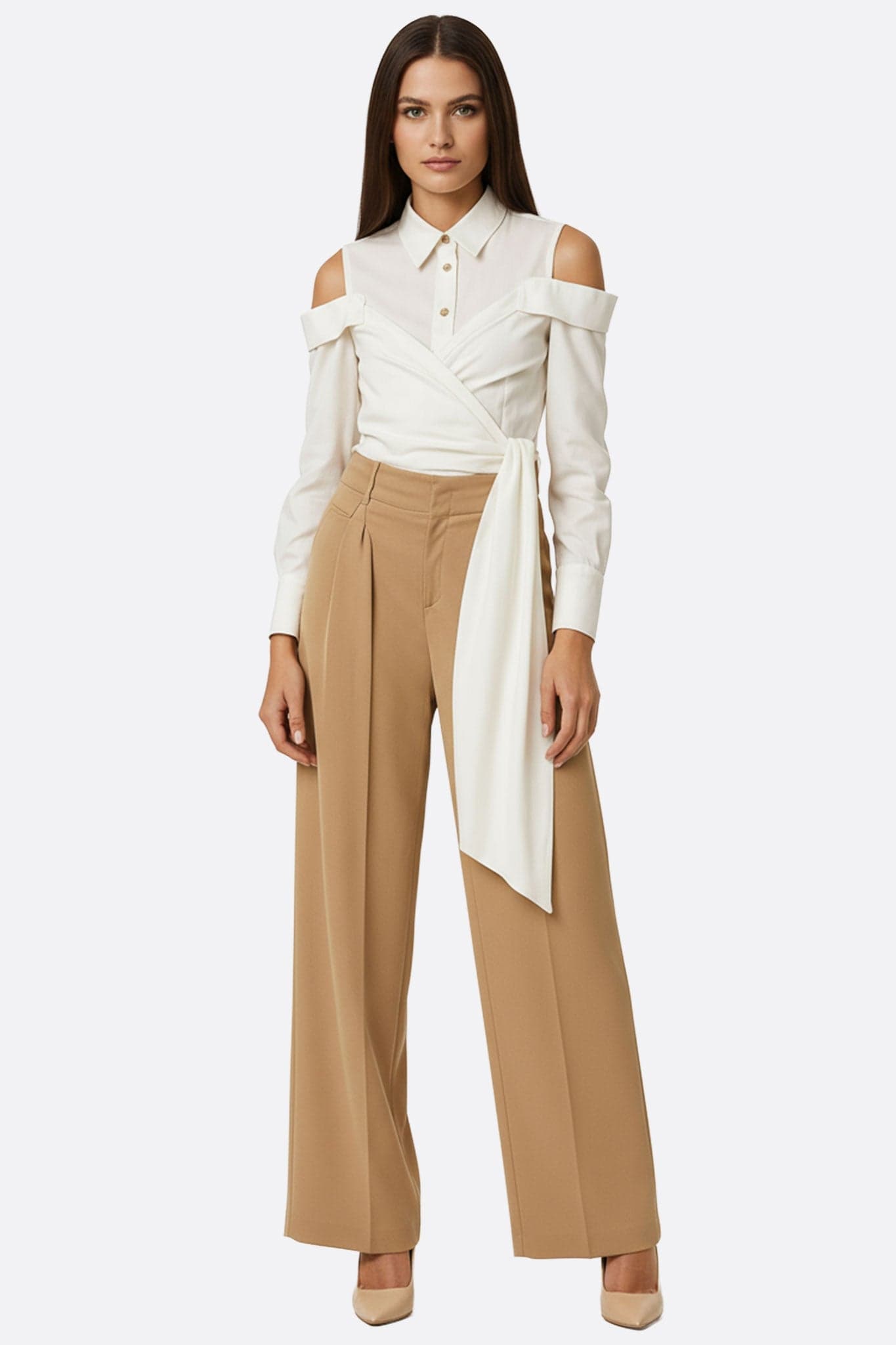
Tucked into high-waisted pants: the cleanest visual configuration. Choose a fitted or straight poplin cotton shirt, tucked into structured high-waisted pants. The optional belt marks the waist.
Under a blazer jacket: a classic collar or mandarin collar under a fitted jacket is the most formal combination. The collar should slightly exceed the jacket collar (1 to 2 cm visible).
Over a structured skirt: a shirt tucked in at the front only (French tuck) into a midi skirt or pencil skirt works for a casual office. The effect is more relaxed but remains structured.
What prevents the shirt from passing at the office: a wrinkled collar (sign of insufficient care), a shirt too transparent (thin cotton < 100 g/m²), or a boyfriend cut not balanced by a fitted bottom.
Care of a women's shirt according to the material
Care conditions the lifespan of the shirt. The rules vary according to the material:
- Cotton: wash at 40°C (30°C for colors), iron at 160–200°C. Can go in the dryer at low temperature, but lay flat preferably to preserve the collar shape.
- Linen: wash at 30°C, iron damp at 200°C. No dryer. Hang immediately out of the drum to avoid marked creases.
- Silk: hand wash at 20°C with special silk detergent, or dry cleaning. Never use a washing machine. Iron inside out at a maximum of 100°C. Dry in the shade.
- Viscose: wash at 30°C, delicate program. No dryer. It can shrink in heat like linen.
For textile accessories (scarves, pocket squares) that are often paired with shirts, care rules are similar according to their composition.
Editorial note: The weight and temperature indications are based on textile composition standards. Always check the garment label.
Article by Esther Arnaud
Published on 03/17/2026 at 16:00
About the author
What interests me above all is not the immediate trend, but the coherence of a wardrobe. I like to analyze why a piece works, how a material influences movement, and how a garment can accompany a woman over time, without ever imposing itself.
→ Learn more about Esther ArnaudFREQUENTLY ASKED QUESTIONS
Which women's shirt cut to choose according to body shape?
The fitted (tapered) cut highlights the waist and suits X and hourglass body shapes. The straight or slightly oversized cut is more versatile: it works on all body shapes and is worn tucked into a fitted bottom. The boyfriend cut (very loose, dropped armholes) must be balanced with a structured bottom (slim jeans, straight skirt) to avoid the sack effect. For an A-shaped body (wider hips), favor a collar that draws attention upwards: mandarin collar or classic embroidered collar.
Cotton, linen, or silk: which material for a women's shirt at the office?
For the office, poplin cotton (130–160 g/m²) is the most reliable choice: it irons easily, retains its shape all day, and does not show sweat marks. Linen is acceptable in summer but wrinkles quickly, it is less suitable for formal meetings. Silk drapes well but is prone to stains and requires professional care; it is better suited for evening shirts or casual occasions. Viscose is an intermediate alternative: fluid, less wrinkle-prone, but less breathable than cotton.
How to wash a linen shirt to avoid shrinkage?
Linen shrinks mainly due to heat. Wash at a maximum of 30°C, delicate cycle. Dry flat or hanging, never in the dryer. Iron slightly damp at 200°C (linen setting) to regain suppleness. Linen naturally wrinkles, it's a characteristic of the material, not a defect. The wrinkles lessen with wear. If you want to reduce wrinkling, choose a linen blend (linen/viscose 70/30) that retains breathability while being more stable.
What is the difference between a mandarin collar, a classic collar, and a mao collar on a women's shirt?
The classic collar (or kent collar) is the most versatile: two points that open or button, compatible with or without a tie. The mandarin collar is a straight, standing collar without folded points: it visually elongates the neck and gives a more strict appearance, appreciated for structured office outfits. The mao collar is minimalist, a simple band of fabric without points: very trendy but less formal, it is better suited for casual chic than traditional office wear. For a Peter Pan collar (round and flat), the effect is feminine and delicate, ideal on a fluid silk or viscose shirt.
How to wear a women's shirt as a dress or open jacket?
A long shirt (that reaches mid-thigh or more) can be worn as a dress, belted at the waist with a thin belt. It is then worn with ankle boots or flat sandals. As an open jacket over a t-shirt or top, an oversized or boyfriend shirt works as a light layering: let it float over slim jeans or close it over a single collar. For the beach, an open white linen shirt over a swimsuit is one of the most practical layers: covering without being hot.