How to choose a dress when you don't like your body (and finally feel good)

Our expertise: At Misciano, a fashion house specializing in women's pieces with fluid cuts and carefully selected materials, we work every day on the same question: how to allow a woman to feel comfortable in a dress, without constraint or transformation.
Our field experience: In our workshops and during hundreds of fittings with our clients, we have observed a recurring reality: discomfort with a dress rarely comes from the garment alone, but from the relationship one has with their body and the expectations projected onto oneself.
Why choosing a dress becomes difficult when you don't feel comfortable with your body
Choosing a dress is not always a pleasure. For many women, it is a moment filled with doubts, hesitations, and sometimes frustration. In front of a mirror, the dress becomes a revealer: of personal expectations, implicit comparisons, internalized norms. The problem is not the number of dresses available, but the silent pressure to "fit well," "flatter," "correct."
Choosing a dress may seem trivial. Yet, for many women, this moment quickly becomes filled with contradictory emotions. It is not so much the dress that poses a problem, but what it reflects when worn. In front of the mirror, certain thoughts almost automatically arise: does this really suit me? will I feel observed? does this dress reveal too much, or not enough?
This feeling is reinforced by a context where appearance is omnipresent. Images of perfectly staged silhouettes, simplified advice, and implicit norms end up creating silent pressure. Many women tell us they are not afraid of the dress itself, but of what they will feel once dressed: a sense of rigidity, self-surveillance, or loss of naturalness.
Another frequently recurring factor: the fear of making a mistake. Choosing a dress often means fearing to make "the wrong choice," the one that will draw attention to a sensitive area, or that will remind of a previously experienced discomfort. This negative anticipation can be enough to block the process, even when the dress is objectively well-cut.
In our experience, this dilemma does not disappear with more rules or more criteria. It eases when the dress ceases to be perceived as a judgment on the body, and becomes an object of comfort, movement, and personal expression. Understanding this difficulty is an essential step: as long as discomfort is interpreted as a body defect, the choice will remain complicated. When it is recognized as a human and legitimate reaction, it becomes possible to approach the dress differently, with more gentleness and clarity.
Why classic advice is not always enough
Traditional recommendations (morphology, trends, rules to follow) give the illusion of a reassuring framework. However, during our exchanges with our clients, one observation keeps coming back: applying rules does not guarantee feeling better. Each body reacts differently to a material, a cut, or a movement. A dress may be "suitable" on paper, but uncomfortable in reality.
Our technical perspective: At Misciano, we analyze each piece from the perspective of textile and real use: weight, elasticity, breathability, fabric behavior in motion. These concrete parameters make the difference between theoretical advice and a pleasant experience.
Faced with the difficulty of choosing a dress, traditional advice seems to offer a reassuring solution. They promise a clear framework: identify your morphology, follow established rules, favor certain cuts or avoid others. On paper, these recommendations give the impression that it is enough to apply the right formula to feel better. In reality, this mechanism rarely works sustainably.
During our exchanges with clients, one observation frequently comes up: a dress may perfectly match the "rules" and yet cause immediate discomfort. Conversely, a piece that deviates from them can generate a feeling of rightness and freedom. This contradiction is simply explained: classic advice reasons in terms of visible shapes, whereas the feeling is conveyed through much finer sensations.
Two women with similar silhouettes can experience the same dress in completely different ways. One will feel supported, secure, while the other will feel frozen or exposed. The difference does not come from the rule applied, but from parameters rarely mentioned: the way the fabric reacts to movement, the pressure exerted in certain places, or the ability of the dress to accompany the body rather than constrain it.
Our approach is based on a simple observation: a dress is not judged solely by its silhouette on a hanger or a theoretical classification. It is judged in movement, in breathing, in the freedom it allows. Classic advice can serve as a starting point, but they do not replace careful fitting or listening to sensations. As long as these elements are ignored, no rule can guarantee feeling comfortable in a dress.
What really creates discomfort in a dress
In most cases, discomfort does not come from an objective defect, but from a sensation: fabric that sticks, cut that freezes, material that too much reminds of the body's presence. During fittings, we observe that some clients relax instantly when the dress accompanies movement instead of constraining it.
One of the most common causes is the sensation of constraint. A dress may seem fluid visually, but limit movements once worn: a too-marked waist, a non-stretchy material, a seam placed in a sensitive spot. The body reacts immediately to these signals, creating tension that prevents relaxation. Even slight, this tension is perceived unconsciously and alters the relationship with the dress.
The fabric also plays a determining role. Some materials constantly remind of the body's presence: they stick, mark, or catch the skin. This sensation can give the impression of being observed, as if the dress draws attention to areas one would prefer to forget. Conversely, a fabric that accompanies movement, that glides or breathes, often allows one to forget the dress to focus on what one is doing.
Another key element is the posture induced by the garment. We have often observed that some dresses unconsciously modify the way one stands: raised shoulders, tucked-in stomach, restrained gestures. This change is not trivial. It signals that the body is adapting to the garment, whereas the reverse should be true. A comfortable dress allows one to sit, walk, and move without thinking about it.
Finally, discomfort can be amplified by the anticipation of external gaze. Even in the absence of real judgment, the fear of being scrutinized is enough to create unease. This anticipation is often linked to past experiences: a dress worn once and never again, a clumsy comment, a feeling of too much or not enough. These memories unconsciously influence present choices.
Understanding these mechanisms allows for a shift in perspective. Discomfort is not a personal weakness, but a signal. It indicates that a dress is not suited to real use, movement, or the desired feeling. Identifying what creates this discomfort is an essential step to regain a more peaceful relationship with clothing and consider the choice of a dress differently.
The materials that really change the feeling
A well-chosen material transforms the experience. A fluid crepe, with an appropriate weight, hugs the body without marking it. A light chiffon allows air and movement to circulate. Conversely, a satin that is too stiff or a fabric that is not breathable can create a feeling of tension. Working with these materials daily has taught us that a comfortable dress always starts with the touch.
The influence of materials on the feel does not depend solely on the season, but on how the fibers interact with movement and light, as we explore in our reflection on the lines and materials of elegant dresses.
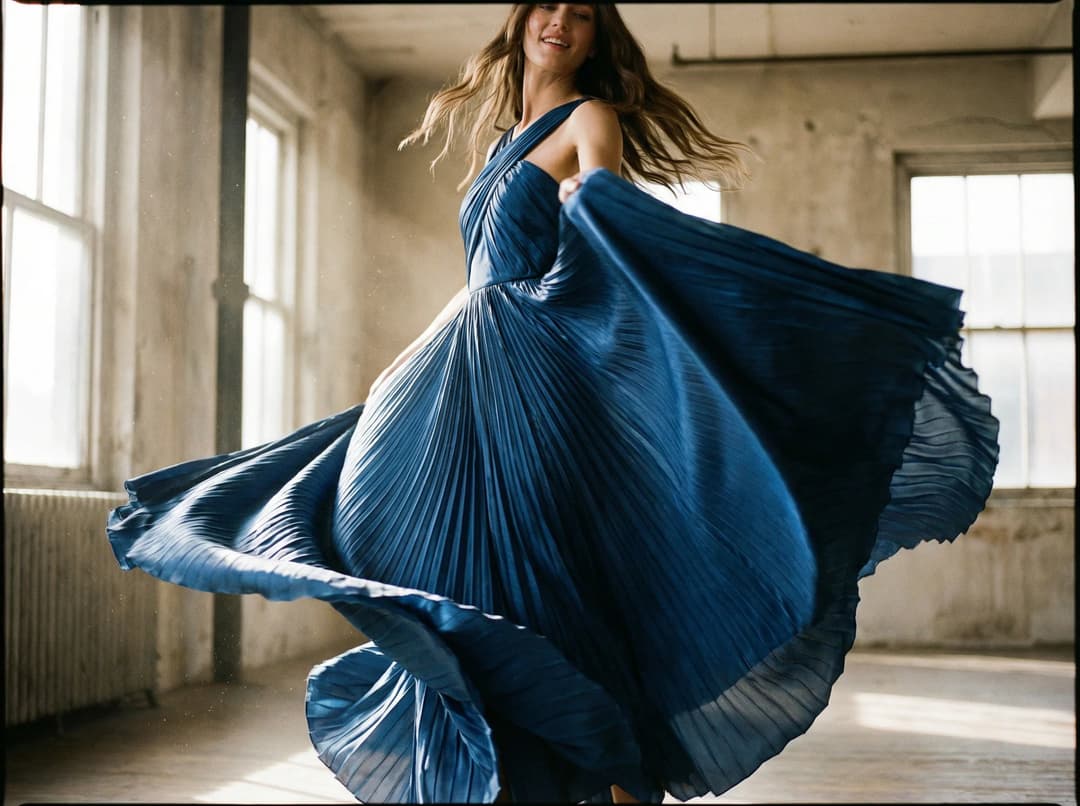
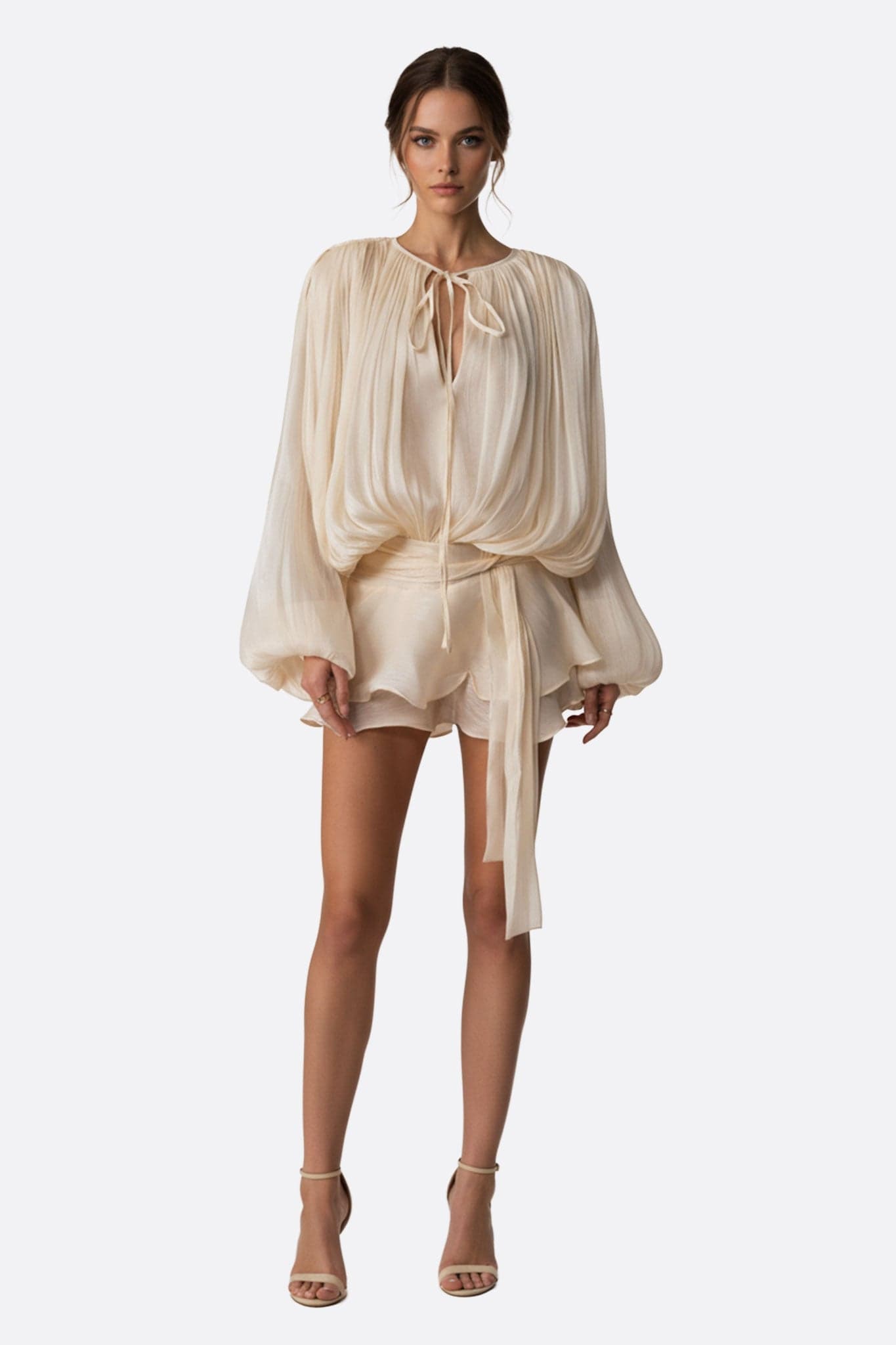
This sensation of lightness and freedom of movement is also found in certain dresses with airy materials, similar to those we naturally choose for more relaxed contexts.
Some long dresses, designed in fluid materials, precisely allow for this type of continuous movement and sensation of lightness, without constantly reminding of the body's presence.
A pleasant material is almost unnoticeable. It accompanies the body without enveloping it excessively, it allows air to circulate, it reacts naturally to gestures. Conversely, a fabric that is too stiff or too compact constantly reminds of its presence. It can create a feeling of heaviness, warmth, or lack of freedom, even if the cut is well thought out.
The weight of the fabric plays an essential role. A fluid crepe, with a balanced weight, provides structure while maintaining enough flexibility to follow movements. A well-crafted viscose offers a feeling of freshness and softness, ideal for those looking for an easy-to-wear dress for everyday use. On the other hand, some very shiny or too thick materials can accentuate the perception of volume and reinforce discomfort, especially when they lack breathability.
The way a material reacts to movement is just as important. A fabric that slightly ripples when walking or naturally repositions itself after sitting allows one to forget the dress. We have often found that this type of textile behavior immediately soothes the posture: gestures become freer, breathing more natural. It is a strong signal that the material is suitable.
The relationship between the material and the skin must also be considered. Some fibers catch, mark, or wrinkle quickly, which can create a constant worry: fear that the dress will wrinkle, stick, or highlight sensitive areas. A more forgiving material, capable of maintaining a beautiful appearance without constant monitoring, greatly contributes to psychological comfort.
At Misciano, the choice of materials is never made solely on their appearance. We test them in real situations, in movement, sitting, standing, on different silhouettes. This approach has taught us that a comfortable dress always starts with a well-chosen material. When it is suitable, it allows the body to relax and the person to focus on what they are experiencing, rather than on what they are wearing.
Dress cuts that free the silhouette
Rather than talking about fixed body types, we prefer to observe how a cut interacts with the body. Some lines elongate, others soften, and still others secure. A wrap dress, for example, naturally adapts to the body's variations, while a too-structured cut can accentuate rigidity.
The cut of a dress directly influences how one stands, moves, and perceives oneself. A suitable cut does not seek to transform the body but to give it the space needed to exist naturally. During our fittings, we observe that some women instantly relax when the cut stops constraining their movements.
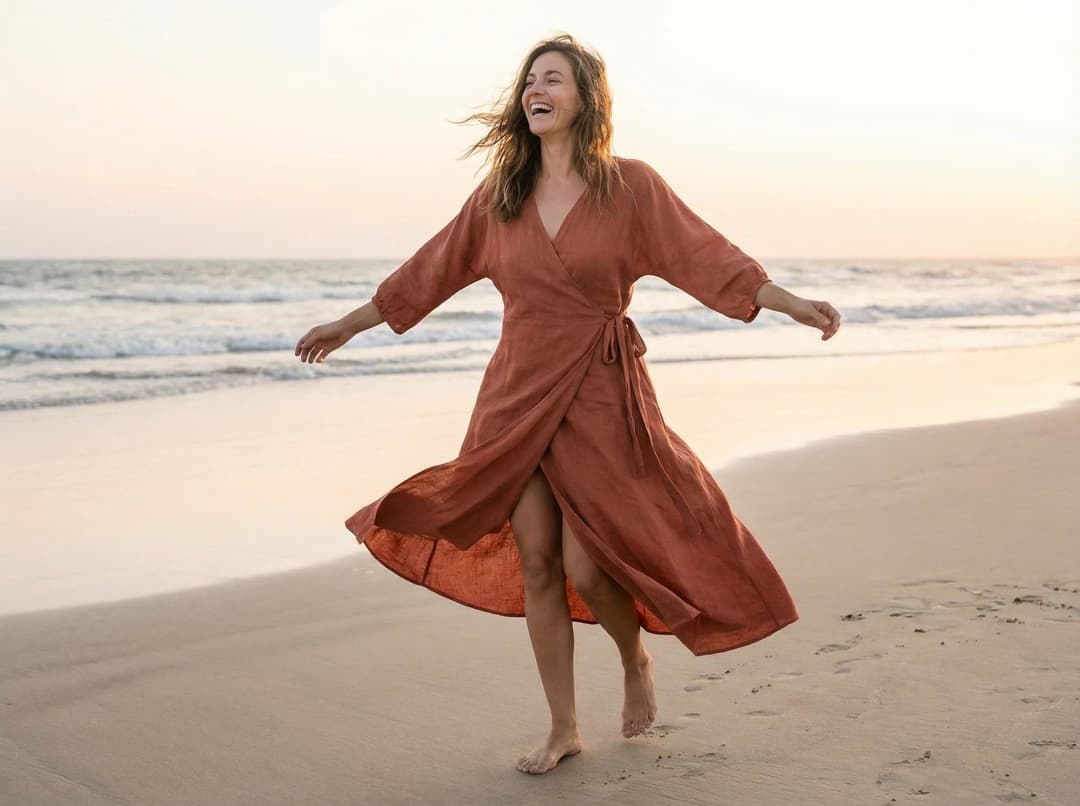
Dresses that free the silhouette often have one thing in common: they adapt rather than impose. A slightly adjustable waist, a line that follows movement without freezing it, or a construction designed to accompany the body's variations make all the difference. Conversely, a too-rigid cut can create a feeling of constant vigilance: fear of standing poorly, moving too much, or having to constantly readjust.
Some lines also allow for rebalancing perception without drawing attention. A wrap cut, for example, naturally adjusts to the body shape and evolves with it throughout the day. Dresses with panels or discreet pleats create a visual fluidity that soothes the eye and the feeling. These details, often invisible at first glance, are essential for feeling comfortable over time.
At Misciano, we favor cuts that leave room to breathe. Not to hide, but to accompany. A successful dress is one that allows you to forget its presence after a few minutes, one in which movements become natural again. When the cut frees the silhouette, the relationship with the garment changes: the dress ceases to be an object to monitor and becomes a discreet support for personal expression.
Common mistakes that increase discomfort in a dress
Relying solely on a size, choosing a dress too rigid "for safety," or following a rule without listening to it are common mistakes. During our adjustments in the workshop, we find that a few centimeters or a different fabric are sometimes enough to completely transform the feeling.
Some mistakes occur regularly when it comes to choosing a dress, and they all have one thing in common: they increase discomfort without being immediately noticed. The first is wanting to "correct" one's body at all costs. By trying to hide, excessively structure, or constrain certain areas, one often ends up creating permanent tension. The body stiffens, the posture closes, and the dress becomes a source of monitoring rather than support.
Another common mistake is relying solely on the indicated size. Sizes vary from one brand to another, and a dress may fit perfectly in width while posing a problem elsewhere. During our adjustments in the workshop, we regularly find that a simple shift at the waist, bust, or hips is enough to completely transform the feeling. Ignoring these nuances often leads to wearing a dress that leaves no room to breathe.
Choosing a dress too rigid "to feel supported" is also a common trap. While a structure can reassure at the first fitting, it quickly becomes uncomfortable over time. A too-structured dress forces you to control your movements, suck in your stomach, or limit certain gestures. This constraint gradually sets in and ends up diverting attention from the essential.
Finally, following rules too strictly without adapting them to oneself can accentuate the gap. Advice is useful when it serves as a guide, but it becomes counterproductive when it prevents listening to one's body. Avoiding these mistakes does not mean giving up elegance, but accepting that comfort and freedom of movement are as important criteria as appearance.
How to make a more peaceful choice
A peaceful choice begins with listening to oneself. Taking the time to move, sit, and walk in a dress allows for evaluating more than just the simple reflection. In our fittings, these moments often trigger the real click. Taking this time also allows you to explore different dresses and feelings, without an immediate goal, simply to identify what provides a sense of rightness.
Taking the time to test a dress in motion is essential. A dress that seems fine when still can become uncomfortable as soon as you move. Conversely, a piece that naturally accompanies movements, that adjusts effortlessly and does not require constant adjustment, sends a clear signal: it is suitable for real use. It is often these subtle details that make the difference between a dress worn once and a dress chosen to be worn again.
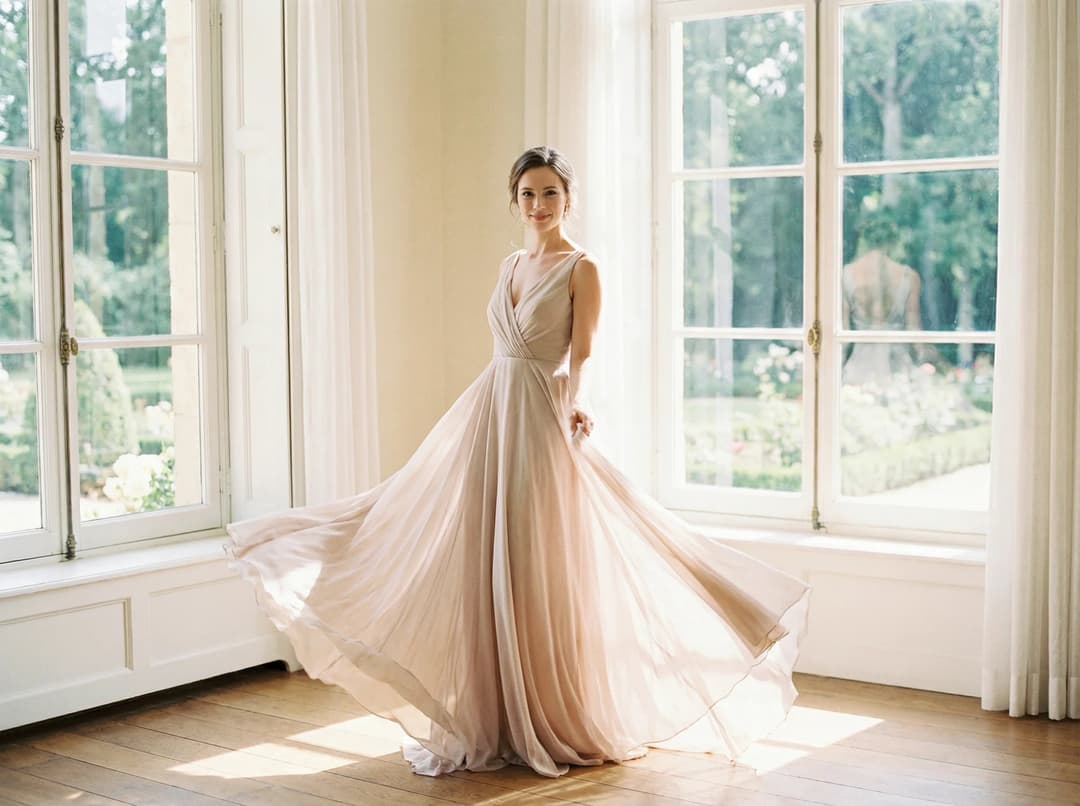
A peaceful choice also involves distinguishing external perception from internal feeling. Many women tell us that they sometimes choose a dress by wondering what others will think, before asking themselves how they will feel. Reversing this order profoundly changes the experience. When comfort and the feeling of rightness become priorities, the relationship with clothing softens.
It is also important to allow oneself to let go. A dress can be beautiful, well-cut, meet the criteria, and yet not be suitable at a specific moment. Letting go is not a failure; it is a form of self-respect. In our workshops, we often see clients relieved as soon as they accept to set aside a piece that does not bring them serenity.
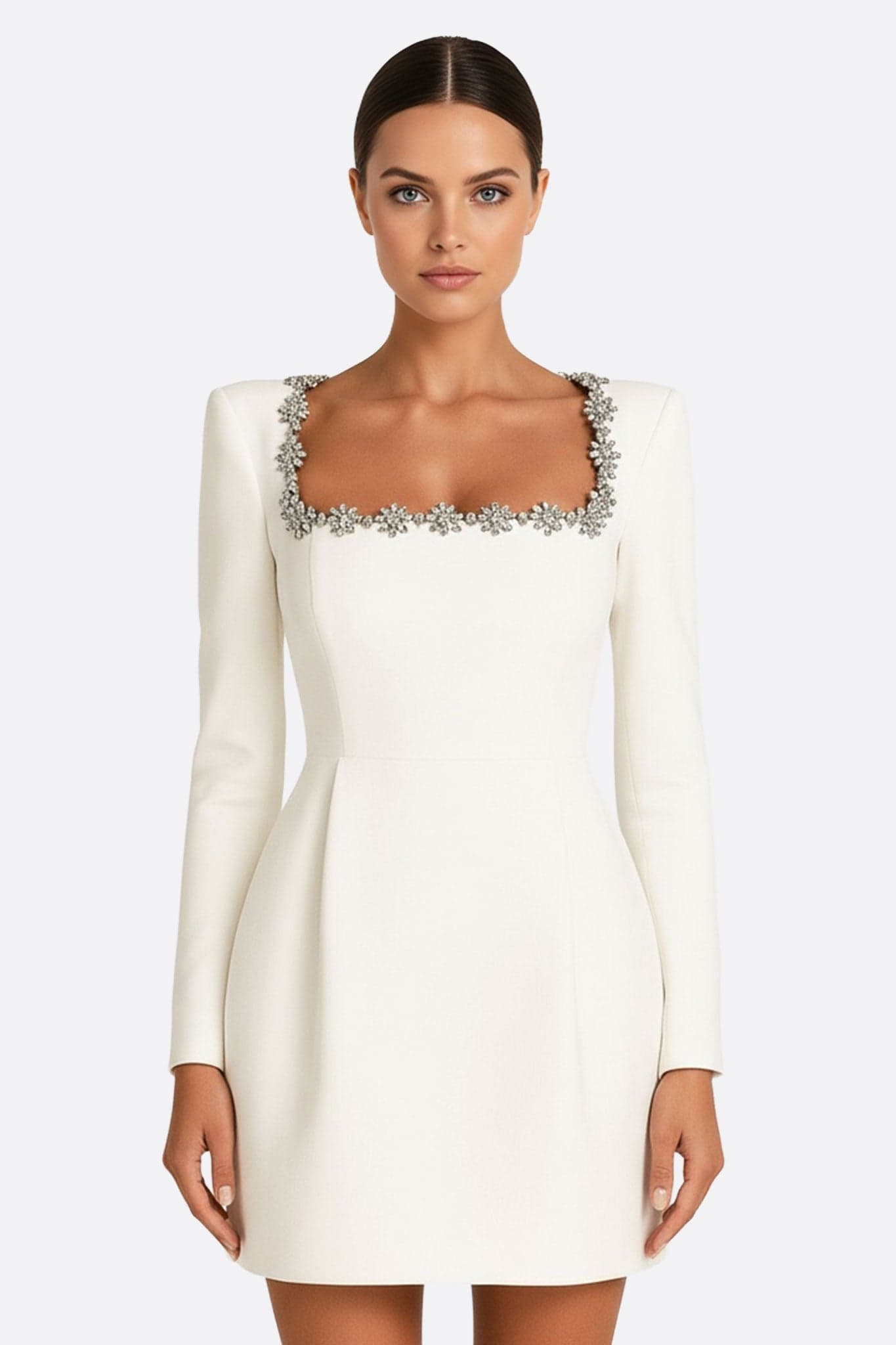
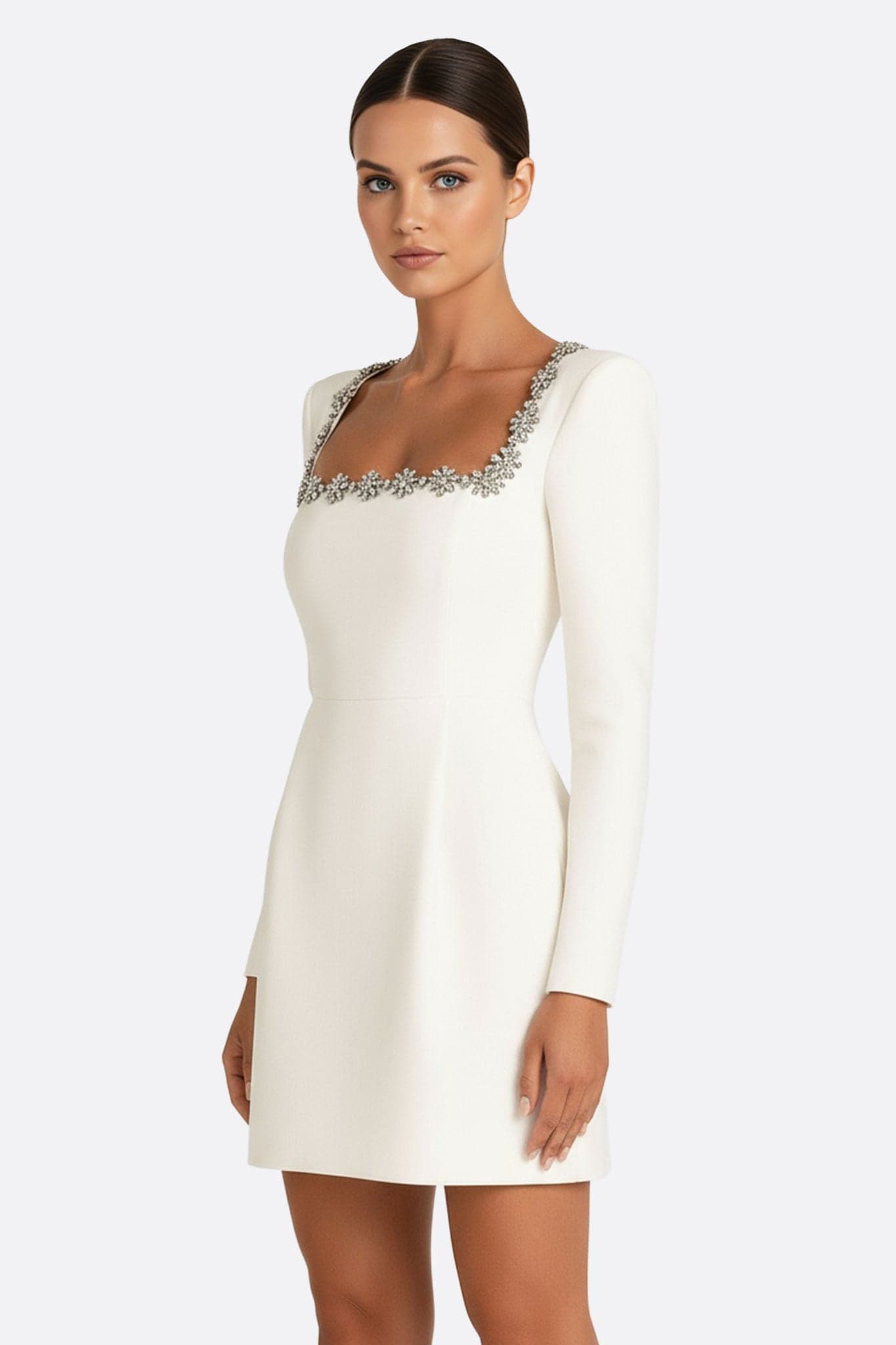
Even in more formal contexts, it is possible to favor dresses designed to accompany the body, without rigidity or tension, when comfort remains a central criterion of choice.
Finally, making a peaceful choice means accepting that feeling takes precedence over theory. Rules, advice, and trends can guide, but they never replace listening to sensations. A successful dress is one that gradually fades away, giving way to the person wearing it. When this threshold is crossed, the choice ceases to be a source of tension and becomes a simple, almost natural act.
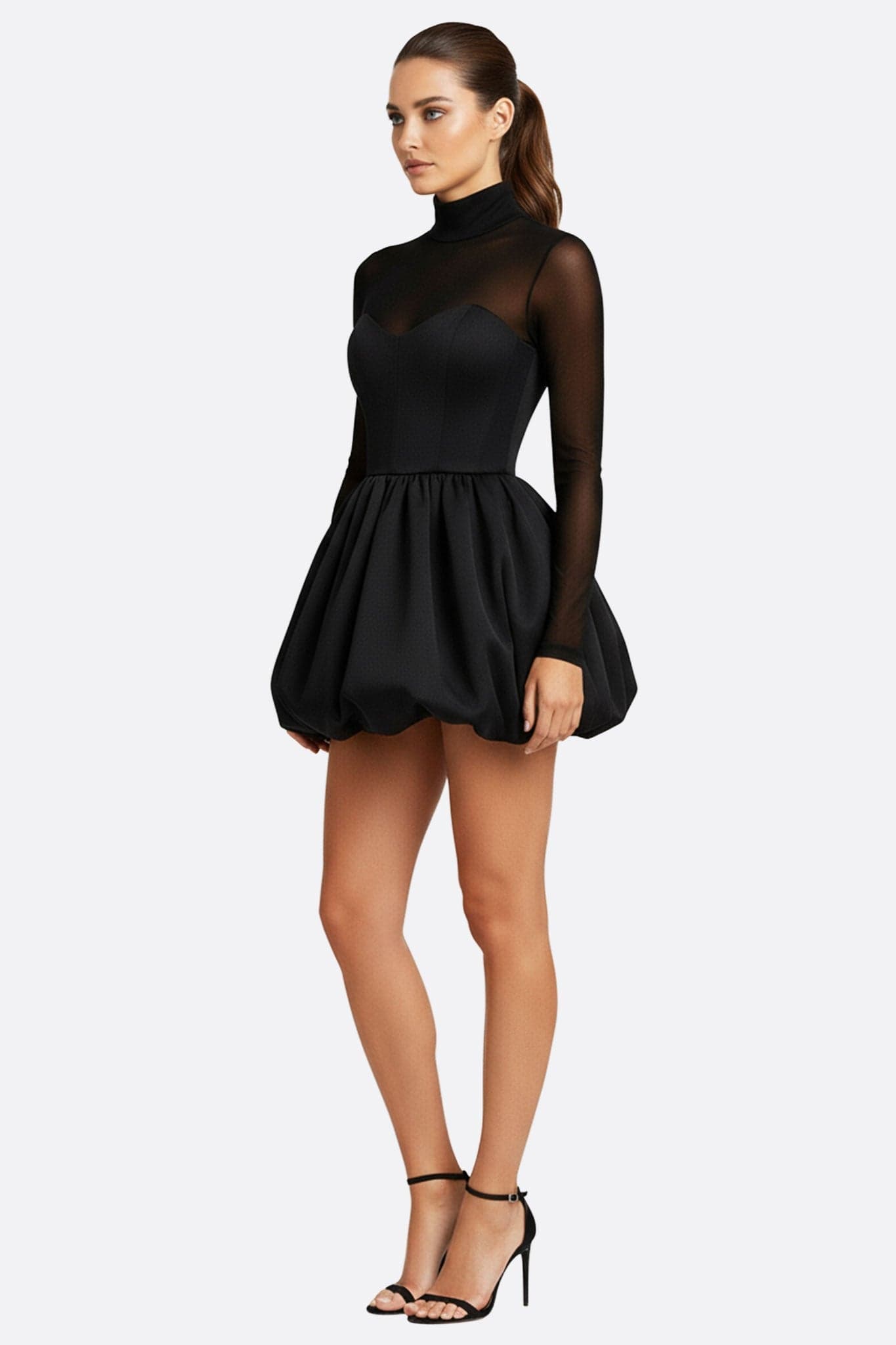
Some stylistic approaches also show that well-thought-out short dresses can create a balanced and natural line, without trying to constrain the body or adhere to fixed rules.
Building a more serene relationship with your wardrobe
The ideal dress is not the one that transforms, but the one that accompanies. Accepting that every body evolves, that every day is different, allows for building a softer and more sustainable wardrobe.
The advice offered is based on our professional experience and real customer feedback. Every woman remains the best judge of her feelings.
Building a more serene relationship with your wardrobe begins by accepting that clothing is not there to judge the body. Too often, the dress is perceived as a test: do I fit into it, does it flatter me, do I look like the expected image? This logic turns the wardrobe into a space of tension, whereas it should be a place of support and confidence.
Through fittings, we have observed that serenity settles in when the wardrobe is thought of as a set of allied pieces. Dresses chosen for their ability to accompany movements, to adapt to body variations and different times of the day. These pieces do not seek to freeze an ideal silhouette, but to follow a living and changing reality.
A peaceful wardrobe also relies on a form of continuity. When a dress is worn, worn again, then naturally integrated into daily life, it ceases to be an exceptional object and becomes a reassuring reference. Conversely, pieces bought under pressure, to meet an external expectation or an abstract rule, often remain at the back of the closet, laden with latent discomfort.
Learning to recognize what truly works for oneself allows for easing future choices. Over time, certain sensations become reliable indicators: the freedom of movement, the way the dress becomes forgettable, the ease with which one projects oneself into it. These personal benchmarks are worth more than any classification or trend.
Building a more serene relationship with your wardrobe is not about reducing your demands, but shifting them. It is no longer about trying to match an image, but about cultivating coherence between the body, the clothing, and the moment lived. When a dress fulfills this function, it becomes much more than a style element: it accompanies, it supports, and it allows you to simply feel in place.
Stylistic note: The reflections shared here are based on our professional experience and feedback from clients encountered during real fittings. Every relationship with clothing is personal; feeling always remains the best guide.

Article by Maryna Svistunova
Published on 01/05/2026 at 13:45
About the author
I am the editorial director of Misciano Paris. I define the editorial line with the conviction that fashion must be inscribed in time, with demand, coherence, and sincerity.
→ Learn more about Maryna Svistunova