
Square silk size 70 90 45: how to choose the right dimension
Our silk squares in stock
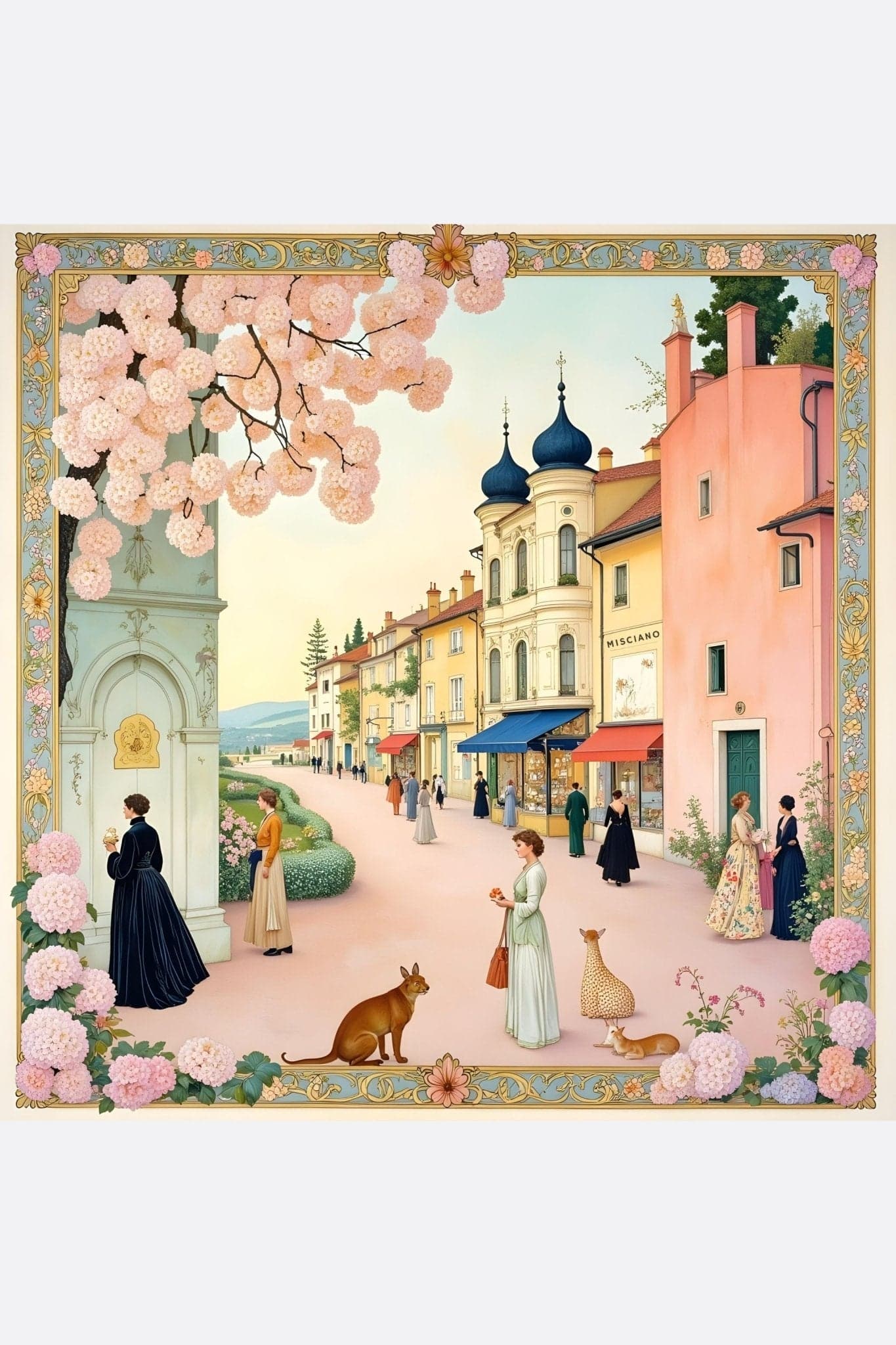
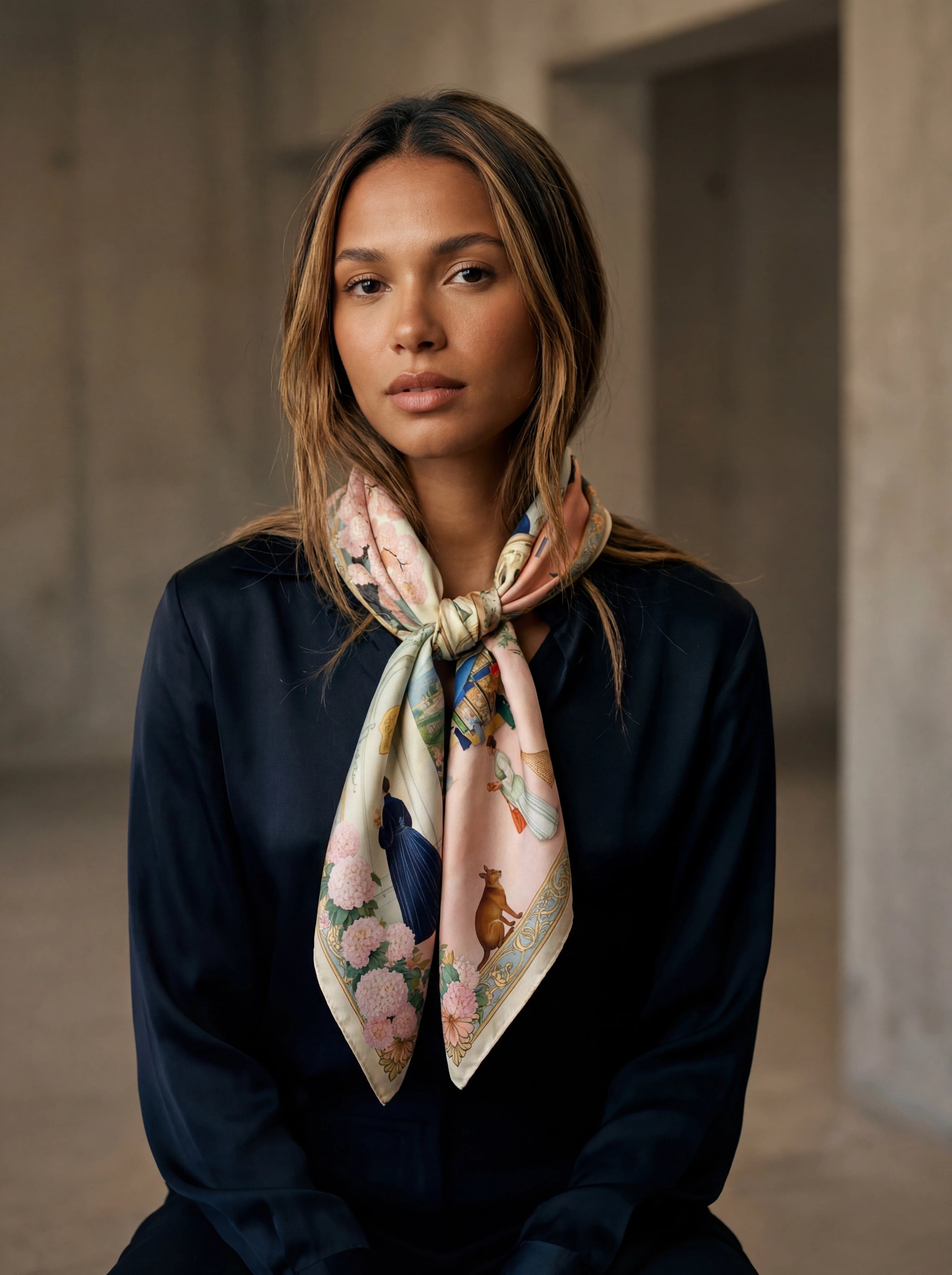
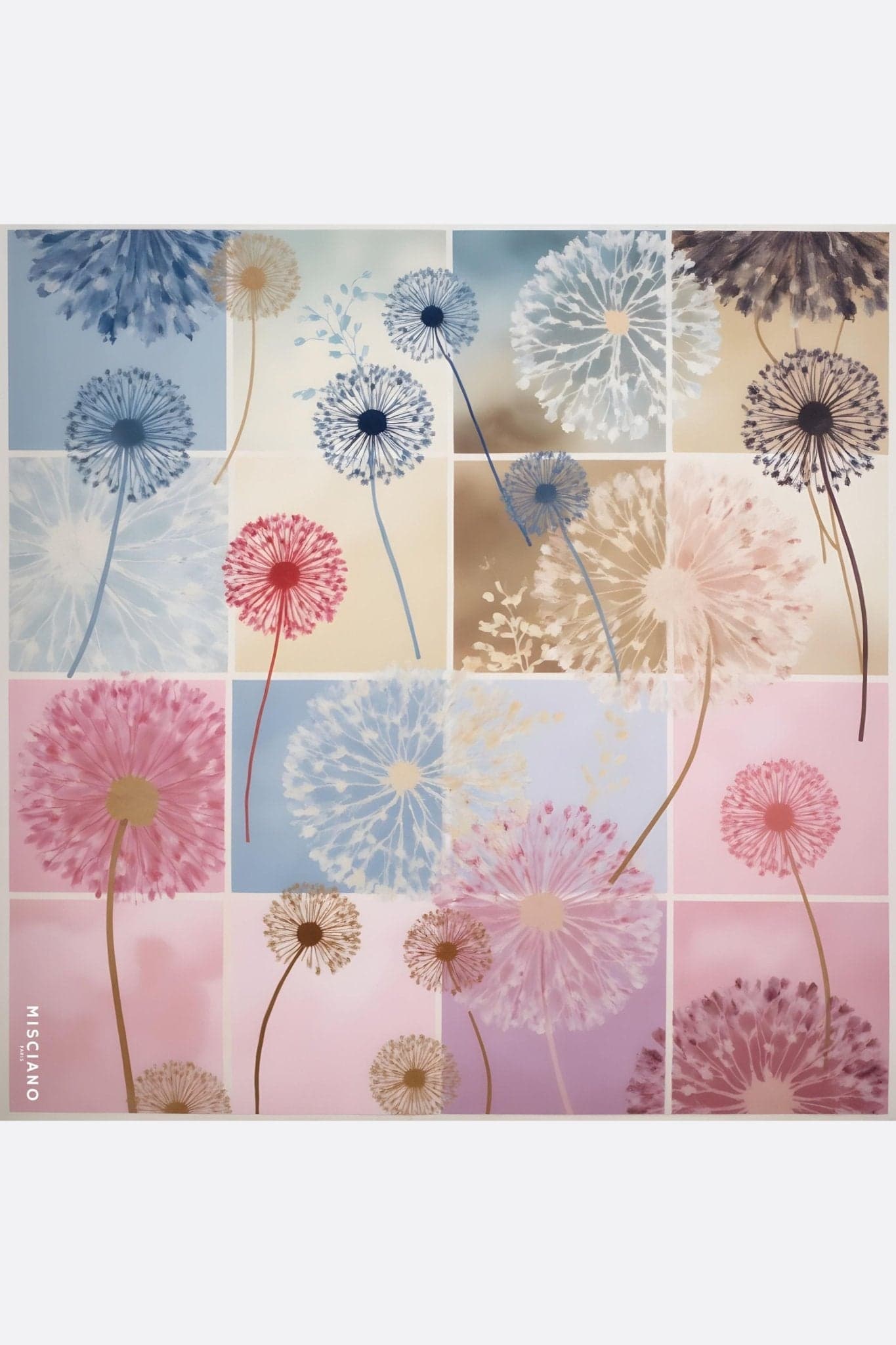

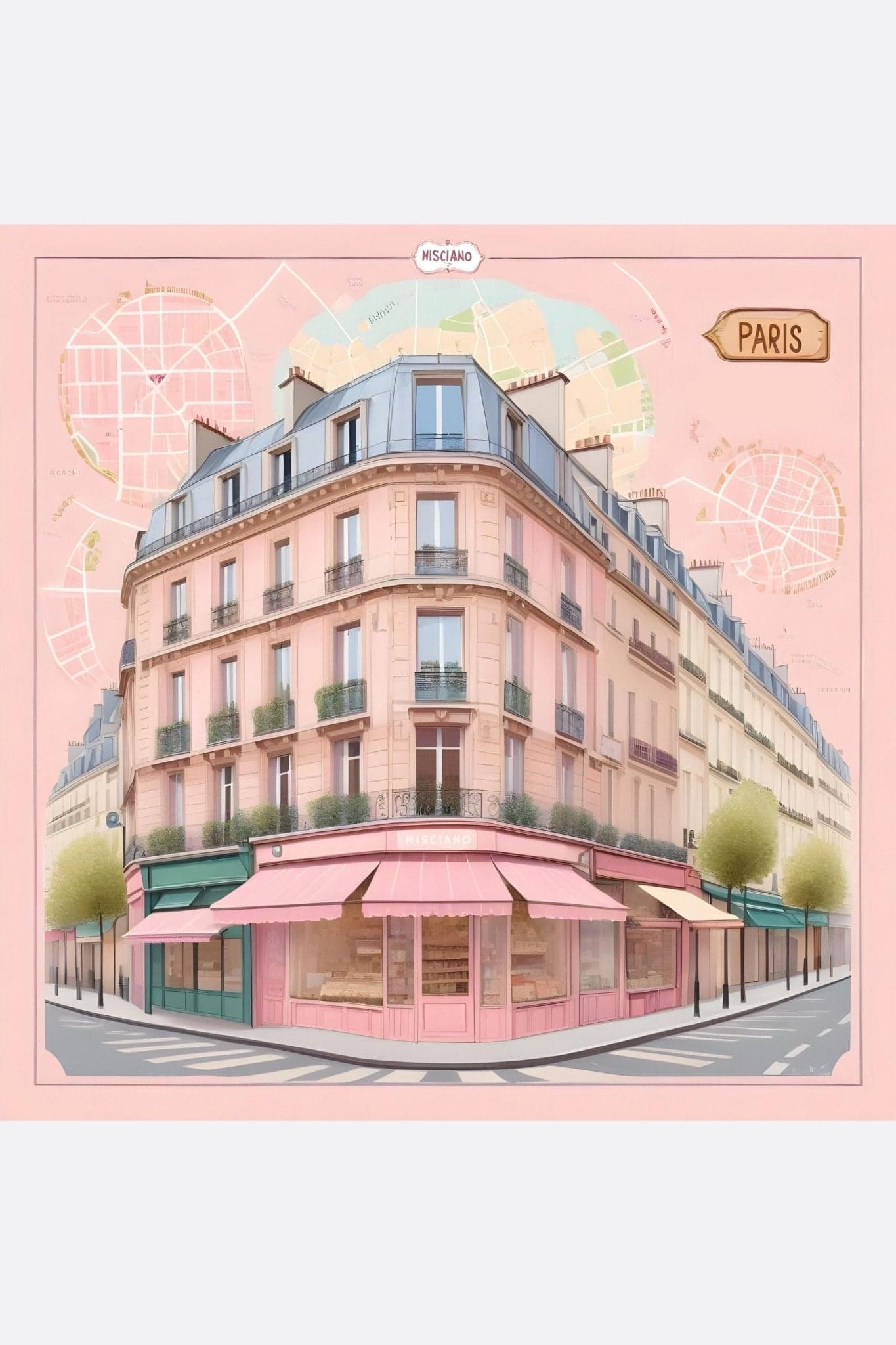
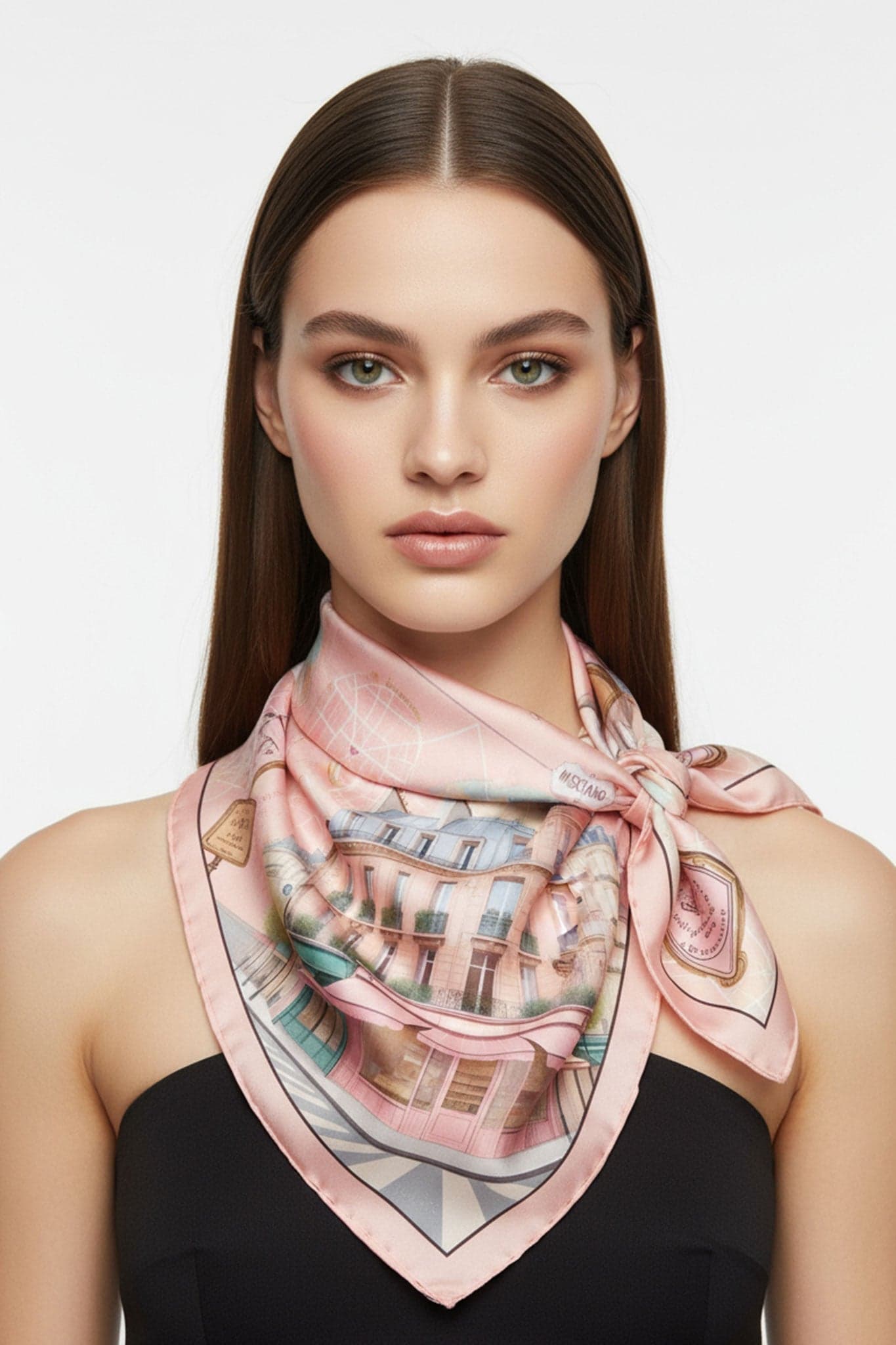
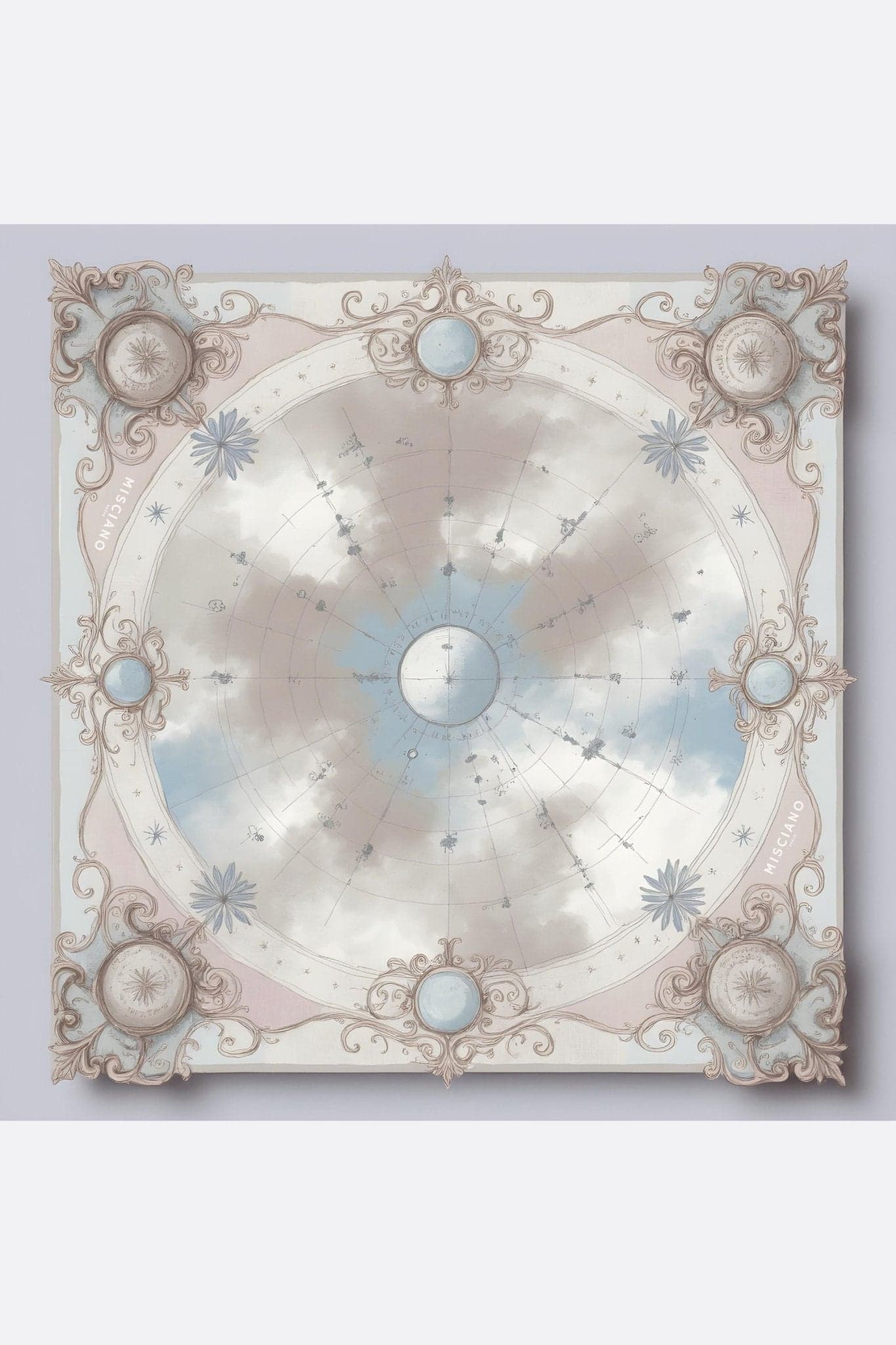
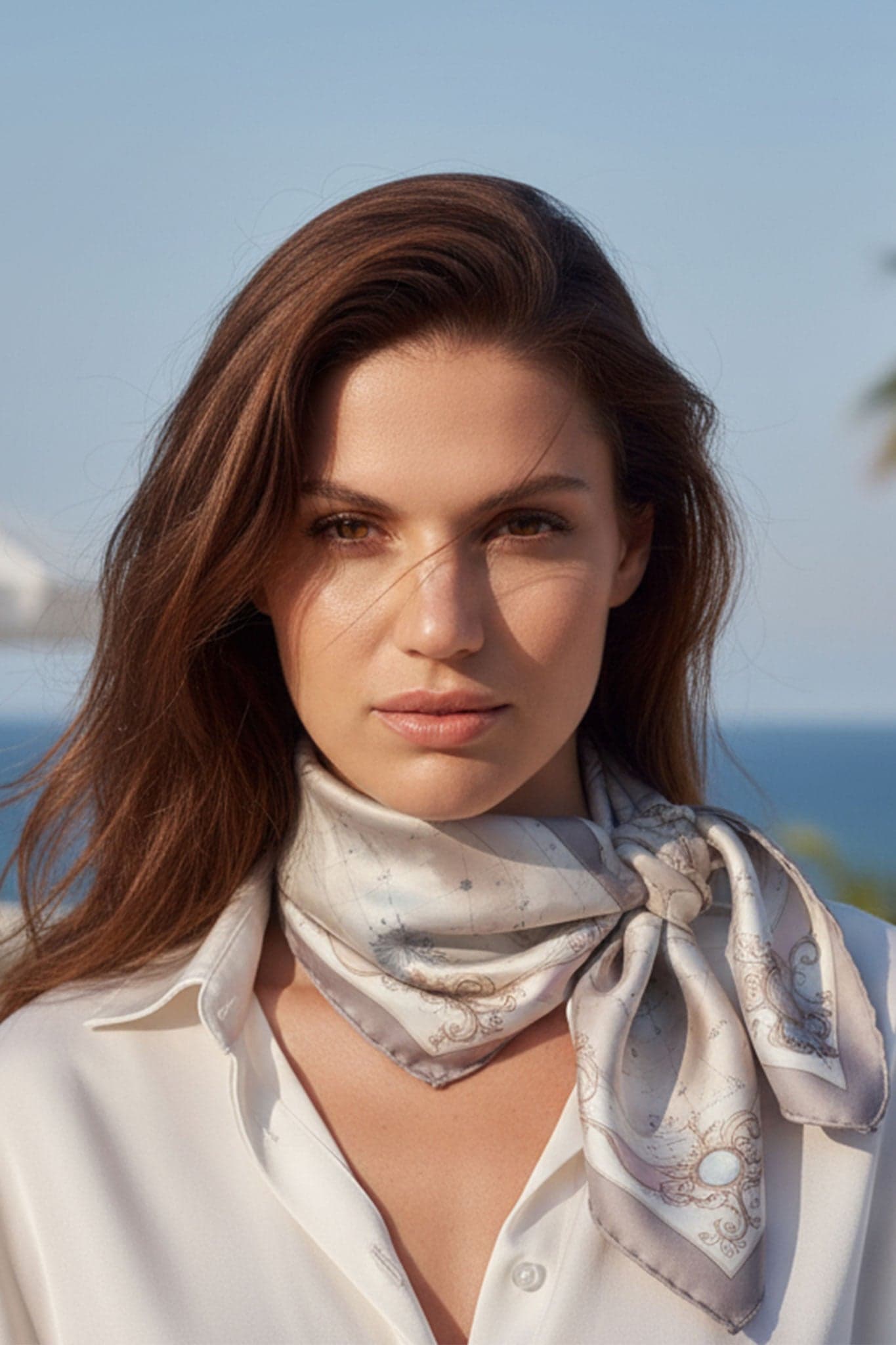
You hesitate between 45, 70, and 90 because, in photos, everything seems "wearable," but when tying, the result doesn't have the same drape or hold. A silk square that's too small pulls and marks the neck, while one that's too large slips, overloads, or lacks precision.
Each size now has its own page: small 50x50 squares, 70x70 squares, 90x90 squares, large 110x110 squares and twillys.
The right size is chosen less "by taste" than by exact use: type of knot, area worn (neck, hair, bag, wrist), silk thickness, and fabric structure degree. In this article, we clearly decide: dimensions 45, 70, and 90, what each dimension is for, how to anticipate the look on the body, and how to avoid mistakes that ruin the style.
45 cm: the precise size for neat knots (neck, wrist, bag handle)
The 45 square is the dimension of precision. It doesn't seek amplitude: it aims for a designed, clean, readable result. Around the neck, it works when you want a "textile jewel" effect rather than a scarf. Folded into a triangle then rolled, it sits close to the throat, without excess material.
It's the size that allows a small, centered knot that doesn't spill over the chest. On a buttoned shirt, it slips under a collar without bulging: the silk becomes thin, almost graphic. Sensory-wise, a 45 in fine silk has this fresh and dry touch at first, then a soft warmth as it stabilizes against the skin.
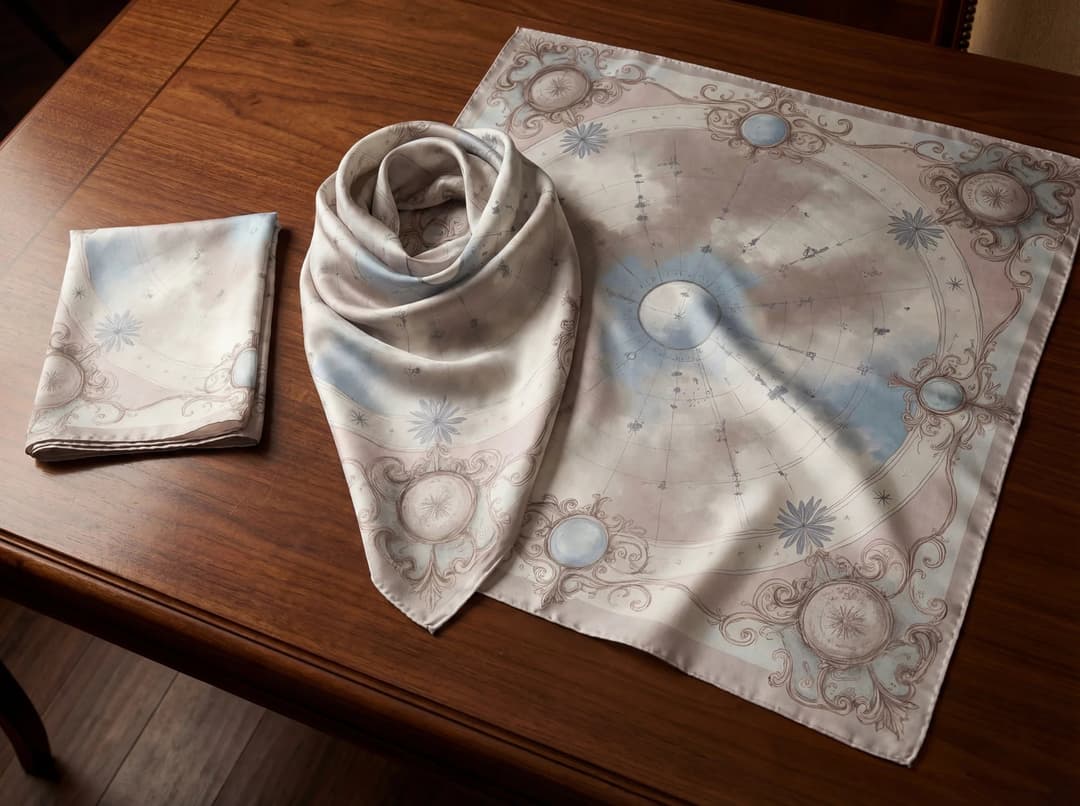
The key: the 45 requires rather lively silk (slightly firm hand, good fold memory). Too supple, it becomes accordion-like and loses its design; too thick, it becomes rigid and "rises" under the chin. In terms of uses, it's the ideal size for:
- Wrist: one turn + flat knot, or a "double" knot if the silk is thin. The result is neat, like a ribbon.
- Bag handle: tied in two or three points, it protects the handle and adds a touch of color without overwhelming the bag.
- Hair: ponytail, half-up, small knot on a bun. The 45 holds well, especially if you make a tight roll.
To avoid: trying for a large voluminous knot like a lavallière with a 45, the length is lacking, the knot pulls and comes undone. If you want a "flower" effect or a drape, switch to the 70. In summary, the 45 is the size of mastered details: a discreet but exact signature.
Similarly, Grace Kelly knew how to use scarves to accentuate her elegance, demonstrating that each size can transform a look according to the intended use.
70 cm: the perfect balance between versatility and elegance (neck, hair, light top)
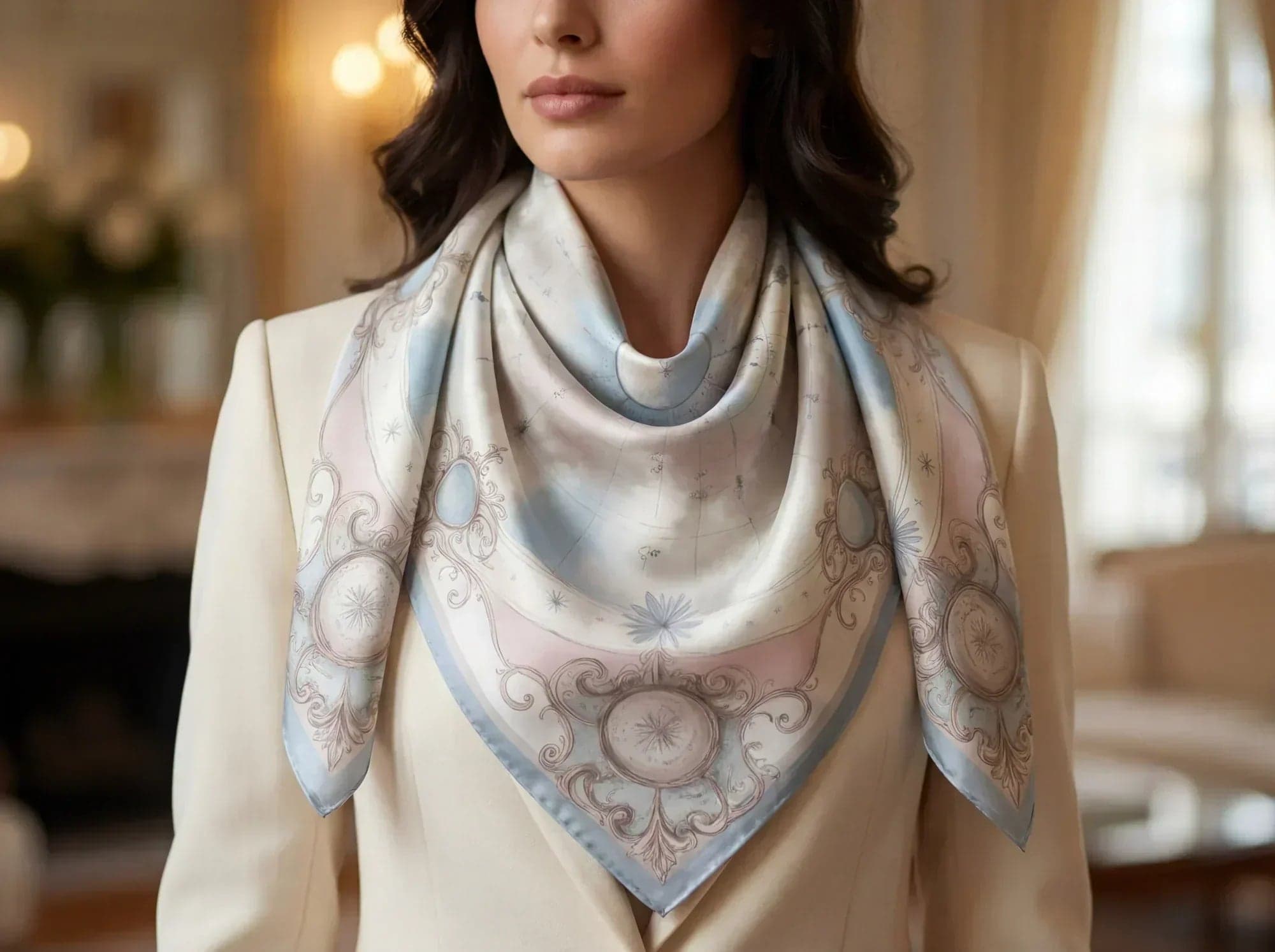
The 70 square is often the one that reconciles everyone: large enough to vary the ties, compact enough to remain easy for everyday use. It is the "balance" dimension: it creates presence without overwhelming.
Around the neck, it allows for several types of knots: the classic triangle (point in front), the rolled-crossed (short scarf effect), or the wider side knot. Where the 45 creates a point, the 70 creates a line: it follows the collarbone, softens a neckline, frames the face.
To choose a 70 well, consider the relationship between size and hand of the silk. A very fluid silk will give a more "draped" 70, which is easy to place but may slip if the knot is not secured. A more structured silk will give a more "architectured" 70, with pleats that stay in place and a point that falls neatly. These are different sensations: fluid = caress, movement; structured = hold, clarity.
Practically, the 70 is the best choice if you want:
- A visible but wearable neck knot: ideal with an open trench, a cardigan, a round neck.
- A hairband: folded into a band, it makes a comfortable headband, with ends to tie at the back or side.
- An extra "top" (depending on the desired coverage): tied in a triangle over a swimsuit or tank top, it adds a light layer, especially in fine silk.
The 70 is also the most forgiving size: if you are not an expert in folding, it forgives. Tension errors are less visible than with a 45, and it does not overload like a 90 if you are looking for a minimal effect. If your goal is to have a single square that does neck + hair + bag, the 70 is the most rational candidate.
90 cm: the iconic dimension for draping, bust, and constructed looks (but demanding)
The 90 square is the one that transforms an outfit: it brings volume, drape, a presence that is noticeable from a distance. It is the size of constructed silhouettes: worn around the neck, it can become a volume; worn on the shoulders, it almost becomes a stole; tied on the bust, it becomes a piece.
But this generosity comes at a price: the 90 requires intention. Without intention, it can slip, puff up, or give the impression that the silk square "wears" the person.
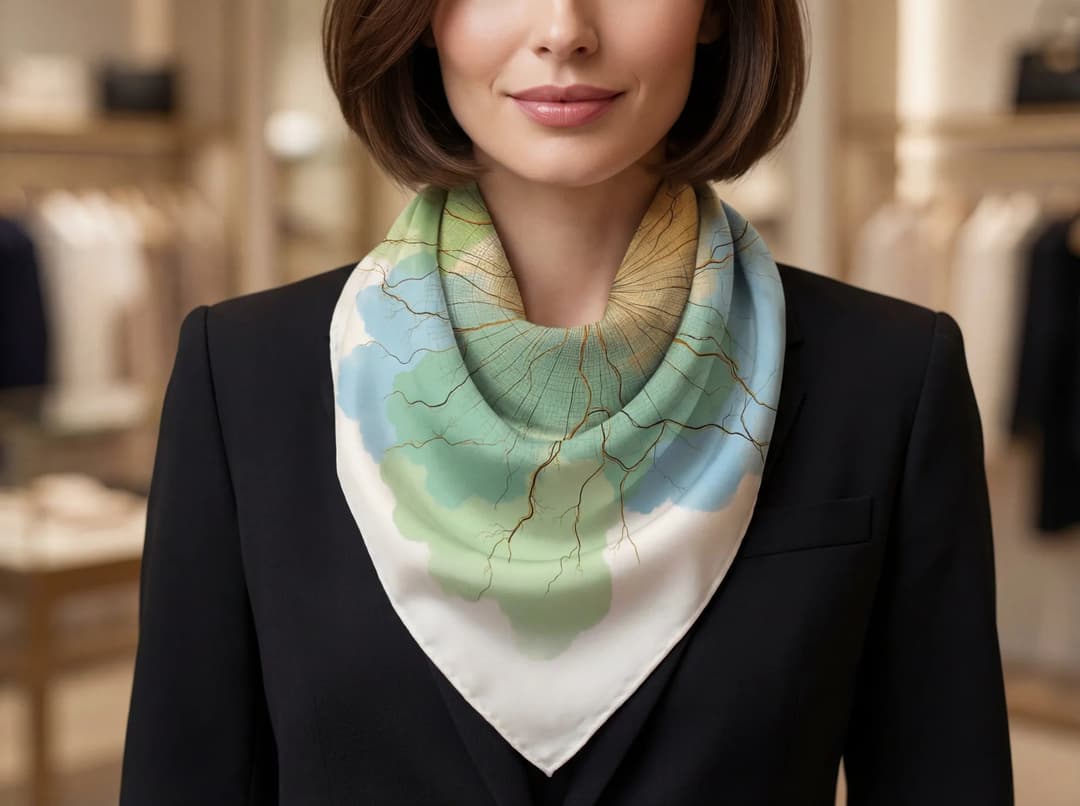
For the 90 to fall just right, monitor three parameters:
- The folding: an approximate fold creates unnecessary thickness. With a 90, folding into a square, then into a triangle, then rolling regularly changes everything.
- The tension of the knot: too tight, you create a mass under the chin; too loose, the square opens and slips.
- The material: a very fluid silk will give a "cloud" 90, superb in drape but more mobile. A firmer silk will give a more sculptural 90, with sharp angles.
Uses where the 90 excels:
- Worn in a triangle on the bust: over a white shirt, the point descends and structures the center of the look. The colors and patterns become a panel.
- In a wide neck loop: rolled wide, it creates a light cocoon feeling, without the warmth of wool.
- On the shoulders: worn as a mini-stole, it dresses up a simple top in the evening, with a fall that catches the light.
Note: the 90 is particularly flattering when you want to visually elongate (point in front) or balance a silhouette (volume on top). However, if your daily life requires speed and zero adjustment, the 90 can become too "lively". If you enjoy style gestures, folding, adjusting, repositioning, then it's your playground.
Choosing between 45, 70, and 90: Misciano method in 4 questions (and mistakes to avoid)
Based on more than a decade of in-store observations and feedback from passionate customers, the Misciano method relies on rigorous testing and proven manufacturing standards. It aims to translate artisanal expertise into measurable benchmarks for a size choice that combines aesthetics and functionality.
To choose the right silk scarf size, forget the "small/medium/large" logic and ask yourself four very concrete questions. This method avoids 90% of disappointing purchases, where the scarf is beautiful but stays in the closet.
1) Where will you wear it most often?
– Neck, in a discreet knot: 45 (or 70 if you want more presence).
– Neck, in visible triangle / point: 70 or 90 depending on the desired fullness.
– Hair: 45 (small knot) or 70 (headband).
– Bust / shoulders: 90 almost systematically.
2) What type of knot do you like?
– Flat, short, very neat knot: 45.
– Visible knot with ends or point: 70.
– Draped, volume, long point: 90.
3) What is your relationship with maintenance?
– Zero adjustment, stable hold: 45 or 70 structured.
– Movement, flexibility, lively gesture: 90 in fluid silk.
4) What effect do you want on the silhouette?
– Jewel effect, point of light: 45.
– Face framing effect / elegant line: 70.
– Central piece effect of the look: 90.
Common mistakes to avoid:
- Choosing a 45 to "do like the iconic looks": many drapes seen in photos require a 70 or a 90.
- Taking a 90 for bag/wrist use: too much material, thick knots, feeling of overload.
- Ignoring thickness: at the same size, denser silk ties "higher" and takes more volume.
If this analysis helps you understand which size to choose, it does not replace a more global reflection on the quality of a silk scarf. Size is just one parameter among others: the nature of the fiber, the weave, the density, the edge finish, and the durability all play an equally determining role in the final look.
To go further and learn to recognize a truly well-designed silk scarf beyond the simple format, we have gathered all these criteria in our reference guide: how to choose a silk scarf: the guide to combine elegance and quality.
Article by Alberto Alagna
Published on 08/01/2026 at 14:42
About the author
Passionate about textile craftsmanship and sustainable design, Alberto Alagna brings to Misciano a vision where elegance meets ethics. With his experience in high-end ready-to-wear, he shares his style advice and the behind-the-scenes of the Misciano house here.
→ Learn more about Alberto AlagnaOur silk squares