
Silk twill or satin square: which one to really choose
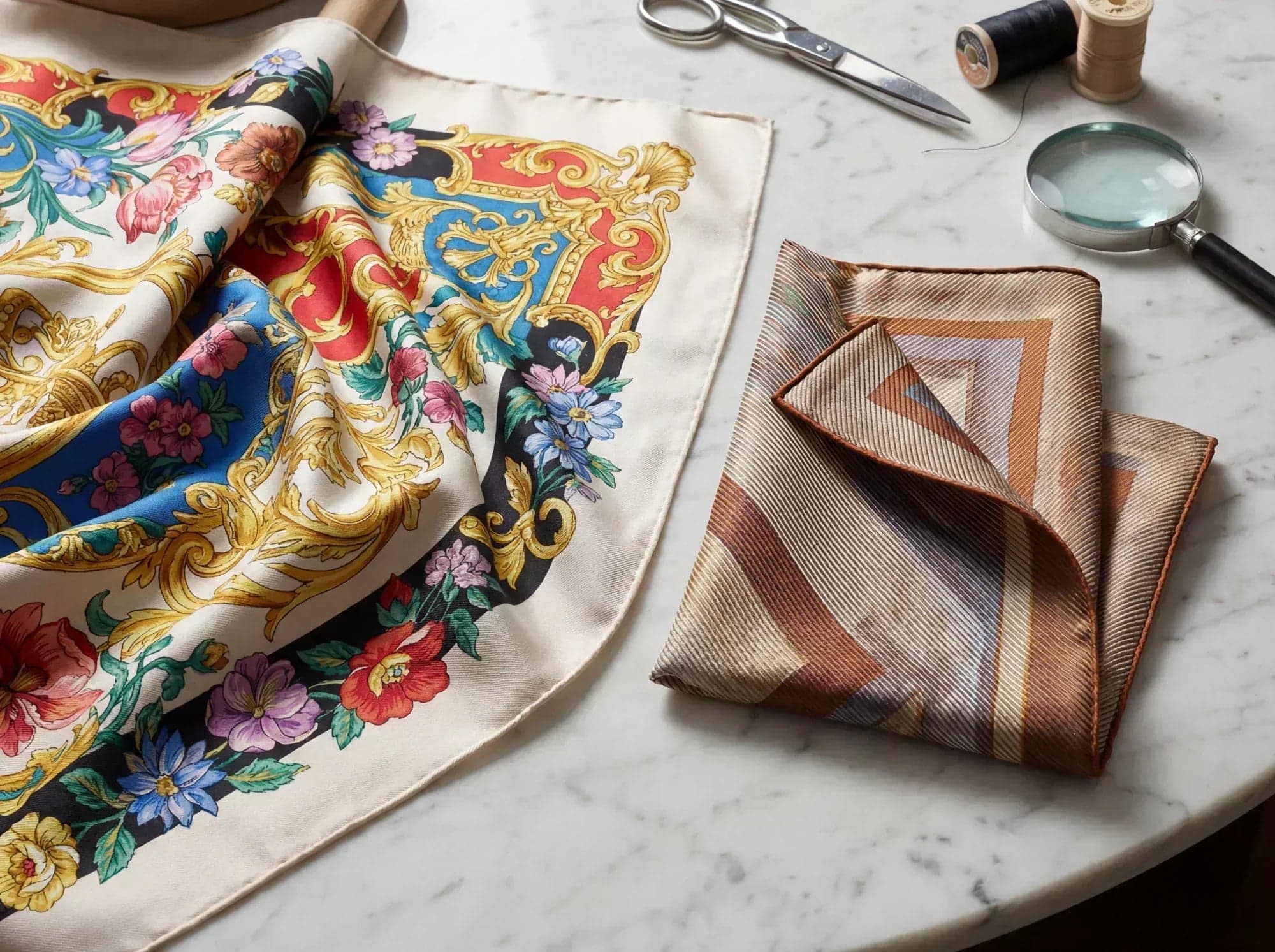
Our silk squares in stock
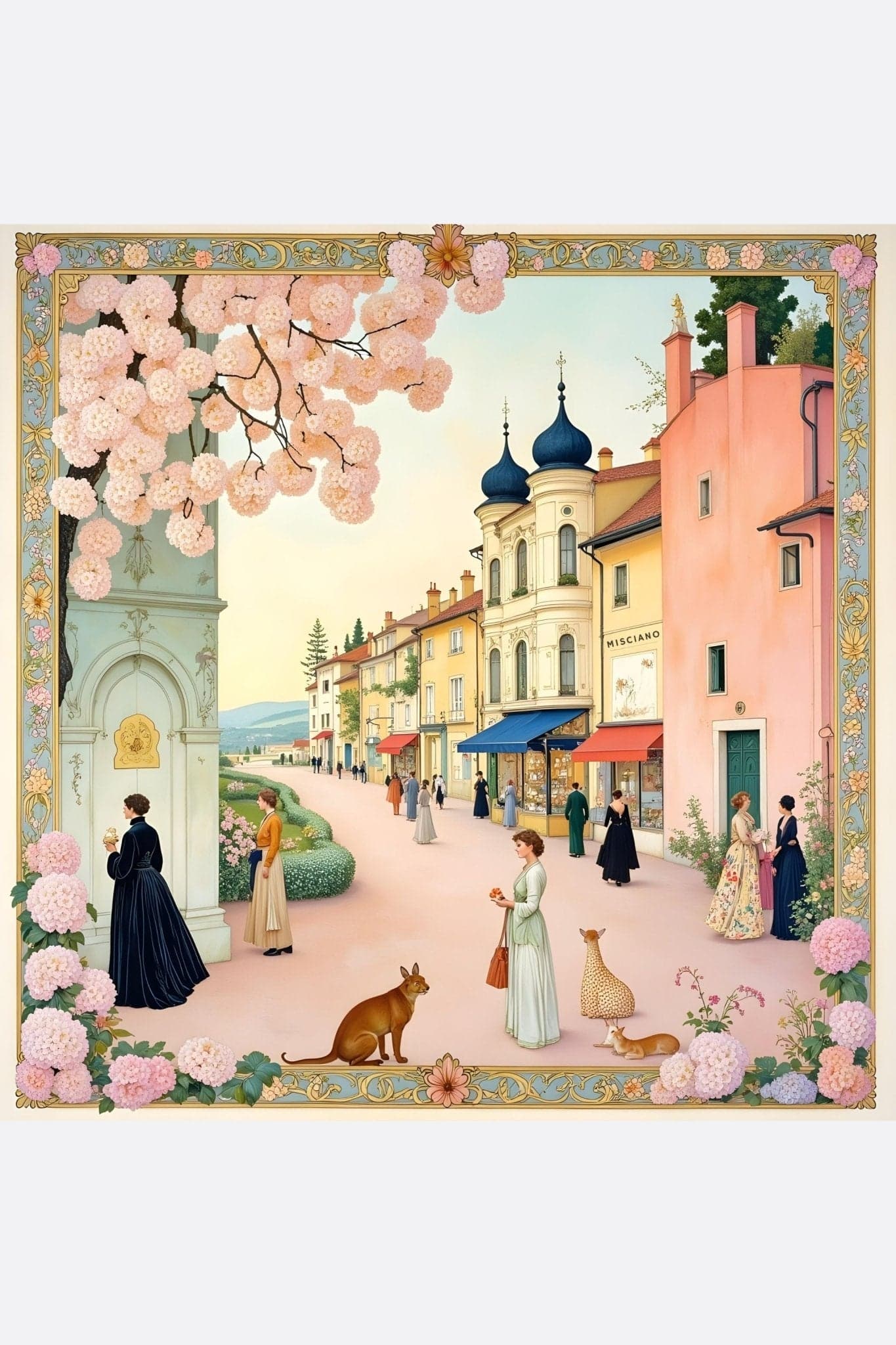
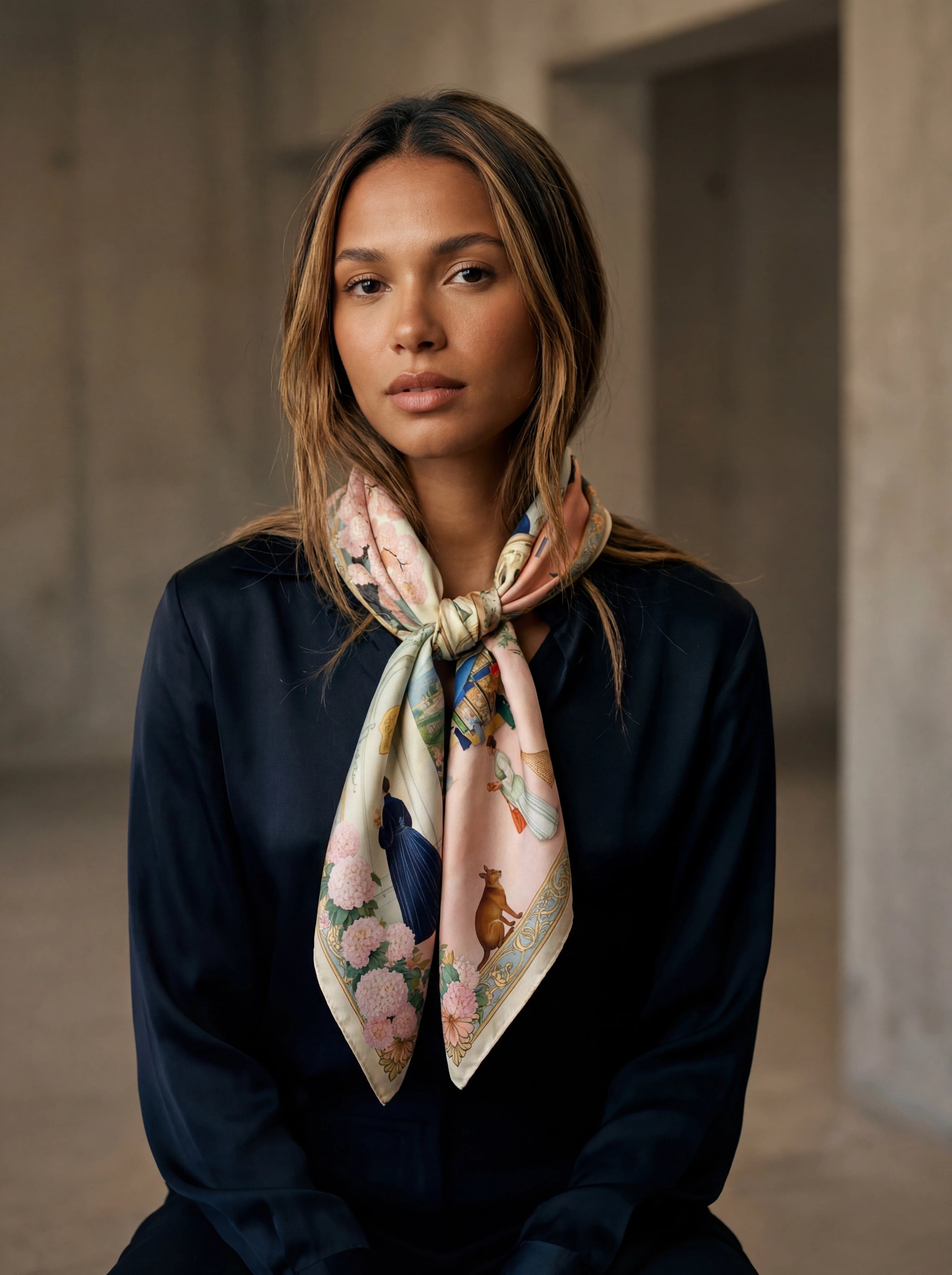
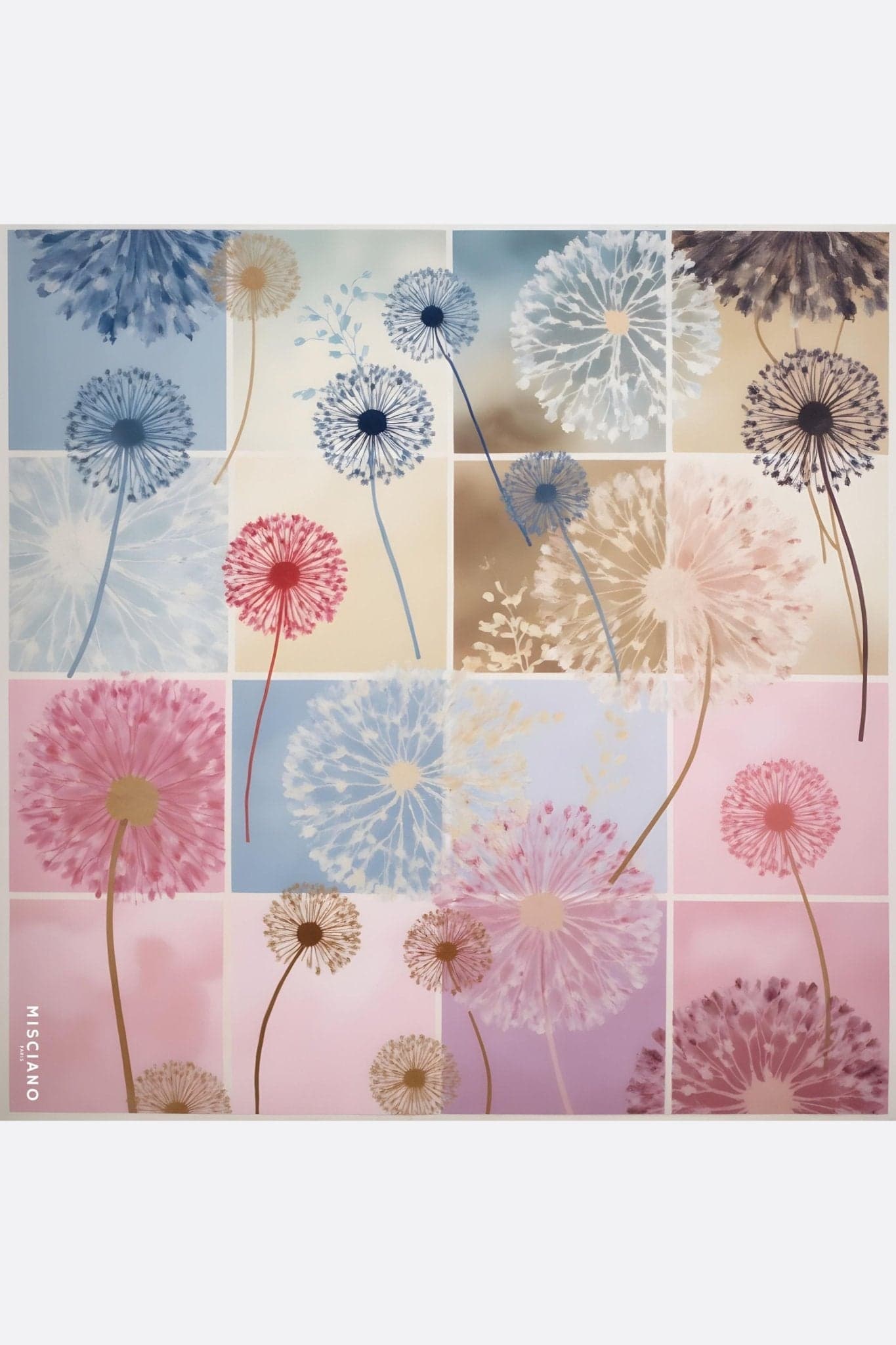

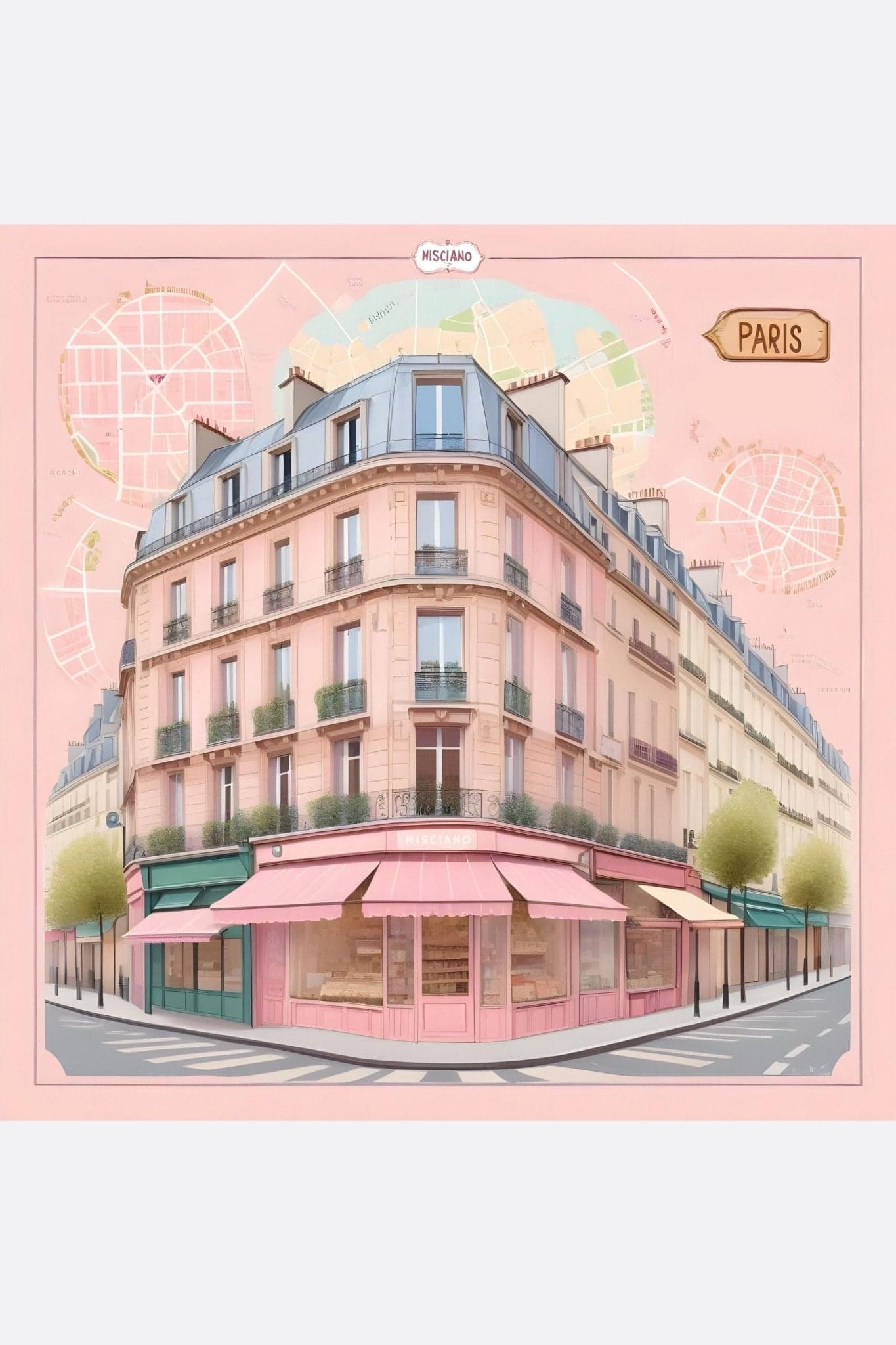
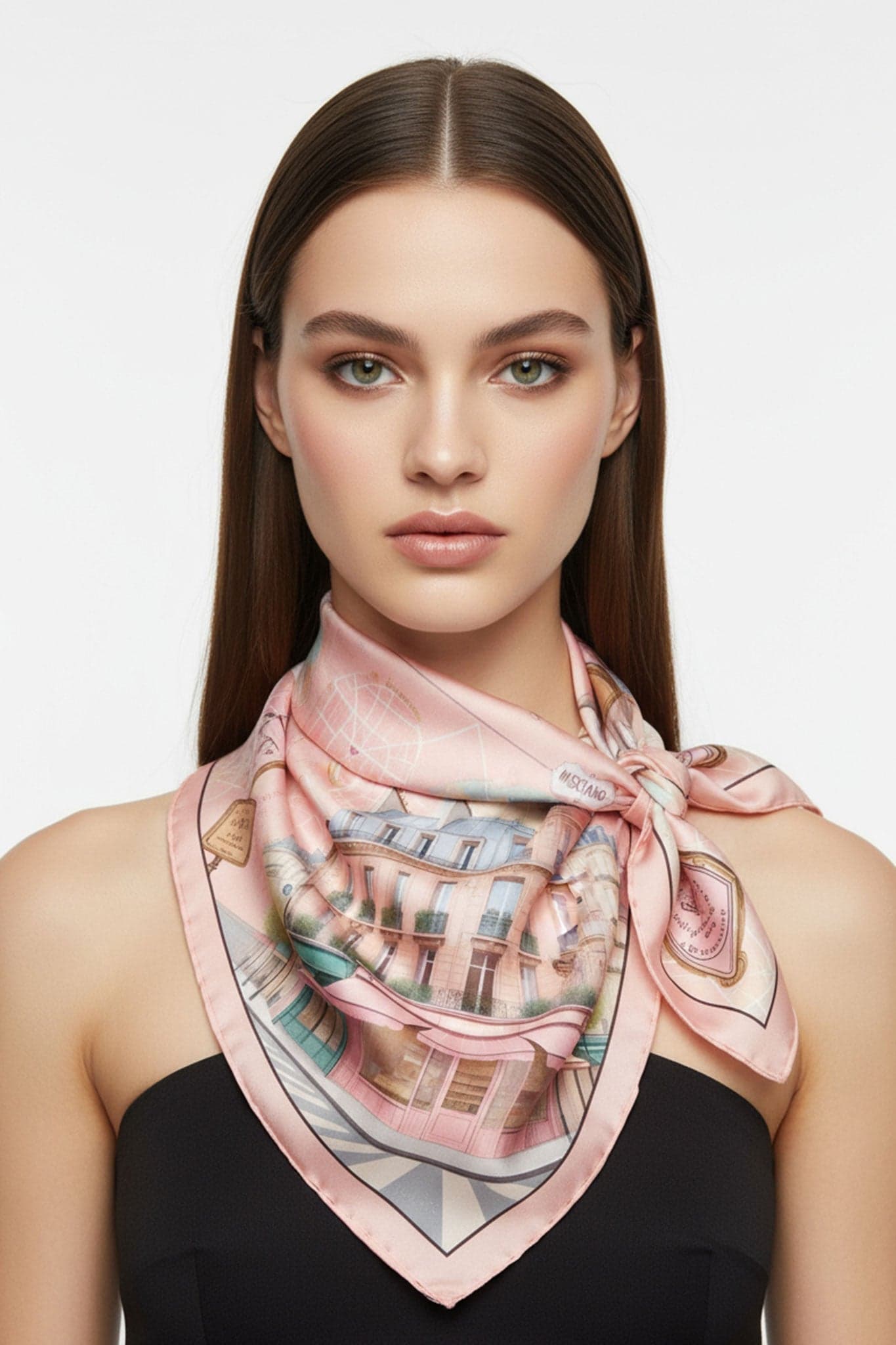
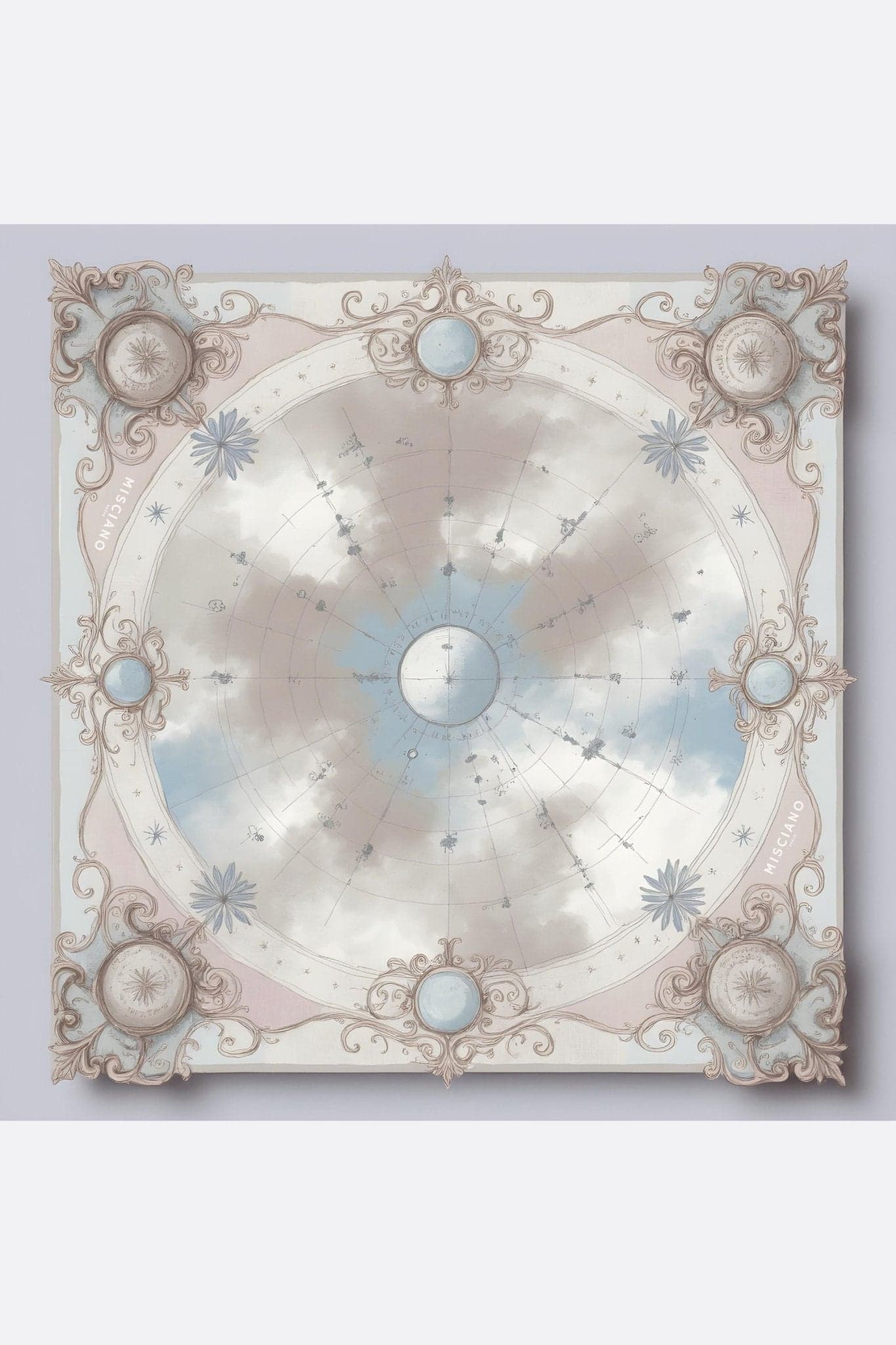
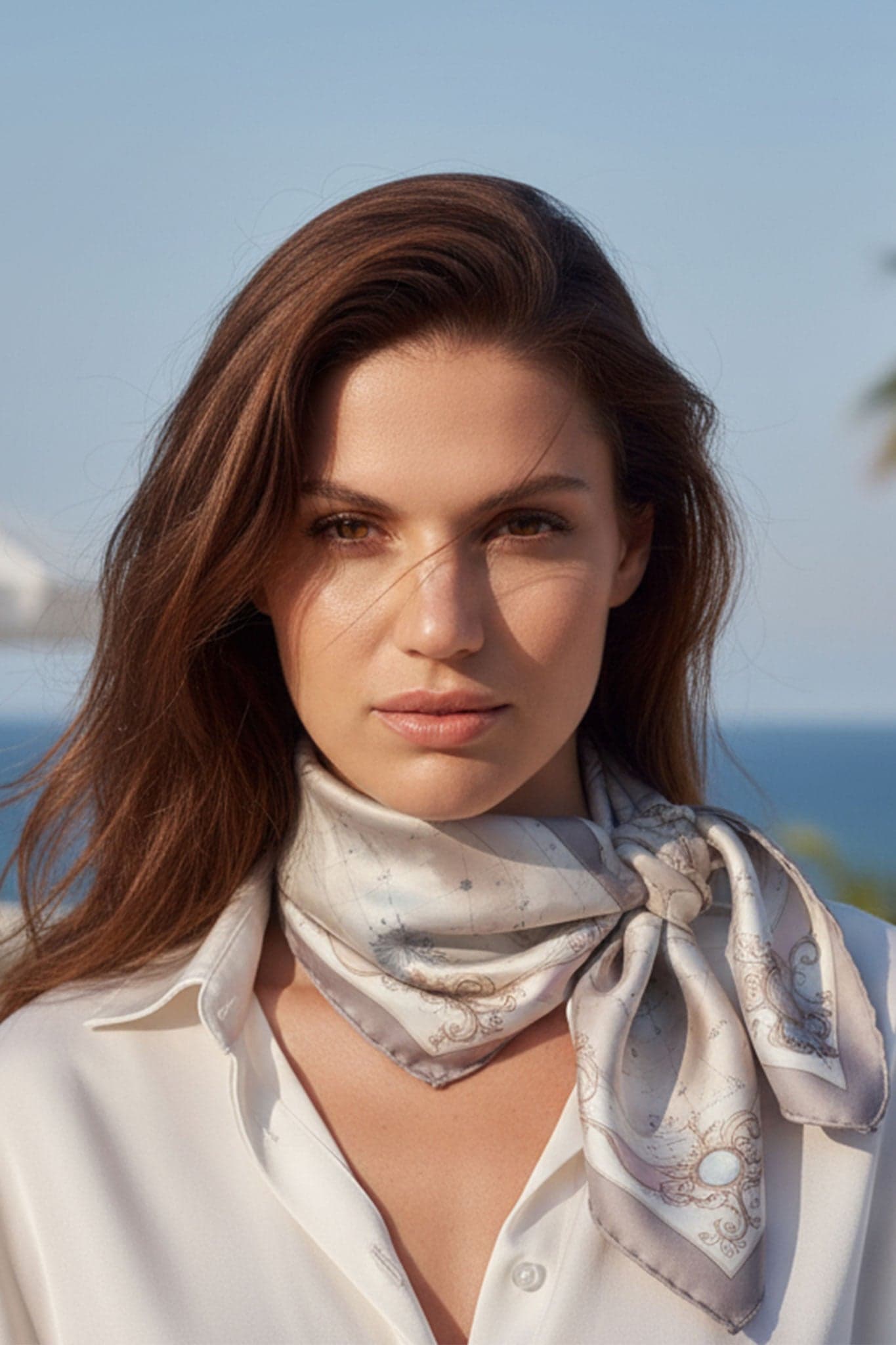
Are you hesitating between a silk square twill or satin because you want a precise result: a knot that holds without slipping, a neat drape on a trench coat, a bold shine for the evening, or on the contrary, a more matte and graphic silk for everyday use.
This is exactly where everything is decided: not in the pattern, but in the weave. Twill and satin do not tell the same story in touch, light, or in the way they allow themselves to be tied. This guide decides, point by point, to help you choose truly the right square, according to your use and requirements.
Immediate reading: hand, light, drape, what your square "says" as soon as you touch it
Between silk square twill or satin, the first difference is sensory, almost instantaneous. The twill is recognized by its more structured hand: when crumpled, it "responds," it has a presence. Under the fingers, one often perceives a micro-texture, a discreet grain, linked to the twill weave (those fine diagonals that give relief).
This structure provides a feeling of hold: the square is placed with intention, it draws a fold, it accepts the geometry of a tight knot without giving way. The light, in turn, settles in measured reflections: rather than shimmering, the twill catches the shine in touches, which makes the prints very readable, even in broad daylight.
When talking about the elegance of fabrics like twill and satin, it is impossible not to mention Coco Chanel, who revolutionized fashion by incorporating quality materials and clean cuts into her creations. Her influence endures, inspiring the style choices of countless women today.
To clarify, the twill weave is characterized by fine diagonals that ensure a structured micro-texture, while satin features smooth floats offering a continuous and fluid surface. This technical distinction plays an essential role in the fabric's hold and the rendering of each knot.
The satin, on the other hand, comes as a glide. The surface is smoother, more "continuous," and the light circulates there with obviousness: you get a more pronounced shine, sometimes almost liquid depending on the weight of the fabric. When worn, satin has a more flowing, more supple drape, which can flatter a neckline, accompany the nape, or rest on the shoulder like a caress. But this fluidity also implies a practical reality: satin can be more elusive when tying, especially if you like short, neat, very defined knots.
If your priority is a square that "holds" and keeps an elegant shape throughout the day, twill is often the safest choice. If you are looking for a luminous effect, more sensual in movement, satin is the answer. And if you are in between, ask yourself a simple question: do you want people to notice first the line (twill) or the light (satin)?
Tying and hold: which is easier to live with (and keep in place)?
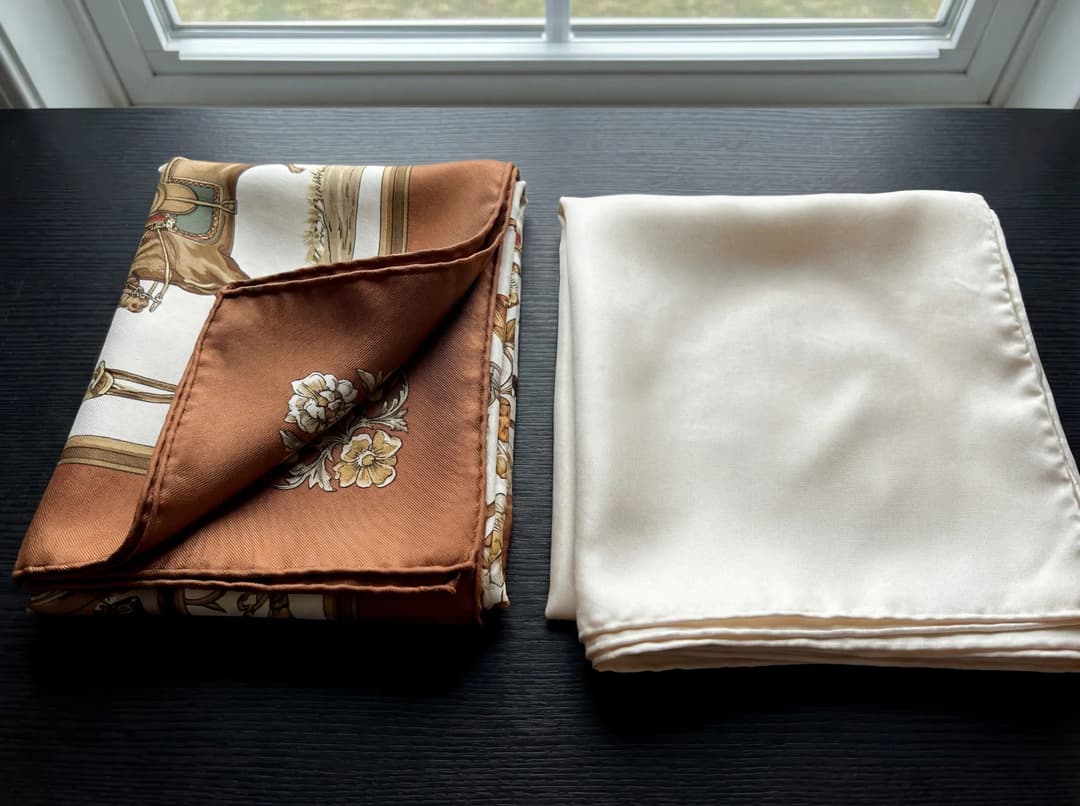
A square is judged in the morning, in front of the mirror, when you don't want to redo the same knot three times. On this point, the match twill or satin silk square is very concrete: the twill offers a better grip.
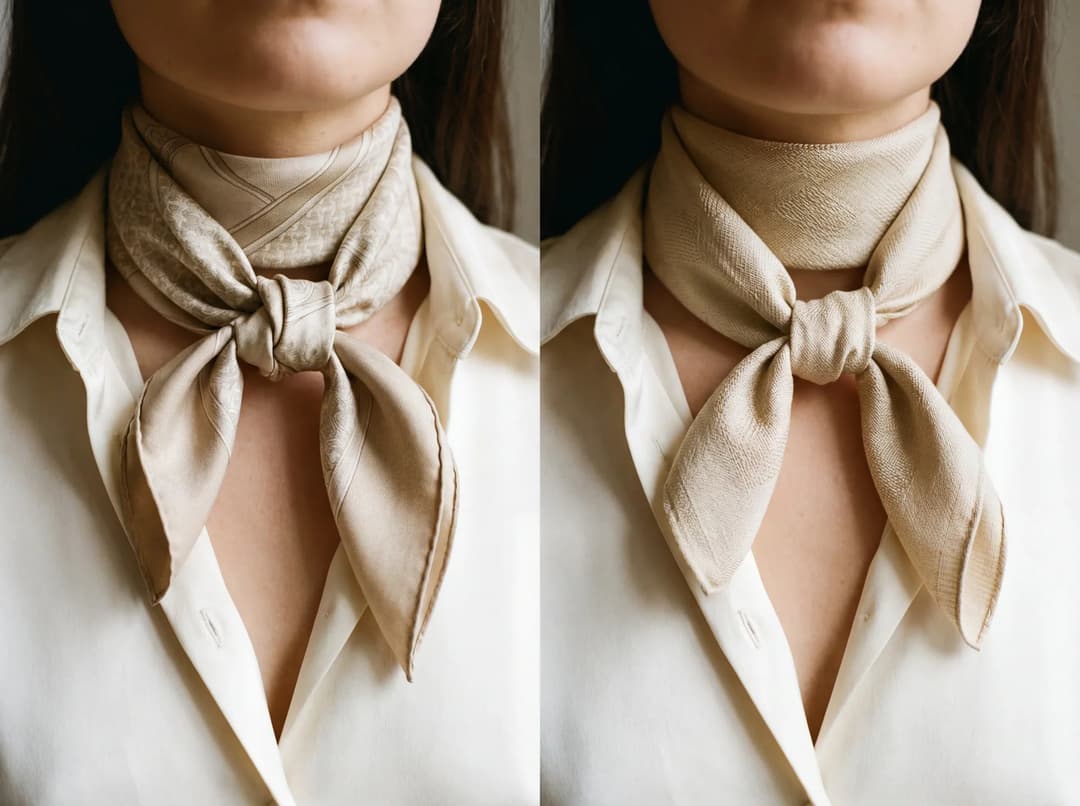
Its micro-texture creates a slight friction that helps the folds stay where you placed them. Result: a "cavalier" knot at the neck, a band folding for a neck wrap, or a knot on a bag handle will tend to hold longer without loosening.
Satin, on the other hand, requires a more precise approach. It excels in knots that highlight its fluidity: a simple drape, a soft loop, a longer and less tight knot. But if you're looking for a compact, very graphic knot, satin can slip and open, especially if you move a lot or if the square is very smooth.
The trick, when you absolutely want satin at the neck: favor a knot where the ends cross with a larger contact surface (rather than a small tight knot), and tighten gradually by "massaging" the fabric instead of pulling it all at once.
Another point: how the fabric marks. Twill better accepts "installed" folds and maintains a pleasant sharpness. Satin, on the other hand, rarely creases in an unsightly way, but it can show more visible folds due to its shine (light highlights everything). If you fold and store your square often, twill is more forgiving. If you wear it more in a drape and store it flat, satin will remain superb.
To choose without hesitation, start from your usual gesture: do you like short, stable knots that don't move? Twill. Do you like movement, flexibility, a more fluid attitude? Satin. And if you're looking for a complete method to adapt the folding to your fabric, you can complement with our complete guide to choosing, wearing, and maintaining a silk square (to be read as a practical workshop).
Color and pattern rendering: twill more "drawn", satin more "mirror"
The question twill or satin silk square is not limited to comfort: it changes the visual rendering, especially on prints. The twill, thanks to its grain and contained shine, often gives a more readable result: the contours appear more stable, the contrasts better held, and the pattern remains clear from a distance.
This is particularly true for graphic designs, lines, geometric repetitions, or rich compositions where you want to distinguish the details. Twill has a very "clean" way of carrying color: it seems placed, controlled, without excess reflection.
The satin acts differently: it amplifies the light, thus it animates the color. The same red will appear deeper from certain angles, brighter from others. The patterns take on an almost moving dimension, especially in drape.
It's magnificent for flat areas, gradients, florals with large petals, or compositions where you want a more emotional than technical reading. However, on very fine patterns, the shine can create micro-reflections that "break" the perceived precision (nothing is blurry, but the light draws the eye elsewhere).
Another nuance: satin can reveal more small handling irregularities (a fold, a tension, a rubbed area), simply because the surface reflects. Twill, more textured, visually evens out. If you're looking for a square that remains impeccable in photos in full sun, twill is often more consistent. If you're looking for a square that captures the light indoors, at the restaurant, at the theater, satin becomes a formidable ally.
Misciano's advice, very concrete: if you wear your square close to the face and you like discreet makeup, satin can bring a flattering light. If you wear glasses, or if you already have bright jewelry, twill avoids overdoing it and keeps a clearer reading of the whole.
Resistance, friction, daily maintenance: choose according to your lifestyle
One does not choose a twill or satin silk square in the same way if one lives in the metro, drives a lot, wears the square on a bag, or uses it as a hair accessory. The twill is generally more durable against friction: the grain and structure of the weave give it superior tolerance to contact areas (bag handle, coat collar, strap, belt).
It shows fewer small traces of life: micro-creases, repeated friction, frequent handling. It is the fabric for regular use, when you want to wear your square without thinking about it every ten minutes.
The satin, smoother and shinier, can be more demanding: it does not like continuous friction as much, because the surface can become glossy or marked more visibly (again, the light reveals).
This does not mean it is fragile in the strict sense, but that it requires more careful attention: avoid trapping it under a rough strap, limit prolonged contact with abrasive textures, and favor wearing it where the fabric remains free (draped, knot on the wrist, on the neckline of a smooth top).
Regarding maintenance, the logic is similar: both require delicacy, but satin "displays" more ironing errors or too strong pressures. If you need to de-wrinkle, prefer steam at a distance, without crushing the fiber. Twill, on the other hand, often recovers very well with light steam and flat drying.
And if you store it: twill withstands regular folding better, while satin appreciates flat storage or loosely rolled to avoid sharp marks. This choice also depends on the weight, often measured in momme (for example, a twill of 12 to 16 momme will offer better resistance to daily demands).
Your simple indicator: if your square is a weekday companion (transport, office, multiple handling), twill. If your square is a piece for meetings, dinners, chosen moments where you like the slow gesture and luminous rendering, satin.
What choice "really" according to use: 6 scenarios, 6 clear decisions
Finally, here is a straightforward decision grid. Because the question twill or satin silk square becomes easy when linked to a specific use.
1) You want a square at the neck, short knot, that does not move.
Choose twill. It grips, it holds, it stays neat. The rendering is more defined, more controlled.
2) You want a soft drape on a neckline, or a light "scarf" wear.
Choose satin. It flows, it captures the light, it accompanies the movement without rigidity.
3) You wear the square on a bag (handle, strap, decorative knot).
Preference twill. Better resistance to friction, more stable knot, impeccable appearance longer.
4) You want a jewel effect, luminous, in the evening, with a plain dress.
Preference satin. The fabric plays with the lighting, gives an immediate presence, almost "mirror" but with the softness of silk.
5) You like very detailed, graphic prints, with clear reading.
Choose twill. Its contained shine and grain ensure constant readability of the pattern, even in motion.
6) You are looking for an expressive piece that captures the light and draws the eye.
Choose satin. It transforms the color through reflection and gives a more emotional dimension to the wear.
Conclusion: twill or satin, the right choice is the one that accompanies your gesture
Ultimately, choosing between a twill or satin silk square is not a question of quality, both weaves can be remarkable, but a question of intention. Twill accompanies a sure, daily, structured gesture: it ties easily, stays in place, and offers a clear reading of lines and patterns. Satin, on the other hand, accompanies a moment, a light, a movement: it flows, captures reflections, and brings a more expressive presence, sometimes almost jewel-like.
By observing how you wear a square around your neck in the morning, on a bag during the day, draped in the evening - the answer often becomes obvious. A successful square is not the one that impresses on the table, but the one that lives with you, without constraint, and respects your way of moving, tying, presenting yourself.
At Misciano, we always approach silk through use before aesthetics. Because it is in the balance between material, gesture, and wear that the square fully reveals its lasting, fair, and deeply personal elegance.

Article by Camille Laurent
Published on 01/16/2026 at 14:30
About the author
What interests me above all is the intimate relationship we have with clothing: why we choose it, how we wear it, and especially how long it accompanies us.
→ Learn more about Camille LaurentFREQUENTLY ASKED QUESTIONS
What are the main differences between silk and satin in terms of shine and drape?
Silk, a natural fiber, is distinguished by its subtle shine and fluid drape, offering unmatched comfort. In contrast, satin, usually made of polyester, has a more pronounced shine, but its drape is often less airy. Silk adapts wonderfully to the skin, while satin can be more prone to wear, affecting its durability.
How to choose the best material for a summer dress based on stability and use?
For a summer dress, linen and cotton are preferred choices. Linen, with its airy texture and ability to regulate heat, ensures optimal comfort, while cotton offers pleasant stability and unmatched softness. A blend of these fibers can also be considered to combine lightness and durability, perfect for sunny days.
Which textiles to prioritize for an elegant jacket while ensuring comfort and durability?
For an elegant jacket, virgin wool and cashmere are exceptional choices. Virgin wool, known for its resistance and warmth, retains its shape over time, while cashmere, with its incomparable softness, adds a luxurious dimension. Together, these fibers ensure a piece that is both refined and durable, ideal for daily use.
What are the advantages of choosing eco-friendly materials in women's fashion?
Opting for eco-friendly materials, such as Tencel or organic cotton, not only promotes sustainability but also offers superior comfort due to their softness and breathability. These textiles, derived from renewable resources, reduce environmental impact while ensuring exceptional quality, aligned with the values of Misciano Paris.
How does the quality of materials influence the price of Misciano Paris clothing?
The quality of materials chosen at Misciano Paris is at the heart of our design process. Exceptional textiles like silk, cashmere, or virgin wool, although more expensive, guarantee unmatched durability, comfort, and exclusivity. Investing in quality pieces ensures timeless elegance and remarkable longevity.
Our silk squares