
Choosing a silk square to give as a gift: the Misciano guide to hit the mark without missteps
Our silk squares in stock

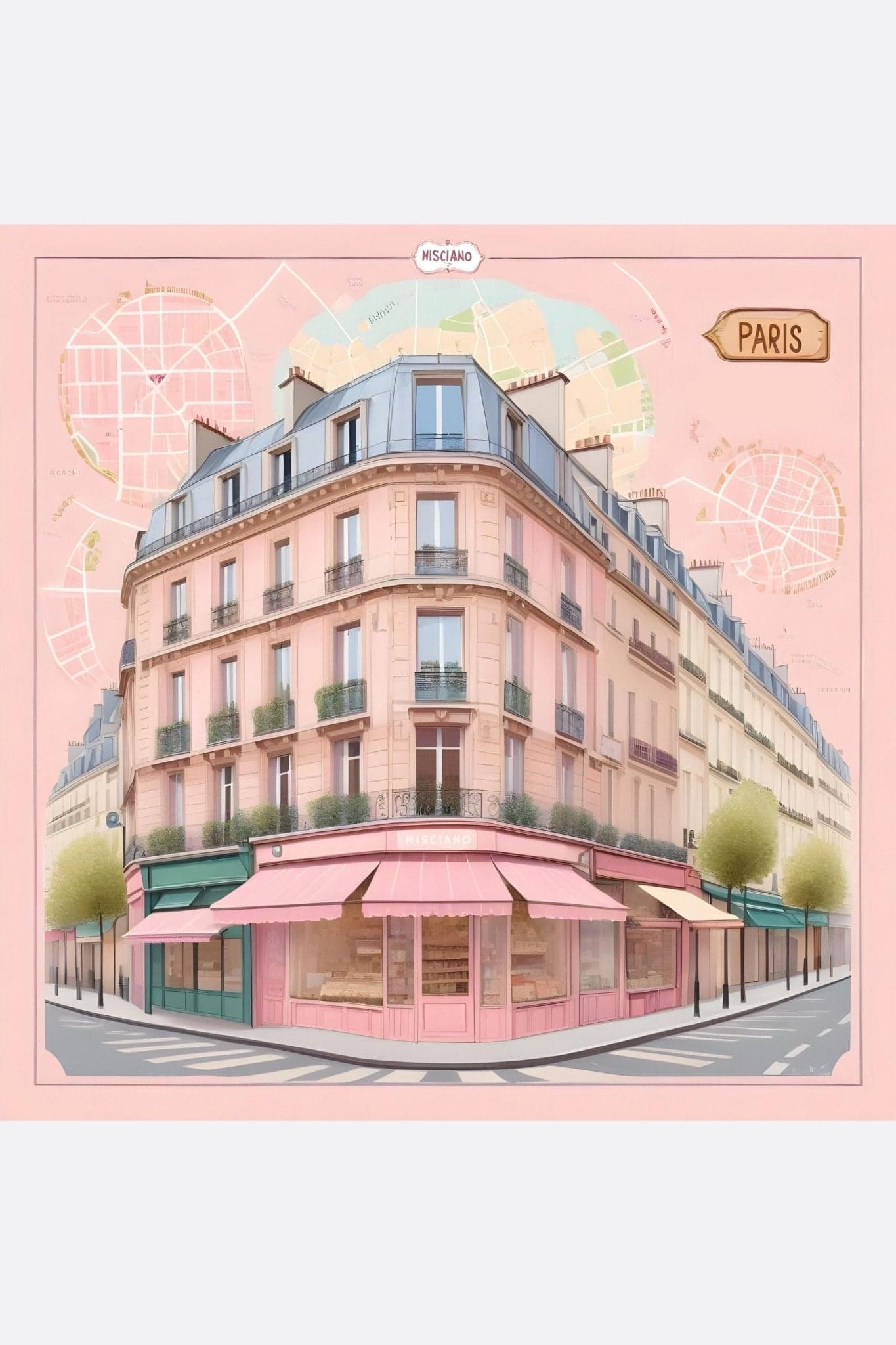
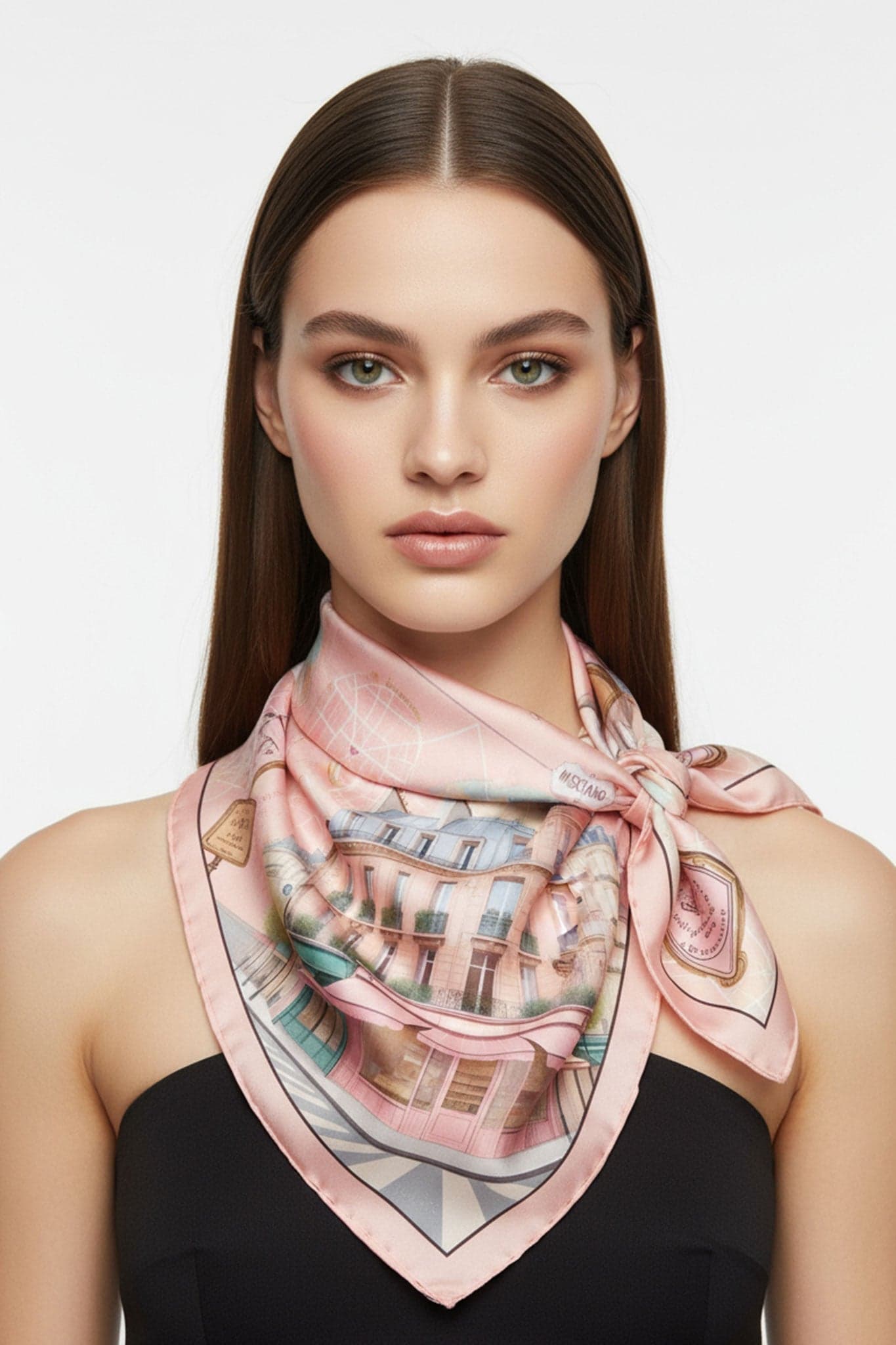
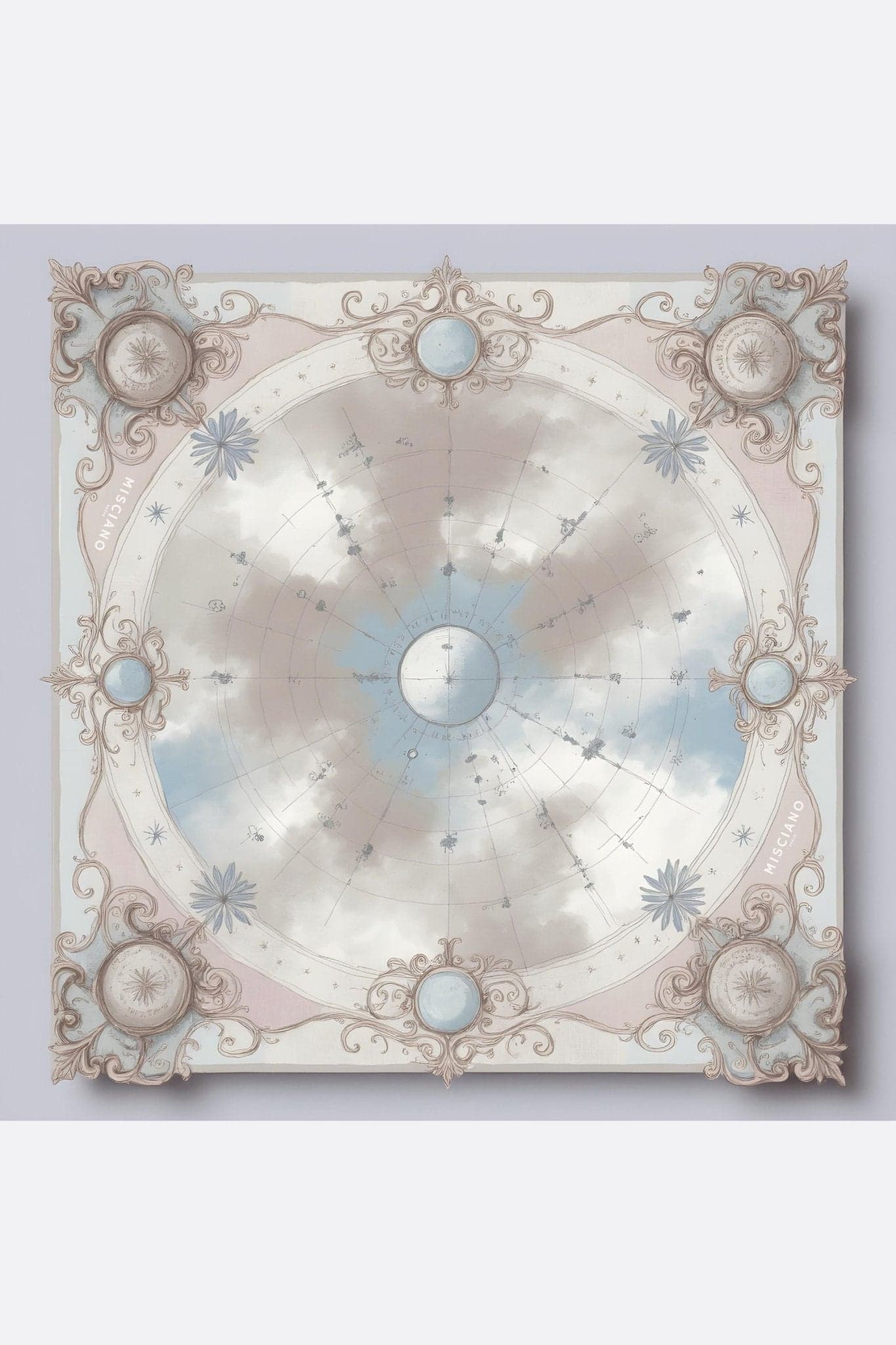
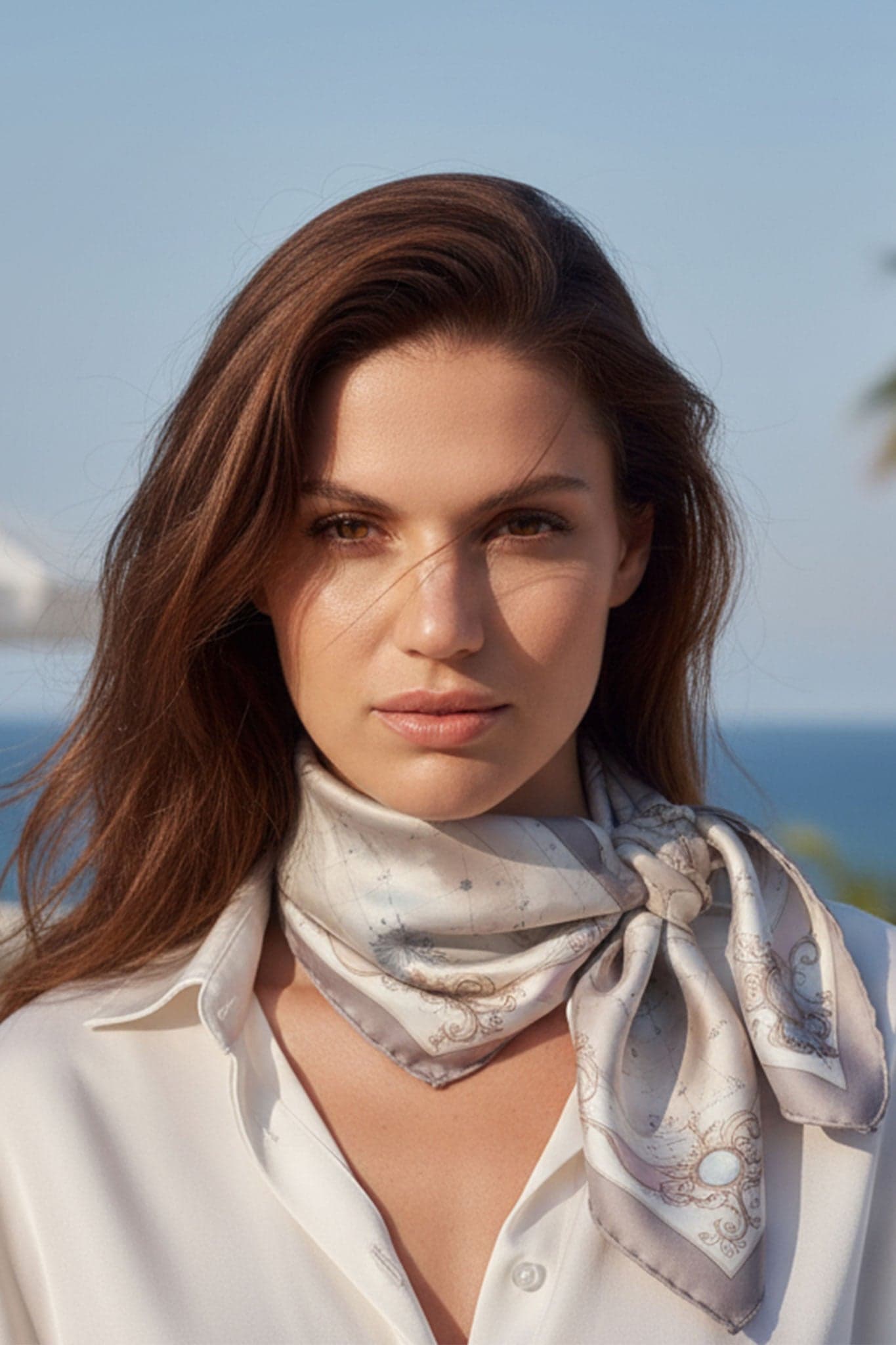
Offering a silk scarf is a sure bet... provided you don't make a mistake on three points that can change everything: the color (which can flatter or harden a complexion), the size (which determines the actual use), and the feel of the silk (this touch that immediately signifies quality).
When giving a gift, there's no room for approximation: the person should be able to wear it in the first week, without wondering “with what?” or “does it suit me?”. This guide is designed to meet one intention: choosing a silk scarf to give methodically, minimizing risk and maximizing effect.
Start with the person: 5 simple clues to aim right (without asking)
To choose a silk scarf to give, the temptation is to start with the “crush” pattern. However, as a gift, the crush must be filtered by the person who will receive it. The good news: you can deduce a lot without asking direct questions. Here are five reliable clues, easy to observe, that guide your choices of colors, prints, and style.
Clue #1: her dominant clothing palette. Keep an eye on coats, jackets, bags. If she often wears camel, navy, black, cream, she is probably comfortable with “calm” harmonies. In this case, a scarf with an ivory, ink blue, or tobacco brown background will integrate naturally. Conversely, if she wears bright green, fuchsia, red, or sharp contrasts, she will more readily accept an energetic pattern, color blocks, more assertive graphics. The gift should fit into her daily life, not a showcase.
Clue #2: her relationship with jewelry. A lot of yellow gold? Then warm tones (honey, brick, saffron, chocolate, ivory) work well. A lot of silver, steel, cool pearls? Blues, grays, bluish greens, cool purples, pure whites are often more coherent. It's not a rule, but it's a very useful shortcut when hesitating between two colors.
Clue #3: her hairstyle and collar style. Short hair, exposed neck, turtlenecks: a scarf can be worn close to the face, and color becomes central. Long hair, scarves, open collars: the scarf can be worn lower, as an accent, and the print can be more narrative. If she often wears high collars, choose a silk with a soft feel that folds without excessive volume.
Clue #4: her relationship with patterns. If she never wears prints, avoid overly busy compositions. A clear geometric design, a micro-pattern, or a well-constructed background/border contrast will be more “wearable” than a very figurative scene. If, on the contrary, she loves prints, you can increase the intensity: large pattern, alternation of densities, details to discover.
Clue #5: her actual use. Is she often on the move, at meetings, at events? The scarf can become an outfit ally (neck, bag, hair). If she is rather in simple attire daily, a scarf easy to fold and tie (versatile format) will be worn more often. The goal is not to offer “the most beautiful” abstractly, but the one she will adopt effortlessly.
If you remember only one rule: aim for the obvious. A gifted scarf should seem to have always been “in its place” in her wardrobe. It's this sense of obviousness that makes a textile gift successful.
Colors and patterns: how to avoid a taste error (and create the “wow” effect)
The majority of missteps come from a scarf that is too "personal" on the part of the giver: a color you like, a pattern that amuses you, but that does not match the complexion or wardrobe of the person. To choose a silk scarf to give without making a mistake, think in three layers: the complexion, the wardrobe, the reading distance (what you see at 1 meter vs. what you discover up close).

1) Complexion: favor radiance, avoid harshness. A scarf is often worn close to the face: it can illuminate or, on the contrary, "gray" it. If you are not sure, adopt a safe strategy: choose a background color neither too acidic nor too dull, with a border that structures. Ivory, cream, ink blue, deep green, clear burgundy, hazelnut brown backgrounds are reliable choices. Very cold pastels (some shades of lilac or glacier blue) can cool a warm complexion; very bright yellows can harden a rosy complexion. When giving, seek light, not chromatic performance.
2) Wardrobe: the rule of three outfits. Before buying, imagine three possible outfits in their wardrobe: a coat, a knit, a shirt. If you can't find three obvious combinations, it's a signal. A successful scarf as a gift is one that fits into multiple scenes: at the office, on the weekend, at dinner. This simple rule avoids "magnificent but orphan" scarves.
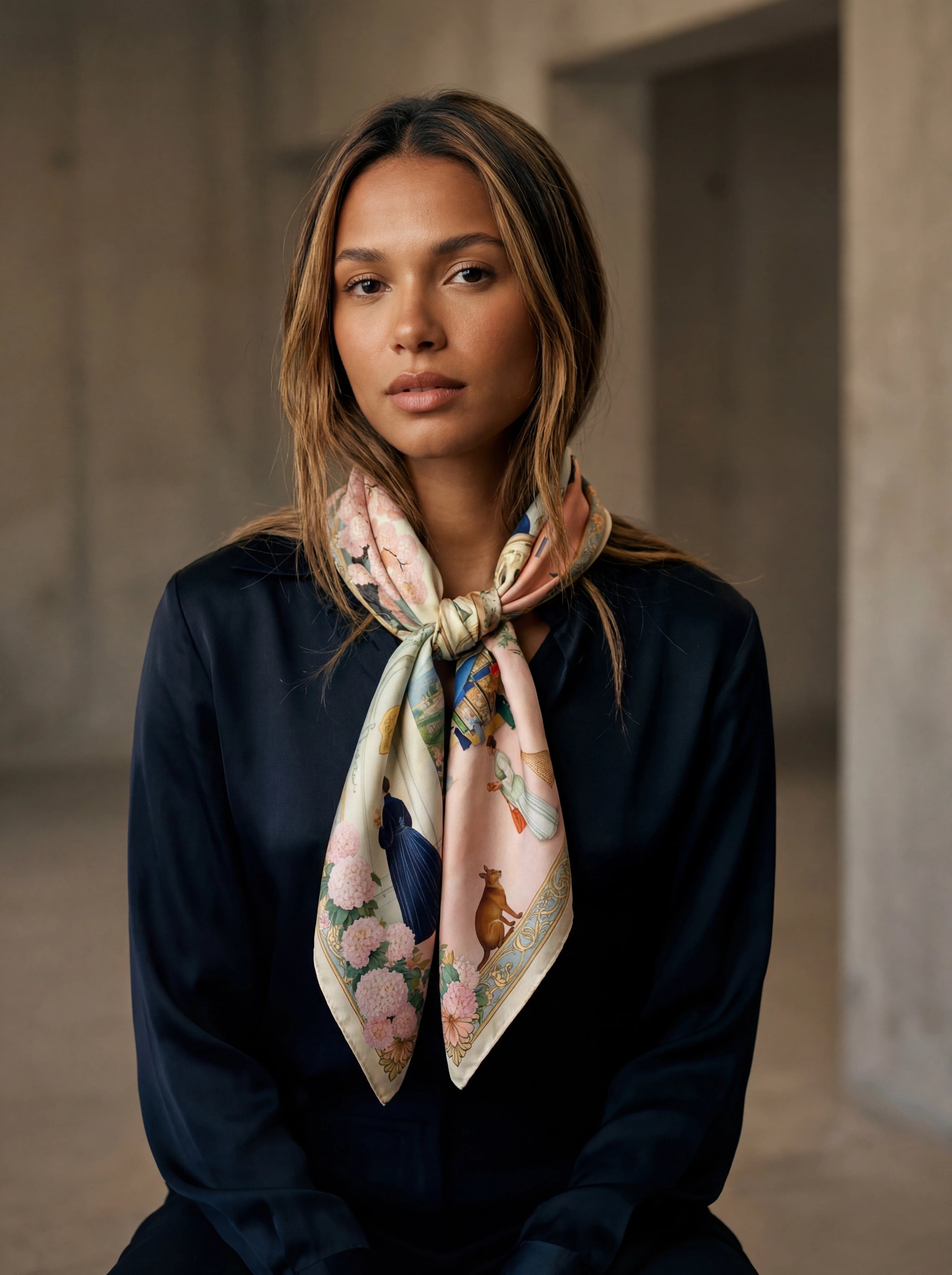
3) Reading distance: immediate impact + intimate detail. A well-chosen scarf offers two pleasures: from afar, a clear harmony (background/border/rhythm); up close, a finesse of design, a play of lines, a depth of color. For a gift, this double reading is precious: it creates emotion upon unwrapping, then satisfaction over time. Favor patterns with a clear and structured border: it frames the face and gives an impression of poise, even on a simple silhouette.
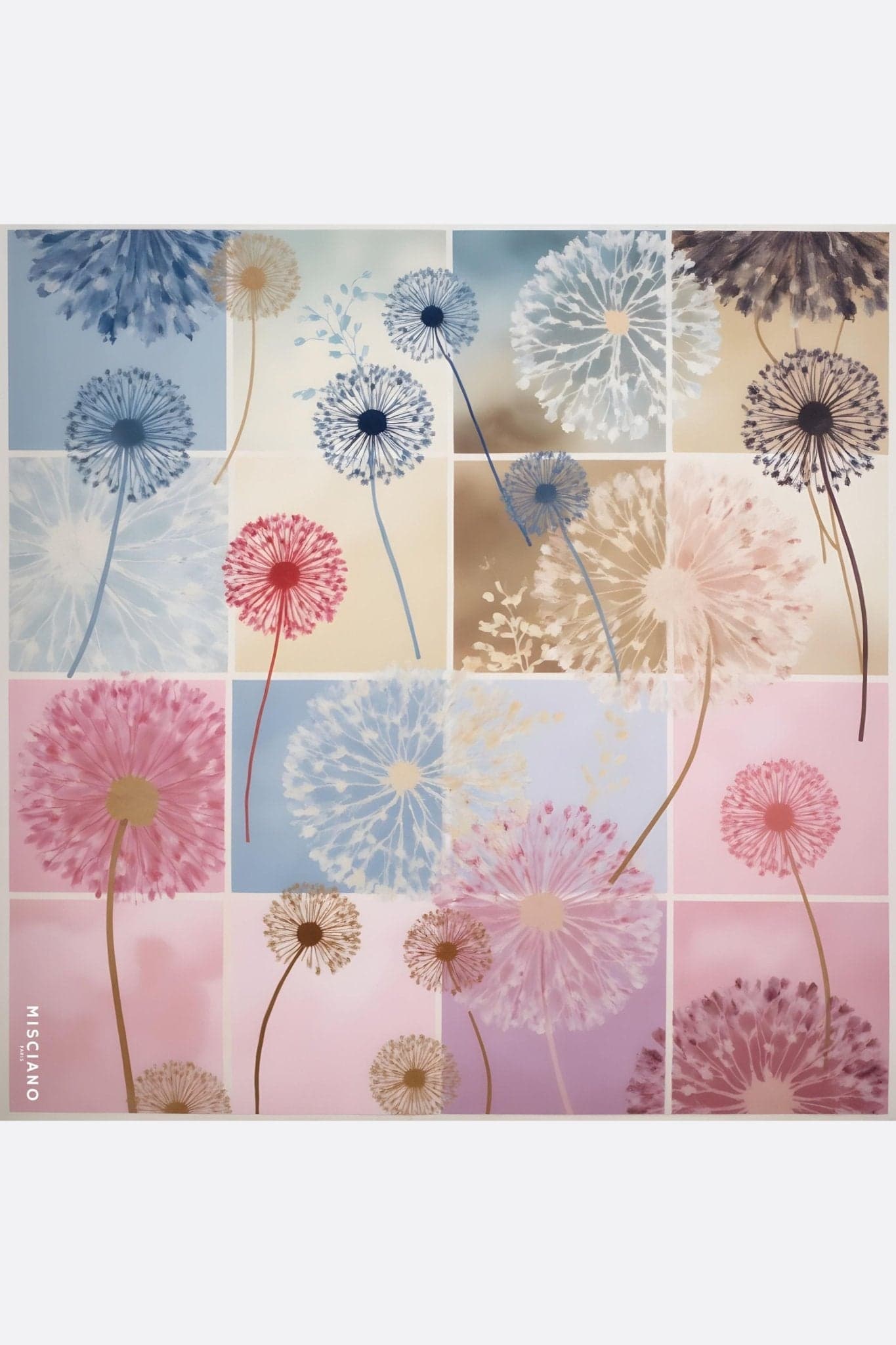
Micro-pattern vs large pattern: which option is the most "foolproof"? The micro-pattern (small repeated design) is often easier to wear: it folds, ties, and remains readable without dominating the outfit. The large pattern, on the other hand, is more expressive: excellent if you know the person likes pieces that define a look. If in doubt, the micro-pattern with a contrasting border is a very safe choice.
The common trap: too many colors, no hierarchy. A multicolored scarf can be superb, but it must have a hierarchy: a dominant color, a secondary one, a touch. Without hierarchy, the scarf becomes difficult to match. For gifting, choose a scarf whose dominant color you can name in a second: "ink blue", "ivory", "burgundy", "deep green".
These guidelines are based on recognized colorimetry principles (see references in textile glossary).
Size, drape, finishes: the quality criteria that are felt from the first minute
When it comes to gifts, quality should not be “explained”: it should be felt immediately. Silk has this advantage: the feel, the drape, the density are perceived as soon as you hold it between your fingers. To choose a silk scarf to offer, here are the textile criteria that really matter, and how to read them without unnecessary jargon.
The size: choose according to use, not habit. A small scarf is charming, but may remain at the bottom of a drawer if the person does not wear it on the wrist or in the hair. A large scarf offers more possibilities, but requires a bit more ease in tying. The good gift compromise, in most cases, is a versatile format that can be worn around the neck, as a headband, on a bag, and folds easily. If the person is minimalist, a medium size is often the best option: it provides presence without overwhelming. As a reminder, our scarves are available in standard sizes (45, 70, and 90 cm) and made of 100% quality silk, ensuring optimal weight and a finish certified by our workshops.
The drape: the balance between firmness and suppleness. A scarf that is too “soft” slips, marks knots less, and sometimes gives a more fragile impression. A scarf with a bit of body places better, creates clean folds, and stays in place. The ideal drape for a gift is one that allows a neat knot without rigidity: you feel a slight resistance, then the silk takes shape. These characteristics are verified through rigorous quality control, measured notably by a weight of about 30 momme.
The shine: aim for brilliance, avoid the mirror effect. Beautiful silk captures light delicately: it has a lively shine, not a harsh reflection. For a gift, this is essential: the shine should flatter, not attract the eye like a varnish. If you see a very uniform shine, almost plastic, be wary: the elegance of quality silk lies in nuanced light, which follows the folds.
The finishes: the rolled hem, a sign of attention. The rolled hem (edge finish) contributes to the scarf's hold and its “finished” appearance. A regular, clean rolled hem, without excessive thickness, immediately gives an impression of a well-crafted piece. It is typically the detail that one does not always know how to name, but that one feels: the scarf appears neater, more “complete”.
The touch: the reassuring hand. A textile gift should reassure by touch. Pleasant silk does not catch, does not “crackle” dryly; it glides smoothly, but retains a certain presence. When you slightly pinch the fabric, it should return, live, without limpness. Our product tests confirm that the hand is designed to offer an unparalleled tactile experience.
To delve deeper into the technical reading of silk and understand what makes a well-finished scarf, you can explore our article History of the silk square: origins, codes, and know-how. It details the workshop gestures, density criteria, and rolled finishes that mark the Misciano hand.
And to ensure the durability of the gift, our guide Washing a silk scarf by hand: safe method, correct gestures, and drying without marks accompanies you step by step, from washing to storage folding.
To go further on the choice and criteria for daily wear (tying, maintenance, mistakes to avoid), and for detailed advice on tying and optimal maintenance, you can consult our reference resource: Silk square: expert guide to choose, wear, maintain.
Adapt the scarf to the occasion (birthday, Christmas, thank you) and the message you want to convey
A successful gift is not only “beautiful”: it is appropriate for the moment. Choosing a silk scarf to offer is also choosing a message: attention, admiration, gratitude, support, celebration. The silk scarf is an intimate object in the noble sense: it is worn close to the skin, close to the face, it accompanies. Therefore, the intention must be adjusted to the occasion, and the boldness measured.
Birthday: the balance between personality and wearability. For a birthday, you can allow a bit more character: a signature color, a more expressive pattern, a contrasting border. The goal: for the person to feel that you have seen and understood them. However, keep the rule of three outfits: a birthday is not the time to offer a spectacular but difficult piece. An ideal scarf “signs” without confining: for example, a deep dominant (ink blue, dark green, burgundy) awakened by a light touch.
Christmas: visual warmth and versatility. At Christmas, gifts are often given in a family context, sometimes with a set budget. Aim for warm and enveloping harmonies: ivory, chocolate, navy, deep red, pine green. Too seasonal patterns (snowflakes, obvious symbols) age poorly; prefer timeless graphics, which will remain appropriate in January as in October. Christmas is the perfect season for an “easy-to-live” scarf, worn over a coat or with knitwear.
Thank you: impeccable sobriety. To say thank you (to a host, a colleague, a person who has helped you), the rightness is found in restraint: a scarf with clean lines, harmonized colors, without too intimate a message. A light background with a structured border works very well: it is a distinguished gift that does not overplay emotion. The thank you should be elegant, not overwhelming.
Mother's Day: softness, light, closeness. Here, the scarf can be more tender: luminous tones, less sharp contrasts, delicate design. Think of what flatters the face and gives a healthy glow. A scarf that brings clarity near the complexion is often a winning choice. Avoid patterns that are too “young” if it is not her style: prefer obvious elegance, easy to adopt.
Promotion, success, new beginning: bold lines. To celebrate a success, a scarf with clear lines, with a bold border, conveys a sense of poise and confidence. Controlled contrasts (navy/ivory, black/cream, well-balanced burgundy/powder pink) work very well. The message: “you are in your place.”
The right level of boldness. The more intimate the occasion, the more you can personalize. The more “social” the occasion, the more you should secure: easy colors, readable pattern, impeccable finish. It is the balance that avoids missteps.
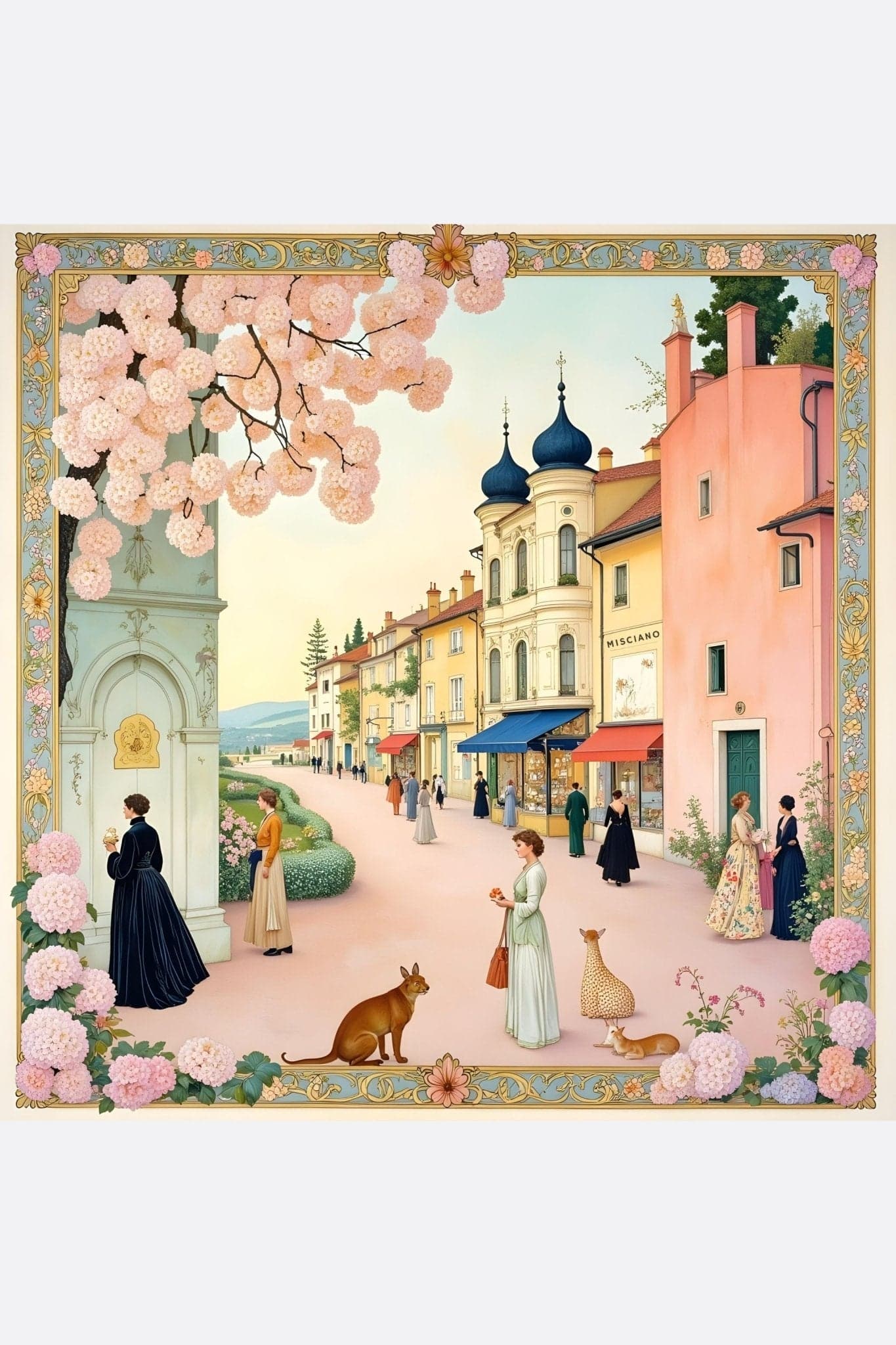
Each occasion tells a different way of wearing or offering the silk scarf. To visualize this diversity, discover Silk square Promenade in Misciano: an accessory of timeless elegance, an article that illustrates how a pattern can convey a style and an intention, from design to wearing.
Budget, packaging, and final checks: the Misciano checklist before offering
The last risk, when offering a silk scarf, is not bad taste: it's the overlooked detail. A very beautiful scarf can lose its impact if the budget is poorly positioned, if the packaging is mundane, or if an obvious quality point has not been checked. Before finalizing your choice, go through this simple checklist, it secures the purchase and guarantees a coherent experience from the first glance to the first wear.
1) The budget: aim for accuracy, not excess. In terms of a silk scarf, the price should reflect a textile reality: quality of the silk, precision of the print, care of the finishes. A budget too low almost always imposes compromises invisible to the untrained eye (dry feel, artificial shine, approximate border). Conversely, a high price only makes sense if it corresponds to readable criteria. For gifting, the right comfort zone is where quality is immediately felt without needing explanation. The gift should speak for itself.
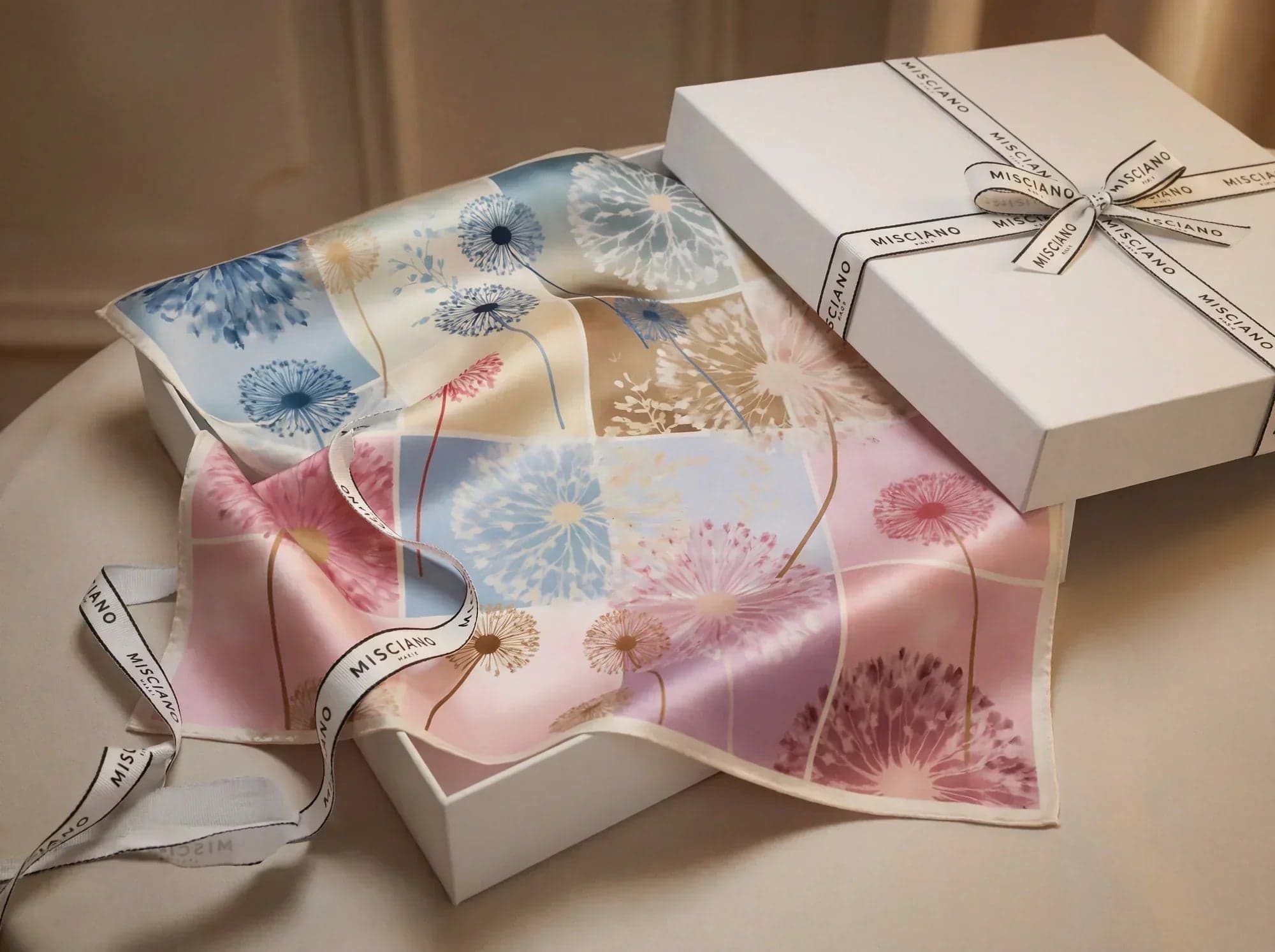
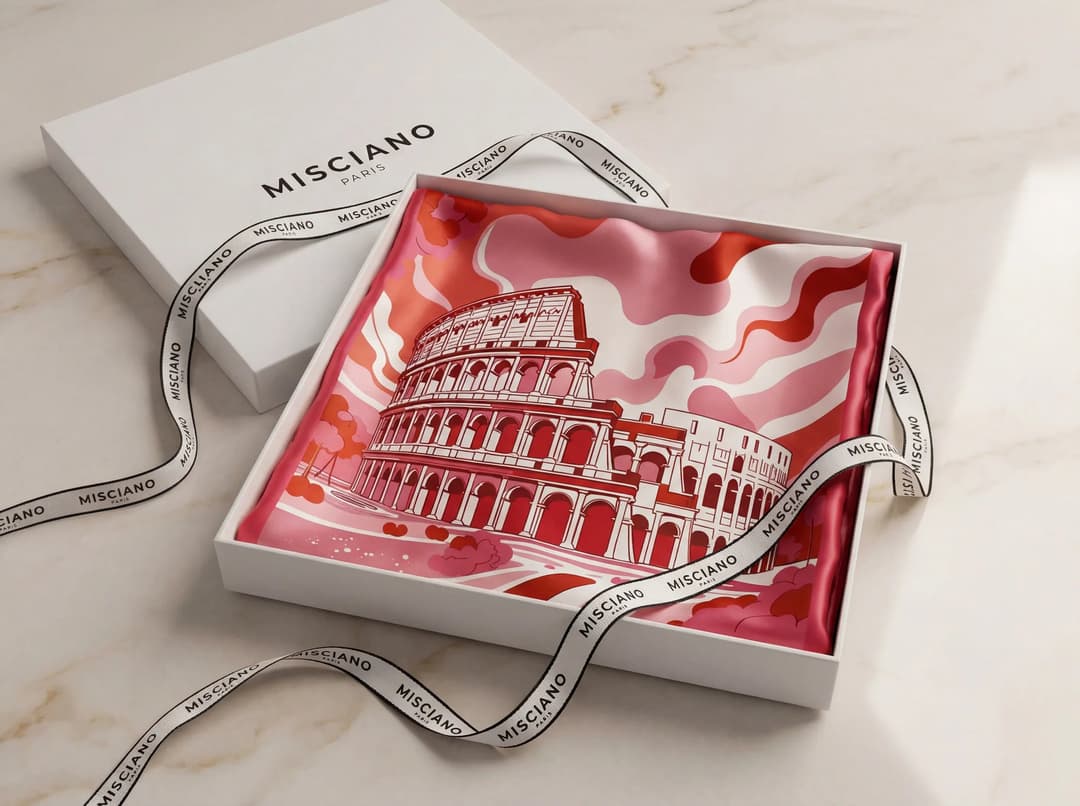
2) The packaging: protect, enhance, without dramatizing. A silk scarf is a delicate object. Its case must first protect it (neat fold, absence of unnecessary friction), then enhance it. Too spectacular packaging can divert attention from the product; too poor packaging weakens the intention. The ideal: a sober, clean presentation that highlights the material and design from the moment of opening. The unwrapping moment should be calm, precise, almost obvious, like the scarf itself.
3) The folding: first sign of seriousness. Before offering, open the scarf (if possible without breaking the final seal) and observe the folding. The edges should be neat, the corners aligned, without visible tension. An approximate folding is often a sign of less rigorous production. A well-folded scarf immediately inspires confidence, even before being worn.
4) Quick checks to do at home. Without being an expert, you can check four points in less than a minute:
- Alignment: fold the scarf in half, then again in half; the edges should naturally coincide.
- Light: observe the silk in daylight; the shine should be lively, not uniform.
- The border: run your finger over the rolled edge; it should be regular, supple, without rigidity.
- The feel: crumple slightly then release; the silk should regain its shape without limpness.
These simple gestures are enough to avoid 90% of disappointments.
5) The accompanying message: stay accurate. A silk scarf does not need a long speech. A short, sincere sentence is enough. Avoid overly emphatic or explanatory phrases. The object is there to last, accompany, be passed on. The word must be up to the task: discreet, but chosen.
In conclusion: offering a silk scarf, a gesture that lasts
Choosing a silk scarf to offer is not about seeking immediate effect, but accuracy over time. A successful scarf is one that integrates effortlessly, is worn quickly, then often, and eventually becomes familiar. Flattering color, suitable size, pleasant feel, neat finishes: these are the silent certainties that transform a gift into a companion.
By following this method, observing the person, securing the colors, choosing a versatile format, checking tangible quality, and caring for the presentation, you drastically reduce the risk of error. You offer not just another accessory, but a piece that finds its place.
A well-chosen silk scarf is not stored away: it is adopted. And it is precisely this natural and lasting adoption that makes the value of a successful gift.
To extend this reading by discovering the materials and prints, explore our Misciano silk scarf collection. Each piece embodies the same balance between suppleness, shine, and hold, according to the criteria mentioned in this guide.

Article by Alexander Chekushine
Published on 01/23/2026 at 19:37
About the author
A specialist in style and fashion trends, I bring a sharp eye to Misciano creations. My in-depth knowledge of noble materials and Italian craftsmanship enriches each of my articles with a precise and demanding reading of contemporary elegance.
→ Learn more about Alexander ChekushineFREQUENTLY ASKED QUESTIONS
How to choose the color of a silk scarf based on the person's complexion?
The color of a silk scarf can enhance or, conversely, tone down the person's complexion. For a warm complexion, opt for golden, coral, or earth tones. For a cool complexion, favor shades of blue, pink, or purple. Observe the clothes the person frequently wears to choose a color that will suit them perfectly.
What size of silk scarf is the most versatile for a gift?
A size of 90 cm x 90 cm is often ideal for a silk scarf. It allows for a multitude of uses, whether as a scarf, headband, or even a bag accessory. This dimension also offers freedom of style, allowing the person to adapt it according to their desires.
How to recognize the quality of silk in a scarf before buying it?
The quality of silk is perceived by its feel, that is, by its touch. A good silk scarf should be soft, supple, and slightly shiny. Do not hesitate to pass the fabric between your fingers to appreciate its texture. Superior quality silk will also have a more substantial weight, indicating a dense and durable weave.
What pitfalls should be avoided when choosing a silk scarf as a gift?
Avoid impulsive choices based solely on your personal preferences. Instead, think about the person's tastes. Also avoid overly bright colors or overly busy patterns, which may not suit everyone. Make sure the scarf can be easily integrated into their wardrobe.
How important is packaging when offering a silk scarf?
Packaging plays an essential role in the perception of the gift. A beautiful package, in keeping with the elegance of silk, creates a memorable first impression. Opt for simple yet refined packaging that highlights the scarf while reflecting the care you have taken in your choice.
Our silk squares