Fast & secure deliveryFree shipping in France from €99Easy returns
Fast & secure deliveryFree shipping in France from €99Easy returns
Bracelets
Women's bracelet: positioning, measurement, and visual effect
The position of a bracelet on the wrist is not neutral: it determines its comfort and visual effect. The wrist has two prominent bones (radial styloid on the thumb side, ulnar styloid on the pinky side). A bracelet worn on these bony prominences slides and is uncomfortable. A bracelet worn between the two, on the fleshy part of the wrist, stays in place and does not create pressure. The width of the bracelet and its relation to the width of the wrist then determines whether it covers, highlights, or elongates the arm.
The position of a bracelet on the wrist is not neutral: it determines its comfort and visual effect. The wrist has two prominent bones (radial styloid on the thumb side, ulnar styloid on the pinky side). A bracelet worn on these bony prominences slides and is uncomfortable. A bracelet worn between the two, on the fleshy part of the wrist, stays in place and does not create pressure. The width of the bracelet and its relation to the width of the wrist then determines whether it covers, highlights, or elongates the arm.
Bracelet size: how to measure
The wrist circumference is measured with a measuring tape around the narrowest part of the wrist. Add 1-1.5 cm for a snug bracelet, 2-3 cm for a loose bracelet. A bangle (rigid) must pass the widest part of the hand (knuckles) without forcing: at rest, it should hold without slipping but pass without effort. The recommended internal diameter of a bangle: wrist circumference divided by pi (3.14) + 0.3 to 0.5 cm depending on the fineness of the hand. A bracelet that is too tight creates pressure on the tendons and circulation: the area to avoid is the inside of the wrist (veins and tendons). A bracelet that is too loose constantly slides over the prominent bones.
Layering: the rule of odd numbers
In jewelry, the rule of odd numbers states that an odd number of stacked bracelets (1, 3, 5) creates a more natural balance than an even number. This rule is related to the perception of dynamic asymmetry: an even number creates a symmetry that can seem rigid or artificial. In practice: 1 bracelet alone = statement piece. 3 bracelets = the most common and versatile layering. 5 bracelets = bohemian or festival look, deliberately loaded. For layering, mix thicknesses (one wide bracelet + two thin ones), materials (metal + beads + fabric), and textures: variation creates visual coherence.
Metal allergies: identification and solutions
The most common allergy in jewelry is nickel allergy (nickel sulfate): the European directive 94/27/EC limits nickel content to 0.05% in jewelry in prolonged contact with the skin. The most allergenic metals: plated jewelry in brass or zinc (the plating layer wears off and exposes the base metal). Hypoallergenic metals: pure gold (18 carats and above), sterling silver (925), titanium, surgical steel 316L, platinum. Surgical steel 316L is the most used metal in affordable fine jewelry because it is stainless, hypoallergenic, and durable. If the wrist reddens, itches, or shows small blisters after wearing: probable nickel allergy. Solution: choose bracelets in sterling silver, surgical steel, or certified nickel-free gold.
Width and visual effect on the wrist
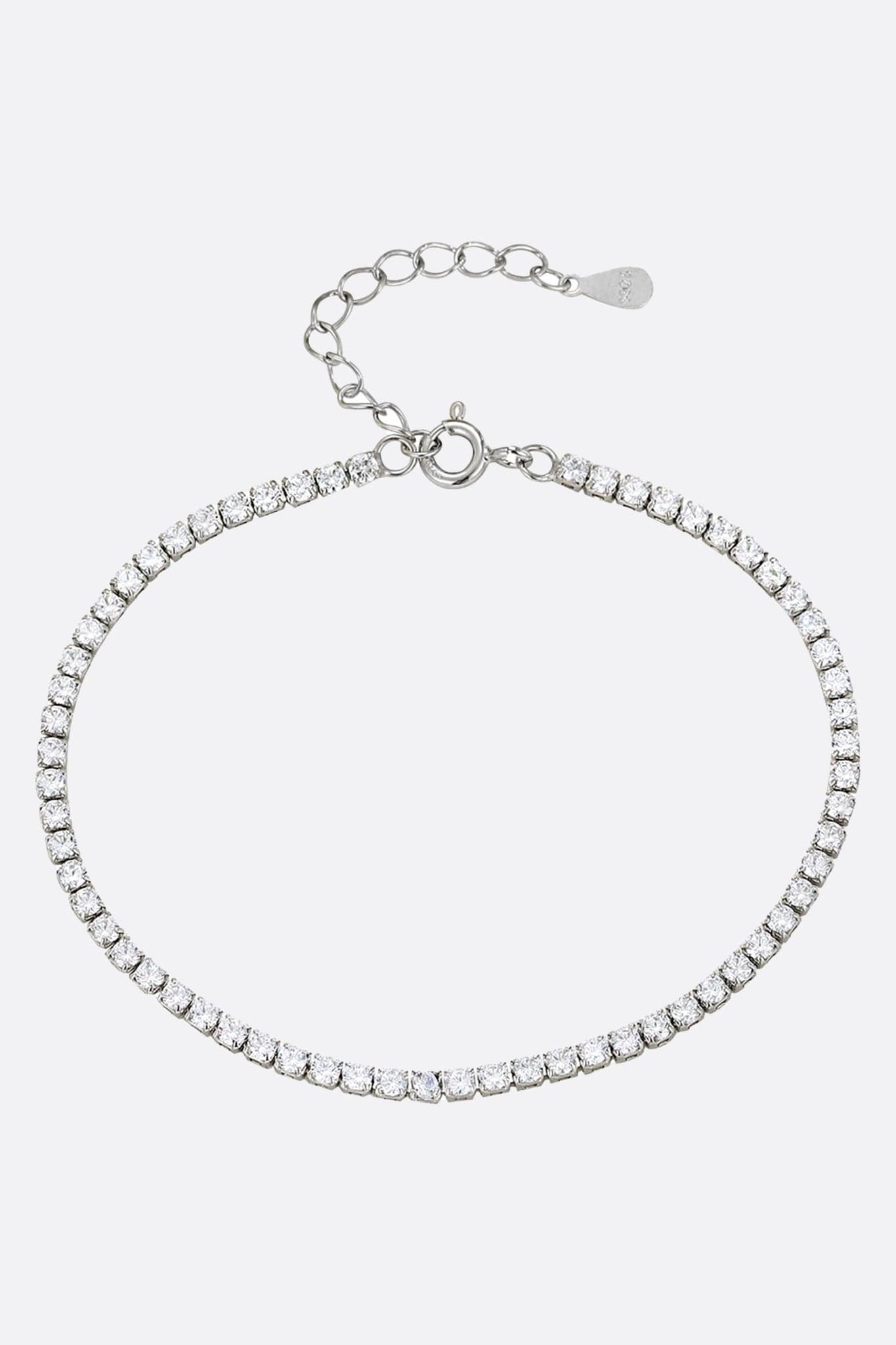
Thin bracelet (1-3 mm): highlights the wrist without covering it: emphasizes the slenderness of the wrist. The most discreet and versatile version. Medium bracelet (4-8 mm): visible and present: the standard width for chain or bangle bracelets. Wide bracelet (more than 1 cm): covers the wrist and can visually widen it: cuff or cuff effect. On a small wrist, a wide cuff bracelet may appear disproportionate. The ideal proportion: the width of the bracelet should not exceed one-third of the length of the wrist. For thin wrists: a thin to medium bracelet is more flattering. For wide wrists: all widths work.
Mesh: coordinated bracelets and jewelry
For necklaces to pair with bracelets: necklaces. For belts (silhouette accessory): belts. For all accessories: accessories. Coherence rule: mix gold-gold or silver-silver (no mixed gold and silver unless intentional) for jewelry visible simultaneously.
FAQ: women's bracelets
How to measure bracelet size?
Measure the wrist circumference with a soft tape around the narrowest part. Add 1-1.5 cm for a snug bracelet, 2-3 cm for a loose bracelet. For a rigid bangle: it should pass the widest part of the hand without forcing. The recommended internal diameter of a bangle = wrist circumference divided by 3.14 + 0.3 cm.
How to stack multiple bracelets?
Basic rule: odd numbers (1, 3, or 5 bracelets). Mix thicknesses (one wide + two thin), materials (metal + beads + fabric), and textures to create coherence through variation. Maintain metal consistency: gold with gold, silver with silver, unless the mix is intentional and controlled. On the same wrist: 3 bracelets is the most common and flattering layering.
My bracelet causes redness: what to do?
Probable nickel allergy: very common. Choose bracelets in 925 sterling silver, 316L surgical steel, 18-carat gold, or titanium: all certified nickel-free. Avoid cheap plated jewelry (brass, zinc) whose plating layer wears off. The European directive limits nickel in jewelry but imported jewelry outside the EU is not subject to this rule.